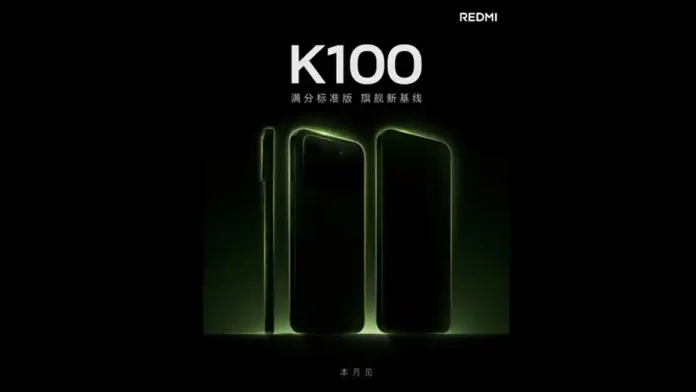
Xiaomi’s Redmi K100 smartphone is confirmed to make its China debut. However, the exact launch date has yet to be revealed.
Redmi K100 is expected to have an improved built-in active fan for thermal management, with Qualcomm’s Snapdragon 8 Elite chip.
It is also rumoured to feature the largest battery capacity to date, with high-speed 100W wired charging support.
Xiaomi has officially teased the flagship smartphone lineup Redmi K100 in China. The phone is expected to feature Snapdragon 8 Gen 2 / Snapdragon 8 Supreme Edition that will focus on sustained performance, media consumption, and endurance. It is also said to have the largest Redmi battery to date with 100W charging. However, the battery capacity is not yet revealed.
Some of the key specifications and features of Redmi K100 have surfaced online, ahead of its anticipated launch. The phone is expected to feature an improved built-in active cooling fan for thermal management.
Redmi K100 Price (Expected)
Though Xiaomi has not revealed the price of K100, leaks suggest a starting price of CNY 3,500 in China.
Redmi K100 Specifications
The brand has not made any announcement on K100 specifications or features so far. However, the post on Weibo claims that the phone will feature a 12GB of LPDDR5x RAM and 256GB of UFS 4.1 onboard storage.
Specifications
Details
Processor
Snapdragon 8 Gen 2 / Snapdragon 8 Supreme Edition
Wired Charging
100W Fast Charging (3C Certified)
Audio
Dual stereo speakers tuned by Bose
Gaming Hardware
Discrete graphics chip & enlarged vibration motor
Estimated Price
~CNY 3,500 (~$490 USD)
Target Availability
China-only release scheduled for late October
Redmi K100 Availability
Xiaomi’s upcoming handset Redmi K100 is scheduled for an initial China-only launch later this month. The announcement timeline for global release is not yet released.
The unconfirmed details according to claims surfaced online point to a 10,000mAh battery, display resolutions, and specific camera sensors. However, more details are yet to be revealed by Xiaomi.
On August 11, 2026, Xiaomi launched the Redmi K100 Pro and Redmi K100 Pro Max at starting prices of CNY 3,999 (approximately Rs 57,000) and CNY 4,499 (approximately Rs 64,000). The base models feature 12GB RAM and 256GB storage, respectively. Xiaomi Redmi K100 Pro is powered by Snapdragon 8 Elite Gen 5 V, while Redmi K100 Pro Max integrates Snapdragon 8 Elite Gen 5 chipsets, with a 9,070mAh battery.
Vivo S2 FE with a massive 10,000mAh battery was launched in India last week as part of Vivo’s S-Series lineup.
The phone comes in 6 GB + 128 GB and 8 GB + 128 GB memory variants, with the price starting at Rs 38,999 before offers.
The sale for the Vivo S2 FE is scheduled to start on October 20, 2026 via Vivo’s official website, partner retail outlets, Amazon India and Flipkart.
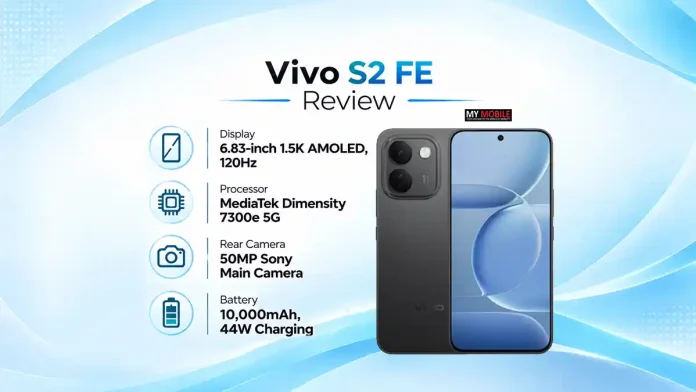
A 10,000mAh battery smartphone with a 1.5K AMOLED display in the 40k price segment. The new Vivo S2 FE is definitely getting a few things right. But in case you are wondering about the overall performance, here’s our Vivo S2 FE hands-on review.
Key Specifications
83-inch 120Hz 1.5K AMOLED Screen with HDR10+ and up to 2000 nits HBM brightness
MediaTek Dimensity 7300e 6nm processor
Android 16 with OriginOS 6
50MP Sony IMX852 Rear Main Camera + 2MP Sensor
32MP Front Camera
IP68+IP69 Rating and Military-Grade durability (MIL-STD-810H)
10,000mAh (min) Battery
44W Fast Charging
In-display optical fingerprint sensor
Unboxing
Design and In-hand Feel
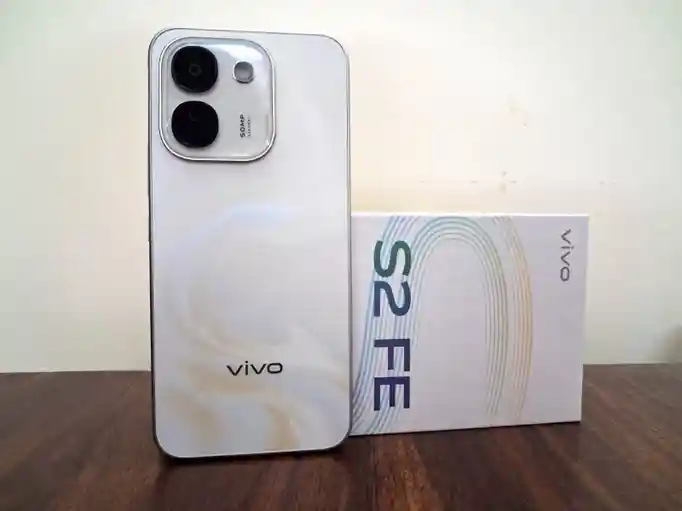
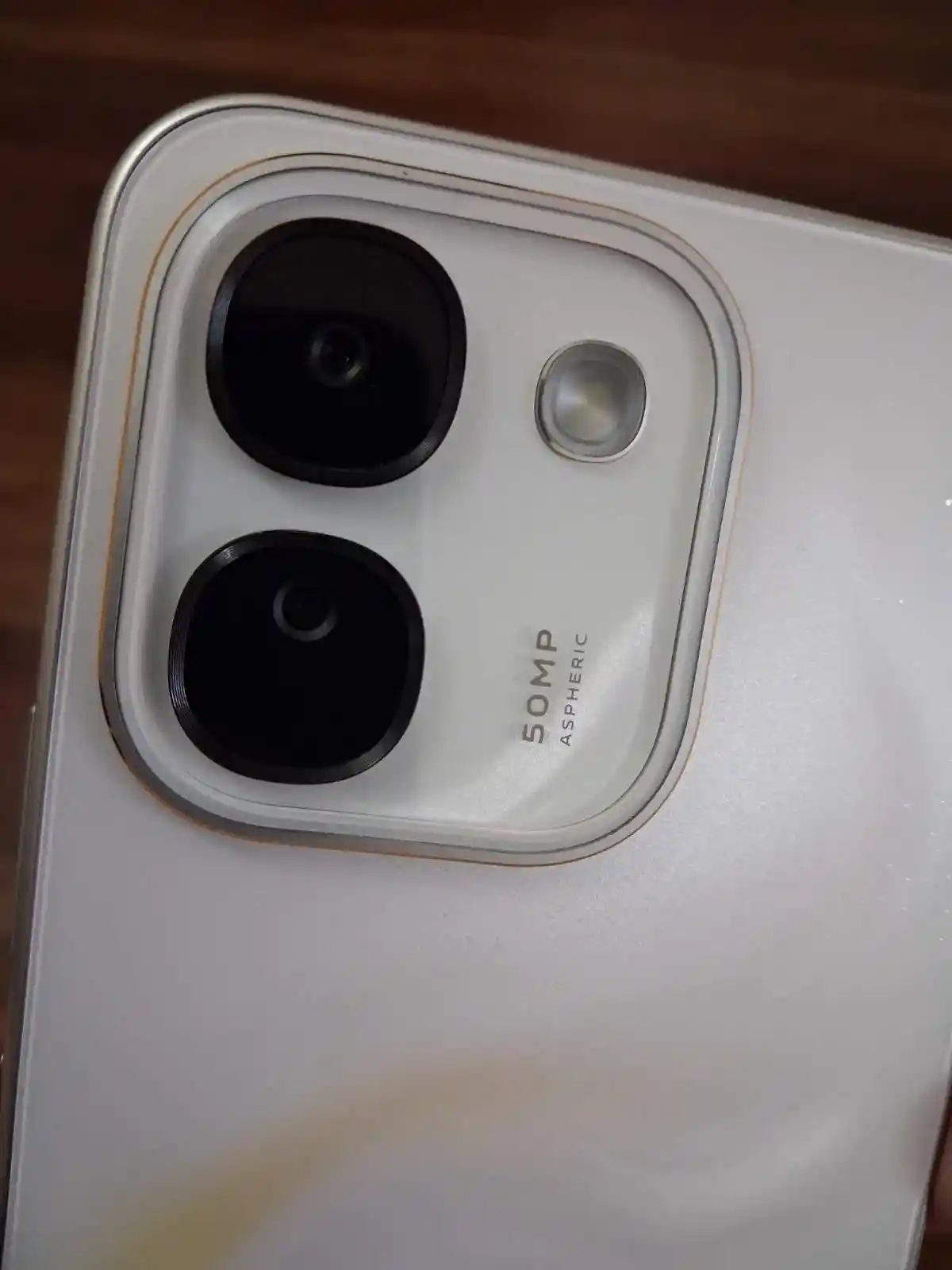
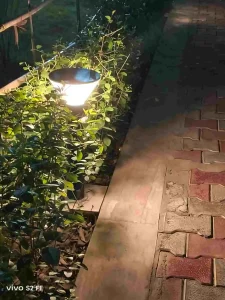
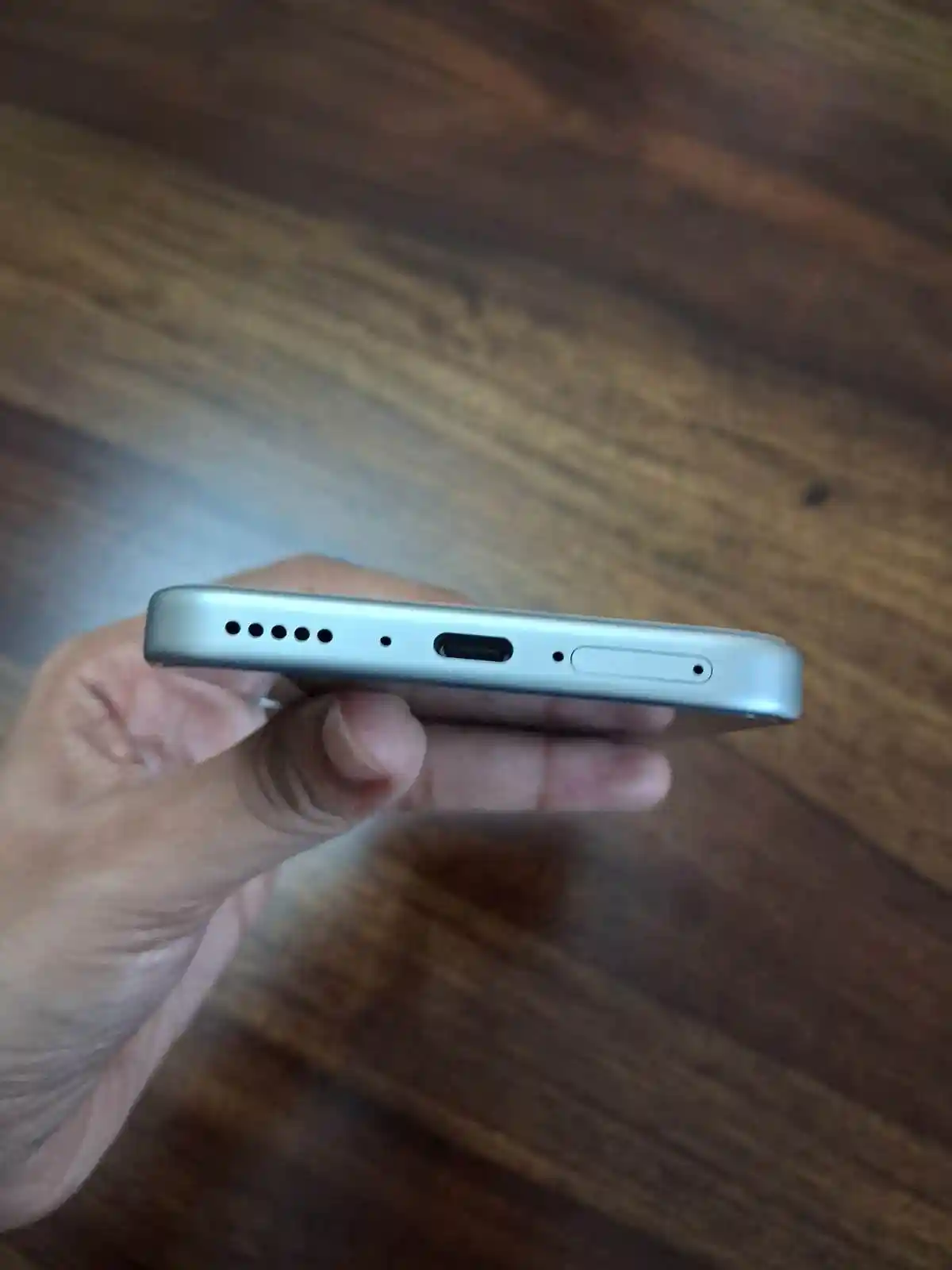
Right out of the box, the new Vivo S2 FE stands out for a simple yet stylish design. We used the Zen White colour variant, which comes with a soft, glittery white finish and a dual-tone effect. It looks good and isn’t too flashy. Vivo says it has used a Satin dual plating process to achieve this finish. The plastic back panel feels smooth and does a good job of keeping fingerprints and scratches away.
The floating crystal camera module blends well with the back panel and definitely adds to the phone’s overall look.
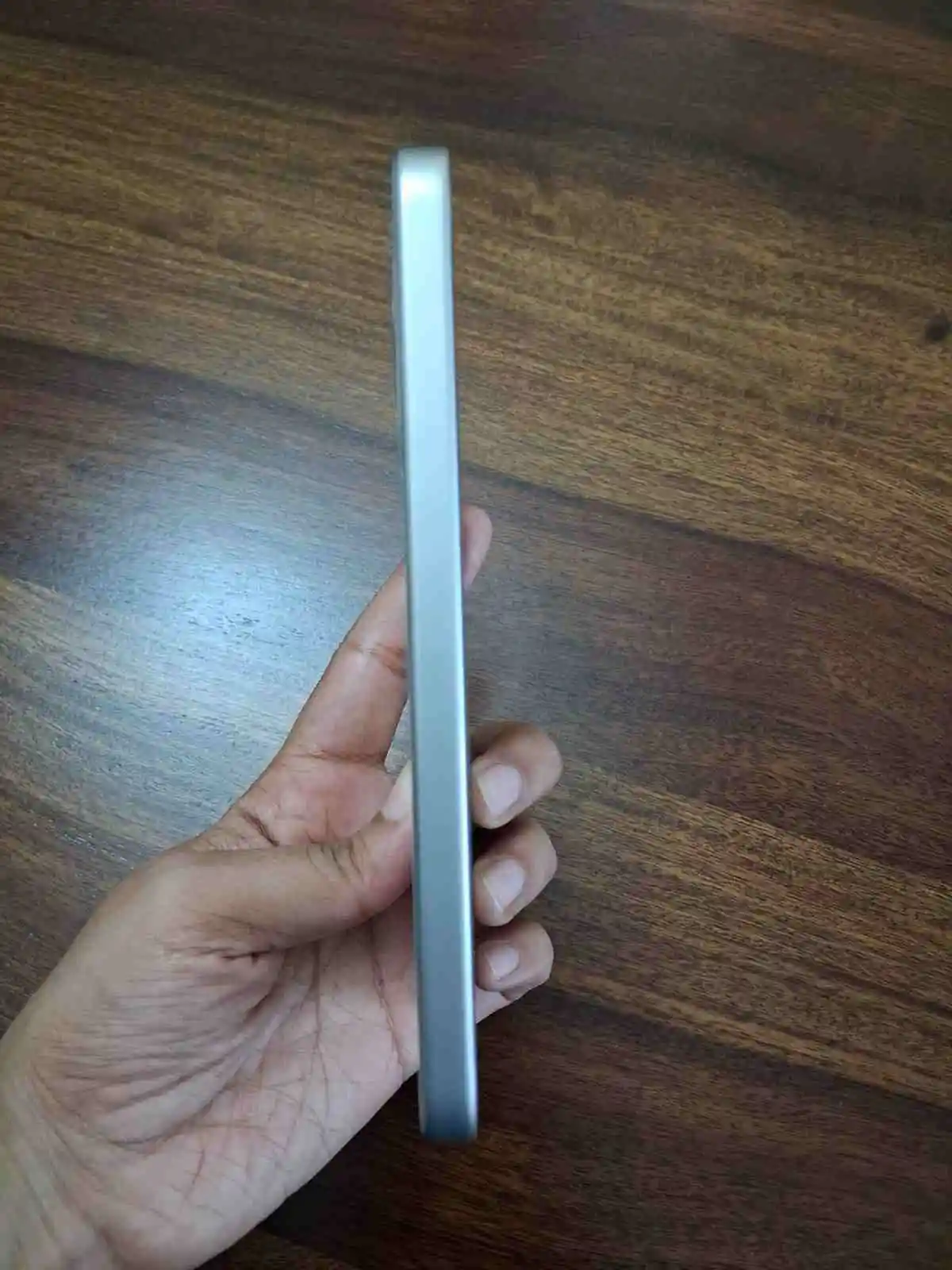
S2 FE is a heavy phone, thanks to the massive battery packed inside. The Zen White unit weighs 225g and you can feel the weight when you first pick it up. It took us some time to get used to the weight but we adjusted to it quickly and the phone surely feels solid in the hand with good weight distribution.
The boxy sides and rounded corners make the phone comfortable to hold. Its size is also well-balanced so it does not feel too big in the hand. However, using it with one hand is not very easy and reaching different parts of the screen can feel awkward.
The Vivo S2 FE also offers good protection against dust, water and drops. It has an IP68/IP69 rating and has passed five MIL-STD tests for drop resistance. For security, the phone comes with an in-display optical fingerprint sensor.
Display
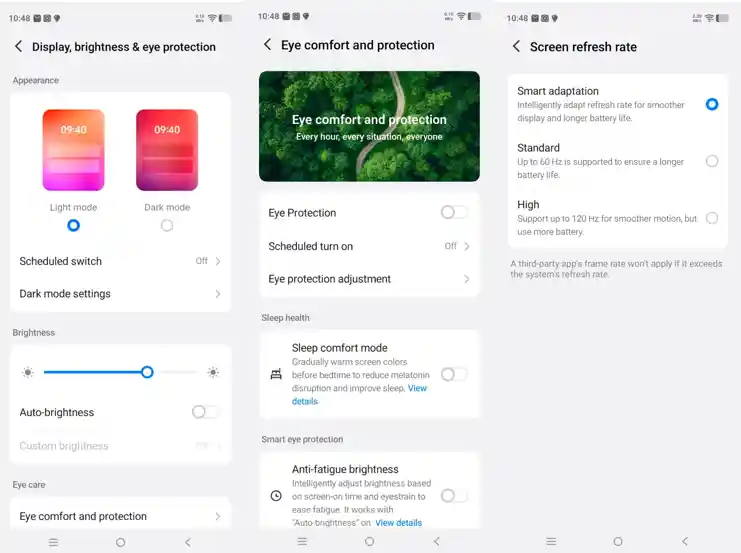
The Vivo S2 FE comes with a 6.83-inch AMOLED display with a resolution of 2800 × 1260 pixels. It supports a refresh rate of up to 120Hz and has a punch-hole design with ultra-slim bezels for an immersive experience.
It was clear as started using the device that the display quality is one of the phone’s strong points. Colours look rich and vibrant, making it a good option for watching videos, streaming content and browsing photos. It also supports HDR10+ and displays up to 1.07 billion colours, which helps deliver better colours and contrast in supported content.
The Vivo S2 FE offers a peak brightness of 2,000 nits in High Brightness Mode (HBM). We tried testing this out in the open and the screen remained mostly readable under direct sunlight. This means checking messages or using apps outdoors was not much of a problem.
Vivo has also included SGS certifications for sunlight readability, low blue light and low flicker. These features are designed to improve screen visibility in bright conditions and make viewing more comfortable. The display also supports the P3 wide colour gamut, which helps deliver a wider range of colours.
Overall, it’s beyond a doubt that with the S2 FE, we have a great display in hands for the price segment. The large screen, smooth refresh rate, vibrant colours and slim bezels make it well-suited for streaming and everyday use. The great outdoor visibility only adds to the overall experience.
Performance
The Vivo S2 FE is powered by the MediaTek Dimensity 7300e processor built on a 6nm process. It is an octa-core chipset with four cores clocked at 2.5GHz and four efficiency cores running at 2.0GHz. The phone also uses LPDDR4X RAM and UFS 3.1 storage. On the software front, the Vivo S2 FE runs OriginOS 6 based on Android 16.
The daily experience on the phone has been decent as our primary smartphone for over a week. We did not notice any major issues while using the phone for everyday tasks such as browsing, using social media, watching videos and switching between apps.
The software does come with some pre-installed apps that you may not need and you will have to spend some initial time in getting rid of what you don’t need.
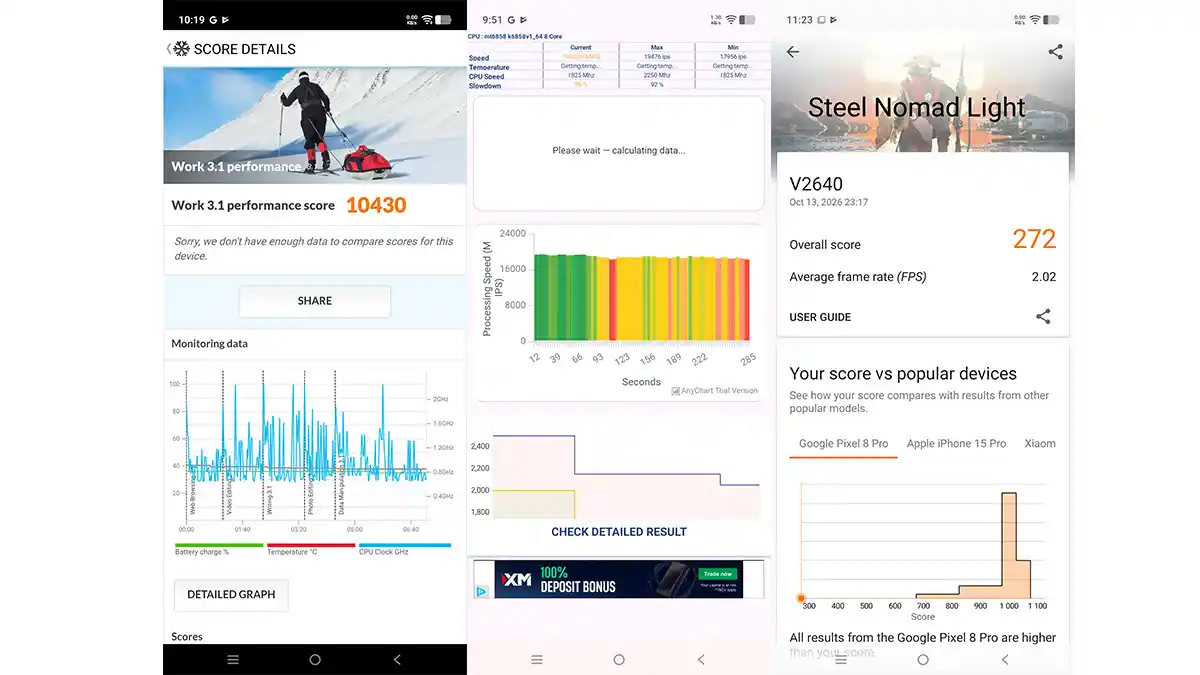
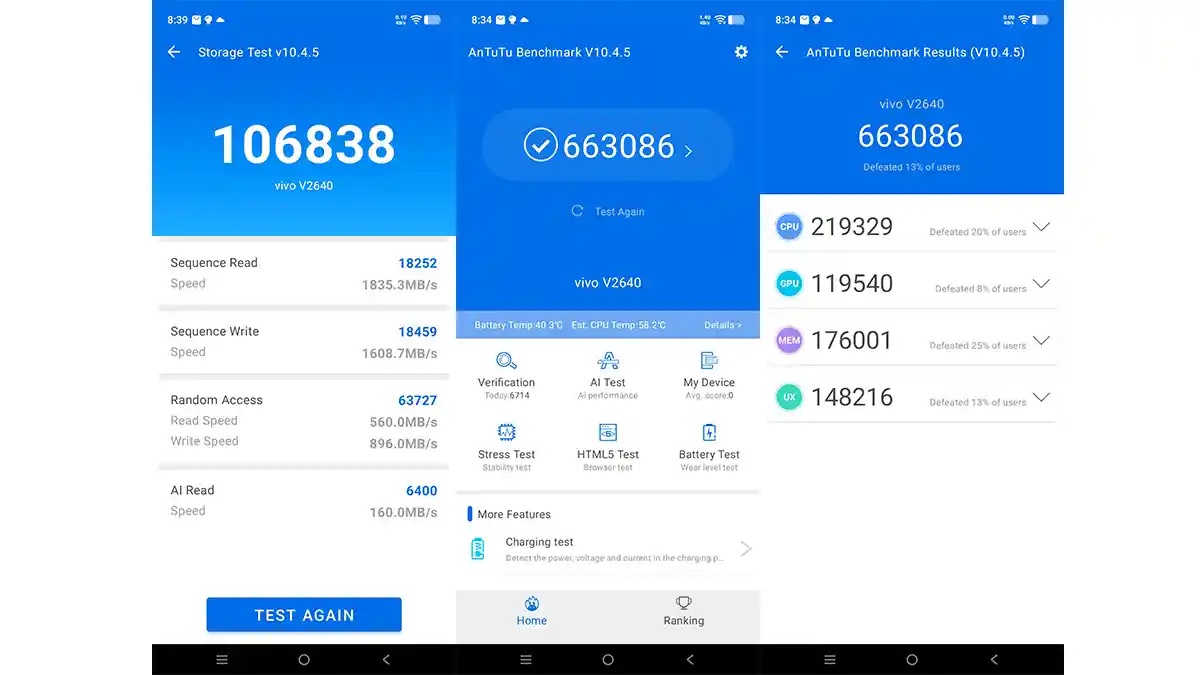
Add Benchmark Screenshots
We also ran a few benchmark tests to check the phone’s performance. The Vivo S2 FE scored 6,63,086 points on AnTuTu. On Geekbench, it scored 868 in the single-core test and 2,972 in the multi-core test, while its GPU score was 2,037. The phone also performed reasonably well on other testing platforms. These results suggest that the Vivo S2 FE offers decent performance for its segment. However, it is not a performance-focused phone and you should keep your expectations in check if you plan to play demanding games or push the hardware to its limits.
Overall, the Vivo S2 FE handles everyday tasks without any noticeable issues. Its performance is good enough for regular use but those looking for serious gaming performance or extra processing power may want to consider other options.
Camera Performace
The Vivo S2 FE comes with a simple camera setup that includes a 50MP Sony main camera and a secondary bokeh camera at the back. For selfies, it has a 32MP front camera with a 90-degree field of view. This means the front camera is particularly useful when you want to fit more people into the frame.
The main camera delivers good and reliable results in everyday use. Photos look natural with good colour balance and enough detail for sharing on social media or otherwise. The camera doesn’t have too much going for it but it surely gets the basics right.
Vivo S2 FE Day Light Camera Samples
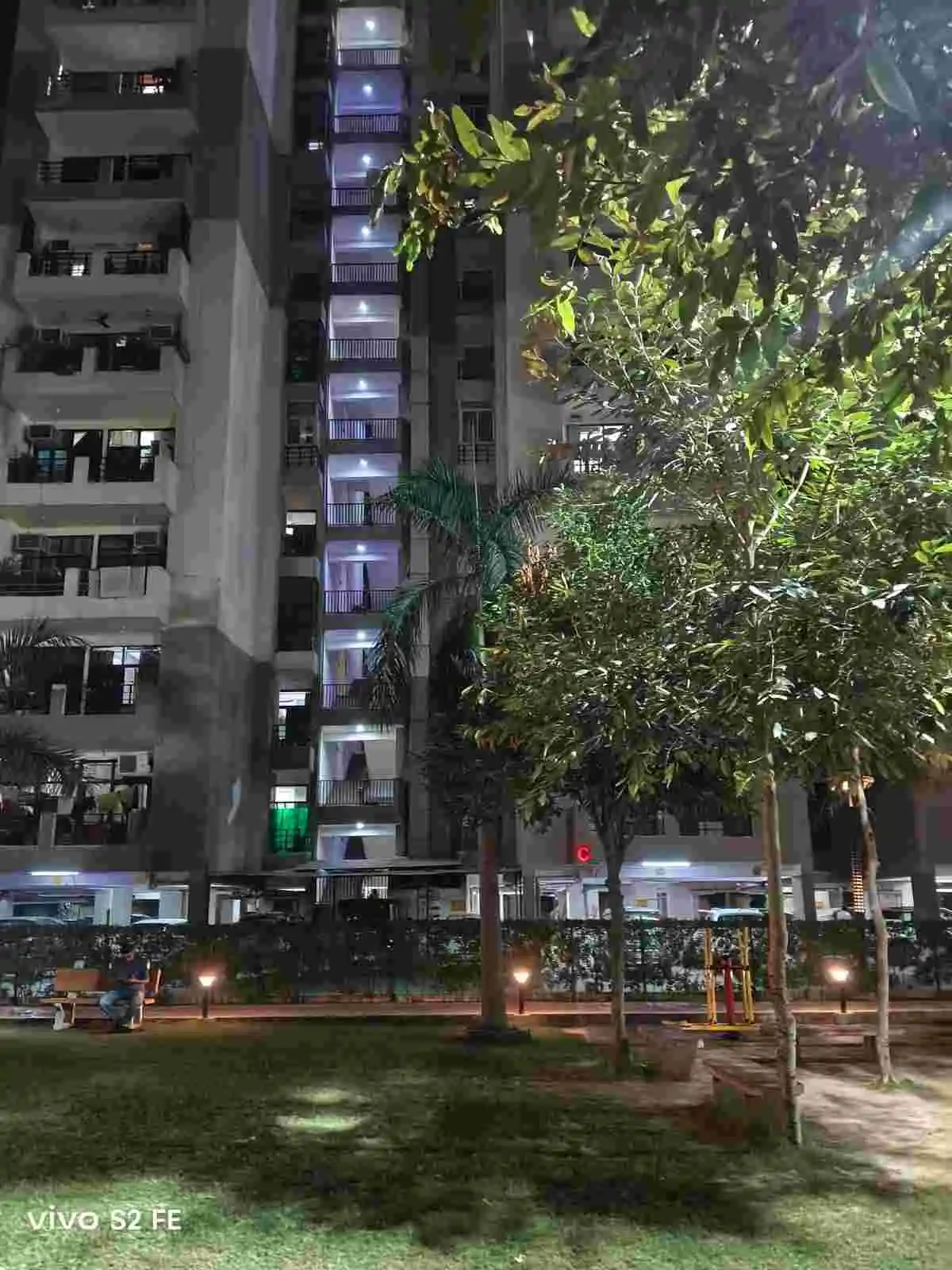
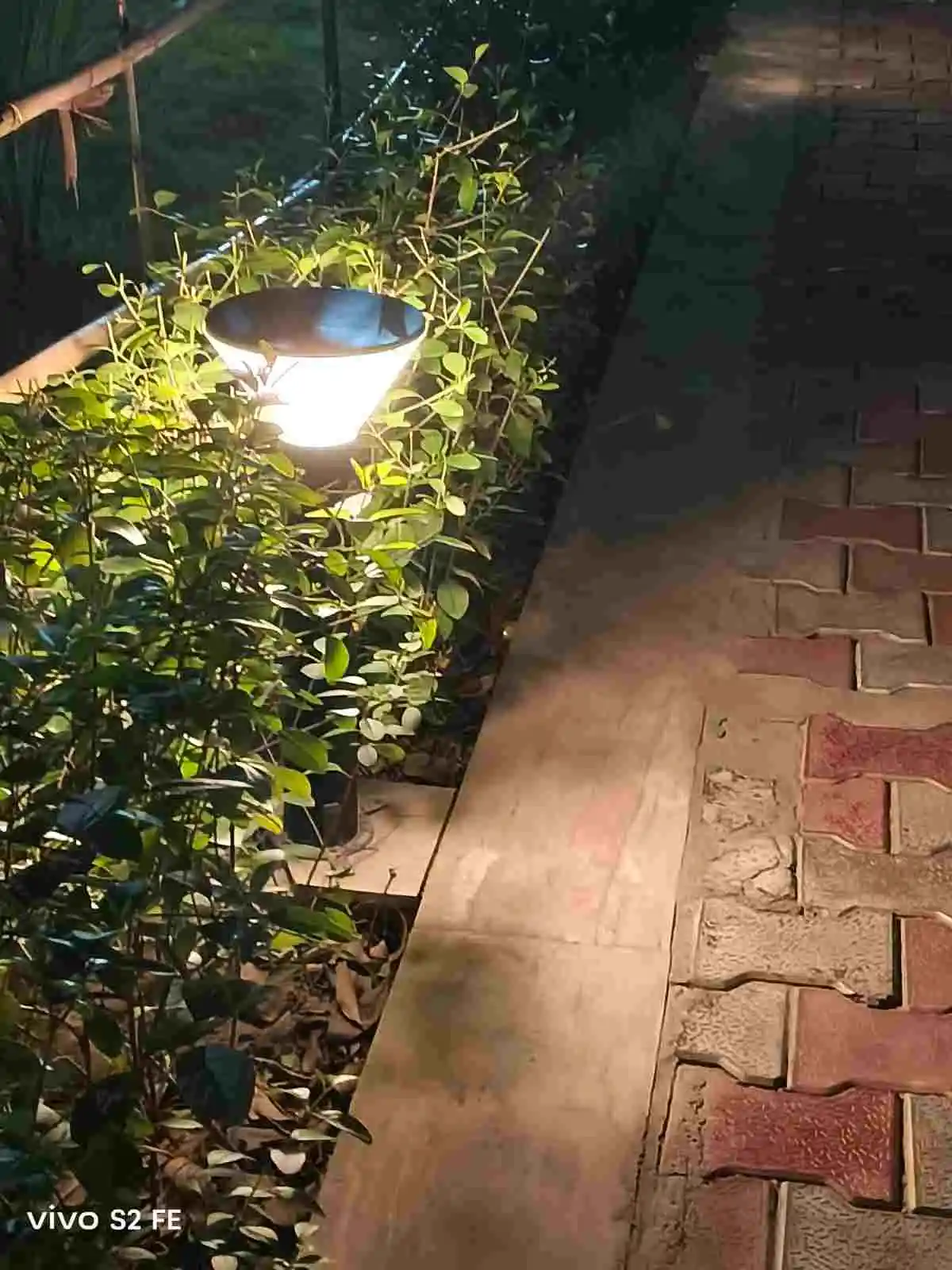
Vivo S2 FE Night Camera Samples
Vivo S2 FE Day Light Video Sample
Vivo S2 FE Night Video Sample
However, there are a few limitations such as the main camera does not have optical image stabilisation (OIS). We also noticed that photos could sometimes look hazy when the lighting was not ideal. So, while the camera works well in normal conditions, low-light shots may need more work to get the correct picture.
The 32MP front camera is suitable for selfies and video calls and as we have noted already, its wide field of view is specifically designed for group selfies. The phone offers several camera modes including Portrait, Night, Video, Dual View, High Resolution, Panorama, Slow Motion, Time-Lapse and Pro mode on the rear camera. The front camera also supports Night, Portrait, Photo, Video and Dual View modes.
Vivo has also included AI features such as AI Erase, which can help remove unwanted objects from photos. These tools are a useful addition when you want to make quick edits without using a separate photo-editing app.
Overall, the Vivo S2 FE offers a dependable camera experience for everyday photography. It takes well-balanced shots in suitable lighting, and the front camera is good enough for regular selfies and video calls.
Battery and Charging
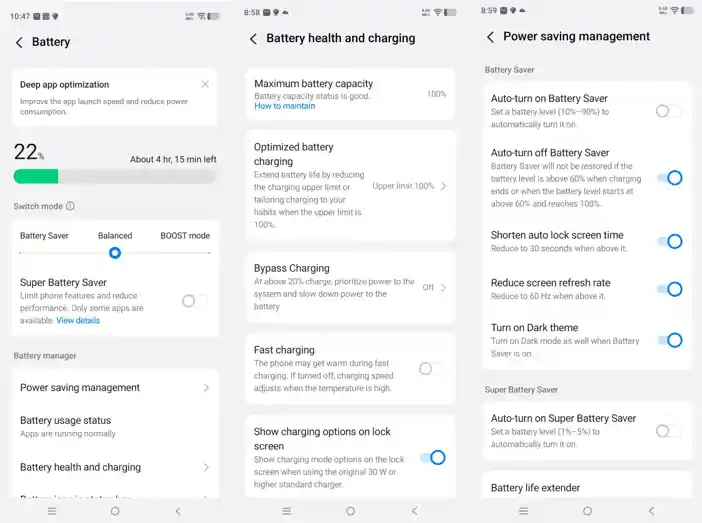
The Vivo S2 FE packs a massive 10,000mAh battery, which is one of its biggest highlights of this device. It supports 44W charging and the good thing is, Vivo includes a compatible charger inside the box. The phone also supports reverse charging, allowing you to use it to charge other devices when needed.
Vivo has also made a big claim about the phone’s battery endurance. It holds a Guinness World Records title for the longest electronic product testing live stream, lasting 32 hours and 37 minutes of continuous live streaming. (This was, however, achieved by the Vivo V80 Lite 5G on 11.08.2026 (marketed as vivo S2 FE in India) in Chiang Mai, Thailand, under specific conditions. Actual performance may vary depending on usage. GUINNESS WORLD RECORDS is a trademark of Guinness World Records Limited.)
The brand also claims up to 30 hours of video playback, 30 hours of live streaming, 15.8 hours of gaming and 68 hours of phone calls on a full charge. During our testing, the Vivo S2 FE easily lasted three days on a single charge even with moderate to heavy usage. This included regular daily use without having to worry about finding a charger by the end of the day.
The only downside we can pick on is the 44W charging speed. While it is decent for everyday use, charging such a large 10,000mAh battery can take quite some time.
Anyhow, getting three days of use on a single charge makes it a great option for those who want to charge their phone less often.
Verdict – Should You Buy Vivo S2 FE?
The Vivo S2 FE is a good option if battery life is your biggest priority. The massive 10,000mAh battery easily lasts three days even with moderate to heavy usage. This alone makes it stand out from most smartphones in this price range. The large AMOLED display is another highlight and offers smooth scrolling and an immersive streaming experience. The phone also has a solid build with a stylish design and reliable cameras for everyday photography.
So, should you buy the Vivo S2 FE for under Rs 40,000? If you want a phone that can comfortably last two to three days on a single charge, the Vivo S2 FE is worth considering. Its display, build quality and everyday performance also add to its appeal. However, if you prefer a lighter phone, faster charging, or a more versatile photography experience, you may want to look at alternatives once.
Pros & Cons
Pros
Cons
● Massive 10,000mAh battery that easily lasts up to three days
● 1.5K AMOLED display
● Good outdoor visibility
● IP68/IP69 rating and MIL-STD drop-resistance
● 32MP front camera with a wide 90-degree field of view
● Feels heavy in hand
● Slow charging
● No OIS on the main camera
Alternatives
Realme P4 Power – Currently at Rs 29,920 on Amazon
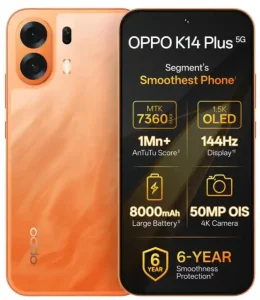
OPPO K14 Plus 5G – Currently at Rs 32,950 on Amazon
OPPO Reno 17 has surfaced in a leaked live image ahead of its rumoured November 2026 China launch.
It is expected to feature 200MP rear camera, Snapdragon 7 Gen 4 chipset, 7,000mAh battery, Android 17‑based ColorOS 17 and possible new AI functions with a dedicated button.
Reports suggest the lineup may have a November debut in China and an early January 2027 arrival in India.
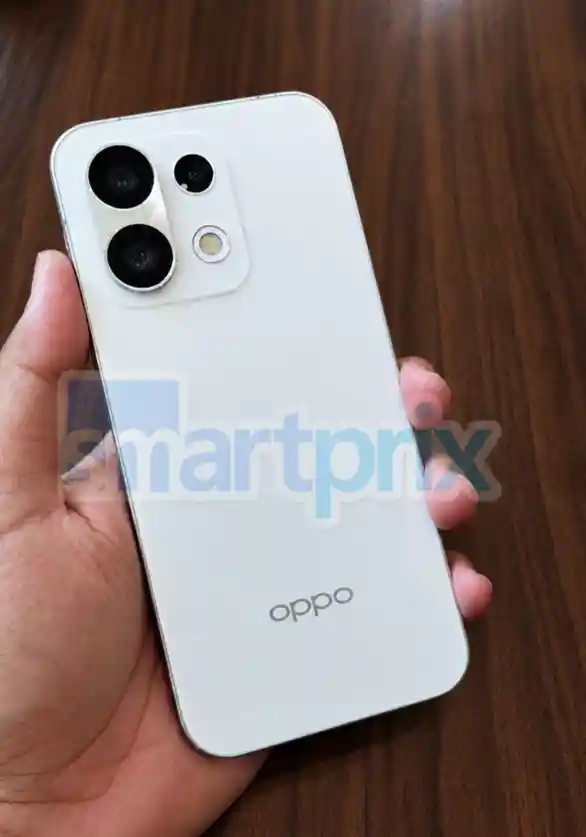
OPPO Reno 17 has surfaced in a leaked live image ahead of its expected China launch in November. The image offers an early look at the phone’s design, which appears to be a refined version of the Reno 16. According to recent leaks, the Reno17 series could feature a 200-megapixel camera, new AI features and Android 17-based ColorOS 17.
OPPO Reno 17 Live Image Reveals Design Details
OPPO Reno 17 Live Image. (Credit: Smartprix)
A new report from SmartPrix has shared a live image of the upcoming OPPO Reno 17, revealing its rear design for the first time. The handset appears to retain several design elements from the previous-generation Reno 16 with minor refinements rather than a major redesign.
The leaked image shows a square camera module positioned towards the upper-left corner of the rear panel. It features two lens cutouts and an LED flash, while OPPO branding can be seen on the back of the device. The phone also appears to have a flat design with rounded corners.
The image suggests that OPPO may continue with the design language of the Reno 16 for its successor. However, the final design and available colour options remain unconfirmed.
OPPO Reno17 Expected Specifications and Features
According to tipster Smart Pikachu’s post on Weibo, the OPPO Reno 17 series is in development with both large-screen and small-screen models. The lineup is expected to focus on design and camera improvements with a 200-megapixel camera tipped as one of its key highlights.
The upcoming series could also introduce new features for Live Photos and photo editing. A dedicated AI button is reportedly under consideration, although its exact functionality has not been revealed.
Here are the expected details of the OPPO Reno 17 series based on leaks so far –
OPPO Reno 17 expected features
Chispet
Qualcomm Snapdragon 7 Gen 4
Rear Cameras
200-megapixel; standard model to have a triple rear camera with a 50-megapixel camera
Battery
7,000mAh
OS
Android 17-based ColorOS 17
Other Features
dedicated AI button and Telephoto extender
OPPO Reno17 Expected Launch Timeline
The OPPO Reno17 series is reportedly scheduled to launch in China in November 2026. According to the SmartPrix report, the Reno 17 lineup could arrive in India by early January 2027.
The report also claims that OPPO may skip the Pro model in India, making the standard OPPO Reno 17 the primary offering in the country.
OPPO has not officially confirmed the Reno 17 launch schedule for China or India.
OPPO Reno17 Expected Price and Availability
The expected price of the OPPO Reno 17 has not been revealed yet. There is currently no confirmed pricing information for either China or India.
More details including price, specifications and availability of the OPPO Reno 17 series could emerge in the coming weeks.
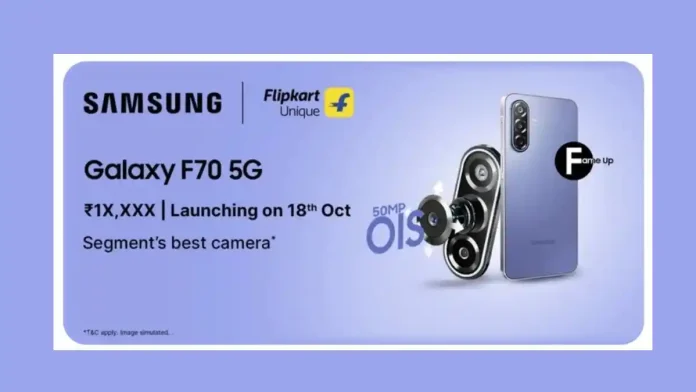
Samsung’s Galaxy F70 is confirmed to launch in India on October 18, 2026, with several features under Rs 20,000.
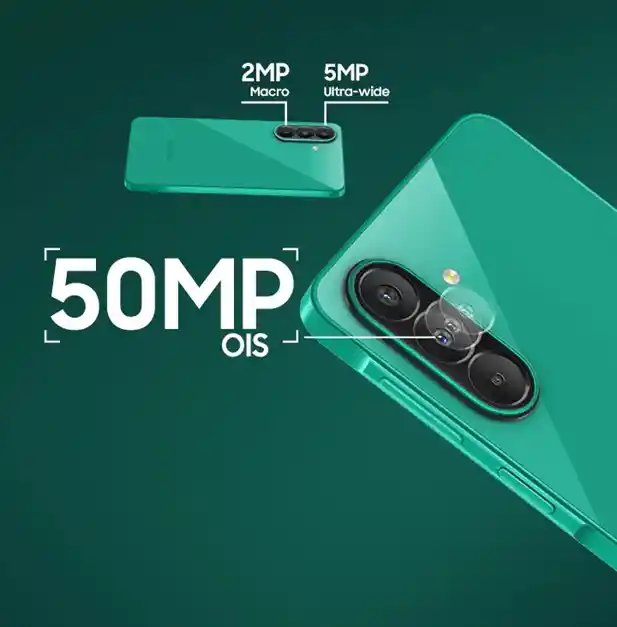
Samsung Galaxy F70 will feature a 50MP main camera with 5 MP Ultra-Wide Angle Camera, 2 MP Macro Camera, and a 13 MP front camera.
Galaxy F70 5G will integrate Samsung’s Exynos 1330 processor and a 5,000mAh with 25W Fast charging.
Samsung Galaxy F70 is confirmed to launch in India on October 18, 2026. The phone will feature 50MP OIS Camera and 5,000mAh battery with 25W charging support. Samsung Galaxy F70 will come with a 6.7-inch Full HD+ AMOLED display and a 120 Hz refresh rate, with Corning Gorilla Glass Victus protection. According to Samsung, Galaxy F70 is the slimmest phone among its rivals as it is just 7.5 mm thick. The upcoming Samsung’s Galaxy F70 5G has appeared on Flipkart, with key specifications ahead of its launch in India.
Samsung Galaxy F70 India Launch Date
Samsung Galaxy F70 is scheduled to be launched in India on October 18, 2026.
Samsung Galaxy F70 Price in India (Expected)
Samsung Galaxy F70 is estimated to be launched at a price under Rs 20,000. However, the final price will be relieved after its launch on October 18.
50 MP + 5 MP Ultra-Wide Angle Camera + 2 MP Macro Camera
Front Camera
13MP
Battery and Charging
5000 mAh, Li-ion with 25W Fast Charging
Software and Connectivity
Android and Bluetooth v5.1
Display and Design
Samsung Galaxy F70 packs a 6.7-inch (17.02 cm) Super AMOLED display to deliver an immersive visual experience. It features an FHD+ resolution of 1080×2340 pixels with 90 Hz refresh rate.
Processor, RAM, and Storage
Powered by Samsung’s Exynos 1330 processor, Samsung Galaxy F70 is designed to handle everyday tasks and moderate gaming without any hassle. The phone features 4 GB LPDDR4X RAM, paired with 128 GB of internal storage for reliable multitasking and app switching.
Camera
Samsung Galaxy F70 integrates a high-resolution 50 MP primary camera with 5 MP Ultra-Wide Angle Camera for landscape shots, and a 2 MP Macro Camera. It also features a 13 MP selfie camera, ensuring sharp and clear selfies and video calls.
Battery and Charging
Samsung Galaxy F70 packs a substantial 5000 mAh Li-ion battery with 25W Fast Charging support. The battery capacity ensures you can stream content, navigate via GPS and gaming with all-day endurance.
Software and Connectivity
The Galaxy F70 runs on the Android operating system, offering latest features, security updates, and app compatibility. It also comes with Bluetooth v5.1 connectivity, providing energy-efficient connections to your wireless devices.
Samsung Galaxy F70: What to Expect
Samsung Galaxy F70 is expected to be a highly competent mid-range smartphone with all the essential features like 5000 mAh battery, 50MP OIS main camera, and a large FHD+ Super AMOLED screen.
However, as the launch date is released, it is crucial to see how Samsung Galaxy F70 will deliver reliable Samsung quality and meet the user expectations.
Xiaomi 18 Pro global variant has appeared on Indonesia’s SDPPI database with model number 2609BPN61G.
The Xiaomi 18 Pro will use Snapdragon 8 Elite Gen 6, while the Pro Max variant will feature Snapdragon 8 Elite Extreme Gen 6.
Global launch timeline and pricing remain unannounced, though the phone is already confirmed for India by the end of this year.
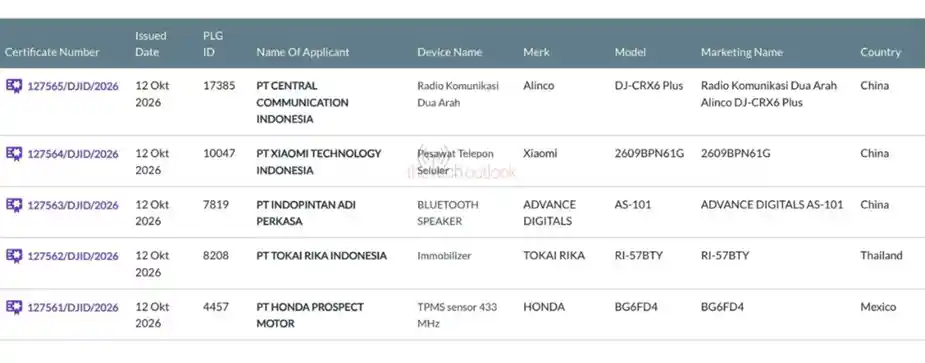
The Xiaomi 18 Pro global variant has appeared on Indonesia’s SDPPI certification database, which could mean it’s heading to a possible launch in the country. The listing reveals the global model number and certification details but does not disclose any new specifications. Xiaomi has already confirmed the chipsets for the Xiaomi 18 Pro and Xiaomi 18 Pro Max. However, any global launch dates remain unannounced.
Xiaomi 18 Pro Global Variant Spotted on SDPPI
Xiaomi 18 Pro on SDPPI. (Screenshot by TheTechOutlook)
The Xiaomi 18 Pro has been listed on Indonesia’s SDPPI database with the model number 2609BPN61G. The entry appears under the Xiaomi branding with PT Xiaomi Technology Indonesia mentioned as the applicant.
The certification is dated October 12, 2026 and carries the certificate number 127564/DJID/2026. However, the database entry does not reveal any additional details about the smartphone’s hardware or features.
The SDPPI certification suggests that Xiaomi is preparing the global variant of the Xiaomi 18 Pro for the Indonesian market.
Xiaomi 18 Pro Global Launch: What We Know So Far
Xiaomi has yet to announce the global launch date for the Xiaomi 18 Pro series. However, the company has confirmed that the global versions will use the same chipsets as their respective Chinese counterparts.
According to Xiaomi’s earlier teaser, the standard Xiaomi 18 Pro will be powered by Qualcomm’s Snapdragon 8 Elite Gen 6 chipset. Meanwhile, the higher-end Xiaomi 18 Pro Max will feature the Snapdragon 8 Elite Extreme Gen 6.
More details about its global launch schedule, pricing and availability are still awaited.
Xiaomi 18 Pro Specifications and Features
Xiaomi has confirmed the processor details for the Xiaomi 18 Pro series, but the latest certification has not revealed any additional specifications. Here is what we currently know about the model based on its release in China.
Xiaomi has not announced the global pricing or availability details for the Xiaomi 18 Pro and Xiaomi 18 Pro Max.
Pricing and regional availability details are expected to become clearer once Xiaomi shares more information about its launch plans.
Will Xiaomi 18 Pro Launch in India?
The Xiaomi 18 Pro has already been confirmed for the Indian market. Rumours have pointed towards a possible December 2026 launch in India, although Xiaomi has not officially confirmed this timeline.
There is no separate confirmation regarding the Indian availability of the Xiaomi 18 Pro Max in the information available so far.
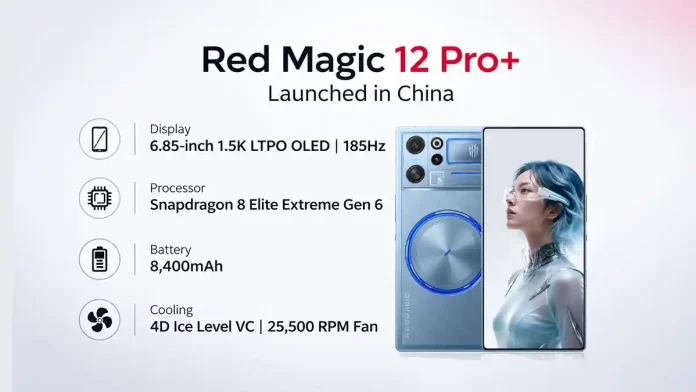
Red Magic 12 Pro+ gaming phone with 8,400mAh battery and Snapdragon 8 Elite Extreme Gen 6 processor launched in China.
RedMagic 12 Pro+ with 12GB + 256GB costs 6,999 Yuan. The 16GB + 512GB variant is priced at 7,999 Yuan.
RedMagic 12 Pro+ features a 6.85-inch BOE X11 1.5K LTPO display, with 13116mm² 4D Ice level Vapor Chamber cooling system.
Red Magic has officially launched the RedMagic 12 Pro+ gaming phone with REDMAGIC OS 12. Powered by Snapdragon 8 Elite Extreme Gen 6, the phone features a 6.85-inch BOE X11, 1.5K, 185Hz, LTPO OLED hole less full screen display. RedMagic 12 Pro+ integrates top-tier performance with advanced cooling tech, dedicated gaming features, and a massive 8,400mAh battery.
RedMagic 12 Pro+ Price
RedMagic 12 Pro+ with 12GB RAM and 256GB of storage starts at ¥ 6,999. The 16GB/512GB variant costs ¥7,999. The top model with 16GB RAM + 1TB of storage is priced at ¥ 8,999 yuan.
13116mm² 4D Ice level VC + Liquid Metal 4.0 + 25,500 RPM Active RGB Fan
Audio & Haptics
1115E Symmetrical Dual Speakers, 0815 X-axis Linear Motor, 3.5mm Headphone Jack
Connectivity
Wi-Fi 7, Bluetooth 5.3, NFC, IR Blaster, USB 3.2 Gen2
Durability & Security
IP69/68 Water and Dust Resistance, 3D Ultrasonic In-Display Fingerprint
Dimensions & Weight
8.55mm Thickness / 223g Weight
Software
Android 17 with REDMAGIC OS 12 (Built-in PC Emulator, Steam Direct)
The LTPO Display Tech with 5000 nits
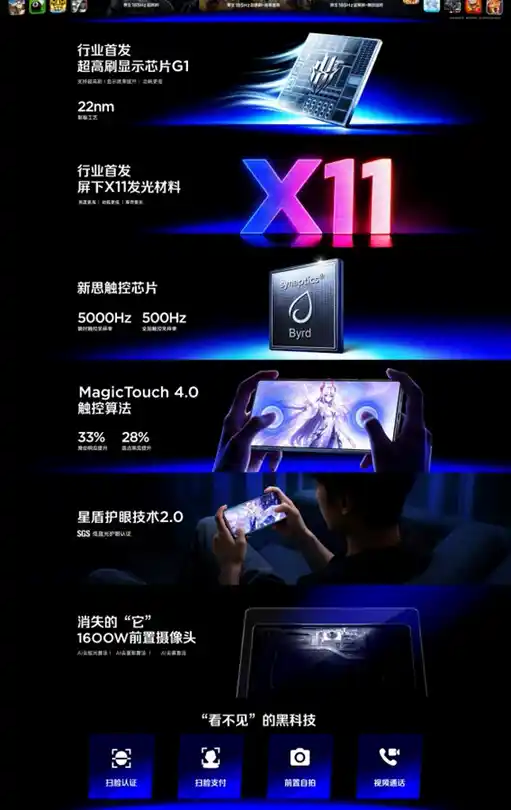
RedMagic 12 Pro+ comes with a 6.85-inch BOE X11 1.5K LTPO display, offering an uninterrupted viewing experience through an under-display camera (UDC) for a true Hole Less full screen. The screen reaches up to 5000 nits peak brightness and 1900 nits HBM (High Brightness Mode), with 185Hz refresh rate.
Performance and Cooling
RedMagic 12 Pro+ is powered by the Snapdragon 8 Elite Extreme Gen6, built on a cutting-edge 2nm process. It is paired with the RedCore R5 Gaming Chip designed for gaming and haptic feedback. The phone’s memory speeds are off the charts, integrating LPDDR5T RAM, with 10667Mbps and ultra-fast UFS 4.1 Pro storage.
RedMagic 12 Pro+ combines a comprehensive thermal management system to keep the phone cool down. It uses a 13116mm² 4D Ice level Vapor Chamber cooling system, a built-in high-speed centrifugal fan spinning at 25,500 RPM, and customizable RGB lighting effects.
Battery Life and Software
RedMagic 12 Pro+ allows gamers to play uninterruptedly with a colossal 8400mAh dual-cell battery. The gaming phone supports 120W wired charging and 80W wireless charging. It also includes Bypass Charging, allowing users to power the motherboard directly while gaming to reduce heat and protect battery longevity.
The phone uses REDMAGIC OS 12 and offers hardcore gaming features, including a built-in PC emulator and Steam Direct Connection.
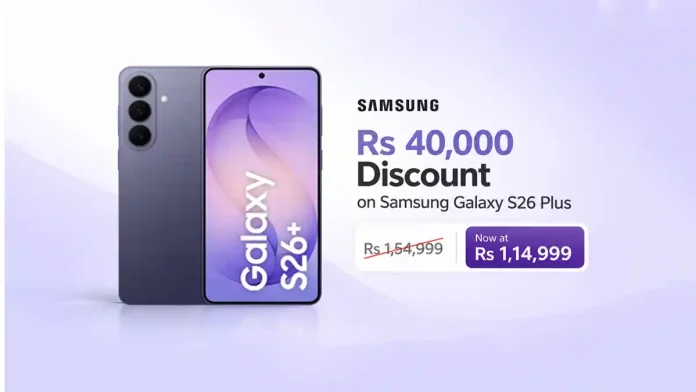
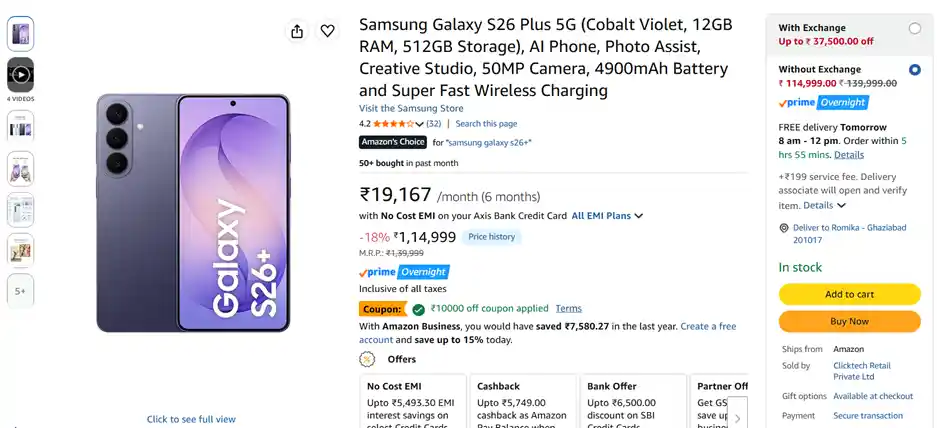
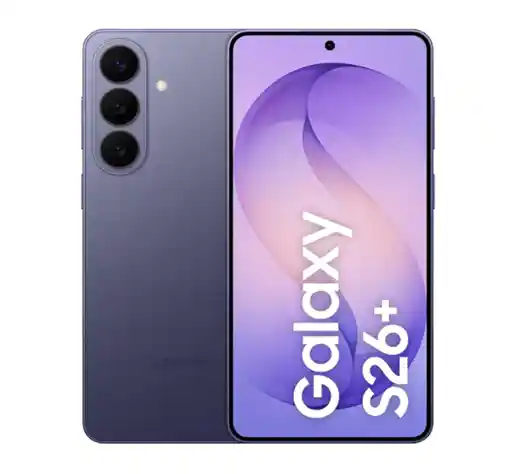
Samsung Galaxy S26+ (12GB RAM + 512GB storage) is listed on Amazon at Rs 1,14,999, offering a massive Rs 40,000 discount from its revised price of Rs 1,54,999.
Amazon coupon worth Rs 10,000 may further reduce the effective price to Rs 1,04,999.
It features a 6.7‑inch QHD+ AMOLED 120Hz display, Exynos 2600 chipset, triple rear cameras with 3x optical zoom, 4,900mAh battery and 45W wired + 20W wireless charging.
The Samsung Galaxy S26+ (12GB RAM + 512GB storage) is available on Amazon for Rs 1,14,999, compared to its revised price of Rs 1,54,999 following the September price hike. This makes up for a massive discount of Rs 40,000. Buyers can also get an additional Rs 10,000 off coupon on Amazon, potentially bringing the effective price down further. Here’s everything you need to know about this steal deal.
Samsung Galaxy S26+ Amazon Price and Discount Details
The Samsung Galaxy S26+ is currently listed on Amazon at Rs 1,14,999 for the 12GB RAM and 512GB storage variant. Following the price revision across the Galaxy S26 series, the phone’s revised list price is Rs 1,54,999.
This means Amazon’s current selling price is Rs 40,000 lower than the revised list price. Additionally, Amazon is offering a Rs 10,000 off coupon for further savings. If the coupon applies to the listed price and can be redeemed in full, the effective price could drop to Rs 1,04,999.
Here is a breakdown of the Samsung Galaxy S26+ deal on Amazon:
Price and Offer Details
Amount
Samsung Galaxy S26+ Variant
12GB RAM + 512GB storage
Revised Price After Price Hike
Rs 1,54,999
Amazon Selling Price
Rs 1,14,999
Difference from revised list price
Rs 40,000
Additional Amazon coupon
Rs 10,000 off
Effective price after coupon (if fully applicable)
Rs 1,04,999
It is also worth noting that the offline retail segment reportedly has a payout of Rs 25,000. This is separate from Amazon’s listed price difference and should not be treated as an additional consumer discount on the Amazon deal.
Buyers should check the final checkout price and coupon eligibility before placing an order, as promotional offers can change.
Samsung Galaxy S26+ Price Hiked in September
Samsung revised the prices of the Galaxy S26 series with effect from September 23, 2026. Following this price revision, the Samsung Galaxy S26+ (12GB + 512GB) has a revised list price of Rs 1,54,999.
50MP main camera with OIS, 12MP ultra-wide camera with 120° field of view, 10MP telephoto camera with 3x optical zoom and OIS
Video Recording
Up to 8K at 30fps; 4K at 60fps
Front Camera
12MP, f/2.2 aperture, 4K at 60fps video recording
Battery
4,900mAh
Charging
45W wired fast charging, 20W Qi2 wireless charging, Wireless PowerShare
Is the Samsung Galaxy S26+ Worth Buying at Rs 1,14,999?
At Rs 1,14,999, the Samsung Galaxy S26+ is available at a considerably lower price than its revised list price of Rs 1,54,999. The additional Rs 10,000 Amazon coupon could make the deal more attractive if it is applicable to the purchase, bringing the potential effective price to Rs 1,04,999.
The phone offers a QHD+ AMOLED display with an adaptive refresh rate of up to 120Hz, a triple rear camera setup with a 3x optical zoom telephoto lens, and a 4,900mAh battery. It also supports 45W wired charging and 20W Qi2 wireless charging. These features make it worth considering for buyers looking for a premium Samsung smartphone.
Sony has announced exciting festive offers on BRAVIA televisions, soundbars, speakers, and camera lenses.
Sony festive season benefits include instant cashback of up to Rs 50,000 on select BRAVIA models.
On audio products, Sony is offering cashback of up to Rs 15,000 on eligible models.
Sony India has announced festive offers across its premium lineup of BRAVIA televisions, personal audio and digital imaging range. Consumers can get discounts on select headphones and earbuds, savings on BRAVIA televisions, and special prices and offers on select cameras and lenses.
Sony Festive Offers on BRAVIA Televisions
Sony provides attractive offers on select BRAVIA televisions this festive season, with instant cashback of up to Rs 50,000 on select models.
3-Year Warranty on select Sony BRAVIA televisions
1 EMI Free on eligible models and select payment options
EMIs starting from Rs 2,995 on eligible purchases
TV + Soundbar Combo Offers with savings of up to Rs 94,990 on select combinations
Sony Festive Offers on Audio Products
Sony has announced offers on select audio products, including cashback of up to Rs 15,000 on eligible models. The company also offers discounts on select televisions and soundbar combinations, with free SA-RS8 rear speakers with the purchase of the BRAVIA Theatre Bar 7 + Subwoofers.
Exclusive festive offers are also available on select Sony Party Speakers, Headphones, Wireless Headphones, and INZONE products.
Offers on Soundbars
Model
Offer Price (in Rs)
Cashback (if any) in Rs
HT-S20R
14,990 /-
–
HT-S40R
23,990 /-
2,000 /-
HT-S60
47,990 /-
2,000 /-
HT-B600
36,990 /-
2,000 /-
HT-A8000
84,990 /-
8,000 /-
HT-A9000
115,990 /-
10,000/-
HT-A9M2
174,990 /-
10,000/-
HT-S500RF
32,990 /-
–
HT-B500
27,990 /-
2,790/-
HT-A7100+SW8+RS8
99,980 /-
6,000/-
HT-A8
164,990 /-
15,000/-
HT-S100F
8,990 /-
500/-
Offers on Party Speakers & BT Speakers
Sony India offers exciting Diwali offers on Sony Party Speakers. Consumers can get free Wireless Dual Mic with the purchase of the ULT900/ULT900AC Party Speaker.
Model
Offer Price (in Rs)
Cashback (if any in Rs)
SRS-XV800
35,990/-
3,599/-
SRS-XV500
24,990 /-
2,000 /-
SRS-ULT900/CE12
78,990/-
5,000 /-
SRS-ULT9000 AC
63,990 /-
5,000 /-
SRS-ULT1000
74,990 /-
6,000 /-
SRS-ULT700
49,990 /-
4,990 /-
SRS-ULT500
34,990 /-
3,000 /-
SRS-ULT10
7,990 /-
500 /-
SRS-ULT30
12,990 /-
1,290 /-
SRS-ULT50
21,990 /-
2,190/-
SRS-ULT70
32,990 /-
3,000 /-
Sony Festive Offers on Personal Audio Product
Consumers can also get heavy discounts across select personal audio products, including headphones and truly wireless earbuds.
Headphones
Model
Offer Price (in Rs.)
Cashback (if any in Rs)
WH-1000XX
54,990/-
–
WH-1000XM6
35,990/-
1,000/-
WH-1000XM5
22,990/-
–
WH-CH720N
6,990/-
1,000/-
WH-CH520
2,990/-
1,000/-
WI-OE610
9,990/-
–
TWS Earbuds
Model
Offer Price (in Rs.)
Cashback (if any in Rs)
WF-1000XM6
26,990/-
1,000/-
WF-1000XM5
14,990/-
1,000/-
WF-LS910N
13,990/-
2,000/-
WF-LC900
15,990/-
1,000/-
WF-C710N
6,990/-
1,000/-
WF-C710NSA
6,990/-
1,500/-
WF-C510
3,990/-
1,000/-
Gaming Audio Products
Model
Offer Price (in Rs.)
Cashback (if any in Rs)
WH-G910N
22,990/-
–
WH-G500
11,990/-
–
MDR-G300
4,490/-
1,000/-
MDR-G600
₹15,590
₹2,000
WF-G700N
₹15,990
₹3,000
IER-G900
₹9,990
₹1,000
KBD-G900
22,990/-
–
MSE-G500
11,990/-
–
MPD-D700
2,990/-
–
MPD-F900
5,990/-
Professional Audio Products
Model
Offer Price (in Rs.)
Cashback (if any in Rs)
MDR-MV1
24,990/-
–
C-80
39,990/-
–
Sony Festive Offers on Sony Lenses
Alongside offers on audio products, Sony India is also offering exciting offers across its camera products, including ILC, Cinema Pro line, Lens and DSC products.
ILCE-7SM3, ILCE-7RM5, or ILME-FX3A and get Sony products worth Rs 43,780, including a Rs 37,490 CFexpress Type A Memory Card and a Rs 6,290 NP-FZ100 battery.
ILCE-1M2, A7M4, A7M3, or FX30 series and get an additional NP-FZ100 battery worth Rs 6,290 for free.
Sony festive offers are live till October 31, 2026.
Commenting on the festive offers, Mr. Sunil Nayyar, Managing Director at Sony India, stated that “We are expecting a strong festive season this year, with overall value growth of around 15 to 20%. We see good momentum across our key categories, supported by our premium portfolio, new launches and strong consumer propositions. In television, we expect healthy value growth, led by our BRAVIA True RGB premium line-up and continued consumer interest in super larger screen sizes such as the 115” BRAVIA 9 II, along with the 100” BRAVIA 3 II. Imaging is looking particularly strong, and we expect more than 30% growth overall.”
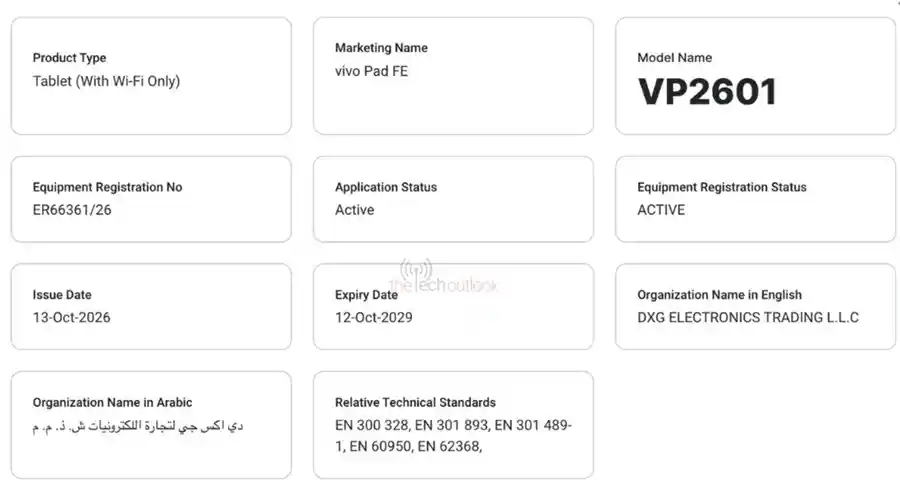
Vivo Pad FE has been spotted on the UAE’s TDRA database with model number VP2601, confirming its marketing name and Wi‑Fi‑only connectivity.
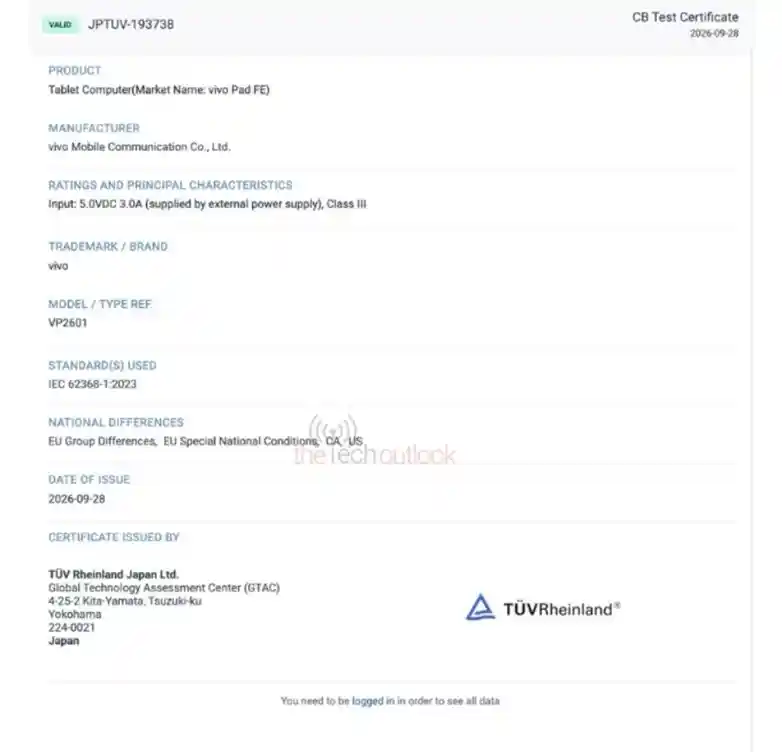
TÜV certification lists a 15W (5V/3A) electrical input, though actual charging speed remains unconfirmed.
Launch details including specifications, price, and availability are not yet announced.
Vivo Pad FE has appeared on the UAE’s TDRA certification database, revealing its marketing name and model number ahead of its expected global debut. The tablet has also been spotted on the TÜV database, which lists a 15W power input rating. However, Vivo has not confirmed the tablet’s launch date, price, or remaining specifications.
Vivo Pad FE Spotted on UAE’s TDRA Database
VIVO Pad FE on TDRA. (Screenshot by TheTechOutlook)
The upcoming Vivo Pad FE has been listed on the UAE’s Telecommunications and Digital Government Regulatory Authority (TDRA) database with the model number VP2601. The entry carries the equipment registration number ER66361/26 and identifies the device by its Vivo Pad FE marketing name.
The certification was issued on October 13, 2026 and the listing identifies the tablet as a Wi-Fi-only model. This suggests that the certified variant is designed for wireless network connectivity rather than cellular connectivity.
The tablet was previously spotted on the European Economic Community (EEC) database indicating its possible arrival in global markets. Its appearance on the TDRA database further points to Vivo preparing the device for potential international availability. However, these certifications do not confirm a launch in any specific country.
Vivo Pad FE TÜV Certification Hints at 15W Charging
Vivo Pad FE on TUV. (Screenshot by TheTechOutlook)
The Vivo Pad FE with model number VP2601 has also appeared on the TÜV database. The listing carries the certificate number JP TÜV-193738 and was issued on September 28, 2026.
The entry mentions an electrical rating of 15W (5V DC/3A). While this provides information about the tablet’s power input, the listing does not explicitly confirm its supported charging speed. Therefore, 15W charging support remains unconfirmed based on the available certification details alone.
The certification covers EU Group Differences, EU Special National Conditions, Canada, and the US under national differences. However, these regulatory details do not establish that the tablet will launch in all the listed markets.
Vivo Pad.
Vivo Pad FE Specifications and Features (Expected)
Details on Vivo Pad FE’s specifications and features are limited at the moment. The brand is yet to officially acknowledge the Pad FE as an upcoming device. The available certification listings provide limited information about its connectivity category and electrical rating.
It also remains unclear whether the upcoming tablet will share its hardware with the Vivo Pad SE sold in China or feature different specifications.
Vivo Pad FE Launch Timeline and Availability
Vivo has not announced an official launch date for the Pad FE. However, its appearances on the EEC, TDRA and TÜV databases suggest that the company is progressing with the necessary certification processes ahead of a possible launch.
The multiple certification sightings could indicate that the Vivo Pad FE is being prepared for markets outside China. That said, they do not confirm its launch timeline or availability in India.
Vivo Pad FE Price (Expected)
Vivo has not announced the price of the Pad FE and no credible pricing leak is available so far. Its expected price in India and other markets therefore remains unknown.
We can expect more information including its specifications, launch markets and availability to emerge in the coming weeks.
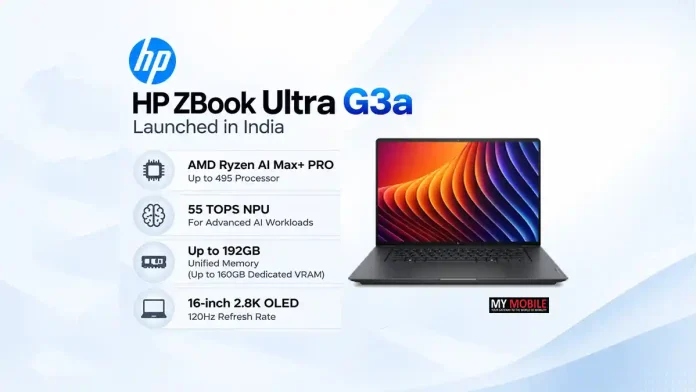
HP has launched ZBook Ultra G3a 16-inch, powered by AMD Ryzen AI Max+ Pro processors.
HP ZBook Ultra G3a 16-inch supports advanced local AI workloads, including up to 300B-parameter LLMs with up to 192GB unified memory.
The latest HP mobile workstation starts at Rs 2,89,990.
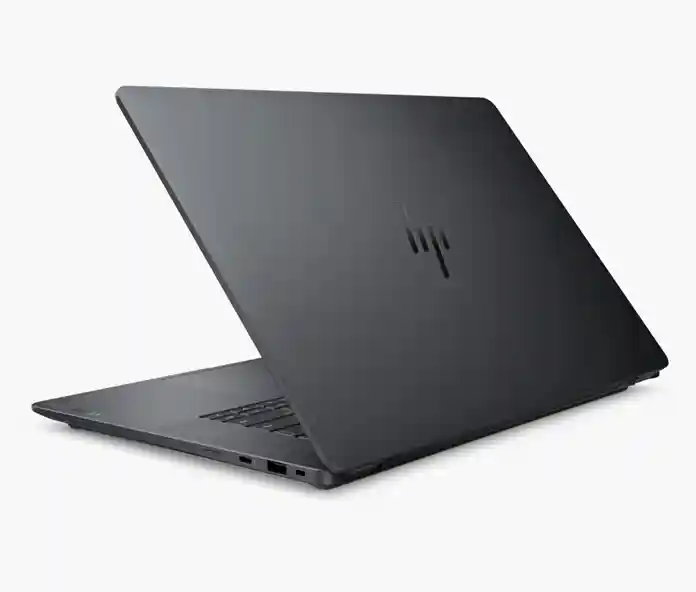
HP Inc. has launched the HP ZBook Ultra G3a 16” in India, with AMD Ryzen™ AI Max+ PRO processors. Designed for individuals who need powerful hardware for AI development, engineering, design, and content creation, the HP ZBook Ultra G3a 16 is a thin-and-light mobile workstation. Combining workstation-class performance, high memory capacity and local AI capabilities to support demanding workloads, the latest mobile workstation allows users to move faster from concept to completion while maintaining productivity.
HP ZBook Ultra G3a 16” Price and Availability
The starting price of HP ZBook Ultra G3a 16” is Rs 2,89,990. It is available across HP commercial channel partners in India.
Key Specifications & Features
The HP ZBook Ultra G3a 16” is built for demanding professional workflows. The new HP mobile workstation offers the following features:
Specifications
Details
Processor
Up to AMD Ryzen™ AI Max+ PRO 495
NPU Performance
55 TOPS neural processing unit
Storage
Up to 192GB unified memory (including up to 160GB dedicated VRAM)
Local AI Support
300 billion parameters LLMs locally
Display
16-inch 2.8K OLED, 120Hz refresh rate
Thermal / TDP
Up to 100W performance TDP (an 81.8% higher over previous generations)
Battery & Charging
96Wh battery, with up to 14 hours runtime; HP 140W and 180W GaN USB-C AC adapters
Weight
Approximately 1.9 kg weight; 17.9 mm thickness
Connectivity
Wi-Fi with secure 5G connectivity
Security & Build
HP Wolf Security suite; easily IT-replaceable keyboard design
HP ZBook Ultra G3a: Local AI and Edge Computing Capabilities
The ZBook Ultra G3a 16” offer an edge-computing architecture. The latest HP device features up to an AMD Ryzen AI Max+ PRO 495 processor and a dedicated 55 TOPS NPU, paired with up to 192GB of unified memory. Whether you are a machine learning developer or a data engineer, the HP ZBook Ultra G3a 16” provides up to 160GB dedicated VRAM. The system also supports up to 300B-parameter LLMs locally and secures sensitive enterprise datasets without the need of persistent cloud compute connectivity.
Workstation Performance, Thermal Design, and Display
The HP ZBook Ultra G3a 16” comes with an approximately 1.9 kg and 17.9 mm thin profile. A new thermal design delivers sustained operations up to 100W TDP for advanced workloads away from the desk.
The latest HP workstation integrates an optional 16-inch 2.8K OLED display with a 120Hz refresh rate, providing high clarity, colour accuracy and smooth motion rendering.
Battery Life, Security, and Serviceability
The HP ZBook Ultra G3a 16” features a 96Wh battery, allowing professionals to stay productive throughout the workday without frequent charging. The HP 140W and 180W GaN USB-C AC adapters provide space-efficient charging for mobile and desk-based work environments.
The latest HP mobile workstation integrates HP Wolf Security, delivering PC resiliency at every level. It also comes with 5G connectivity, and an IT-replaceable keyboard design features for long-term use and extended device life and simplify serviceability.