Home Blog Page 83

Moto G 2026 and Moto G Play 2026 Leak Reveals Complete Specifications, Official Renders

0

Highlights

  • Moto G 2026 and Moto G Play 2026 feature flat 6.7″ HD+ displays with hole-punch cameras, eco-leather backs, and PANTONE colour finishes.
  • The phones are powered by MediaTek Dimensity 6300, both offer 4GB RAM with RAM Boost, 5,200mAh batteries, and Android 16.
  • Moto G gets 128GB storage and 30W charging, while Play offers 64GB and 18W.
  • Moto G 2026 sports a 50MP + Macro rear setup and 32MP front camera, while Play has a 32MP rear and 8MP front. Both include advanced camera modes, Dolby Atmos, and Motorola’s software suite.
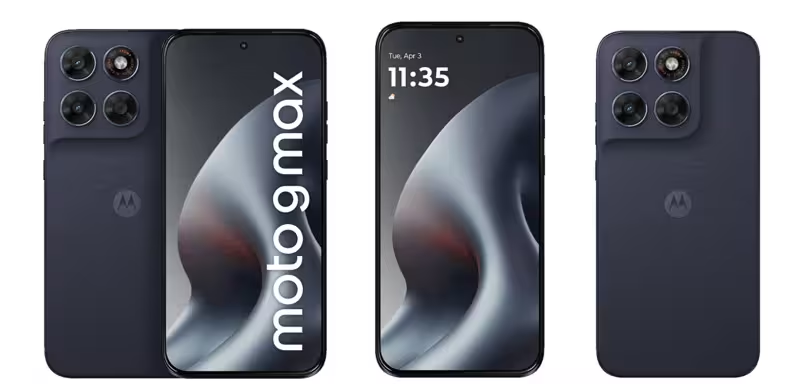
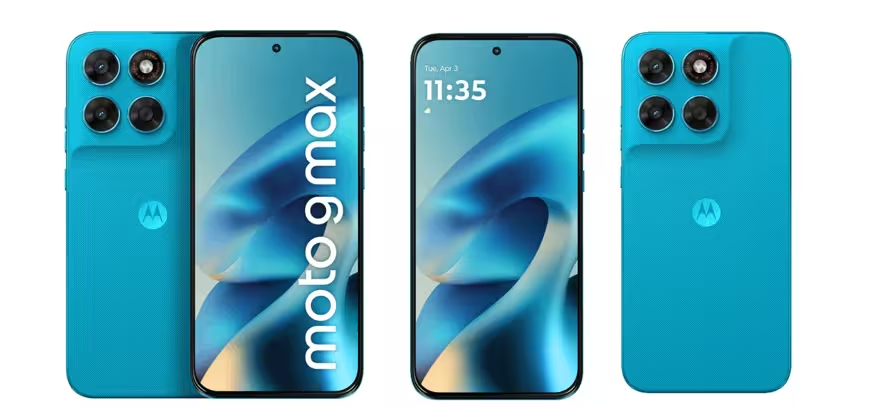
 Leaked official poster of Moto G 2026 (left) and Moto G Play 2026 (right).
Leaked official poster of Moto G 2026 (left) and Moto G Play 2026 (right). (Image credit – Android Headline)

Motorola is preparing to expand its popular G-series lineup with the upcoming Moto G 2026 and Moto G Play 2026. AndroidHeadlines has published official renders and full specifications of both models in one of its recent reports. Here’s a roundup of everything we know based on the latest reveal.

Moto G 2026 and Moto G Play 2026 – Design

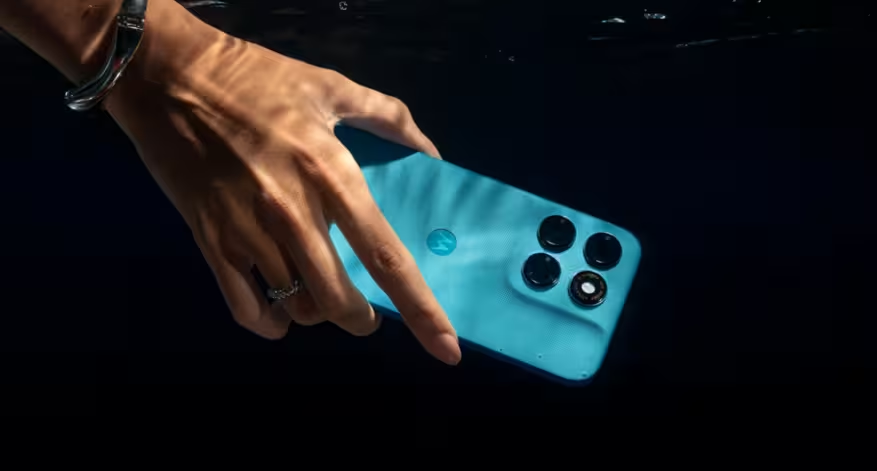
Both the Moto G 2026 and Moto G Play 2026 sport an almost similar design language. They come with flat displays featuring a centred hole-punch selfie camera, paired with uneven bezels and a slightly thicker chin. The frames are flat but taper slightly toward the front and back edges.

image

image

Caption – A closer look at the design of Moto G 2026 (left) and Moto G Play 2026 (right). (Image credit – Android Headline)

On the right side are all the buttons, with the power key placed beneath separated volume keys, while the SIM card tray sits on the left. At the bottom, users will find a USB Type-C port and a 3.5mm headphone jack.

On the back, both models feature a raised camera island wrapped in eco-leather material, which matches the rear panel for added grip and a premium finish. The Moto G 2026 will arrive in PANTONE Cattleya Orchid, while the Moto G Play 2026 will launch in PANTONE Tapestry.

Moto G 2026 – Key Specifications

image

Caption – Moto G 2026 render. (Image credit – Android Headline)

According to the report, the Moto G 2026 is equipped with a 6.7-inch HD+ display that supports a 120Hz adaptive refresh rate (switching between 60Hz and 120Hz) and reaches up to 1,000 nits peak brightness with protection from Gorilla Glass 3.

The rear camera setup includes a 50MP Quad Pixel main sensor paired with a dedicated Macro Vision lens, while the front features a 32MP selfie camera. Quad Pixel technology is designed to deliver sharper and brighter images in low-light conditions. Camera features include Hyperlapse, Timelapse, Slow Motion, Auto Smile Capture, Dual Capture, Night Vision, Portrait, Face Retouch, Gesture Selfie, and Photo Booth.

Under the hood, the phone runs on the MediaTek Dimensity 6300 chipset, supported by 4GB RAM with RAM Boost for virtual memory expansion. Internal storage is 128GB UFS 2.2, expandable via microSD. The device packs a 5,200mAh battery with 30W TurboPower fast charging, offering up to two days of usage on a single charge.

Additional highlights include Dolby Atmos, Hi-Res Audio, a water-repellent design, and Android 16 out of the box. Motorola’s software suite includes Google Gemini, Circle to Search, Family Space, Moto Unplugged, Moto Secure, ThinkShield, and Face Unlock.

Moto G Play 2026 – Key Specifications

image

Caption – Moto G Play 2026 leaked render. (Image credit – Android Headline)

The Moto G Play 2026 mirrors its sibling with a 6.7-inch HD+ display, 120Hz adaptive refresh rate, 1,000 nits peak brightness, and Gorilla Glass 3 protection.

It is powered by the same MediaTek Dimensity 6300 processor, coupled with 4GB RAM and RAM Boost. Storage capacity is slightly lower at 64GB UFS 2.2, but users can expand it with a microSD card.

For photography, the Moto G Play 2026 features a 32MP Quad Pixel main rear camera and an 8MP front-facing camera, along with the same suite of camera features available on the Moto G 2026.

Battery performance is also solid with a 5,200mAh unit, though charging speed is limited to 18W TurboPower. The device includes stereo speakers with Dolby Atmos, Hi-Res Audio, Bluetooth 5.3, a water-repellent design, and Android 16 with the same Motorola-exclusive features.

FAQs

Q1.  What are the display specs of Moto G 2026 and Moto G Play 2026?

Answer. Both phones feature a 6.7-inch HD+ display with 120Hz adaptive refresh rate, 1,000 nits peak brightness, and Gorilla Glass 3 protection.

Q2. How do the cameras differ between Moto G 2026 and Moto G Play 2026?

Answer. Moto G 2026 has a 50MP main + Macro rear camera and a 32MP front camera. Moto G Play 2026 offers a 32MP rear and an 8MP front camera, with similar shooting modes.

Q3. What are the battery and charging capabilities of Moto G 2026 and Moto G Play 2026?

Answer. Both pack a 5,200mAh battery. Moto G 2026 supports 30W TurboPower fast charging, while Moto G Play 2026 is limited to 18W charging.
Q4. What software and features come with the Moto G 2026 series?

Answer. They run Android 16 and include Motorola’s suite: Google Gemini, Circle to Search, Moto Secure, Moto Unplugged, Family Space, ThinkShield, and Face Unlock.

Also Read –

https://www.mymobileindia.com/motorola-moto-pad-60-neo-launch-price-specs-india/

https://www.mymobileindia.com/motorola-edge-60-neo-europe-launch/

Viral Nano-Banana AI Trend – Google Gemini Surpasses ChatGPT as Top App, Top Prompts to Generate Creative 3D Figurines, Learn To Create Instagram’s Viral Vintage Saree AI Photo

0

Highlights

  • Viral Nano-Banana AI trend is being driven by the Nano-Banana image editing tool.
  • Google Gemini has surpassed ChatGPT as the #1 app on both iOS and Android platforms.
  • The trend transforms selfies into collectible-style 3D portraits with viral offshoots like vintage saree edits dominating Instagram.
  • Users are generating figurines in styles ranging from cyberpunk to retro Bollywood, blending Gemini’s visuals with ChatGPT’s storytelling prompts.

image

Google’s Gemini app has officially overtaken ChatGPT to claim the number-one spot on both the Apple App Store and Google Play Store. This surge in popularity is largely driven by the viral success of its Nano-Banana AI image editing tool, which has taken over social media feeds worldwide. Here’s a roundup of everything that is happening in Viral Nano-Banana AI Trend.

What is Nano-Banana?

image

For those unfamiliar, Nano-Banana is an AI trend that transforms user photos into hyper-detailed 3D figurine-style portraits. These edits look like collectible toy figures, complete with acrylic bases and stylised packaging.


The trend has exploded on platforms like Instagram and X (formerly Twitter), embraced by celebrities including Sonam Bajwa and Rakesh Roshan, as well as politicians like Assam CM Himanta Biswa Sarma and Goa CM Pramod Sawant.

Google Gemini Tops App Charts

When TOI Tech checked the “Top Apps” list on both app stores, Google Gemini ranked first, followed by Threads and ChatGPT. This is a reversal from earlier months when ChatGPT held the top spot during its viral Ghibli-style image generation phase.

Google confirmed that the Nano-Banana feature is free for all users within the Gemini app. The company is also encouraging users to share their creations online with standout images being featured by Google.

Caption - Prompts. (Image credit - Google)
Caption – Prompts. (Image credit – Google)

image

Nano-Banana vs ChatGPT

While Nano-Banana dominates the spotlight with quick, playful, and viral edits, ChatGPT takes a different path. Instead of creating figurines, ChatGPT focuses on storytelling through images. For example, rather than simply generating a dragon image, it might describe “a dragon mourning in ruins lit by candlelight.”

This makes ChatGPT more appealing for writers, marketers, and storytellers, while Nano-Banana thrives on social media virality.

The rivalry is almost like comparing TikTok to Netflix. Nano-Banana is fun, fast, and shareable, the “life of the party.” ChatGPT, on the other hand, offers depth, narrative, and emotional storytelling. Many creators are now blending both – Nano-Banana for visuals, ChatGPT for context.

Viral Vintage Saree Nano-Banana AI Trend on Instagram

image

Caption – Viral Vintage Saree Nano-Banana AI Trend on Instagram.

One of the biggest offshoots of Nano-Banana is the vintage saree AI edit trend on Instagram.

These edits look like classic Bollywood posters from the 90s with chiffon sarees, retro film grain, and dramatic cinematic effects. The trend combines Google Gemini’s image generation with ChatGPT’s prompt guidance to deliver unique retro avatars.

How to Create Your Own Vintage Saree AI Photo?

  • Log in to Gemini or ChatGPT with your Google account.
  • In Gemini, tap “Try Image Editing” (banana icon).
  • Upload a clear solo picture where your face is visible.
  • Copy-paste a viral saree prompt (examples below).
  • Generate, save, and share your AI edit on Instagram.

Sample AI Saree Prompts –

Black Saree Prompt – “Convert this person into a retro vintage grainy but bright image, black party-wear saree, 90s film aesthetic. She is standing against a solid, deep wall with dramatic shadows and contrast, creating a mysterious and artistic atmosphere. Lighting is warm, with golden sunset tones evoking golden hour glow. Her expression is moody, calm, yet subtly happy and introspective.”

White Saree Prompt – “Create a 4K HD realistic portrait of a woman in a translucent white polka dot saree. Small pink flower tucked behind her ear, warm light casting cinematic shadows. Pure vintage diva energy.”

Nano-Banana Figurine Prompts for Social Media and 3D Printing

image

Caption – Nano-Banana Figurine Prompts for Social Media and 3D Printing.

Google’s Nano-Banana isn’t limited to saree edits, it can turn ordinary selfies into mini 3D collectibles.

Here are some creative prompt ideas (via Techlusive) –

  • Mini Explorer Figurine – Turn the image into a tiny explorer with a backpack, binoculars, and a campfire accessory, standing on a rocky terrain base.
  • Cyberpunk Character – Create a neon-lit cyberpunk-style figure with futuristic clothing, holographic gadgets, and a glowing cityscape base.
  • Mythical Creature Collectible – Transform the photo into a 3D dragon or unicorn figure with magical glow effects and a floating crystal base.
  • Streetwear Toy Model – Make a modern streetwear-style figurine with sneakers, hoodie, and skateboard, posed on a graffiti-decorated mini platform.
  • Mini Chef Figurine – Render the subject as a cute chef figurine, holding a frying pan and spatula, standing on a kitchen countertop base.
  • Fantasy Knight Figurine – Turn the image into a knight with shining armor, sword and shield, on a stone castle platform.
  • Retro Music Icon – Create a 3D figurine of the person as a retro rock star, holding a guitar, with a vinyl record and stage lights in the background.
  • Miniature Scientist – Render the image as a scientist figurine, holding a flask, with lab equipment and a tiny chalkboard base.
  • Futuristic Racer Toy – Turn the subject into a racing driver with helmet, racing suit, and a small hovercar base.
  • Jungle Adventurer Figurine – Make the photo into a jungle explorer toy, standing on a tree stump base with vines and miniature animals around.
  • Underwater Explorer Model – Create a scuba diver figurine, equipped with oxygen tanks and flippers, standing on a coral reef base.
  • Mini Carnival Performer – Transform the subject into a circus performer figurine, juggling colorful balls on a striped carnival platform.
  • Steampunk Character Toy – Render the image as a steampunk adventurer with goggles, gears, and a mechanical contraption base.
  • Mini Wizard Figurine – Make a magical wizard with a staff, flowing robes, and a glowing spell circle on the base.
  • Sci-Fi Pilot Collectible – Turn the photo into a space pilot figurine, seated in a futuristic cockpit with holographic displays.

image

Caption – Nano-Banana 3D Printing.

Retro & Pop Culture Nano Banana 3D Figurine Prompts –

  • 80s Arcade Gamer Figurine – Turn the image into a pixelated 1980s gamer, sitting at an arcade cabinet with neon lights and joystick in hand.
  • Vintage Rock Band Member – Create a 1970s or 1980s rock musician figurine, with big hair, electric guitar, and vinyl record stage base.
  • Classic Cartoon Toy – Render the subject as a Saturday morning cartoon-style figurine, with exaggerated expressions and colorful comic props.
  • Retro Futuristic Pilot – Make a 1960s sci-fi pilot collectible with shiny metallic suit, jetpack, and rocket-inspired display base.
  • Old-School Film Star – Transform the image into a golden-era Hollywood star, with vintage costume, retro hairstyle, and mini red carpet base.
  • Disco Dance Figurine – Create a disco-themed 3D figure with platform shoes, glittery clothes, and a mirrored disco floor.
  • Vintage Comic Hero – Render the subject as a classic comic book superhero, with bold primary colors, cape, and retro comic effects.
  • Retro Toy Robot – Make a 1950s-inspired toy robot version of the image, with metallic body, antenna, and tiny gears on the base.
  • Pop Culture Icon Collectible – Turn the photo into a figurine inspired by famous pop culture trends, complete with iconic accessories and stage setup.
  • Retro Gaming Character – Create a figurine styled after a vintage 8-bit video game hero, posed on a mini arcade platform with pixelated props.

FAQs

Q1. What is the Nano-Banana AI trend and why is it popular?

Answer. Nano-Banana is an AI image editing feature in Google Gemini that transforms selfies into hyper-detailed 3D figurine-style portraits. Its playful, collectible aesthetic has gone viral on social media, driving Gemini to the top of app charts.

Q2. How does Google Gemini compare to ChatGPT in image generation?

Answer. Gemini focuses on fast, shareable edits like Nano-Banana figurines, while ChatGPT leans into narrative-driven visuals, ideal for storytelling, marketing, and creative writing.

Q3. What is the Vintage Saree AI trend and how can I create it?

Answer. It’s a viral Instagram trend using Gemini’s image editor and ChatGPT prompts to generate retro Bollywood-style portraits. Upload a clear photo, apply a saree prompt, and share your cinematic avatar online.

Also Read –

https://www.mymobileindia.com/google-gemini-gets-ipad-app-and-expands-audio-overviews-to-over-45-languages/

https://www.mymobileindia.com/apple-to-reportedly-integrate-google-gemini-in-iphones-this-fall/

Google Pixel 10 Pro XL Teardown Highlights Major Boost in Repairability

0

Highlights

  • The Pixel 10 Pro XL features a redesigned internal layout that makes disassembly easier, especially for DIY repairs.
  • Google replaces adhesive with pull tabs for the battery, allowing tool-free removal and simplifying future replacements.
  • Google is clearly prioritising sustainability and user-friendly maintenance.
Google Pixel 10 Pro XL.
Google Pixel 10 Pro XL. (Image credit – Google)

If you thought the Google Pixel 10 Pro XL is just about powerful cameras and AI features, you are mistaken. The new flagship model is also making strides in the department of repairability. And we know that because teardown videos have started cropping up and we finally have an inside look at Google’s engineering.

Google Pixek 10 Pro XL Teardown

Google Pixel 10 Pro XL teardown.
Google Pixel 10 Pro XL teardown. (Image credit – JerryRigEverything on YouTube)

A recent teardown by popular YouTuber Zack Nelson, better known as JerryRigEverything, offers the clearest look yet at how Google has redesigned the phone’s internals.

Launched alongside the Pixel 10, Pixel 10 Pro, and Pixel Watch 4, the Pixel 10 Pro XL stands out because it is much easier to disassemble compared to previous Pixel models. Nelson’s teardown video highlights several design improvements that make the device less daunting for DIY repair enthusiasts.

Google Pixel 10 Pro XL teardown.
Google Pixel 10 Pro XL teardown. (Image credit – JerryRigEverything on YouTube)

The biggest change comes with the battery setup. Instead of relying on the heavy glue found in earlier Pixels, Google now uses pull tabs that allow the battery to be removed without the need for specialised tools. This simple change can save users both time and money when it’s time for a replacement.

Nelson also noted that the phone powered back on and functioned normally after reassembly, something that’s not always guaranteed with today’s tightly packed smartphones.

Beyond the battery, the overall frame and structure of the Pixel 10 Pro XL feel sturdier. With Google now publishing official repair guides and offering genuine parts through iFixit, repairing a Pixel device is becoming far less of a challenge.

Tech reviewer iFixit has also recently shared a positive review of the Pixel 10, making it evident that Google is finally prioritising durability and sustainability in its hardware design.

Meanwhile, Nelson acknowledged that the Pixel 10 Pro XL might not be as repair-focused as brands like Fairphone but it is a clear step forward in terms of repairability.

You can check out the complete teardown video below –

FAQs

Q1. What makes the Pixel 10 Pro XL more repairable than previous models?

Answer. The Pixel 10 Pro XL features a redesigned internal layout and easier disassembly, including battery pull tabs that eliminate the need for glue or special tools.

Q2. Can users replace the Pixel 10 Pro XL battery themselves?

Answer. Yes. Thanks to the new pull-tab design, users can remove and replace the battery without professional tools, making DIY repairs more accessible and affordable.

Q3. Is Google supporting official repairs for the Pixel 10 Pro XL?

Answer. Absolutely. Google now provides repair guides and genuine parts through iFixit, signalling a stronger commitment to durability and user-friendly maintenance.

Also Read –

https://www.mymobileindia.com/google-pixel-10-pro-xl-design-fully-revealed-ahead-of-launch/

https://www.mymobileindia.com/google-pixel-10-pro-and-pro-xl-cad-renders-reveal-familiar-design/

iPhone 18 Series May Feature Smaller Dynamic Island but No Under-Display Face ID

0

Highlights

  • The iPhone 18 lineup may feature a slightly reduced Dynamic Island size, continuing Apple’s gradual design refinement.
  • Despite recurring rumours, under-screen Face ID and front cameras are unlikely to debut until the iPhone 19 series or later.
  • Tipster Instant Digital, known for some accurate Apple predictions, suggests visible front cameras will remain with more leaks expected before launch.
image
iPhone 18 Series rumours have started surfacing online. (iPhone 17 lineup in picture)

It has been just a few days since the latest iPhone lineup was unveiled and now we are getting reports of what the Cupertino giant is planning for next year. According to information shared by the popular Weibo account Instant Digital, Apple’s iPhone 18 lineup is rumoured to come with a slightly smaller Dynamic Island.

However, the models including the iPhone 18, iPhone 18 Pro, and iPhone 18 Pro Max are not expected to introduce under-display Face ID just yet.

image
Tipster Instant Digital’s recent post. (Translate via Google Translate)

Earlier, there were different reports suggesting that the iPhone 17 Pro models could feature a smaller Dynamic Island. But as we now know, that did not happen. The speculation has now returned for the iPhone 18 series and this time it may hold more weight as Apple works towards its rumoured 20th-anniversary all-glass iPhone.

As for under-screen Face ID, this has been a recurring rumour linked to the iPhone 16 Pro, iPhone 17 Pro and now the iPhone 18 Pro models. But, if the latest leak is accurate, Apple may not debut the technology until the iPhone 19 Pro series or later. In other words, under-display Face ID still appears to be a feature that remains a year or two away.

The leak also claims that none of the iPhone 18 models will include an under-display front camera. Instead, users can expect a smaller Dynamic Island paired with a visible front-facing camera.

Instant Digital, which has nearly 1.5 million followers on Weibo, has a mixed but notable track record with Apple leaks. The account correctly predicted the vapour chamber cooling system for the iPhone 17 Pro, the Yellow finish for the iPhone 14 and iPhone 14 Plus, and the Titanium Milanese Loop for the Apple Watch Ultra 2. However, not all of its iPhone 17-related leaks came true.

With the iPhone 18 series still at least a year away, it’s safe to expect plenty more rumours and reports before Apple’s official launch.

FAQs

Q1. Will the iPhone 18 series feature under-display Face ID?

Answer. No. Despite ongoing rumours, under-display Face ID is not expected in the iPhone 18 lineup. It may debut with the iPhone 19 Pro series or later.

Q2. What design change is expected in the iPhone 18’s Dynamic Island?

Answer. The iPhone 18, 18 Pro, and 18 Pro Max may feature a slightly smaller Dynamic Island, refining the notch area while keeping the front camera visible.

Q3. Is Apple planning an under-display front camera for iPhone 18?

Answer. No. According to leaks, the iPhone 18 models will retain a visible front-facing camera, with no under-display solution expected this cycle.

Also Read –

https://www.mymobileindia.com/apple-may-skip-iphone-18-in-2026-to-launch-first-foldable-iphone-report/

https://www.mymobileindia.com/iphone-18-pro-to-get-under-display-face-id-ditching-the-dynamic-island-another-leak-confirms/

Snapchat Launches Group Streaks and Infinite Retention for Chats

0

Highlights

  • Snapchat’s new Infinite Retention feature now allows users to keep chats permanently instead of relying on disappearing messages.
  • The feature is optional per conversation with both parties notified and able to toggle it.
  • Snapchat expands its Streaks feature to groups, allowing multiple members to contribute daily Snaps. If a streak breaks, users have up to 7 days to restore it.
 (Photo by Rubaitul Azad on Unsplash)
(Photo by Rubaitul Azad on Unsplash)

Snapchat is introducing two new features, Infinite Retention for chats and Group Streaks, both of which are aimed at enhancing user experience. The company says these additions are among the most “highly requested” by its community. Here’s what we know about the features at the moment.

Snapchat New Feature – Infinite Retention

The newly announced Infinite Retention feature changes the way chats work on Snapchat. Unlike the platform’s usual disappearing messages, this update allows users to keep their conversations permanently, similar to other messaging apps.

As the company explained in its announcement, “We’ve often heard from our community that Snapchatters want to save their chats forever and wish they could build streaks with their favorite groups.”

Snapchat began testing Infinite Retention back in 2024, and it is now rolling out globally. Previously, users could save messages by tapping on them inside chats, but this new feature makes the process seamless.

Infinite Retention can be turned on or off for individual conversations. When activated, the other person in the chat will receive a notification, and they also have the option to disable it. For example, you may choose to keep the feature on for close friends while leaving it off for casual contacts.

Snapchat New Feature – Group Streaks

Alongside Infinite Retention, Snapchat has also introduced Group Streaks. These bring a collective twist to the popular Streaks feature. Traditionally, maintaining a Streak required sending and receiving at least one photo or video Snap with a friend each day.

With Group Streaks, multiple people can contribute, making it easier to keep the streak alive. Even if a streak ends, users will have up to a week to restore it.

With Infinite Retention and Group Streaks, Snapchat is giving users more control over their conversations and adding a fun, collaborative element to its most beloved feature.

FAQs

Q1. What is Snapchat’s new Infinite Retention feature?

Answer. Infinite Retention allows users to keep chats permanently, unlike Snapchat’s traditional disappearing messages. It can be toggled on or off per conversation, and both participants are notified when it’s activated.

Q2. How do Group Streaks work on Snapchat?

Answer. Group Streaks let multiple users contribute to a shared streak by sending Snaps within a group. If the streak breaks, members have up to 7 days to restore it, making it easier to maintain than individual streaks.

Q3. Can users control who sees their saved chats with Infinite Retention?

Answer. Yes. Infinite Retention is customisable per chat. Users can choose to enable it for close friends and disable it for others. The recipient is notified and can opt out if they prefer disappearing messages.

Also Read –

https://www.mymobileindia.com/snapchats-new-lightweight-ar-glasses-specs-coming-in-2026-with-smarter-features/

https://www.mymobileindia.com/snapchat-app-finally-lands-on-apple-watch-with-messaging-support/

Samsung Galaxy Tab S10 Lite and Galaxy Buds 3 FE Debut in India – Price, Specs, and Features

0
Samsung Galaxy Tab S10 Lite and Galaxy Buds 3 FE

Highlights

  • Galaxy Tab S10 Lite – features a 10.9″ WUXGA+ display, Exynos 1380, up to 8GB RAM, 5G support, S Pen, and 8,000mAh battery.
  • Galaxy Buds 3 FE – Offers ANC, 360 Audio, AI voice control, and up to 30-hour battery life.
  • Tab S10 Lite is now on sale, Buds 3 FE go live next week with ₹3,000 cashback and multi-device support via Samsung’s Auto Switch.
Samsung Galaxy Tab S10 Lite and Galaxy Buds 3 FE debut in the Indian market.
Samsung Galaxy Tab S10 Lite and Galaxy Buds 3 FE debut in the Indian market. (Image credit – Samsung)

image


Samsung has expanded its product lineup in India with the launch of the Samsung Galaxy Tab S10 Lite and the Samsung Galaxy Buds 3 FE. The Tab S10 Lite was first unveiled globally in August and later showcased at the Galaxy Event on September 5 alongside the Galaxy S25 FE. Meanwhile, the company has also announced that the Galaxy Buds 3 FE will go on sale in India next week. Here’s more on both.

Samsung Galaxy Tab S10 Lite – Key Specifications

image

Caption – Galaxy Tab S10 Lite. (Image credit – Samsung)

The Galaxy Tab S10 Lite comes with a 10.9-inch WUXGA+ TFT display (1320 × 2112 pixels) offering 600 nits peak brightness and Samsung’s Vision Booster technology. Powering the device is the Exynos 1380 SoC, paired with up to 8GB RAM and 256GB internal storage, expandable via microSD card up to 2TB.

On the camera front, it features a single 8MP rear camera and a 5MP front camera for selfies and video calls. Connectivity options include 5G, Bluetooth 5.3, and Wi-Fi 6. The tablet also comes bundled with an S Pen, supporting Samsung Notes and Circle to Search features. Additionally, it supports the Samsung Book Cover Keyboard with a Galaxy AI Key (sold separately).

The Tab S10 Lite is backed by an 8,000mAh battery with support for fast charging (exact wattage not specified). It measures 165.8 × 254.3 × 6.6mm, weighs 524g, and supports a range of productivity apps such as Goodnotes, Clip Studio Paint, LumaFusion, Notion, Noteshelf, ArcSite, Sketchbook, and Picsart. Samsung is also offering free and discounted subscriptions, including one year of Goodnotes, 20% off Clip Studio Paint in the first year, and a six-month free trial.

Samsung Galaxy Tab S10 Lite – Price and Availability in India

- Galaxy Tab S10 Lite.
Galaxy Tab S10 Lite. (Image credit – Samsung)

The Samsung Galaxy Tab S10 Lite price in India starts at ₹30,999 for the Wi-Fi-only variant with 6GB RAM + 128GB storage, while the 8GB RAM + 256GB storage Wi-Fi model costs ₹40,999.

For users seeking connectivity on the go, the 5G models are priced at ₹35,999 for the 6GB + 128GB option and ₹45,999 for the 8GB + 256GB configuration.

The tablet is available in Coral Red, Grey, and Silver colour options via the Samsung India website and leading e-commerce platforms.

Samsung Galaxy Buds 3 FE – Key Specifications

image

Caption – Galaxy Buds 3 FE. (Image credit – Samsung)

The Galaxy Buds 3 FE feature an in-ear design with 11mm dynamic drivers. They support Active Noise Cancellation (ANC), Ambient Sound mode, and Crystal Clear Call technology with a three-microphone setup. For immersive sound, they also include 360 Audio.

Controls are intuitive, with pinch gestures on the stem for certain actions and swipe gestures for volume control. The earbuds also support multi-device connectivity and Samsung’s Auto Switch feature, allowing seamless switching between devices.

For audio, the Buds 3 FE support Bluetooth 5.4 and codecs including Samsung Seamless Codec (SSC), AAC, and SBC. They come with an IP54 rating (for the earbuds only) against dust and water.

Samsung has also integrated voice control and AI features, enabling users to play music, check emails, translate conversations, or manage schedules hands-free. The Buds 3 FE work with the Galaxy AI Interpreter app for real-time translations and provide Gemini voice assistant support.

image

Caption – Galaxy Buds 3 FE. (Image credit – Samsung)

Battery life is rated at up to 8.5 hours on a single charge without ANC, and up to 30 hours with the charging case. Each earbud has a 53mAh battery, while the case houses a 515mAh cell. The earbuds weigh 5g each, and the case weighs 41.8g.

Samsung Galaxy Buds 3 FE – Price and Availability in India

Galaxy Buds 3 FE.
Galaxy Buds 3 FE. (Image credit – Samsung)

The Samsung Galaxy Buds 3 FE price in India is set at ₹12,999, available in Black and Grey colours. Buyers can also get ₹3,000 cashback or an upgrade bonus on eligible bank transactions.

Pre-reservations are already live with sales starting next week across Samsung’s website, e-commerce platforms, and offline retail stores.

FAQs

Q1. What are the key features of the Galaxy Tab S10 Lite?

Answer. It offers a 10.9″ WUXGA+ display, Exynos 1380 SoC, up to 8GB RAM, 256GB storage (expandable to 2TB), 8MP rear and 5MP front cameras, and an 8,000mAh battery.
Q2. Does the Galaxy Tab S10 Lite come with an S Pen?

Answer. Yes, the tablet includes an S Pen that supports Samsung Notes and Circle to Search. It also works with the optional Book Cover Keyboard featuring a Galaxy AI Key.

Q3. What is the price of the Galaxy Tab S10 Lite in India?

Answer. Prices start at ₹30,999 for the Wi-Fi 6GB + 128GB variant and go up to ₹45,999 for the 5G 8GB + 256GB model. Available in Coral Red, Grey, and Silver.

Q4. What features do the Galaxy Buds 3 FE offer?

Answer. They include ANC, Ambient Sound, 360 Audio, pinch/swipe controls, multi-device connectivity, IP54 rating, and support for Galaxy AI Interpreter and Gemini assistant.

Q5. What is the battery life of the Galaxy Buds 3 FE?

Answer. Up to 8.5 hours on a single charge (without ANC), and up to 30 hours with the charging case. Each earbud has a 53mAh battery; the case holds 515mAh.

Also Read –

https://www.mymobileindia.com/samsung-galaxy-s26-pro-renders-leaked-no-charging-speed-upgrades-expected-for-s26-pro-s26-edge/

https://www.mymobileindia.com/iqoo-15-confirmed-to-feature-2k-samsung-amoled-display-rear-design-leaks-online/

Motorola Moto Pad 60 Neo launched in India with 11″ 2.5K display, Dimensity 6300 & Moto Pen support

0
Motorola Launches Moto Pad 60 Neo

Highlights

  • Motorola’s Moto Pad 60 Neo features an 11″ 2.5K IPS screen, Dimensity 6300 chipset, 8GB RAM, and is billed as the slimmest 5G tablet in its segment.
  • Bundled Moto Pen supports 4096 pressure levels and tilt recognition, ideal for creative tasks and note-taking.
  • It is priced at ₹17,999 with ₹5,000 instant discount via select bank offers.
Motorola’s Moto Pad 60 Neo launch details and offers.
Motorola’s Moto Pad 60 Neo launch details and offers. (Image credit – Motorola)

Motorola has officially launched the Moto Pad 60 Neo in India, positioning it as the slimmest and lightest 5G-enabled tablet in its segment. The device brings a large 2.5K display, powerful MediaTek chipset, and productivity features, including support for the bundled Moto Pen. Here’s more on the newly launched tablet, starting with price and availability.

Moto Pad 60 Neo – Pricing and Availability

The Moto Pad 60 Neo is available in a single 8GB + 128GB variant, priced at ₹17,999. Sales begin on September 22, just ahead of Flipkart’s Big Billion Days sale with availability through the Motorola India website, Flipkart, and major retail outlets.

As part of the launch offer, customers can avail an instant ₹5,000 discount through select bank offers.

Caption - Motorola’s Moto Pad 60 Neo.
Motorola’s Moto Pad 60 Neo. (Image credit – Motorola)

Moto Pad 60 Neo – Key Features

The Moto Pad 60 Neo sports an 11-inch IPS touchscreen display with a resolution of 2944 × 1840 pixels, a 90Hz refresh rate, 500 nits peak brightness, and an anti-fingerprint coating for a smoother experience.

Powering the tablet is the MediaTek Dimensity 6300 5G octa-core processor, built with two Cortex-A76 cores clocked at 2.4 GHz and six Cortex-A55 cores at 2.0 GHz, paired with an ARM Mali-G57 MC2 GPU. It comes with 8GB of LPDDR4x RAM and 128GB of onboard storage, expandable up to 2TB via microSD card.

image

Caption – Motorola’s Moto Pad 60 Neo key features. (Image credit – Motorola)

For optics, the tablet offers a single 8MP rear camera (without LED flash) and a 5MP front-facing camera for video calls and selfies. It packs a 7040mAh battery with USB Type-C 2.0 charging support.

On the connectivity front, the Moto Pad 60 Neo supports 5G, 4G, and 3G networks, along with Wi-Fi 5 (802.11ac 1×1), Bluetooth 5.2, and voice calling functionality. Audio is delivered through a quad-speaker setup tuned with Dolby Atmos.

The tablet also includes an accelerometer, ambient light sensor, and hall sensor. It measures 6.99mm in thickness, weighs 490 grams, and is offered in a single Pantone Bronze Green colour.

A key highlight of the launch is the bundled Moto Pen, which supports 4096 levels of pressure sensitivity and tilt recognition, powered by an AAAA battery, making it suitable for note-taking and creative tasks.

FAQs

Q1. What is the price and availability of the Moto Pad 60 Neo in India?

Answer. The tablet is priced at ₹17,999 for the 8GB + 128GB variant and goes on sale from September 22 via Flipkart, Motorola India website, and major retail outlets.

Q2. What display features does the Moto Pad 60 Neo offer?

Answer. It has an 11-inch IPS touchscreen with 2.5K resolution (2944 × 1840), 90Hz refresh rate, 500 nits brightness, and an anti-fingerprint coating.

Q3. Which processor powers the Moto Pad 60 Neo?

Answer. The tablet runs on the MediaTek Dimensity 6300 5G octa-core processor, paired with 8GB LPDDR4x RAM and 128GB storage, expandable up to 2TB via microSD.

Q4. What are the camera and battery specs of the Moto Pad 60 Neo?

Answer. It features an 8MP rear camera, 5MP front camera, and a 7040mAh battery with USB Type-C 2.0 charging support.

Q5. What is the Moto Pen and what does it support?

Answer. Bundled with the tablet, the Moto Pen supports 4096 pressure levels and tilt recognition, making it ideal for note-taking and creative tasks.

Also Read –

https://www.mymobileindia.com/motorola-launches-the-edge-60-pro-at-just-rs-29999/

https://www.mymobileindia.com/motorola-moto-g85-review-a-premium-mid-range-smartphone-with-vegan-leather-design/

AIIMS-Delhi Releases AI-Powered App “Never Alone” to Promote Mental Health and Prevent Student Suicides

0

Highlights

  • AIIMS Delhi launched the “Never Alone” app to offer 24×7 mental health screening, counselling, and follow-up for students via WhatsApp or QR code.
  • The app uses DSM-based evaluations and connects users to experts at just ₹0.70/day with costs covered by partnering institutions.
  • With rising suicide rates among young adults, the initiative aims to reduce stigma and promote early intervention.
AIIMS Never Alone app has been launched officially.

The All India Institute of Medical Sciences (AIIMS) Delhi has introduced an AI-based mental health app aimed at supporting students with counselling and timely interventions. The initiative is designed to raise mental health awareness and provide easier access to professional care, particularly for students struggling with stress and suicidal thoughts.

“Never Alone” App for Students

The web-based app named ‘Never Alone’ can be accessed via WhatsApp or through a QR code, said Professor Dr. Nand Kumar from the Department of Psychiatry, AIIMS Delhi, during the official launch.

The rollout is starting at AIIMS Delhi, AIIMS Bhubaneswar, and the Institute of Human Behaviour and Allied Sciences (IHBAS) in Shahdara. Dr. Kumar, who played a key role in developing the app, explained that the platform will allow students to undergo mental health diagnosis and avail both online and offline consultations.

“There is a lot of stigma attached to seeking mental health care, which is why many students do not want to seek help,” Dr. Kumar noted.

How the ‘Never Alone’ App Works?

The ‘Never Alone’ app uses the Diagnostic and Statistical Manual of Mental Disorders (DSM) for clinical evaluations. The DSM serves as a global reference, helping professionals diagnose conditions by matching reported symptoms and behaviours against established criteria.

The programme focuses on three key areas, which are screening, intervention, and post-intervention follow-up, ensuring continuous support for students in colleges and universities.

Students will have 24×7 access to the app, which connects them with trained mental health and wellness experts. Consultations will be available at an extremely low cost of 70 paisa per day, which will be covered by the subscribing institutes. To implement the service, colleges and universities must partner with AIIMS Delhi.

Addressing the Suicide Crisis

Highlighting the urgency of such initiatives, Dr. Kumar said, “Suicide is a major public health problem…. According to a WHO report, 7.27 lakh people died by suicide in 2021… around 1,925 deaths per day or one every 45 seconds. Approximately, (73%) of these suicides occurred in low income and middle income countries.”

In India, the crisis is particularly severe. “As per NCRB (National Crime Records Bureau) data, more than 1.7 lakh people died by suicide in 2022, the highest in 56 years,” Dr. Kumar revealed.

He added that in 2022, young adults aged 18-30 accounted for 35% of suicide cases, followed closely by the 30-45 age group at 32%.

Dr. Kumar stressed the importance of systemic change, stating, Public health approach to suicide prevention argues for a major change in the way we think about suicide and its prevention, including an increase in trained mental health professionals.”

FAQs

Q1. What is the “Never Alone” app launched by AIIMS Delhi?

Answer. “Never Alone” is an AI-powered mental health app designed to support students with 24×7 access to screening, counselling, and follow-up care via WhatsApp or QR code.

Q2. How does the app diagnose mental health conditions?

Answer. It uses the DSM (Diagnostic and Statistical Manual of Mental Disorders) to evaluate symptoms and match them against clinical criteria for accurate mental health screening.

Q3. What is the cost and availability of the service?

Answer. Consultations cost just ₹0.70 per day, covered by subscribing colleges and universities. The rollout begins at AIIMS Delhi, AIIMS Bhubaneswar, and IHBAS Shahdara.

Also Read:

iQOO 15 Confirmed to Feature 2K Samsung AMOLED Display, Rear Design Leaks Online

0

Highlights

  • iQOO 15 will feature a 6.85″ 2K Samsung Everest AMOLED panel with AR anti-reflection coating and brightness ranging from 1 to 6,000 nits.
  • A leaked image reveals a white-to-red gradient back panel with rounded corners.
  • The device will debut the industry’s largest 8K vapor chamber cooling system and will be powered by Snapdragon 8 Gen 5
 iQOO 13 image for reference.
iQOO 13 image for reference. (Image credit – iQOO)

As Vivo gears up to launch the Vivo X300 series on October 13 in China, its sub-brand iQOO has also started teasing its upcoming flagship, the iQOO 15. Recent posts on Weibo by iQOO Product Manager Galant V confirm major upgrades in display technology, while a leaked image circulating online appears to reveal part of the phone’s rear panel. Here’s what we know so far.

iQOO 15 – Leaked Rear Design

 Possible iQOO 15 revealed in a leaked shot.
Possible iQOO 15 revealed in a leaked shot. (Image credit – Gizmochina)

A leaked image of the iQOO 15 has surfaced on Chinese social media. The photo reveals part of the back panel, featuring a white-to-red gradient finish and rounded corners, hinting at a bold design approach to match its flagship status.

iQOO 15 Display Officially Confirmed

The iQOO 15 will debut with Samsung’s 2K Everest AMOLED screen, also known as the NB Plus panel, measuring around 6.85 inches. According to Galant V, the display will set new standards for viewing clarity by improving brightness, color accuracy, contrast, light transmission efficiency, and reflectivity reduction.

 iQOO Product Manager Galant V’s latest Weibo post.
iQOO Product Manager Galant V’s latest Weibo post. (Translated via Google Translate)

The Samsung OLED panel is said to use advanced emission materials, offering brightness levels ranging from 1 nit to 6,000 nits. This means the screen can seamlessly adapt from dim lighting environments to extremely bright conditions, ensuring consistent visibility.

Another key feature is the addition of AR anti-reflection coating, a technology that Apple only recently brought to the iPhone 17 Pro Max.

Alongside the upgraded display, the iQOO 15 is expected to debut the industry’s largest 8K vapor chamber cooling system, designed to complement the power of the Snapdragon 8 Elite Gen 5 SoC. This positions the phone as a true performance flagship, optimised for demanding tasks and extended gaming sessions.

iQOO is reportedly positioning the iQOO 15 as a big-screen powerhouse, directly competing with Apple’s Pro Max series in terms of both performance and display technology.

FAQs

Q1. What display technology will the iQOO 15 feature?

Answer. The iQOO 15 will use a 6.85-inch 2K Samsung Everest AMOLED panel with AR anti-reflection coating and brightness ranging from 1 to 6,000 nits.

Q2. What does the leaked rear design of the iQOO 15 reveal?

Answer. A leaked image shows a white-to-red gradient back panel with rounded corners, suggesting a bold and premium flagship design.

Q3. What performance enhancements are expected in the iQOO 15?

Answer. The device will debut the industry’s largest 8K vapor chamber cooling system and is expected to be powered by the Snapdragon 8 Gen 5 chipset.

Also Read –

Apple Watch Hypertension Alerts Feature Gets FDA Clearance, Rolling Out Next Week

0

Highlights

  • Apple Watch’s hypertension notifications have received FDA approval and will begin rolling out next week across over 150 regions.
  • The feature will be available on Apple Watch Series 9, 10, 11, Ultra 2, and Ultra 3.
  • Apple estimates over 1 million users could be alerted to undiagnosed hypertension in the first year, aiding early intervention.
 Apple Watch Hypertension Alerts to start rolling out soon. (Image credit - Apple)
Apple Watch Hypertension Alerts to start rolling out soon. (Image credit – Apple)

Apple’s latest health innovation for its smartwatch lineup has officially cleared a major hurdle. Just days after announcing the Apple Watch Series 11 and Apple Watch Ultra 3, Apple has received FDA approval for its new hypertension notifications feature.

At the launch event earlier this week, Apple had said it expected clearance “soon.” Now it is confirmed that the FDA has been granted approval and the feature will begin rolling out next week.

Global Availability

Apple confirmed that hypertension alerts will be available in over 150 countries and regions including the US, EU, Hong Kong, and New Zealand at launch.

The feature won’t be limited to the newest models. It will also roll out to the Apple Watch Series 9, Series 10, and Ultra 2, alongside the newly launched Series 11 and Ultra 3.

How the Hypertension Notifications Work?

 Hypertension notifications use advanced machine learning and training data from multiple studies.
Hypertension notifications use advanced machine learning and training data from multiple studies. (Image credit – Apple)

Apple explained the feature in detail –

Hypertension notifications on Apple Watch use data from the optical heart sensor to analyze how a user’s blood vessels respond to the beats of the heart. The algorithm works passively in the background reviewing data over 30-day periods, and will notify users if it detects consistent signs of hypertension. These notifications provide users with valuable insights into their health as it relates to this widespread condition simply by wearing their Apple Watch, so they can begin making potentially lifesaving behavioral changes, or start treatment to reduce their risk of serious, long-term health events.

Essentially, the watch uses its optical heart sensor to track blood vessel response and analyse trends over time. The feature runs passively in the background rather than functioning as a medical diagnostic tool.

Accuracy and Health Impact

In internal testing, the feature achieved 95.3% specificity in the “Normal” category. This means that even users who weren’t fully hypertensive but showed elevated readings were still flagged, encouraging earlier conversations with healthcare providers.

Apple highlights that the feature could help identify nearly half of users with high blood pressure with even greater effectiveness for Stage 2 hypertension cases. However, the company emphasises that not everyone with hypertension will receive a notification.

Apple projects that within the first year, the hypertension notifications could alert over 1 million users with previously undiagnosed hypertension, potentially reducing risks tied to heart disease, stroke, and kidney complications.

This move further strengthens Apple’s positioning of the Apple Watch as a health-first wearable, bridging the gap between consumer technology and preventive healthcare.

FAQs

Q1. Which Apple Watch models will support the hypertension notifications?

Answer. The feature will roll out to Apple Watch Series 9, Series 10, Series 11, Ultra 2, and Ultra 3.

Q2. How do hypertension notifications work on Apple Watch?

Answer. They use the optical heart sensor to analyse blood vessel response over 30 days and notify users if consistent signs of hypertension are detected.

Q3. Is the Apple Watch hypertension feature available globally?

Answer. Yes, Apple confirmed availability in over 150 countries and regions, including the US, EU, Hong Kong, and New Zealand.

Q4. How accurate is the Apple Watch hypertension detection feature?

Answer. In internal testing, it achieved 95.3% specificity in the “Normal” category, helping flag elevated readings even before full hypertension develops.

Also Read –