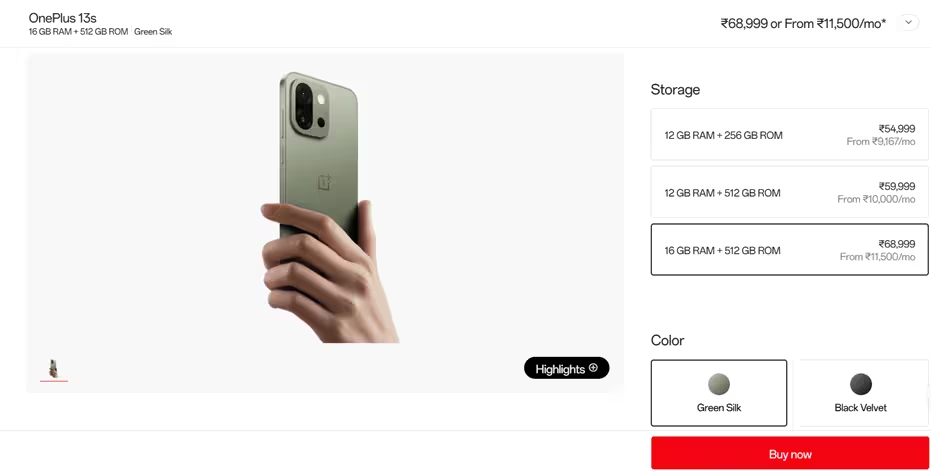
OnePlus 13s is now available in 16GB RAM + 512GB storage configuration in India, priced at ₹68,999.
It will be available via Amazon and OnePlus online store in Black Velvet, Green Silk, Pink Satin colour options.
Key specs: Snapdragon 8 Elite, 6.32″ 1.5K LTPO AMOLED, dual 50MP rear cameras, 32MP front camera, 5,850mAh battery with 80W fast charging.
OnePlus has expanded the OnePlus 13s lineup in India by introducing a new RAM and storage configuration. The smartphone was launched in the country in June last year as the third model in the OnePlus 13 series. It was initially available in up to 12GB of RAM and 512GB of storage variants. So, here’s more on the newly added memory variant.
OnePlus 13s 16GB + 512GB Variant
OnePlus 13s now has now a higher-end variant with 16GB of RAM and 512GB of internal storage.
The new 16GB RAM and 512GB storage variant of the OnePlus 13s is priced at Rs 68,999 in India. Meanwhile, the existing 12GB + 256GB model is priced at Rs 54,999, while the 12GB + 512GB variant costs Rs 59,999.
New Variant
Price
What You Get
OnePlus 13s 16GB + 512GB Variant
₹68,999
● 16GB RAM
● 512GB storage
● Snapdragon 8 Elite
● 5,850mAh
● 80W charging
OnePlus is offering an instant discount of up to Rs 2,000 for customers using credit cards from HDFC Bank, ICICI Bank, Kotak Mahindra Bank, IDFC First Bank and IndusInd Bank.
The new OnePlus 13s configuration is available to purchase in India through Amazon and the OnePlus onlinestore. It is offered in Black Velvet, Green Silk and Pink Satin colour options.
OnePlus 13s Specifications
The OnePlus 13s features a 6.32-inch 1.5K LTPO ProXDR AMOLED display with a resolution of 1,216 × 2,640 pixels. The screen supports up to a 120Hz refresh rate, up to 1,600 nits peak brightness, 2,160Hz PWM dimming and Aqua Touch 2.0.
It is powered by an octa-core Snapdragon 8 Elite chipset. With the new configuration, the phone is available with up to 16GB of LPDDR5x RAM and up to 512GB of UFS 4.0 internal storage.
For photography, the OnePlus 13s comes with two rear cameras, which includes primary camera with a 50-megapixel sensor with an f/1.8 aperture, Sony LYT-700 sensor and optical image stabilisation (OIS). It is paired with a 50-megapixel telephoto camera with an f/2.0 aperture, 2x optical zoom and electronic image stabilisation (EIS). For selfies and video calls, the phone has a 32-megapixel front camera with an f/2.0 aperture.
The smartphone is powered by a 5,850mAh battery and supports 80W wired fast charging. For security, it comes with an in-display optical fingerprint sensor.
Other features include 5G, 4G LTE, Wi-Fi 7, Bluetooth 6.0, GPS, NavIC, NFC and a USB Type-C port for wired connectivity.
OnePlus 16 tipped with Snapdragon 8 Elite Gen 6 Pro, Adreno 850 GPU, gaming‑focused tech, and ColorOS 17 on Android 17.
It is confirmed to have 165Hz system‑wide refresh rate and up to 185Hz gaming mode.
Other expected features include 9,000mAh dual‑cell battery with 100W wired + 50W wireless charging, 200MP main, 50MP ultrawide, 50MP periscope telephoto and 50MP AF selfie camera.
Although OnePlus 16’s exact launch date has not been announced yet, a previous leak suggested that the phone could debut in October. The brand has already confirmed a few details about the flagship model including the 165Hz refresh rate system-wide display feature and Android 17-based ColorOS 17.
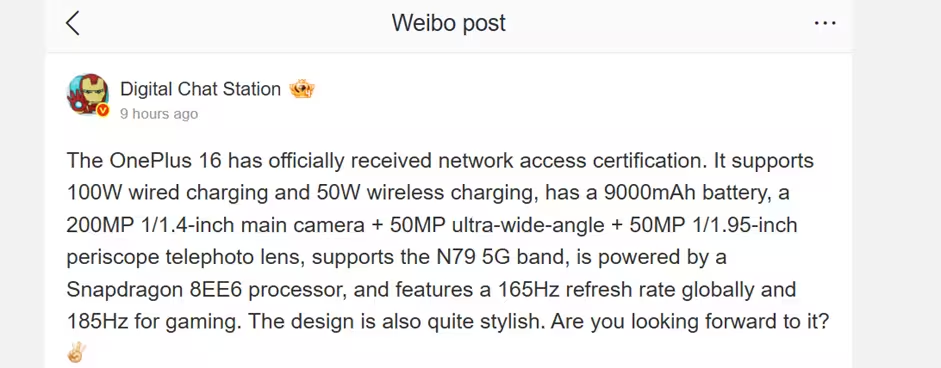
Now, well-known tipster Digital Chat Station (DCS) on Weibo has shared complete specifications of the OnePlus 16 including details about its display, cameras, battery, charging and processor.
DCS’s post on Weibo. (Translated via Google Translate)
OnePlus 16 Processor and Performance
The OnePlus 16 is tipped to be powered by Qualcomm’s Snapdragon 8 Elite Gen 6 Pro chipset. According to the leak, the processor could be manufactured using TSMC’s 2nm process and feature a 2+3+3 tri-cluster CPU configuration along with an Adreno 850 GPU.
These processor details have not been confirmed by OnePlus yet. However, the brand has confirmed the phone will debut with the new ColorOS 17.
The company has also revealed several gaming-focused technologies for the upcoming smartphone. These include the Wind Chaser Gaming Core, high-refresh-rate technology and an E-Sports Triple Chip system.
OnePlus 16 Battery and Charging
According to DCS, the OnePlus 16 will have a 9,000mAh typical battery with an 8,780mAh rated capacity. The battery is said to use a dual-cell architecture and could support 100W wired charging and 50W wireless charging. If accurate, this would be a notable increase over the OnePlus 15, which has a 7,300mAh dual-cell battery.
The reported battery capacity is also higher than the 8,400mAh battery tipped for the upcoming iQOO 16, which is said to support 100W wired and 40W wireless charging.
However, iQOO has not confirmed those battery specifications yet.
OnePlus 16 Display and Refresh Rate
The OnePlus 16 is expected to bring broader support for a 165Hz refresh rate. OnePlus has already confirmed that the phone will run at 165Hz system-wide.
For comparison, the OnePlus 15 supports an adaptive 1Hz to 120Hz range for general usage, while its 165Hz refresh rate is available in compatible games. DCS further claims that the OnePlus 16 could offer an even higher 185Hz refresh rate while gaming.
The competition is also moving towards higher refresh rates. iQOO has officially confirmed a 2K 165Hz display for the iQOO 16. The company claims that its panel consumes 31% less power than a similarly sized 1.5K display when running at 150 nits. The OnePlus 16 is also tipped to use a BOE X4 display.
OnePlus 16 Camera Specifications
The leaked camera setup could bring major changes compared with the OnePlus 15. DCS claims that the OnePlus 16 will feature a 200MP primary camera using a 1/1.4-inch sensor. It is expected to be joined by a 50MP ultrawide camera and a 50MP periscope telephoto camera with a 1/1.95-inch sensor.
For selfies, the phone is reportedly set to feature a 50MP autofocus front camera.
This would be a significant shift from the OnePlus 15’s triple-50MP camera setup, which includes a 50MP main camera and a 50MP 3.5x periscope telephoto camera.
The larger primary sensor and higher-resolution telephoto camera could give the OnePlus 16 stronger camera hardware. Photography was one of the areas where the OnePlus 15 received criticism in comparisons with competing flagship smartphones.
OnePlus 16 India Availability
There is still uncertainty over whether the standard OnePlus 16 will launch in India. This comes after OnePlus significantly reduced its operations in several markets worldwide.
According to leaks, the OnePlus 16 could potentially skip the Indian market and instead, the OnePlus 16R will most likely take its place as the company’s flagship model in the country. Notably, OnePlus has not confirmed this information.
For now, buyers will have to wait for OnePlus to clarify the OnePlus 16 lineup and its availability in India.
Vivo Y500k spotted on Google Play Console listing, suggesting it could be a rebranded Vivo Y600i or Y600i AI Edition.
The same model number earlier appeared on China’s 3C database, confirming it as a 5G device with 44W wired fast charging.
There is no official confirmation on the launch date or specifications as of yet.
Vivo appears to be preparing another Y-series smartphone if reports about a new smartphone appearing in the Google Play Console listing are to be believed. The smartphone with the marketing name Vivo Y500k and model number V2617A has appeared on the Google Play Console supported devices list. And here’s what we know about the particular device so far.
Vivo Y500k Spotted on Google Play Console Listing
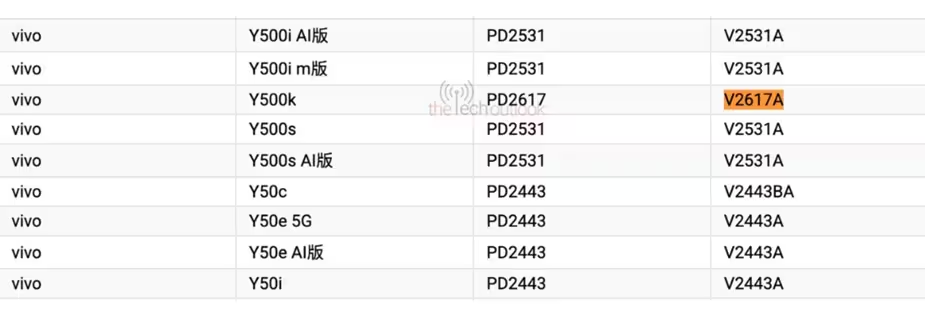
Vivo Y500k model number on Google Play Console Listing. (Image credit – TheTechOutlook)
According to the Google Play Console supported devices list, a vivo smartphone carrying the model number ‘V2617A’ is listed with the marketing name ‘Vivo Y500k’. The listing also identifies ‘PD2617’ as the product or device codename.
Interestingly, the vivo Y600i and Y600i AI Edition had previously appeared on the same supported devices list with the exact same ‘V2617A’ model number and ‘PD2617’ device codename.
The matching model number and codename suggest that the Vivo Y500k could be a rebranded version of either the upcoming vivo Y600i or vivo Y600i AI Edition. However, Vivo has not officially confirmed this connection yet.
Vivo Y500k 5G On China 3C
Previously, the ‘V2617A’ model number had also been spotted earlier on China’s 3C certification database. The certification revealed that the device is a 5G smartphone and supports up to 44W wired fast charging.
Apart from this, there is currently no confirmed information about the smartphone’s other specifications.
Vivo Y500k Launch Timeline
Notably, Vivo has not announced when the Y500k, Y600i or Y600i AI Edition will be officially launched. However, the company is preparing to introduce its flagship vivo X500 series in China on September 21, 2026.
The Y-series smartphones could potentially be introduced after the X500 series launch, although the brand has not confirmed any launch timeline for these devices.
OPPO has teased the K14 Plus 5G India launch via Flipkart confirming it is “coming soon.”
Teaser shows a flat plastic frame with side buttons, and hints at orange and black/silver colour options.
It could be positioned above the K14 5G and priced around ₹30,000+, though specs and launch date remain unconfirmed.
It appears OPPO is preparing to introduce a new mid-range 5G model to its K-series of smartphones soon after launching the K14 Lite 4G model. A teaser of the upcoming OPPO K14 Plus 5G has just surfaced on social media, even though the brand has not posted about it via its official handles. While we can definitely expect an official post/announcement, here’s everything we know about this upcoming model so far.
OPPO K14 Plus 5G India Launch Teaser
While it has not revealed the exact launch date or confirmed any specs, the OPPO K14 Plus 5G teaser has confirmed that the smartphone is “coming soon”.
The teaser also says the K14 Plus 5G is “designed to deliver a powerful combination of performance and durability.” The company reportedly describes the smartphone as “Built to Perform and Last, OPPO K14 Plus 5G is designed for users seeking smooth performance and reliable everyday experiences.”
OPPO K14 Plus 5G Design and Colours (Expected)
The teaser gives a glimpse of the upcoming smartphone’s design. The OPPO K14 Plus 5G appears to have a flat plastic frame, with the power and volume buttons placed on the side.
The teaser also hints at two colour options for the smartphone including orange and black/silver finishes.
OPPO K14 Plus 5G – What Else We Know?
OPPO’s K-series lineup recently has had a few launches, which includes OPPO K14 Lite, K14, and K14x.
The OPPO K14 5G was launched in India in March this year with a starting price of Rs 17,999 for the 6GB RAM and 128GB storage variant. The 6GB + 256GB version was priced at Rs 19,999, while the 8GB + 256GB model cost Rs 21,999. However, the base variant is currently selling for Rs 25,999.
Since the upcoming smartphone carries the “Plus” name, its price could potentially be around Rs 30,000 or higher. This, however, is only speculation at this stage since OPPO has not suggested anything regarding the pricing of the K14 Plus 5G.
As for specs, there are currently no leaks revealing the specifications or pricing of the OPPO K14 Plus 5G. Apart from the design details shown in the teaser and the information about its positioning, OPPO has not shared further hardware details about the upcoming smartphone.
More information is expected to be revealed as the India launch gets closer.
Global variants of Vivo X500 and X500 Pro Max listed on UAE’s TDRA database on September 16, 2026.
TÜV certification confirms 90W wired fast charging support for both X500 and X500 Pro Max global models.
The series debuts in China on September 21, 2026, while launch outside China remains unconfirmed at the moment.
Vivo is set to launch its flagship X500 series in China on September 21, 2026. Meanwhile, the global variants of the Vivo X500 and Vivo X500 Pro Max have now been spotted on the UAE’s TDRA certification database. That’s not all. Reports have also revealed that the standard Vivo X500 has been spotted on the TÜV certification database as well. Here’s everything we know based on recent certification reports.
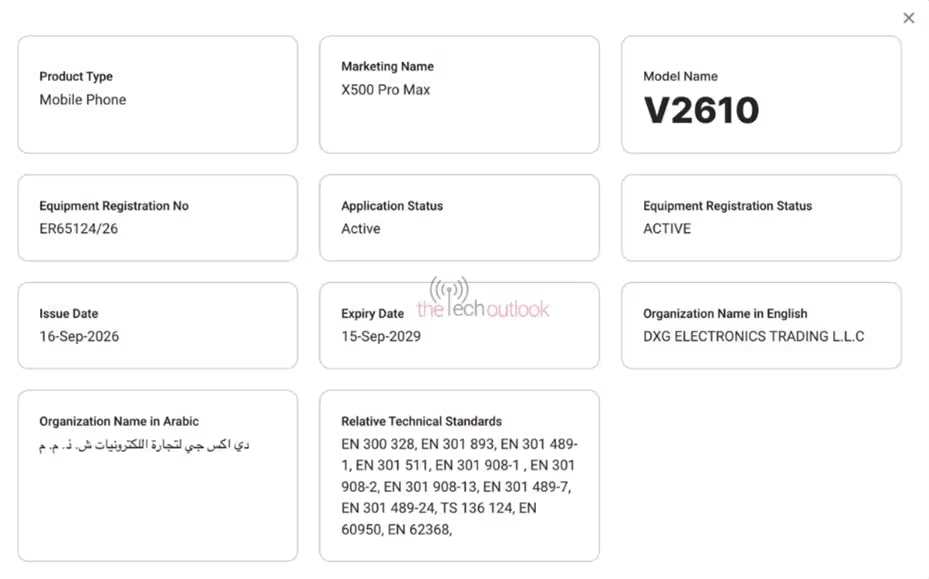
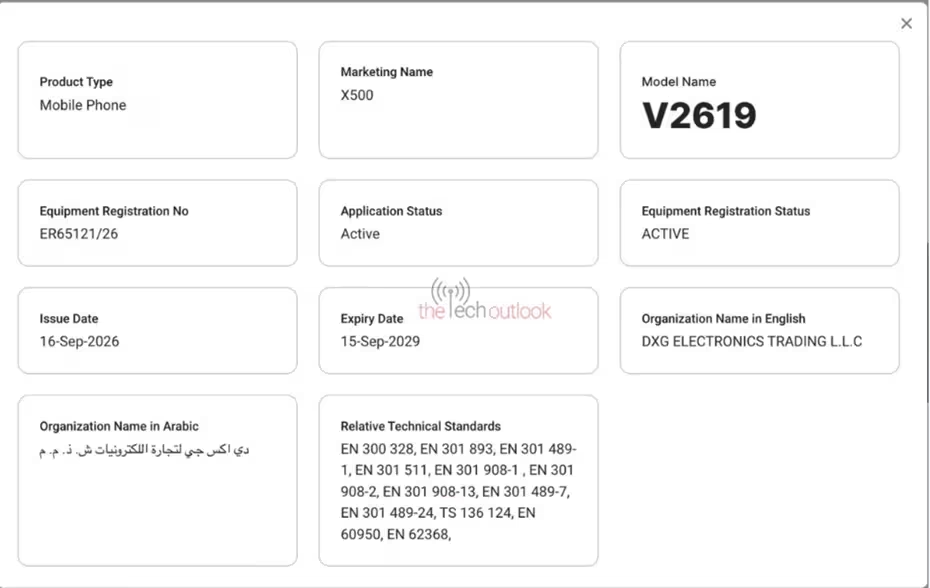
Vivo X500 and X500 Pro Max TDRA Listings
(Screenshot by Anvin on X)
Vivo X500 and X500 Pro Max on TDRA. (Screenshot by TheTechOutlook)
According to the UAE’s TDRA database, the Vivo X500 Pro Max has been listed with the model number ‘V2610’. The smartphone is registered as a mobile phone and carries the equipment registration number ‘ER65124/26’.
The standard Vivo X500 has also appeared on the TDRA database with the model number ‘V2619’. It is listed with the equipment registration number ‘ER65121/26’. The TDRA certifications for both smartphones were issued on September 16, 2026.
The appearance of these model numbers on the UAE certification platform points to the global variants of the two upcoming Vivo smartphones.
The X500 Pro Max global variant had previously appeared on the same certification platform with similar charging specifications.
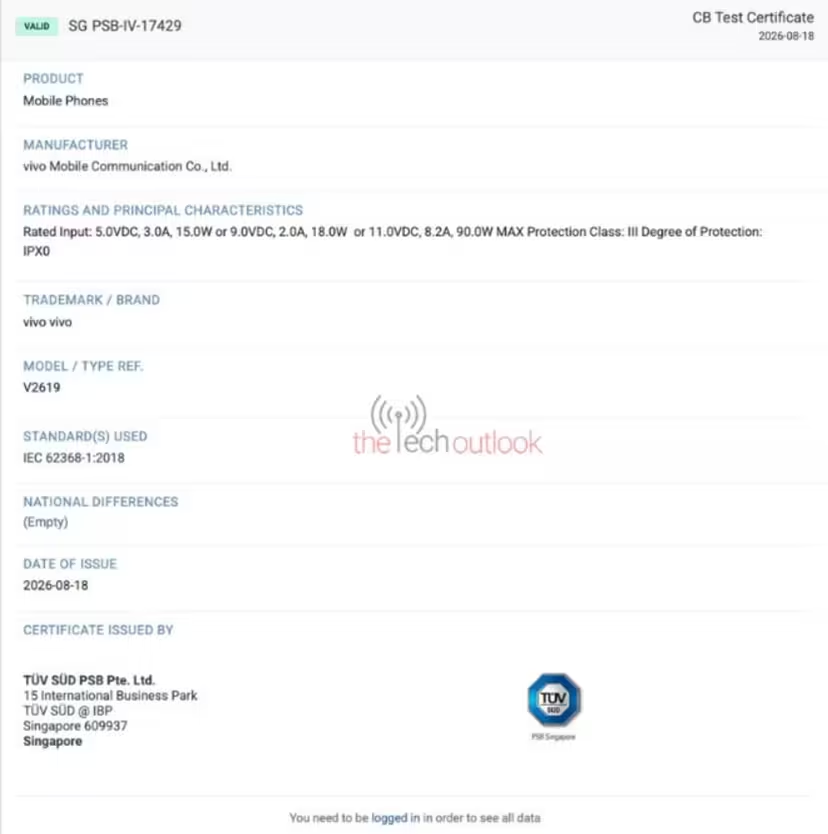
Vivo X500 Global Variant Gets 90W Charging
Vivo X500 on TÜV. (Screenshot by TheTechOutlook)
The global Vivo X500 carrying the model number ‘V2619’ has also been listed on the TÜV certification database. The listing reveals that the upcoming smartphone will support up to 90W wired fast charging.
The Vivo X500 Pro Max global variant has also appeared on the TÜV certification database recently, where it was listed with support for 90W wired fast charging.
Vivo X500 Series Global Launch
Vivo has not yet revealed when the X500 series will launch globally. However, the appearance of both the X500 and X500 Pro Max on multiple regulatory databases suggests that their international launch could take place soon.
For now, the Vivo X500 series is confirmed to debut in China on September 21, 2026 and details about its availability outside China remain unannounced.
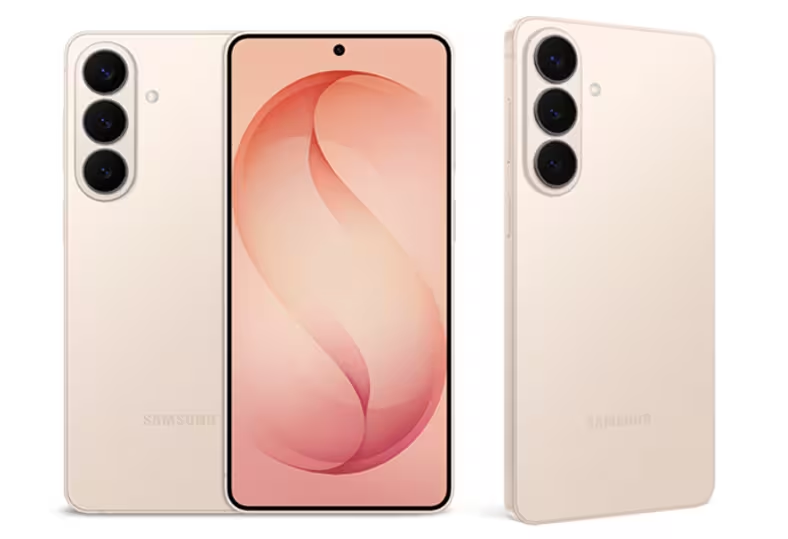
Samsung has hiked Galaxy S26, S26+ and S26 Ultra prices in India by Rs 20,000, effective September 18, 2026.
New prices: Galaxy S26 starts at Rs 1,07,999, S26+ at Rs 1,39,999, and S26 Ultra at Rs 1,59,999; top‑end Ultra (16GB + 1TB) now costs Rs 2,09,999.
The flat hike across all variants makes the S26 series significantly more expensive, pushing the Ultra past the Rs 2 lakh mark.
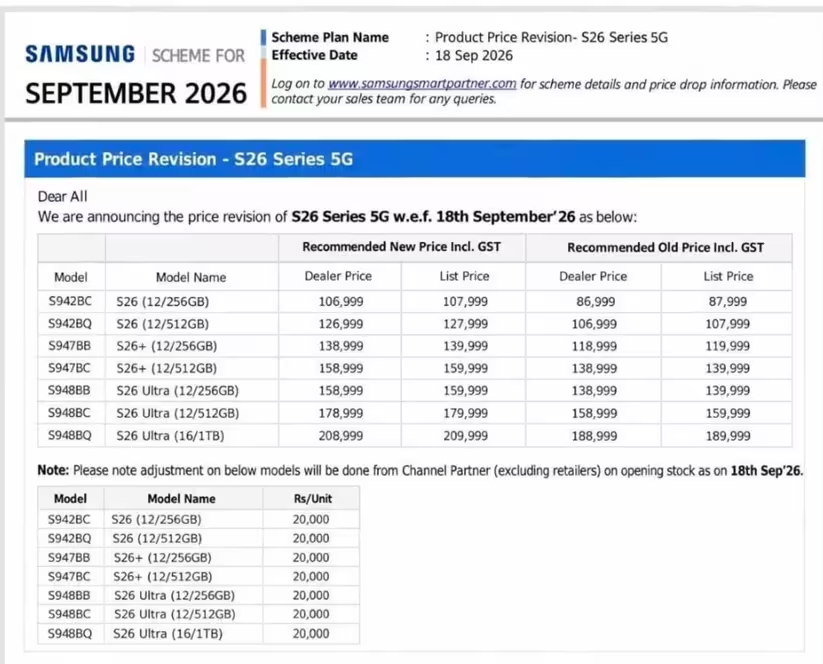
Samsung has increased the prices of its entire Galaxy S26 series in India by Rs 20,000. The price revision is effective from September 18, 2026 and applies across the listed variants of the Galaxy S26, Galaxy S26+ and Galaxy S26 Ultra.
Leaked Samsung price-revision document. (Credit – @yabhishekhd on X)
A leaked Samsung price-revision document suggests that the company has applied a flat Rs 20,000 increase across the S26 series. Following the latest revision, the Galaxy S26 series now starts at Rs 1,07,999, while the top-end Galaxy S26 Ultra with 16GB RAM and 1TB storage costs Rs 2,09,999.
Samsung Galaxy S26 New Prices in India
The Galaxy S26 has received a Rs 20,000 price increase on both its listed storage variants. The 12GB + 256GB model is now priced at Rs 1,07,999, while the 12GB + 512GB version costs Rs 1,27,999.
Model
Old Price
New Price
Hike
Samsung Galaxy S26 12GB + 256GB
Rs 87,999
Rs 1,07,999
Rs 20,000
Samsung Galaxy S26 12GB + 512GB
Rs 1,07,999
Rs 1,27,999
Rs 20,000
Samsung Galaxy S26+ Price in India
The Galaxy S26+ has also become Rs 20,000 more expensive across both listed configurations. The 12GB + 256GB variant now costs Rs 1,39,999, while the 12GB + 512GB model is priced at Rs 1,59,999.
Model
Old Price
New Price
Hike
Samsung Galaxy S26+ 12GB + 256GB
Rs 1,19,999
Rs 1,39,999
Rs 20,000
Samsung Galaxy S26+ 12GB + 512GB
Rs 1,39,999
Rs 1,59,999
Rs 20,000
Samsung Galaxy S26 Ultra New Price in India
The Galaxy S26 Ultra has received the same Rs 20,000 price increase across all three listed variants. The 12GB + 256GB model is now priced at Rs 1,59,999, while the 12GB + 512GB version costs Rs 1,79,999.
The top-end Galaxy S26 Ultra with 16GB RAM and 1TB storage now carries a price tag of Rs 2,09,999.
Model
Old Price
New Price
Hike
Samsung Galaxy S26 Ultra 12GB + 256GB
Rs 1,39,999
Rs 1,59,999
Rs 20,000
Samsung Galaxy S26 Ultra 12GB + 512GB
Rs 1,59,999
Rs 1,79,999
Rs 20,000
Samsung Galaxy S26 Ultra 16GB + 1TB
Rs 1,89,999
Rs 2,09,999
Rs 20,000
What the Price Hike Means for Buyers?
The Rs 20,000 price increase makes the Samsung Galaxy S26 series considerably more expensive for buyers in India.
The Galaxy S26 now starts at Rs 1,07,999, while the Galaxy S26+ and Galaxy S26 Ultra start at Rs 1,39,999 and Rs 1,59,999, respectively. This means buyers will now have to spend significantly more to get the same storage variants listed before the price revision. At the top end, the Galaxy S26 Ultra 16GB + 1TB variant crosses the Rs 2 lakh mark at Rs 2,09,999.
So, if you are planning to get yourself an upgrade with any of the Galaxy S26 models, the right time to make the purchase is today. For buyers planning to purchase a Galaxy S26 series phone after the price revision, one option is to spread the cost through EMI financing. Buyers can also check for bank offers, exchange benefits and seasonal discounts that may reduce the effective purchase cost when available.
Vivo X500 Pro Max to sport flat rear panel, large circular Zeiss‑branded triple‑camera module, action button, dual speakers and four colour options.
It is expected with 6.85‑inch BOE Q11 2K Zeiss Master Color display and powered by MediaTek Dimensity 9600 Pro (2nm), Android 16 based OriginOS 7 and 8,000mAh battery with 90W wired charging.
Camera specs include triple Zeiss‑tuned setup with Sony LOFIC main sensor, 200MP APO telephoto, advanced slow‑motion (4K 240fps, 480fps, 960fps) and support for Zeiss telephoto extender.
Vivo is set to launch its new flagship smartphone lineup in China on September 21, 2026. The lineup will include the Vivo X500, X500 Pro and the Vivo X500 Pro Max. Ahead of the launch, the company has revealed several details about the upcoming phones, while new images have offered a closer look at the X500 Pro Max.
Vivo has not confirmed details about the India or global availability of the X500 Pro Max yet. More information about its availability in other markets is expected after the China launch.
Vivo X500 Pro Max Design and Colours
Vivo X500 Pro Max.
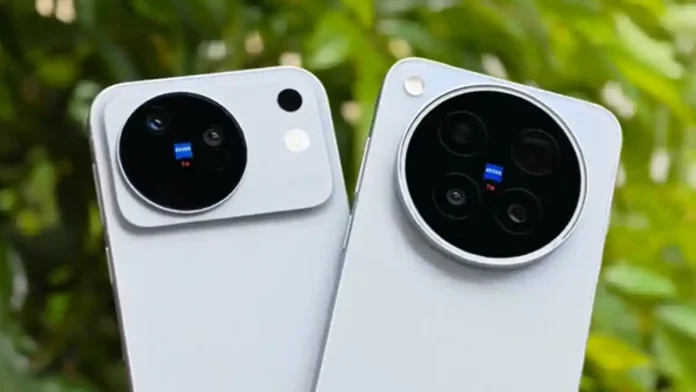
The Vivo X500 Pro Max is expected to follow a design language similar to the Vivo X300 series. It has a flat rear panel with a large circular camera module placed centrally towards the top. The camera island houses three Zeiss-tuned cameras with Zeiss branding positioned in the centre. A secondary light sensor is also visible on the rear.
The LED flash is placed outside the camera module in the top-left corner of the dual-tone rear panel, while Vivo branding is positioned vertically towards the bottom-left. The phone has a flat metal frame with the power button and volume controls placed on the right side. The bottom edge includes a USB Type-C port, SIM tray and speaker grille, while another speaker grille is present on the top. The smartphone will also feature an action button and dual speakers.
Vivo X500 Pro Max colour options. (Image credit – Vivo)
The X500 Pro Max has already been shown in silver and orange finishes. Vivo has already confirmed that the phone will be available in four colour options named Echoes of the Earth, Sunset Glow, Sunny Day and Night Capture.
Vivo X500 Pro Max Display
Vivo X500 Pro Max display teaser. (Image credit – Vivo)
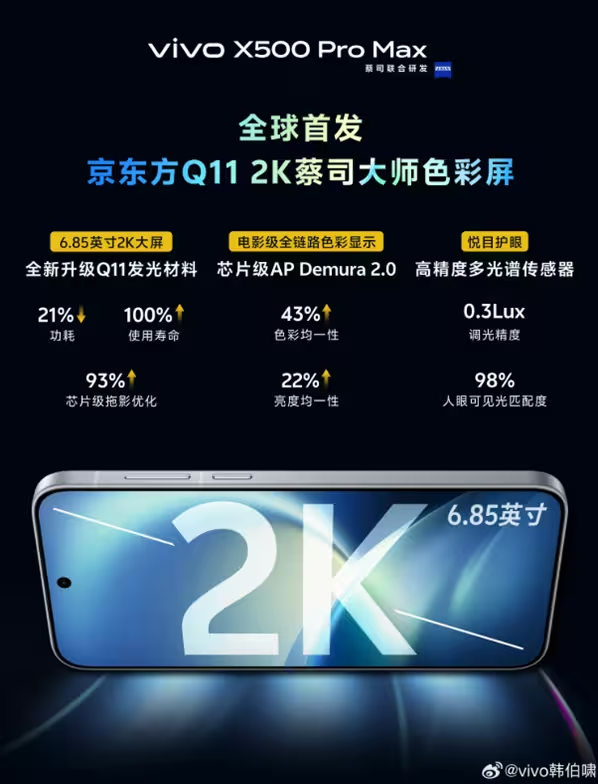
The Vivo X500 Pro Max is expected to be the first smartphone in the world to feature a 6.85-inch BOE Q11 2K Zeiss Master Color display. The screen will offer 2K resolution with the higher pixel density designed to provide sharper and more detailed visuals on the large display.
The Q11 panel uses upgraded light-emitting materials from BOE along with platform-level improvements. Vivo claims that these changes reduce motion blur during scrolling by 93% compared with the previous generation. The display also uses hardware-level Demura processing and Vivo’s pixel-level compensation algorithms.
According to Vivo, these technologies improve colour uniformity by 43% and brightness uniformity by 22%, which should help deliver more consistent colours and brightness across the screen.
Vivo X500 Pro Max display teaser. (Image credit – Vivo)
Vivo has also focused on the power efficiency and durability of the new 2K panel. The company says the X500 Pro Max display uses 21% less power than the previous-generation 1.5K display, while its lifespan has been doubled.
The display also includes an under-display high-precision multispectral sensor for brightness adjustment. It can detect visible light across different spectrums and colour temperatures. Vivo claims that its detection accuracy reaches a 98% match with the light visible to the human eye.
The sensor is designed to help the screen adjust more naturally to changes in surrounding light. It is paired with 0.3-lux screen brightness adjustment precision, which Vivo describes as the best in the Android segment.
Vivo X500 Pro Max Camera
The X500 Pro Max will feature a three-camera Zeiss-tuned rear camera setup. Its main camera will use a Sony sensor with LOFIC technology. This technology uses a separate capacitor to store overflow light, helping the sensor retain more detail in bright areas.
Vivo X500 Pro Max camera teaser. (Image credit – Vivo)
The main camera is rated for 17 stops of dynamic range. The phone is also expected to support 4K video recording at 240fps and 4K 120fps recording in DCG HDR. The telephoto camera will be similar to the one used on the X300 Ultra. It will feature a 200MP Zeiss APO super telephoto camera with a 1/1.4-inch sensor and Samsung’s HP0 sensor.
The telephoto camera will support hardware-based 4x in-sensor zoom, while Vivo’s Super Capture Engine can take the zoom level up to 30x. The system is designed to help capture moving subjects such as people, pets and performers.
Both the main and telephoto cameras will support CIPA 7.0 stabilisation. There have also been reports that Vivo is considering a multispectral sensor for improved colour and white balance, although this has not been confirmed.
Vivo X500 Series camera samples. (Image credit – Vivo)
Zeiss Telephoto Extender
The Vivo X500 Pro Max will continue to support Vivo’s clip-on Zeiss telephoto extender. The new version reaches 400mm, offering more reach than the previous accessory.
The extender clips onto the smartphone and has its own capture button and zoom controls. When combined with the phone’s periscope camera, it can provide around 16.6x optical reach without depending entirely on digital zoom.
Vivo is also expected to introduce a matching photography grip, although its availability has not been confirmed yet.
Vivo X500 Pro Max Processor
Vivo X500 Pro Max processor teaser. (Image credit – Vivo)
The Vivo X500 Pro Max will be powered by MediaTek’s Dimensity 9600 Pro chipset, which is built using a 2nm process. Other expected features include Android 16 with Vivo’s OriginOS 7 interface and an ultrasonic in-display fingerprint sensor.
Vivo X500 Pro Max Battery and Charging
The Vivo X500 Pro Max is expected to pack a large 8,000mAh battery. The phone will have 90W wired charging, which has now been confirmed.
The smartphone is also tipped to support either 40W or 50W wireless charging, although the exact wireless charging specification has not been confirmed yet.
Xiaomi 18 Pro real-life images show the rear cameras now flush with the secondary display, giving the back a flatter, cleaner look.
The rear display remains a key feature with Xiaomi citing over 4M daily app card interactions and 3.5M wallpapers added per day.
Camera setup inlcude Leica triple-camera system (17mm–75mm focal range), main lens with f/1.67 aperture, telephoto at 3.2x optical zoom, f/2.4 aperture.
Xiaomi has already confirmed that the Xiaomi 18 Pro series will launch this month. The company has described the upcoming series as the biggest upgrade in its numbered series smartphones. The smartphones are expected to bring major improvements in areas including performance, imaging, battery life and AI features. Now, the latest leak reveals exciting details about the rear design and the much-hyped rear display.
Xiaomi 18 Pro Real Life Images
Xiaomi 18 Pro Real Life Images. (Credit – DCS on Weibo)
New real-life images of the upcoming Xiaomi 18 Pro have surfaced online, offering a closer look at the phone’s rear design. The images were shared by well-known tipster Digital Chat Station and show an important change compared with the previous-generation Xiaomi 17 Pro.
Xiaomi 17 Pro (left) and Xiaomi 18 Pro (right).
The leaked images suggest that the rear cameras on the Xiaomi 18 Pro now sit flush with the secondary display. This gives the back panel a flatter and cleaner appearance compared with the Xiaomi 17 Pro.
Secondary Display Continues to Be a Key Feature
Xiaomi has also shared some figures related to the secondary display introduced with last year’s model. According to the company, daily interactions with application cards on the rear screen have crossed 4 million, while more than 3.5 million wallpapers are being added to the secondary display every day.
Xiaomi 18 Pro Series
➜ Unlock “Customizable Cute Pets” with the Versatile Rear Display
➜ Supports Pet Customization with precise recognition of feature details
➜ Masterpieces of the past, world famous paintings, game IP#Xiaomi#Xiaomi18pic.twitter.com/rRYqo6FZsG
The rear screen has reportedly become one of the more distinctive features of Xiaomi’s recent Pro models, and the company is expected to continue developing the feature with the upcoming generation.
With the flatter camera module, Leica camera system covering a wide-to-telephoto focal range and Xiaomi’s claim of a major generational upgrade, the Xiaomi 18 Pro appears to be focusing on both everyday usability and photography improvements.
Xiaomi 18 Pro – Camera Features
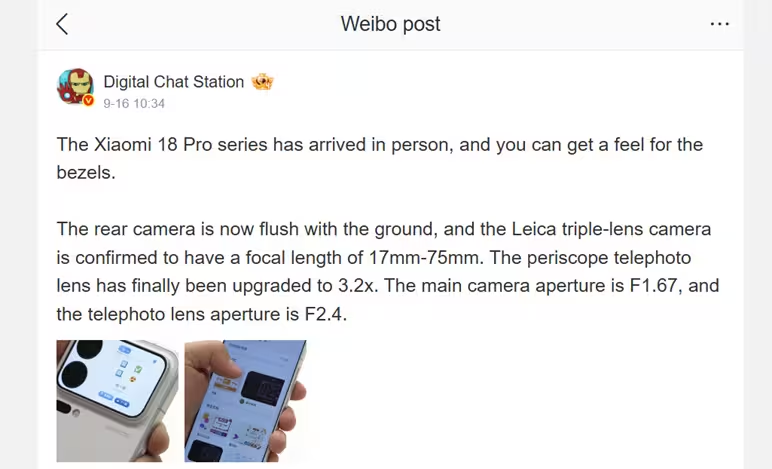
DCS’s Post on Weibo. (Translate via Google Translate)
According to Digital Chat Station, the phone will feature a Leica-tuned triple-camera setup covering a focal range of 17mm to 75mm. The tipster also claims that the periscope telephoto camera has been moved to a 3.2x optical zoom level.
The main camera is said to have an f/1.67 aperture, while the telephoto camera reportedly has an f/2.4 aperture.
These changes could provide a more useful optical zoom range, while the wider aperture of the primary camera may also help with low-light photography.
More details are expected when the company officially unveils the series.
OnePlus 16 has appeared on China’s 3C certification database, confirming support for 100W wired fast charging.
The phone is tipped to feature a BOE X4 display with global 165Hz refresh rate, self‑developed display chip, Oppo’s eye protection tech and ultra‑narrow bezels.
Expected specs include Snapdragon 8 Elite Gen 6 Pro, 200MP primary camera, 9,000mAh battery, ColorOS 17, Lingxi Touch Chip T3 and 800Hz gyroscope.
The OnePlus 16 is all set for its launch in China and the brand has already started teasing the device. After OnePlus recently teased the flagship in China with a 165Hz display, the phone has now received a new certification in China ahead of its expected launch. The smartphone has appeared on China’s 3C certification database, revealing support for up to 100W wired fast charging.
OnePlus 16 Appears on China’s 3C Database
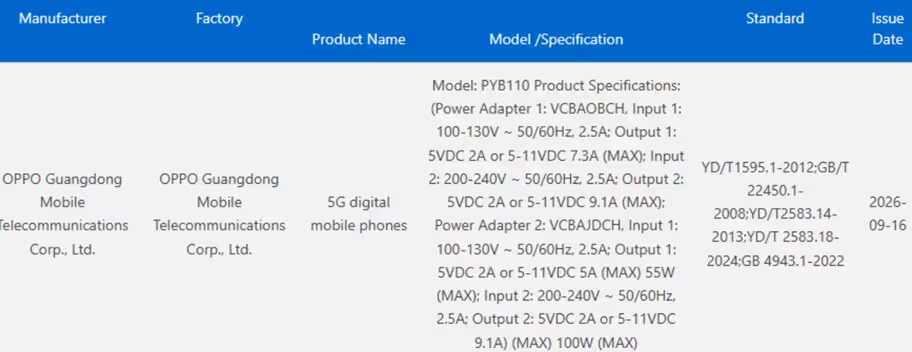
OnePlus 16 carrying the model number PYB110 was last spotted on China’s SRRC certification platform. Now, the same model number has appeared on China’s 3C certification database.
OnePlus 16 on China’s 3C Database. (Screenshot by @ZionsAnvin on X)
As per details shared by tipster Anvin @ZionsAnvin on X, the certification listing shows the smartphone with two power adapters carrying the model numbers VCBAOBCH and VCBAJDCH. The listing indicates that the OnePlus 16 will support 100W fast charging.
OnePlus 16 Display Features
OnePlus has already teased the OnePlus 16’s launch in China. The company has also revealed some details about its display, while additional information has been tipped online.
The OnePlus 16 is expected to use BOE’s exclusive custom-designed X4 luminescent material and feature what is described as the industry’s first global 165Hz ultra-high refresh rate. The phone is also said to use a self-developed display chip built using a new process. The chip is claimed to be the industry’s only one offering three calibrations per chip.
The smartphone is also expected to feature Oppo’s latest bright eyes protection technology and ultra-narrow, four-sided equal bezels.
OnePlus 16 Expected Specifications
The company has not yet revealed the complete specifications or launch details of the OnePlus 16. But here’s everything we know about the phone so far.
A Xiaomi smartphone with model number M610BB believed to be the Xiaomi 18 Pro Max has appeared on Geekbench.
The phone is listed with Snapdragon 8 Elite Gen 6 Pro, Adreno 845 GPU, 16GB RAM and Android 17.
Xiaomi has not yet confirmed names and model numbers of the upcoming phones, so details remain unofficial.
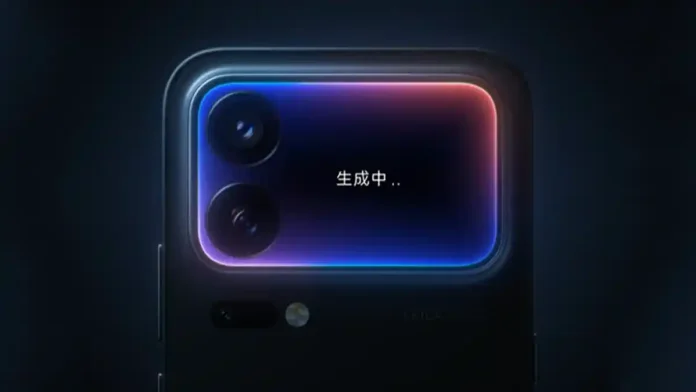
Xiaomi has started teasing the Xiaomi 18 Pro series for its home market in China. Meanwhile, a new Xiaomi smartphone has appeared on the Geekbench database and reports are hinting that it to be the upcoming Xiaomi 18 Pro Max. The device carries the model number M610BB and has been linked to the Chinese variant of the alleged Pro Max model.
Xiaomi 18 Pro Max Allegedly on Geekbench Listing
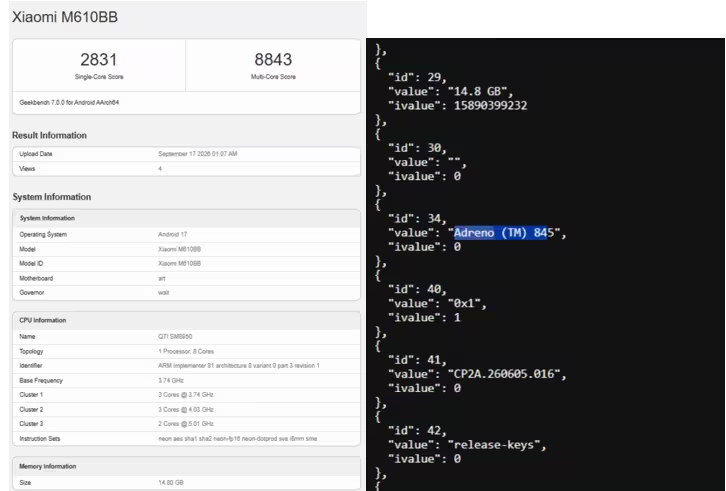
Xiaomi 18 Pro Max Allegedly on Geekbench Listing. (Screenshots by @ZionsAnvin on X)
According to the details shared by tipster Anvin @ZionsAnvin on X, the Xiaomi smartphone with model number M610BB has been spotted on a Geekbench listing. The smartphone is powered by Qualcomm’s SM8975 chipset, which is currently believed to be the Snapdragon 8 Elite Gen 6 Pro.
The processor has an octa-core configuration with two cores clocked at 5.01GHz, three cores at 4.03GHz and three cores at 3.74GHz. The listing also shows the smartphone running Android 17 and having around 16GB of RAM.
The smartphone scores 2831 on single-core tests and 8843 on multi-core. Moreover, the Geekbench entry lists an Adreno 845 GPU. This is different from the Adreno 850 GPU mentioned in an earlier Geekbench listing for the Xiaomi device carrying model number M154FF. The difference creates further uncertainty about the hardware configuration of these alleged Xiaomi smartphones.
Alleged Xiaomi 18 Pro Max (Chinese edition – M610BB) spotted on Geekbench
Recent rumours have linked the M610BB model number to the Xiaomi 18 Pro Max, while the earlier M154FF model has been associated with the Xiaomi 18 Pro.
However, Xiaomi has not officially confirmed the marketing names connected to either model number. As a result, these details should be treated cautiously until Xiaomi provides official confirmation about the devices and their hardware.
More official information about the upcoming smartphones is expected to be revealed soon.