
Home Blog Page 316

iPhone 16 Could Be Apple’s Least Popular Phone Since iPhone 12, says Report

0

Highlights

  • Reports indicate it might be the least popular iPhone in the last 5 years.
  • Morgan Stanley’s survey reveals shorter lead times than previous models
  • The report suggests sluggish demand.
  • Apple may cut supply orders due to slow demand.
image
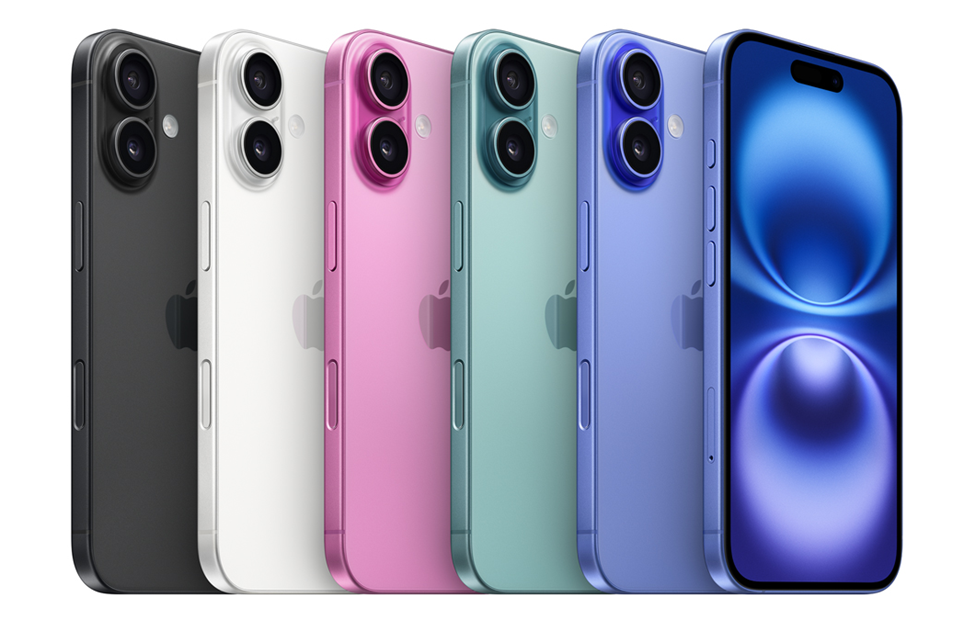
Investment Bank Morgan Stanley report reveals that iPhone 16 could be the least popular iPhone since iPhone 12. (Image credit – Apple)

The iPhone 16 series launch was a lacklustre event for many reasons. The reactions to the new iPhones launched and the event in general since then have been mixed. And now if recent reports are to be believed, the iPhone 16 is turning out to be the least popular smartphone in the last 5 years.

According to a leaked survey report from Investment Bank Morgan Stanley, iPhone 16 orders are lower than for its predecessors.

Tech publication AppleInsider has recently reported that they have seen Morgan Stanley’s message to investors revealing details of its lead time survey. According to Apple Insider, the Investment Bank’s survey shows iPhone 16 demand is lower than before.

Morgan Stanley has reportedly surveyed lead times for iPhone 16 models and discovered sluggish demand.

According to an Apple Insider report, iPhone 16 series lead times on average compared to 2023 are as follows –

  • iPhone 16 Pro Max 25.5 days (instead of 43.5 days)
  • iPhone 16 Pro 18.5 (instead of 32.5)
  • iPhone 16 9 (instead of 14)
  • iPhone 16 Plus 7.9 (instead of 13.9)

“When we aggregate all of our iPhone lead time data,” says Morgan Stanley, “average iPhone 16 lead times from pre-order to today stands at 14 days, shortest amongst all cycles in the last 5 years and roughly in-line with the iPhone 12 cycle.”

Morgan Stanley further reveals that there is a strong chance that Apple will cut its supply orders following the slow movement of orders. However, it is also specified that early lead times for a product “still have very limited predictive power.”

Apple Insider report claims, “Lead times are always dependent on how much stock Apple has — and Apple never reveals this figure. So it’s possible that Apple has done a better job at manufacturing sufficient iPhones for the demand it has.”

Caption – A graph depicting lead times for different iPhone models. (Image Credit – Morgan Stanley)

The Lead Time of a product refers to the time taken by manufacturers to deliver the product to the customer after receiving an order.

A shorter lead time usually indicates that the manufacturer has more units ready than the number of orders they are receiving. It is also significant to note that a shorter lead time doesn’t necessarily mean the product is not selling.

In Apple’s case, there is always the possibility that the company has accurately predicted the demand and has sufficient units ready in stock. This could be a strategy to ensure a faster delivery.

Historically speaking, lead times have always been indicative of assessing demands. Shorter lead times often point to a slow demand.

The iPhone 16 and iPhone 16 Plus have sold close to 37 million units in its first weekend. Certain media reports also claimed Russians have been ordering more than anticipated despite higher price tags for iPhones.

Apple iPhone 16 Specifications

RAM 8 GB
Processor Apple A18
Rear Camera 48 MP + 12 MP
Front Camera 12 MP
Battery 3561 mAh
Display 6.1 inches (15.49 cm)
Launch Date September 13, 2024 (Official)
Operating System iOS v18
Chipset Apple A18
CPU Hexa Core (Dual core + Quad core)
Architecture 64 bit
Fabrication 3 nm
Graphics Apple GPU (Five-core graphics)
Display Type Super Retina XDR
Screen Size 6.1 inches (15.49 cm)
Resolution 1179×2556 px (FHD+)
Aspect Ratio 19.5:9
Pixel Density 461 ppi
Screen Protection Yes
Bezel-less display Yes, with punch-hole display
Peak Brightness 2000 nits
HDR 10 / HDR+ support Yes
Refresh Rate 60 Hz
Height 147.6 mm
Width 71.6 mm
Thickness 7.80 mm
Weight 170 grams
Build Material Back: Color-infused Glass
Colours Black, Pink, White, Teal, Ultramarine
Waterproof Yes, Water resistant (up to 30 minutes in a depth of 6 meter), IP68
Ruggedness Dust proof
Camera Setup Dual
Main Camera 48 MP f/1.6 (Wide Angle)
Ultra-Wide Camera 12 MP f/2.2 (Ultra-Wide Angle)
Autofocus Yes, Dual Pixel Phase Detection autofocus
OIS Yes
Flash Yes, Dual-color LED Flash
Image Resolution 8000 x 6000 Pixels
Shooting Modes Continuous Shooting, HDR, Burst mode, Macro Mode
Video Recording 3840×2160 @ 60 fps, 1920×1080 @ 240 fps
Video Features Slo-motion, Video HDR, Night Time-Lapse, Macro Video, Action Mode, Audio Zoom, Stereo recording
Front Camera 12 MP f/1.9 (Wide Angle)
Battery Capacity 3561 mAh
Battery Type Li-ion
Removable Battery No
Wireless Charging Yes
Quick Charging Yes, 20W: 50% in 30 minutes
USB Type-C Yes
Internal Memory 128 GB
Expandable Memory No
Storage Type NVMe

FAQs

Q1. Why is the iPhone 16 considered the least popular iPhone?

Answer. The iPhone 16 is reported to have lower orders than its predecessors. Lead times for the iPhone 16 are the shortest in the last 5 years, indicating lower demand compared to previous models.

Q2. What does Morgan Stanley’s survey reveal about iPhone 16 demand?

Answer. According to Morgan Stanley’s survey, iPhone 16 demand is sluggish with shorter lead times. For example, the lead time for the iPhone 16 Pro Max is 25.5 days, down from 43.5 days for the previous year’s model.

Q3. What does shorter lead time indicate about iPhone 16 demand?

Answer. Shorter lead times might also suggest that Apple has efficiently predicted demand and has sufficient stock. However, shorter lead times have historically indicated slower demand.
Read More: iPhone 16 Battery and Charging: How to Fast Charge Your iPhone 16, Check First iPhone 16 Pro Max Battery Test Results

Read More: iPhone 16 and iPhone 16 Pro Go Through Early Durability Tests, Shows Drawbacks of New Ultra-Thin Bezels

Google Shows Warning on Business Profiles With Fake Reviews in Google Maps

0

Highlights

  • Google Maps displays a warning when fake reviews have been removed from a business listing.
  • Businesses with fake reviews will have new reviews temporarily blocked.
  • The warning feature has begun rolling out in the UK and the US.
image
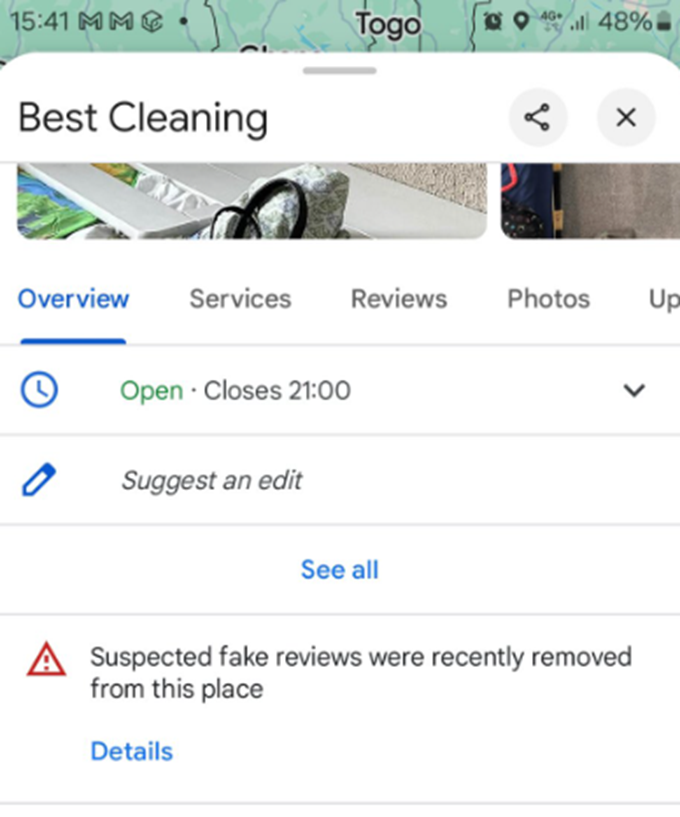
Google Maps shows warnings on business profiles with fake reviews. (Image credit – X)

Fake reviews on business profiles in Google Maps are a grave issue often highlighted by users. In a renewed effort to manage the menace of fake reviews, Google is now introducing a new warning feature on Google MapsThe search engine will flag a warning on business listings whenever fake reviews are removed.

Google Maps are often used to know more about businesses listed and reviews more often than not help reveal first-hand information. However, the review section is also one of the most exploited territories of Google Maps. Many businesses create fake reviews in order to boost a positive opinion online.

Moreover, it is not always the positive reviews that exploit the review section of business listing. There have been instances when businesses were targeted with false negative reviews that hamper their public opinion.

Google recognized the impact of these fake reviews long ago.

To address this issue, Google has created a reporting system where seemingly fake reviews can be reported. However, the effectiveness of these measures in holding businesses or users posting fake reviews responsible has been unclear.

According to a recent Search Engine Roundtable report, Google has started rolling out a new warning feature.

Google Maps will notify viewers via a warning card on the business listing whenever fake reviews are removed from the business listing.

As per reports, this feature was first noticed in the UK. It is now rolling out in the US as well.

Moreover, businesses affected by fake reviews are also likely to face restrictions.

“If we determine that a business owner has violated our Fake Engagement policy, we might place restrictions on their Business Profile (in addition to removing the violative reviews),” Google specifies on its Google Business Profile help page.

Some UK users have reported that new reviews will be temporarily blocked on profiles where fake reviews are removed. Existing reviews and ratings may also be unpublished from the listing page during Google’s investigation.

It is still unclear if Google is rolling out the warning flag worldwide or only in select regions.

As of now, if you do not see a similar feature in your geographical area, expect an update soon.

FAQs

 What new feature has Google introduced on Google Maps fake reviews?

Google has introduced a warning feature on Google Maps that notifies users when fake reviews have been removed from a business listing. This aims to enhance transparency and trustworthiness in the review system.

What restrictions do businesses face for fake reviews on Google Maps?

Businesses affected by fake reviews will have new reviews temporarily blocked, and existing reviews and ratings may be unpublished during Google’s investigation. This ensures the integrity of the reviews while the issue is being addressed.

What is the fake review warning on Google Maps?

In a renewed effort to manage the menace of fake reviews, Google is now introducing a new warning feature on Google Maps.  The search engine will flag a warning on business listings whenever fake reviews are removed.

How to report scam business reviews on Google Maps ?

To report scam business reviews on Google Maps :-

1. Open Google Maps: Locate the business profile you want to report.

2. Tap on the three dots in the top right corner of the business profile.
3. ⁠Select “Report” from the menu.

4. Choose the reason for reporting: Select the option that best describes the issue, such as “Fake or misleading content.”

5. Provide additional details: If necessary, explain why you believe the review is fake or misleading.
6. Submit the report: Google will review your report and take appropriate action.

What is important in reporting fake reviews on Google Maps?

While reporting fake reviews can help to improve the accuracy of Google Maps, it’s important to be mindful of your own words and avoid making false accusations.

Read  More : Google Maps Gets Major Updates: Sharper Imagery & Better View with Android Auto Making Lane Guidance Easier

Read More: Google Maps and Waze Updates Boost Driver Safety and Navigation

Read More: Google Maps Rolling Out Live Activities for More iOS Users: Report

No More Password Sharing on Your Disney+ Account Without Paying Extra

0

Highlights

  • Disney+ has launched a paid sharing plan to crackdown on password sharing.
  • Users to pay extra to add someone outside their household.
  • Add an extra member by paying $6.99/month for a Basic subscription and $9.99/month for a Premium.
  • Rolling out in the US and select other regions.
image
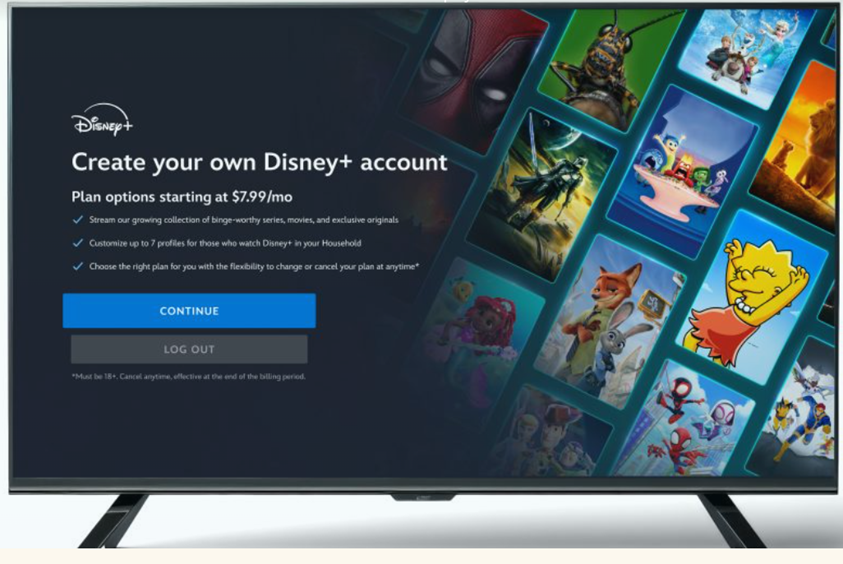
Paid Sharing on Disney+ officially announced in the US and other regions. (Image credit – The Walt Disney Company)

Well, no one was kidding when they said – no more password sharing!

It looks like you cannot share your Disney+ account with anyone outside of your house. Disney+ has finally launched a paid sharing plan in some countries to crackdown on password sharing. Users will now have to pay extra to add another person to an existing account to share the streaming subscription.

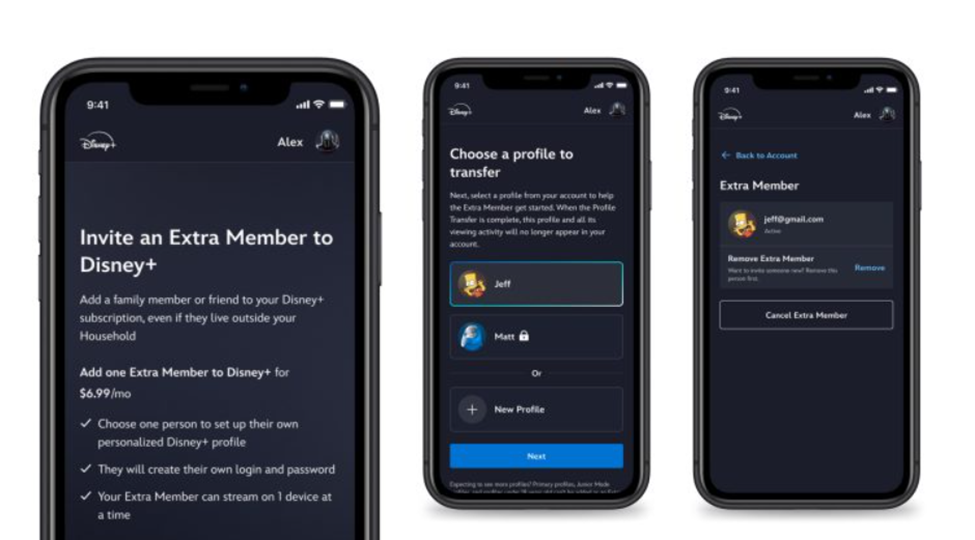
According to the recent announcement, Disney+ subscribers will now be able to add an extra member to their Disney+ Basic Susbcription paying an additional monthly charge of $6.99.

As for Disney+ Premium plan subscribers, adding an extra member to the plan will cost $9.99 per month.

image
Now add an Extra Member to your account for an additional monthly fee to continue enjoying Disney+. (Image credit – The Walt Disney Company)

As of now, Disney has announced the new paid sharing program in the United States and a few other countries including Canada, Costa Rica, Guatemala, Europe, and the Asia-Pacific region.

The new paid sharing plan comes with a few terms and conditions that make it look more like a crackdown.

For starters, you can add only one Extra Member slot per Disney+ account. Moreover, paid shared membership will not be available for Disney Bundle subscriptions or any subscribers who pay via a third-party partner.

The good news is primary Disney+ account holders will be able to access the subscription even when they are travelling.

“If you’re on the go and you see the message “This TV doesn’t seem to be part of the Household for this account”, you can mark yourself as I’M AWAY FROM HOME, or select UPDATE HOUSEHOLD if you’ve recently moved and need to reset the Household location for your Disney+ subscription. These selections will require a one-time passcode that’s sent to the email address associated with the account,” Disney explained in a press statement.

image
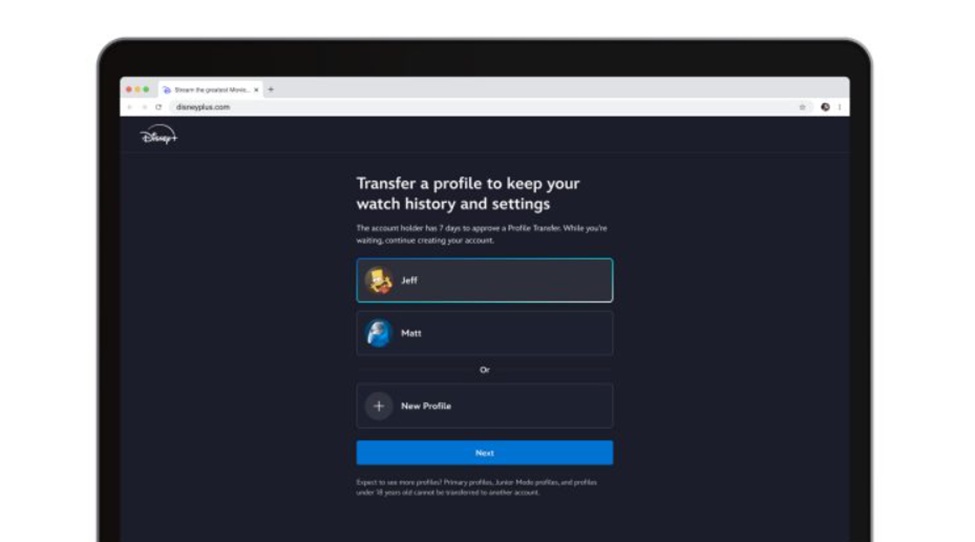
Primary Disney+ account holders can transfer an eligible profile to a new subscription. (Image credit – The Walt Disney Company)

Other primary account holder benefits include the ability to transfer an eligible profile to their own Disney+ account. Primary account holders can also transfer the profile to an “Extra Member” profile. This will help in ensuring that the person doesn’t lose their Disney+ watch history and other personal settings.

Disney+ is the second streaming platform to implement rules and new paid sharing programs to their platform. Before this, Netflix had successfully implemented paid password-sharing plans.

According to Disney, it will “analyze the use of your account” to make sure one subscription is only being used within “one household.”

Previously, Netflix also announced similar changes on its platform. It reportedly uses addresses, Netflix account activity and device IDs to monitor every subscribed account usage.

FAQs

What is the new paid sharing plan for Disney+?

Disney+ has introduced a paid sharing plan to prevent password sharing. Users will now have to pay extra to add someone outside their household to their Disney+ account.

How much does it cost to add an extra member to a Disney+ subscription?

For Basic subscriptions, it costs $6.99 per month to add an extra member. For Premium subscriptions, the cost is $9.99 per month.

What are the restrictions for the new paid sharing plan?

The new plan allows only one extra member slot per account.

It’s not available for Disney Bundle subscriptions or subscribers who pay through third-party partners.

Primary account holders can still access their subscriptions while travelling and can transfer profiles to new accounts.

What would users traveling get from Disney+?

For users who travel regularly, Disney+ is giving the option to access content by either marking themselves as “I’m Away From Home” or updating their household location.

This option requires a one-time passcode sent to the account holder’s email.

Which other platforms might get changes implemented from Disney+?

Disney is planning to implement similar password-sharing restrictions for Hulu and ESPN+. The company outlined the same in updates to their respective subscriber agreements earlier this year.

The updated terms explicitly prohibit sharing login details with individuals outside the household, similar to Netflix’s approach.

What will people outside the household be available to see on Disney+?

They will need to sign up and pay for their own subscription or be added as an Extra Member to your account for an additional monthly fee to continue enjoying Disney+,” wrote Disney+ in the official note.

What is the new paid sharing program from Disney+?

Disney+ started informing its global subscribers this week about its new paid-sharing program. The paid-sharing program is available in the United States, Canada, Europe, Costa Rica, Guatemala, and the Asia-Pacific region.

It is said to roll out to a broader audience in the coming weeks. Disney+’s password-sharing restrictions were first introduced earlier this year in select regions but have now been expanded more widely.

What are some other considerations while choosing a paid sharing option for Disney+?

For more details on the benefits and differences between a Disney+ subscription and an Extra Member add-on – including eligibility, pricing, and plan features – visit the Disney+ Help Center in your region.

How much will it cost to share your Disney+ account?

If you’re a Disney+ Basic (with ads) subscriber, it will cost $6.99 a month to add an “extra member” to your account.

For ad-free Disney+ Premium subscribers, the cost is $9.99 a month for an extra member.

If those prices don’t sound a lot cheaper than the current Disney+ Basic and Premium rates, remember that Disney+’s prices will go up starting October 17 to $9.99/month for Basic subscribers (up from $7.99 a month) and $15.99 a month for Premium (up from $13.99 a month).

Can Disney bundle subscribers add an extra member?

No, for now, only standalone Disney+ subscribers can add extra members to their accounts.

Read More: Disney Plus Password Sharing 2024

Read More: Airtel Launches Special Packs with Disney+ Hotstar for T20 World Cup Tournament

Read More: Disney Password Sharing Crackdown

Redmi Note 14 Series Leaks Ahead of Launch – Note 14 Image Leak, Note 14 Pro+ 6200mAh Battery & Snapdragon 7s Gen 3 Confirmed, New Redmi Buds 6 TWS Lined Up

0

Highlights

  • The Redmi Note 14 image leaked ahead of launch.
  • Redmi Note 14 Pro+ Confirmed with 6200mAh Battery and Snapdragon 7s Gen 3.
  • Redmi Buds 6 will also be launched in the upcoming event.
image
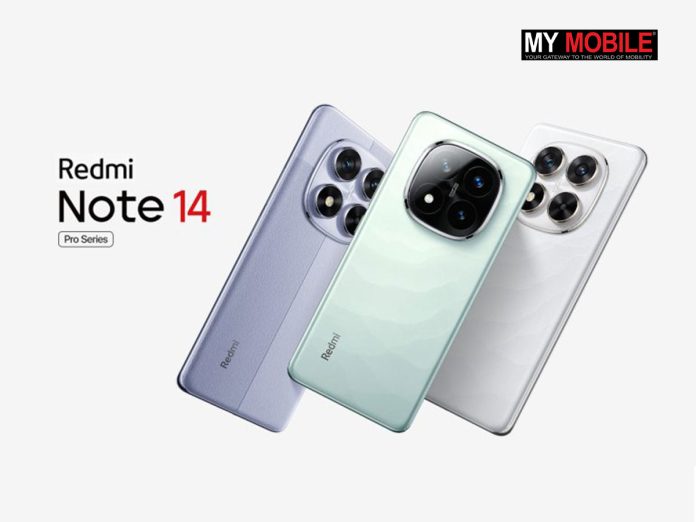
The Redmi Note 14 Series is to be launched in China on September 26th. (Image credit – Redmi)

Redmi is all set to unveil the much-anticipated Redmi Note 14 series in China on Thursday, September 26.

As per buzz, the launch event will most likely include the unveiling of Redmi Note 14, Redmi Note 14 Pro and Redmi Note 14 Pro+, alongside the new Redmi Buds 6 TWS earbuds.

Rumours around the series have started surfacing for weeks now. Details of both Pro models Redmi Note 14 Pro and Note 14 Pro+ are already almost out along with their design and key specs. Redmi too has been releasing teasers in China that have almost confirmed all the key features of both the devices.

However, the Redmi Note 14 has remained a mystery. Well… until now.

Redmi Note 14 Image Leak Ahead of Launch

A recent leak shared by tipster Panda is Bald on Weibo has now revealed what the standard Redmi Note 14 will look like.

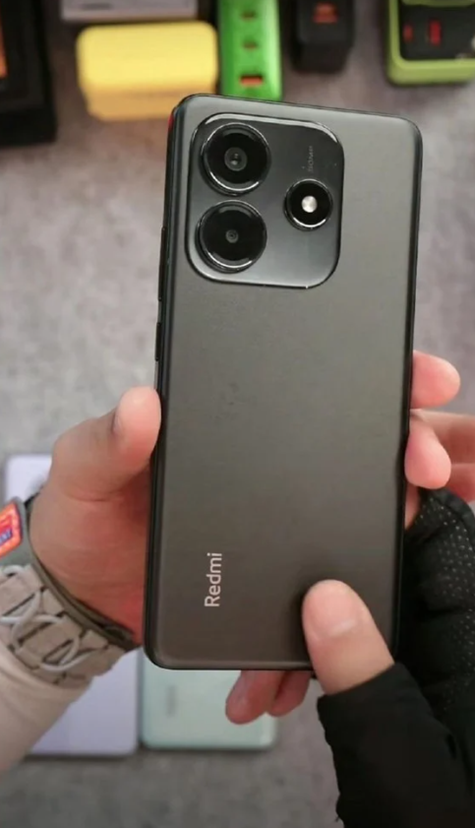
image
A leaked image of the Redmi Note 14 that has surfaced on Weibo. (Image credit – Panda is Bald on Weibo)

According to the leaked Redmi Note 14 image, the smartphone will look quite different from the Pro models. It will feature a squarish camera module positioned at the upper-left corner.

The image leaked on Weibo shows a sleek black variant, the name of the variant is not revealed.

As can be seen from the images, Note 14 will most likely have a dual-camera setup with an LED flash. While there has been no confirmation, rumours suggest it could feature a 50-megapixel primary shooter.

Redmi Note 14 Specifications (Rumoured)

According to various rumours, the Redmi Note 14 will come with a 6.67-inch AMOLED display, featuring FHD+ resolution, a smooth 120Hz refresh rate, and a peak brightness of up to 1800 nits.

The phone may be equipped with a dual camera system on the rear with a combination of 50-megapixel and 8-megapixel sensors. It will most likely also include a 16-megapixel front camera.

For hardware, Note 14 is rumoured to feature the Dimensity 7050 chipset, paired with up to 12 GB of LPDDR5x RAM and as much as 512 GB of UFS 2.2 storage.

A 5,500mAh battery with support for 33W fast charging is expected to power the device.

The Note 14 may also feature an in-screen fingerprint sensor and run on HyperOS, based on Android 14 and IP64 rating.

Redmi Note 14 Pro+ 6200mAh Battery & Snapdragon 7S GEN 3 Processor Confirmed

image
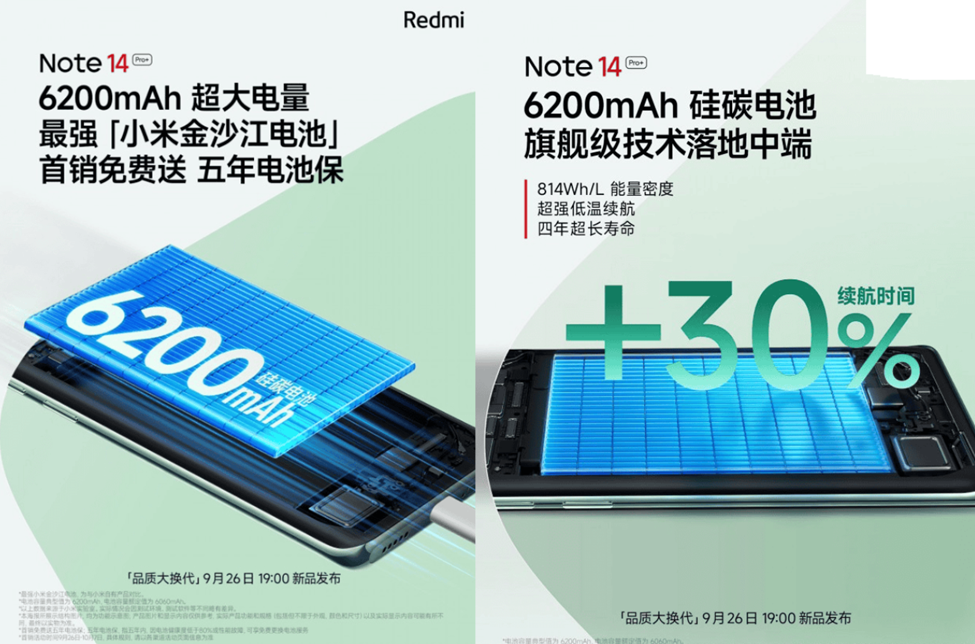
Recent teasers confirming a huge 6,200 mAh silicon-carbon battery. (Image credit – Redmi)

Ahead of the launch, the Chinese smartphone manufacturer has been releasing teasers of the upcoming devices. While most key features and specs have already been out, one of the recently release teasers has now confirmed the battery upgrade and processor details of the Note 14 Pro+ mode.

It can now be confirmed that the Redmi Note 14 Pro+ will come equipped with a large 6,200mAh silicon-carbon battery. It will also support 90W fast charging.

Moreover, another major reveal is that the Redmi Note 14 Pro+ will feature Qualcomm’s new mid-range Snapdragon 7s Gen 3 chipset.

The other teaser confirms the phone will launch with the Snapdragon 7s Gen 3 – Qualcomm’s latest midrange chip.

This 8-core processor was announced on August 20, 2024.

As per reports, the chipset is built on a cutting-edge 4-nanometer process. It includes a high-performance Kryo Prime core running at 2.5 GHz, three Kryo Gold cores at 2.4 GHz for additional power, and four Kryo Silver cores optimized for energy efficiency.

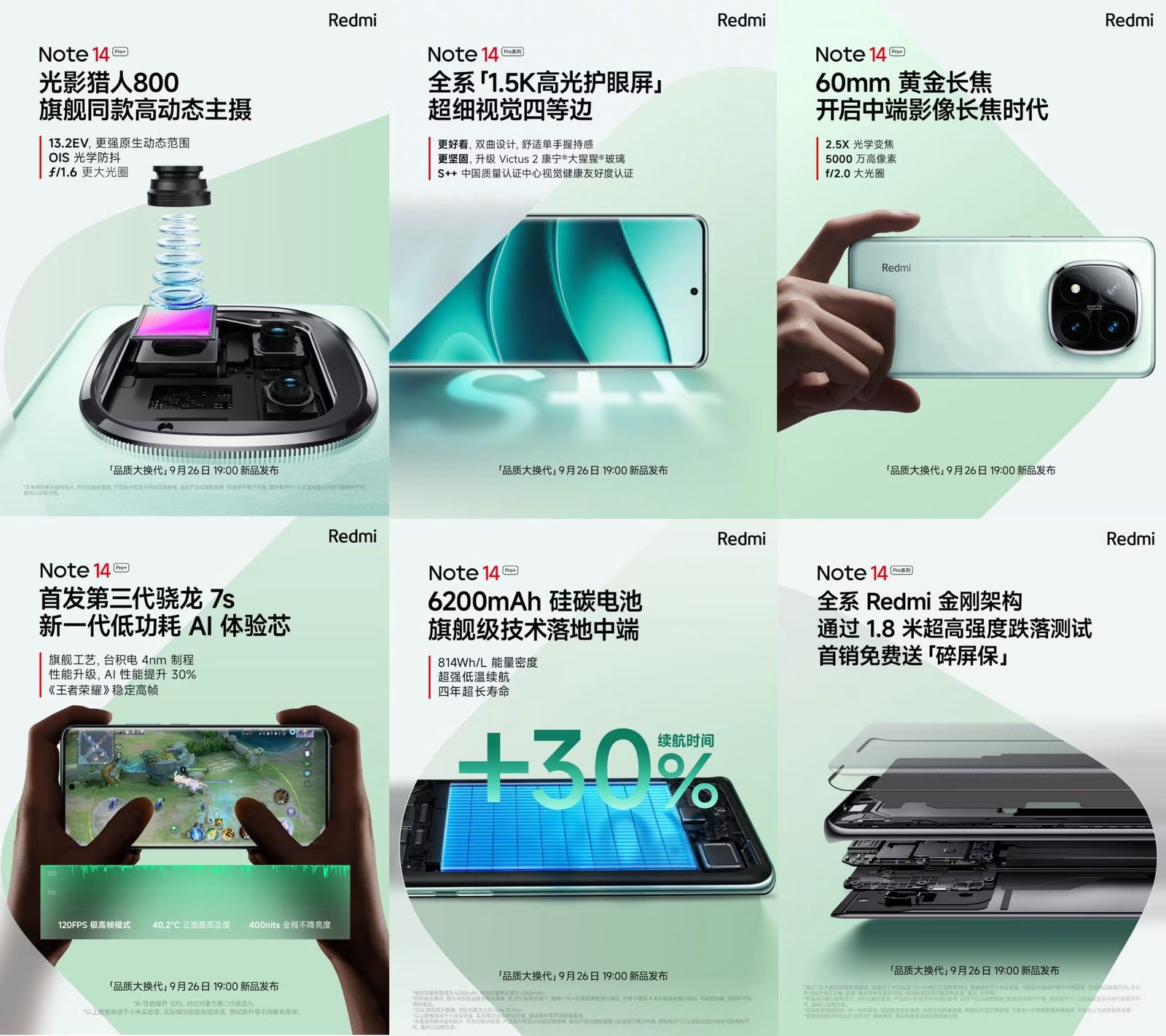
Redmi has already teased the durability of the Redmi Note 14 Pro series in some of their marketing posters.

The Redmi Note 14 Pro+ with model number 24115RABEI was spotted (via Gizmochina) on the Bureau of Indian Standards (BIS) certification website, hinting at an imminent launch.

Both Pro models will reportedly feature both IP68 and IP69K ratings, which means they will offer high resistance to dust and water. These IP ratings mean these phones will also withstand high-pressure water jets and extreme temperatures.

Moreover, devices will come with Gorilla Glass Victus 2 on the screen. These offer excellent resistance to scratches and drops.

 Redmi Note 14 Pro Specifications (Rumoured)

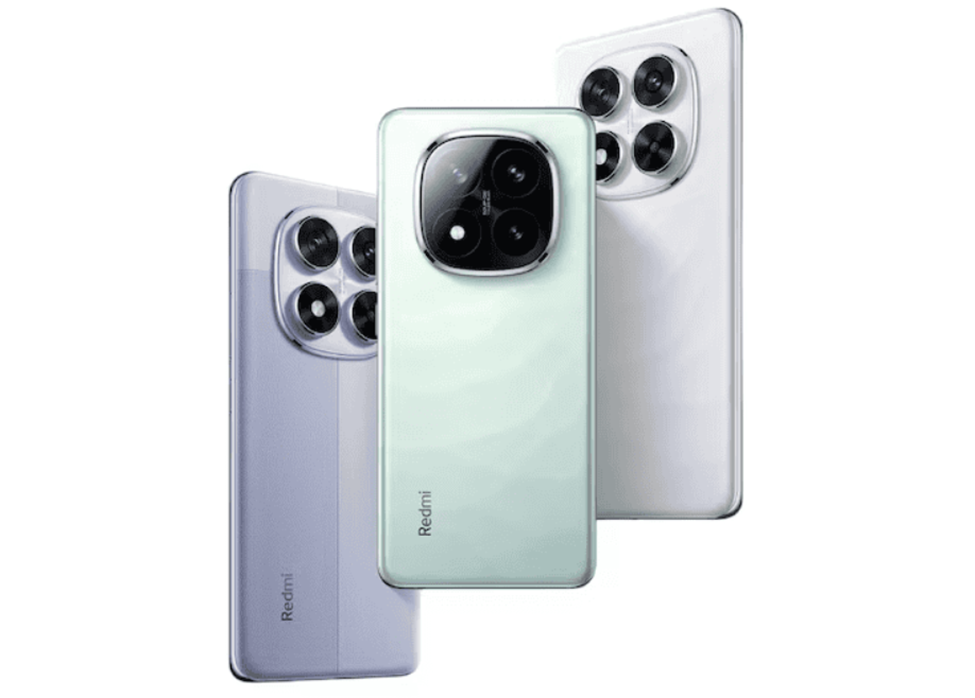
image
Previously released images of Redmi Note 14 Series. (Image credit – Redmi)

According to rumours, the Redmi Note 14 Pro is likely to sport a 6.67-inch AMOLED display with a resolution of 1,220 x 2,712 pixels, a smooth 120Hz refresh rate, and a peak brightness of 2,500 nits.

The Redmi Note 14 Pro will also be powered by the Snapdragon 7s Gen 3 processor and will come with LPDDR5 RAM, offering memory options ranging from 8 GB to 16 GB.

Storage variants are expected to include 128GB, 256GB, and 512GB, using UFS 3.1 technology.

Redmi Note 14 Pro+ Key Specs

For photography, the phone is rumoured to feature a triple rear camera setup. This will most likely include a 50-megapixel primary sensor for high-quality shots, a 12-megapixel ultrawide camera for capturing wide scenes, and a 2-megapixel sensor for macro or depth shots.

A 16-megapixel front camera is also expected, providing sharp and clear selfies.

The device is expected to pack a 5,500mAh battery with support for 67W wired fast charging, ensuring quick power-ups

The Redmi Note 14 Pro will be a lightweight phone weighing around 190g.

Redmi Buds 6 Key Details Confirmed

image
Xiaomi confirmed the launch of the Redmi Buds 6 alongside the Note 14 Series phones. (Image Credit – Xiaomi)

Alongside the Redmi Note 14 Pro series, Xiaomi will also launch the Redmi Buds 6.

According to another set of teasers, these in-ear wireless earbuds will feature advanced audio technology with a dual-driver setup.

The 12.4mm dynamic drivers promise to deliver strong bass. Meanwhile, the 5.5mm piezoelectric tweeters will produce crisp highs.

Redmi fans are eagerly waiting to see what surprises the company has in store with these new launches!

FAQs

Q1. What is the latest launch in China by Redmi?

Answer. Redmi is unveiling the Redmi Note 14 series and the new Redmi Buds 6 TWS earbuds in China.

Q2. What are the key design features of the upcoming Redmi Note 14?

Answer. The standard Redmi Note 14 features a squarish camera module at the upper-left corner, with a dual-camera setup. It’s rumoured to have a 50-megapixel primary shooter, a 6.67-inch AMOLED display with FHD+ resolution, and a Dimensity 7050 chipset.

Q3. What are the rumoured specifications for the Redmi Note 14?

Answer. Rumoured specs include up to 12 GB of LPDDR5x RAM, 512 GB of UFS 2.2 storage, a 5,500mAh battery with 33W fast charging, an in-screen fingerprint sensor, and HyperOS based on Android 14. It may also have a more modest IP64 rating compared to the Pro models’ IP69 rating.

Q4. When is Redmi Buds 6 releasing?

Answer. Redmi Buds 6 will be unveiled in the Chinese market on September 26th along with the Redmi Note 14 Series launch.

Q5. What camera will be there in the upcoming Redmi Note 14 Pro?

Answer. Redmi Note 14 Pro is rumoured to feature a triple rear camera setup. This will most likely include a 50-megapixel primary sensor for high-quality shots, a 12-megapixel ultrawide camera for capturing wide scenes, and a 2-megapixel sensor for macro or depth shots. A 16-megapixel front camera is also expected, providing sharp and clear selfies.

Read More: Redmi Note 14 Pro Unboxing and Live Image Leaked: 5 Major Upgrades Revealed

Read More: Redmi Note 14 Pro Series Launch Date Confirmed: Xiaomi Introduces King Kong Guarantee and Colour Variants


WhatsApp To Stop Support for Older iPhone and Android Devices

0

Highlights

  • WhatsApp will stop working on certain older iPhone and Android models.
  • The change will be effective 1st October 2024.
  • iPhones with iOS versions below 12 and Android phones with versions below 5.0 will lose support.
  • Users can either update their phone’s operating system or upgrade to a newer model.
image
WhatsApp to End Support for Older Phone Models Starting October 2024. (Image credit – Gizchina)

WhatsApp has recently announced that its mobile app will stop working on certain older smartphone models starting 1st October 2024. WhatsApp is one of the most popular messaging apps worldwide with over 2 billion monthly active users. The recent announcement will impact both iPhone and Android users.

According to WhatsApp, the app support will stop for any smartphone that is unable to meet the new software requirements.

System Requirements for WhatsApp

For Android Devices –

  • Android phones with Android 5.0 and newer.
  • Android phones that can receive SMS messages or calls.

For iPhones –

  • iPhones with iOS 12 and newer.
  • iPhones that can receive SMS messages or calls.

For the best experience using WhatsApp on iOS, users are advised to update their devices to the latest iOS version available.

WhatsApp also advises not to use jailbroken or unlocked devices. Moreover, the app doesn’t support modified versions of the iPhone operating system.

Smartphones to Lose WhatsApp Support

iPhones

The latest WhatsApp system requirements now cause many older iPhone models to lose the app support. This basically means if you have one of these models, you will no longer be able to run WhatsApp starting 1st October 2024.

Here’s a list of iPhones that won’t be able to run the WhatsApp mobile app –

  • iPhone 5
  • iPhone SE
  • iPhone 5C
  • iPhone 6
  • iPhone 6 Plus

Android Phones

Several Android users will also be impacted after the latest announcements.

Older Android phones from popular brands such as Samsung, Huawei, Lenovo, Sony, and Motorola will also lose WhatsApp support.

The following are the impacted Android smartphones –

  • Samsung’s Galaxy Ace Plus
  • Galaxy Core
  • Galaxy Express 2
  • Huawei’s Ascend P6 S
  • Ascend Y625
  • Lenovo’s A820
  • Sony’s Xperia Z1
  • Motorola’s Moto G

What Can Users Do?

With new technological advancements, it often becomes difficult for older hardware to keep up.

If you are using any of the smartphones mentioned above, your WhatsApp will not work from October 1st.

Users facing this issue can either update their phones’ operating systems if possible or else,  upgrade to a newer smartphone model would be the only alternative.

To be able to run WhatsApp smoothly, all you have to do is make sure your device is compatible with WhatsApp’s latest requirements.

FAQs

Which smartphones will lose WhatsApp support starting October 2024?

WhatsApp will stop working on older iPhone models such as iPhone 5, SE, 5C, 6, and 6 Plus, as well as older Android phones from brands like Samsung (Galaxy Ace Plus, Core, Express 2), Huawei (Ascend P6 S, Y625), Lenovo (A820), Sony (Xperia Z1), and Motorola (Moto G).

What can users do if their smartphones are losing WhatsApp support?

Users can either update their phone’s operating system if possible or upgrade to a newer smartphone model to continue using WhatsApp. Ensuring the device meets WhatsApp’s latest system requirements is essential for smooth functionality.

 How to check your software/Android version?

Follow these steps:

  • iPhone: Go to Settings > General > About iPhone
  • Android: Go to Settings > About phone > Software version

If your phone is on the list, try upgrading to a newer model to maintain security and access to new features.

What are the affected devices with Meta’s new minimum requirements?

The affected devices include:

  • Samsung:
    Galaxy Note 3, Galaxy S3 Mini, Galaxy S4 Mini, Galaxy Ace Plus, Galaxy Core, Galaxy Express 2, Galaxy Grand, Galaxy Note 3, and Galaxy S4 Zoom
  • Apple:
    iPhone 5, iPhone 6, iPhone SE, iPhone 6S, and iPhone 6S Plus
  • Motorola:
    Moto G and Moto X
  • Huawei:
    Ascend P6 S, Ascend G525, Huawei C199, Huawei GX1s, and Huawei Y625
  • Lenovo:
    Lenovo 46600, Lenovo A858T, Lenovo P70, and Lenovo S890
  • Sony:
    Xperia Z1 and Xperia E3
  • LG:
    Optimus 4X HD, Optimus G, Optimus G Pro, and Optimus L7

Read More: WhatsApp Tests New Feature to Block Messages from Unknown Accounts

Read More: WhatsApp Introduces New Username Feature with Pin Support to Enhance Privacy

Read More: Upcoming WhatsApp Feature to Auto Block Spam Messages from Unknown Accounts

Qualcomm Snapdragon 8s Gen 4 Spotted in Xiaomi’s HyperOS software

0

Highlights

  • Qualcomm is testing the Snapdragon 8s Gen 4 (model SM8735) with brands like Xiaomi.
  • Confirmed by Xiaomi’s HyperOS software.
  • Reports suggest the Redmi Turbo 4 might feature the Snapdragon 8s Gen 4.

We all know that Snapdragon 8 Gen 4 is Qualcomm’s next big processor and the chipmaker is gearing up for its official launch soon. Meanwhile, recent media reports suggest that Snapdragon 8 Gen 4 is not the only SOC that the company is working on. Qualcomm is reportedly also working on other processors including Snapdragon 8s Gen 4. 

A recent Gizmochina report reveals that Snapdragon 8s Gen 4 with model number SM8735 is currently being tested by brands like Xiaomi.

image

 Snapdragon 8s Gen 4 with model number SM8735 spotted in Xiaomi’s HyperOS software. (Image credit – Gizmochina)

Gizmochina’s team reportedly received this information from Xiaomi’s HyperOS software. This confirmed that the processor is currently in the active testing stages.

The appearance of Snapdragon 8s Gen 4 in Xiaomi’s HyperOS software is surprising since Qualcomm has yet to officially announce the Snapdragon 8 Gen 4.

Earlier reports mentioned that the Redmi Turbo 4, which appeared in the IMEI database, could be powered by the Snapdragon 8s Gen 4.

This speculation was on the basis that the previous Redmi Turbo 3 featured the Snapdragon 8s Gen 3 (model SM8635). It was, thus, suggested that Redmi could follow the same path and equip its next-generation Turbo smartphone with the new 8s Gen 3 soc model (SM8735).

Certain reports have claimed that the Redmi Turbo 4 may be sold internationally under the POCO brand. However, no official confirmation has been given and it is still too early to confirm or deny this claim.

Xiaomi may choose to use the Snapdragon 8s Gen 4 in a different device.

This year, the Snapdragon 8s Gen 3 first appeared in the Xiaomi CIVI 4 Pro and the Redmi Turbo 3

There is still no clarity on what exact changes Qualcomm will make with the Snapdragon 8s Gen 4. Based on previous trends, tech enthusiasts online have predicted that it will most likely deliver performance similar to the Snapdragon 8 Gen 3.

As of now, the only confirmed update we have is that the SM8735 processor is actively being tested.

More details about its performance and official debut could arrive soon. Speciation suggests an early next year release.

FAQs

Q1. What is the Snapdragon 8s Gen 4 and which brands are testing it?

Answer. The Snapdragon 8s Gen 4 is a new processor from Qualcomm, identified by the model number SM8735. It is currently being tested by brands like Xiaomi, as confirmed by Xiaomi’s HyperOS software.

Q2. Will the Redmi Turbo 4 feature the Snapdragon 8s Gen 4?

Answer. There is speculation that the Redmi Turbo 4, which appeared in the IMEI database, might feature the Snapdragon 8s Gen 4. This follows the trend of its predecessor, the Redmi Turbo 3, which used the Snapdragon 8s Gen 3. However, no official confirmation has been provided yet.

Read More: Qualcomm Considering Takeover of Intel: Kuo Predicts Challenges

Read More: Qualcomm Snapdragon 4s Gen 2 Leak Reveals Budget-Friendly 5G Chip Details

Read More: Qualcomm to Unveil Snapdragon X-Series Processors and India-Specific 5G Chipset at Delhi Event

Snapchat Expands Partnership with Google Cloud To Use Gemini for Its AI Chatbot

0

Highlights

  • Snapchat’s My AI chatbot now uses Google’s Gemini AI.
  • It will handle text, audio, images, and videos.
  • Aimed at enhancing its versatility and user engagement.
  • Since integrating Gemini AI, Snapchat has seen a 2.5x increase in user engagement in the US.
image
Snapchat uses Google’s Gemini to power its My AI chatbot. (Image Credits – KIRILL KUDRYAVTSEV/AFP / Getty Images)

Snapchat is expanding its partnership with Google Cloud to enhance the generative AI user experiences within Snapchat’s My AI chatbot. The My AI chatbot will utilise Google’s Gemini AI to manage multiple types of data. This will include text, audio, images, and videos, making it more versatile and capable.

The announcement came during the annual Snap Partner Summit earlier.

Snapchat showcased how Gemini AI powers features similar to Google Lens.

For example, users can ask Snapchat’s My AI to translate a photo of a street sign in a foreign country and it can also help users in selecting the healthiest option from a menu.

My AI was first launched back in February 2023. It was initially powered by OpenAI’s ChatGPT.

However, with the recent announcement, the Snapchar AI would now be powered with Google’s generative AI.

The chatbot can now process not only text but also images and videos. It will dramatically enhance its usability and engagement.

“This partnership with Google Cloud reinforces everything that’s so important to serving our community,” said Snap CEO Evan Spiegel, in the press release.

“Snap is all about empowering people to express themselves, live in the moment, learn about the world, and have fun together. Now with Gemini in My AI, Snapchatters can learn so much more about the world, do it really quickly in the moment, and easily share that with friends,” Spiegel further explained.

According to a separate Google announcement after integrating Google’s Gemini AI into My AI, it is being reported that Snapchat has reported a 2.5x increase in user engagement within the US.

Thomas Kurian, CEO of Google Cloud (GOOG), said, “Snap was an early leader in helping people communicate in a digital world, and now it is at the forefront of using generative AI to build agents that create new value for its community. Gemini models on Vertex AI are now powering millions of multimodal interactions in the Snapchat app every day that allows Snapchatters to better engage with My AI — with built-in accuracy and safety features.”

Snapchat and Google Cloud share more than 10 years of partnership.

As Snapchat invests in these new AI features to stay competitive, concerns are growing about potential risks. Many industry experts have raised concerns, especially for younger Snapchat users.

FAQs

 Q1. What new capabilities does Snapchat’s My AI chatbot have?

Answer. My AI now uses Google’s Gemini AI to handle text, audio, images, and videos, making it more versatile and capable.

Q2 How has user engagement changed since integrating Gemini AI into My AI?

Answer. According to Google, Snapchat has reported a 2.5x increase in user engagement within the US since integrating Google’s Gemini AI.

Q3. What concerns have been raised about Snapchat’s new AI features?

Answer. There are growing concerns about potential risks, especially for younger Snapchat users, despite the enhanced user experience.

Read More: Do You Want to Spoof Your Location on Snapchat? Step-by-Step Guide

Read More: Snapchat Introduces Real-Time AR with Generative AI Technology

Gmail Adding Blue Verified Sender Checkmarks to Android and iOS Apps

0

Highlights

  • Gmail’s blue checkmarks for verifying email senders are coming to Android and iOS apps.
  • Blue checkmarks appear next to senders with a Verified Mark Certificate (VMC)
  • Gmail is introducing a new type of BIMI certificate as well.
image
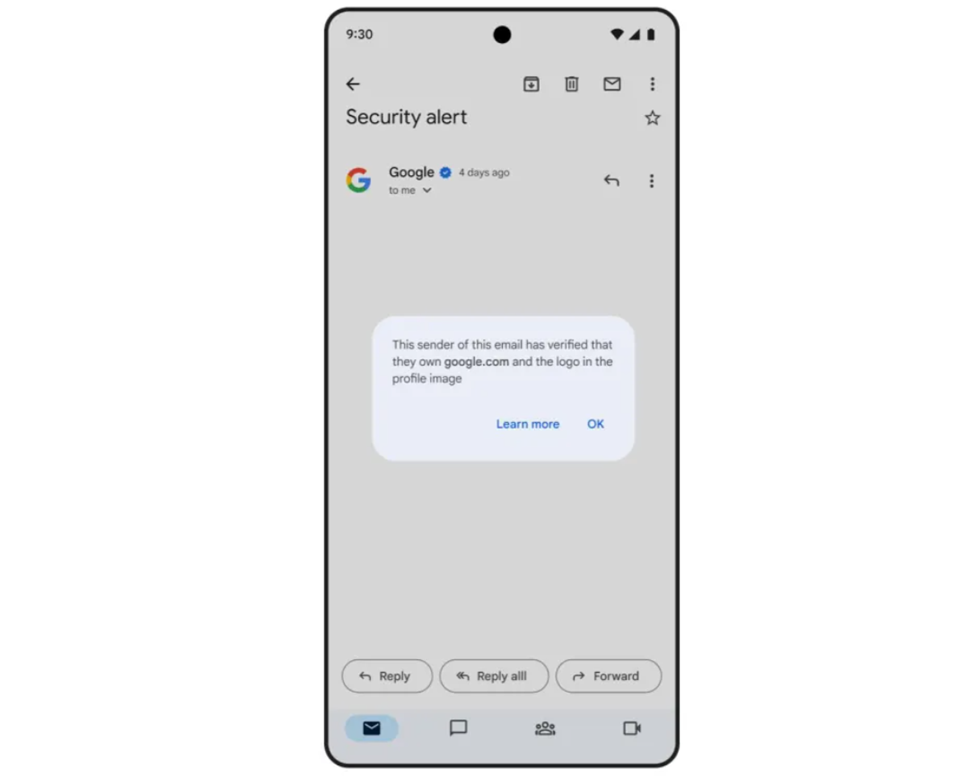
The BIMI verified check marks are now displayed on Android and iOS. (Image credit – Google)

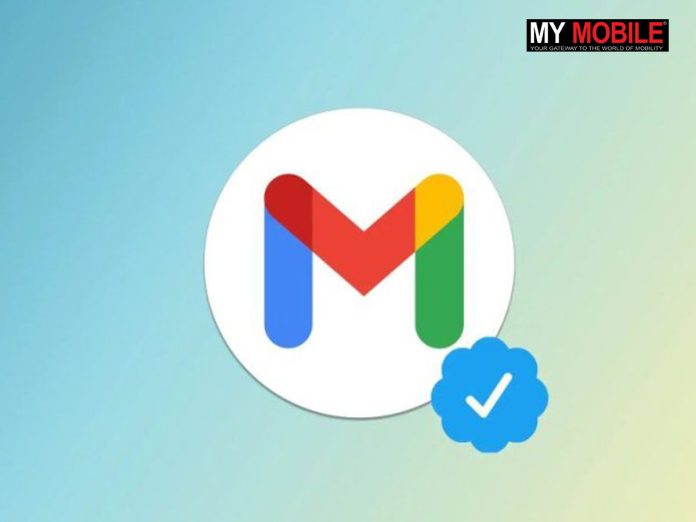
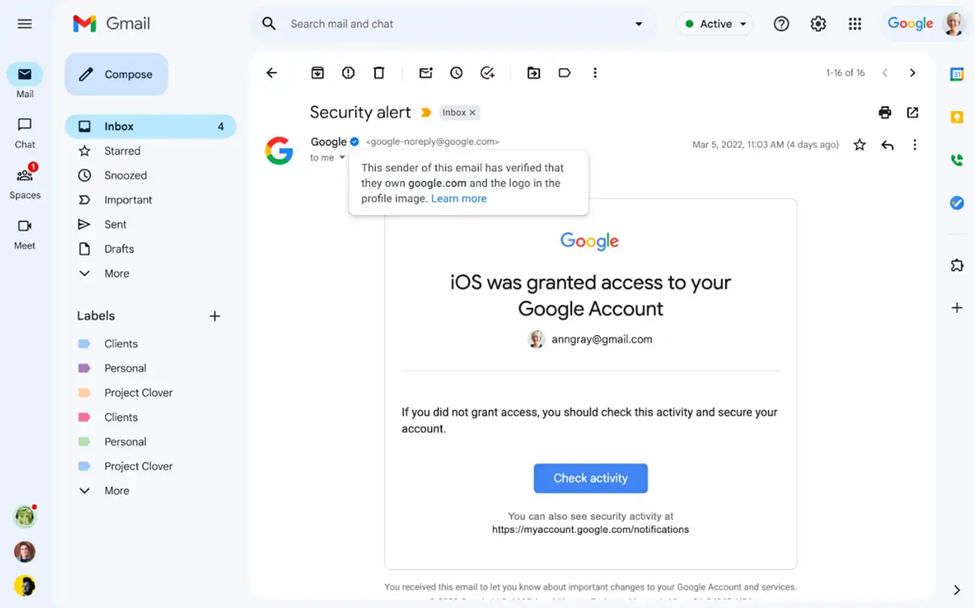
Last year, Google introduced Gmail’s blue checkmarks to verify email senders as a part of the Brand Indicators for Message Identification (BIMI) standard. Google has now confirmed that the same Gmail’s blue checkmarks are now coming to the Android and iOS versions of the app.

 BIMI standard displays brand logos in the “avatar slot” next to the sender’s name and address. For example, instead of seeing the generic letter “A” for Apple, you’ll see the company’s actual logo.

The blue checkmarks appear next to senders who have adopted BIMI and have a Verified Mark Certificate (VMC).

These ensure that their logos are registered trademarks.

“Currently, Gmail on the web will display a verified checkmark for senders who have adopted BIMI with a registered trademark (VMC). Over the next few weeks, users will also see those verified checkmark icons while using the Gmail application on Android and iOS (Apple Mail or other mail applications are not supported). Note that this update is applicable for VMCs only,” Google mentioned on its official blog announcing the update.

Google explains that this feature adds an extra layer of security. It requires a strong authentication and verification of logos before they are displayed in Gmail.

image

Google introduced Gmail’s blue checkmarks to verify email senders on the web app last year. (Image credit – 9to4Google)

The feature was initially available on the web. As per the recent announcement,  the blue checkmarks are now rolling out to Gmail’s mobile apps on Android and iOS.

On mobile, the checkmark will appear between the sender’s name and the date of the email.

Users would be able to tap on the checkmark to get a pre-coded message.

The message reads, “The sender of this email has verified that they own [example.com] and the logo in the profile image.”

As per reports, this update is being rolled out gradually over the next few weeks. It will be available in both personal Google accounts and Workspace accounts.

Moreover, Gmail is also introducing a new type of BIMI certificate. It will allow a broader range of senders to use BIMI, even if they don’t have the registered trademark required for a Verified Mark Certificate (VMC).

This change opens up the feature to more brands and senders.

FAQs

Q1. What is the purpose of Gmail’s blue checkmarks?

Answer. Gmail’s blue checkmarks verify email senders as part of the Brand Indicators for Message Identification (BIMI) standard. They appear next to senders who have adopted BIMI and have a Verified Mark Certificate (VMC), ensuring their logos are registered trademarks.

Q2. Where will the blue checkmarks be visible in Gmail?

Answer. Initially available on the web, the blue checkmarks are now rolling out to Gmail’s mobile apps on Android and iOS. On mobile, the checkmark will appear between the sender’s name and the date of the email.

Q3. Who can use the new type of BIMI certificate introduced by Gmail?

Answer. The new type of BIMI certificate allows a broader range of senders to use BIMI, even if they don’t have the registered trademark required for a Verified Mark Certificate (VMC). This change makes the feature more accessible to more brands and senders.

Government Urges Microsoft Users to Update Devices Immediately, Microsoft’s Tool To Correct AI Hallucinations

0

Highlight

  • CERT-In issued an urgent advisory for users of Microsoft Windows, Office, and Edge.
  • Attackers could gain unauthorized access, execute arbitrary code, or cause denial-of-service conditions.
  • Users are advised to install the latest security updates for Windows, Office, and Edge.
  • Microsoft claims its new tool can correct AI hallucinations.

image

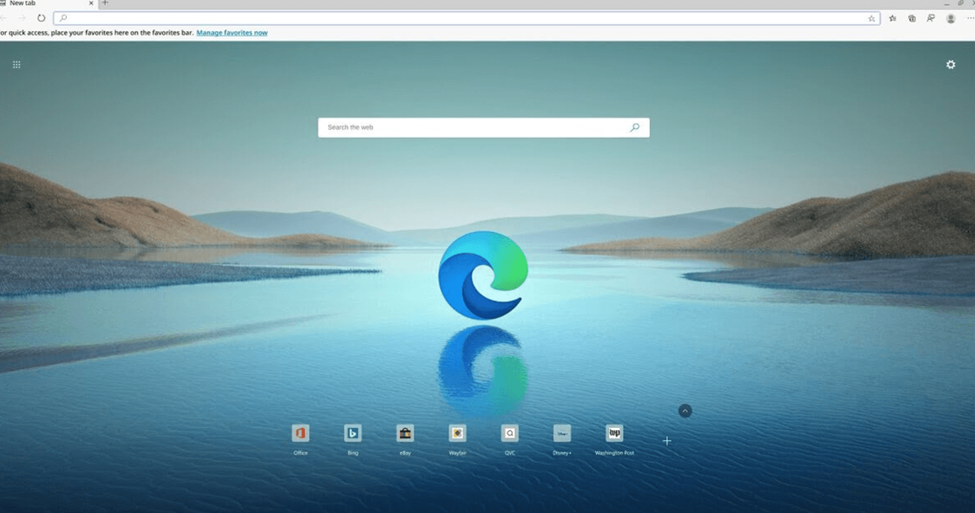
 The government body advises users to update Microsoft Edge on their device to the latest version. (Image credit – Microsoft Edge)

The Indian government has issued an urgent advisory for users of certain Microsoft products to update their devices immediately. This comes in response to the discovery of critical vulnerabilities that could potentially be exploited by cyber attackers.

The advisory was released by the Indian Computer Emergency Response Team (CERT-In). It specifically targets users of Microsoft Windows, Office, and Edge.

As per the released advisory, the vulnerabilities could allow attackers to gain unauthorized access to sensitive information, execute arbitrary code, or cause denial-of-service conditions.

“Multiple vulnerabilities have been reported in Microsoft Edge (Chromium) which could be exploited by a remote attacker to trigger remote code execution, perform UI spoofing, exploit stack & heap corruption on the targeted system,” CERT-In says.

These vulnerabilities, it says “exist in Microsoft Edge (Chromium) due to inappropriate implementation in UI, Autofill & insufficient data validation in Omnibox, Type Confusion in V8, incorrect security UI in Downloads, Out-of-bounds Write issue and improper neutralization of input during web page generation.”

The government body advises users to update Microsoft Edge on their device to the latest version. Microsoft has released the latest Microsoft Edge Stable Channel (Version 129.0.2792.52) and Microsoft Edge Extended Stable Channel (128.0.2739.90) which incorporate the latest updates of the Chromium project.

This update contains the following Microsoft Edge-specific updates: CVE-2024-43489, CVE-2024-43496 and CVE-2024-38221.

The advisory highlights that the vulnerabilities affect multiple versions of Microsoft Windows.

It includes Windows 10 and Windows 11, as well as Microsoft Office and the Edge browser.

CERT-In has highlighted the importance of keeping software up to date. It is significant to protect against potential cyber threats.

The advisory also includes detailed instructions on how to apply the updates. It further encourages Microsoft users to enable automatic updates to ensure their systems remain secure.

Immediate Action Required –

  • Users are strongly advised to install the latest security updates provided by Microsoft.
  • These updates address the identified vulnerabilities.
  • It will be crucial to maintain the security of the affected systems.

How to Update Windows?

Users can update their devices by navigating to the Windows Update section in their system settings.

For Office and Edge, updates can be installed through the respective applications’ update mechanisms.

The recent advisory follows a series of similar notices issued by CERT-In in the last few months.

This reflects the growing cybersecurity threats. The agency has been actively working to raise awareness and provide guidance to both individuals and organizations.

Microsoft’s New Tool Can Correct AI Hallucinations?

Experts have often flagged AI tools for notoriously lying. AI hallucinations are a much bigger issue that many tech companies are working to resolve. But it looks like Microsoft has finally found a solution.

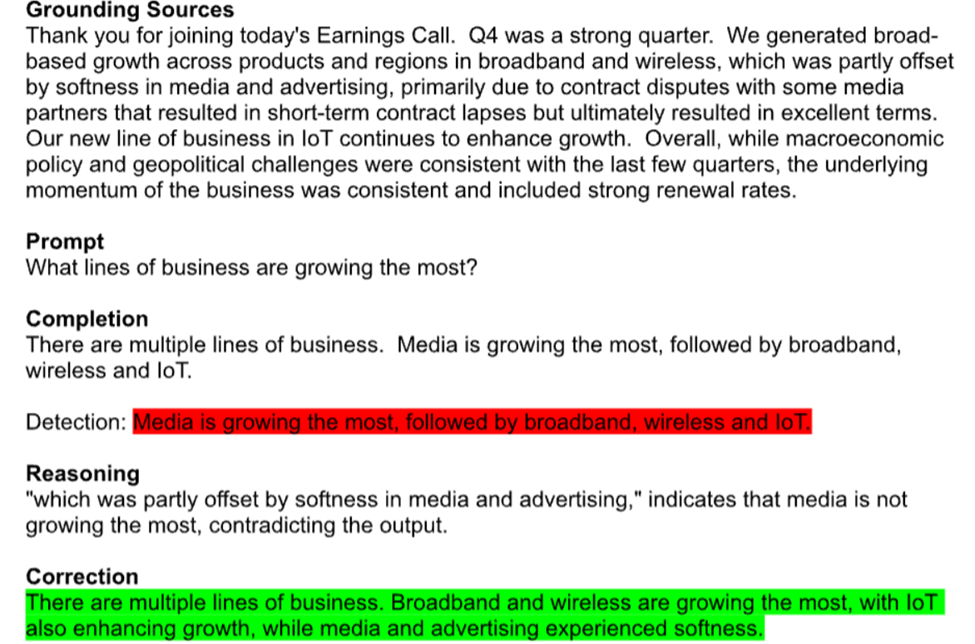
According to Microsoft, its tool Correction is a service that “attempts to automatically revise AI-generated text that’s factually wrong.”

image

 Microsoft’s Correction Tool Demo. (Image credit – Microsoft)

“Correction is powered by a new process of utilizing small language models and large language models to align outputs with grounding documents. We hope this new feature supports builders and users of generative AI in fields such as medicine, where application developers determine the accuracy of responses to be of significant importance,” a Microsoft spokesperson told TechCrunch.

“Correction can significantly enhance the reliability and trustworthiness of AI-generated content by helping application developers reduce user dissatisfaction and potential reputational risks,” the Microsoft spokesperson further said.

“It is important to note that groundedness detection does not solve for ‘accuracy,’ but helps to align generative AI outputs with grounding documents.”

Industry experts were quick to raise concerns about this new Microsoft tool. A research fellow at Queen Mary University specializing in AI, Mike Cook argued that even such a tool even if works will increase the already persistent trust and explainability issues about AI among users.

“What Microsoft is doing now is repeating the mistake at a higher level. Let’s say this takes us from 90% safety to 99% safety — the issue was never really in that 9%. It’s always going to be in the 1% of mistakes we’re not yet detecting,” Cooks said.

Correction is currently available as part of Microsoft’s Azure AI Content Safety API (in preview for now). It can be used with any text-generating AI model, including Meta’s Llama and OpenAI’s GPT-4o.

 Previously, Google also introduced a similar feature in Vertex AI. It allows customers to “ground” models by using data from third-party providers, their datasets, or Google Search.”

 FAQs

Q1. Why has the Indian government issued an urgent advisory for Microsoft users?

Answer. CERT-In has issued an urgent advisory for users of Microsoft Windows, Office, and Edge to update their devices immediately due to the discovery of critical vulnerabilities that could be exploited by cyber attackers.

Q2. What are the risks associated with the identified vulnerabilities in Microsoft products?

Answer. The vulnerabilities could allow attackers to gain unauthorized access to sensitive information, execute arbitrary code, or cause denial-of-service conditions. Specific issues in Microsoft Edge (Chromium) include remote code execution, UI spoofing, and other security flaws.

Q3. How can users update their Microsoft devices to address these vulnerabilities?

Answer. Users can update their devices by navigating to the Windows Update section in their system settings for Windows updates. For Office and Edge, updates can be installed through the respective applications’ update mechanisms. Enabling automatic updates is also recommended to ensure ongoing security.

Read more: Delta CEO Criticizes Microsoft After Major Outage and Highlights Apple’s Stability

Read more: Microsoft to Enhance Windows Resilience After CrowdStrike Update Issue

Read more: CrowdStrike Update Bug Causes Global Disruption, Microsoft Highlights Apple’s Superior Security

Airtel cracks down on SPAM, launches India’s first AI-powered network solution for SPAM detection

0

Highlights

• AI solution processes 1 trillion records on a real time basis.

• Flags 100 million spam calls and 3 million SMSes every day.

• Airtel has introduced a new AI-powered spam detection tool to combat spam calls and messages in India.

• This innovative solution automatically alerts customers to suspected spam, offering real-time protection.

• Available to all Airtel customers at no additional cost, the AI-powered spam detection tool works by analyzing various parameters such as call frequency, duration, and sender patterns.

In a pioneering move to curb the country’s spam menace, Bharti Airtel (“Airtel”), today, launched India’s first network-based, AI-powered spam detection solution that will significantly solve the issue of spam calls and messages for its customers.

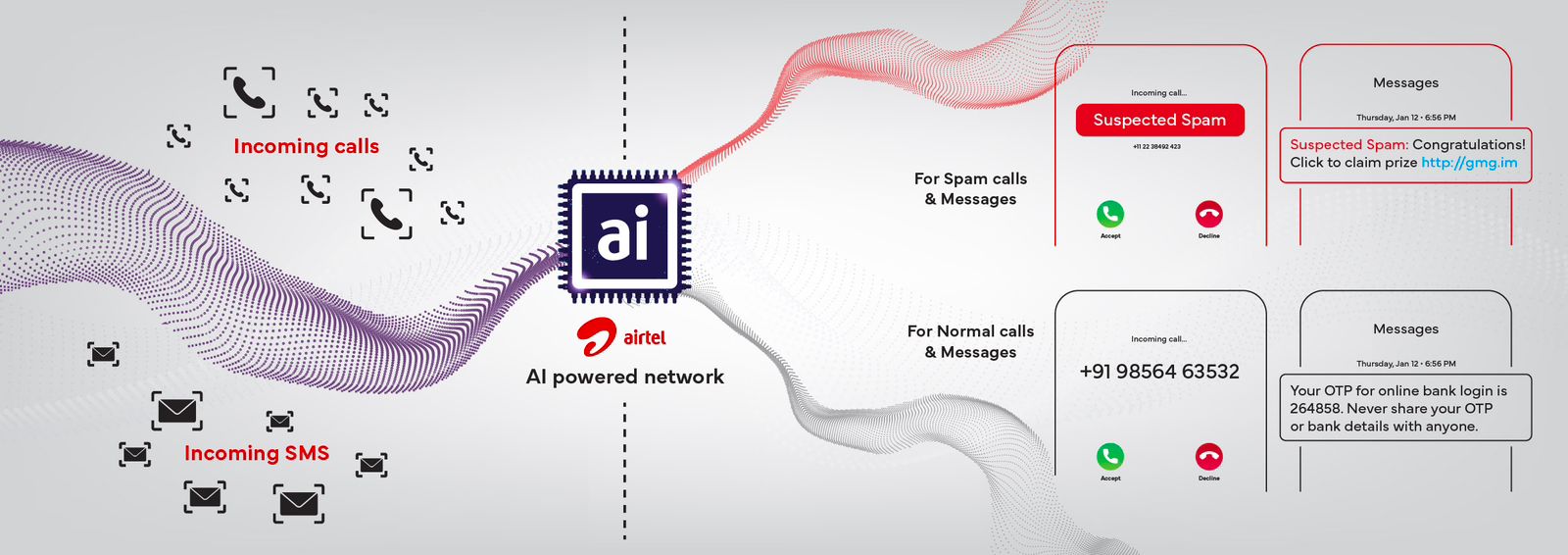
A first-of-its-kind solution by a telecom service provider in the country, the tool will alert customers in real-time to all suspected spam calls and SMSes.

The solution is free of cost and will get auto activated for all Airtel customers without them having to raise a service request or download an app.

Gopal Vittal, Managing Director and Chief Executive Officer, Bharti Airtel said, “Spam has become a menace for customers.We have spent the last twelve months to solve this comprehensively.Today marks a milestone as we launch the country’s first AI-powered spam free network that will shield our customers from the continuous onslaught of intrusive and unwanted communications.”

“Designed as a dual-layer protection, the solution has two filters – one at the network layer and the second at the IT systems layer.Every call and SMS passes through this dual-layered AI shield.In 2 milliseconds our solution processes 1.5 billion messages and 2.5 billion calls every day.This is equivalent to processing 1 trillion records on a real time basis using the power of AI.Our solution has been able to successfully identify 100 million potential spam calls and 3 million spam SMSes originating every day.For us, keeping our customers secure is a burning priority.” Vittal added.

Developed in-house by Airtel’s data scientists, the AI-powered solution uses a proprietary algorithm to identify and classify calls and SMSes as “Suspected SPAM.”

The network powered by state-of-the-art AI algorithm analyses various parameters such as the caller or sender’s usage patterns, call/SMS frequency, call duration amongst several others, on a real time basis.

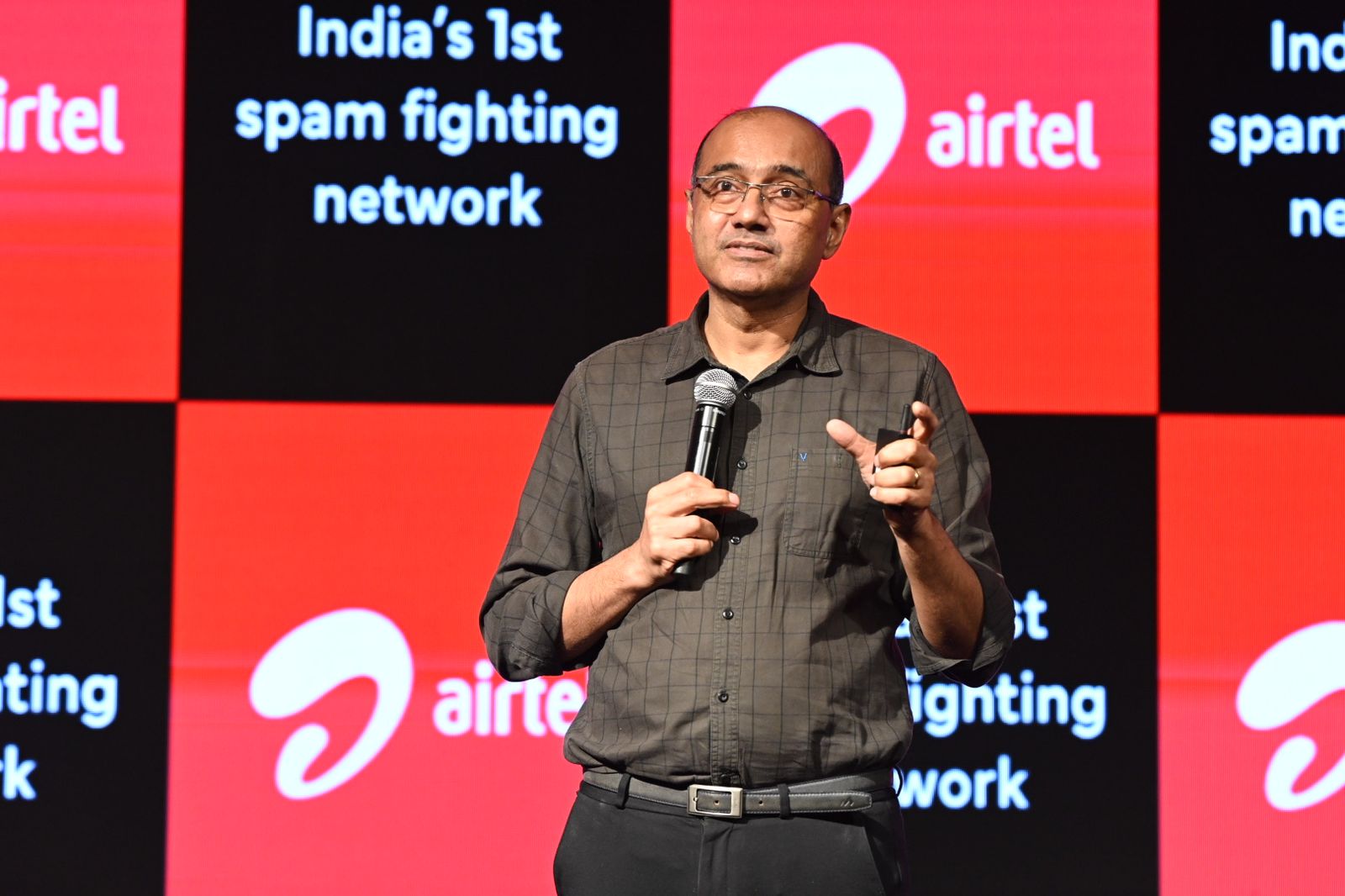
Gopal Vittal addressing the media as well as the ad film exclusively shared with you before it’s aired pan India tomorrow September 26.

By cross-referencing this information against known spam patterns, the system flags suspected spam calls and SMSes accurately.

Additionally, the solution also alerts customers to malicious links received via SMS.

For this, Airtel has built a centralised database of blacklisted URLs and every SMS is scanned in real time by a state-of-the-art AI algorithm to caution users from accidentally clicking on suspicious links.

The solution can also detect anomalies such as frequent IMEI changes – a typical indicator of fraudulent behavior.

By layering these protective measures, the company is ensuring its customers receive maximum level of defense against the evolving landscape of spam and fraud threats.

How does India’s AI-powered SPAM free network work?

How does India’s AI-powered SPAM free network work?

The Government of India (GoI) has allocated 10-digit numbers with the prefix 160 to for service and transactional calls.

Customers can expect to receive calls from these 160-prefix series assigned to Banks, Mutual Funds, Insurance Companies, Stockbrokers, other financial institutions, Corporates, Enterprises, SMEs, big and small businesses used for making transactional and service calls.

Additionally, those customers who have not opted for Do-not-disturb (DND) and have subscribed to receiving promotional calls will continue to receive them from a 10-digit number with the prefix 140.

FAQs

What is the new Airtel AI-powered real-time spam detection solution?

Airtel has introduced a new AI-powered spam detection tool to combat spam calls and messages in India. This innovative solution automatically alerts customers to suspected spam, offering real-time protection.

Who can use the Airtel AI-powered Spam-free network?

Available to all Airtel customers at no additional cost, the AI-powered spam detection tool works by analyzing various parameters such as call frequency, duration, and sender patterns. It then compares this data to known spam characteristics to identify potential threats. If a call or message is deemed suspicious, customers will receive a real-time alert.

What all does the Airtel AI scam tool do?

Beyond spam calls and messages, the tool also safeguards customers from malicious links. By scanning incoming SMS for suspicious URLs, Airtel can prevent users from inadvertently clicking on harmful content. Additionally, the solution can detect anomalies like frequent IMEI changes, which are often associated with fraudulent activities.

With this advanced spam protection, Airtel aims to provide its customers with a safer and more enjoyable mobile experience.

Read more: Airtel Digital TV’s new plan offers Amazon Prime benefits to customers

Read more: Airtel Payments Bank simplifies digital banking experience with enhanced security, fraud alarm, and transparency features

Read more: Airtel vs Jio prepaid plans: Detailed comparison after latest price hike