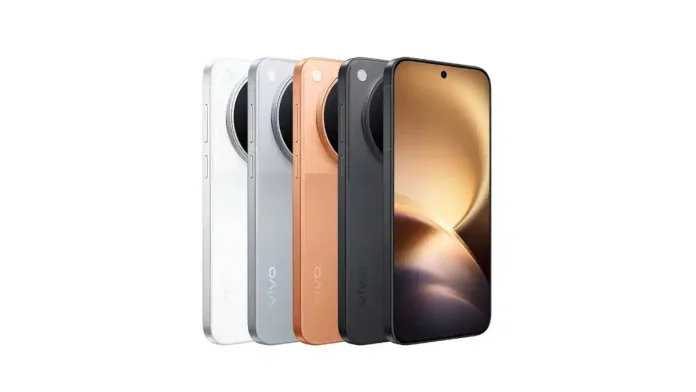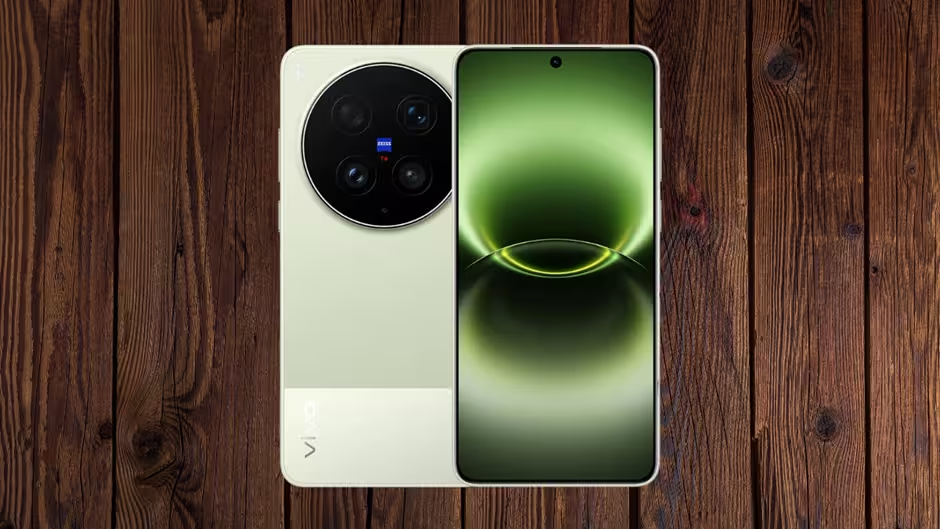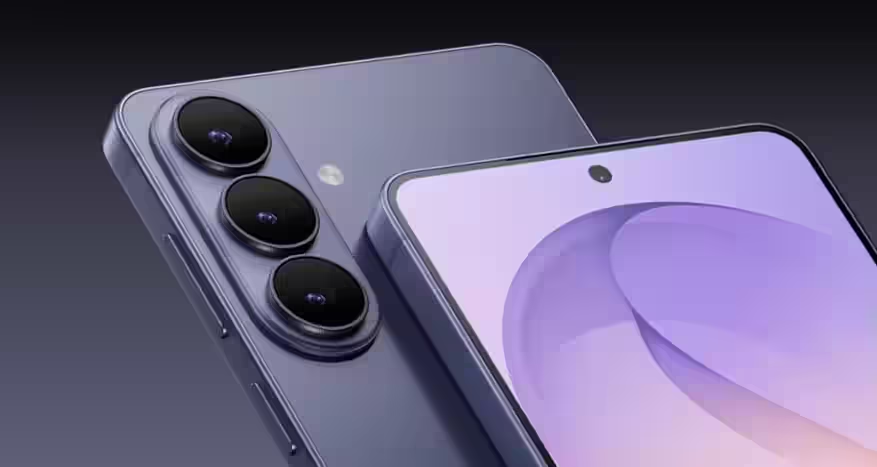
Vivo V70 FE leak reveals a 6.83-inch 1.5K AMOLED display, MediaTek 7360 Turbo chipset, 7,000mAh battery with 90W charging and a 200MP main camera with 30x zoom.
It is tipped to start at ₹37,999 and could be available in Northern Lights Purple and Monsoon Blue colour variants.
Vivo V70 FE is expected to debut in India on April 2.
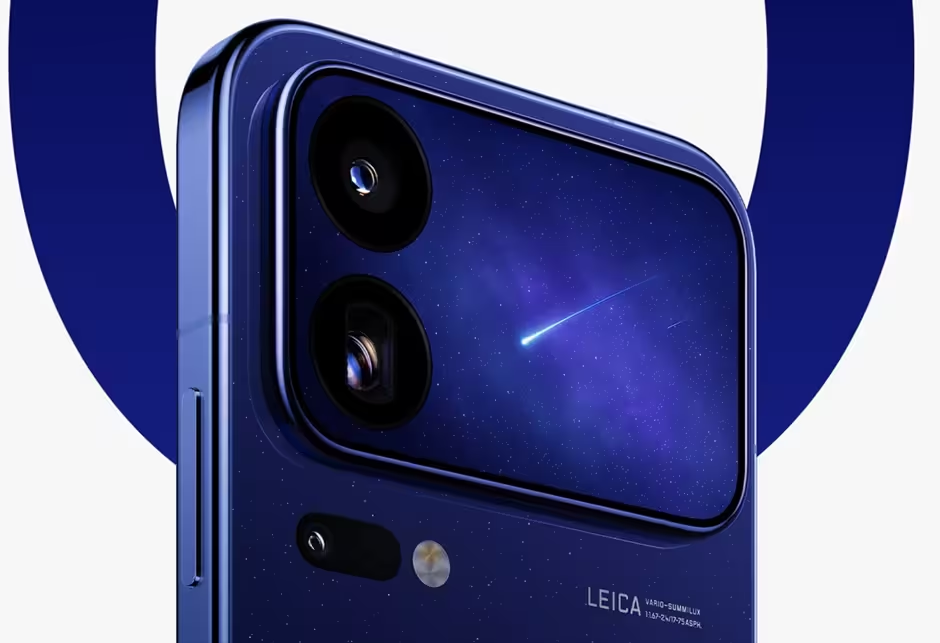
Vivo V70 FE teaser. (Image credit – Vivo)
Vivo is reportedly preparing to expand its V70 lineup in India with the upcoming Vivo V70 FE. The model has already been introduced in Indonesia and Vivo India has also begun teasing its arrival with a “Coming Soon” banner on social media platforms.
Reports suggest that the Vivo V70 FE could launch in India on April 2, although the company has yet to officially confirm the exact date. In any case, fresh leaks have revealed the full specifications and the expected price of the new Fan Edition device. Here’s what we know so far.
Tiny details? Big flex.
The 200MP OIS Ultra-Clear Main Camera is here to catch what others miss and bring next-level clarity to every shot. Get ready to Slay Every Detail.
Vivo V70 FE leaked hands-on image. (Credit – @saaaanjjjuuu on X)
According to tipster Sanju Choudhary @saaaanjjjuuu on X, the Vivo V70 FE could feature a large 6.83-inch 1.5K flat AMOLED display with a 120Hz refresh rate. The panel is said to support up to 1,900 nits of brightness and offer a screen-to-body ratio of up to 94.4 percent. The smartphone is also expected to include dual stereo speakers for an enhanced audio experience.
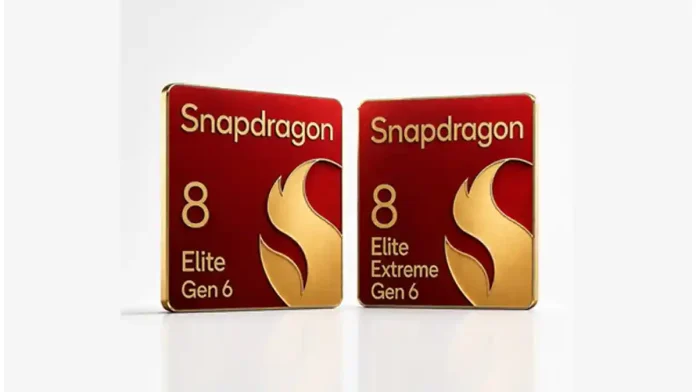
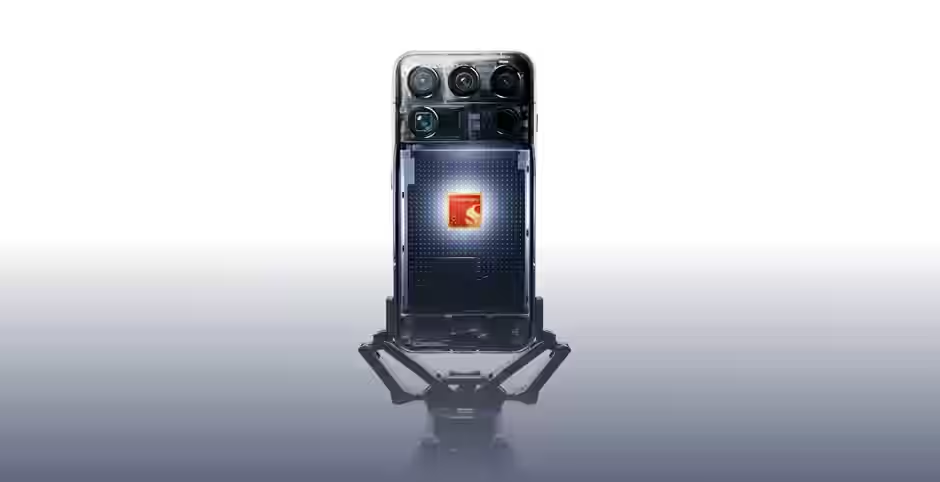
The tipster further revealed that the device may be powered by the MediaTek 7360 Turbo chipset, paired with LPDDR5 RAM and UFS 3.1 storage. However, specific RAM and storage configurations have not been revealed yet.
VIVO V70 FE full specification leak ahead of the launch:
For battery, the Vivo V70 FE is tipped to pack a large 7,000mAh battery with support for 90W fast charging, focusing on long-lasting usage and quick top-ups.
On the camera front, the smartphone is expected to feature a dual rear camera setup, led by a 200-megapixel Samsung HP5 primary sensor. This camera is likely to support up to 30x telephotozoom, along with Vivo’s Aura Light and CIPA 4.0 stabilisation. It may be accompanied by an 8-megapixel ultra-wide camera. For selfies and video calls, the Vivo V70 FE could sport a 50-megapixel front-facing camera.
The device is expected to run on Origin OS 6 based on Android 16. It is also likely to receive up to four major Android updates and six years of security updates, ensuring long-term software support.
Vivo V70 FE – Expected Price and Colour Options
In terms of pricing, the Vivo V70 FE is tipped to start at around ₹37,999 for the base variant. The smartphone is expected to launch in two colour options, which include Northern Lights Purple and Monsoon Blue.
FAQs
Q1. When will the Vivo V70 FE launch in India?
Answer. The Vivo V70 FE is expected to launch on April 2, though the company has not officially confirmed the date.
Q2. What are the key specifications of the Vivo V70 FE?
Answer. It may feature a 6.83-inch 1.5K AMOLED display (120Hz, 1,900 nits), MediaTek 7360 Turbo chipset, 7,000mAh battery with 90W fast charging, and a 200MP main camera with 30x zoom.
Q3. What is the expected price and colour options of the Vivo V70 FE?
Answer. The smartphone is tipped to start at ₹37,999 and could be available in Northern Lights Purple and Monsoon Blue.
Galaxy A57 5G costs ₹56,999 for 8GB+256GB and ₹62,499 for 12GB+256GB.
The Galaxy A37 5G costs ₹41,999 for 8GB+128GB, ₹47,499 for 8GB+256GB, and ₹52,999 for 12GB+256GB.
Both phones have 6.7-inch 120Hz displays, Exynos chipsets, 5,000mAh batteries with 45W charging, triple rear cameras (50MP main), 12MP front cameras, and will get six years of software updates.
Samsung Galaxy A57 5G and Galaxy A37 5G Prices Locked for the Indian market.
Samsung is set to launch the Galaxy A37 and Galaxy A57 on March 25. Ahead of the launch, the Korean company has officially locked the pricing for its upcoming Galaxy A-series smartphones in India. The Galaxy A57 5G and Galaxy A37 5G are expected to arrive in multiple storage configurations, targeting the premium mid-range segment. Here are more details.
Samsung Galaxy A57 5G Price in India
The Galaxy A57 5G will be available in two variants. The 8GB RAM with 256GB storage model is priced at ₹56,999, while the higher-end 12GB RAM with 256GB storage variant will cost ₹62,499.
This positions the device as a premium offering in Samsung’s A-series lineup.
Samsung Galaxy A37 5G Price in India
Meanwhile, the Galaxy A37 5G will be offered in three configurations. The base 8GB + 128GB variant is priced at ₹41,999. The 8GB + 256GB model will be available for ₹47,499, while the top-end 12GB + 256GB variant is priced at ₹52,999.
As of now, Samsung has not announced any launch or sellout offers for either of the smartphones. This means buyers may not see introductory discounts, bank offers, or bundled deals at the time of sale.
Galaxy A37 and Galaxy A57 – What To Expect?
While detailed specifications are yet to be officially confirmed, both the Galaxy A57 5G and Galaxy A37 5G are expected to bring upgraded performance, 5G connectivity, and improved features compared to their predecessors.
The Samsung Galaxy A37 5G is expected to be powered by the Exynos 1480 chipset, marking a shift from the Snapdragon 6 Gen 3 processor used in its predecessor. It is likely to retain a 6.7-inch display with a 120Hz refresh rate and peak brightness of up to 1,200 nits. The device is also said to pack a 5,000mAh battery with support for 45W wired charging.
Meanwhile, the Samsung Galaxy A57 5G is tipped to come with a premium metal frame and could be powered by the newer Exynos 1680 chipset. It is expected to feature a similar 6.7-inch display with a 120Hz refresh rate.
Both smartphones are likely to run on One UI 8.5 based on Android 16 and are expected to receive up to six years of software updates. In terms of cameras, the Galaxy A37 5G and Galaxy A57 5G may include a triple rear camera setup with a 50-megapixel primary sensor, an 8-megapixel ultra-wide lens, and a 5-megapixel macro camera. For selfies, both devices are expected to feature a 12-megapixel front camera, with support for video recording at up to 4K resolution at 30fps.
FAQs
Q1. What are the prices of the Samsung Galaxy A57 5G in India?
Answer. The Galaxy A57 5G costs ₹56,999 for the 8GB+256GB model and ₹62,499 for the 12GB+256GB model.
Q2. What are the prices of the Samsung Galaxy A37 5G in India?
Answer. The Galaxy A37 5G costs ₹41,999 for 8GB+128GB, ₹47,499 for 8GB+256GB, and ₹52,999 for 12GB+256GB.
Q3. What features can buyers expect from the Galaxy A37 5G and Galaxy A57 5G?
Answer. Both phones are expected to have 6.7-inch 120Hz displays, Exynos chipsets, 5,000mAh batteries with 45W charging, triple rear cameras with a 50MP main sensor, 12MP front cameras, and up to six years of software updates.
Ai+ has launched the Pulse 2 smartphone in India at the starting price of ₹7,499 for the base 4GB + 64GB variant.
The Ai+ Pulse 2 comes in green, blue, pink, purple, and black colour options.
The smartphone is currently available for purchase on Flipkart.
Ai+ Smartphone as a brand was introduced in India in July 2025 with two models, Pulse and Nova 5G. Now, within a year’s time, the brand has unveiled Pulse 2 in the Indian market in the affordable smartphone category. We have managed to spend some time with the new smartphone and based on our hands-on experience, here’s what we feel.
Ai+ Pulse 2 – Key Features
745-inch HD+ 120Hz V-Notch Display
Unisoc T7250 1.8GHz Octa-Core Processor
4GB/6GB LPDDR4x RAM
64GB/128GB eMMC Storage
50MP + CIF Rear Camera
8MP Front Camera
6000mAh Li-polymer Battery
18W Fast Charging
IP64 Rated
Ai+ Pulse 2 – Pros & Cons
Pros
Cons
● Good design and in-hand feel
● IP64 rating
● Large 6000mAh battery
● 120Hz refresh Rate Display
● Expandable storage
● 3.5mm headphone jack
● Clean UI
● Affordable
● Slow charging speed
● Touch response issues
● Basic camera performance
Ai+ Pulse 2 – Unboxing Video
Ai+ Pulse 2 – Design and Display
The first thing that stands out for Ai+ Pulse 2 is how solid it feels in the hand for a smartphone in this price segment. It also looks quite different compared to the previous model by the brand. The back design feels more modern this time. We now have a neat, squarish camera module that looks like glass with two lenses and an LED flash. There’s also a “Matrix AI Camera” branding.
The dual-tone glossy back finish does a decent job resisting smudges. The Black colour unit we tested actually looks quite classy and doesn’t immediately feel like a budget phone.
And like we mentioned earlier, the phone feels comfortable in the hand. The edges are smooth and the overall design feels cleaner than before. Ai+ has also added some nice touches like the red-accented power button, which is easy to spot and use. The fingerprint sensor is built into the power button and it works well for quick unlocking. You also get a 3.5mm headphone jack and a bottom speaker, which is always good to see at this price.
Build quality is solid for a budget device. It doesn’t feel cheap or fragile. On top of that, durability has improved with an IP64 rating. This means it can handle dust and light splashes better than the previous version.
Coming to the display, the phone features a large 6.75-inch screen. It’s an HD+ IPS LCD panel with a 120Hz refresh rate. The higher refresh rate does make scrolling feel smoother compared to older 90Hz displays, especially while browsing or using social media.
Brightness is okay for indoor use, but it can feel a bit dim under strong sunlight. Since it’s an HD+ panel, the sharpness isn’t the best as the text and images aren’t super crisp. Another thing we noticed during use was occasional touch response issues. It’s not constant, but sometimes the screen doesn’t register touches as quickly as you’d expect, which can get a bit annoying.
Overall, the Pulse 2 gets the basics right in design and offers a smoother display than before. After using the Ai+ Pulse 2 for a while, the experience has been decent when you consider the price you are getting the device for.
Ai+ Pulse 2 – Hardware, Software and Performance
Ai+ Pulse 2 is powered by a UNISOC T7250 processor, which is paired with up to 6GB RAM. On paper, it’s not a very powerful setup and that sometimes shows in real-world usage too. In daily use, the smartphone feels like a budget phone that focuses on getting the basics right.
The phone works fine for regular tasks like calling, WhatsApp, scrolling Instagram, or watching YouTube. Apps open at a decent speed and when stick to light usage, we didn’t face any major performance issues. The 120Hz display also helps things feel a bit smoother while scrolling.
However, when we tried to push it a little like switching between multiple apps or doing heavier tasks, there were slowdowns. Apps take a bit longer to load and there can be occasional stutters. Gaming is possible, but only on basic settings. Casual games run fine but heavier games struggle and are not really enjoyable on this device.
We ran the phone on popular benchmarking apps and results are something you would expect from a device in this price segment.
You get up to 128GB internal storage and there’s also support for microSD cards up to 2TB, which is great if you store a lot of photos or videos.
On the software side, the phone runs on Android 16 with NxtQuantum OS out of the box. This is an upgrade over the previous version and the interface feels fairly clean and easy to understand. It doesn’t feel overly complicated, which is good for users who just want a simple experience.
The overall software experience is stable for the most part, but you may still notice some minor lag here and there. It definitely can handle everyday tasks well but it’s clearly not built for heavy performance.
Ai+ Pulse 2 – Camera Performance
The Ai+ Pulse 2 comes with a 50 megapixel dual AI rear camera setup, which is the same as the previous model. On paper, it sounds promising and it does a fairly decent job in good lighting. During the day, photos come out with decent colours. They are not very sharp or detailed, but they get the job done for social media or casual use. The camera focuses reasonably fast and you don’t really have to try too hard to get a decent shot.
The front camera has been upgraded to 8MP. Selfies look good, especially in good lighting. Skin tones are okay, though sometimes the camera smooths things a bit too much if beauty mode is on.
The camera app is simple and easy to use. You get options like HDR, beauty mode, filters, and scene detection. There aren’t any fancy AI editing tools, but there are enough basic controls for users who like to tweak their photos a little.
Low-light performance is where things start to struggle. There is a night mode and it does try to brighten up the scene by capturing more light. But in very dark conditions, photos often come out soft and a bit noisy.
Overall, the camera on the Pulse 2 is fine for everyday photos, especially in daylight. It’s not made for serious photography, but it does a decent job for quick shots and social media.
Ai+ Pulse 2 – Battery and Charging
Battery life is one area where the Ai+ Pulse 2 clearly impresses and has also improved over the previous model. It packs a bigger 6000mAh battery that makes a noticeable difference in daily use.
With regular usage like calls, social media, YouTube, and some light gaming, the phone easily lasts a full day. While we tested the phone, we were also able to stretch into the next day while keeping usage stick to basics. You don’t really have to worry about charging it again and again during the day, which is a big advantage.
What’s also nice is that despite having a bigger battery, the phone doesn’t feel too bulky. It still feels fairly slim in hand, which makes it comfortable to carry around. The brand claims it to be the slimmest 6000mAh battery phone in this segment.
For charging, you get 18W fast charging support. It takes a bit of time to fully charge the big battery, so you’ll need some patience here. It’s not slow, but definitely not quick either.
Overall, the battery life is strong and reliable. It makes the Pulse 2 a good option for users who want a phone that can easily last through the day without stress.
Verdict – Should You Buy Ai+ Pulse 2?
Overall, if we look at the Ai+ Pulse 2 purely from a price point of view, it actually makes a lot more sense. The phone is clearly aimed at people who just want a very basic smartphone without spending much.
After using it, the Pulse 2 feels like a phone that focuses on the essentials rather than trying to do everything. It comes with a solid 6000mAh battery that easily lasts long and the phone looks better than what you’d expect at this price. The 120Hz display also adds a bit of smoothness in daily use. But at the same time, you do feel the limitations. Performance is just about okay for basic tasks. The display isn’t very sharp and there are small issues like touch response and occasional lag. The cameras are also quite basic.
So, should you buy it? If you are looking for a basic and affordable smartphone with good battery life only for calls, WhatsApp, YouTube and light apps, then yes! The Pulse 2 is a reasonable choice. In short, the Ai+ Pulse 2 is a practical budget phone that gets the basics right.
Reasons To Buy
Clean and modern design
Decent build with IP64 rating
Big 6000mAh battery easily lasts more than a day
Simple and easy-to-use software
Reasons Not to Buy
Display is not very sharp
Not ideal for gaming or heavy usage
Cameras are just average
Alternatives
Lava Bold N2 – ₹7,999
Samsung Galaxy M07 – ₹7,999
Redmi A5 – ₹7,999
FAQs
Q1. Does the Ai+ Pulse 2 support 5G?
Answer. No, the Ai+ Pulse 2 is a 4G smartphone. It is meant for basic everyday usage rather than high-speed 5G connectivity.
Q2. How long does the battery last on the Ai+ Pulse 2?
Answer. The phone comes with a 6000mAh battery, which can easily last a full day or even more with normal use like calling, browsing, and watching videos.
Q3. Can I expand the storage on the Ai+ Pulse 2?
Answer. Yes, the phone supports microSD cards, and you can expand the storage up to 2TB, which is great for storing photos, videos, and apps.
Q4. Does the Ai+ Pulse 2 have a fingerprint sensor?
Answer. Yes, it has a side-mounted fingerprint sensor built into the power button, which works well for quick unlocking.
Q5. Is the Ai+ Pulse 2 good for gaming?
Answer. The phone can handle light and casual games, but it is not ideal for heavy gaming. You may notice lag or slow performance with demanding games.
OnePlus 15T launched in China starting at CNY 4,299 (₹58,000) for 12GB+256GB.
Key Features – 6.32‑inch AMOLED display, Snapdragon 8 Elite Gen 5 chipset, up to 16GB LPDDR5x RAM, 1TB UFS 4.1 storage, ColorOS 16 based on Android 16, dual 50MP rear cameras and 7,500mAh battery with 100W wired and 50W wireless charging.
It is available in Healing White Chocolate, Pure Cocoa and Relaxing Matcha colour options.
OnePlus 15T launched in China. (Image credit – OnePlus)
OnePlus has officially launched its latest flagship smartphone, the OnePlus 15T, in China. The device arrives with multiple storage configurations, a large battery, and a focus on performance and gaming capabilities. Here’s everything you need to know about the new device.
OnePlus 15T – Price and Availability in China
The OnePlus 15T starts at CNY 4,299 (around ₹58,000) for the 12GB + 256GB variant. The 12GB + 512GB model is priced at CNY 4,899 (approximately ₹67,000), while the 16GB + 256GB and 16GB + 512GB variants cost CNY 4,599 (around ₹63,000) and CNY 5,199 (roughly ₹71,000), respectively. The top-end 16GB + 1TB variant is priced at CNY 5,699 (about ₹78,000).
The smartphone will go on sale in China starting March 25 at 10:00 AM local time (7:30 AM IST) via the Oppo China online store.
It is available in three colour options, which are Healing White Chocolate, Pure Cocoa, and Relaxing Matcha.
OnePlus 15T – Key Features
The OnePlus 15T features a 6.32-inch Full-HD+ AMOLED display with a resolution of 1216 x 2640 pixels. It supports a dynamic refresh rate ranging from 60Hz to 165Hz, although the highest refresh rate is limited to select supported games.
The display offers up to 1,800 nits peak brightness and 460ppi pixel density. The panel also comes with TÜV Rheinland Smart Eye Protection 5.0 and Low Blue Light certifications. Additionally, the device carries IP66, IP68, IP69, and IP69K ratings for dust and water resistance.
The smartphone is powered by Qualcomm’s 3nm Snapdragon 8 Elite Gen 5 chipset. It is part of OnePlus’ “E-Sports Triple-Core” system, which also includes the Lingxi touch response chip and the G2 Wi-Fi chip. The device also integrates a next-generation “Wind Chaser Gaming” kernel for improved gaming performance.
According to the company, the phone has scored over 44,50,000 points on the AnTuTu benchmarking platform. It comes with up to 16GB LPDDR5x Ultra Pro RAM and up to 1TB UFS 4.1 storage. On the software side, the OnePlus 15T runs on Oppo’s ColorOS 16 based on Android 16.
For photography, the OnePlus 15T is equipped with a dual rear camera setup powered by Oppo’s LUMO imaging engine. It includes a 50-megapixel primary camera with a Sony Ultra Vision sensor and an f/1.8 aperture.
The secondary camera is a 50-megapixel periscope telephoto lens with f/2.4 aperture, offering 3.5x optical zoom and up to 7x lossless digital zoom. On the front, the device features a 16-megapixel camera for selfies and video calls. The smartphone supports video recording at up to 8K resolution at 30fps.
The OnePlus 15T packs a large 7,500mAh Glacier Battery, which is claimed to deliver up to 22.8 hours of online video playback on a single charge. It supports 100W SuperVOOC wired fast charging and 50W wireless charging.
Connectivity options include 5G, 4G LTE, Wi-Fi 7, Bluetooth, NFC, and a USB Type-C port. It also supports multiple navigation systems, including GPS, GLONASS, BeiDou, Galileo, and QZSS. It also includes an in-display ultrasonic fingerprint sensor for security.
In terms of dimensions, the OnePlus 15T measures 150.56 x 71.82 x 8.48mm and weighs approximately 194 grams.
FAQs
Q1. When and where was the OnePlus 15T launched?
Answer. The OnePlus 15T was officially launched in China, with sales starting March 25, 2026, via the Oppo China online store.
Q2. What are the pricing details of the OnePlus 15T?
Answer. Prices start at CNY 4,299 (₹58,000) for the 12GB+256GB variant, going up to CNY 5,699 (₹78,000) for the top‑end 16GB+1TB model.
Q3. What display features does the OnePlus 15T offer?
Answer. It has a 6.32‑inch Full‑HD+ AMOLED display with up to 165Hz refresh rate, 1,800 nits peak brightness, TÜV Rheinland eye protection, and multiple IP ratings for durability.
Q4. What camera setup is included in the OnePlus 15T?
Answer. The device features dual 50MP rear cameras (Sony Ultra Vision primary + periscope telephoto with 3.5x optical zoom) and a 16MP front camera, supporting 8K video recording.
Q5. How powerful is the OnePlus 15T’s battery and charging system?
Answer. It packs a 7,500mAh Glacier Battery, offering up to 22.8 hours of video playback, with 100W SuperVOOC wired fast charging and 50W wireless charging support.
Redmi Note 15 SE 5G will debut in India on April 2, 2026 with availability confirmed via Flipkart.
It is expected to be a rebranded version of the China‑exclusive Cherry Red Edition with a striking red finish, gold‑toned frame and squircle‑shaped dual‑camera module.
It will most likely retain the core hardware of the standard Redmi Note 15 5G.
Redmi Note 15 SE 5G India Launch Date confirmed. (Image credit – Redmi)
Xiaomi’s sub-brand Redmi has officially confirmed the launch of a new special edition smartphone in India. The Redmi Note 15 SE 5G is set to debut in the country in the first week of April, expanding the existing Redmi Note 15 lineup that was introduced earlier this year. Here are more details.
Redmi Note 15 SE 5G India Launch and Design Details
The company announced via X that the Redmi Note 15 SE 5G will launch in India on April 2. Alongside the announcement, a dedicated microsite has gone live on Flipkart and confirmed that the smartphone will be available for purchase through the platform.
Redmi Note 15 SE 5G teaser. (Image credit – Redmi)
The teaser also gives a glimpse of the device’s design, suggesting that it could be a rebranded version of the China-exclusive New Year Cherry Red Edition of the Redmi Note 15 5G. Notably, the Redmi Note 15 5G is available in Black, Glacier Blue, and Mist Purple colour options.
In the teaser, the upcoming smartphone appears in a striking red colour with a gold-toned frame. The Redmi branding is placed at the centre of the rear panel. In terms of design, the smartphone is expected to follow the same approach as the standard Redmi Note 15 5G.
It is likely to feature a squircle-shaped rear camera module housing dual cameras and an LED flash. The camera module design is expected to match the frame colour, maintaining a consistent look.
The SE variant is coming to India a few months after the standard Redmi Note 15 5G was introduced in the beginning of the year. The base variant with 8GB RAM and 128GB storage was priced at ₹22,999, while the 256GB variant was launched at ₹24,999.
The Redmi Note 15 SE 5G is expected to share most of its specifications with the standard model.
The Redmi Note 15 5G features a 6.77-inch AMOLED display with a resolution of 1080 x 2392 pixels, offering up to a 120Hz refresh rate and peak brightness of up to 3,200 nits. The device is powered by the Qualcomm Snapdragon 6 Gen 3 chipset, paired with 8GB LPDDR4x RAM and up to 256GB UFS 2.2 storage. It includes a 108-megapixel primary rear camera along with an 8-megapixel ultra-wide sensor. The smartphone is backed by a 5,520mAh battery.
With the SE variant, Redmi appears to be focusing on offering a refreshed design while retaining the core hardware of the existing model.
FAQs
Q1. When will the Redmi Note 15 SE 5G launch in India?
Answer. The smartphone is officially set to debut on April 2, 2026, with availability confirmed via Flipkart.
Q2. What design features are highlighted for the Redmi Note 15 SE 5G?
Answer. It appears in a striking red colour with a gold‑toned frame, a square-shaped dual‑camera module, and Redmi branding at the centre of the rear panel.
Q3. What specifications are expected for the Redmi Note 15 SE 5G?
Answer. The SE variant is likely to share hardware with the standard Redmi Note 15 5G, including a 6.77‑inch AMOLED 120Hz display, Snapdragon 6 Gen 3 chipset, 108MP + 8MP rear cameras, and a 5,520mAh battery.
Realme increased smartphone prices in India starting March 24, 2026, citing rising costs.
Updated prices affect C‑series, Narzo, and number series devices.
Most models saw a ₹1,000 hike, while the Realme C83 5G rose by ₹500.
Realme C71 4G. (Image credit – Realme)
Realme has officially increased the prices of several of its smartphones in India. As per the information shared with retail partners, the revised prices have come into effect from March 24, 2026.
The company has cited rising costs of memory, chipsets, and the overall smartphone ecosystem as the reason behind this price revision. Despite the hike, Realme says it remains committed to delivering value and performance to its users. Here are more details.
Realme Price Hike – New Prices and Affected Models
Most of the affected models have received a price increase of ₹1,000, while one model has seen a smaller hike of ₹500. The revised pricing applies across multiple series including the C-series and number series devices.
For example, the Realme C71 4G (4GB + 64GB) has seen its price increase from ₹8,999 to ₹9,999. The Realme 15T 5G now starts at ₹25,999 for the 8GB + 128GB variant, up from ₹24,999, while the 8GB + 256GB and 12GB + 256GB variants are now priced at ₹27,999 and ₹29,999, respectively, each seeing a ₹1,000 hike.
Realme 15x 5G. (Image credit – Realme)
Similarly, the Realme 15x 5G has also received a ₹1,000 increase across all variants. The 6GB + 128GB model is now priced at ₹21,999 (earlier ₹20,999), the 8GB + 128GB variant costs ₹23,999 (earlier ₹22,999), and the 8GB + 256GB version is now available at ₹25,999, compared to ₹24,999 previously.
In the C-series lineup, the Realme C85 5G (4GB + 128GB) now costs ₹18,999, up from ₹17,999, while the 6GB + 128GB variant is priced at ₹20,999, compared to its earlier price of ₹19,999. The Realme C83 5G (4GB + 128GB) has received a smaller hike of ₹500 and is now available at ₹14,999, up from ₹14,499.
Here’s a quick look at the updated prices –
Model
Old Price
New Price
Price Hike
Realme C71 4G (4GB + 64GB)
₹8,999
₹9,999
₹1,000
Realme 15T 5G (8GB + 128GB)
₹24,999
₹25,999
₹1,000
Realme 15T 5G (8GB + 256GB)
₹26,999
₹27,999
₹1,000
Realme 15T 5G (12GB + 256GB)
₹28,999
₹29,999
₹1,000
Realme 15x 5G (6GB + 128GB)
₹20,999
₹21,999
₹1,000
Realme 15x 5G (8GB + 128GB)
₹22,999
₹23,999
₹1,000
Realme 15x 5G (8GB + 256GB)
₹24,999
₹25,999
₹1,000
Realme C85 5G (4GB + 128GB)
₹17,999
₹18,999
₹1,000
Realme C85 5G (6GB + 128GB)
₹19,999
₹20,999
₹1,000
Realme C83 5G (4GB + 128GB)
₹14,499
₹14,999
₹500
Why Realme Smartphone Prices Are Increasing?
According to the company, the price hike is due to unavoidable increases in component costs including memory and chipsets. This has impacted the overall cost of manufacturing smartphones, prompting Realme to revise its pricing across select models.
What It Means for Buyers?
With the revised pricing now in effect, buyers planning to purchase these Realme smartphones will have to pay slightly more than before. The increase is relatively moderate but affects a wide range of devices across different price segments.
The updated prices are applicable across retail stores and are expected to reflect on online platforms as well.
FAQs
Q1. When did Realme’s smartphone price hike take effect in India?
Answer. The revised prices came into effect on March 24, 2026, across retail stores and are expected to reflect online as well.
Q2. Which Realme models are affected by the price increase?
Answer. Models across the C‑series and Narzo/number series are impacted, including Realme C71 4G, Realme 15T 5G, Realme 15x 5G, Realme C85 5G, and Realme C83 5G.
Q3. Why has Realme increased smartphone prices?
Answer. The company cited rising costs of memory, chipsets, and overall smartphone manufacturing as the reason behind the price revision.
Vivo will unveil the X300 Ultra and X300s in China on March 30, expanding the X300 series.
X300 Ultra expected to feature advanced Zeiss optics with a 200MP Sony Lytia 901 sensor, 200MP periscope telephoto, upgraded teleconverter system, Snapdragon 8 Elite Gen 5 and 16GB RAM.
X300s Highlights tipped with a 50MP selfie camera, 6.78‑inch BOE Q10+ display (144Hz), 7,100mAh battery and triple Zeiss camera setup with a 200MP primary sensor.
Two new models of Vivo X300 series will be launched on March 30. (Image credit – Vivo)
Vivo is set to expand its flagship X300 series with the launch of the Vivo X300 Ultra and Vivo X300s in China on March 30. The lineup already includes the Vivo X300 and X300 Pro, which were introduced in October 2025. Ahead of the official debut, multiple leaks and teasers have revealed key specifications, pricing expectations, and camera details of the upcoming devices.
Vivo X300 Ultra Camera Details (Expected)
According to a report by IT Home, Vivo recently showcased the imaging capabilities of the Vivo X300 Ultra at its Blueprint Imaging Technology Communication Conference. The company is said to position the device as a combination of a professional camera system and an everyday smartphone, with a strong focus on optics and sensor advancements.
The Vivo X300 Ultra is expected to feature a “3 + 2” Zeiss lens setup. It may include a 1/1.28-inch Sony Lytia 818 ultrawide sensor with third-generation VCS bionic spectrum technology and Zeiss T coating. The system is said to offer CIPA 6.0 stabilisation and deliver up to 100 percent better light intake compared to the previous generation.
Vivo X300 Ultra teaser. (Image credit – Vivo)
The primary camera is tipped to use a 1/1.12-inch 200-megapixel Sony Lytia 901 sensor. Vivo claims this setup improves image consistency and detail capture. It includes Zeiss T coating and a 1G + 6P lens structure that reduces reflectivity by 20 percent, while increasing pixel sensitivity by 30 percent and full well capacity by 32 percent. The camera is also expected to support Low Noise 4 processing and DCG HDR for improved dynamic range and reduced noise.
For zoom photography, the device is said to feature a Samsung HP0 200-megapixel periscope telephoto sensor (1/1.4-inch) with gimbal-grade stabilisation rated at CIPA 7.0. This setup is claimed to increase light intake by up to 300 percent, using 0.56-micron pixels.
Vivo is also expected to introduce an upgraded G2 Zeiss teleconverter system with a 200mm focal length in a more compact form. It uses a two-group 15-element optical design and carries Zeiss APO certification. The G2 Ultra teleconverter can extend the focal length up to 400mm and includes high-transparency, ultra-low dispersion glass, and an aspherical lens for improved optical precision.
Vivo X300 Ultra Geekbench Listing
Vivo X300 Ultra on Geekbench.
The Vivo X300 Ultra has also appeared on Geekbench with model number V2547DA, identified as a satellite communication variant. The listing suggests that the phone will be powered by the Snapdragon 8 Elite Gen 5 chipset, paired with 16GB RAM and running on Android 16.
In benchmark tests, the device reportedly scored 3,722 points in the single-core test and 11,621 points in the multi-core test.
Vivo X300s – Key Specifications (Expected)
Vivo X300s teaser. (Image credit – Vivo)
Tipster Digital Chat Station has revealed key details about the Vivo X300s via Weibo. The smartphone is expected to feature a 50-megapixel front camera and come with IP68 and IP69 ratings for dust and water resistance.
It is also tipped to sport a 6.78-inch BOE Q10+ display with 1.5K resolution, a 144Hz refresh rate, and 3D ultrasonic fingerprint 2.0 technology. The device is expected to pack a 7,100mAh battery, which Vivo had already confirmed earlier.
Additional features may include a metal frame, 90W wired fast charging and 40W wireless charging support. Other expected highlights include a 751440 X-axis motor and 1511 symmetrical dual speakers.
For cameras, the Vivo X300s is rumoured to feature a triple Zeiss setup with a 200-megapixel primary sensor, a 50-megapixel ultra-wide lens, and a 50-megapixel periscope telephoto camera.
Expected Price and Availability
The Vivo X300 Ultra is tipped to be priced around CNY 7,500 (approximately ₹1,01,000) for the 12GB + 512GB variant.
Meanwhile, the Vivo X300s is already available for pre-order in China via the official Vivo online store and is confirmed to launch in a Green colour option. It will feature a new colour science system called “Blueprint Native Color.”
The Vivo X300s is expected to be offered in multiple configurations, including 12GB + 256GB, 12GB + 512GB, 16GB + 512GB, and 16GB + 1TB storage variants.
FAQs
Q1. When will the Vivo X300 Ultra and X300s launch?
Answer. Both devices are set to debut in China on March 30, 2026, expanding the flagship X300 lineup.
Q2. What are the key camera features of the Vivo X300 Ultra?
Answer. It is expected to feature a “3 + 2” Zeiss lens setup, including a 200MP Sony Lytia 901 primary sensor, a 200MP periscope telephoto with gimbal stabilisation, and an upgraded Zeiss teleconverter system.
Q3. What standout features are tipped for the Vivo X300s?
Answer. The X300s may include a 50MP selfie camera, 6.78‑inch BOE Q10+ display with 144Hz refresh rate, 7,100mAh battery, 90W wired/40W wireless charging, IP68/IP69 durability, and a triple Zeiss camera setup with a 200MP primary sensor.
Huawei Mate 80 Pro Max Wind Edition was introduced in China at CNY 8,499 for the base 16GB+512GB variant.
The phone is available in Polar Night Black and Polar Day Gold colour options.
It stands out for featuring a built‑in biomimetic wing‑shaped turbofan within the camera module, 1200+ ventilation holes and thermal fins for dynamic airflow.
Huawei Mate 80 Pro Max Wind Edition launched in China. (Image credit – Huawei)
Huawei has introduced the Huawei Mate 80 Pro Max Wind Edition in China. The model brings notable design changes and an advanced cooling system compared to the standard Mate 80 Pro Max. The new variant stands out with an active cooling solution including a built-in fan designed to maintain stable performance during extended gaming sessions and heavy usage. Here are more details.
Huawei Mate 80 Pro Max Wind Edition – Price and Availability
The Huawei Mate 80 Pro Max Wind Edition is priced at CNY 8,499 (approximately ₹1,15,200) for the 16GB + 512GB variant, while the 16GB + 1TB model is priced at CNY 9,499 (around ₹1,28,000).
The smartphone is available in Polar Night Black and Polar Day Gold colour options.
Huawei Mate 80 Pro Max Wind Edition colour variants. (Image credit – Huawei)
Huawei Mate 80 Pro Max Wind Edition – Active Cooling System with Built-in Fan
Unlike traditional smartphones that rely on passive cooling, the Wind Edition features a biomimetic wing-shaped turbofanintegrated within the camera module. The redesigned circular camera bump is larger and includes more than 1200 tiny ventilation holes along the lower section.
Huawei Mate 80 Pro Max Wind Edition camera module design. (Image credit – Huawei)
The system also uses internal thermal bending fins to improve airflow. The fan operates dynamically. This means as it ramps up during intensive tasks like gaming or live streaming and slows down during lighter usage to reduce noise levels.
Huawei Mate 80 Pro Max Wind Edition – Other Key Features
The smartphone features a 6.9-inch full-HD+ LTPO AMOLED display with a resolution of 1320 x 2848 pixels. It supports up to 120Hz adaptive refresh rate, 8000 nits peak brightness, 1440Hz PWM dimming, and a 300Hz touch sampling rate. The panel offers 455ppi pixel density and is protected by second-generation Kunlun glass.
Under the hood, the device is powered by the Kirin 9030 Pro chipset, paired with 16GB RAM and up to 1TB storage. It also supports Huawei’s HyperSpace Memory technology, which can virtually expand RAM up to 20GB.
Huawei claims the device can deliver up to 90fps gameplay with support for ray tracing, ensuring a smooth and high-performance gaming experience.
The Huawei Mate 80 Pro Max Wind Edition packs a 6,000mAh battery with support for 100W wired fast charging and 80W wireless charging. It also supports 18W wired reverse charging.
Huawei Mate 80 Pro Max Wind Edition hands-on images after launch. (Image credit – ithome)
The smartphone features a triple rear camera system including:
50MP RYYB primary sensor with variable f/1.4–f/4.0 aperture and OIS
40MP RYYB ultra-wide camera
50MP macro telephoto RYYB camera with OIS
It also includes Huawei’s second-generation red maple primary colour camera technology.
On the front, the device offers a 13MP ultra-wide-angle selfie camera with autofocus and f/2.0 aperture, along with a 3D depth-sensing camera.
The device comes with an IP68 and IP69-rated build for dust and water resistance. Connectivity options include Wi-Fi, Bluetooth 6, GPS, AGPS, BeiDou, Galileo, NavIC, QZSS, GLONASS, NFC, and a USB Type-C port. It is equipped with multiple sensors such as an ambient light sensor, gyroscope, compass, infrared sensor, and proximity sensor. The smartphone also features a side-mounted display fingerprint scanner and supports 3D face recognition.
FAQs
Q1. What makes the Huawei Mate 80 Pro Max Wind Edition unique?
Answer. It features an active cooling system with a built‑in biomimetic wing‑shaped turbofan, 1200+ ventilation holes, and thermal fins to maintain performance during heavy use.
Q2. How much does the Huawei Mate 80 Pro Max Wind Edition cost?
Answer. The 16GB+512GB variant is priced at CNY 8,499 (around ₹1,15,200), while the 16GB+1TB model costs CNY 9,499 (around ₹1,28,000).
Q3. What are the key specifications of the Wind Edition?
Answer. It has a 6.9‑inch LTPO AMOLED display (120Hz, 8000 nits), Kirin 9030 Pro chipset, up to 1TB storage, 6,000mAh battery with 100W wired and 80W wireless charging, and HarmonyOS 6.0.
Q4. What camera setup does the Huawei Mate 80 Pro Max Wind Edition offer?
Answer. It includes a triple rear camera system: 50MP RYYB primary sensor with variable aperture and OIS, 40MP ultra‑wide, and 50MP macro telephoto with OIS, plus a 13MP ultra‑wide selfie camera with autofocus.
Honor 600 and Honor 600 Pro leaked renders show a rear camera bar and finishes resembling the iPhone 17 Pro.
Both models may feature a 6.57‑inch OLED 120Hz display, Snapdragon 8 series chipset, 200MP main camera and a massive 9000mAh silicon‑based battery.
Launch date and pricing remain unconfirmed.
Honor 600 and Honor 600 Pro Leaked Renders. (Image credit – WinFuture)
Honor appears to be taking design inspiration from Apple for its upcoming Honor 600 and Honor 600 Pro smartphones. Newly leaked renders suggest that the devices could closely resemble the iPhone 17 Pro, especially in terms of rear design. Here are more details.
Honor 600 and 600 Pro – iPhone-Inspired Design Revealed
The leaked images show a distinct rear panel design featuring a full-width horizontal camera bar. This module houses the camera system, LED flash, and laser autofocus, giving it a look similar to Apple’s flagship.
Honor 600 Pro leaked images. (Image credit – WinFuture)
The colour options are also said to mirror the iPhone aesthetic with black, gold, and an orange finish expected for both models.
Both models are expected to feature a premium build with a metal frame and glass panels.
Honor 600 Series – Specifications (Expected)
On the front, both the Honor 600 and Honor 600 Pro are tipped to feature a 6.57-inch OLED display with a 120Hz refresh rate and 1.5K resolution, offering a smooth and sharp viewing experience.
In terms of performance, the devices are expected to be powered by a high-end Qualcomm Snapdragon 8 series chipset. However, it remains unclear whether this will be last year’s flagship processor or a newer “s” variant.
For photography, Honor is reportedly planning to include a 200MP primary sensor with hardware-level image stabilisation. The Pro variant is expected to go a step further by adding ultra-wide and zoom lenses for a more versatile camera setup.
Another major highlight could be the battery. The Honor 600 series is said to feature a silicon-based battery with a massive 9000mAh capacity. For comparison, the Honor 500 and Honor 500 Pro come with an 8000mAh battery and 80W charging support.
Additional features may include wireless charging support and a 3D ultrasonic in-display fingerprint sensor, which would be an upgrade over the optical fingerprint scanner used in the previous generation.
Launch Timeline Still Unclear
As of now, there is no official confirmation regarding the launch date or pricing of the Honor 600 series. More details are expected to surface in the coming weeks as the launch approaches.
FAQs
Q1. What design inspiration is seen in the Honor 600 series?
Answer. Leaked renders suggest the Honor 600 and 600 Pro feature a rear camera bar and finishes resembling Apple’s rumored iPhone 17 Pro design.
Q2. What are the expected specifications of the Honor 600 and 600 Pro?
Answer. Both models may include a 6.57‑inch OLED 120Hz display, Snapdragon 8 series chipset, a 200MP main camera (Pro adds ultra‑wide and zoom), and a 9000mAh silicon‑based battery.
Q3. Has Honor confirmed the launch date and pricing for the 600 series?
Answer. No, there is currently no official confirmation of the launch timeline or pricing; more details are expected closer to the official announcement.
Redmi Note 16 series is expected around August 2026, following Xiaomi’s usual Note series release cycle.
Tipster claims testing of a device with a massive 10,000mAh battery (largest ever in a Redmi/Xiaomi phone) and a 200MP primary camera, plus 100W fast charging.
No official confirmation about the launch time or specs as of now.
Redmi Note 15 in the picture for reference. (Image credit – Redmi)
It seems Xiaomi will follow its usual launch cycle for the Redmi Note lineup. As per industry reports, a new generation of the Note series is likely arriving sometime around August 2026. Just to recall, the Chinese smartphone maker had unveiled the Redmi Note 15 series in China in August last year. If we go by that timeline, its successor should debut around the same period this year.
While we wait for more updates about the launch timeline, a fresh leak has hinted at some major hardware upgrades for the upcoming Redmi Note 16 series.
Redmi Note 16 Series – Specifications (Early Leaks)
Tipster DCS’s post on Weibo. (Translated via Google Translate)
According to the famous tipster Digital Chat Station on Weibo, a device currently under testing is said to feature a massive 10,000mAh battery along with support for 100W fast charging. Additionally, the same device is tipped to include a 200-megapixel primary camera.
Notably, the leak does not specifically mention the Redmi Note 16 series. That being said, ongoing discussions suggest that these specifications are likely tied to the upcoming Redmi lineup. It also aligns with an earlier report from last year that indicated that the Redmi Note 16 series could feature a 200MP sensor.
If the leak turns out to be accurate, it would mark a significant upgrade over the previous generation. For context, the Redmi Note 15 Pro+ comes with a triple-camera setup led by a 50MP main sensor, along with a 50MP telephoto lens offering 2.5x optical zoom and an 8MP ultra-wide camera.
Moreover, the 10,000mAh battery would be the largest battery ever seen in a Redmi or Xiaomi smartphone. As of now, we have the Redmi Turbo 5 Max offering a 9,000mAh battery as the smartphone with the largest battery.
As of now, it is also unclear whether these features will be limited to a specific variant within the lineup or if they will be offered across multiple models. We also don’t have clarity yet on how Xiaomi plans to manage factors like device thickness, weight, and thermal performance with such a large battery.
For now, the Redmi Note 16 series appears to be shaping up as a major upgrade, especially in terms of battery capacity and camera hardware. But more concrete details should emerge closer to the expected launch timeline.
FAQs
Q1. When is the Redmi Note 16 series expected to launch?
Answer. Industry reports suggest it could debut around August 2026, following Xiaomi’s usual Note series release cycle.
Q2. What major upgrades are tipped for the Redmi Note 16 series?
Answer. Leaks point to a massive 10,000mAh battery with 100W fast charging support and a 200MP primary camera, marking a big jump over the Note 15 lineup.
Q3. Will these features be available across all Redmi Note 16 models?
Answer. It’s not yet clear if reports suggest the upgrades may be limited to specific variants, with more details expected closer to launch.