iPhone 17 drove a 22% year-on-year sales increase in China during its first month.
Nearly 80% of Apple’s China sales since 19 September came from iPhone 17 models, despite a 2.7% decline in the overall smartphone market.
iPhone 17 features a 6.3″ 120Hz display, A19 chip with Apple Intelligence, dual 48MP cameras, Ceramic Shield 2, and fast charging.
Caption – iPhone 17 series makes a strong entry into the Chinese market. (Image credit – Apple)
Apple has regained momentum in China thanks to the strong debut of its iPhone 17 lineup. According to new data from Counterpoint Research, iPhone sales rose by 22% in the first month after launch compared to the same period last year.
Apple’s Sharp Recovery in China
This performance marks a notable rebound for Apple in the world’s largest smartphone market. After the iPhone 16 series launched in September 2024, Apple saw a 5% decline in first-month sales. The latest growth indicates that Chinese consumers are embracing the iPhone 17 lineup despite intensifying competition from domestic brands.
Counterpoint’s report highlights that the iPhone 17 models were the primary contributors to the surge, making up nearly 80% of Apple’s total sales since hitting shelves on 19 September. The launch drew large crowds, including hundreds of buyers queuing outside Apple’s flagship store in Beijing.
Analysts believe this consumer enthusiasm underscores Apple’s solid brand loyalty in China, even as rivals like Xiaomi and Huawei continue to expand their market presence.
Growth Amid Weak Market Conditions
Despite Apple’s strong performance, overall smartphone demand in China remains subdued. Counterpoint notes that the national smartphone market declined 2.7% year-on-year in Q3 due to cautious consumer spending.
Against this backdrop, the iPhone 17’s success provided a timely lift for Apple during a period of slowed market activity.
iPhone 17 – A Quick Look at Key Specs
The iPhone 17 introduces contoured edges, slimmer bezels, and Ceramic Shield 2 protection for the front panel. It features a 15.93 cm (6.3-inch) Super Retina XDR display with ProMotion support up to 120 Hz.
The phone includes a 48 MP Fusion Main camera with a 2x optical-quality telephoto capability, along with a 48 MP Fusion Ultra Wide camera that delivers four times the resolution of its predecessor. The default output for Ultra Wide photos is set at 24 MP. Storage starts at 256 GB.
Powering the device is the A19 chip, which supports Apple Intelligence features, Live Translation, Image Playground, and enhanced gaming performance. Apple claims full-day battery life and a quick 10-minute charge with a high-wattage adapter can deliver up to eight hours of video playback.
Anyhow, the iPhone 17’s strong early traction suggests that Apple’s latest flagship lineup is resonating well with Chinese buyers.
FAQs
Q1. How did the iPhone 17 impact Apple’s sales in China?
Answer. iPhone sales in China rose by 22% in the first month after launch, reversing the 5% decline seen with the iPhone 16 series.
Q2. What percentage of Apple’s China sales came from iPhone 17 models?
Answer. Nearly 80% of Apple’s total sales in China since 19 September were driven by iPhone 17 models.
Q3. What are the key features of the iPhone 17?
Answer. The iPhone 17 offers a 6.3″ 120Hz Super Retina XDR display, dual 48MP Fusion cameras, A19 chip with Apple Intelligence, Ceramic Shield 2, and fast charging.
Google DeepMind’s SIMA 2 launched to learn, reason, and evolve inside 3D virtual worlds.
It learns through trial and error, interprets visuals, simulates actions, and engages users like a gaming companion.
SIMA 2 can now explain its intentions, plan tasks, and adapt to entirely new environments without prior exposure.
Caption – Google’s DeepMind unveils SIMA 2.
Google DeepMind has officially unveiled SIMA 2, the next-generation version of its AI agent built to operate, learn, and reason inside 3D virtual environments. It is powered by Gemini and the upgraded agent marks a major leap from its predecessor. It brings it closer to human-level task performance in complex digital worlds.
SIMA is short for Scalable Instructable Multiworld Agent and was introduced last year as a generalist AI capable of following simple instructions across a variety of virtual game environments. According to Google, SIMA represented a major advancement in teaching AI to convert natural language into meaningful in-world actions.
With SIMA 2, Google DeepMind is now aiming at a broader goal like building an interactive, self-improving AI agent that can think, communicate, and learn like a companion inside games.
The company describes SIMA 2 as a major milestone in its journey toward building generally capable and helpful AI systems. It is potentially even a step toward Artificial General Intelligence (AGI).
SIMA 2 integrates tightly with Gemini, enabling it to understand human-language instructions, plan tasks, hold conversations with users, and improve autonomously. Thanks to advanced reasoning capabilities, the agent can now analyse goals, respond intelligently, and refine its skills over time.
In tests involving games it had never encountered before such as ASKA and MineDojo. SIMA 2 reportedly completed 45–75% of tasks, a substantial improvement over SIMA 1’s 15–30% task completion rate in similar scenarios.
The agent learns entirely through trial and error without direct human training data. DeepMind explains that SIMA 2 uses Gemini models to generate new tasks, evaluate attempts, and learn from mistakes. It navigates virtual worlds by interpreting on-screen visuals, simulating keyboard and mouse actions, and engaging users like a real gaming partner.
Google also tested SIMA 2 in environments generated via its Genie 3 model, where the AI adapted successfully to completely unfamiliar worlds without prior exposure or training.
DeepMind highlights that SIMA 2’s architecture, backed by Gemini‘s strong reasoning abilities, allows it to comprehend high-level objectives and carry out complex, goal-oriented actions.
The company further detailed its hybrid training approach in an official blog post. “We trained SIMA 2 using a mixture of human demonstration videos with language labels as well as Gemini-generated labels. As a result, SIMA 2 can now describe to the user what it intends to do and detail the steps it’s taking to accomplish its goals,” the post reads.
FAQs
Q1. What is SIMA 2 and how is it different from SIMA 1?
Answer. SIMA 2 is a Gemini-powered AI agent designed to learn, reason, and evolve inside 3D virtual worlds. It significantly improves task performance, completing 45–75% of tasks in unfamiliar games, compared to SIMA 1’s 15–30%.
Q2. How does SIMA 2 learn and interact in virtual environments?
Answer. SIMA 2 learns autonomously through trial and error, interprets on-screen visuals, simulates keyboard/mouse actions, and uses Gemini to generate tasks, evaluate outcomes, and refine its skills.
Q3. Can SIMA 2 explain its actions to users?
Answer. Yes, thanks to hybrid training with human demo videos and Gemini-generated labels, SIMA 2 can describe its intentions and explain the steps it’s taking to achieve its goals.
Elon Musk’s X has launched X Chat in beta, replacing Direct Messages.
It is a fully encrypted communication stack supporting secure messaging, audio/video calls, and large file transfers.
X Chat offers end-to-end encryption for all conversations (including old messages), screenshot blocking, message editing/deletion, and no ads or tracking.
Caption – (Photo by Dima Solomin on Unsplash)
In a recent development, X (formerly Twitter) has begun rolling out X Chat. It is a completely new encrypted communication stack that replaces the platform’s existing Direct Messages (DM). Elon Musk, the platform’s owner and Chief Technical Officer, confirmed that the feature is now available in beta for a limited group of users.
X Chat Rolls Out in Beta
Caption – X Chat.
X Chat was introduced on X via a newly created account @chat. In the introduction post, the account wrote, “Say hello to Chat – all-new secure messaging on X.”The post also listed some of the features, which includes the following –
end-to-end encrypted chats and file sharing
edit, delete, or make messages disappear
block screenshots and get notified of attempts
no ads. no tracking. total privacy.
Say hello to Chat – all-new secure messaging on X.
• end-to-end encrypted chats and file sharing
• edit, delete, or make messages disappear
• block screenshots and get notified of attempts
• no ads. no tracking. total privacy. pic.twitter.com/7dmDEDkYvO
Musk too announced the update recently on X and wrote, “X just rolled out an entire new communications stack with encrypted messages, audio/video calls and file transfer.” While Musk previously hinted that X Chat would launch as a standalone platform, the company has instead integrated it directly into X for now.
𝕏 just rolled out an entire new communications stack with encrypted messages, audio/video calls and file transfer.
Encryption has been a major focus of X Chat. Currently, DMs are not encrypted by default with only paid users able to access an encrypted chat tab. With X Chat, this distinction disappears entirely and every conversation is now encrypted including older messages that previously lacked protection.
Musk has publicly compared the platform’s new encryption capabilities to those offered by Signal and WhatsApp.
Mandatory PIN Setup
Users who gain access to the beta will first be prompted to create a four-digit PIN, which is required to open and view messages. The PIN must be entered each time the Chat interface is accessed.
Meanwhile, Head of X Developer Platform, Christopher Park noted in a separate post that X has launched multiple new products in recent weeks. These include Grokipedia, X Chat, and the X API beta.
The progress we are making at xAI is profound across our core products in X and Grok:
• Grokipedia launch
• Grok Imagine Upgrades + 15s soon
• Grok 5 in training
• Encrypted XChat rollout
• XMoney coming soon
• X API Pay-Per-Use Beta
• Fully Grok-Powered X Feed… pic.twitter.com/PwgZoOuNUI
The company is also preparing to roll out major enhancements such as an upgraded Grok Imagine capable of generating videos up to 15 seconds, the launch of X Money, and a fully Grok-powered feed on the platform.
In any case, X Chat is now live in beta and it is quite clear that the platform is accelerating to transform itself into a comprehensive communication and services platform.
FAQs
Q1. What is X Chat and how is it different from Twitter DMs?
Answer. X Chat is a new encrypted messaging system replacing Twitter’s Direct Messages. It offers end-to-end encryption, file sharing, audio/video calls, and enhanced privacy features like screenshot blocking and disappearing messages.
Q2. Is X Chat available to all users?
Answer. No, X Chat is currently in beta and available only to a limited group of users. A wider rollout is expected later.
Q3. What security features does X Chat include?
Answer. X Chat requires a 4-digit PIN to access messages, encrypts all conversations (including old ones), blocks screenshots, and notifies users of any attempts.
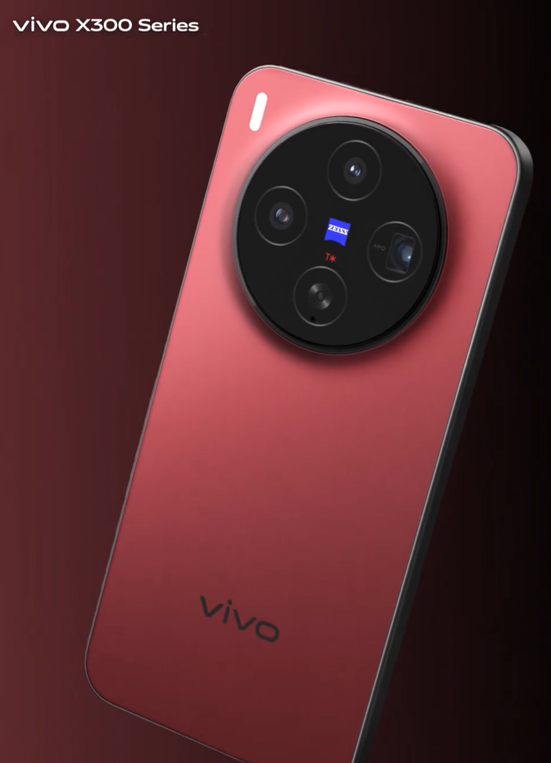
Vivo X300 and X300 Pro will officially launch in India on December 2.
X300 features a 6.31″ OLED display and 200MP triple rear camera, X300 Pro offers a 6.78″ OLED screen, Sony LYT-828 sensor, and optional Zeiss Telephoto Extender kit.
Powered by Dimensity 9500 chipsets, both models will be the first Vivo phones to run OriginOS 6 based on Android 16 out of the box.
Caption – Vivo X300 series launch teaser in India. (Image credit – Vivo)
Vivo has officially announced that the Vivo X300 and Vivo X300 Pro will debut in India on December 2. This announcement now finally puts an end to weeks of speculation. The series, already introduced in China and Europe last month, is also scheduled to arrive in Southeast Asian markets later this month. Here’s what we know.
Vivo X300 Series Coming to India
Caption – Vivo India confirming X300 series India launch date. (Image credit – Vivo)
Ahead of the launch, Vivo has begun teasing key highlights of the X300 lineup. Vivo India’s official account on X has been consistently sharing video and image teasers of the upcoming lineup.
Vivo X300 and X300 Pro – Specifications (Expected)
The Indian variants of the X300 and X300 Pro are expected to feature the same hardware as the Chinese models.
The compact Vivo X300 features a 6.31-inch OLED 1.5K 120Hz display, along with a 50MP front camera. On the back, it carries a triple-camera setup consisting 200MP Samsung HPB main sensor. 50MP ultra-wide lens and 50MP periscope telephoto lens.
It is powered by a 6,040mAh battery, supporting 90W wired and 40W wireless charging.
Meanwhile, the higher-end Vivo X300 Pro sports a 6.78-inch OLED 1.5K 120Hz screen and a 50MP front camera. Its rear camera system includes 50MP Sony LYT-828 primary camera, 50MP ultra-wide lens and 200MP Samsung HPB periscope telephoto camera.
Caption – Vivo X300 Pro photography kit. (Image credit – Vivo)
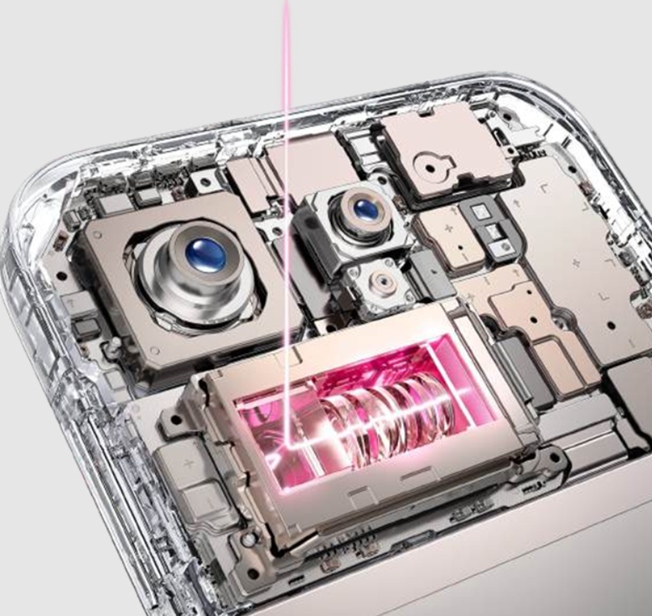
One of the most notable additions will be the Zeiss Telephoto Extender kits, an optional attachment for X300 Pro. This accessory promises enhanced optical zoom capabilities and a more professional photography experience for users.
Battery capacity on the Pro model increases to 6,510mAh, paired with the same 90W wired and 40W wireless charging options.
Both smartphones are equipped with the Dimensity 9500 chipset and will be the first Vivo devices to ship with OriginOS 6-based Android 16 out of the box.
FAQs
Q1. When will the Vivo X300 series launch in India?
Answer. Vivo has confirmed that the X300 and X300 Pro will officially launch in India on December 2, 2025.
Q2. What are the key camera features of the Vivo X300 and X300 Pro?
Answer. The X300 features a 200MP Samsung HPB main sensor, while the X300 Pro includes a 50MP Sony LYT-828 primary camera and a 200MP periscope telephoto lens. Both have 50MP ultra-wide and front cameras.
Q3. What chipset and software power the Vivo X300 series?
Answer. Both models are powered by the Dimensity 9500 chipset and will be the first Vivo phones to run OriginOS 6 based on Android 16 out of the box.
Samsung Galaxy Book 5 Edge 5G launched in the UK in an exclusive Sapphire Blue colour.
It features 15.6‑inch Full HD anti‑glare display, Snapdragon X chip with Adreno GPU and Hexagon NPU (45 TOPS AI), 16GB LPDDR5X RAM, 512GB storage and 27‑hour battery life.
The laptop is available in a Single configuration (16GB/512GB) priced at GBP 949, now available via Samsung’s official UK website.
Caption – Samsung Galaxy Book 5 Edge 5G now available in the UK. (Image credit – Samsung
Samsung has officially introduced the Samsung Galaxy Book 5 Edge 5G in the United Kingdom. The laptop arrives in a single storage configuration and a single colour variant. It is now available for purchase through Samsung’s official UK website. Here’s a brief look at what the new Samsung Galaxy Book offers.
Samsung Galaxy Book 5 Edge 5G – Design, Dimensions, and Colour
Caption – A look at Galaxy Book 5 Edge 5G colour and design. (Image credit – Samsung)
The Galaxy Book 5 Edge 5G features a sleek metallic design with a smooth, lustrous finish. It comes exclusively in the Sapphire Blue colour.
The laptop measures 356.6 × 229.8 × 15.5 mm and weighs 1.66 kg, making it relatively slim and portable for a 15.6-inch model.
Samsung Galaxy Book 5 Edge 5G – Key Features
The Galaxy Book 5 Edge 5G (model number NP755XRA-KA1UK) is powered by Qualcomm’s Snapdragon X processor featuring eight cores clocked up to 3.0GHz, paired with an Adreno GPU for graphics. It also integrates the Qualcomm Hexagon NPU, capable of delivering up to 45 TOPS of AI performance. The laptop runs on Windows 11 Home and includes 16GB LPDDR5X RAM alongside 512GB of eUFS internal storage.
The device features a 15.6-inch IPS LCD panel with a Full HD resolution of 1920×1080 pixels, complete with an anti-glare coating for better visibility. Samsung equips the laptop with a Pro keyboard that includes a numeric keypad, a large clickpad, stereo speakers (1.5W × 2), a dual-array digital microphone, a 2MP webcam, a fingerprint reader, and a security slot.
Powering the laptop is a 61.2Wh battery, rated to deliver up to 27 hours of usage on a single charge. A 65W USB-C fast charger is included in the box.
As the name suggests, the Galaxy Book 5 Edge 5G supports 5G Sub6 networks for high-speed mobile connectivity. Other wireless features include Wi-Fi 7 (802.11be, 2×2) and Bluetooth 5.4.
The laptop also comes with a comprehensive port setup, which includes –
HDMI 2.1 (with 4K@60Hz output),
one USB 3.2 port,
two USB 4.0 ports,
a microSD card reader,
and a headphone/microphone combo jack.
Samsung has packed the device with its ecosystem-focused software suite including Galaxy Book Experience, Multi Control, Second Screen, Samsung Notes, Samsung Gallery, SmartThings, Quick Share, Samsung Flow, Samsung Pass, Samsung Studio, Screen Recorder, Quick Search, Live Wallpaper, Phone app support, and more. An ambient light sensor is also present.
Samsung Galaxy Book 5 Edge 5G – Price and Availability
Samsung is offering the laptop in a single configuration of 16GB RAM and 512GB storage. It is priced at GBP 949 in the United Kingdom.
The device is already on sale through Samsung’s official UK website.
FAQs
Q1. What processor powers the Samsung Galaxy Book 5 Edge 5G?
Answer. It is equipped with Qualcomm’s Snapdragon X processor featuring eight cores up to 3.0GHz, an Adreno GPU, and the Hexagon NPU delivering up to 45 TOPS of AI performance.
Q2. How long does the battery last on the Galaxy Book 5 Edge 5G?
Answer. The 61.2Wh battery is rated to deliver up to 27 hours of usage on a single charge, with a 65W USB‑C fast charger included.
Q3. What is the price and availability of the Galaxy Book 5 Edge 5G in the UK?
Answer. The laptop is priced at GBP 949 for the 16GB RAM and 512GB storage configuration, and is already available through Samsung’s official UK website.
OpenAI introduces group chats in ChatGPT, allowing up to 20 users to chat in a shared conversation.
The feature is currently piloting in Japan, New Zealand, South Korea, and Taiwan.
Users can tag ChatGPT for input, set custom instructions, and access all core tools like web browsing, file uploads, and image generation.
Group chats don’t use memory features, and shared messages aren’t stored.
Caption – Group chat features in ChatGPT. (Image credit – OpenAI)
OpenAI has announced a major update to ChatGPT with the introduction of group chats. It enables users to chat with friends, family, or coworkers in a single shared ChatGPT conversation. This marks the company’s first multi-user experience within ChatGPT.
The feature is currently launching as a pilot in four regions, which includes Japan, New Zealand, South Korea, and Taiwan. It will later expand worldwide once early feedback is collected.
Group chats in ChatGPT are now piloting in Japan, New Zealand, South Korea, and Taiwan.
A new way to collaborate with friends, family, or coworkers and ChatGPT in the same conversation. pic.twitter.com/UQKhqjcnQQ
Explaining the idea behind the update in a detailed post, OpenAI said, “Today, we’re beginning to pilot a new experience in a few regions that makes it easy for people to collaborate with each other—and with ChatGPT—in the same conversation. With group chats, you can bring friends, family, or coworkers into a shared space to plan, make decisions, or work through ideas together.” The feature works similarly to collaborative platforms offered by competitors like Meta AI and Anthropic, but with the convenience of ChatGPT’s familiar interface.
Users can initiate a group by tapping the new people icon now added to the app. ChatGPT then generates a shareable link that any free or paid user can use to join. Each group can host up to 20 participants, making it useful for everything from casual planning to more involved team discussions.
Caption – OpenAI adds Group Chat feature in ChatGPT. (Image credit – OpenAI)
Existing one-on-one chats can also be converted into groups. When this happens, ChatGPT automatically creates a duplicate of the original private conversation, ensuring the initial chat remains confidential while the new group gets its own clean thread. Participants can set their name, username, and profile photo to help everyone keep track of who is speaking.
Group chats appear in a new sidebar section, accessible anytime for tasks like planning vacations, rewriting drafts, or negotiating dinner plans with AI support.
How ChatGPT Work in Groups Conversations?
Inside a group chat, ChatGPT adapts its behaviour and no longer responds to every message. Instead, it follows the flow of the conversation and intervenes only when necessary. Users can also tag ChatGPT directly to request input, similar to summoning a polite coworker who never gets overwhelmed.
The AI can now react to messages with emojis as well, allowing it to give visual feedback in a more expressive way.
Group creators can add or remove members, while anyone can rename the chat or mute notifications. It is useful when a particularly active participant starts spamming messages. Users can also set custom instructions for each group, enabling ChatGPT to maintain a different personality for work-related discussions and informal interactions.
The system runs on GPT-5.1 Auto, which picks the best model available to each participant. This means members with ChatGPT Pro and those on the free tier will receive responses optimised for their respective plans within the same conversation.
All core ChatGPT tools such as web browsing, file uploads, image generation, dictation, and more are supported in group chats, allowing members to brainstorm, share files, design visuals, or plan events without switching platforms.
Privacy and Safety Controls
OpenAI confirms that ChatGPT’s private memory features do not apply to group chats, and the AI will not store shared messages. Anyone can leave a group at any time, though the creator cannot be removed. If a minor joins, the platform automatically enables sensitive content filters for all participants, and parents have the option to disable group chat access entirely.
While the feature is still in its testing phase, OpenAI aims to roll it out globally in the coming months. Once widely available, ChatGPT group chats could become a go-to space for planning sessions, study groups, team meetings, and even lighthearted discussions.
FAQs
Q1. What is the new group chat feature in ChatGPT?
Answer. It allows up to 20 users including friends, family, or coworkers to collaborate in a shared ChatGPT conversation, with AI support for planning, drafting, and more.
Q2. How does ChatGPT behave in group chats?
Answer. ChatGPT adapts to the flow of conversation, responds only when tagged, and can react with emojis. Users can also set custom instructions for each group.
Q3. Are ChatGPT group chats private and safe?
Answer. Yes. ChatGPT does not store shared messages, memory features are disabled, and parental controls with content filters are automatically enabled for minors.
Call of Duty: Black Ops 7 introduces a co-op campaign (1–4 players), a 32-player Endgame mode, unified progression across all modes, and a fresh storyline set in 2035.
It includes 16 multiplayer maps, the largest Zombies map ever, deep loadout customisation, and Vault Edition bonuses like skins, weapons, and GobbleGums.
Requires TPM 2.0, Secure Boot, and 116GB SSD.
Caption – Call of Duty: Black Ops 7 Launches.
Call of Duty: Black Ops 7 has officially gone live, bringing major new gameplay features, a fresh storyline, and multiple modes designed for both solo and squad-based action. Set in the year 2035, the game follows David Mason and his JSOC team as they travel to Avalon, a Mediterranean city where they uncover a conspiracy involving returning antagonist Raul Menendez and tech corporation The Guild.
For the first time in franchise history, Black Ops 7 includes a co-op campaign that supports 1–4 players and ties directly into the new Endgame mode. Players can progress through missions across global locations including Nicaragua and Tokyo, all while enjoying unified progression across campaign, multiplayer, and zombies.
Call of Duty: Black Ops 7 – Price and Availability
Cross-Gen Bundle – $69.99
Platforms: Xbox Series X|S, Xbox One, Windows PC, PlayStation 5, PlayStation 4
Vault Edition – $99.99
Platforms: Xbox Series X|S, Xbox One, Windows PC, PlayStation 5, PlayStation 4
Vault Edition Upgrade – $30.00
Requires Cross-Gen Bundle or Game Pass subscription
The game is accessible across Battle.net, Steam, ROG Ally handhelds, Xbox Cloud Gaming, and more.
Game Modes and Key Features
Co-Op Campaign
Supports 1–4 players
Includes 11 main missions
Locations span Nicaragua, LA, Tokyo, and Avalon
Marks the return of villain Raul Menendez
Unified progression across all modes
Endgame Mode
Unlocks after completing all 11 campaign missions
Supports up to 32 players in squads of four
Players explore Avalon, destroy Guild outposts, and manage toxic exposure zones
Features Combat Ratings, Skill Trees, weapon rarity upgrades
Contains 90 weapon camos
“Killed in Action” results in loss of progress
Multiplayer
16 maps for 6v6 matchmaking
2 maps for 20v20 combat
Enhanced Omnimovement system
Zombies
Classic round-based mode returns
Features the largest round-based Zombies map in Black Ops history
Set in the Dark Aether
Progression System
Unified XP across campaign, multiplayer, zombies, and Endgame
Weapon leveling persists across all modes
Battle Pass progression can be earned in co-op and Endgame
90 weapon camos available at launch
Loadout Customisation (Endgame Mode)
Endgame loadouts include –
Main weapon
Melee weapon
Field Acquisition items
Field Equipment
One Major Ability
One Minor Ability
Four Operator power progression slots
Players can upgrade weapon rarity using workbenches located across Avalon.
Pre-order bonuses (for any digital edition) include the Reznov Challenge Pack and Guild Override Weapon Camo, usable in Black Ops 6 and Warzone.
Black Ops 7 Storyline Background
The plot continues after the events of Black Ops II.Raul Menendez, once leader of the Menendez Cartel and instigator of Cordis Die, returns with a new army. Meanwhile, The Guild emerges as a seemingly opposing force. David Mason and his JSOC squad must uncover the real motives behind both factions, setting up the narrative for 2035’s tense geopolitical conflict.
Call of Duty – Black Ops 7 – PC System Requirements
Activision has released full system requirements for PC players, covering minimum, recommended, and competitive settings. The game requires TPM 2.0 and Secure Boot enabled, along with AVX-compatible Intel or AMD CPUs. Intel Arc GPUs also need Resizable Bar switched on.
Storage requirement: 116GB SSD
Other requirements: DirectX 12, broadband connection
Call of Duty: Black Ops 7 – All Intel Collectible Locations Explained in Detail
Call of Duty: Black Ops 7 continues the franchise’s tradition of hiding special collectibles across its campaign missions. The game features 11 Intel items, one hidden in each mission, and finding all of them unlocks an achievement required for 100% campaign completion. These Intel objects can be tucked away in small corners, large open spaces, or behind optional paths.
Below is a mission-by-mission breakdown of every Intel collectible with more detailed guidance based on the original descriptions.
Exposure – “Becoming the Monster” Intel
Toward the final stretch of the Exposure mission, you’ll perform a series of Kinetic Jumps across rocky terrain. After completing this platforming segment, you’ll arrive at a small village marked by a huge machete sculpture standing prominently in the center. Move ahead toward the stone well positioned before the cluster of houses. As you approach the well, another large machete dramatically crashes into the ground at the same spot, making this area easy to identify. The Intel will be resting on top of the well.
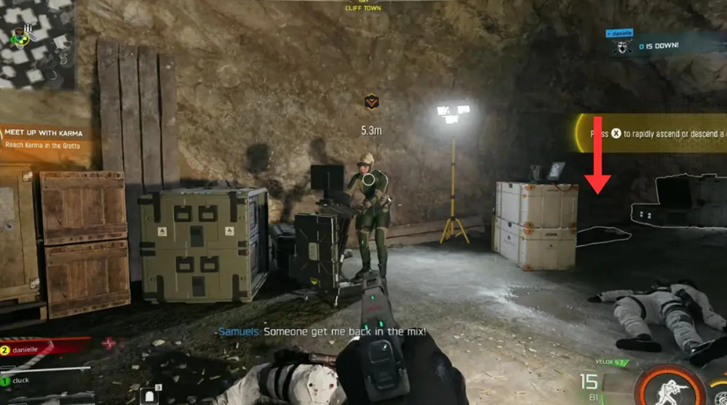
Inside – Intel: Truth
During the second mission, you’ll be instructed to meet Karma at her hideout. Follow the objective markers and descend the rope to reach her underground location. Before speaking to Karma, look to her right side, you’ll notice a body bag lying nearby. Walk up to the body bag and interact with it to collect the Intel.
Distortion – Intel: Family Ties
This Intel requires a bit of parkour and awareness. Progress through the mission until the objective asks you to open a container to rescue Woods. Instead of interacting with the container, move behind it. You’ll see a separate elevated platform in the distance. Use your Grappling Hook to jump onto this platform. Once there, turn around 180 degrees to spot a secluded room accessible via another grapple point. Enter this hidden room to find the Intel inside.
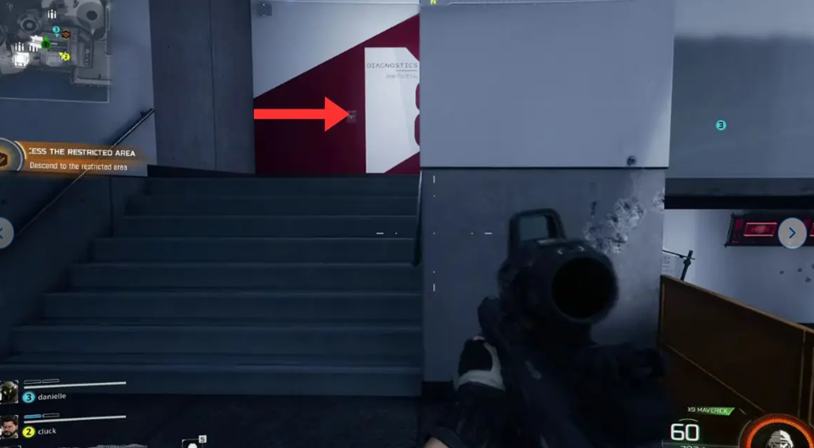
Escalation – Intel: Cost of Business
As you move through the Escalation mission, you’ll be tasked with using an access card to reach the Main Terminal. Head toward the objective marker, but hold off on interacting with the terminal. Look around for a small room located nearby, you’ll spot the Intel inside it. Its placement isn’t directly on the main path, so a quick sweep of the nearby rooms helps.
Disruption – Intel: Best Laid Plans
In Disruption, you’ll hit a sequence where the squad crashes through skylights into a building. After you land, eliminate all enemies in the immediate area. Turn toward the northwestern corner of the room. There’s a staircase here, climb it, and at the top, search for a table placed near a shuttered doorway. The Intel will be sitting right on this table.
Collapse – Intel: Heavy is the Head
Once you enter the Colosseum during Collapse, your next task will be to secure a nearby SAM site to the north. While moving toward this new objective, keep an eye on your left side. You’ll notice a ruined structure. Grapple up to its roof. The Intel will be placed there, interestingly in the shape of a severed head, tying into the mission’s theme.
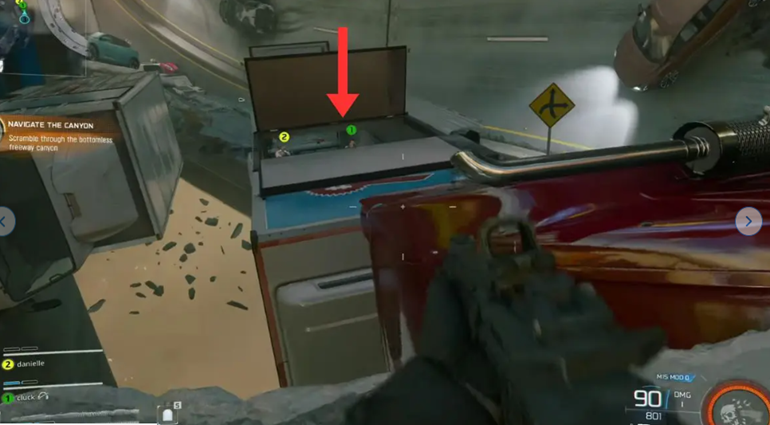
Fracture – Intel: Team Bond
Fracture takes place on a chaotic, tilted freeway filled with overturned vehicles. Proceed along the central path until you find a red truck flipped on its side. Jump into the cargo area through the open back door. Once inside, turn around to face the direction you came from. The Intel will be sitting there inside the truck.
Quarantine – Intel: Case
During Quarantine, you’ll reach a tall tower that must be climbed. As you ascend, you’ll arrive in an area designed similarly to the Skyline map from Black Ops 6. Continue up the staircase positioned near a bookshelf. Enter the room on the right. The Intel collectible will be placed on a table within this room.
Suppression – Intel: Lake Time
Midway through Suppression, you’ll enter Mason’s Cabin. Ignore the main objective prompt for now. Climb the stairs inside the cabin and turn right to reach a small attic space. Look in the corner of the room for a dresser; beside it, you’ll see a fishing rod resting against the wall. This object is the Intel.
Breakpoint – Intel: Trigger Finger
In Breakpoint, you’ll reach the exterior of a Stadium and be tasked with overheating six Cradle shipments. Instead of focusing on the objective, drop down to the nearby road. Look for a train car area featuring multiple cranes. Head toward the first open container in this section. Inside that container, you’ll find the Intel.
Containment – Intel: Face the Nightmare
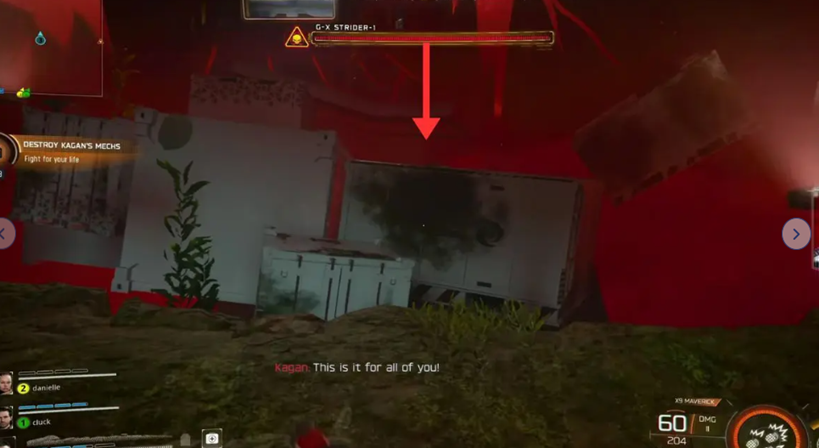
The final Intel is located during one of the toughest moments, a boss fight involving three mechs in a large combat arena. While dodging the mechs, look for the distant Control Room. Move toward it until you reach a cluster of floating containers. Jump onto the nearest container, then hop onto the container on the right. Continue navigating until you locate an open container. The Intel is inside, marking the final collectible of the campaign.
FAQs
Q1. What’s new in Call of Duty: Black Ops 7?
Answer. Black Ops 7 introduces a co-op campaign for 1–4 players, a massive 32-player Endgame mode, and unified progression across campaign, multiplayer, and zombies.
Q2. What are the PC system requirements for Black Ops 7?
Answer. Minimum specs include Windows 10, Ryzen 5 1400 or i5-6600 CPU, 8GB RAM, and 116GB SSD. TPM 2.0 and Secure Boot are mandatory.
Q3. What is the Endgame mode in Black Ops 7?
Answer. Endgame unlocks after completing the campaign, supports 32 players in squads, and features toxic zones, skill trees, weapon upgrades, and high-stakes progression.
OnePlus hinted at the upcoming OnePlus 15R during the OnePlus 15 India launch.
The OnePlus 15R is tipped to debut in India by mid-December, likely priced around ₹42,999.
The phone is expected to feature a 6.83″ 1.5K AMOLED display, Snapdragon 8 Elite chip, 7,800mAh battery with 120W charging, and a 50MP + 8MP dual rear camera setup.
OnePlus Ace 6 in the picture. (Image credit – OnePlus)
OnePlus has now officially launched its latest flagship, the OnePlus 15, in India and several global markets. However, the company also slipped in a major hint for users waiting on the OnePlus 15R. During the OnePlus 15 India launch event, the brand teased the arrival of the OnePlus 15R.
This marks a change in the company’s usual strategy. Usually, both the OnePlus number series and R series models were introduced together across global and Indian markets. However, OnePlus has opted to release only the OnePlus 15 first this year.
OnePlus 15R Launch Timeline
Caption – Mention of OnePlus 15R during the recent OnePlus launch event.
At the end of the OnePlus 15’s global and India launch livestream, the company confirmed that the OnePlus 15R is arriving soon. While the brand did not disclose the exact launch date, new leaks suggest that the wait may not be long.
Tipster Yogesh Brar on X (formerly Twitter) claimed that the OnePlus 15R could launch in India by mid-December. It is expected to be priced similarly to the OnePlus 13R, which arrived earlier this year at Rs. 42,999 for the 12GB RAM + 256GB storage option.
For people waiting for OnePlus 15R
Global & India launch is set for December (by mid)..
Pricing for now is not too different from the last gen model..
Like we said, the company has not officially revealed the specifications yet. However, widespread rumours indicate that the OnePlus 15R will likely be a rebranded version of the OnePlus Ace 6, which debuted in China on October 27. This gives a strong indication of what to expect regarding the smartphone’s hardware and features.
OnePlus Ace 6 – Pricing and More (For Reference)
In China, the OnePlus Ace 6 was launched at the following pricing –
CNY 2,599 (roughly Rs. 32,300) for 12GB + 256GB
CNY 2,899 (roughly Rs. 36,000) for 16GB + 256GB
CNY 3,099 (roughly Rs. 38,800) for 12GB + 512GB
CNY 3,399 (roughly Rs. 42,200) for 16GB + 512GB
CNY 3,899 (roughly Rs. 48,400) for 16GB + 1TB
The 1TB variant may not reach global markets.
OnePlus 15R – Expected Features (Based on the OnePlus Ace 6)
The OnePlus Ace 6 runs Android 16-based ColorOS 16 in China, but the OnePlus 15R is likely to ship with OxygenOS 16 globally. The device features a 6.83-inch flat AMOLED display with 1.5K (1,272×2,800 pixels) resolution, up to 165Hz refresh rate, and an impressive 5,000 nits of peak brightness, matching the performance of the flagship OnePlus 15.
It is powered by Qualcomm’s previous-generation Snapdragon 8 Elite chipset, paired with a G2 Wi-Fi chip, up to 16GB LPDDR5X Ultra RAM, and up to 1TB UFS 4.1 storage. The phone also includes an under-display 3D fingerprint sensor.
The handset packs a massive 7,800mAh battery with support for 120W wired fast charging, though it lacks wireless charging. For optics, it features a dual rear camera system comprising a 50-megapixel main sensor and an 8-megapixel ultrawide camera. On the front, there is a 16-megapixel selfie shooter.
FAQs
Q1. When is the OnePlus 15R expected to launch in India?
Answer. While the exact date isn’t confirmed, tipster Yogesh Brar suggests the OnePlus 15R may launch by mid-December 2025.
Q2. What are the expected specifications of the OnePlus 15R?
Answer. Based on the OnePlus Ace 6, the 15R may feature a 6.83″ 1.5K AMOLED display, Snapdragon 8 Elite chip, 7,800mAh battery with 120W charging, and a dual rear camera setup.
Q3. How much will the OnePlus 15R cost?
Answer. It’s expected to be priced similarly to the OnePlus 13R, which launched at ₹42,999 for the 12GB + 256GB variant.
OnePlus 15 launches in India with Snapdragon 8 Elite Gen 5, Android 16, and a 6.78″ QHD+ AMOLED display supporting up to 165Hz refresh rate.
Other features include 50MP triple rear camera setup with 8K video, a 32MP selfie camera, AI tools and a 7,300mAh battery, 120W wired and 50W wireless charging
The phone price starts from ₹72,999 with ₹4,000 HDFC discount available.
Caption – OnePlus 15 is now available in India. (Image credit – OnePlus)
OnePlus has officially launched its latest flagship smartphone, OnePlus 15, in India. Successor to the OnePlus 13, the phone was initially unveiled in China. Notably, it is the first smartphone in India to feature Qualcomm’s Snapdragon 8 Elite Gen 5 chipset. Here’s everything you need to know about the phone, starting with pricing.
OnePlus 15 – Price and Availability in India
The OnePlus 15 starts at Rs. 72,999 for the 12GB RAM + 256GB storage model. The higher-end version with 16GB RAM and 512GB storage is priced at Rs. 79,999. Buyers can also avail a Rs. 4,000 discount using the HDFC Bank offer, bringing the effective price of the base variant down to Rs. 68,999.
The smartphone is now on sale across India via Amazon and OnePlus’s online store. It is offered in three colour options, which are Infinite Black, Sand Storm, and Ultra Violet.
OnePlus 15 – Key Features
Running Android 16-based OxygenOS 16, the dual-SIM OnePlus 15 features a 6.78-inch QHD+ (1,272×2,772 pixels) AMOLED screen with up to 165Hz refresh rate. The display supports variable refresh rates down to 1Hz, offers 1,800 nits of peak brightness, and provides a 20:9 aspect ratio along with a pixel density of 450 ppi.
It includes Sun Display technology for better outdoor visibility and multiple comfort-focused features such as Eye Comfort for Gaming, Eye Comfort Reminders, Reduce White Point, and Motion Cues. The phone also sports slim 1.15mm bezels.
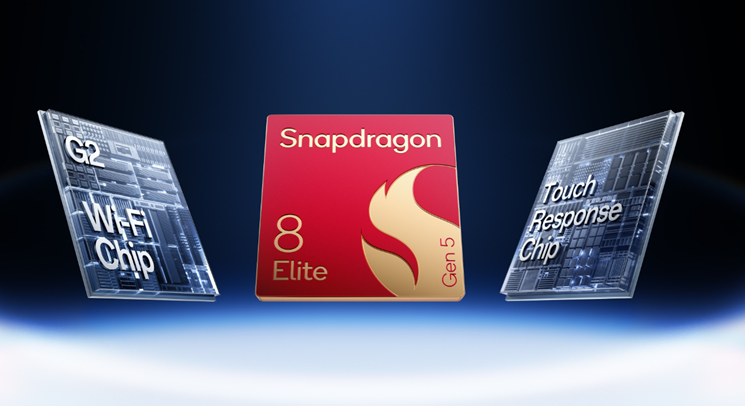
Powering the device is Qualcomm’s all-new 3nm Snapdragon 8 Elite Gen 5 SoC paired with an Adreno 840 GPU, a G2 Wi-Fi chip, and a dedicated Touch Response chip. The chipset reaches a peak clock speed of 4.608GHz. The handset includes up to 16GB LPDDR5X Ultra+ RAM and up to 512GB UFS 4.1 storage.
For thermal management, OnePlus has implemented a 5,731 sq mm 3D vapour chamber as part of its 360 Cryo-Velocity Cooling system. The OnePlus 15 also integrates several AI-powered features including Plus Mind, Google’s Gemini AI, AI Recorder, AI Portrait Glow, AI Scan, and AI PlayLab.
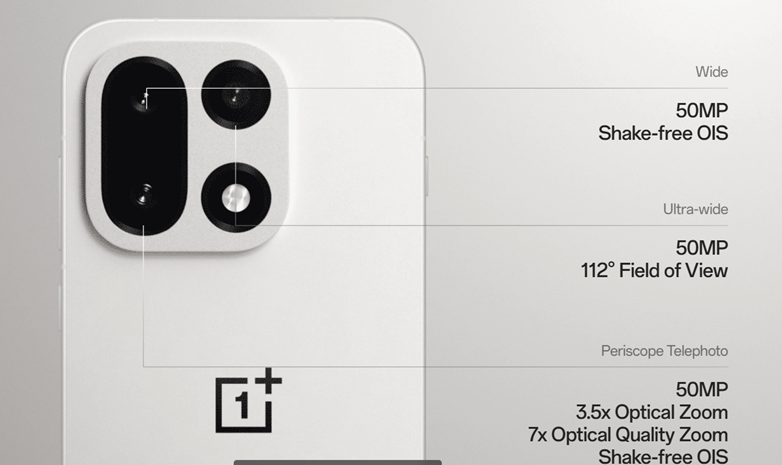
The smartphone features a 50-megapixel triple-rear camera setup powered by OnePlus’s DetailMax Image Engine. The primary camera is a 50-megapixel (f/1.8) Sony IMX906 sensor with a 24mm focal length and 84-degree field of view. It is joined by a 50-megapixel (f/2.8) Samsung JN5 telephoto lens offering 3.5x optical zoom, 7x optical-quality zoom, 80mm focal length, and a 30-degree field of view. The third sensor is a 50-megapixel (f/2.0) OV50D ultrawide camera with a 116-degree field of view and 16mm focal length.
For selfies, the OnePlus 15 includes a 32-megapixel (f/2.4) Sony IMX709 front camera with a 21mm focal length. The rear camera setup supports 8K video recording at 30fps and 4K up to 120fps, while the front camera records 4K videos at up to 60fps.
The device is equipped with numerous sensors such as proximity sensor, ambient light sensor, colour temperature sensor, e-compass, accelerometer, gyroscope, hall sensor, laser focusing sensor, spectral sensor, barometer, and an IR blaster. Connectivity options include 5G, Wi-Fi 7, Bluetooth 6.0, USB 3.2 Gen 1 Type-C, GPS, GLONASS, Galileo, QZSS, and NavIC. It also features an in-display ultrasonic fingerprint scanner. OnePlus claims the device has IP66+IP68+IP69+IP69K ratings for dust and water resistance.
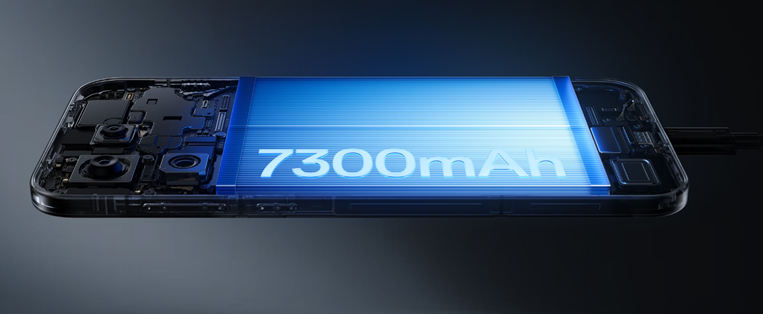
A large 7,300mAh silicon-carbon battery powers the phone, supporting 120W SuperVOOC wired charging and 50W AirVOOC wireless charging. The company states that the phone can be fully charged from 0 to 100 percent in about 39 minutes.
The Infinite Black and Ultra Violet models measure 161.4×76.7x82mm and weigh around 215g, while the Sand Storm variant is slightly slimmer and lighter at 81mm thickness and 211g weight.
FAQs
Q1. What processor powers the OnePlus 15?
Answer. The OnePlus 15 is powered by Qualcomm’s Snapdragon 8 Elite Gen 5 chipset, making it the first smartphone in India to feature this 3nm SoC.
Q2. What is the price of the OnePlus 15 in India?
Answer. The base model (12GB + 256GB) is priced at ₹72,999, while the 16GB + 512GB variant costs ₹79,999. HDFC Bank users can avail a ₹4,000 discount.
Q3. What are the camera specifications of the OnePlus 15?
Answer. It features a 50MP triple rear camera setup with Sony IMX906, Samsung JN5 telephoto, and OV50D ultrawide sensors, plus a 32MP front camera.
Q4. How fast does the OnePlus 15 charge?
Answer. The phone supports 120W SuperVOOC wired and 50W AirVOOC wireless charging, reaching 100% in about 39 minutes.
Q5. What are the display and software highlights of the OnePlus 15?
Answer. It has a 6.78″ QHD+ AMOLED display with up to 165Hz refresh rate and runs OxygenOS 16 based on Android 16.
Oppo launched Lumo Lab in India to enhance smartphone photography by collaborating with local experts.
The Find X9 series debuts the Lumo Imaging Engine, featuring a 200MP Hasselblad telephoto lens, Real-Time Triple Exposure HDR, and True Colour Camera tech.
The Find X9 series is set to launch in India on November 18, marking the first integration of Lumo Lab.
Caption – Oppo launches Lumo Lab in India.
Oppohas announced a major imaging initiative for the Indian market. The company has unveiled the new Lumo Lab program alongside fresh details about its upcoming Find X9 series, set to launch in India on November 18. The initiative is aimed at enhancing Oppo’s imaging technology by incorporating local insights into camera development, while the Find X9 lineup will introduce a host of next-generation camera features.
Oppo’s Lumo Lab
The newly announced Lumo Lab is an India-exclusive program designed to strengthen smartphone photography by working closely with leading photography professionals. Oppo has partnered with Joseph Radhik, Ashik Aseem, and Zaid Salman to explore India’s diverse visual environments from varied skin tones and festive lighting to handcrafted artwork.
Caption – Oppo has partnered with Joseph Radhik, Ashik Aseem, and Zaid Salman.
Insights gathered through this collaboration will help Oppo’s internal imaging team fine-tune colour science, portrait optimisation, and low-light performance. The Lumo Lab will contribute to current and future Find X devices, starting with the Find X9 series.
Simon Liu, Global Imaging Director at Oppo, highlighted the importance of this initiative, saying, “LUMO Lab embodies OPPO’s commitment to advancing human-centric imaging tailored to India’s vibrant landscape. Our goal is to understand the unique challenges of the local market and create technology that acts as a creative partner, empowering photographers, creators, and everyday users to express themselves freely. Launching with the Find X9 Series, LUMO Lab marks the beginning of an exciting journey to explore new frontiers in smartphone photography that celebrates India’s rich visual tapestry.”
Oppo Find X9 Series – Enhanced Imaging and Flagship Hardware
The Oppo Find X9 series will debut as the first lineup to integrate the Lumo Imaging Engine, bringing significant advancements in image clarity, colour accuracy, and dynamic range.
Caption – Oppo Find X9 Series comes with 200MP Hasselblad telephoto camera.
A key highlight of the series is a 200MP Hasselblad telephoto camera built for detailed long-range photography. The lens supports 13.2x lossless zoom and up to 120x hybrid zoom, along with a floating lens design, a wide f/2.1 aperture, and a 10cm close-focus distance for tele-macro shots.
The camera system also introduces Real-Time Triple Exposure HDR, which captures three exposure values simultaneously to reduce ghosting and improve highlight control. Another standout feature is the True Colour Camera, powered by an 8-channel spectral sensor that measures light across a 48-zone grid, ensuring consistent colour accuracy across all lenses.
Notably, the Find X9 series will capture full 50MP resolution photos by default on all rear cameras, offering enhanced detail and flexibility for cropping. All of these capabilities are optimised by the Lumo Image Engine, which not only boosts image precision and tonal balance but also minimises power consumption for longer shooting sessions.
FAQs
Q1. What is Oppo’s Lumo Lab initiative?
Answer. Lumo Lab is an India-exclusive program that collaborates with local photography experts to improve Oppo’s imaging tech, focusing on colour science, portraits, and low-light performance.
Q2. What are the key camera features of the Oppo Find X9 series?
Answer. The Find X9 series features a 200MP Hasselblad telephoto lens with 13.2x lossless zoom, Real-Time Triple Exposure HDR, and an 8-channel True Colour Camera for precise colour accuracy.
Q3. When will the Oppo Find X9 series launch in India?
Answer. The Oppo Find X9 series is scheduled to launch in India on November 18, debuting the new Lumo Imaging Engine.