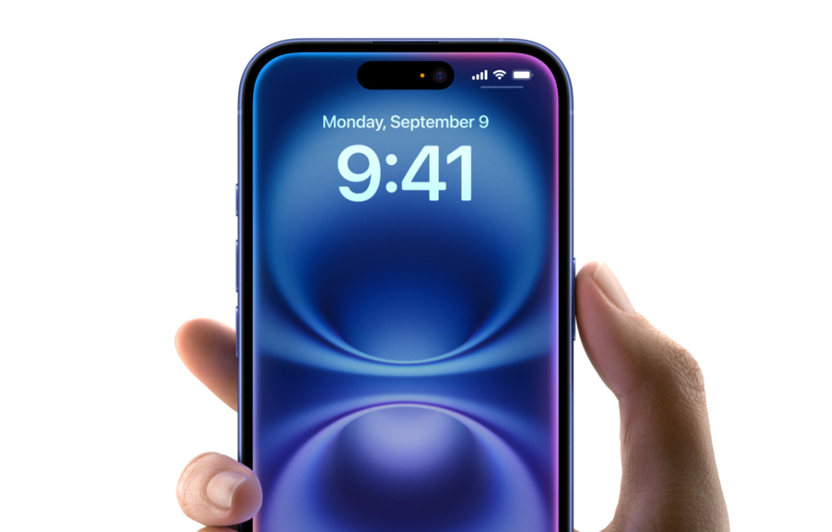
It will allow Indian customers to shop for Apple products, receive personalised recommendations and customise their Macs from the app.
The app launch follows Apple opening its first physical stores in Mumbai and Delhi in 2023.
The company has plans to open additional stores in Bengaluru and Pune among other cities.
The app offers product browsing, personalised recommendations, post-purchase support, online setup sessions, free training, trade-in options and device engravings.
Apple launches Apple Store App in India to boost retail presence across the country. (Image credit – Apple)
Apple has officially introduced its Apple Store app in India making it easier for customers to shop for Apple products and services. This move is part of Apple’s strategy to deepen its presence in the world’s most populous country and tap into the growing demand for its products.
Available for download on the Indian App Store, the Apple Store app allows customers to purchase Apple products directly while receiving personalized shopping recommendations.
Users can also customise their Mac with options for more powerful chips, extra memory, and additional storage features long requested by Indian customers. Delivery and in-store pickup options are also available through the app.
The launch of the app comes after Apple opened its first physical stores in India in 2023, located in Mumbai and Delhi. The company is now planning to open four more stores in Bengaluru, Pune, and additional locations in Delhi and Mumbai. Apple previously launched its online store in India in 2020, marking another step in its growing retail footprint.
“At Apple, our customer is at the centre of everything we do, and we are thrilled to introduce the Apple Store app to reach even more users in India, further deepening our connections,” said Karen Rasmussen, Apple’s head of retail online.
What Apple Store App Offers?
Separate tabs for product browsing, personalised recommendations and post-purchase support.
Online setup sessions with Apple specialists.
Free training sessions at physical Apple Stores.
Access to trade-in and financing options.
Free engravings for devices like AirPods and iPads in eight languages.
India is the world’s second-largest smartphone market and is becoming increasingly important for Apple as it diversifies its manufacturing operations outside of China. Apple began assembling iPhones in India in 2017 and has since expanded production through partners like Foxconn and Tata.
FAQs
Q1. What does the Apple Store app in India offer?
Answer. The Apple Store app offers separate tabs for product browsing, personalised recommendations, and post-purchase support. Users can also access online setup sessions with Apple specialists, free training sessions at physical Apple Stores, trade-in and financing options, and free engravings for devices like AirPods and iPads in eight languages.
Q2. When did Apple open its first physical stores in India?
Answer. Apple opened its first physical stores in India in 2023 in Mumbai and Delhi.
Q3. Why is India becoming increasingly important for Apple?
Answer. India is becoming increasingly important for Apple as it diversifies its manufacturing operations outside of China. India is the world’s second-largest smartphone market, and Apple began assembling iPhones in India in 2017, expanding production through partners like Foxconn and Tata.
The Realme P3 will come in three configurations – 6GB + 128GB, 8GB + 128GB and 8GB + 256GB.
Colour options will include Nebula Pink, Comet Grey, and Space Silver.
The P3 series will feature three models – Realme P3, P3 Pro (with 12GB RAM and 256GB storage) and P3 Ultra (also with 12GB RAM and 256GB storage in grey).
The Realme P3 Ultra is expected to launch by the end of January 2025 and the P3 Pro in the third week of February 2025.
The launch date for the P3 is still unclear.
Realme P2 image for reference. (Image credit – Realme)
Realme is gearing up to launch its P3 series of smartphones in India and fresh leaks have revealed exciting details about the lineup. According to 91mobiles Hindi, we now know the model number, configurations and colour options for the Realme P3 along with updates on the P3 Pro and P3 Ultra.
Here’s everything we know so far.
Realme P3 Details
The Realme P3 identified by its model number RMX5070 will come in three configurations:
6GB + 128GB
8GB + 128GB
8GB + 256GB
It will also be available in three colour variants – Nebula Pink, Comet Grey, and Space Silver.
Realme P3 Series Lineup
Unlike last year’s P2 series with only the Realme P2 Pro, the P3 lineup will feature the following three models –
Realme P3
Realme P3 Pro
Realme P3 Ultra
The P3 Pro (model RMX5030) is rumoured to include 12GB of RAM and 256GB of storage, while the P3 Ultra (model RMX5032) is expected to launch in the same 12GB + 256GB configuration and a grey colour option.
Realme P3 Series – Launch Timeline
Realme P3 Pro – Expected to debut in India during the third week of February 2025.
Realme P3 Ultra – Likely to launch by the end of January 2025.
Realme P3 – No specific date yet, but it’s unclear whether it will launch alongside the Pro or Ultra models.
Realme P3 Series – Price Speculations
Reports suggest the Realme P3 series may align closely with the pricing of the Realme 14 Pro, which launched in India at a starting price of Rs 24,999.
FAQs
Q1. What configurations will the Realme P3 be available in?
Answer. The Realme P3 will come in three configurations: 6GB + 128GB, 8GB + 128GB and 8GB + 256GB.
Q2. What colour options are available for the Realme P3?
Answer. The Realme P3 will be available in three colours – Nebula Pink, Comet Grey, and Space Silver.
Q3. How many models are in the Realme P3 series?
Answer. The Realme P3 series will feature three models – Realme P3, Realme P3 Pro and Realme P3 Ultra.
Q4. When is the Realme P3 Ultra expected to launch?
Answer. The Realme P3 Ultra is likely to launch by the end of January 2025.
Q5. What is the expected launch timeline for the Realme P3 Pro?
Answer. The Realme P3 Pro is expected to debut in India during the third week of February 2025.
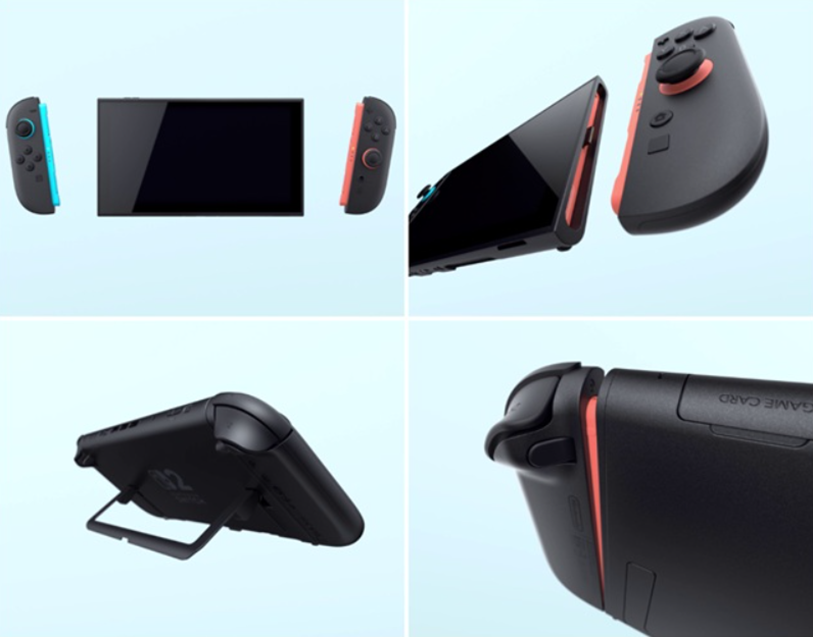
The teaser reveals a larger console with an 8.4-inch OLED display, updated Joy-Cons with new buttons and triggers.
Nintendo will hold Nintendo Switch 2 Experience events across various global cities.
It will allow fans to try out the console before its anticipated June 2025 launch.
Despite the anticipation, Nintendo’s stock dropped by 5.9% in Tokyo.
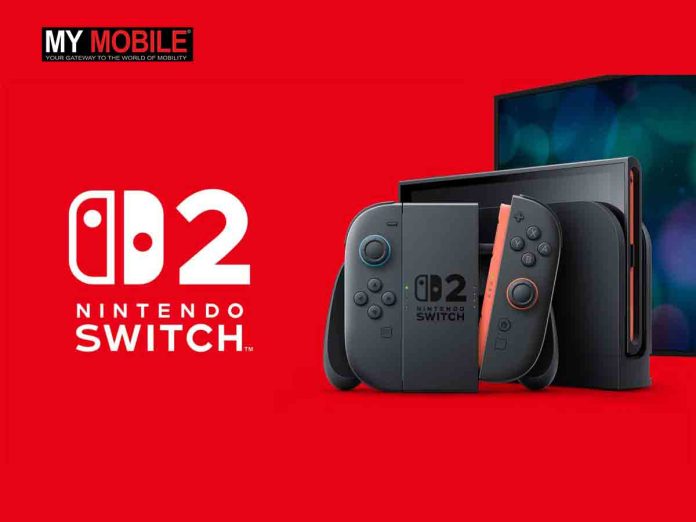
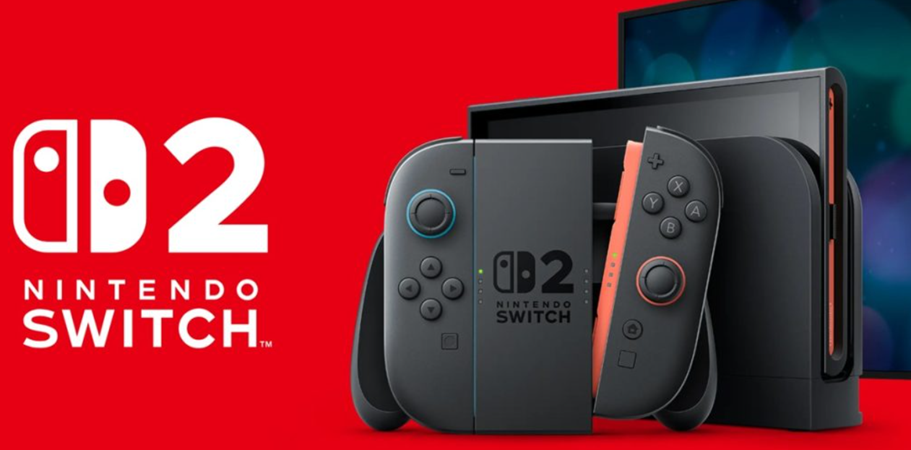
Nintendo Switch 2 design teased before 2025 launch. (Image credit – Nintendo)
Nintendo has officially shared the first details of the highly anticipated Nintendo Switch 2 in a video posted on the Nintendo of America YouTube channel. The video showcases exciting updates to the gaming console’s design, features and compatibility.
Here’s everything we know so far.
Nintendo Switch 2 Teaser
The teaser released on YouTube shows the Nintendo Switch 2 is larger than the original and features a rumoured 8.4-inch OLED display with thinner bezels for a modern look. The updated Joy-Cons are slightly bigger and attach magnetically.
A new button has been added to the right Joy-Con, near the home button, and both controllers now include extra triggers on the back, near the L/R buttons.
Similar to the original, the Joy-Cons can be combined into a traditional gamepad using a controller grip.
The console’s layout feels familiar, with power and volume buttons on the top left, cooling vents in the centre, a headphone jack, and two USB-C ports—one on the bottom and another on the right. The back features a redesigned U-shaped kickstand, offering more flexibility for positioning.
Nintendo also revealed a redesigned dock for the Switch 2 and confirmed the arrival of a new Mario Kart game, likely the long-awaited Mario Kart 9. Fans have been eager for a new instalment since Mario Kart 8 launched in 2014.
Nintendo Switch 2 is expected to launch in June 2025. (Image credit – Nintendo)
The Switch 2 will support exclusive titles along with most physical and digital Nintendo Switch games. However, some older titles may not work perfectly. Nintendo Switch Online members will continue to use the service on the new console.
Nintendo Switch 2 – Experience Events and Global Launch Speculation
Nintendo will share more details during a special Direct event on April 2, 2025. Moreover, Global “Nintendo Switch 2 Experience” events will also give fans a chance to try out the console.
The events schedule as per reports will be as follows –
North America –
New York: April 4-6, 2025
Los Angeles: April 11-13, 2025
Dallas & Toronto: April 25-27, 2025
Europe –
Paris: April 4-6, 2025
London: April 11-13, 2025
Milan & Berlin: April 25-27, 2025
Madrid & Amsterdam: May 9-11, 2025
Oceania –
Melbourne: May 10-11, 2025
Asia –
Tokyo (Makuhari): April 26-27, 2025
Seoul: May 31-June 1, 2025
Hong Kong & Taipei: Dates TBD
Analyst Robin Zhu from Sanford C. Bernstein predicts a possible June 2025 launch based on these event timings.
Market Reaction
Despite the excitement for the Switch 2 teaser, Nintendo’s stock dropped by 5.9% in Tokyo on Friday, marking its largest single-day decline since late September.
“The stock declined because the revealed Switch 2 was exactly in line with what’s been leaked online and lacked any surprise. But I expect the stock will be back as investors’ focus moves to the launch date and price after the April 2 announcement,” said Hideki Yasuda, senior analyst at Toyo Securities.
FAQs
Q1. What new features are included in the Nintendo Switch 2?
Answer. The Nintendo Switch 2 features a larger 8.4-inch OLED display, updated Joy-Cons with a new button and extra triggers and a redesigned dock.
Q2. When and where will the “Nintendo Switch 2 Experience” events be held?
Answer. The events will take place in various global cities, including New York, Los Angeles, Paris, London, and Tokyo, among others. Specific dates range from April 4 to June 1, 2025.
Q3. What new game was confirmed in the Nintendo Switch 2 teaser?
Answer. The teaser confirmed the arrival of a new Mario Kart game, likely Mario Kart 9, which has been eagerly awaited by fans since 2014.
Q4. How did the market react to the Nintendo Switch 2 teaser release?
Answer. Despite the anticipation, Nintendo’s stock dropped by 5.9% in Tokyo due to the Switch 2’s lack of surprises compared to online leaks.
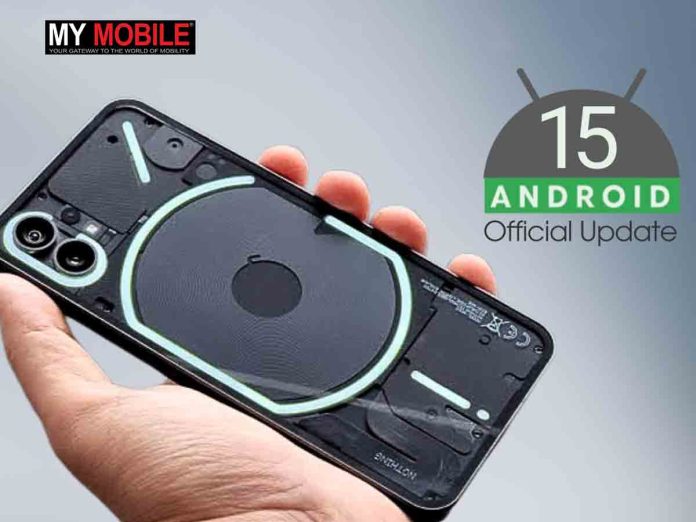
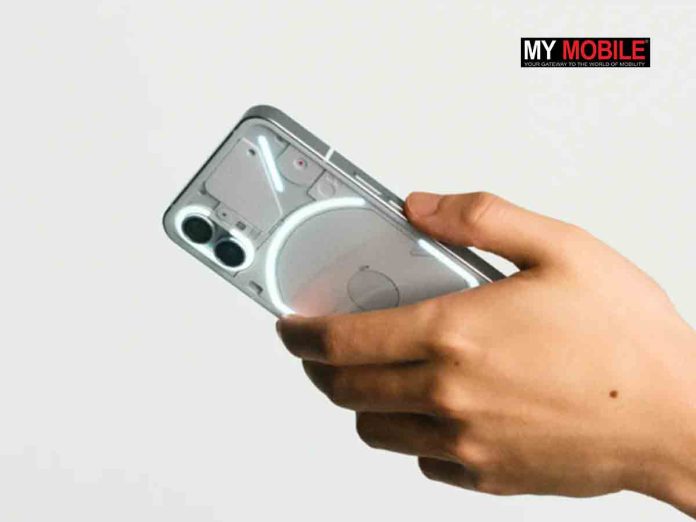
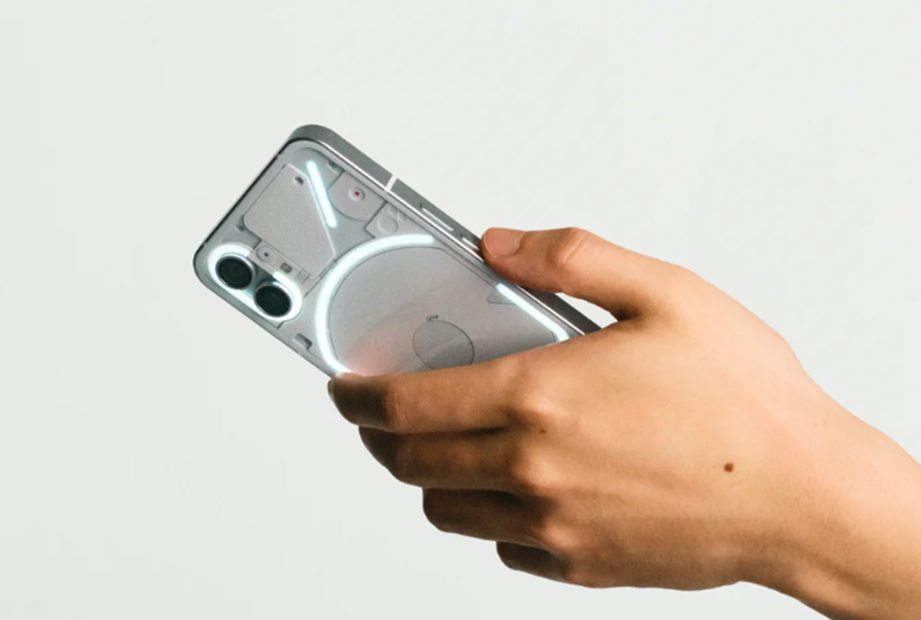
After starting the Android 15 rollout for the Nothing Phone (2), Phone (2a) and Phone (2a) Plus in December 2024, Nothing has now extended the update to its first smartphone the Phone (1). The update is available as an over-the-air (OTA) download via the Settings app and brings Android 15 with Nothing OS 3.0.
This update introduces several new features, a refreshed design and various performance improvements. Users report that the update runs smoothly on the Phone (1) even though it lacks the Circle to Search feature available on newer Nothing devices.
Key Features in Android 15 with Nothing OS 3.0
Shared Widgets
Share widgets with friends and family. See their widgets on your home screen and interact with them through reactions.
Currently supports only Photo Widgets between Nothing devices. More widget options are in development.
Lock Screen
A new lock screen customisation page with a variety of clock face styles.
Expanded widget space to add more widgets directly on the lock screen.
App Drawer
Introduced an AI-powered Smart Drawer to automatically organize apps into folders for easier navigation.
Option to pin favourite apps to the top for quick access.
Pop-Up View Enhancements
Drag and resize the pop-up view for better multitasking.
Pin the pop-up view to the screen edge for quick access.
Swipe down on notifications to view them in pop-up mode.
Design Updates
Redesigned Quick Settings, widget library and Settings menu.
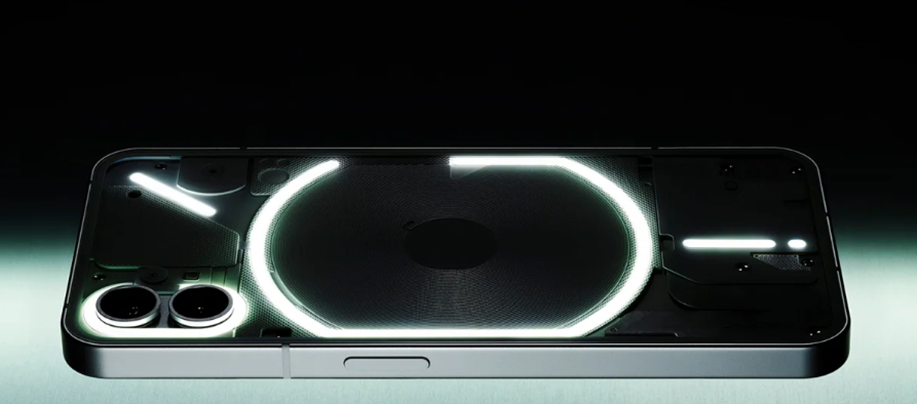
New Dot animations for fingerprint unlocking and charging.
Additional Improvements
AI-powered app prioritisation for a smoother experience.
Auto-archive function to free up storage without deleting data.
Partial screen sharing for recording specific app windows.
Updated setup wizard for easier onboarding.
Last Major Update for Nothing Phone (1)
The Nothing Phone (1) launched in mid-2022 with a promise of three years of Android updates. Having started with Android 12, it has now received Android 13, 14 and 15. While this is likely its final major update, the company has committed to providing at least one more year of security patches.
The update is also expected to roll out soon for the CMF Phone (1).
Meanwhile, Nothing is preparing to launch the Phone (3) later this year and is currently celebrating the milestone of crossing $1 billion in lifetime sales.
FAQS
Q1. What is the latest update available for the Nothing Phone (1)?
Answer. The Nothing Phone (1) has received its stable Android 15 update, which includes Nothing OS 3.0, new features, a refreshed design and various performance improvements.
Q2. Is the Android 15 update the final major update for the Nothing Phone (1)?
Answer. Yes, the Android 15 update is expected to be the final major update for the Nothing Phone (1), but the company has committed to providing at least one more year of security patches.
Q3. How can users download the Android 15 update for the Nothing Phone (1)?
Answer. The Android 15 update for the Nothing Phone (1) is available as an over-the-air (OTA) download via the Settings app.
Q4. What are some key features introduced in the Android 15 update with Nothing OS 3.0?
Answer. Key features include shared widgets, a new lock screen customization page, an AI-powered Smart Drawer, enhanced pop-up view, redesigned Quick Settings and widget library, Dot animations for fingerprint unlocking and charging, and various performance improvements.
Apple’s market lead in China fell from first to third place in Q4 2024.
Vivo and Huawei taking the first and second spots, respectively.
Vivo led the market with a 17% share, followed by Huawei with 16% and Apple with 15%.
Apple recorded its worst annual sales in the Chinese market.
The decline was reportedly due to a lack of AI-powered features in Apple’s iPhones.
Apple slips to 3rd position in China in 2024’s third quarter. (Image credit – Apple)
It seems Apple’s dominance as the top smartphone brand in China during Q3 2024 was short-lived as the company slipped from its position soon after. Cupertino giant was overtaken by domestic biggies Vivo and Huawei in Q4 2024. Here’s the full story.
According to a recent report from Canalys, Vivo emerged as the new market leader in the Chinese smartphone market with a 17% share, while Huawei claimed the second spot with 16%. Apple, which had dominated the previous quarter, dropped to third place with a 15% market share.
This shift marks a significant challenge for Apple, as Vivo managed to surpass both Huawei and Apple in just one quarter.
The report states, “Vivo led the market for the year with a 17% market share, shipping 49.3 million units. Huawei ranked second with 46.0 million units shipped, achieving an impressive year-on-year growth of 37%. Apple, OPPO and HONOR followed in third, fourth, and fifth place respectively, each holding a 15% market share.”
The report further suggests that Apple’s decline in the Chinese market was due to a lack of AI-powered features in its iPhones, making them less appealing to local consumers.
In contrast, Chinese smartphone brands have been packing their devices with innovative AI functionalities, which resonate more with buyers in the region. As a result, Apple recorded its worst annual sales in the Chinese market.
A Financial Times report states, “The figures come as the US technology company faces growing pressure from local premium smartphone brands, particularly Huawei, which have benefited from patriotic buying and the ability to roll out artificial intelligence-powered features to their devices. The company’s Apple Intelligence service is not available on the Chinese mainland.”
Canalys senior analyst Zhu Jiatao highlighted that Huawei’s consistent launch of flagship models and the increasing popularity of high-priced foldable phones have added to Apple’s challenges. Additionally, brands like Xiaomi and Vivo are fostering strong consumer loyalty through continuous technological innovation.
Apple’s position in the premium segment faces increasing pressure from competitors like Huawei, which has been aggressive in launching flagship models and Vivo, which has captured consumer attention with innovative features.
FAQs
Q1. Which companies overtook Apple in the Chinese smartphone market in Q4 2024?
Answer. Vivo and Huawei overtook Apple in the Chinese smartphone market in Q4 2024, with Vivo becoming the market leader and Huawei claiming the second spot.
Q2. What were the market shares of Vivo, Huawei, and Apple in China Q4 2024?
Answer. In Q4 2024, Vivo had a 17% market share, Huawei had 16%, and Apple held a 15% market share.
Q3. Why did Apple’s market position in China decline in Q4 2024?
Answer. Apple’s market position declined due to a lack of AI-powered features in its iPhones, while Chinese brands like Huawei and Vivo gained popularity with innovative AI functionalities and flagship model launches.
Nothing has surpassed $1 billion in lifetime sales with over $500 million in revenue in 2024.
The company plans to expand its operations aiming to raise at least $100 million in funding to scale further.
The upcoming flagship Nothing Phone (3) is expected to launch later this year with an innovative AI platform.
Nothing had a successful 2024 with $1 billion in lifetime sales. (Image credit – Nothing)
Carl Pei’s tech startup Nothing has hit a major milestone reportedly surpassing $1 billion in lifetime sales. Following a successful 2024, the company is now planning to expand its operations and further cement its place in the tech world.
Nothing launched in 2021 with its affordable yet feature-packed earbuds, which were well-received by both critics and consumers. In 2022, the company released its first smartphone named the Nothing Phone (1). Nothing has expanded its portfolio releasing more smartphones and earbuds since the first smartphone launch. It has even launched a budget sub-brand called CMF by Nothing.
In 2024, the company introduced its latest earbuds and an affordable smartphone the Nothing Phone (2a) with positive reviews. The Phone (2a) lineup expanded to four variants throughout the year, contributing to Nothing’s growth.
According to Bloomberg, Nothing doubled its annual revenue in 2024 generating over $500 million.
NEW: Phone startup Nothing is raising $100 million. I’m told the company has crossed $1 billion in lifetime sales, has sold 7 million devices and doubled revenue in 2024 to over $500 million.
— Mark Gurman (@markgurman) January 16, 2025
The company has now crossed $1 billion in lifetime sales and sold approximately 7 million devices to date. Its primary markets for smartphones include India, Germany and the UK, while its earbuds are popular in the US, UK, Germany and Japan.
Nothing is planning to build on this success and expand its operations while “seeking to raise at least $100 million in funding.” The company previously raised the same amount in 2023 signalling its ambitions to scale even further.
Recently, a leaked email from Carl Pei teased that the upcoming Nothing Phone (3) flagship is expected to launch later this year. The contents of the email also shared some key details about future innovation as the new device is rumoured to feature a groundbreaking AI platform.
FAQs
Q1. What major milestone did Nothing achieve in 2024?
Answer. Carl Pei’s tech startup Nothing surpassed $1 billion in lifetime sales with 2024 contributing over $500 million in revenue doubling from the previous year.
Q2. What are Nothing’s expansion plans following its successful 2024?
Answer. Following its success, Nothing plans to expand its operations and aims to raise at least $100 million in funding to scale further.
Q3. What products are part of Nothing’s current portfolio?
Answer. Nothing’s product portfolio includes earbuds and smartphones, with the latest being the Phone (2a) released in 2024. The company also teased the upcoming Nothing Phone (3), expected to launch later this year with an innovative AI platform.
The iPhone SE 4 dummy unit renders leaked showing a design inspired by the iPhone 4.
The images show a flat glass back, a metal side frame and colour variants similar to the current iPhone SE.
Other design elements include the volume rockers, alert slider and SIM card slot.
Rumours feature – a 6.06-inch LCD screen, the A18 chipset, a 48MP rear camera, a 12MP front camera and Apple’s custom 5G modem.
It could potentially cost under $500.
Apple’s upcoming iPhone SE 4 will be one of the most exciting smartphones this year. Many rumours have made rounds about this budget-friendly iPhone over the past few months but we finally have a fresh leak that gives a glimpse of its design. Recently, iPhone SE 4 dummy unit renders surfaced online and quickly reminded Apple fans of a 15-year-old iPhone design.
Based on the leaked renders, the iPhone SE 4 appears to draw heavy inspiration from the iconic iPhone 4.
iPhone SE 4 Dummy Unit Leaked Renders
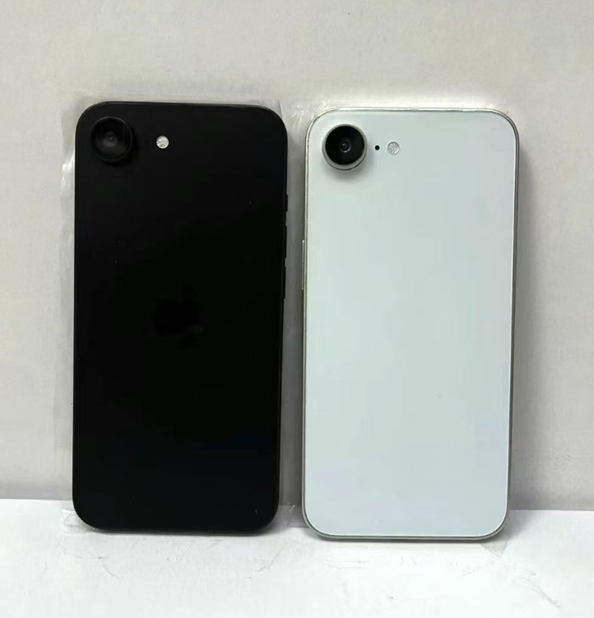
Leaked images of the iPhone SE 4 dummy unit. (Image credit – Sonny Dickson on X)
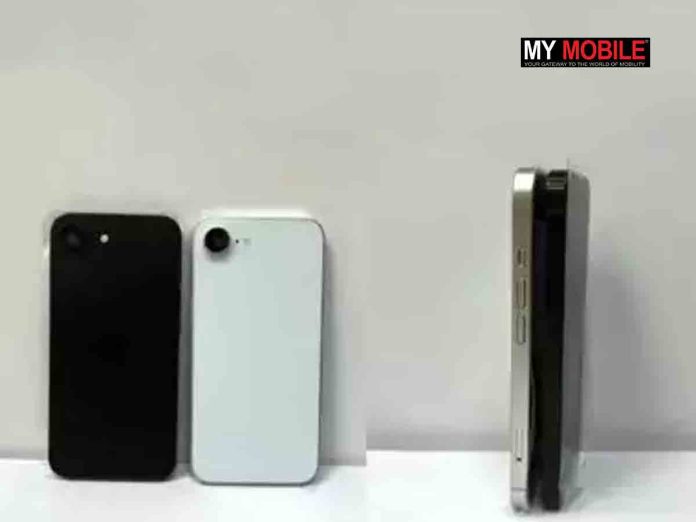
Tipster Sonny Dickson recently shared images of the iPhone SE 4 dummy unit on X (formerly Twitter). The renders show the phone’s back in two colour variants and its sleek side profile.
First look at the iPhone SE 4 Dummy pic.twitter.com/qL0COgmPPA
— Sonny Dickson (@SonnyDickson) January 16, 2025
The flat glass back with rounded corners strongly resembles the iPhone 4, which was first launched in June 2010. Some online users even made comparisons with the Google Nexus 5, highlighting the phone’s simple and clean design.
The side frame is made of metal and adds a premium touch to the overall build. Visible elements in the dummy unit render include the volume rockers, an alert slider and a SIM card slot.
The dummy units appear in shades similar to the current iPhone SE, which comes in Midnight, Starlight and (PRODUCT)RED. However, it seems Apple might skip the red option for the new model offering fewer colour choices this time around.
Previous rumours have hinted that the iPhone SE 4 could offer excellent value for its price to cost under $500. Leaks further suggest it will feature a 6.06-inch LCD screen, the powerful A18 chipset and a 48MP Sony Exmor IMX904 sensor on the back along with a 12MP front-facing camera for selfies. Apple might also pack its custom 5G modem to ensure fast connectivity at a lower cost.
We can expect to have more details in the coming months.
FAQs
Q1. What design features does the iPhone SE 4 borrow from previous iPhone models?
Answer. The iPhone SE 4 appears to draw heavy inspiration from the iconic iPhone 4 with a flat glass back, metal side frame, and rounded corners.
Q2. What colour options are expected for the iPhone SE 4?
Answer. The dummy units appear in shades similar to the current iPhone SE, which comes in Midnight, Starlight, and (PRODUCT)RED. However, it seems Apple might skip the red option for the new model, offering fewer colour choices this time around.
Q3. What are the rumoured specifications of the iPhone SE 4?
Answer. Rumours suggest the iPhone SE 4 will feature a 6.06-inch LCD screen, the powerful A18 chipset, a 48MP Sony Exmor IMX904 sensor on the back, a 12MP front-facing camera for selfies, and potentially cost under $500 with Apple’s custom 5G modem for fast connectivity.
Apple’s iPhone 17 Air and Samsung’s Galaxy S25 Slim will feature battery capacities between 3,000 and 4,000mAh.
The iPhone 17 Air will feature a single-camera setup while the Galaxy S25 Slim featuring multiple cameras.
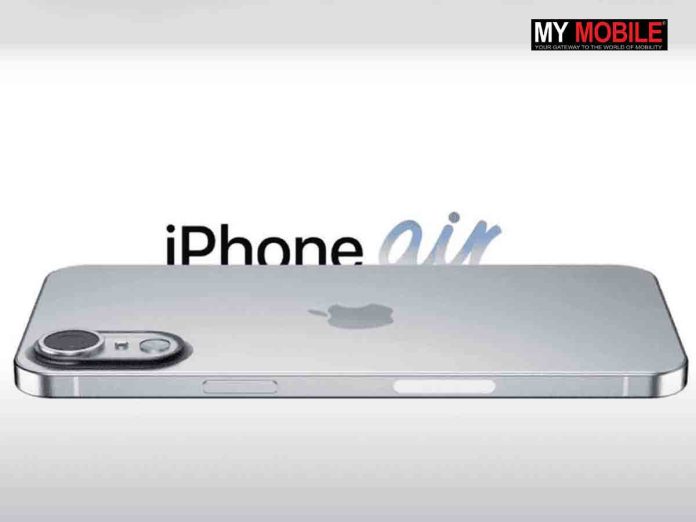
Top brands like Apple and Samsung appear to be prioritising design over features with some of their upcoming offerings. It is a surprising choice in times when massive 7,500mAh batteries are now becoming a standard thanks to Chinese smartphone markets. We are referring to Apple and Samsung taking a bold step with their upcoming slim smartphones – the iPhone 17 Air and the Galaxy S25 Slim.
These devices are designed to cater to users who love sleek and stylish phones. However, this slimness comes at a cost of significantly smaller batteries.
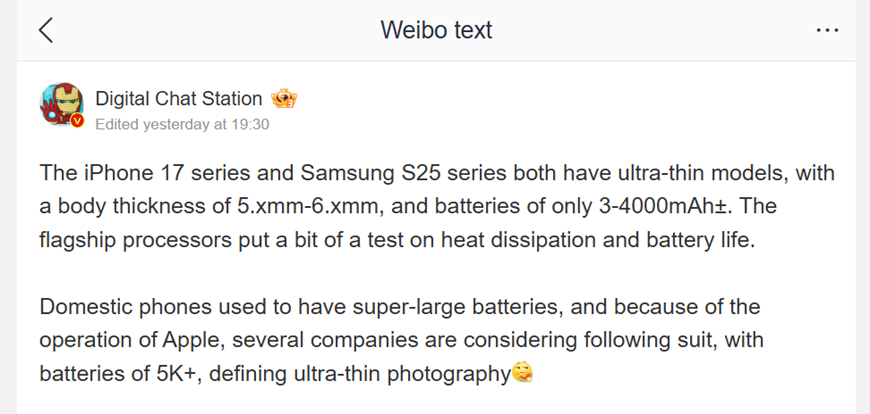
According to reliable tipster Digital Chat Station, both the iPhone 17 Air and the Galaxy S25 Slim will feature battery capacities between 3,000 and 4,000mAh.
Tipster DCS’s recent post on Weibo.
This is quite underwhelming compared to the 5,000 to 7,000mAh batteries that are now standard in many flagship and even mid-range smartphones. Such battery sizes were acceptable about a decade ago but times have changed now and consumers expect more.
For Apple, the iPhone 17 Air’s slim design and single-camera setup are part of the trade-offs to achieve its ultra-thin profile. Meanwhile, Samsung’s Galaxy S25 Slim will feature multiple cameras but still sacrifice battery size to maintain its slim frame.
While some Chinese smartphone makers are already experimenting with advanced silicon-carbon battery technology, neither Apple nor Samsung seems to have made significant strides in this area. There were rumours that Samsung might use silicon-carbon batteries for the Galaxy S25 Slim, but these have been debunked.
Samsung has taken a cautious approach to battery and charging advancements after the Galaxy Note 7 battery issues last time.
Meanwhile, the Galaxy S25 Slim could make its debut as early as January 22 during Samsung’s Unpacked event, though a May release is also possible. As for the iPhone 17 Air, it’s expected to arrive later this year.
FAQs
Q1. What are the battery capacities of the iPhone 17 Air and Galaxy S25 Slim?
Answer. According to reliable tipster Digital Chat Station, both the iPhone 17 Air and the Galaxy S25 Slim will feature battery capacities between 3,000 and 4,000mAh.
Q2. What design trade-offs have been made for the iPhone 17 Air and Galaxy S25 Slim?
Answer. For Apple, the iPhone 17 Air’s slim design and single-camera setup are part of the trade-offs to achieve its ultra-thin profile. Meanwhile, Samsung’s Galaxy S25 Slim will feature multiple cameras but still sacrifice battery size to maintain its slim frame.
Q3. Has Apple or Samsung made any significant advancements in battery technology?
Answer. Neither Apple nor Samsung seems to have made significant strides in advanced battery technology. There were rumours that Samsung might use silicon-carbon batteries for the Galaxy S25 Slim, but these have been debunked.
Realme 14 Pro+ 5G officially launched in India at the starting price of ₹29,999.
Comes in three memory variants – 8 GB/128 GB, 8 GB/256 GB and 12 GB/256 GB.
Available globally in Pearl White, Suede Grey and two India-exclusive Bikaner Purple and Jaipur Pink colour variants.
The sale starts from January 23 on Flipkart, Realme and at retail stores.
Realme has unveiled its latest numbered series model Realme 14 Pro+ 5g taking the legacy of predecessor Realme 13 series forward. In the 30K smartphone segment, this one promises an all-rounder performance with some excellent camera, display and battery specs.
So, what exactly does Realme 14 Pro+ bring to the table and how is it performance-wise? Just to answer this, we have been using the device for more than a week now. And based on our hands-on experience, here is our in-depth Realme 14 Pro+ review.
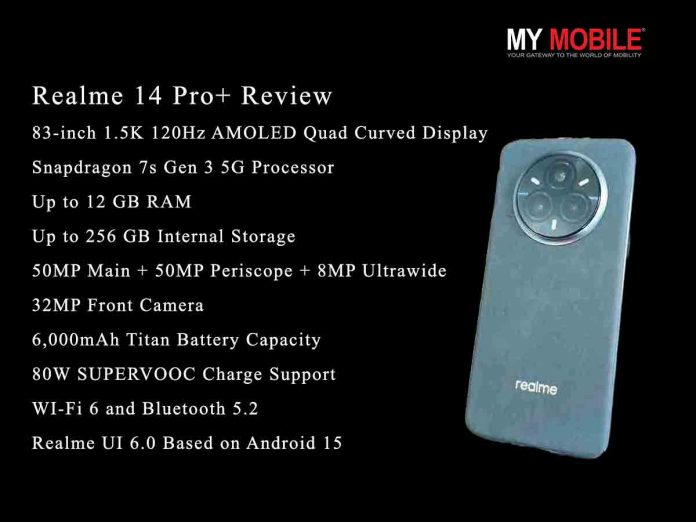
Realme 14 Pro+ Key Features
Realme 14 Pro+ Key Features
83-inch 1.5K 120Hz AMOLED Quad Curved Display
Snapdragon 7s Gen 3 5G Processor
Up to 12 GB RAM
Up to 256 GB Internal Storage
Triple Rear Camera Setup – 50MP Main + 50MP Periscope + 8MP Ultrawide
32MP Front Camera
6,000mAh Titan Battery Capacity
80W SUPERVOOC Charge Support (Adapter in the box)
WI-Fi 6 and Bluetooth 5.2
Realme UI 6.0 Based on Android 15
Realme 14 Pro+ Pros & Cons
Pros
Cons
● Great camera performance
● Good premium design and build quality
● Ergonomically great
● Good battery life
● Excellent fast charging
● Stunning quad-curved display
● Dual stereo speakers
● Good cost-to-feature ratio
● No HDR video support
● No EIS support
● Bloatware
● No NFC
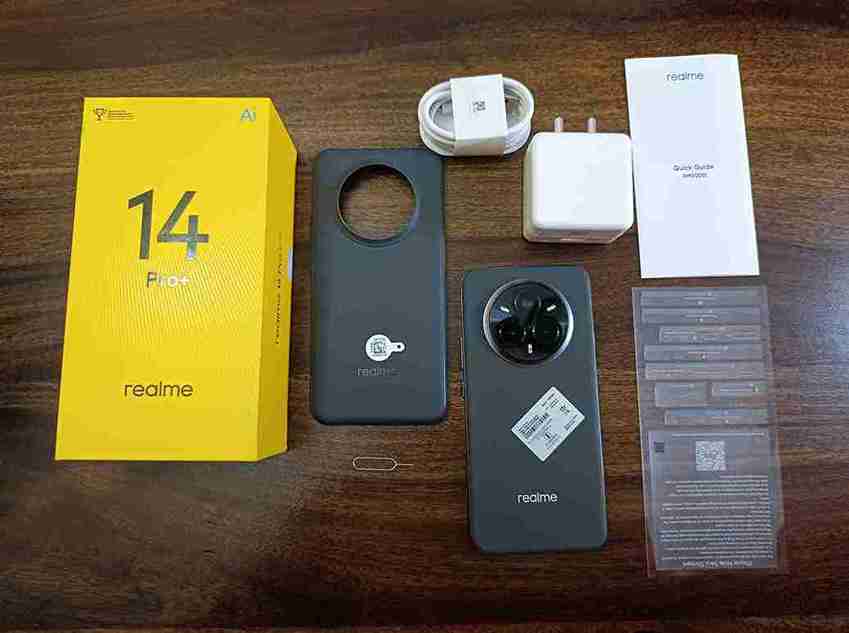
Realme 14 Pro+ Unboxing
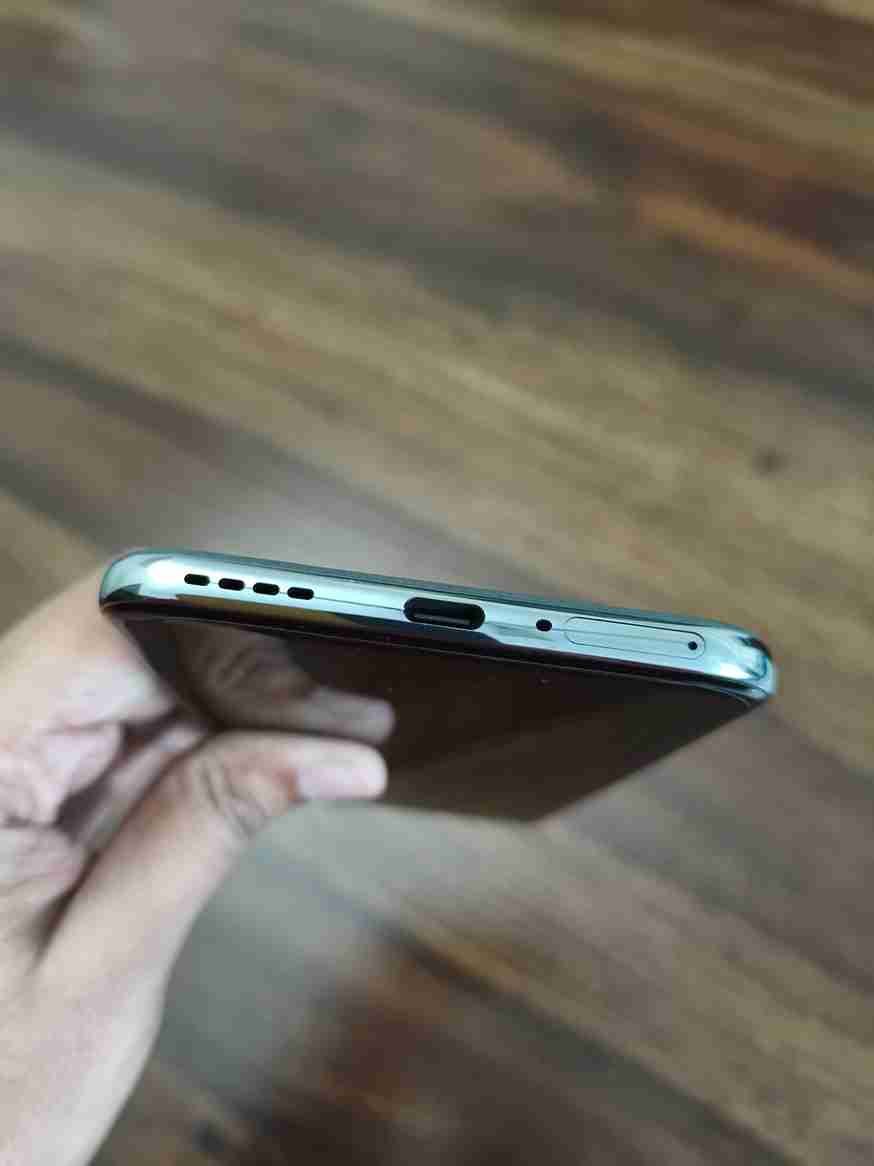
Realme 14 Pro+ Design and Build Quality
Realme 14 Pro+ Design and Build Quality
When it comes to design, Realme is one of those brands that have not only experimented with colours but also paid attention to the feel of its phones. Realme 14 Pro+ design again carries this approach.
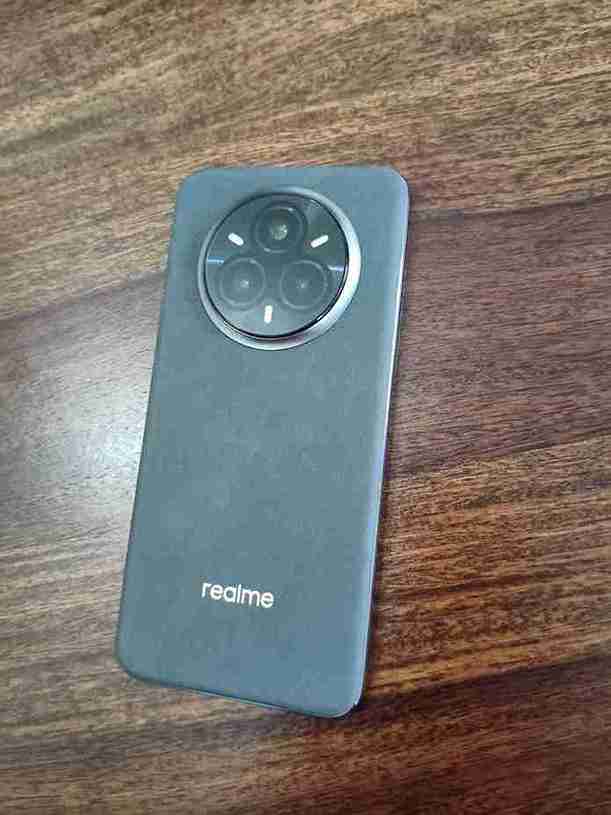
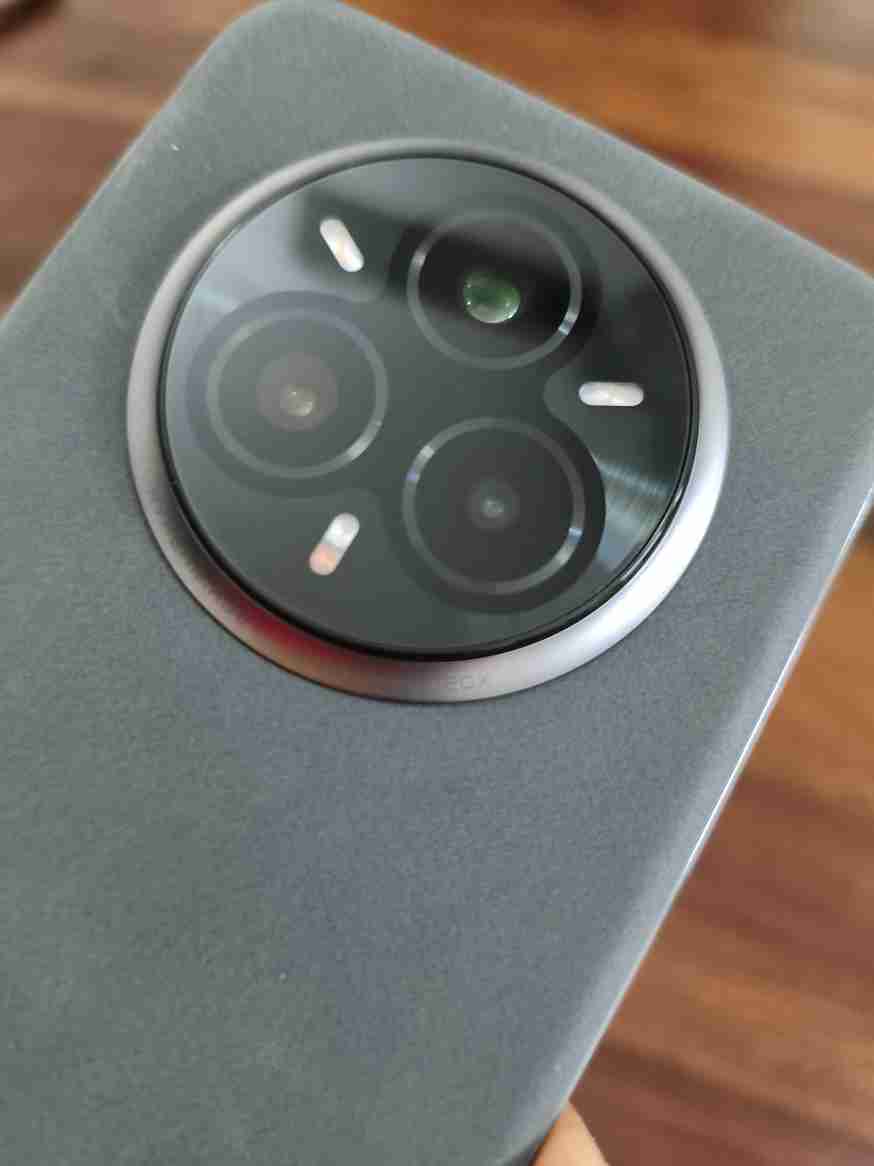
We had the Suede Grey colour variant for this review and we loved what Realme has tried to do with the phone. The brand claims this is the first vegan suede leather back panel in the segment. This is also the first bio-based suede leather on a Realme phone. We are not fans of suede texture mainly because it is hard to maintain. But Realme has managed to make it look too classy to not like.
There is a fleece-like texture, which makes the phone feel very soft in the hands. It’s fingerprint-resistant, so that’s a plus. Also, it is wear-resistant, anti-fouling and anti-slip, which overall enhances the durability of the phone. If you worry about suede getting ruined with daily use, you shouldn’t. The phone also comes with an IP66/IP68/IP69 rating, which is the highest level of water and dust resistance available.
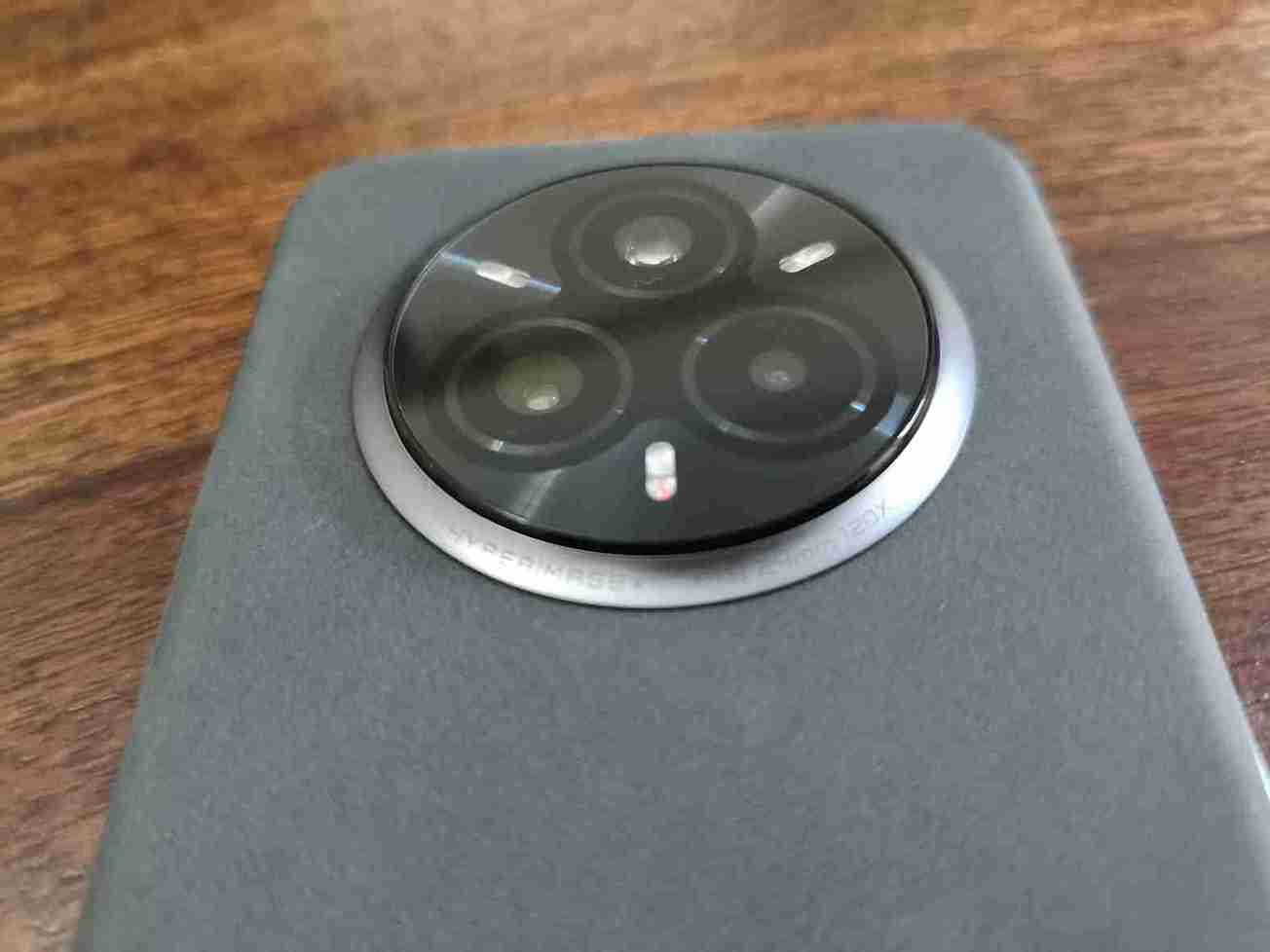
The circular camera module with a glass cover and a metal ring at the top centre complements the back panel perfectly. It houses three lens cutouts paired with two flashes and a fill light.
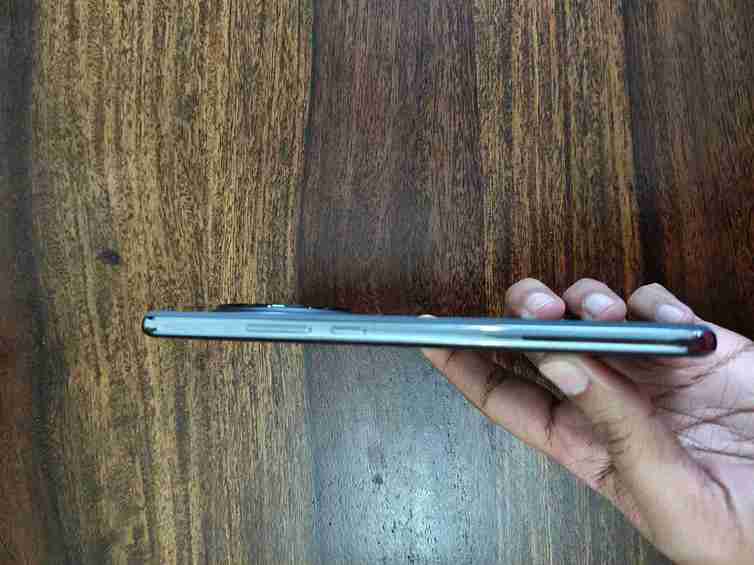
The phone has a very slim profile with just 7.99mm thickness. It is also quite lightweight at 196g. All this only adds to the comfort and ergonomics. The metal SS frame with rounded corners gives the phone its premium aesthetic.
Overall, Realme 14 Pro+ looks the part. It is a premium phone in both look and feel.
Realme 14 Pro+ Display Performance
Realme 14 Pro+ Display Performance
We are getting a 6.83-inch 1.5K AMOLED quad-curved display that will instantly remind you of the previous generation display. First of all, the display is huge with 93.8% highest screen-to-body ratio. This punch-hole display comes with 1.6mm ultra-slim symmetrical bezels that make the viewing experience very immersive. The slightly curved edges add to the immersiveness during the streaming.
The visuals appear vibrant and sharp with excellent colour reproduction. High-definition videos look stunning on this display that comes with 100% DCI-P3 and 5,000,000:1 contrast. It also supports a 120Hz high refresh rate, so scrolling and otherwise display use is quite smooth. We didn’t face any noticeable touch issues or lags also.
It comes with Corning Gorilla Glass 7i, so you don’t have to worry about scratches or accidental drops.
Another significant feature is that the phone supports 3840Hz PWM+DC Dimming, which actually helps in reducing eye strain while using the phone in low light conditions. The display adapts itself pretty well in different lighting.
It also supports 1500nits of peak brightness, so you can use it quite easily outdoors in broad daylight as well. We tried using it in sunlight and didn’t face any significant issues.
Realme 14 Pro+ Hardware, Software and Performance
Realme 14 Pro+ Hardware, Software and Performance
Realme 14 Pro+ has the Snapdragon 7s Gen 3 Chipset with the basic architecture same as that of Snapdragon 8 Gen 3. It is an 8-core 64-bit with a clock speed of up to 2.5 GHz and a TSMC 4nm advanced process that promises extreme efficiency, better image performance and low power consumption. It is one of the most powerful processors we have in the market today to power mid-range smartphones.
To support the chipset, Realme boasts up to 12GB of LPDDR4X RAM and up to 256GB of UFS 3.1 storage.
The Snapdragon chipset handles everyday tasks effortlessly with no noticeable issues in general smartphone usage. It is also well supported by both hardware and software for more demanding tasks as well. We tried multitasking on the phone with almost 9 to 10 apps running in the background and the phone held itself quite well. It remained smooth with no significant lags.
You can also rely on this device for your gaming needs. It offers smooth frame rates throughout the gaming session even when played on higher settings. Graphic-heavy games like Call of Duty or Genshin Impact played out decently. A good thing we observed is how well the temperature is managed as we didn’t experience any heating issues even after prolonged gaming sessions. The phone comes with a 6000mm² 3D VC Cooling System with the largest VC cooling area in the segment
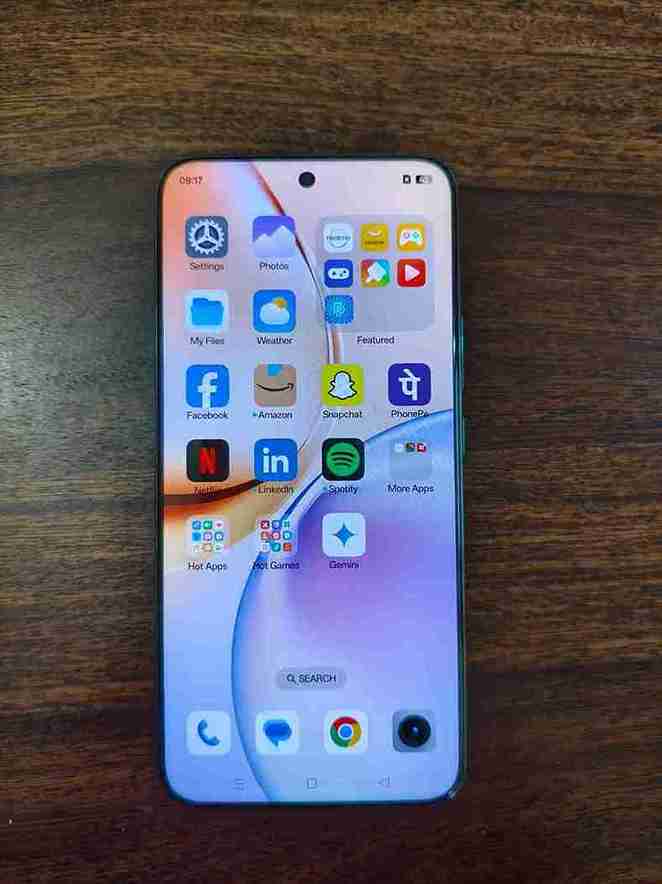
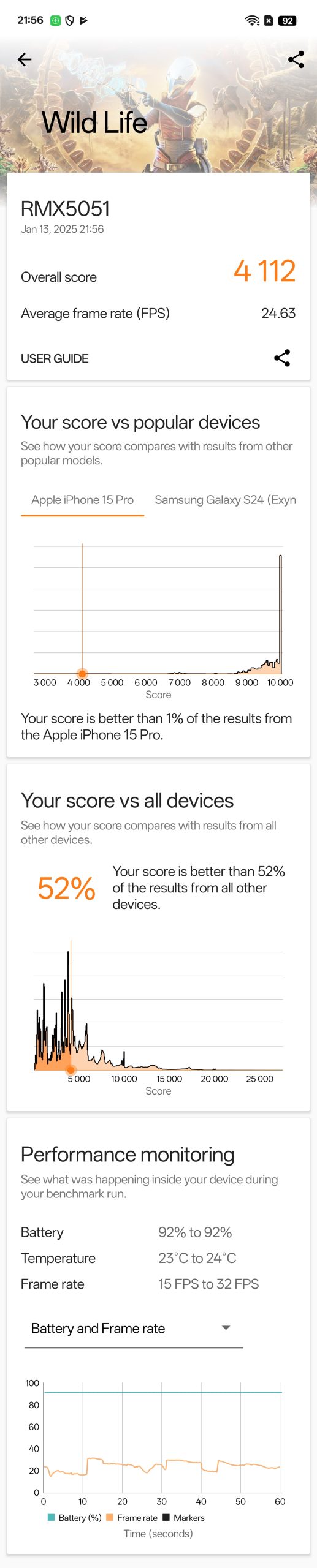
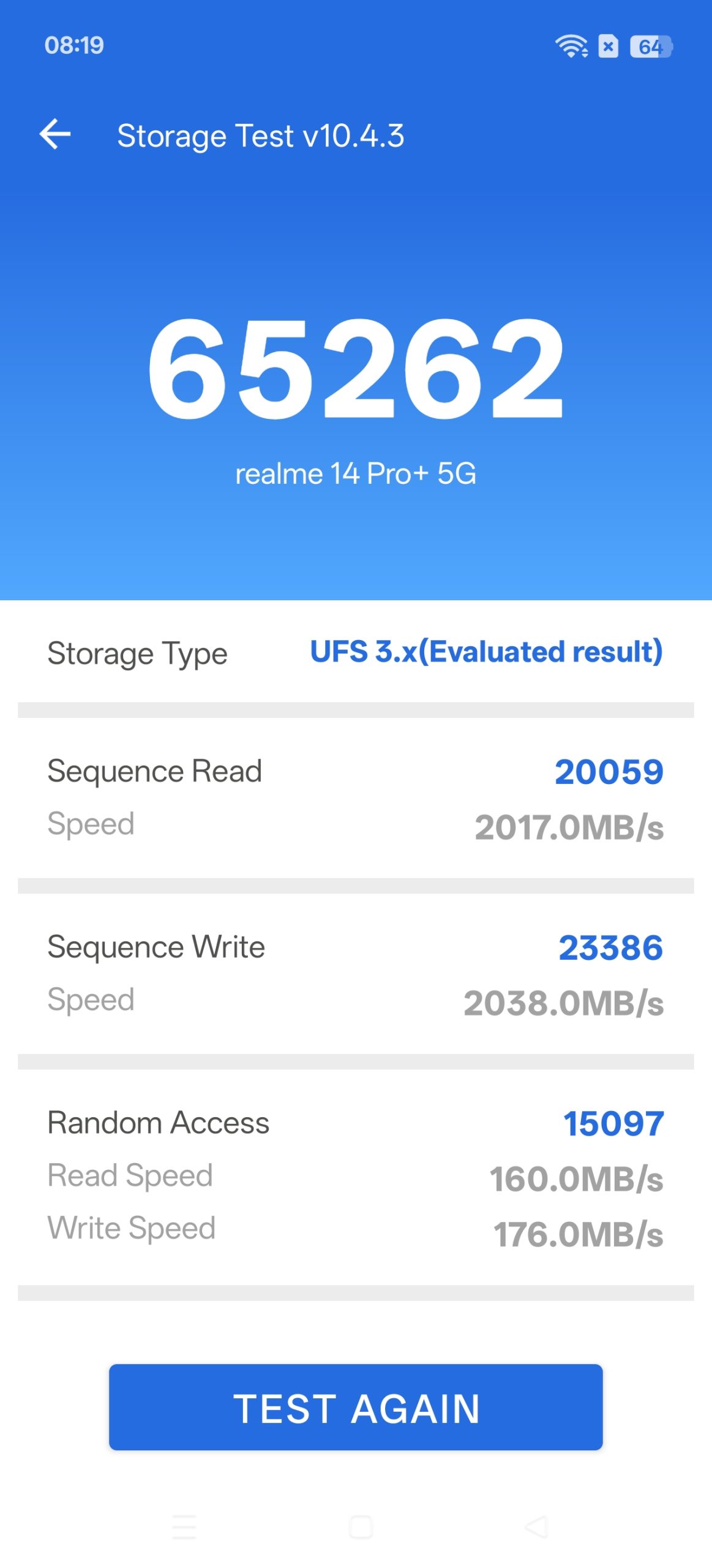
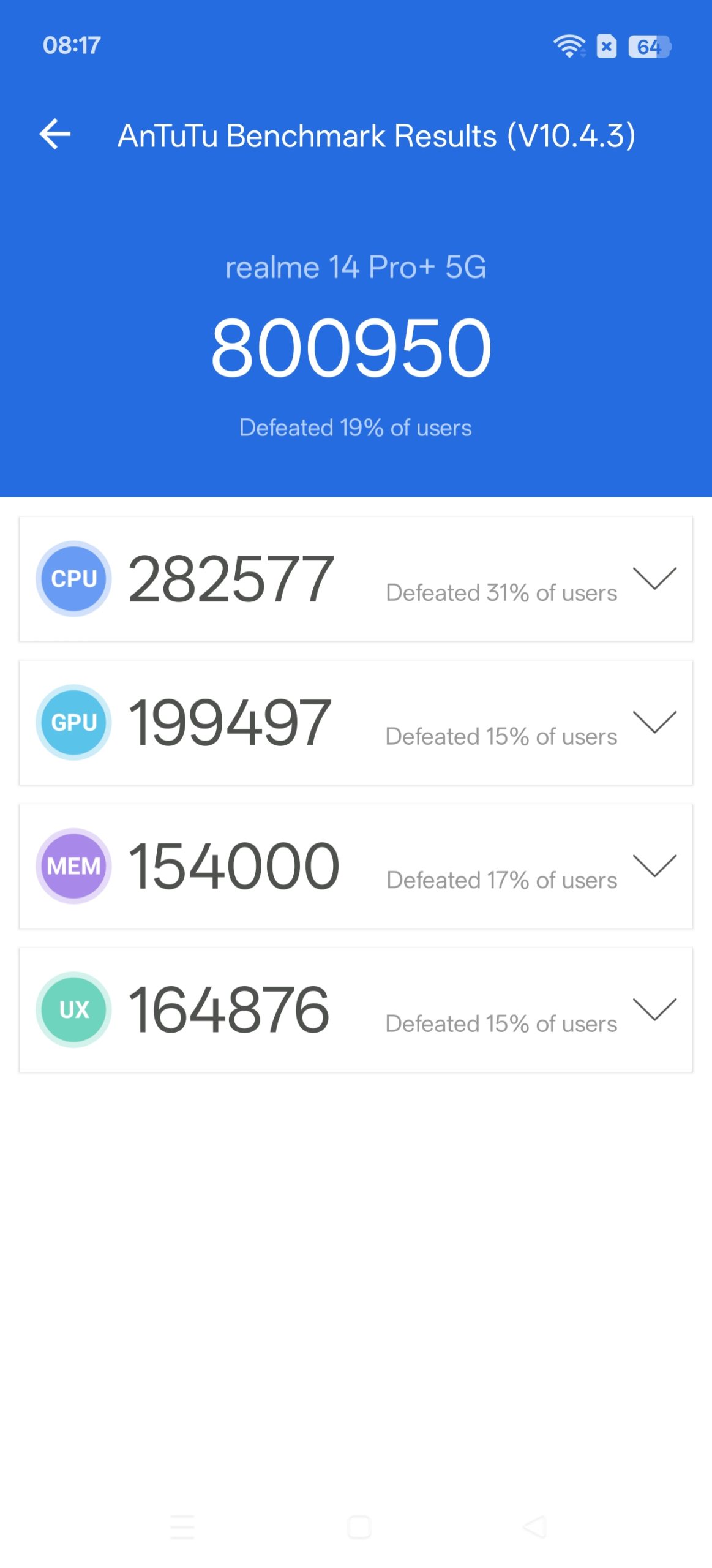
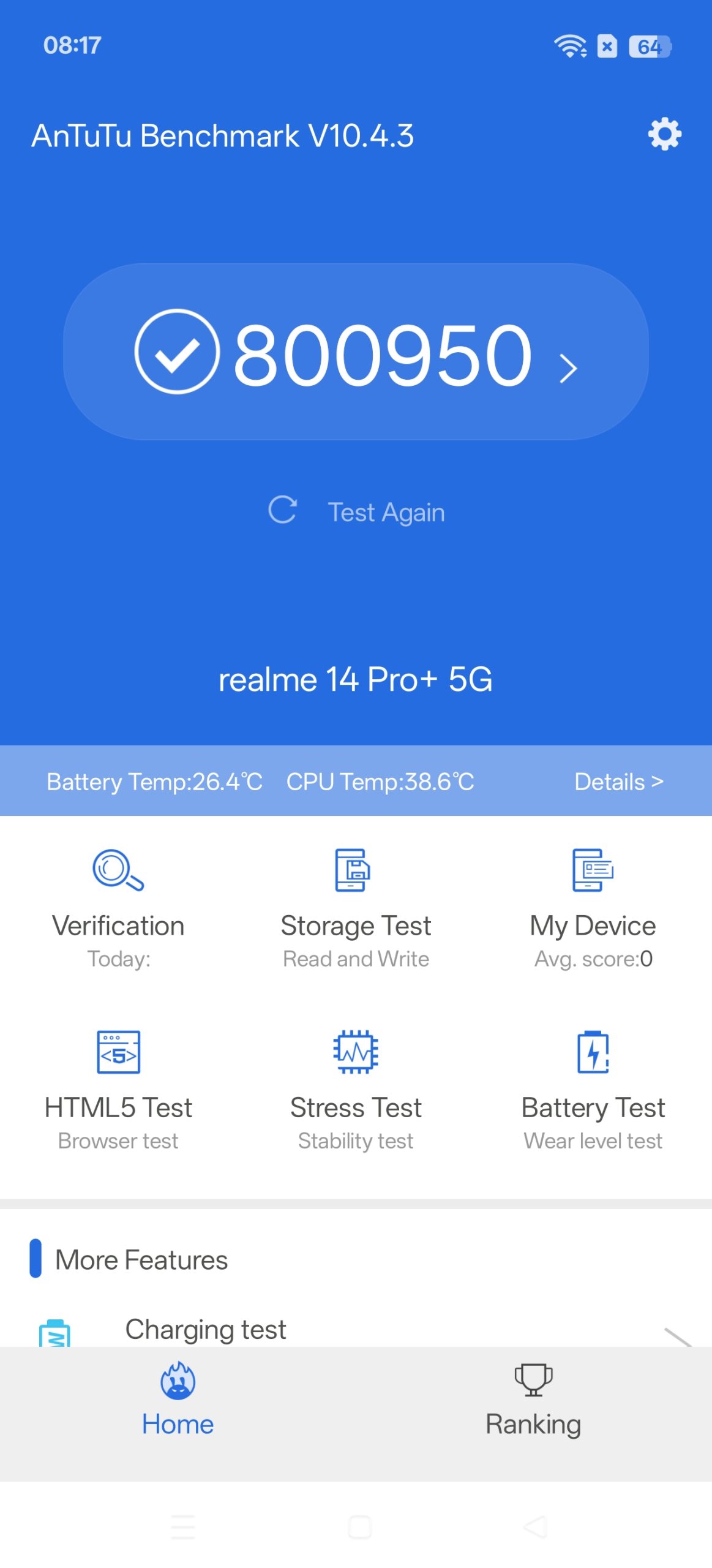
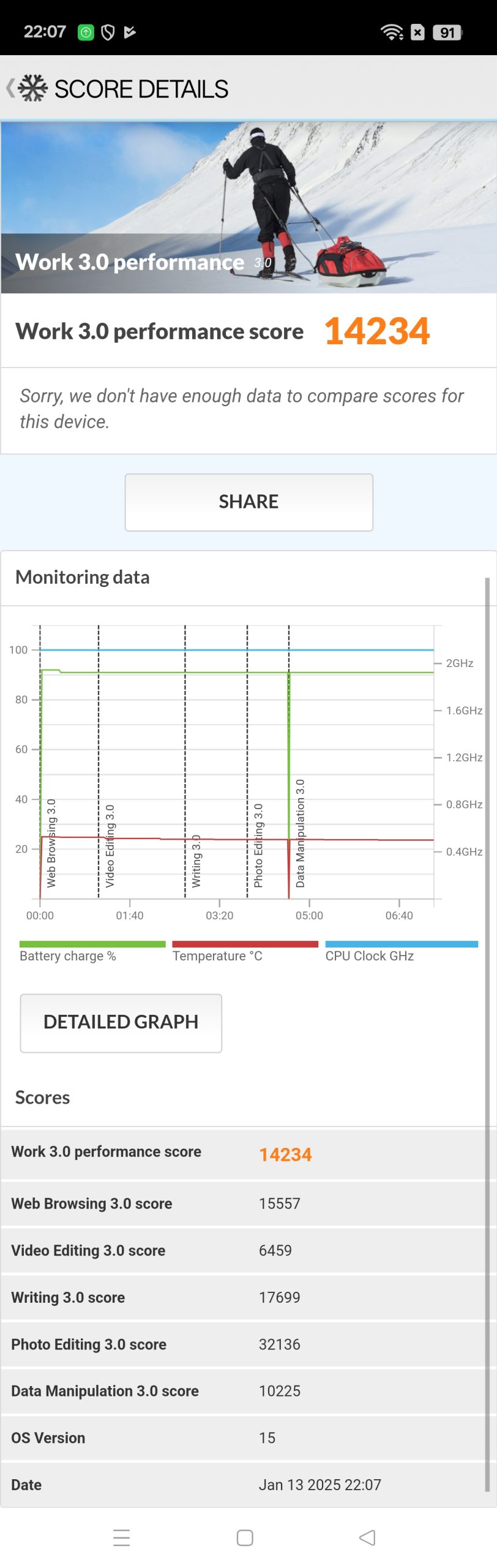
We ran every major benchmark test on the phones and the results were impressive. Here are some of the benchmarking results for reference.
Realme 14 Pro+ ships with Realme UI 6.0 based on Android 15 out of the box. The UI has Realme’s signature style. It comes with a bunch of pre-loaded apps, which you can uninstall for a more cleaner UI. Overall, it is simple and easy to get used to.
Realme 14 Pro+ Camera Performance
Realme 14 Pro+ Camera Performance
One of the main highlights of Realme 14 Pro+ is the advanced camera system with AI support every step of the way. The phone comes with a Sony triple reflection camera that promises DSLR-level ultra-clarity. The three-camera setup includes a 50MP Sony IMX896 lens, a 50MP Sony IMX882 Periscope Camera and an 8MP Ultra-Wide Camera. There is also a 32M AF Selfie Camera with eye-tracking autofocus feature.
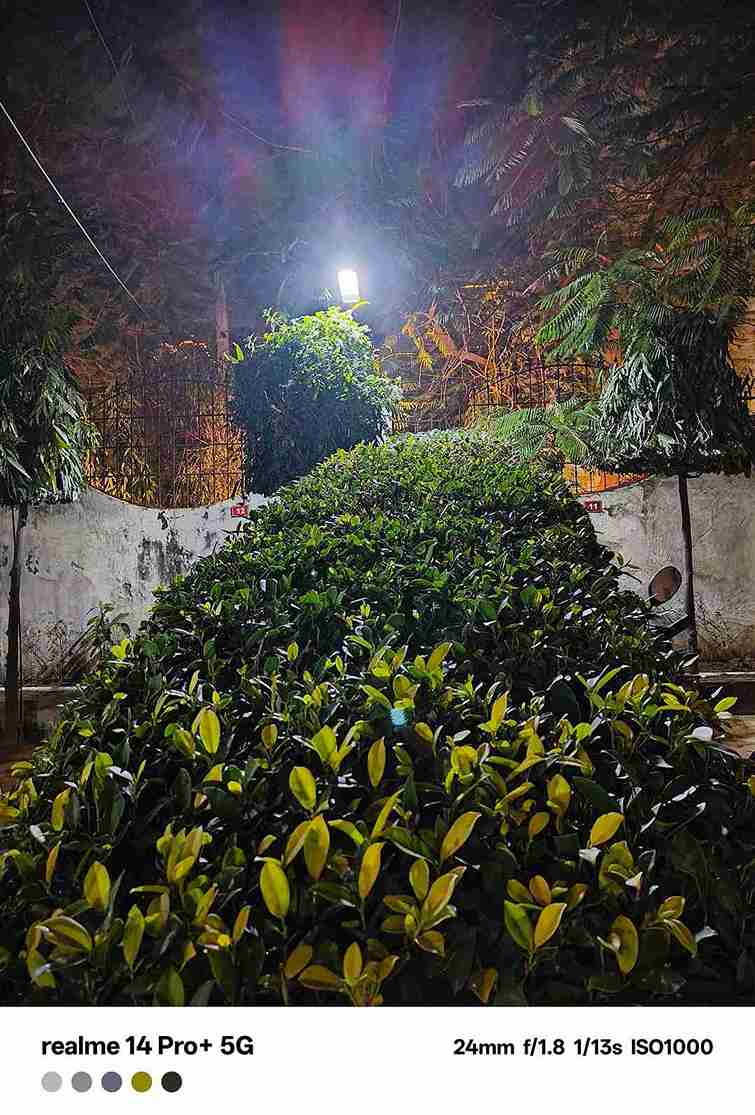
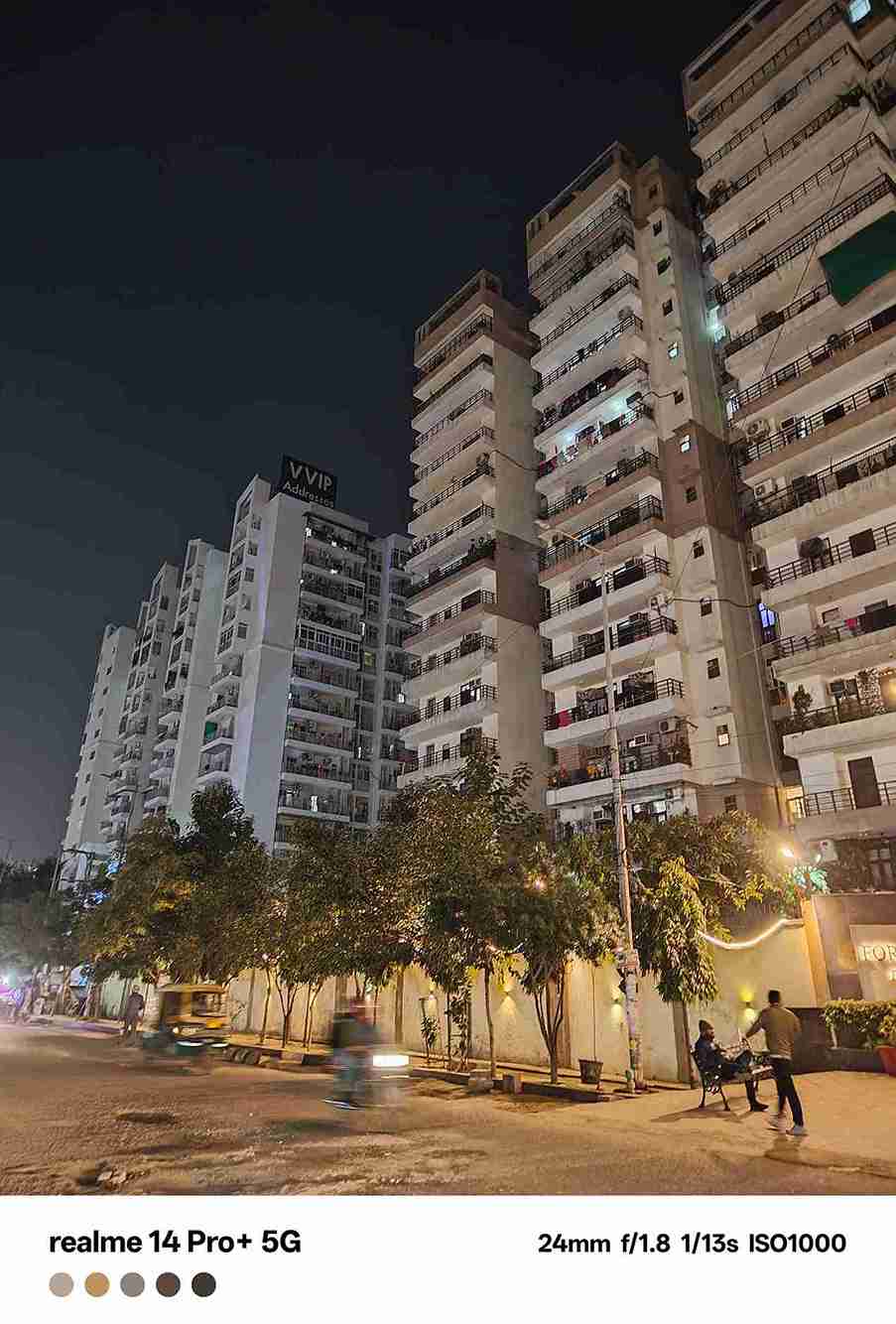
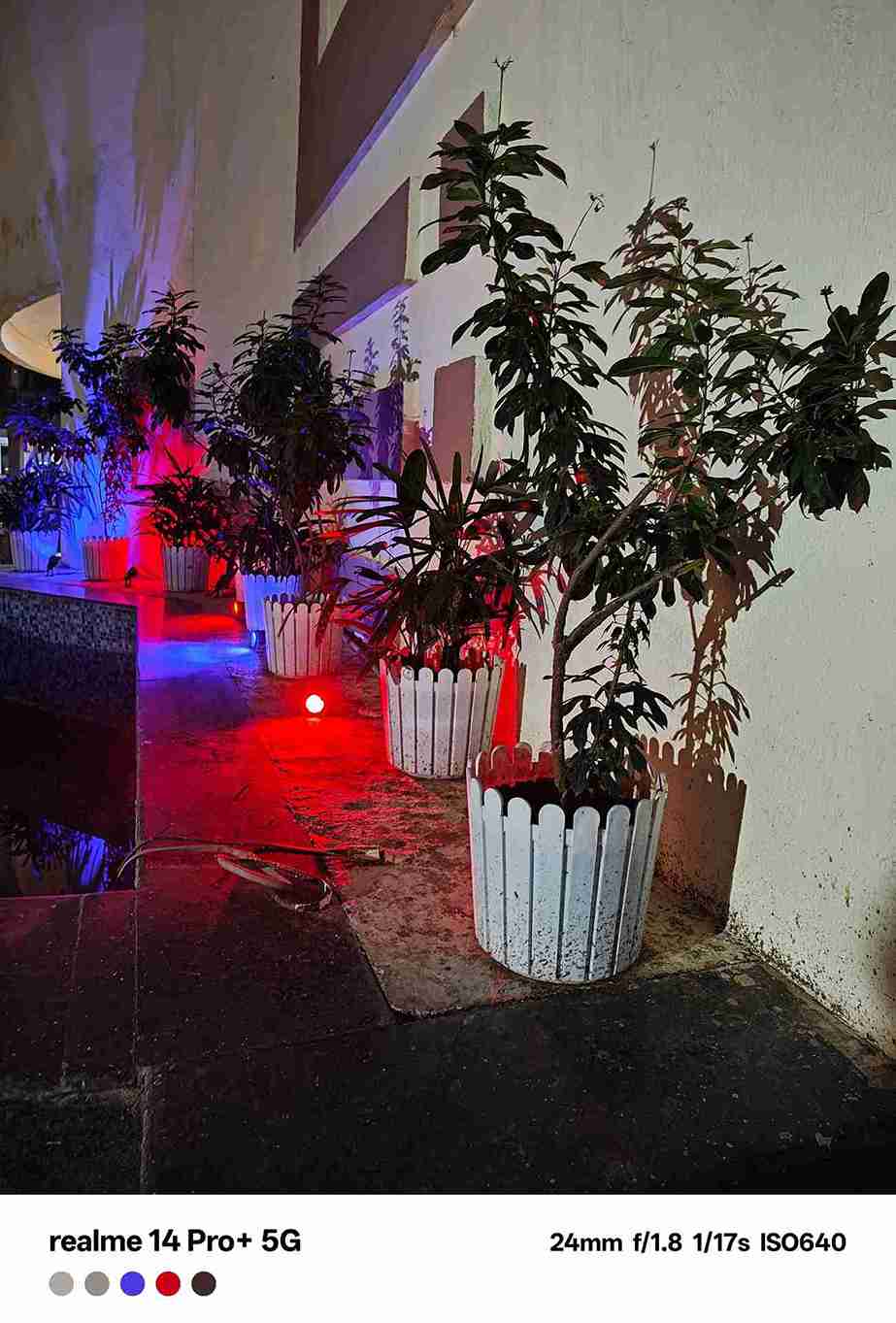
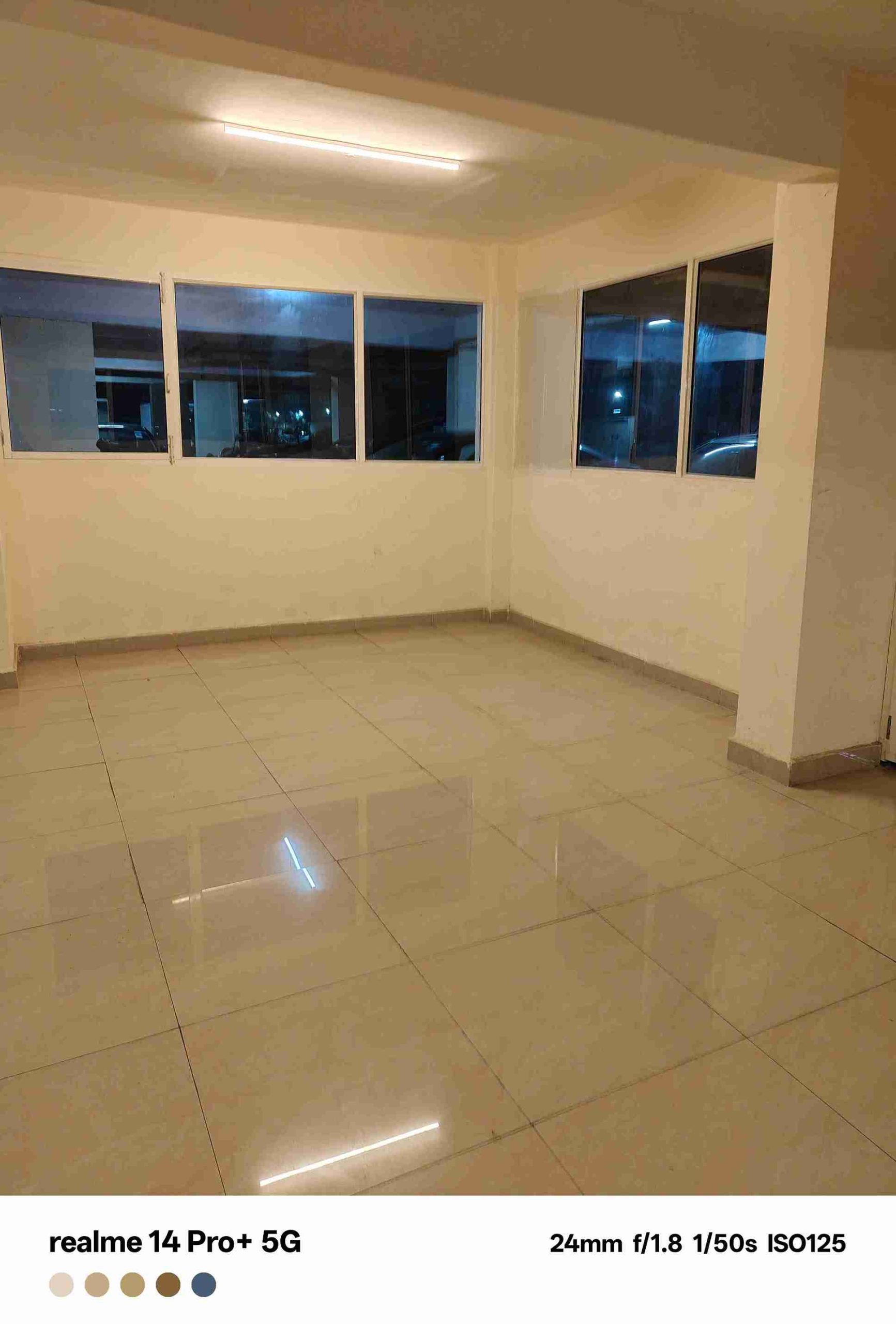
The picture quality is quite good with 6X lossless zoom and a 120X super zoom capability. You can capture good long shots and zoomed-in shots easily with good clarity. Photos appear crisp with loads of details when taken in a well-lit environment. However, the camera performance is surprisingly good even when lighting conditions are not proper.
There is the triple flash system that significantly enhances the ability of the phone to get studio-level indoor photos. The colours in pictures appear very natural and there’s hardly any issue of overexposure or saturation.
The dynamic range and contrast are well-balanced. Realme has added provides AI-backed editing tools to enhance and sharpen images.
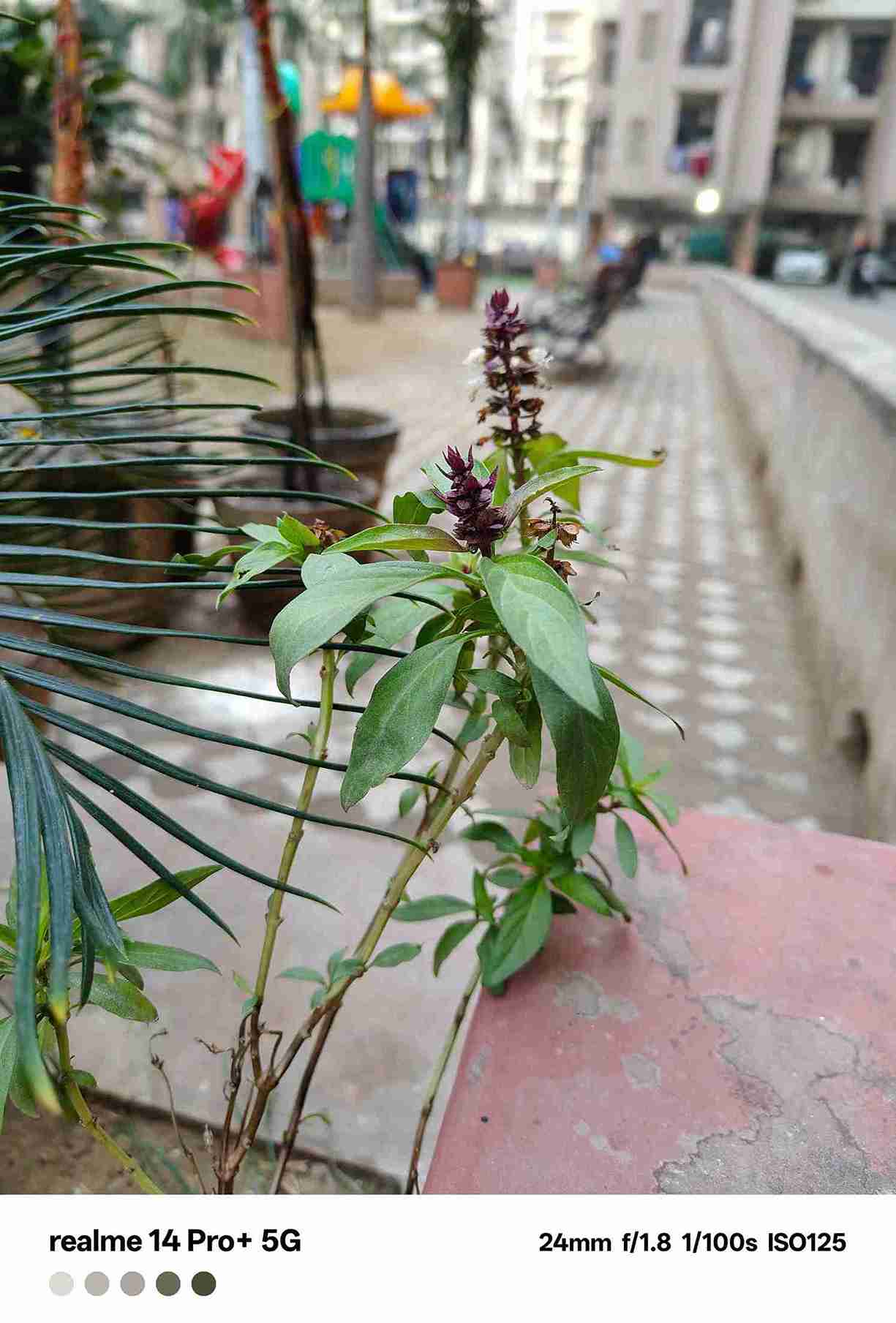
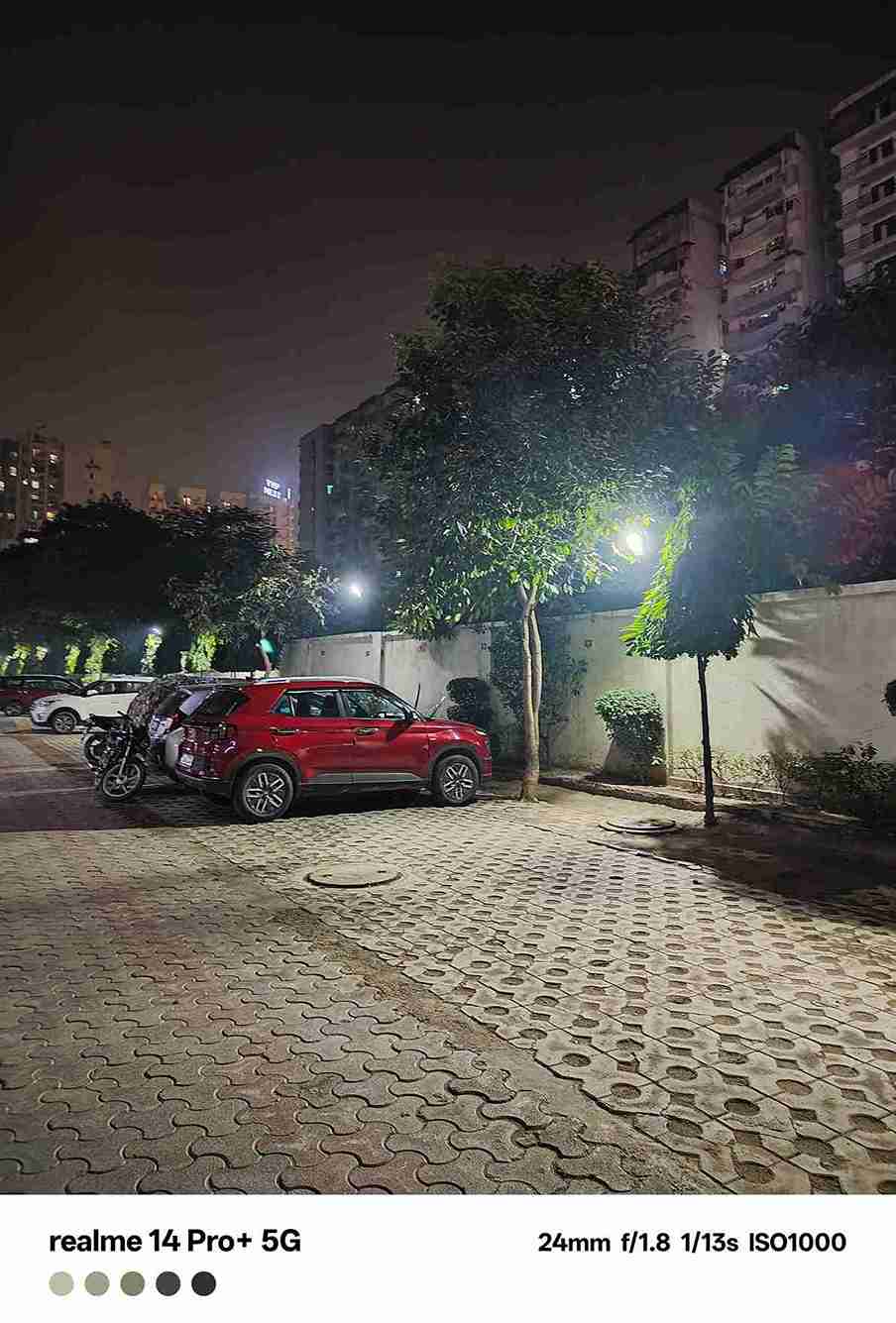
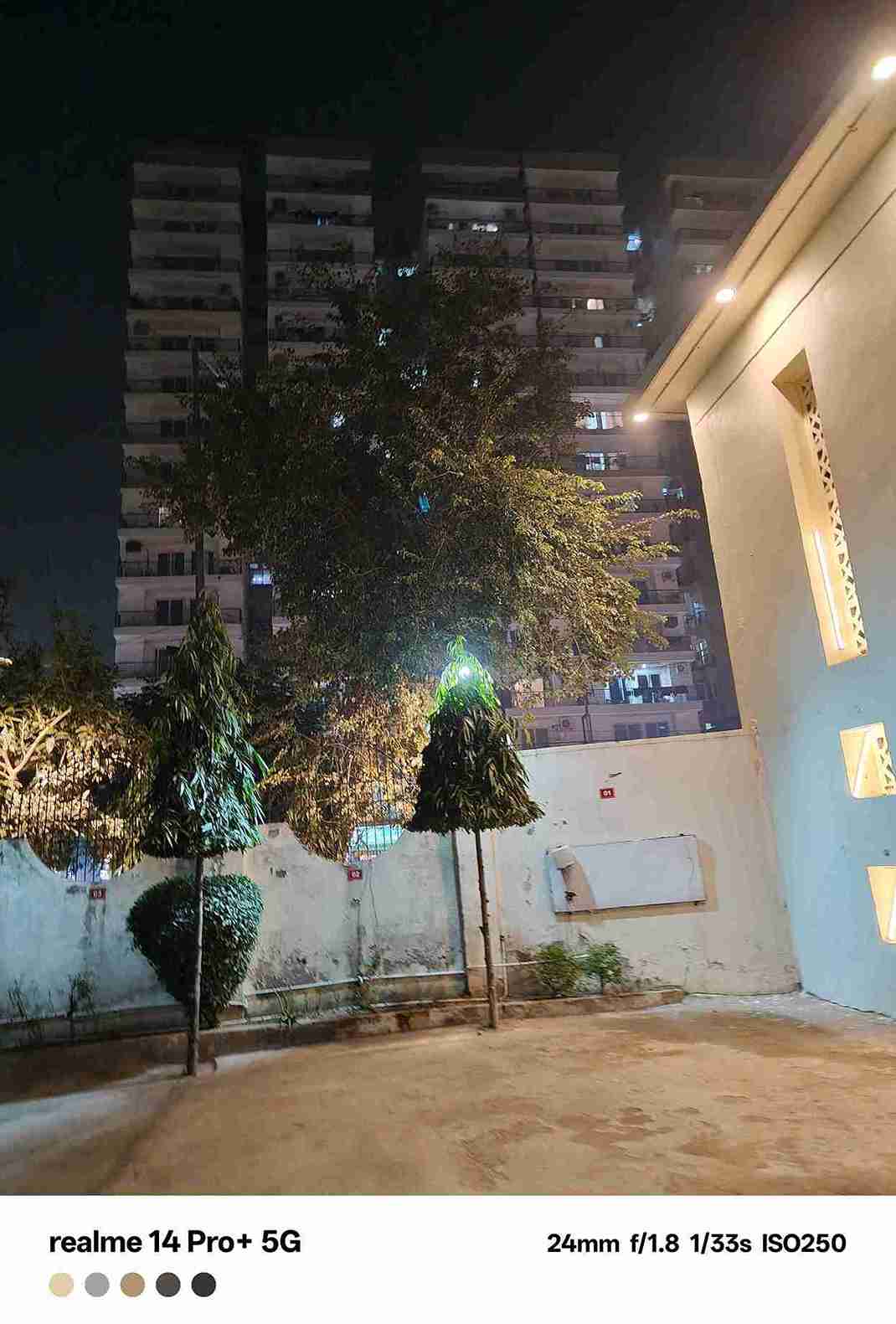
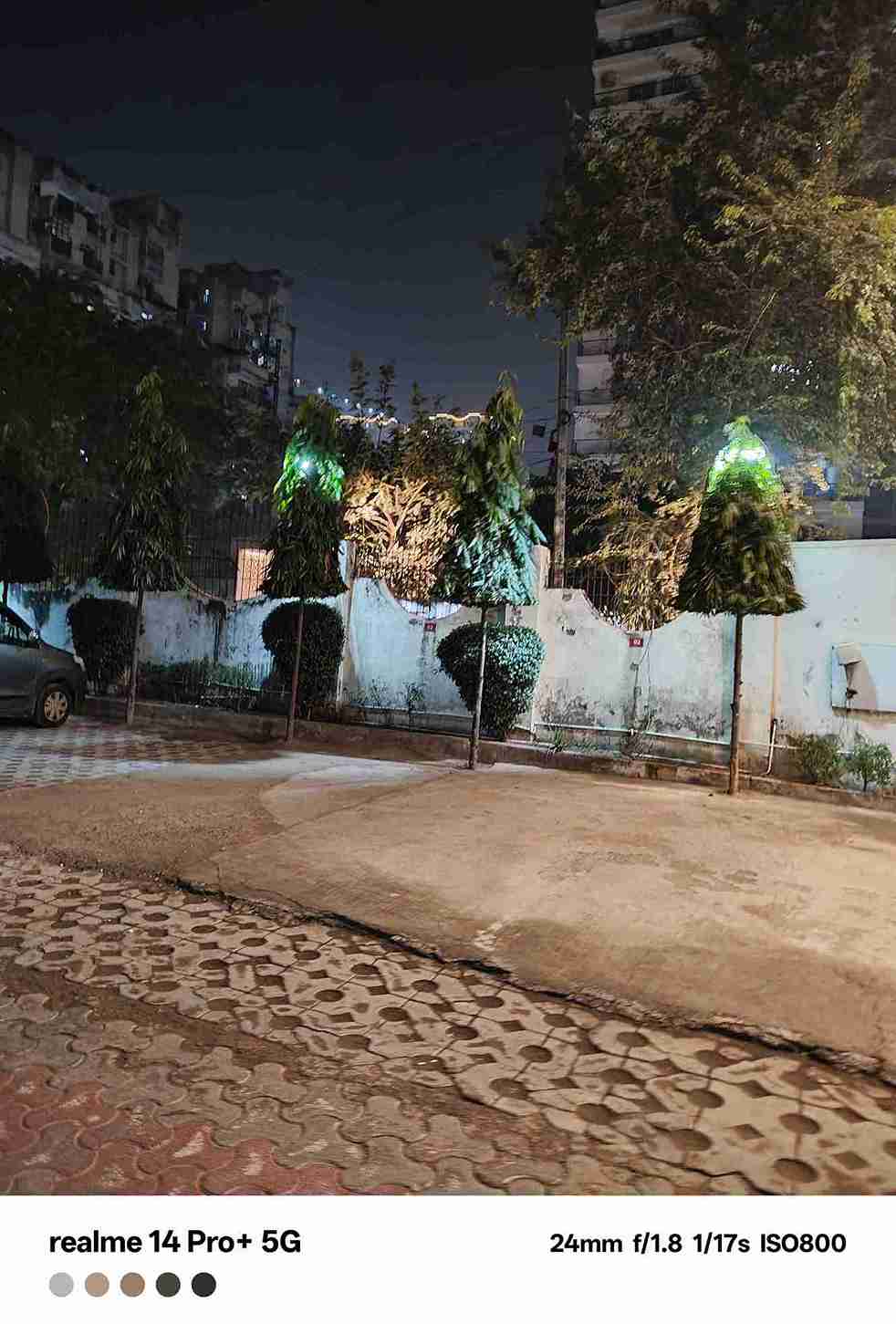
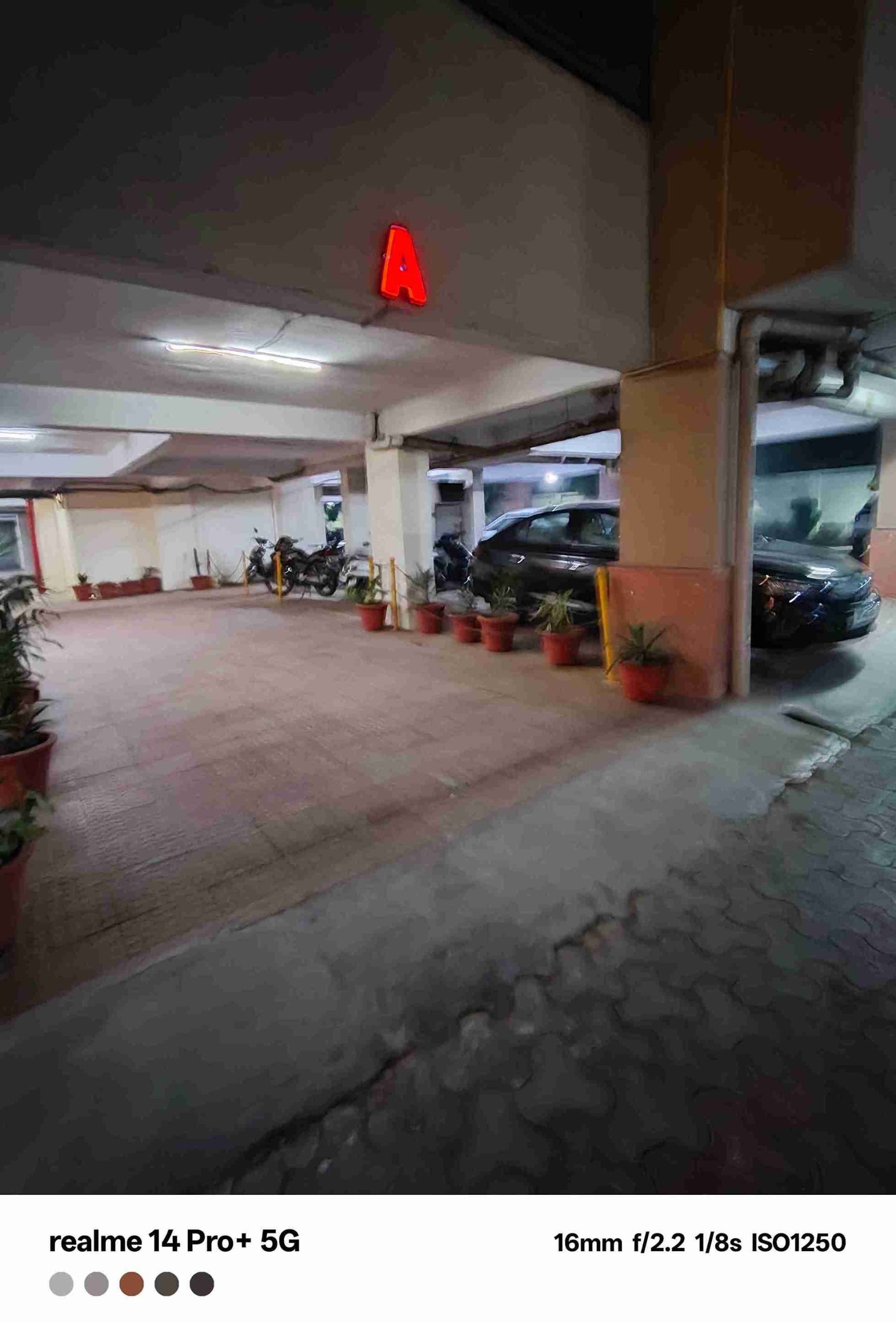
Here are some camera samples –
Realme 14 Pro+ Daylight Camera Samples
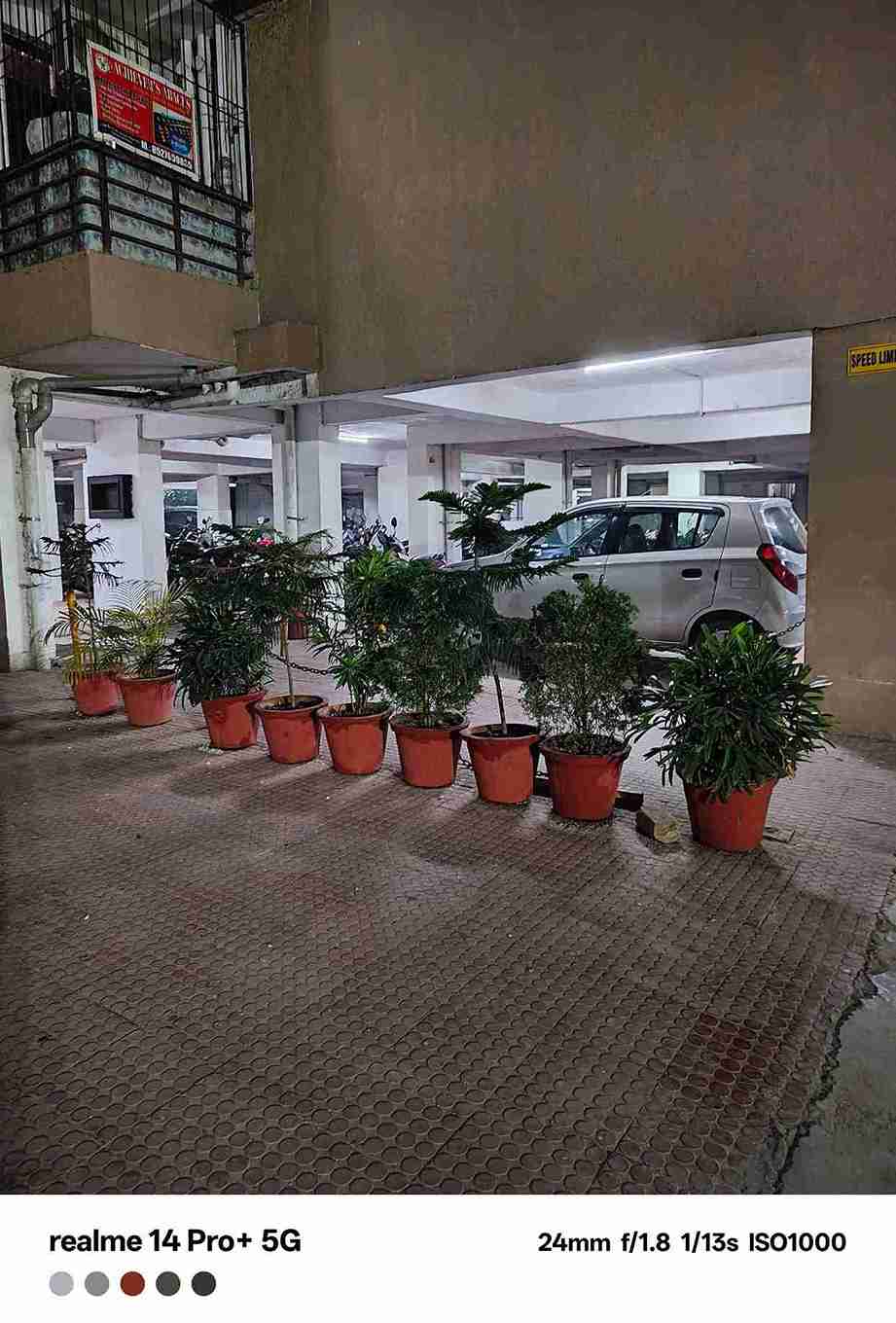
Realme 14 Pro+ Night Camera Samples
The phone supports 4K video recording in 30FPS along with 1080P recording in 60/120FPS and 720P recording in 240FPS Slow Motion. It shoots clear and sharp videos with OIS helping in keeping things stable. Even in low light conditions, you can expect this phone to capture clear recordings for you. Below are some video recording samples to give you an idea.
Realme 14 Pro+ Daylight Video
Realme 14 Pro+ Night Video
The camera system is also quite versatile and comes with multiple modes for you to experiment with. It has an Underwater mode, Starry mode, Long Exposure mode, Dual-View mode, Time-Lapse and more.
Realme 14 Pro+ Battery and Charging
Realme 14 Pro+ Battery and Charging
Realme 14 Pro+ packs a massive 6,000mAh Titan Battery capacity that is enough to support your average smartphone use for about a day and a half. Even with heavy use, you can easily rely on this battery system to support the device till the end of the day.
The battery easily maintains over 80% of capacity and can handle 1600 charge cycles.
For charging, the phone comes with 80W SUPERVOOC charge support. In our experience, charging the phone felt much faster than many of the other flagship devices. We got a boost up to over 90% battery from under 10% in just about 40 minutes. The best thing is that Realme is bundling the 80W adapter, so you can utilise the maximum of the feature right away.
Verdict – Should You Buy Realme 14 Pro+?
Verdict – Should You Buy Realme 14 Pro+?
Realme 14 Pro+ tick marks every check box that you can think of when it comes to a pro device. With a stunning display, unique design language, standout camera performance, a powerful chipset and a reliable battery system, the phone packs almost everything.
While everything works in favour of Realme 14 Pro+, the camera performance remains one of its highlights. So, if you are specifically looking for a camera phone, this one is an ideal choice in the segment. The camera system also comes with some cool AI features to support and enhance your overall photography experience.
Reasons To Buy
Reasons To Buy
Great camera performance
Ergonomically great design
Good battery life and charging
Stunning quad-curved display
Reasons Not to Buy
Reasons Not to Buy
No HDR video support
No EIS support
No NFC
Alternatives
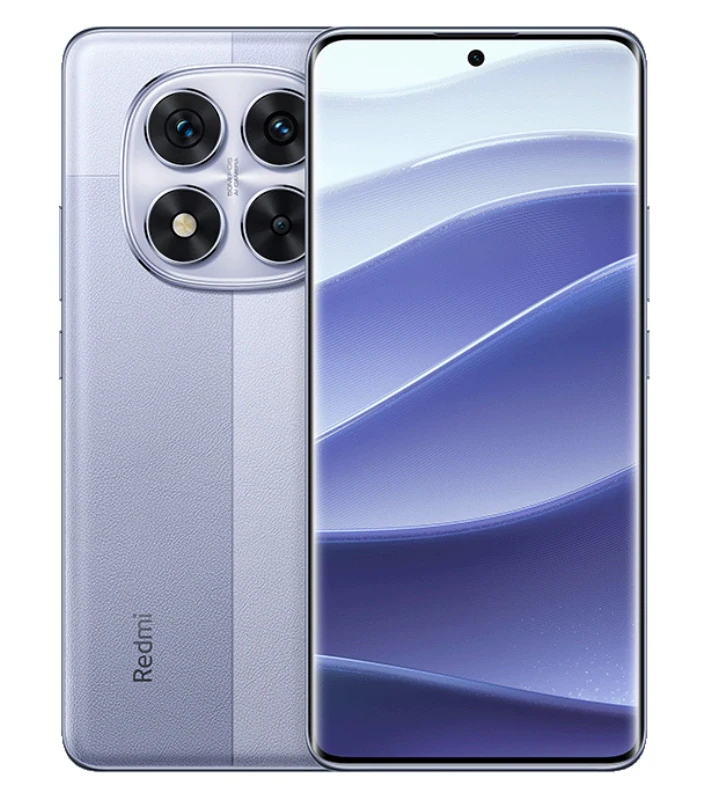
Redmi Note 14 Pro+
Redmi Note 14 Pro+
Key Specifications
67-inch (16.94 cm) 120Hz AMOLED Display
Snapdragon 7s Gen 3 Octa-core Processor
50+8+50 MP Rear Camera
20 MP Front Camera
8 GB RAM
128 GB Storage
6200 mAh Battery
90W Fast Charging
Android v14
Vivo V40
Vivo V40
Key Specifications
78-inch (17.22 cm) 120Hz AMOLED Display
Snapdragon 7 Gen 3 Octa-core Processor
50+50 MP Rear Camera
50 MP Front Camera
8 GB RAM
128 GB Internal Storage
5500 mAh Battery
80W Fast Charging
Android v14
Motorola Edge 50 Pro 5G
Motorola Edge 50 Pro 5G
Key Specifications
7-inch (17.02 cm) 144Hz P-OLED Display
Snapdragon 7 Gen 3 Octa-core Processor
50+13+10 MP Rear Camera
50 MP Front Camera
8 GB RAM
256 GB Storage
4500 mAh Battery
125W Fast Charging
Android v14
FAQs
Q1. What is the display quality of the Realme 14 Pro+ 5G?
Answer. The Realme 14 Pro+ 5G features a 6.83-inch 1.5K 120Hz AMOLED Quad Curved Display with ultra-thin bezels providing vibrant visuals and smooth scrolling.
Q2. What processor does the Realme 14 Pro+ 5G use?
Answer. The phone is powered by the Snapdragon 7s Gen 3 5G Processor ensuring efficient performance and low power consumption.
Q3. How much RAM and internal storage does the Realme 14 Pro+ 5G offer?
Answer. The Realme 14 Pro+ 5G comes with up to 12 GB RAM and up to 256 GB internal storage. It has three memory combination variants – 8GB + 128 GB, 8GB + 256 GB and 12 + 256 GB.
Q4. What are the camera specifications of the Realme 14 Pro+ 5G?
Answer. The phone boasts a Triple Rear Camera Setup with a 50MP main sensor, a 50MP periscope telephoto lens and an 8MP ultrawide lens with a triple flash glow light. It also features a 32MP front camera for high-resolution selfies.
Q5. What are the battery and charging capabilities of the Realme 14 Pro+ 5G?
Answer. The Realme 14 Pro+ 5G is equipped with a 6,000mAh Titan Battery and supports 80W SUPERVOOC Charging, which can charge the phone from 0 to 50% in just 24 minutes.
The Samsung Galaxy S25 Slim will be 6.4mm thin with a 6.7- to 6.8-inch flat display and dimensions of 159 x 76 x 6.4mm.
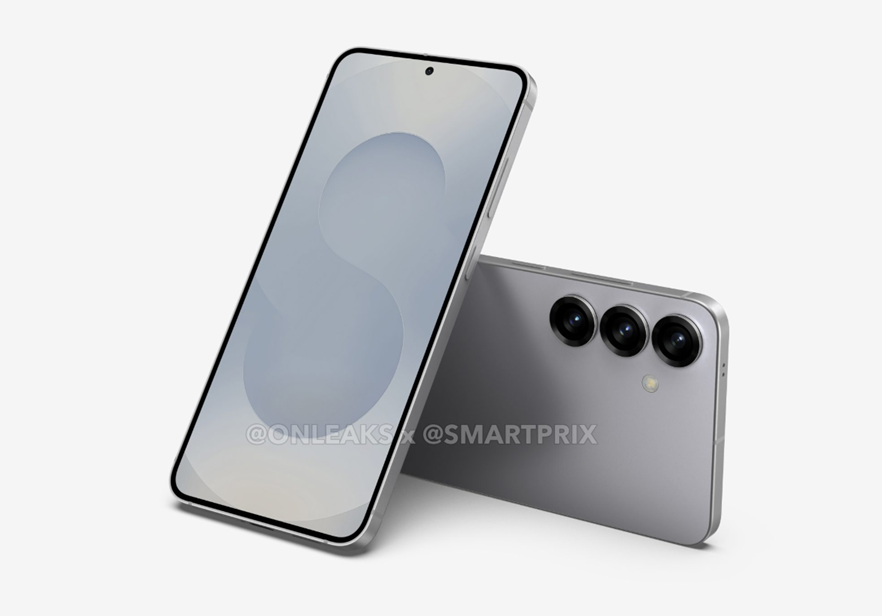
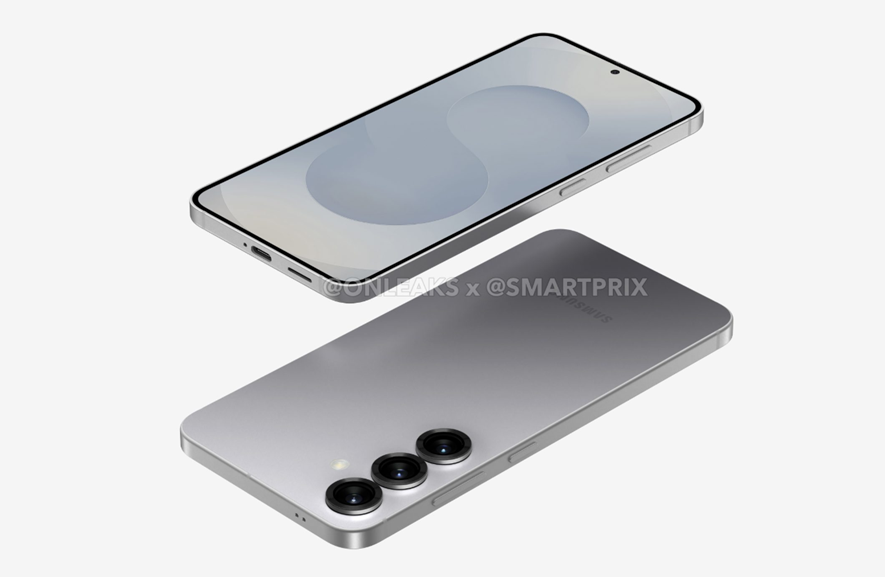
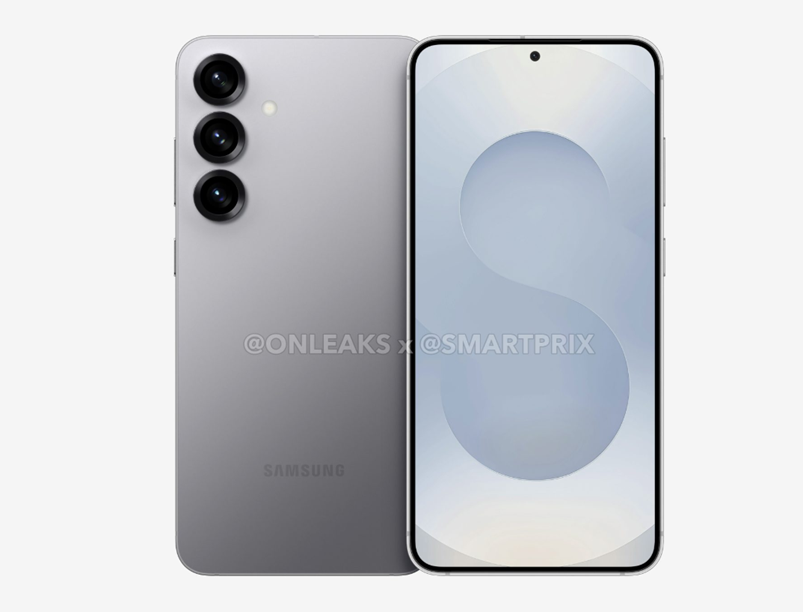
Leaked 360-degree images reveal a triple-camera setup on the back, a sleek metal frame and a glass back, along with ultra-thin bezels, a USB-C port, a microphone and a single speaker grille at the bottom.
Expected features – 200MP main sensor, a 50MP ultra-wide lens, a 50MP telephoto lens with 3.5X optical zoom, the Snapdragon 8 Elite chipset, 12GB of RAM and Android 15 with One UI 7.
As Samsung is gearing up for the Galaxy S25 Series launch in the coming week, it is the slim model that will be released later in the year generating maximum buzz for now. Previous reports have revealed Samsung Galaxy S25 Slim to be one of the slimmest smartphones ever made by the brand.
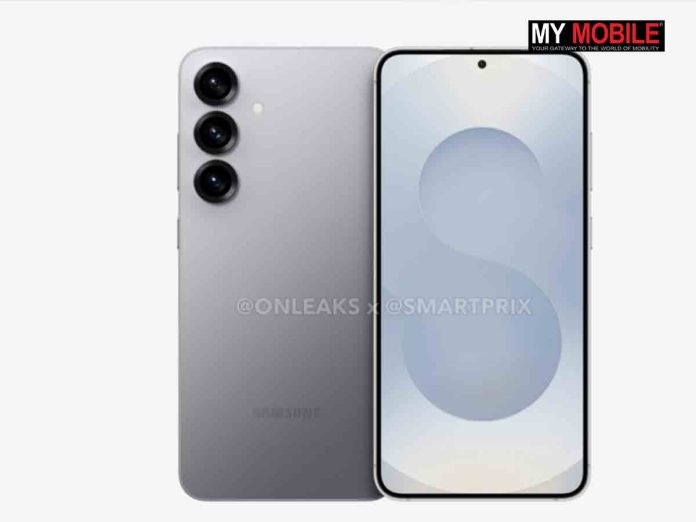
While some leaked renders have shared an initial look of the phone, recent high-quality 5K renders shared by Smartprix in collaboration with OnLeaks give a detailed first look at this ultra-thin device.
The Galaxy S25 Slim measures an impressively thin 6.4mm, which makes it significantly slimmer than most smartphones. The device is just 8.3mm thick even with its camera module. To put that into perspective, the Galaxy S25 Ultra is expected to be 8.2mm thick without a camera bump.
The phone will have a 6.7- to 6.8-inch flat display and dimensions of approximately 159 x 76 x 6.4mm. Comparatively, the S25 Ultra is larger at 162.8 x 77.6 x 8.2mm. This means the S25 Slim is 3.8mm shorter, 1.6mm narrower, and 1.8mm thinner than its Ultra sibling.
Samsung Galaxy S25 Slim 360-Degree View
The recently leaked 360-degree images show that the Galaxy S25 Slim will feature a triple-camera setup on the back, a sleek metal frame and a glass back.
The bezels around the screen are ultra-thin and the power button and volume rockers are flat. At the bottom, there’s a USB-C port, a microphone and a single speaker grille.
Samsung Galaxy S25 Slim – Key Features (Expected)
Samsung Galaxy S25 Slim render in full 5K resolution. (Image credit – Smartprix/OnLeaks)
According to leaked reports, the Galaxy S25 Slim’s triple-camera setup includes a 200MP HP5 main sensor, a 50MP ultra-wide lens and a 50MP telephoto lens with 3.5X optical zoom. Samsung is utilising its new ALoP (All Lenses on Prism) design, which arranges lenses in front of the prism ensuring a slim design while maintaining excellent zoom capabilities.
Under the hood, the phone will be powered by the Snapdragon 8 Elite chipset paired with 12GB of RAM and running Android 15 with One UI 7. Early Geekbench scores from a pre-release unit show a single-core score of 3005 and a multi-core score of 6945, though these may improve closer to the final launch.
Samsung Galaxy S25 Slim – Expected Launch
The Galaxy S25 Slim is set to launch in May 2025.
While it might make a brief appearance at Samsung’s Unpacked event on January 22 alongside the Galaxy S25, S25+ and S25 Ultra, its release is expected to follow a few months later.
FAQs
Q1. What are the dimensions of the Samsung Galaxy S25 Slim?
Answer. The Galaxy S25 Slim measures 6.4mm thin with a 6.7- to 6.8-inch flat display and dimensions of approximately 159 x 76 x 6.4mm.
Q2. What camera setup does the Samsung Galaxy S25 Slim have?
Answer. The Galaxy S25 Slim will feature a triple-camera setup on the back, including a 200MP HP5 main sensor, a 50MP ultra-wide lens, and a 50MP telephoto lens with 3.5X optical zoom.
Q3. What chipset will power the Samsung Galaxy S25 Slim?
Answer. The Galaxy S25 Slim will be powered by the Snapdragon 8 Elite chipset, paired with 12GB of RAM and running Android 15 with One UI 7.
Q4. When is the expected launch date for the Samsung Galaxy S25 Slim?
Answer. The Galaxy S25 Slim is set to launch in May 2025.