Home Blog Page 1323

boAt Rockerz 330, a neckband earphone with mammoth battery life launched for Rs 1,299

0

Indigenous audio brand boAt has expanded its Rockerz series of wireless earphones in India with the launch of Rockerz 330, which features 10mm audio drivers tuned for enhanced bass and a whopping 30 hours of dynamic playback.

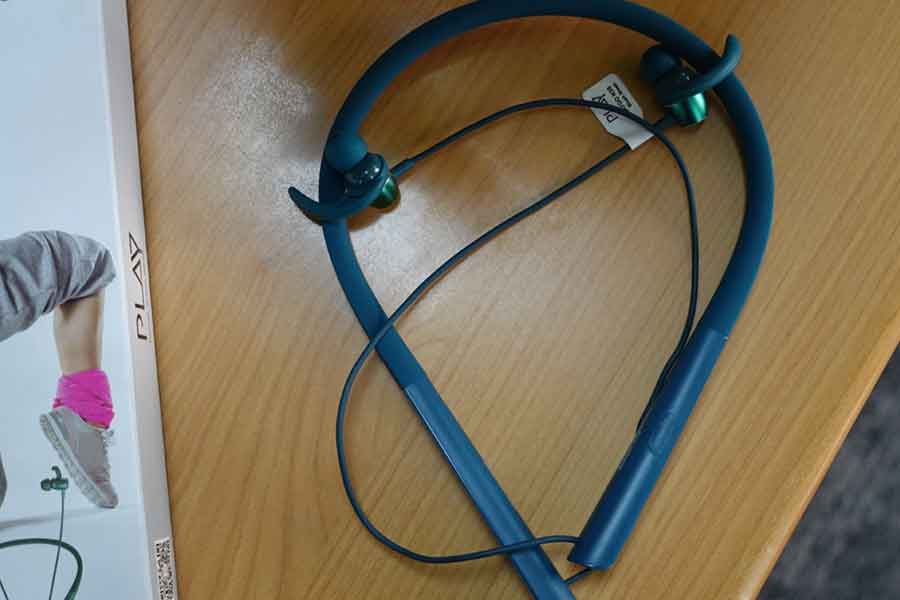
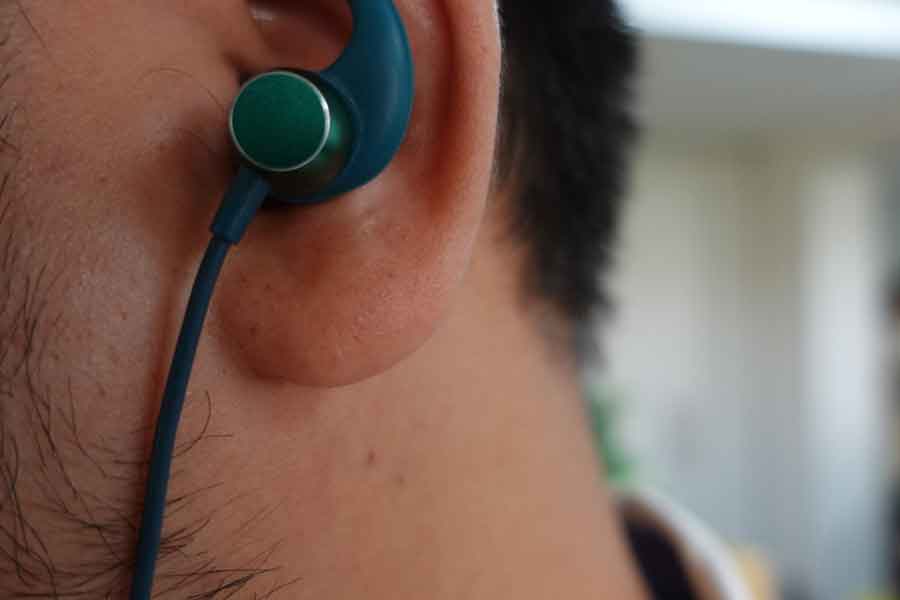
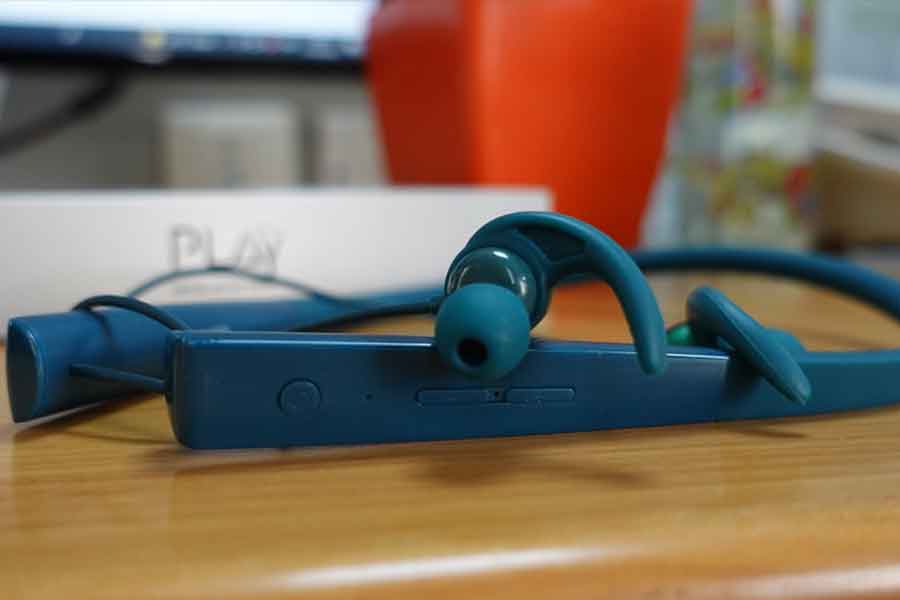
The boAt Rockerz 330 is ergonomically designed for comfort and performance. The earbuds are crafted for a snug fit with silicone fins that help with enhanced grip and provide a drop-free experience. Each bud features magnets to hold them together when unused, preventing wire tangle. A metal alloy housing for the buds and control board assures a premium finish with added durability, while the silicone neckband makes these very comfortable for heavy usage. Rockerz 330 sports an IPX5 certification to ensure zero damage from water, sweat and dust.

The neckband is built using the latest Bluetooth v5.0 chipset and 10mm dynamic drivers fine-tuned with boAt’s signature sound and enhanced bass. The Rockerz 330 additionally offers dual pairing for the tech-savvy generation. You can now pair and switch between two devices simultaneously. A single-press voice assistant is at your service when you need it. Be it cricket scores, weather updates, the latest news or a call to your friend, Google Assistant or Siri are a button press away.

The in-built rechargeable lithium-ion battery can serve you with a ceaseless audio bliss for up to 30 hours. If you manage to drain the battery life completely, a simple 10-minute charge will set you off for 10 hours of playback time courtesy, the boAt’s very own ASAP fast charging technology.

Aman Gupta, Co-Founder, boAt, said, “With boAt Rockerz 330, we are pushing the boundaries on playback, build and performance and want our boAtheads to finally settle for nothing but the best.”

The boAt Rockerz 330 comes in six trendy colours- matte-finished Active Black, Ocean Blue, Navy Blue or Teal Green, or settle between the multi-coloured Blazing Yellow or Raging Red.

The neckband will be available at an introductory price of Rs 1,299 exclusively on Amazon and boAt website starting May 26, 12 pm onwards. It comes with a 1-year standard industry warranty period.

“Big Tech treating our information like their property”

0

Messaging has undergone a massive change in the last couple of years. With the arrival of new platforms, most of us toggle between different messaging channels daily to connect with our loved ones, peers, colleagues, family, friends and businesses, so much so that sometimes we communicate with the same person or the brand across different channels. However, in between, there’s a possibility of getting your data or confidential information compromised, which holds a great importance, especially for organisations working remotely in today’s times. This is where Telebu, formerly known as SMSCountry, comes into play. Telebu is a tech B2B firm that develops a suite of products and solutions to improve internal and external communication for companies. It has a global footprint in about 15 countries – including India, UAE, Oman and Hong Kong – and works in public, private and government sectors. Ramesh Kumar Raja caught up with Prasanth Yerrapragada, VP – Technology, Telebu, to know more about the company and how it has been instrumental in transforming enterprise communication, particularly in the wake of the latest policy amendments by WhatsApp and big tech oligarchs ruling the roost in the messaging space. Excerpts:

What unifies the several apps and verticals that Telebu has?

We are a company focusing on Communication as a Service (CaaS). Telebu helps enterprises build better relationships with their customers and employees using SMS, Chat, Voice and Video products, APIs and SDKs.

We are India’s first communication company that solves for both enterprise and customer communication. Our product suite is complementary, integrable to one another, and offers single login accessibility.

How do you look at the trend of ‘messaging’ which has undergone an immense change with the arrival of new platforms in India?

Messaging has changed every five years, in my opinion. We started our journey with simple text messaging (SMS) back in the 90s. Over the next five years, we explored Multimedia Messaging (MMS). Then came the Bulk SMS revolution, followed by the Blackberry era, iMessage, WhatsApp.

Daily, most of us toggle between at least five different messaging channels to connect with our loved ones, peers, colleagues, family, friends and businesses. What’s worse? Sometimes, we communicate with the same person or the brand across different channels. Other times, we are conversing simultaneously with various individuals across different channels.

Imagine this if you are a brand talking to your customers. The entire communication experience is fragmented and broken. As different individuals speak to varying customers across channels, timelines, dates and events; these conversations, on most occasions, are not relevant, meaningful or contextual for your customers. Every time the customers re-initiate the discussion with your brand, they cannot pick up the conversation where they left off.

Now, we are about to witness something entirely different and unique. I call it the omnipresent messaging experience.

“Messaging has changed every five years, in my opinion. We started our journey with simple text messaging (SMS) back in the 90s. Over the next five years, we explored Multimedia Messaging (MMS). Then came the Bulk SMS revolution, followed by the Blackberry era, iMessage, WhatsApp”

How the latest policy amendments by WhatsApp have created a fear psychosis of personal information being accessed by Big Tech companies?

Well, the hysteria and fear is not dumbfounded. Amongst the many permission level changes, data collections request that WhatsApp aims to implement, I will list down a few to give you a taste of what’s in store for us, just in case you already don’t know.

WhatsApp will collect information like battery charge status, network signal strength, app versions, IP address, phone number, area codes etc. To top it off, Facebook will collect information about us from third-party services that we access using their services or platform.

It all began with Cambridge Analytica. We never paid attention to terms of service, privacy policy, or the amount of personal data we were sharing with these Big Tech companies before that. But once we opened the can of worms, all hell broke loose.

Our lives are getting governed, manipulated, regulated and snooped upon by Big Tech. Add to it instances where the Big Tech companies refused to comply with government requests in sharing the same data that they stole from us.

The saying “Nothing in life comes free” holds, after all.

I may sound like an alarmist. I am not. I am all for requesting and accessing user data but with strings attached. Most importantly, the users should have a choice of opting-in. The power has to rest with the consumers, not vice versa. There are many benefits to sharing data and information with big tech companies as well. The personalized experience that we are so used to, the recommendation engines we swear by, is possible because we share data and information with these products /services.

The problem is not having the choice. The problem is the control these Big Tech companies have on our lives. The problem is Big Tech treating our information like their property.

TelebuPing is up against some powerful software. So, how does it stand out?

Most enterprises use customer communication chat platforms, including WhatsApp, Signal, WeChat, Line or Telegram, to discuss, collaborate and share business information. The problem is that sometimes, knowingly or unknowingly, stakeholders, employees, or customers share information, data and documents that are confidential in nature.

In today’s times where information is the key and most organizations are working remotely, it becomes critical for businesses to set up controls, moderations and role-based access architecture on their preferred choice of communication platform and safeguard their business secrets.

TelebuPing does just that. TelebuPing is an enterprise-first chat platform meant to protect, safeguard and secure enterprises’ business communication. With TelebuPing, we offer the power of Text, Voice, Video and Broadcast rolled into one. TelebuPing offers admin controls, end to end encryption, Moderation and Access Restrictions, Disappearing Messages, Screenshot and Content Download Alerts. Most importantly, TelebuPing on an Organizational Directory-Based Model.

To top it off, TelebuPing will soon work as a single point gateway to all your communication. With APIs, organizations can easily integrate Chat, Text Messaging, Ticketing, Emails, Social Media and your Contact Center to TelebuPing. Connect customers with the right people, escalate faster, resolve quicker and drive contextual conversations with your customers to sell, service and support them better.

With TelebuPing, we are looking to help organizations drive revenues, improve CSAT and NPS, and reduce TATs.

“In today’s times where information is the key and most organizations are working remotely, it becomes critical for businesses to set up controls, moderations and role-based access architecture on their preferred choice of communication platform and safeguard their business secrets… TelebuPing does just that”

Why tech oligarchs like WhatsApp, Twitter, Facebook etc. are now losing market dominance over their new tech policies and privacy updates and how Indian apps are replacing them slowly and steadily through their perfect demonstration of technology integrated innovation?

India is one of the largest application markets globally and has been growing significantly over the years. Our current government has launched many initiatives to boost India’s entrepreneurship and startup ecosystem, like Startup India, AtmaNirbhar Bharat and Vocal for Local initiatives.

Other factors – such as socio-political standoffs, cost, data privacy and security concerns, and demand for localized support – have triggered a more extensive adoption of homegrown apps in India.

Another critical reason that homegrown apps beat their foreign counterparts is their understanding of the local markets, pain points and problems. Take TelebuJoin for example, we have built a made in India video conferencing platform that caters to the masses. We focused on adding scale, tackling connectivity and infrastructure problems, and maximizing reach and impact for small businesses.

Apps like MX Takatak, FAU-G etc, focused on adding the local flavour to capture the imagination of the masses and have been quite successful in doing so.

As reported by Apps Flyer, India’s app market constituted 38.5% of the global mobile application market, surpassing China and the US in 2020. There were approximately 7.3 billion app installations that happened in 2020. It further states that mobile consumption witnessed a surge amongst Tier 2, 3, and 4 cities primarily for finance, gaming, and entertainment apps.

Mark my words, we will witness a new era of growth backed by desi tech companies in the next decade.

What has been the impact of on-going pandemic on Telebu’s business and operations?

We are happy to report that business operations didn’t get affected due to the pandemic for more than a couple of weeks. After all, we are an enterprise communication company.

Our products had been tested and vetted by our customers and ourselves way before the pandemic began. Internal adoption of tools and technology has always been a high priority for us as an organization. We could retrain our teams quickly on our products and other tools like Asana, JIRA, Clockify etc.

The challenge we faced was not of digital adoption. It came in the form of people management, strategic transformations, realigning business goals, process implementation and more.

Another challenge we faced was in regards to employee on-boarding and training. But these were a few wrinkles that we were able to iron out quickly.

From a business point of view, we were the lucky ones who saw growth in revenues, users, number of accounts and ticket size.

The number of inquiries on our platform increased by 100% W-o-W between March 2020 to July 2020. Not just this, the number of clients we on-boarded in FY 2019-2020 is equal to the number of clients we have on-boarded in less than six months in FY 20-21.

If we compare Y-O-Y growth, we have been adding 3x more customers per month compared to the same month last year.

If we talk about grptalk and Telebu Join, we saw 30% M-o-M growth in users for FY 20-21. We have hosted more than 40,000+ meetings so far on TelebuJoin, with an average of 25 participants per meeting. Our contact centre platform TelebuHub has 3x more customers and now contributes to more than 15% of our total revenues.

For our newer products like TelebuPop, TelebuPing and Telebu Blocks, we have successfully had an organic Beta rollout to our existing set of customers. And, so far, their response has been positive. More than 10% of existing customers have opted in to use them.

What is the current user base of Telebu?

Overall, as an organization across products, we have more than 10,000+ registered businesses working with us. Out of the 10,000+ users, more than 50% of our users transact with us every month. Our India vs Overseas spilt would be 80/20.

If we were to split the user base product-wise, it would be like- 40% SMS, 30% grptalk, 15% TelebuHub, 10% TelebuJoin and 5 % rest of the products.

Airtel upgrades mobile network in Tamil Nadu, deploys 5MHz spectrum in 1800 band to bolster capacity

0

Telecom major Airtel has upgraded its mobile network in Tamil Nadu to offer enhanced network experience for its customers. It has deployed an additional 5 Mhz spectrum in the 1800 Mhz band along with advance network software tools across its network in the state to significantly bolster high speed data capacity.

The deployment will strengthen an already superior network for Airtel customers across the state, it said in a statement. It will enable improved network availability and data speeds along with better coverage inside homes and buildings in cities and urban areas.

The deployment also allows Airtel to offer wider coverage along highways and rail routes as well as increase footprint in villages as more people access high speed data services, it added.

Airtel had acquired large blocks of 1800 and 900 Mhz spectrum for Tamil Nadu during the recent auctions conducted by the Government of India. With this fresh spectrum, Airtel has the largest spectrum bank of 65 Mhz in Tamil Nadu.

With its diverse spectrum holdings across 2300 MHz (TD LTE), 2100 MHz (FD LTE) 1800 MHz (FD LTE), and 900 MHz (LTE 900), the company is well positioned to serve the growing demand for high-speed data services and its network is fully ready for 5G.

Amit Tripathi, CEO – Tamil Nadu, Bharti Airtel, said, “We continue to invest aggressively in deployment of latest network technologies to ensure our customers are enjoying seamless network experience at a time when data is the digital oxygen. The additional blocks of 1800 band spectrum and new technology upgrades will massively enhance our network capacity to serve the growing data requirement of customers.”

Airtel has also deployed advanced network technologies and tools such as pre-5G Massive MIMO, 4G Advanced and Carrier Aggregation to step up high speed network capacity and coverage.

Airtel has over 2.7 crore customers in Tamil Nadu and its network covers 98.54% population of the state.

Fire-Boltt ropes in Vicky Kaushal as brand ambassador, unveils next-gen 360 smartwatch

0

Homegrown audio and wearable brand Fire-Boltt has brought on-board popular Bollywood actor Vicky Kaushal to launch yet another and one-of-its-kind smartwatch in the Indian market. The brand has unveiled Fire-Boltt 360, a smartwatch with a rotating menu and over 2,000 in-built games, at an introductory price of just Rs 3,499.

The Fire-Boltt 360 smartwatch is equipped with an SpO2 monitor, which provides a real-time tab on one’s blood oxygen level. This is in addition to a 24×7 heart rate monitor and blood pressure tracker. Heavy on specs and features, the smartwatch also comes with a meditative breathing feature that would guide the users to indulge in breathing exercises. Besides the health-related matrix, the smartwatch boasts of a rotating UI interface, wherein one can toggle between modes, folders and apps with utmost ease.

“Fire-Boltt 360 is a perfect companion for young India to track health parameters on the go and also to keep themselves entertained with the in-built games. It gives me pleasure to join hands with a homegrown brand that is about prioritising health with the help of technology,” said Vicky Kaushal.

“The reason why we chose Vicky Kaushal to promote our latest smartwatch is that he is an inspirational, visionary, charismatic, rebellious and freedom-seeking personality and every young Indian connects with him at different levels. He is our brand ethos of energy and action personified, and there could be no better occasion to bring him onboard other than the launch of our one-of-its-kind smartwatch 360,” said Arnav Kishore and Aayushi Kishore, co-founders of Fire-Boltt.

The Fire-Boltt 360 comes with a high-definition large screen, durable metal body and looks classic, elegant and sporty. The smartwatch is equipped with a robust battery, which lasts up to at least 8 days following a full charge even when used incessantly. It comes with a full power standby that retains power for a whopping 20 days. Also, there are multiple watch faces and sports modes to choose from.

Infinix offers 60-day extended warranty amid pandemic

0

With the second wave of coronavirus imposing lockdown and restricting movements across the country, thereby limiting consumer reach to products and services, Transsion’s brand Infinix has announced a 60-day warranty extension in India. The company announced that only those smartphones will be eligible that have their warranties expiring between April 15 and June 15.

Eligible smartphone owners would have to register themselves on the pre-installed CarlCare mobile application before June 30. The move comes amidst the ongoing lockdown regulations across multiple states that would prevent customers from visiting service centres.

Users need to follow a few steps to extend the warranty – Open the CarlCare app and click on the warranty button on the home page; check the validity of your device by entering IMEI; if your device is eligible for extension, a 60-day extended warranty option will be visible. Click on Receive to extend the warranty.

Crayon launches AI Center of Excellence in Asia Pacific region

0

Digital transformation services provider Crayon has fully launched its Data & AI practice through an AI Center of Excellence in the Asia Pacific region that focuses on creating innovative and value-based artificial intelligence and machine learning solutions.

The center is located in Singapore and can provide clients across a range of industries and sectors with an end-to-end delivery service, starting from data assessment to AI model deployment and management in production.

“There is so much power in innovation to drive the greater good and we’re excited to leverage our global success in data and AI to benefit the Asia Pacific region,” said Melissa Mulholland, CEO Crayon.

Crayon’s global Data & AI practice was established in 2014 and has since successfully executed more than 100 AI and machine learning projects worldwide. Crayon started the project to build its Asia Pacific AI Center of Excellence in 2018 and has had recent AI offerings in the region including a partnership with a significant medical group and supporting non-profit opportunities.

The center in Singapore will continue to provide data, AI and machine learning services, supporting customers through every step of their digital transformation journey.

“As we continue to guide our customers on their cloud journey, the promise of advanced analytics, AI and machine learning becomes more than just a vision, but something that can be realized,” said Rhonda Robati, Senior Vice President APAC at Crayon. “Therefore, we believe that now is the right time for Crayon to establish this Center of Excellence to share our global expertise in these innovative technologies with our customers in the Asia Pacific region,” added Robati.

After opening its offices in Singapore in 2014, Crayon has invested heavily in developing deep competencies in the Asia Pacific region. The Center of Excellence in Singapore is an expansion of its services portfolio offering.

The expansion is supported by Microsoft, strengthening both companies’ long-term partnership based on innovation and implementation of new customer solutions. Crayon was previously chosen as Microsoft’s No. 1 partner in the world for AI and machine learning.

“I love to see partners invest so heavily in the region and it really does align with our vision as a company which is to empower every person and every organization on the planet to achieve more,” said Fiona Carney, Chief Marketing & Operations Office APAC at Microsoft. “I’m delighted that Crayon is going to help contribute to that to our shared customers,” added Carney.

Techniche: IIT Guwahati partners ESFI to launch mega esports event as part of their annual fest

0

The Indian Institute of Technology, Guwahati (IIT-G) is all set to host the 24th edition of their annual techno-management festival – “Techniche” and the rise in esports popularity has prompted the organizers to initiate a special esports festival, titled as “Funniche” as part of the main festival in collaboration with the Esports Federation of India (ESFI). While the event will be IIT-G’s maiden experience to engage with esports, the event is scheduled from June 1-14.

The event will see popular esports games like Valorant, Rocket League being played by the participants and Online Chess has also been included keeping the rise in popularity for the chequered game in India. Valorant, which is fast catching up with the fancy of the esports players in India, will see four rounds followed by the knockouts. Alongside the esports titles, fun trivia based on web series, TV shows and movies will also be included to keep the audience and participants engaged.

Prof. Chivukula V. Sastri, Chairman of Technical Board, IIT Guwahati, said, “Techniche IIT Guwahati is pleased to partner with ESFI to launch their first-ever esports festival in India. This festival aims to foster and motivate young Indian minds and ignite competitive spirits despite being at home. The main motive of including esports was to boost the morale of the bright young brains and to develop the culture of esports among our students.”

IITG were the first ones to conduct India’s first virtual techno-management festival last year during the lockdown and it was a big success and with the rise in popularity of esports, it is expected that the first edition of “Funniche” will redefine the whole concept of the virtual annual festival and also raise the bar of excitement around the festival.

“We aim to boost the Indian esports ecosystem by promoting, encouraging and educating the younger generation and I am confident this partnership is a concrete step towards that direction. We aim to initiate an ecosystem where esports thrives without any limitations. I personally believe, our recent association with IITG, which hosts one of the most inspiring fests, will support us to fuel interest and awareness among the participants about the world of esports and who knows we have to get one of our future Champions amongst these IIT students,” said Lokesh Suji, Director, Esports Federation of India and Vice President of the Asian Esports Federation (AESF), while commenting on the expectations around the first edition of the “Funniche”.

Techniche IIT Guwahati Convenor Shubham Singh said, “Team Techniche is very excited to host an esports event for the first time. We have put a lot of thought into this and feel that it would be a great way for people to connect and get a competitive feel while being at home despite the pandemic.”

Poco records 300% YoY growth in Q1 2021 in India

0

Xiaomi spin-off brand Poco has registered the highest growth at 300% YoY in the first quarter of this year, amongst the top 10 brands in India, as per IDC Worldwide Quarterly Mobile Phone Tracker, May 2021.

In November 2020, Poco was ranked the third online smartphone brand, overtaking Realme and OnePlus, within a span of 10 months, and today, it has added another milestone in its independent journey by registering highest growth in the first quarter.

Last year, Poco X2 became the best-selling smartphone on Flipkart under the Rs 15,000-20,000 price segment in March within one month of its launch and Poco X3 was featured as one of the best phones under 20K segment. Poco continued to cement its online position, driven by affordable models like Poco C3 and M3.

Launched in February this year, Poco M3 sold 500k units within 45 days of the launch. The company’s recent introduction Poco X3 Pro is all set to redefine the smartphone experience with unbelievably fluid and powerful performance to provide the highest levels of user satisfaction, the company claimed.

Anuj Sharma, Country Director, Poco India, said, “Our rise to the top 3 in the online smartphone space in just 10 months was a testimony of the love and trust we have received from our fans and consumers. This trust has helped us achieve yet another milestone by achieving the highest growth among the top 10 smartphone brands in the first quarter of 2021. As we continue to grow in the market, we aim to focus on delivering the best and compelling proposition, without compromising on the quality of the devices, with continuous belief in our philosophy of “Everything you need and nothing you don’t.”

Tecno set to launch Spark 7 Pro on May 25

0

Transsion’s subsidiary Tecno is scheduled to expand its latest Spark 7 series in India with the launch of Spark 7 Pro on May 25. It will be available for purchase on leading ecommerce platform Amazon, as per the company.

The smartphone was launched in the global market recently. It is said to come with a 90Hz display, triple rear cameras, a MediaTek Helio G80 chipset, and a 5,000mAh battery.

The Tecno Spark 7 Pro is likely to come in 4GB+64GB, 4GB+128GB and 6GB+128GB RAM/ROM variants, if we look at its launch in the global market. Also, it may come in four colour options.

As for the prices, the upcoming handset might cost around Rs 10,000, considering its technical specifications in the international market.

“We see mobile games leading the esports scene in the coming years”

0

Believe it or not, esports is the next big thing, about which some says, has the potential to outrun Cricket in India. Even though it is still at a budding stage over here, the popularity of this form of sports has been on a steady rise over the past couple of years. While esports has been taking its sweet time to build its foundation among the Indian gaming community, the COVID-19 pandemic has put this change on steroids, acting as a catalyst for the sudden increase in attention. Ultimate Battle is one such esports platform that offers online tournaments and gameplay for mobile, PC and consoles in India. The platform beautifully blends gameplay along with features like social networking, news, and online game store, to enhance the overall user experience. To discuss the state of Indian esports and its prospects for the future, Ramesh Kumar Raja talked to Tarun Gupta, Founder, Ultimate Battle, who wants to make it big in India. Excerpts:

Online gaming has undergone a massive change, especially in the wake of the COVID-19 lockdown. How do you look at this emerging trend, especially in the context of esports?

Esports has gained substantial growth to come into the mainstream in recent years. The esports scene in India will see steady growth with its massive young audience. I see a lot of high-value esports leagues powered by OEM/brands becoming a part of the ecosystem which will give a much-needed push to esports in India. We see mobile games leading the esports scene in the coming years in India.

Can you please tell us about the whole business of esports, its market size and opportunities in India?

Just like sports, esports is all about competitive gaming between esports athletes watched by millions of fans supporting their favourite players/teams. From organizing leagues to media rights and sponsorships, this all pertains to the basics of the esports market. India has seen a whopping increase in the year 2020 with 17 million spectators for live esports tournaments.

According to the recently-released EY FICCI 2021 report, the online gaming segment grew 18% in 2020 to reach Rs 77 billion as online gamers grew 20% from 300 million in 2019 to 360 million in 2020. Consumption of gaming content has also risen exponentially and this has created a huge opportunity for organizations to garner a fanbase as well as providing an avenue for monetization.

What exactly Ultimate Battle does and how it is contributing to this emerging tech revolution?

Ultimate Battle is an esports platform that aims at provisioning gaming communities of popular esports game titles, organized competitive gameplay for gamers for award and recognition. The 360-degree platform is not just limited to gameplay; but also forays into other aspects of gamers’ requirements. The platform beautifully blends gameplay along with features like social networking, news, and online game store, to enhance the overall user experience.

It is needless to say that it is technology, be it in the form of connectivity, advanced games, hardware, or platform that is fuelling and shaping the growth of esports. The very foundation of the Ultimate Battle platform lies in how technology has been used to create this unique experience for gamers.

How many games and tournaments do you offer on your platform and what have been their responses?

Ultimate Battle currently hosts nine esports title games on the platform. Every game has its own community and the frequency of tournaments depends on player engagement. Most of the games provisioned are the top popular esports title games in the world. The top ones being Free Fire, COD: Mobile along Chess. India is a mobile-centric gaming space, so the community size and engagement levels of mobile gamers are high compared to PC/console games.

The response we have received from the gaming community has been overwhelming.

How has been the business so far for Ultimate Battle in the last few months? What are your expectations post COVID-19 era?

Ultimate Battle has seen a 45% increase in user engagement on the platform, we are currently adding around 35K users to the platform every month, which is expected to rise in the coming months. The pie is only getting bigger. Esports entertainment has managed to accelerate the change which was anyway brewing pre-Covid. The Covid has only put this change on steroids and it is around the corner.

We don’t expect user engagement to change drastically post lockdown, but it can have its impact when life boils down to normal. We are expecting to retain a good 50-60% of the newly-gained user base on our platform.

What are the ways to promote, encourage, organize, educate, train and regulate esports in India?

Esports in India is still at their nascent stages. But the past few years have given a great push forward to bringing esports to the mainstream in the Indian gaming industry. The bifurcation of esports from other gaming categories and government legislation will be the major impetus that can bring a monumental change to the esports scene in India.

The massive audience is already seeing esports as a viable career option. And we as an organization, emphasizes providing a centralized platform to esports athletes and enthusiasts to showcase their skills, learn from interactions, and compete on the Ultimate Battle platform. With more players feeding into the esports ecosystem, this will give rise to multiple opportunities for various profiles like coaches, casters, team organizations, etc.

“Esports in India is still at their nascent stages. But the past few years have given a great push forward to bringing esports to the mainstream in the Indian gaming industry. The bifurcation of esports from other gaming categories and government legislation will be the major impetus that can bring a monumental change to the esports scene in India”

Prime Minister Narendra Modi recently routed for #AtmanirbharBharat in the gaming sector. How prepared is India for the same?

Indian game development companies are already playing a significant role in the gaming industry ecosystem and are striving forward with innovative ideas. I expect to see some homegrown world-class gaming content to be released from Indian gaming companies in the near future. Prime Minister Narendra Modi in a recent speech has also emphasized promoting Indian ethics and culture into the games that are developed in India.

What have been the major achievements of the Ultimate Battle?

Back in 2017, esports events were much disorganized with no protocol to cater to the Pan India gaming audience. With Ultimate Battle online gameplay and frictionless user experience, we’ve been able to provide the gaming community a space to grow and enjoy gaming in all its glory.

We’ve been growing ever since with player feedback and our interpretation of a gamer’s requirement. Here are some achievements in recent years- Community Size of 3 lakh gamers; Achieved MAU of 28,000; Successfully integrated 10 esports title games to the platform; Addition of news portal and game ecommerce store making us a one-stop platform.

“Back in 2017, esports events were much disorganized with no protocol to cater to the Pan India gaming audience. With Ultimate Battle online gameplay and frictionless user experience, we’ve been able to provide the gaming community a space to grow and enjoy gaming in all its glory… We’ve been growing ever since with player feedback and our interpretation of a gamer’s requirement”

What innovations and diversifications are you doing to stay ahead of the curve in India, which is a highly competitive market?

We believe scalability to be one of the main pillars for the growth of the platform. We have structured the platform making it scalable using different levels of platform automation.

Besides gameplay, we’ve also incorporated multiple verticals like Social Networking, Gaming News, as well as Game Shop on the Ultimate Battle platform which gives a 360-degree gaming platform experience.

How has the model of gaming on the cloud been one of the biggest boons of the industry which has helped handle the sudden upsurge?

The requirements for playing high-end games are not budget-friendly to most Indian gamers. Cloud gaming provides a solution to this whereby the most basic requirement comes down to a good internet connection which is widely available in top cities. This not only reduces the hardware requirements; but also provides remote gameplay a much better option as a player can sit on any computer and enjoy the seamless experience of playing on a high-end device.

With the introduction of 5G in coming times, we’d see a wider coverage for cloud gaming services giving a boost to the gaming ecosystem.

What are the challenges you see from a gaming point of view in India?

The major hurdles faced by Indian gamers are- Uneven distribution of high-speed internet connections compared to Tier 1 cities; and lack of budget-friendly gaming PCs.

Esports is growing, and we need to establish a wider wireframe to support the ecosystem so that new skilled players can grow from all over India.

How do you look at the future of esports in India, especially after the ban on many gaming apps from China?

Esports in India have gained sufficient momentum and are becoming mainstream. Every game has its community size but overall growth has never been dependent on any single game/entity. With the competitiveness in the market, players can always opt for something better as esports is majorly pushed via leagues being organized in line with game publishers. This can be seen with the popularity of Free Fire in India. Players will always have a top-tier game to play and what we’ve to do is just keep up with player behaviours.