Apple is nearing mass production of M5-powered MacBook Air and Pro models, plus an updated Studio Display.
Additional M5-based products like the Vision Pro headset, new iPad Pro, and refreshed Apple TV and HomePod mini are also expected before year-end.
Apple is developing a budget iPad, iPad Air with M4 chip, and a new iPhone 17e, likely to debut in the first half of 2026.
New update on mass production of M5-powered MacBook Air and Pro models. (Image credit – Apple)
Apple is reportedly moving closer to mass production for some of its highly anticipated devices, according to the latest Power On newsletter by Bloomberg’s Mark Gurman. The company is preparing M5-powered MacBook Air and MacBook Pro models, along with at least one updated version of the Studio Display with a launch window expected between “the end of the year and the first quarter of next year.”
Alongside these devices, Apple is still expected to introduce additional products before the year ends. These include an M5-powered Vision Pro headset, a new iPad Pro, as well as refreshed versions of Apple TV and HomePod mini.
Apple’s roadmap for M5-powered devices revealed. (Image credit – Apple)
Gurman notes that Apple is also developing two new Mac monitors, each with a 27-inch display, although detailed specifications remain unclear at this stage.
In the latest newsletter, Gurman writes (via 9to5Mac), “Beyond the fairly imminent debut of new iPad Pro and Vision Pro models, Apple is nearing mass production of its next MacBook Pros (code-named J714 and J716), MacBook Airs (J813 and J815) and two new Mac monitors (J427 and J527), I’m told. These devices are still slated for release between the end of this year and the first quarter of next year, but it’s exciting to know these are nearing a key stage.”
While the progress toward mass production suggests a potential early release, an October or November launch seems unlikely. Instead, the timeline points more realistically to late 2025 or early 2026 for the arrival of these M5 Mac devices and the Studio Display refresh.
In addition to the M5 lineup, Apple is working on several other products for 2026. These include a new iPhone 17e, a budget-friendly iPad, and a new iPad Air, which is expected to run on the M4 chip. According to Gurman, these devices should hit the market in the “first half of next year,”with a spring release appearing most probable.
FAQs
Q1. Which Apple devices are nearing mass production with M5 chips?
Answer. Apple is preparing to mass-produce M5-powered MacBook Air and MacBook Pro models, along with an updated Studio Display, expected to launch between late 2025 and early 2026.
Q2. What other M5-based products are expected from Apple this year?
Answer. Apple is also expected to release an M5-powered Vision Pro headset, a new iPad Pro, and refreshed versions of Apple TV and HomePod mini before the end of 2025.
Q3. What devices is Apple planning for release in 2026?
Answer. In 2026, Apple is working on a budget iPad, a new iPad Air with M4 chip, and the iPhone 17e, all likely to launch in the first half of the year, with a spring release most probable.
Meta has globally rolled out Vibes, a new short-form AI video feed within the Meta AI app and ai.
It enables users to create, remix, and share AI-generated videos.
Users can start from scratch or remix existing clips, customise visuals and music, and share content across Instagram, Facebook, and DMs.
Meta has started rolling out a major update to the Meta AI app by introducing Vibes, a new short-form AI video feed available on both the app and meta.ai. The feature allows users to create, remix, and share AI-generated videos, marking Meta’s next big step in social creativity.
Announcing the updates in a blog post, Meta said, “Today, we’re rolling out the next iteration of the Meta AI app, including an early preview of Vibes, a new feed in the Meta AI app and on meta.ai where you can create and share short-form, AI-generated videos.”
“Vibes is designed to make it easier to find creative inspiration and experiment with Meta AI’s media tools. As you browse, you’ll see a range of AI-generated videos from creators and communities. The feed will become more personalized over time, and if something catches your eye, you can create your own video, remix what you see, and share it with friends and followers,” the platform added.
Availability
The Vibes update is now rolling out globally with all users expected to gain access to the new features in the coming days.
Vibes – AI Video Creation Made Simple
Vibes is designed to encourage creative experimentation with Meta AI’s media tools. Users can browse AI-generated videos created by other individuals and communities, with the feed becoming personalised over time based on interactions.
Key Features of Vibes –
Create or Remix Videos – Start from scratch, edit existing clips, or remix videos directly from the Vibes feed.
Customisable Content – Add visuals, layer music, and tweak styles to fit your creative vision.
Cross-Platform Sharing – Share videos to Vibes, send them via DMs, or post across Instagram and Facebook Stories and Reels.
Seamless Integration – Tap on a Meta AI video in Instagram and instantly remix it inside the Meta AI app.
Meta AI Vibes Video Creation 2. (Image credit – Meta)
Meta has partnered with Midjourney and Black Forest Labs for this early version of Vibes, while continuing to advance its own AI models. CEO Mark Zuckerberg emphasised that Vibes offers “an early view of upcoming product directions.”
More On the Meta AI App
Beyond Vibes, the Meta AI app remains a platform for the following tasks –
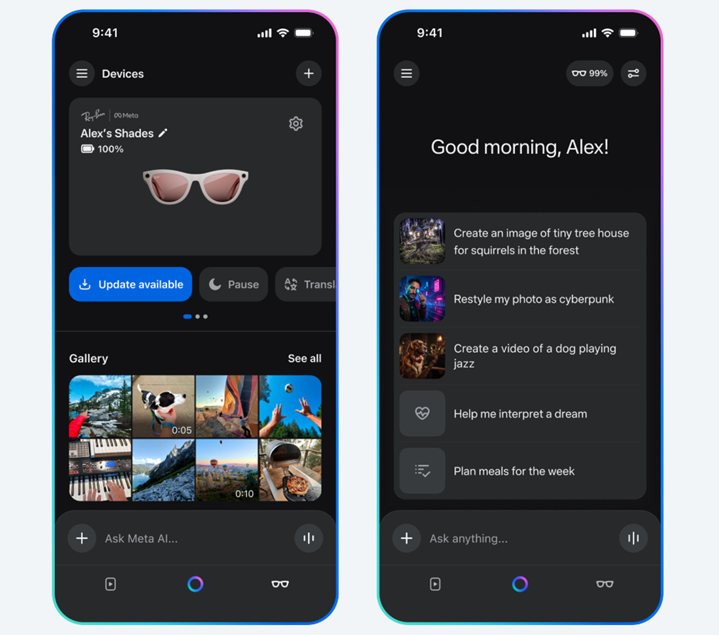
Manage AI Glasses with Meta AI. (Image credit – Meta)
Using the Meta AI assistant for inspiration, guidance, and new ideas
FAQs
Q1. What is Vibes in the Meta AI app?
Answer. Vibes is a new short-form AI video feed that lets users create, remix, and share AI-generated videos directly within the Meta AI app and on meta.ai.
Q2. What creative tools does Meta’s Vibes offer?
Answer. Users can start from scratch or remix existing clips, customise visuals and music, and share videos across Instagram, Facebook Stories, Reels, or via DMs.
Q3. Is Meta’s Vibes available globally?
Answer. Yes, Meta has begun rolling out Vibes worldwide, and all users are expected to gain access to the feature in the coming days.
Acerpure Nitro Gaming TV launch in India in 43″, 55″, 65″, and 75″ sizes.
These 4K QLED TVs offer 120Hz refresh rate, VRR, ALLM, MEMC, and AI Picture Quality for smooth, vibrant visuals.
Features – Plug-and-play Game Pad support, Dolby Atmos sound with up to 50W output, integrated subwoofer, Karaoke mode and Google TV 5.0 (Android 14) with Chromecast.
The price starts from ₹18,999 and is available exclusively on Flipkart.
Acerpure Nitro Gaming TVs come to India. (Image credit – Acerpure)
Acerpure India, a subsidiary of the Acer Group, has officially launched its new Nitro Series Gaming TVs in the Indian market. The lineup is available in four screen sizes, which includes 43-inch, 55-inch, 65-inch, and 75-inch, catering to different entertainment and gaming needs.
The Acerpure Nitro Gaming TVs are available exclusively on Flipkart with prices starting at ₹18,999.
Acerpure Nitro Gaming TV – Key Features
The Acerpure Nitro TVs feature 4K QLED displays with a resolution of 3840 x 2160 pixels. Designed for gamers and cinephiles alike, the panels support a 120Hz High-Speed Refresh Rate (HSR), Auto Low Latency Mode (ALLM), Variable Refresh Rate (VRR), and Motion Estimation Motion Compensation (MEMC) for stutter-free visuals and reduced input lag.
All models sport a bezel-less design, a wide 178-degree viewing angle, and brightness levels of up to 350 nits. Acerpure is offering a one-year warranty across the series.
With AI Picture Quality (AIPQ), the TVs automatically fine-tune brightness, sharpness, and contrast in real-time. The displays also support 1.07 billion colors, HDR10, Dolby Vision, and Filmmaker Mode, ensuring cinematic-grade accuracy without unwanted motion smoothing.
Caption – Acerpure Nitro Gaming TVs come with Dolby Vision and HDR10. (Image credit – Acerpure)
One of the highlights of the Nitro series is plug-and-play Game Pad support, which allows users to play games directly without needing a console. For connectivity, the TVs come with multiple ports including HDMI, USB, RJ45, Satellite Tuner, and a headphone jack. On the wireless front, they support dual-band Wi-Fi and Bluetooth.
The models also include built-in Chromecast for seamless casting and a remote finder feature to help locate the bundled remote easily.
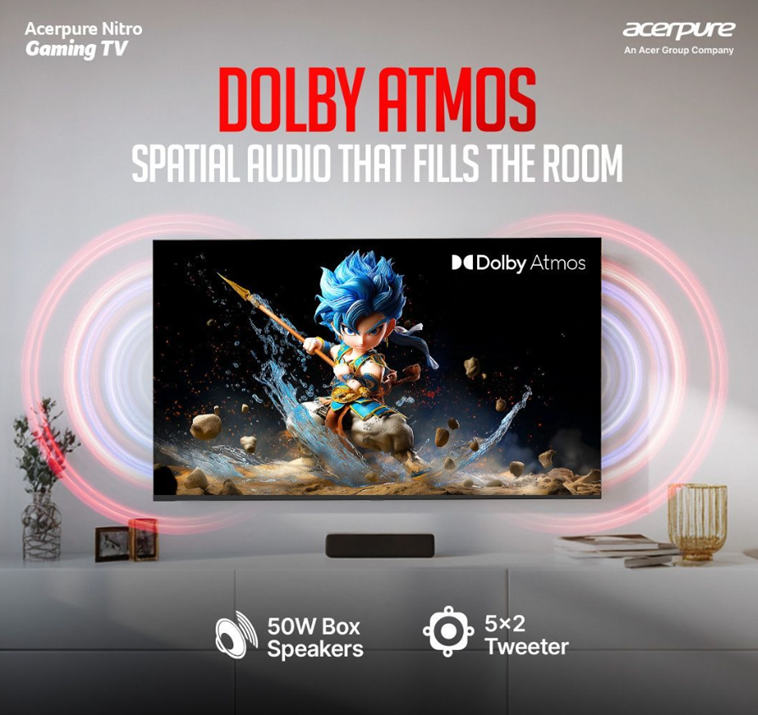
Acerpure Nitro Gaming TVs come with Dolby Atmos. (Image credit – Acerpure)
Audio quality is enhanced with up to 50W output, Dolby Atmos support, and an integrated subwoofer, depending on the model. There’s also a Karaoke mode for music lovers.
Running on Google TV 5.0 based on Android 14, the Nitro Gaming TVs offer smooth navigation, powered by 2GB RAM and 16GB storage. Users can also take advantage of Google Assistant voice controls.
FAQs
Q1. What display features do Acerpure Nitro Gaming TVs offer?
Answer. They come with 4K QLED panels supporting 120Hz refresh rate, VRR, ALLM, MEMC, Dolby Vision, HDR10, and AI Picture Quality for smooth and vibrant visuals.
Q2. Can I play games directly on Acerpure Nitro TVs without a console?
Answer. Yes, the Nitro series supports plug-and-play Game Pad functionality, allowing users to play games directly on the TV without needing a separate console.
Q3. What smart features and OS do these Acerpure Nitro Gaming TVs run on?
Answer. They run Google TV 5.0 based on Android 14, with built-in Chromecast, voice control via Google Assistant, and a remote finder feature for added convenience.
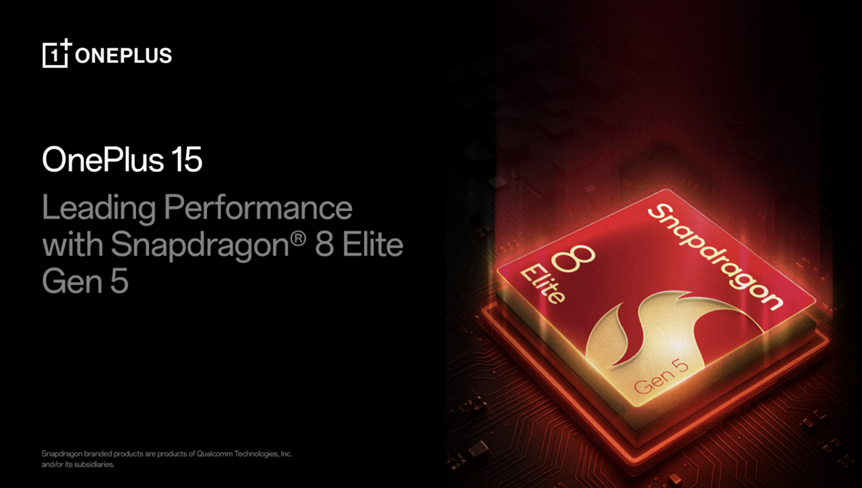
OnePlus 15 will debut in China in October 2025 with an India launch likely in November or December, featuring Snapdragon 8 Elite Gen 5.
It will introduce a 165Hz display with ultra-narrow bezels and the Fengchi Gaming Core for smoother gameplay, reduced latency, and better visuals.
The phone will equip the DetailMax image engine for lifelike photography and feature a flat screen with 1.15mm bezels and a sleek, comfort-focused design.
Last year, OnePlus introduced the OnePlus 13 in China in October 2024, followed by a global teaser in December and an international launch in January 2025. This time, the OnePlus 15 is confirmed to debut in China in October 2025.
However, the Indian teaser suggests that the device could launch earlier than expected, possibly in November or December. If it turns out to be true, this would reduce the usual gap between China and global rollouts.
OnePlus 15 – What We Know So Far?
The OnePlus 15 won’t just be about raw performance. It will also feature the brand’s DetailMax image engine, which uses advanced algorithms and processing power to produce sharper, clearer, and more natural-looking photographs. While full camera specs remain under wraps, the emphasis is on lifelike imaging and enhanced detail reproduction.
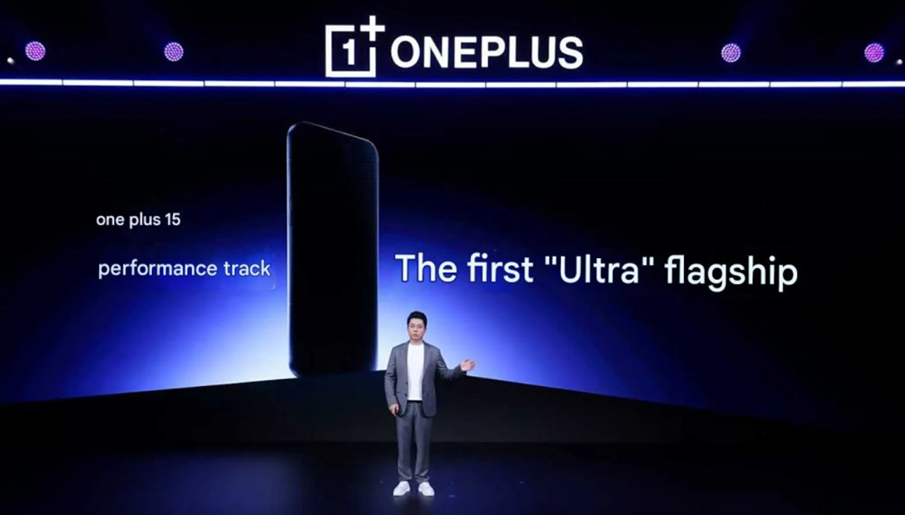
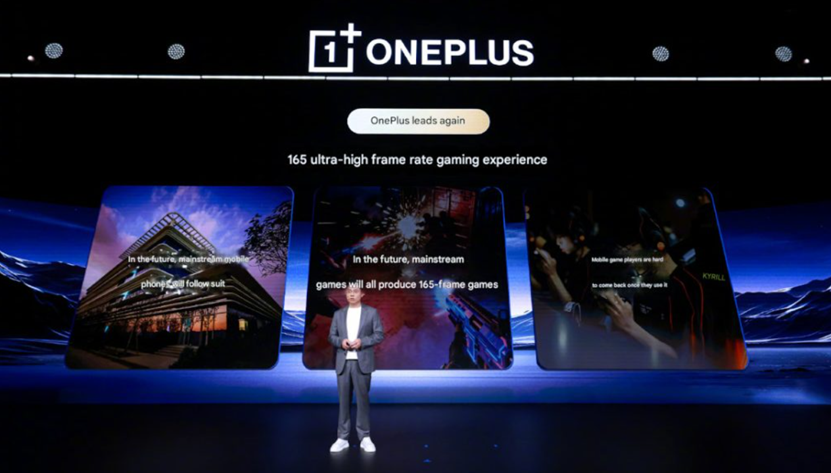
At the recent OnePlus Gaming Conference 2025, the company doubled down on its gaming ambitions, unveiling its 165Hz ultra-high frame rate ecosystem. This will make its debut with the OnePlus 15 and the OnePlus Ace 6, delivering the smoothest mobile gaming experience yet. OnePlus also confirmed that future smartphones will adopt 165Hz high-refresh-rate displays as standard across its lineup.
Interestingly, while gaming phones like the ROG Phone 6 introduced 165Hz displays years ago, OnePlus is positioning this feature as a mainstream performance benchmark. The jump from 120Hz to 165Hz brings measurable improvements, including –
Reduced frame refresh interval from 8ms to 6ms.
10ms lower full-link operation and picture delay.
27% decrease in picture ghosting.
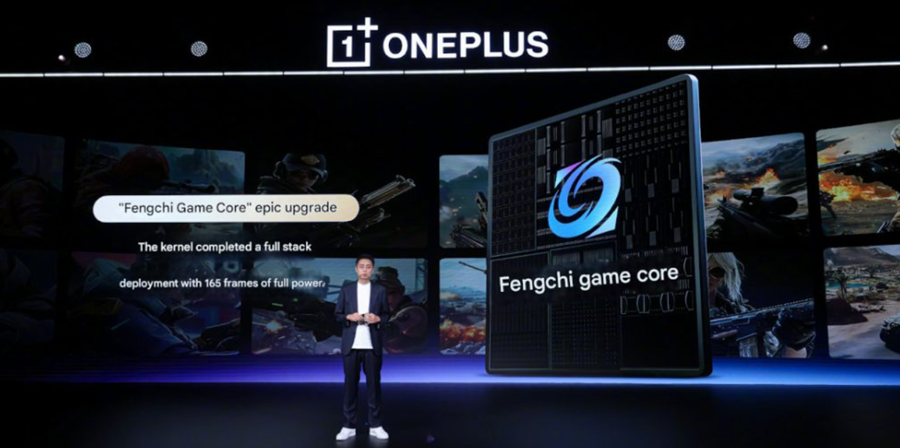
Caption – OnePlus 15 features an upgraded Fengchi Gaming Core. (Image credit – OnePlus)
At the core of these advancements lies the upgraded Fengchi Gaming Core, which now integrates the CPU, GPU, and NPU for better synergy. Key upgrades include –
Open CPU Architecture – allowing precise energy optimisation for heavy workloads.
GPU Image Enhancement – improving visuals in translucent and complex scenes.
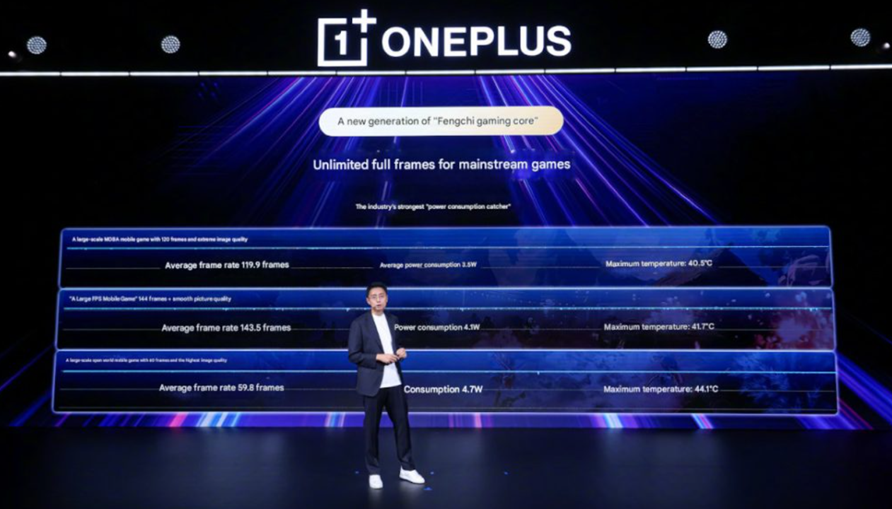
Performance gains are significant with 29.8% better scheduler efficiency, 15.6% reduced core load, and an 11.7% drop in overall power consumption.
Caption – OnePlus 15 features an upgraded Fengchi Gaming Core. (Image credit – OnePlus)
In real-world testing, OnePlus demonstrated the demanding title Delta Operation running stably at 165 FPS on ultra-high settings. The company has also partnered with developers to optimise a first batch of esports-ready titles including Call of Duty Mobile and League of Legends Mobile across FPS, MOBA, and other genres.
Highlighting the benefits, OnePlus China head Louis Jie stated, “The 165Hz frame rate will significantly improve gaming precision. This allows players to detect enemies earlier in FPS games, observe wild monster movements more easily in MOBAs, and capture actions with pinpoint accuracy in fighting games.”
To complement the visuals, OnePlus has enhanced its “esports three-core” hardware solution, improving network stability and touch responsiveness for competitive gameplay.
Design Teaser and Display Details
Earlier this week, OnePlus revealed the display design of the OnePlus 15. The phone will feature 1.15mm ultra-narrow bezels on all four sides with no noticeable chin. Its flat screen, slim bezels, and large rounded corners promise a balanced mix of aesthetics and comfort.
While full details on the battery, charging speeds, and camera sensors are yet to be disclosed, more specifications are expected as the launch nears. For those wondering about the missing OnePlus 14, the company has officially skipped the moniker, moving directly from the OnePlus 13 to the OnePlus 15.
FAQs
Q1. What processor will power the OnePlus 15?
Answer. The OnePlus 15 will feature Qualcomm’s Snapdragon 8 Elite Gen 5 chipset, placing it in direct competition with other flagship devices like the Realme GT 8 Pro and iQOO 15.
Q2. What display and gaming features will the OnePlus 15 offer?
Answer. It will debut a 165Hz ultra-high refresh rate display with 1.15mm bezels, powered by the upgraded Fengchi Gaming Core for smoother visuals, lower latency, and optimised performance.
Q3. What is the DetailMax image engine in the OnePlus 15?
Answer. DetailMax is OnePlus’s advanced imaging algorithm designed to deliver sharper, more natural-looking photos with enhanced detail reproduction across various lighting conditions.
iQOO 15 will debut in India soon featuring the Snapdragon 8 Elite Gen 5 chipset.
It is expected to offer 6.85″ 2K AMOLED display (144Hz), up to 16GB RAM, 1TB storage, 7,000mAh battery, 100W/50W fast charging, 50MP rear cameras and OriginOS 6.
iQOO has not yet revealed whether the device will debut in October or November.
iQOO 15 render. (Image credit – iQOO)
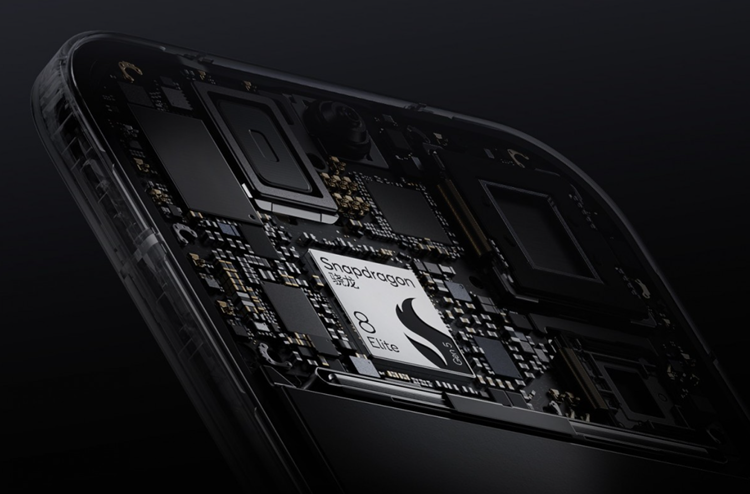
iQOO has officially confirmed that the iQOO 15 will launch in India soon. The brand had already announced an October unveiling in China and now its Indian division has revealed that the phone will also make its way to the country. A new teaser poster from iQOO India confirms that the upcoming flagship will be powered by Qualcomm’s Snapdragon 8 Elite Gen 5 chipset.
iQOO 15 new teaser for India confirms the processor. (Image credit – iQOO)
iQOO 15 – Design and Display
Although iQOO India hasn’t disclosed full specifications, details from the Chinese announcement have already surfaced. Official images shared earlier highlight the phone’s sleek rear design, while the new teaser poster showcases the front panel with ultra-thin bezels.
iQOO 15 display in a new teaser. (Image credit – iQOO)
Reports suggest that the iQOO 15 will sport a 6.85-inch Samsung AMOLED display with 2K resolution and a 144Hz refresh rate, offering an immersive flagship-level viewing experience.
iQOO 15 – What Else We Know?
Under the hood, the device will be powered by the Snapdragon 8 Elite Gen 5 SoC, paired with up to 16GB RAM and up to 1TB of internal storage. The phone is also expected to pack a massive 7,000mAh battery with 100W wired fast charging and 50W wireless charging support, making it one of the most powerful flagships in terms of endurance.
The iQOO 15 is rumoured to feature a triple rear camera setup, led by three 50MP sensors including a periscope telephoto lens for enhanced zoom performance. On the software side, it will run on OriginOS 6 based on Android 16.
Other highlights include a Q3 gaming chip, a new x-axis vibration motor and satellite communication support, positioning the device as a performance-driven flagship for gamers and power users alike.
Considering the processor choice, iQOO 15 will most likely be in direct competition with the Realme GT 8 Pro. The Realme phone was recently confirmed as India’s first smartphone to feature the same Snapdragon 8 Elite Gen 5 processor. While the India launch is confirmed, iQOO has not yet revealed whether the device will debut in October or November.
FAQs
Q1. What processor will power the iQOO 15 in India?
Answer. The iQOO 15 will feature Qualcomm’s Snapdragon 8 Elite Gen 5 chipset, making it one of the first flagships in India with this top-tier processor.
Q2. What display and battery specs are expected for the iQOO 15?
Answer. It’s rumoured to have a 6.85-inch 2K Samsung AMOLED display with a 144Hz refresh rate, and a 7,000mAh battery supporting 100W wired and 50W wireless charging.
Q3. What camera setup and software will the iQOO 15 offer?
Answer. The phone is expected to include three 50MP rear cameras (including a periscope lens) and run OriginOS 6 based on Android 16.
Microsoft Surface Pro 12-Inch (2025) launch in India at the starting price of ₹90,999.
It is a lightweight 2-in-1 device (686g) with a 12″ PixelSense LCD touchscreen, 90Hz refresh rate, strengthened glass, and detachable keyboard for flexible use.
Features – Snapdragon X Plus with 45 TOPS AI NPU, 16GB RAM, up to 512GB storage, 16-hour battery life, Dolby Atmos audio, and dual cameras (10MP rear, 1080p front).
Pre-orders until Oct 5 include a free Surface Pro Keyboard worth ₹15,199.
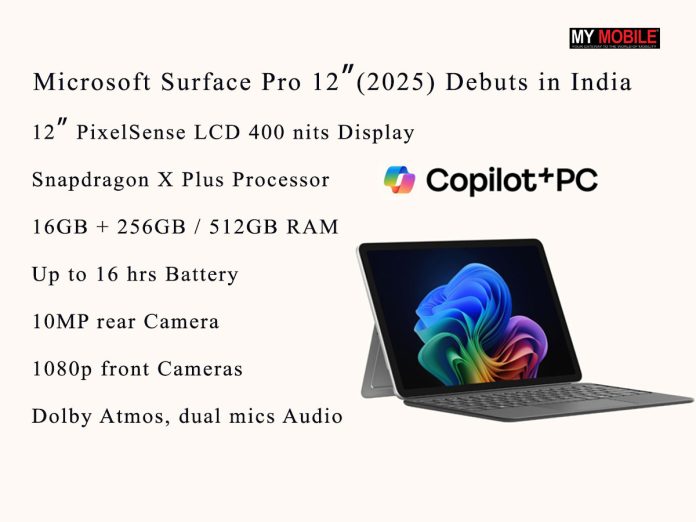
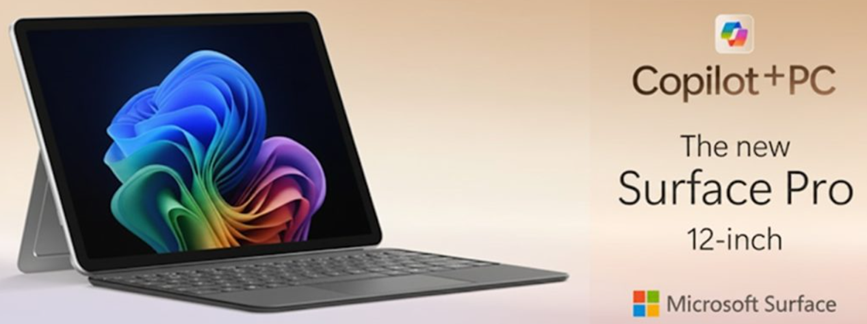
Microsoft Surface Pro 12-Inch (2025).
Microsoft has started pre-orders in India for its new Microsoft Surface Pro 12-inch (2025). It is part of the Copilot+ PC lineup introduced earlier this year. The lightweight 2-in-1 device weighs just 686g and features a 165° full-friction kickstand along with a detachable Surface Keyboard, allowing users to seamlessly switch between tablet and laptop modes. Here’s more on the newly launched device.
Microsoft Surface Pro 12-Inch – Key Features
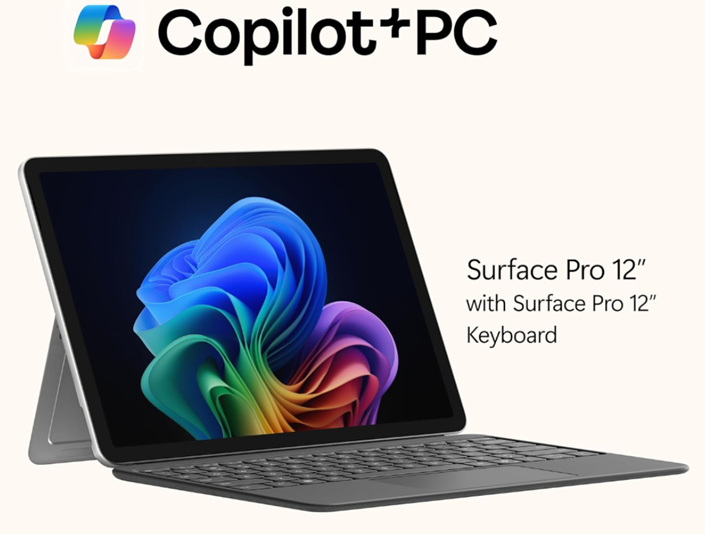
Microsoft Surface Pro 12-Inch (2025).
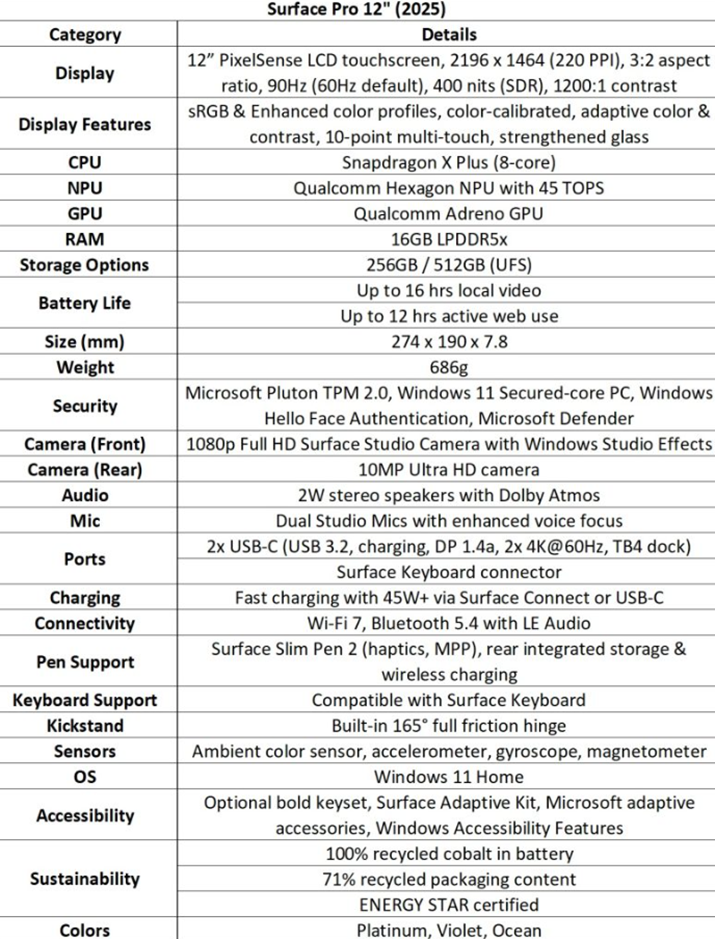
The Surface Pro 12-inch comes with a 12-inch PixelSense LCD touchscreen offering a resolution of 2196 x 1464 pixels at 220 PPI. It has a 3:2 aspect ratio, supports a 90Hz refresh rate (60Hz by default), 400 nits SDR brightness, and a 1200:1 contrast ratio. The screen also includes sRGB and enhanced colour profiles, colour calibration, adaptive colour and contrast, 10-point multi-touch, and strengthened glass for added durability.
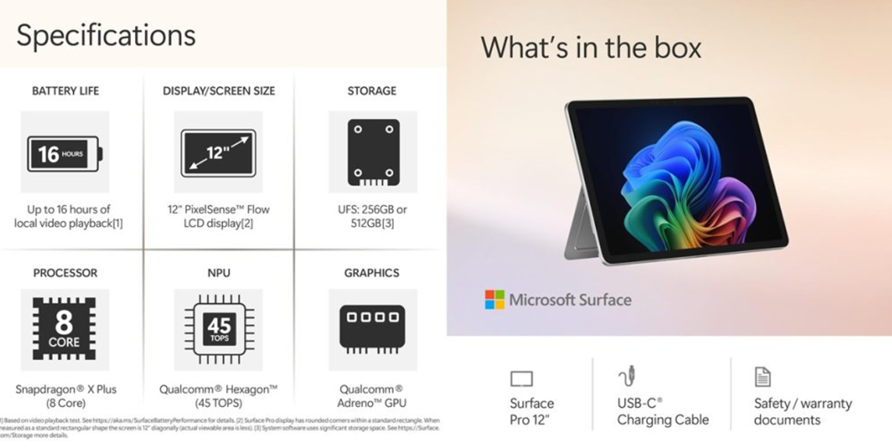
Powered by the Snapdragon X Plus 8-core processor, the device integrates a Qualcomm Hexagon NPU delivering 45 TOPS of AI performance, alongside a Qualcomm Adreno GPU. It comes with 16GB LPDDR5x RAM and 256GB or 512GB UFS storage options.
Battery life is rated at up to 16 hours of local video playback or 12 hours of active web usage. The device measures 274 x 190 x 7.8 mm, making it slim and portable.
For security, the Surface Pro 12-inch includes Microsoft Pluton TPM 2.0, Windows 11 Secured-core PC, Windows Hello Face Authentication, and Microsoft Defender.
It is equipped with a 1080p Full HD Surface Studio front camera with Windows Studio Effects, along with a 10MP Ultra HD rear camera. Audio is powered by 2W stereo speakers with Dolby Atmos and dual studio microphones with enhanced voice focus.
Microsoft Surface Pro 12-Inch (2025) key features.
Connectivity options include 2x USB-C ports (USB 3.2, charging, DP 1.4a, 2x 4K@60Hz, TB4 dock) and a Surface Keyboard connector. Charging is supported via Surface Connect or USB-C, both offering fast charging with 45W+ adapters.
Wireless connectivity features Wi-Fi 7 and Bluetooth 5.4 with LE Audio. The device also supports the Surface Slim Pen 2 with haptics, Microsoft Pen Protocol, rear integrated storage, and wireless charging.
The Surface Pro 12-inch includes sensors such as an ambient colour sensor, accelerometer, gyroscope, and magnetometer. It runs Windows 11 Home out of the box.
Accessibility features include an optional bold keyset, Surface Adaptive Kit, Microsoft adaptive accessories, and Windows Accessibility tools. In line with Microsoft’s sustainability goals, the device uses 100% recycled cobalt in the battery, comes with 71% recycled packaging, and carries an ENERGY STAR certification.
Microsoft Surface Pro 12-Inch – Pricing and Availability in India
Pre-orders are live on Amazon, Vijay Sales, and Croma until October 5, 2025. Customers who pre-order will receive a Surface Pro Keyboard worth ₹15,199 free of cost.
16GB + 256GB variant – ₹90,999
16GB + 512GB variant – ₹99,999
Available colour options include Platinum, Violet, and Ocean.
Microsoft Surface Pro 12-Inch (2025) specifications.
FAQs
Q1. What processor powers the Microsoft Surface Pro 12-Inch (2025)?
Answer. It runs on the Snapdragon X Plus 8-core processor with a Qualcomm Hexagon NPU delivering 45 TOPS of AI performance and an Adreno GPU for graphics.
Q2. What are the display specifications of the Microsoft Surface Pro 12-Inch?
Answer. The device features a 12-inch PixelSense LCD touchscreen with 2196 x 1464 resolution, 90Hz refresh rate, 400 nits brightness, and strengthened glass.
Q3. What is the battery life of the Microsoft Surface Pro 12-Inch?
Answer. Microsoft claims up to 16 hours of local video playback or 12 hours of active web usage on a single charge.
Q4. What Microsoft Surface Pro 12-Inch pre-order benefits are available in India?
Answer. Customers who pre-order by October 5, 2025, on Amazon.in, Vijay Sales, or Croma will receive a Surface Pro Keyboard worth ₹15,199 free of cost.
Q5. What are the pricing and storage options for the Microsoft Surface Pro 12-Inch?
Answer. The 16GB + 256GB variant is priced at ₹90,999, while the 16GB + 512GB model costs ₹99,999. Available colours include Platinum, Violet, and Ocean.
Xiaomi 17 launched as the first smartphone powered by Snapdragon 8 Elite Gen 5.
It features HyperOS 3, a 6.3″ display with 3,500 nits brightness, IP66/IP68/IP69 durability, massive 7,000mAh, triple rear camera setup (Light Hunter 950 + 50MP ultra-wide + 50MP telephoto) and 50MP front camera.
Xiaomi has officially launched the Xiaomi 17 in China. This lineup comes as the Chinese brand has skipped the “16” number branding in its latest premium flagship. The smartphone becomes the first device powered by Qualcomm’s Snapdragon 8 Elite Gen 5 chipset, which was unveiled earlier this week. Here’s everything you need to know about this standard Xiaomi 17 model of the 17 series, which also has Xiaomi 17 Pro and Xiaomi 17 Pro Max models.
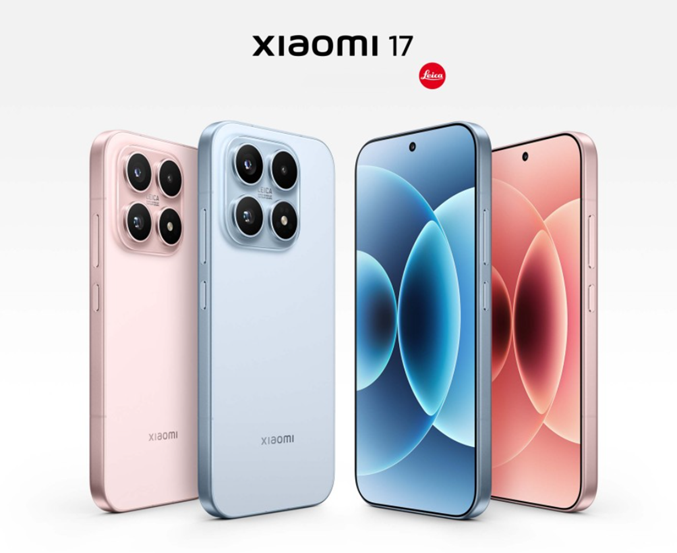
The Xiaomi 17 is designed to be sleek and lightweight, tipping the scales at 191g. It features a 6.3-inch flat display with ultra-thin 1.18mm bezels for an immersive viewing experience. The screen is protected by Xiaomi’s Dragon Crystal Glass and offers an impressive peak brightness of up to 3,500 nits.
In terms of durability, the handset carries IP66, IP68, and IP69 certifications, making it resistant to both dust and water. Xiaomi is also offering the phone in four colour options at launch.
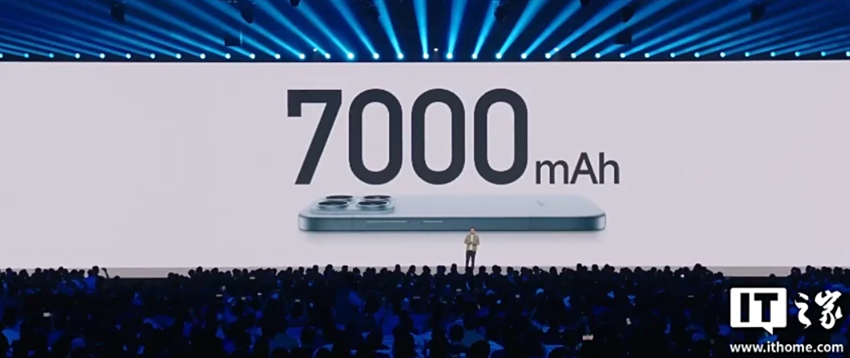
One of the standout highlights of the Xiaomi 17 is its 7,000mAh battery, a remarkable feat given the compact size of the device. Xiaomi claims this large battery can deliver over 12 hours of short-video playback, outperforming even the iPhone 17 when paired with a 5,000mAh magnetic power bank.
To ensure sustained performance, Xiaomi has implemented a new three-dimensional ring cold pump cooling system, which it says is three times more efficient than traditional vapour chambers. This advanced cooling solution is designed to keep the phone stable during extended gaming sessions and heavy AI-driven tasks.
Xiaomi 17 rear camera setup. (Image credit – Xiaomi)
The Xiaomi 17 is equipped with a triple rear camera system, featuring a 1/1.31-inch Light Hunter 950 primary sensor, a 50MP ultra-wide camera, and a 50MP telephoto lens. On the front, users get a 50MP selfie camera for high-quality photos and video calls.
Xiaomi 17 – Pricing and Availability
Xiaomi 17. (Image credit – Xiaomi)
The Xiaomi 17 is priced as follows –
12GB + 256GB – 4,499 yuan (approx. $630)
12GB + 512GB – 4,799 yuan (approx. $672)
16GB + 1TB – 4,999 yuan (approx. $700)
The smartphone launches alongside the Xiaomi 17 Pro and 17 Pro Max, but the standard model is aimed at users who prefer a lighter, compact flagship without compromising on performance.
Pre-orders are now open in China with sales scheduled to begin at 10:00 AM local time on September 27. While Xiaomi has yet to confirm a global release, the series is expected to roll out internationally in early 2026.
FAQs
Q1. What makes the Xiaomi 17 a standout flagship device?
Answer. It’s the first smartphone powered by Snapdragon 8 Elite Gen 5, featuring a sleek 191g design, 6.3″ display with 3,500 nits brightness, and IP66/IP68/IP69 durability.
Q2. How large is the battery in the Xiaomi 17 and what’s its performance claim?
Answer. The Xiaomi 17 packs a 7,000mAh battery, claimed to deliver over 12 hours of short-video playback, outperforming even the iPhone 17 when paired with a 5,000mAh power bank.
Q3. What camera setup does the Xiaomi 17 offer?
Answer. It includes a triple rear camera system: 1/1.31″ Light Hunter 950 sensor, 50MP ultra-wide, and 50MP telephoto lens. The front camera is a 50MP shooter for selfies and video calls.
Q4. What are the Xiaomi 17 pricing options and availability?
Answer. Prices start at ¥4,499 ($700) for 16GB + 1TB. Pre-orders are open in China, with global rollout expected in early 2026.
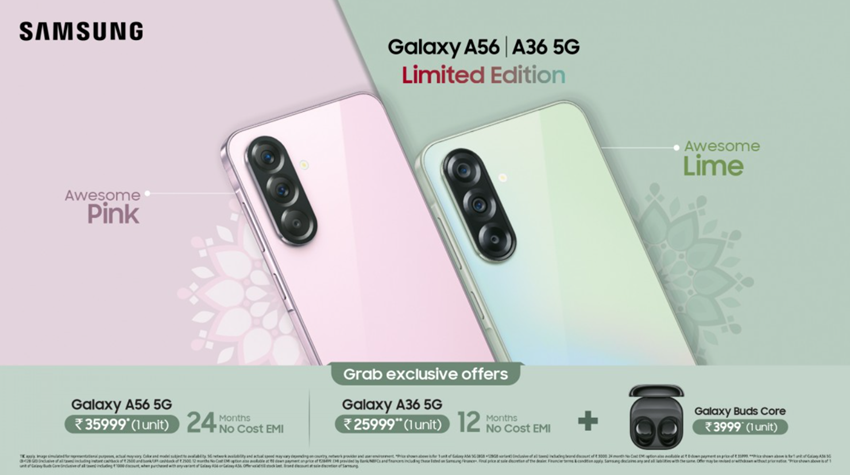
Galaxy A56 5G now comes in Awesome Pink, and Galaxy A36 5G adds Awesome Lime to its palette.
A56 5G starts at ₹35,999 with up to ₹4,000 bank discount and 24-month EMI, A36 5G starts at ₹25,999 with ₹5,000 off with EMI options and A06 5G is priced at ₹9,899 with a discounted 25W adapter.
Galaxy Buds Core available at ₹3,999 with select A-series phones.
Samsung announces new colours of select A-series phones and discounted offers. (Image credit – Samsung)
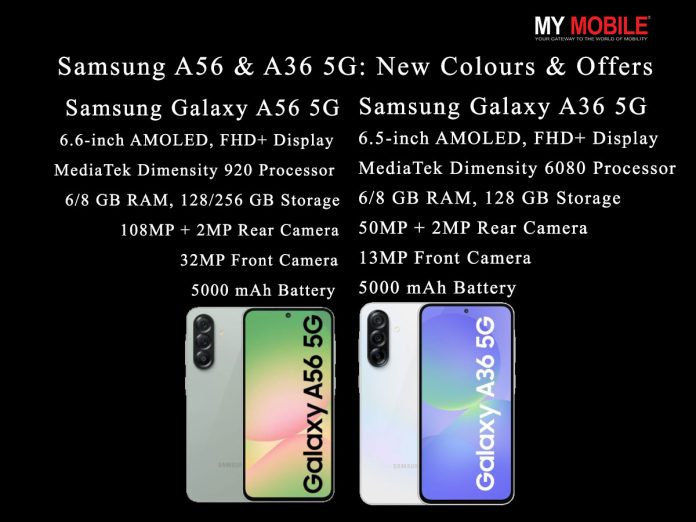
Both devices now offer a wider range of colours for buyers. Previously, the Galaxy A56 5G was launched in Awesome Olive, Awesome Light Grey, and Awesome Graphite, while the Galaxy A36 5G was already available in Awesome Lavender, Awesome Black, and Awesome White.
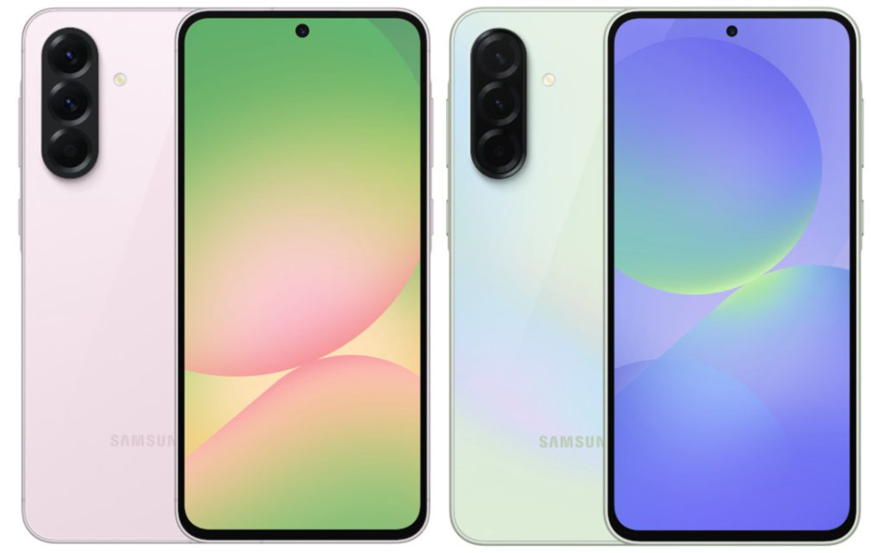
Samsung Galaxy A56 5G and Galaxy A36 5G new colours. (Image credit – Samsung)
The Galaxy A56 5G is now available in a fresh Awesome Pink shade, while the Galaxy A36 5G comes in a new Awesome Lime finish.
Samsung A-Series Festive Offers
Samsung is also rolling out attractive festive offers and financing plans across its Galaxy A series lineup for a limited period.
Galaxy A56 5G
Starting price ₹35,999
Buyers can avail an instant bank discount of up to ₹4,000
No-cost EMI options for up to 24 months, bringing the effective cost down to just ₹50 per day
Galaxy A36 5G
Starting price ₹25,999
Limited-time discount of ₹5,000
Customers can also opt for no-cost EMI, making the cost roughly ₹40 per day
Galaxy A17 5G
Priced at ₹17,999
NBFC finance options up to 10 months or a ₹1,000 cashback via bank or UPI payments.
Galaxy A06 5G
Available at a special festive price of ₹9,899.
Buyers can also get the Samsung 25W travel adapter (originally priced at ₹1,399) for just ₹299.
Apart from the above-mentioned offers, Samsung is also offering some discounts on select accessories. Customers purchasing the Galaxy A56 5G, Galaxy A36 5G, Galaxy A26 5G, or Galaxy A17 5G can bundle the Galaxy Buds Core for ₹3,999, down from the original price of ₹4,999.
FAQs
Q1. What new colours are available for the Galaxy A56 5G and A36 5G?
Answer. The Galaxy A56 5G now comes in Awesome Pink, while the Galaxy A36 5G adds a new Awesome Lime variant to its lineup.
Q2. What festive offers are available on the Galaxy A56 5G and A36 5G?
Answer. Galaxy A56 5G starts at ₹35,999 with up to ₹4,000 bank discount and 24-month no-cost EMI. Galaxy A36 5G starts at ₹25,999 with ₹5,000 off and EMI options.
Q3. Are there any accessory deals during the festive season on Samsung phones?
Answer. Yes, buyers of select A-series models can bundle Galaxy Buds Core for ₹3,999 (down from ₹4,999). A06 5G buyers get a 25W adapter for ₹299.
Xiaomi 17 Pro and 17 Pro Max launched feature a main AMOLED screen of 6.3″ on Pro, 6.9″ 2K on Pro Max.
Both phones are Snapdragon 8 Elite Gen 5 with up to 16GB RAM and 1TB storage. Leica-tuned triple rear cameras (50MP x3) and 50MP front camera deliver flagship-grade imaging.
Xiaomi 17 Pro Max packs a 7,500mAh battery, while the Pro has 6,300mAh.
Both support 100W wired and 50W wireless charging, running HyperOS 3 with HyperIsland UI.
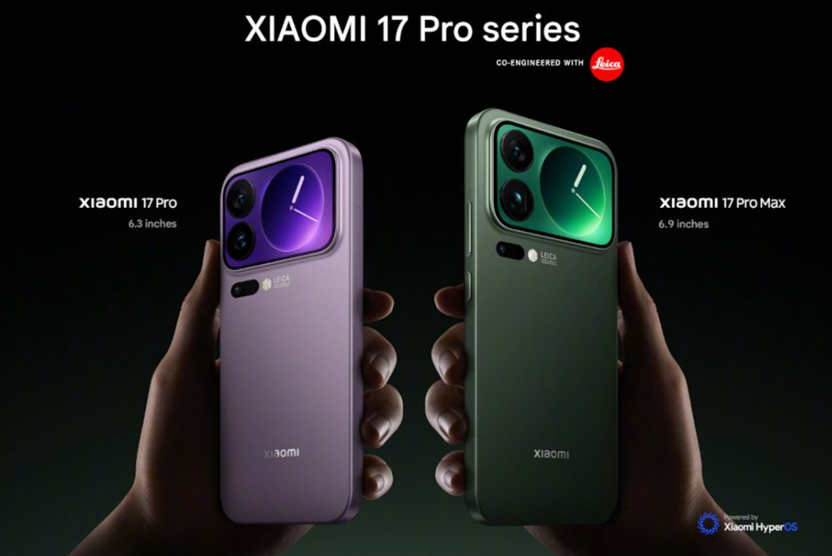
Xiaomi 17 Pro and 17 Pro Max debut in China. (Image credit – Xiaomi)
A key highlight is the addition of a secondary rear display that wraps around the camera module, while photography is handled by Leica-tuned triple rear cameras. The top-end Xiaomi 17 Pro Max also gets a 2K display and 100W wired fast charging support. Here’s everything we know about the new phones.
Xiaomi 17 Pro and 17 Pro Max – Price and Variants
The Xiaomi 17 Pro Max starts at CNY 5,999 (approx. Rs. 74,700) for the 12GB + 512GB model. The 16GB + 512GB option is priced at CNY 6,299 (approx. Rs. 78,500), while the 16GB + 1TB version costs CNY 6,999 (approx. Rs. 87,200).
Xiaomi 17 Pro and 17 Pro Max. (Image credit – Xiaomi)
The Xiaomi 17 Pro begins at CNY 4,999 (approx. Rs. 62,300) for the 12GB + 256GB configuration. Other models include 12GB + 512GB at CNY 5,299 (approx. Rs. 66,000), 16GB + 512GB at CNY 5,599 (approx. Rs. 69,700), and 16GB + 1TB at CNY 5,999 (approx. Rs. 74,700).
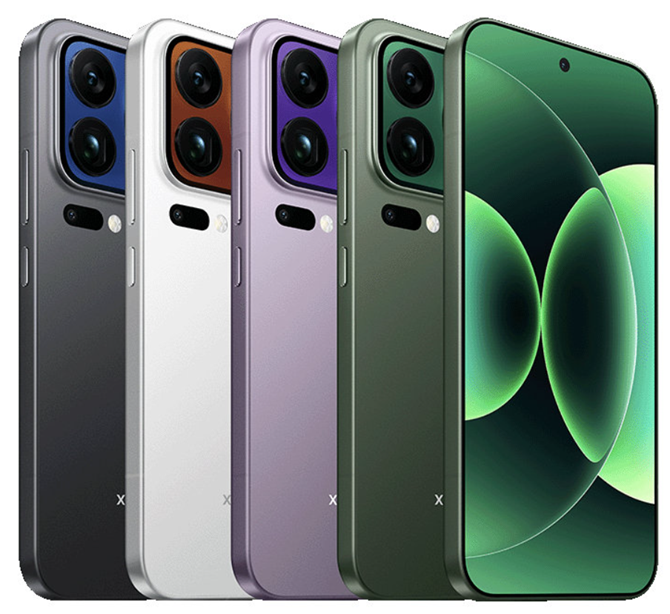
Both smartphones are offered in Black, Cold Smoke Purple, Forest Green, and White colour options.
Xiaomi 17 Pro and 17 Pro Max – Key Features
The Xiaomi 17 Pro Max features a 6.9-inch 2K display with Xiaomi Dragon Crystal Glass protection, while the Xiaomi 17 Pro comes with a slightly smaller 6.3-inch display. Both devices also include secondary M10 displays on the back with 3,500 nits peak brightness.
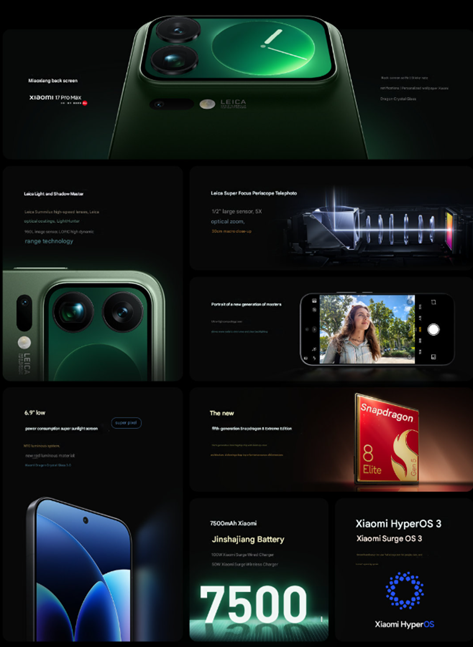
Xiaomi 17 Pro and 17 Pro Max feature a “Magic Back Screen”. (Image credit – Xiaomi)
This rear display is dubbed the “Magic Back Screen” and can be used for multiple functions such as setting alarms, generating AI portraits and AI pets, and previewing selfies taken with the rear camera. It also supports the “Post-it Notes” feature that lets users pin reminders or important information on the back screen.
With a compatible case, the phones can even be transformed into a handheld gaming console.
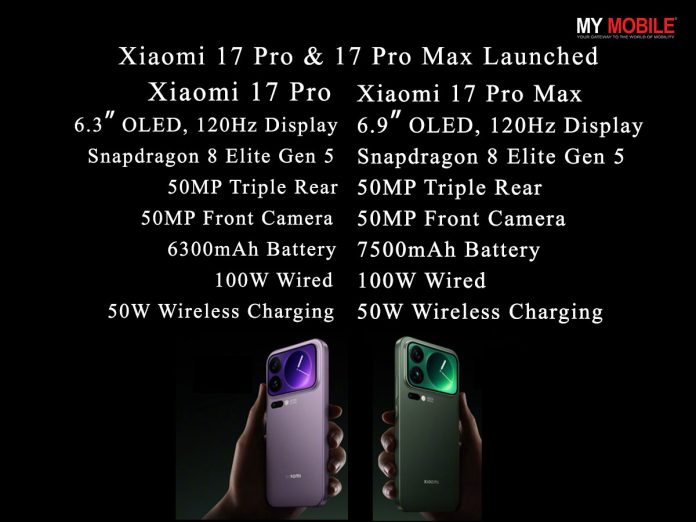
Xiaomi 17 Pro (left) and Xiaomi 17 Pro Max (right) key features. (Image credit – Xiaomi)
Both Pro models are equipped with the 3nm Snapdragon 8 Elite Gen 5 chipset, paired with up to 16GB RAM and 1TB storage. They run on HyperOS 3, which introduces a HyperIsland feature similar to Apple’s Dynamic Island.
The Xiaomi 17 Pro Max and Xiaomi 17 Pro come with Leica-tuned triple rear cameras. The setup includes a 50MP Light Hunter 950L primary sensor, a50MP ultrawide lens, and a 50MP periscope telephoto camera with 5x optical zoom. On the front, both smartphones house 50MP selfie cameras for photography and video calls.
The Xiaomi 17 Pro Max packs a 7,500mAh battery, while the Xiaomi 17 Pro is backed by a 6,300mAh unit. Both models support 100W wired fast charging and 50W wireless charging.
Each handset measures 8mm in thickness and weighs 192g. For security, they include in-display fingerprint scanners. Connectivity options cover 5G, 4G, Wi-Fi, Bluetooth, GPS, NFC, USB Type-C, and even UWB (ultra-wideband technology).
Xiaomi 17 Pro and 17 Pro Max – Specifications
Xiaomi 17 Pro
Xiaomi 17 Pro Max
Display
6.3-inch (2656 x 1220 pixels) 1.5K M10 12-bit OLED 20:9 LTPO display, 1-120Hz variable refresh rate, up to 3500 nits peak brightness, 5,000,000:1 (Min) contrast ratio, HDR10+, Dolby Vision, 1920Hz PWM Dimming, DC Dimming, Xiaomi Shield Glass
6.9-inch (2608 x 1200 pixels) 1.5K M10 12-bit OLED 20:9 LTPO display, 1-120Hz variable refresh rate, up to 3500 nits peak brightness, 5,000,000:1 (Min) contrast ratio, HDR10+, Dolby Vision, 1920Hz PWM Dimming, DC Dimming, Xiaomi Shield Glass 3.0
Back display
2.7-inch (904 x 572 pixels) 120Hz AMOLED display, up to 3500 nits peak brightness, DC Dimming,
17 Pro Max – 2.9-inch (976 x 596 pixels) 120Hz AMOLED display, up to 3500 nits peak brightness, DC Dimming
Hardware
Octa Core Snapdragon 8 Elite Gen 5 3nm Mobile Platform with Adreno 840 GPU
Octa Core Snapdragon 8 Elite Gen 5 3nm Mobile Platform with Adreno 840 GPU
50MP rear camera with 1/1.31″ Light Fusion 950L sensor, f/1.67 aperture, Hyper OIS, LED flash, Leica Summilux lens, 50MP 102° Leica ultra-wide angle lens with f/2.4 aperture, 5cm macro, 50MP 5X Infinity Leica periscope telephoto camera with f/3.0 aperture, 20cm telemacro
50MP rear camera with 1/1.31″ Light Fusion 950L sensor, f/1.67 aperture, Hyper OIS, LED flash, Leica Summilux lens, 50MP 102° Leica ultra-wide angle lens with f/2.4 aperture, 5cm macro, 50MP 5X Leica periscope telephoto camera with f/2.6 aperture, 30cm telemacro
Front Camera
50MP front-facing camera with f/2.2 aperture, 4K 60 fps video recording
50MP front-facing camera with f/2.2 aperture, 4K 60 fps video recording
Dimensions
151.1×71.8x8mm; Weight: 192g
162.9×77.6x8mm; Weight: 219g
Battery
6300mAh
7500mAh
Charging
100W wired fast charging, 50W wireless charging, magnetic charging, 22.5W wired and wireless reverse charging
100W wired fast charging, 50W wireless charging, magnetic charging, 22.5W wired and wireless reverse charging
FAQs
Q1. What is the standout feature of the Xiaomi 17 Pro and 17 Pro Max?
Answer. Both phones feature a secondary rear “Magic Back Screen” that wraps around the camera module, enabling AI portraits, reminders, selfie previews, and gaming functions.
Q2. What chipset powers the Xiaomi 17 Pro series?
Answer. They are equipped with the 3nm Snapdragon 8 Elite Gen 5 processor, paired with up to 16GB RAM and 1TB storage, running HyperOS 3 based on Android 16.
Q3. What are the camera specifications of Xiaomi 17 Pro and 17 Pro Max?
Answer. Each model includes Leica-tuned triple rear cameras: 50MP primary, 50MP ultrawide, and 50MP periscope telephoto with 5x optical zoom. The front camera is also 50MP.
Q4. How do the displays differ between the Xiaomi 17 Pro and Pro Max?
Answer. The Xiaomi 17 Pro Max has a 6.9-inch 2K display with Dragon Crystal Glass, while the 17 Pro features a 6.3-inch display. Both include a rear M10 display with 3,500 nits brightness.
Q5. What are the battery and charging capabilities of Xiaomi 17 Pro and 17 Pro Max?
Answer. Xiaomi 17 Pro Max packs a 7,500mAh battery; the Pro has 6,300mAh. Both support 100W wired and 50W wireless fast charging.
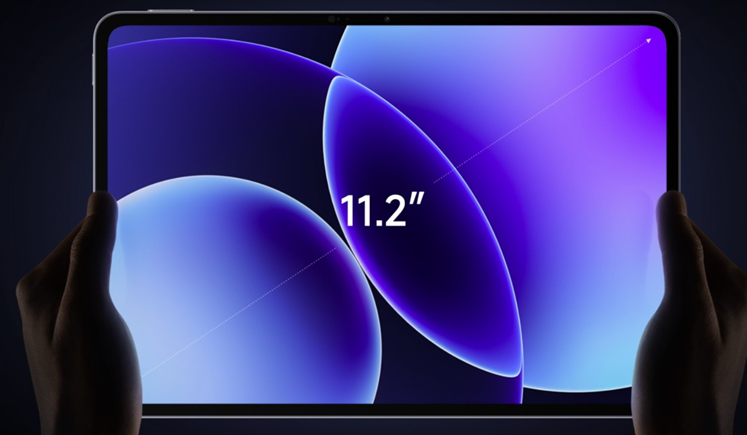
Xiaomi Pad 8 and Pad 8 Pro launched featuring the same 11.2-inch 3.2K LCD, Dolby Atmos speakers, side fingerprint scanners, and a slim 5.75mm design running HyperOS 3 (Android 16).
The Pad 8 uses Snapdragon 8s Gen 4 with up to 12GB RAM, while the Pad 8 Pro packs Snapdragon 8 Elite with up to 16GB RAM and 512GB storage.
Prices range starts from ¥2,199 (₹27,370) for Pad 8 base model to ¥4,099 (~₹51,014) for Pad 8 Pro.
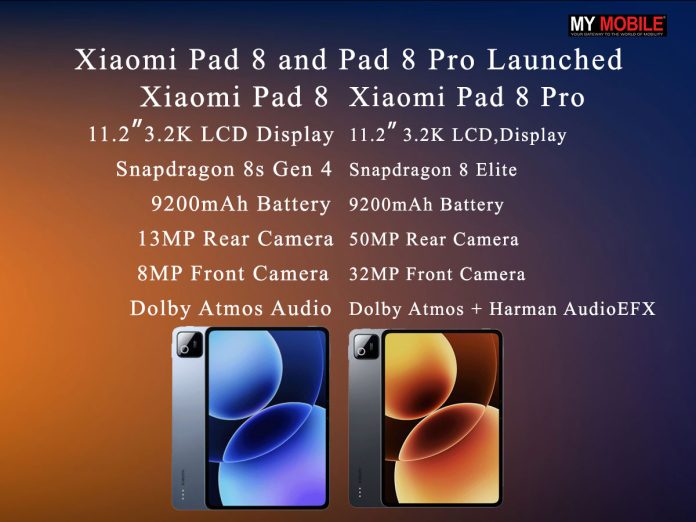
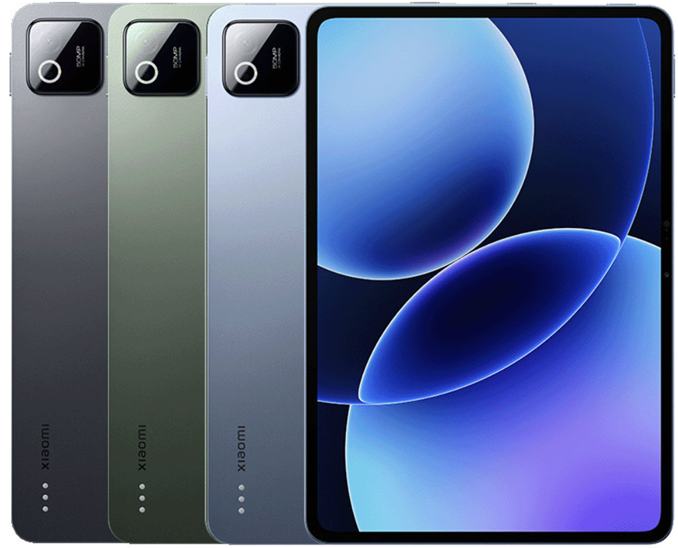
Xiaomi Pad 8 and Pad 8 Pro launched with near-identical specs. (Image credit – Xiaomi)
Xiaomi’s latest launch event wasn’t just about the Xiaomi 17 series smartphones. But that’s not all, the company also unveiled its brand-new tablets, the Xiaomi Pad 8 and Xiaomi Pad 8 Pro. Here’s more on both the newly launched tablets.
Xiaomi Pad 8 and Pad 8 Pro – Key Features
Both Xiaomi Pad 8 and Pad 8 Pro feature the same 11.2-inch LCD display with 3.2K resolution, 144Hz refresh rate. (Image credit – Xiaomi)
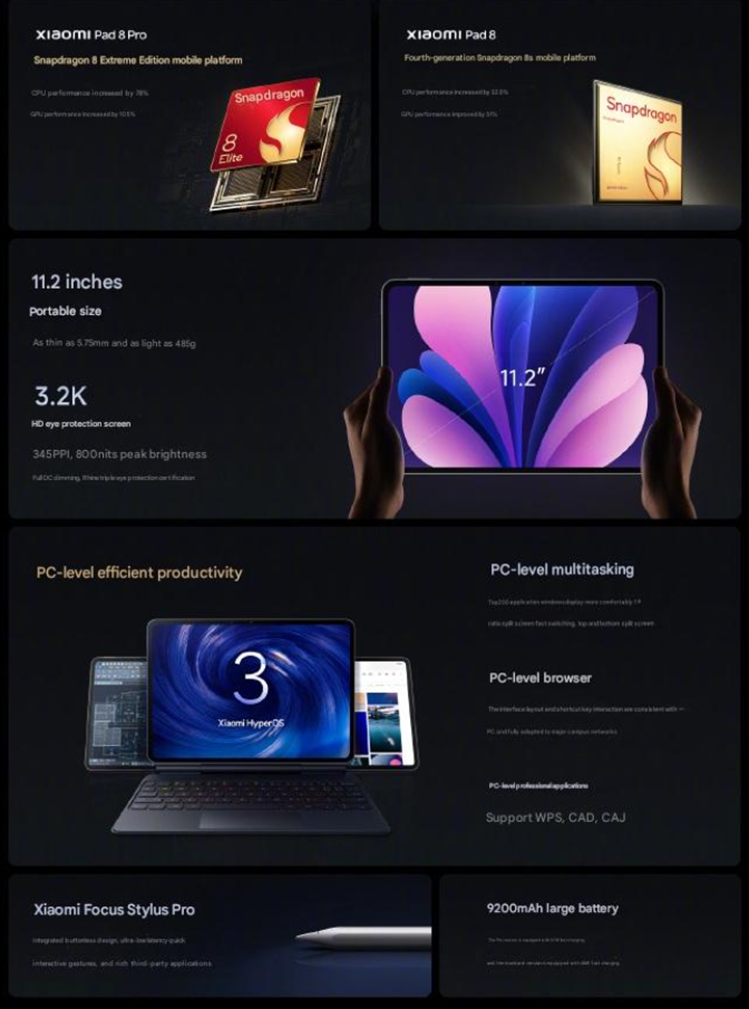
Both tablets share several similarities including an 11.2-inch LCD display with 3.2K resolution, 144Hz refresh rate and up to 800 nits peak brightness. The panel also supports HDR10, HDR Vivid, Dolby Vision, and full DC dimming for smoother visuals.
Xiaomi is also offering a Matte Edition for both models featuring an AG texture coating that reduces screen reflections by up to 70%. For audio, the devices pack quad speakers with Dolby Atmos, while security is handled by a side-mounted fingerprint scanner. Powering them is a 9,200mAh battery with the standard Pad 8 supporting 45W fast charging and the Pro variant stepping up to 67W.
Caption – Both Xiaomi Pad 8 and Pad 8 Pro feature key specs explained. (Image credit – Xiaomi)
In terms of build, both models look identical, measuring 5.75mm in thickness and weighing 485g. They run on HyperOS 3 based on Android 16 and come with Wi-Fi 7, 5G, and Bluetooth 5.4 for connectivity.
Under the hood, the two models differ significantly. The Xiaomi Pad 8 is equipped with the Snapdragon 8s Gen 4 SoC, paired with up to 12GB RAM and 256GB storage. On the other hand, the Xiaomi Pad 8 Pro comes with the more powerful Snapdragon 8 Elite, offering up to 16GB RAM and 512GB storage.
For photography, the Pad 8 gets a 13MP rear camera and an 8MP front sensor, while the Pad 8 Pro upgrades this to a 50MP rear camera along with a 32MP selfie shooter.
Accessories
Caption – Compatible accessories available for Xiaomi Pad 8 and Pad 8 Pro. (Image credit – Xiaomi)
Xiaomi also introduced accessories for the new tablets. The Focus Touch Pen Proweighs 17.5g and features ultra-low latency, gesture controls (squeeze, double-tap, vertical slide), hover preview, realistic brush flow, and haptic feedback. It also supports third-party drawing and editing apps.
Alongside this, Xiaomi launched a floating keyboard that attaches magnetically and offers 0°–124° stepless angle adjustment, larger keycaps, a mechanical press touchpad, and a design that is durable and easy to clean.
Q1. What are the key display features of the Xiaomi Pad 8 and Pad 8 Pro?
Answer. Both tablets feature an 11.2-inch LCD display with 3.2K resolution, 144Hz refresh rate, HDR10, Dolby Vision, and up to 800 nits brightness. A Matte Edition reduces screen reflections by up to 70%.
Q2. How do the Xiaomi Pad 8 and Pad 8 Pro differ in performance?
Answer. The Pad 8 is powered by the Snapdragon 8s Gen 4 with up to 12GB RAM and 256GB storage, while the Pad 8 Pro uses the Snapdragon 8 Elite, offering up to 16GB RAM and 512GB storage.
Q3. What camera setups do the Xiaomi Pad 8 and Pad 8 Pro offer?
Answer. Xiaomi Pad 8 includes a 13MP rear and 8MP front camera. The Pad 8 Pro upgrades to a 50MP rear and 32MP front camera for enhanced photography.
Q4. What accessories are available for the Xiaomi Pad 8 series?
Answer. Xiaomi introduced the Focus Touch Pen Pro with gesture controls and haptic feedback, and a floating keyboard with magnetic attachment, adjustable angles, and a mechanical touchpad.
Q5. What is the price range for the Xiaomi Pad 8 and Pad 8 Pro?
Answer. Prices start at ¥2,199 (~₹27,370) for the Pad 8 and go up to ¥4,099 (~₹51,014) for the Pad 8 Pro with 16GB RAM and Nano Soft Light Edition.