Home Blog Page 1233

PlayShifu launches AI-powered product line Tacto

0

Leading early learning toy brand PlayShifu has launched the first-ever phygital (physical+digital) board games Tacto with four innovative products Tacto Chess, Tacto Classics, Tacto Coding and Tacto Laser that help merge essential skills with playtime. Built on innovative touch technology and AI, Tacto by PlayShifu turns your tablet into an interactive game where the player gets to use real figurines to drive the games on screen.

Tacto is the third flagship line from PlayShifu, the innovators behind Orboot and Plugo, with all products focusing on building a full spectrum of 20 foundational skills through fun and interactive gameplay. With global presence, the brand is carving a niche by going beyond STEM and STEAM, through the #PowerofPlay. In addition to their own website, PlayShifu sells in over 300 retail stores across India and aims to double their presence in the country, by the end of 2022.

“Tacto series is one of our best innovations for making toy time interesting for the digital-first Gen Alpha. We took nostalgic board games and brought them to the 21st century using technology. We are beyond thrilled to launch the 4 Tacto products in India,” said Co-founder and CEO Vivek Goyal.

“We are manufacturing all our 3 product lines (Orboot, Plugo, Tacto) here in India to meet the growing demands for our innovative and educational products. With the launch of Tacto, and among other retail and online efforts, we aim to achieve 100% growth in sales in FY23 over FY22,” added Co-founder Dinesh Advani.

With real figurines and digital games, Tacto Chess offers the easiest way to learn chess with detailed learning mode, mini puzzles, and story-based themes. Tacto Coding makes learning visual for early learners through story-based games. Tacto Classics makes nostalgic board games like Checkers, Ludo, and Snakes & Ladders interesting and engaging for Gen Alpha. Tacto Laser encourages players to use principles of light like reflection and refraction to solve brain-teasing puzzles.

This highly-anticipated and innovative Tacto line enables children as young as four to develop essential early learning skills like logical reasoning, problem-solving, strategic thinking, working memory and more. The Tacto game sets are available on the PlayShifu website, Amazon, and multiple retail stores. Also, Hamleys India is featuring Tacto Coding as one of its Top 10 toys for December.

Each Tacto set is priced at Rs 1,999 and comes with a unique set of figurines and anti-slip frames that hold your tablet securely. All four gaming sets are compatible with a range of tablets (iOS and Android) and work with the free Tacto app that has 3 or more story-based games with hundreds of levels for each product.

TCL partners with MyGlammFilmfare OTT Awards 2021 as Associate Sponsor

0

Television manufacturer TCL aims to provide the customers with a cinematic experience at home with their range of televisions featuring the latest technology. In its mission to upscale home entertainment, TCL has now joined hands with Filmfare for MyGlammFilmfare OTT Awards 2021 as the Associate Sponsor.

Over the last few years, OTT platforms have dominated the world of Indian entertainment that has also led to TV manufacturers focusing more on offering products that can suit the modern content type. The post lockdown period has given more power and value to home entertainment. TCL too recognized this transformation and joined hands with Filmfare to honour the OTT talents.

Filmfare Awards have acknowledged and recognized cinematic excellence in the mainstream film business for over six decades, and the launch of the second edition sees the brand carry on its heritage into the digital entertainment sphere.

As a testament to its philosophy of #CreativeLife, the brand together with Filmfare will honour the finest talents on the OTT platform and promote entertaining creativity.

Mike Chen, General Manager, TCL India said, “We at TCL are utterly excited and proud to partner with Filmfare for this exciting and creative venture. We have always been working towards creating and innovating products that can make the life of people easy and add more entertainment to it. Similarly, Filmfare also acknowledges OTT talents especially those who have taken up the arduous task to keep people entertained even in difficult times. The second edition of the Filmfare OTT Awards will celebrate the spirit of victory of entertainment, and we look forward to honouring artists and content that havestruck a chord with the audiences.”

Deepak Lamba, the CEO of Worldwide Media said, “Given the legacy, Filmfare Awards has always been at the forefront of celebrating artistic brilliance across the Indian entertainment ecosystem. While we continue to extend the tradition to the Indian OTT industry, we are happy to partner with a brand that’s working towards enhancing the cinematic experience for customers in the comfort of their homes. We believe this is a perfect partnership of two brands that have been associated with the world of entertainment for decades now.”

Also Read: BenQ retains no.1 position in DLP Projector market for Q3 2021: Futuresource Consulting Report

BenQ retains no.1 position in DLP Projector market for Q3 2021: Futuresource Consulting Report

0

BenQ once again recognized as the no. 1 brand in the DLP Projector category. It achieved the no. 1 recognition in the top 3 Projector categories winning a tough fight against the market impacted by the pandemic. The company achieved the top spot as the no. 1 DLP Projector Brand with a 44% market share, the no. 1 Short Throw Projector Brand with 49.1% market share and no. 1 4K UHD Projector Brand with 44.1% market share according to Futuresource Consulting report for Q3 2021 for India.

The projector industry witnessed a de-growth of 17% in 2021 as compared to last year. The category is still facing strong headwinds due to the partial opening of education and corporate segment and the global semi-conductor shortage has compounded this downward momentum which is expected to continue till H1 2022. Additionally, there has been very limited supply for the entry level SVGA category models. Despite the difficult scenario, BenQ India has emerged as a winner showcasing commendable growth.

“We are delighted to be acknowledged by Futuresource Consulting as the no. 1 brand in projector across different segments. We witnessed a huge surge in the Home projector segment last year and the momentum is only getting stronger. The B2C projectors have seen a remarkable growth of 100% YOY in the 4K UHD segment delivering immersive and enriching entertainment at home. The rising demand for devices enhancing entertainment at home drives us to innovate more consumer-led advanced entertainment projectors. We are confident that the market growth is fuelling for increasing adoption of advanced technology and product innovation in projectors,” said, Rajeev Singh, Managing Director, BenQ India.

Futuresource Consulting is a market research consulting company that provides a range of specialist intelligence reports and ongoing personal debriefs to support business decision-making. The current overall performance of BenQ amplifies its commitment to offer its consumers quality products with innovation and technology at its forefront. The company values an open, encouraging, experimental, and inventive culture that strives to keep pioneering and fostering display products across categories with high-end new-age advanced technologies.

Also Read: Vodafone Idea hikes prepaid tariffs by 20%, all eyes now on RJio

Vodafone Idea hikes prepaid tariffs by 20%, all eyes now on RJio

0

Following Bharti, VIL raises tariffs by 20%, effective from November 25, 2021. Its price plans are now similar to Bharti.

VIL’s ARPU is merely INR109, 40% below Bharti, due to high proportion of customers (two-third) being on low base plans of INR79. This too has now increased to INR99, compelling consumers to recharge to higher plans, offering a huge push to ARPU. However, this may result in further consolidation of dual SIM cards, increasing churn.

EBITDA can see a steep 70% rise

The tariff hike caters to 70% of its revenue pool (excluding postpaid and the B2B business), thus offering incremental revenue/EBITDA of INR55b/INR38b (2QFY22 annualized), i.e. a 14% / 68% increase. The hike should increase ARPU to INR128 v/s INR109 at present. The high operating leverage, given the low existing EBITDA margin of a mere 17% v/s Bharti’s 49%, should drive higher growth compared to Bharti’s 24% increase in EBITDA.

Risk of downtrading is low, but the churn is high

The price plans are designed in a way that there is lower risk of downtrading. At present, the majority of its subscribers opt for the 84/56 days (1.5GB) data plans, which have limited option to downgrade. The next lowest plan offers 34% lower monthly outgo (i.e. INR179/28 day price plan), but reduces the data allowance by ~95%, to merely 2GB/month.

Also Read | Vodafone Idea’s financial stress to impact various stakeholders; govt support critical: ICRA

Last hike saw a very low (~20%) flow through in EBITDA

The previous tariff hike of over 25% taken in Dec’19 saw an EBITDA increase of INR15b on an annualized basis (over 2Q-4QFY20), i.e. a mere 20-25% of our expected EBITDA upside. This is much lower than Bharti’s ~INR44b EBITDA increase, i.e. nearly 80% of our estimated EBITDA upside. This could be due to market share loss due to SIM card consolidation, despite similar pricing across peers. The estimated EBITDA increase runs the risk of significant EBITDA dilution due to market share loss.

Cash flow crunch partly addressed

The recent government moratorium on regulatory payment (spectrum and AGR) has offered VIL relief from the annual outgo of ~INR220b. The tariff hike will improve cash flows as EBITDA has the potential to increase to INR95b annually from INR55b to service its estimated annual cash requirement of INR80-100b towards capex and bank debt servicing. But the continued market share loss and subscriber churn could potentially derail the cash generation similar to the previous hike. In order to stabilize earnings, VIL needs large funding to significantly accelerate its current network investment of INR50b, which is much lower than Bharti/RJio’s INR150-200b annual India capex, despite their far deeper 4G network. It also has repayments of INR64b due over Dec’21 to Mar’22.

Valuation and view

Despite the pace of subscriber decline reducing in the past couple of months, the continuous churn in subscribers is making it challenging to sustain EBITDA. VIL’s weak liquidity position, despite the price hike, may force it to rationalize network investments, as evident from the lower capex intensity, which poses a risk of continued subscriber churn. The recent government relief package, followed by the tariff hike of 20%, may improve cash flows and attract capital. But the significant amount of cash required to service its debt, leaves limited upside opportunity for equity holders, despite the high operating leverage opportunity from improved ARPU. The current low EBITDA would make it challenging to service its debt without an external fund infusion. Assuming 11x EV/EBITDA and a net debt of INR1.9t leaves a limited opportunity for equity shareholders. We maintain our neutral rating.

Also Read: Xiaomi reports steady revenue and profit growth in Q3

Paytm Money launches Margin Pledge feature, allowing users access new trading opportunities

0

Paytm today announced that its wholly-owned subsidiary Paytm Money has launched ‘Margin Pledge’ feature. It will allow users to pledge their existing stocks and ETFs in return for a collateral margin that can be used for trading in stocks, ETFs, futures, and options.

Investors holding a portfolio of stocks might miss out on trading opportunities due to the unavailability of funds. To address this problem, Paytm Money has introduced the ‘Margin Pledge’ feature, which is a process in which users can pledge their stocks to the broker in return for a collateral margin that can be utilized for trading.

To understand this with an example, let us assume an investor who holds shares worth Rs 200,000. Now a trading opportunity arises but due to lack of funds, the investor is unable to seize it. The user can pledge his or her existing stocks to the broker. The broker deducts a haircut of say 20% from the total value of stocks, i.e. Rs 40,000 and gives the remaining value of Rs 160,000 as a collateral margin which can be used for trading opportunities.

Paytm Money has leveraged innovative technology to simplify the process of pledging and un-pledging, reducing it to just a few clicks. The collateral is received within 30 minutes during trading hours and collateral calculation is done in real-time. Pledged stocks remain in users’ demat accounts, are eligible for all corporate actions, and can also be sold directly.

F&O and Intraday traders are amongst the major sources of revenue for Paytm Money. These traders often need leverage in order to take advantage of multiple trading opportunities. The Margin Pledge feature will make the platform more attractive to these users and allow them to increase their trading activity. A minimal charge of Rs 10 + GST per stock will be imposed on each pledge and unpledge request. The launch of the ‘Margin Pledge’ feature has the potential to increase revenues both directly and indirectly for Paytm Money.

Varun Sridhar, CEO, Paytm Money said, “At Paytm Money, we have leveraged technology to continue improving user experience and empower them with all potential opportunities. The launch of the Margin Pledge feature will allow investors to use their existing portfolio to take advantage of new trading opportunities. We have designed the feature such that users can complete the entire process within a few clicks making their trading experience seamless.”

This feature is accessible to select users and is being rolled out to more users. It is currently available on Android and Website and will be available on iOS soon.

Also Read: OnePlus 10 Pro: Specifications, Price, India Launch date leaked

Xiaomi reports steady revenue and profit growth in Q3

0

Xiaomi Corporation, a consumer electronics and smart manufacturing company with smartphones and smart hardware connected by an Internet of Things (IoT) platform at its core, today announced its unaudited consolidated results for the three and six months ended September 30, 2021.

In the third quarter of 2021, Xiaomi’s total revenue amounted to RMB78.1 billion, representing an increase of 8.2% year-over-year, adjusted net profit for the period was RMB5.2 billion, an increase of 25.4% year-over-year. Impacted by global macro-environment as well as market sentiment towards the technology sector in China in the third quarter, Xiaomi’s long-term investments measured at fair value through profit or loss in the current period have generated unrealized financial losses, which have had a substantial impact on Xiaomi’s net profit. Nonetheless, Xiaomi’s core business profitability maintained steady growth. Xiaomi showcased excellent business model and operation with total revenue and adjusted net profit both maintained solid growths.

Meanwhile, Xiaomi global MIUI 30-day active users has exceeded 500 million as of 22 November, 2021, marking another milestone for Xiaomi’s “Smartphone x AIoT” strategy.

Q3 2021 financial highlights:

  • Total revenue at RMB78.06 billion, up 8.2% YoY;
  • Gross profit at approximately RMB14.29 billion, up 40.6% YoY;
  • Non-IFRS adjusted net profit was RMB5.18 billion, up 25.4% YoY.

Xiaomi Corporation said, “During the third quarter of 2021, we continue to strengthen our core ‘Smartphone × AIoT’ strategy and advance in the premium smartphone market. We ranked 1st in terms of smartphone shipments in 11 countries and regions. We continued to explore and innovate in product and technology to further enhance our competitiveness in the premium market. Our internet services revenue reached a new quarterly high and we remain committed to investing in research and development that underpins our products’ core competitiveness.” As of 22 November, 2021, Xiaomi’s global MIUI 30-day active users exceeded 500 million, marking another milestone for the “Smartphone x AIoT” strategy.

Quarterly Performance Review

Internet services revenue reaching new quarterly high

In the third quarter, Xiaomi’s profitability continued to strengthen as internet services revenue reached RMB7.3 billion, reaching a new quarterly high, representing an increase of 27.1% year-over-year. The gross profit margin of the internet services segment was 73.6%, 13.1 percentage points higher than the same period of last year.

Meanwhile, the Group’s global internet user base continued to expand rapidly in the third quarter. As of November 22, 2021, global MIUI 30-day active users exceeded 500 million for the first time, marking another milestone for Xiaomi’s global expansion. In September 2021, the MAU of MIUI increased 32.0% year-over-year to 485.9 million, among which the number of MAU in Mainland China rose to 127.3 million, a year-over-year increase of 16.4% and a net gain for the fourth consecutive quarter. In September 2021, MAU of Xiaomi’s global smart TV and Xiaomi Box expanded over 33.0% year-over-year. As of September 30, 2021, the Group’s number of TV paid subscribers was 4.7 million, a 13.5% increase on a year-over-year basis.

In the third quarter of 2021, Xiaomi’s advertising revenue reached RMB4.8 billion, up 44.7% year-over-year, primarily due to expanding user base, higher percentage of premium smartphone users and stronger monetization capabilities. Xiaomi’s gaming revenue reached RMB1.0 billion, increasing 25.0% year-over-year due to the strong performance of high-quality new games and higher gaming average revenue per user (“ARPU”) driven by premium and gaming smartphones. Xiaomi’s revenue from other value-added services amounted to RMB1.6 billion in the third quarter. In the second quarter of this year, Xiaomi’s Youpin ecommerce platform rolled out its new consumer brand, Life Element, which offers a wide range of high-quality day-to-day products at competitive prices. Most recently, in November 2021, Youpin also launched its UP paying membership system to consistently improve the online shopping experience of its users.

In the third quarter of 2021, Xiaomi’s overseas internet services revenue increased by 110.0% year-over-year to RMB1.5 billion, accounting for 19.9% of total internet services revenue, setting another quarterly record. Going forward, we will continue to expand and deepen collaborations with the Group’s global business partners and actively explore new internet service offerings in the overseas markets.

Xiaomi remains committed to investing in research and development, which boosts its products’ core competitiveness. In the first three quarters of 2021, the Group’s cumulative research and development expenditures reached RMB9.3 billion, representing an increase of 51.4% year-over-year. In September 2021, Xiaomi introduced Xiaomi Smart Glasses, boasting a visualized information display and interactive features. In November 2021, Xiaomi launched Loop LiquidCool Technology, which improves smartphone heat dissipation under heavy usage. As of September 30, 2021, Xiaomi’s research and development team totaled 13,919 employees, accounting for more than 44% of total employees.

Robust overseas revenue with smartphone shipments ranked No. 1 in 11 countries and regions

Xiaomi’s revenue from overseas markets reached RMB40.9 billion during the third quarter of 2021, accounting for 52.4% of total revenue. Despite the global shortage of key components, Xiaomi solidified its market position by optimizing global market resource allocation and reinforcing its channels in accordance with local market conditions. According to Canalys, Xiaomi’s market share of smartphone shipments in the third quarter ranked No. 1 in 11 countries and regions and among the top five in 59 countries and regions globally.

Xiaomi continued to deepen its global market presence in the third quarter. According to Canalys, in the third quarter of 2021, Xiaomi ranked No. 2 in Europe with a smartphone market share of 21.5%. In Western Europe, Xiaomi smartphone market share reached 17.0% and ranked among the top three in terms of shipments; in Central and Eastern Europe, Xiaomi ranked No.2 with 28.7% smartphone shipment market share. In the third quarter of 2021, Xiaomi sold over 6.8 million smartphones through carrier channels in overseas markets excluding India, representing an increase of over 130% year-over-year. According to Canalys, Xiaomi smartphone market share in Western Europe carrier channels increased from 4.6% in the third quarter of 2020 to 13.0% in the third quarter of 2021.

At the same time, Xiaomi continued to strengthen its competitiveness in emerging markets. According to Canalys, in the third quarter of 2021, Xiaomi market shares in Latin America, the Middle East and Africa reached 11.5%, 16.3% and 7.3%, respectively. In addition, Xiaomi has maintained No. 1 position in smartphone shipments in India for the 16th consecutive quarter.

Q3 smartphone shipments ranked 3rd globally with continuous advancements in the premium market

In the third quarter of 2021, despite the global shortage of key components, the Group’s global smartphone shipments still reached 43.9 million. According to Canalys, in the third quarter of 2021, the Group’s global smartphone shipments ranked No. 3 with a market share of 13.5%. The Group’ smartphone revenue totaled RMB47.8 billion with a gross margin of 12.8%, an increase of 4.4 percentage points year-over-year.

Xiaomi user segmentation strategy and new products allowed the Group to broaden its user base. For many of its new smartphones launched this year, over half of the users are new Xiaomi users. Xiaomi introduced the brand-new Xiaomi Civi Series in September 2021 and was well received by users.

In the first three quarters of 2021, global shipments of Xiaomi’ smartphones priced at or above RMB3,000 in mainland China and EUR300, or equivalent, in overseas markets, totaled approximately 18 million, accounting for more than 12% of total shipments. In overseas markets, total shipments of smartphones priced at or above EUR300, or equivalent, grew by more than 180% year-over-year during the third quarter, mainly in Latin America, Western Europe and the Middle East.

During November’s Singles’ Day Shopping Festival, Xiaomi and Remi brand smartphones together ranked No.1 in sales volume on Tmall.com, JD.com and Suning.com. The Group’s premium smartphones also ranked No.1 among Android smartphones priced above RMB4,000 on Tmall.com and JD.com. In addition, during the shopping festival, total sales volume of Xiaomi’ smartphones from its offline channels increased by more than 110% year-over-year.

“Smartphone x AIoT” strategy continues, new retail growth efforts accelerated

Xiaomi IoT and lifestyle products segment revenue was RMB20.9 billion during the third quarter of 2021, increasing 15.5% year-over-year. Notably, the Group’s overseas IoT and lifestyle products revenue reached a new record high despite the challenges in maritime shipping logistics overseas this quarter.

In the third quarter, against the backdrop of a year-over-year decline in global sales volume of TVs, Xiaomi’s global smart TV shipments reached 3.0 million with a year-over-year revenue increase of 19.5%. According to All View Cloud (“AVC”), Xiaomi’s TV shipments ranked No. 1 in mainland China for the 11th consecutive quarter and among the top five globally in the third quarter of 2021.

In addition, Xiaomi has expanded its premium smart home appliances categories to help users create a healthy and comfortable living environment. In the third quarter, Xiaomi launched smart home appliances including the Xiaomi 550L Four-door Smart Refrigerator and the Xiaomi Mini Washing Machine. Xiaomi’s smart ventilated air conditioners also performed well. During the November’s Singles’ Day Shopping Festival, Xiaomi’s cumulative sales of home appliances ranked No. 3 on JD.com.

Xiaomi’s AIoT platform continues to expand. As of September 30, 2021, the number of connected IoT devices (excluding smartphones, tablets and laptops) on its AIoT platform exceeded the 400 million marks for the first time. The number of users with five or more devices connected to its AIoT platform (excluding smartphones, tablets and laptops) exceeded 8 million.

This year Xiaomi accelerated its new retail growth efforts, further solidified its lead in online channels while rapidly expanding offline channels. As of the date of this announcement, the total number of Xiaomi’s retail stores in mainland China surpassed 10,000. Xiaomi expects the further growth in lower-tier market penetration will allow the Group to serve more users in mainland China.

Pandemic Propels Personal Devices

0

My Mobile delves into the pandemic-induced shift in our preferences for devices that are a part of our daily life

The COVID-19 pandemic has brought about instrumental changes in our lifestyle. While earlier we loved shaking a leg to a large speaker, we now prefer speakers that are portable and can be accessed remotely using a smartphone. Instead of sporting a band for tracking activities, we now largely prefer smartwatches that come with host of health monitors to keep a tab on blood oxygen level, blood pressure and heart rate etc. In fact, the Bluetooth-equipped smartwatches are also swiftly emerging as the future of calling (we discussed about this in our Cover Story, Sep. 2021). We decided to delve into the pandemic-induced shift in our preferences for devices that are a part of our daily life.

Key Points

The key point here has been the focus on minimizing contact, with smartphones being the prime repository of all the access. Not to be mistaken though, smartwatches have taken it a notch further by remotely accessing mobile for calls etc. And it’s not just about streaming music on a speaker through a cellphone, it is also about increased affinity toward devices that are only for personal usage and also about controlling electrical appliances or bulbs at home through the smartphones. The change is evident across segments like audio, wearables and smart consumer technology.

Audio

According to a few industry players, the transformation ushered in by the pandemic has been quite significant and prominent. Talking about the changes, Indian consumer technology brand Crossbeats Co-founder Archit Agarwal said, “The audio segment encompasses consumers across age brackets, geographies or locations, and the pandemic has definitely had a significant impact in terms of the trends in the audio industry. Devices those are smaller, portable and mobile have witnessed surge in demand. Instead of spending a fortune on something that would lay unused most often, buyers now prefer to spend on devices like earbuds, which they do not need to share with anyone and ensures a more immersive experience for both recreation and calls.”

“Instead of spending a fortune on something that would lay unused most often, buyers now prefer to spend on devices like earbuds, which they do not need to share with anyone and ensures a more immersive experience for both recreation and calls”

Archit Agarwal, Co-founder, Crossbeats

He further said that “the demand has also been triggered by the technological advancements in the segment with regard to noise cancellation and true wireless stereo.” When asked how the future of the segment looks like, he added that “the tryst now is to make premium tier features available to mass consumers in an affordable price range. The widespread diversification within the truly wireless earbuds is also something that we should look out for.”

Wearables

Wearable is another segment that has taken strides since its evolution. In the first quarter of 2021, the Indian wearable market witnessed an unprecedented 170% YoY growth as per latest data furnished by the International Data Corporation. Watches were adjudged the fastest growing category in wearables, growing at a phenomenal 463.8%. And the best part is that the brands spearheading the growth were not global but home grown.

Speaking about the surge in the wearable segment, Arnav Kishore, the co-founder of Fire-Boltt, the fastest growing Indian wearable brand as per the IDC report, said that “it is both style quotient and health monitoring capabilities that give an edge to wearables, especially the smartwatches. One of the most sophisticated, affordable and personal devices in recent times, the value of wearables has expanded rapidly. When a smartwatch is powered with features like SpO2 monitor, BP tracker and heart rate tracker, it alleviates the need to spending on multiple devices.”

“We should not be surprised to discover IoT features in our smartwatches in near future, that too in a price range that everyone can afford. While they are already widely used for calling purposes, they would be used for controlling different devices or appliances”

Arnav Kishore, Co-founder, Fire-Boltt

Sharing his insights on what the future of smartwatches would possibly be, Arnav added, “We should not be surprised to discover IoT features in our smartwatches in near future, that too in a price range that everyone can afford. While they are already widely used for calling purposes, they would be used for controlling different devices or appliances.”

Smart Consumer Technology

While smartwatches are slated to offer IoT features pretty soon, the smart consumer technology domain seems to have already taken the stepping stone. According to Achin Gupta, Country Head-India at French lifestyle brand Zoook, which has launched a number of audio and smart devices in the Indian market, “the focal point of transformations triggered by the pandemic has been on making things contact less. The inclination towards making our homes smart is actually an after effect of the pandemic. These devices offer ease of use, are based on DIY mechanism and minimize a lot of contact. For instance, smart LED bulbs that are compatible with Alexa, Google Assistant are more in demand, and so are in demand are WiFi-enabled smart IR blasters and smart plugs that allow one to access multiple electronic appliances and devices from the smartphone.

“Smart LED bulbs that are compatible with Alexa, Google Assistant are more in demand, and so are in demand are WiFi-enabled smart IR blasters and smart plugs that allow one to access multiple electronic appliances and devices from the smartphone”

Achin Gupta, Country Head-India, Zoook

He further said, “The affordability and ease of use of such devices is driving the surge in demand. For connectivity, all these devices and accessories need is a stable WiFi connection or a mobile hotspot. Who wouldn’t want a smart home where they turn the AC on even before entering the home from scorching heat?”

The aforementioned insights and trends sum up how the altered preferences have been in favour of personal devices rather than those for shared usage. Perhaps, it is the era of social distancing that is leading to an evolution of virtual proximity with self.

OnePlus 10 Pro: Specifications, Price, India Launch date leaked

0

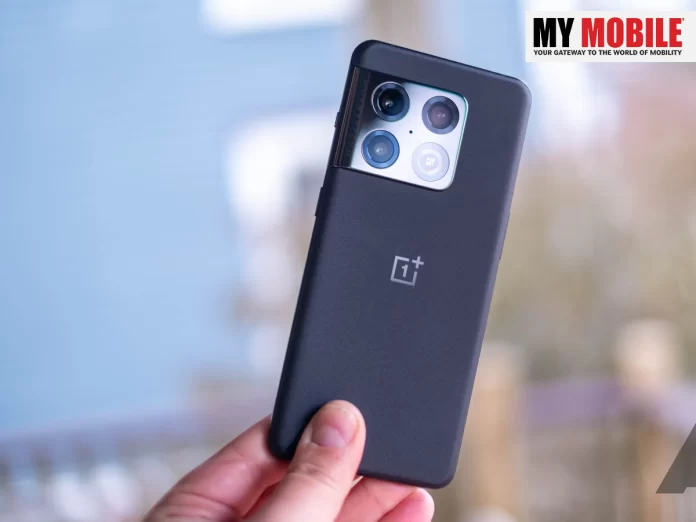
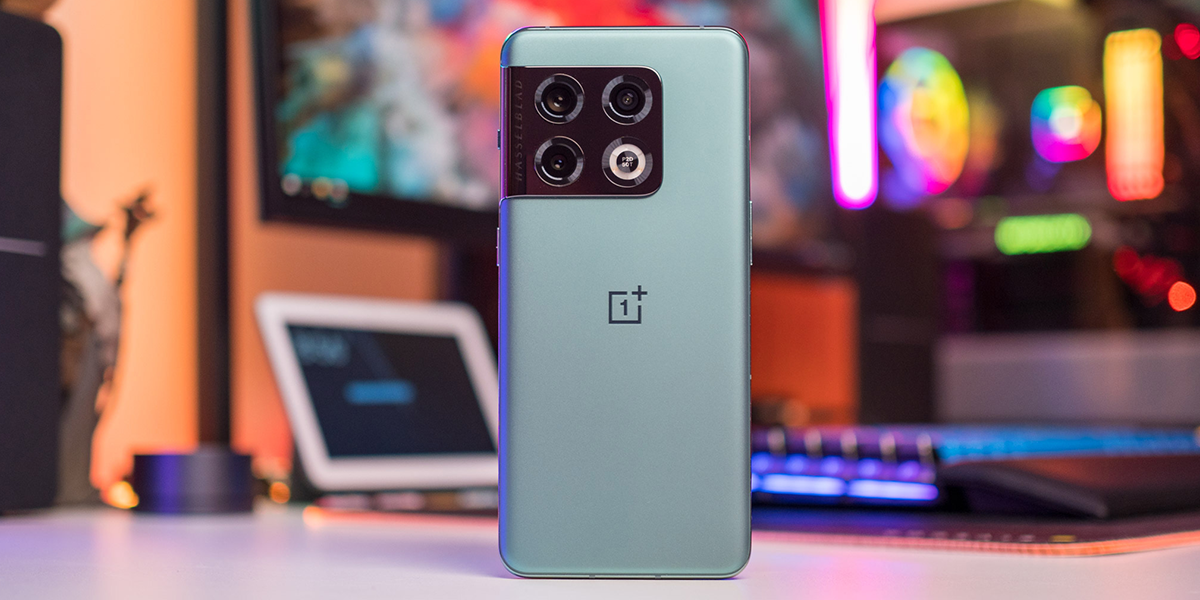
OnePlus 10 Pro is one of the biggest flagship smartphones tipped for an early next year launch. Ahead of the release, the device has already seen numerous leaks, and many more details have surfaced since last week.

Now, a new leak has given us some more juicy details about the upcoming flagship OnePlus smartphone, revealing its design, specifications, price, and more. Here’s everything we needed to know about the OnePlus 10 Pro.

OnePlus 10 Pro India launch date

The company has not revealed any details about the OnePlus 10 Pro launch. However, multiple launch dates have been rumored for the upcoming flagship device. One of those hints towards an early launch in 2022, that is – January or February. Some leaks also points out in the second quarter of 2022 launch. The former timeline is expected for the China launch, whereas the latter is for the global launch.

OnePlus 10 Pro Specifications

Design and Display

The implementation of the OnePlus 10 Pro looks similar to the S21 Ultra and will feature a hole-punch cutout at the top left corner of the screen for the 32-megapixel front camera sensor with an LED flash. According to the leaks, OnePlus 10 Pro will come packed with a 6.7-inch curved AMOLED display with a QHD+ resolution and will support a 120Hz refresh rate.

Processor

The upcoming smartphone will come with Qualcomm’s upcoming Snapdragon flagship processor, which is rumored to unveil as the Snapdragon 8 Gen 1, which is tipped to be announced at the Qualcomm Summit later this month.

OnePlus 10 Pro is expected to launch in two storage configurations. The smartphone might offer 8GB to 12GB of RAM. As for the storage, the device may get 128GB to 256GB storage. The device will also come with an IP68 rating for water and dust resistance.

Camera

The leaks suggest that the OnePlus 10 Pro would not be getting any major upgrade in the camera department. It will come with a triple-camera setup on the back along with a 48-megapixel primary camera and a 50-megapixel ultrawide camera.

Battery

Under the hood, OnePlus 10 Pro will boast a 5,000mAh battery. It is also being rumored that the handset could get 125W fast charging support, which could potentially turn out to be the fastest charging device as the current benchmark is set at 120W.

OnePlus 10 Pro India price

There’s no information on the pricing yet, but going by the previous trends, we expect to see a price rise. Following the trend, one can expect the OnePlus 10 Pro to start at a higher price of Rs 69,999.

Also Read: Noise partners with Poorvika Mobiles to expand its presence in south India

Noise partners with Poorvika Mobiles to expand its presence in south India

0

Homegrown connected lifestyle brand Noise has expanded its reach to southern India by joining hands with Chennai-based Poorvika Mobiles, a leading multi-brand retail chain. This partnership with Poorvika Mobiles will help Noise to strengthen its position in south India by making its entire product line available on online and offline platforms in all its retail outlets in Karnataka and Tamil Nadu.

The strategic partnership brings India’s No.1 mobility chain and No.1 smartwatch brand together to serve the customers better in the southern region. As part of the future roadmap, the products will also be available at more stores.

Founded in 2004, Poorvika Mobiles is one of the leading multi-brand retailers for smartphones and gadgets in India. They have around 445+ outlets across Tamil Nadu, Pondicherry, Karnataka, Kerala and Maharashtra. Nosie’ wide range of hearable and wearable products are available in the stores.

Gaurav Khatri, Co-founder, Noise, said, “We are excited to announce our partnership with Poorvika Mobiles, one of the leading retail chains in India. Poorvika has a wide reach in the southern market and has been serving customers for years. This partnership aims to make our products and services more accessible across the country. We are committed to building products that correlate with the spirit of Indian consumers. We are consistently expanding our offline presence with strategic partnership with the leading retail chain, and in the coming month, we will be strengthening our footprint in India further.”

Also Read: “India is a key focus region for MediaTek”

Uvaraj Natarajan, CEO, Poorvika Mobiles, said, “We are glad to onboard Noise on our offline and online platforms. Their diversified range of hearable and wearable has been quite popular amongst the customers. Noise is one of the leading homegrown brands. We are looking forward to a long-term partnership and strengthening our relationship with the brand in the coming days.”

Noise has been expanding its presence in India by partnering with leading retail chains across the nation. Noise is present in over 8000 outlets in India.

Tech NewsWrap: Qualcomm separates Snapdragon as separate brand… and more

0

Qualcomm separates Snapdragon as separate brand

Qualcomm is announcing some big changes to its product and brand identity. The company said it has separated ‘Qualcomm’ and ‘Snapdragon’ brands, introduced new representative colors, and a new naming structure of single-digit series and generation number. In a press statement, the chipmaker said “Snapdragon will be a standalone product brand with specific ties to the Qualcomm brand where appropriate.”

WhatsApp brings new safety features for users in India

WhatsApp has introduced new safety features for its users in India that includes ‘Message Level Reporting’ and ‘Flash Calls’. These features will allow people better security and control over their usage of the Meta owned instant messaging app. Meanwhile, WhatsApp has released the 2.21.24.8 update for its Android users on the beta channel, which reveals the company is working on message reaction notifications for its Android app.

Moto G31 India launch date leaked

Moto G31 India launch date has leaked. Tipster Mukul Sharma claims that the budget smartphone will debut on November 29, 2021. The company is yet to confirm the official launch date of Moto G31 in India. The Indian variant of the handset is said to feature a 50-mehapixel “quad-function camera.” The ultrawide camera is likely to double up as a macro camera in this case. According to the leak, the 4GB RAM and 64GB internal storage model of the Moto G31 will be priced at Rs 14,999.

Infinix Inbook X1 laptop set to launch in India

Infinix, the premium smartphone brand from Transsion group, is all set to launch its first-ever laptop, INBook X1, in India soon. The laptop will be available in three processor variants i3, i5, and i7. As per the Intrigue page on Flipkart, INBook X1 is the lightest laptop which weighs only 1.48 kg and feels ultra-light to carry. It will also be one of the thinnest laptops in the segment with 16.3mm thickness. The Infinix INBook X1 is bound to give its users a premium and stylish feel while using, as it sports, first in segment, full metal body with aircraft grade aluminium finish.

Also Read: Hipi introduces its latest avatar offering world’s first AI based in-video discovery feature