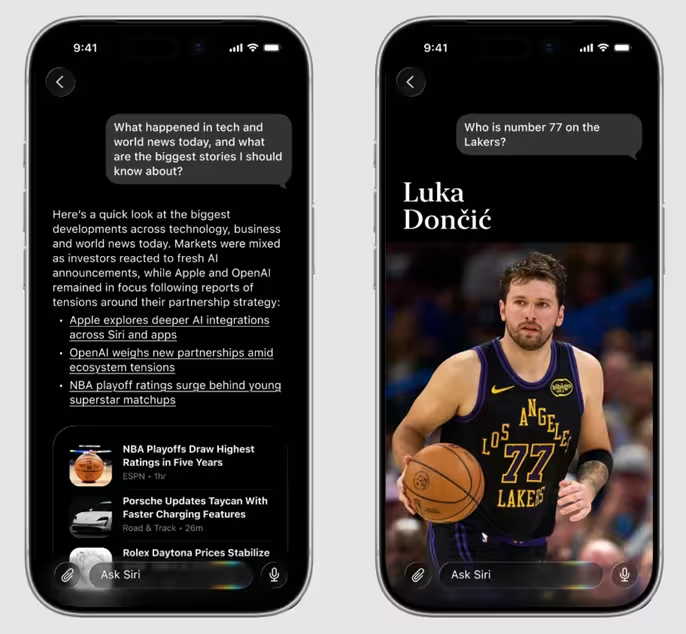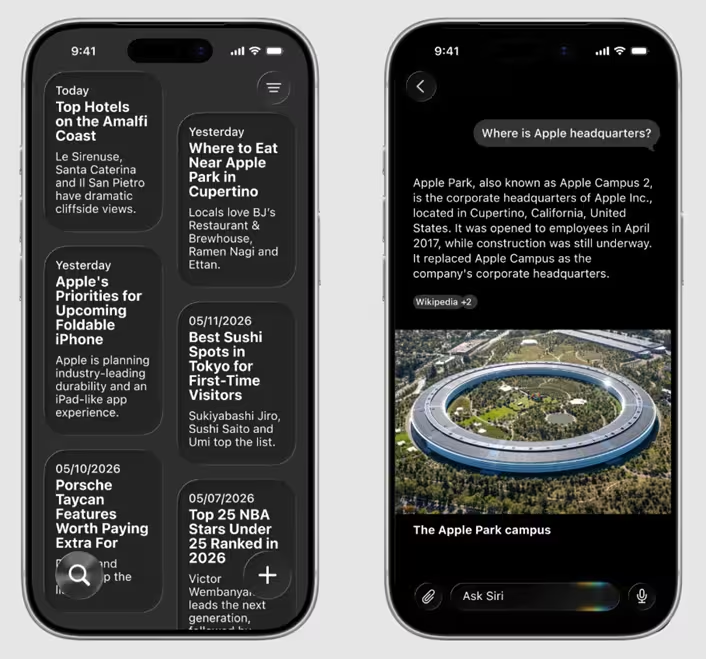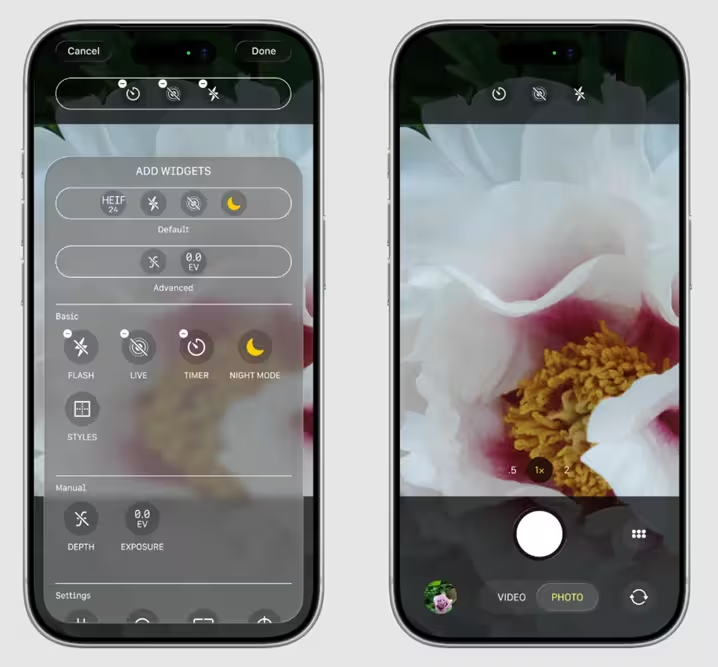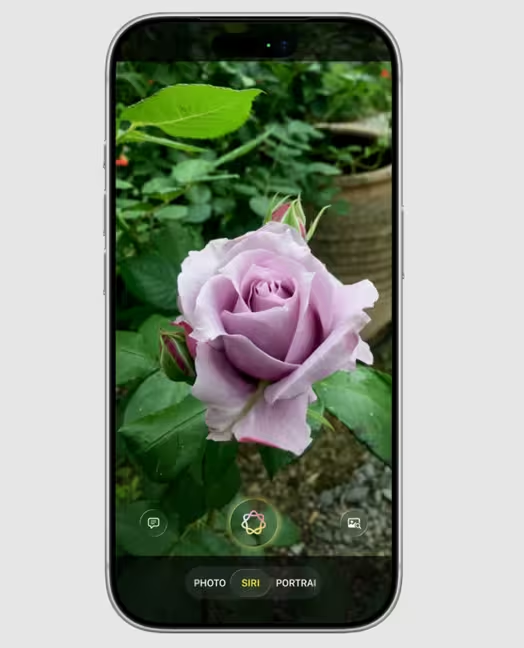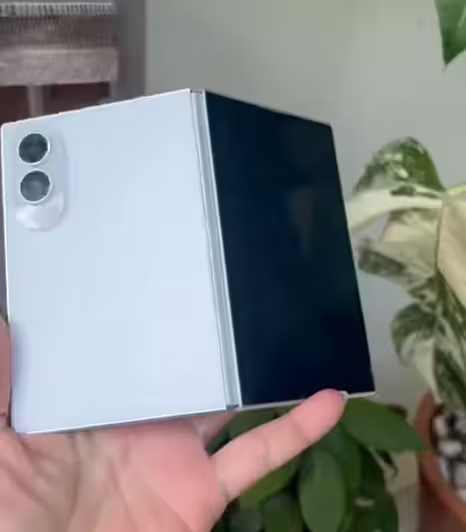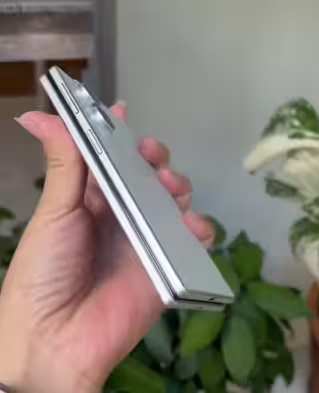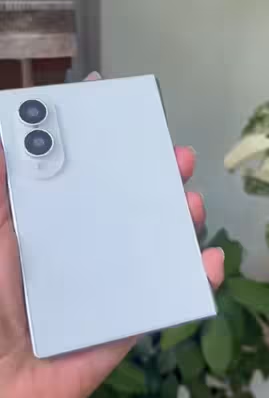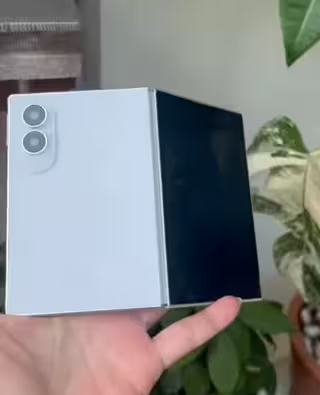

iPhone 18 Pro and Pro Max may feature a variable aperture lens, allowing dynamic light adjustment for better low-light and daylight photography.
Apple is reportedly working with Luxshare ICT and Sunny Optical for a thinner, efficient build.
Expected in fall 2026, the iPhone 18 Pro may also introduce under-display Face ID, removing the Dynamic Island.
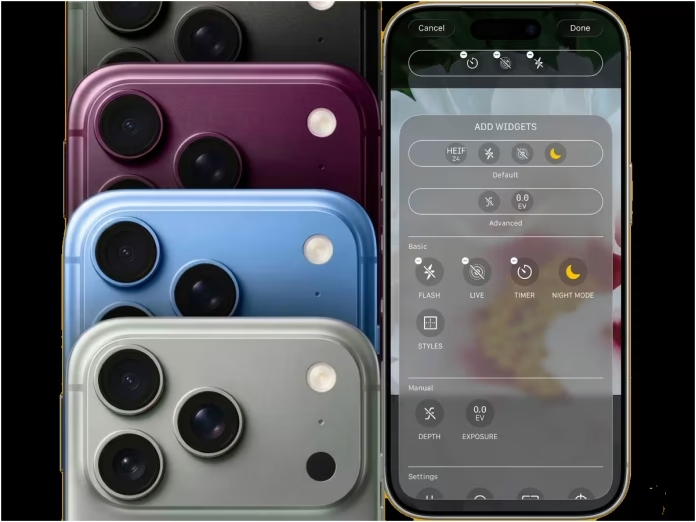
iPhone 17 Pro Max camera lens setup for reference. (Image credit – Apple)
Apple is reportedly preparing one of the biggest camera upgrades for its upcoming iPhone 18 Pro lineup. According to a report from Korea’s ETNews, both the iPhone 18 Pro and iPhone 18 Pro Max will feature the advanced technology that will allow the main camera to physically adjust how much light passes through the lens. Yes, we might just get a variable aperture lens on an iPhone.
iPhone 18 Pro – Expected Camera Upgrade
Unlike the fixed f/1.78 aperture used on the iPhone 14 Pro through iPhone 17 Pro models, the variable aperture system will dynamically open wider in low-light conditions to capture brighter and clearer photos, and narrow down in bright lighting to prevent overexposure.
This level of flexibility will also offer users more control over depth of field, enabling either rich background blur for portraits or sharper focus across the frame for landscapes. Apple is said to be collaborating with Luxshare ICT and Sunny Optical. These are two Chinese suppliers responsible for manufacturing the actuator that controls the aperture’s movement.
The report aligns with previous predictions by analyst Ming-Chi Kuo, who hinted at Apple’s partnership with these companies back in late 2024.
While Samsung was among the first to experiment with variable aperture lenses on its Galaxy S9 and S10 models, the company eventually discontinued the feature after 2020 due to design complexity and higher production costs. According to reports, the iPhone 18 Pro’s implementation is expected to be thinner, more efficient, and cost-effective. However, it could still lead to a potential price hike. For context, the iPhone 17 Pro starts at $1,099, and its successor may come at a slightly higher price point.
The new variable aperture camera system is expected to debut in fall 2026, launching alongside the rumoured iPhone Air 2 and Apple’s first foldable iPhone.
Additionally, reports suggest that the iPhone 18 Pro seriesmight eliminate the Dynamic Island in favour of a fully under-display Face ID system, pushing Apple’s design language toward a cleaner, uninterrupted screen.
FAQs
Q1. What is the key camera upgrade expected in the iPhone 18 Pro?
Answer. The iPhone 18 Pro and Pro Max are expected to feature a variable aperture lens, allowing dynamic light adjustment for better low-light and bright-light photography.
Q2. How will the variable aperture improve photo quality?
Answer. It will enable brighter images in low light and prevent overexposure in bright conditions, while also offering more control over depth of field for portraits and landscapes.
Q3. When is the iPhone 18 Pro expected to launch?
Answer. The iPhone 18 Pro lineup is expected to debut in fall 2026, alongside the rumoured iPhone Air 2 and Apple’s first foldable iPhone.
Windows 11 25H2 update adds passkey support, Rust-based kernel improvements, Wi-Fi 7, Braille viewer, and smarter Narrator and Voice Access features.
Users get AI-powered tools like Recall, Click to Do, and Bing Visual Search in File Explorer, plus smarter workflows and voice commands across the OS.
Gaming Copilot offers voice-based tips, while UI refinements include a larger clock, repositionable indicators, and modernised system dialogues.
Caption – Microsoft Releases Windows 11 25H2 Update. (Image credit – Microsoft)
Microsoft has officially begun rolling out the Windows 11 25H2 update, introducing a broad range of enhancements focused on security, accessibility, and productivity. The update brings Copilot+, smarter AI-driven workflows, better gaming experiences, and several system refinements aimed at making Windows more intuitive and reliable.
AI and File Explorer Enhancements
With Windows 11 25H2, File Explorer gains new AI-powered actions that let users perform quick tasks like editing images or summarising documents directly within the file manager. By right-clicking or pressing Shift + F10, users can –
Search with Bing Visual Search to find similar images, products, or landmarks.
Blur Backgrounds in Photos to emphasise subjects.
Erase Objects using Generative Erase.
Remove Backgrounds instantly in Paint.
Microsoft 365 users can also take advantage of Copilot AI to summarise files stored in OneDrive and SharePoint without opening them. Business users can view Microsoft 365 People cards, displaying collaboration insights directly within File Explorer.
Widgets and Lock Screen Improvements
The Widgets panel has been redesigned with multiple dashboards and a refreshed Discover feed. Users will now see personalised Copilot-curated stories, summaries, and videos from reliable sources.
The Lock Screen Widgets also receive an update, letting users add, remove, or rearrange items like Weather, Sports, and Watchlist.
Accessibility and Narrator Upgrades
Windows 11 25H2 continues Microsoft’s accessibility push with several new features –
A Braille viewer helps users visualise text and Braille simultaneously.
Narrator now reads documents in Word more smoothly, improving navigation for lists, tables, footnotes, and comments.
Voice Access gains natural language understanding, allowing mobility-impaired users to give flexible, conversational commands.
Better Gaming Experience
Gamers can expect smoother performance and smarter AI assistance with Gaming Copilot (Beta) in the Game Bar. It offers voice-based help, personalised recommendations, and gameplay tips. The Xbox PC app now consolidates apps, libraries, and history, while the Network Quality Indicator helps troubleshoot cloud gaming performance. Developers also get improved shader delivery for faster load times.
Strengthened Security and Authentication
Microsoft has made multiple security improvements in this release –
Windows Hello refresh adds support for passkeys and automatically selects the safest credential for sign-in.
Passkey manager integration allows use of tools like 1Password for Windows Hello authentication.
Edge password management now merges with Microsoft Password Manager for safer syncing.
Kernel improvements in Rust enhance system security and reduce memory vulnerabilities.
Wi-Fi 7 support delivers faster, more reliable connectivity.
Developer Tools and Productivity Boost
Developers gain a redesigned Advanced Settings page, Git integration in File Explorer, and a new Microsoft Edit command-line text editor. Windows ML is now generally available for AI inference, while Task Manager metrics are standardised for clearer insights.
Refined User Interface
Windows 11 25H2 focuses on usability and polish across the interface. Key improvements include –
A larger clock with seconds now visible in the Notification Centre and on secondary monitors.
Dividers in File Explorer’s context menus for cleaner navigation.
Repositionable hardware indicators for brightness, volume, and other system toggles.
New keyboard shortcuts for en dash (–) and em dash (—).
Modernised dialogue boxes across the OS for consistency.
Time, language, and keyboard settings moved fully from Control Panel to Settings.
Copilot+ and AI-Powered Experiences
Windows 11 25H2 introduces smarter AI workflows on Copilot+ PCs –
Recall (Preview) offers a personalised homepage showing snapshots, recent apps, and websites with a sidebar for quick task resumption.
Click to Do highlights popular AI tasks and provides quick summaries powered by the Phi Silica model.
A new Agent in Settings provides context-aware links powered by the Mu model.
Voice Access supports conversational voice commands like “Open Edge” or “Switch to Microsoft Edge.”
Inbox Apps Get Smarter
Core Windows apps also receive notable improvements –
Paint now supports saving editable .paint files and adds an opacity slider for the Pencil and Brush tools.
Snipping Tool introduces Quick Markup, enabling annotations directly on captures.
Notepad AI allows summarising, writing, and rewriting without a subscription, currently supporting English.
Availability
Windows 11 version 25H2 is now available through the Windows Update “seeker” experience for eligible PCs that meet Windows 11’s hardware requirements. Microsoft recommends users install the October 2025 security update to unlock all new features and optimisations.
FAQs
Q1. What AI features are introduced in Windows 11 25H2?
Answer. Windows 11 25H2 adds Copilot+ experiences like Recall, Click to Do, and AI-powered actions in File Explorer, enabling tasks like image editing and document summarisation.
Q2. How has accessibility improved in the 25H2 update?
Answer. The update introduces a Braille viewer, smoother Narrator reading in Word, and enhanced Voice Access with natural language understanding for more flexible voice commands.
Q3. What gaming enhancements are included in Windows 11 25H2?
Answer. Gamers get access to Gaming Copilot (Beta) for voice-based tips and recommendations, plus improved shader delivery and a Network Quality Indicator for cloud gaming.
Q4. What are the key security upgrades in this release?
Answer. Windows 11 25H2 adds passkey support, integrates password managers like 1Password, enhances Edge sync security, and uses Rust-based kernel improvements to reduce vulnerabilities.
Apple is expected to introduce OLED displays and touchscreen support in the next MacBook Pro, powered by the upcoming M6 chip series.
The redesign may eliminate the notch in favour of a hole-punch camera, improve screen stability with reinforced hinges, and deliver a thinner, lighter chassis.
The redesigned MacBook Pro is likely to debut in late 2026 or early 2027, following the rollout of M5 Pro and M5 Max models in early 2026.
Apple is reportedly preparing for a massive overhaul of its MacBook Pro lineup, expected to arrive as early as late 2026 or early 2027. The latest Bloomberg report suggests the upcoming MacBook Pro models will introduce significant design and hardware upgrades including OLED displays and touchscreen support. Here’s what we know so far.
MacBook Pro 2026 – What To Expect?
According to Bloomberg, the next-generation MacBook Pro will be powered by Apple’s M6 chip series, marking a leap from the recently launched M5-powered lineup. The shift to OLED screens will replace the current mini-LED panels, bringing deeper blacks, higher contrast, and improved energy efficiency to the display.
In a major design change, Apple is said to be removing the signature notch from the MacBook Pro’s screen. Instead, the company will reportedly adopt a hole-punch design to accommodate the FaceTime camera. The report compares this to the Dynamic Island on the iPhone, though it’s unclear if Apple will use a similar software interface to blend the camera cutout seamlessly into macOS.
Apple will launch MacBook Pro model with touchscreen displays. (Image credit – Apple)
The biggest update, however, comes in the form of touchscreen functionality. It will be a first for the MacBook Pro. Bloomberg notes that the device will “retain a full trackpad and keyboard,” meaning the touchscreen will serve as an additional input method rather than replacing traditional controls.
To make this possible, Apple has apparently addressed one of the biggest challenges in touchscreen laptops, which is screen stability. The company has reportedly engineered “a reinforced hinge and screen hardware to prevent the display from bouncing back or moving when touched.”
Beyond the display and input upgrades, the redesigned MacBook Pro is expected to be thinner and lighter than the current generation. The last major redesign arrived in 2021, when Apple introduced a thicker, heavier chassis to bring back more ports and enhance performance.
Looking further ahead, the report also mentions that Apple is “exploring” the possibility of replacing Touch ID with Face ID on future MacBooks. However, this feature is still “years away” from implementation.
Launch Timeline
Apple just launched its first M5-powered 14-inch MacBook Pro earlier this week. The company is expected to expand the lineup with M5 Pro and M5 Max variants in early 2026, followed by this major redesign later that year or in early 2027.
FAQs
Q1. What major display changes are expected in the 2026 MacBook Pro?
Answer. Apple is expected to replace the current mini-LED panels with OLED displays, offering deeper blacks, higher contrast, and better energy efficiency.
Q2. Will the redesigned MacBook Pro include a touchscreen?
Answer. Yes, the 2026 MacBook Pro is rumoured to feature touchscreen support for the first time, while still retaining a full trackpad and keyboard for traditional input.
Q3. When is the redesigned MacBook Pro expected to launch?
Answer. The redesigned MacBook Pro is likely to debut in late 2026 or early 2027, following the release of M5 Pro and M5 Max models in early 2026.
Latest update for Ray-Ban Meta smart glasses in India allows users to interact with Meta AI using Deepika Padukone’s voice in Indian English or switch to Hindi for hands-free commands.
A new Diwali-themed “Restyle This” feature lets users transform photos with festive effects like fireworks and rangoli.
Support for hands-free UPI Lite transactions under ₹1,000 by scanning QR codes and linking to WhatsApp bank accounts for quick, secure payments.
Caption – Meta AI’s latest Ray-Ban Meta Smart Glasses update in India. (Image credit – Meta)
Meta has rolled out a major update for its Ray-Ban Meta smart glasses and is introducing a range of new AI-powered features tailored for Indian users. The update adds UPI Lite payments, Hindi language support, and a celebrity AI voice based on Bollywood star Deepika Padukone. The new features aim to make the Ray-Ban Meta glasses more intuitive and localised, offering hands-free interactions, Hindi commands, and festive photo restyling options for Diwali. Here’s a quick look at what’s new.
Deepika Padukone’s AI Voice Now on Meta AI
Deepika Padukone’s AI Voice Now on Meta AI. (Image credit – Meta)
Users can now interact with Meta AI on their Ray-Ban glasses using Deepika Padukone’s AI-generated voice, which speaks in Indian English. To activate it, users can simply open the Meta AI app, go to Device Settings > Meta AI > Language and Voice, and select the Bollywood actor’s voice option.
With the update, conversations can be started hands-free by saying “Hey Meta”. The assistant can then provide explanations, trivia, jokes, puzzles, translations, and more, all through the built-in speakers of the smart glasses.
Caption – Deepika Padukone joins international celebs with AI Voice on Meta AI. (Image credit – Meta)
This makes Padukone the first Indian actress to lend her voice to Meta AI, joining a global lineup that includes Awkwafina, Judi Dench, John Cena and other international celebrities.
Padukone’s addition to the Meta AI lineup comes amid growing discussions around AI-generated deepfakes and personality rights. Several Indian celebrities including Anil Kapoor, Suniel Shetty, Aishwarya Rai Bachchan, Asha Bhonsle, and Arijit Singh, have taken legal steps to protect their likeness and voice from unauthorised AI use.
Speak to Meta AI in Hindi
For the first time, Meta AI now supports Hindi commands on Ray-Ban glasses. It is possible with the help of the technology from Indian AI developer Sarvam. This update enables users to communicate with Meta AI in Hindi for a seamless hands-free experience.
To switch to Hindi, users can navigate to Device Settings > Meta AI > Language and Voice in the Meta AI app and select Hindi. Once activated, all voice interactions can be done in Hindi, whether it’s asking for weather updates(“Hey Meta, aaj ka mausam kaisa hai?”), taking photos, recording videos, or replying to messages.
This move is expected to make Meta AI more accessible and inclusive for India’s large Hindi-speaking population.
Capture Diwali-Themed Photos with “Restyle This”
To celebrate the festive season, Meta has launched a Diwali Restyle feature for the Ray-Ban Meta glasses. The feature allows users to add fireworks, rangoli, and other festive effects to their photos, completely hands-free.
After taking a picture, users just need to say “Hey Meta, restyle this”, and Meta AI will automatically transform it into a Diwali-themed image. The restyled photos can then be viewed, saved, or shared directly in the Meta AI app.
This limited-time feature adds a fun and creative twist to festive photo sharing.
Make UPI Lite Payments Hands-Free
Meta is also integrating UPI Lite payments into its Ray-Ban glasses, allowing users to make quick, contactless transactions directly through voice commands. The feature was first showcased at the Global Fintech Fest and will soon be available to users.
To make a payment under ₹1,000, users can simply say “Hey Meta, Scan and Pay.” Meta AI then scans the QR code and completes the transaction through UPI Lite linked to the user’s WhatsApp bank account, all without needing to touch a phone or wallet.
According to Meta, this feature will make small everyday payments faster, safer, and completely hands-free, enhancing convenience for users on the go.
FAQs
Q1. How can users activate Deepika Padukone’s voice on Ray-Ban Meta smart glasses?
Answer. Users can activate Deepika Padukone’s AI voice by opening the Meta AI app, navigating to Device Settings > Meta AI > Language and Voice, and selecting her voice option.
Q2. Does Meta AI support Hindi commands on Ray-Ban smart glasses?
Answer. Yes, Meta AI now supports Hindi voice commands, allowing users to interact hands-free in Hindi for tasks like checking the weather, taking photos, or replying to messages.
Q3. What is the UPI Lite feature on Ray-Ban Meta smart glasses?
Answer. The UPI Lite feature enables users to make hands-free payments under ₹1,000 by saying “Hey Meta, Scan and Pay,” which triggers QR code scanning and payment via WhatsApp-linked bank accounts.
OxygenOS 16 global launch to reach OnePlus 13, 12, and 11 series, followed by Nord models and tablets like Pad 3, Pad 2, and the original Pad.
Entry-level Nord CE devices may receive it as their final major update.
The update introduces Expressive UI with smoother animations via Parallel Processing 2.0, resizable icons, enhanced multitasking, and customisable lock screen widgets, themes, and wallpapers.
OxygenOS 16 debuts Fluid Cloud for live lock screen updates and an upgraded Plus Mind assistant that supports voice notes, screenshot queries, and Gemini-powered AI search integration.
Caption – OxygenOS 16 global launch. (Image credit – OnePlus)
OnePlus has officially launched OxygenOS 16, its latest software update based on Android 16. The new version introduces a refreshed design language, AI-driven enhancements, and several productivity-focused features. Inspired by Google’s Material You 3.0, OxygenOS 16 brings the new Expressive UI, smoother animations, smarter multitasking, and an upgraded lock screen experience.
According to OnePlus, the OxygenOS 16 rollout will begin with the brand’s flagship smartphones before gradually reaching older and mid-range models. Here’s a detailed breakdown of the update, including eligible devices, rollout timeline, and key features.
OxygenOS 16 Rollout Plan
The update will first roll out to the OnePlus 13 series, followed by the OnePlus 12, OnePlus 11, and select Nord models in the coming weeks. While a detailed roadmap has not yet been shared, early access builds are expected to reach beta testers soon after launch.
OnePlus 12, OnePlus 12R, OnePlus 11, and OnePlus 11R
Mid-range phones such as the OnePlusNord 5, Nord 4, and Nord 3 will get the update later in the cycle.
On the tablet front, the OnePlus Pad 3, Pad 2, and the original OnePlus Pad are all reportedly eligible. Entry-level models such as the Nord CE 4, CE 4 Lite, and Nord 3 may receive OxygenOS 16 as their final major update.
OxygenOS 16 – Main Features
Fluid Animations
OnePlus introduces “Parallel Processing 2.0”, a new technology that makes animations more responsive by allowing them to start before the previous action finishes. This results in smoother transitions across the UI, app launches, navigation gestures, and system interactions.
Users can now resize app icons and folders on the home screen to their preference. OxygenOS 16 also optimises the experience for tablets, supporting up to five apps simultaneously in Open Canvas, three in split view, and two in floating windows, making multitasking more intuitive than ever.
OxygenOS 16 debuts the Flux Theme 2.0, allowing users to add Motion Photos and video wallpapers for depth-based visual effects. There’s also a full-screen Always-on Display (AOD) that displays wallpapers and live information even when the screen is off.
Addressing a long-standing user request, OnePlus now enables lock screen widgets that can be stacked vertically or horizontally, depending on the theme.
Fluid Cloud
Home screen with live updates in OxygenOS 16. (Image credit – Android Authority)
With Fluid Cloud, users can view real-time notifications and live updates from apps like Spotify, sports platforms, and food delivery services right on the lock screen.
The interface has also been redesigned with Gaussian blur effects, rounded corners, and a translucent finish, visible across Quick Settings, the Home Screen, and the App Drawer. Native apps like Clock and Calculator also receive a refreshed visual design and added functionality.
Plus Mind – AI-Powered Memory and Note Assistant
Caption – Plus Mind. (Image credit – OnePlus)
OnePlus’ upgraded Plus Mind feature represents one of the biggest AI improvements in OxygenOS 16. Initially introduced with the OnePlus 13S, Plus Mind was a visual note-taking tool, but it now functions as a full-fledged AI companion.
Users can now share images, record one-minute voice notes by holding the Plus Key, and even capture long screenshots to save articles or reading materials within the app.
Through the built-in search function, users can ask questions about saved screenshots or voice notes directly in Plus Mind. Moreover, OnePlus has partnered with Gemini, allowing users to access Plus Mind inside the Gemini app and use Google’s AI assistant to query their stored content.
FAQs
Q1. Which OnePlus devices will receive the OxygenOS 16 update first?
Answer. OxygenOS 16 will initially roll out to the OnePlus 13, 13R, and 13s, followed by the OnePlus 12, 12R, 11, and 11R series, with mid-range Nord models and tablets receiving it later.
Q2. What are the major UI changes introduced in OxygenOS 16?
Answer. OxygenOS 16 features the new Expressive UI inspired by Material You 3.0, with smoother animations via Parallel Processing 2.0, resizable icons, and a redesigned lock screen.
Q3. What is the Plus Mind feature in OxygenOS 16?
Answer. Plus Mind is an AI-powered assistant that allows users to save and query voice notes, screenshots, and images, now integrated with Google’s Gemini app for smarter search.
Q4. What multitasking improvements does OxygenOS 16 offer for tablets?
Answer. OxygenOS 16 supports up to five apps in Open Canvas, three in split view, and two in floating windows, making multitasking more flexible and efficient on OnePlus tablets.
Oppo Pad 5 Tablet – 12.1-inch 3K LCD display with 144Hz refresh rate, powered by Dimensity 9400+ chip, up to 16GB RAM, and a 10,165mAh battery with 67W fast charging.
It supports stylus input and offers a Soft Light Edition for eye comfort.
Oppo Watch S Smartwatch – a slim 8.9mm stainless-steel design with advanced health sensors including ECG, pulse oximeter, AI sports coaching and 60-second health report covering 13 metrics.
Pre-orders for both are live in China and official sales will begin on October 22, 2025.
Oppo has officially launched two new products in China, the Oppo Pad 5 Android tablet and the Oppo Watch S smartwatch. These came alongside the flagship Find X9 series launch. The new devices bring major upgrades in performance, design, and smart functionality. Here’s more on both newly launched devices.
Oppo Pad 5 – Key Features
Caption – Oppo Pad 5 launched in China. (Image credit – Oppo)
The Oppo Pad 5 is the company’s latest high-end Android tablet featuring a 12.1-inch 3K LCD display with a 144Hz refresh rate and 900 nits HBM brightness. The screen is TÜV Rheinland certified for eye protection, ensuring comfortable long-term use.
The tablet supports the Oppo Pencil 2 and Pencil 2 Pro styluses, offering real-time handwriting beautification and super-smart reading features. Oppo claims the stylus system can “put an end to ugly handwriting,” enhancing precision and aesthetics while writing or drawing.
A Soft Light Edition of the Pad 5 is also available, featuring a paper-like matte display that diffuses reflections to provide a more natural, eye-friendly reading experience.
– Oppo Pad 5 key features. (Image credit – Oppo)
Under the hood, the Oppo Pad 5 is powered by the MediaTek Dimensity 9400+ chipset, marking a significant leap from the Dimensity 8350 used in its predecessor. The tablet offers up to 16GB of RAM and features a sleek 5.99mm metal design. Powering the device is a 10,165mAh battery that supports 67W fast charging, ensuring long-lasting usage and quick top-ups.
Oppo Pad 5 – Pricing, Variants and Availability
Oppo Pad 5 in Silver colour. (Image credit – Oppo)
The Oppo Pad 5 is available in Lucky Purple, Galaxy Silver, and Space Grey colour options. Pricing details are as follows –
The Oppo Pad 5 is currently available for pre-order and will officially go on sale in China starting October 22, 2025.
Oppo Watch S – Key Features
Oppo Watch S launched in China. (Image credit – Oppo)
Launched alongside the tablet, the Oppo Watch S is a sleek and lightweight smartwatch featuring a round dial, stainless-steel body, and an ultra-slim 8.9mm design weighing just 35 grams.
It comes equipped with an all-new 16-channel optical pulse oximeter and an 8-channel optical heart rate sensor for enhanced accuracy in health tracking. The smartwatch also includes dual-frequency GPS for improved location precision and an AI sports coach that offers voice guidance and fat-burning analysis to help users optimise workouts.
Oppo Watch S key features. (Image credit – Oppo)
Another highlight is the one-click health inspection feature, which measures 13 health indicators including ECG, heart rate, blood oxygen, wrist temperature, sleep quality, and stress levels. It is designed to deliver a comprehensive 60-second report for users.
Oppo Watch S – Pricing and Availability
Oppo Watch S. (Image credit – Oppo)
The Oppo Watch S is priced at CNY 1,299 (USD 182 / Rs. 16,030 approx.) for the Silver and Black variants. The dual-tone Green variant costs CNY 1,499 (USD 210 / Rs. 18,498 approx.).
Pre-orders are already live in China and sales will officially begin on October 22, 2025.
FAQs
Q1. What are the key features of the Oppo Pad 5 tablet?
Answer. The Oppo Pad 5 features a 12.1-inch 3K LCD display with a 144Hz refresh rate, TÜV Rheinland eye protection, support for Oppo Pencil 2/2 Pro, and a powerful Dimensity 9400+ chipset with up to 16GB RAM.
Q2. What is the Soft Light Edition of the Oppo Pad 5?
Answer. The Soft Light Edition of the Oppo Pad 5 offers a matte, paper-like display that reduces glare and reflections, providing a more natural and comfortable reading experience.
Q3. What accessories are available for the Oppo Pad 5?
Answer. Oppo offers a Smart Touch Keyboard, Oppo Pencil 2 Pro stylus, and a Smart Protective Case as accessories for the Pad 5, enhancing productivity and usability.
Q4. What health features does the Oppo Watch S include?
Answer. The Oppo Watch S includes a 16-channel pulse oximeter, 8-channel heart rate sensor, dual-frequency GPS, and a one-click health inspection that measures 13 indicators like ECG, sleep, and stress levels.
Q5. When will the Oppo Pad 5 and Watch S be available in China?
Answer. Both the Oppo Pad 5 and Oppo Watch S are available for pre-order now and will officially go on sale in China starting October 22, 2025.
Both models feature high-end OLED displays with Oppo’s P3 chip for enhanced visuals, powered by the MediaTek Dimensity 9500 processor, up to 16GB RAM, and 1TB storage.
The Find X9 sports a triple 50MP camera setup, while the Pro upgrades to a 200MP telephoto and 50MP selfie camera.
The Find X9 packs a 7025mAh battery, and the Pro boosts it to 7500mAh, with fast wired/wireless charging.
Oppo Find X9 Series phones have launched in China. (Image credit – Oppo)
Oppo has officially launched its latest flagship smartphones, the Oppo Find X9 and Oppo Find X9 Pro, in China. The new Find X9 lineup brings major upgrades across display technology, imaging capabilities, and battery performance, setting a new standard for Oppo’s premium range.
“With Find X Series, OPPO continues to push the boundaries of what’s possible in mobile imaging, uniting industry-leading hardware with state-of-the-art computational photography,” said Pete Lau, SVP and Chief Product Officer at OPPO.“Together with Hasselblad, we are taking a monumental leap forward in imaging quality with Find X9 Series. Combined with a refined design, extraordinary battery life, and the fast and smooth ColorOS 16, Find X9 Series is set to redefine the flagship experience and inspire a new era of creativity with mobile devices.”
Here’s everything you need to know about the newly launched Oppo flagship phones, starting with price.
Oppo Find X9 and Find X9 Pro – Pricing and Availability In China
Oppo Find X9 colours. (Image credit – Oppo)
The Oppo Find X9 is available in Radiant Red, Velvet Titanium, Frost White, and Fog Black colours. It comes in five variants –
On the other hand, the Oppo Find X9 Pro comes in Radiant Red, Velvet Sand Titanium, and Frost White colours. It is available in four configurations –
12GB + 256GB – 5,299 yuan ($742)
12GB + 512GB – 5,699 yuan ($798)
16GB + 512GB – 5,999 yuan ($840)
16GB + 1TB – 6,699 yuan ($938)
Both smartphones will go on sale in China starting October 22. As for global availability, Oppo newsroom post confirms that the global launch event will be held in Barcelona on October 28th, 2025. Both Find X9 and Find X9 Pro will make their official global debut at the event.
Meanwhile, Find X9 Pro 1TB eSIM satellite communication edition will be available from November.
Oppo Find X9 and Find X9 Pro – Key Specifications
The Oppo Find X9 comes with a 6.59-inch Tianma OLED flat display featuring a resolution of 2760×1256 pixels, 120Hz refresh rate, and up to 3600 nits local peak brightness. It supports 240Hz touch sampling rate, 3840Hz PWM dimming, and is protected by Oppo’s Crystal Shield Glass with 1.45mm ultra-narrow bezels.
The Find X9 Pro steps up with a 6.78-inch 8T LTPO panel, offering a 2772×1272 resolution and an adaptive 1–120Hz refresh rate. It features curved quad-edge bezels measuring just 1.15mm for a near-borderless experience. Both devices are powered by Oppo’s self-developed P3 display chip, which enhances colour accuracy, dynamic contrast, and power efficiency.
Under the hood, both models run on the MediaTek Dimensity 9500 processor, built on an eight-core architecture with a peak clock speed of 4.21GHz. They support LPDDR5X RAM and UFS 4.1 storage, with configurations offering up to 16GB RAM and 1TB internal storage. Oppo has also added its Tidal Engine to optimise real-time performance management, ensuring smooth multitasking even under heavy workloads.
For better connectivity and stability, Oppo includes its Shanhai Communication Enhancement Chip. It enhances signal reception, antenna switching, and uplink speed. Both smartphones run on ColorOS 16, which introduces improvements in photography, AI capabilities, and multitasking efficiency.
Caption – Oppo Find X9 series camera module. (Image credit – Oppo)
The Oppo Find X9 features a triple-camera setup including a 50MP Sony LYT-808 main sensor with OIS, a 50MP Samsung JN5 ultra-wide lens, and a 50MP periscope telephoto lens using the Sony LYT-600 sensor. It supports 3x optical zoom and up to 120x digital zoom. Oppo has also introduced a Danxia color restoration lens to enhance color accuracy in complex lighting conditions. On the front, it features a 32MP Sony IMX615 selfie camera.
The Find X9 Pro upgrades the telephoto sensor to a 200MP camera and the selfie camera to 50MP. Both models can record 4K video at up to 120fps and include Hasselblad XPAN mode,HDR, log video and master mode for professional-grade shooting.
Oppo Find X9 series battery. (Image credit – Oppo)
The Find X9 packs a 7025mAh battery, while the Find X9 Pro houses a larger 7500mAh cell. Both use Oppo’s fourth-generation silicon-carbon negative electrode technology for improved energy density. Charging options include 80W SuperVOOC wired charging, 50W wireless charging, and 5W reverse wireless charging.
The Find X9 series offers Wi-Fi 7, Bluetooth 6.0 with BLE Audio, and NFC. Other features include dual stereo speakers, four microphones, an ultrasonic under-display fingerprint sensor, IR remote control, and IP66/IP68/IP69 ratings for enhanced dust and water resistance.
The Oppo Find X9 weighs 203g, measures 7.99mm thick, while Oppo Find X9 Pro weighs 224g, measures 8.25mm.
FAQs
Q1. What processor do the Oppo Find X9 and Find X9 Pro use?
Answer. Both the Oppo Find X9 and Find X9 Pro are powered by the MediaTek Dimensity 9500 chipset, which features an eight-core architecture and a peak clock speed of 4.21GHz for high-performance computing.
Q2. How do the camera setups differ between the Find X9 and Find X9 Pro?
Answer. The Oppo Find X9 includes a triple 50MP rear camera system and a 32MP front camera, while the Find X9 Pro upgrades the telephoto lens to 200MP and the selfie camera to 50MP, offering enhanced imaging capabilities for professional-grade photography.
Q3. What are the battery capacities and charging features of Find X9 and Find X9 Pro?
Answer. The Find X9 is equipped with a 7025mAh battery, and the Find X9 Pro features a larger 7500mAh battery; both support 80W wired SuperVOOC charging, 50W wireless charging, and 5W reverse wireless charging using Oppo’s advanced silicon-carbon electrode technology.
Q4. What display technology is used in the Find X9 series?
Answer. The Find X9 has a 6.59-inch Tianma OLED flat display with a 120Hz refresh rate and up to 3600 nits brightness, while the Find X9 Pro features a 6.78-inch curved LTPO panel with an adaptive 1–120Hz refresh rate and ultra-narrow quad-edge bezels for a near-borderless experience.
Q5. When will the Oppo Find X9 and Find X9 Pro be available in China?
Answer. Both smartphones will go on sale in China starting October 22, 2025, and the Find X9 Pro 1TB eSIM satellite communication edition will be available from November.
Google Veo 3.1 enhancements included an upgraded video generation model that offers richer audio, lifelike textures, and improved narrative control.
Flow now enables audio generation, scene extension, and intelligent motion creation between frames, plus new tools for inserting and editing scene elements.
A future update will allow users to remove objects or characters from footage.
Caption – Google Unveils Veo 3.1. (Image credit – Google)
Google has officially launched Veo 3.1, the latest version of its advanced video generation model. It introduces major upgrades in realism, audio quality, and storytelling control. Alongside this release, the company has also enhanced its Flow filmmaking tool, integrating new editing and generation features powered by Veo 3.1.
Building on the foundation of Google Veo 3, the new Veo 3.1 delivers richer audio and “enhanced realism that captures true-to-life textures.” Google says the model now has a deeper understanding of narrative structure, cinematic styles, and character interactions, giving creators greater flexibility and precision when crafting stories.
The image-to-video generation capability has also been refined, producing higher-quality visuals and audio while adhering more closely to user prompts.
Veo 3.1 is available in two variants, Veo 3.1 and Veo 3.1 Fast. It can be accessed through the Gemini app, Gemini API, and Vertex AI. It supports both horizontal (16:9) and vertical (9:16) formats, making it suitable for a wide range of creative and professional use cases.
In addition, Google is rolling out significant improvements to Flow, its filmmaking assistant, designed to take full advantage of Veo 3.1’s capabilities.
The tool now supports audio generation across multiple creative functions, including
Frames to Video: Define starting and ending frames, allowing Flow to intelligently create the motion that connects them.
Ingredients to Video: Generate scenes using multiple characters, objects, and styles.
Scene Extension: Extend an existing clip seamlessly, with Google’s AI using the final second as a reference.
Flow is also receiving new editing tools that let users insert objects, characters, and fine details into scenes. The system automatically handles complex elements such as shadows, lighting, and scene consistency to ensure natural integration.
A forthcoming update will introduce the ability to remove objects or characters from existing footage. Flow will then reconstruct the background and surrounding environment to make the removal smooth and realistic.
FAQs
Q1. What is Veo 3.1 and how does it improve video generation?
Answer. Veo 3.1 is Google’s latest video generation model offering enhanced realism, richer audio, and better narrative control. It supports both 16:9 and 9:16 formats and is accessible via Gemini app, Gemini API, and Vertex AI.
Q2. What new capabilities does Flow gain with Veo 3.1 integration?
Answer. Flow now supports audio generation, intelligent motion creation between frames, scene extension, and detailed object insertion with automatic handling of lighting, shadows, and consistency.
Q3. Will Flow support object removal from existing footage?
Answer. Yes, an upcoming update will allow users to remove objects or characters from scenes, with AI reconstructing the background for smooth and realistic results.
YouTube launched a mental health hub for teens aged 13–17, offering curated, age-appropriate videos on topics like depression, anxiety, ADHD, and eating disorders.
Content is sourced from trusted organisations like the Child Mind Institute.
Rollout beginning in the U.S., U.K., Canada, Mexico, France, and Australia.
Caption – (Photo by Zulfugar Karimov on Unsplash)
YouTube has introduced a new initiative aimed at supporting the mental health and well-being of teenagers. The platform announced the launch of a dedicated section for users aged 13 to 17, designed to make it easier for them to access reliable, age-appropriate information on topics such as depression, anxiety, ADHD, and eating disorders.
The initiative has been announced in a blog post titled “New mental health & wellbeing tools – built just for teens” by Dr. Garth Graham, Director and Global Head of YouTube Health.
How YouTube Mental Health and Well-Being Tools for Teens Work?
Caption – Teens can get curated search results. (Image credit – YouTube Blog)
According to the announcement, going for whenever a teen searches for terms like “depression” on YouTube, a curated row of videos will appear at the top of the search results. These videos are sourced from trusted mental health organisations and tailored to suit the developmental needs of adolescents.
To ensure the accuracy and sensitivity of the content, YouTube partnered with leading mental health experts and organisations, including the Child Mind Institute, National Alliance for Eating Disorders, The Jed Foundation and more.
The new mental health and well-being section will begin rolling out in the coming weeks across the U.S., U.K., Canada, Mexico, France, and Australia, giving teenagers easier access to credible and compassionate support online.
Why This Change?
This new initiative is part of its ongoing effort to make YouTube a more supportive and credible space for young people dealing with mental health challenges. The move comes amid growing concern over teen mental health issues. A 2023 Centers for Disease Control and Prevention (CDC) survey revealed that 39.7% of students experienced persistent feelings of sadness or hopelessness, while 28.5% reported poor mental health overall.
The platform’s decision to bring mental health resources directly to where teens already spend their time is a significant step. According to the Pew Research Center, research shows that nine out of ten teenagers use YouTube.
Over the years, YouTube has rolled out several features to promote a safer and more supportive environment for younger audiences. These include recommendation safeguards for sensitive topics, age-estimation technology to ensure age-appropriate experiences, and parental control options that let parents link and monitor their teens’ accounts.
FAQs
Q1. What is YouTube’s new mental health initiative for teens?
Answer. YouTube has launched a dedicated section for users aged 13–17, offering curated, age-appropriate videos on topics like depression, anxiety, ADHD, and eating disorders.
Q2. How does YouTube ensure the content is reliable and suitable for teens?
Answer. Videos are sourced from trusted mental health organisations like the Child Mind Institute and tailored to adolescent developmental needs, with expert guidance on accuracy and sensitivity.
Q3. Where and when will these YouTube Mental health tools be available?
Answer. The mental health section will roll out in the coming weeks across the U.S., U.K., Canada, Mexico, France, and Australia, with curated results appearing atop relevant searches.
HONOR’s Robot Phone merges AI intelligence, robotic mobility, and advanced imaging, capable of autonomous movement and environmental sensing.
It has been designed to act as a personal camera and lifestyle assistant as it can capture moments, suggest outfits, and more.
The Robot Phone is expected to officially launch at Mobile World Congress 2026 in Barcelona.
Caption – HONOR Robot Phone is expected at MWC 2026. (Image credit – HONOR)
HONOR has offered a glimpse into what it envisions as the next frontier of smartphones, AI, and robotics. The Chinese brand has teased a Robot Phone at the company’s extensive Magic8 Pro launch event. And it’s easily one of the most intriguing and unconventional tech previews of the year. So, understandably, we have to talk about it.
According to HONOR, the Robot Phone is designed to merge multi-modal AI intelligence, advanced robotics, and next-generation imaging into a single futuristic device. Equipped with an AI system capable of environmental perception and robotic mobility, the device can move independently and even serve as a personal camera companion.
HONOR highlighted that it could capture everyday moments and special occasions without requiring manual input.
Describing its ambitious creation, HONOR stated, “This innovative device will integrate AI-powered multi-modal intelligence, robotic functionality, and advanced handheld imaging capabilities. As a new species of AI device, the Honor Robot Phone will redefine future human-machine interaction and coexistence, positioning Honor at the forefront of AI device innovation.”
Caption – HONOR Robot Phone from the video teaser. (Image credit – HONOR)
The teaser video released by the company further demonstrates the Robot Phone’s potential applications. It includes everything from helping users choose outfits to capturing complex, dynamic shots, such as during activities like skydiving.
The video hints at a design where a gimbal-mounted camera emerges from the back of the phone, reminiscent of an iPhone 17 Pro Max hybridised with a miniature Wall-E or BB-8.
HONOR further added, “With the Robot Phone, Honor envisions the future phone as more than just a tool. It becomes an emotional companion that senses, adapts, and evolves autonomously like a robot, enriching its users’ lives with love, joy, and wisdom.”
This futuristic project is part of HONOR’s “ALPHA PLAN,” announced earlier this year. The initiative outlines the company’s long-term goal of transitioning from conventional smartphones to AI-first devices, positioning HONOR as a leading innovator in the global AI device ecosystem.
In the promotional video, the company also hinted that the HONOR Robot Phone will make its official debut at MWC 2026 in Barcelona. If true, this could be a significant milestone in the evolution of intelligent, emotionally adaptive technology.
Check out the teaser video below –
FAQs
Q1. What is the HONOR Robot Phone and how is it different from regular smartphones?
Answer. The Robot Phone combines multi-modal AI, robotic mobility, and advanced imaging. It can move independently, perceive its environment, and act as a personal camera companion, capturing moments without manual input.
Q2. What features were highlighted in HONOR’s teaser video?
Answer. The video showcased the Robot Phone assisting with outfit choices, capturing dynamic shots like skydiving, and featuring a gimbal-mounted camera that emerges from the back, blending smartphone and robotic design.
Q3. When and where will the HONOR Robot Phone officially launch?
Answer. HONOR confirmed that the Robot Phone will debut at MWC 2026 in Barcelona as part of its ALPHA PLAN initiative to lead the transition toward AI-first devices.