
Home Blog Page 705

Air Purifier Buying Guide 2023: Selecting the Best for Your Breathing Space

0

Highlights

  • Comprehensive guide for choosing air purifiers tailored to various room sizes and pollution levels.
  • Focus on modern features such as multi-layered filtration systems and smart technology integration.
  • Selection includes budget-friendly and high-end options with real-time air quality monitoring.
  • Provides a direct purchasing link to streamline the consumer experience.

As the mercury dips in North India, the air quality has also taken a nosedive, plunging the AQI levels into the ‘extremely hazardous’ category.

Thick smog blankets cities, making it essential to discuss clean indoor air, which leads us to air purifiers – a rapidly growing necessity in homes and offices.

Understanding how to choose the best air purifier in 2023 can make all the difference to your health and well-being.

Why Air Purifiers Are Essential

Air purifiers have transitioned from being a luxury to a fundamental need, especially considering the recent spike in air pollution across North India.

The hazardous AQI levels pose a significant health risk, and air purifiers work silently in the background to remove contaminants from the air in your living space.

How to Choose the Right Air Purifier

  • Understand the Filters: Modern air purifiers come with multiple filters, including HEPA filters for particulate matter, activated carbon filters for odours, and more. The right combination can capture pollutants to microscopic levels.
  • Consider the Room Size: The efficiency of an air purifier is partly determined by the size of the room it’s intended for. Each purifier is designed to filter air effectively up to a certain area measurement, so match the purifier’s capacity with your room’s square footage.
  • Check for CADR Rating: The Clean Air Delivery Rate (CADR) indicates the volume of filtered air an air purifier produces. A higher CADR means the unit can filter more air in less time, ideal for regions with extremely poor air quality, like North India recently.
  • Noise Levels: Since air purifiers are often used in living spaces and bedrooms, opt for a device that operates quietly to ensure it doesn’t disturb your daily activities or sleep.
  • Smart Features: With the advent of smart homes, many air purifiers now offer features like air quality sensors, auto-adjust modes, and remote controls via apps. These can offer convenience and peace of mind.

The Top 5 Air Purifiers to Consider

Mi Xiaomi Smart Air Purifier 4 Lite: Rs 9,999

Mi Xiaomi Smart Air Purifier 4 Lite

In the quest for optimal air quality, the Mi Xiaomi Smart Air Purifier 4 Lite is a compelling contender.

With its robust triple-layer filtration, it ensures a pollutant-free environment for spaces up to 462 sq. ft.

Its quiet efficiency is matched by smart features, including app control and voice commands, positioning it as a user-friendly option for modern homes.

Philips Air Purifier – Series 2000: Rs 21,999

Philips Air Purifier - Series 2000
Philips Air Purifier – Series 2000

For a medium-sized room, the Philips Series 2000 AC2958/63 Air Purifier provides a shield against pollutants.

It employs a 3-layer filtration system that handles everything from particles to harmful gases.

The intelligent auto purification mode adapts to the air quality, visualized through a color-coded air quality indicator, ensuring your space is always in the best condition.

SHARP Room Air Purifier: Rs 9,999

SHARP Room Air Purifier

For those with more compact living quarters, the SHARP Room Air Purifier FP-F40E-W utilizes Plasmacluster Ion technology coupled with a HEPA and active carbon filter to purify the air.

It’s designed for areas up to 320 ft² and runs quietly while efficiently clearing allergens and odours, making it an ideal choice for small to medium-sized rooms.

AIRTH Home Air Purifier: Rs 19,999

AIRTH Home Air Purifier

When it comes to purifying larger areas, the AIRTH Home Air Purifier is your ally, covering up to 500 sq. ft.

It features a coated HEPA filter that not only purifies but also annihilates germs.

With its real-time display of air quality, temperature, and humidity, this purifier is a versatile tool for maintaining a healthy indoor atmosphere in spacious environments.

PHILIPS High-Efficiency Air Purifier: Rs 16,999
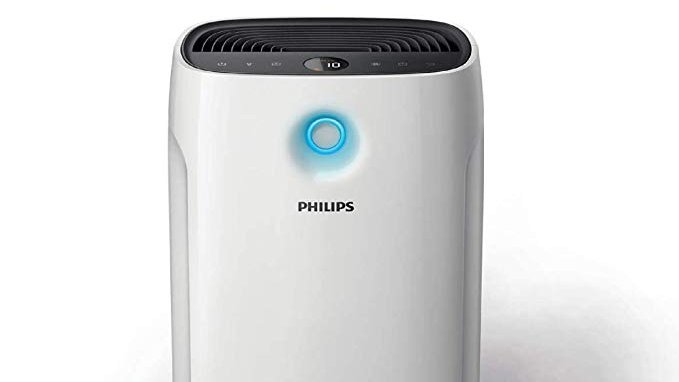
PHILIPS High-Efficiency Air Purifier

Lastly, the PHILIPS High-Efficiency Air Purifier AC2887/20 is engineered with Vitashield Intelligent Purification to tackle the most stubborn airborne viruses and bacteria, ideal for master bedrooms spanning 269-409 sq ft.

The real-time PM2.5 readout ensures you’re always aware of your air quality, adding peace of mind along with purification.

FAQs

What factors should I consider when buying an air purifier in 2023?

When purchasing an air purifier, consider the type of filters it uses, the size of the room it will serve, the Clean Air Delivery Rate (CADR), noise levels for comfort, and whether it includes smart features like air quality sensors or app connectivity for convenience.

How does room size affect the choice of air purifier?

Room size is critical as each air purifier is rated for a maximum effective coverage area. Ensuring the purifier’s capacity matches or exceeds your room’s square footage is essential for optimal purification efficiency.

What is CADR and why is it important for air purifiers?

Clean Air Delivery Rate (CADR) measures the volume of filtered air an air purifier produces. It’s crucial because a higher CADR means the purifier can clean more air faster, which is particularly important in areas with high pollution levels.
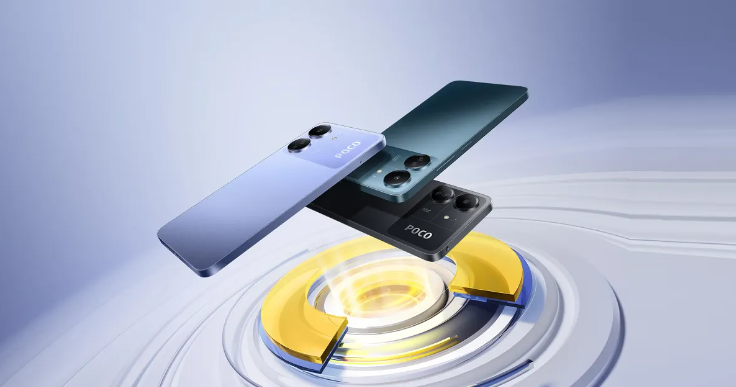
POCO X6 Pro 5G Eyes India Launch as BIS Listing Emerges

0
POCO X6 Pro 5G Eyes India Launch as BIS Listing Emerges

Highlights

  • POCO X6 Pro 5G confirms India launch soon with recent BIS certification.
  • Expected to feature a 1.5K AMOLED display, 120Hz refresh rate, and Snapdragon 7s Gen 2 processor.
  • Speculated to sport a 200MP primary camera and up to 16GB RAM for superior performance.

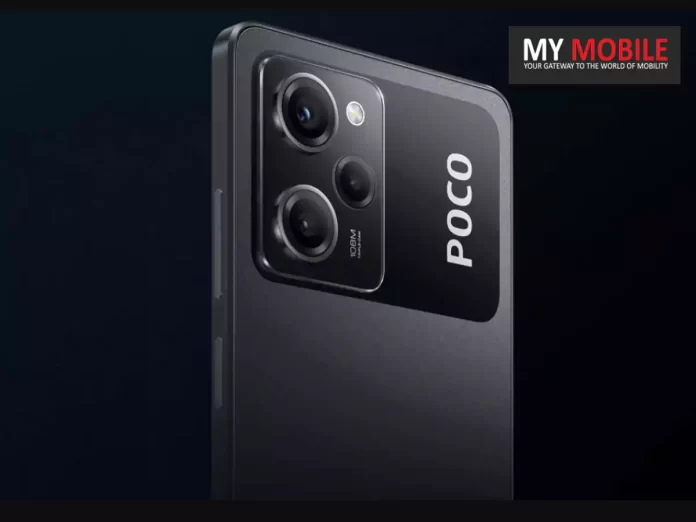
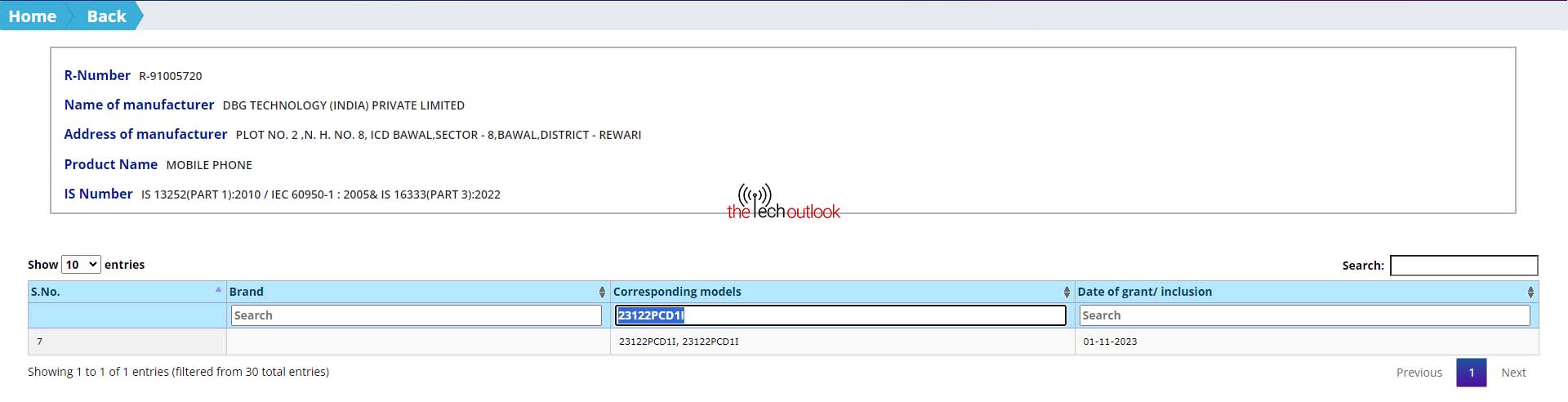
The mobile landscape is buzzing with anticipation as the POCO X6 Pro 5G makes a definitive stride towards the Indian market, evidenced by its recent spotting on the Bureau of Indian Standards (BIS) website.

The listing, brought into the spotlight by The Tech Outlook, cleverly disguises the POCO X6 Pro under model number 23122PCD1I.

Despite the moniker playing hide and seek in official documents, tech enthusiasts have kind of connected the dots, recognizing the model number from its previous appearance in the IMEI database.

POCO X6 Pro 5G Eyes India Launch as BIS Listing Emerges
POCO X6 Pro Launch as BIS Listing Emerges

The narrative around the POCO X6 Pro 5G, positions it as a rebranded version of the Redmi Note 13 Pro, which has already graced the Chinese market.

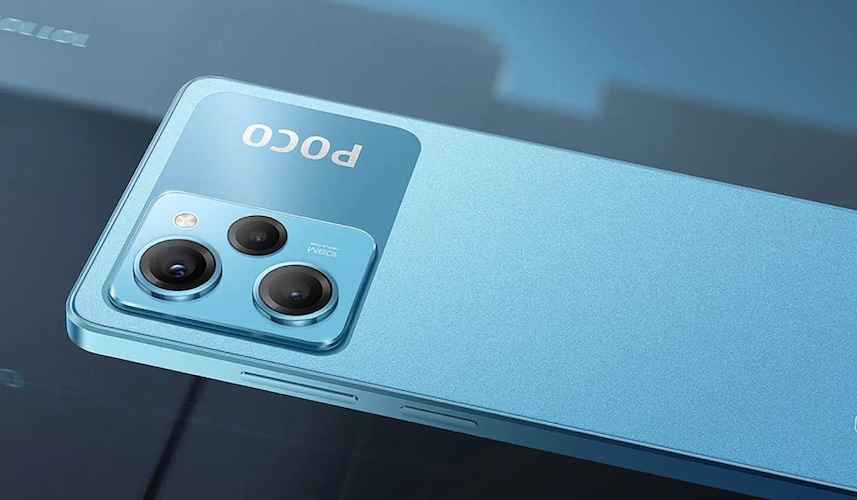
POCO’s playbook, often involving a rebrand with a twist, suggests that while the X6 Pro 5G may share DNA with the Redmi Note 13 Pro, it will also flaunt unique touches like the signature POCO Yellow and perhaps a refreshed design language.

Sneak peeks into the Redmi Note 13 series lay a promising foundation for the specifications we might see mirrored in the POCO X6 Pro 5G.

A scintillating 6.67-inch 1.5K AMOLED display with a silky 120Hz refresh rate is expected to be the front-runner in its list of features, accompanied by a powerhouse Snapdragon 7s Gen 2 processor to ensure a seamless user experience.

Photography enthusiasts can likely look forward to a staggering 200MP primary camera, which is likely to provide detailed captures, complemented by a suite of lenses to cater to all their creative demands.

POCO X6 Pro 5G Eyes India Launch as BIS Listing Emerges
POCO X6 Pro 5G Features

With a robust 5,100mAh battery coupled with 67W fast charging, the device is geared up to be as enduring as it is powerful.

POCO X6 Pro Key Specs

GENERAL

Sim Type Dual Sim, GSM+GSM
Dual Sim Yes
Sim Size Nano+Nano SIM
Device Type Smartphone
Release Date October 22, 2023 (Expected)

DISPLAY

Type Color IPS LCD Screen (16M Colors)
Touch Yes
Size 6.67 inches, 1080 x 2400 pixels, 120 Hz
Aspect Ratio 20:9
PPI ~ 395 PPI
Glass Type Corning Gorilla Glass
Notch Yes, Punch Hole

MEMORY

RAM 6 GB
Storage 128 GB
Card Slot Yes, upto 1 TB

CONNECTIVITY

GPRS Yes
EDGE Yes
3G Yes
4G Yes
5G Yes
VoLTE Yes, Dual Stand-By
Wifi Yes, with wifi-hotspot
Bluetooth Yes, v5.2
USB Yes, USB-C
USB Features USB on-the-go, USB Charging

EXTRA

GPS Yes with A-GPS
Fingerprint Sensor Yes, Side
Face Unlock Yes
3.5mm Headphone Jack Yes

CAMERA

Rear Camera 64 MP + 8 MP + 2 MP + 2 MP with autofocus
Features Digital Zoom, Auto Flash, Face detection, Touch to focus
Video Recording 1080p
Flash Yes, LED
Front Camera Punch Hole 32 MP with Screen Flash

TECHNICAL

OS Android v12
Chipset Qualcomm Snapdragon 778G+
CPU Octa Core Processor
Java No
Browser Yes

MULTIMEDIA

Email Yes
Music Yes
Video Yes
FM Radio No
Document Reader Yes

BATTERY

Type Non-Removable Battery
Size 5000 mAh, Li-ion Battery
Fast Charging Yes, Yes, Fast

FAQs

What does the BIS certification indicate for the POCO X6 Pro 5G?

The BIS certification is a significant indicator that the POCO X6 Pro 5G is set to enter the Indian market. This certification ensures that the device complies with Indian standards and is approved for sale.

Are the POCO X6 Pro 5G specifications confirmed?

While the complete specifications are not officially confirmed, expectations are set high based on the Redmi Note 13 Pro, suggesting a 1.5K AMOLED display, Snapdragon processor, and a 200MP camera setup.

What can consumers expect in terms of design for the POCO X6 Pro 5G?

POCO typically adds unique design elements to distinguish its models. The X6 Pro 5G may feature the iconic POCO Yellow and other design tweaks different from the Redmi Note 13 Pro.

Will there be any differences between the Redmi Note 13 Pro and the POCO X6 Pro 5G?

While the core specifications may be similar, POCO often incorporates design changes and exclusive features to set its devices apart from their Redmi counterparts.

Indian Teen Prodigies Land $2.3 Million Investment from OpenAI’s Sam Altman 

0

Highlights

  • Aryan Sharma and Ayush Pathak, teen entrepreneurs from India, secure a $2.3 million investment from Sam Altman.
  • Induced AI, their startup, introduces an AI-driven browser for automating web-based tasks.
  • The AI platform is cloud-based, ensuring efficient multitasking without slowing down user systems.

In an inspiring event for young entrepreneurs around the globe, Aryan Sharma and Ayush Pathak, both in their teens, have managed to secure an investment of $2.3 million from none other than Sam Altman, the founder of OpenAI.

Their startup, Induced AI, promises to redefine how we interact with the internet through an AI-driven browser.

Simplifying the Web with Induced AI

Sharma’s relentless efforts began with cold emails to tech leaders at just 14 years old. Although not always welcomed, his persistence eventually paid off.

The duo saved up for trips to San Francisco, where they immersed themselves in the tech scene and ultimately caught the attention of Altman.

Induced AI stands out with its cloud-based AI that can take simple English instructions and turn them into actions on a web browser.

This means businesses can automate tasks without burdening their computers, and the AI handles complex web interactions with little need for human guidance.

Indian Teen Prodigies Land $2.3 Million Investment from OpenAI’s Sam Altman 
Indian Teen Prodigies Land $2.3 Million Investment from OpenAI’s Sam Altman

Support Beyond Investment

The funding from Altman is significant, but it’s not just the money that’s making headlines. Induced AI has also attracted support from other tech leaders and grants, showing a broad confidence in Sharma and Pathak’s venture.

The Potential of Induced AI

With the backing of prominent figures like Altman, Induced AI is set to make waves in the AI space.

It’s a shining example of how determination and a good idea can attract support, even from the highest places in Silicon Valley.

FAQs

Who are Aryan Sharma and Ayush Pathak, and what have they achieved?

Aryan Sharma and Ayush Pathak are young entrepreneurs from India who have made headlines by securing a $2.3 million investment from Sam Altman, the creator of ChatGPT. Their startup, Induced AI, aims to revolutionize browser task automation through advanced AI technology.

What makes Induced AI stand out in the tech market?

Induced AI introduces a novel approach to web browsing by using cloud-based AI agents that can automate tasks with human-like reasoning. This enables the browser to interact with web services autonomously, significantly streamlining operations for businesses.

How did Aryan Sharma and Ayush Pathak manage to attract such a significant investment?

The duo’s dedication to networking and their innovative idea caught the attention of Sam Altman. They showcased the potential of Induced AI to revolutionize task automation, convincing Altman and other tech leaders of its value.

What kind of tasks can Induced AI automate, and how does it benefit businesses?

Induced AI can automate a wide range of web-based workflows, such as data entry, form submissions, and information retrieval. By converting plain English instructions into executable tasks, it helps businesses reduce labor costs and increase efficiency.

Also Read: What is WormGPT? How is it Different from ChatGPT?

Also Read: ChatGPT 4 Can Now Identify and Describe Faces, Raising Concerns About AI’s Power

Elon Musk’s xAI Launches Grok, A New Challenger to ChatGPT in Generative AI Technology

0
Elon Musk's xAI Launches Grok

Highlights

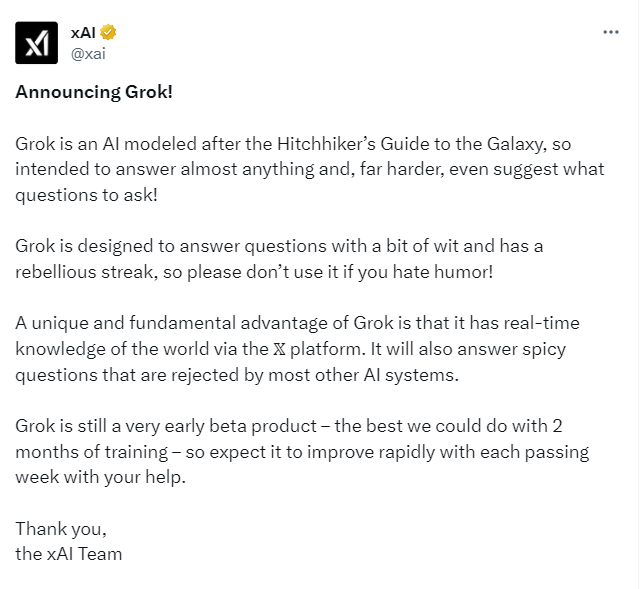
  • Grok is Elon Musk’s xAI Corp’s newest generative AI, promising a blend of humour and curiosity.
  • Currently in closed beta, Grok is available to verified X users in the US on an invite-only basis.
  • Grok has scored competitively in math and reasoning benchmarks, despite only two months of training.

Elon Musk’s tech venture into artificial intelligence has taken a significant leap forward with the introduction of Grok by his latest startup, xAI Corp.

In a landscape populated with large language models (LLMs), Grok emerges as xAI’s flagship generative AI, poised to contend with established counterparts such as OpenAI’s ChatGPT and Google’s LaMDA.

Grok Enters the Generative AI Arena

Elon Musk's xAI Launches Grok
Elon Musk’s xAI Launches Grok

xAI Corp didn’t waste any time before bringing Grok to the forefront, strategically timing its announcement ahead of OpenAI’s inaugural developer conference.

The genesis of Grok draws upon the expertise of former engineers from OpenAI, Google, and DeepMind.

Benchmarking Grok: The Current Standings and Future Potentials

Amid its infancy in a closed beta phase, Grok has already shown a flair for humour and a strong propensity for ‘truth curiosity’ – a unique selling proposition that sets it apart from more conventional AI models.

While the rest of the globe awaits, selected US users, distinguished as verified X users, hold the exclusive privilege to tinker with Grok’s beta version.

Grok’s subscription model is straightforward yet exclusive: it’s earmarked for X Premium+ subscribers, carrying the premium tag with its pricing structure.

As for its capabilities, Grok extends beyond the confines of traditional chatbot functionalities.

Benchmarking Grok: The Current Standings and Future Potentials

It boasts real-time access to the microblogging X data, promising a range of answers from the standard to the esoteric, complete with a touch of whimsy.

Early benchmarks shared by xAI paint a promising picture of Grok’s performance.

Even with a mere two months of training, it already eclipses GPT-3.5 and Inflection-1 in early tests, and while it trails behind Google’s Palm-2 and GPT-4, the expectation is a swift ascension in capability with ongoing development.

Grok’s mathematical prowess is already on display.

Having been put through the gauntlet of the 2023 Hungarian national high school finals in mathematics, Grok secured a respectable C-grade.

Looking Ahead

ChatGPT in Generative AI Technology

The future holds an array of enhancements for Grok, with its knowledge base – dubbed ‘The Pile’ – already comprising a massive 886.03 GB.

This vast reservoir, coupled with exabytes of data from X, ensures Grok’s evolution is merely at the daybreak.

xAI’s roadmap for Grok teases potential forays into image and audio recognition, as well as image generation – features that will undoubtedly expand its utility.

FAQs

What sets Grok apart from other generative AI models in the market?

Developed by Elon Musk’s xAI Corp, Grok is infused with a unique sense of humour and truth curiosity, setting it apart from its peers. It’s designed to engage with users differently, answering a wide range of questions with wit and intelligence.

How can I gain access to Grok?

Access to Grok is currently limited to a select group of verified X users in the United States through an invite-only closed beta program. Eligible users can sign up for the waitlist on the xAI website to potentially receive an invitation.

What are the current capabilities of Grok, and what is expected in the future?

Grok is currently ahead of GPT-3.5 in early benchmarking and will soon incorporate additional features such as image and audio recognition. Integration with Tesla vehicles and the ability to generate images are also planned for future updates.

How does Grok perform in terms of reasoning and complex problem-solving?

Grok has demonstrated competitive math and reasoning skills, achieving a C-grade on the 2023 Hungarian national high school finals in mathematics test. It’s designed to outperform its contemporaries with more development and training.

Also Read: Reviving the Classic Twitter Bird: How to Restore the Original Logo on iPhone, Android, and Web Browsers

Also Read: X Enters, Iconic Bird Logo Exits: Elon Musk Rebrands Twitter Social Media Platform

Poco C65 Launched in the US with Helio, 90Hz Display: Pricing, Features, Specs, and, More

0

Highlights

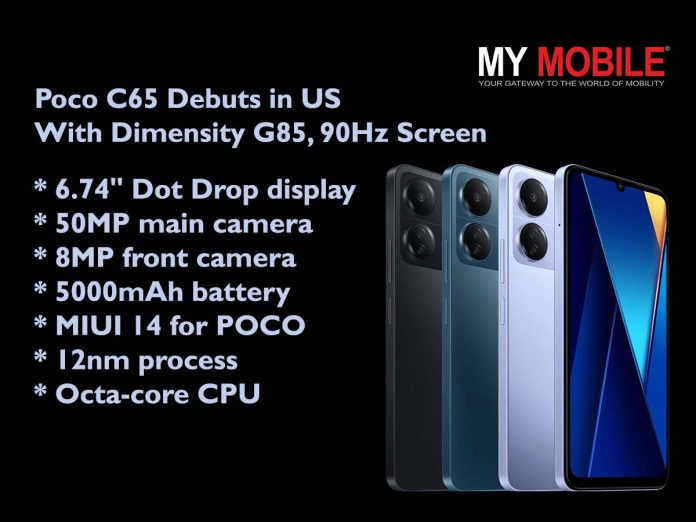
  • Poco C65 debuts with a MediaTek Helio G85 chipset and a robust 5,000mAh battery.
  • Features a 6.74-inch HD+ display with 90Hz refresh rate, protected by Corning Gorilla Glass.
  • Offers dual rear cameras with a 50MP main sensor and an 8MP front camera for crisp imaging.
  • Available in two variants with up to 8GB RAM and 256GB storage, starting at an affordable $129.

Poco has officially raised the curtains on the Poco C65, a direct successor to the Poco C55, and it’s clear the tech company aims to continue its legacy of providing powerful specs at an attractive price point.

Unveiled on November 5, the Poco C65 makes a global splash, first hitting the shelves in the United States, with tech enthusiasts awaiting its introduction to other markets including India.

Pricing and Availability

The new iteration, available in stylish shades of Black, Blue, and Purple, promises to deliver a seamless user experience.

It’s competitively priced at $129 for the 6GB + 128GB variant and $149 for the 8GB + 256GB model, with early bird offers making it even more accessible to budget-conscious buyers.

Poco C65 Launched in the US

Poco C65: Features and Specs

The Poco C65 maintains the essence of its predecessor with the MediaTek Helio G85 SoC and the significant 5,000mAh battery unit.

However, it distinguishes itself with notable upgrades in RAM, storage, and charging capabilities.

Diving into the specs, the Poco C65 showcases a sizable 6.74-inch HD+ display, featuring a smooth 90Hz refresh rate and the durability of Corning Gorilla Glass.

Operating on the Android 13-based MIUI 14 for Poco, it ensures a user-friendly interface backed by contemporary software ingenuity.

Budget photography aficionados will appreciate the dual rear camera setup, led by a 50MP primary sensor, while selfie enthusiasts can rely on the sharp 8MP front-facing camera to capture life’s moments.

Apart from that the 256GB of internal storage is expandable via a microSD card slot, inviting users to store more without compromising on performance.

The 18W fast charging helps the Poco C65 to juice up quickly while its extensive connectivity options from 4G VoLTE to Bluetooth 5.1 mean you’re always just a tap away from the rest of the world.

Security is heightened with a responsive side-mounted fingerprint sensor, encapsulating convenience and safety in one sleek package.

Poco C65 Key Specs

GENERAL

Sim Type Dual Sim, GSM+GSM
Dual Sim Yes
Sim Size Nano+Nano SIM
Device Type Smartphone
Release Date November 5, 2023

DESIGN

Dimensions 78 x 168 x 8.09 mm
Weight 192 g
Colors Black, Blue, Purple

DISPLAY

Type Color IPS LCD Screen (16M Colors)
Touch Yes
Size 6.74 inches, 720 x 1600 pixels, 90 Hz
Aspect Ratio 20.6:9
PPI ~ 260 PPI
Screen to Body Ratio ~ 93%
Glass Type Corning Gorilla Glass
Features 450 nits (typ), 600 nits
Notch Yes, Water Drop Notch

MEMORY

RAM 6 GB
Expandable RAM Upto 6 GB Extra Virtual RAM
Storage 128 GB
Card Slot Yes, upto 1 TB

CONNECTIVITY

GPRS Yes
EDGE Yes
3G Yes
4G Yes
VoLTE Yes
Wifi Yes, with wifi-hotspot
Wifi Version 2.4GHz, 5GHz
Bluetooth Yes, v5.3, A2DP, LE
USB Yes, USB-C v2.0
USB Features USB Tethering, USB on-the-go, USB Charging
IR Blaster No

EXTRA

GPS Yes, with A-GPS, Glonass, Beidou
Fingerprint Sensor Yes, Side
Face Unlock Yes
Sensors Accelerometer, Proximity, Compass
3.5mm Headphone Jack Yes
Splash Resistant Yes
Extra Features LPDDR4X RAM

CAMERA

Rear Camera 50 MP f/1.8 (Wide Angle)
2 MP f/2.4 (Macro) with autofocus
Features Photo Mode, 50MP Mode, Timelapse, Night Mode, Portrait Mode, Document Mode, Movie Frame, Voice Shutter, Tilt Shift, Timed Burst
Video Recording 1080p @ 30 fps FHD, 720p @ 30 fps HD
Flash Yes, LED
Front Camera 8 MP f/2.2 (Wide Angle) with Screen Flash
Front Video Recording 1080p @ 30 fps FHD

TECHNICAL

OS Android v13
Custom UI MIUI 14
Chipset MediaTek Helio G85
CPU 2 GHz, Octa Core Processor
Core Details 2×2.0 GHz Cortex-A75 & 6×1.8 GHz Cortex-A55
GPU Mali-G52 MC2
Java No
Browser Yes, supports HTML5

MULTIMEDIA

Email Yes
Music Yes
Video Yes
FM Radio Yes
Document Reader Yes

BATTERY

Type Non-Removable Battery
Size 5000 mAh, Li-Po Battery
Fast Charging Yes, 18W

FAQs

Q: What are the key features of the Poco C65?

A: The Poco C65 boasts a MediaTek Helio G85 SoC, a 5,000mAh battery, a 6.74-inch HD+ display with a 90Hz refresh rate, dual rear cameras including a 50MP primary sensor, and runs on Android 13-based MIUI 14.

Q: How is the camera performance on the Poco C65?

A: The Poco C65 is equipped with a dual rear camera setup featuring a 50MP primary sensor and a 2MP macro lens, and an 8MP front-facing camera, offering users high-quality photography and video capabilities.

Q: What are the pricing and storage options for the Poco C65?

A: The Poco C65 is priced at $129 for the 6GB + 128GB model and $149 for the 8GB + 256GB variant, with expandable storage options up to 1TB, providing ample space for apps and media.

Q: When will the Poco C65 be available in markets outside the US?

A: The launch dates for the Poco C65 in markets outside the US, including India, have not been announced yet. The company is expected to provide details on international availability soon.

Also Read: POCO C51 Airtel Exclusive special edition to be available for Rs.5,999 on Flipkart, sale to start from July 18: Encouraging First Time Internet Users with Affordable 4G Experience

Also Read: Poco C51 with Helio G36 SoC, 5000mAh Battery Launched in India: Price, Specifications & Availability

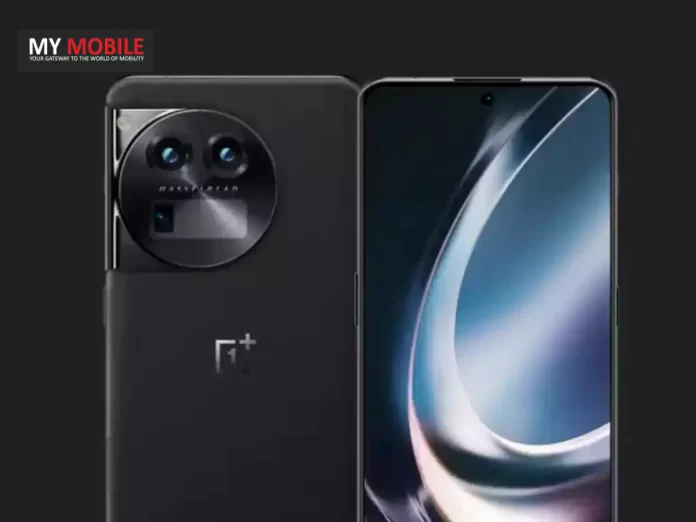
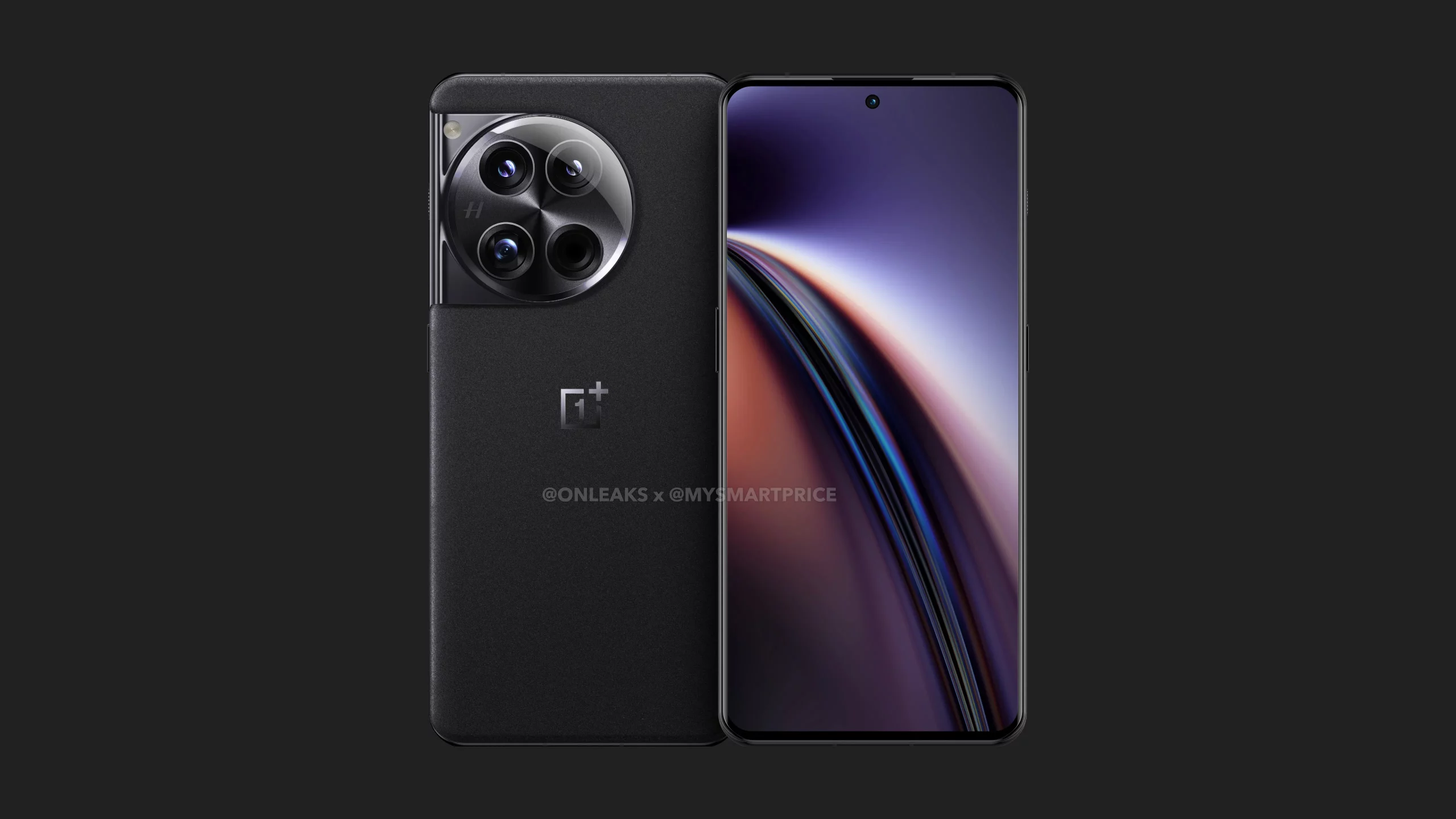
OnePlus 12 Emerges on 3C Certification Website Signaling Impressive Tech Upgrades

0
OnePlus 12 Emerges on 3C Certification Website

Highlights

  • OnePlus 12 (PJD110) confirmed to feature 100W wired and 50W wireless charging 
  • Sony LYTIA sensor integration revealed through Weibo
  • The device sets a performance benchmark with Snapdragon 8 Gen 3, showcasing over two million points on AnTuTu.

New details about the OnePlus 12 have emerged that are likely to stir excitement among smartphone enthusiasts.

It would seem that the OnePlus 12 has been recently seen on the 3C certification website which not only reaffirms its imminent launch but also sheds light on some of the device’s cutting-edge features.

Confirmed Features from Certifications and Leaks

The OnePlus 12, carrying the model number PJD110, has revealed a glimpse of its charging prowess through the 3C certification listing.

While retaining the 100W wired fast charging specification of its predecessor, the OnePlus 12 elevates its positioning with the expected inclusion of 50W wireless charging capabilities.

OnePlus 12 Emerges on 3C Certification Website

With official samples gracing Weibo, Sony’s LYTIA sensor integration in the OnePlus 12 has also been confirmed, signalling major strides in its photographic capabilities.

The anticipated triple rear camera array with a primary 50MP Sony IMX966 sensor, complemented by a 48MP wide-angle lens and a 64MP periscope lens, all of which are likely to deliver a versatile and powerful imaging experience.

Expected Performance and Display Enhancements

The OnePlus 12 is expected to harness the power of the Snapdragon 8 Gen 3 chipset, a revelation that came to light when the device was spotted on the AnTuTu benchmarks.

Scoring over two million points, the OnePlus 12 is poised to be a behemoth in processing capability, setting a high bar for performance among its contemporaries.

OnePlus 12 Expected Performance

Anticipation is also pretty high for the display quality of the OnePlus 12, as it is expected to feature an AMOLED panel sourced from BOE with a sharp 2K resolution and a smooth 120Hz refresh rate.

However, the true highlight is likely going to be an eye-watering 3000nits of peak brightness on offer.

As the rumour mill keeps churning out more leaks, one thing is clear: the OnePlus 12 is going to shake the smartphone industry.

ONEPLUS 12 KEY SPECIFICATION

Key Specs

RAM 8 GB
Processor Qualcomm Snapdragon 888
Rear Camera 50 MP + 8 MP + 48 MP
Front Camera 32 MP
Battery 5000 mAh
Display 6.7 inches (17.02 cm)

General

Launch Date June 7, 2023 (Unofficial)
Operating System Android v12

Performance

Chipset Qualcomm Snapdragon 888
CPU Octa core (2.84 GHz, Single core, Kryo 680 + 2.42 GHz, Tri core, Kryo 680 + 1.8 GHz, Quad core, Kryo 680)
Architecture 64 bit
Fabrication 5 nm
Graphics Adreno 660
RAM 8 GB

Display

Display Type OLED
Screen Size 6.7 inches (17.02 cm)
Resolution 1080 x 2400 pixels
Pixel Density 393 ppi
Screen Protection Corning Gorilla Glass v5
Bezel-less display Yes with punch-hole display
Touch Screen Yes, Capacitive Touchscreen, Multi-touch

Camera

MAIN CAMERA
Camera Setup Triple
Resolution 50 MP, Primary Camera
8 MP
48 MP
Autofocus Yes
Flash Yes, LED Flash
Image Resolution 8150 x 6150 Pixels
Settings Exposure compensation, ISO control
Shooting Modes Continuous Shooting
High Dynamic Range mode (HDR)
Camera Features Digital Zoom
Auto Flash
Face detection
Touch to focus
Video Recording 1920×1080 @ 30 fps
FRONT CAMERA
Camera Setup Single
Resolution 32 MP, Primary Camera
Video Recording 1920×1080 @ 30 fps

Battery

Capacity 5000 mAh
Type Li-Polymer
Removable No
Quick Charging Yes, Fast
USB Type-C Yes

Storage

Internal Memory 128 GB
Expandable Memory No

Network & Connectivity

SIM Slot(s) Dual SIM, GSM+CDMA
SIM Size SIM1: Nano, SIM2: Nano
Network Support 5G Not Supported in India, 4G Supported in India, 3G, 2G
VoLTE Yes
SIM 1
4G Bands:
TD-LTE 2300(band 40)
FD-LTE 1800(band 3)
3G Bands:
UMTS 1900 / 2100 / 850 / 900 MHz
2G Bands:
GSM 1800 / 1900 / 850 / 900 MHz
GPRS:
Available
EDGE:
Available
SIM 2
4G Bands:
TD-LTE 2300(band 40)
FD-LTE 1800(band 3)
3G Bands:
UMTS 1900 / 2100 / 850 / 900 MHz
2G Bands:
GSM 1800 / 1900 / 850 / 900 MHz
GPRS:
Available
EDGE:
Available
Wi-Fi Yes, Wi-Fi 4 (802.11 b/g/n)
Wi-Fi Features Mobile Hotspot
Bluetooth Yes, v5.2
GPS Yes with A-GPS, Glonass
NFC Yes
USB Connectivity Mass storage device, USB charging

Multimedia

Loudspeaker Yes
Audio Jack USB Type-C

Sensors

Fingerprint Sensor Yes
Fingerprint Sensor Position On-screen
Fingerprint Sensor Type Optical
Other Sensors Light sensor, Proximity sensor, Accelerometer, Compass, Gyroscope

FAQs

What does the 3C certification reveal about the OnePlus 12’s charging capabilities?

The 3C certification for the OnePlus 12 confirms that the device will support 100W wired fast charging and introduce 50W wireless charging. This positions the OnePlus 12 as a strong competitor in the market for fast-charging smartphones, providing users with both speed and flexibility in power management.

How does the Sony LYTIA sensor enhance the OnePlus 12 camera?

The integration of the Sony LYTIA sensor in the OnePlus 12 is expected to elevate the device’s photographic capabilities significantly. It will likely offer enhanced dynamic range, detail in photos, and overall improved imaging performance, especially in the primary 50MP camera setup.

What kind of performance can be expected from the OnePlus 12?

With the Snapdragon 8 Gen 3 chipset at its core, the OnePlus 12 is anticipated to deliver outstanding performance. This has been evidenced by its record-breaking AnTuTu benchmark score, indicating that the device will provide smooth, efficient, and high-speed operations.

Also Read: OnePlus Open Launched in India With Folding AMOLED Screen, Snapdragon 8 Gen 2: Pricing, Specs, Features, and More

Also Read: OnePlus Open Leaks Suggest Longevity of 10 Years with 100 Folds Daily

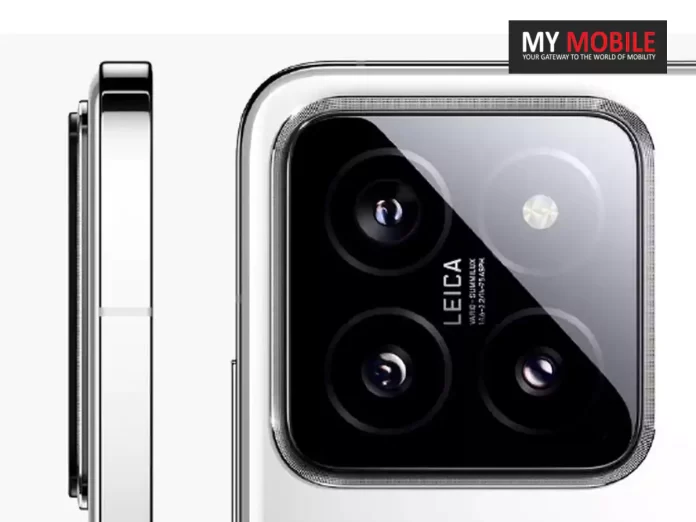
Xiaomi 14 Ultra To Reportedly Sport a Sony LYT-900 1-inch Sensor, Launch in 2024

0
Xiaomi 14 Ultra

Highlights

  • Tipped for a Q1 2024 release, possibly in March.
  • Rumoured inclusion of a Sony LYT-900 camera sensor with a 1-inch size for superior photo quality.
  • Expected to feature a Snapdragon 8 Gen 3 chipset for peak performance.
  • Anticipated 2K slightly curved display for an immersive viewing experience.

Chinese smartphone giant Xiaomi recently unveiled the Xiaomi 14 and 14 Pro in the Chinese markets but fresh rumours are already surfacing about their next potential flagship marvel the Xiaomi 14 Ultra.

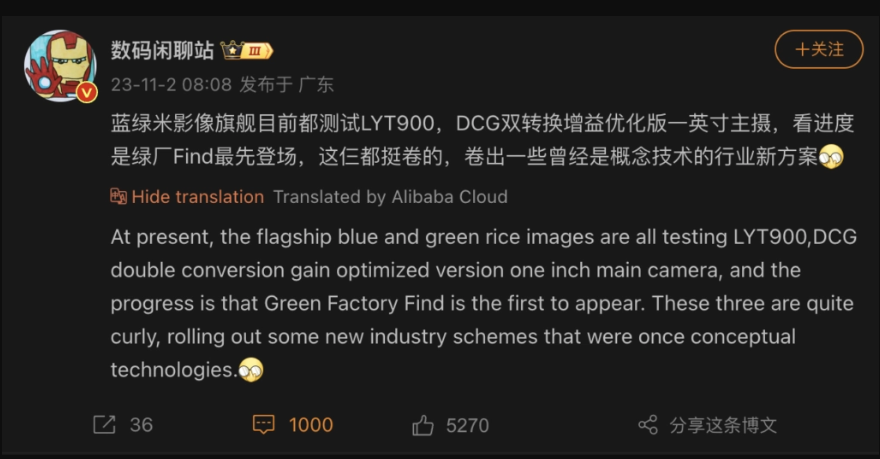
Slated for a possible release in the first quarter of 2024, the Ultra model is rumoured to be eyeing a game-changing camera upgrade in the form of a Sony Lytia LYT-900 camera sensor.

From the corridors of online tech forums on Weibo, spearheaded by the reputable tipster DigitalChatStation, the anticipation for the Xiaomi 14 Ultra is palpable.

Though the tipster’s posts are cryptic, they are widely interpreted as hints towards the launch of the Ultra model, tentatively set for Q1, 2024, with some even pinpointing March as the likely debut month.

Xiaomi 14 Ultra To Reportedly Sport a Sony LYT-900 1-inch Sensor

This launch timeline is not unprecedented, mirroring the interval between the Xiaomi 13 series and its Ultra counterpart.

Among the most exciting whispers is the prospect of the Xiaomi 14 Ultra coming equipped with the Sony Lytia LYT-900 camera sensor.

The LYT-900 isn’t just another sensor—it’s reported to boast a formidable 1-inch size, promising to catapult smartphone photography to dazzling new heights.

If these rumours solidify, Xiaomi fans can expect to see images with unprecedented dynamic range and detail, thanks to the sensor’s Dual Conversion Gain technology.

Camera capabilities could further expand with a suite of 50MP sensorsspanning from ultra-wide to 3x and 5x zoom capabilities, complemented by a macro mode, promising versatility for both panoramic landscapes and intricate close-ups.

Xiaomi 14 Ultra feature a 2K screen
Xiaomi 14 Ultra Feature a 2K Screen

Under the hood, the Xiaomi 14 Ultra is expected to house the Snapdragon 8 Gen 3 chipset, keeping it in line with its siblings in terms of raw power.

The device’s front is rumoured to feature a 2K screen, gently cascading along the edges for a subtly curved visual experience.

On the software front, the new entrant is likely to run on the Android 14-based HyperOS, continuing Xiaomi’s tradition of pairing high-end hardware with sleek, user-friendly software.

Xiaomi 14 Ultra Key Specs

GENERAL

Sim Type Dual Sim, GSM+GSM
Dual Sim Yes
Sim Size Nano+Nano SIM
Device Type Smartphone
Release Date December 22, 2023 (Expected)

DISPLAY

Type Color AMOLED Dot Display (1B Colors)
Touch Yes
Size 6.67 inches, 1440 x 3200 pixels, 144 Hz
Aspect Ratio 20:9
PPI ~ 515 PPI
Screen to Body Ratio ~ 91.4%
Glass Type Corning Gorilla Glass Victus 2
Features HDR10+, AI display Supports, Sunlight Display 3.0, Display Mate A+, Reading Mmode 3.0, 360° Ambient Light Sensors 2.0, Curved Display
Notch Yes, Punch Hole

MEMORY

RAM 12 GB
Storage 256 GB
Storage Type UFS 4.0
Card Slot No

CONNECTIVITY

GPRS Yes
EDGE Yes
3G Yes
4G Yes
5G Yes
VoLTE Yes, Dual Stand-By
Vo5G Yes
Wifi Yes, with wifi-hotspot
Bluetooth Yes, v5.3, A2DP, LE, aptX HD
USB Yes, USB-C v2.0
USB Features USB Tethering, USB on-the-go, USB Charging
IR Blaster Yes

EXTRA

GPS Yes, with tri-band A-GPS, GLONASS, BeiDou, NavIC Support
Fingerprint Sensor Yes, In Display
Face Unlock Yes
Sensors Proximity, Ambient Light Sensor, Accelerometer, Gyroscope, Electric Compass, Hall Sensor, X-axis Linear Motor, Grip Sensor, Barometer, Rear Light Sensor, Flicker Sensor, Multi-dot Laser Focus Sensor
3.5mm Headphone Jack No
Extra NFC
Water Resistance Yes, 1.5 m upto 30 min
IP Rating IP68
Dust Resistant Yes

CAMERA

Rear Camera 50 MP
50 MP
50 MP (periscope)
50 MP with autofocus
Features HDR, Night Mode 2.0, Ultra Night Photos, Portrait, AI Beauty, AI Smart Slimming, Custom Watermark,
Video Recording 8K, 4K, 1080p, 720p
Flash Yes, Dual LED
Front Camera Punch Hole 32 MP f/2.2 (Wide Angle) with Autofocus and Screen Flash
Front Video Recording 1080p, 720p

TECHNICAL

OS Android v14
Custom UI MIUI 14
Chipset Qualcomm Snapdragon 8 Gen3
CPU Octa Core Processor
GPU Adreno GPU
IP Rating IP68
Java No
Browser Yes

MULTIMEDIA

Email Yes
Music MP3, FLAC, APE, AAC, OGG, WAV, WMA, AMR, AWB
Video MP4, MKV, AVI, WMV, WEBM, 3GP, ASF playback
FM Radio No
Document Reader Yes

BATTERY

Type Non-Removable Battery
Size 5000 mAh, Li-Po Battery
Fast Charging Yes, 120W Fast Charging
Wireless Charging Yes, 55W
Reverse Charging Yes, 15W

FAQs

What is the expected launch date for the Xiaomi 14 Ultra?

The Xiaomi 14 Ultra is rumoured to launch in the first quarter of 2024, with March being the potential month based on industry whispers and hints from prominent tipsters.

How will the Sony LYT-900 sensor enhance the Xiaomi 14 Ultra’s camera capabilities?

The Sony LYT-900 camera sensor, expected in the Xiaomi 14 Ultra, is a 1-inch sensor that could bring Dual Conversion Gain technology. This means improved dynamic range and detail in photos, potentially setting new standards for mobile photography.

What processor might the Xiaomi 14 Ultra use?

The Xiaomi 14 Ultra is anticipated to be powered by the Snapdragon 8 Gen 3 chipset, ensuring that it stands on par with the best in terms of processing speed and efficiency.

What type of display can we expect from the Xiaomi 14 Ultra?

The device is rumored to sport a 2K resolution display that features slight curves along its edges, aiming to provide users with a visually immersive and ergonomic experience.

Also Read: Xiaomi to launch Android 13-based MIUI 14 with India-exclusive features to release on February 27th

Also Read: Xiaomi Smartphones’ Battery Customization Via MIUI

Vivo X100 Spec Sheet Reportedly Revealed Ahead of China Launch This Month

0
Vivo X100 Spec Sheet Reportedly Revealed Ahead of China Launch This Month

Highlights

  • Vivo X100 To Reportedly Feature MediaTek Dimensity 9300, LPDDR5T RAM, and UFS 4.0 A 6.78-inch 120Hz AMOLED screen for crisp, fluid visuals.
  • Triple camera setup with 50MP main and 64MP periscope lenses, equipped with OIS.
  • Long-lasting 5,000mAh battery with 120W fast charging support.

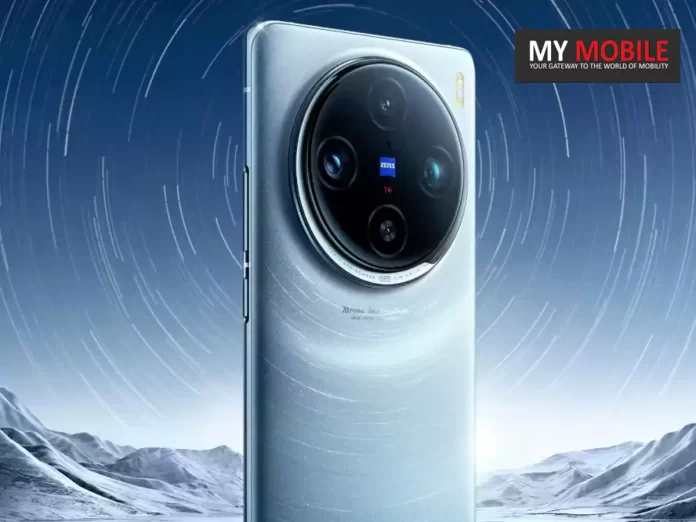
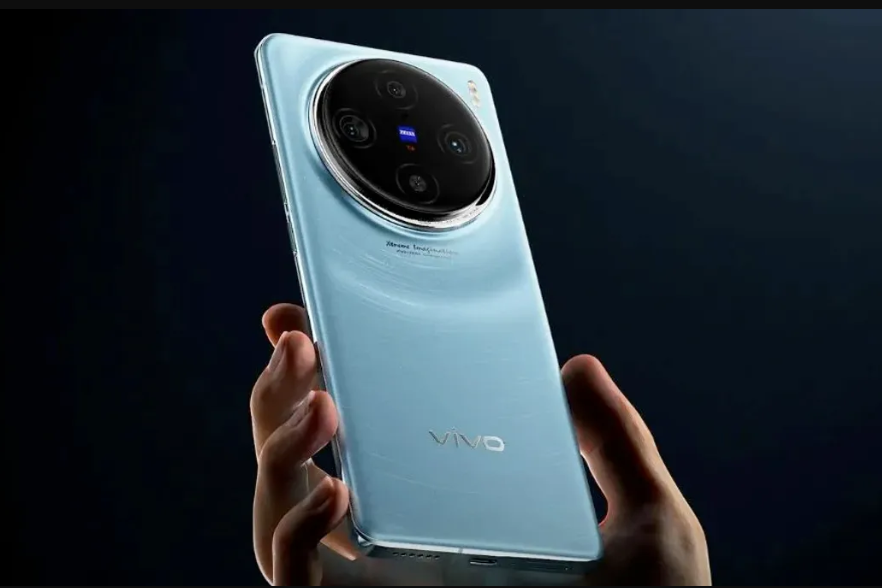
In a significant revelation before its official launch, the Vivo X100’s full spec sheet has been leaked, providing tech enthusiasts with a tantalizing preview of what to expect from the latest addition to Vivo’s flagship series.

Slated for release in China on November 13th, the Vivo X100’s detailed specifications have surfaced courtesy of a 91mobiles report, hinting at a robust device that combines high-end features with competitive pricing.

Pricing and Variants

The expected starting price for the Vivo X100 is pegged at CNY 3,999 (about Rs 45,500), suggesting an approachable entry point for a flagship.

The device is also rumoured to come in an array of color options and multiple storage variants, catering to diverse preferences and needs.

Vivo X100 Expected Features

Vivo X100 Spec Sheet Reportedly Revealed Ahead of China Launch This Month

The Vivo X100 is anticipated to be a powerhouse, boasting the cutting-edge Mediatek Dimensity 9300 (4nm) chipset.

It is also expected to be paired with the latest LPDDR5T RAM and the swift UFS 4.0 storage, recently seen on the Xiaomi 14 series, suggesting that Vivo is not holding back in ensuring the X100 operates with remarkable speed and efficiency.

Visuals are set to be helped by a 6.78-inch AMOLED display with a 120Hz refresh rate and the 2800x1260p resolution guarantees sharp and vibrant images, catering to both gamers and binge-watchers.

As for the optical setup, the Vivo X100 will reportedly have a triple rear camera array featuring a 50MP main sensor, a 50MP ultrawide lens, and a 64MP periscope telephoto lens.

Apart from that there is also going to be an inclusion of OIS and laser focus features that indicate a serious focus on image clarity.

Selfie lovers are still remembered, with a 32MP front camera poised for capturing high-quality portraits.

A hefty 5,000mAh battery is expected to keep the lights on, complemented by a 120W fast charging capability.

The device is set to run on OriginOS 4 based on Android 14, a new interface recently touted by Vivo.

Notably, the Vivo X100 is said to support India’s NavIC system, indicating potential availability in India post-launch.

NavIC’s compatibility is a nod to regional GPS alternatives and positions the X100 as a future-ready device in the Indian market.

VIVO X100 5G KEY SPECIFICATIONS

GENERAL

Sim Type Dual Sim, GSM+GSM
Dual Sim Yes
Sim Size Nano SIM
Device Type Smartphone
Release Date November 13, 2023 (Expected)

DESIGN

Bezel less Yes
Colors Black, Red, Blue

DISPLAY

Type Color AMOLED Screen (1B Colors)
Touch Yes
Size 6.78 inches, 1260 x 2800 pixels, 120 Hz
Aspect Ratio 20:9
PPI ~ 453 PPI
Screen to Body Ratio ~ 90.9%
Features HDR10+, P3 Color Gamut
Notch Yes, Punch Hole

MEMORY

RAM 8 GB
Storage 128 GB
Card Slot No

CONNECTIVITY

GPRS Yes
EDGE Yes
3G Yes
4G Yes
5G Yes
5G Bands 1, 3, 5, 8, 28, 41, 77, 78 SA/NSA
VoLTE Yes, Dual Stand-By
Wifi Yes, with wifi-hotspot
Bluetooth Yes, v5.3, A2DP, LE, aptX HD
USB Yes, USB-C v2.0
USB Features USB Tethering, USB on-the-go, USB Charging
IR Blaster Yes

EXTRA

GPS Yes, with dual-band A-GPS, GLONASS, GALILEO, NavIC
Fingerprint Sensor Yes, In Display
Face Unlock Yes
Sensors Fingerprint (under display, optical) accelerometer, gyro, proximity, compass, color spectrum
3.5mm Headphone Jack No
Extra NFC
Water Resistance Yes
IP Rating IP64
Dust Resistant Yes
Extra Features V3 Chip, LPDDR5T DRAM

CAMERA

Rear Camera 64 MP 1/1.49″, 1.0µm, PDAF, Laser AF, OIS f/1.8 (Wide Angle)
12 MP 50mm, 1/2.9″, 1.22µm, PDAF, 2x optical zoom f/2 (Telephoto)
12 MP 16mm, 1/2.93″, 1.22µm, AF f/2 (Ultra Wide) with autofocus
Features Zeiss optics, Zeiss T* lens coating, Pixel Shift, dual-tone , HDR, panorama
Video Recording 4K @ 30 fps UHD, 1080p @ 30 fps FHD
Flash Yes, Dual LED
Front Camera Punch Hole 32 MP 24mm, 1/2.8″, 0.8µm f/2.5 (Wide Angle) with Screen Flash
Front Video Recording 4K @ 30 fps UHD, 1080p @ 30 fps FHD

TECHNICAL

OS Android v14
Custom UI OriginOS 4
Chipset MediaTek Dimensity 9300
CPU Octa Core Processor
GPU Arm GPU
IP Rating IP64
Java No
Browser Yes

MULTIMEDIA

Email Yes
Music WAV, MP3, MP2, MIDI, Vorbis, APE, FLAC
Video MP4, 3GP, AVI, Video Recording: MP4
FM Radio No
Document Reader Yes

BATTERY

Type Non-Removable Battery
Size 5000 mAh, Li-ion Battery
Fast Charging Yes, 120W FlashCharge

FAQs

What makes the Vivo X100 stand out in the current smartphone market?

The Vivo X100 sets itself apart with its MediaTek Dimensity 9300 processor, high-refresh-rate AMOLED display, and a versatile camera system with OIS. These premium features, combined with fast charging technology, make it a formidable contender in the flagship segment.

How does the Vivo X100 camera system enhance the photography experience?

The Vivo X100’s camera system is designed for versatility and quality. With a 50MP primary sensor, a 50MP ultrawide lens, and a 64MP periscope telephoto lens with OIS, users can capture sharp images across various focal lengths. The laser focus system further aids in quick and precise focusing, essential for capturing crisp photos.

Will the Vivo X100 be suitable for gaming and multimedia consumption?

Absolutely. The Vivo X100 is expected to excel in gaming and multimedia tasks with its 120Hz high-definition AMOLED display and the powerful MediaTek Dimensity 9300 chipset, ensuring smooth gameplay and dynamic visual content delivery.

Can we expect long battery life and quick charging times with the Vivo X100?

Yes, the Vivo X100’s 5,000mAh battery is designed for extended use, and when paired with the 120W fast charging, it promises to deliver not just longevity but also rapid recharge times, reducing the duration users are tethered to an outlet.

Also Read: VIVO X100 PRO+ WILL BE THE FIRST SMARTPHONE WITH A 200 MP TELEPHOTO LENS: LEAK REVEALS DESIGN DETAILS

Also Read: Vivo X100 Series Chipset Details Tipped Ahead of Launch in Q4 of 2023

Samsung Targets High-End Smartphone Dominance with 2024 Galaxy Series

0
Samsung Targets High-End Smartphone Dominance with 2024 Galaxy Series

Highlights

  • Samsung shifts focus to luxury market, launching Galaxy S24 and new foldables in 2024.
  • Aiming to boost Average Selling Price, Samsung seeks to challenge Apple’s premium segment lead.
  • Corporate VP Daniel Araujo bullish on doubling flagship shipments to outpace market.

Samsung has revealed a strategic pivot towards the luxury market—a move poised to redefine its brand identity and market positioning.

With the announcement of its Galaxy S24 series and the innovative Galaxy Z Fold 6 and Galaxy Z Flip 6, Samsung is no longer content playing second fiddle in the premium segment.

This tactical shift signals Samsung’s ambition to dethrone its competitors and carve a dominant presence in the high-end smartphone arena.

Historically, Samsung’s forte has been its diverse range of mid-tier smartphones, which propelled the company to the forefront of the global market.

However, 2024 is set to mark a new epoch for the South Korean titan, with intentions to amplify its Average Selling Price (ASP) and snatch a larger slice of the luxury market pie.

Samsung’s current ASP hovers around $295—starkly contrasting Apple’s lofty $988 ASP.

By channeling its efforts into the upscale category, Samsung aims to narrow this disparity significantly.

Samsung’s Future Positioning

Samsung’s Future Positioning

With the Galaxy S24 lineup and the next generation of Galaxy Z foldables on the horizon, Samsung’s strategy is clear: to entice a clientele with a penchant for the finer things in technology.

The consumer electronics heavyweight is betting on a rising tide of premium demand to supercharge its smartphone replacement cycle in the forthcoming year.

Daniel Araujo, the Corporate Vice President at Samsung’s MX business segment, stands behind this vision, citing the company’s previous successes with flagship sales that outpace market growth.

Amid aspirations to lead the premium phone market, Samsung’s goal extends to populating the best-selling smartphones list with its top-tier devices.

At present, the Galaxy S23 Ultra stands as Samsung’s lone warrior among the top ten shipped models in the first half of 2023.

By broadening its portfolio of high-priced handsets, the company endeavours to populate this list with more of its premium offerings.

With market analysts keeping a close eye on the impending duel between Samsung and Apple—both projected to target 250 million smartphone shipments in 2024—the stakes could not be higher.

Despite Apple’s surging prominence, Samsung’s aggressive focus on upscale smartphones might just tilt the scales in its favour, potentially maintaining its reign as the leading smartphone manufacturer.

FAQs

What is Samsung’s new strategy for the smartphone market in 2024?

Samsung’s 2024 strategy focuses on penetrating the premium smartphone segment more aggressively by releasing high-end models, including the Galaxy S24 series and the latest Galaxy Z Fold and Flip phones. This marks a strategic pivot from their traditional strength in the mid-range market to elevate their Average Selling Price and compete more directly with luxury brands.

How does Samsung’s Average Selling Price compare to Apple’s?

Samsung’s current Average Selling Price stands at around $295, which is considerably lower than Apple’s $988. By expanding their high-end product line, Samsung aims to close this gap and enhance its presence in the premium market space.

What are Samsung’s expectations for its premium smartphones?

Samsung expects to witness a surge in demand for premium smartphones, aligning with consumer replacement cycles. The company aims to capitalize on this demand, targeting double-digit growth in flagship shipments and sales growth that surpasses the overall market.

Also Read: Samsung Galaxy M34 5G and Galaxy F34 5G Spotted on BIS India Certification, Expected to Debut Soon

Also Read: Samsung Galaxy F54 5G India Price Revealed & Specifications leaked ahead of launch announcement

YouTube’s Latest Safety Measures Aim To Tackle Digital Wellbeing of Teens

0

Highlights

  • YouTube enhances safety with new content filters to protect teens from harmful material.

  • “Take a Break” reminders are set to default every 60 minutes, promoting healthier screen time habits.

  • Full-page crisis resource panels aim to provide immediate support for teens in distress.

In an era where digital platforms greatly influence youth behavior and development, YouTube has taken a proactive stance by rolling out new features that bolster the safety, privacy, and mental health of teenage users.

In line with recommendations from the Youth and Families Advisory Committee—a group with expertise in child development, e-learning, and kid-friendly mediaYouTube’s latest updates are a stride towards more mindful content consumption.

YouTube Youth Friendly Features

Recognizing the intricate challenges teenagers face online, YouTube has fine-tuned its algorithm to curtail the visibility of content that could potentially harm teens’ perceptions of body image, showcase idealistic physical attributes, or highlight aggressive behaviors without physical contact.

Initially impacting U.S. users, plans are in place to extend these protective measures globally within the next year.

Tools to Encourage Healthy Habits

YouTube Take A Break Feature Update

YouTube’s user interface now emphasizes digital well-being tools more prominently, such as the “Take a Break” and “Bedtime Reminder” features.

By setting a standard sixty-minute interval for break reminders, the platform empowers both teens and their guardians to cultivate balanced viewing habits.

To offer immediate support for users grappling with critical issues like suicidal ideation, self-harm, and eating disorders, YouTube has enriched its crisis resource panels.

This enhancement offers a comprehensive page of resources, including contact information for external crisis support and alternatives to encourage engagement with uplifting content.

Enhanced Support During Crisis

Beyond these in-platform adjustments, YouTube is forging partnerships with global entities like the WHO and Common Sense Networks to develop resources that advance the conversation on teens’ digital well-being.

Educational initiatives are also in the pipeline, aimed at guiding teens and parents in creating responsible content and fostering healthy online behaviors.

To this end, a consortium of specialists is slated to convene, devising foundational guidelines for age-suitable mental health content and methodologies to effectively disseminate online mental health resources to the youth.

FAQs

Q: What kind of content is YouTube filtering out to protect teens?

A: YouTube is being proactive by restricting teen access to content that may affect their body image or show harmful behaviors like non-contact fighting. This initiative is part of their wider strategy to create a safer online space for young users.

Q: How does YouTube’s ‘Take a Break’ feature work for teen users?

A: ‘Take a Break’ is a feature that prompts users to pause their viewing every hour. It’s designed to remind teens to step away from the screen regularly, helping them to establish more balanced and healthy viewing habits.

Q: Can you tell me more about the crisis resource panels on YouTube?

A: The crisis resource panels on YouTube have been expanded to offer full-page support for issues like suicide, self-harm, and eating disorders. When a user searches for related topics, they’re provided with resources and directed towards positive content.

Q: What is YouTube’s approach to developing online well-being resources for teens?

A: YouTube is working with organizations such as WHO to build comprehensive, age-appropriate resources. These include helping teens navigate content creation responsibly and understand the importance of online habits for mental health.