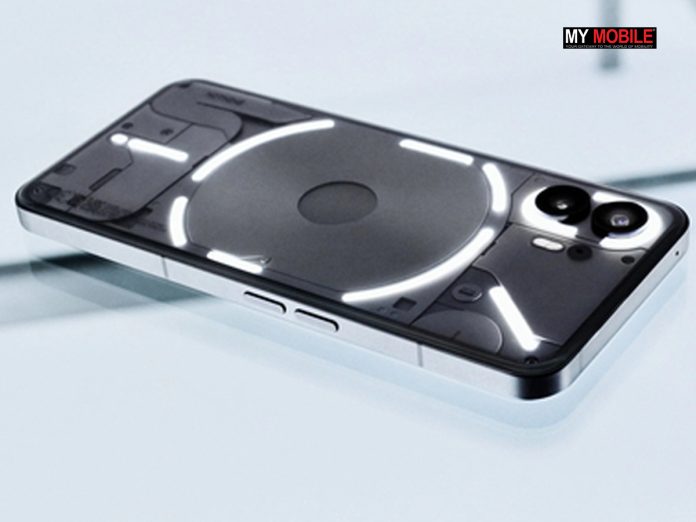
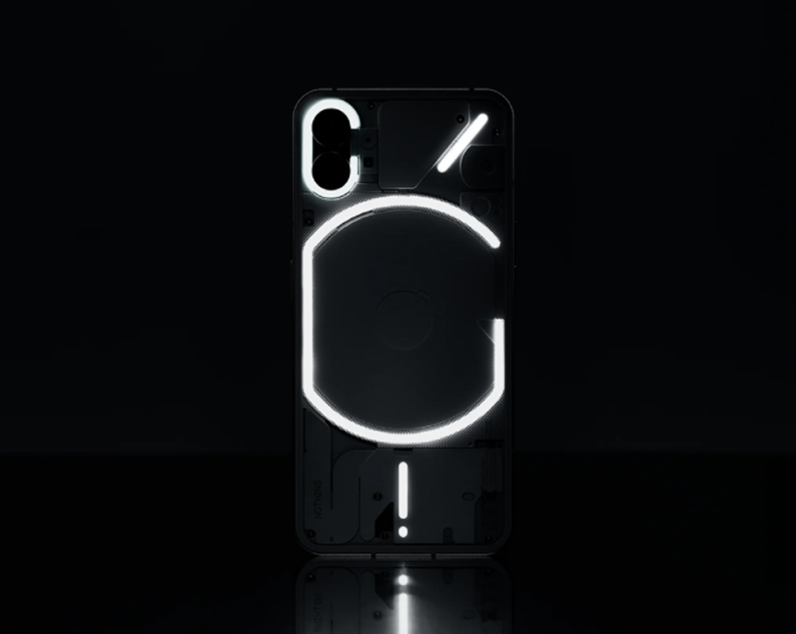
Nothing just confirmed that its signature rear light Glyph Interface is now being phased out.
Some fans speculate that the Phone (3) could feature a dot matrix-style display, aligning with Nothing OS 3.0’s design aesthetic.
While the Nothing Glyph lights were eye-catching, their practical use was limited.
Caption – Nothing shared an unexpected teaser about the Glyph Interface. (Image credit – Nothing)
Nothing is gearing up to launch its first true flagship, the Nothing Phone (3), this July. The brand has been teasing the upcoming device every now and then with mysterious posts on social media. However, a recent teaser was rather an unexpected update. The signature light setup on the back of previous models, which is better known as the Glyph Interface, is being phased out.
In a short video shared on X (formerly Twitter), Nothing says, “we killed the Glyph Interface” and shows the lights from the Phone (1) blinking before fading to black.
It’s a cryptic teaser, but one thing is clear that the Phone (3) won’t have the Glyph Interface as we know it.
Does this mean the Phone (3) will ditch the rear lights completely?
Not necessarily. Some fans are speculating that it could be replaced by a dot matrix-style display, something that matches the aesthetic of Nothing OS 3.0, which also uses this pattern in its design. In fact, Nothing even teased the Phone (3) launch with that same dot matrix look. But for now, it’s all just guesswork.
While the decision to phase out the brand identifier Glyph Interface might seem unexpected, it’s not entirely shocking. The Glyph lights were certainly eye-catching, but they never had a clear, practical use beyond a few niche features like showing notifications when the phone was placed face-down. Integration with apps like Uber and Calendar added some value, but it relied on users changing how they naturally use their phones.
With Phone (3), it looks like Nothing is aiming for a fresh start and possibly a more functional, flagship-focused design.
FAQs
Q1. Is Nothing completely removing the Glyph Interface from Phone (3)?
Answer. Yes, Nothing has confirmed that the Glyph Interface is being phased out, as revealed in a teaser video where the lights fade to black, signaling the end of the feature.
Q2. Will Phone (3) have an alternative rear design?
Answer. While Nothing hasn’t officially confirmed details, some fans speculate that it could feature a dot matrix-style display, aligning with Nothing OS 3.0’s aesthetic.
Q3. Why is Nothing removing the Glyph Interface?
Answer. The Glyph lights were visually striking, but their practical use was limited, mainly for face-down notifications. Nothing may be shifting toward a more functional flagship design.
Instagram now fully supports the 3:4 aspect ratio to ensure smartphone shots appear exactly as they were taken.
Previously, images were slightly cropped when uploaded but now users can post 3:4 images without losing any part of their composition.
The update reflects Instagram’s move toward vertical content, following changes in user profile grids earlier this year.
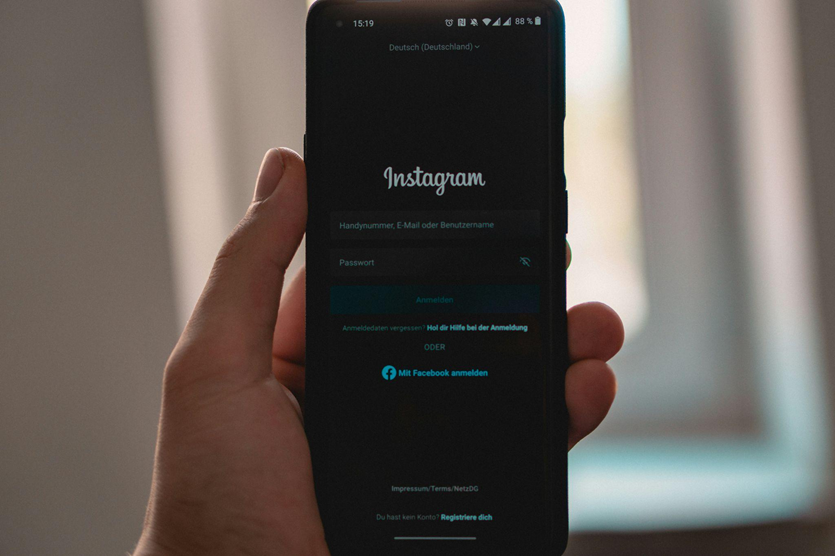
Caption – New Instagram update announced. (Photo by Cedrik Wesche on Unsplash)
Instagram is finally making life easier for smartphone photographers. The app now supports 3:4 aspect ratio photos, meaning your pictures will appear exactly how you shot them, which means there will be no more unexpected cropping.
Adam Mosseri, head of Instagram, shared the news on Threads. Mosseri wrote, “Instagram now supports 3:4 aspect ratio photos – the format that almost every phone camera defaults to. From now on, if you upload a 3:4 image, it’ll now appear just exactly as you shot it.”
View on Threads
Most smartphone cameras including iPhones shoot in the 3:4 (or 4:3 in landscape) aspect ratio by default. That’s the format filling up most people’s photo galleries. But until now, Instagram didn’t fully support it. Instead, the platform stuck with its long-standing 1:1 square format and 4:5 portrait format.
At first glance, 4:5 and 3:4 might seem similar, which is why many users didn’t notice their images were being slightly cropped. But that small difference meant parts of the top and bottom of your photos were often cut off when posting. Even if you tried pinching and adjusting the image in Preview, you were forced to sacrifice some part of your photo.
Caption – New update explainer posted by Instagram on its broadcast channel. (Image credit – Instagram)
Anyhow, Instagram now lets you upload 3:4 images without cropping, whether it’s a single photo or part of a carousel. An example shared through Instagram’s broadcast channel shows just how much of your original framing is now preserved.
Of course, you can still post in square (1:1) or 4:5 formats if you prefer. But this update means your photos can finally appear on Instagram just the way your phone captured them.
This move is part of Instagram’s ongoing shift away from its square-photo origins. Back in January, the platform also began using rectangular frames in user profile grids, reflecting how vertical content, whether photos or videos, continues to dominate.
FAQS
Q1. What does Instagram’s new update change for smartphone photographers?
Answer. Instagram now supports the 3:4 aspect ratio, ensuring photos appear exactly as they were taken, without cropping any part of the image.
Q2. How were 3:4 images affected before this Instagram update?
Answer. Previously, Instagram forced slight cropping in its 1:1 and 4:5 formats, cutting off parts of the top and bottom of photos, even when users tried adjusting them.
Q3. Can users still post photos on Instagram in square or portrait formats?
Answer. Yes, Instagram still supports 1:1 square and 4:5 portrait formats, but this update allows users to upload 3:4 images without losing any part of their composition.
WhatsApp adds new features for users to create photo collages, music stickers and custom photo stickers for Status posts.
It will also allow users to add songs directly to their Status with 15-second clips for photos and 60-second clips for videos.
The new “Add Yours” sticker allows users to start a trend or conversation, encouraging friends to respond with their own updates.
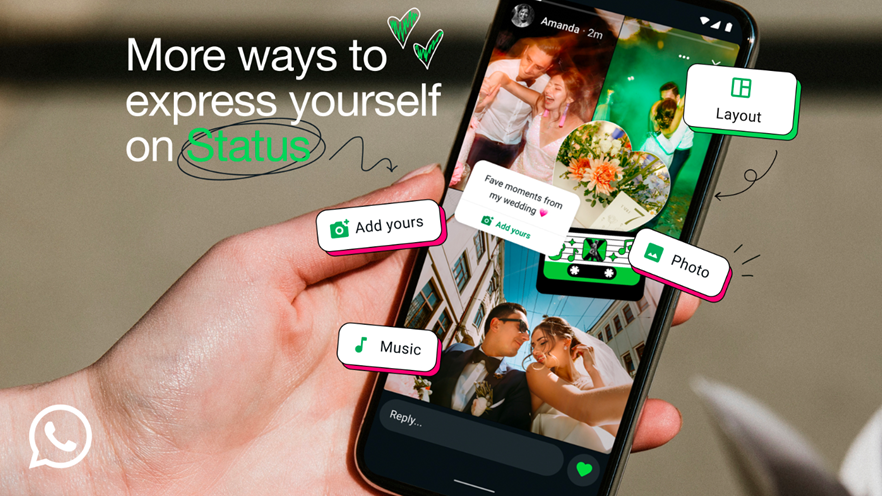
Caption – New WhatsApp features for Status updates revealed. (Image credit – WhatsApp)
WhatsApp is rolling out four new features for its Status section, giving you more fun and creative ways to share updates with friends and family. Just like Instagram or Facebook Stories, WhatsApp Status lets you post photos, videos, or text that disappear after 24 hours but now, with added flair.
Announcing the new features on its Newsroom page, WhatsApp said, “Status is your place to let the people in your life know what’s going on, no matter where they may be.” These updates are private and end-to-end encrypted, so only your saved contacts can view them.
Here’s what’s new.
Layouts for Collages
Now you can turn up to six photos into a collage, arranging them however you like using WhatsApp’s built-in editing tools. It’s a simple way to share a collection of memories in one post.
More Ways to Share Music
You can now add a song as your status or turn it into a music sticker that can be placed on top of a photo or video. This adds a musical vibe to your updates, whether it’s a selfie, a scenic shot, or a special moment.
Since March, WhatsApp has allowed users to select songs from its built-in music library. You can post 15-second clips with photos or 60-second clips with videos.
Photo Stickers
Want to make your status posts more personal? You can turn any photo into a sticker, resize and reshape it as needed, and add it to your story. It’s a fun way to make your images pop.
Add Yours Stickers
This interactive feature lets you invite friends to join a trend or conversation. Pick a photo, add the “Add Yours” sticker, and your friends can respond by posting their own version to their Status. It’s a cool way to get people talking and sharing.
According to WhatsApp, these new features will start rolling out soon and will be available to all WhatsApp users in the coming months.
FAQs
Q1. What new features are coming to WhatsApp Status?
Answer. WhatsApp is adding photo collages, music stickers, custom photo stickers, and the “Add Yours” sticker for more interactive and creative updates.
Q2. How does the new music feature work in WhatsApp Status?
Answer. Users can now add songs directly to their Status, with 15-second clips for photos and 60-second clips for videos, making updates more engaging.
Q3. What is the “Add Yours” sticker in WhatsApp Status?
Answer. The “Add Yours” sticker lets users start a trend or conversation, allowing friends to respond by posting their own version to their Status.
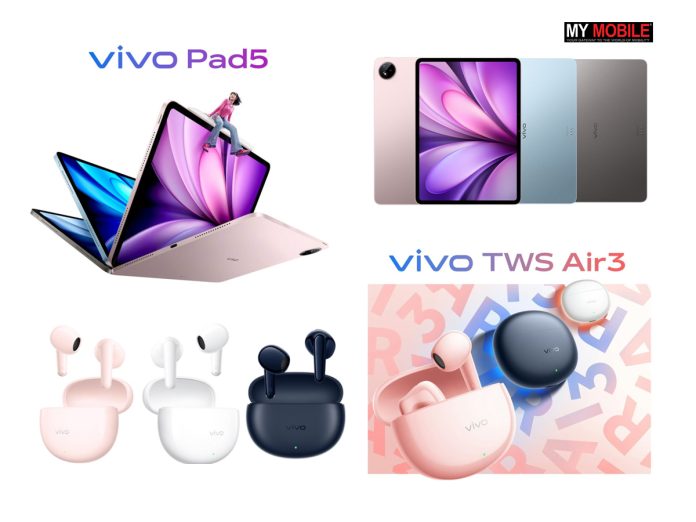
Vivo Pad5 launched with 12.1-inch 2.8K LCD screen with 144Hz refresh rate, MediaTek Dimensity 9300+ chipset, 10,000mAh battery and accessory support.
Vivo TWS Air3 comes with 12mm dynamic drivers, DeepX 3.0 stereo sound, AI noise reduction and up to 45 hours of playback.
The Pad5 starts at 2499 yuan with sales from June 6.
The Air3 earbuds are priced at 99 yuan and are launching on May 29, 2025.
Along with the launch of the Vivo S30 series, Vivo also introduced its newest tablet the Vivo Pad5 and the Vivo TWS Air3 earbuds. While the Pad5 is aimed at users looking for powerful performance and a big display, the Air3 earbuds are designed for everyday listening with great sound and battery life at a budget-friendly price. Here’s more about both devices.
Vivo Pad5 – Key Features, Pricing and Availability
Caption – Vivo Pad5 launched officially at the starting price of 2499 yuan for the 8GB RAM + 128GB storage variant. (Image Credit – Vivo)
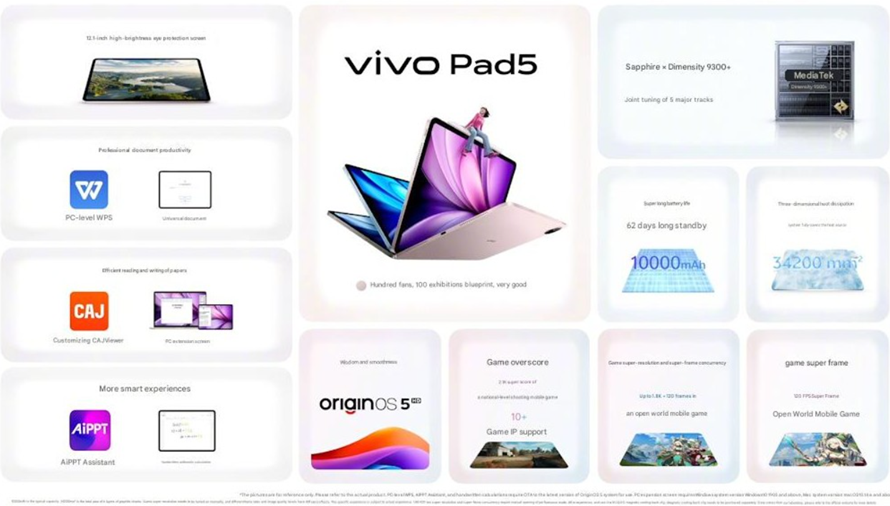
The vivo Pad5 features a sleek all-metal body that’s just 6.62mm thick and weighs 590g. It comes with a large 12.1-inch LCD display that supports a crisp 2.8K resolution and a smooth 144Hz refresh rate. The screen reaches up to 900 nits of peak brightness, making it great for both work and entertainment.
Powering the tablet is the MediaTek Dimensity 9300+ chipset built on a 4nm process, paired with the Immortalis-G720 GPU. It also includes vivo’s 3D heat dissipation system with a large 34,200mm² cooling area. You get up to 16GB RAM and 512GB storage, depending on the variant.
Caption – Vivo Pad5 kry features. (Image Credit – Vivo)
Other features include –
8MP rear camera and 5MP front camera for video calls
Six speakers for immersive audio
Android 15 with OriginOS 5 for tablets
Wi-Fi 7, Bluetooth 5.4, NFC, USB Type-C, and USB-C audio
A massive 10,000mAh battery with 44W fast charging
The tablet supports accessories like the Smart Touch Keyboard, Pencil2s stylus and a double-sided flip cover.
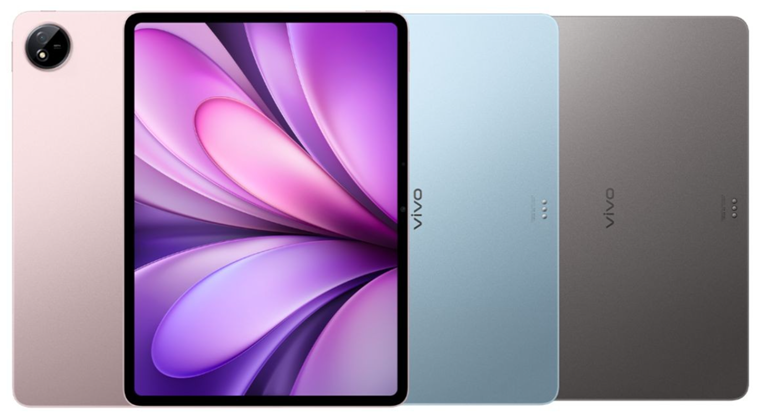
Available Colour – Blue, Grey and Pink
Sales begin in China on June 6
Caption – Vivo Pad5 colour variants. (Image Credit – Vivo)
Vivo TWS Air3 – Key Features, Pricing and Availability
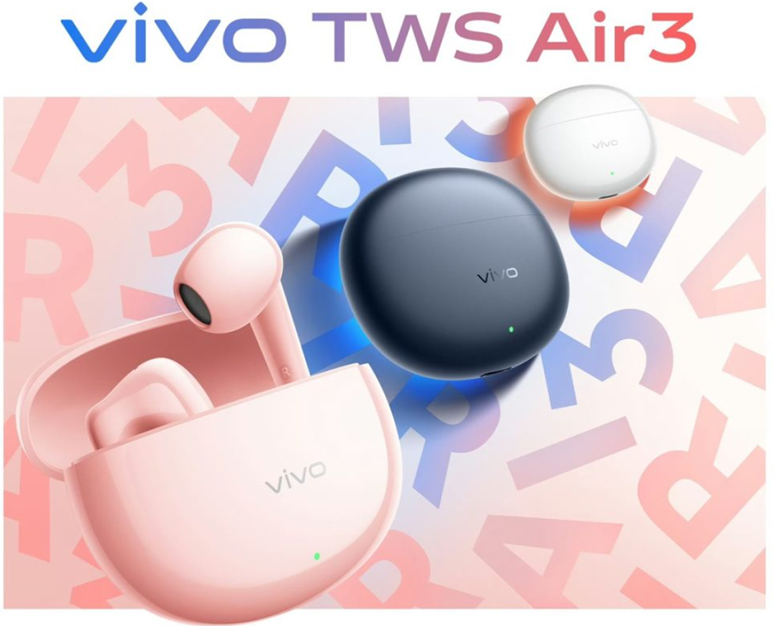
Caption – Vivo TWS Air3 launched officially, available for 99 yuan. (Image credit – Vivo)
The vivo TWS Air3 are semi-in-ear earbuds that weigh just 3.6g each, making them easy to wear for long hours. They come with 12mm dynamic drivers and a 4-layer voice coil, tuned by vivo’s Golden Ears acoustic team for rich bass and clear treble.
They support spatial audio and DeepX 3.0 stereo sound, with sound modes for audiobooks, bass, vocals, and treble. For calls, you get AI noise reduction and an L-shaped anti-wind mic design, which improves noise filtering by 51%.
Other key features:
Up to 10 hours of playback on a single charge, and 45 hours total with the charging case
Fast charging – 10 minutes gives 3 hours of use
Bluetooth 6.0 with dual-device connectivity
Ultra-low latency: 44ms for gaming, 33ms for karaoke
BlueOS integration for smartwatch features like calls, voice prompts, and WeChat messages
Fun extras like Cute Pet pop-ups, remote camera control, Find Earphones, voice control, and custom touch gestures
Available Colours – Cloud White, Cherry Pink, Deep Sea Blue
Price – 99 yuan (approx USD 14 / ₹1,175)
Sales start May 29, 2025 via official vivo channels.
FAQs
Q1. What are the key features of the Vivo Pad5 tablet?
Answer. The Vivo Pad5 features a 12.1-inch 2.8K LCD display with a 144Hz refresh rate and 900 nits of peak brightness. It is powered by the MediaTek Dimensity 9300+ chipset, comes with up to 16GB RAM and 512GB storage, and includes a 10,000mAh battery with 44W fast charging.
Q2. What makes the Vivo TWS Air3 earbuds stand out?
Answer. The Vivo TWS Air3 earbuds have 12mm dynamic drivers, DeepX 3.0 stereo sound, AI noise reduction, and an L-shaped anti-wind mic design for better call clarity. They offer up to 10 hours of playback on a single charge and 45 hours total with the case.
Q3. When will the Vivo Pad5 and TWS Air3 be available for purchase?
Answer. The Vivo Pad5 will be available in China from June 6, while the Vivo TWS Air3 earbuds will launch on May 29, 2025.
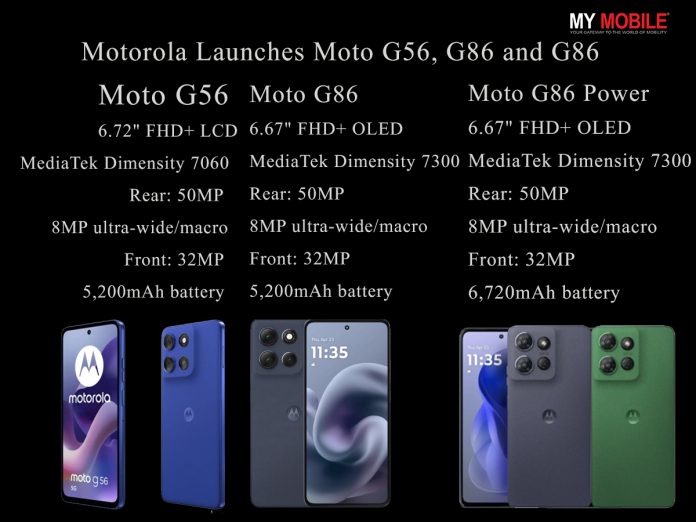
Moto G56, G86 and G86 Power launched in sleek yet similar designs but differ in performance and battery capacity.
The G86 series has a 6.67-inch OLED screen with FHD+ resolution, while the G56 features a 6.72-inch LCD panel.
All models run MediaTek chipsets with 8GB RAM and up to 512GB storage.
The G86 Power boasts a 6,720mAh battery, the largest in a Motorola phone, while the G56 and G86 offer 5,200mAh batteries.
Motorola has launched three new phones in its G-series lineup, which includes Moto G56, Moto G86 and Moto G86 Power. All three look quite similar on the outside, but there are a few key differences in their hardware, especially when it comes to performance and battery life. Here’s all we know.
The Moto G86 and G86 Power come with a 6.67-inch OLED screen that offers FHD+ resolution and a smooth 120Hz adaptive refresh rate. These displays can reach up to 4,500 nits of peak local brightness and are protected by Gorilla Glass 7i. There’s also a fingerprint scanner built into the screen.
Both phones run on the MediaTek Dimensity 7300 chipset, paired with 8GB of RAM and either 256GB or 512GB of storage. They share the same camera setup, a 50MP main sensor (LYT-600) and an 8MP ultra-wide lens that also doubles as a macro camera. On the front, there’s a 32MP selfie camera.
They come with Android 15 and support 30W fast charging. The regular Moto G86 packs a 5,200mAh battery, while the Moto G86 Power steps it up with a massive 6,720mAh battery, the biggest battery ever in a Motorola phone.
Both models are IP68 and IP69 certified for water and dust resistance and meet the MIL-STD 810H durability standard.
Moto G86 and G86 Power – Availability and Price
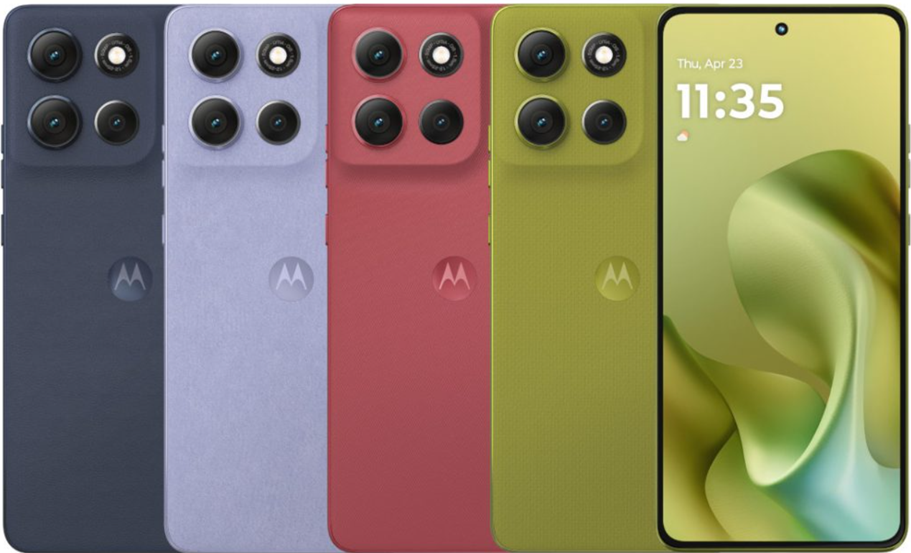
They’re available in four Pantone colour options – Spellbound, Cosmic Sky, Golden Cypress, and Chrysanthemum.
In terms of pricing, the Moto G86 is available for €299 in Germany and £280 in the UK. The Moto G86 Power costs €329 or £299.
Moto G56 – Key Features
Caption – Moto G56. (Image credit – Motorola)
The Moto G56 is the more budget-friendly option in the lineup. It features a 6.72-inch LCD display with FHD+ resolution and a 120Hz refresh rate. It debuts MediaTek’s yet-to-be-announced Dimensity 7060 processor, which includes an eight-core CPU clocked up to 2.6GHz and an Imagination IMG BXM-8-256 GPU.
Just like the G86 models, the G56 also comes with 8GB RAM and 256GB storage. It carries the same 50MP main camera and 8MP ultra-wide/macro combo as its siblings. The phone is IP68/IP69 rated for dust and water resistance and includes a 5,200mAh battery with 30W charging support.
Moto G56 – Availability and Price
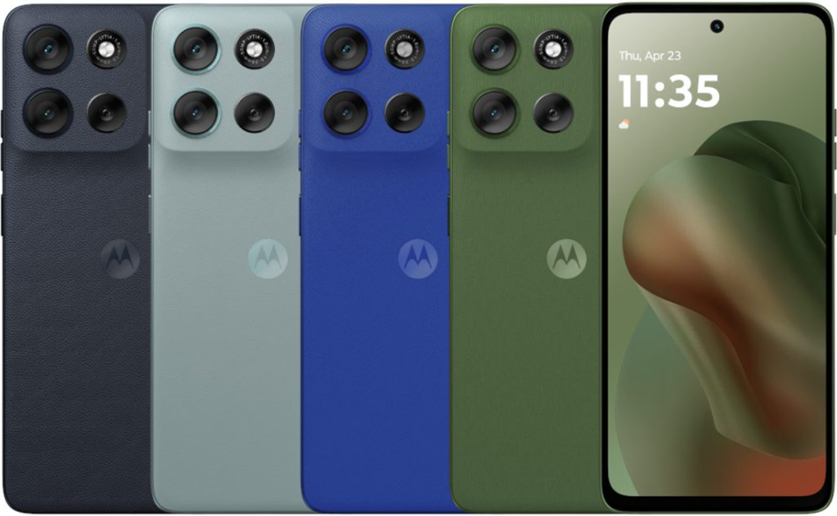
Moto G56 is available in Pantone Black Oyster, Dazzling Blue, Gray Mist, and Dill. Pricing is set at €250 in Germany and £199 in the UK.
Feature
Moto G56
Moto G86
Moto G86 Power
Display
6.72″ LCD, FHD+, 120Hz
6.67″ OLED, FHD+, 120Hz
6.67″ OLED, FHD+, 120Hz
Chipset
MediaTek Dimensity 7060
MediaTek Dimensity 7300
MediaTek Dimensity 7300
RAM
8GB
8GB
8GB
Storage
256GB
256GB / 512GB
256GB / 512GB
Rear Camera
50MP + 8MP (ultra-wide/macro)
50MP + 8MP (ultra-wide/macro)
50MP + 8MP (ultra-wide/macro)
Front Camera
32MP
32MP
32MP
Battery
5,200mAh, 30W
5,200mAh, 30W
6,720mAh, 30W
Operating System
Android 15
Android 15
Android 15
IP Rating
IP68/IP69
IP68/IP69
IP68/IP69
Price (Germany)
€250
€299
€329
Price (UK)
£199
£280
£299
FAQs
Q1. What are the key differences between the Moto G86 and G86 Power?
Answer. Both models feature a 6.67-inch OLED display with FHD+ resolution, MediaTek Dimensity 7300 chipset, and 8GB RAM. However, the Moto G86 Power has a larger 6,720mAh battery, while the regular Moto G86 comes with a 5,200mAh battery.
Q2. What display technology do the new Moto G56, G86 and G86 Power use?
Answer. The Moto G86 and G86 Power have 6.67-inch OLED screens with 120Hz adaptive refresh rate and Gorilla Glass 7i protection. The Moto G56 features a 6.72-inch LCD display with the same FHD+ resolution and refresh rate.
Q3. What are the camera specifications of the Moto G56, G86 and G86 Power?
Answer. All three phones come with a 50MP main camera (LYT-600) and an 8MP ultra-wide lens that also functions as a macro camera. The front-facing camera is 32MP on the G86 models and G56.
Q4. What is the battery capacity and charging speed of Moto G56, G86 and G86 Power?
Answer. The Moto G86 Power has a 6,720mAh battery, the largest in a Motorola phone. The Moto G86 and G56 pack 5,200mAh batteries, all supporting 30W fast charging.
Q5. What are the price and colour options for Moto G56, G86 and G86 Power?
Answer. The Moto G86 costs €299 in Germany and £280 in the UK, while the G86 Power is priced at €329 or £299. The Moto G56 is €250 in Germany and £199 in the UK. They are available in Pantone-certified colours, including Spellbound, Cosmic Sky, Golden Cypress, Chrysanthemum, Black Oyster, Dazzling Blue, Grey Mist, and Dill.
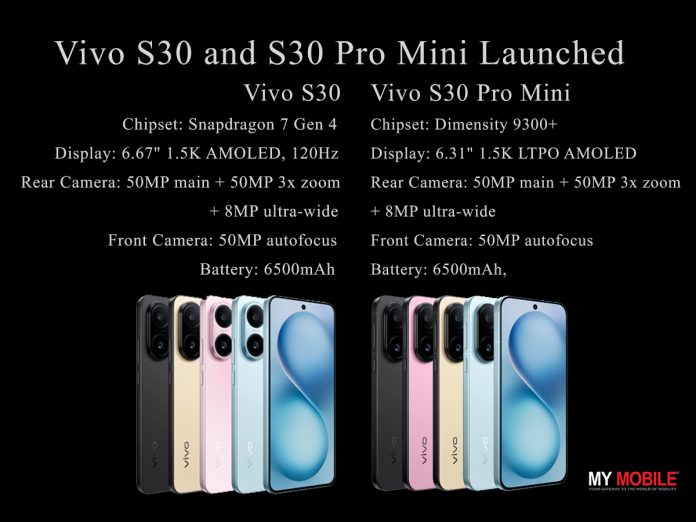
The Vivo S30 launched with a Snapdragon 7 Gen 4 chipset, while the Pro Mini is powered by the Dimensity 9300+.
Both phones boast 1.5K AMOLED screens with high refresh rates, triple rear cameras, a 50MP autofocus front camera and a 6500mAh battery with 90W fast charging.
Pre-orders are now live in China and official sales start on June 6
Caption – Vivo S30 and S30 Pro Mini have been officially launched in China. (Image credit – Vivo)
Vivo has launched its new S30 series featuring two smartphones, the Vivo S30 and the S30 Pro Mini, in China. The series focuses on eye-catching designs with capable hardware. Among everything else, they introduce new cinematic zoom features and improved triple-proof durability. Here’s everything we know about both models.
Vivo S30 and S30 Pro Mini – Pricing and Availability
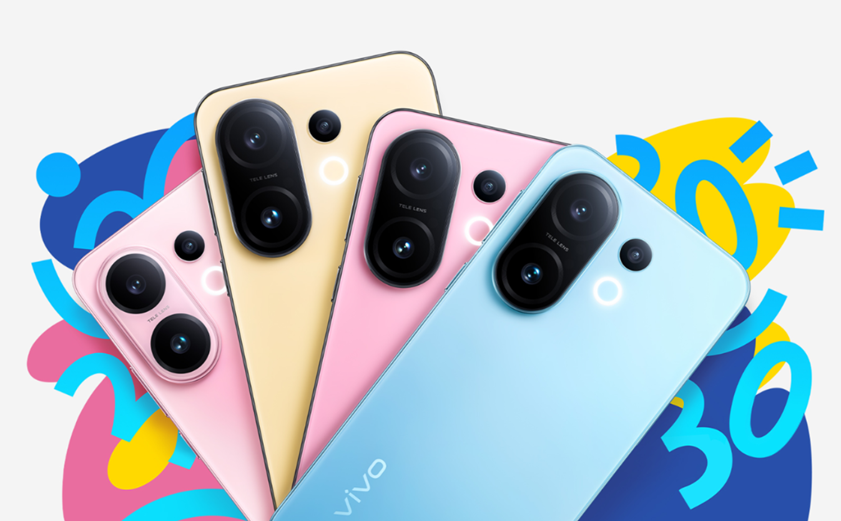
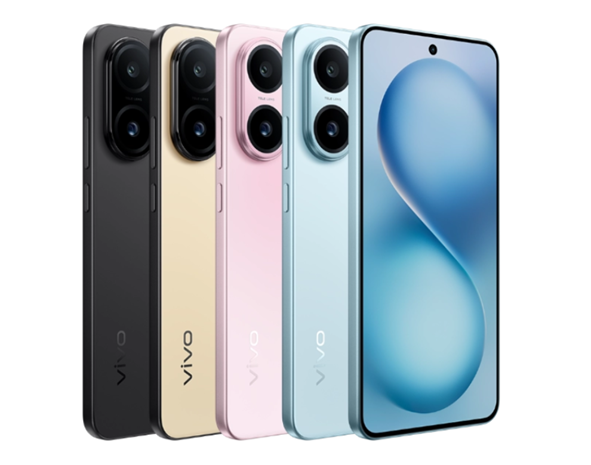
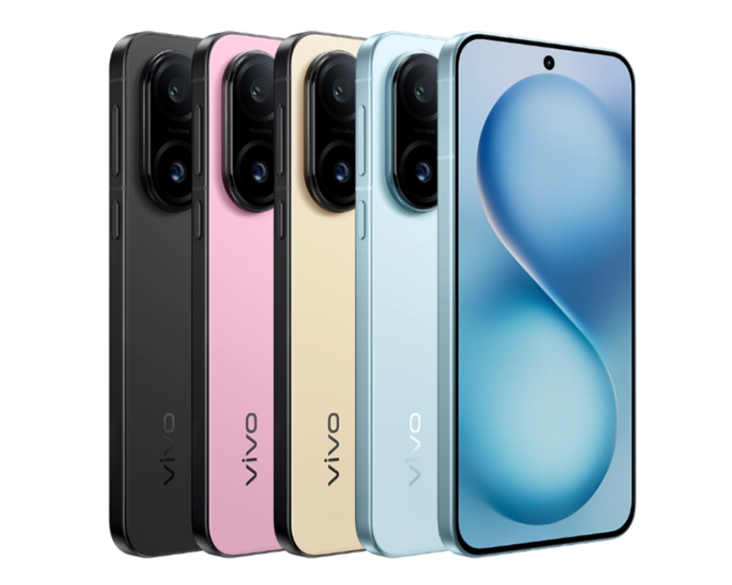
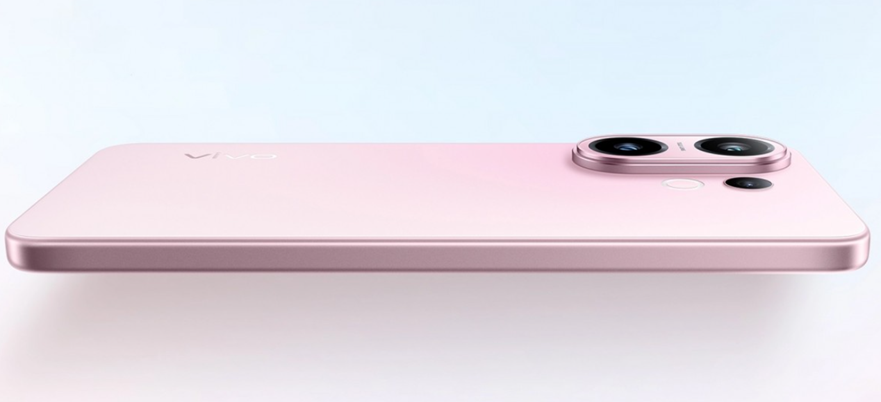
Caption – Vivo S30 colour variants. (Image credit – Vivo)
Vivo S30 –
12GB + 256GB – 2699 yuan (approx $370 or ₹32,000)
12GB + 512GB – 2999 yuan (approx $410 or ₹35,000)
16GB + 512GB – 3299 yuan (approx $450 or ₹38,000)
Launched in Cocoa Black, Lemon Yellow, Mint Green and Peach Pink shades.
Caption – Vivo S30 Pro Mini. (Image credit – Vivo)
Vivo S30 Pro Mini –
12GB + 256GB – 3499 yuan (approx $480 or ₹41,000)
12GB + 512GB – 3799 yuan (approx $520 or ₹45,000)
16GB + 512GB – 3999 yuan (approx $545 or ₹47,000)
Available in Cool Berry Powder, Cocoa Black, Mint Green and Lemon Yellow colourways.
Pre-orders are now live in China and official sales start on June 6. Buyers can also enjoy pre-sale benefits like trade-in offers, extended warranties and exclusive accessories.
Vivo is also offering a limited-edition Sanrio gift box for the S30 series. It includes themed goodies like Sanrio merchandise, a photo frame voucher, a perforated case, a phone pouch, a lanyard, and a phone stand.
Vivo S30 and S30 Pro Mini – Key Specs
The Vivo S30 comes with a 6.67-inch 1.5K AMOLED display that supports a 120Hz refresh rate, HDR10+, and 3840Hz PWM dimming. It can hit up to 5000 nits of peak brightness and uses BOE’s Q10 panel tech for rich visuals.
The S30 Pro Mini has a smaller 6.31-inch 1.5K LTPO AMOLED screen with the same refresh rate and brightness but upgrades to 4320Hz PWM dimming, which is easier on the eyes.
The S30 is powered by the Snapdragon 7 Gen 4 chipset built on a 4nm process and comes with an Adreno 722 GPU. It’s great for daily use and gaming. The S30 Pro Mini, meanwhile, uses the more powerful Dimensity 9300+ chip with clock speeds up to 3.4GHz and the Immortalis-G720 GPU. Vivo says it can keep games like Honor of Kings running at 119.8fps in high-quality mode.
Both phones run Android 15 with Vivo’s OriginOS 5 on top. You get handy features like “One Tap Transfer,” syncing with Mac devices, AirPods tracking and a “Flash Sale Engine” to speed up ticket and event bookings.
Caption – Vivo S30 and S30 Pro Mini marketing posters in China. (Image credit – Vivo)
Vivo S30 and S30 Pro Mini – Camera Features
The S30 and S30 Pro Mini both have triple cameras at the back, with a 50MP Sony main sensor, LYT700V on the S30 and IMX921 on the Pro Mini. They also come with a 50MP IMX882 periscope telephoto lens that offers 3x optical zoom at f/2.65 and an 8MP ultra-wide camera.
For selfies, there’s a 50MP autofocus front camera with soft lighting and lens distortion correction.
The Pro Mini also includes a special “Clear Portrait Texture” algorithm that makes faces look more detailed and natural.
Both phones come with Vivo’s new cinematic tools like “Classic Negative” and “Hitchcock Zoom Live,” which creates a 3-second video with moving backgrounds while keeping the subject centred.
Vivo S30 and S30 Pro Mini – Battery, Build and Other Features
Caption – Vivo S30. (Image credit – Vivo)
Each model packs a huge 6500mAh battery and supports 90W fast charging. The S30 has a plastic frame, while the S30 Pro Mini features a more premium build with an aerospace-grade aluminium frame, Gorilla Glass protection and IP68/IP69 ratings for water and dust resistance.
The S30 Pro Mini also becomes the world’s first phone to earn SGS triple-proof certification. On the connectivity front, the S30 supports Wi-Fi 6 while the Pro Mini offers Wi-Fi 7. Both models include Bluetooth 5.4, NFC, an infrared remote control, and dual stereo speakers with Hi-Res audio.
FAQs
Q1. What are the key features of the Vivo S30 and S30 Pro Mini?
Answer. The Vivo S30 series offers stylish designs, cinematic zoom features, and enhanced durability. The S30 is powered by Snapdragon 7 Gen 4, while the Pro Mini has the Dimensity 9300+ for better gaming performance. Both models feature 1.5K AMOLED displays, triple rear cameras with periscope zoom, and 6500mAh batteries with 90W fast charging.
Q2. What display technology do the Vivo S30 and S30 Pro Mini use?
Answer. The Vivo S30 features a 6.67-inch 1.5K AMOLED screen with 120Hz refresh rate, HDR10+ support, and 3840Hz PWM dimming. The S30 Pro Mini has a smaller 6.31-inch LTPO AMOLED display with 4320Hz PWM dimming, making it easier on the eyes.
Q3. What are the camera specifications of the Vivo S30 series?
Answer. Both models come with triple rear cameras, including a 50MP Sony main sensor (LYT700V for S30, IMX921 for Pro Mini), 50MP IMX882 periscope telephoto lens with 3x optical zoom, and an 8MP ultra-wide camera. For selfies, there’s a 50MP autofocus front camera with soft lighting and lens distortion correction.
Q4. What is the battery capacity and charge speed of Vivo S30 phones?
Answer. Each model packs a 6500mAh battery and supports 90W fast charging, ensuring extended usage and rapid recharging.
Q5. When will the Vivo S30 series be available for purchase?
Answer. The Vivo S30 series is currently available for pre-orders in China, with official sales starting on June 6. Buyers can also access pre-sale benefits, including trade-in offers, extended warranties, and exclusive accessories.
OnePlus 13s will reportedly be priced around ₹55,000 in India.
The phone launch is on June 5th and it will be available in Black Velvet, Pink Satin and an India-exclusive Green Silk colour.
Expected features – 6.32-inch display, a square-shaped camera module, a new customisable Plus Key, Snapdragon 8 Elite processor and a 32MP autofocus front camera.
Caption – OnePlus 13s is officially launching on June 5. (Image credit – OnePlus)
The OnePlus 13s is all set to launch on June 5th and now we may have a good idea of what it could cost in India. Between official teasers and leaks, a new exclusive report from 91mobiles has now revealed the India price based on a reliable tipster’s words. Here’s what we know.
OnePlus 13s India Pricing Details Leaked
The exclusive 91Mobiles report reveals that the upcoming OnePlus 13s will be priced around ₹55,000 in India. While the exact RAM and storage options haven’t been revealed yet, this gives us a rough idea of where it will sit in the OnePlus lineup.
According to the folks at 91Mobiles, this price leak comes from the reliable and well-known tipster Yogesh Brar, who later posted the price on X (formerly Twitter) as well.
Sources tell me OnePlus 13s will be priced in the Rs 55k segment
Considering all the specs like Snapdragon 8 Elite, OnePlus AI suite, and a premium build..pricing seems solid.
OnePlus has a winner on their hands!
What are your thoughts & price expectations??
— Yogesh Brar (@heyitsyogesh) May 29, 2025
For reference, the OnePlus 13R launched at ₹42,999, while the OnePlus 13 came in at ₹69,999. So the 13s looks like it will land right between those two.
OnePlus 13s – What To Expect?
Caption – OnePlus 13s featuring the Plus Key. (Image credit – OnePlus)
OnePlus has already confirmed a few things about the upcoming phone. The OnePlus 13s will have a 6.32-inch display and a square-shaped camera module on the back. It also features a new “Plus Key”, which replaces the classic Alert Slider. This new button can be customised to perform different tasks like opening the camera, starting screen recordings, translating content or launching AI Plus Mind.
Caption – OnePlus AI official teaser. (Image credit – OnePlus)
The AI Plus Mind is a new feature where users can save content from their screens. The phone’s AI will then automatically sort and organise everything based on what it is.
Under the hood, the OnePlus 13s will be powered by the Snapdragon 8 Elite processor, and it will also come with a dedicated heat dissipation system and an independent Wi-Fi chipset. For selfies, it’ll sport a 32MP autofocus front camera, which is an upgrade from the 16MP sensor on the OnePlus 13T in China.
The phone will be available in three colour options, which include Black Velvet, Pink Satin and a special India-exclusive Green Silk.
FAQS
Q1. What is the expected price of the OnePlus 13s in India?
Answer. The OnePlus 13s is expected to be priced around ₹55,000, placing it between the OnePlus 13R and OnePlus 13 in OnePlus’ lineup.
Q2. What are some key features of the OnePlus 13s?
Answer. It features a 6.32-inch display, a square-shaped camera module, a customizable “Plus Key,” Snapdragon 8 Elite processor, and a 32MP autofocus front camera.
Q3. What colours will the OnePlus 13s be available in?
Answer. The phone will launch in three colour options, Black Velvet, Pink Satin and an India-exclusive Green Silk.
Google confirmed Instagram caused battery drain on Android devices.
The issue was widely reported by users, especially on Reddit.
The new Instagram update version 382.0.0.49.84 is now available on the Play Store and should resolve the issue of excessive battery consumption.
Caption – Did you notice that Instagram was draining your Android device battery? (Photo by Brett Jordan on Unsplash)
Instagram might be the reason why your Android phone’s battery has been draining faster than usual lately. Google has officially confirmed that the Instagram app was causing battery issues on Android devices. This is something many users have been complaining about, especially on Reddit.
Google has now released an advisory titled “Battery drain on Android devices” to fix the issue and asked users to update Instagram right away.
“Starting today, Instagram is rolling out an updated app that should fix a battery drain issue on Android devices. Please make sure you have the latest version of the Instagram app (build 382.0.0.49.84) to resolve this issue,” the company said.
And it seems like the update works. After installing the latest version, users are now saying the battery drain problem is finally resolved.
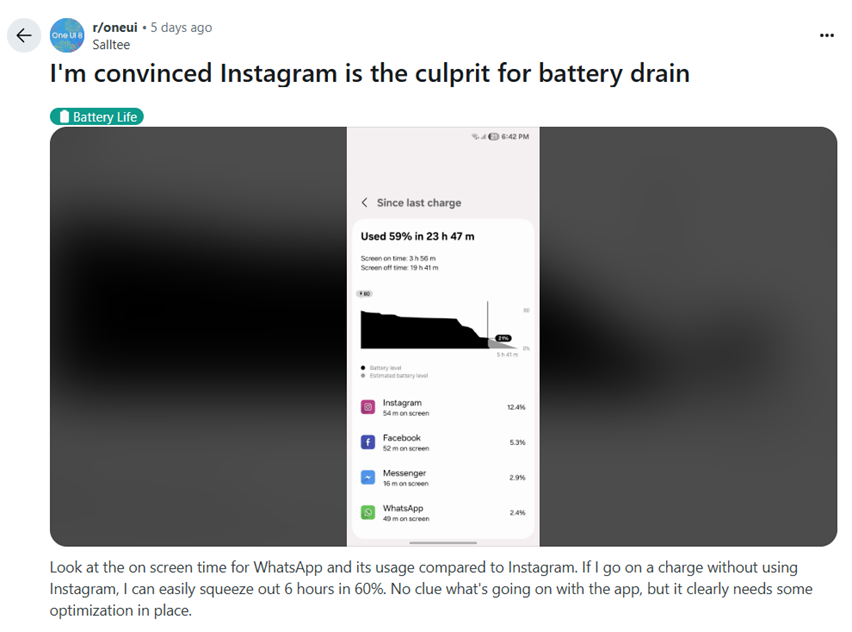
Caption – One of the many Reddit posts about the battery draining issue.
Earlier, many Android users noticed that Instagram was using way more battery than usual. One Reddit user with a Samsung Galaxy A53 shared that Instagram consumed 12.4% of their battery with just 54 minutes of screen time, while WhatsApp used only 2.4% during a similar 49-minute session.
Some people even tried switching to older Instagram versions, but that only caused their phones to heat up. Others moved to Instagram Lite and saw a clear improvement, which further pointed to a problem with the main app.
Instagram hasn’t shared more details about the issue yet like whether it affected certain phones (Pixel, Samsung, etc.) or specific Android versions. But what we do know is that version 382.0.0.49.84, which is now live on the Google Play Store includes the fix. So if you haven’t updated yet, now’s the time.
FAQs
Q1. What caused Instagram’s battery drain issue on Android?
Answer. Instagram was consuming excessive battery power on Android devices, a problem widely reported by users, especially on Reddit.
Q2. How can users fix the battery drain problem?
Answer. Google advises updating Instagram to version 382.0.0.49.84, which includes a fix for the issue and is now available on the Google Play Store.
Q3. Did switching to older Instagram versions help?
Answer. No, users who tried older versions experienced overheating, while those using Instagram Lite saw improvements, reinforcing the problem in the main app.
Realme is stepping up its battery game in a big way. After launching the Realme GT 7 and GT 7T with large battery packs, the company is now preparing to release a smartphone with an even bigger 7,500mAh battery. Here’s what we know.
Realme’s Upcoming Smartphone With a Big Battery
In a chat with AndroidHeadlines, Realme shared its future plans and confirmed that a new phone with a massive 7,500mAh battery is coming later this year. That’s larger than the already impressive batteries in the GT 7 series, which means Realme is clearly focusing on longer battery life, not just faster processors.
Just to recall, both smartphones in the GT 7 Series pack massive 7,000 mAh batteries with 120W charging support.
What’s interesting is this move isn’t just about one phone. Realme says it’s trying to carve out a new identity, one focused on elite battery performance, not just affordable pricing. While brands like Oppo and Vivo are pushing hard on camera and photography features, Realme seems to be making battery endurance its top priority.
There’s also a good chance that this 7,500mAh battery will show up in one of Realme’s flagship models. For reference, the Realme GT 7 Pro launched with a 6,500mAh battery. So, its likely successor, possibly named GT 8 Pro, could be the one to carry this huge battery.
Interestingly, while Realme is going big, others are going slim. Samsung just announced the ultra-thin Galaxy S25 Edge with a small 3,900mAh battery. And Apple is rumoured to be working on a similar ultra-slim model, the iPhone 17 Air.
With this upcoming launch, Realme is clearly positioning itself as the go-to brand for users who care most about battery life.
Realme recently revealed a prototype smartphone with a 10,000 mAh battery in an 8.5mm thick frame. It weighed just 215 g as the battery is reportedly a 10% silicon anode. The tech was achieved with an energy density of 887 Wh/L. Realme used a 23.4mm tall motherboard, which is the smallest in the Android world, in order to maximise the internal volume.
FAQs
Q1. What is Realme’s upcoming smartphone expected to feature?
Answer. Realme is launching a new phone with a massive 7,500mAh battery, surpassing the GT 7 series in battery capacity and emphasising longer battery life.
Q2. Why is Realme focusing on battery endurance?
Answer. Realme aims to differentiate itself by prioritising battery performance over affordability, contrasting with brands like Oppo and Vivo that focus on camera technology.
Q3. Which Realme model might include the 7,500mAh battery?
Answer. There is speculation that the flagship GT 8 Pro could be the device featuring this huge battery, given that the GT 7 Pro previously launched with a 6,500mAh battery.
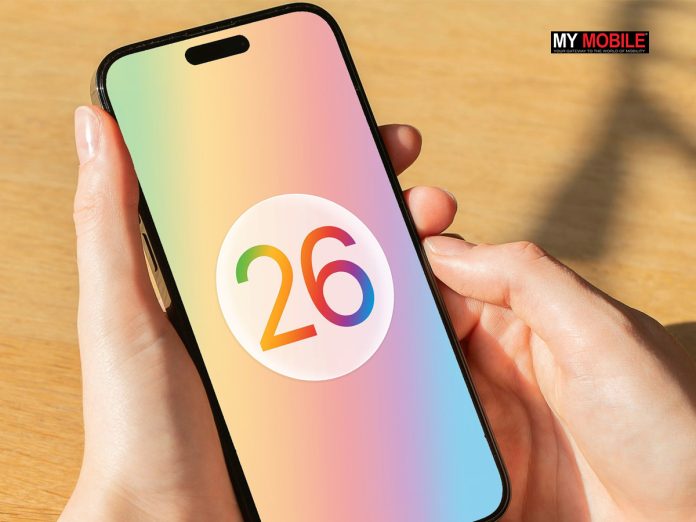
Apple plans to switch to year-based naming for all operating systems, which means iOS 19 will be renamed iOS 26.
New iOS features include AI-powered tools, iPad improvements, live translation for Siri and AirPods and a refreshed visionOS-style design.
Apple is expected to unveil these changes including the name shift and feature updates at its keynote event on June 9, 2025.
Caption – Apple is changing the way all its operating systems are named. (Image credit – Apple)
Apple could be making a big shift in how it names its operating systems. According to Bloomberg’s Mark Gurman, the company plans to switch from version numbers to year-based names starting in 2025. Here’s what we know.
iOS 19 To Be iOS 26
Instead of calling it iOS 19, Apple reportedly plans to name the next version iOS 26. The same change would apply to iPadOS, macOS, watchOS, tvOS, and visionOS. This new system will align all software with the upcoming calendar year, creating a more consistent naming strategy across all Apple platforms.
Gurman explained that this move is meant to fix the confusion caused by each OS having a different version number based on when it was first launched.
Apple isn’t the first to try this moniker change. Microsoft used year-based names like Windows 95 and Samsung names its Galaxy phones after their launch year.
Apple itself has done something similar with past apps like iWork ’08 and iLife ’11. But this time, the company plans to use the upcoming year. So, the software launched in late 2025 will carry the “26” label, much like how carmakers label next year’s models.
iOS 19 (aka iOS 26) – New Features
Alongside the name change, Apple is also expected to roll out several major software updates. These include –
iPad improvements that make it behave more like a Mac, making it easier to use for work.
AI integration via the Apple Intelligence platform, which will be opened up to third-party developers.
Live translation for Siri and AirPods.
Vision Pro is getting an eye-scrolling feature.
AI-powered health tools and better battery management.
A new bidirectional Arabic-English keyboard and a digital calligraphy pen for Apple Pencil.
A brand-new gaming app for Apple devices is also in the works.
Gurman noted that this overhaul will also include a major design refresh. Apple plans to bring a visionOS-style interface to iOS, iPadOS, macOS, watchOS, and tvOS for a more unified look and feel.
iOS 19 (aka iOS 26) – Expected Launch Timeline
All of these changes, new names, features and design, are expected to be announced at WWDC 2025, which kicks off on Monday, June 9. The keynote will begin at 10 AM PDT (10:30 PM IST).
FAQs
Q1. Why is Apple renaming iOS 19 to iOS 26?
Answer. Apple plans to switch to year-based naming for all its operating systems, aligning software updates with the upcoming calendar year for consistency across platforms.
Q2. What major features are expected in iOS 26?
Answer. New updates include AI-powered tools, improved iPad functionality, live translation for Siri and AirPods, Vision Pro eye-scrolling, and a redesigned visionOS-style interface.
Q3. When will Apple announce these changes?
Answer. Apple is expected to reveal the new naming system, design updates, and feature improvements at WWDC 2025, which begins on Monday, June 9.