Home Blog Page 1325

Covid Second Wave: Are we prepared now?

0

Months after India witnessed its peak, the country is yet again experiencing a sharp surge in Covid-19 cases. But what is worrying is that this spike comes at a time when vaccine options are available, and on the other hand the tech industry is getting ready for the challenges yet again!

The first wave of Covid struck us with a shock, no one was ready, business and the global economy was knocked down completely, it took us almost a year to revive ourselves from the after-effects of the pandemic, but since the noble coronavirus has made a return how will it impact us this time?


The Covid-19 Breakdown!

The waning Covid-19 is making a U-turn, but the good thing is that it is no longer unprecedented for us. We will probably enter tighter restrictions once again to manage the pandemic. This also means that the industry once again has to change its strategies to deal with it!


Starting off the last year gave us some serious shock wave, everything was put on hold and this allowed the entire industry to establish a solution to the ongoing pandemic. The one-year time out was an opportunity for businesses to fast-track decisions and force through changes in commercial planning, governance, and operations – it was time to mix things up.


Changing Consumer Behaviour!

Right after the restrictions and lockdown lifted in the country, a lot of companies started experimenting for improvements, as a result of which many of us experienced the good, bad and ugly of post-lockdown hospitality. The establishments that did nothing to change their operations are now suffering.

We knew that as soon as we get to our normal lives, our habits, our demands, and our lifestyle will never be the same again. According to some studies, on average it takes 66 days for a new behaviour to become automatic. Well! We were away nurturing our minds for almost 6 months from the first national lockdown, so many adaptive behaviours that have delivered material benefits are likely to stick.


Implications for businesses!

Understanding changes in consumer behaviour along with the underlying motivations and perceived abilities that can cause them (or yield opportunities), is fundamental for adaptive businesses in all circumstances. But a global pandemic is an unusually universal trigger event. The important thing to consider now is what second- and subsequent-order consequences may impact the business plans that can be addressed head-on.

Now that we have overcome (partially) the obstacles of the pandemic, we have some sort of experience about how to deal with all of this the second time!

In which the systems-thinking can help us to spot trends before they happen, not to just diagnose them. It’s powerful and can allow businesses to better locate root problems, pre-empt inflexion points and identify potential for behaviour change and new business models.

Let us look inside the industry on how companies are planning to battle this virus the second time and look forward to the future uncertainties!

When asked about the kind of impact the second wave of the Covid-19 can trigger, Tejinder Singh, Product Head, Lava International said, “COVID is an unprecedented crisis which made the last year really challenging for everyone. Even now, COVID is far from over and continues to throw new challenges to global economies, including India. Even before the second wave, we witnessed a slowdown in the mobile industry due to the GDP drop impact, last year. Hence, job market recovery is a much more important factor than the second wave of COVID. If the government doesn’t impose strict lockdowns and the job market continues to recover slowly and steadily, then the second COVID wave will not have much impact on the industry. But, if strict lockdowns are imposed and industry shuts for few weeks, it will result in more job losses which will then consequently have an adverse impact on the entire industry.”

He added by sharing the kind of precautions the company is planning on, “We have been taking precautions since day one and did not take a backseat even when Covid-19 numbers were decreasing. We are coming to the office on alternate days and ensuring that all safety norms are being followed. Social distancing management of employees at work stations, regular hand sanitization, thermal screening during entry and exit, staggered sitting arrangement at canteen and disinfection of entire office premises, etc, are some of the key precautionary measures that we are taking for employee safety. We are continuously monitoring the situation and if required will go for all days of work from home as employee safety is our utmost priority. We salute our manufacturing team for whom work from is not possible. They have been coming to the office regularly and doing a wonderful job even in these tough times.”

Avneet Singh Marwah, Director, and CEO, Super Plastronics Pvt Ltd, a Kodak brand licensee said, “Currently we are in after-effects of COVID-19 if 2nd wave comes to a peak. This will be a catastrophe-like situation for the brands. Last quarter consumer durable market was slow, market is expecting a recovery in this quarter. Kodak tv India is following all the protocol guidelines, only those employees and workers are called which can’t work from home.”

Harjiv Singh, Board Member of GlobalPPEMart said, “Our biggest learning from the pandemic has been to acknowledge the ever-changing nature of COVID and our need to learn to adapt. Companies this time around are better prepared than last year. At GlobalPPEMart we are working hard to be the bridge that connects global PPE buyers & sellers to ensure that citizens, companies, & countries stay safe through the various stages of the pandemic.”

The second wave of the global pandemic is clearly a key external trigger at the moment. But that’s just one threat to any industry. Consider all the other external threats: environmental, economic, political, technological, cultural, etc. Step two is to consider how equipped you are internal to respond to change.

But having said that, the companies will not be scattering in disarray this time around because many of them have re-configured their businesses to cope.


Fatigue will be the carrier of the Second Wave!

The biggest risk though for the second wave of coronavirus infections is that people get tired of doing the right thing. Past pandemics have shown us that the second waves can be painful. No one knows the precise secret to sustain good behaviour in a pandemic of this scale and potential duration. Complicated ethical issues arise around personal freedoms and privacy. But we know from the past, that there are certain steps authorities can take, including communication and targeted financial support that allow everyone to act responsibly.

But are we really ready for the second wave?

Not unless we have the access to the right technology!

According to studies and reports, the Covid-19 might remain a force to worry about the future, which indicates depending on information technology.


Can the Industry respond to the change?

It is no surprise that businesses saw a sharp decline in the market last year, and that could continue to devastate them if they fail to transform. Huge advances in technology and globalization almost certainly meant party time for some organizations that were able to adapt and a nail in the coffin for others who couldn’t.

While strategizing the next step is the need of the hour right now for the industry, some power-packed plans for the development at a macro-level are also important. Businesses need to reimagine themselves regularly to thrive. So, as a business owner, director, or senior manager, ask yourself, how can you do that?

With an internal ecosystem lens, we might look to better understand how well-integrated and mature our capabilities to adapt and innovate are to plan improvements.


Is the Worst of the Coronavirus Behind Us Now?

There has been no sign of the second wave in many countries, but there are some including ours, that are facing the triggers of it. As citizens we have emerged from lockdowns, but how optimistic should we be?

The industry is yet to recover fully but the upcoming threats are already impacting the developments theoretically. The tech industry has paved some new ways to do business in the country but if the second wave hits us again, will we be able to overcome it, if we do not take the measures now?

Airtel announces Spectrum Trading Agreement with Jio

0

Telecom providers, Bharti Airtel, and Reliance Jio have announced an agreement for the acquisition of the right to use spectrum in the 800MHz band in Andhra Pradesh, Delhi and Mumbai circles through spectrum trading.

Through this agreement, Airtel will receive a consideration of Rs 1037.6 crores from Jio for the proposed transfer. In addition, Jio will assume future liabilities of Rs 459 crores relating to the spectrum.

The trading agreement is in accordance with the Spectrum Trading Guidelines issued by the Department of Telecommunications and is subject to the requisite regulatory and statutory approvals. The aggregate value for the right to use this spectrum is Rs 1,497 crores, inclusive of the present value of associated deferred payment liability of Rs 459 crores, subject to any transaction-related adjustments.

Gopal Vittal, MD & CEO (India and South Asia), Bharti Airtel said: “The sale of the 800 MHz blocks in these three circles has enabled us to unlock value from the spectrum that was unutilised. This is aligned to our overall network strategy.”

It is the first time the bitter rivals have come together, and with this trading of right to use spectrum, Reliance Jio will have 2X15MHz of spectrum in the 800MHz band in Mumbai circle and 2X10MHz of spectrum in the 800MHz band in Andhra Pradesh and Delhi circles, thereby further consolidating its spectrum footprint in these circles.

Fixcraft introduces mobile app to offer car repair management services

0

Car repair management solutions provider Fixcraft has launched a new Android mobile application to offer more convenience and transparency to the customers. The idea behind the application is to digitize the entire necessity of the customer wherein they have to step out or watch their car getting services for trust factors, said Fixcraft in a statement.

Through the mobile application, Fixcraft has put the entire process including- right from request for service, door-step pick up, analysis report of the vehicle, live updates of job, estimates, approvals, insurance claims, and delivery report on the finger-tips of people.

During the current unprecedented times when people hesitate to step out of their abodes, the startup has launched the application to take the customer support and services a notch up and cut down on the need.

“A car is still the second most expensive investment of a person. It does not surprise that they need 100 per cent transparency while getting it repaired or serviced. However, due to the pandemic, people are not comfortable stepping out for these tasks, though the need is still there. Hence, as a new-age company, we have launched this mobile application to address the requirements of our customers. With this, we are trying to ensure that customers are able to monitor their vehicles while sitting in the comfort of their homes,” said Inderjeet Rao, Co-Founder and CTO, Fixcraft.

The brand has been working towards turning all the procedures involved in car service management tech-enabled. Apart from digitizing the experience for customers, the brand also utilizes WMS, logistics suite, end-to-end fleet management suite, full stack suite of APIs for integration with existing partner systems and other solutions to operate more precisely that would eventually lead to the desired end results.

Dixon collaborates with Bharti Enterprises to make telecom gear under PLI scheme

0

Electronics manufacturing services company Dixon has entered into a Memorandum of understanding (MoU) with Bharti Enterprises to form a joint venture (JV).

As per the statement released by the company, Dixon’s wholly-owned subsidiary- Dixon Electro Appliances or any other company identified by the parties will be the JV Company which will undertake manufacturing of telecom and networking products like modems, routers, set top boxes, IoT devices, etc for the telecom sector/industry including Airtel.

The JV Company will file necessary applications with the Ministry of Communications or any other nodal agency to avail benefits under the Production Linked Incentive (PLI) scheme of Government of India. Post execution of mutually acceptable agreements by the parties, the JV Company will be 74% owned by Dixon and 26% owned by Bharti Enterprises.

Saurabh Gupta, CFO, Dixon Technologies, said, “It gives us immense pleasure that we have partnered with Bharti which is an iconic brand. We are delighted and encouraged by the trust they have bestowed on Dixon for this collaboration. We see them as our ideal long-term strategic partner who shares our core values: focus on quality, engineering prowess, innovation and customer satisfaction and we intend to leverage each other’s strengths to manufacture telecom and networking products.”

“We are confident that this is just the beginning of a long and prolific association and there is immense potential to further build on our shared capabilities to deliver sustainable growth,” Gupta added.

Deven Khanna, Group Director, Bharti Enterprises, said, “We are pleased to join hands with Dixon Group to strengthen India’s electronics manufacturing sector and to contribute to government’s vision of an Atmanirbhar Bharat.”

“Telecommunications sector has played a pivotal role in facilitating growth of the economy and is a key enabler of digital connectivity and Digital India. With Dixon’s excellent track record in manufacturing industry and Bharti’s deep expertise in Telecom, this venture will be well positioned to be a key player in its space,” Khanna said.

Airtel launches ‘Airtel IoT’ – a 5G ready platform for the world of connected things

0

Bharti Airtel today launched ‘Airtel IoT’ – an integrated platform that enables enterprises to harness the power of Internet of Things (IoT) and be ready for the emerging era of connected things.

Ajay Chitkara, Director & CEO – Airtel Business said, “Enterprises have three key requirements for IoT. First, connectivity solutions that future proof their device and application investments. Second, the security of their data. And third, seamless integration with existing IT systems to make the IoT data actionable. Airtel IoT is built on these insights to massively simplify the IoT journeys of enterprises.”

Airtel IoT is an end-to-end platform with the capability to connect and manage billions of devices and applications in a highly secure and seamless fashion. At its core is Airtel’s robust 5G Ready network that comes with the option to deploy NB-IoT, 4G or 2G connectivity using Airtel e-SIM technology.

It also has a Flexible set of APIs to eliminate cumbersome integration journeys and allows enterprises to streamline the process of connecting, collecting, and analysing data through their existing workflow tools. And, importantly, Airtel’s telco grade Security helps enterprises ensure that their IoT data is safe and available in real time for analytics and service delivery.

MG Motor, Pine Labs, Paytm, Kirloskar, BSES, Genus, and Kent are among the many businesses across Manufacturing, Logistics, Automobiles, BFSI and Utilities that are already using Airtel’s IoT solutions.

Rajeev Chaba, President and MD, MG Motor India said, “With the help of Airtel IoT, we have been able to provide the customers with India’s first internet car having i-SMART technology and 60+ connected car features. Airtel IoT allows us to access real-time infotainment and telematics. The partnership seeks to provide best-in-class connected car technology to our customers.”

India’s cellular connectivity based IoT market is forecasted to grow to Rs 10,000 cr by 2022, driven by connected cars and appliances, SMART factories and utilities, and other use cases. Airtel Business is the largest player in India’s B2B connectivity space and serves over 2500 large enterprises as well as one million medium and small enterprises, including startups.

Italian tech brand ‘Celly’ enters Indian market, with Beetel as its distributor

0

Celly, the Italian brand known for smartphone, announced its foray into the Indian Market. The brand sees India as a high growth potential market and plans to expand its foothold, in a partnership with Beetel, an Indian household name.

Blending Italian craft with technology, Celly shall launch a range of products under audio, power, photography, utility & travel category. With over 20+ products to launch in India by the end of April, the lineup includes several marquee innovations of Celly.  The products shall be priced among the mid – high end segment and will be available with leading ecommerce platforms – Amazon and Flipkart along with brick and mortar stores

Stefan Fink-Jensen, International Business Development for Celly said, “Celly and Beetel have been working hand in hand for the past year to prepare for this exciting moment. We are thrilled to launch our aspiration brand Celly in the Indian market. We have tailored all our products to meet the Indian market technical and design expectations, with unprecedented Italian craftsmanship and quality, along with 2 year warranty for our high tech lineups.”

Puneet Gupta – Business Head, Beetel said, “With our vision to provide quality products in the Indian market, Celly would be an important strategic partner for us. With decades of experience in Indian Market, our vast Omnichannel reach – Dense distribution network, partnerships with leading e-commerce platforms & leading LFRs, we would be able to provide platform to make Celly Products accessible and available to all. This will be an exciting and a promising journey with Celly and we look forward to it.”

Celly’s Italian unique design to India, aims to bridge the gap between technology and design conscious consumers, in order to create a joyful experience for the young and trendy. With unique Italian style, paired with innovative design, Celly’s solutions are meant to support diverse users and are suitable for any needs both business and leisure, in every moment of the day: at home, at the office, while travelling or in the free time.

Virat Kohli roped in as Vivo brand ambassador

0

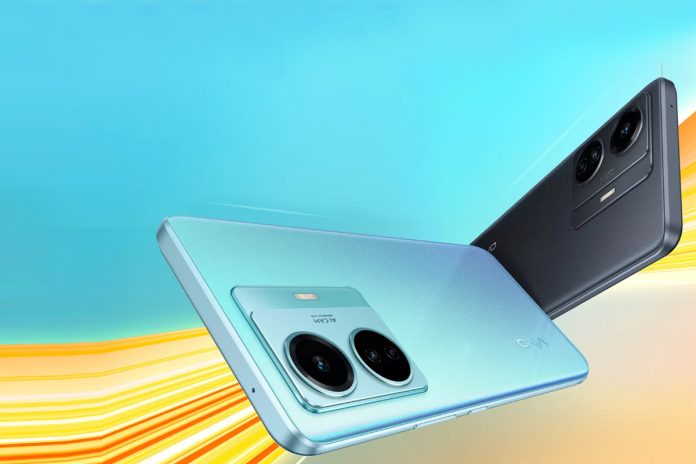
Smartphone brand Vivo has announced India cricket captain Virat Kohli as its brand ambassador. With the association, Vivo aims to reach the millennials and technologically-driven consumers, it said in a statement. A 360-degree marketing approach will characterise Vivo’s association with Virat Kohli, it added.

The Chinese handset maker said Virat will be seen spreading awareness and promoting the launch of Vivo’s upcoming products series in the pipeline. The association will include all ATL and BTL activities, including the brand’s forthcoming TV campaigns and print, outdoor, social media and events.

Nipun Marya, Director-Brand Strategy, Vivo India, said, “We are thrilled to have Virat Kohli on board. At Vivo, our focus is always on our consumer needs and preferences, and we are committed to bringing joy to our consumers’ lives.”

“Collaborating with someone as effervescent as Virat is a great way to better connect with our young consumers. Along with Aamir Khan and Sara Ali Khan, we wish to widen our brand reach, and we are confident that associating with a sports figure will help us in reaching a wider audience,” Marya added.

Virat Kohli said, “I am really looking forward to this association. As a sportsperson, I understand the importance of consistency and commitment in the game. Vivo, as a brand, has established itself as one of the leading players in the Indian smartphone market with its consistency towards delivering innovative technology.”

“The way Vivo has brought joy to its customers’ lives through simplified technology, and advancements in mobile photography are game-winning. Associating with such a brand that understands and delivers to the audience is quite exciting,” Kohli added.

To establish a connect with the young Indian users, Vivo, has also associated with IPL. Over the years, Vivo’s association with IPL has helped them connect with their consumers along with expanding pan India brand presence.

As part of the company’s commitment to ‘Make in India’, all Vivo smartphone series are manufactured at the Greater Noida facility that employs more than 10,000 men and women ensuring all Vivo devices sold in India are made by fellow Indians.

Yahoo Answers shutting down permanently on May 4

0

One of the longest-running web Q&A platforms, Yahoo Answers, is now shutting down permanently. The service was active since 2005 and now the company will discontinue it on May 4 2021.

As per media reports, Yahoo, which is now part of Verizon Media Group, announced the change at the top of the Yahoo Answers homepage. The official message links to a separate FAQ page, which details the timeline of the shutdown. It says that starting from April 20 the platform will no longer accept new submissions.

According to a report, a note has been sent to the active Yahoo Answers members, which provides a little more detail about why Yahoo is shutting down the platform.

The note reads, “We launched Yahoo Answers sixteen years ago to help people around the world connect and share information. With you and millions of other users, we built the best place on the web to ask and answer questions on a variety of topics, creating a community of global knowledge sharing.”

It added, “While we could not have been prouder of what we accomplished together, we are reaching out today to let you know that we have decided to shut down Yahoo Answers on May 4, 2021.”

Users are also instructed to request their data until June 30, or it will be inaccessible after that. The report says that users will no longer be able to post any new questions or answers from April 20.

The company also said, if someone wants to download a copy of questions and answers posted by them, then they have to request it by signing into the Privacy Dashboard.

The company will delete all the data stored after June 30, 2021.

“We address requirements of hybrid workers with our solutions”- Ankur Goel, MD, Poly

0


“When we look back, what we see today is that the pre-COVID and post-COVID world is very different”


The power of rapid communication and efficient collaboration is paramount in these unprecedented times and tools such as video & audio conferencing, headsets and other collaboration technologies are playing a vital role in ensuring some sort of ‘normalcy’ across sectors.

And Poly makes it easy for us to integrate seamlessly. And in a recent interview with the MyMobile team, Ankur Goel, Managing Director for Poly India, spills some more beans about the same.


What do you think about Hybrid Work Culture and how do you see it grow in the near future?

The pandemic has changed the way we live our day-to-day life and the way we live, work, play or interact with each other. When we look back, what we see today is that the pre-COVID and post-COVID world is very different.

I have been talking to a lot of customers and CIOs across verticals be it government, manufacturing, IT/ITeS, education or healthcare and we see that the future of work is hybrid working.

Remote working is widely accepted now, employees are more accustomed to working from home and are finding that they have better work-life balance. So, there is a large segment of the working population that prefers to continue with remote working. On the other hand, there is another segment of workers that are finding it difficult to continue with the work from home arrangement – they miss the human interaction and find that they are more productive in office.

So, we see that the future of work will be hybrid working wherein employees will be working from home two or three days a week and meeting in office for the remainder period. This is beneficial not only for organisations as it has a lot of advantages like cost savings and efficient utilization of resources but also to employees as it offers a very good work-life balance.

Organizations are in a unique position as they must meet the needs of all these different workers and workstyle. Going forward, the focus for leaders will be to ensure that they cater to the needs of all employees despite their work location and making sure that they implement an employee first strategy. In order to do that, organisations will specifically have to go through a phase of 3Rs i.e., respond, redesign and reinvent their workplace strategy so that they can accommodate the workstyle of every employee.


You are into hybrid workplace tools. Have you extended your portfolio witnessing the rise in WFH culture? What are some of Poly’s popular WFH solutions?

Yes, given the rise in work from home and hybrid working culture, we have pivoted our product roadmap to meet the needs of a hybrid worker. Today, we address the requirements of a hybrid worker with our complete set of solutions – headsets, voice, and video and our portfolio and product roadmaps are improving our ability to meet this hardware-for-anywhere demand, creating equipment that can be set up and used easily by anyone, in home offices or remote workplaces, not just IT departments.

Some of our popular Work From Home products include:

POLY SYNC USB/BLUETOOTH SMART SPEAKERPHONES – A remarkable sounding three-in-one device, it is a personal speakerphone, a portable music speaker and a smartphone charger all in one. Its compact, sleek design and carrying case make it perfect for users on the go.

POLY VOYAGER FOCUS UC – Even though you may be working from home office, your favorite café, or even the office, distractions are everywhere. A headset like the Voyager Focus UC comes in handy with its ability to filter out the background noise, while projecting your voice clearly and confidently so your contribution to the meeting can be heard. Also, the Voyager Focus UC delivers rich bass, crisp highs, and natural mid-tones to let you enjoy your favorite tunes.

POLY VOYAGER 6200 UC – The Voyager 6200 UC neckband delivers professional-grade audio performance for mobile and PC calls and features an immersive stereo for the music lovers. The earbud is comfortable, stable, fits nearly all ear sizes and shapes and is easy to put on and take off, while the neckband contours to any user while remaining lightweight.

POLY VOYAGER 5200 UC  – The Voyager 5200 UC, a mono Bluetooth headset which lets you work from wherever you like, and with all-day comfort. Six layers of WindSmart technology and four omni-directional microphones work in tandem to reduce distracting background noise, letting nothing get in the way of a clear connection.

Most of our products are platform agnostic i.e., our equipment works seamlessly across multiple platforms like Microsoft Teams and Zoom and delivers professional results every time and hence, is an ideal choice for a hybrid worker.


How important is the Indian market for you? What is your market expansion plans?

The India market is extremely important for Poly. We have customers across all sectors – government, manufacturing, healthcare, IT/ITeS using our audio, video conferencing solutions and headsets. For 2021 and beyond, our focus will be to educate and help our customers navigate in the new world of work i.e., hybrid working.

We want to provide best-in-class conferencing experience for users from all segments – whether they are working from home, in office or client location and have many exciting products that we will announce in the next few months to meet this vision.

With respect to segments, we see a lot of opportunities in the healthcare and education sector in India – the way that these customers are using collaboration technology is exciting. The pandemic has propelled these customers to disrupt the way they use technology to serve customers and there is a lot of opportunity for Poly to be the collaboration partner for them in their digital journey.

What are some best practices for business leaders while thinking about the future of work – how should they redesign, implement to enable hybrid workforce?

Across all workspaces, be it home office or the traditional office, the focus for business and IT leaders should be on creating environments that motivate and empower workers to be productive and do their best work no matter their location. A few tips for enabling a good hybrid work environment include –

Rethink Work Patterns – Hybrid working brings flexibility on location, times and days that work is carried out. Review and revise work-from-home policies and focus on what employees need to be productive in their role.

Foster Better Collaboration – Encourage inclusive and productive work as teams become more virtual in nature. Create engaging and productive virtual workspaces, using noise-cancelling and intelligent acoustic solutions in dynamic headsets and video soundbars.

Optimize Investment – Banish under-utilized office spaces that bring little return on real estate costs. Prioritize investment beyond the office walls to create flexible, collaborative, technology enabled personal workspaces everywhere.

MyTeam11 unveils ‘Ab Poora India Khelega’ campaign for Indian T20 season

0

Fantasy sports platform MyTeam11 has come up with their campaign for the Indian T20 Season – “Ab Poora India Khelega”. This is aimed at bringing forth the narrative of how fantasy cricket is meant for all and brings every Indian household closer by binding them through the passion for their favourite sport, players and teams.

The campaign was launched through three videos that depict the bittersweet relationship between a father and a son and how people in an Indian household bond over the game of cricket, especially, during the world’s largest T20 cricket extravaganza. The campaign also aims to target the fact that playing fantasy cricket on MyTeam11 is meant for everyone and how the user-friendly application makes learning fantasy cricket easy.

The storyline of each campaign video depicts a son who is smart, tech-savvy, a fantasy cricket enthusiast and an avid user of MyTeam11. He believes that his father knows nothing about fantasy cricket and goes on to ignore his words. However, in a counter of events, at the end of each film, it is shown that the father is well aware of MyTeam11 and outsmarts his son making more prudent choices owing to his sheer superior understanding of cricket leaving the son astounded.

The central characters of the campaign are played by veteran film and TV Actor, Kanwaljit Singh, who is seen playing the role of the father while the role of the son is portrayed by Chhichhore and Aashram star, Tushar Pandey.

Manvendra Singh Rathore, CMO, MyTeam11, said, “A father and a son’s relationship has evolved with changing times especially when it comes to our favourite sport of cricket. But what still remains exclusive and competitive is the knowledge of the sport. This is exactly what we have also tried to capture in our latest campaign “Ab Poora India Khelega”. We have explained while fantasy cricket now captures the imagination of every Indian household but the knowledge of the sport is still paramount which brings them closer.”

“We have also tried to showcase that the MyTeam11 application is a seamless and user-friendly product and can be used by anyone and everyone while aiding the learning of fantasy cricket,” he added.

The video campaign of “Ab Poora India Khelega” will also be complemented by the existing brand voices of MyTeam11 wherein brand ambassador Virender Sehwag shall be seen alongside former New Zealand speedster Danny Morrison, renowned cricket TV hosts Jatin Sapru, Mayanti Langer, Sanjana Ganeshan and Suhail Chandhok across all campaign collaterals.

MyTeam11 had launched the “India Ki Apni Fantasy App” during the 2020 Indian T20 Season and saw immense success leading to a 3-3.5x rise in the number of participants on the platform.