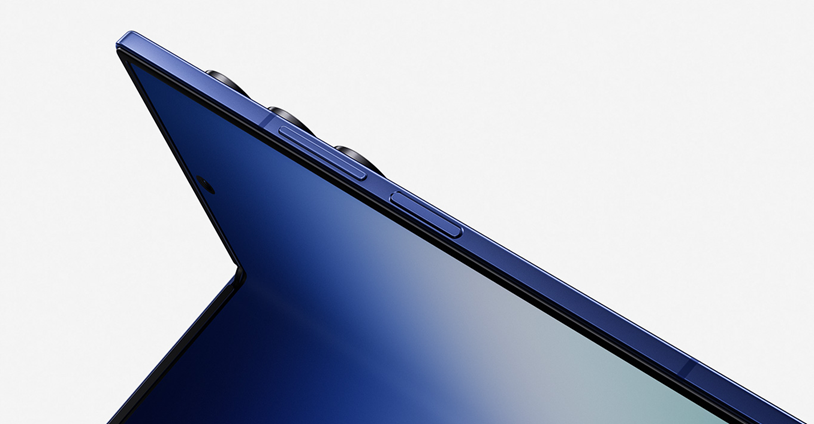
Oppo Find X9 features the industry’s slimmest symmetrical bezels on all four sides.
Rumoured to include a 6.59″ LTPO OLED display, Dimensity 9500 chip, 7,000mAh battery, and a quad-camera setup led by a 50MP Sony LYT-808 sensor.
The Find X9 series will debut in China this October, with a global launch scheduled for October 28.
Caption – Oppo Find X9. (Image credit – Oppo)
The Oppo Find X9 series is expected to launch in October in China with a global launch set for October 28. Meanwhile, company executive Zhou Yibao has now revealed key details. In a recent post, Yibao showcased images of the device and confirmed that the flagship will continue Oppo’s trend of leading in display innovation, delivering what could be the narrowest equal bezels on all four sides in the industry.
Oppo Find X9 – Slim Bezels
Oppo Find X9’s slim bezels compared to Find X8s and Apple iPhone 16 Pro Max. (Image credit – Zhou Yibao)
Yibao explained that the previous generation phone, the Oppo Find X8s, already surpassed the iPhone 16 Pro Max with its ultra-thin bezels. With the Find X9, Oppo has gone even further, trimming them down beyond the X8s and likely setting a new industry benchmark for symmetrical four-sided bezels.
He noted that Oppo has been consistently pushing display boundaries across three generations from the Find X8 to the X8s and now the X9, backed by significant investments in self-developed display production lines.
Design refinements such as the golden R-corner, precise proportions and breakthroughs in slim bezel engineering make the Find X9 Oppo’s most advanced standard edition flagship yet, created to mark the brand’s 30th anniversary. Yibao even encouraged fans to guess the exact bezel measurements.
Oppo Find X9’s slim bezels compared to Find X8s and Apple iPhone 16 Pro Max. (Image credit – Zhou Yibao)
Oppo Find X9 – Key Specifications (Rumoured)
Leaks suggest that the Oppo Find X9 will sport a 6.59-inch LTPO OLED panel with 1.5K resolution and a 120Hz refresh rate. At its core, the phone is expected to debut with the MediaTek Dimensity 9500 chipset, built on TSMC’s 3nm process.
Powering the device will be a massive 7,000mAh battery, paired with 80W wired fast charging and 50W wireless charging support.
On the camera side, the Find X9 is rumoured to feature a 50MP Sony LYT-808 main sensor with OIS, a 50MP Samsung JN5 ultra-wide lens, and a 50MP Samsung JN9 periscope telephoto camera offering 3x optical zoom. The front will house a 50MP Samsung JN1 selfie shooter. Oppo is also bringing an upgraded Danxia colour reproduction system, designed for more natural and precise colour output.
FAQs
Q1. What makes the Oppo Find X9’s display design unique?
Answer. The Find X9 features the industry’s slimmest symmetrical bezels on all four sides, surpassing even the iPhone 16 Pro Max and its predecessor, the Find X8s.
Q2. What are the expected specifications of the Oppo Find X9?
Answer. It’s rumoured to include a 6.59″ LTPO OLED display (1.5K, 120Hz), Dimensity 9500 chipset, 7,000mAh battery, and a quad-camera setup with three 50MP rear sensors and a 50MP front camera.
Q3. When will the Oppo Find X9 launch globally?
Answer. The Oppo Find X9 series is expected to launch in China in October, with a global release scheduled for October 28, marking Oppo’s 30th anniversary.
Xiaomi 15T and 15T Pro will debut on September 24 in Munich.
Leaked renders show flat displays, ultra-thin bezels, and Leica-branded camera modules.
The 15T features a Dimensity 8400 chip, while the 15T Pro uses Dimensity 9400+. Both run Android 15, offer 12GB RAM, and include Xiaomi HyperAI features.
Xiaomi 15 T series launch announcement. (Image credit – @Xiaomi on X)
Xiaomi has officially confirmed the launch date for its much-anticipated Xiaomi 15T and 15T Pro smartphones. The unveiling will take place on September 24 in Munich, Germany, coinciding with the world-famous Oktoberfest. The company announced the news via its official X account with the tagline “far closer”, hinting at possible camera advancements, likely a new zoom feature for the 15T Pro.
Something very pro is coming far closer. Xiaomi 15T Series launches Sept 24th.
Fresh design renders of the Xiaomi 15T have surfaced thanks to popular tipster Paras Guglani @passionategeekz on X. The leaked images align closely with an earlier leaked TikTok video showing the 15T Pro. The renders reveal a flat form factor with rounded corners and ultra-thin symmetrical bezels on the display. A centrally placed punch-hole selfie camera is also present.
Xiaomi 15T leaked renders (@passionategeekz on X )
On the back, the device features a squircle-shaped Leica-branded camera module, which houses three sensors and an LED flash within four circular cutouts. The phone’s side panels are flat, with the volume rockers and power button positioned on the right.
The renders showcase two colour options, Grey with a gold-bronze hue and Black. Additionally, a 12GB RAM + 256GB storage variant has been confirmed, along with Xiaomi HyperAI features.
Something very pro is coming far closer. Xiaomi 15T Series launches Sept 24th.
Both the Xiaomi 15T and 15T Pro have cleared multiple certification platforms including UAE’s TDRA, Singapore’s IMDA, and the European EEC. The 15T has also received certifications from Thailand’s NBTC and Indonesia’s SDPPI.
Geekbench listings further reveal their processors:
The upcoming Xiaomi 15T lineup is expected to run on Android 15 OS with 12GB RAM options. Both devices will feature a flat OLED display with a high refresh rate, while the camera setup is tipped to include a 50MP main sensor, 13MP ultra-wide lens, and a 50MP telephoto unit, along with a 32MP front camera.

Battery and charging details include a 5500 mAh battery. The Xiaomi 15T may ship with a plastic frame and 67W wired fast charging, while the 15T Pro is expected to offer a metal frame and faster 90W charging. Both models are also rumoured to come with IP69-rated protection.
FAQs
Q1. When and where will the Xiaomi 15T series launch?
Answer. Xiaomi has confirmed that the 15T and 15T Pro will launch on September 24, 2025, in Munich, Germany, coinciding with the Oktoberfest celebration.
Q2. What are the key design features of the Xiaomi 15T series?
Answer. Leaked renders show a flat display with ultra-thin symmetrical bezels, a punch-hole selfie camera, and a Leica-branded squircle camera module with three sensors.

Q3. What processors and charging specs are expected for the Xiaomi 15T and 15T Pro?
Answer. The 15T will feature a Dimensity 8400 chip with 67W charging, while the 15T Pro is expected to use Dimensity 9400+ and support faster 90W charging with a metal frame.
Sony’s IMX09E is a 200MP sensor with a 1/1.12″ size and Hybrid-Frame HDR, designed to rival Samsung’s ISOCELL HP2 in ultra-premium smartphones.
The IMX09E with Snapdragon 8 Elite Gen 5 supports 4x lossless zoom and over 100 dB dynamic range for superior detail and low-light performance.
Oppo Find X9 Ultra, Xiaomi 16 Ultra, and Vivo’s next Ultra flagship are expected to feature the IMX09E with launches likely in early 2026.
Oppo Find X9 Ultra is expected to be among the phones to feature the Sony IMX09E 200MP Camera Sensor. (Image credit – Oppo)
Sony appears ready to step up its presence in flagship smartphone photography. A new leak suggests that multiple upcoming Snapdragon 8 Elite Gen 5-powered devices including “Ultra” models from Oppo, Vivo, and Xiaomi will debut with a massive 200MP Sony sensor. If true, this would position the phones directly against Samsung’s Galaxy Ultra lineup. Here’s what the recent leak reveals.
Sony IMX09E – Key Features
Tipster Digital Chat Station’s post on Weibo. (Translate via Google Translate)
According to tipster Digital Chat Station, the sensor is identified as the Sony IMX09E. It reportedly measures 1/1.12-inch with 0.7 μm pixels. While slightly smaller than the LYT-900 seen in the Oppo Find X8 Ultra and Xiaomi 15 Ultra, it is expected to be the largest 200MP sensor ever used in a smartphone.
Sony is said to be equipping the IMX09E with Hybrid-Frame HDR technology, which could push dynamic range beyond 100 dB, ensuring improved detail in both bright highlights and dark shadows.
On paper, the IMX09E is designed to rival Samsung’s ISOCELL HP2 sensor (1/1.3″), currently featured in the Galaxy S25 Ultra. Paired with the enhanced image signal processor (ISP) inside Qualcomm’s Snapdragon 8 Elite Gen 5, the new Sony sensor is rumoured to support 4x lossless zoom, potentially giving it an edge in ultra-high-resolution performance.
First Phones to Feature Sony IMX09E
Oppo Find X9 Ultra – Expected to go big with not one but two 200MP cameras in a quad-lens setup.
Xiaomi 16 Ultra – Rumoured to combine the IMX09E with a 1-inch primary sensor, creating one of the most ambitious smartphone camera systems to date.
Vivo’s next Ultra flagship – Also tipped to adopt the IMX09E as part of its 2026 lineup.
Both Oppo and Xiaomi are expected to launch their Ultra flagships with this sensor in early 2026.
If these leaks prove accurate, the IMX09E could become Sony’s strongest push yet into the premium mobile market. With Oppo, Vivo, and Xiaomi positioning themselves as direct competitors to Samsung, 2026 could be a defining year for smartphone photography.
FAQs
Q1. What is the Sony IMX09E sensor and how does it compare to others?
Answer. The Sony IMX09E is a 200MP smartphone camera sensor measuring 1/1.12 inches, making it the largest 200MP sensor ever used. It’s designed to rival Samsung’s ISOCELL HP2.
Q2. What imaging features does the IMX09E offer?
Answer. It supports Hybrid-Frame HDR with over 100 dB dynamic range, 0.7μm pixels, and 4x lossless zoom, aiming to deliver exceptional detail in both bright and low-light scenes.
Q3. Which smartphones are expected to feature the Sony IMX09E?
Answer. The IMX09E is tipped to debut in flagship Ultra models from Oppo, Xiaomi, and Vivo, including the Oppo Find X9 Ultra and Xiaomi 16 Ultra, launching in early 2026.
Apple’s in-house C1 modem offers better upload speeds and reliability in congested areas but trails Qualcomm in peak downloads.
In India, the C1 modem reached up to 213 Mbps on Jio.
Ookla’s data shows the C1 excels in 10th percentile and upload metrics across most regions.
Ookla’s analysis of Apple’s C1 Modem. (Image credit – PhoneArena)
Apple is gearing up for its September 9, 2025 event and we are expecting the brand to unveil the iPhone 17 Air and other next-gen models. Meanwhile, Ookla has shared fresh insights into the company’s first in-house 5G modem. The Apple C1, which debuted earlier this year in the iPhone 16e, has been tested against the Qualcomm-powered iPhone 16 to evaluate how it stacks up across global 5G networks.
Apple C1 Modem – Background
Apple has spent years developing its own mobile modem to reduce reliance on Qualcomm. The result is the C1, first seen in February 2025 inside the iPhone 16e. That device mirrors the 6.1-inch design of the iPhone 16, making performance comparisons straightforward. Ookla’s Speedtest Intelligence pulled data from Q2–Q3 2025 to analyse how the two modems perform around the world.
Breakdown
The Qualcomm modem in the iPhone 16 supports up to 6CA downlink aggregation and uplink MIMO.
The Apple C1 modem, by contrast, offers 3x downlink aggregation but lacks uplink MIMO.
Apple has tuned the C1 for stronger low-band coverage, aiming to boost reliability for users at the edge of coverage zones or in crowded areas.
Beyond cellular, Apple is also developing proprietary Wi-Fi and Bluetooth chipsets to improve wireless efficiency and extend battery life in future devices.
Global 5G Performance
Median Download Speeds
The Qualcomm modem still holds the advantage in 12 out of 21 advanced 5G markets including India, the U.S., China, and Saudi Arabia. The widest gap appeared in Saudi Arabia, where the iPhone 16 clocked a median 353.49 Mbps versus the iPhone 16e’s 295.01 Mbps. However, in regions with fewer carrier aggregation options, the C1 modem managed to match or even surpass Qualcomm’s performance.
10th Percentile Speeds
The C1 modem excelled here, outperforming the Qualcomm-based iPhone 16 in 15 of 21 markets. This suggests stronger reliability for users in congested conditions or far from cell towers.
Upload Speeds
The iPhone 16e led in 15 of 21 markets for uploads. In Canada, for instance, it posted a median of 23.91 Mbps compared to 11.57 Mbps on the iPhone 16. In the U.S., AT&T and Verizon favoured the C1 modem for uploads, while T-Mobile results were nearly identical.
Country-Specific Insights
India
Vi India: Median 110.87 Mbps (C1) vs 112.13 Mbps (Qualcomm); 90th percentile 242.19 Mbps vs 271.09 Mbps.
Airtel: Median 182.29 Mbps (C1) vs 183.28 Mbps (Qualcomm); 90th percentile 368.23 Mbps vs 392.91 Mbps.
Jio: Median 213.26 Mbps (C1) vs 225.54 Mbps (Qualcomm); 90th percentile 494.40 Mbps vs 501.53 Mbps.
These results show the Qualcomm modem leading in peak performance, while Apple’s C1 maintains steadier results at network edges.
United States
On T-Mobile and Verizon, the iPhone 16 posted higher median download speeds thanks to its 4CA support. But uploads leaned in favour of the 16e on AT&T and Verizon. Importantly, the C1 modem consistently performed better at the 10th percentile across all carriers.
Saudi Arabia
Advanced networks from stc and Zain favoured the Qualcomm modem, giving the iPhone 16 an edge in download speeds and a 200 Mbps lead at the 90th percentile. Uploads, however, were stronger on the iPhone 16e.
Japan
The iPhone 16e made up 11.3% of total iPhone 16-series samples in Ookla’s dataset. It posted faster median download and upload speeds across most operators, with standout performance at the 10th percentile on SoftBank and Rakuten.
France
Here, the iPhone 16e delivered similar median download speeds to the iPhone 16, except on Free, where it trailed by 11%. It performed better at the 10th percentile across nearly all operators but lost ground at the 90th percentile due to Qualcomm’s superior carrier aggregation.
Ookla’s analysis paints a clear picture. Apple’s C1 modem may not beat Qualcomm at peak speeds on advanced 5G networks, but it delivers reliable uploads, stronger performance in congested conditions, and stable coverage for edge users.
Ookla says it will continue monitoring the rollout of the C1 and Apple’s upcoming wireless solutions to see how they shape overall performance in the years ahead.
FAQs
Q1. What is Apple’s C1 modem and where was it first introduced?
Answer. Apple’s C1 is its first in-house 5G modem, designed to reduce reliance on Qualcomm. It debuted in the iPhone 16e in early 2025 and is expected in the upcoming iPhone 17 Air.
Q2. How does the C1 modem perform compared to Qualcomm’s in global 5G networks?
Answer. While Qualcomm leads in peak download speeds across most advanced markets, Apple’s C1 modem delivers better upload speeds and more reliable performance in congested areas.
Q3. What were the C1 modem’s 5G results in India?
Answer. In India, the C1 modem reached up to 213 Mbps on Jio and showed steady performance across Vi and Airtel, though Qualcomm still led slightly in peak download speeds.
ASUS launched the Vivobook S16 in India with vibrant new shades.
It features a 16″ OLED display, Snapdragon X processor, 16GB LPDDR5X RAM, 512GB SSD, and a 70Wh battery offering up to 32 hours of usage.
Priced at ₹67,990, the first 200 buyers get benefits worth ₹8,098 for ₹1 including extended warranty, accidental damage protection and a Mokobara sleeve.
Caption – ASUS Vivobook S16 Launched in India. (Image credit – Asus)
ASUS has officially introduced the Vivobook S16 (S3607QA) in India, the latest entry in its Vivobook Multicolour Series. Commenting on the launch, Arnold Su, Vice President, Consumer and Gaming PC, ASUS India, said, “At ASUS, we are committed to creating products that have unmatched quality and are thoughtfully designed to meet the evolving needs of our consumers. The new Vivobook Multicolor series is a reflection of this philosophy—designed for millennials who we believe want technology that reflects their personality without compromising on performance.”
“With shades like BFF Peachy and Salvia Green, the Vivobook S16 combines a fresh, vibrant design with the power of Copilot+ PC and Snapdragon X processors, making it stylish, intelligent, and ready for the AI-driven future. This launch reflects ASUS’s vision to bring meaningful, practical AI innovations to India’s young, dynamic audience,” added Su.
ASUS Vivobook S16 colour variants. (Image credit – Asus)
The laptop now comes in two vibrant new shades, BFF Peachy and Salvia Green. These colours come alongside the earlier Matte Grey and Cool Silver options. According to ASUS, the colour refresh is part of its “Your Vibe. Your Colour” campaign, with Mokobara as the official vibe partner. Here’s everything we know about the new Vivobooks.
ASUS Vivobook S16 – Key Features
The Vivobook S16 is equipped with a 16-inch OLED display featuring a 16:10 aspect ratio and 1920 × 1200 resolution. It offers 95% DCI-P3 color gamut, 89% screen-to-body ratio, 0.2 ms response time, and 300 nits brightness for sharp and vibrant visuals.
ASUS Vivobook S16 key features. (Image credit – Asus)
Under the hood, the laptop runs on a Snapdragon X processor with 8 cores and 8 threads, clocked up to 2.97 GHz with a 30 MB cache. It integrates the Qualcomm Hexagon NPU, capable of delivering up to 45 TOPS AI performance. To ensure sustained efficiency, ASUS has included IceCool Thermal Technology and MyASUS fan controls, supporting performance of up to 30W TDP.
The system comes with 16GB LPDDR5X RAM (8448 MHz) and a 512GB PCIe Gen 4 SSD. On the software side, it ships with Windows 11 Home, Microsoft Office Home 2024 lifetime access, and a one-year Microsoft 365 Basic subscription.
Powering the laptop is a 70Wh battery that promises up to 32 hours of usage. It supports 65W fast charging via USB Type-C. Connectivity options include:
The Vivobook S16 packs a backlit ErgoSense keyboard with a dedicated Copilot key for features such as Recall, Windows Studio Effects, Live Captions, and ASUS StoryCube. Other highlights include –
ErgoSense touchpad with smart gestures
Dolby Atmos-certified speakers with a smart amplifier
AI noise-cancelling microphones
FHD IR webcam with Windows Hello, privacy shutter, and Microsoft Pluton security chip
In terms of design, the laptop is 1.59 cm thin, weighs 1.74 kg, and sports a metal finish with a CNC-engraved logo. It also carries US MIL-STD 810H certification for durability.
The ASUS Vivobook S16 (S3607QA) is priced at ₹67,990 and is available via the ASUS E-shop and Flipkart.
Additionally, the first 200 buyers can claim exclusive benefits worth ₹8,098 for just ₹1. These include two years of extended warranty, three years of accidental damage protection, and a Mokobara laptop sleeve through asuspromo.in.
Model
Vivobook S16 (S3607QA)
Performance
Snapdragon® X (X1 26 100) Processor (30MB Cache, up to 2.97GHz, 8 cores, 8 Threads)
Qualcomm® Hexagon™ NPU up to 45TOPS
Q1. What is the ASUS Vivobook S16 and when was it launched in India?
Answer. The ASUS Vivobook S16 (model S3607QA) is the latest addition to ASUS’s Vivobook Multicolour Series, officially launched in India with a refreshed design and specs.
Q2. What are the standout design and display features of the Vivobook S16?
Answer. It features a 16-inch OLED display with a 16:10 aspect ratio, 1920×1200 resolution, 95% DCI-P3 color gamut, and ultra-thin bezels. The laptop is just 1.59 cm thin and weighs 1.74 kg.
Q3. What processor and performance specs does the Vivobook S16 offer?
Answer. The laptop runs on a Snapdragon X processor with 8 cores, paired with 16GB LPDDR5X RAM and a 512GB PCIe Gen 4 SSD. It includes IceCool Thermal Tech and delivers up to 30W TDP.
Q4. How long does the battery last and what are the charging options?
Answer. The Vivobook S16 packs a 70Wh battery that offers up to 32 hours of usage and supports 65W fast charging via USB Type-C.
Q5. What is the price of the Vivobook S16 and are there any launch offers?
Answer. The laptop is priced at ₹67,990. The first 200 buyers can claim benefits worth ₹8,098 for just ₹1, including extended warranty, accidental damage protection, and a Mokobara sleeve.
Xiaomi 16 series features ultra-thin bezels and the roundest display corners ever seen, enabled by LIPO technology.
The Xiaomi 16 Pro is tipped to include a 6,300mAh battery and a larger main camera sensor.
While Xiaomi pushes for a near bezel-less aesthetic, Samsung’s S26 Ultra adopts softer corners but retains its angular identity.
Caption – Xiaomi 16 front render. (Image credit – @UniverseIce on X)
New leaks are offering a closer look at Xiaomi’s upcoming Xiaomi 16 series. Popular tipster Ice Universe has shared renders of the Xiaomi 16, highlighting its bold design changes that focus on bezels, corners, and front-end aesthetics. The series is expected to debut in late September 2025 and it appears to push the boundaries of screen-to-body ratio. Here’s what we know.
Xiaomi 16 Renders
Xiaomi 16 front render. (Image credit – @UniverseIce on X)
According to Ice Universe, the device uses LIPO technology to achieve what may be the thinnest bezels on any smartphone to date. The renders also reveal a smaller punch-hole camera and unusually rounded display corners, described by the leaker as “the roundest corners in smartphone history.”
Tipster Ice Universe’s post on Weibo. (Screenshot by Gizmchina)
This gives the Xiaomi 16 a softer, more distinctive look compared to Apple’s iPhones, signalling a fresh design direction for Xiaomi.
Ice Universe claims the Galaxy S26 Pro has made little progress in bezel reduction, while the Xiaomi 16 Pro is leading the way with “the most advanced technology in the industry.” His shared renders show the Xiaomi 16 Pro with slimmer bezels and far more rounded corners, whereas the Galaxy S26 Pro looks nearly identical to its predecessor.
Caption – (Image credit – @UniverseIce on X)
The tipster even suggested Samsung could be aligning its design closer to the iPhone 17 Pro, instead of competing directly for the highest screen-to-body ratio. This aligns with earlier rumours that Samsung plans to move away from its Note-inspired boxy design starting with the S26 Ultra.
He further speculated that the Xiaomi 16 Pro might become the best-selling non-Ultra Android flagship, thanks to both design and hardware. A 6,300mAh battery is rumoured for the Pro model, dwarfing the Galaxy S26’s 4,300mAh capacity.
Unfortunately, the bezel of Samsung Galaxy S26Pro has made little progress, probably to save costs and follow Apple (because the bezel of iPhone 17 Pro has not improved either).Xiaomi 16 Pro adopts the most advanced technology in the industry, which greatly reduces the width of… pic.twitter.com/gy5iRArRIN
Samsung has faced criticism for recycling older camera hardware across generations, while the Xiaomi 16 Pro is tipped to introduce notable improvements, including a larger main sensor. More details on its leaked camera setup have already been circulating online, further raising expectations.
Galaxy S26 Ultra Design Changes
Samsung’s Galaxy S26 Ultra is expected to launch in January 2026. Leaked CAD renders and dummy units suggest that Samsung is also rounding off the Ultra’s sharp corners, though not as drastically as Xiaomi. The bezels appear slimmer than those on the Galaxy S25 Ultra, but they still don’t match the razor-thin look of the Xiaomi 16 Pro.
Placed side by side, the S26 Ultra maintains a more angular profile, holding onto its signature “Ultra” identity, while improving comfort for one-handed use.
Both companies are clearly refining how their flagships look and feel. Xiaomi seems to be chasing the true bezel-less dream, while Samsung is shifting away from its Note-style design language, a move that has sparked mixed reactions online.
With the Xiaomi 16 series expected in September 2025 and the Galaxy S26 lineup in January 2026, the next wave of flagship launches promises a real design showdown between two of the industry’s biggest players.
FAQs
Q1. What design changes are expected in the Xiaomi 16 series?
Answer. The Xiaomi 16 series is expected to feature ultra-thin bezels and the most rounded display corners ever seen on a smartphone, enabled by LIPO technology.
Q2. How does the Xiaomi 16 Pro compare to the Galaxy S26 Pro in terms of design?
Answer. According to tipster Ice Universe, the Xiaomi 16 Pro leads in bezel reduction and corner curvature, while the Galaxy S26 Pro shows minimal design changes from its predecessor.
Q3. What hardware upgrades are rumoured for the Xiaomi 16 Pro?
Answer. The Xiaomi 16 Pro is tipped to include a large 6,300mAh battery and a significantly upgraded main camera sensor, positioning it as a strong non-Ultra Android flagship
iPhone 17 Series regulatory listings confirm larger batteries across the iPhone 17 lineup.
The Pro Max battery reaches up to 5088mAh and the new slim Air model offering up to 3149mAh.
Apple is optimising internal space in eSIM-only models, boosting battery capacity by up to 6.6% compared to physical SIM versions.
Leaked images show a vibrant orange strap designed for the iPhone 17’s TechWoven case, confirming lanyard loops for hands-free carry.
iPhone 17 Series leaked render.
With just one day to go before Apple’s big launch event, a fresh leak has revealed the actual battery capacities of the upcoming iPhone 17 series. The listings was spotted on China’s regulatory database and it confirms that most of the new iPhones will feature larger batteries compared to last year’s iPhone 16 lineup. Here’s everything we know so far.
iPhone 17 Series Battery Capacities
Caption – Apple iPhone 17 Series Battery Capacities Revealed. (Image credit – ShrimpApplePro on X)
Apple will unveil four models this year, which will include the iPhone 17, iPhone 17 Air, iPhone 17 Pro, and iPhone 17 Pro Max. Here are the battery details of each model as per the leaked China’s regulatory listings –
iPhone 17 (model number ‘PSMT4’) – 3692mAh
iPhone 17 Pro (model numbers ‘S2225’ and ‘2226A’) – 3988mAh / 4252mAh
iPhone 17 Pro Max (model numbers ‘PSMU8’/’NA295’ and ‘PSMY9’/’NA293’) – 4823mAh / 5088mAh
iPhone 17 Air (model numbers ‘S2228’ and ‘108CS’/’2228A’) – 3036mAh / 3149mAh
Replacing the Plus model, Apple is introducing the slim iPhone 17 Air, which has been spotted with two rated capacities.
The information was first shared by reliable leaker ShrimpApplePro shared what they claim are the “real” battery capacities for all four models.
Caption – Tipster ShrimpApplePro’s post on X.
iPhone 17 Series – Design and Battery Optimisations
For the redesigned iPhone 17 Air, 17 Pro, and 17 Pro Max, Apple is reportedly using the additional space inside the chassis more efficiently. If you own an eSIM-only iPhone, you can expect around 5% more capacity compared to versions with a physical SIM card tray.
Interestingly, the standard iPhone 17 is the only model with a single listed capacity, suggesting it may not get the same eSIM-only battery boost, likely because it follows the same design language as the iPhone 16.
Despite that, the overall improvements across the lineup and particularly in the iPhone 17 Pro look like meaningful gains. The iPhone 17 Air’s reported 3149mAh capacity is also higher than earlier leaks suggested.
eSIM-Only Advantage
Apple has been selling eSIM-only iPhones in select regions for three years, but until now, the extra internal space left by the SIM tray was filled with a rubber block. This year, Apple is finally putting that room to good use.
Here’s how much additional capacity eSIM-only models will get compared to physical SIM versions –
iPhone 17 Air – +3.7%
iPhone 17 Pro – +6.6%
iPhone 17 Pro Max – +5.5%
Since Apple is expanding eSIM-only models to more regions this year, it makes sense that the company is optimising that space.
iPhone 17 Series – First Look at Apple’s Crossbody Strap
Caption – The Crossbody Strap for iPhone 17. (Image credit – @SonnyDickson on X)
Alongside the battery leak, popular X tipster Sonny Dickson has shared images of Apple’s upcoming crossbody strap accessory for the iPhone 17 lineup. The leaked images show the strap in a vibrant orange colour.
Here’s your first look at the Crossbody Strap for iPhone 17, do people actually use these? pic.twitter.com/jcJOuleRbq
Caption – Box for Apple’s new “TechWoven” case. (Image credit – Majin Bu)
The design aligns with an earlier leak by Bajin Bu, who shared “1:1 clones” of Apple’s new TechWoven case packaging. The box illustration highlighted two lanyard holes meant for attaching a strap, and the loops visible in Dickson’s leak confirm that design.
iPhone 17 Pro Carrier Leak Hints At 8x Camera Zoom, Vapor Chamber Cooling
In a related leak spree, a purported document from a South Korean carrier has surfaced, shedding light on more specs for the upcoming iPhone 17 lineup.
We’ve already heard rumours that the iPhone 17 Pro and Pro Max will get upgraded telephoto camera systems, and this document claims the zoom level will actually jump to 8x, compared to the 5x zoom found on the iPhone 16 Pro models. Alongside this, Apple is also expected to bring a dramatically improved cooling system to its Pro models.
Caption – iPhone 17 Pro leaked render.
According to the carrier documentation, both the iPhone 17 Pro and Pro Max will incorporate a new vapor chamber cooling system. While this technology has been used in premium Android smartphones for years, it would mark a first for iPhones. The system works by dispersing heat away from the CPU and GPU, allowing the chip to sustain peak performance for longer before hitting thermal limits and throttling down.
For Apple’s Pro devices, this could translate into longer 3D gaming sessions with stable frame rates, extended ProRes video recording outdoors, and smoother performance in other resource-heavy tasks. The document even references support for 8K video recording, which would naturally benefit from this improved thermal efficiency.
The leak was first shared in a now-deleted post by Jukan on X. However, it remains unclear if the specifications are based on official data. Historically, carriers have sometimes created advance documentation by pulling together details from consensus leaks and rumours.
Adding to this, Bloomberg has previously reported that the iPhone 17 Pro could feature a variable aperture system, where the optical zoom distance adjusts mechanically. If true, this would mark a major departure from all earlier iPhones, which have always used fixed zoom distances.
Apple Event on September 9
The final reveal is just hours away. Apple will announce the iPhone 17 lineup and new accessories during its September 9 event, which begins at 10:00 AM PT / 1:00 PM ET. The keynote will stream live on Apple’s website, YouTube, and the Apple TV app.
FAQs
Q1. What are the battery capacities of the iPhone 17 models?
Answer. According to a regulatory leak, the iPhone 17 lineup will feature larger batteries – iPhone 17: 3692mAh, iPhone 17 Air: up to 3149mAh, iPhone 17 Pro: up to 4252mAh, iPhone 17 Pro Max: up to 5088mAh.
Q2. How does the eSIM-only design affect battery capacity in the iPhone 17 Series?
Answer. Apple is using the extra space from removing the SIM tray to boost battery capacity in eSIM-only models, up to 6.6% more in the Pro and 5.5% more in the Pro Max.
Q3. What is the new crossbody strap accessory for iPhone 17?
Answer. Leaked images show a vibrant orange crossbody strap designed for Apple’s new TechWoven case, featuring dual lanyard loops for hands-free carrying.
Apple Watch SE 3 last-minute leak suggests Apple Watch SE 3 will debut this week at Apple’s “Awe dropping” event, alongside Series 11 and Ultra 3.
All three upcoming Apple Watch models are expected to run on the new S11 chipset, aligning with Apple’s streamlined hardware approach.
While details are scarce, speculation points to a plastic casing and larger display for the SE 3.
Apple Watch SE 3 tipped to launch this week. (Image credit – Apple)
A new leak strongly suggests that Apple will unveil the Apple Watch SE 3 this week, alongside its other upcoming wearables. Until now, rumours around the next-generation SE model have been scarce, leaving many unsure whether it would actually launch in 2025. However, the latest information indicates its arrival is imminent.
According to a 9to5Mac report, the leak originates from an anonymous X (formerly Twitter) account with a proven track record of accuracy. The account has chosen to remain private, so the original post cannot be directly linked.
Late on Sunday, the tipster reportedly shared processor IDs and model identifiers for Apple’s three upcoming smartwatches. These include Apple Watch Series 11, Watch Ultra 3, and Watch SE 3. The leak claims that all three models will run on the Apple S11 chipset, matching earlier rumours about Apple’s unified upgrade strategy.
As for other details, information about the Apple Watch SE 3 remains limited. Previous speculation has hinted at the possibility of a plastic casing and larger displays, similar to those introduced with the Apple Watch Series 7, Series 8, and Series 9.
Apple is hosting its highly anticipated “Awe dropping” event on Tuesday, where the company is also expected to debut the iPhone 17 lineup. With Apple Watch SE 3 now in the mix, the event is shaping up to bring multiple major announcements.
FAQs
Q1. Is the Apple Watch SE 3 launching this week?
Answer. Yes, a last-minute leak suggests that Apple Watch SE 3 will be unveiled at Apple’s “Awe dropping” event this Tuesday, alongside Series 11 and Ultra 3.
Q2. What chipset will the Apple Watch SE 3 use?
Answer. The SE 3 is expected to run on Apple’s new S11 chipset, part of a unified upgrade strategy across all three upcoming Apple Watch models.
Q3. What design changes are rumoured for the Apple Watch SE 3?
Answer. While details are limited, speculation points to a plastic casing and larger display, similar to the design seen in Apple Watch Series 7 through 9.
The Vivo X300 has received 3C certification, confirming 90W fast charging.
It’s expected to run Android 16 with a Dimensity 9500 chip and 16GB RAM.
The Ultra variant may feature a triple rear setup with two 200MP sensors and a 50MP ultra-wide lens, plus advanced HDR and zoom capabilities via Sony and Samsung sensors.
The X300 Pro will debut a 6.78″ flat display, up to 1TB storage, and satellite messaging support.
The standard X300 will offer a 6.3″ OLED panel and a 120Hz refresh rate.
Vivo X300 Pro might have the same rear camera setup as Vivo X200 Pro (shown in the picture). (Image credit – Vivo)
Vivo is steadily building anticipation for its upcoming Vivo X300 series, revealing official details and sparking new leaks ahead of launch. The lineup is expected to include the Vivo X300, X300 Pro, and X300 Ultra with certifications and tipster reports giving us a clearer picture of what to expect. Here’s everything we know about the series so far.
Vivo X300 Receives 3C Certification
Vivo X300 3C certified. (Screenshot by Gizmochina)
A new Vivo device with model number V2509A has appeared on China’s 3C certification platform, confirming support for 90W fast charging with charger models V9082L0A1-CN / V9082L0E1-CN.
The same phone was also spotted on Geekbench, showing the Dimensity 9500 chipset, 16GB RAM, and Android 16 out of the box.
Vivo X300 Ultra Camera Leaks
Tipster Digital Chat Station’s post on Weibo. (Screenshot by Gizmochina)
Renowned tipster Digital Chat Station recently revealed more details about the Vivo X300 Ultra’s cameras. The flagship Ultra is expected to feature a 200MP main + 50MP ultra-wide + 200MP periscope telephoto triple camera setup, powered by the Snapdragon 8 Elite Gen 5.
Tipster Digital Chat Station’s post on Weibo. (Screenshot by Gizmochina)
The Sony IMX09E sensor will reportedly serve as the primary camera. It measures 1/1.12 inches, uses 0.7μm pixels, supports Hybrid Frame-HDR (DCG+VS), and achieves an ultra-high 100dB dynamic range with superior low-light performance. It also offers 2x and 4x lossless zoom and a 16-channel 2×2 OCL system for precise focusing.
Tipster Smart Pikachu’s post on Weibo. (Screenshot by Gizmochina)
The Sony LYT-828 will likely act as the ultra-wide lens on the Ultra, while the 200MP periscope telephoto could use Samsung’s HPB sensor. All models in the series, including the Ultra, are tipped to carry a 50MP front camera with autofocus and a 92° field of view. The Ultra itself is expected to launch in the first half of 2026.
Vivo X300 Pro Display and Specs Confirmed
Vivo’s Product Manager Han Boxiao confirmed that the Vivo X300 Pro will debut with a 6.78-inch flat display, marking the first Pro variant in the X-series to use a flat design. Boxiao emphasised its polished rounded corners, slim bezels, and micro-arc detailing, making the phone more ergonomic. He also compared it to the iPhone 16 Pro Max, calling the X300 Pro “lighter, slimmer, more compact, and naturally comfortable to hold.”
Vivo X300 Pro display teaser. (Image credit – Gizmochina)
The Pro model is expected to run on the Dimensity 9500 SoC, offer up to 16GB RAM and 1TB storage, and house a 6,500mAh battery with 90W wired and 50W wireless charging. A special edition may even support Beiduo satellite messaging.
For cameras, the X300 Pro could include a 50MP Sony LYT-828 main sensor with OIS, a 50MP Samsung JN5 ultra-wide lens, and a 200MP Samsung HPB periscope telephoto camera. It will also feature a 50MP selfie camera with autofocus, OriginOS 6 based onAndroid 16, an ultrasonic in-display fingerprint sensor, and dedicated V3 and VS1 imaging chips.
Vivo X300 Rumoured Specifications
The standard Vivo X300 is said to sport a 6.3-inch flat OLED display with a custom BOE Q10 Plus panel, delivering 1.5K resolution and 120Hz refresh rate. It will be powered by the Dimensity 9500 processor and pack a 6,000mAh+ battery.
On the back, the X300 may feature a 200MP Samsung HPB primary camera, a 50MP Samsung JN5 ultra-wide lens, and a 50MP Sony LYT-602 periscope telephoto sensor. Like the Pro, it will also include a 50MP autofocus front camera with 92° FOV.
FAQs
Q1. What certifications and core specs have been confirmed for the Vivo X300?
Answer. The Vivo X300 has received 3C certification in China, confirming support for 90W fast charging. It’s expected to run Android 16, powered by the Dimensity 9500 chipset with 16GB RAM.
Q2. What camera setup is expected in the Vivo X300 Ultra?
Answer. The Vivo X300 Ultra may feature a triple rear camera system – a 200MP Sony IMX09E main sensor, a 50MP Sony LYT-828 ultra-wide lens, and a 200MP Samsung HPB periscope telephoto camera. It will also include a 50MP front camera with autofocus and a 92° field of view.
Q3. What display and hardware features are confirmed for the Vivo X300 Pro?
Answer. The X300 Pro will debut with a 6.78-inch flat display, Dimensity 9500 SoC, up to 16GB RAM and 1TB storage, and a 6,500mAh battery with 90W wired and 50W wireless charging. It may also support satellite messaging and include dedicated imaging chips.
Apple has added SanDisk and Kioxia to its storage supplier list for the iPhone 17 Air.
The iPhone 17 Air is expected to offer 128GB, 256GB, and 512GB variants, while the 1TB option remains exclusive to the iPhone 17 Pro Max.
The iPhone 17 Air may be priced higher than the standard iPhone 17.
The iPhone 17 Air image leaked earlier. (Image credit – Sonny Dickson)
Apple’s upcoming iPhone 17 Air is expected to launch soon. It will introduce a new ultra-slim design that sacrifices some rear camera and battery capabilities to deliver a sleeker form factor within the iPhone 17 lineup.
Despite its slimmer build, the iPhone 17 Air could still ship with high-end internal storage options thanks to multiple suppliers. According to a supply chain analysis allegedly compiled by Citigroup and shared on X (formerly Twitter) by @Jukanlosreve, Apple has reportedly added SanDisk and Kioxia to its list of storage providers, alongside existing partners Samsung and SK Hynix.
Caption – iPhone 17 Series Supply Chain Analysis. (Image source – Citi/ @Jukanlosreve on X)
The leaked spreadsheet indicates that Kioxia holds the largest share of iPhone 17 Air storage supply orders at 35%, followed by SK Hynix with 30%, SanDisk at 20%, and Samsung with the remaining 15%.
However, storage options may vary. According to another now-deleted post by @Jukanlosreve, some NAND chips could be limited to just 128GB with higher configurations of 256GB and 512GB also available. The 1TB option will reportedly remain exclusive to the iPhone 17 Pro Max, consistent with Apple’s previous strategy.
The iPhone 17 Air to launch with up to 512GB of internal storage. (Image source – @Jukanlosreve on X)
Expected Pricing
Pricing leaks suggest that the iPhone 17 Air could be positioned closer to the iPhone 17 Pro rather than the standard iPhone 17. In South Korea, the leaked prices stand at 1.4 million won for the iPhone 17 Pro, 1.55 million won for the iPhone 17 Air, and 1.25 million won for the iPhone 17.
For comparison, the iPhone 16 Pro Max (1TB model) still carries a hefty price tag of $1,400 on Amazon, even in Renewed Premium condition, highlighting the premium Apple continues to command for its top-tier storage options.
FAQs
Q1. Which companies are supplying storage for the iPhone 17 Air?
Answer. Apple has reportedly added SanDisk and Kioxia to its list of storage suppliers for the iPhone 17 Air, joining existing partners Samsung and SK Hynix. Kioxia holds the largest share at 35%.
Q2. What storage options will be available for the iPhone 17 Air?
Answer. The iPhone 17 Air is expected to offer 128GB, 256GB, and 512GB storage variants. The 1TB option will remain exclusive to the iPhone 17 Pro Max.
Q3. How is the iPhone 17 Air priced compared to other models in the lineup?
Answer. Leaks suggest the iPhone 17 Air will be priced higher than the standard iPhone 17 and closer to the iPhone 17 Pro, reflecting its premium positioning despite a slimmer design.