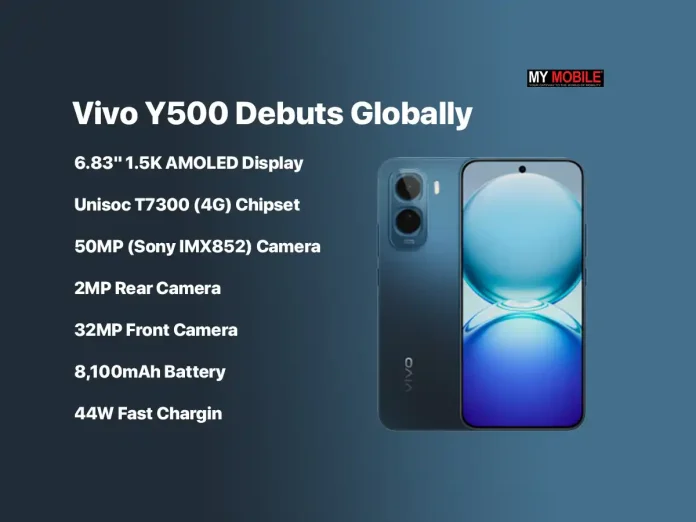
Vivo Y500 launches outside China with an 8,100mAh battery for the first time.
It features a 6.83-inch AMOLED display, Unisoc T7300 chipset, 8GB RAM, 128GB/256GB storage, Android 16-based OriginOS 6, 50MP Sony IMX852 rear camera, 32MP selfie, 44W fast charging, IP68/IP69 durability and MIL-STD-810H shock resistance.
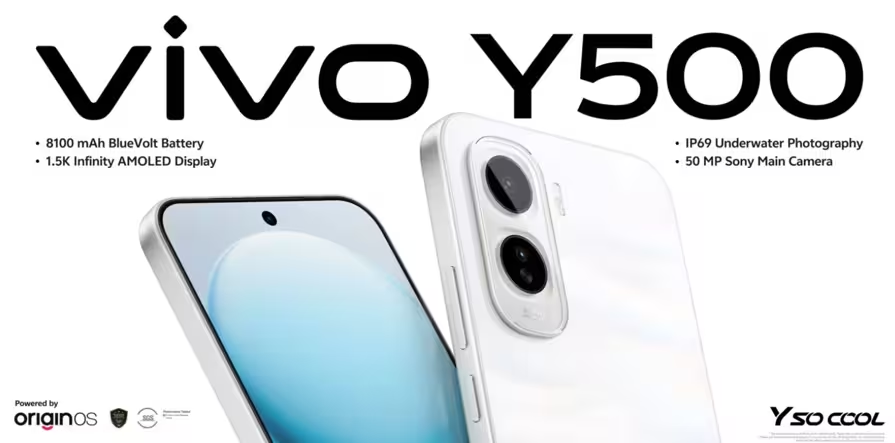
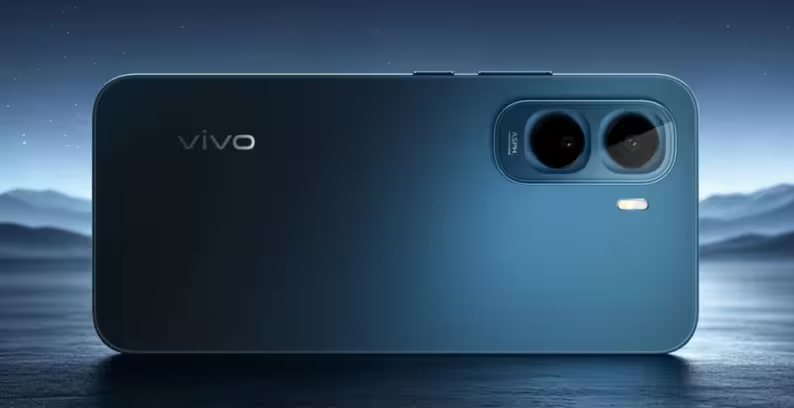
The phone comes in Pearl White and Midnight Blue colour options.
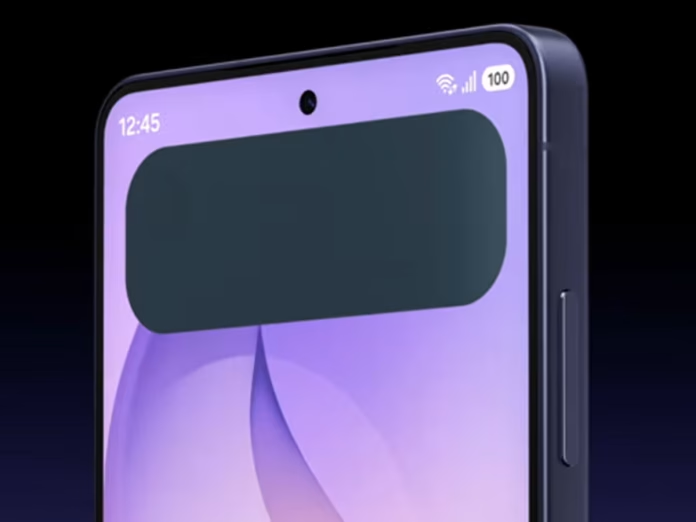
Vivo Y500 launches outside China for the first time. (Image credit – Vivo)
Vivo has introduced the Vivo Y500 in Pakistan, marking the first international launch in the Y500 series. Although the brand has previously released models such as the Y500, Y500i, Y500s, and Y500 Pro in China, this is the first time a Y500-series smartphone has made its debut outside the Chinese market.
A major highlight of the Vivo Y500 is its massive 8,100mAh battery, making it the largest battery ever featured on a Vivo smartphone launched outside China. Here’s a closer look at what the device offers.
Vivo Y500 – Price and Availability
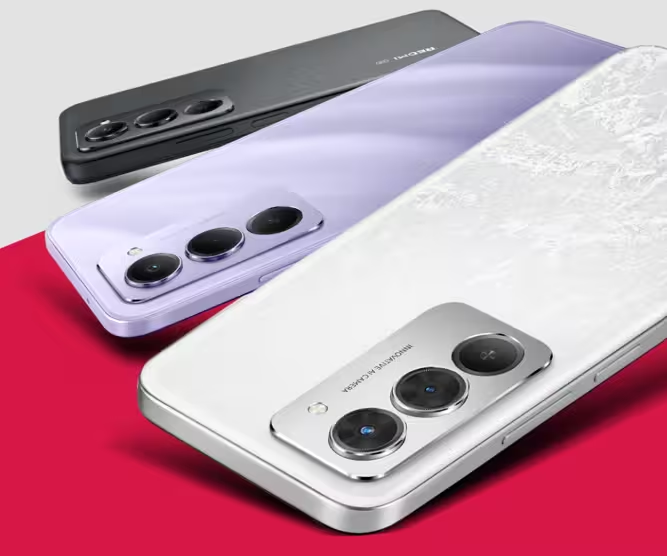
Vivo Y500’s available colour options. (Image credit – Vivo)
The Vivo Y500 is offered in Pearl White and Midnight Blue colour options. In Pakistan, the 8GB + 128GB model is priced at PKR 99,999 (around $360), while the 8GB + 256GB version carries a price tag of PKR 109,999 (around $400).
Vivo is also expected to introduce the smartphone in more markets soon with Saudi Arabia and Kazakhstan among the countries likely to receive the device in the coming days.
Vivo Y500 – Key Features
Vivo Y500 design. (Image credit – Vivo)
The Vivo Y500 features a 6.83-inch AMOLED display with a 2800 x 1260 pixels resolution, delivering a 1.5K viewing experience and a pixel density of 449ppi. The screen supports up to 5,000 nits of local peak brightness and offers a 94.47 percent screen-to-body ratio. It also carries SGS Low Blue Light and SGS Five-Star Sunlight Readable Display certifications, along with Gaming Eye Protection to enhance viewing comfort during extended use.
Powering the smartphone is the Unisoc T7300 chipset paired with 8GB of RAM. Buyers can choose between 128GB and 256GB storage variants. Since the device uses the Unisoc T7300 processor, it supports only 4G connectivity and does not offer 5G network support.
The handset packs a massive 8,100mAh battery with support for 44W fast charging. To help manage heat during long gaming or heavy usage sessions, Vivo has equipped the phone with a 3,000mm² vapor chamber cooling system. On the software front, it runs Android 16-based OriginOS 6 and includes an in-display optical fingerprint scanner for security.
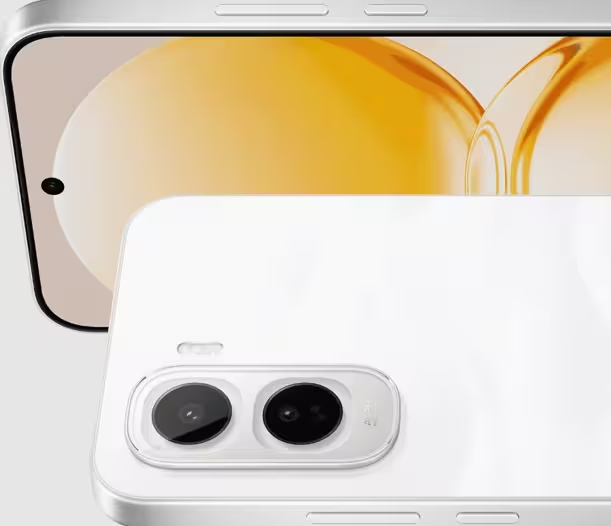
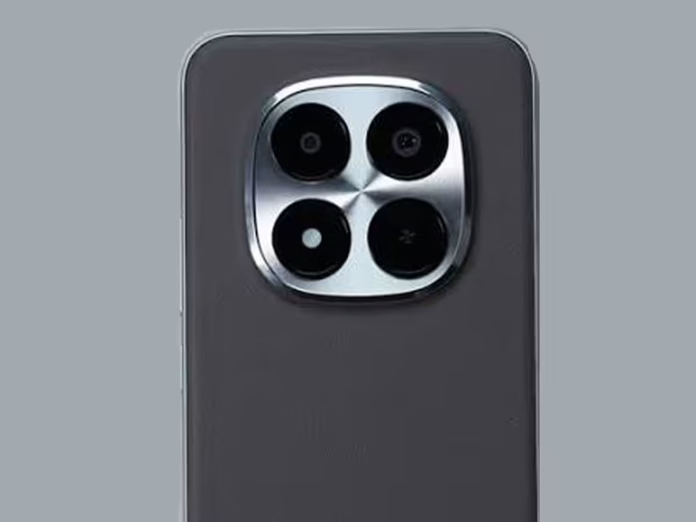
Vivo Y500 camera module. (Image credit – Vivo)
For photography, the Vivo Y500 comes with a 50-megapixel Sony IMX852 primary camera accompanied by a 2-megapixel secondary sensor. On the front, it features a 32-megapixel selfie camera.
Other features include dual stereo speakers, Bluetooth 5.4, dual-band Wi-Fi, GPS, a USB 2.0 port, a 3.5mm headphone jack, dual nano-SIM support, IP68 and IP69 ratings for water and dust resistance, and MIL-STD-810H military-grade shock resistance.
Best Motorola smartphone under Rs. 30,000 – Motorola Edge 70 Fusion, Motorola Edge 60 Pro, Motorola Edge 60 Stylus, Moto G67 Power or Moto G37 Power 5G and more.
Motorola has built a strong portfolio in the mid-range smartphone segment offering premium features at competitive prices. From curved P-OLED displays and high-refresh-rate screens to powerful Snapdragon and MediaTek chipsets, Motorola smartphones under Rs. 30,000 deliver excellent value. Many models also come with large batteries, fast charging, capable cameras and military-grade durability.
If you’re planning to buy a Motorola phone in this price segment, here are some of the best Motorola smartphones under Rs. 30,000 in India.
The Motorola Edge 70 Fusion is powered by the Snapdragon 7s Gen 4 chipset in India, while the global variant uses the Snapdragon 7s Gen 3 processor. It features a 6.78-inch AMOLED display with a 144Hz refresh rate, HDR10+ support and up to 5,200 nits peak brightness. The phone comes with a 50-megapixel primary camera, a 13-megapixel ultrawide sensor and a 32-megapixel front camera for selfies.
The India variant packs a larger 7,000mAh battery, while the global model includes a 5,200mAh battery. Both support 68W wired fast charging. The smartphone is also rated IP68 and IP69 for dust and water resistance and meets MIL-STD-810H durability standards.
Motorola Edge 60 Pro (Starts at ₹29,999)
Motorola Edge 60 Pro. (Image credit – Motorola)
The Motorola Edge 60 Pro is powered by the MediaTek Dimensity 8350 Extreme chipset and sports a 6.7-inch P-OLED display with a 120Hz refresh rate, HDR10+ support and up to 4,500 nits peak brightness. It features a triple rear camera setup comprising a 50-megapixel primary sensor, a 10-megapixel telephoto camera with 3x optical zoom and a 50-megapixel ultrawide lens. On the front, it houses a 50-megapixel selfie camera.
The device is backed by a 6,000mAh battery with support for 90W wired and 15W wireless charging. It also offers IP68, IP69 and MIL-STD-810H durability.
The Motorola Edge 60 Fusion comes with the MediaTek Dimensity 7400 processor in India, while the global version is powered by the Dimensity 7300 chipset. It features a 6.67-inch P-OLED display with a 120Hz refresh rate, HDR10+ support and up to 4,500 nits peak brightness. The smartphone offers a 50-megapixel primary camera, a 13-megapixel ultrawide sensor and a 32-megapixel front-facing camera.
The India model packs a 5,500mAh battery, while the global version has a 5,200mAh battery. Both variants support 68W wired fast charging and come with IP68, IP69 and MIL-STD-810H certifications.
Motorola Edge 70 (Starts at ₹27,999)
Motorola Edge 70. (Image credit – Motorola)
The Motorola Edge 70 is powered by Qualcomm’s Snapdragon 7 Gen 4 chipset and features a 6.7-inch P-OLED display with a 120Hz refresh rate, HDR10+ support and up to 4,500 nits peak brightness. It sports dual 50-megapixel rear cameras including a primary and an ultrawide sensor, along with a 50-megapixel front camera.
The phone packs a 4,800mAh battery with support for 68W wired and 15W wireless charging. It also carries IP68, IP69 and MIL-STD-810H durability ratings.
Moto G67 Power (Starts at ₹22,999)
Moto G67 Power. (Image credit – Motorola)
The Moto G67 Power is equipped with the Snapdragon 7s Gen 2 processor and features a 6.7-inch IPS LCD display with a 120Hz refresh rate, HDR10+ support and up to 1,050 nits peak brightness. It comes with a 50-megapixel primary camera, an 8-megapixel ultrawide camera and a 32-megapixel selfie shooter.
The smartphone houses a large 7,000mAh battery with 30W wired fast charging. It also offers IP64 protection and MIL-STD-810H durability.
The Motorola Edge 60 Stylus is powered by the Snapdragon 7s Gen 2 chipset and features a 6.7-inch P-OLED display with a 120Hz refresh rate, HDR support and up to 3,000 nits peak brightness. It comes equipped with a 50-megapixel primary camera, a 13-megapixel ultrawide sensor and a 32-megapixel selfie camera.
The device packs a 5,000mAh battery with 68W wired and 15W wireless charging support. It also features a built-in stylus and carries IP68 and MIL-STD-810H certifications.
Moto G96 5G 256GB (Available at ₹19,999)
Moto G96 5G 256GB. (Image credit – Motorola)
The Moto G96 5G is powered by the Snapdragon 7s Gen 2 processor and sports a 6.67-inch P-OLED display with a 144Hz refresh rate and up to 1,600 nits peak brightness. The phone features a 50-megapixel primary camera, an 8-megapixel ultrawide sensor and a 32-megapixel front camera.
It is backed by a 5,500mAh battery with support for 30W wired charging and comes with an IP68 rating for dust and water resistance.
Moto G37 Power 5G 8GB 128GB RAM (Available at ₹21,999)
The Moto G37 Power 5G is powered by the MediaTek Dimensity 6400 chipset in India, while the global model runs on the Dimensity 6300 processor. It features a 6.67-inch LCD display with HD+ (720×1604) resolution and a 120Hz refresh rate. The smartphone is equipped with a 50-megapixel rear camera and an 8-megapixel front camera for selfies and video calls.
It packs a large 7,000mAh battery with support for 30W wired charging. The phone also offers IP64 protection and MIL-STD-810H military-grade durability.
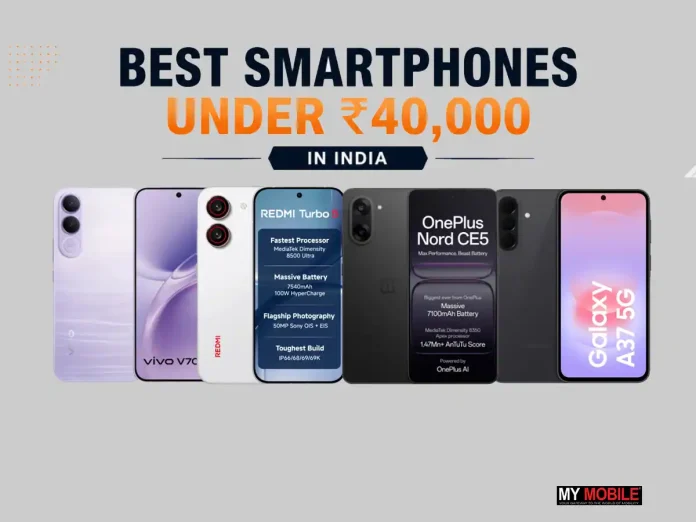
Best Smartphones Under Rs 40,000 in India – OnePlus, Samsung, Vivo, Motorola, Realme, Poco and Infinix.
Buying a mid-range smartphone under Rs 40,000 does not mean compromising on flagship features. Several brands now offer premium AMOLED displays, powerful processors, capable cameras, large batteries and fast charging in this price segment. Whether you’re looking for a gaming phone, a camera-focused device or an all-round performer, there are plenty of choices available.
Here are some of the best smartphones under Rs 40,000 in India that you can consider.
Motorola Edge 70 Pro 5G (Starts at ₹39,999)
The Motorola Edge 70 Pro 5G is powered by the MediaTek Dimensity 8500 Extreme chipset and features a 6.78-inch AMOLED display with a 144Hz refresh rate and up to 5,200 nits peak brightness.
It comes with a triple 50-megapixel rear camera setup consisting of a primary sensor, a 3.5x periscope telephoto camera and an ultrawide lens. For selfies, it gets a 50-megapixel front camera.
The smartphone packs a 6,500mAh battery with support for 90W wired and 15W wireless charging. It also carries IP68, IP69 and MIL-STD-810H durability ratings.
Vivo V70 FE (Starts at ₹40,999 after student discount)
The Vivo V70 FE is equipped with Snapdragon 7 Gen 4 processor and sports a 6.78-inch AMOLED display with a 120Hz refresh rate. It features a 200-megapixel primary camera alongside a 12-megapixel ultrawide sensor, while a 32-megapixel front camera handles selfies.
The phone houses a 6,000mAh battery with 80W fast charging support and comes with an IP68 rating for dust and water resistance.
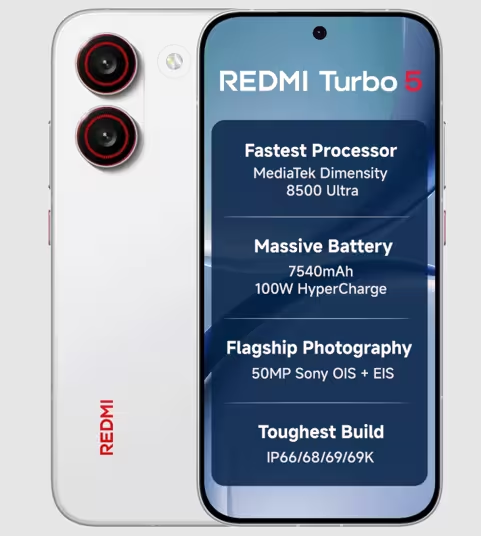
Xiaomi Redmi Turbo 5 (Starts at ₹37,999)
The Redmi Turbo 5 runs on the MediaTek Dimensity 8500 Ultra chipset and offers a 6.59-inch AMOLED display with a 120Hz refresh rate and up to 3,500 nits peak brightness. It features a 50-megapixel Sony IMX882 primary camera, an 8-megapixel ultrawide sensor and a 20-megapixel selfie camera.
Powering the device is a massive 7,540mAh battery with 100W wired charging and 27W reverse charging. It also offers IP66, IP68 and IP69K durability ratings.
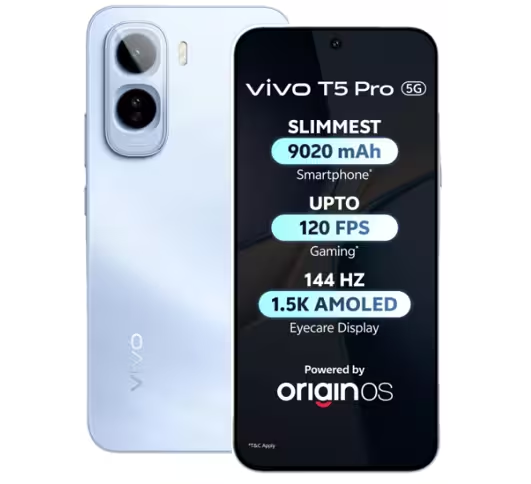
Vivo T5 Pro (Starts at ₹32,999)
The Vivo T5 Pro is powered by the Snapdragon 7s Gen 4 processor and comes with a large 6.83-inch AMOLED display offering a 144Hz refresh rate and up to 5,000 nits peak brightness. It features dual 50-megapixel rear cameras along with a 32-megapixel front camera.
The phone packs a huge 9,020mAh battery with 90W fast charging support and carries IP68 and IP69 ratings.
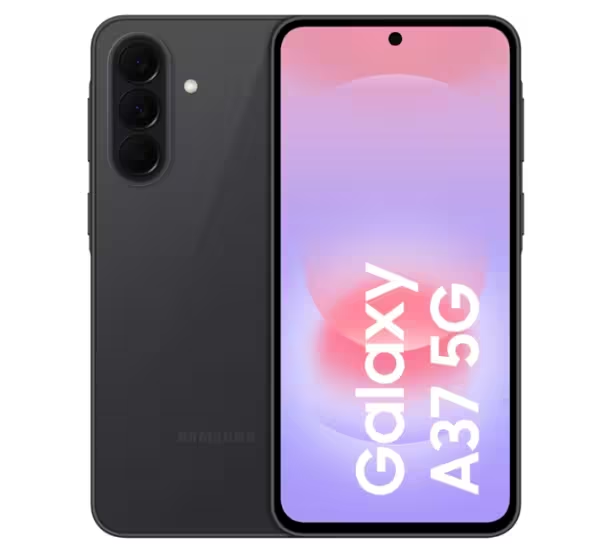
Samsung Galaxy A37 5G (Starts at ₹40,999)
Samsung’s Galaxy A37 5G is powered by the Exynos 1480 chipset and features a 6.7-inch Super AMOLED display with a 120Hz refresh rate and up to 1,900 nits peak brightness.
The smartphone offers a triple rear camera setup comprising a 50-megapixel primary sensor, an 8-megapixel ultrawide camera and a 5-megapixel macro lens. It also includes a 12-megapixel front camera. The device packs a 5,000mAh battery with 45W wired charging and comes with an IP68 rating.
OnePlus Nord CE 5 5G (Starts at ₹22,500)
The OnePlus Nord CE 5 5G is powered by the MediaTek Dimensity 8350 Apex processor and sports a 6.77-inch AMOLED HDR10+ display with a 120Hz refresh rate. It features a 50-megapixel Sony LYT-600 primary camera paired with an 8-megapixel ultrawide sensor, while selfies are handled by a 16-megapixel front camera.
The smartphone is backed by a 7,100mAh battery with 80W SUPERVOOC charging and comes with an IP65 rating.
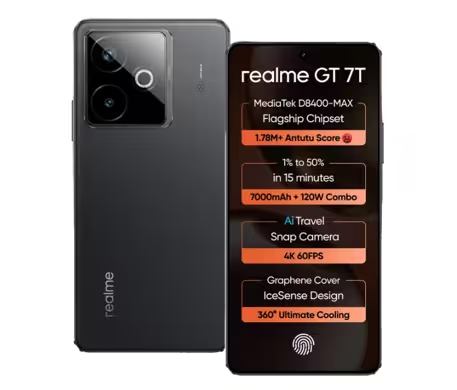
Realme GT 7T (Starts at ₹29,499)
The Realme GT 7T is powered by the MediaTek Dimensity 8400 Max chipset and features a 6.8-inch AMOLED display with a 120Hz refresh rate and up to 6,000 nits peak brightness. It gets a 50-megapixel Sony IMX896 primary camera, an 8-megapixel ultrawide sensor and a 32-megapixel selfie camera.
The phone houses a 7,000mAh battery with 120W fast charging support and offers IP68 and IP69 ratings.
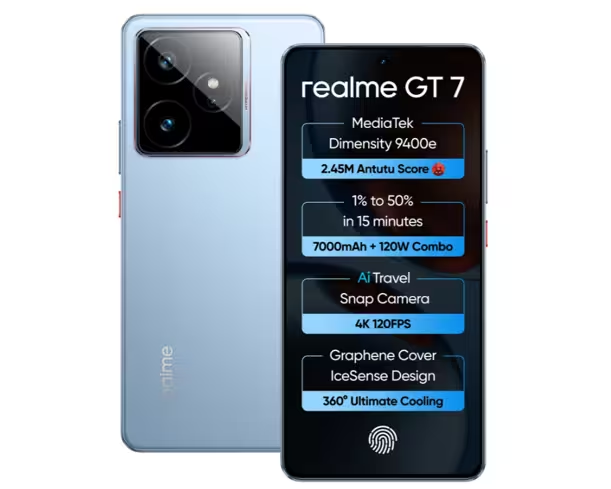
Realme GT 7 (Starts at ₹39,999)
The Realme GT 7 comes equipped with the MediaTek Dimensity 9400e processor and a 6.78-inch LTPO AMOLED display featuring a 120Hz refresh rate and up to 6,000 nits peak brightness. Its triple rear camera system includes a 50-megapixel primary sensor, a 50-megapixel 2x telephoto camera and an 8-megapixel ultrawide lens.
It also has a 32-megapixel selfie camera. The smartphone packs a 7,000mAh battery with 120W wired charging and carries an IP69 rating.
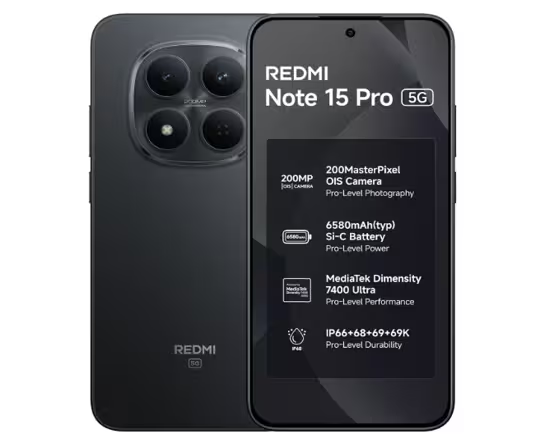
Xiaomi Redmi Note 15 Pro (Starts at ₹34,999)
The Redmi Note 15 Pro is powered by the MediaTek Dimensity 7400 Ultra chipset and features a 6.83-inch AMOLED display with a 120Hz refresh rate and up to 3,200 nits peak brightness. It comes with a 200-megapixel primary camera, an 8-megapixel ultrawide sensor and a 20-megapixel front camera.
The phone is backed by a 6,580mAh battery with 45W charging support and offers IP68 and IP69K durability.
OPPO K13 Turbo Pro (Starts at ₹31,999)
The OPPO K13 Turbo Pro runs on Qualcomm’s Snapdragon 8s Gen 4 chipset and sports a 6.8-inch AMOLED display with a 120Hz refresh rate and up to 1,600 nits peak brightness. It features a 50-megapixel main camera paired with a 2-megapixel secondary sensor, while selfies are handled by a 16-megapixel front camera.
The smartphone houses a 7,000mAh battery with 80W fast charging support and carries IPX8 and IPX9 water resistance ratings.
Infinix Note 60 Pro 5G (starts at ₹33,999)
The Infinix Note 60 Pro 5G is powered by the Snapdragon 7s Gen 4 processor and comes with a 6.78-inch AMOLED display offering a 144Hz refresh rate and up to 4,500 nits peak brightness. It features a 50-megapixel primary camera alongside an 8-megapixel secondary sensor and a 13-megapixel selfie camera.
The phone packs a battery ranging between 6,000mAh and 6,500mAh with support for 90W wired and 30W wireless charging. It also comes with an IP64 rating.
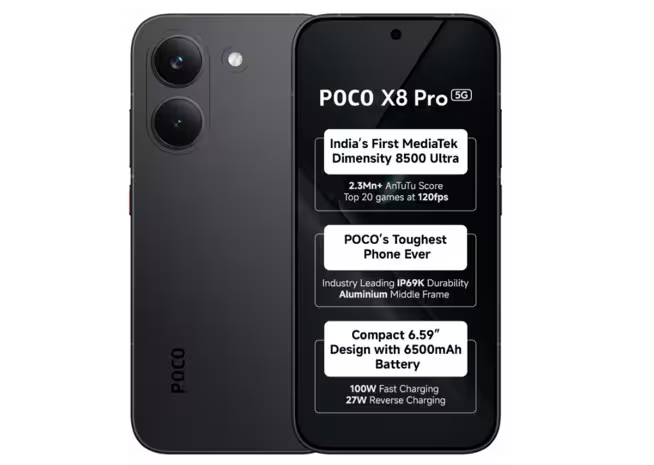
POCO X8 Pro (Starts at ₹34,999)
The POCO X8 Pro is powered by the MediaTek Dimensity 8500 Ultra chipset and features a 6.59-inch AMOLED display with a 120Hz refresh rate and up to 3,500 nits peak brightness. The camera setup includes a 50-megapixel Sony IMX882 primary sensor, an 8-megapixel ultrawide camera and a 20-megapixel selfie camera.
The smartphone packs a 6,500mAh battery with 100W wired charging and 27W reverse charging support. It also carries IP68 and IP69K ratings for durability.
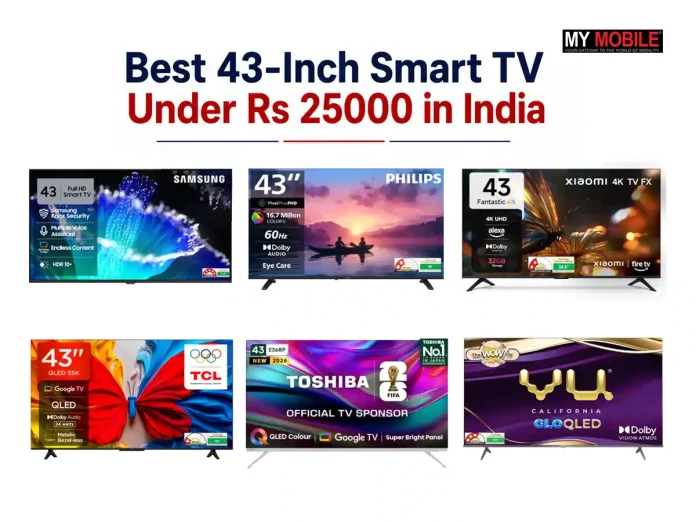
Best 43-Inch Smart TV Under Rs 25000 in India – Samsung, Toshiba, Xiaomi, TCS, Philips and More.
Looking for the best 43-inch Smart TV under Rs 25,000 in India? Whether you want a Full HD TV for everyday entertainment or a 4K QLED model for a better viewing experience, there are several options available across different brands.
From Samsung, Xiaomi and Toshiba to Vu, Philips and Kodak, these smart TVs offer features such as Google TV, Fire TV, HDR support, Dolby Audio, voice assistants and built-in Chromecast. Here are some of the best 43-inch smart TVs you can consider.
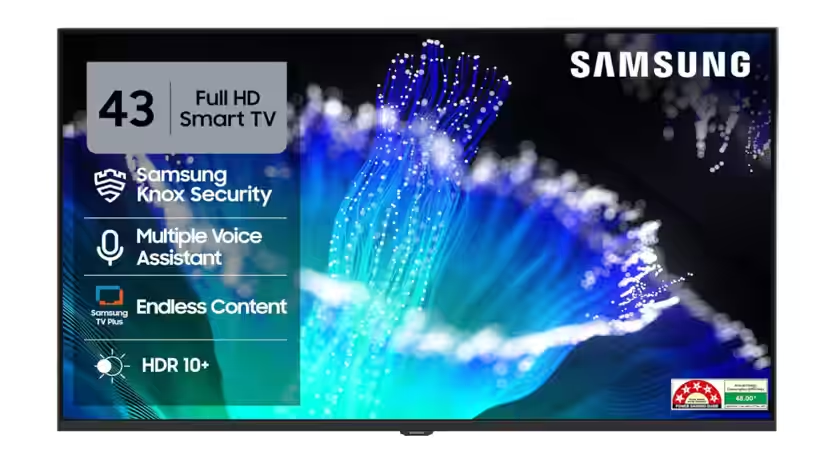
Samsung 43-inch FHD Smart LED TV (UA43F5550FUXXL)
Price – Rs. 23,250
Samsung’s 43-inch Smart LED TV is a Full HD model that runs on Samsung’s Tizen OS. It features a 43-inch LED display with 1080p resolution and a 50Hz refresh rate. The TV supports HDR content and comes with Samsung Knox Security for enhanced protection.
It also includes Samsung TV Plus, Voice Search Remote Control and multiple smart entertainment features. Connectivity options include Ethernet, Wi-Fi, HDMI and USB ports. The package includes the TV, power cord, remote control and AAA batteries.
Key Features –
43-inch Full HD LED display
1080p resolution
50Hz refresh rate
Samsung Tizen OS
HDR support
Samsung Knox Security
Samsung TV Plus
Voice Search Remote
Ethernet, Wi-Fi, HDMI and USB connectivity
Toshiba 43-inch E36RP Series Full HD Smart QLED Google TV (43E36RP)
Price – Rs. 24,990
The Toshiba E36RP Series offers a 43-inch Full HD QLED display with a 60Hz refresh rate. It runs on Google TV and supports Google Assistant, Chromecast, screen sharing and Google Meet.
The TV features a Super Bright Panel with 300 nits brightness, HDR10 support, a 3000:1 native contrast ratio and a 178-degree viewing angle. It also comes with 26W speakers with Dolby Audio and multiple sound and picture modes.
Key Features
43-inch Full HD QLED display
1080p resolution
60Hz refresh rate
Google TV
Google Assistant and Chromecast built-in
Google Meet support
HDR10 support
300 nits brightness
Dolby Audio with 26W speakers
Multiple sound and picture modes
Ethernet, Wi-Fi, HDMI and USB connectivity
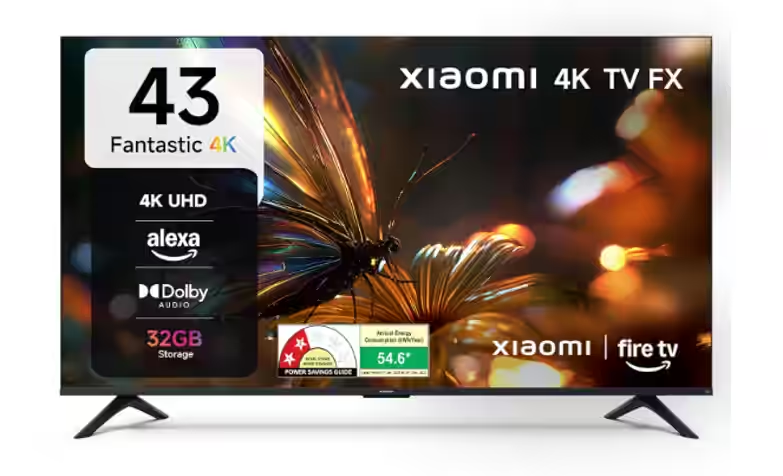
Xiaomi 43-inch FX Ultra HD 4K Smart LED Fire TV (L43MB-FIN)
Price – Rs. 23,499
The Xiaomi FX Smart TV features a 43-inch Ultra HD 4K LED display with a bezel-less design. It offers a 60Hz refresh rate and runs on Amazon Fire TV, giving users access to a wide range of streaming apps.
The TV supports Chromecast, Eye Comfort Mode and wide viewing angles. Connectivity options include Ethernet, Wi-Fi, HDMI and USB ports.
Key Features
43-inch Ultra HD 4K LED display
4K resolution
60Hz refresh rate
Fire TV platform
Bezel-less design
Chromecast built-in
Eye Comfort Mode
Wide viewing angle
Ethernet, Wi-Fi, HDMI and USB connectivity
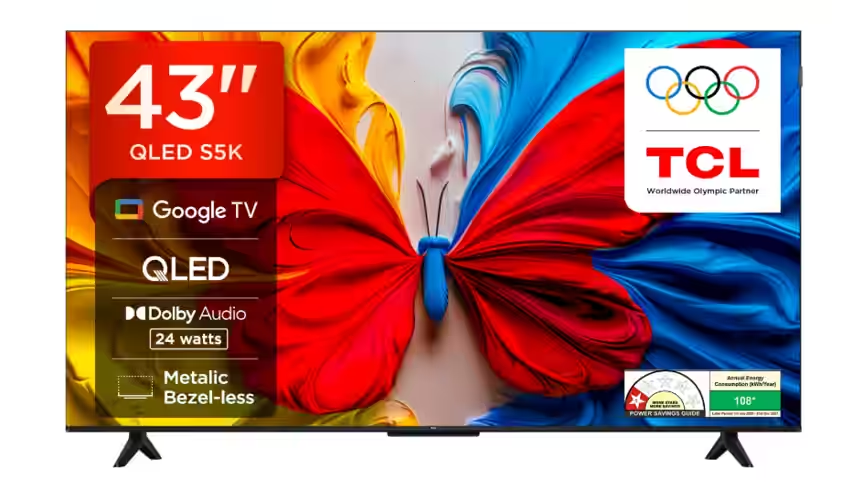
TCL 43-inch Metallic Bezel-Less FHD QLED TV (43S5K)
Price – Rs. 25,990
The TCL 43S5K features a 43-inch Full HD QLED display with a metallic bezel-less design and a 60Hz refresh rate. Running on Google TV, it offers access to popular streaming apps such as Prime Video, Netflix, Disney+ Hotstar and Zee5 alongwith Google Assistant support.
The TV is powered by a 64-bit quad-core processor paired with 1GB RAM and 8GB internal storage. It supports dual-band Wi-Fi (2.4GHz and 5GHz), screen mirroring and multiple eye care features for comfortable viewing.
Key Features
43-inch Full HD QLED display
1080p resolution
60Hz refresh rate
Metallic bezel-less design
Google TV
64-bit quad-core processor
1GB RAM and 8GB storage
Google Assistant
Dual-band Wi-Fi (2.4GHz and 5GHz)
Screen Mirroring
Multiple Eye Care features
Prime Video, Netflix, Disney+ Hotstar, Zee5 and more
Ethernet, Wi-Fi, HDMI and USB connectivity
Philips 43-inch 6100 Series Frameless Full HD Smart LED Google TV (43PFT6130/94)
Price – Rs. 21,999
The Philips 6100 Series features a frameless 43-inch Full HD LED display with a 60Hz refresh rate. Running on Google TV, it supports popular streaming apps including Prime Video, Netflix, Zee5 and Sony LIV.
It also comes with Chromecast built-in, Google Voice Assistant, display mirroring support and dual-band Wi-Fi for seamless streaming.
Key Features
43-inch Full HD LED display
1080p resolution
60Hz refresh rate
Google TV
Chromecast built-in
Google Voice Assistant
Dual-band Wi-Fi
Display mirroring
Prime Video, Netflix, Zee5 and Sony LIV support
Ethernet, Wi-Fi, HDMI and USB connectivity
Vu 43-inch GloQLED Series 4K Smart Google TV (43GLOQLED25)
Price – Rs. 23,990
Vu’s GloQLED Series offers a 43-inch 4K QLED display with an A+ Grade Glo Panel, 400 nits brightness and HDR10 support. It also supports HLG, MEMC, Cricket Mode, Cinema Mode and AI Smart Scene Upscaling.
The TV is powered by a 1.5GHz VuOn processor with 2GB RAM and 16GB storage. Audio is handled by a 24W speaker system with Dolby Atmos support. Gamers also get features like HDMI 2.1, VRR, ALLM, HDR Gaming and Game Dashboard.
Key Features
43-inch 4K QLED display
60Hz refresh rate
Google TV
400 nits brightness
HDR10 and HLG support
Dolby Atmos with 24W speakers
MEMC
HDMI 2.1
VRR and ALLM
HDR Gaming and Game Dashboard
Apple AirPlay
Bluetooth 5.3
Chromecast built-in
2GB RAM and 16GB storage
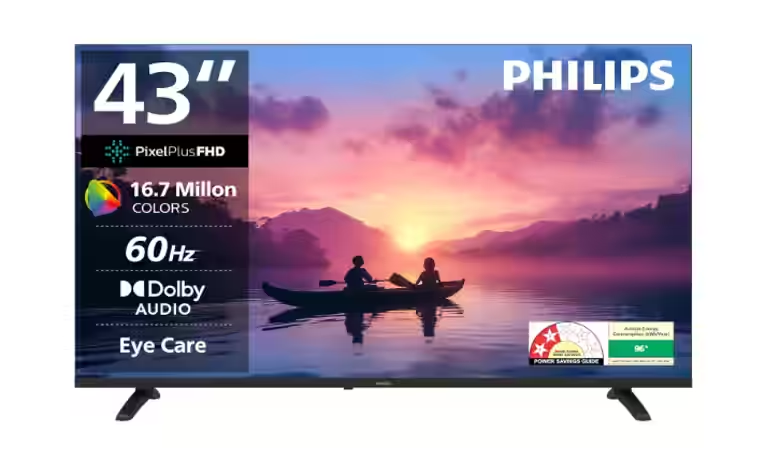
Kodak 43-inch Full HD Smart QLED Google TV
Price – Rs. 17,999
The Kodak Smart TV is among the most affordable QLED options in this segment. It features a 43-inch Full HD QLED panel with a60Hz refresh rate and runs on Google TV.
The TV comes with 40W speakers, 1GB RAM, 8GB storage, built-in Wi-Fi, three HDMI ports and two USB ports for connecting external devices.
It is prices at ₹22,999 for 4GB+128GB and ₹24,999 for 6GB+128GB with launch discounts and EMI offers.
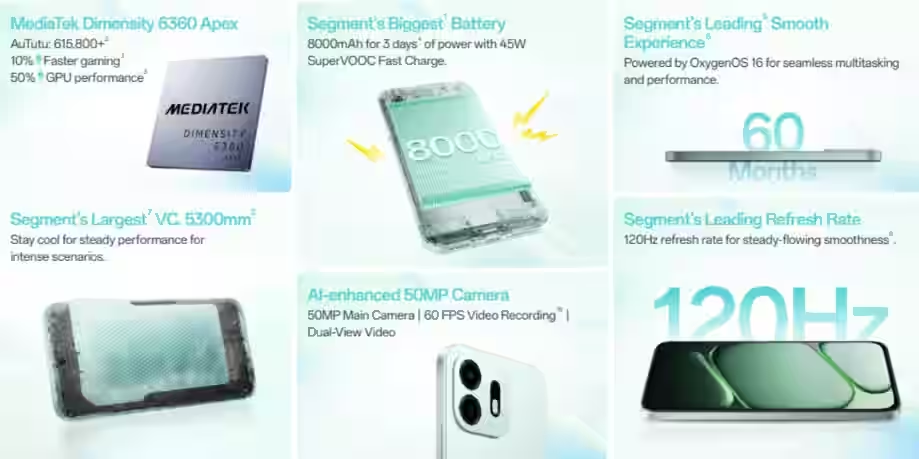
Key features include 6.75″ HD LCD 120Hz display, MediaTek Dimensity 6360 Apex chip, up to 6GB RAM + 128GB storage, IP65 durability, 8,000mAh battery with 45W fast charging, 50MP rear camera and runs OxygenOS 16 with Android 16.
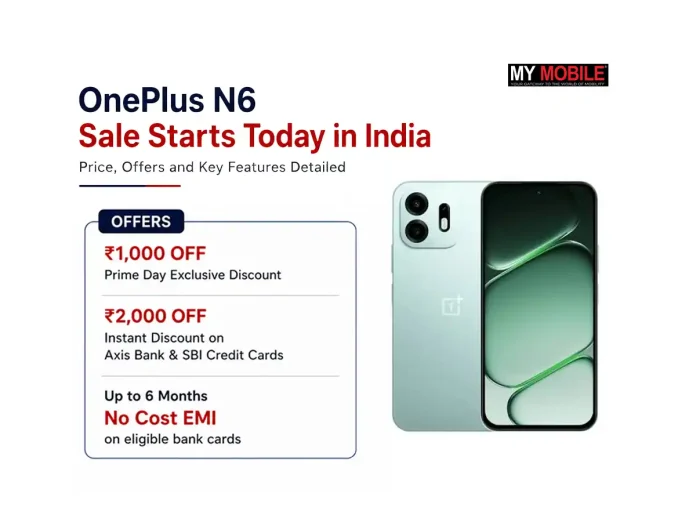
OnePlus N6 sale starts today. (Image credit – OnePlus)
OnePlus has officially started the sale of the new OnePlus N6 in India today. Launched earlier this week as the first smartphone in the company’s new N series, the handset is positioned below the Nord lineup and targets entry-level smartphone buyers. The smartphone is available for purchase through Amazon as part of the Amazon Prime Day Sale 2026. Here are more details.
OnePlus N6 5G – Price and Availability
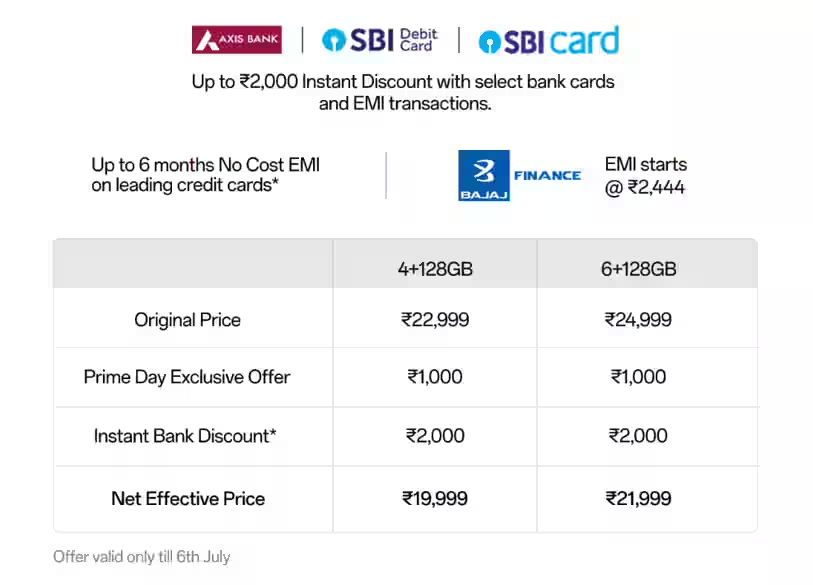
The OnePlus N6 price in India starts at Rs. 22,999 for the base variant with 4GB RAM and 128GB storage. The higher-end model with 6GB RAM and 128GB storage is priced at Rs. 24,999.
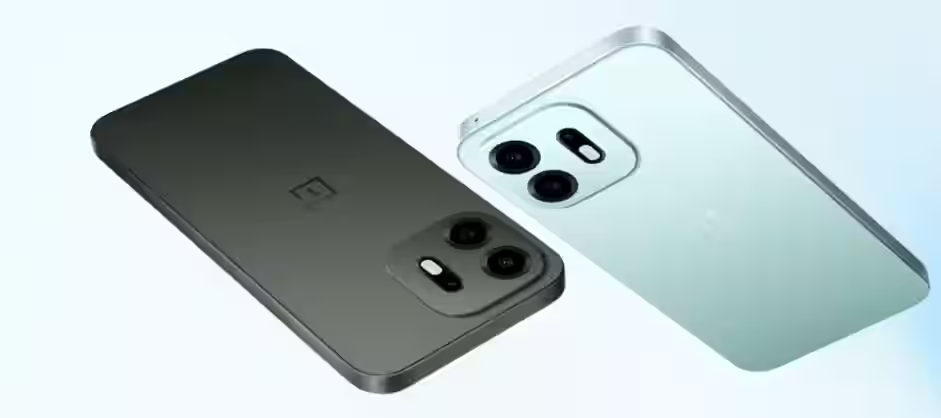
The smartphone is available in Fresh Mint and Midnight Green colour options.
As part of the Amazon Prime Day Sale 2026, OnePlus is offering a Prime Day exclusive discount of Rs. 1,000 on the handset. Buyers can also avail an instant discount of Rs. 2,000 when using eligible Axis Bank and SBI credit cards. Moreover, customers can opt for up to six months of no-cost EMI plans.
OnePlus N6 5G – Key Features
The OnePlus N6 features a 6.75-inch HD LCD display with a 120Hz refresh rate and up to 1,200 nits peak brightness in High Brightness Mode (HBM).
Powering the device is the octa-core MediaTek Dimensity 6360 Apex processor with up to 6GB of RAM and 128GB of onboard storage. For thermal management, the smartphone features a vapour chamber cooling system with a 5,300 sq mm heat dissipation area.
OnePlus N6 features. (Image credit – OnePlus)
It is a dual-SIM smartphone that runs OxygenOS 16 based on Android 16. The company has promised two major Android OS upgrades and three years of security updates for the device.
The phone has a single 50-megapixel rear camera with an f/1.8 aperture and support for up to 10x digital zoom. On the front, it houses an 8-megapixel camera for selfies and video calls. The smartphone supports video recording at up to 1080p resolution at 60fps and also includes a Dual-View video mode.
The OnePlus N6 is backed by a massive 8,000mAh battery. OnePlus claims the battery can retain around 80 percent of its original capacity after 1,600 complete charging cycles and deliver up to three days of battery life.
The handset supports 45W wired fast charging as well as 6.5W reverse wired charging.
It also comes with an IP65 rating for dust and water resistance and carries MIL-STD-810H military-grade durability certification.
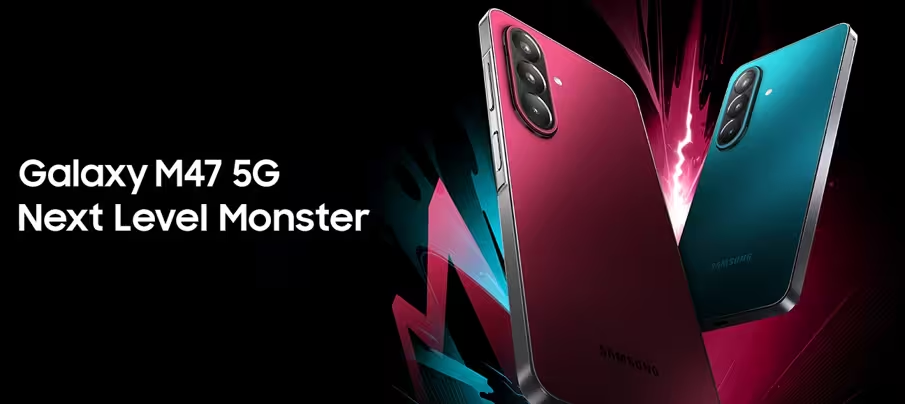
Samsung has started the sale of the new Samsung Galaxy M47 5G in India today. The smartphone was launched in the country earlier this week and is being offered as part of the Amazon Prime Day Sale 2026. Here are all the details regarding the official prices of all RAM and storage variants, key features and more.
Samsung Galaxy M47 5G – Price and Availability
The Samsung Galaxy M47 5G is now on sale in India through Amazon.
The smartphone is priced at Rs. 25,999 for the 6GB RAM + 128GB storage variant. The 8GB RAM + 128GB storage model is available for Rs. 28,999, while the top-end 8GB RAM + 256GB storage variant costs Rs. 33,999.
Customers can buy the handset in Blaze Blue and Rogue Red colour options.
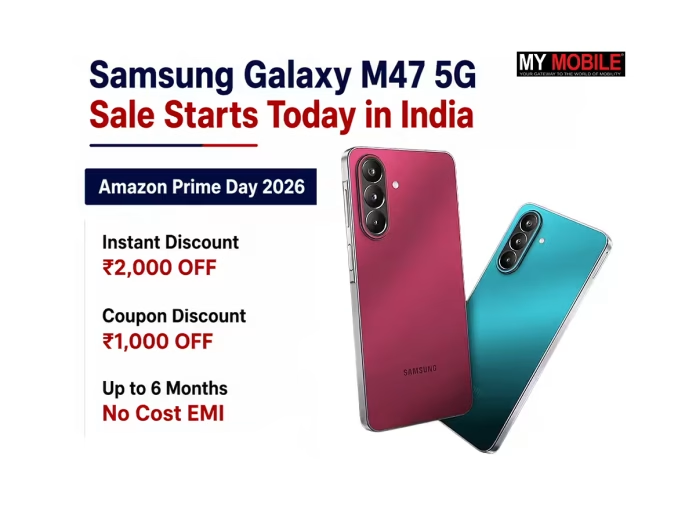
As part of the Amazon Prime Day Sale 2026, Samsung is offering an instant discount of Rs. 2,000 on the Galaxy M47 5G. Buyers can also avail an additional coupon discount of Rs. 1,000 reducing the effective purchase price further.
Model
Price
Amazon Prime Day Price
Samsung Galaxy M47 6GB + 128GB
Rs 25,999
Rs 22,999
Samsung Galaxy M47 8GB + 128GB
Rs 28,999
Rs 25,999
Samsung Galaxy M47 8GB + 256GB
Rs 33,999
Rs 30,999
In addition, the company is providing up to six months of no-cost EMI options through eligible bank cards.
The Samsung Galaxy M47 5G features a 6.7-inch Full-HD+ Super AMOLED display with a 120Hz refresh rate and Corning Gorilla Glass Victus+ protection. It is powered by Qualcomm’s octa-core Snapdragon 6 Gen 3 processor paired with up to 8GB of LPDDR5x RAM and up to 256GB of UFS 3.1 internal storage.
The smartphone supports dual SIM functionality and runs One UI 8.5 based on Android 16. Samsung has promised six Android OS upgrades and six years of security updates for the device.
The handset is backed by a 6,000mAh battery with support for 45W wired fast charging through a USB Type-C port. It also supports bypass charging for an improved gaming and charging experience.
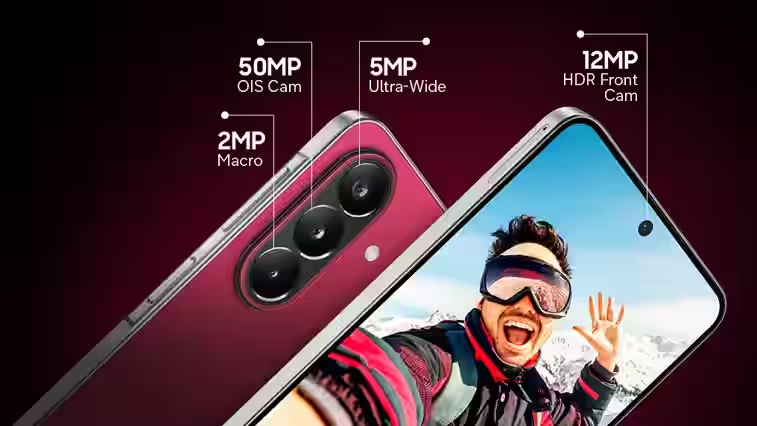
For photography, the Galaxy M47 5G comes with a triple rear camera setup that includes a 50-megapixel primary sensor with optical image stabilisation (OIS), a 5-megapixel ultra-wide camera, and a 2-megapixel macro sensor. On the front, it houses a 12-megapixel selfie camera for photos and video calls.
Report suggests Samsung will bring Privacy Display to Galaxy S27, S27 Plus, S27 Pro, and S27 Ultra.
The feature reduces side-angle visibility to protect sensitive information and refined for a smoother user experience.
Galaxy S27 series tipped to debut early next year with a new Pro model.
Samsung could be preparing a major privacy-focused upgrade for its next flagship smartphones. A new report claims the company’s Galaxy S27 serieswill feature Privacy Display technology across almost the entire lineup and extend the feature beyond the Ultra model for the first time. Here’s what we know based on the recent report.
Samsung Privacy Display Could Become a Standard Flagship Feature
According to a report by TheElec, the Galaxy S27, Galaxy S27 Plus, Galaxy S27 Pro, and Galaxy S27 Ultra are all expected to include the hardware based privacy feature. If true, this would be a notable change from the current Galaxy S26 family, where the technology is exclusive to the Ultra variant.
The only model that may not receive it is the Galaxy S27 FE.
Samsung introduced its Privacy Display technology with the Galaxy S26 Ultra and the feature is powered by Flex Magic Pixel technology. It is designed to reduce screen visibility when viewed from an angle, while keeping the display clear for the person using the phone. This helps protect sensitive information from people looking over the user’s shoulder in public places.
The latest report suggests Samsung has refined the technology and plans to introduce an improved second-generation version with the Galaxy S27 series for a more seamless experience.
Industry sources cited in the report believe Samsung now sees Privacy Display as an important part of the flagship Galaxy experience instead of an Ultra-exclusive capability.
Samsung Privacy Display feature reduce screen visibility when viewed from an angle. (Image credit – Samsung)
Galaxy S27 Series Could Include a New Pro Model
The report also reiterates that Samsung is expected to introduce a new Galaxy S27 Pro alongside the standard Galaxy S27, Galaxy S27 Plus and Galaxy S27 Ultra. The new lineup is tipped to debut early next year, although detailed hardware specifications are still under wraps.
The wider rollout of Privacy Display could also help Samsung differentiate its flagship phones from the upcoming iPhone 18 series. This will be interesting as smartphone buyers become increasingly conscious of protecting personal information while using their devices in public.
While Samsung has not officially confirmed any of these details, the report suggests the company is confident enough in the maturity of its Privacy Display technology to make it a defining feature of its next-generation flagship smartphones.
If that happens, it could encourage more smartphone brands to adopt similar display privacy solutions in the future.
Redmi 17 5G spotted on Malaysia’s SIRIM and Taiwan’s NCC databases confirming model number 26062RN92G and signaling global launch soon.
The phone is expected to pack 7,500mAh battery with 45W fast charging, up to 256GB storage, multiple RAM/storage variants, and IP64-rated dust/water resistance.
Connectivity specs include 5G, 4G LTE, VoLTE, dual-band Wi-Fi, Bluetooth, NFC and USB-C.
Redmi 15 5G in the picture for reference. (Image credit – Redmi)
The Redmi 17 5G appears to be moving closer to its global launch after being spotted on multiple certification platforms. As reported by XpertPick, the latest listings not only confirm the smartphone’s name but also reveal several key hardware details ahead of Xiaomi’s official announcement. Here are more details on that.
Redmi 17 5G Spotted on SIRIM and NCC
The upcoming Redmi 17 5G identified by model number 26062RN92G has received certification from Malaysia’s SIRIM authority. While the listing only confirms the device’s marketing name and model number, it indicates that Xiaomi is preparing the smartphone for global markets.
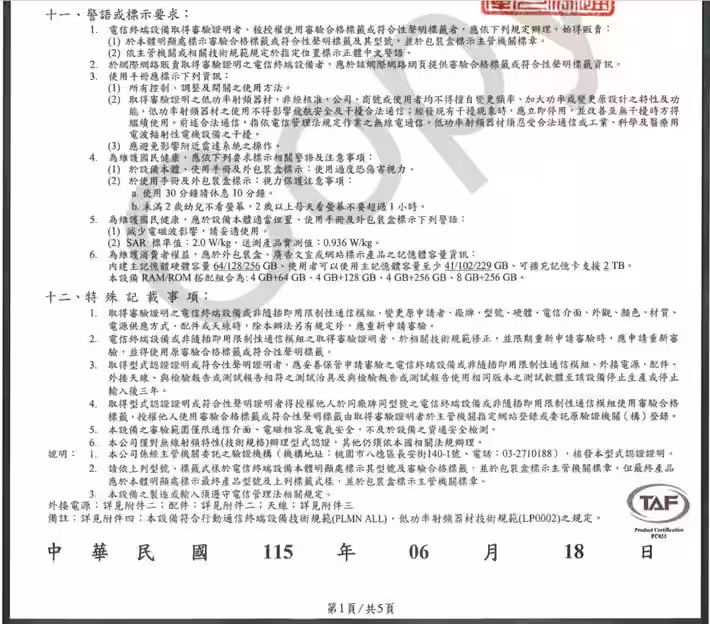
Redmi 17 5G NCC listing. (Screenshot by Xpertpick)
The certification also suggests that Xiaomi may skip the Redmi 16 branding and move directly from the Redmi 15 series to the Redmi 17 lineup.
The same smartphone has also appeared on Taiwan’s NCC certification database revealing more details about its hardware and connectivity.
Redmi 17 5G – Expected Specifications
The Redmi 17 5G is expected to be available in four storage variants such as 4GB + 64GB, 4GB + 128GB, 4GB + 256GB, and 8GB + 256GB, according to the NCC listing.
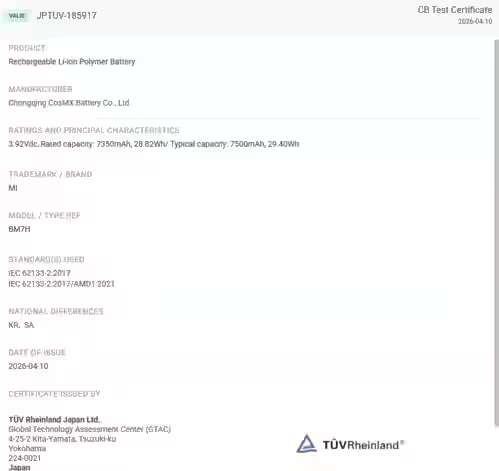
Redmi 17 5G battery TUV certification. (Screenshot by Xpertpick)
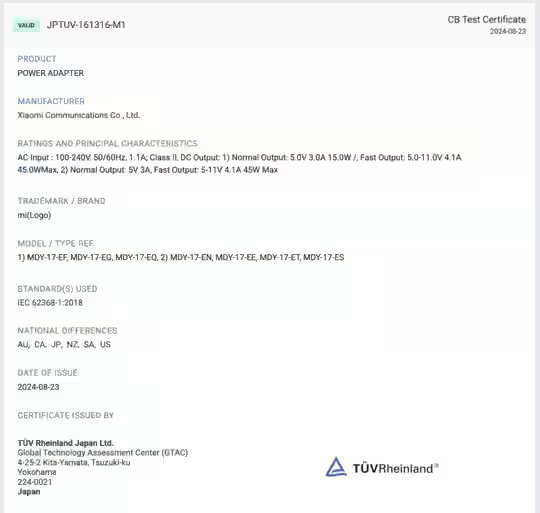
The certification also mentions the BM7H battery and confirms the bundled MDY-17-EN charger. Based on information cross-checked with an earlier TÜV certification, the smartphone is expected to pack a 7,500mAh battery with support for 45W fast charging.
Redmi 17 5G charger TUV certification. (Screenshot by Xpertpick)
If these details prove accurate, the Redmi 17 5G would offer a notable upgrade over the Redmi 15 5G, which features a 7,000mAh battery with 33W fast charging support.
In terms of connectivity, the Redmi 17 5G is expected to support 5G, 4G LTE, VoLTE, dual-band Wi-Fi, Bluetooth, NFC, and a USB Type-C port. The NCC certification also points to an IP64-rated design for protection against dust and water.
Xiaomi has not yet confirmed an official launch date for the Redmi 17 5G. However, with the smartphone clearing multiple international certification platforms, its global debut is expected to take place in the near future.
Moto G77 Power confirmed to launch in India on July 8 and priced under ₹30,000.
It will be available via Flipkart in Pantone-curated Black, Blue and Red.
Key Specs include 6.72″ FHD+ 120Hz display with Gorilla Glass 7i, 7,000mAh battery (3-day life), 50MP Sony LYTIA-600 + 8MP ultra-wide rear cameras and 32MP selfie camera.
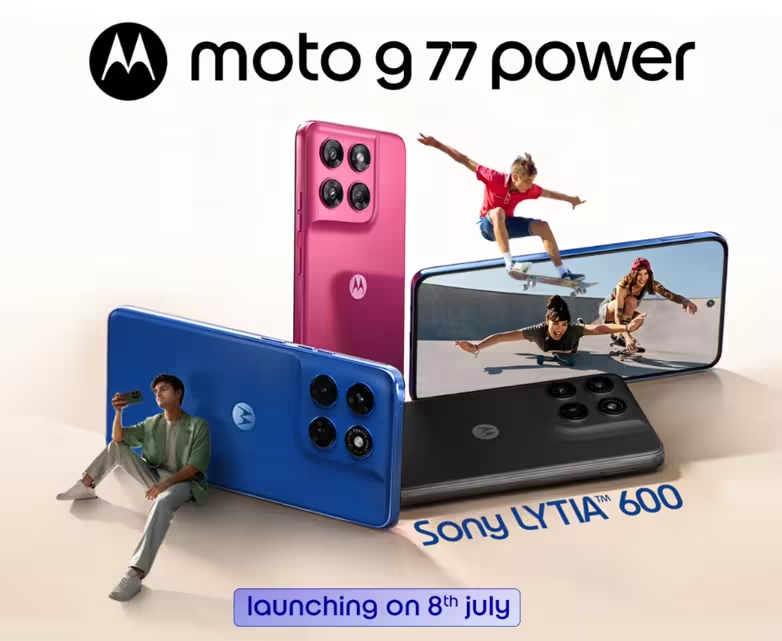
Moto G77 Power India launch date confirmed. (Image credit – Motorola)
Motorola has officially confirmed that the Moto G77 Powerwill debut in India next week. The smartphone maker has not only revealed the launch date but also shared key details about the phone‘s design, specifications, colour options, and expected price range. The upcoming Moto G-series handset will feature a large 7,000mAh battery, a 50-megapixel Sony camera and will be sold via Flipkart. Here’s what we know about the phone so far.
Moto G77 Power – India Launch Date, Price Range and Availability
Motorola has created a dedicated landing page for the Moto G77 Power and confirmed that the smartphone will launch in India on July 8.
According to the teaser page, the handset will be priced under Rs. 30,000 in the country. Earlier this year, Motorola introduced the Moto G77 in global markets with a starting price of GBP 250 (approximately Rs. 31,700).
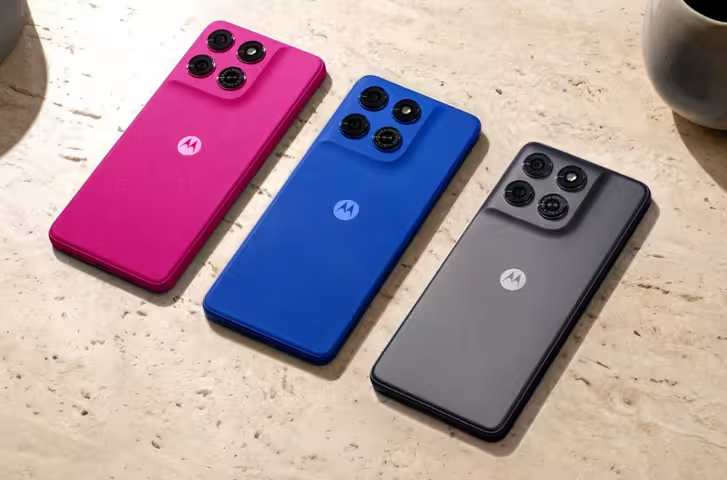
Moto G77 Power colour options. (Image credit – Motorola)
The smartphone will be available in Black, Blue, and Red colour options. Motorola says the device will come in Pantone-curated colours with a vegan leather finish. Following its launch, the Moto G77 Power will be available for purchase through Flipkart.
Moto G77 Power – Key Specifications
The Moto G77 Power sports a 6.72-inch Full HD+ display with a 120Hz refresh rate. The screen is protected by Corning Gorilla Glass 7i.
Powering the smartphone is a 7,000mAh battery, which Motorola claims can deliver up to three days of battery life on a single charge.
Moto G77 Power key features. (Image credit – Motorola)
For photography, the Moto G77 Power features a 50-megapixel Sony LYTIA-600 primary camera alongside an 8-megapixel ultra-wide-angle sensor on the rear. On the front, it houses a 32-megapixel selfie camera for selfies and video calls.
The handset runs Android 16 with Hello UI on top. Motorola has also confirmed that the smartphone will receive an Android 17 update. Other features include a MIL-STD-810H-certified durable build, a 3.5mm headphone jack, dual stereo speakers with Dolby Atmos support and Hi-Res Audio certification.
Just to recall, the global model is powered by the MediaTek Dimensity 6400 chipset and packs a 5,200mAh battery with 30W wired fast charging support. It also features a 6.78-inch display and a 108-megapixel primary rear camera.
More information about the upcoming phone will be confirmed at the launch.
OnePlus Ace 7 tipped with Snapdragon 8 Gen 5, 6.78″ 1.5K OLED, adaptive 185–240Hz refresh, up to 16GB RAM and massive 9,000 – 10,000mAh battery with 100 – 120W charging.
Ace 7 Pro expected specs include Snapdragon 8 Gen 6 (2nm, up to 5GHz), 6.82″ 2K curved OLED, 6,500–7,000mAh battery, 120W wired + 50W wireless charging and triple 50MP cameras.
The series is expected to arrive in Q4 2026 in China.
OnePlus Ace 6 series model in the picture for reference. (Image credit – OnePlus)
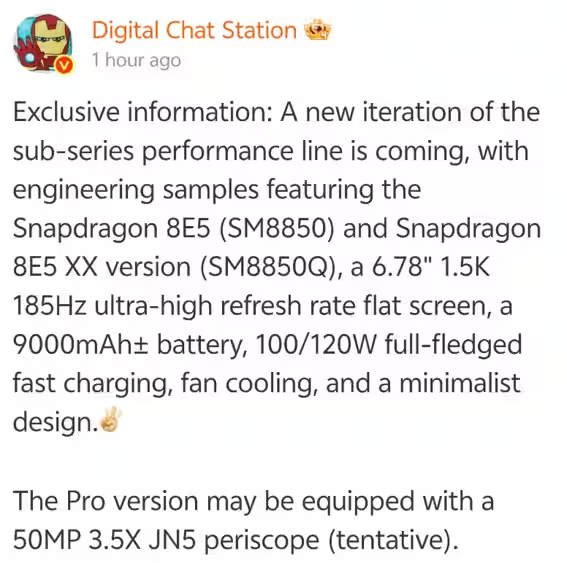
OnePlus is reportedly working on its next-generation Ace 7 series smartphones for the Chinese market. The latest details come from tipster Digital Chat Station on Weibo, who shared the alleged specifications of the OnePlus Ace 7 and OnePlus Ace 7 Pro. While the leak does not reveal an exact launch date, the new Ace 7 series is expected to make its debut in the fourth quarter of this year. Here’s what we know so far.
OnePlus Ace 7 – Expected Specifications
According to the leak, the OnePlus Ace 7 could be powered by the Qualcomm Snapdragon 8 Elite Gen 5 chipset. The octa-core processor is said to be based on a 3nm manufacturing process and may offer clock speeds ranging from 3.63GHz to 4.61GHz. The smartphone is also tipped to include an active cooling fan, while the top-end variant could feature 16GB of RAM.
DCS’s post on Weibo.
The handset is expected to sport a 6.78-inch LTPS OLED display with a 1.5K resolution. It is also said to support an adaptive refresh rate between 185Hz and 240Hz, allowing the display to adjust automatically based on usage and gaming requirements.
Battery life could be one of the biggest highlights of the OnePlus Ace 7. The smartphone is tipped to pack a battery larger than 9,000mAh with some reports suggesting it could reach 10,000mAh. To charge the large battery, the device may support 100W or 120W fast charging.
For photography, the OnePlus Ace 7 is expected to feature a dual rear camera setup led by a 50-megapixel primary sensor along with a 16-megapixel front camera for selfies and video calls.
OnePlus Ace 7 Pro – Expected Specifications
The OnePlus Ace 7 Pro is tipped to arrive as the more premium model in the lineup. It is expected to be powered by Qualcomm’s upcoming Snapdragon 8 Gen 6 processor, which has not yet been officially announced. According to the leak, the chipset could be built using a 2nm process and may deliver clock speeds of up to 5GHz.
The smartphone is also expected to feature a 6.82-inch 2K curved OLED display using a BOE X2 panel. The display is said to offer a 120Hz refresh rate along with very high brightness levels.
On the battery front, the OnePlus Ace 7 Pro is tipped to pack either a 6,500mAh or 7,000mAh battery. It could support 120W wired fast charging and 50W wireless charging with the latter expected to remain exclusive to the Pro model.
For cameras, the OnePlus Ace 7 Pro is expected to feature a triple rear camera setup comprising a 50-megapixel Sony LYT808 primary sensor, a 50-megapixel periscope telephoto camera with 3x optical zoom, and a 50-megapixel ultra-wide-angle camera.
Since OnePlus has not officially confirmed the Ace 7 series or its specifications, all of the above details should be treated as leaks for now. More information is expected to surface closer to the smartphones’ anticipated launch later this year.