iQOO has confirmed the Z11 Lite will launch under ₹20,000 in India on July 24, though exact pricing and variants remain undisclosed.
Key specs include 6,500mAh battery with 44W FlashCharge, MediaTek Dimensity 6300, OriginOS 6, 1,200‑nit display and 4 years of security updates.
Other confirmed features include AI Creation tools, live transcription/translation, military‑grade durability and SGS 5‑Star Drop Resistance.
iQOO Z11 Lite India launch confirmed on 24th July. (Image credit – iQOO)
iQOO has officially confirmed the price segment of its upcoming iQOO Z11 Lite ahead of its India debut on July 24. The company has already disclosed several details through the phone’s Amazon microsite and social media teaser posts. Here’s everything we know about the phone so far.
iQOO Z11 Lite – Expected Price Range (Confirmed)
Ahead of the official debut, iQOO has now officially revealed that the upcoming iQOO Z11 Lite will arrive under the price segment of ₹20K in India.
Bright days? Bring them on. ☀️📱
Meet the brightest display in the segment* on the all-new iQOO Z11 Lite.
With 1200 nits HBM and a 120Hz refresh rate, every swipe feels smooth and every detail stays easy to see—even outdoors.
Notably, iQOO has not clarified whether this refers to the launch price or the effective price after introductory offers. However, this official confirmation gives buyers a clearer idea of where the smartphone will be positioned in India’s crowded budget segment.
The brand is yet to announce the exact retail price or reveal the RAM and storage variants.
The pricing is particularly important because the sub-Rs 20,000 category has evolved significantly over the past few years. Rising memory component costs have pushed many features that were previously available in the sub-Rs 10,000 and Rs 15,000 segments into higher price brackets. As a result, buyers today expect bigger batteries, faster charging and premium features even in this price range.
iQOO Z11 Lite – Confirmed Features
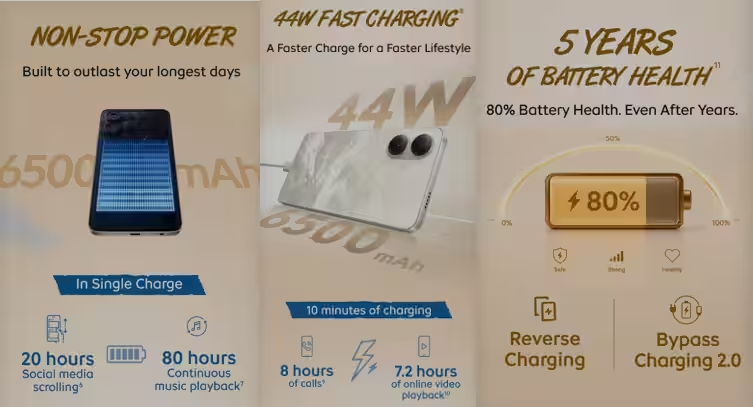
iQOO Z11 Lite battery specs. (Image credit – iQOO)
Based on Amazon microsite and official teasers on social media, we already know quite a few details about the upcoming iQOO Z11 Lite. The phone will be backed by a 6,500mAh battery with 44W FlashCharge support. According to the company, the battery is also designed to retain its health for up to five years.
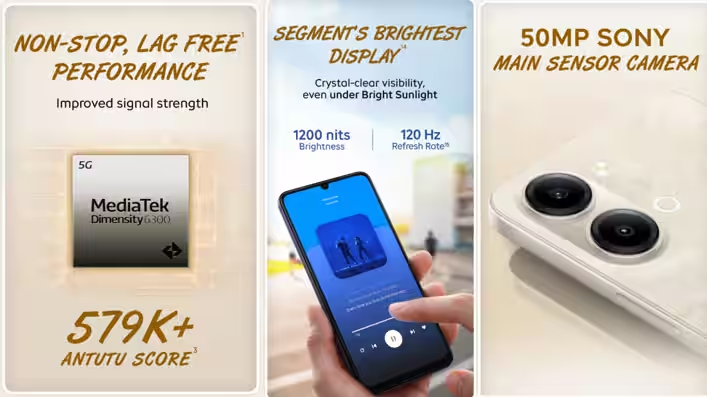
iQOO Z11 Lite teasers. (Image credit – iQOO)
The smartphone will be powered by the MediaTek Dimensity 6300 chipset and will run OriginOS 6 out of the box. iQOO has also committed to providing four years of security updates, although it has not yet disclosed how many Android OS upgrades the handset will receive.
For the display, iQOO claims the phone offers up to 1,200 nits peak brightness, saying it delivers the brightest outdoor viewing experience in its segment.
On the software side, the device will include several AI-powered tools. The AI Creation suite can summarise documents, rewrite content, translate text and assist with brainstorming ideas. It also features AI Captions, which supports live transcription, translation and one-tap summaries during meetings and lectures.
Other confirmed highlights include Military-Grade Durability, SGS 5-Star Drop Resistance, and Dynamic Light for calls and notifications. The phone will be offered in Solar Flame and Midnight Blue colour options.
More details including its exact price, memory variants and availability should be confirmed at the time of the launch next week.
Infinix XPAD 30 Pro has surfaced on retailer listings and promotional images revealing design and key specs.
It is expected to include 11″ 2.5K Eye‑Care display, MediaTek Helio G200 Ultimate chip, AI learning features, Wi‑Fi/4G LTE variants, up to 256GB storage and extended RAM.
Leaked retail box shows 8,200mAh battery with 15W charging, 8MP front/rear cameras, XOS 16 on Android 16, 6.6mm thickness, 476g weight and nano‑SIM + microSD slots.
Infinix is preparing to expand its tablet portfolio with the launch of the Infinix XPAD 30 Pro. Ahead of its official announcement, the upcoming Android tablet has surfaced on multiple retailer websites, revealing its design and several key specifications. As per reports, an official product page for the tablet briefly went live before returning a 401 error. This could mean that the official launch could happen soon.
Infinix XPAD 30 Pro Retailer’s Listing and Promotional Poster
Thanks to a retailer listing from Belarus, we now have an idea of what to expect from the Infinix XPAD 30 Pro before its official debut. The listing confirms the tablet’s branding and offers a first look at its design. Meanwhile, an official promotional image on Infinix’s website provides a clearer view of the upcoming device.
Based on the promotional material, the XPAD 30 Pro is expected to target users looking for a productivity-focused tablet. It is shown with support for both a keyboard accessory and a stylus, while the rear panel features a clean, minimalist design with a dual-camera module.
On the front, the tablet is seen with slim display bezels.
The leaked promotional image reveals that the upcoming Infinix XPAD 30 Pro will sport an 11-inch 2.5K Eye-Care display and will be powered by the MediaTek Helio G200 Ultimate processor. The tablet is also tipped to include AI-powered learning and problem-solving features and will reportedly be offered in both Wi-Fi and 4G LTE variants.
The retailer listing further suggests that one of the models could come with up to 256GB of onboard storage.
Notably, the upcoming Infinix tablet has also been spotted on other reseller platforms and social media posts that further suggest that its official launch may not be far away.
Infinix XPAD 30 Pro – Retail Box Live Images (Leaked)
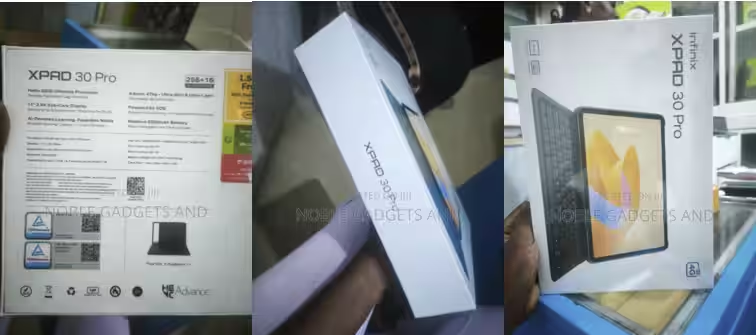
Infinix XPAD 30 Pro live retail box images. (Image credit – Noble Gadgets)
In addition to the retailer listing, live images of the retail box have also surfaced and revealed more details about the upcoming tablet.
According to the leaked packaging, the Infinix XPAD 30 Pro could measure 6.6mm in thickness and weigh 476 grams. It is also expected to pack an 8,200mAh battery with 15W fast charging support and run XOS 16 based on Android 16.
For photography, the tablet is tipped to feature an 8MP rear camera and an 8MP front-facing camera. The leaked retail box also points to an 8GB RAM + 256GB storage variant with support for up to 16GB extended RAM. Moreover, the tablet is expected to include both a nano-SIM slot and a microSD card slot.
More information regarding its pricing, availability and other features can be expected to come out soon. As of now, Infinix has not officially announced the XPAD 30 Pro or revealed its launch timeline.
Leak suggests Oppo and OnePlus are developing smartphones with 10,000mAh+ batteries.
Oppo may debut an A series phone with a 10,000mAh single‑cell battery.
OnePlus is reportedly working on a mid‑range Pro model with an even larger battery.
Battery capacities on smartphones continue to grow, and Oppo and OnePlus could be preparing to take the next big leap. A new tip suggests that both brands are developing smartphones with batteries rated at 10,000mAh or even higher and setting new records.
The rumour comes shortly after Oppo and OnePlus introduced their latest battery-focused smartphones in India. The Oppo A6 Pro 5G was launched recently with the largest battery ever seen on an Oppo A series device, while the OnePlus Nord 6 carries the biggest battery on any OnePlus smartphone so far. Anyhow, here’s more on the latest leak.
Oppo and OnePlus Could Launch Phones With 10,000mAh Batteries
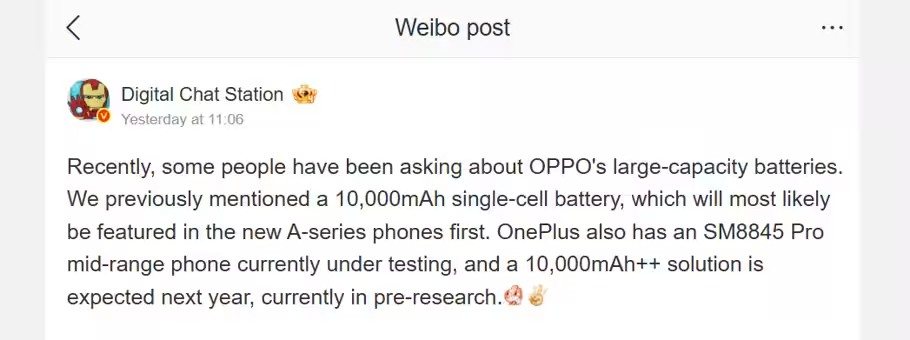
DCS’s post on Weibo. (Translated via Google Translate)
According to tipster Digital Chat Station on Weibo, both Oppo and OnePlus are working on smartphones equipped with 10,000mAh batteries.
As per the tipster, the upcoming OnePlus smartphone is currently in the “pre-research” phase. However, neither Oppo nor OnePlus has officially confirmed these details, so it is more of a speculation for now.
The leak suggests that Oppo could be the first to introduce an unannounced A series smartphone featuring a 10,000mAh single-cell battery. Meanwhile, OnePlus is reportedly planning to launch a mid-range smartphone with Pro branding next year. The device is said to carry the model number SM8845 and could arrive with a battery larger than 10,000mAh.
If the report proves accurate, these upcoming Oppo and OnePlus smartphones would feature the largest batteries ever offered by the two brands.
At present, the Oppo A6 Pro 5G holds the record for the largest battery in the Oppo A series lineup. The smartphone was launched in India on January 5 with a starting price of Rs. 21,999 for the 8GB RAM + 128GB storage variant. It packs a 7,000mAh battery and supports 80W SuperVOOC wired fast charging.
On the other hand, the OnePlus Nord 6 debuted in India on April 7 at a starting price of Rs. 38,999 for the 8GB RAM + 256GB storage model. The smartphone comes equipped with a 9,000mAh battery, making it the largest battery ever offered on a OnePlus handset. It also supports 80W wired fast charging, similar to the Oppo A6 Pro 5G.
As of now, there is no official confirmation regarding the upcoming devices and their possible battery specs. We can expect more details to pop up sometime in the coming weeks.
OnePlus India denies India exit rumours and confirms operations remain normal despite speculation of a 2027 shutdown tied to Oppo’s global restructuring.
Company announces ColorOS 17 transition with Android 17 replacing OxygenOS to unify software development with Oppo for faster updates and improved stability.
OnePlus will wind down operations in select global markets including the US, Canada, and Europe, but assures continued support for existing users there.
OnePlus denies India exit rumours in a community message.
OnePlusIndia has dismissed recent rumours suggesting that the company is preparing to shut down its operations in India in 2027. In an official statement, the company clarified that its business in the country continues as normal.
The clarification comes after reports claimed that OnePlus could gradually withdraw from several international markets as part of a broader restructuring by its parent company, Oppo. Separately, OnePlus has also announced that eligible smartphones will transition from OxygenOS to ColorOS 17 following the release of Android 17 later this year. At the same time, the company confirmed that it will wind down operations in select global markets.
OnePlus India Rejects Shutdown Speculation
Responding to the rumours, OnePlus India said, “OnePlus India continues to operate its business as usual, with all local operations on track. We urge the media to exercise restraint before amplifying unverified speculation”.
The statement makes it clear that the company’s operations in India remain unaffected for now. However, it does not provide any clarity regarding the brand’s long-term plans beyond 2026.
Reports Suggest Wider Oppo Restructuring
Earlier, a Bloomberg report claimed that OnePlus could first cease operations in the US and Europe before eventually expanding the restructuring to other international markets, including India. Citing a person familiar with the matter, the report said the move is part of a larger restructuring exercise being carried out by Oppo.
According to the report, OnePlus’ India exit is expected sometime in 2027.
The report further stated that Oppo is restructuring its smartphone business amid slowing growth across several international markets including the US, Europe and India. Rising component costs, particularly DRAM and memory prices, geopolitical challenges in the United States and an ongoing legal dispute involving Apple have reportedly contributed to the company’s decision.
It also claimed that Realme, another smartphone brand under Oppo, could exit the Chinese market as part of the same restructuring strategy. Oppo is expected to continue focusing on the Chinese market while strengthening its presence in Central Europe. Meanwhile, Realme devices could receive greater focus in Nordic countries such as Sweden, Finland, Denmark and Iceland, where demand has reportedly remained strong.
Notably, this is the first report to suggest that India may eventually be included in Oppo’s restructuring plans. Previous reports had only pointed towards a possible withdrawal from the US and European markets, while OnePlus’ future in India remained uncertain.
The company’s future has been under discussion for some time. Earlier rumours had suggested that OnePlus could wind down its operations before it was eventually merged with Realme under Oppo’s umbrella. The latest developments also follow leadership changes at OnePlus India earlier this year, when Robin Liu stepped down as CEO as part of the company’s efforts to streamline local operations.
The Bloomberg report quoted its source as saying, “The change is happening as part of a larger restructuring to parent company OPPO, or Guangdong Oppo Mobile Telecommunications Corporation Ltd., said the person, who asked not to be identified discussing a private plan.”
The report also stated that OnePlus’ slower growth in recent years across the US, Europe and India, along with geopolitical concerns, has influenced Oppo’s restructuring strategy.
OnePlus Announced Transition From OxygenOS to ColorOS 17
Alongside the clarification regarding its India operations, OnePlus has announced a major software strategy change.
In a post shared on the OnePlus India Community Forum, the company confirmed that eligible smartphones will be able to voluntarily upgrade from OxygenOS to ColorOS 17 after the release of Android 17 later this year.
According to OnePlus, the move is intended to unify software development with Oppo, enabling faster software updates, improved software quality and better utilisation of shared research and development resources.
The company said users can expect a “more stable, reliable, and future-ready software experience” following the transition.
OnePlus also stated that it remains committed to delivering a fast, intuitive and user-focused software experience throughout the migration process. While an exact rollout timeline has not been announced, the company said details regarding eligible devices and the deployment schedule will be shared at a later stage.
OnePlus to Wind Down Operations in Select Global Markets
Separately, OnePlus also published a statement on the OnePlus US Community Forum confirming a broader global restructuring strategy.
Describing the decision as “by no means an easy call to make”, the company announced that future product launches in the US, Canada and Europe will come to an end as part of a proactive global strategy adjustment.
The company writes, “As part of the proactive global strategy adjustment, OnePlus has decided to conclude new product rollouts in North America. We know so many of you in the Community have backed OnePlus for years, and this news is going to be disappointing. This was by no means an easy call to make, and we wanted to come forward and be completely honest with the friends who have stood by us for so long.”
However, existing OnePlus users in these markets will continue to receive scheduled software updates, security patches, warranty services and after-sales support. The company also confirmed that customer service channels will remain operational and that it will continue to honour all existing consumer protection commitments.
However, the communityus.oneplus.com website and app will officially close on August 16, 2026 at 11:59PM ET as part of this transition.
Redmi Note 17 is tipped to launch in India on August 6, although there is no official confirmation.
Indian variant is expected to feature some changes compared to the Chinese model.
Specs from the China model include a 7″ FHD+ OLED 120Hz display, Snapdragon 4 Gen 4 chipset, 50MP rear camera, 8,000mAh battery 45W charging and IP66 rating.
Xiaomi recently introduced the Redmi Note 17 series with the Redmi Note 17 and Redmi Note 17 Pro in China. While the company has not yet announced any plans for a global rollout, a new leak suggests that the standard Redmi Note 17 could soon make its way to the Indian market. In fact, a reliable tipster has claimed that the smartphone is expected to launch in India in early August. Here’s what we know so far.
Redmi Note 17 India Launch Timeline (Tipped)
Tipster Abhishek Yadav @yabhishekhd on X has revealed that the Redmi Note 17 is likely to launch in India on August 6. The tipster also hinted that the Indian version of the phone may have a few different specs compared to the model launched in China.
However, there is no information yet on whether the Redmi Note 17 Pro will also be introduced in the country.
EXCLUSIVE ✨
REDMI NOTE 17 IS LAUNCHING IN INDIA ON AUGUST 6. 🇮🇳
I have just learned from my source that the Redmi Note 17 will launch in India on August 6, 2026.
The Chinese variant features:
📲 7-inch FHD+ OLED display with 120Hz refresh rate, Gorilla Glass 7i protection
⬛… pic.twitter.com/L0RPWkzfBp
The same tipster had earlier revealed that the Indian variant could arrive with 6GB RAM and 128GB storage as the base model. It is also expected to be offered in Blue and Dark Night colour options, while additional storage variants may be introduced later.
For reference, the Redmi Note 17 is currently available in China in three memory variants such as 6GB + 128GB at CNY 1,299 (around Rs. 18,500), 8GB + 128GB at CNY 1,399 (around Rs. 19,900) and 8GB + 256GB at CNY 1,599 (around Rs. 22,700).
Redmi Note 17 – Specifications Based on China Variant
Redmi Note 17. (Image credit – Redmi)
The Redmi Note 17 series was unveiled in China with two models named the Redmi Note 17 and Redmi Note 17 Pro.
The standard Redmi Note 17 features a 7-inch Full HD+ OLED display with a resolution of 1,080 × 2,396 pixels and a 120Hz refresh rate. It is powered by Qualcomm’s Snapdragon 4 Gen 4 chipset and comes with up to 12GB RAM and 512GB internal storage. The smartphone runs HyperOS 3 based on Android 16.
For photography, it is equipped with a 50MP rear camera and an 8MP front-facing camera. The device packs a large 8,000mAh battery with 45W wired fast charging support. Other notable features include an in-display fingerprint sensor, stereo speakers, NFC, an IR blaster, and an IP66-rated body for dust and water resistance.
Meanwhile, there have been some reports recently hinting that the Redmi Note 17 may launch in India under the Poco branding. The device is tipped to arrive as the Poco M8 Power.
As of now, Xiaomi has not officially confirmed the India launch date or shared any teaser regarding the Redmi Note 17 series for the Indian market.
Redmi 17 4G leak reveals redesigned rear camera island with RGB light ring, available in Deep Blue, Black, Oak Green, and Lotus Purple colour options.
Expected specs include Helio G91 Ultra chipset, up to 6GB RAM/256GB storage, 6.9″ 120Hz display, 50MP rear + 8MP front cameras, and a 7,500mAh battery with 45W charging.
It was spotted on Malaysia’s SIRIM certification and was also listed in Indonesia, hinting at an imminent launch.
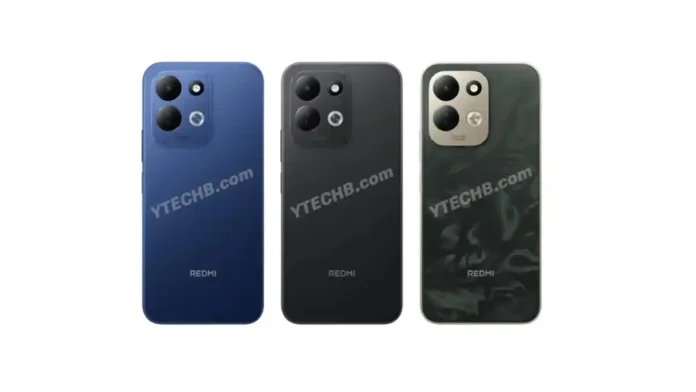
After unveiling the Redmi 17C 4G in China earlier this year, Xiaomi is reportedly preparing to introduce another smartphone in its Redmi number series. The upcoming Redmi 17 4G is expected to succeed the Redmi 15 4G and has now surfaced in a fresh leak that reveals its design, colour options, expected specifications and pricing. In addition to the leaked renders, the smartphone has also been spotted on the Malaysian SIRIM certification database indicating that its official launch could be getting closer. Here’s what we know so far.
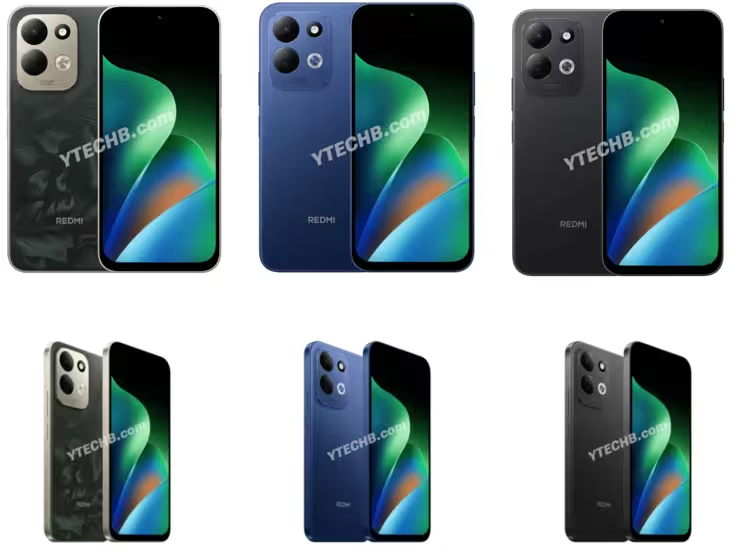
Redmi 17 4G Leaked Renders and Expected Price
A recent YTECHB report reveals the Redmi 17 4G could carry a starting price of EUR 250(around Rs. 28,000) for the 4GB RAM + 128GB storage variant. Meanwhile, the 6GB RAM + 256GB storage model is tipped to be priced at EUR 280 (around Rs. 31,000).
The leaked renders suggest the smartphone will be available in Deep Blue, Black, Oak Green and Lotus Purple colour options.
The images also showcase a redesigned rear camera module. Compared to the Redmi 15 4G, the camera island appears wider and now includes a light ring in place of one of the circular cutouts. However, this is not expected to reduce the camera capabilities, as the predecessor also featured only a dual rear camera setup consisting of a primary sensor and an auxiliary lens.
The handset is said to measure 170.12 × 78.42 × 8.8mm and weigh around 232 grams.
Redmi 17 4G Appears on Malaysian SIRIM Certification
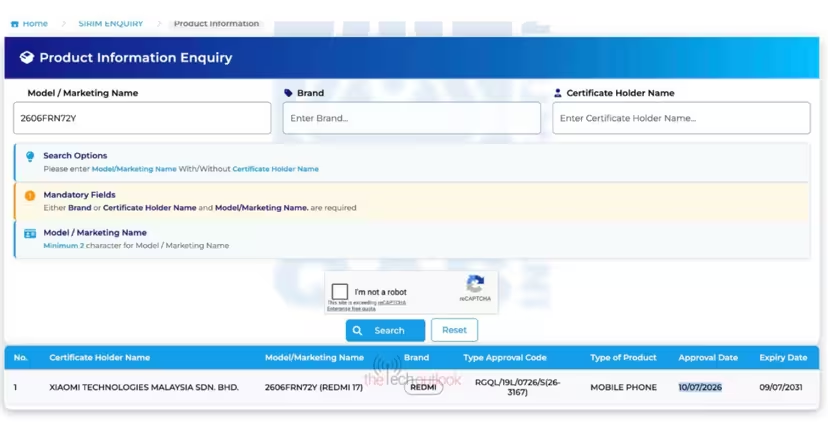
Redmi 17 4G on Malaysian SIRIM Certification. (Screenshot by TheTechOutlook)
The Redmi 17 4G has also been listed on the Malaysian SIRIM certification platform with the model number 2606FRN72Y. The listing carries the type approval code RGQL/19L/0726/S(26-3167) and classifies the device under the “Mobile” product category.
The certification approval was granted on July 10, 2026. While the listing does not reveal any hardware specifications, it indicates that the smartphone could soon make its debut in the Malaysian market.
Notably, the same 2606FRN72Y model number had previously been spotted on Indonesia’s SDPPI and TKDN certification databases hinting at a wider regional rollout.
Redmi 17 4G Features and Specifications (Expected)
As per the report, the Redmi 17 4G is expected to be powered by the MediaTek Helio G91 Ultra processor paired with up to 6GB RAM and up to 256GB of onboard storage. The smartphone is also tipped to boot HyperOS 3.0 based on Android 16.
It is expected to feature a 6.9-inch flat display with a 720 × 1600-pixel resolution and a 120Hz refresh rate.
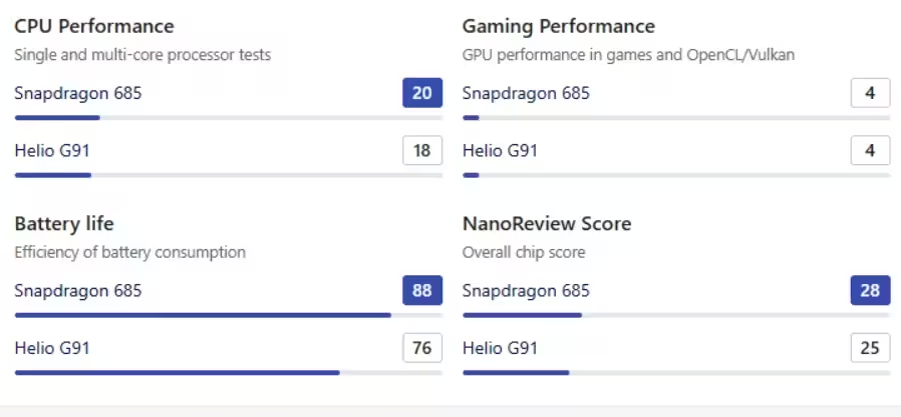
For comparison, the Redmi 15 4G is powered by the Qualcomm Snapdragon 685 chipset. The report notes that the Helio G91 and Helio G91 Ultra are essentially the same processor, with only minor improvements such as enhanced ISP support for higher-resolution cameras.
Screenshot by Gizmochina.
The handset is expected to be offered in 4GB or 6GB RAM configurations along with 128GB or 256GB storage options.
For photography, the Redmi 17 4G is tipped to feature a 50MP primary rear camera accompanied by an auxiliary sensor, while the front is expected to house an 8MP selfie camera for selfies and video calls.
One of the biggest expected upgrades is the battery. The Redmi 17 4G is rumoured to pack a 7,500mAh battery with 45W fast charging support. This would be an improvement over the 7,000mAh battery and 33W fast charging offered by the Redmi 15 4G, potentially delivering longer battery life for users who prefer fewer charging sessions.
The leaked renders also point to a redesigned camera island featuring RGB lighting surrounding the camera module.
As of now, Xiaomi has not officially announced the Redmi 17 4G or revealed its launch timeline.
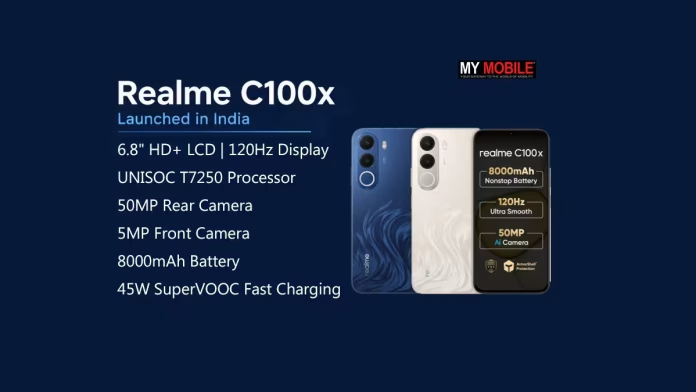
Realme C100x launches in India as a budget device with 6.8″ 120Hz HD+ display, UNISOC T7250 chipset, 4GB RAM and 64GB storage.
Key highlights include an 8000mAh battery with 45W SuperVOOC fast charging, 50MP rear camera, 5MP front camera, IP64 rating and military‑grade durability.
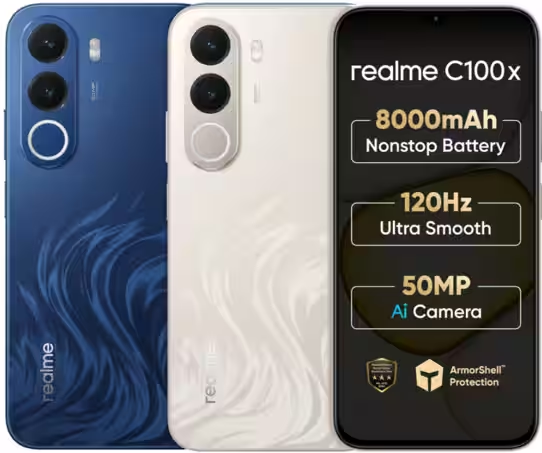
The phone is priced at ₹14,499 for the 4GB+64GB variant and is available in Deep Blue Tides and Golden Coast colour options.
Realme C100x is now available in India. (Image credit – Realme)
Realme has launched the Realme C100x smartphone in India, expanding its C-series lineup with a new budget offering. The smartphone packs several notable features including a massive 8000mAh battery, 45W SuperVOOC fast charging, a 120Hz display, and a 50MP rear camera. It also comes with military-grade durability, an IP64 rating, and support for expandable storage up to 2TB. Here’s every detail that you should know.
Realme C100x – Price and Availability
The Realme C100x is now available for purchase through realme.com, Flipkart, and select offline retail stores. As part of the launch offer, the smartphone is priced at Rs. 14,499 for the 4GB RAM + 64GB storage variant.
The phone comes in Deep Blue Tides and Golden Coast colour options.
Realme C100x – Key Features
The Realme C100x sports a 6.8-inch HD+ IPS LCD display with a resolution of 720 × 1570 pixels. The screen supports a 120Hz refresh rate, offers up to 700 nits typical brightness and 900 nits High Brightness Mode (HBM), and is protected by Panda MN228 glass.
Under the hood, the smartphone is powered by the 1.8GHz octa-core UNISOC T7250 processor built on a 12nm process along with a Mali-G57 MP1 GPU. It comes with 4GB LPDDR4X RAM and 64GB eMMC 5.1 storage, which can be expanded up to 2TB using a microSD card.
The phone runs Android 17 with realme UI 7.0 on top.
For photography, the Realme C100x features a 50MP rear camera with an f/1.8 aperture and LED flash. On the front, it houses a 5MP selfie camera with an f/2.2 aperture for selfies and video calls.
One of the biggest highlights of the smartphone is its 8000mAh battery paired with 45W SuperVOOC fast charging support. It also supports reverse wired charging allowing users to charge compatible devices using the phone.
The smartphone features a side-mounted fingerprint sensor, a 3.5mm headphone jack, and an ultra-linear bottom-ported speaker. It also comes with IP64 dust and splash resistance and MIL-STD-810H military-grade durability for improved protection.
Connectivity options include dual 4G VoLTE, dual-band Wi-Fi, Bluetooth 5.2, GPS, GLONASS, Galileo, QZSS, USB Type-C, and support for dual nano SIM cards with a dedicated microSD card slot.
The phone measures 166.5 × 78.2 × 8.8mm and weighs 219 grams.
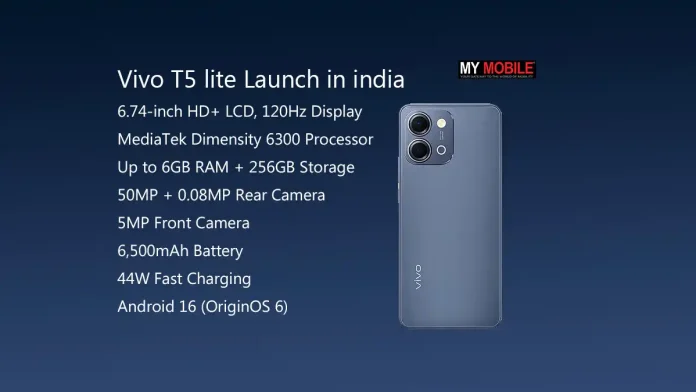
Vivo T5 Lite 44W 5G debuts in India with MediaTek Dimensity 6300 chipset, 6.74-inch HD+ 120Hz LCD display, up to 6GB RAM/256GB storage, and IP65 rating.
Other features include a 6500mAh battery with 44W fast charging, 50MP rear camera, 5MP selfie camera, side-mounted fingerprint sensor, dual-SIM 5G support and expandable storage up to 2TB.
It is available in Twilight Shadow and Wave Blue colour options with three memory variants.
The Vivo T5 Lite 44W 5G runs on OriginOS 6.0 based on Android 16 and offers up to 6GB RAM with up to 256GB storage. The smartphone also comes with a 50MP rear camera,IP65 rating and support for 5G connectivity. Here’s everything you should know about the new phone.
Vivo T5 Lite 44W 5G – Price and Availability
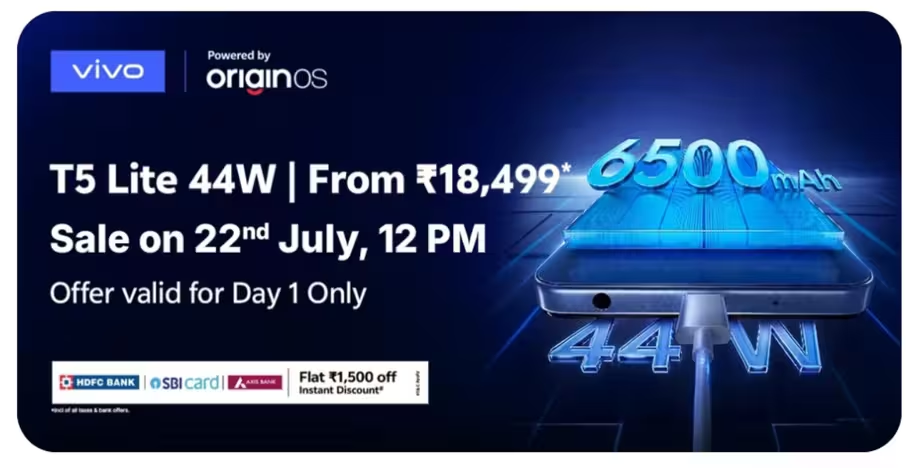
The Vivo T5 Lite 44W 5G sale will begin July 22 via Flipkart.
It has been launched at the starting price of ₹19,999 for the base 4GB RAM + 128GB storage variant. The 6GB RAM + 128GB model is priced at ₹21,999, while the top-end 6GB RAM + 256GB configuration costs ₹24,999. Buyers can also avail a ₹1,500 bank discount, bringing the effective price of the base variant down to ₹18,499.
The memory-wise effective pricing will be as follows –
Model
Price
Effective Price (After bank discount of ₹1,500)
4GB RAM + 128GB storage
₹19,999
₹18,499
6GB RAM + 128GB storage
₹21,999
₹20,499
6GB RAM + 256GB storage
₹24,999
₹23,499
The phone is available in two colour options named Twilight Shadow and Wave Blue.
Vivo T5 Lite 44W 5G – Key Features
The Vivo T5 Lite 44W 5G features a 6.74-inch LCD display with an HD+ resolution of 1600 × 720 pixels. The display supports a 120Hz refresh rate and offers up to 1200 nits HBM brightness. It also comes with an 83% NTSC colour gamut and 260 PPI pixel density.
The smartphone is powered by the MediaTek Dimensity 6300 5G chipset built on a 6nm process. The octa-core processor comes with a peak clock speed of up to 2.4GHz. It is paired with LPDDR4X RAM and UFS 2.2 storage. The device also supports expandable RAM of up to 6GB and expandable storage up to 2TB.
For optics, the Vivo T5 Lite 44W 5G gets a 50MP primary rear camera paired with a 0.08MP secondary sensor. The rear camera supports features such as Night Mode, Portrait, Panorama, Documents, Slow Motion, Time-lapse, Professional mode and 50MP mode. On the front, it features a 5MP selfie camera with support for Portrait, Night Mode, Photo and Video modes.
One of the major highlights of the smartphone is its 6500mAh battery, which supports 44W fast charging. The device comes with a side-mounted fingerprint sensor and features an IP65 rating for protection against dust and water splashes.
For connectivity, the Vivo T5 Lite 44W 5G supports dual nano SIMs with 5G dual SIM dual standby. Other connectivity options include Wi-Fi dual-band (2.4GHz and 5GHz), Bluetooth 5.4, GPS, USB Type-C port and OTG support. The phone also includes sensors such as an accelerometer, ambient light sensor, e-compass, proximity sensor and gyroscope.
The smartphone measures 167.40 × 77.10 × 8.39mm and weighs 209 grams. It comes with a plastic composite back panel.
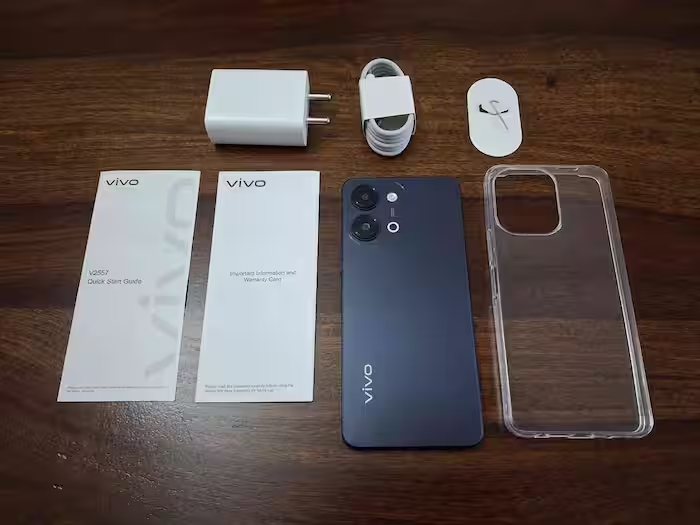
In the box, Vivo includes a charger, USB cable, phone case, SIM eject tool, protective film, warranty card and quick start guide.
Vivo T5 Lite 44W 5G – Upgrades
Compared to the Vivo T4 Lite, the new Vivo T5 Lite 44W 5G brings a few notable upgrades while keeping some key specifications unchanged. The biggest improvements come in the display and battery departments. The Vivo T5 Lite 44W 5G now features a 120Hz refresh rate display up from the 90Hz panel on its predecessor.
The battery capacity has also increased from 6000mAh to 6500mAh, while charging speeds have received a major boost with 44W fast charging support compared to 15W charging on the Vivo T4 Lite. However, the processor remains unchanged with both smartphones powered by the MediaTek Dimensity 6300 octa-core chipset. The front camera also stays the same with a 5MP selfie sensor.
On the camera front, while both devices feature a 50MP primary rear camera, the secondary sensor has changed from a 2MP sensor on the Vivo T4 Lite to a 0.08MP sensor on the Vivo T5 Lite 44W 5G, which appears to be a downgrade on paper.
Overall, the Vivo T5 Lite 44W 5G mainly focuses on improving the display experience and charging speeds while offering a slightly larger battery.
Vivo T5 Lite 44W 5G – Reasons To Buy
Massive 6,500mAh battery offers excellent battery life and can easily last more than a day on regular usage.
Smooth 120Hz display makes scrolling, navigation, and everyday usage feel more fluid.
Comfortable and stylish design with matte finish and slim profile.
Reliable everyday performance thanks to MediaTek Dimensity 6300 5G chipset that handles daily tasks smoothly without major issues.
Features like IP65 rating, triple anti-drop protection, and SGS certification add extra peace of mind.
A good option for users looking for an affordable 5G smartphone with long-term usability.
Vivo T5 Lite 44W 5G debuts in India with MediaTek Dimensity 6300 chipset, 6500mAh battery, 120Hz LCD display and more.
It is available in Twilight Shadow and Wave Blue colour options with three memory variants.
Price starts at Rs 18,499 for the base variant with 4GB RAM and 128 GB Storage.
Vivo T5 Lite 44W 5G is Vivo’s latest budget 5G smartphone that focuses on the essentials users look for in this segment. But is the Vivo T5 Lite 44W 5G the right choice for your needs at the price? Let’s find out in our hands-on review.
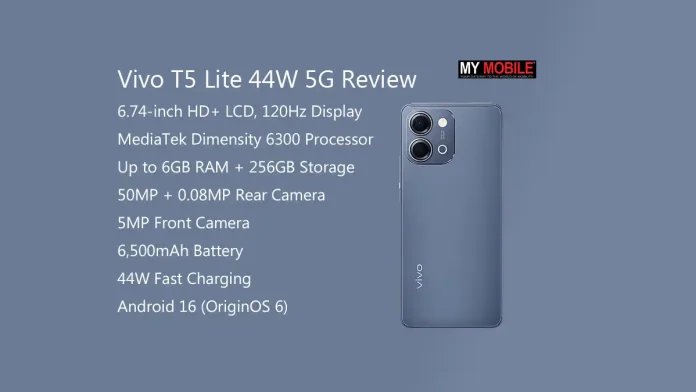
Vivo T5 Lite 44W 5G – Key Features
74-inch 120Hz LCD Display
MediaTek Dimensity 6300 5G Processor
Up to 6GB RAM
Up to 256GB Internal Storage
50MP + 0.08MP Rear Camera Setup
5MP Front Camera
6,500mAh Battery Capacity
44W Fast Charging (Adapter in the box)
Origin OS 6.0 based on Android 16
IP65 Rated
Vivo T5 Lite 44W 5G – Pros & Cons
Pros
Cons
● Excellent battery life
● Smooth 120Hz refresh rate display
● Reliable everyday performance
● IP65 rating and added durability features
● Supports expandable storage up to 2TB
● No NFC Support
● Subpar camera
● Bloatware
Vivo T5 Lite 44W 5G – Unboxing
Design and Build Quality
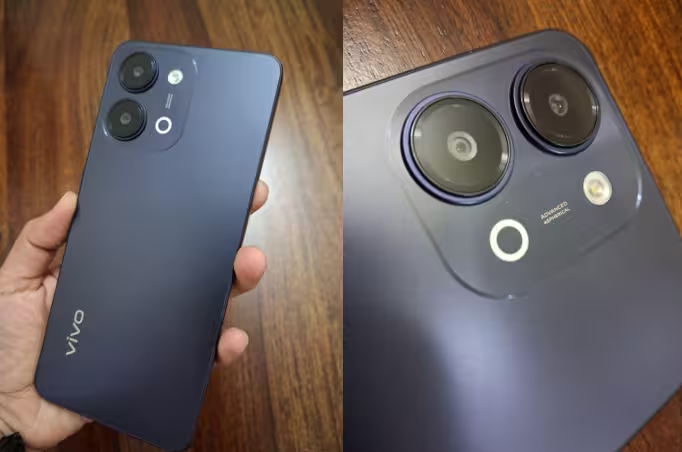
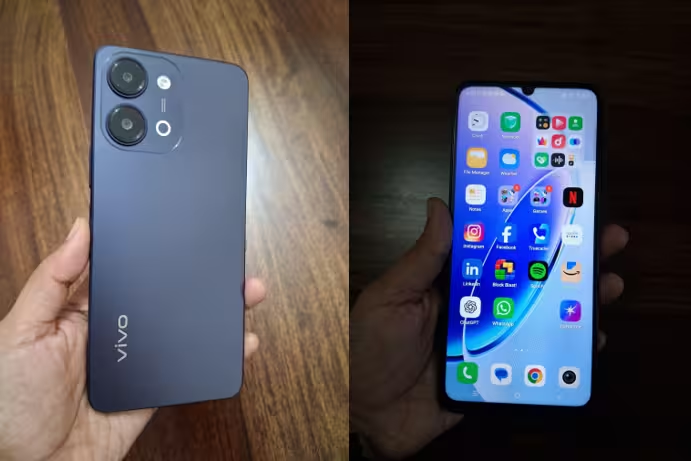
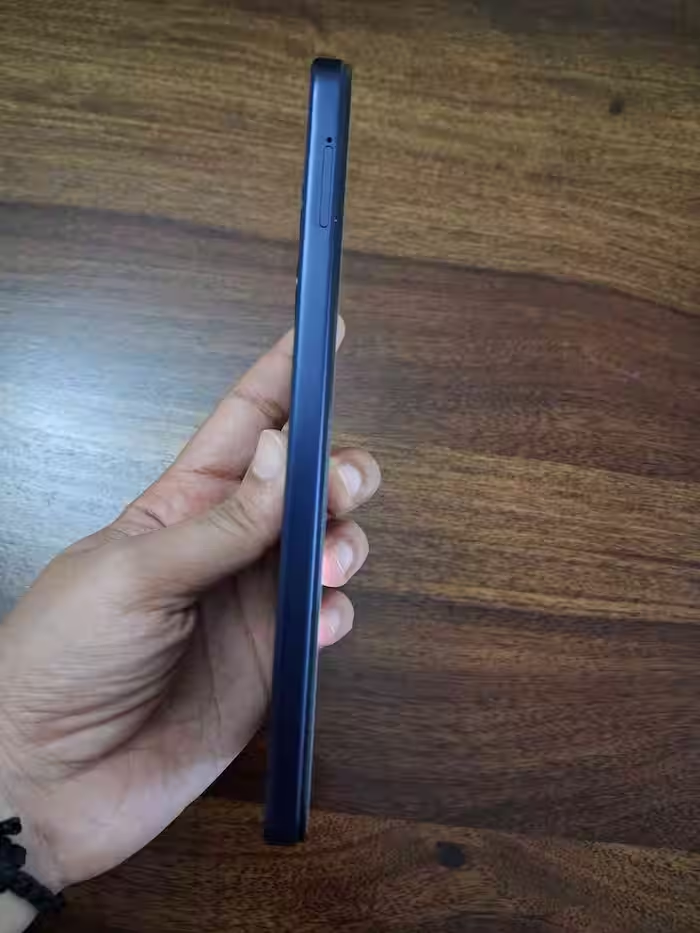
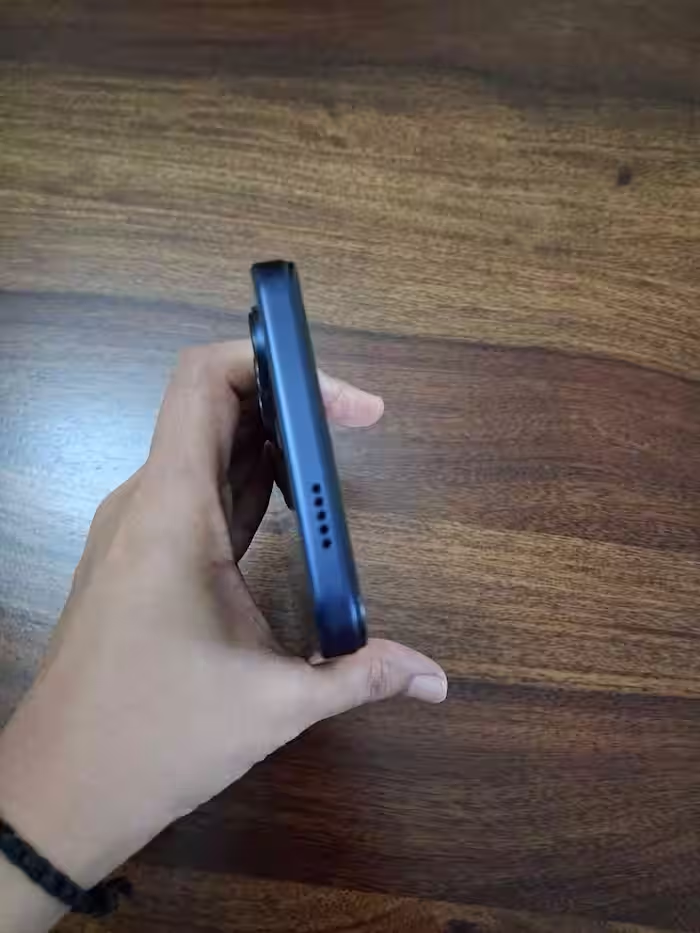
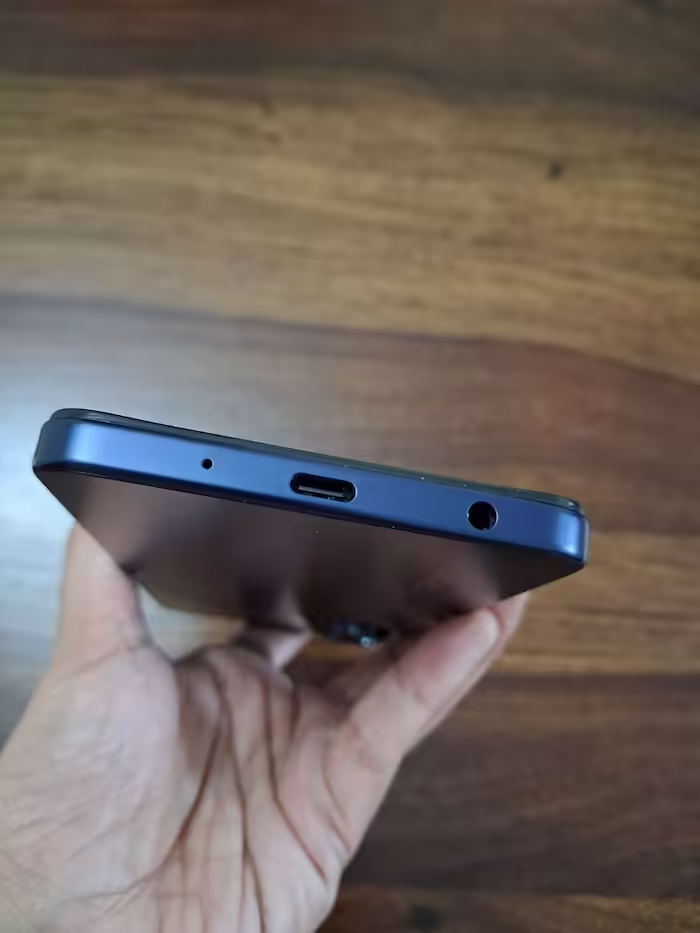
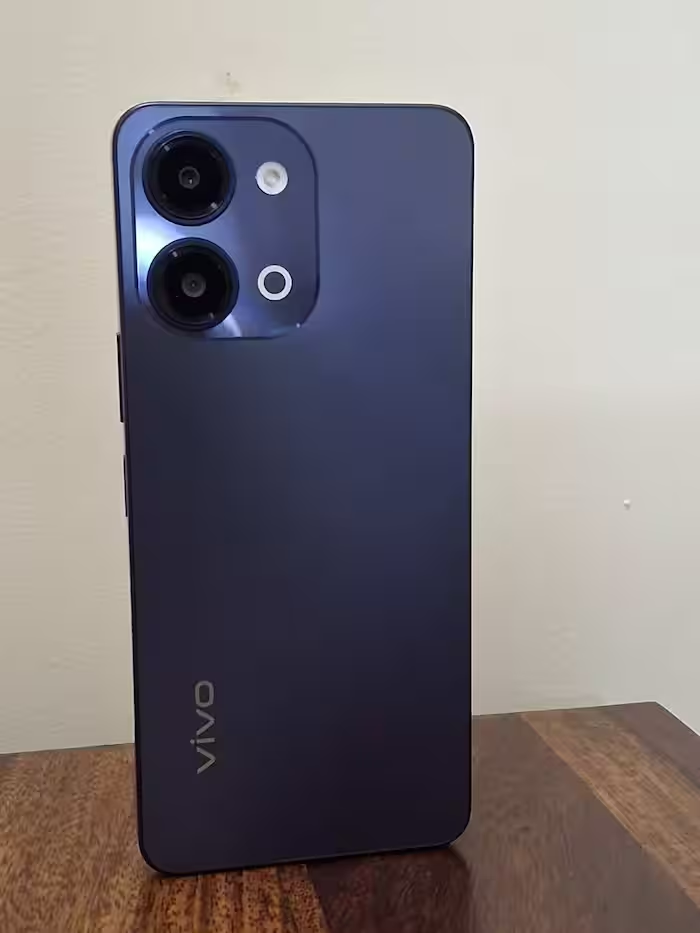
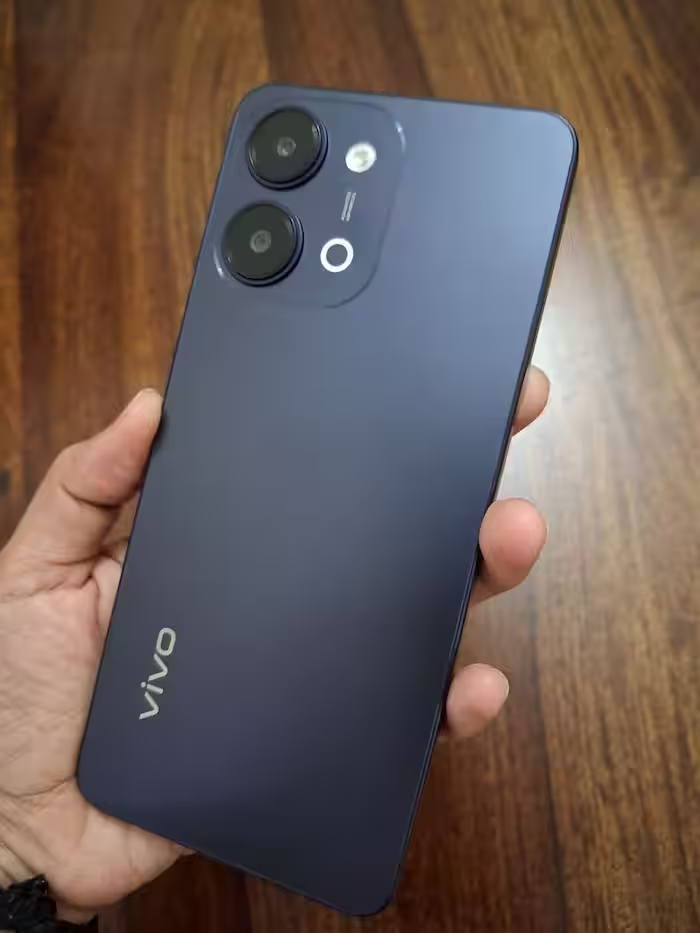
Right out of the box, the Vivo T5 Lite makes a good first impression when it comes to its clean and sleek design. We had the Wave Blue colour variant for this review and the finish has a rich look without being too flashy. The matte texture gives it a premium touch while also doing a good job of keeping fingerprints and dust at bay. This means the phone continues to look clean even after regular use.
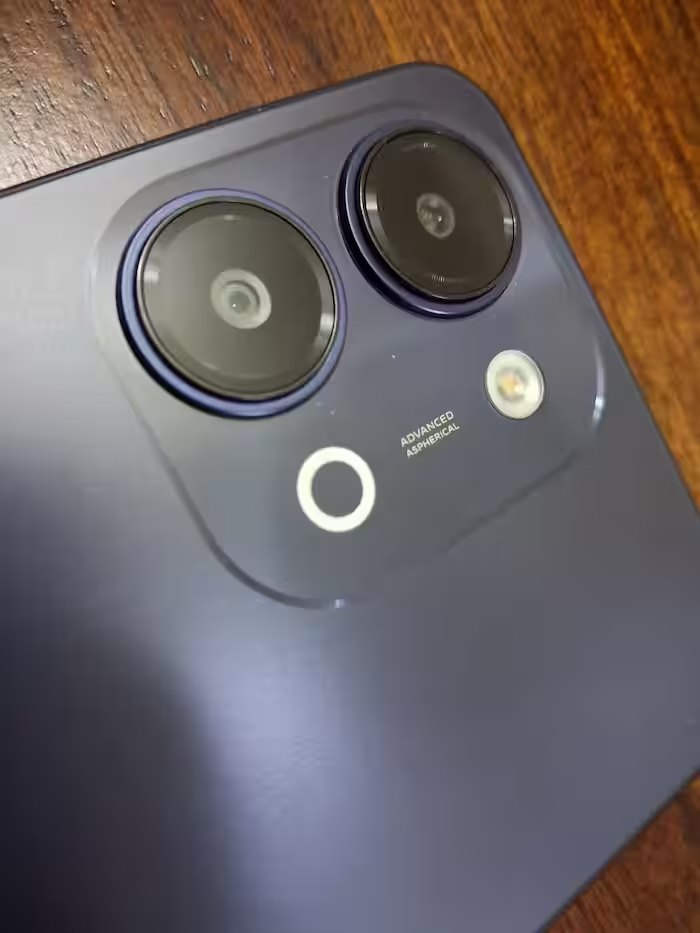
The camera module is fairly understated and doesn’t dominate the back panel. It’s a neat squarish island placed in the top-left corner, housing two camera cutouts, an LED flash and a ring light. The design feels clean and modern without trying too hard.
The phone doesn’t feel overly bulky despite packing a large 6,500mAh battery. At 209g, it has a bit of heft but the weight is distributed well and it is comfortable to hold even while using for extended periods. The slim 8.39mm profile also helps.
Vivo has also focused on durability. The T5 Lite comes with an IP65 rating for dust and water resistance,military-grade durability, triple anti-drop protection, and SGS certification. While we didn’t put these claims to the test, it’s reassuring to know the phone is built to handle the occasional bumps and splashes that come with daily life.
Overall, we think Vivo has done a good job with the design. It looks stylish, feels comfortable in the hand and doesn’t let the large battery make it feel bulky.
Display
The Vivo T5 Lite 44W 5G comes with a 6.74-inch HD+ LCD display that supports up to a 120Hz refresh rate. After using the phone as a primary device for a week, we can say that it holds up fairly well in day-to-day use even though specs may not look to appealing on paper.
The colours are decent and pleasant enough for watching YouTube videos, browsing social media, or just going about your daily tasks. It’s a good LCD screen that gets the job done without any major complaints.
Thanks to the 120Hz refresh rate, scrolling through apps and the UI feels fluid and the display remains responsive throughout our time with the phone. We didn’t run into any touch-related issues either. The screen also stays readable outdoors with its up to 1,200 nits of High Brightness Mode (HBM). You may struggle under bright sunlight but it’s no dealbreaker.
The bezels are quite noticeable especially the thick chin at the bottom, which makes the phone look a little dated. The waterdrop notch also feels old-school, although it’s something you eventually get used to.
Overall, Vivo has done a decent job here. The display is smooth, responsive, bright enough for outdoor use and perfectly good for everyday entertainment and regular use.
Hardware and Performance
Vivo T5 Lite 44W 5G packs the MediaTek Dimensity 6300 5G chipset paired with up to 6GB of LPDDR4X RAM and up to 256GB of UFS 2.2 storage. Now, this isn’t built for being the performance powerhouse but for regular day-to-day use, it gets the basics right.
In everyday use, the phone feels reliable. Whether it was switching between apps, browsing the web, scrolling through social media, or streaming content, the T5 Lite handles most tasks without giving much to complain about.
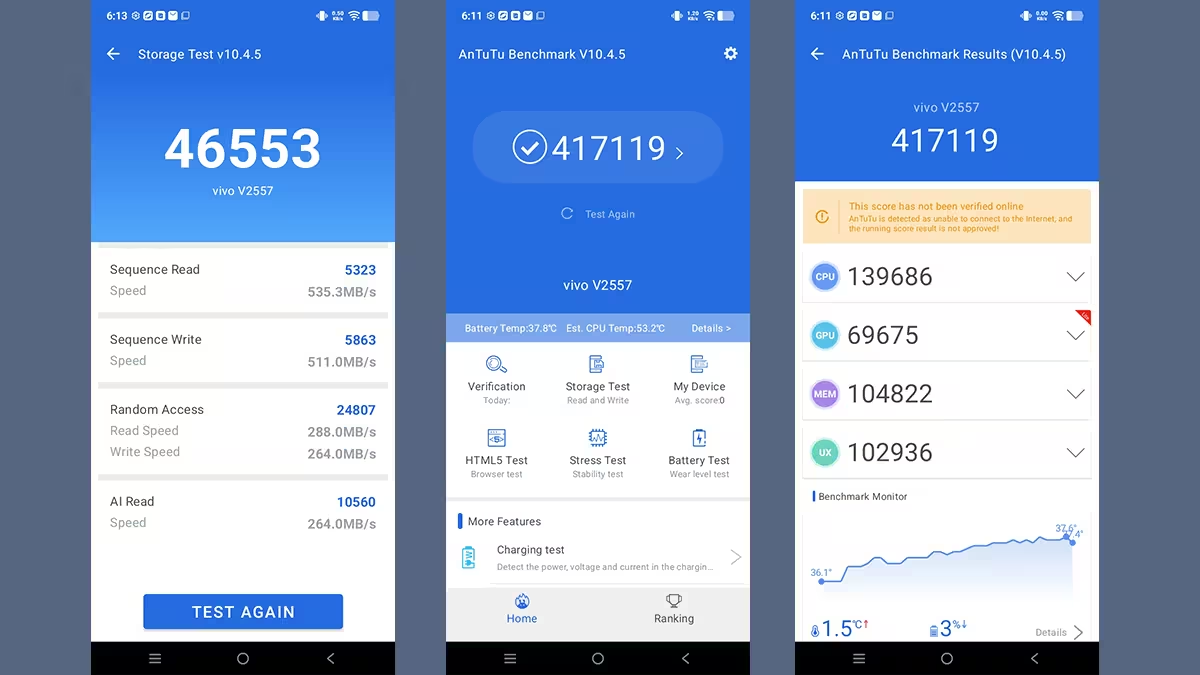
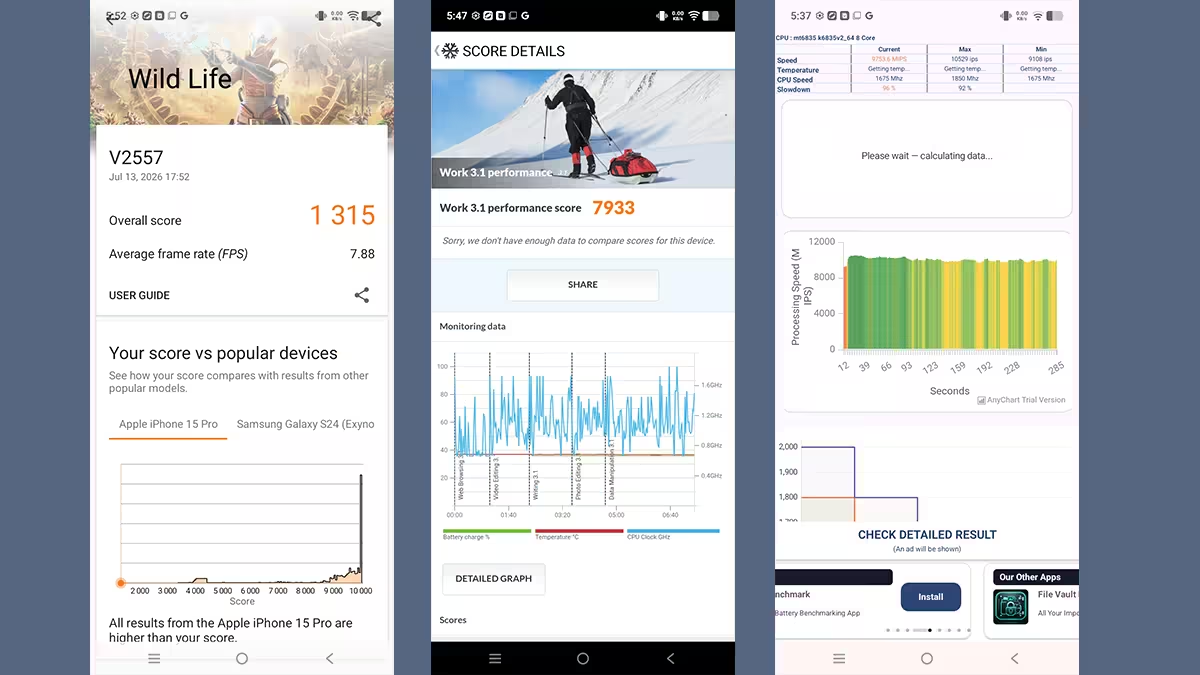
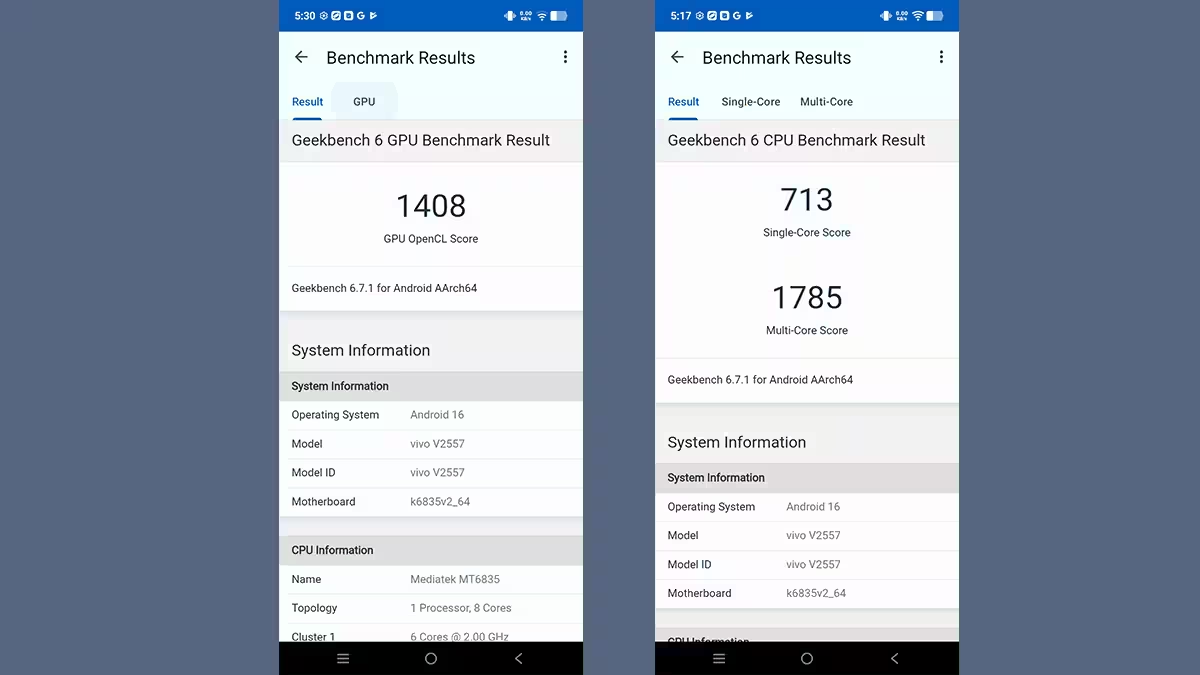
Benchmark scores were also fairly decent for the segment, which is in line with what I experienced during testing. The phone offers enough performance for casual users and should be more than capable of handling everyday workloads.
However, it’s best to keep your expectations in check when it comes to gaming. Casual titles like Subway Surfers, Candy Crush, or BGMI on lower graphics settings should run fine, but this isn’t a phone built for heavy gaming. Demanding games will require lower settings to maintain smooth performance and there is also an Ultra Gaming Mode to enhance the overall gaming experience.
On the software side, the phone runs Android 16 with Vivo’s Origin OS 6.0 on top. The interface feels smooth and so is navigating through menus and apps. The phone comes with a lot of unnecessary pre-loaded apps, which means you will have to spend some time on initial cleanup.
The Vivo T5 Lite 44W 5G delivers the kind of performance you’d expect from a budget 5G smartphone. It handles everyday tasks comfortably, performs reasonably well in benchmarks and is best suited for users who want a dependable phone for daily use.
Camera Specs and Performance
The Vivo T5 Lite 44W 5G features a 50MP primary rear camera accompanied by a secondary 0.08MP sensor, while selfies are handled by a 5MP front camera. Looking at the hardware, the camera setup does feel a bit basic especially when compared to some of the competition.
That said, the primary camera is capable of taking good-looking photos in daylight. Images come out with natural-looking colours and we liked that Vivo hasn’t gone overboard with processing. The photos don’t look overly saturated or artificially sharpened, which helps them retain a more natural look.
Vivo T5 Lite 44W 5G Day Light Camera Samples
Vivo T5 Lite 44W 5G Night Camera Samples
However, you’ll notice that details can be a little soft at times if you zoom in. It’s not something that stands out immediately but it’s there if you take a closer look. The camera also struggles once the lighting drops. Indoor shots and low-light photos tend to lose detail with visible noise creeping into the images. Night mode does help to some extent but don’t expect too much of a difference in results.
The 5MP selfie camera is good enough for the occasional selfie or video call in proper lighting but just like the rear camera, image quality takes a noticeable hit in low-light conditions.
Vivo T5 Lite 44W 5G Night Camera Video Sample
Vivo T5 Lite 44W 5G DayLight Camera Video Sample
We tried recording videos and it is decent for basic use. T5 Lite captures usable videos with overall output is good enough for sharing on social media or with friends and family.
All in all, the Vivo T5 Lite 44W 5G offers a fairly expected budget smartphone camera experience. It has a camera for casual users, though photography enthusiasts may find it a bit limiting.
Battery and Charging
Battery life is one area where the Vivo T5 Lite 44W 5G genuinely impresses. It packs a 6,500mAh battery and that means you can easily stretch battery to over a day even with heavy use. We never really had to worry about the battery running out during the day even with all social media browsing, video streaming, calls or just using the phone throughout the day.
Vivo claims up to 48 hours of local video playback, over 80 hours of music playback, more than 20 hours of social media usage and over 54 hours of voice calls. We haven’t tested these claims, but based on our experience, the phone should comfortably last well over a day on a single charge and light users could stretch it close to two days.
Charging is handled by a 44W fast charger. While it’s not the fastest charging speed you’ll find today, it feels like a good balance considering the large battery inside. We were able to get close to 50% from under 10% in around 40 minutes, which is decent for a 6,500mAh battery.
There is also reverse wired charging that allows you to use the phone as a power bank to top up smaller devices in an emergency.
Verdict – Should You Buy Vivo T5 Lite 44W 5G?
The Vivo T5 Lite 44W 5G is a smartphone that focuses on getting the basics right rather than trying to excel in every department. It offers a clean design, a smooth 120Hz display, reliable day-to-dayperformance and a battery life that’s easily one of its biggest highlights. The cameras are decent for daylight photography and producing natural-looking images and the Dimensity 6300 chipsethandles everyday tasks without any issues.
Overall, the Vivo T5 Lite 44W 5G is a well-rounded budget 5G smartphone that delivers where it matters most for everyday users.
If your priorities are long battery life, dependable everyday performance, a comfortable design, and 5G connectivity without spending too much, the Vivo T5 Lite 44W 5G is an easy phone to recommend.
Realme C100x 4G set to launch in India on July 16.
Leaked price suggests ₹14,999 for 4GB+64GB variant, although official confirmation is pending.
Key specs teased include 6.8″ 120Hz display, 8,000mAh battery, Unisoc T7250 chipset, 50MP camera, 45W fast charging and IP64 durability.
Realme C100x 4G to launch in India tomorrow. (Image credit – Realme)
Realme is all set to launch the Realme C100x 4G in India on July 16 at 12:00 PM IST. While the company has already confirmed several key features of the smartphone through official teasers, its pricing has remained under wraps. Now, an exclusive tip has revealed the expected launch price of the handset just a day before its debut.
Realme C100x 4G India Price (Leaked)
According to the latest leak, the Realme C100x 4G is expected to be priced at Rs 14,999 for the 4GB RAM + 64GB storage variant. The price update was shared by famous Indian tipster Sanju Choudhary @saaaanjjjuuu on X today. Interestingly, the tipster also hinted that this could just be “the beginning of 4G smartphone launch in 2026” without elaborating any further.
Exclusive 💫
realme C100x 4G to launch at ₹14,999 for 4/64GB:
Anyhow, Realme is yet to officially confirm the pricing. This means readers are advised to take this information with a pinch of salt until the launch event.
But this is not the first time we are getting an update on the upcoming smartphone’s expected India price. Just a day ago, the smartphone retail box image also made headlines for potentially revealing the price.
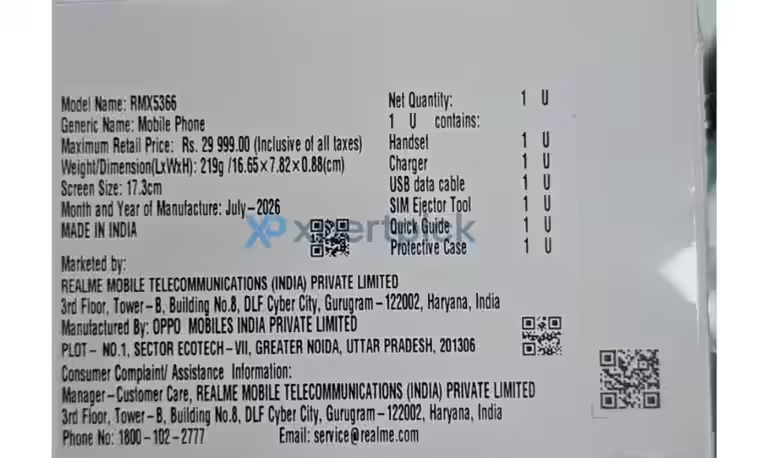
A previous industry leak via Xpertpick report had revealed an image of the retail box and showed the handset with a box price (MRP) of Rs 29,999. However, smartphone brands generally set a higher maximum retail price than the actual selling price and the latest leak suggests the phone will launch at a much more affordable price.
The leaked retail packaging also confirmed the RMX5366 model number. It revealed that the handset features a 17.3cm (6.8-inch) display, weighs 219g, and measures 16.65 x 7.82 x 0.88cm.
The box contents mentioned on the box include the Realme C100x handset, charger, USB data cable, SIM ejector tool, Quick Guide, and a protective case.
Realme C100x 4G – Expected Specifications
Realme C100x 4G teasers on Flipkart. (Image credit – Realme)
Although the Realme C100x is a new smartphone for the Indian market, it has already been launched in a few global markets. This is the reason most of its specifications are known ahead of the India debut.
Meanwhile, Realme has already confirmed several key specifications of the C100x through its Flipkart teasers. The smartphone will feature a 6.8-inch display with a 120Hz refresh rate, a massive 8,000mAh battery, 12GB Dynamic RAM (including physical and virtual RAM), 64GB of onboard storage, and a 50-megapixel primary rear camera.
The Realme C100x is powered by the Unisoc T7250 processor, making it a 4G smartphone. It comes with LPDDR4x RAM and eMMC 5.1 storage, while 45W fast charging support is also included.
For durability, the phone will come with an IP64 rating for dust and splash resistance along with military-grade shock resistance. It will be offered in Golden Coast and Deep Blue Tides colour options. Other features include a side-mounted fingerprint scanner, face unlock, and a 3.5mm headphone jack.