Samsung Galaxy Buds 4 and Buds 4 Pro are expected to debut on February 25.
A leak suggests Buds 4 will be priced at €179 and Buds 4 Pro at €249 with no price hike compared to the predecessor.
A limited-time bundle in France may include a free 25W wireless charging pad with the Black variant.
Samsung Galaxy Buds 3 Pro in the picture for reference. (Image credit – Samsung)
Samsung Galaxy Buds 4 and Galaxy Buds 4 Pro have reportedly surfaced early within the Samsung Members app. These earbuds are widely expected to be introduced on February 25 based on all recent reports. Now, a fresh leak has shed light on their European pricing, colour options and a possible launch offer.
Samsung Galaxy Buds 4 and Buds 4 Pro – Colours and Price Leaks
Leaker Billbil-kun @billbil_kun on X reveals via Dealabs report that both the Galaxy Buds 4 and Buds 4 Pro will be available in Black and White colour options. This will be standard across France and several other European markets. Earlier reports had hinted at an Apricot colour variant for the Buds4 Pro, but this shade does not appear in the latest data. If it exists, it may be limited to Samsung’s official store or specific regions rather than being widely available.
This leaker has a strong track record of revealing accurate pricing and launch information ahead of time, so we believe we can somewhat trust the word.
In terms of pricing, Samsung is reportedly sticking to the same price points as the previous Galaxy Buds 3 series. Despite expectations of improvements in audio quality and features, there is said to be no price increase this generation.
As per the leak, the Galaxy Buds 4 will be priced at €179 in Europe, while the Galaxy Buds4 Pro are expected to launch at €249.
Samsung may also introduce a limited-time launch bundle, at least in France.
The leak suggests that customers purchasing the Black colour variant of either the Galaxy Buds4 or Buds4 Pro could receive a 25W wireless charging pad at no additional cost. While this offer is currently mentioned only for France, it could potentially be extended to other European markets, though confirmation is still awaited.
FAQs
Q1. When are the Samsung Galaxy Buds 4 and Buds 4 Pro expected to launch?
Answer. They are widely expected to be introduced on February 25, alongside other Samsung devices.
Q2. What are the leaked prices of the Galaxy Buds 4 and Buds 4 Pro in Europe?
Answer. The Galaxy Buds 4 are tipped at €179, while the Galaxy Buds 4 Pro are expected at €249.
Q3. What colour options will be available for Samsung Galaxy Buds 4 and Buds 4 Pro?
Answer. Both models will come in Black and White, with Apricot possibly limited to select regions or Samsung’s official store.
Most Galaxy S26 models are expected to cost more than the S25 series due to rising RAM and storage costs, except the Galaxy S26 Ultra.
Samsung is eliminating the 128GB option, making 256GB the base storage. Prices in Sweden show increases of €95–€230 across standard and Plus models, while the Ultra’s 1TB variant remains unchanged.
The series is expected to launch on February 25, 2026 with sales starting March 11.
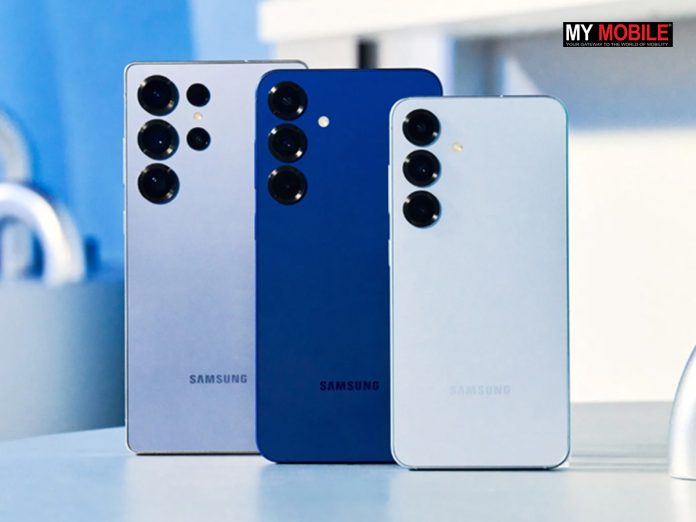
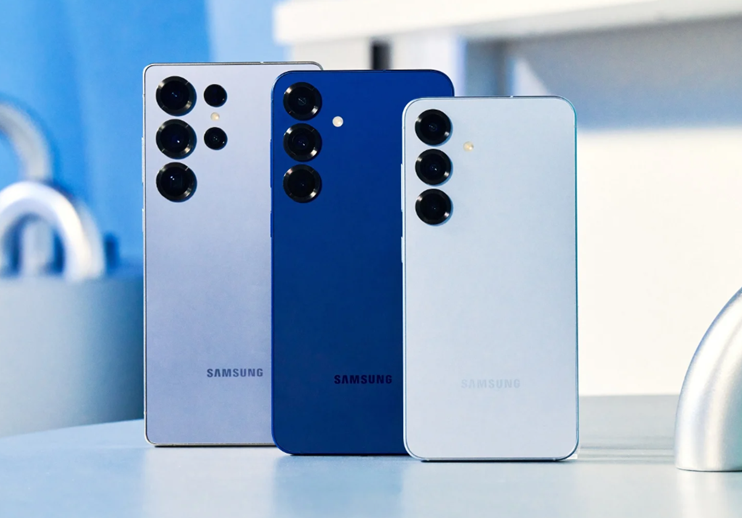
Samsung Galaxy S25 Series models in the picture for reference. (Image credit – Samsung)
Samsung is expected to unveil the Galaxy S26 series toward the end of next month. Now, a new pricing leak suggests that most Galaxy S26 models will be more expensive than their Galaxy S25 counterparts. Here’s what we know.
Galaxy S26 Series Price Leak
According to well-known tipster Roland Quandt, citing information shared by Winfuture, the upcoming Galaxy S26 series models will cost more than their predecessors. The broader price hikes across the series are believed to be driven by rising component costs, particularly for RAM and flash storage. This should be a surprise since the trend has been widely speculated to affect smartphone manufacturing across brands.
The tipster also reveals that the Galaxy S26 Ultra is the only model expected to break this trend. Its 256GB and 512GB variants are tipped to launch at lower prices than the Galaxy S25 Ultra, while the top-end 1TB version is said to retain the same price as last year’s model.
Tipster Roland Quandt’s recent post on Bluesky App.
Galaxy S26 Storage and Pricing Details
The Winfuture report, based on dealer listings from Sweden, indicates that Samsung is eliminating the 128GB storage option entirely. As a result, 256GB will become the base storage configuration across the Galaxy S26 lineup.
In Sweden, the Galaxy S26 with 256GB storage is listed at 11,990 SEK (€1,135), up from 10,990 SEK (€1,040) for the Galaxy S25 with the same storage. This marks a year-on-year increase of roughly €95 and makes the entry-level S26 around €200 more expensive than the base S25. The 512GB Galaxy S26 is priced at 13,990 SEK (€1,325), around €190 more than the 256GB version.
The Galaxy S26+ shows a mixed pricing strategy. Its 256GB variant is listed at 14,490 SEK (€1,372), matching the price of the Galaxy S25+ with identical storage. However, the 512GB model jumps to 16,990 SEK (€1,609), which is more than €230 higher than last year, highlighting the rising cost of storage upgrades. Leaks suggest Samsung will announce the Galaxy S26 series on February 25, 2026, with sales starting March 11.
Galaxy S26 Ultra Pricing Shift
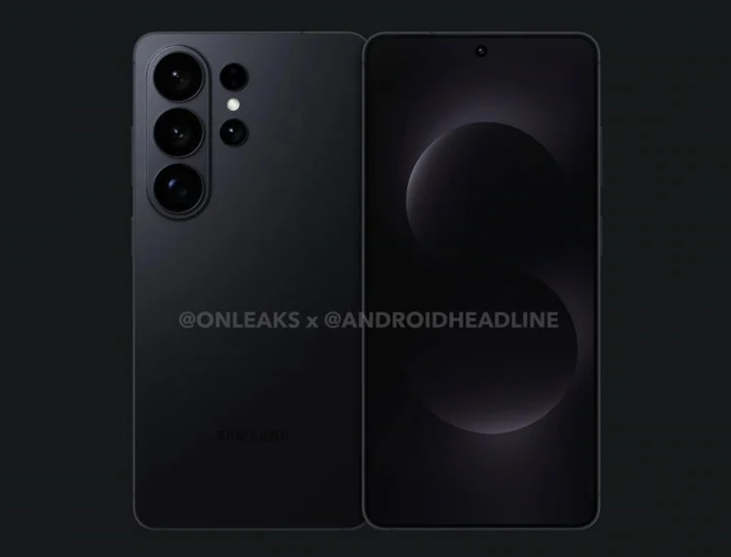
Previously leaked CAD render of the Samsung Galaxy S26 Ultra. (Credit – OnLeaks & AndroidHeadlines)
The biggest surprise comes with the Galaxy S26 Ultra. Samsung appears to be reducing the starting price of its flagship to remain competitive. The 256GB Galaxy S26 Ultra is listed at 16,990 SEK (€1,609), down from 17,990 SEK (€1,703) for the Galaxy S25 Ultra. The 512GB variant also sees a slight reduction to 18,990 SEK (€1,798).
Meanwhile, the 1TB model remains unchanged at 22,490 SEK (€2,129), suggesting Samsung may be absorbing some of the increased memory costs at the premium end.
Samsung is also expected to discontinue its long-standing pre-order promotions that offered free storage upgrades. With memory prices remaining high, these offers are likely being phased out to give the company greater pricing flexibility.
Galaxy S26 Series – Expected Specifications and Launch Timeline
Aside from pricing, leaks point to relatively minor hardware changes. The Galaxy S26 is tipped to feature a 6.3-inch M14 AMOLED display with an adaptive 120Hz refresh rate, while the Galaxy S26+ could offer a larger 6.7-inch 2K AMOLED panel.
Both models are expected to retain IP68 dust and water resistance, Gorilla Glass Victus 2 protection, Qi2 wireless charging, and camera setups similar to the Galaxy S25 series. Depending on the market, the phones may be powered by either the Exynos 2600 or the Snapdragon 8 Elite Gen 5 chipset.
Recent reports suggest Samsung could officially announce the Galaxy S26 series on February 25, 2026. Pre-orders are expected to open on February 26, with sales likely beginning on March 11.
FAQs
Q1. How will the Galaxy S26 series pricing compare to the Galaxy S25 lineup?
Answer. Most Galaxy S26 models are expected to be more expensive due to rising RAM and storage costs, except the Galaxy S26 Ultra which will be cheaper in 256GB and 512GB variants.
Q2. What storage options will be available in the Galaxy S26 series?
Answer. Samsung is removing the 128GB option, making 256GB the base storage across all Galaxy S26 models.
Q3. When is the Galaxy S26 series expected to launch?
Answer. Leaks suggest Samsung will announce the Galaxy S26 series on February 25, 2026, with sales starting March 11.
India plans to achieve strong chip design and manufacturing by 2029, targeting 3nm production by 2032 and 2nm by the early 2030s under Semicon 2.0.
The DLI 2.0 scheme will expand support to 50 fabless companies, focusing on six chip categories.
Facilities at SCL Mohali and Tata’s Dholera fab will support mature and advanced nodes with the goal of positioning India among the world’s top four semiconductor nations by 2035.
Mr Ashwini Vaishnaw, Minister for Railways, Information & Broadcasting, Electronics & Information Technology, Government of India. (Image credit – Unknown)
India is setting its sights on advanced semiconductor manufacturing with plans to produce 3-nanometre and eventually 2-nanometre chips by the early 2030s. Union IT Minister Ashwini Vaishnaw outlined the vision while interacting with startups supported under the Design Linked Incentive (DLI) scheme on January 27, calling it the next phase of the country’s semiconductor roadmap.
Speaking about India’s near-term progress, Vaishnaw said the country would achieve strong chip design and manufacturing capabilities by the end of this decade. “As we go into 2029, we will have a major capability of manufacturing and designing the chips which are required practically in 70–75 per cent of all applications in our country. The next level should come by 2032… to reach 3nm chips manufacturing,” he said.
#WATCH | Delhi | Union Minister for Electronics & Information Technology Ashwini Vaishnaw interacts with 23 semiconductor chip design companies, approved under the Design Linked Incentive (DLI) Scheme of the Semicon India Programme pic.twitter.com/RgpcmpI2pT
Vaishnaw noted that the journey towards 3nm and 2nm manufacturing would form a core pillar of the upcoming Semicon 2.0 programme. The roadmap, he explained, is being shaped by studying how countries such as South Korea, Taiwan and Japan successfully built their semiconductor ecosystems over time.
Addressing startups at the DLI 1.0 showcase, the minister said the government’s initial strategy of providing access to EDA tools, IP libraries and multi-project wafer (MPW) support had delivered tangible results. “So many of you (startups) have taped out and validated your products. Many of you have found markets,” he said.
India currently has 24 startups supported under the DLI scheme, and the next phase aims to scale this number to at least 50 fabless semiconductor companies.
(Photo by Vishnu Mohanan on Unsplash)
Focus Areas Under DLI 2.0
Under DLI 2.0, which will be integrated into Semicon 2.0, government support will be concentrated around six key chip categories – compute, RF, networking, power management, sensors and memory.
Highlighting the strategic importance of these segments, Vaishnaw said, “With these six, we can build any major system — whether it is defence, missiles, railways or automobiles.”
He also shared details on manufacturing infrastructure. Tape-out facilities for mature nodes such as 180nm will be anchored at SCL Mohali, while advanced nodes down to 28nm will be supported through the upcoming Tata semiconductor fab in Dholera.
Startup Feedback and Ecosystem Needs
Vaishnaw said feedback from startups participating in DLI 1.0 would play a direct role in shaping the next iteration of the scheme, including decisions on which areas should receive continued or expanded support.
During the event, founders highlighted several challenges, including the need for stronger backing for analog and RF intellectual property, preferential market access in strategic sectors, and financial support to bridge costs until production volumes scale up.
Startups showcased chips already in tape-out or testing stages across AI, RF and broadband applications. Trivandrum-based Netra Semiconductor said its A2000 AI application processor taped out on TSMC’s 12nm node in October and is currently undergoing silicon testing, while its R1000 AI-MCU is expected to tape out next month.
RF IC startup Fermionix pointed to demand from defence and satellite communication customers for its X-band radar chips and sought government assistance to expand into Ku- and Ka-band offerings. InCore Semiconductor, founded by members of the IIT-Madras SHAKTI processor team, reiterated its focus on RISC-V-based solutions and called for preferential market access in critical sectors.
Long-Term Vision
Vaishnaw also announced that the government will introduce Deep Tech Awards in 2026, covering sectors such as semiconductors, AI, space and biotechnology.
Summing up the long-term ambition, he said, “With Semicon 2.0, we will have a major part of the programme dedicated to reaching the 3nm and 2nm goal.By 2035, we should be among the top four semiconductor nations in the world.”
FAQs
Q1. What semiconductor manufacturing targets has India set for the early 2030s?
Answer. India aims to produce 3nm chips by 2032 and eventually 2nm chips by the early 2030s.
Q2. What is Semicon 2.0 and its focus?
Answer. Semicon 2.0 will anchor India’s advanced chip ambitions, supporting six key categories: compute, RF, networking, power management, sensors, and memory.
Q3. How is the government supporting startups under the DLI scheme?
Answer. Startups receive access to EDA tools, IP libraries, MPW support, and will be scaled to at least 50 fabless semiconductor companies under DLI 2.0.
Apple is evaluating a variable aperture system for the iPhone 18 Pro, now in late-stage engineering samples.
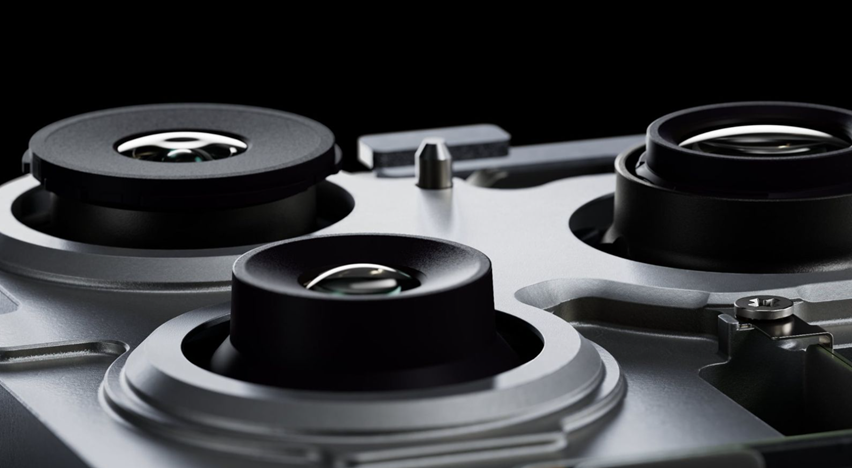
Variable aperture could improve exposure control and video recording, while a teleconverter is also under consideration to extend zoom range.
Apple is testing optical performance and feasibility with final adoption depending on quality standards.
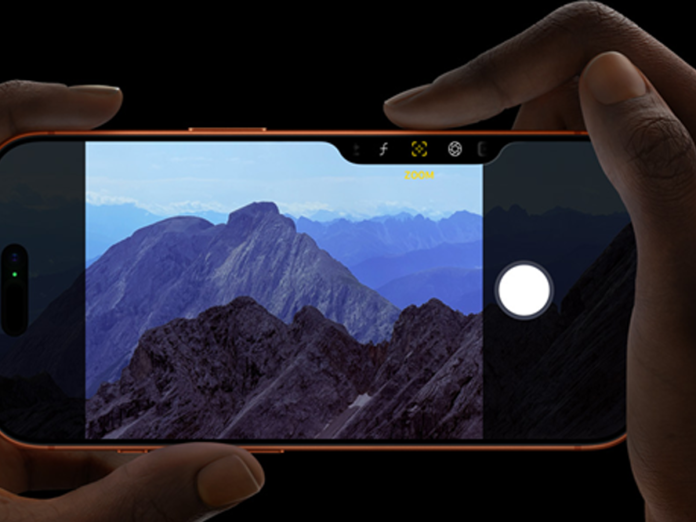
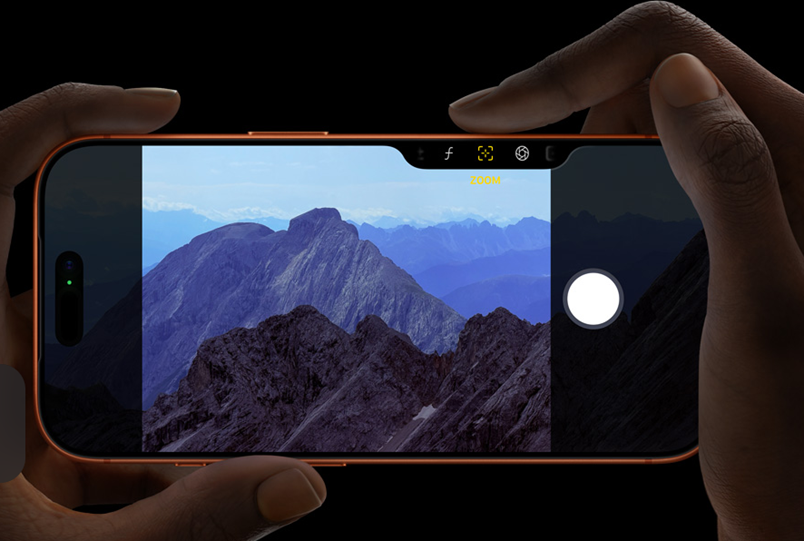
iPhone 17 Pro camera screen. (Image credit – Apple)
Apple’s upcoming iPhone 18 Pro models could introduce a major camera upgrade with a new variable aperture system now reportedly reaching the sampling phase. A Chinese tipster claims the feature has entered late-stage engineering tests, signaling that Apple is actively evaluating it for its next flagship lineup.
According to a post on Weibo by tipster named Smart Pikachu, the variable aperture camera has moved into late-stage engineering samples. The leaker also noted that a teleconverter is currently “under evaluation” for the iPhone 18 Pro series.
Tipster Smart Pikachu’s Weibo post. (Translated via Google Translate)
iPhone 18 Pro Variable Aperture – What To Expect?
If implemented, a variable aperture camera on the iPhone 18 Pro could significantly enhance exposure control, especially for video recording. By optically limiting incoming light, the system could help preserve natural motion blur and maintain smoother exposure levels when shooting in bright environments.
Apple supply chain analyst Ming-Chi Kuo previously stated in December 2024 that both iPhone 18 Pro models would feature a variable aperture main rear camera, marking a first for the iPhone lineup.
A follow-up report from October 2025 further suggested that Apple was moving ahead with these plans and had begun discussions with component suppliers to bring the technology to future iPhones.
What iPhone 18 Pro with Teleconverter Imply?
The mention of a teleconverter is a new and unexpected detail. In traditional DSLR systems, teleconverters are optical attachments that increase a lens’s effective focal length to extend zoom range, though they typically reduce light intake. How such a concept would translate to a smartphone camera remains unclear.
If Apple were to adopt a teleconverter-style optical setup, it would likely reduce the amount of light reaching the sensor. In that scenario, pairing it with a variable aperture system could give Apple more flexibility in managing exposure alongside its computational photography techniques.
At this point in the product development cycle, the overall design of the iPhone 18 Pro lineup is likely already finalised. However, Apple typically continues to test and refine individual components such as camera modules, during this phase. The company may be conducting parallel evaluations of multiple features without committing them to mass production.
The late-stage engineering samples are likely being used to assess optical performance, reliability, and manufacturing feasibility. If the camera system fails to meet Apple’s quality standards or proves difficult to scale, the company could still decide to drop the feature. Variable aperture technology was previously rumored for at least one iPhone 17 model but never made it to the final product.
Apple is expected to launch the iPhone 18 Pro and iPhone 18 Pro Max in September 2026.
FAQs
Q1. What new camera feature is Apple testing for the iPhone 18 Pro?
Answer. Apple is testing a variable aperture system, now in late-stage engineering samples.
Q2. What is the benefit of a variable aperture camera?
Answer. It improves exposure control, especially for video recording in bright environments.
Q3. What other camera upgrade is under evaluation for iPhone 18 Pro series?
Answer. Apple is considering a teleconverter to extend zoom range, though details remain
Realme P4 Power 5G debuts in India with prices starting at Rs. 25,999.
Sales will start from February 5 via Flipkart.
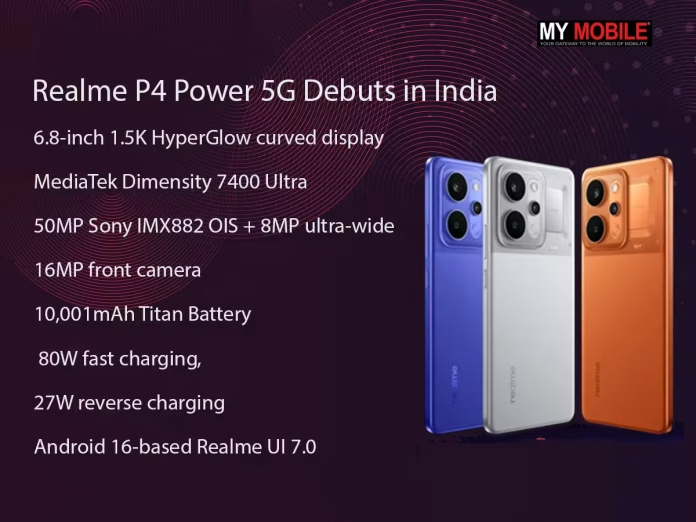
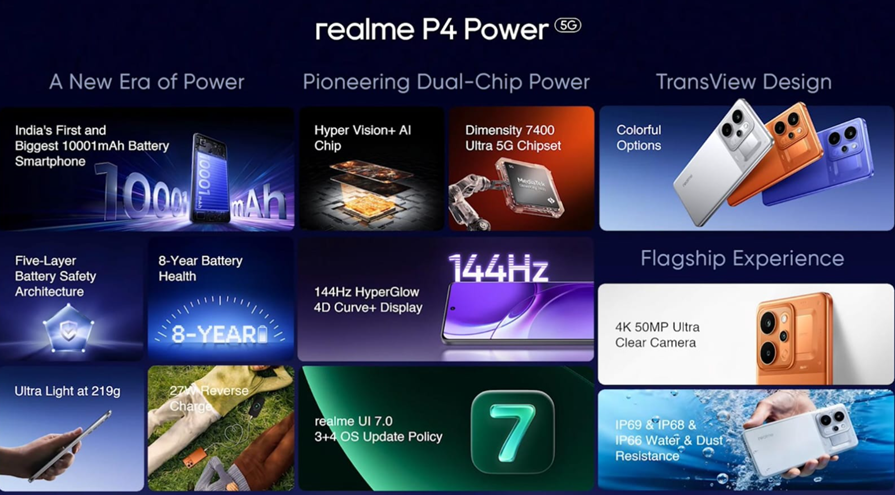
It sports a 6.8-inch 1.5K 144Hz HyperGlow display, Dimensity 7400 Ultra chipset, 50MP + 8MP rear, 16MP front camera and record-breaking 10,001mAh Titan Battery with 80W fast charging, 27W reverse charging.
Realme has officially launched the Realme P4 Power 5G in India. What makes this announcement particularly interesting is that this smartphone comes with the largest battery ever seen on a commercially available smartphone. Yes, we are getting a 10,001mAh Titan Battery with Realme P4 Power.
The phone is clearly designed to deliver multi-day usage for gaming, video streaming, and social media. We have to appreciate Realme for quickly moving from showcasing 10,000mAh and 15,000mAh concept smartphones last year to ensuring their retail availability this soon. Here’s more on the phone.
Francis Wong, CMO, realme India said, “With the launch of the realme P4 Power 5G – India’s first & biggest 10001 mAh battery smartphone, we aren’t just following a trend – we are dictating the new industry standard for endurance. This is a no-compromise device that pairs segment-leading performance with a bold, functional aesthetic. Combined with the realme Buds Clip, realme is empowering the modern user with an intelligent style-driven ecosystem. Through Flipkart’s wide customer base, we are scaling this breakthrough across the nation. The realme P4 Power 5G represents true freedom—providing our users with the uninterrupted power to outpace the ordinary and stay connected entirely on their own terms.”
Commenting on the launch, Kanchan Mishra, Vice President, Mobiles, Flipkart said, “Flipkart is excited to partner with realme to launch the P4 Power 5G in India. As one of India’s first and biggest 10,001mAh battery smartphones, the device represents a meaningful step forward in addressing consumer demand for long-lasting, dependable power. This partnership brings together realme’s innovation-led approach and Flipkart’s commitment to delivering differentiated, value-driven smartphones to customers across the country. Through this launch, Flipkart continues to strengthen its smartphone portfolio with products designed for today’s always-connected users, while ensuring a seamless and trusted shopping experience nationwide.”
Realme P4 Power 5G – Price, Sale date and Colours in India
The Realme P4 Power 5G price in India starts at Rs. 25,999 for the 8GB RAM and 128GB storage variant. The 8GB RAM + 256GB storage model is priced at Rs. 27,999, while the top-end 12GB RAM + 256GB storage version costs Rs. 30,999. Buyers can also avail of a bank discount of up to Rs. 2,000.
Sales of the smartphone will begin on February 5 via Flipkart.
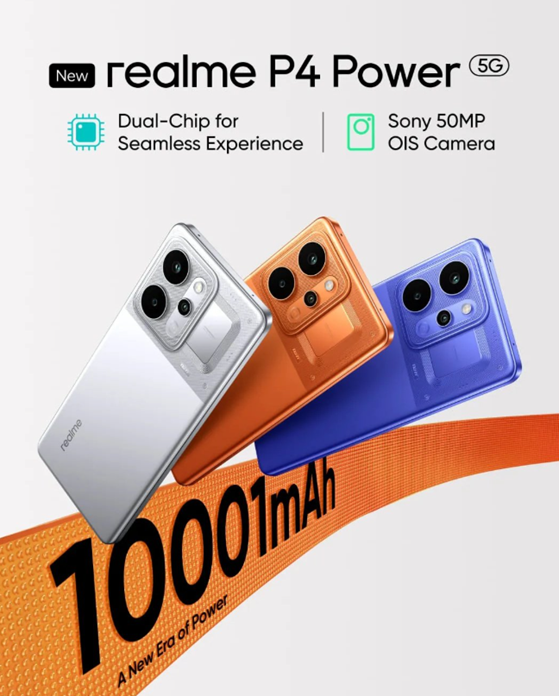
The handset will be available in three colour options, which include TransSilver, TransOrange, and TransBlue. Each colour variant features Realme’s TransView design language.
Realme P4 Power 5G – Key Features
The Realme P4 Power 5G features a large 6.8-inch 1.5K 4D Curve+ HyperGlow display with a refresh rate of up to 144Hz. The panel supports HDR10+ content, offers up to 6,500 nits of peak brightness, and is capable of displaying over one billion colours.
For durability, Realme has equipped the phone with IP66, IP68, and IP69 ratings for dust and water resistance. The device also includes ArmorShell Protection to enhance overall toughness.
Powering the Realme P4 Power 5G is the MediaTek Dimensity 7400 Ultra chipset, manufactured using a 4nm process. According to Realme, the processor delivers improved energy efficiency compared to previous generations.
The smartphone also integrates a HyperVision+ AI chip, which is aimed at improving visual output and ensuring smoother frame rates during gaming and video playback. To manage heat, Realme has added a large AirFlow vapour chamber cooling system.
On the software front, the device runs Android 16-based Realme UI 7.0. Realme has confirmed that the phone will receive three years of operating system updates and four years of security patches.
The Realme P4 Power 5G comes with a dual rear camera setup. It is led by a 50-megapixel Sony IMX882 primary sensor with optical image stabilisation, accompanied by an 8-megapixel ultra-wide camera.
On the front, the phone houses a 16-megapixel selfie camera. Both the rear and front cameras support video recording, with the device capable of shooting up to 4K video at 30fps.
The key highlight of the Realme P4 Power 5G is its 10,001mAh silicon carbon Titan Battery. According to the company, the battery can deliver over 32 hours of video playback, nearly 933 hours of standby time, and extended gaming and music playback on a single charge.
The smartphone supports 80W wired fast charging and also offers 27W wired reverse charging. Despite the massive battery capacity, the device measures 9.08mm in thickness and weighs around 219 grams.
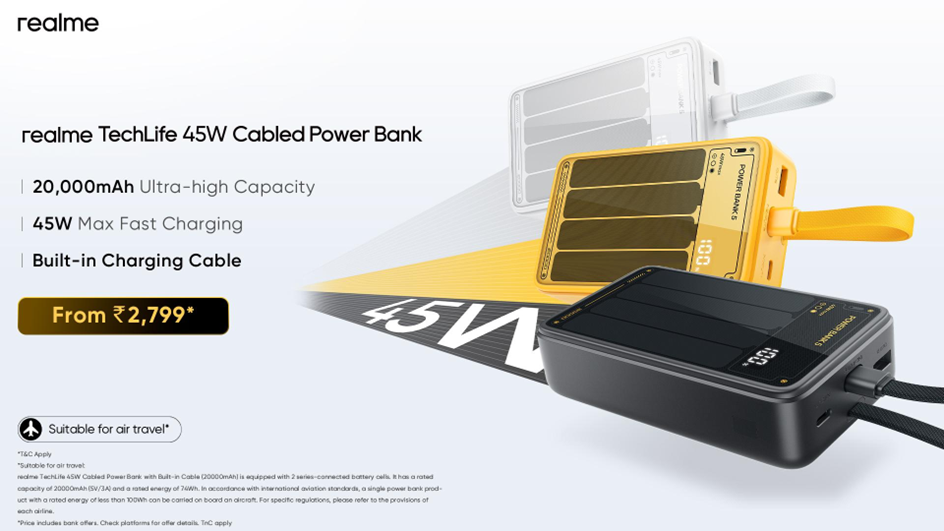
realme TechLife 45W Cabled Power Bank
realme also announced the realme TechLife 45W Cabled Power Bank (20000mAh) alongside the realme P4 Power 5G and realme Buds Clip.
It supports 45W fast charging with three output ports for simultaneous charging and a low-current mode for smaller digital accessories.
The power bank features a 3D transparent shell design paired with a multi-mode stealth display, combining bold aesthetics with functional power status visibility.
Compatible with mainstream digital devices, it will be available in Black, White and Yellow variants, priced at INR 2,799, coming soon in March across Flipkart, Amazon, offline stores and realme’s official website.
Price and Availability
As the most powerful P series device ever, the realme P4 Power 5G brings a significant leap in battery innovation, performance and design, reinforcing P series’ commitment to delivering strong performance and exceptional value for young users.
The realme P4 Power 5G will be available in three color options starting 5th February from 12 noon onwards, priced at INR 23,999 through realme official store and mainline channels.
Alongside this, the realme Buds Clip will be available in Gold and Grey color options starting 5th February from 12 noon onwards, priced at INR 5,499.
realme Buds Clip
Expanding its audio portfolio, realme introduces the realme Buds Clip, the brand’s first-ever clip-style true wireless earphones, positioned as the most stylish everyday earwear for young, always-on users.
Designed to follow the natural shape of the human auricle, realme Buds Clip delivers a light, breathable, and pressure-free fit that stays comfortable through long hours of use.
Featuring a titanium-fit memory metal structure, a feather-light 5.3g build per earbud, and a clean minimalist aesthetic with frosted texture craftsmanship, realme Buds Clip seamlessly blends comfort-first design with modern lifestyle fashion.
realme Buds Clip packs an 11mm dual-driver system enhanced by the NextBass algorithm for fuller sound, deeper bass, and clear vocals across music, videos, and calls.
Directional Sound-Leap Technology helps focus audio toward the ear to reduce sound leakage, while 3D Spatial Audio adds depth for a more engaging listening experience.
Smart features such as AI ENC call noise cancellation, AI Voice Assistant powered by Gemini, Dual-Device Connection 2.0, 45ms low latency mode, intuitive tap controls, offline location finding, IP55 dust and water resistance, and up to 36 hours of total battery life make realme Buds Clip a versatile, intelligent companion built to keep up with everyday life.
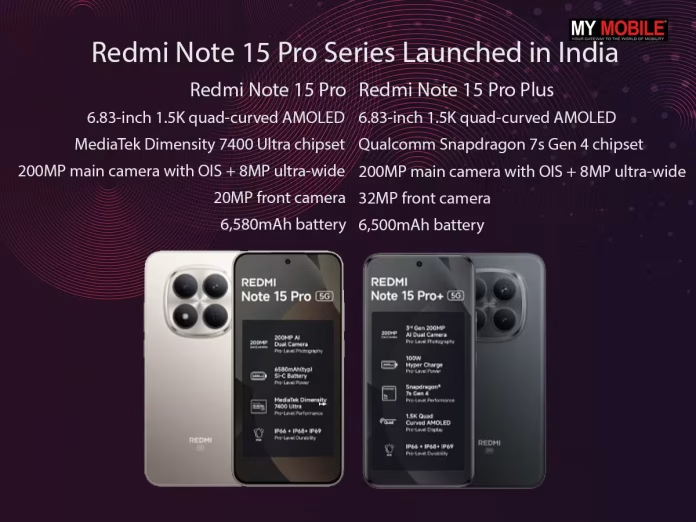
Redmi Note 15 Pro and Pro Plus launched in India, priced at Rs. 37,999 and Rs. 29,999 respectively.
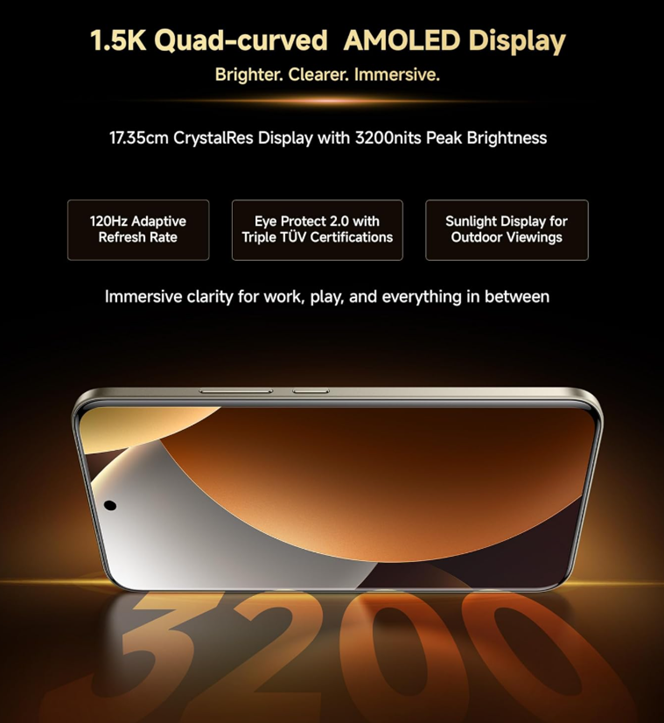
Both models feature a flat frame, glass or leather-like finish, IP66–IP69K durability ratings, Gorilla Glass Victus 2 protection, and a 6.83-inch 1.5K quad-curved AMOLED display with 120Hz refresh rate and 3,200 nits brightness.
The Pro Plus uses Snapdragon 7s Gen 4, while the Pro runs on Dimensity 7400 Ultra.
After introducing the Redmi Note 15 at the beginning of this year, the company has now expanded the lineup with the Redmi Note 15 Pro and Redmi Note 15 Pro Plus. The new Pro models build on the foundation of the standard Note 15, bringing noticeable improvements in design, camera hardware, and overall performance. Here’s more on both the models.
Redmi Note 15 Pro Series – Price and Availability in India
The Redmi Note 15 Pro Plus 5G is priced in India starting at Rs. 37,999 for the base variant with 8GB RAM and 256GB internal storage. It is available in Coffee Mocha, Mirage Blue, and Carbon Black colour options.
The Redmi Note 15 Pro 5G starts at PLN 29,999 for the 8GB + 128GB configuration. The phone is offered in Silver Ash, Mirage Blue, and Carbon Black finishes.
Xiaomi is also offering bank discounts of up to Rs. 3,000 on HDFC Bank, SBI, and ICICI credit card transactions. With these offers applied, the effective launch prices of the Redmi Note 15 Pro and Redmi Note 15 Pro Plus 5G come down to Rs. 26,999 and Rs. 34,999, respectively.
Redmi Note 15 Pro Series – Design and Display
The Redmi Note 15 Pro and Note 15 Pro Plus feature a flat frame design paired with a refreshed rear panel. While the squircle-shaped camera module remains similar to the one seen on the standard Note 15, the Pro models arrive in new colour options.
Buyers can choose between a glass back or a textured, leather-like finish on both devices.
Xiaomi has also focused on durability, equipping the Redmi Note 15 Pro series with IP66, IP68, IP69, and IP69K ratings for dust and water resistance.
On the front, both smartphones are protected by Gorilla Glass Victus 2. They sport an identical 6.83-inch 1.5K quad-curved AMOLED display with a 120Hz refresh rate and a peak brightness of up to 3,200 nits.
Redmi Note 15 Pro Series – Key Features
Camera upgrades are one of the key highlights of the Pro lineup. While the standard Redmi Note 15 offers a 108-megapixel primary sensor, the Redmi Note 15 Pro and Pro Plus step up to a new 200-megapixel main camera with optical image stabilisation (OIS). Both models support 4K video recording and include an 8-megapixel ultra-wide camera.
There is a difference on the front as well. The Redmi Note 15 Pro is equipped with a 20-megapixel selfie camera, whereas the Note 15 Pro Plus features a higher-resolution 32-megapixel front-facing sensor.
Under the hood, the Redmi Note 15 Pro Plus is powered by Qualcomm’s Snapdragon 7s Gen 4 processor. The Redmi Note 15 Pro, on the other hand, runs on the MediaTek Dimensity 7400 Ultra chipset.
Battery capacity varies slightly between the two models. The Note 15 Pro Plus packs a 6,500mAh battery, while the Note 15 Pro gets a marginally larger 6,580mAh cell. Both smartphones support 100W fast charging.
FAQs
Q1. What models were launched in the Redmi Note 15 Pro series?
Answer. Xiaomi launched the Redmi Note 15 Pro and Redmi Note 15 Pro Plus in India.
Q2. What are the prices of the Redmi Note 15 Pro series phones in India?
Answer. The Note 15 Pro starts at Rs. 29,999, and the Note 15 Pro Plus starts at Rs. 37,999, with discounts bringing them down to Rs. 26,999 and Rs. 34,999.
Q3. What display features do the Redmi Note 15 Pro series models have?
Answer. Both have a 6.83-inch 1.5K quad-curved AMOLED display with 120Hz refresh rate and 3,200 nits brightness.
Q4. What are the camera specifications of Redmi Note 15 Pro series models?
Answer. Both feature a 200MP main camera with OIS, an 8MP ultra-wide, and different selfie cameras: 20MP on the Pro and 32MP on the Pro Plus.
Q5. What processors power the Redmi Note 15 Pro series phones?
The Note 15 Pro Plus uses Snapdragon 7s Gen 4, while the Note 15 Pro runs on MediaTek Dimensity 7400 Ultra.
Vivo Y31d debuts in Cambodia and Vietnam with Glow White and Starlight Grey colour options.
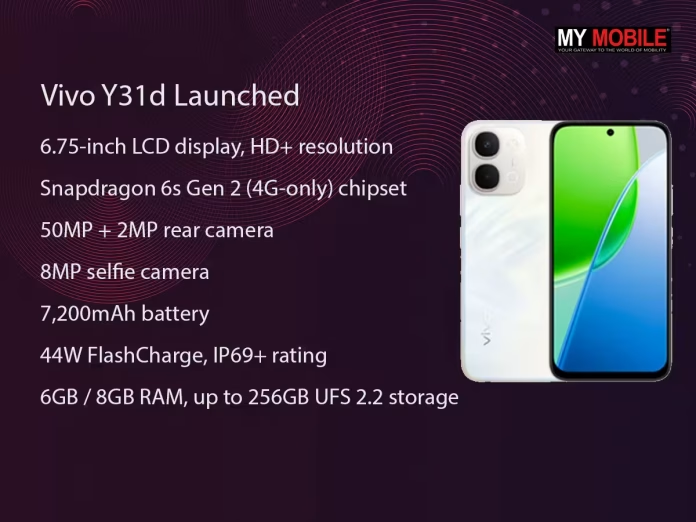
The phone features a 6.75-inch LCD, Snapdragon 6s Gen 2 (4G-only), 6GB/8GB RAM, up to 256GB storage, 50MP + 2MP rear cameras, and a massive 7,200mAh battery with 44W FlashCharge.
As of now, pricing details have not been officially confirmed.
Vivo Y31d launched.
Vivo has quietly expanded its Y-series lineup with the launch of the Vivo Y31d.Pricing details for the Vivo Y31d have not been announced yet. However, the device is already listed on official Vivo websites in Cambodia and Vietnam. Here’s more about the newly launched device.
Vivo Y31d – Design and Colours
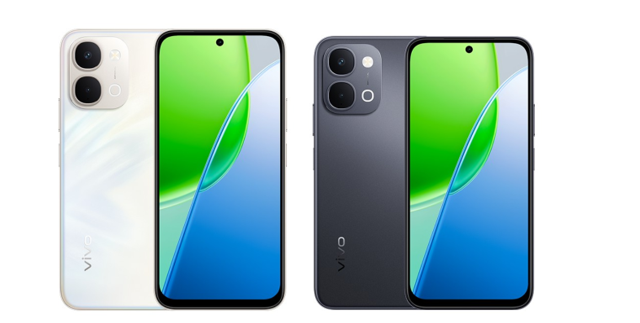
The Vivo Y31d is available in Glow White and Starlight Grey colour options.
Vivo Y31d colour variants.
The phone measures 166.6 x 78.4 x 8.39mm with the White variant slightly thicker at 8.49mm and weighs 219 grams. In terms of build, the vivo Y31d uses a plastic composite body, while the camera island is made of metal.
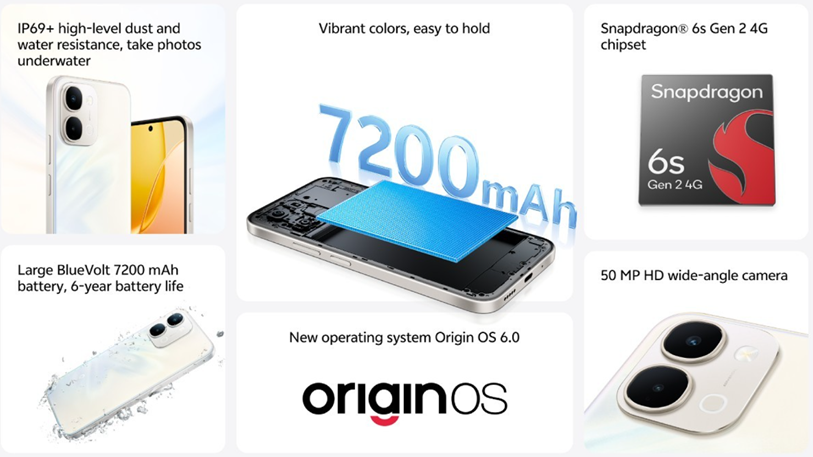
The device carries an “IP69+” rating, offering protection against splashes, rain, high-pressure water jets, and water submersion up to 1.5 metres for as long as 30 minutes.
Vivo Y31d – Key Features
Vivo Y31d features.
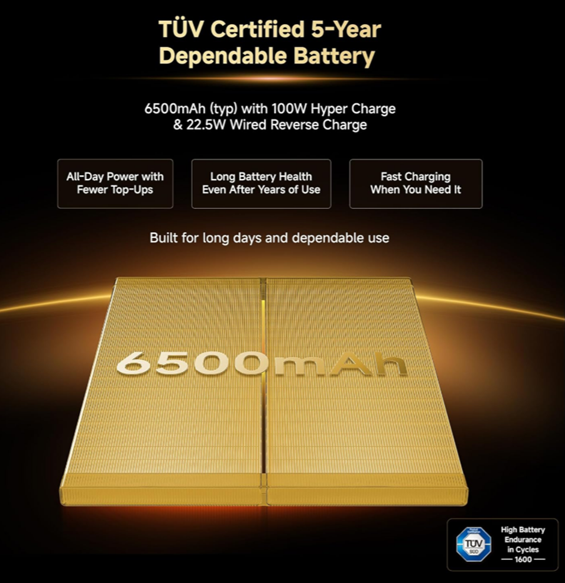
The smartphone shares several similarities with the Vivo Y31 and Vivo Y31 Pro. However, it brings two notable changes. The first is the use of a 4G-only Snapdragon 6s 4G Gen 2 chipset, and the second is a significantly larger 7,200mAh battery, compared to the 6,500mAh units found in the other models. According to Vivo, this capacity can deliver over 13 hours of MOBA gaming, more than 14 hours of navigation, or up to 45 hours of continuous video playback, translating to nearly two days of usage.
Charging is handled by a 44W FlashCharge system, which is claimed to recharge the battery from 1% to 50% in 43 minutes. The phone also includes a Bypass Charging feature for gaming while connected to external power. Vivo says the battery is rated to retain performance for up to six years of use.
The display is a 6.75-inch LCD panel with a resolution of 720 x 1,570 pixels. It supports a 120Hz refresh rate and can reach up to 1,250 nits of peak brightness. A side-mounted fingerprint scanner is included for biometric authentication.
Powering the device is the Snapdragon 6s 4G Gen 2 processor, paired with 6GB or 8GB of LPDDR4X RAM and 128GB or 256GB of UFS 2.2 internal storage.
On the software front, the smartphone runs Android 16 with OriginOS 6 out of the box.
Vivo Y31d camera module.
The rear camera setup consists of a 50MP primary sensor with an f/2.0 lens, accompanied by a 2MP secondary sensor. On the front, the phone features an 8MP selfie camera with an f/2.0 aperture.
Connectivity options include dual nano-SIM support, dual-band Wi-Fi, Bluetooth 5.1 and a USB 2.0 port. The Vivo Y31d is limited to 4G networks and does not offer NFC or a 3.5mm headphone jack. Audio is handled by stereo speakers with a claimed 400% volume boost.
FAQs
Q1. Where has the Vivo Y31d been launched?
Answer. The Vivo Y31d is listed on official Vivo websites in Cambodia and Vietnam.
Q2. What are the colour options available for Vivo Y31d?
Answer. It comes in Glow White and Starlight Grey.
Q3. How durable is the Vivo Y31d?
Answer. It has an IP69+ rating, protecting against splashes, rain, high-pressure jets, and submersion up to 1.5m for 30 minutes.
Q4. What is special about the battery of Vivo Y31d?
Answer. The phone has a 7,200mAh battery with 44W FlashCharge, offering nearly two days of usage.
Q5. What are the camera specifications of Vivo Y31d?
Answer. It features a 50MP main rear camera, a 2MP secondary sensor, and an 8MP front camera.
Motorola introduced Moto G17 and Moto G17 Power in select EMEA markets.
Both phones run Android 15, powered by the Helio G81 Extreme chipset, with up to 8GB RAM, 128GB/256GB storage, 6.72-inch FHD+ LCD display and 50MP main camera, 5MP ultra-wide, 32MP selfie lens.
Moto G17 has a 5,200mAh battery with 18W charging, while Moto G17 Power offers a larger 6,000mAh battery with 30W charging.
Moto G17 Power.
Motorola has expanded its Moto G lineup with the launch of the Moto G17 and Moto G17 Power. These two mid-range smartphones are designed around long battery life, dependable performance, and practical camera hardware for daily use. Here’s everything you need to know about the phone, starting with the price and availability.
Moto G17 and Moto G17 Power – Price and Availability
The Moto G17 and Moto G17 Power are rolling out in select EMEA markets.
In the UK, the Moto G17 starts at £149.99 for the 4GB RAM + 128GB storage variant. In Germany, the 8GB RAM + 128GB version is priced at €199.99.
Motorola has not yet announced pricing details for the Moto G17 Power.
Available colour options include Pantone Bordeaux, Pantone Alaskan Blue and Pantone Evening Blue.
Moto G17.
Moto G17 and Moto G17 Power – Key Specifications
To start with, both the Moto G17 and Moto G17 Power are powered by the MediaTek Helio G81 Extreme chipset. The processor features an octa-core CPU setup with two Cortex-A75 cores clocked up to 2.0GHz and six Cortex-A55 cores running at up to 1.7GHz, paired with an Arm Mali-G52 MC2 GPU clocked at 820MHz.
On the software front, both phones run Android 15 out of the box instead of the newer Android 16.
Motorola offers devices with either 4GB or 8GB of physical RAM. Using the company’s RAM Boost feature, users can extend memory with virtual RAM, gaining up to an additional 8GB or 16GB depending on the variant. Storage options include 128GB and 256GB, along with microSD card support up to 1TB, making the phones suitable for users with large media collections.
The display is a 6.72-inch FHD+ LCD panel with a 20:9 aspect ratio and a standard 60Hz refresh rate. Corning Gorilla Glass 3 protects the screen, which is intended for video streaming, reading, and casual gaming while maintaining everyday durability.
Camera specs are one of the key highlights of the Moto G17 series. On the rear, the phones feature a 50MP Sony LYTIA 600 primary sensor with an f/1.8 aperture, 0.8µm pixel size, and 1.6µm effective pixels after pixel binning. This is paired with a 5MP ultra-wide camera with an f/1.88 aperture and 0.8µm pixels. A third rear sensor is used for ambient light detection and flicker reduction.
Camera software features include HDR, Night Vision, Pro Mode, Panorama, Portrait, Live Filter, Watermark, Timer, and Google Lens integration. Video options cover standard recording, time-lapse, and slow-motion modes.
On the front, the Moto G17 uses a 32MP selfie camera with an f/2.2 aperture and 0.7µm pixel size. It supports HDR, full HD video recording at 30fps, face retouching, leveling tools, and assistive grid options.
Battery capacity is one of the main differences between the two models. The Moto G17 is equipped with a 5,200mAh battery and supports 18W TurboPower charging via USB Type-C. On the other hand, the Moto G17 Power steps things up with a larger 6,000mAh battery and faster 30W TurboPower charging.
Audio features include stereo speakers with Dolby Atmos support, a built-in microphone, and a 3.5mm headphone jack. Connectivity options cover Bluetooth 5.4, Wi-Fi 802.11 a/b/g/n/ac with both 2.4GHz and 5GHz band support, NFC, FM radio, and USB Type-C.
For security, the phones include a fingerprint reader, face unlock, Moto Secure, and ThinkShield protection. Additional software features include Hello UX, Moto gestures, and Google Gemini voice control. Location services support GPS, A-GPS, GLONASS, Galileo, and QZSS. SIM configurations include dual nano SIM or a single SIM paired with a microSD card.
In terms of build, the Moto G17 measures 165.67 x 75.98 x 8.17mm and weighs 189.9g. It carries an IP64 rating for dust resistance and protection against water splashes.
FAQs
Q1. Where are the Moto G17 and Moto G17 Power available?
Answer. They are rolling out in select EMEA markets, including the UK and Germany.
Q2. What is the price of the Moto G17?
Answer. In the UK it starts at £149.99, and in Germany the 8GB version costs €199.99.
Q3. What processor powers the Moto G17 and Moto G17 Power?
Answer. Both phones use the MediaTek Helio G81 Extreme chipset.
Q4. What are the camera specifications of Moto G17 and Moto G17 Power?
Answer. They have a 50MP Sony LYTIA main camera, a 5MP ultra-wide, and a 32MP front camera.
Q5. How do the batteries differ between the Moto G17 and Moto G17 Power?
Answer. The Moto G17 has a 5,200mAh battery with 18W charging, while the Moto G17 Power has a 6,000mAh battery with 30W charging.
Moto G67 launched featuring a 6.78-inch FHD+ AMOLED display, MediaTek Dimensity 6300, up to 24GB RAM, 50MP + 8MP cameras and 5,200mAh battery with 30W charging.
Moto G77 offers a brighter 6.78-inch Extreme AMOLED display, MediaTek Dimensity 6400, up to 12GB RAM, 512GB storage, 108MP main camera, 8MP ultra-wide, 32MP selfie and 5,200mAh battery with 30W charging.
Moto G67 priced at €259.99 (EU) and £199.99 (UK); Moto G77 priced at €299.99 (EU) and £250 (UK).
Moto G67 and Moto G77 launched. (Image credit – Motorola)
Motorola has expanded its Moto G lineup with the launch of two new smartphones, the Moto G67 and the Moto G77. While the Moto G67 shares its design language with the Moto G67 Power that debuted in November 2025, the hardware inside is notably different.
For users looking for slightly higher-end specifications, Motorola has also introduced the Moto G77. It offers better performance and camera capabilities but follows the familiar Moto G design philosophy. Here’s everything we know about the phone.
Moto G67 – Key Features
Moto G67.
The Moto G67 features a 6.78-inch FHD+ AMOLED display with a 120Hz refresh rate and Gorilla Glass 7i protection. It is powered by the MediaTek Dimensity 6300 chipset and is available with either 4GB or 8GB of RAM. Depending on the configuration, users can enable RAM Boost to expand memory up to 12GB or 24GB. Storage options include 128GB and 256GB, along with a microSD card slot that supports up to 2TB of additional storage.
The phone carries Motorola’s familiar camera island design with four cutouts, though only two house cameras. The primary camera is a 50MP Sony LYTIA 600 sensor with an f/1.8 aperture, paired with an 8MP ultra-wide camera. On the front, the Moto G67 offers a 32MP selfie camera.
All cameras support 1080p video recording at 30fps, while the main rear camera can also shoot at 60fps. The device includes a Dual Capture mode that allows simultaneous recording using both the front and rear cameras.
Additional features include stereo speakers with Dolby Atmos, dual microphones, a 3.5mm headphone jack, fingerprint scanner, Bluetooth 5.4, NFC, dual SIM support, and an IP64 rating for dust and water resistance.
The Moto G67 packs a 5,200mAh battery with 30W wired charging and runs Android 16 with Motorola’s Hello UX on top.
Moto G67 – Price and Availability
Moto G67.
The Moto G67 is available starting today in the EU and the UK in Pantone Arctic Seal and Pantone Nile colour options.
Pricing in the EU is set at €259.99 for the 4GB RAM + 256GB storage variant, while the UK gets the 4GB RAM + 128GB model priced at £199.99.
Moto G77 – Key Features
Moto G77.
The Moto G77 comes with a 6.78-inch 120Hz Extreme AMOLED display, which Motorola describes as the brightest ever used in a Moto G smartphone. According to the company, the screen delivers a 17% sharper resolution and five times the brightness of the display found on the Moto G56. Gorilla Glass 7i protection is included here as well.
Powering the Moto G77 is the MediaTek Dimensity 6400 processor. It is available in 8GB and 12GB RAM variants, paired with either 256GB or 512GB of internal storage. A microSD card slot is also present for storage expansion.
On the camera front, the Moto G77 features a dual rear setup led by a 108MP sensor with 3x lossless zoom, marking a first for the Moto G series. This is accompanied by an 8MP ultra-wide camera, while selfies are handled by a 32MP front-facing sensor. Camera features include Dual Capture, Timelapse, Night Vision, and a Pro mode.
Connectivity options include Bluetooth 5.4, dual-band Wi-Fi, NFC, dual SIM support, and a USB Type-C port. The phone also packs stereo speakers with Dolby Atmos, a headphone jack, dual microphones, and an IP64 dust and water resistance rating. It runs Android 16 with Hello UX and is backed by a 5,200mAh battery that supports 30W fast wired charging.
Moto G77 – Price and Availability
Moto G77.
The Moto G77 is available in Pantone Black Olive and Pantone Shaded Spruce colour options. In the EU, it is priced at €299.99 for the 8GB RAM + 512GB storage variant.
In the UK, buyers can purchase the 8GB RAM + 128GB version for £250. Depending on the region, Motorola may include a case and charger in the retail box.
FAQs
Q1. What is the main difference between Moto G67 and Moto G77?
Answer. The Moto G67 is cheaper with basic specs, while the Moto G77 has better performance and a stronger camera.
Q2. What kind of display do Moto G67 and Moto G77 have?
Answer. The Moto G67 has a 6.78-inch FHD+ AMOLED display with 120Hz refresh rate, and the Moto G77 has a brighter and sharper 6.78-inch Extreme AMOLED display.
Q3. How are the cameras of Moto G67 and Moto G77 different?
Answer. The Moto G67 has a 50MP main camera with an 8MP ultra-wide and a 32MP selfie camera, while the Moto G77 has a 108MP main camera with 3x zoom, an 8MP ultra-wide, and a 32MP selfie camera.
Q4. What about battery and charging of Moto G67 and Moto G77?
Answer. Both phones have a 5,200mAh battery and support 30W fast charging.
Q5. What are the prices of Moto G67 and Moto G77?
Answer. The Moto G67 costs €259.99 in the EU and £199.99 in the UK, while the Moto G77 costs €299.99 in the EU and £250 in the UK.
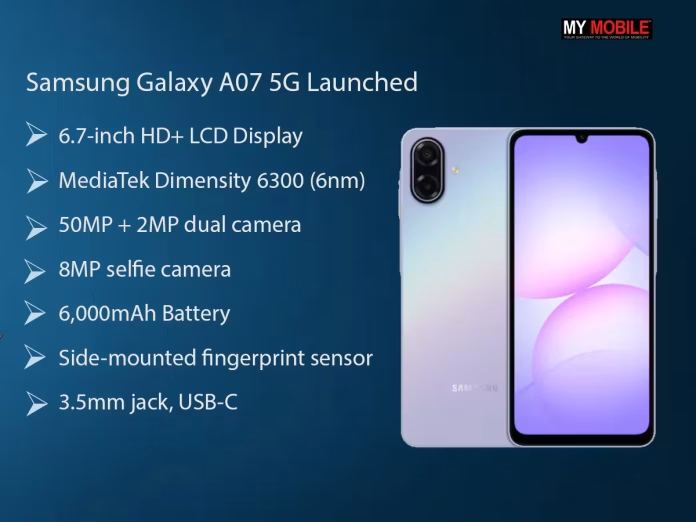
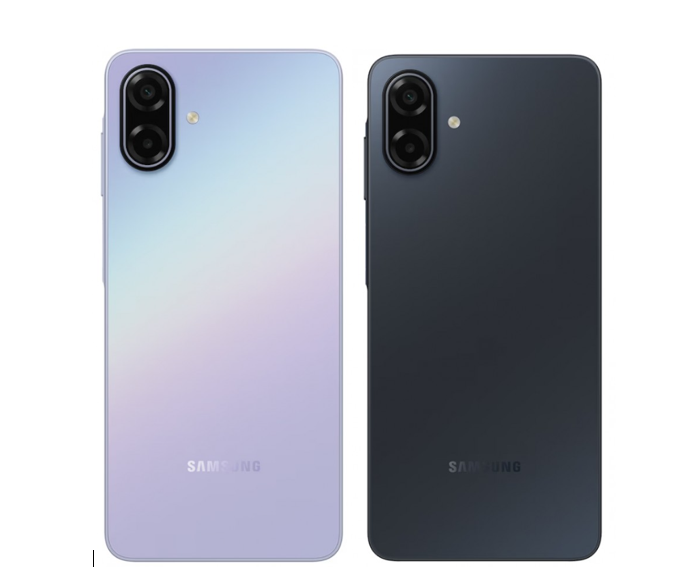
Samsung Galaxy A07 5G launched in the Philippines in Black and Light Violet colours.
It features a 6.7-inch 120Hz LCD display, Dimensity 6300 chipset, dual rear cameras (50MP + 2MP), 8MP selfie camera and 6,000mAh battery.
In the Philippines, the phone is priced at PHP 8,290 ($170) for the 128GB memory variant.
Samsung Galaxy A07 5G launched in the Philippines. (Image credit – Samsung)
Samsung has officially unveiled the Samsung Galaxy A07 5G, the latest addition to its A-series lineup. The smartphone has debuted in the Philippines and is already available for purchase. It has also been spotted listed on Samsung’s official website in Myanmar, indicating a wider rollout. Here’s more on this latest Galaxy smartphone.
Samsung Galaxy A07 5G – Key Features
On the front, the newly unveiled Galaxy A07 5G features a 6.7-inch LCD panel with a 120Hz refresh rate, HD+ resolution, and up to 800 nits of HBM brightness.
The A07 5G is powered by a 6nm octa-core MediaTek Dimensity 6300 processor. In the Philippines, the device is offered with 4GB of RAM and up to 128GB of internal storage. Users also get a microSD card slot to expand storage further.
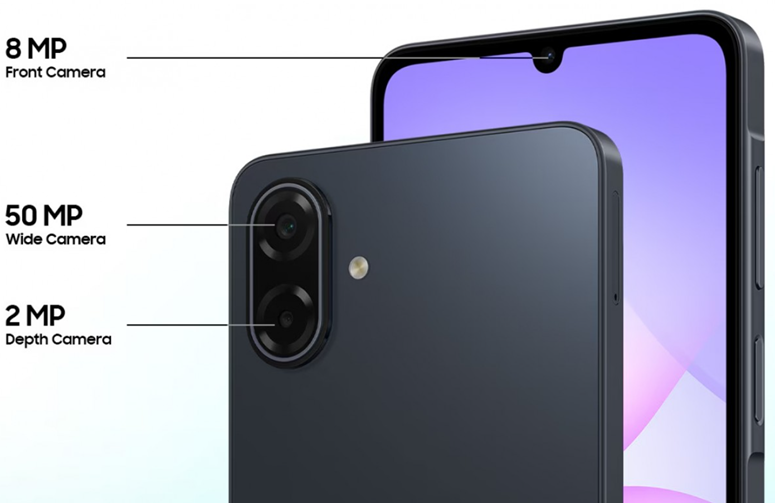
Samsung Galaxy A07 5G camera specs. (Image credit – Samsung)
For photography, the Galaxy A07 5G comes with a dual rear camera setup that includes a 50MP primary sensor and a 2MP depth sensor. On the front, there is an 8MP selfie camera housed inside a waterdrop-style notch.
One of the key highlights of the Galaxy A07 5G is its large 6,000mAh battery, which is a notable upgrade over its predecessor. The phone runs One UI 8.0 out of the box and Samsung has promised six years of Android OS updates along with six years of security patches.
The smartphone includes a side-mounted fingerprint scanner, a 3.5mm headphone jack, GPS, dual-band Wi-Fi, Bluetooth 5.3, 5G connectivity, and a USB Type-C port. It also carries an IP54 rating for dust and water resistance.
The Galaxy A07 5G measures 8.2mm in thickness and weighs 199 grams.