Moto Pad 70 Groove confirmed to debut in India on July 31 via Flipkart.
The upcoming tablet has been officially teased in green colour with a unique rear design and fold‑out stand.
Key features include India’s first 9‑speaker JBL system, Dolby Atmos, Hi‑Res Audio, delivering 48W stereo output, 12.1‑inch 2.5K 120Hz HDR10/Dolby Vision panel and a 10,200mAh battery with 68W charger.
Motorola is preparing to expand its tablet lineup in India with the launch of the Moto Pad 70 Groove. The company introduced the Moto Pad 70 in the country last month and it is now set to unveil a new model later this month. Ahead of its debut, Motorola has confirmed several key features of the upcoming tablet via a dedicated microsite on an e-commerce website. Here’s everything we know about the tablet so far.
Moto Pad 70 Groove to Debut on July 31
According to the dedicated Flipkart microsite, the Moto Pad 70 Groove India launch has been confirmed for July 31. The listing also offers an early look at the tablet’s design and highlights some of its standout features.
Moto Pad 70 Groove design teaser. (Image credit – Motorola)
The promotional images show a unique rear panel design featuring a centrally positioned circular mesh grille with JBL branding. The tablet also includes an integrated circular fold-out stand that supports multiple viewing positions including portrait, landscape, lean, stand, hanging, and theatre modes.
Motorola has teased the Moto Pad 70 Groove in a green colour option. Interestingly, the physical volume buttons also appear to be placed on the rear panel of the device.
Moto Pad 70 Groove – Key Specifications (Confirmed)
One of the biggest highlights of the Moto Pad 70 Groove is its audio setup. Motorola says the tablet is equipped with India’s first nine-speaker JBL system consisting of four tweeters, three woofers, and two passive radiators.
Moto Pad 70 Groove teasers. (Image credit – Motorola)
The audio system is further enhanced by a 43cc acoustic chamber, dedicated bass units, Dolby Atmos tuning, Hi-Res Audio support, and Hi-Res Audio Wireless certification. According to Motorola, the complete 7.2-channel cinematic audio system is capable of delivering up to 48W stereo output.
On the front, the Moto Pad 70 Groove features a 12.1-inch 2.5K display with a 120Hz refresh rate. The panel also supports HDR10 and Dolby Vision, while offering up to 800 nits of brightness in High Brightness Mode (HBM), making it suitable for both indoor and outdoor use.
Moto Pad 70 Groove teaser. (Image credit – Motorola)
Powering the tablet is a 10,200mAh battery, which Motorola claims can provide up to 15 hours of video playback on a single charge. The company has also confirmed that the Moto Pad 70 Groove will ship with a 68W charger included in the retail box.
Motorola is expected to reveal other details including the tablet’s processor, RAM, storage options, software, and camera specifications as the launch date approaches.
Leak suggests iQOO 16T may feature Snapdragon 8 Elite Gen 6 with Dimensity 9600 also being tested as a backup/variant.
Other rumoured features include built-in cooling fan for gaming performance and flat Samsung 2K display.
The phone is currently under development in China as part of iQOO’s large-screen lineup.
The rumour mill surrounding the upcoming iQOO 16T continues to gain momentum. A fresh leak has now revealed several key hardware details, suggesting that the smartphone could arrive with Qualcomm’s next-generation chipset, a built-in cooling fan and a high-resolution Samsung display. These new details add to earlier reports that claimed the phone is already under development in China.
While iQOO has not officially confirmed any specifications, the latest rumours provide a clearer picture of what users can expect from the upcoming T-series device. Here’s more on what we know so far.
iQOO 16T Latest Leak Reveals Key Hardware
DCS’s post on Weibo. (Screenshot by Gizmochina)
According to the latest post by tipster Digital Chat Station on Weibo, the iQOO 16T is expected to be powered by Qualcomm’s upcoming Snapdragon 8 Elite Gen 6 processor carrying the model number SM8950. Built on a 2nm manufacturing process, the chipset is expected to deliver notable improvements in performance and power efficiency over its predecessor.
Interestingly, the tipster also mentions MediaTek’s Dimensity 9600 as a possible backup chipset. It remains unclear whether iQOO is testing multiple hardware configurations during development or considering different variants of the smartphone.
Another major highlight is the inclusion of a built-in cooling fan. If this rumour proves accurate, the feature could help keep temperatures under control during extended gaming sessions and other demanding workloads.
It further suggests that the smartphone may feature a flat Samsung display with 2K resolution. Although the exact panel size has not been confirmed in this leak, it aligns with information that surfaced earlier.
iQOO 16T – What Else We Know?
Previous reports by tipster Smart Pikachu on Wiebo claimed that iQOO has started developing the iQOO 16T in China as part of its strategy to expand its lineup of large-screen smartphones. The company is reportedly aiming to attract users looking for an immersive display and strong gaming performance.
Industry sources have suggested that the handset is currently in development, although many technical specifications remain under wraps.
Earlier rumours also indicated that the iQOO 16T could inherit the display used in the iQOO Neo 12. If that happens, the phone may feature a 6.83-inch AMOLED display with a 2K resolution. Such a move would follow iQOO’s previous approach as the iQOO 15T reportedly adopted the same 6.82-inch display panel found in the iQOO Neo 11 series.
However, all of these specifications are based on leaks and rumours at this stage. iQOO is yet to officially announce the device or confirm its launch timeline. We can expect more details to emerge in the coming weeks.
OPPO revises prices of K14, K14x, and A6s in India from July 20 with increases up to ₹4,000 across RAM and storage variants.
K14 sees the steepest hike between ₹2,000 – ₹4,000, K14x models cost ₹1,000 more and A6s variants rise by ₹1,000 – ₹2,000.
Anyone planning to buy an OPPO mid-range smartphone in India may now have to pay more. The company has reportedly revised the prices of the OPPO K14, OPPO K14x, and OPPO A6s across all available RAM and storage variants. The latest revision increases prices by up to Rs. 4,000.
The updated pricing has reportedly come into effect from July 20 and is already reflected on the official OPPO India website. Here are all the details
OPPO Revises Smartphone Prices in India
Among the devices that received price hike, the OPPO K14 has seen the highest price revision.
The 6GB + 128GB variant, which was introduced at Rs. 19,999, is now priced at Rs. 21,999. The 6GB + 256GB version has increased from Rs. 21,999 to Rs. 24,999, while the top-end 8GB + 256GB model now costs Rs. 27,999, compared to its original launch price of Rs. 23,999.
The OPPO K14x has also received a price revision with every configuration becoming Rs. 1,000 more expensive.
The entry-level 4GB + 64GB model is now available for Rs. 16,999, instead of Rs. 15,999. The 4GB + 128GB variant now carries a price tag of Rs. 18,999, up from Rs. 17,999, while the 6GB + 128GB option is now priced at Rs. 20,999, compared to its earlier launch price of Rs. 19,999.
The price hike has also reached the OPPO A6s. Its 4GB + 128GB variant now retails for Rs. 21,999, an increase from Rs. 20,999. Meanwhile, the 6GB + 128GB version has gone up from Rs. 22,999 to Rs. 24,999.
All new prices at a quick glance –
Model
Old Price
New Price
Hike
OPPO K14x 5G 4GB + 64GB
Rs 15,999
Rs 16,999
Rs 1,000
OPPO K14x 5G 4GB + 128GB
Rs 17,999
Rs 18,999
Rs 1,000
OPPO K14x 5G 6GB + 128GB
Rs 19,999
Rs 20,999
Rs 1,000
OPPO K14 5G 6GB + 128GB
Rs 19,999
Rs 21,999
Rs 2,000
OPPO K14 5G 6GB + 256GB
Rs 21,999
Rs 24,999
Rs 3,000
OPPO K14 5G 8GB + 256GB
Rs 23,999
Rs 27,999
Rs 4,000
OPPO A6s 5G 4GB + 128GB
Rs 20,999
Rs 21,999
Rs 1,000
OPPO A6s 5G 6GB + 128GB
Rs 22,999
Rs 24,999
Rs 2,000
What It Means For Buyers?
All three smartphones share several common hardware features. The OPPO K14, OPPO K14x, and OPPO A6s are powered by the MediaTek Dimensity 6300 chipset and sport 6.75-inch displays. They also feature dual rear cameras led by a 50MP primary sensor and run ColorOS 15 based on Android 15.
Although the company has not officially commented on the latest pricing changes, the revised prices are already in effect. Reports indicate that increasing component costs and the shortage of memory chips are the likely reasons behind the latest hike, but OPPO has yet to confirm the exact cause.
The revised prices are now reflected on Flipkart even though not all memory variants are currently in stock.
OPPO A7 Pro Max leak tipped to feature a massive 10,000mAh battery with 80W fast charging, Snapdragon 4 Gen 5 chipset, 6.78″ 1.5K OLED display and dual rear cameras.
The device may measure just 8.47mm thick, weigh about 226g and includes 50MP selfie camera and in-display fingerprint scanner.
Separate OPPO phone was spotted in TENAA Certification database with 6.75″ LCD, 2.4GHz processor, up to 512GB storage, about 8,000mAh battery, 50MP rear camera and side fingerprint scanner.
OPPO could soon expand its A-series smartphone portfolio with a new model that may offer one of the biggest batteries ever seen on an OPPO handset. A fresh leak has revealed the expected specifications of the rumoured OPPO A7 Pro Max, while another upcoming OPPO smartphone has also appeared on China’s TENAA certification platform and revealed its key hardware details ahead of launch.
OPPO A7 Pro Max – Expected specifications
According to tipster Digital Chat Station on Weibo, OPPO is working on what could become the first smartphone in the company’s “Green series” to feature a massive 10,000mAh battery. The device is expected to launch as the OPPO A7 Pro Max, although the company has not officially confirmed its existence.
DCS’s post on Weibo. (Translated via Google Translate)
The leak suggests the handset could feature a 6.78-inch flat OLED display with a 1.5K resolution and a 120Hz refresh rate. It is also tipped to include an in-display fingerprint scanner for biometric authentication. Powering the smartphone is expected to be Qualcomm’s Snapdragon 4 Gen 5 chipset, which was introduced earlier this year.
For photography, the OPPO A7 Pro Max is rumoured to feature a dual rear camera setup consisting of a 50MP primary sensor and a 2MP secondary camera. On the front, it is expected to offer a 50MP selfie camera for photos and video calls.
One of the biggest highlights of the leak is the smartphone’s single-cell 10,000mAh battery, which is said to support 80W fast charging. Despite the enormous battery capacity, the device is tipped to measure just 8.47mm thick and weigh approximately 226 grams.
The latest report indicates that OPPO is continuing to expand its A-series lineup after launching multiple A6 models across different markets.
For reference, the OPPO A6 Pro, which debuted in China in September last year, featured a MediaTek Dimensity 7300 processor, a 7,000mAh battery, and 80W fast charging. It also offered a 6.57-inch Full HD+ display with a 120Hz refresh rate, a 50MP dual rear camera setup, and a 16MP front camera. The device was launched with up to 16GB RAM and 512GB of internal storage along with IP66, IP68, and IP69 ratings for dust and water resistance.
New OPPO phone appears on TENAA
In a separate development, a new OPPO smartphone carrying the model number PYZ110 has been spotted in the database of China’s TENAA certification authority.
Although the certification does not include product images, it reveals several core specifications of the device.
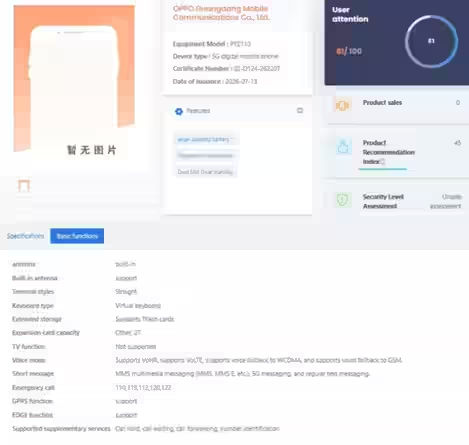
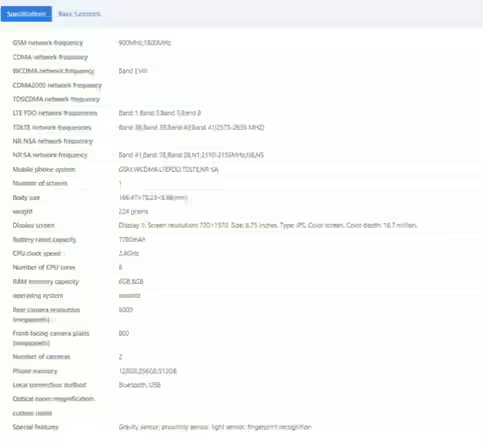
Oppo phone with model number PYZ110 on TENAA certification database. (Screenshots by TheTechOutlook)
According to the listing, the handset features a 6.75-inch LCD display with an HD+ resolution of 720 × 1570 pixels. It is powered by an unidentified processor clocked at 2.4GHz.
The smartphone is expected to be available with 6GB or 8GB RAM, while storage options may include 128GB, 256GB, and 512GB variants. The TENAA listing also reveals a 7,780mAh rated battery, which is expected to translate to a typical capacity of around 8,000mAh.
For photography, the device is listed with an 8MP front camera and a 50MP rear camera. Other expected features include a side-mounted fingerprint scanner. The handset measures 166.47 × 78.23 × 8.88mm and weighs 224 grams.
Based on current information, the newly certified PYZ110 does not appear to be the upcoming OPPO K15, which is scheduled to launch on July 24. Reports suggest the K15 corresponds to the PYD110 model that received TENAA approval in June.
Instead, the PYZ110 is believed to be another upcoming OPPO A-series smartphone. However, its final marketing name has not yet been confirmed and more details are expected to emerge before its official launch.
As of now, OPPO has not officially announced either the OPPO A7 Pro Max or the PYZ110 smartphone, so all leaked specifications should be treated as preliminary.
Xiaomi Mix Fold 5 prototype surfaces showing redesigned wider foldable form factor and running HyperOS 4 based on Android 17.
It is expected to sport 7.5–7.6″ foldable display, 200MP main camera, 6,000mAh battery, wireless charging, water resistance, and Xring O3 chipset.
The device may debut as early as August 2026 and priced around ¥10,000 (about $1,475).
Xiaomi’s next-generation foldable smartphone has surfaced in a fresh leak ahead of its official unveiling. Newly leaked live images are believed to show the upcoming Xiaomi Mix Fold 5, although some reports suggest it could eventually launch under the Mix Fold 6 branding. The images not only offer an early look at the device’s redesigned form factor but also hint at the software it could ship with.
Xiaomi Mix Fold 5 – Live Images Reveal Engineering Unit
Xiaomi Mix Fold 5 Live Images.
According to the latest leak, the smartphone shown in the live images is an engineering prototype of the Xiaomi Mix Fold 5. The device appears to be running HyperOS 4, which is reportedly based on Android 17.
The software build visible in the images begins with version 4.0, aligning with Xiaomi’s strategy of introducing a new HyperOS version alongside a major Android release. The leaked handset is also said to carry the codename “lhasa,” a codename that has previously been associated with the Xiaomi Mix Fold 5.
EXCLUSIVE 🚨
Here’s your very first look at the upcoming Xiaomi MIX Fold 5…
Its design closely resembles the Galaxy Z Fold 8 and the upcoming iPhone Ultra
The latest development comes shortly after the foldable cleared an important certification in China, indicating that its official launch could be approaching. According to recent reports, Xiaomi may unveil the Mix Fold 5 as early as August 2026.
Unlike the upcoming Xiaomi 18 series, which is expected to adopt Qualcomm’s next-generation flagship processor, the Mix Fold 5 is tipped to be powered by Xiaomi’s in-house Xring O3 chipset.
Expected Design and Specifications
Recent leaks suggest Xiaomi is redesigning its foldable smartphone with a wider and more compact form factor, moving away from the taller design used in previous Mix Fold models.
The handset is expected to feature a 7.5-inch to 7.6-inch foldable display with improved crease management for a better viewing experience. In the camera department, the device is rumoured to sport a 200MP primary sensor.
The Mix Fold 5 is also tipped to pack a 6,000mAh battery with support for wireless charging. Other expected features include full water resistance and a side-mounted fingerprint scanner.
Earlier reports have additionally suggested that the foldable could feature a horizontal Leica-branded camera module on the rear. The smartphone is also rumoured to be priced at around 10,000 Yuan (approximately $1,475) in China.
As of now, Xiaomi has not officially confirmed the device’s name, specifications, pricing, or launch timeline. Until then, all of the leaked information should be treated as speculation.
OPPO Find X10 series revised with Find X10 Pro Max now tipped with a 6.78-inch 1.5K flat display, Dimensity 9600 Pro and triple 200MP camera setup.
Standard Find X10 may use Dimensity 9600 Lite with 6.59-inch display, Find X10 Pro expected with Dimensity 9600 Pro and 6.78-inch panel.
Find X10 clears SRRC certification with N79 5G band, while lineup is expected to debut in late September 2026.
OPPO Find X9 Pro in the picture for reference only. (Image credit – Oppo)
OPPO’s upcoming Find X10 series could arrive with significant changes compared to earlier expectations. A fresh leak suggests the company has revised its flagship lineup and is introducing changes to display sizes, processors, and model positioning. Adding to the speculation, an upcoming Find X10-series smartphone has also received an important certification in China. Here’s everything we know based on latest leaks and reports.
OPPO Find X10 Series Lineup Revised
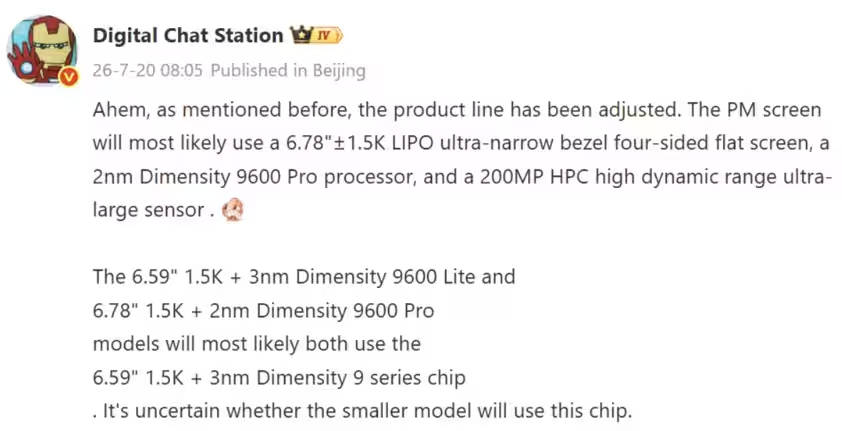
Digital Chat Station’s post on Weibo. (Screenshot by Gizmochina)
According to reliable tipster Digital Chat Station, OPPO has reworked its plans for the Find X10 family. One of the biggest changes reportedly involves the Find X10 Pro Max, which is now tipped to feature a 6.78-inch 1.5K flat display with ultra-narrow and symmetrical bezels made possible through LIPO packaging technology.
Earlier leaks had suggested the smartphone would arrive with a larger 6.89-inch 2K display but the latest information points to a reduction in both screen size and resolution.
The Find X10 Pro Max is also expected to be powered by MediaTek’s 2nm Dimensity 9600 Pro chipset. For photography, it could feature a triple 200MP camera system comprising a Samsung HPC 200MP primary sensor with high dynamic range imaging, a 200MP ultra-wide camera and a 200MP periscope telephoto camera.
Find X10 and Find X10 Pro Tipped to Launch Together
The tipster further claims that the standard OPPO Find X10 and Find X10 Pro will debut together.
According to the leak, the standard Find X10 is expected to feature a 6.59-inch 1.5K display and be powered by the 3nm Dimensity 9600 Lite chipset, which is said to be an overclocked version of the existing Dimensity 9500 processor.
DCS’s response on Weibo to a user comment. (Screenshot by Gizmochina)
Meanwhile, the Find X10 Pro is tipped to sport a 6.78-inch 1.5K display and use the flagship 2nm Dimensity 9600 Pro chipset. Although the Pro Max is expected to accompany these models, the latest leak does not explicitly confirm whether all three devices will be unveiled at the same launch event.
The report also mentions that OPPO is considering another compact 6.59-inch smartphone powered by a different Dimensity 9-series chipset. However, the company has reportedly not finalized plans for this model.
At present, it remains unclear whether OPPO has cancelled the Find X10 Ultra and replaced it with the Find X10 Pro Max. If the Ultra model is indeed dropped, the Pro Max would become the highest-end smartphone in the Find X10 lineup.
OPPO Find X10 Receives SRRC Certification
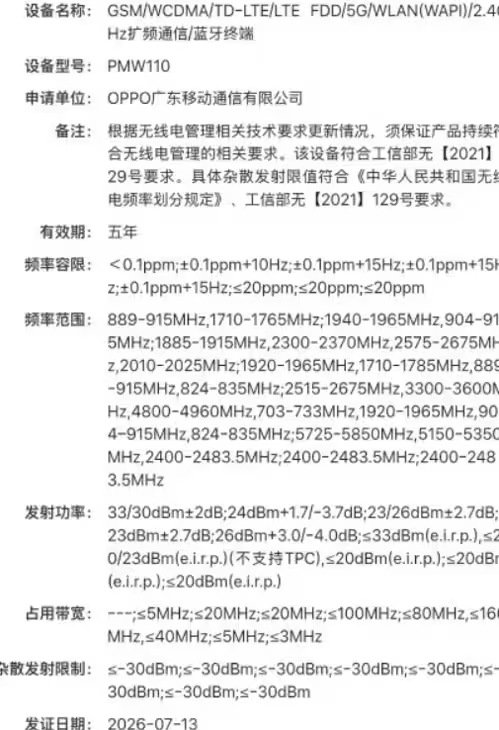
In a separate development, an upcoming OPPO smartphone carrying the model number PMW110 has appeared on China’s SRRC certification platform.
OPPO Find X10 Receives SRRC Certification. (Screenshot by Digital Chat Station on Weibo)
Digital Chat Station believes the certified device belongs to the Find X10 series. The certification confirms support for the N79 5G band, suggesting that the smartphone is moving closer to its official launch.
The certification follows several months of leaks surrounding the Find X10 family. Earlier reports suggested the lineup could include as many as four models with display sizes ranging from 6.32 inches to 6.89 inches, all featuring slimmer bezels enabled by LIPO display technology.
Tipster Digital Chat Station’s post on Weibo. (Translated via Google Translate)
Expected Specifications and Launch Timeline
The tipster reiterated that one of the upcoming Find X10 models is expected to feature MediaTek’s 2nm Dimensity 9600 Pro chipset, a flat display, and a 200MP HPC camera setup. According to the latest information, OPPO is internally targeting a late September launch for the series.
The tipster also responded to a user on social media regarding display suppliers. When asked whether the smartphone would avoid using a Tianma display, Digital Chat Station defended the panel maker and questioned what was wrong with Tianma OLED panels. Previous reports have indicated that OPPO has been testing a 6.78-inch 1.5K LTPO display built on a new-generation Tianma substrate for the Pro model.
Oppo Find X10 Pro.
Earlier camera leaks suggest the smartphone could feature a 200MP 1/1.3-inch ultra-large primary sensor, accompanied by a 200MP large-sensor telephoto camera and a 3MP multispectral sensor. Similar reports have also pointed to the Find X10 Pro Max using a 200MP HPC primary camera alongside a 200MP periscope telephoto camera.
In terms of processing hardware, previous leaks suggested OPPO could split chipsets across the lineup by equipping the standard model with a Dimensity 9500 Plus processor, while the Pro variants would move to the new 2nm Dimensity 9600-series chips. The latest information from Digital Chat Station largely aligns with those earlier reports.
As of now, OPPO has not officially confirmed the specifications, final lineup, or launch schedule of the Find X10 series. More details are expected to emerge as the anticipated September launch approaches.
Xiaomi 18 series may arrive in India as early as December 2026 to target festive season demand, instead of the traditional Q1 launch schedule.
Xiaomi 18 Ultra reportedly cancelled and lineup to include Xiaomi 18, 18 Pro, and 18 Pro Max, with Pro Max positioned as the top flagship.
Xiaomi 18 Pro spotted on SRRC with UWB support and tipped with Snapdragon 8 Elite Gen 6, dual 200MP cameras, 7,000mAh battery, and 100W wired/wireless charging.
Xiaomi’s next-generation flagship smartphones could arrive in India earlier than expected if a new leak is to be believed. Fresh reports suggest the company is planning to revise its usual launch schedule for the Xiaomi 18 series while also making notable changes to the lineup. Meanwhile, new certifications for the Xiaomi 18 Pro have surfaced in China, hinting that the flagship family is moving closer to its official debut. Here’s what we know about the series so far.
Xiaomi 18 Series India Launch Tipped for December
Xiaomi 18 render. (Credit – Xpertpick)
According to tipster Yogesh Brar via SmartPrix, Xiaomi is planning to launch the Xiaomi 18 series in India as early as December. If accurate, this would mark a significant change from the company’s previous flagship launch strategy, as Xiaomi has traditionally introduced its premium smartphones in global markets including India during the first quarter of the following year.
The report suggests Xiaomi wants to capitalise on the year-end festive shopping season by bringing its flagship lineup to the Indian market much sooner.
Xiaomi 18 Ultra Reportedly Cancelled
The same report claims the Xiaomi 18 family will include three models named the Xiaomi 18, Xiaomi 18 Pro, and Xiaomi 18 Pro Max. Interestingly, Xiaomi is said to have cancelled the Xiaomi 18 Ultra with the Pro Max expected to become the company’s highest-end flagship instead.
If this information proves accurate, it would represent one of the biggest changes to Xiaomi’s premium smartphone strategy in recent years.
Xiaomi 17 Pro Max.
The Xiaomi 18 Pro Max is also tipped to launch in limited quantities in India similar to how Xiaomi previously handled the availability of its Ultra-branded flagship devices. The standard Xiaomi 18 and Xiaomi 18 Pro, however, are expected to receive a wider release across the country.
In addition to the smartphones, Xiaomi is reportedly planning a broader ecosystem showcase during the December launch event. The company is expected to unveil more Xiaomi-branded smart home products and connected devices, positioning the Xiaomi 18 lineup at the centre of its expanding ecosystem strategy in India.
However, Xiaomi has not officially confirmed any of these plans.
Xiaomi 18 Pro Appears on China’s SRRC Certification
Xiaomi 18 series on China’s SRRC certification. (Screenshot by Gizmochina)
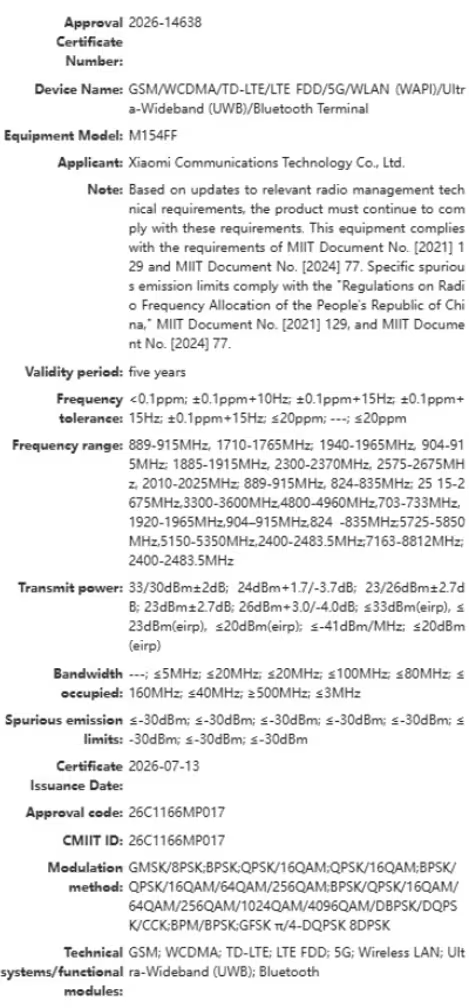
Separately, a Xiaomi 18 series smartphone has been spotted on China’s SRRC certification platform. Reliable tipster Digital Chat Station shared that the certified device carries the model number M154FF, indicating that the launch of the flagship lineup is drawing closer.
According to the certification, the handset supports the N79 5G band along with Ultra-Wideband (UWB) connectivity. Since UWB support is generally reserved for premium models, the tipster believes the listing most likely belongs to the Xiaomi 18 Pro rather than the standard Xiaomi 18.
Xiaomi 18 Pro – Expected Specifications
Previous leaks from Digital Chat Station suggest the Xiaomi 18 Pro is currently being tested with Qualcomm’s upcoming 2nm Snapdragon 8 Elite Gen 6 chipset, which is expected to debut in September before the smartphone’s launch.
The handset is also said to feature a custom ultra-clear display with rounded corners and slim, symmetrical bezels on all four sides.
For photography, the Xiaomi 18 Pro is tipped to offer a dual 200MP camera setup featuring a 200MP primary camera alongside a 200MP telephoto sensor.
The smartphone is also expected to pack a battery in the 7,000mAh class with support for 100W wired and 100W wireless charging. Other rumoured features include dual stereo speakers, a larger vibration motor, and a Samsung-style privacy display feature.
Xiaomi has yet to officially announce the launch date or specifications of the Xiaomi 18 Pro.
Xiaomi 18 Receives CMIIT Certification
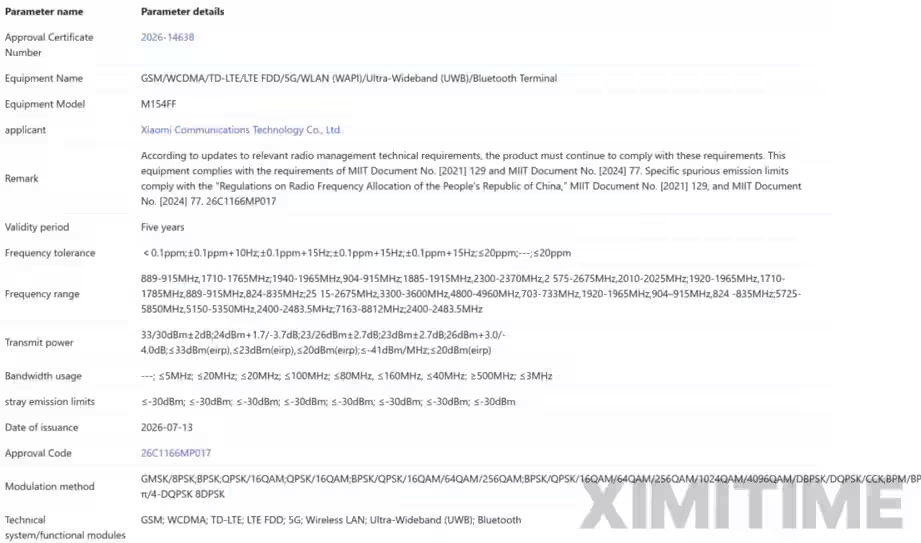
Xiaomi 18’s CMIIT Certification. (Screenshot by Ximitime)
The standard Xiaomi 18 has also cleared an important regulatory milestone in China after receiving CMIIT certification from the Ministry of Industry and Information Technology (MIIT).
The certification carries CMIIT ID 2026-14638 and corresponds to model number 26C1166MP017. The listing confirms support for multiple connectivity standards including GSM, WCDMA, TD-LTE, LTE FDD, 5G, WLAN with WAPI security protocol, Ultra-Wideband (UWB), and Bluetooth.
The certification also identifies M154FF as the device’s terminal model number for the Chinese market.
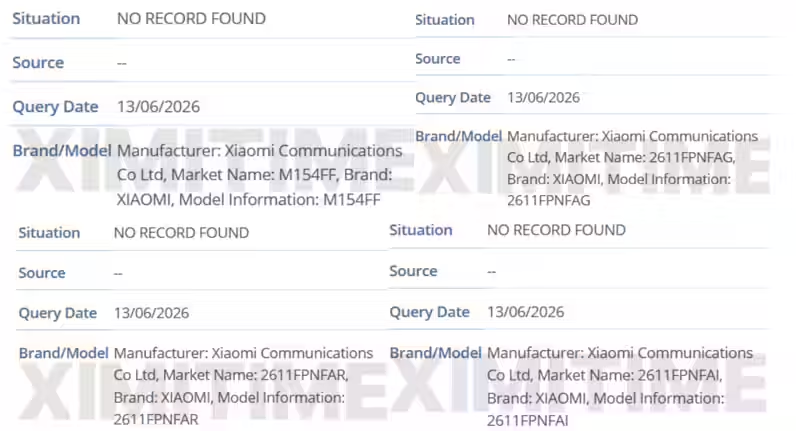
(Screenshots by Ximitime)
In addition, the global variants of the Xiaomi 18 have reportedly been identified with model numbers 2611FPNFAG, 2611FPNFAR, and 2611FPNFAI, distinguishing the international versions from the China-specific model.
Launch Timeline
With multiple certifications now in place, the Xiaomi 18 series appears to be entering the final stages of testing ahead of its expected September launch in China.
For reference, Xiaomi introduced the Xiaomi 17 Pro in September last year. The device featured a 6.3-inch display, the Snapdragon 8 Elite Gen 5 chipset, a 6,300mAh battery with 100W wired and 50W wireless charging, a rear Magic Screen, and a triple 50MP Leica camera system led by the Light Hunter 950L primary sensor. It debuted with a starting price of 4,999 yuan.
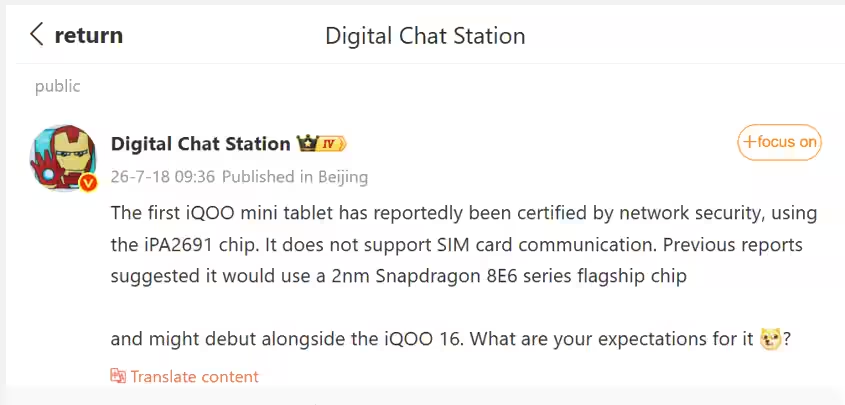
iQOO’s compact tablet has received SRRC certification in China.
It is expected to feature a compact OLED display with slim bezels, high refresh rate, Snapdragon 8 Elite Gen 6 chipset, Wi-Fi only and no SIM support.
The tablet is likely to debut alongside iQOO 16 and iQOO Neo 12 in Sept – Oct 2026.
iQOO is reportedly preparing for a major product launch in China later this year with the iQOO 16. Alongside its next-generation flagship smartphone, the company is also tipped to unveil a compact tablet and the iQOO Neo 12. Now, the upcoming tablet has taken an important step toward launch after appearing on a Chinese certification platform. Here’s what we know so far.
iQOO Compact Tablet Gets First China Certification
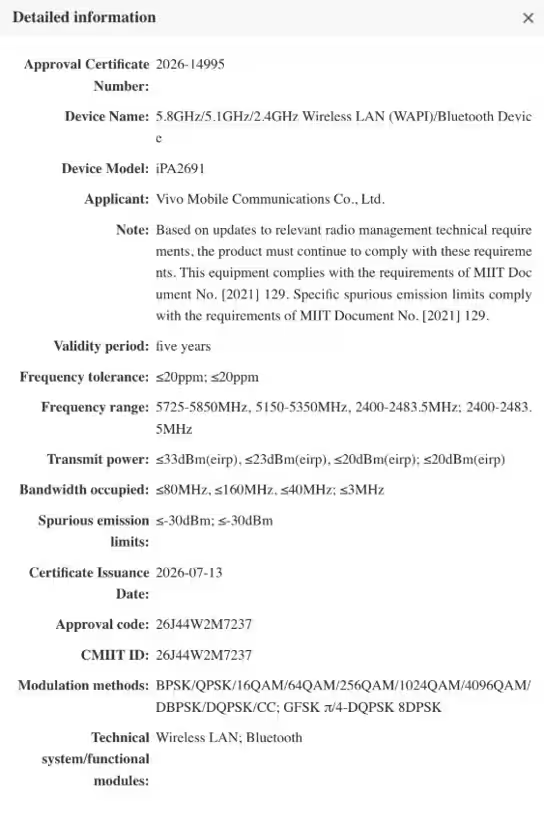
iQOO’s upcoming compact tablet received SRRC certification. (Screenshot by DCS)
An upcoming iQOO tablet carrying the model number iPA2691 has been spotted on China’s SRRC certification database. The listing marks the device’s first major certification, suggesting that its official debut could be just around the corner.
iQOO Compact Tablet – Expected Specs
According to reliable tipster Digital Chat Station on Weibo, the tablet will feature a compact design different from the larger tablets currently available in the market.
DCS’s post on Weibo.
The tipster further claims that the compact tablet will be powered by Qualcomm’s upcoming 2nm Snapdragon 8 Elite Gen 6-series chipset indicating that it will be positioned as a performance-oriented device.
The tablet is also expected to launch only in a Wi-Fi variant and is unlikely to offer SIM card support.
In terms of display, the device is rumoured to feature an OLED panel with slim bezels and a high refresh rate, further highlighting its premium positioning. Other hardware details have not surfaced yet, but more information is expected to emerge through future leaks and certifications.
Launch Expected Alongside iQOO 16
iQOO is expected to host its next major launch event in China during September or October, where the iQOO 16 is likely to be the main attraction. The same event could also introduce the compact tablet and the iQOO Neo 12.
Separately, reports suggest that iQOO is developing another smartphone for the Chinese market, tentatively called the iQOO Neo 11S. Although the company has not released any official teasers, the handset is expected to debut either later this month or in August.
The iQOO Neo 11S is tipped to feature a Dimensity 9500-series chipset and is expected to be a minor upgrade over the iQOO Neo 11 introduced last year.
As of now, iQOO has not officially confirmed the launch timeline or specifications of either the compact tablet or the Neo 11S. So, the leaked details should be treated as speculation until the company makes an official announcement.
Vivo has unveiled the X300e featuring Zeiss-tuned cameras and an orange finish. Pre-orders are live now.
Key specs include a 6.59-inch 1.5K AMOLED display, Snapdragon 8 Gen 5, up to 16GB RAM/1TB storage, 7,200mAh battery with 90W charging and triple rear cameras.
The X300e goes on sale July 27 at 09:00, while pricing is yet to be announced.
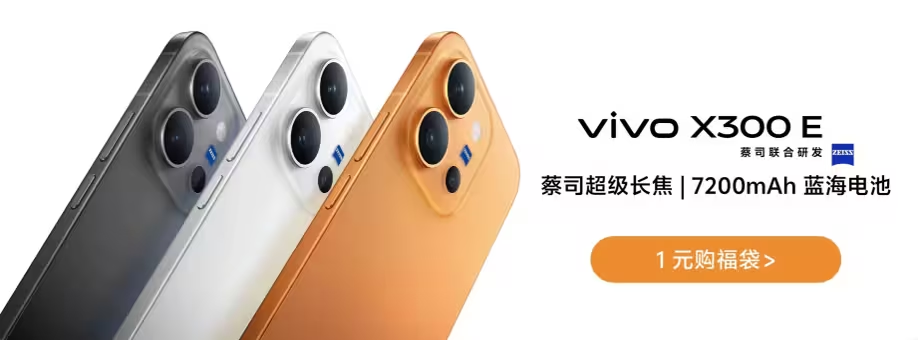
Vivo X300e unveiled officially. (Image credit – Vivo)
Vivo has expanded its premium Vivo X300 smartphone series with the official announcement of the Vivo X300e. The new model joins the existing Vivo X300 lineup, which already includes the Vivo X300, Vivo X300 Pro, Vivo X300s and Vivo X300 Ultra. Along with confirming the device, the company has also started accepting pre-orders ahead of its first sale later this month.
Vivo X300e Officially Announced
Vivo has introduced the X300e as the newest member of its flagship X300 family. The company has revealed the smartphone’s design, showcased it in three colour options and confirmed that it will feature a large battery along with a Zeiss-tuned camera system.
Vivo X300e colours. (Image credit – Vivo)
According to previous leaks, the Vivo X300e features a square-shaped camera module positioned on the left side of the rear panel complemented by metal frames around the body. It was also suggested the presence of an ultrasonic fingerprint scanner, although Vivo has not fully confirmed this particular feature.
Pre-orders for the Vivo X300e are now live, while the smartphone is scheduled to go on sale starting at 09:00 on July 27.
Vivo X300e – Expected Specifications
While Vivo has not yet disclosed the complete specifications of the X300e, previous reports have already revealed most of the expected hardware details.
The Vivo X300e is tipped to feature a 6.59-inch flat AMOLED display with a 1.5K resolution of 2750 × 1260 pixels. It is expected to be powered by Qualcomm’s Snapdragon 8 Gen 5 chipset and could be available in 8GB, 12GB, and 16GB RAM variants paired with 128GB, 256GB, 512GB, or up to 1TB of internal storage.
Vivo X300e. (Image credit – Vivo)
The smartphone is expected to house a massive 7,200mAh battery with support for 90W fast charging. For photography, it is tipped to feature a 50MP front-facing camera, while the rear is expected to include a triple-camera setup comprising a 50MP primary sensor, an 8MP secondary camera, and a 50MP IMX8-series periscope telephoto camera with 2x optical zoom.
On the software front, the device is expected to run Android 16 with OriginOS 6. Other leaked features include an ultrasonic in-display fingerprint scanner, a metal frame, an IR blaster, and IP68/IP69 ratings for dust and water resistance.
The handset is also said to measure 157.52 x 74.33 x 7.99mm and weigh 203 grams.
Availability
With pre-orders already underway, interested buyers have about a week before the handset officially goes on sale on July 27.
Vivo is yet to announce the pricing of the X300e, and those details are expected to be revealed closer to the first sale.
Tipster claims OnePlus 16 and OPPO Find X10 Ultra may skip India, while Find X10 Pro Max is expected to debut there in 2027.
OnePlus 16 likely in Q4 2026 in China with Snapdragon 8 Elite Gen 6 Pro, 185Hz display, about 9,000mAh battery, and 200MP telephoto camera.
OPPO Find X10 Ultra tipped with dual telephoto setup (50MP + 200MP), while Pro Max may feature Dimensity 9600 Pro, 2K LTPO OLED, triple 200MP cameras, IP69 rating and large battery.
The launch plans for OnePlus and OPPO’s upcoming flagship smartphones may differ from previous generations. A new tip suggests that the OnePlus 16 and the OPPO Find X10 Ultra could skip the Indian market, while the OPPO Find X10 Pro Max is expected to make its way to the country. Since there is no official confirmation from either brand, these claims should be treated as speculation for now. Here’s more on that.
OnePlus 16 and OPPO Find X10 Ultra India Launch Tipped to be Unlikely
Earlier reports had suggested that OnePlus wouldscale back its global operations and focus only on the Chinese market. The company later clarified its plans, confirming that while it will no longer introduce new products in North America and Europe, it will continue its regular operations in India.
Recently, tipster Smart Pikachu on Wiebo hinted that OnePlus will have its entire product lineup go through a major change. The brand will be focusing on flagship phones with advanced features like 185Hz refresh rate, narrow bezels and active cooling. We can expect new watches and headphones to join the exciting lineup.
However, tipster @Gadgetsdata on X now claims that the upcoming OnePlus 16may not be launched in India. The leak also suggests that the OPPO Find X10 Ultra could skip the Indian market.
🚨 Exclusive 🚨
It is almost confirmed that :
OnePlus 16 and OPPO Find X10 Ultra will not launch in India 🇮🇳 ‼️
OPPO Find X10 Pro Max will be the best option from OPPO in 2027 with :
— Debayan Roy (Gadgetsdata) (@Gadgetsdata) July 19, 2026
On the other hand, the OPPO Find X10 Pro Max is tipped to arrive in India. As of now, neither OnePlus nor OPPO has officially confirmed the availability of these devices, so the information should be taken with a pinch of salt.
OnePlus 16 – Expected Specifications
The OnePlus 16 is expected to debut in China during the fourth quarter of 2026 as the successor to the OnePlus 15. According to leaks, the flagship smartphone could be powered by the Snapdragon 8 Elite Gen 6 Pro chipset based on a 2nm manufacturing process.
It is also tipped to feature a 185Hz display, a battery with a capacity of around 9,000mAh, and a 200MP telephoto camera, marking significant upgrades over its predecessor.
OPPO Find X10 Ultra and Find X10 Pro Max – What We Know So Far?
Recent reports indicate that the OPPO Find X10 Ultra could feature a dual telephoto camera system comprising a 50MP periscope camera with 10x optical zoom and a 200MP telephoto camera offering 3x optical zoom. The device is also expected to use a square-shaped sensor for its front-facing camera.
Oppo Find X9 Pro. (Image credit – Oppo)
For reference, OPPO launched the Oppo Find X9 Pro in India last year but the Find X9 lineup did not include a Pro Max model. As a result, the upcoming Find X10 Pro Max is expected to take over as the successor to the Find X9 Pro in the Indian market. However, this information is still based on leaks, and the expected 2027 launch remains several months away.
The Find X10 Pro Max is also rumoured to feature a large 2K flat LTPO OLED display and could be powered by MediaTek’s next-generation Dimensity 9600 Pro chipset. In terms of cameras, OPPO is reportedly testing a triple 200MP setup consisting of a 200MP primary camera, a 200MP periscope telephoto camera, and a 200MP ultra-wide camera. However, the ultra-wide sensor is still said to be under evaluation with a 50MP alternative also being considered.
Other leaked features include a multispectral sensor, a 50MP selfie camera, support for telemacro photography, an enormous battery with a capacity ranging between 8,000mAh and 9,000mAh, IP69-rated dust and water resistance, a dedicated Snap Key, and an ultrasonic in-display fingerprint scanner.
It is worth noting that none of these hardware details have been officially confirmed by OPPO and the final specifications could change before the smartphone enters mass production.
At present, neither OnePlus nor OPPO has confirmed whether the OnePlus 16 and the OPPO Find X10 Ultra will be skipped for the Indian market. More updates regarding the companies’ regional launch strategies and product availability is expected as the smartphones move closer to their official launch timelines.