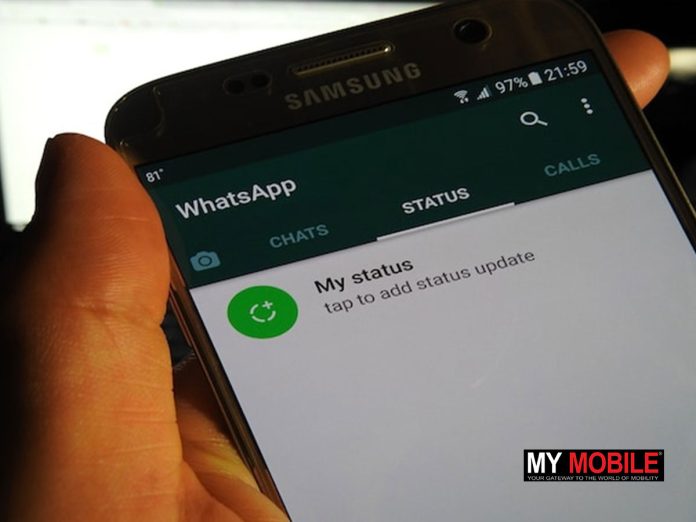
WhatsApp introduces Status tagging, likes and repost features in a new update.
Aims at enhancing engagement similar to Instagram Stories.
Users can tag up to five accounts in Status updates.
Those tagged can reshare the Status and respond with a “like.”
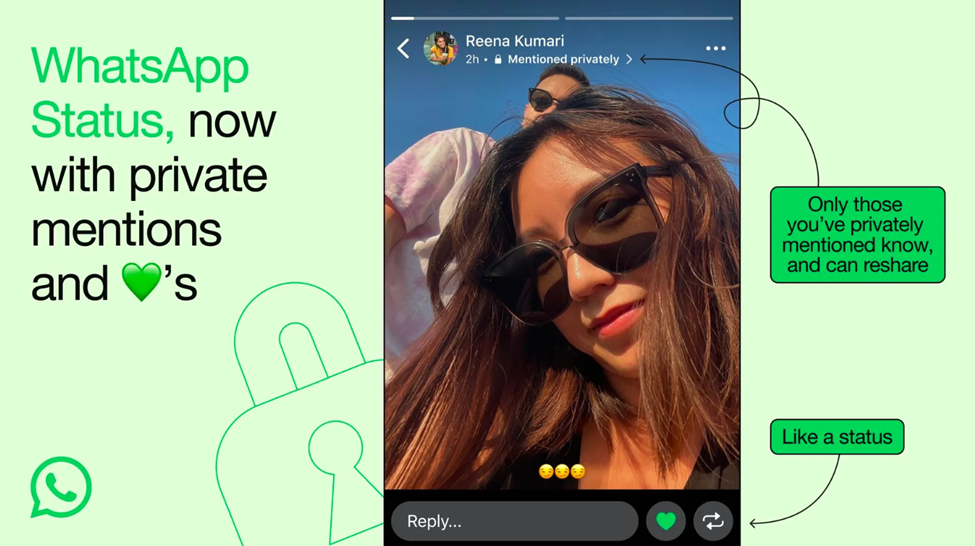
WhatsApp introduces status likes, private mentions and the ability to reshare a status. (Image credit – WhatsApp Blog)
WhatsApp has been innovative in ensuring maximum user engagement on the app. Today, it is more than an instant messaging service thanks to Meta’s ever-evolving approach. Amongst the host of new features that WhatsApp keeps adding to its platform, the latest is a new tagging feature for WhatsApp status.
The instant messaging app is rolling out new updates to its Status feature that will function similarly to Instagram Stories. These updates will allow users to tag other accounts, introduce likes and offer more ways to engage with friends and family.
“Let someone know you’re thinking of them, or enjoying their status with a single tap of the button,” the company said of Status Likes.
The company announced the latest updates in a blog post titled “Share the Love on WhatsApp Status.”
you can now ‘Like’ their Status 💚 it’s an easy and quick way to say hey pic.twitter.com/HWoImCP8rz
— WhatsApp (@WhatsApp) October 3, 2024
The new Status tagging feature will allow users to mention up to five accounts in their Status updates. These mentions can be shared without showing the tagged users’ names.
That’s not all, those tagged will be able to repost the Status to their own accounts.
WhatsApp is also adding a “like” option for Status updates, making it easy for friends to respond with a single tap.
motivation can be found anywhere (check your auntie’s Status)
— WhatsApp (@WhatsApp) July 26, 2024
This addition brings WhatsApp Status even closer to the experience users are familiar with on Instagram.
Explaining the new updates in a blog post, the company mentioned, “WhatsApp Status is the best way to stay connected with friends and family, and now we’re making it even better. With status likes, private mentions, and the ability to reshare a status you’re mentioned in, we’re making it easier to reach the people who matter most.”
motivation can be found anywhere (check your auntie’s Status)
— WhatsApp (@WhatsApp) July 26, 2024
Apart from these updates, WhatsApp recently also introduced improvements to the Channels feature. After the update, users will be able to discover new Channels by category. Channels will be sorted into groups such as People, Sports, and News.
WhatsApp has also added new video call backgrounds and filters.
These new WhatsApp Status features are now being rolled out in phases to users worldwide.
WhatsApp said, “Make sure those closest to you see your status, and let them reshare it easily with their audience, by privately mentioning them,” noted WhatsAp in a blog post. WhatsApp said, “We’ll be bringing more features to Status and the Updates tab over the next few months to make it easier to stay closest to those who matter most.”
FAQs
Q1. What new features are being added to WhatsApp Status?
Answer. WhatsApp Status now allows tagging up to five accounts, introducing likes, and making it easier to reshare mentioned Statuses.
Q2. Can I hide the names of tagged users in my Status updates?
Answer. Yes, you can tag users without showing their names, and those tagged can repost the Status to their own accounts.
Q2. What other improvements has WhatsApp recently introduced?
Answer. WhatsApp has updated its Channels feature for easier discovery, added new video call backgrounds and filters, and is gradually rolling out these features globally.
The new feature will create automatic offline playlists for Premium users when the internet is interrupted.
It will use cached songs stored on the device.
The feature will be available globally for Premium users on Android and iOS.
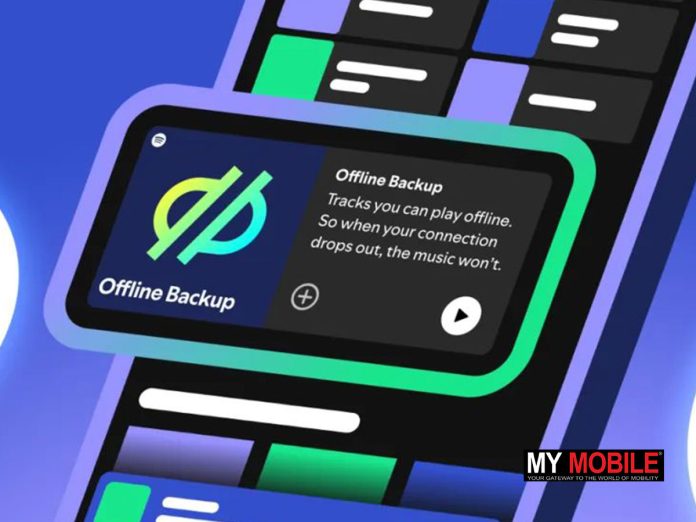
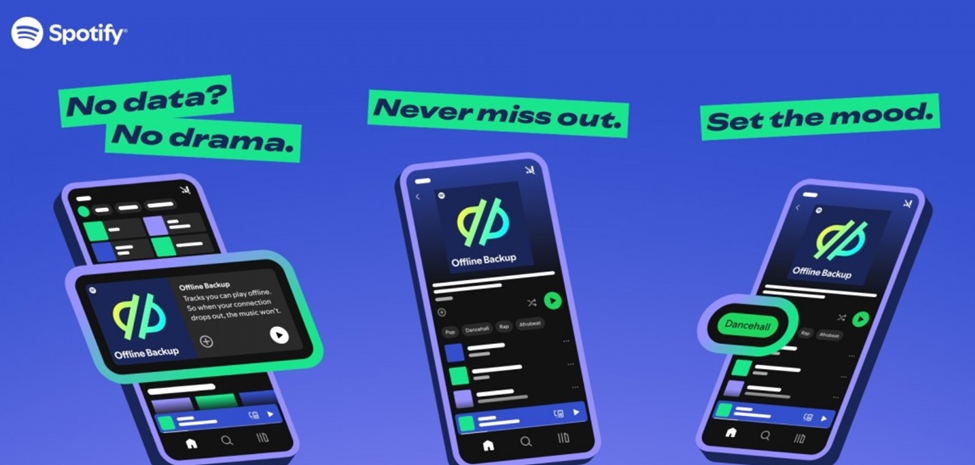
Spotify Premium users can enjoy the Offline Backup feature that automatically creates a playlist when a user has no internet. (Image credit – Spotify)
Spotify is getting more and more intuitive and will now create a playlist for you automatically when your internet connection is interrupted. Here’s what you need to know.
Spotify is rolling out a new feature called Offline Backup. The feature will make sure Spotify listeners always have music to listen to even when they are without an internet connection. It automatically creates a playlist of recently streamed and queued tracks, making them available offline without the need for manual downloads.
However, there is a catch.
Office Backup feature will only be available for Premium users.
The newly rolled-out feature works by using cached songs already stored on the device.
Users can filter and sort tracks by artist, mood, and genre and the playlist evolves as they listen. The intuitiveness of the feature ensures fresh content is always available.
According to the GSMArena report, the feature uses no extra data or storage since it leverages cached songs.
The new tool is available to Premium users globally on both Android and iOS.
It will appear automatically in the Home feed when offline. To use it, users need offline listening enabled and must have recently listened to at least five songs.
Moreover, Spotify premium users can also add the Offline Backup playlist to their Library for easy access anytime.
The feature aims to solve one of the most common user problems where listeners often forget to download the songs they are listening to. This creates an issue when users go offline.
The new feature will ensure Spotify Premium users always have music at their fingertips even when they are in no-signal zones or have their internet connection disrupted.
Spotify CEO Daniel Ek mentioned last year that the company was testing a feature called “Offline Mix.”
It remains unclear if Spotify ever rolled out this feature to all users. The Offline Backup feature could potentially be a repetition of the Offline Mix feature.
In contrast, YouTube Music has an “Offline mixtape” feature that allows users to auto-download liked music.
This Google-owned service can download up to 500 songs in different playlists if users enable the “Smart download” functionality.
FAQs
What is Spotify’s new Offline Backup feature?
The Offline Backup feature automatically creates a playlist of recently streamed and queued tracks, making them available offline without manual downloads.
Who can use the Offline Backup feature on Spotify?
The Offline Backup feature is available exclusively for Spotify Premium users on both Android and iOS devices.
How does the Offline Backup feature work?
It uses cached songs already stored on the device, requires offline listening enabled, and at least five recently listened songs. The playlist evolves with user listening habits.
How to use Offline Backup of Spotify ?
Offline Backup will appear automatically in the Home feed anytime you’re offline.
Make sure you’ve listened to more than five songs recently and have offline listening enabled. Find this under Settings and then Data Saving and Offline or Storage. Look for the Offline Listening toggle.
You can add Offline Backup to Your Library for easy access at any time.
Can’t find Offline Backup? Make sure your Spotify app is updated to the latest version.
Our goal is to create a seamless listening experience for users, no matter where they are or how they choose to listen.
How to turn off Offline Backup feature ?
To turn the Offline Backup feature on or off, head to Settings > Data Saving and Offline or Storage and then toggle Offline Listening.
If the Spotify app is using too much data or you need to free up space on your phone, you can also clear stored downloads and other cached data from those areas as well.
When asked how much data offline backups will consume, Spotify said it is “simply giving you access to music without using any extra data or storage.”
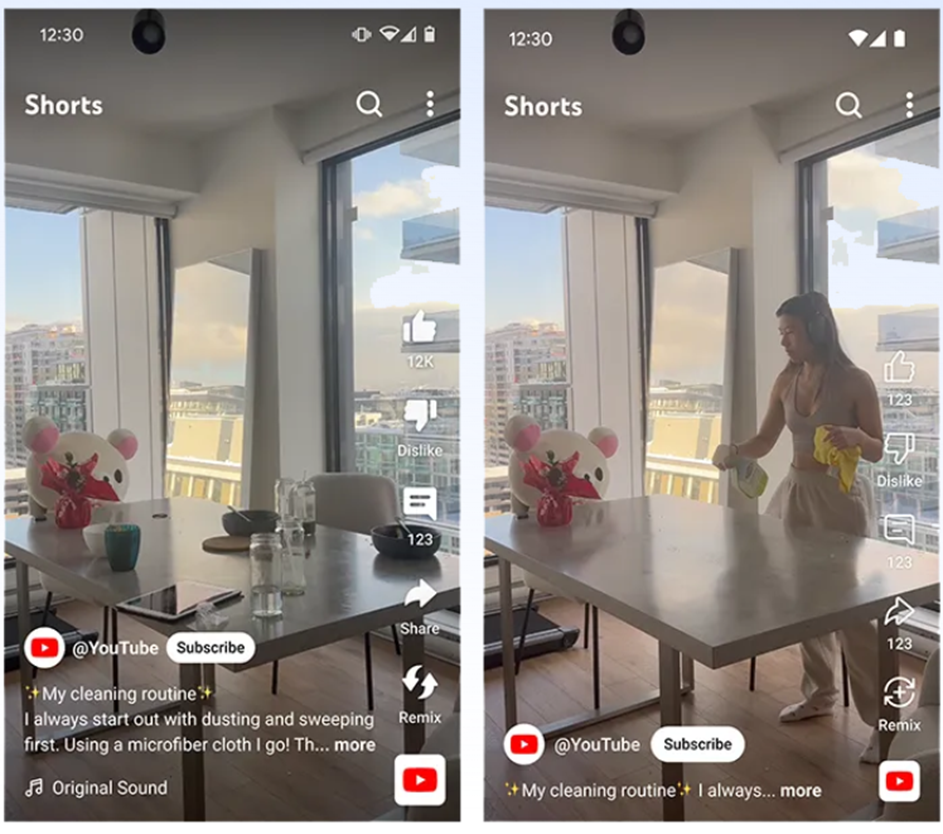
YouTube Shorts will support videos up to 3 minutes long starting October 15.
New creative tools include a “templates” feature for remixing trending Shorts.
It also integrates Google DeepMind’s Veo technology.
YouTube announced a series of features in its official blog titled “Tall updates coming to Shorts.” (Image credit – YouTube Official Blog)
YouTube recently announced a series of new exciting updates for YouTube Shorts creators and viewers. As explained via a blog post, the new updates are designed to make creating and connecting on the platform more fun and immersive.
The new updates include longer Shorts, new creative tools, and improved ways to engage with YouTube content. Here’s everything you need to know.
Longer YouTube Shorts, More Flexibility
YouTube creators will soon be able to upload Shorts up to 3 minutes long. The new update will be available starting October 15.
This feature offers creators more flexibility to tell their stories. The change applies to videos in square or vertical formats and will not impact previously uploaded Shorts.
YouTube also plans to improve recommendations for longer Shorts in the coming months. It will make the entire experience of YouTube shorts smoother for creators and viewers alike.
New Creative Tools
YouTube is introducing a new “templates” feature. It will allow creators to easily recreate trending Shorts by tapping “Remix” and selecting “Use this template.”
This feature enables users to add their own twist to popular content. You can even sync clips to trending sounds and jump into the latest trends effortlessly.
Soon, creators will also be able to remix content from YouTube’s vast library. This will include music videos and other clips, right from the Shorts camera.
Moreover, YouTube plans to integrate Google DeepMind’s Veo technology to help creators generate extraordinary video backgrounds. It can also be used for standalone clips to make Shorts even more captivating.
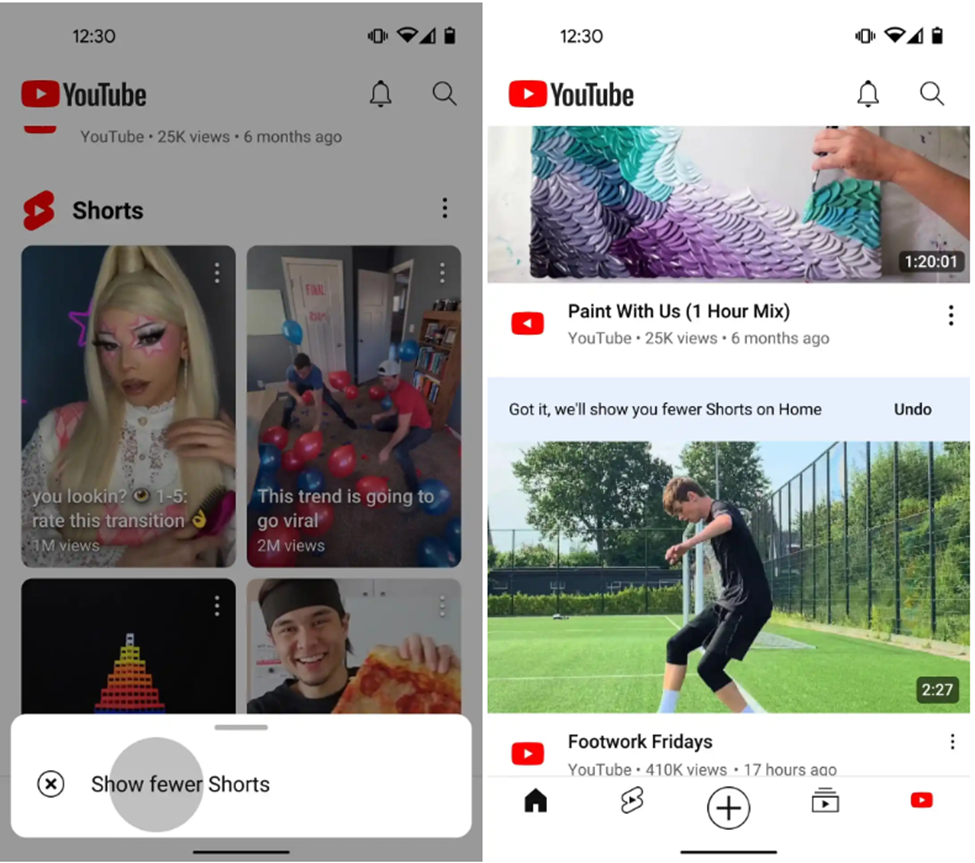
New YouTube engagement updates include a new Shorts trends page, comment previews and “Show fewer Shorts.” (Image credit – YouTube Blog page)
Engagement and Customisation
YouTube Shorts are about to get a longer playing time.
YouTube is also making it easier for fans to stay on top of trends.
As per the recent announcement, a new Shorts trends page will soon be available on mobile. Users would be able to use this page to explore what’s popular in their country and get inspired.
Viewers will also be able to see a preview of comments directly from the Shorts feed. This will offer a quick glimpse into conversations without needing to dive into the comments section.
Moreover, YouTube is adding an option to “Show fewer Shorts” for users who want more control over their feeds. Users can find this feature by clicking the three-dot menu in the Shorts grid on their Home feed. This will temporarily reduce the number of Shorts displayed.
All updates announced by YouTube today are aimed to make YouTube Shorts more engaging, creative, and personalised.
FAQs
Q1. What is the new maximum length for YouTube Shorts?
Answer. YouTube creators will be able to upload Shorts up to 3 minutes long, offering more flexibility in content creation starting October 15.
Q2. What new creative tools are being introduced for YouTube Shorts?
Answer. YouTube is adding a “templates” feature for easily remixing trending Shorts, and integrating Google DeepMind’s Veo technology for enhanced video backgrounds.
Q3. How is YouTube improving engagement and customization for Shorts?
Answer. YouTube will introduce a Shorts trends page, allow comment previews directly from the Shorts feed, and add an option to “Show fewer Shorts” for more personalized user control.
Q4. What Will Happen To Existing Shorts?
Answer. Existing Shorts will remain unaffected, and YouTube is working to fine-tune its recommendation algorithms to better accommodate the longer videos.
This update is part of a larger effort by YouTube to make Shorts a more enhanced platform for creators and viewers alike.
Q5. Will shorts on YouTube become more immersive now ?
Answer. Starting on October 15, you can upload Shorts up to 3 minutes long.
This was a top requested feature by creators, so gives more flexibility to tell the users story. This change applies to videos that are square or taller in aspect ratio, and won’t affect any videos you uploaded before October 15.
New research report raising privacy concerns for Pixel 9 Pro XL.
Research reveals that the Pixel 9 Pro XL transmits private user data to Google every 15 minutes.
It reportedly has remote control capabilities.
It issues frequent data sharing without explicit consent.
Google is expanding its Play Protect service in India to block sideloading of risky Android apps.
The pilot program will start next month.
Google’s latest flagship phone the Pixel 9 Pro XL has sparked new concerns about user privacy. A recent research reveals troubling issues related to constant data sharing and remote control capabilities. Here’s what we know so far.
According to Cybernews researchers, the Google Pixel 9 Pro XL “frequently transmits private user data to the tech giant before any app is installed.”
Cybernews researchers found that the Pixel 9 Pro XL sends private data to Google every 15 minutes.
This suggests that Pixel 9 Pro XL users may not have full control over their own devices. Not only privacy, if the reports coming out of the research hold any truth, It also raises questions on ownership.
Researchers used a “man-in-the-middle” approach to intercept the traffic between a new Pixel 9 Pro XL and Google’s servers.
Here are some key findings highlighted in the report.
Frequent Data Transmission Concerns
The research uncovered that the Pixel 9 Pro XL transmits private user data to Google every 15 minutes. This was recorded even before any apps were installed.
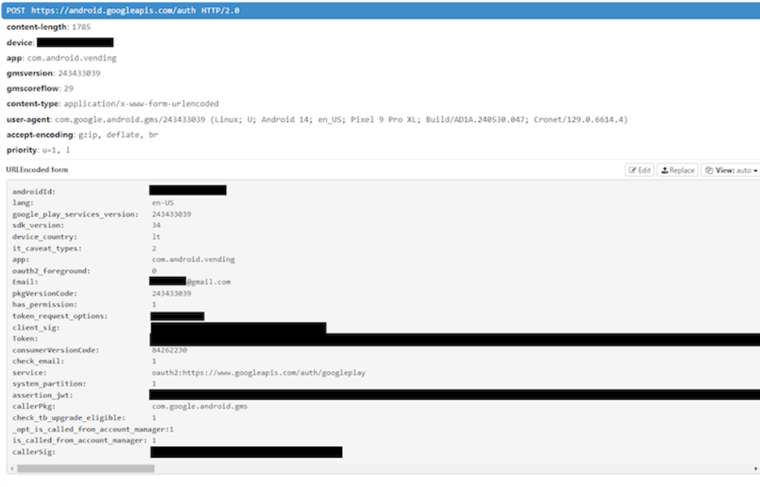
The phone requests a ‘check-in’ endpoint around every 40 minutes as per the report. (Image credit – Cybernews)
“Every 15 minutes, Google Pixel 9 Pro XL sends a data packet to Google. The device shares location, email address, phone number, network status, and other telemetry. Even more concerning, the phone periodically attempts to download and run new code, potentially opening up security risks,” said Aras Nazarovas, a security researcher at Cybernews.
The private data at risk includes sensitive details like the user’s location, email address, and phone number. The phone uses nearby Wi-Fi networks to estimate the user’s location even when the GPS is turned off.
“The Pixel 9 Pro XL repeatedly uses PII for authentication, configuration, and logging. This practice doesn’t align with the industry’s best anonymization practices and appears excessive. The smartphone transmits the user’s email address, location, and phone number, even when utilizing a variety of other identifiers for the user and the device,” Nazarovas said.
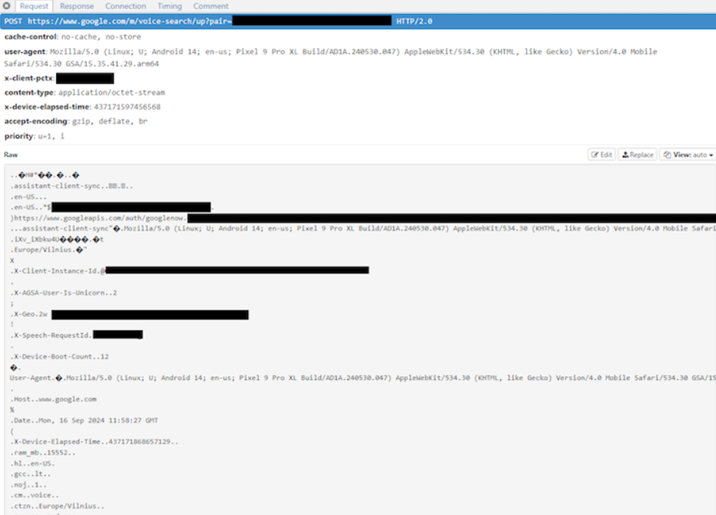
Research also highlights “Voice Search, was connecting to its servers sporadically.” (Image credit – Cybernews)
As per the researchers, some of this data is sent to endpoints responsible for device management, policy enforcement, and biometric processing. However, all this happens without explicit user consent.
Remote Control Features
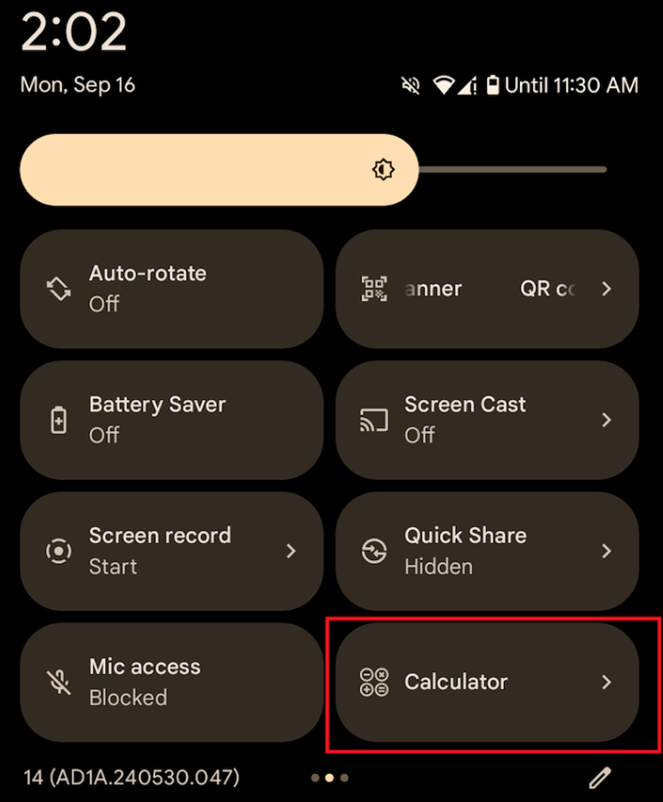
Researchers noticed that even when the phone is locked, the calculator app is accessible through the notification tray widgets.
Another alarming claim of the report is that the Pixel 9 Pro XL has the ability to connect to Google servers to request updates and even download and run new code without user knowledge.
If true, this directly suggests that Google can remotely control certain aspects of the phone. This opens potential several security risks. However, the report highlights that no harmful actions were observed during the study.
Privacy Vulnerabilities in Apps
Researchers observed that when the calculator app is accessible through the notification tray widgets even when the phone is locked. (Image credit – Cybernews)
Researchers also found a privacy issue with the calculator app. As per reports, it can be accessed from the notifications even when the phone is locked.
This leaves the data such as calculation history exposed. It can have highly sensitive information and raises concerns about unauthorized access to personal information.
“We were unable to access any user data without first unlocking the device and the calculator was a single exception. It is important to note the widget in the notifications tray is not enabled by default – the user would have to manually add it to the list of shortcuts,” Nazarovas said.
These findings raise serious questions about user control and privacy.
It is important to note that the report highlights that no data was sent to third parties and no malicious activities were detected during the study. However, the sheer volume of information being shared regularly with Google has sparked concerns.
One of the main questions we have now is whether users truly “own” their devices or if control lies with the tech giant.
Google Expands Enhanced Fraud Protection in India, Blocks Risky App Sideloading
Adding to the privacy concerns, the Pixel 9 Pro XL continuously checks for updates and downloads from Google’s staging environment.
In other news, Google is working to combat fraud and scams in India by expanding its Play Protect service. This initiative was first introduced in Singapore earlier this year.
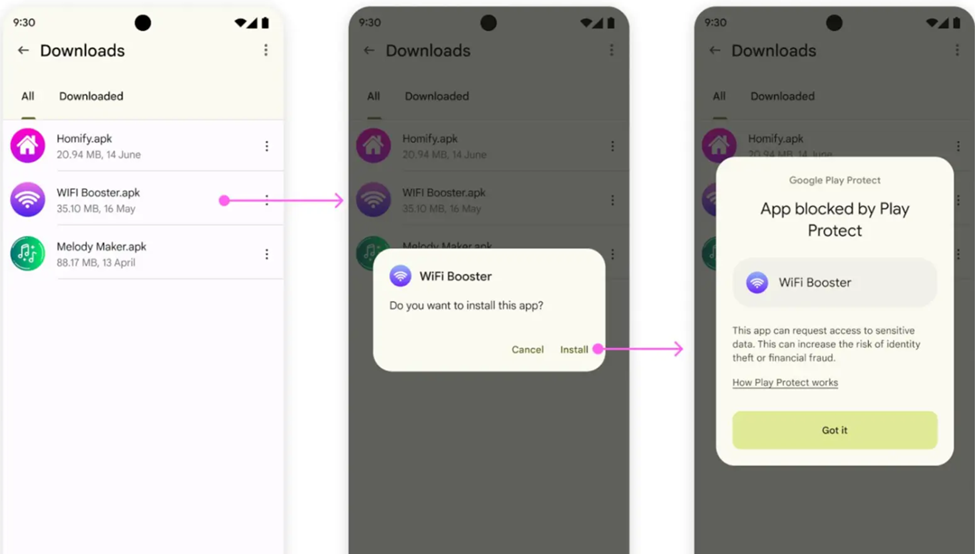
The company will launch a pilot program next month. The program will aim at blocking the sideloading of certain risky Android apps.
It will target apps that seek sensitive permissions, such as accessing incoming one-time passwords (OTPs) or monitoring user activity on the device.
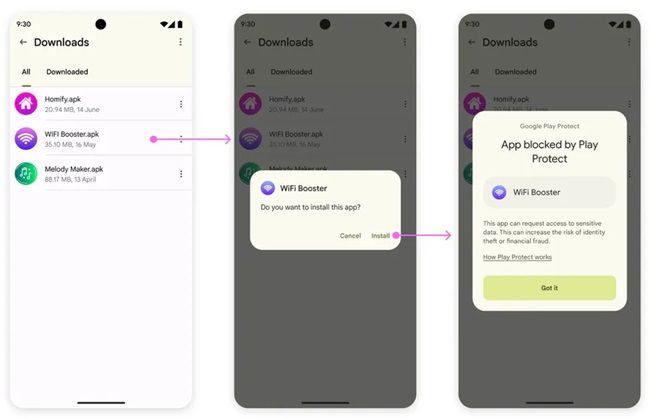
Google explains the feature, “This enhanced fraud protection will analyze and automatically block the installation of apps that may use sensitive permissions frequently abused for financial fraud. It will inspect the permissions the app declared in real-time and specifically look for permission requests that are frequently abused by fraudsters to intercept one-time passwords via SMS or notifications, as well as spy on-screen content (they are RECEIVE_SMS, READ_SMS, BIND_Notifications, and Accessibility).”
The initiative is part of Google’s broader efforts to curb fraudulent app installations globally.
Google has “nearly 900,000 high-risk installations in Singapore alone.” (Image Credit – 9to5Google)
The feature is already operational in countries like Singapore, Brazil, and Thailand.
In Singapore, Google claims it has blocked nearly 900,000 high-risk app installations. The expansion to India aims to build on this success and further protect Android users from potential scams.
FAQs
Q1. What is the new privacy concern with Google’s Pixel 9 Pro XL?
Answer. The Pixel 9 Pro XL transmits private user data to Google every 15 minutes, even before any apps are installed, raising concerns about constant data sharing and remote control capabilities.
Q2. What measures is Google taking to combat fraud and scams in India?
Answer. Google is expanding its Play Protect service to block sideloading of risky Android apps that seek sensitive permissions, with a pilot program rolling out in India next month.
Q3. What is the impact of Google’s Play Protect expansion?
Answer. The Play Protect expansion aims to prevent the installation of high-risk apps by blocking those sourced from risky internet-sideloading sources, following successful implementations in Singapore, Brazil, and Thailand
45 students in Maharashtra’s Thane city fell ill due to food poisoning from a mid-day meal
FIR registered against the school management and food supplier.
FDA officials collected food samples for testing.
Police are investigating but no arrests have been made yet.
Maharashtra School food poisoning case, FIR against management. (Image credit – Livemint)
Police have registered an FIR against the management of a private school near Maharashtra’s Thane city after 45 students fell ill due to suspected food poisoning from a mid-day meal.
The incident came to light when 38 students between the ages of 8 and 11 years were rushed to a civic hospital in Kalwa on Tuesday. The students experienced symptoms such as dizziness, nausea, headaches, and stomach pain after having a mid-day meal at their school.
Later, seven more children were admitted with similar health issues. The total number of affected students increased to 45.
One of the student’s parents complained to the local police station immediately
The Kalwa police filed an FIR against the school management and the food supplier under section 125 of the Bharatiya Nyaya Sanhita (for endangering personal safety or life due to negligence) and FDA regulations.
As per local sources, police have not made any arrests as of now and are currently investigating the matter keeping all options open.
The hospital’s medical in-charge Dr. Aniruddha Malgaonkar confirmed that the children are currently being monitored.
An official from Thane Municipal Corporation (TMC) also stated that 37 of the students were in stable condition and would be discharged after 24 hours. However, eight children with severe symptoms of fever and vomiting will remain under observation for an additional 12 hours.
TMC Additional Commissioner Sandeep Malvi confirmed that the children had eaten a mid-day meal at the private school. As per reports, the meal included rice and moth bean (matki) curry.
FDA officials have collected samples of the food for testing.
The situation unfolded when a few students initially reported feeling unwell and the number of students reporting symptoms started increasing. Ambulances were called by the school and the affected students were taken to the hospital.
Many parents were also present at the hospital as per local sources.
Dr. Aniruddha Malgaonkar, the hospital’s medical in-charge, said the children were being closely monitored. Thirty-seven were in stable condition and expected to be discharged after 24 hours of observation at 5 pm, according to a Thane Municipal Corporation (TMC) official. However, eight children, showing symptoms of fever and vomiting, would remain under observation for an additional 12 hours.
“…The primary information was that 24 students were having stomach pain. We sent the ambulance immediately. A total of 38 students have been admitted to the hospital…There is a suspicion of food poisoning in the meal of the school…All the students are stable. We will monitor them for 24 hours…” Kalwa Hospital Dean, Anirudh Malgaonkar said.
TMC Additional Commissioner Sandeep Malvi confirmed the children had consumed a mid-day meal at the private school. A medical official stated that the students were served rice and moth bean (matki) curry. FDA officials have collected food samples for testing.
“Ambulances were summoned by the school administration and the students were rushed to the hospital,” they added. The parents of the children were also present at the hospital.
FAQs
Q1. What incident led to the FIR against a private school in Thane?
Answer. An FIR was filed against the management of a private school near Thane after 45 students fell ill due to suspected food poisoning from a mid-day meal.
Q2. What symptoms did the Thane students experience?
Answer. The students experienced dizziness, nausea, headaches, and stomach pain after consuming the mid-day meal at school.
Q3. How many students were initially hospitalized in Thane due to food poisoning?
Answer. Initially, 38 students were hospitalized, and later, an additional 7 students were admitted, bringing the total to 45.
Hyundai Motor India is launching a ₹25,000 crore IPO on October 14, 2024.
It will be the largest in India since LIC’s ₹21,000 crore IPO.
The IPO is an Offer-for-Sale (OFS) of 142,194,700 equity shares.
It aims to raise at least $3 billion for Hyundai Motor Company but no new funds for Hyundai Motor India.
Hyundai Motor India IPO is expected to launch on October 14. (Image credit – REUTERS)
Hyundai Motor India Ltd is all set to launch its highly anticipated ₹25,000 crore Initial Public Offering (IPO) this month. According to media reports, this will be the largest in India since the ₹21,000 crore IPO of Life Insurance Corporation (LIC).
The IPO is set to open on October 14 as per recent reports.
According to the Draft Red Herring Prospectus (DRHP) filed earlier this year in June, Hyundai’s IPO will be an Offer-for-Sale (OFS) of 142,194,700 equity shares by its parent company Hyundai Motor Company. It is also being reported that no new shares will be issued. This means the proceeds will go to the parent company and Hyundai Motor India Ltd will not receive any funds from the sale.
Hyundai Motor Company is reducing its stake in Hyundai Motor India through the OFS route. It expects to raise at least $3 billion (₹25,000 crore).
The company received approval from the Securities and Exchange Board of India (SEBI) on September 24 to proceed with the IPO.
According to the DRHP, the book-running lead managers of the proposed IPO are Kotak Mahindra Capital Company Limited, Citigroup Global Markets India Private Limited, HSBC Securities & Capital Markets Pvt Ltd, JP Morgan India Private Limited, and Morgan Stanley India Company Pvt Ltd. Meanwhile, Kfin Technologies Limited is the key issue registrar.
The Indian subsidiary of South Korean automaker Hyundai began operations in India is 1996. It currently offers 13 models across different segments and is the second-largest car manufacturer in India after Maruti Suzuki.
Hyundai Motor India mentioned in its draft papers that the IPO would enhance its visibility, boost its brand image, and provide liquidity in the public market for its shares.
Earlier in February, reports indicated that the automaker may dilute 15-20% of its stake, potentially raising between $3.3 billion to $5.6 billion.
This IPO comes at a time of growing interest in the Indian primary market. Companies from various sectors tapping into the strong market momentum. About 62 companies have raised around ₹64,000 crore through IPOs in 2024, a 29% increase compared to the ₹49,436 crore raised by 57 firms in 2023.
Hyundai Motor India will become the first automaker in India to mark an IPO in over two decades. Previously, Maruti Suzuki was listed in 2003.
FAQs
Q1. When is Hyundai Motor India’s IPO scheduled to open?
Answer. Hyundai Motor India’s ₹25,000 crore Initial Public Offering (IPO) is scheduled to open on October 14, 2024.
Q2. What is the nature of Hyundai’s IPO and how much is it expected to raise?
Answer. The IPO is an Offer-for-Sale (OFS) of 142,194,700 equity shares by Hyundai Motor Company, expected to raise at least $3 billion (₹25,000 crore).
Q3. Why is this IPO significant for the Indian market?
Answer. This IPO is significant as it is the largest in India since LIC’s ₹21,000 crore IPO and marks the first automotive IPO in over two decades, amid growing interest in the Indian primary market.
Microsoft is adding voice and vision capabilities to its Copilot.
New features will allow users to interact more naturally and efficiently.
Will introduce more personalised features like Copilot Voice and Copilot Daily.
Copilot Vision helps users interact with web content in real time, interpreting text and images.
Introduced Think Deeper for complex questions.
Copilot Labs for user feedback and further development before a wider release.
Microsoft announced new Copilot features in a blog post titled “An AI companion for everyone”. (Image credit – Microsoft)
Microsoft is rolling out significant updates to its chatbot, Copilot. It is adding AI-powered voice and vision capabilities. These updates announced recently via the Microsoft blog aim to make Copilot more intuitive, efficient and accessible, “creating an AI companion for everyone”. It will provide faster and more natural responses.
The new Copilot Voice feature is similar to the voice modes in Gemini Live and ChatGPT. Moreover, the Recall feature will now be available to all Windows Insider users this month.
In the blog post, Mustafa Suleyman Executive Vice President and CEO of Microsoft AI said, “Copilot will be there for you, in your corner, by your side and always strongly aligned with your interests. It understands the context of your life, while safeguarding your privacy, data and security, remembering the details that are most helpful in any situation. It gives you access to a universe of knowledge, simplifying and decluttering the daily barrage of information, and offering support and encouragement when you want it.”
Today we’re launching our new Copilot experience. I truly believe we can deliver a calmer, more helpful and supportive era of technology, with a Copilot that is now more intuitive, more personalized, and secure. Learn more, download, and enjoy.
At Microsoft AI, we are creating… pic.twitter.com/gxY1DgwNzV
— Mustafa Suleyman (@mustafasuleyman) October 1, 2024
Microsoft Copilot Team further explained, “Our refreshed Copilot is focused on delivering a more intuitive design with more digestible, speedy and fluent answers. It now adapts to you with a warm tone and a distinct style, providing not only information but encouragement, feedback and advice as you navigate life’s everyday challenges — no matter how big or small. For example, in addition to helping you plan that big trip, it can also offer tips on how to keep your composure when, say, the back of your seat is getting kicked by a small child.”
Microsoft Copilot Updated With AI-Powered Features
In a new blog post on its official website, Microsoft has shared details of the new AI features coming to Copilot. These features will be available on the Copilot app on iOS and Android, the web client as well as the Copilot assistant on Windows.
The latter will only be available on the Copilot+ PCs, which are currently powered by the Snapdragon X series chipsets.
Key Updates Announced for Copilot’s Next Phase
Copilot Voice
Users can now interact with Copilot using voice commands. It will make it easier to brainstorm, ask quick questions, or simply vent. It offers four voice options and allows a more personalized experience.
Copilot Daily
This feature helps users start their day with a summary of news and weather. Everything will be delivered in the chosen Copilot voice. Copilot Daily pulls content from authorized sources like Reuters, USA TODAY, and Financial Times. It plans on adding more partners and personalisation options.
Personalised Discover Cards
This feature provides a guide to Copilot’s useful functions and conversation starters. It customises the AI features based on users’ interactions with Microsoft services and conversation history.
Copilot in Microsoft Edge
Image: Microsoft
Copilot will be Integrated directly into the Edge browser. It will be able to answer questions, summarise web pages, translate text, or rewrite sentences. Microsoft is making is easily accessible by typing “@copilot” into the browser’s address bar.
Copilot Labs
Image: Microsoft
Microsoft is introducing experimental features through Copilot Labs. Users will be able to use this new feature to try new tools and provide feedback.
Two new features are launching in Labs:
Copilot Vision: This will allow Copilot to see and interpret the content of web pages. It will include both text and images. Copilot Vision can answer questions, suggest next steps, and provide assistance without disrupting workflow.
Think Deeper: It is designed to help with more complex questions. This feature provides step-by-step reasoning for detailed queries. It’s still in development and currently available in Copilot Labs for testing and feedback.
Microsoft emphasizes that safety and privacy are central to these new features. Copilot Vision ensures user data is discarded once a session ends.
The company plans to refine the tools based on user feedback before a broader release.
More announcements in the Microsoft blog include –
Initially available in English in Australia, Canada, New Zealand, the United Kingdom and the United States, Copilot will expand to more regions and languages soon.
Copilot Daily is rolling out in the United States and the United Kingdom with more countries coming soon.
Personalisation in Copilot follows our Microsoft Privacy Statement, and people can opt out at any time in Settings.
Microsoft is finalising options for offering personalization to users in the European Economic Area and the United Kingdom.
Copilot Vision is rolling out to Copilot Labs soon and will be available to a limited number of Copilot Pro subscribers in the United States.
Think Deeper starts to roll out this week through Copilot Labs to a limited number of Copilot Pro users in Australia, Canada, New Zealand, the United Kingdom and the United States.
FAQs
Q1. What new capabilities has Microsoft Copilot added recently?
Ans. Microsoft Copilot has added voice and vision capabilities, allowing for two-way verbal conversations and image recognition.
Q2. How does Copilot Voice work?
Ans. Copilot Voice enables users to have verbal conversations with Copilot, similar to ChatGPT Voice Mode and Gemini Live.
Q3. What is Copilot Discover?
Ans. Copilot Discover provides personalized suggestions and guides to help users get started with Copilot, based on their use of other Microsoft services.
Q4. What improvements have been made to Copilot’s interface?
Ans. Copilot’s interface has been redesigned to be more user-friendly and card-based, with a personalized Copilot Discover page.
Q5.What are the Key Features of Microsoft Copilot ?
Ans. Natural Language Processing (NLP): Copilot understands and generates human-like text, allowing users to interact with it using everyday language. This feature simplifies tasks like drafting emails, creating documents, or generating summaries from large blocks of text.
Data Analysis and Visualization: In applications like Excel, Copilot can automatically analyze data and provide insights, create complex data visualizations, and even suggest ways to optimize data layout for better understanding and presentation.
Content Creation: Whether it’s drafting a blog post in Word or designing a presentation in PowerPoint, Copilot assists by suggesting content based on the input you provide. It can write sections of text, suggest design layouts, and recommend images or themes that align with your content.
Workflow Automation: In Outlook, Copilot can help manage emails by summarizing email threads, drafting responses, and prioritizing emails based on urgency and relevance. This automation extends to scheduling and managing meetings, thus freeing up valuable time for users.
Integration and Customization: Copilot is designed to seamlessly integrate with the tools within the Microsoft ecosystem, enhancing the functionality of each tool while providing a unified experience across apps.
Q6.What are the Benefits of Microsoft Copilot in the Workplace ?
Ans. Increased Productivity: By automating routine tasks and streamlining complex processes, Copilot allows professionals to focus on higher-value activities, significantly boosting productivity.
Enhanced Creativity: With AI-driven suggestions for content and design, users can explore new creative possibilities without the initial heavy lifting that often hampers the creative process.
Improved Decision Making: Copilot’s ability to analyze data and provide actionable insights helps professionals make informed decisions faster and with greater confidence.
Accessibility and Inclusivity: The intuitive nature of Copilot’s interface, combined with its ability to understand natural language, makes technology more accessible to people with diverse skill sets and abilities.
Google is expanding AI access in India, announced multiple initiatives at the Google for India 2024 event,
Will enhance language support, introduce new features in Google Lens and Maps.
Empower businesses with AI tools.
Improving financial inclusion through Google Pay partnerships.
Google is driving large-scale impact with an open-source AI framework
Google is focusing on online safety with new fraud protection initiatives, investing in renewable energy projects and launching AI training programs.
Google announced key product updates at Google for India event. (Photo Credit: Haider Ali Khan)
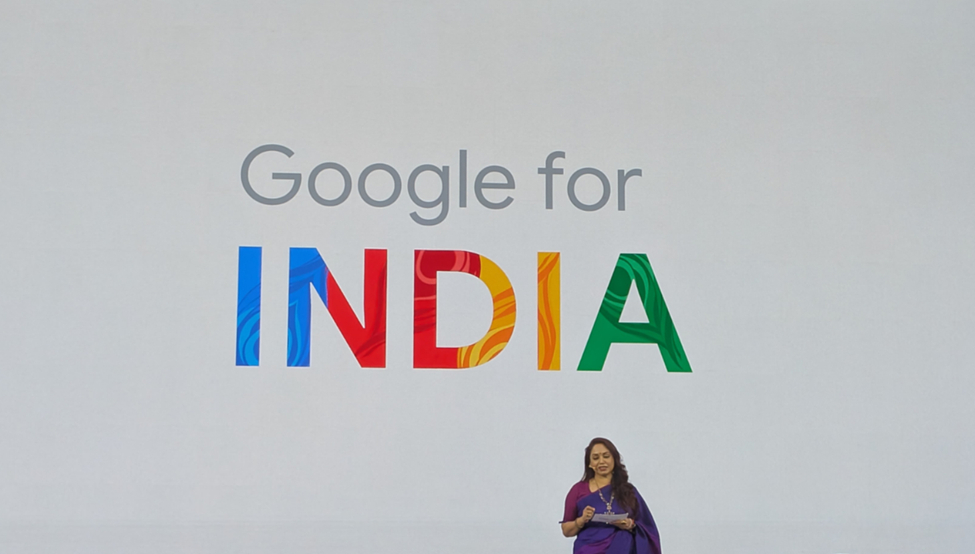
Google recently announced key product updates at the tenth edition of the Google for India event highlighting the company’s commitment and plans for the country. The theme of the event was ‘AI for Every Indian’. It showcased the latest in AI innovation with Google India MD Roma Chobey’s opening keynote.
Roma Datta Chobey kicked off the tenth edition of Google for India 2024 and said, “Remember those days, when booking a train ticket meant hours in line or paying bills was a day-long task? In the past 20 years, India has surged forward with Google in step. India’s digital revolution is rewriting the rules with the world’s lowest data cost, video is the gateway, UPI has revolutionised payments, and orders are being delivered in under ten minutes.”
According to Budaraju, “This can be a game changer for teachers, entrepreneurs, artists, and everyone, as we are making it even more accessible with the power of your voice, as over 40 per cent of Gemini Indian language users are already using the voice feature.” “Gemini is constantly learning and growing, and our Gemini models are also helping us reimagine Google Search for you. It’s helping us unlock entirely new types of questions and transforming the way information is organised in search to make sense of what’s out there,” Budaraju said.
Sugandh Saxena, CEO, Fintech Association for Consumer Empowerment: “Giving people safe platforms to access digital financial services rests on several pillars. Our work tells us that fraudsters are misusing open web links to distribute malicious apps to harm customers in various ways. Google’s enhanced fraud protection pilot will be a vital toolkit to plug a critical gap in protecting customers from financial crimes. We believe this initiative will help combat such frauds and we look forward to contributing to the program.”
Manish Agrawal, Senior Executive Vice President & Head – Credit Intelligence & Control, HDFC Bank Limited: “Rapid digitisation of financial transactions in India over the past few years has spelled convenience to millions of people. It also requires consumers to be vigilant against cyber fraudsters. HDFC Bank is committed to educating about safe digital banking practices with multiple initiatives through the year. Google’s new pilot, Google Play Protect Enhanced Fraud Protection, is another step towards user security and app protection. The new feature proposes to protect the user against harmful apps and malware being downloaded onto their device. In the ongoing fight against digital frauds, concerted efforts by all stakeholders are the key to make a safe digital banking environment for all.”
Meet the speakers who will be joining us at the 10th edition of #GoogleForIndia 🎤
Tune in to the livestream on October 3rd, 11:30 AM as they share our plans for the next chapter of India’s digital journey with ‘AI for India’ 🇮🇳https://t.co/BcOqMVlDEx. pic.twitter.com/wHZH1KhywE
— Google India (@GoogleIndia) October 1, 2024
10 years 🗓️ 1 event 💙
Each edition of Google for India has given us a reason to celebrate a journey of technology by India, for India.
Join us this year for the 10th edition of #GoogleForIndia on 3rd October 2024, as we bring the best of our AI to drive India-scale Impact 🚀… pic.twitter.com/yOrWqFnksJ
— Google India (@GoogleIndia) October 2, 2024
“Technology and AI is going to be the biggest binder of the unification of India and to bridge the gaps of diversities. With data-driven decision-making, it will bring about revolutionary change to India’s future,” said Union Minister of Culture and Tourism Gajendra Singh Shekhawat during the event.
“Our objective is to make the promise of AI real for every Indian, illustrating the many ways it can supercharge our collective potential. AI can galvanize the ways in which every citizen can become as unlimited as their imagination, revolutionize critical areas like healthcare and agriculture, and help transform India’s demographic advantage into a true demographic dividend,” Google mentioned in a blog.
You can watch the event here –
Google’s “AI for Every Indian” Initiative
Breaking Down Information Barriers:
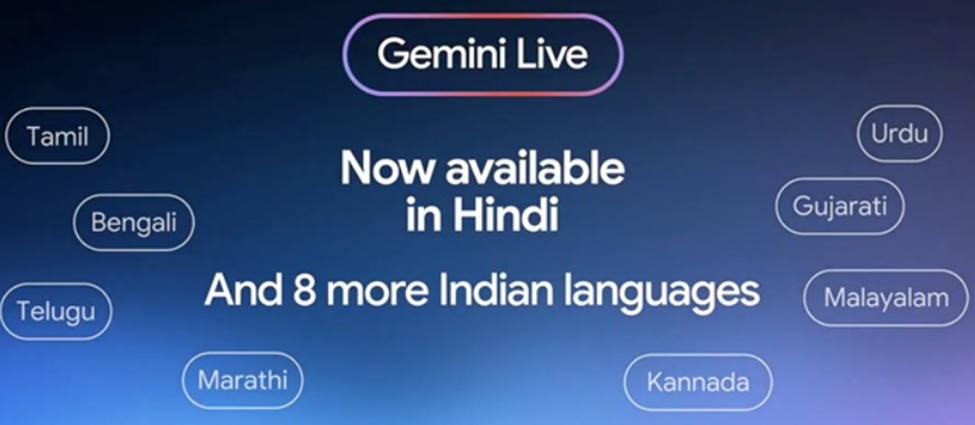
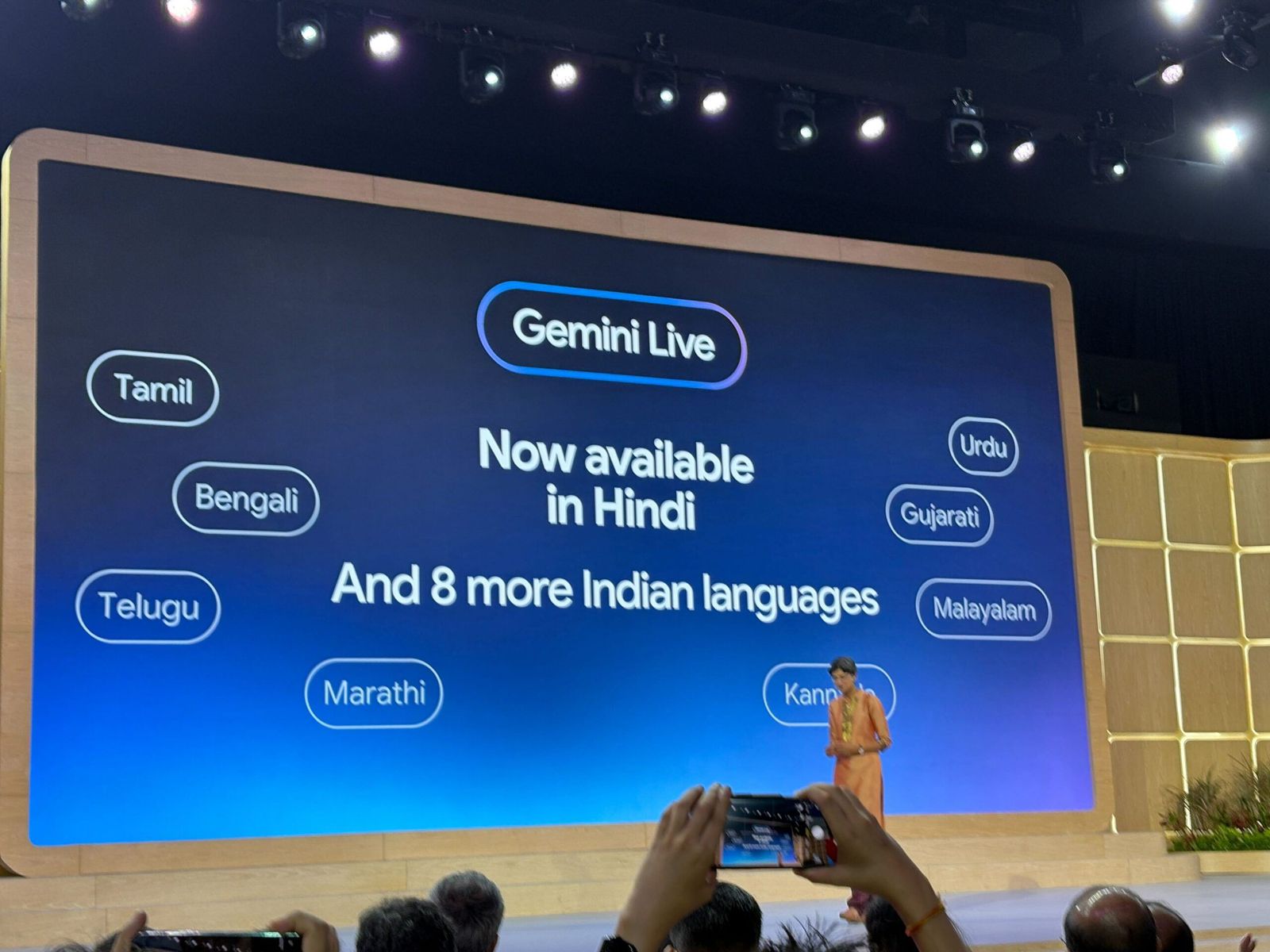
Gemini Live and AI Overviews in Google Search to be available in more Indian languages. (Image credit – Google)
Introducing Gemini AI to make information more accessible in India.
Expanding Gemini Live and AI Overviews in Google Search to more Indian languages. Users can interact with Gemini in nine Indian languages. After the initial launch in English, support for Hindi is rolling out. In the future, more languages will follow, including Bengali, Gujarati, Kannada, Malayalam, Marathi, Telugu, Tamil, and Urdu.
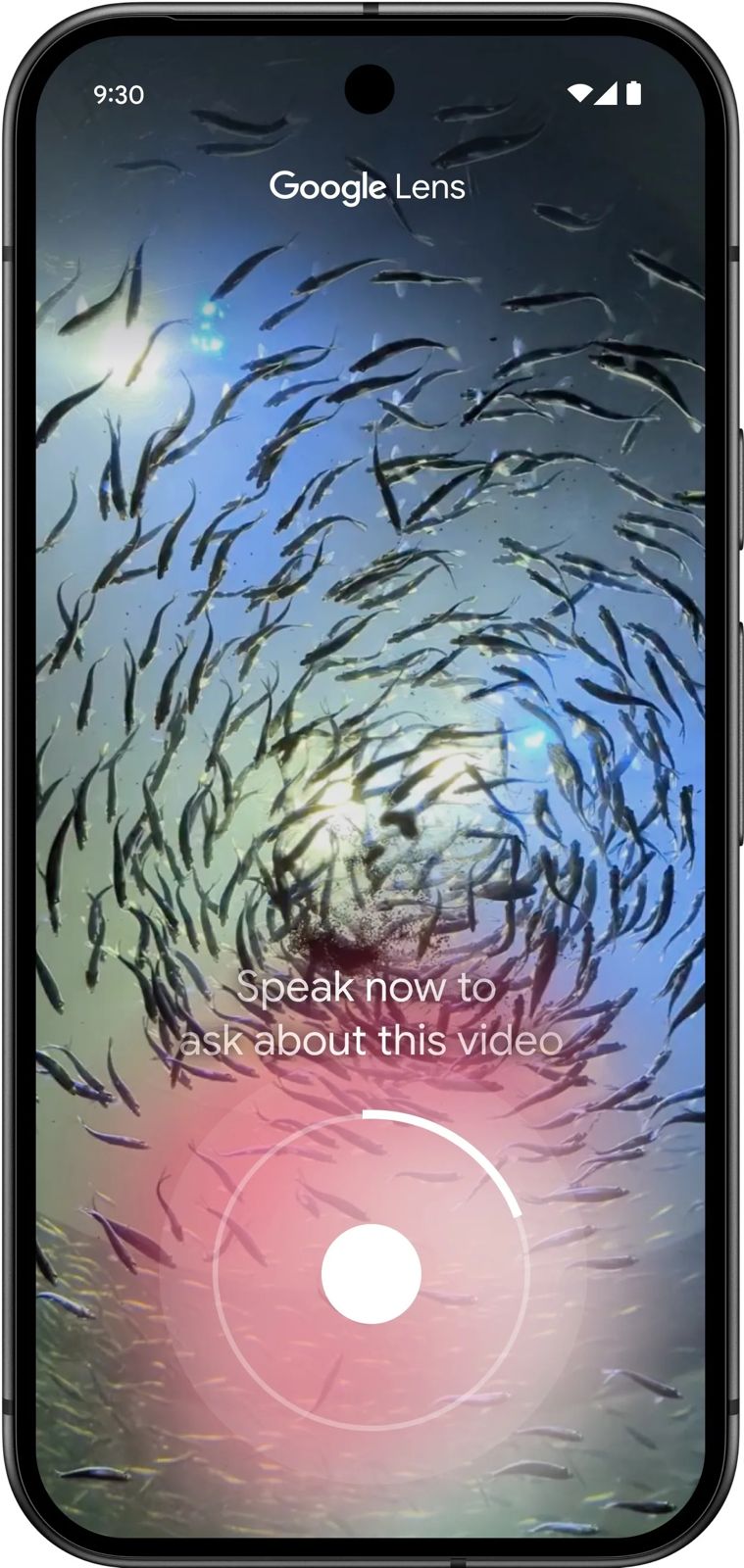
A new Google Lens feature will allow video-based searches.
Innovations in Google Maps to make journeys more insightful, visual, and safer.
Empowering Businesses with AI:
You can now get real-time weather alerts on Google Maps.
AI-powered tools to help businesses create engaging visuals and videos.
Features to enhance online presence and provide immersive experiences.
Instant chat feature integrated into Google Search for better customer engagement.
Expanding Financial Inclusion:
Lens now let users ask questions about videos with voice prompts. (Google)
Google Pay expanding credit access with partnerships.
New credit offerings with Aditya Birla Finance Limited.
Launching gold-backed loans in partnership with Muthoot Finance.
Supporting Digital Health Infrastructure:
Helping build platforms for developers to integrate with the Ayushman Bharat Digital Mission.
ABHA ID Cards are to be accessible in Google Wallet from next year, in partnership with Eka Care.
Google Committing Large-Scale Impact Through Gemini and Google Cloud
Google’s mission has always been to organize the world’s information and make it universally accessible and useful.
Open Networks and AI Converge to Empower India:
Google is expanding Google Play Protect’s capabilities to improve fraud protection for users installing apps from unofficial sources.
Launching an open-source AI Agent Framework, powered by Gemini.
Focus on revolutionizing agriculture and skill development by unifying information and services access.
Strengthening India’s Data Sovereignty:
Offering Indian organizations the ability to store data and run machine learning processes entirely within India using Gemini 1.5 Flash.
Sharing India’s Digital Success with the World:
Launching “DPI in a Box” with EkStep Foundation to help other nations replicate India’s digital public infrastructure success.
Google’s Investments in Online Safety, Skill Development, and Green Energy
You can now get real-time weather alerts on Google Maps.
Prioritizing Online Safety:
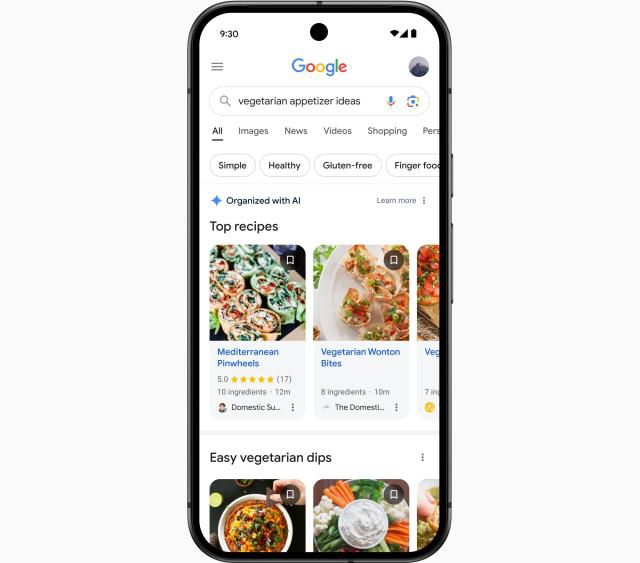
Google will organise some search results using its AI technologies. (Google)
Piloting enhanced fraud protection in Google Play Protect to combat financial fraud.
Establishing a new Google Safety Engineering Center (GSEC) in India in 2025 to address scams, fraud, and security threats.
Advancing Clean Energy Goals:
New partnerships with CleanMax and Adani Energy to add 186 MW of renewable energy to India’s grid.
Supporting Google’s offices and cloud infrastructure while contributing to India’s clean energy initiatives.
Skilling India for the Age of AI:
Google to get ads to its AI Overview feature. (Google)
Launching AI Skills House to train 10 million Indians in AI via digital courses on YouTube and Google Cloud.
org is supporting AI awareness and literacy projects through a $4 million grant to the Central Square Foundation.
Further supporting Rocket Learning by developing an AI-powered learning tutor for young children.
FAQs
Q1. What new language support has Google introduced for Gemini Live in India?
Ans. Google has introduced Hindi support for Gemini Live, with plans to add support for 8 more Indian languages soon.
Q2. What new features has Google added to Google Maps in India?
Ans. Google has added real-time weather updates for fog and flooding, allowing users to report and receive alerts about these conditions on the roads.
Q3. What is the new feature in Google Pay called UPI Circle?
Ans. UPI Circle allows users to request someone else to pay money on their behalf, adding a new level of convenience to transactions
Q4. What new healthcare features did Google announce for India?
Ans. Google announced AI-powered tools for cancer and tuberculosis screening, aiming to enhance healthcare accessibility in India.
Q5. What are the merchant tools introduced by Google?
Ans. To cater to its merchants in India, Google will now allow them to add their WhatsApp contact information directly to their Google business pages. This feature, which allows customers to text businesses directly on WhatsApp, is a step up from the existing option of only adding a phone number for calls. This feature is being rolled out in India first.
Q6. What are the Gemini Live languages in India?
Ans. Google today will roll out 9 Indian languages for Gemini Live, which includes Hindi, Bengali, Gujarati, Kannada, Malayalam, Marathi, Telugu, Tamil, and Urdu. Google said, “In India, with over 40% of Gemini’s Indian language users already relying on voice interactions.” Now, with multiple Indian languages included, users can freely make real-time conversations with Google’s voice assistant within the Gemini App. The Gemini Live languages will be rolled out to Android users in the coming weeks.
Q7. What is the AI Overviews Language Expansion in India?
Ans. Apart from Gemini Live, Google is introducing Indian languages to AI Overviews as well, which is the company’s most used search feature. Overviews is one of the crucial Google AI features, enabling users to access required information in a quick and summarized format. However, in India, it was only available in English and Hindi. Therefore, to make it more accessible and celebrate the diversity of India, Google has announced four new languages for AI Overviews: Telugu, Tamil, Bengali, and Marathi. These languages will be rolled out in the coming weeks to Google Search.
Q8. What is the AI-backed healthcare introduced by Google?
Ans. The company has announced an AI-powered tuberculosis and cancer screening tool for Indian hospitals. The tool will be available for free for the next decade, contributing to the improvement of the Indian healthcare system.
Q9. How will Google help in Data storage and cybersecurity?
Ans. Google has announced the expansion of its Gemini 1.5 Flash data localisation initiative, ensuring companies in India can store their data locally in compliance with the country’s data protection regulations. Moreover, with the rise in cyberattacks, Google plans to launch its Safety Engineering System by 2025, building upon its anti-fraud initiative, DigiKavach, which was introduced last year.
Q10. What are the new features announced by Google for Google Maps & Google Pay?
Ans. Google is enhancing real-time updates on Google Maps, introducing reports and alerts for flooding and fog conditions. These new features aim to offer users more timely and relevant information for better navigation in challenging weather.
Google Pay, which currently connects 35 million users in India, introduced a new feature called UPI circle. It will allow users to request payments on behalf of others. This feature will be particularly helpful for families where one member can handle payments for another. Google Pay has also expanded loan limits to Rs 5 lakh, with the option to apply for gold loans up to Rs 50 lakh.
The estimated BOM for the iPhone 16 Pro Max is $485.
It is slightly higher than the iPhone 15 Pro Max’s $453.
BOM excludes other significant expenses such as research, development, marketing, and distribution.
Apple’s gross margin on the iPhone 16 Pro Max is around 60%.
As per recent BOM, Apple earns a 60% margin on the iPhone 16 Pro Max. (Image credit – Apple)
The first cost estimate for manufacturing the iPhone 16 Pro Max has surfaced online after the teardown video.
In industry terms, it is also known as the Bill of Materials (BOM). Before we explore the iPhone Pro Max cost sheet released by research firm TD Cowen, it is important to note a few details.
First of all, this estimated cost of manufacturing only reflects the direct costs of production. It does not include various other significant expenses such as research, development, marketing, and distribution.
Tim Cook has famously said that BOM estimates don’t accurately capture the actual expenses as the real cost of production is much higher.
However, BOM analyses provide an interesting insight. It also gives an idea of how hardware upgrades contribute to price changes.
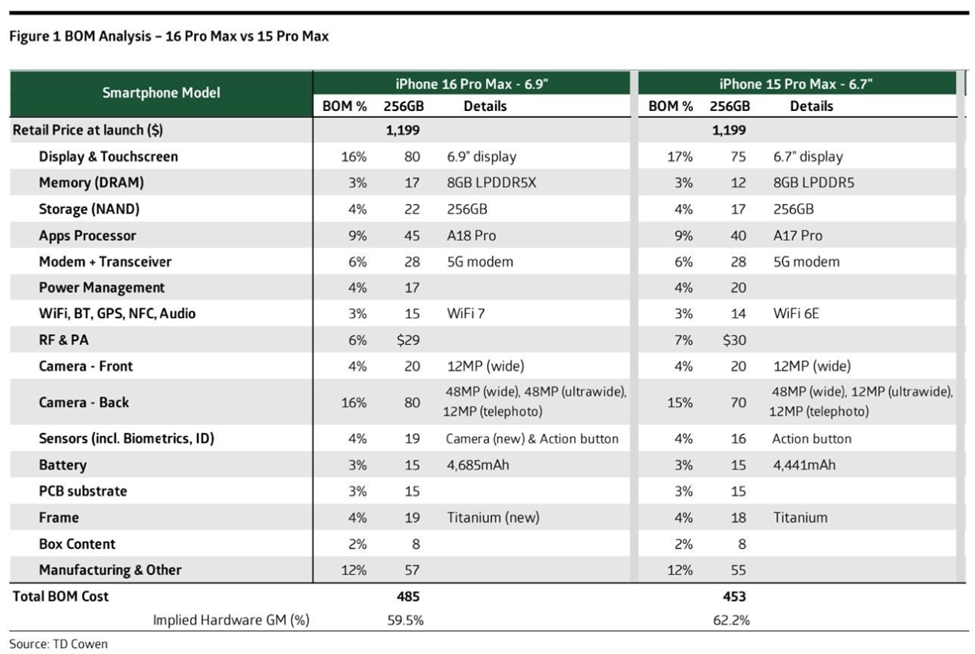
iPhone 16 Pro Max BOM (Source – TD Cowen)
According to research firm TD Cowen, the iPhone 16 Pro Max’s production cost is estimated at $485. This is only slightly higher when compared to the iPhone 15 Pro Max’s BOM of $453.
It is interesting to note that even with a larger 6.9-inch display, a bigger battery, a new Camera Control button and the faster Apple A18 Pro processor in iPhone 16 Pro Max, the overall production cost hasn’t risen too much.
The TD Cowen report reveals that the most expensive components are the larger display and the Tetraprism camera system. These also have seen a small price increase.
Moreover, the new LPDDR5X memory technology, storage, and chipset are also expensive when compared to the cost of these same components in the iPhone 15 Pro Max.
The new pressure-sensitive Camera Control button is not a major cost factor. It adds only $19 to the total BOM.
This also means that Apple’s gross margin on the iPhone 16 Pro Max, which is also its latest flagship device, remains substantial. We can conclude that Apple earns a 60% gross margin on its flagship.
FAQs
Q1. What is the estimated cost of manufacturing the iPhone 16 Pro Max?
Answer. The estimated Bill of Materials (BOM) for the iPhone 16 Pro Max is $485, according to research firm TD Cowen.
Q2. Which components contribute most to the increased cost of the iPhone 16 Pro Max?
Answer. The most expensive components are the larger display, Tetraprism camera system, and new LPDDR5X memory technology.
A CIRP survey reveals that 57% of Android users upgrade their phones within two years.
Compared to this, only 34% of iPhone users upgrade their devices.
In the Android Vs iPhone battle, we now have another data point to debate about. A recent survey conducted by Consumer Intelligence Research Partners (CIRP) revealed Android users are quicker to upgrade their phones compared to iPhone users.
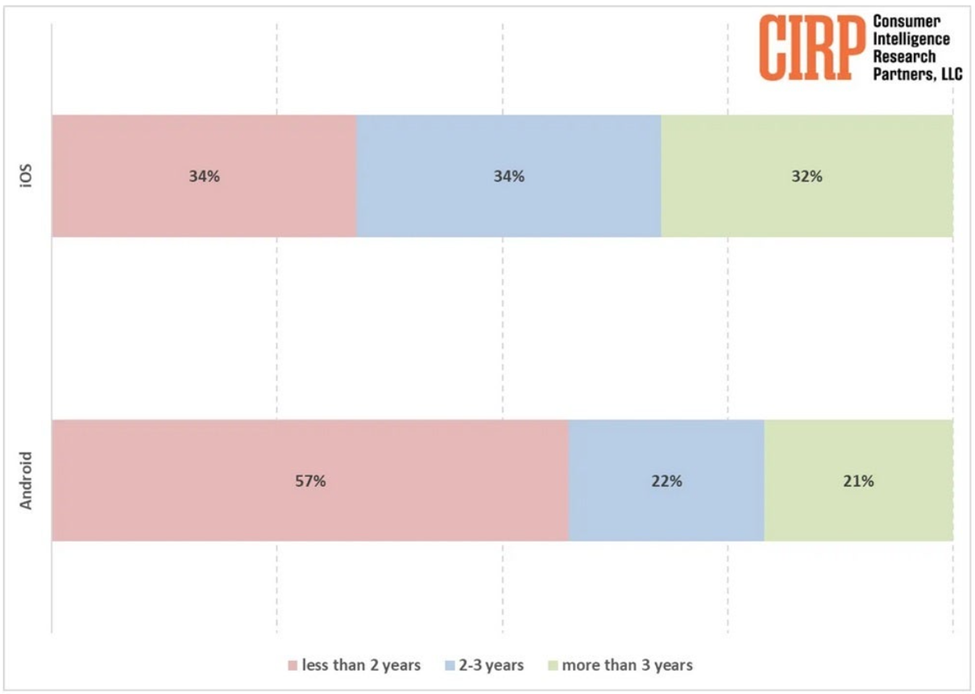
The CIRP survey covered the year ending in June 2024 and showed that around 57% of Android users replaced their last phone within two years as compared to only 34% of iPhone users doing the same.
On the other hand, iPhone users usually hold onto their phones for a longer period of time.
The survey found that 32% of iPhone users kept their previous phones for over three years. Compared to this, only 21% of Android users continue using their phones for that long a period.
The Consumer Intelligence Research Partners (CIRP) survey covered the year ending in June 2024. (Image credit – CIRP)
One of the most obvious reasons for this could be the wide range ofAndroid phones available at different price points in the market.
Moreover, the flooding of budget-friendly Android models in the smartphone market could also be a reason.
Most entry-level phones are not built to last and specs usually become outdated in a short span of time. This can often compel users to update their Android Devices faster, sometimes within three or fewer years.
Another factor contributing to Android users upgrading more frequently is affordability.
Low-cost Android phones make it easier for users to purchase a new device sooner.
Moreover, Android devices are produced by a wide range of manufacturers, who often provide different features. It gives Android users the option to switch brands to find phones with specific capabilities.
We have seen studies previously highlighted the fact that iPhones retain more value over time.
And if we compare the software updates available both both types of smartphones, the picture gets clearer.
Both Samsung and Google offer around seven years of Android system updates for their flagship models. Other Android phones available in the market often lose support earlier than that. In comparison, iPhones usually receive updates for longer.
The survey also reveals interesting insights for users who prefer buying second-hand phones. It is suggested that Android users are trading in many devices that are under two years old.
These phones often still have modern processors and features similar to current models. It makes these phones a good option for budget-conscious buyers.
In contrast, the second-hand market for iPhones isn’t that viable.
For example, Apple this year introduced its Apple Intelligence feature. To support this AI technology, iPhones need at least 8GB of RAM. This basically means that only newer models like the iPhone 15 Pro and iPhone 15 Pro Max will be able to run Apple Intelligence. That too when these iPhones roll out iOS 18.1.
This makes finding a second-hand iPhone 15 Pro or iPhone 15 Pro Max more challenging.
Also, second-hand iPhone prices could be high, which isn’t always convincing to pay when buying a used gadget.
However, the whole iPhone users upgrade less frequently theory may finally see a change. The new iPhone 16 model that supports Apple Intelligence is an attractive option to upgrade for anyone who wants to try Apple Intelligence.
FAQs
Q1. How often do Android users upgrade their phones compared to iPhone users?
Answer. According to a CIRP survey, 57% of Android users upgrade their phones within two years, whereas only 34% of iPhone users do the same.
Q2. Why do Android users upgrade their phones more frequently than iPhone users?
Answer. Android users often upgrade more frequently due to the wide range of affordable options available. Budget-friendly models with specs that become outdated quickly encourage more frequent upgrades.
Q3. What challenges exist in the second-hand market for iPhones?
Answer. The second-hand market for iPhones is less viable because newer models required for features like Apple Intelligence are hard to find and often priced high. This makes it difficult for buyers to find affordable, recent iPhone models.