OnePlus is rumoured to launch the Pad 3 Mini, aimed at mobile gamers.
The tablet may feature the upcoming Snapdragon 8 Elite 2, with a possible launch after the chipset’s September 2025 debut.
It could rival devices like Red Magic Astra and Xiaomi’s Pad Mini, though official confirmation from OnePlus is still pending.
OnePlus Pad 3 for reference. (Image credit – OnePlus)
OnePlus appears to be gearing up to enter the compact gaming tablet market with a high-performance device. While official details are still under wraps, the upcoming tablet is rumoured to be called the OnePlus Pad 3 Mini. Here’s everything we know so far.
OnePlus Pad 3 Mini with Snapdragon 8 Elite 2 Could Be on the Way
Tipster Smart Piachu’s Weibo post. (Translated via Google Translate)
According to a recent leak from well-known tipster Smart Pikachu on Weibo, OnePlus is reportedly working on a compact Android tablet aimed at mobile gaming enthusiasts. This device is expected to be powered by the upcoming Snapdragon 8 Elite 2 chipset, combining cutting-edge performance with a sleek, portable design.
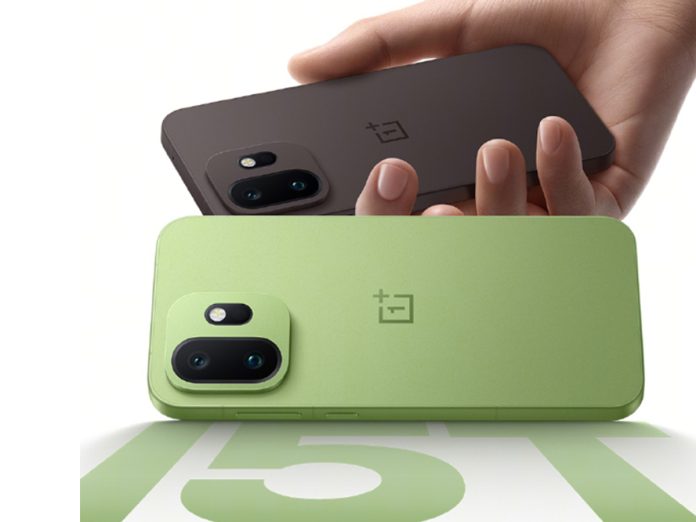
Another credible leaker, Digital Chat Station, has also hinted that a compact flagship tablet is in development. He further suggested that it might launch alongside a new OnePlus smartphone featuring a 6.3-inch OLED display. The compact phone is rumoured to be called the OnePlus 15T, while the tablet is likely to be named the OnePlus Pad 3 Mini.
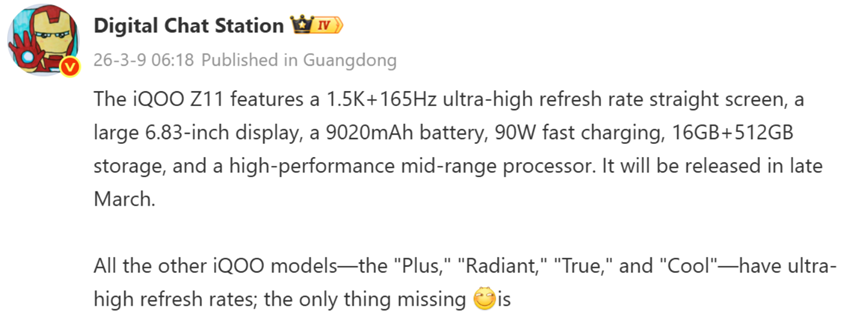
A Digital Chat Station Weibo post earlier last month. (Screenshot credit – Gizmochina)
If these reports are accurate, the new tablet would go head-to-head with gaming-focused models like the Red Magic Astra. OnePlus isn’t alone in this space as iQOO is also rumoured to be working on its first compact flagship tablet. Moreover, Xiaomi is expected to launch a premium Pad Mini, which may be a rebranded version of the Redmi K Pad for international markets.
As for the launch window, since the Snapdragon 8 Elite 2 is anticipated to be announced in September 2025, it’s likely that the gaming tablet will launch shortly thereafter.
In any case, readers must note that OnePlus has yet to officially confirm any details regarding its next tablet. As such, these leaks should be taken with caution until the brand makes an official announcement.
FAQs
Q1. What is the OnePlus Pad 3 Mini, and who is it for?
Answer. The OnePlus Pad 3 Mini is a rumoured compact Android tablet designed for mobile gaming enthusiasts. It aims to deliver high-end performance in a sleek, portable form factor.
Q2. What processor will the OnePlus Pad 3 Mini use?
Answer. The tablet is expected to be powered by the upcoming Snapdragon 8 Elite 2 chipset, offering cutting-edge performance for gaming and multitasking.
Q3. When is the OnePlus Pad 3 Mini expected to launch?
Answer. While not officially confirmed, the tablet is likely to launch shortly after the Snapdragon 8 Elite 2 is announced in September 2025.
iQOO Z10 Turbo+ launched in China at the starting price of ¥2299 (approx ₹27,995).
It features MediaTek Dimensity 9400+, up to 16GB LPDDR5X RAM, 512GB UFS 4.1 storage, 6.78″ 144Hz AMOLED display with 5500 nits peak brightness and a massive 8000mAh battery supporting 90W fast charging.
The phone comes in three colour options – Desert Gold, Polar Grey and Cloud White.
iQOO Z10 Turbo+ launched in China. (Image credit – iQOO)
iQOO has officially launched its gaming-centric smartphone, the iQOO Z10 Turbo+, in China. The phone brings flagship-grade hardware at a mid-range price point. It boasts MediaTek’s top-tier chipset, a high-refresh-rate AMOLED display and a massive battery, making it a strong contender in the performance-focused segment. Here’s a breakdown of all the key details.
iQOO Z10 Turbo+ – Key Features
iQOO Z10 Turbo+ features a large 6.78-inch AMOLED panel with a 1.5K resolution, an ultra-smooth 144Hz refresh rate and a 360Hz touch sampling rate. The display also supports a peak brightness of 5500 nits, 4320Hz PWM dimming, and DC dimming, measures that help reduce eye fatigue during extended gaming sessions.
Under the hood, the device is powered by MediaTek’s latest flagship chipset, the Dimensity 9400+. It is paired with up to 16GB of LPDDR5X Ultra RAM and 512GB of UFS 4.1 storage, ensuring snappy performance and ample space for games and apps.
Fueling the Z10 Turbo+ is a massive 8,000mAh battery, which supports 90W fast wired charging. On the camera front, the phone features a dual-camera setup at the back, including a 50MP Sony LYT600 main sensor and an 8MP ultra-wide lens. A 16MP selfie camera is located on the front. Based on specs, we can assume that photography isn’t the main focus of this model.
Out of the box, the iQOO Z10 Turbo+ runs Origin OS 5 based on Android 15. Other notable features include stereo speakers, an in-display fingerprint sensor, IP65-rated water and dust resistance, WiFi 7, Bluetooth 5.4 and dual SIM functionality.
iQOO Z10 Turbo + – Pricing and Availability
The iQOO Z10 Turbo+ is already available for purchase in China.
iQOO has launched the Z10 Turbo+ in China in three colour options, which include Desert Gold, Polar Grey and Cloud White. The pricing structure for different variants is as follows –
Answer. The iQOO Z10 Turbo+ is powered by MediaTek’s flagship Dimensity 9400+ chipset, designed for high-performance gaming and multitasking.
Q2. What are the display specifications of the Z10 Turbo+?
Answer. It features a 6.78-inch AMOLED display with 1.5K resolution, a 144Hz refresh rate, 360Hz touch sampling rate, and peak brightness of 5500 nits. It also supports 4320Hz PWM and DC dimming for reduced eye strain.
Q3. How long can the battery last and how fast does it charge?
Answer. The phone packs an 8000mAh battery and supports 90W fast wired charging, offering extended usage and quick top-ups ideal for gaming sessions.
Q4. What camera setup does the Z10 Turbo+ offer?
Answer. It includes a dual rear camera system with a 50MP Sony LYT600 main sensor and an 8MP ultra-wide lens, along with a 16MP front-facing selfie camera.
Q5. What are the colour options available for iQOO Z10 Turbo+?
Answer. The Z10 Turbo+ is available in three colour options, which are Desert Gold, Polar Grey, and Cloud White.
The Pixel 10 lineup will reportedly introduce a Gemini-powered tool that gives real-time photo suggestions like framing and lighting adjustments.
Users will be able to edit photos using natural language prompts to remove objects, change backgrounds and enhance images.
Pixel 10 series debuts on August 20 with shipping from August 28.
Caption – Pixel 10 Series to have new AI camera features. (Image credit – Android Headlines)
While recent leaks around the Pixel 10 lineup have largely focused on hardware, the spotlight is now shifting to software. According to Android Headlines, the upcoming Pixel 10 series will introduce powerful new camera-related AI features, set to debut at the official launch on August 20. Here’s what we know about the new features so far.
Camera Coach
One of the standout features is a new tool called “Camera Coach”, powered by Google’s Gemini AI. Designed to help users take better photos in real-time, Camera Coach will offer live suggestions by analysing the scene. This includes prompts to adjust framing, improve lighting, and make other enhancements to help you get the best shot.
While it’s unclear how fast the scene analysis will be, the feature is expected to provide instant suggestions.
Conversational Photo Editing with Gemini
In addition to Camera Coach, the Pixel 10 lineup will introduce Conversational Photo Editing. It is another AI-driven tool powered by Gemini.
This feature allows users to edit photos using natural language prompts. You’ll be able to ask Gemini to change backgrounds, remove unwanted objects, brighten the image, and more, all without needing manual editing skills. The goal is to make photo editing as easy as chatting, giving users intuitive control over edits with simple voice or text commands.
These new AI features will be exclusive to the entire Pixel 10 series at launch, including the base model. However, Google may bring these features to older Pixel devices later through a Pixel Feature Drop.
Google’s Software-Driven Camera Strategy
Google has long leaned on software to elevate its Pixel cameras and the Pixel 10 series is no exception. While the base Pixel 10 gains a telephoto lens, it also includes smaller camera sensors across the lineup. However, thanks to Google’s computational photography, performance on these smaller sensors is expected to remain strong.
The Pixel 10 Pro and Pixel 10 Pro XL will continue using sensors similar to last year’s models, focusing improvements instead on AI and software-based enhancements.
Launch and Availability
Google will officially unveil the Pixel 10 series on August 20 with pre-orders opening the same day. The Pixel 10, Pixel 10 Pro and Pixel 10 Pro XL are all expected to begin shipping on August 28.
FAQs
Q1. What is the Camera Coach feature in the Pixel 10 series?
Answer. Camera Coach is a new AI tool powered by Google’s Gemini that provides real-time photo suggestions, such as adjusting framing and lighting, to help users take better pictures.
Q2. How does Conversational Photo Editing work on the Pixel 10?
Answer. It allows users to edit photos using natural language prompts like changing backgrounds, removing objects, or brightening images, without manual editing skills.
Q3. When will the Pixel 10 series be available?
Answer. The Pixel 10, Pixel 10 Pro, and Pixel 10 Pro XL will be officially unveiled on August 20, with shipping starting August 28.
The Moto G06 has surfaced on FCC, Geekbench, TUV Rheinland, and UL Demko listings.
Certifications confirm LTE, Wi-Fi, Bluetooth, and a 5,100mAh battery with 10W charging.
The Moto G06 may launch in 4GB+64GB and 4GB+256GB variants in Pantone-certified colours like Arabesque, Tapestry and Tendril.
Caption – Moto G05 for reference. (Image credit – Motorola)
It seems Motorola is preparing to launch its next budget-friendly smartphone, the Moto G06, soon. Ahead of any official announcement, the device has surfaced in multiple listings over the past week. These appearances have revealed some of its configurations and hardware specifications. Here’s everything we know about the phone so far.
Moto G06 Spotted Online
According to a new report from Xpertpick, a Motorola phone with the model number XT2535 has received FCC certification. The listing includes two variants, XT2535-1 and XT2535-2. These are likely regional versions of the Moto G06.
Meanwhile, a listing in the LTE and Wi-Fi compatible device database from Italian retailer Windtre confirms that XT2535-3 will be marketed as the Moto G06 in Italy, further linking these variants to the same device.
In addition to the FCC listing, the Moto G06 has also appeared on Geekbench, TUV Rheinland and UL Demko, shedding more light on its specifications.
Moto G06 – What We Know So Far?
As per the FCC documents, the Moto G06 will support LTE, Wi-Fi (up to 5.8GHz), and Bluetooth. It will be equipped with an RL52 battery and is compatible with MC-101/2/3/6/7/9 chargers.
According to the TUV database, the RL52 battery has a 5,100mAh capacity, and the included charger supports 10W charging.
The IMEI database lists the phone under the codename “Lagos,” which matches its Geekbench listing where it appears as “motorola lagos.”
In Geekbench 6 tests, the phone scored 399 in single-core and 1234 in multi-core benchmarks. It is expected to be powered by the Helio G81 Extreme chipset, paired with 4GB of RAM and running Android 15 out of the box.
Apart from all of the info above, a previous Xpertpick report has already revealed that the Moto G06 would be available in two storage options, 4GB+64GB and 4GB+256GB. As for colour options, it will launch in Pantone-certified colour variants including Arabesque, Tapestry and Tendril.
FAQs
Q1. What processor and operating system will the Moto G06 use?
Answer. The Moto G06 is expected to feature the Helio G81 Extreme chipset and will run Android 15 out of the box.
Q2. What are the battery and charging specifications of the Moto G06?
Answer. According to TUV certification, the Moto G06 will have a 5,100mAh RL52 battery and support 10W charging via compatible MC-series chargers.
Q3. What storage and colour options will be available for the Moto G06?
Answer. The phone will come in two variants: 4GB+64GB and 4GB+256GB. It will launch in Pantone-certified colours including Arabesque, Tapestry, and Tendril.
The Redmi 15C 5G has received China’s 3C certification.
It confirms the support for 33W fast charging and signals an imminent launch.
The phone may feature a 6.9-inch HD+ LCD display with 120Hz refresh rate, MediaTek Dimensity 6300 chip, 6,000mAh battery, Android 15 with HyperOS 2.0 and a 50MP rear camera.
It has already been confirmed officially that the Redmi 15 5G will debut in India on August 19. But that’s not the only model in the 15 series. While we aren’t sure about the exact Redmi 15 Series launch schedule, it seems a new report has confirmed a key detail about Redmi 15C.
Ahead of the official unveiling, the Redmi 15C 5G has now received certification from China’s 3C regulatory platform, hinting at an imminent launch. Here’s everything we know about this phone so far.
Redmi 15C 5G – China’s 3C Certification
According to a report by Xpertpick, a Xiaomi device carrying the model number 2508CRN2BC has been approved by the 3C authority. Past reports have linked this model number to the Chinese variant of the Redmi 15C 5G.
The 3C listing confirms that the phone will support 33W fast charging, a key feature that reinforces its readiness for market release. With this certification in place, the Redmi 15C 5G could launch in China as early as this month.
Redmi 15C 5G – Key Specifications (Expected)
The Redmi 15C 5G is reported to measure 8.2mm in thickness,weigh around 211 grams. It will most likely come in three colour options, which include green, lavender, and black.
As for specs, the Redmi 15C 5G is expected to sport a 6.9-inch LCD display with HD+ resolution and a 120Hz refresh rate. It will likely include a side-mounted fingerprint sensor for security and run Android 15 with HyperOS 2.0 out of the box.
Under the hood, the device may be powered by the MediaTek Dimensity 6300 chipset, paired with a 6,000mAh battery and 33W charging support. Storage variants are said to include 4GB+128GB and 4GB+256GB options. The phone is expected to feature a 50MP primary rear camera and an 8MP front-facing shooter.
The Redmi 15 series also includes several other models such as the Redmi 15C 5G, Redmi 15 (4G) and Redmi 15C (4G). According to multiple reports, some of these models are expected to launch soon in China.
FAQs
Q1. What charging speed does the Redmi 15C 5G support?
Answer. The 3C listing confirms that the phone will support 33W fast charging, a key feature that reinforces its readiness for market release.
Q2. What are the expected specifications of the Redmi 15C 5G?
Answer. The Redmi 15C 5G is expected to sport a 6.9-inch LCD display with HD+ resolution and a 120Hz refresh rate, include a side-mounted fingerprint sensor, run Android 15 with HyperOS 2.0, and be powered by the MediaTek Dimensity 6300 chipset, paired with a 6,000mAh battery.
Q3. What camera setup is expected on the Redmi 15C 5G?
Answer. The phone is expected to feature a 50MP primary rear camera and an 8MP front-facing shooter.
Instagram users can now repost public Reels and feed posts, which appear in a dedicated tab on their profile.
Instagram introduces an opt-in map feature that lets users share their real-time location with selected friends.
A new tab shows Reels your friends have liked or interacted with, including Blends.
Instagram introduces new features aimed at easy content sharing. (Image credit – Instagram)
Instagram has introduced several new features aimed at making content sharing and friend discovery more personalised. The latest updates include the ability to repost content, share real-time locations with selected friends and a new “Friends” tab in Reels to keep track of what your friends are enjoying.
Announcing the new features in a detailed post, Instagram wrote, “Today, we’re launching several new ways to help you better connect with your friends on Instagram. People have always come to Instagram to share what they’re up to and where they are. Now, with reposts, the map, and the “Friends” tab in Reels, it’s easier for you and your friends to stay in touch through the content you’re enjoying on Instagram.” Here’s more on everything that you find new on Instagram.
Instagram is rolling out a repost feature. You can now repost public Reels and feed posts, which will then be recommended to your friends and followers in their feeds. These reposts will also appear in a separate tab on your profile, allowing you or others to revisit them at any time.
Reposts credit the original creator. This means that if someone reposts your content, it may get recommended to their followers, even if those users don’t follow you. This gives creators a new way to reach a broader audience.
To repost, simply tap the repost icon on a Reel or post. A thought bubble will appear where you can add a note before pressing save.
Instagram is also enhancing its map feature with the option to share your real-time location with friends. This feature is opt-in and gives you full control over who sees your location. You can choose from different sharing settings such as all friends (mutual followers), Close Friends, selected friends, or no one at all. You can also opt out of sharing at specific locations or with specific people.
Your location is updated whenever you open the app or return to it after it’s been running in the background. You can disable location sharing at any time.
For parents using Instagram’s supervision tools, there are added controls. Parents will be notified when their teen activates location sharing, enabling important conversations about online safety. They can also view who their teen is sharing their location with and manage whether the feature is available to them.
Even if you don’t enable location sharing, you can still explore the Instagram map to see content tagged with locations such as stories from concerts, Reels from local creators, or posts from friends at interesting spots.
Location Sharing. (Image credit – Instagram)
Types of content visible on the map include –
Reels, posts, and stories from people you follow (visible for 24 hours after posting)
Notes from mutual followers (also available for 24 hours)
The Instagram map can be accessed from the top of your DM inbox. The feature is now rolling out in the U.S. with plans for global expansion soon.
Instagram is also launching a new “Friends” tab in Reels. This section lets you see public content your friends have liked or interacted with, including recommendations from Blends you’ve created together. It’s designed to help you discover the Reels your close friends are enjoying or creating, making it easier to start conversations around shared interests.
To view the “Friends” tab, tap on “Friends” at the top of the Reels section. You can return to your usual Reels feed by selecting the “Reels” tab again.
Instagram is also adding controls to this section, allowing you to –
Hide your own likes and comments on Reels
Mute activity bubbles from specific users you follow
Instagram is now launching the “Friends” tab globally after beginning a limited rollout earlier this year.
FAQs
Q1. How does Instagram’s new repost feature work?
Answer. Instagram’s repost feature allows users to share public Reels and feed posts with their followers. Reposted content appears in a separate tab on your profile. To repost, tap the repost icon, add a note in the thought bubble, and press save. The original creator is always credited.
Q2. Can I control who sees my real-time location on Instagram?
Answer.Yes. Instagram’s location sharing via the map is opt-in and gives users full control. You can choose to share with all friends (mutual followers), Close Friends, selected friends, or no one. You can also disable sharing at specific locations or with specific people. Location updates occur when you open or return to the app, and you can turn off sharing anytime.
Q3. What is the new “Friends” tab in Reels and how do I use it?
Answer. The “Friends” tab in Reels shows public content your friends have liked or interacted with, including recommendations from Blends. It helps you discover what your close friends are enjoying or creating.
Realme P4 5G may launch in 6GB+128GB, 8GB+128GB, and 8GB+256GB variants, while P4 Pro 5G could offer up to 12GB+256GB.
P4 5G will come in Engine Blue, Steel Grey, and Forge Red, while P4 Pro 5G in Midnight Ivy, Dark Oak Wood, and Birch Wood.
The series is expected to debut in late August with sales starting early September.
Caption – Realme P3 5G for reference. (Image credit – Realme)
Realme is preparing to launch its next-gen P-series smartphones in India, with the Realme P4 5G and Realme P4 Pro 5G currently in development. As per an exclusive report by 91mobiles, both devices are expected to debut soon with leaked details revealing RAM, storage variants, colour options, and model numbers. Here’s what we know so far.
Realme P4 5G – Variants and Colour Options
The Realme P4 5G is tipped to come in three memory configurations, 6GB+128GB, 8GB+128GB, and 8GB+256GB. It reportedly carries the model number RMX5110.
Buyers will be able to choose from three colour variants, Engine Blue, Steel Grey, and Forge Red. The device will succeed the Realme P3 5G, which featured the Snapdragon 6 Gen 4 chipset and launched earlier this year.
Realme P4 Pro 5G – Memory, Colours and Expected Pricing
The Realme P4 Pro 5G, successor to the Realme P3 Pro 5G, is said to be available in 8GB+128GB, 8GB+256GB, and 12GB+256GB variants. With the model number RMX5116, the Pro model will be offered in three distinct finishes. These would be Midnight Ivy, Dark Oak Wood and Birch Wood.
Notably, the top-end 12GB+256GB variant is expected to skip the Midnight Ivy colour option.
Positioned as a mid-range offering, the Realme P4 Pro 5G could be priced around Rs 25,000, in line with the launch price of its predecessor.
While other specifications for both phones remain under wraps, the leak indicates that Realme is likely to unveil the P4 series in the last few days of August with sales expected to begin in early September.
FAQs
Q1. What memory and storage variants will the Realme P4 and P4 Pro 5G offer?
Answer. The Realme P4 5G is expected to be available in three variants: 6GB RAM with 128GB storage, 8GB RAM with 128GB storage, and 8GB RAM with 256GB storage. The Realme P4 Pro 5G will likely come in 8GB RAM with 128GB storage, 8GB RAM with 256GB storage, and a top-end 12GB RAM with 256GB storage variant.
Q2. What are the available colour options for Realme P4 and P4 Pro 5G?
Answer. The Realme P4 5G will be offered in three colour options: Engine Blue, Steel Grey, and Forge Red. The Realme P4 Pro 5G will come in Midnight Ivy, Dark Oak Wood, and Birch Wood.
Q3. When will the Realme P4 series launch in India and what is the expected price?
Answer. The Realme P4 series is expected to launch in India during the last few days of August, with sales likely to begin in early September. The Realme P4 Pro 5G is anticipated to be priced around ₹25,000, similar to the launch price of its predecessor, the Realme P3 Pro 5G.
In a YouTube livestream by Tech IT, the Galaxy Z Fold 7 was manually folded 200,000 times simulating over 5 years of daily use.
The phone rebooted early on, developed hinge creaks and a visible crease.
It lost speaker function at 175,000 folds but remained operational throughout.
Galaxy Z Fold 7. (Image credit – Samsung)
Samsung’s latest foldable, the Galaxy Z Fold 7, has been turning heads with its sleeker design and less noticeable crease. However, no matter what the brand claims or how impressive the device looks, there is always a durability concern when it comes to foldable devices.
A Korean YouTube creator Tech IT decided to put that to the test with a real-world folding experiment. Here’s what happened.
Galaxy Z Fold 7 – Live Manual Fold Test
In a livestream on the Tech IT channel, one of the hosts manually folded the Galaxy Z Fold 7 an incredible 200,000 times to evaluate how it holds up under long-term usage.
A still from the live fold test video. (Credit – YouTube Channel Tech It)
Unlike controlled lab tests using robotic arms and ideal conditions, this was a hands-on durability challenge designed to simulate actual daily wear and tear. Along the way, several minor issues cropped up. The phone unexpectedly rebooted sometime between 6,000 and 10,000 folds.
By 46,000 folds, the hinge began to creak. At around 75,000 folds, viewers noticed a mysterious liquid near the hinge, though it didn’t seem to affect the device’s performance.
At the halfway point of 100,000 folds, the crease became more noticeable and the hinge made a soft crackling sound, but both the display and hinge mechanism remained fully functional.
At 175,000 folds, the Fold 7’s speaker stopped working, though the issue didn’t appear directly related to the folding mechanism. Despite this setback, the phone successfully reached the 200,000-fold milestone without suffering any major failure.
That number is no small feat. Folding a phone 100 times a day amounts to over five years of use, meaning the Fold 7 stood up well under extreme conditions. While Samsung officially rates the hinge and flexible display to last 500,000 folds under standard conditions, this test showed some signs of wear like a louder hinge and a more pronounced crease. But overall, the device remained operational.
You can check out the complete live test video below –
FAQs
Q1. How many times was the Galaxy Z Fold 7 manually folded in the YouTube test?
Answer. The device was manually folded 200,000 times during a livestream by Korean YouTube channel Tech IT, simulating over five years of daily usage.
Q2. Did the Galaxy Z Fold 7 experience any issues during the folding test?
Answer: Yes, several minor issues occurred. The phone rebooted unexpectedly between 6,000 and 10,000 folds. The hinge began to creak at 46,000 folds. A mysterious liquid appeared near the hinge around 75,000 folds. The speaker stopped working at 175,000 folds.
Q3. How does the Fold 7’s real-world durability compare to Samsung’s official rating?
Answer. Samsung officially rates the Fold 7’s hinge and display to last 500,000 folds under lab conditions. In the manual test, the device showed signs of wear like a louder hinge and deeper crease but still reached 200,000 folds without major failure.
Vivo X200 Ultra scored 167 overall on DXOMARK with 173 in photos and 156 in video.
Its 35mm main lens delivers DSLR-like background blur and accurate skin tones, while the 200MP periscope lens offers sharp zoom up to 10x.
The ultra-wide camera produces sharp, low-distortion images even in low light and all sensors perform well in darker conditions.
Caption – Vivo X200 Ultra. (Image credit – Vivo)
The Vivo X200 Ultra stands out as a compelling choice for anyone seeking a premium camera phone experience with minimal trade-offs. The phone has recently scored impressively well on a camera benchmark platform, reaffirming its worth as a camera phone. Here’s more on that.
Vivo X200 Ultra on DXOMARK Tests
Vivo X200 Ultra achieved an impressive score of 167 on the DXOMARK Camera benchmark, earning a photo score of 173 and a video score of 156. This places it second overall, just behind the OPPO Find X8 Ultra. Its strong performance in still photography is driven by a standout 35mm main lens, powerful zoom capabilities and a high-quality ultra-wide sensor.
Caption – Vivo X200 Ultra DXOMARK Test results. (Image credit – DXOMARK)
The phone’s 35mm-equivalent main camera offers excellent subject-background separation, making it particularly effective for portrait photography. Facial details are rendered with natural contrast and accurate skin tones, while the background blur mimics the quality of DSLR images.
Caption – Vivo X200 Ultra use case scores on DXOMARK. (Image credit – DXOMARK)
Portrait mode is one of the Vivo X200 Ultra’s strongest aspects. It consistently delivers accurate subject segmentation, even around tricky areas like hair and maintains performance in low-light conditions. The background blur appears smooth and edge artefacts are minimal. However, the narrow depth of field may slightly affect focus in group portraits.
Zoom capabilities are another standout feature, led by the 200MP periscope telephoto lens. The camera captures sharp and detailed images up to 10x magnification in daylight. Even in moderate lighting, zoomed shots retain good clarity and contrast. While detail may soften slightly beyond 5x in low light, telephoto video still performs well with vivid colours and decent stabilisation, though noise becomes noticeable in darker environments.
The ultra-wide camera is among the best in its class, producing sharp, low-distortion images with excellent edge-to-edge detail. It remains reliable in low light, delivering balanced exposures and natural colours, although fine detail is a bit lower than the main sensor.
For video, the primary camera performs admirably, managing exposure and focus transitions effectively. It supports 4K video at 120fps with natural, vibrant colours in various lighting conditions.
Stabilisation works well in handheld shots, though slight motion may still occur when walking. Video from both the telephoto and ultra-wide lenses is also solid in bright environments, though dynamic range decreases under more challenging lighting.
Low-light performance is strong across the board. The main lens captures clear, detailed images with accurate colours. The ultra-wide and telephoto sensors perform reasonably well in darker scenes, though with more visible noise and softness.
FAQs
Q1. What DXOMARK score did the Vivo X200 Ultra achieve?
Answer. The Vivo X200 Ultra scored 167 overall on DXOMARK, with 173 in photo and 156 in video, placing it second behind the OPPO Find X8 Ultra.
Q2. What makes the Vivo X200 Ultra’s portrait mode stand out?
Answer. Its 35mm main lens offers excellent subject-background separation, natural skin tones, and DSLR-like blur, even in low light and around complex edges like hair.
Q3. How does the Vivo X200 Ultra perform in zoom and ultra-wide photography?
Answer. The 200MP periscope lens delivers sharp zoom up to 10x, while the ultra-wide camera offers low-distortion, edge-to-edge clarity, even in low-light conditions.
Leaks suggest Apple Watch Ultra 3 may feature a slightly larger 422 x 514 pixel display.
Expected features include satellite connectivity, a brighter/smoother display, a new chip and advanced health tracking like blood pressure monitoring.
Apple is likely to unveil the Watch Ultra 3 this fall alongside the iPhone 17 series and Apple Watch Series 11.
Apple Watch Ultra 2 for reference. (Image credit – Apple)
It appears the next Apple Watch will have some display upgrades. A new leak discovered in the latest iOS 26 beta suggests that Apple’s upcoming Watch Ultra 3 may come with a slightly larger display. Here’s what we know so far.
Apple Watch Ultra 3 – Leak
The leak was found by MacRumors contributor Aaron Perris based on an image of an Apple Watch in the latest iOS 26 beta. It shows a resolution that doesn’t match any current models.
According to the image, the Watch Ultra 3 could feature a resolution of 422 x 514 pixels. This is an increase over the 410 x 502 resolution found on the first- and second-generation Watch Ultra models, which sport 1.92-inch displays.
While there’s no indication that Apple will increase the casing size, the boost in resolution may be the result of thinner bezels, allowing more screen real estate within the same overall dimensions.
In addition to the larger display, previous rumours have already hinted at other upgrades. These would most likely include satellite connectivity for off-grid communication, a brighter display with a higher refresh rate, a new chip and potentially new health features such as blood pressure monitoring.
As for the launch, Apple is expected to officially unveil the Apple Watch Ultra 3 this fall. It would most likely be alongside the iPhone 17 lineup and the Apple Watch Series 11.
FAQs
Q1. What display improvements are expected in the Apple Watch Ultra 3?
Answer. The leak points to a resolution upgrade to 422 x 514 pixels, slightly higher than previous models. This may result from thinner bezels rather than a larger casing.
Q2. What new features might the Apple Watch Ultra 3 include?
Answer. Rumours suggest satellite connectivity, a brighter display with a higher refresh rate, a new chip, and potentially health features like blood pressure monitoring.
Q3. When will the Apple Watch Ultra 3 be released?
Answer. Apple is expected to unveil the Ultra 3 this fall, likely alongside the iPhone 17 series and Apple Watch Series 11.