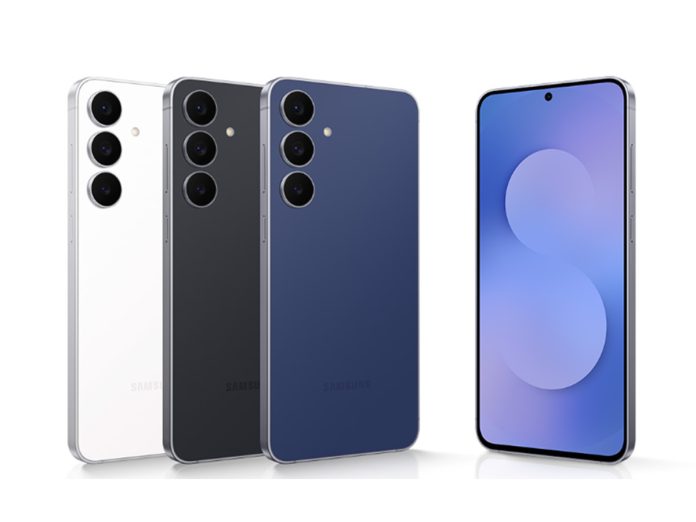
Home Blog Page 15

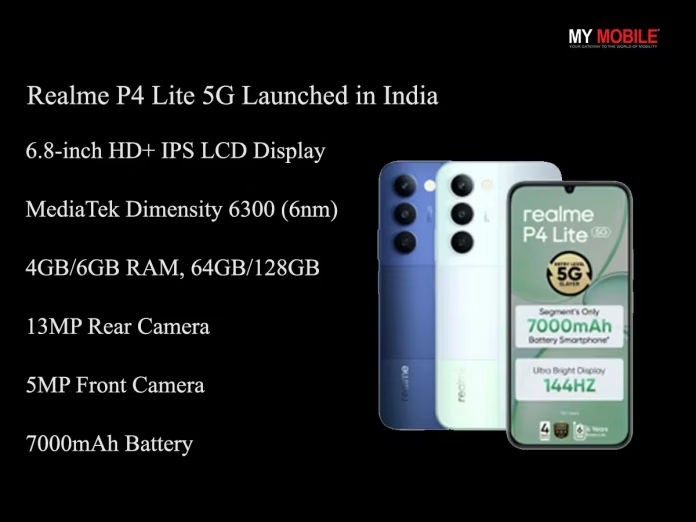
Realme P4 Lite 5G Launched in India with 144Hz Display, 7,000mAh Battery Starting at Rs. 12,999

0

Highlights

  • Realme P4 Lite 5G launched in India at the starting price of INR 12,999.
  • The first sale is scheduled for 25th March via Flipkart, realme.com, and offline retail stores.
  • The smartphone is available in three memory variants and two colour options.
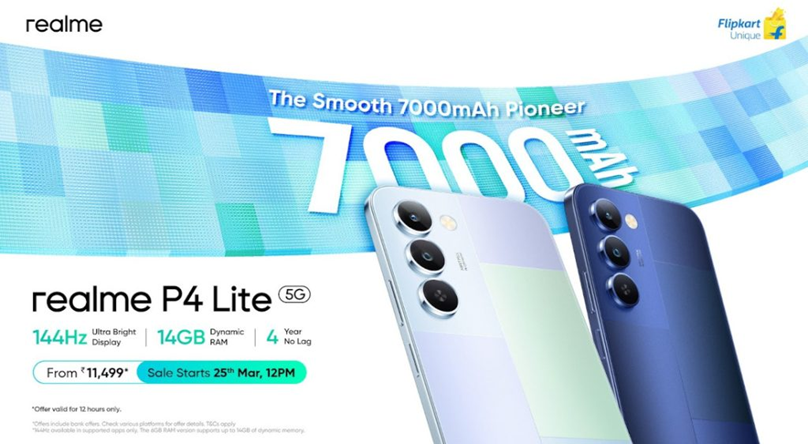
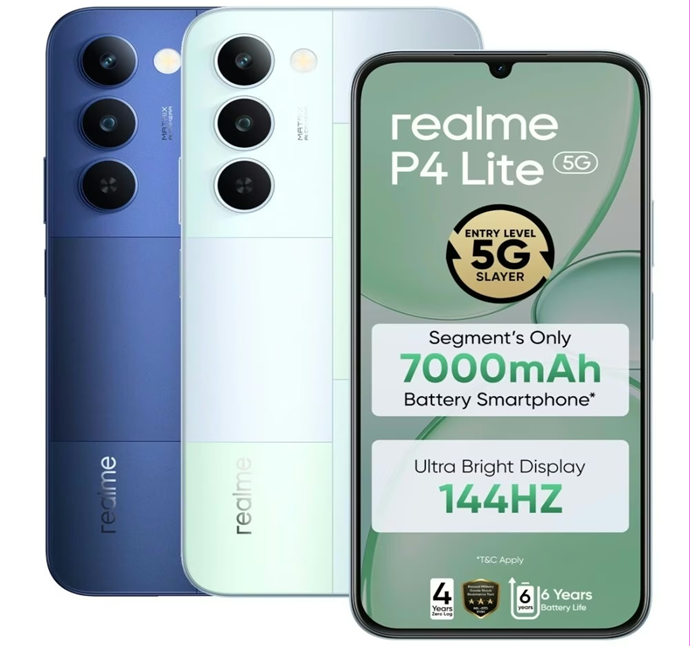
Realme P4 Lite 5G has been officially unveiled in India. (Image credit - Realme)
Realme P4 Lite 5G has been officially unveiled in India. (Image credit – Realme)

Realme has expanded its P-series lineup in India with the launch of the Realme P4 Lite 5G. The latest budget 5G smartphone from the brand brings a large display, massive battery, and essential features aimed at value-focused buyers, with a starting price of INR 12,999. Here’s everything you need to know about the phone, starting with price and launch offers.

Realme P4 Lite 5G – Price and Availability In India

The Realme P4 Lite 5G is available in three memory variants with different configurations and offers.

The base 4GB + 64GB model is priced at INR 12,999, with an effective price of INR 11,499 after applying the first sale benefits. The 4GB + 128GB variant comes at INR 13,999, which drops to an effective price of INR 12,499. Meanwhile, the top-end 6GB + 128GB version is listed at INR 15,999 and will be available for an effective price of INR 14,499.

These prices include a combined first sale offer of an INR 1,000 price discount along with an additional INR 500 bank offer.

The first sale is scheduled for 25th March, running from 12 noon to midnight. The device will be available via Flipkart, realme.com, and offline retail stores.

image

Realme P4 Lite 5G – Key Features

The Realme P4 Lite 5G features a 6.8-inch HD+ IPS LCD display with a resolution of 1570×720 pixels, offering a 144Hz refresh rate and up to 180Hz touch sampling rate. The panel supports up to 900 nits of peak brightness, ensuring better visibility in outdoor conditions.

Under the hood, the smartphone is powered by an octa-core MediaTek Dimensity 6300 processor built on a 6nm process, featuring two Cortex-A76 cores clocked at 2.4GHz and six Cortex-A55 cores running at 2GHz, paired with an Arm Mali-G57 MC2 GPU.

image

It comes in 4GB or 6GB LPDDR4X RAM options, along with 64GB or 128GB UFS 2.2 storage, which can be further expanded up to 2TB via a microSD card. The device supports a hybrid dual SIM setup.

On the software front, the phone runs Android 16 with realme UI 7.0.

For optics, the Realme P4 Lite 5G is equipped with a 13MP rear camera with an f/2.2 aperture and LED flash, capable of recording videos at up to 1080p at 30fps. On the front, it houses a 5MP selfie camera with an f/2.0 aperture, also supporting 1080p video recording. The device includes a side-mounted fingerprint sensor for security.

The smartphone is backed by a large 7,000mAh battery with support for 15W fast charging.

In terms of audio and build, the smartphone retains a 3.5mm headphone jack and features an Ultra-Linear bottom-ported speaker with support for 300% Ultra Volume audio.

It measures 166.3×78.1×8.4mm and weighs 212 grams. The device is rated IP64 for dust and splash resistance and also comes with MIL-STD 810H military-grade durability certification.

Connectivity options on the Realme P4 Lite 5G include support for 5G SA and NSA bands (n1/n3/n5/n8/n28B/n40/n41/n77/n78), dual 4G VoLTE, Wi-Fi 802.11 ac (2.4GHz and 5GHz), Bluetooth 5.3, GPS, GLONASS, Galileo, QZSS and a USB Type-C port.

FAQs

Q1. What is the price of the Realme P4 Lite 5G in India?

Answer. The Realme P4 Lite 5G starts at Rs. 12,999 for the base variant in India.

Q2. What display does the Realme P4 Lite 5G offer?

Answer. It features a 6.8-inch HD+ IPS LCD display with a 144Hz refresh rate, 180Hz touch sampling rate, and up to 900 nits peak brightness.

Q3. Which processor powers the Realme P4 Lite 5G?

Answer. The smartphone is powered by the MediaTek Dimensity 6300 octa-core processor built on a 6nm architecture.

Q4. What are the camera specifications of the Realme P4 Lite 5G?

Answer. The device has a 13MP rear camera and a 5MP front camera, both capable of recording 1080p videos at 30fps.

Q5. What battery capacity does the Realme P4 Lite 5G have?

Answer. It packs a 7,000mAh battery with support for 15W fast charging.

Also Read

https://www.mymobileindia.com/realme-p4-lite-5g-india-launch-set-for-march-19-with-7000mah-battery-realme-c100-5g-spotted-on-retailer-sites/

https://www.mymobileindia.com/realme-p4-lite-4g-debuts-in-india-with-6300mah-battery-and-13mp-camera-starts-at-%e2%82%b97999-with-launch-offers/

OPPO Find X9 Ultra, Find X9s Pro and Pad5 Pro Launch Tipped for Mid-April Event

0

Highlights

  • Oppo is expected to launch the Find X9 Ultra, Find X9s Pro, and Pad5 Pro together at a mid-April event.
  • The Find X9 Ultra will likely focus on advanced camera technology and premium specifications.
  • The Pad5 Pro will be powered by Snapdragon 8 Elite Gen5 and could offer strong sustained performance.

image

OPPO’s upcoming flagship launch timeline is becoming clearer. The brand is reportedly gearing up to unveil three major products together in mid-April. Yes, we are expecting the Oppo Find X9 Ultra, Find X9s Pro, and the OPPO Pad5 Pro tablet.

Earlier rumours had hinted at a March announcement, but those did not materialise. The latest updates now point to April as the confirmed launch window.

Oppo Mid-April Event For Three Flagship Devices

image image

The Oppo Find X9 Ultra and Find X9s Pro are said to be the key highlights of the upcoming launch event, positioned as the company’s flagship smartphones. Alongside them, the Oppo Pad5 Pro is also expected to debut, powered by the Snapdragon 8 Elite Gen5 chipset, signalling a strong push into the high-performance tablet segment.

The revised timeline from March to mid-April appears to align with Oppo’s launch pattern from last year.

Additionally, the OnePlus 15T is also expected to launch ahead of these devices, indicating a planned rollout strategy across Oppo’s broader brand ecosystem.

As of now, Oppo has not officially revealed specifications or pricing details for any of the three devices.

Oppo Find X9 and Pad5 Pro – What We Know?

Among the trio, the Find X9 Ultra is expected to draw the most attention. The Ultra series has traditionally represented OPPO’s top-tier offering, combining advanced camera systems with flagship-grade hardware and a no-compromise approach to specifications.

This model is likely to showcase the brand’s latest imaging innovations.

The Oppo Pad5 Pro is also shaping up to be a notable addition. Its Snapdragon 8 Elite Gen5 chipset, paired with a larger form factor and improved thermal capabilities. It is expected to deliver sustained performance levels that smartphones may struggle to maintain under heavy workloads.

FAQs

Q1. When will the OPPO Find X9 series and Pad5 Pro launch?

Answer. The OPPO Find X9 Ultra, Find X9s Pro, and Pad5 Pro are expected to launch together at a mid-April event.

Q2. Which devices will be unveiled at OPPO’s upcoming event?

Answer. The lineup is expected to include the Find X9 Ultra, Find X9s Pro smartphones, and the OPPO Pad5 Pro tablet.

Q3. What makes the OPPO Pad5 Pro notable?

Answer. The Pad5 Pro is expected to feature the Snapdragon 8 Elite Gen5 chipset, offering strong sustained performance for productivity and heavy usage.

Also Read

https://www.mymobileindia.com/oppo-find-n6-foldable-with-zero-feel-crease-6000mah-battery-debuts-oppo-watch-x3-with-snapdragon-w5-and-100-sports-modes-unveiled/

https://www.mymobileindia.com/oppo-increases-prices-of-several-a-series-and-reno-linup-smartphones-in-india-from-march-17/

Honor Magic 9 Leak Reveals 200MP Triple Camera, Compact Design and Massive 8,000mAh Battery

0

Highlights

  • Honor Magic 9 tipped to feature a triple rear camera setup led by a 200-megapixel primary sensor.
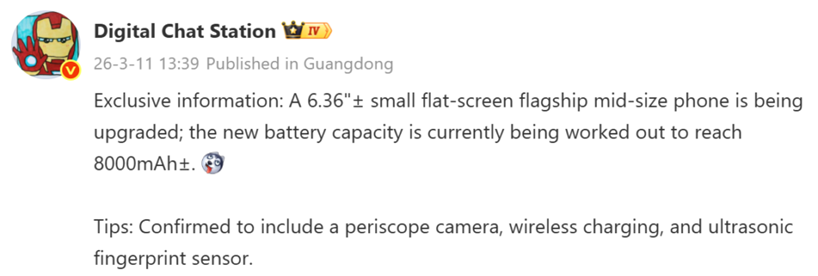
  • It will reportedly feature a massive 8,000mAh battery with wireless charging support.
  • Other expected features include Snapdragon 8 Elite Gen 6 chipset and 6.3-inch flat OLED LTPO display.
Honor Magic 8 in the picture for reference. (Image credit - Honor)
Honor Magic 8 in the picture for reference. (Image credit – Honor)

Honor is reportedly preparing its next-generation flagship series. These could to include the Honor Magic 9, Magic 9 Pro, and Magic 9 RSR. Among these, the Honor Magic 9 is shaping up to be a compact yet powerful device.

A fresh leak has recently shed light on its camera capabilities, suggesting a high-end 200-megapixel triple camera system and massive battery capacity. Here are more details.

Honor Magic 9 Camera and Battery Details Leaked

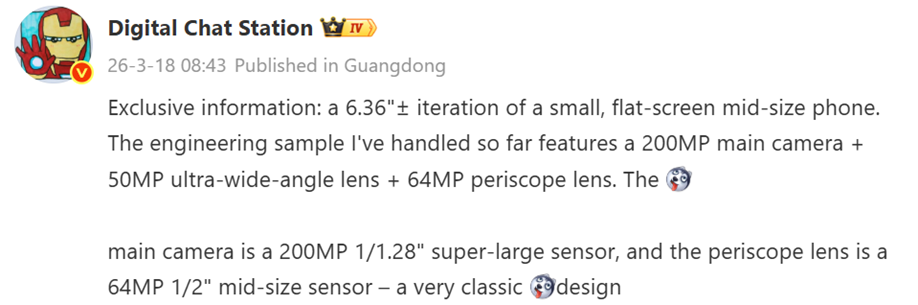
According to tipster Digital Chat Station on Weibo, the Honor Magic 9 will feature a triple rear camera setup led by a 200-megapixel primary sensor with a 1/2.8-inch size. For ultra-wide photography, the device is expected to include a 50-megapixel sensor.

image

image

Tipsters DCS on Weibo. (Screenshot by Gizmochina)

The camera module is also said to house a 64-megapixel periscope telephoto lens, which will use a mid-range 1/2-inch sensor. While details about the front camera have not surfaced yet, the smartphone may continue to offer the 50-megapixel selfie camera seen on the Honor Magic 8.

Recent reports have also highlighted a major battery upgrade for the Magic 9. The company is reportedly working on equipping the device with a massive 8,000mAh battery. Although fast charging specifications remain unknown, the phone is expected to support wireless charging. 

For reference, the Honor Magic 8 came with a 7,000mAh battery along with 90W wired and 80W wireless charging support.

Expected specifications and features

The Honor Magic 9 is rumoured to be powered by the upcoming Snapdragon 8 Elite Gen 6 chipset. Qualcomm is anticipated to introduce this 2nm processor in September later this year.

On the front, the device is tipped to feature a 6.3-inch flat OLED LTPO display. It is also expected to include an ultrasonic in-display fingerprint sensor for enhanced security.

Other specifications of the smartphone are still under wraps at this stage. However, we can expect more details to come out as the smartphone moves closer to launch.

FAQs

Q1. What camera setup is expected on the Honor Magic 9?

Answer. The Honor Magic 9 is expected to feature a triple rear camera setup with a 200MP main sensor, a 50MP ultra-wide lens, and a 64MP periscope telephoto camera.

Q2. What battery capacity could the Honor Magic 9 offer?

Answer. The device is tipped to pack a massive 8,000mAh battery, which would be a significant upgrade over its predecessor.

Q3. What processor will power the Honor Magic 9?

Answer. The smartphone is rumoured to be powered by the upcoming Snapdragon 8 Elite Gen 6 chipset.

Also Read

https://www.mymobileindia.com/honor-x80-gt-tipped-to-launch-with-massive-13080mah-battery-could-debut-in-china-soon/

https://www.mymobileindia.com/honor-magic-v6-unveiled-at-mwc-2026-with-6660mah-battery-snapdragon-8-elite-gen-5-and-upgraded-foldable-design/

Lava Bold 2 5G Goes on Sale in India Today – Price, Offers, Specifications and Availability

0
Lava Bold 2

Highlights

  • Lava Bold 2G sale starting in India on March 19 at 12 PM IST via Amazon.
  • It is priced at Rs. 13,999 for a single configuration of 6GB RAM and 128GB storage.
  • It is available in Feather White and Midnight Black.
Lava Bold 2 Sale started in India today. (Image credit - Lava)
Lava Bold 2 Sale started in India today. (Image credit – Lava)

Lava has officially started the sale of its newly launched Lava Bold 2 5G in India today. The smartphone, which debuted last week as the successor to last year’s Lava Bold 5G (launched in April 2025), is now available for purchase starting March 19 at 12 PM IST via Amazon. Here’s everything you should know in case you are planning on hitting stores for this newly launched smartphone.

Lava Bold 2 5G – Price and Availability in India

The Lava Bold 2 5G is priced at Rs. 13,999 in India and comes in a single configuration with 6GB RAM and 128GB storage. As part of a limited-time offer, buyers can avail a Rs. 1,000 coupon discount across all payment methods.

Additionally, the company is offering free doorstep service for customers purchasing the device, adding extra value to the overall package.

The smartphone is available in two colour options, which in Feather White and Midnight Black.

Lava Bold 2 5G Specifications and Features

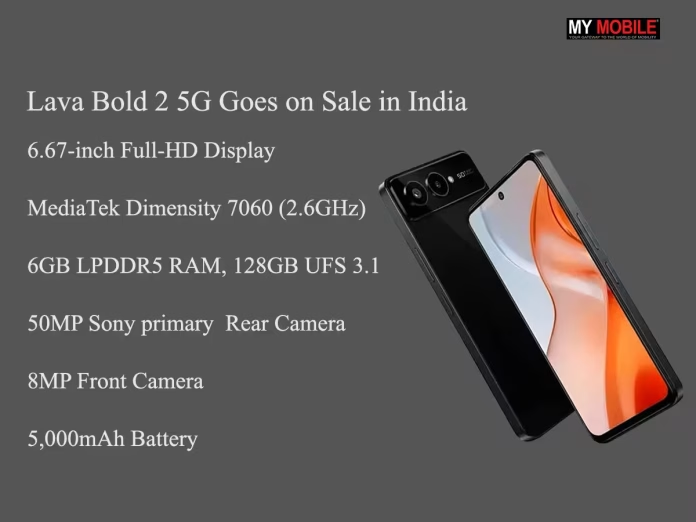
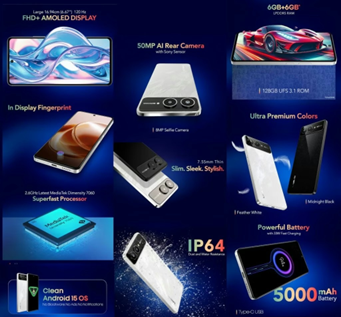
The Lava Bold 2 5G is a dual-SIM smartphone that runs on Android 15. Lava claims that the device delivers a clean user experience with no bloatware or ads. It features a 6.67-inch Full-HD+ AMOLED display with a 120Hz refresh rate, along with an IP64 rating for dust and splash resistance.

image

Under the hood, the smartphone is powered by the MediaTek Dimensity 7060 processor, which offers a peak clock speed of 2.6GHz. According to the company, the handset scores over 0.5 million points on the AnTuTu benchmark platform. It is paired with 6GB of LPDDR5 RAM and 128GB of UFS 3.1 internal storage.

In terms of optics, the Lava Bold 2 5G comes with a dual rear camera setup, led by a 50-megapixel primary sensor from Sony, along with an additional secondary sensor. For selfies and video calls, the device features an 8-megapixel front camera housed in a hole-punch cutout.

The smartphone packs a 5,000mAh battery and supports 33W wired fast charging. It also includes an in-display fingerprint scanner for security. The handset measures just 7.55mm in thickness, making it relatively slim for its category.

With its competitive pricing, clean software experience, and balanced specifications, the Lava Bold 2 5G aims to attract buyers in the budget 5G smartphone segment.

FAQs

Q1. What is the price of the Lava Bold 2 5G in India?

Answer. The Lava Bold 2 5G is priced at Rs. 13,999 for the 6GB RAM and 128GB storage variant. Buyers can also avail a Rs. 1,000 coupon discount for a limited time.

Q2. Where can I buy the Lava Bold 2 5G?

Answer. The smartphone is available for purchase via Amazon starting March 19 at 12 PM IST. It also comes with free doorstep service from Lava.

Q3. What are the key display and design features of the Lava Bold 2 5G?

Answer. The device features a 6.67-inch Full-HD+ AMOLED display with a 120Hz refresh rate. It also has an IP64 rating for dust and splash resistance and a slim 7.55mm design.

Q4. Which processor powers the Lava Bold 2 5G?

Answer. The Lava Bold 2 5G is powered by the MediaTek Dimensity 7060 chipset, offering up to 2.6GHz clock speed and an AnTuTu score of over 0.5 million.

Q5. What are the camera and battery specifications of the Lava Bold 2 5G?

Answer. The smartphone includes a 50-megapixel Sony primary rear camera along with a secondary sensor, and an 8-megapixel front camera. It packs a 5,000mAh battery with support for 33W fast charging.

Also Read – 

https://www.mymobileindia.com/lava-bold-2-5g-launched-in-india-with-dimensity-7060-chip-120hz-amoled-display-and-50mp-sony-camera/

https://www.mymobileindia.com/lava-bold-5g-launching-on-april-8-features-120hz-amoled-display-64mp-camera-and-more/

Interview with Arnold Su, Vice President, Consumer and Gaming PC, System Business Group, ASUS India

0

In today’s fast-moving PC and gaming market, staying relevant isn’t just about launching powerful machines. Rather, it’s about understanding what users really want and constantly evolving with them. That’s where strong and hands-on leadership makes all the difference.

One such leader is Arnold Su, Vice President, Consumer & Gaming PC, System Business Group at ASUS India. With more than 14 years at ASUS India, Arnold has been instrumental in steering the brand’s growth story in the Indian market. His expertise spans driving P&L performance, building strong brand equity, transforming retail experiences and leading high-impact sales and distribution strategies.

To understand his approach better, we sat down with Arnold for an exclusive conversation. He shares insights on the company’s vision, its approach to innovation and the challenges of navigating an increasingly competitive market. From evolving consumer needs to the future of connected devices, Arnold offers a closer look at what lies ahead and how ASUS India plans to stay ahead of the curve.

Arnold, welcome to MyMobile Magazine. ASUS has seen remarkable growth in India over the past few years, especially in the consumer and gaming PC segments. As someone who has closely led this journey, how do you view ASUS’s evolution in the Indian market and the opportunities ahead

Thank you, it’s a pleasure to be part of this conversation.

India has been one of the most exciting and strategically important markets for ASUS. When we look at our journey here, the evolution has been driven by a combination of strong consumer demand, a rapidly expanding digital ecosystem, and our consistent focus on strengthening both product innovation and channel reach.

Over the past few years, we have seen encouraging momentum across multiple segments. For instance, in the South region alone, ASUS recorded nearly 40% cumulative growth between 2023 and 2025, including 25% year-on-year growth in 2025, even during a period when the broader PC market experienced volatility. This reflects the growing trust consumers and partners have placed in the brand.

At the same time, our gaming ecosystem has continued to scale strongly. Through the ROG portfolio, which is recognised as the world’s leading gaming brand, we have been able to build a strong connection with India’s rapidly expanding gaming community while also reinforcing our leadership in high-performance computing.

What has been particularly encouraging is the way ASUS has evolved in perception within the Indian market. From being seen primarily as a technology enthusiast brand, we have grown into a much more mainstream and trusted PC brand across consumer, gaming, creator and Desktop segments. Today, our portfolio spans premium laptops, gaming systems, creator-focused devices, and a growing range of desktops and All-in-One PCs.

Looking ahead, the opportunity in India remains immense. PC penetration is still relatively low compared to developed markets, which means the growth potential is significant as more students, professionals, entrepreneurs, and creators adopt computing devices as essential tools for productivity and digital expression. The emergence of AI-powered PCs, the rapid expansion of the creator economy, and the continued growth of gaming and digital entrepreneurship will further accelerate this adoption.

For ASUS, the focus will remain on combining global innovation and bringing the same to our Indian consumers at the same time strong local execution, ensuring that we continue to deliver technology that is not only cutting-edge but also closely aligned with how people in India work, learn, and create.

Since you took charge of the Consumer & Gaming PC business in 2018, ASUS India’s market share grew from 4% to over 15%. What were the three most critical strategic decisions that enabled this transformation?

India is a uniquely complex and opportunity rich market and scaling a technology brand here requires a very different approach compared to many global markets. Often, companies try to replicate growth playbooks from markets like the United States or China, but the Indian market operates very differently in terms of price, retail structure, and PC penetration levels.

India still has significantly lower PC penetration compared to developed economies, which means the opportunity lies not just in premiumisation but also in expanding access and building trust with first-time and upgrading users. With that understanding, our strategy focused on building strong fundamentals rather than chasing short-term gains.

One of the most important decisions was expanding our retail footprint across the country. India remains a deeply retail-driven market for technology purchases, where consumers value hands-on experience before making a decision. We invested significantly in strengthening our offline presence through exclusive stores, partner outlets, and wider distribution across Tier 2 and Tier 3 markets. This allowed us to reach new consumer segments while also strengthening brand visibility.

Another key decision has always been on ensuring that Indian consumers get access to the latest global innovations without delay. Over the past few years, we have consistently brought cutting-edge technologies to India in close alignment with global launches from introducing Copilot+ PCs in 2024, to enabling next-generation gaming experiences with devices powered by the RTX 5000 series GPUs in 2025 and expanding our premium ecosystem with the Creator Series lineup in 2026. We have also continued to push boundaries in handheld gaming with devices such as the ROG Xbox Ally. By bringing these technologies to India at the same time, we aim to empower creators, gamers, and everyday users with the same advanced experiences available in global markets. At the same time, this approach strengthens ASUS positioning as a brand that consistently delivers innovation first, helping us build a strong and forward-looking brand image in India.

The third strategic focus was ensuring strong product availability and a seamless purchase journey across channels. In a diverse market like India, it is important that consumers can easily access ASUS products whether through retail stores or leading online platforms. We worked closely with our partners to ensure our portfolio is readily available across our retail network as well as e-commerce platforms. At the same time, we have introduced initiatives such as ASUS Live, ROGVerse, ProArt Meet and more that help consumers better understand our products and ecosystem. These platforms allow users to engage with our technologies and communities, making the purchase journey simpler and more informed.

Together, these decisions helped us build a strong and balanced ecosystem around the brand, enabling ASUS to grow from a niche player into one of the leading consumer PC brands in the country.

India is one of the fastest-growing PC markets globally. How does ASUS India’s strategy differ from global markets when it comes to product positioning and pricing?

India’s PC market where growth is being driven by a combination of digital adoption, a young and aspirational consumer base, and the rapid formalisation of small businesses and home offices. Because of this, ASUS India’s approach places strong emphasis on building products that balance performance, practicality, and accessibility.

Unlike some mature global markets where computing devices are largely individual purchases, in India a single device often serves multiple users and purposes within a household or workspace. This influences how we position our products focusing on versatility, reliability, and long-term value rather than just individual use cases.

Pricing strategy also requires careful localisation. While we maintain the same global design and engineering standards, we work closely with our regional teams to ensure configurations are optimised for Indian consumers. This includes offering balanced specifications, flexible storage and memory options, and price points that align with the expectations of both emerging users and performance-driven buyers.

At the same time, India is increasingly becoming a market for premium and innovation-led devices as well. Products such as [example: Zenbook, ProArt, or premium AiO models] demonstrate how Indian consumers are willing to invest in advanced technology when it delivers meaningful improvements in productivity, creativity, or everyday convenience.

Ultimately, our strategy in India focuses on combining global innovation with strong local relevance, ensuring that products are both technologically advanced and aligned with the way Indian users actually work, learn, and create.

ASUS has recently introduced AI-powered All-in-One (AiO) PCs in India. How do you see the AiO category evolving, particularly as hybrid work and home productivity become more mainstream?

What we are seeing increasingly is that AiOs are being positioned not just as desktop replacements, but as central productivity hubs within homes and workspaces. Its large displays support multitasking, video collaboration, and content consumption more comfortably, while the integrated design reduces cable clutter and simplifies setup.

AI is now adding another important dimension to this category. AI-enabled features such as noise cancellation, intelligent camera enhancements, performance optimisation, and workflow assistance are making devices more responsive to how people actually work and communicate. As AI capabilities continue to evolve, AiOs will be able to support more intelligent workloads such as real-time video processing, content creation, and local AI inferencing directly on the device.

With products such as the ASUS AiO V670 and V470, we are integrating these capabilities while also focusing on refined design, strong processing performance, and large immersive displays that make the system equally suitable for professional tasks, learning environments, and entertainment.

Over time, we expect AiOs to play a stronger role in homes, studios, and collaborative workspaces where users want powerful computing without the complexity of traditional multi-component setups.

With Indian consumers increasingly looking for clean, space-saving and powerful computing setups, do you believe AiO PCs could become a strong alternative to traditional desktop systems in the coming years?

We have already seen a similar transition in the PC industry over the past decade, where many users moved from traditional desktops to laptops as mobility and convenience became more important. However, desktops have continued to remain relevant for users who require higher computing power, long-term scalability, or specialised workloads.

In India, this dynamic also varies across regions. In metro cities, power users and professionals often continue to prefer traditional desktops for performance-intensive tasks. But at the same time, a large and growing segment of consumers, particularly households, home offices, and small businesses, are looking for computing setups that are powerful yet simple, clean, and space-efficient.

This is where All-in-One PCs are becoming increasingly relevant. AiOs deliver a full desktop-class experience while integrating the display and hardware into a single system, significantly reducing cable clutter and making them easier to set up in modern homes and workspaces.

At ASUS, we have seen encouraging traction in this category with products such as the V400 and V600 series AiO PCs, which combine powerful performance with a sleek, minimalist design. With features like slim profiles, immersive NanoEdge displays, and balanced processing capabilities, these devices are designed to fit naturally into both professional environments and contemporary home setups.

We are also seeing growing adoption in Tier II and Tier III cities, where AiOs often become shared computing systems within households, supporting everything from work and online learning to entertainment and creative activities.

Have you observed any shifts in how consumers are using All-in-One PCs, especially with hybrid work, online learning, and shared computing becoming more common?

While laptops remain the primary device for mobility, AiOs are gaining strong relevance as fixed, shared systems that offer larger displays, reliable performance, and clutter-free experience. This reflects a broader behavioural shift where Indian households are not only buying technology for a single individual or purpose, but for multiple users and use cases. A single AiO today may support office work during the day, online learning for students in the afternoon, and content consumption or creative pursuits in the evening. This evolution has been accelerated by structural changes such as hybrid work, digital education, and the continued formalisation of home workspaces. The government’s ongoing focus on digital infrastructure and skilling is further strengthening the foundation for deeper technology adoption across Indian homes. What is particularly distinctive in India is the way computing devices are integrated into shared living environments. Unlike some global markets, where AiOs are often positioned as individual lifestyle devices, in India they are increasingly valued as family or shared productivity hubs. Consumers prioritise ease of use, space efficiency, and the ability to support diverse needs from professional work and entrepreneurship to education and entertainment. In the Desktop (CDT) segment, there has been renewed interest from entrepreneurs, SOHOs, and small businesses that require dependable performance for accounting, operations, design, or customer-facing functions. As more businesses formalise digitally, stable and scalable computing infrastructure becomes essential. This reflects a broader behavioural shift where computing is no longer just personal, it is becoming foundational to the household and small business ecosystem.

Looking ahead to 2026, what kind of innovation or product expansion can we expect from ASUS in the All-in-One category, and how important is this segment within your broader consumer PC strategy in India?

The AiO category is becoming an increasingly important part of our broader consumer PC strategy in India, particularly as users look for computing solutions that combine performance, simplicity, and space-efficient design. Over the past year, we have already seen strong momentum in this segment, with ASUS recording close to 98% year-on-year growth in the AiO category, reflecting the growing demand from both households and small business users.

Looking ahead to 2026, our focus will be on expanding the AiO portfolio across multiple price segments so that we can address a wider spectrum of user needs, from entry-level systems for first-time PC users and students to more powerful configurations suited for professionals, creators, and business environments.

AI will also play a significant role in shaping the next generation of AiO devices. As the industry moves towards AI-native computing, we expect to introduce Copilot+ PC powered AiOs that can support on-device AI workloads, intelligent system optimisation, and more advanced productivity features. These capabilities will make AiOs not just computing devices, but smarter systems that actively support how users work and collaborate.

In addition, ASUS is also working closely with ecosystem partners to bring new processor platforms into the AiO category, including plans to introduce the world’s first Qualcomm-powered AiO PC in India, further expanding the performance and efficiency possibilities within this segment.

Overall, we see the AiO category continuing to evolve as an important computing hub for homes, studios, and small workspaces. With growing consumer interest and the increasing role of AI in everyday computing, our goal is to continue strengthening our portfolio and significantly expand ASUS’ presence in this segment by 2027.

With the industry shifting toward AI-powered PCs, how is ASUS preparing its consumer and gaming portfolio for this next wave of computing?

At ASUS, our approach to innovation has always been about identifying shifts in user behaviour early and building products that respond to those needs. In many ways, the move toward AI-powered PCs is a continuation of this philosophy. Our focus has been on making advanced computing experiences more accessible across different user segments rather than limiting them to a niche category.

For instance, in the consumer laptop segment, we recognised that younger users increasingly view their devices as an extension of their personality. This insight led us to introduce the multi-colour Vivobook lineup, with distinctive shades such as Salvia Green and BFF Peachy. While several brands have begun exploring similar ideas more recently, we identified this demand early and launched the colourful Vivobook series to make everyday laptops more expressive and personal.

Similarly, we were among the first PC brands to introduce a dedicated lineup for creators through the ProArt series. As the creator economy expanded, we saw growing demand for devices capable of handling demanding creative workflows such as video editing, 3D design, and visual production. Our recent collaboration with GoPro around the ProArt ecosystem is an example of how we continue to strengthen this creator-focused approach by enabling professionals to produce high-quality content with powerful yet portable devices.

In the gaming segment as well, ASUS identified the opportunity early. At a time when many PC gamers were still assembling their own systems, we were among the first brands to introduce high-performance gaming laptops that could deliver a comparable experience in a portable format. Over the years, this has helped ROG build a strong connection with the gaming community, eventually becoming one of the most recognised high-performance computing brands globally. Today, gaming laptops are no longer used only for playing games—they are also powering demanding tasks such as content creation, design, and software development. With ROG, we continue to design systems capable of handling AAA gaming titles as well as heavy creative and professional workloads.

At the same time, we are extending innovation across other form factors as well. Our All-in-One PC portfolio, including the latest V600 series, reflects how AI-powered capabilities can enhance everyday computing experiences for SMBs, SOHOs, solopreneurs, students, and home users. These devices combine clean, space-efficient design with intelligent features that improve productivity, communication, and performance.

Ultimately, our goal is to make AI-powered computing accessible across our entire portfolio—from consumer laptops and creator devices to gaming systems and AiO PCs. As AI becomes more deeply integrated into everyday workflows, we believe the next generation of PCs will not just be faster machines, but smarter systems that actively support how people work, create, and collaborate.

What practical AI-driven use cases do you believe will convince Indian consumers to upgrade their PCs in the next 2–3 years?

Over the next few years, the biggest driver for AI PC upgrades in India will be practical, everyday use cases that make computing faster, simpler, and more personalised. Rather than being seen as a futuristic feature, AI will increasingly become a natural part of how people work, learn, and create on their devices.

One of the most immediate use cases will be AI-driven productivity tools. Features such as real-time transcription, automatic meeting summaries, intelligent document formatting, and contextual assistance can significantly improve efficiency for students, professionals, and entrepreneurs who spend a large portion of their day working on documents, presentations, or online meetings.

Another important area will be AI-powered creativity. With generative AI tools becoming more integrated into PCs, users will be able to generate images, edit videos, enhance photos, or even create presentations using simple natural language prompts. This dramatically lowers the barrier for content creation and allows creators, students, and professionals to produce high-quality work without needing advanced technical expertise.

We will also see AI play a role in system-level optimisation. AI-assisted performance management can automatically allocate system resources depending on the user’s workload, improving responsiveness, thermal efficiency, and battery life. In practice, this means the device becomes smarter at adapting to how the user works.

A key enabler behind these experiences will be the shift toward AI PCs with dedicated NPUs. These specialised processors allow AI workloads to run locally on the device rather than relying entirely on the cloud. This not only delivers faster performance but also improves privacy and enables seamless functionality even in environments with limited connectivity.

As these capabilities become more integrated into everyday workflows, we believe AI will become a strong motivator for users to upgrade their PCs over the next few years. The value will come not just from more powerful hardware, but from devices that actively help users save time, simplify tasks, and unlock new creative possibilities

Do you see AI PCs replacing traditional laptops, or will they coexist as a premium segment initially?

In the near term, AI PCs will likely coexist with traditional laptops as a more advanced segment, but over time we expect them to become the mainstream standard. A useful comparison is the smartphone revolution, when smartphones were first introduced, they were positioned as premium devices with advanced capabilities, while feature phones continued to dominate the market. However, as technology matured and use cases became clearer, smartphones gradually became the default device for most users. We see a similar trajectory for AI PCs. As AI-powered features such as on-device assistance, productivity automation, and intelligent system optimization become more relevant to everyday workflows, adoption will steadily increase. Over the next few years, AI PCs will move from being a specialised or premium category to becoming the natural evolution of personal computing.

Are Indian consumers becoming more performance-focused or design-focused when choosing laptops? How important is battery life, portability, and hybrid work capability in driving purchase decisions today?

Indian consumers today are becoming increasingly balanced in how they evaluate laptops, with performance and design both playing an important role in purchase decisions. While the target audience for high-performance devices and design-led products may differ, we are seeing that users who prioritise powerful performance also appreciate thoughtful design, portability, and overall user experience. Battery life and hybrid work capabilities have also become key decision factors, as many consumers need devices that can seamlessly transition between work, learning, and personal use throughout the day. Keeping this evolving preference in mind, we have introduced products such as the Kojima Edition ROG Flow Z13, which combines cutting-edge performance with a distinctive design philosophy, demonstrating that powerful machines can also deliver a unique and premium aesthetic experience.

ASUS operates both online and offline channels across 16 branches. How do you balance e-commerce growth with physical retail expansion?

We follow a strong omnichannel strategy where online and offline channels play distinct but complementary roles. E-commerce helps us scale new launches quickly and reach digitally native consumers, while offline retail remains critical in India, especially in Tier II and Tier III markets, where many first-time or family buyers rely on store partners for guidance on configurations and use cases. Demand is increasingly coming from smaller cities driven by digital education, creators, and entrepreneurship, which makes regional retail expansion important. At the same time, our 20 dedicated ROG stores create immersive gaming experience zones for enthusiasts. Overall, ASUS has built a strong footprint with 320+ exclusive stores and presence across 5,000+ multi-brand outlets covering 624 districts.

ASUS has introduced dual-screen laptops, ultra-thin devices, and powerful gaming machines. Which product innovations do you believe will define the next generation of laptops?

Going forward, the biggest innovation in laptops will not just be about making devices thinner or more powerful, but about designing machines specifically for different user communities and workflows. We strongly believe that laptops should be purpose-built for the people who use them rather than adopting a one-size-fits-all approach. For instance, creators require systems that prioritize color accuracy, rendering performance, and workflow tools, which is why we built the ProArt series by first understanding how creators actually work and the tools they rely on in their daily workflow.

Similarly, for professionals and students who prioritize portability and premium design, our Zenbook lineup focuses on ultra-thin form factors, high-quality displays, and long battery life. For gamers and performance enthusiasts, the ROG series is built to handle demanding workloads and AAA gaming experiences. Beyond laptops, categories like All-in-One PCs are also evolving to serve families, offices, and shared computing environments where clean design and powerful performance come together.

As computing continues to evolve with AI, we believe the next generation of devices will be defined by AI-powered capabilities, form factor innovation, and most importantly, devices that are deeply aligned with the needs of specific user groups rather than generic hardware designed for the masses.

The PC market in India is highly competitive. What do you believe is ASUS’s biggest differentiator against other global PC brands?

One of ASUS’s biggest differentiators is our ability to bring global innovation to the Indian market at the same time as other leading regions, ensuring that Indian consumers have access to the latest technology without delay. We see India as a priority market, and our approach has always been to empower users here with cutting-edge advancements, whether it is AI-powered PCs, high-performance gaming devices, or creator-focused machines, so they can stay ahead of the curve. At the same time, our portfolio strategy allows us to cater to the diverse and evolving needs of Indian consumers. From affordable everyday laptops and premium ultraportables to gaming devices, creator machines, and solutions for SMBs and professionals, we offer products across multiple price segments and use cases. This combination of global innovation, broad portfolio depth, and strong understanding of the Indian market allows ASUS to remain highly relevant in such a competitive landscape.

Having worked across multiple roles and regions within ASUS, how has your leadership style evolved over the past decade?

Over the past decade, my leadership style has evolved significantly, largely shaped by my early experience in channel sales and working closely with markets across India. When I started my career, I spent a lot of time travelling across cities and smaller towns, interacting with partners and customers to understand how people actually use technology. That experience taught me that real market insights often come from being on the ground rather than only relying on reports. As I moved into larger leadership roles, my approach also shifted from trying to personally solve every problem to focusing more on empowering teams and bringing different functions together toward a clear goal. In a fast-moving technology industry, it is impossible for one person to know everything, so my role today is to enable specialists within the organisation to perform at their best while aligning their efforts with the broader strategy. This balance between market understanding, team empowerment, and clear direction has been an important part of how I approach leadership today.

FAQs

Q1. Which Asus laptops are popular in India?

Answer. The ROG gaming series and ZenBook ultrabooks are among the most popular choices.

Q2. Does Asus India sell smartphones?

Answer. Yes, Asus offers ROG Phone models in India, designed for high‑performance gaming.

Q3. Are Asus monitors available in India?

Answer. Absolutely, Asus sells gaming monitors, ProArt creator displays, and standard office monitors through its India store and partners.

Q4. Where can I buy Asus products in India?

Answer. Asus products are available via the official Asus India Store, Amazon, Flipkart and authorised retail outlets nationwide.

Also Read –

https://www.mymobileindia.com/asus-launches-v501-desktop-and-aio-v400series-price-availability-features/

https://www.mymobileindia.com/asus-vivobook-s16-s3607qa-review-perfect-everyday-laptop-with-16-oled-display-snapdragon-x-processor-and-30-hours-battery/

WhatsApp Rolls Out New ‘You’ Profile Tab on iPhone, Replaces Settings Section

0

Highlights

  • WhatsApp has replaced the Settings section on iPhones with a refreshed “You” tab.
  • Users can tap their profile icon in the bottom navigation bar to manage account info, settings, and easily switch between multiple accounts.
  • WhatsApp is testing a new cover photo feature on profile pages with customisation options expected in future updates.
(Photo by Alexander Shatov on Unsplash)

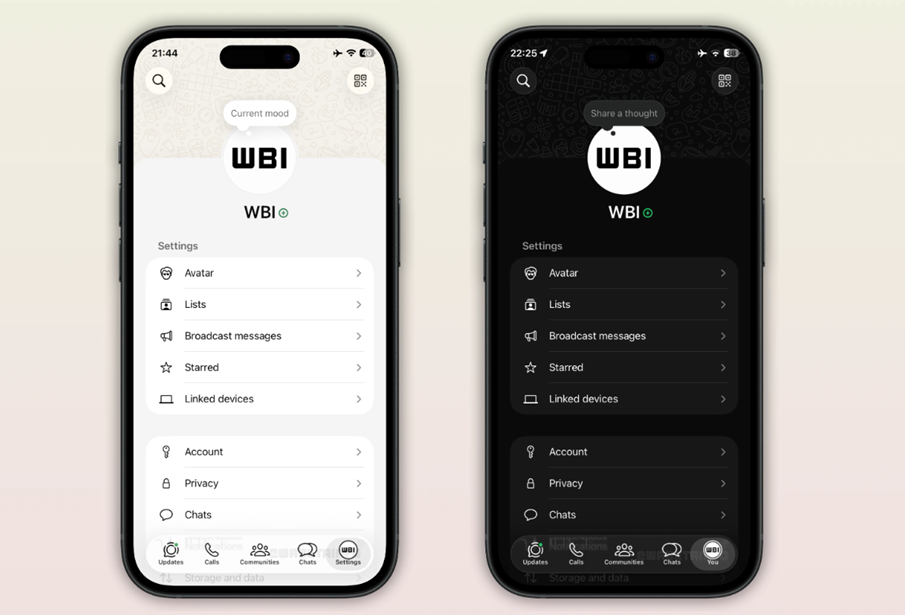
According to the latest reports, WhatsApp is introducing a fresh interface update for iPhone users that replaces the Settings section with a new “You” tab. The update was first spotted by the trusted WhatsApp Beta source, WABetaInfo. The latest update aims to make profile access more prominent while improving how users manage their account identity within the app. Here are more details.

What is the New WhatsApp ‘You’ Tab on iPhone?

According to the report, the new “You” tab replaces the existing Settings section but retains most of its functionality with a refreshed layout and focus. Instead of being purely settings-driven, the section now highlights user identity and profile details

New “You” tab replaces the existing Settings section in WhatsApp on iPhones. (Screenshot by WABetaInfo)

Users can tap on the profile icon to access their account information and manage settings. The interface also includes a visible profile icon, which acts as a quick visual cue to identify the active account.

This addition becomes particularly useful as WhatsApp continues to expand support for multiple accounts. The profile icon helps users easily recognise which account is currently in use and simplifies switching between them.

Here is how users can access the new ‘You’ tab –

  • Open WhatsApp on your iPhone.
  • Look at the bottom navigation bar.
  • Tap on your profile picture (this replaces the Settings icon)
  • You’ll enter the “You” section.

The new tab is part of the latest version of WhatsApp for iOS available via the App Store.

The rollout is happening gradually, which means not all iPhone users may see the changes immediately. As part of the update, WhatsApp has also added a profile icon in the bottom navigation bar, making it easier for users to quickly identify their account.

Profile Page Gets a New Look with Cover Photo

Alongside the “You” tab, WhatsApp is also testing a redesigned profile page. Some users may now see a large cover photo section at the top of their profile, giving it a more modern and personalised appearance.

However, this feature is still in the testing phase. Users who currently see the cover photo cannot customise it yet, as it is set to a default image. Future updates may introduce the option to change or personalise this cover photo.

FAQs

Q1. What is the new ‘You’ tab on WhatsApp for iPhone?

Answer. The “You” tab replaces the Settings section, highlighting user identity and profile details while retaining most of the settings functionality.

Q2. How can iPhone users access the ‘You’ tab?

Answer. Open WhatsApp, look at the bottom navigation bar, and tap on your profile picture. This now replaces the Settings icon and takes you to the “You” section.

Q3. What new design changes are being tested alongside the ‘You’ tab?

Answer. WhatsApp is testing a redesigned profile page with a large cover photo at the top. Currently, it uses a default image, but future updates may allow customisation.

Also Read

https://www.mymobileindia.com/whatsapp-launches-parent-managed-accounts-for-kids-under-13/

https://www.mymobileindia.com/whatsapp-plus-premium-plan-in-the-works-with-custom-themes-and-up-to-20-pinned-chats/

Samsung Galaxy Z Flip 8 Spotted on 3C Certification – Battery, Camera and Expected Specs Revealed

0

Highlights

  • A Samsung device with model number SM-F7760 was spotted on China’s 3C certification platform.
  • Although the name is not mentioned, it is believed to be the upcoming Galaxy Z Flip 8, supporting 25W charging.
  • Reports suggest a dual-cell battery setup of around 4,174mAh with unchanged camera hardware such as 50MP primary, 12MP ultra-wide and 10MP front sensor.
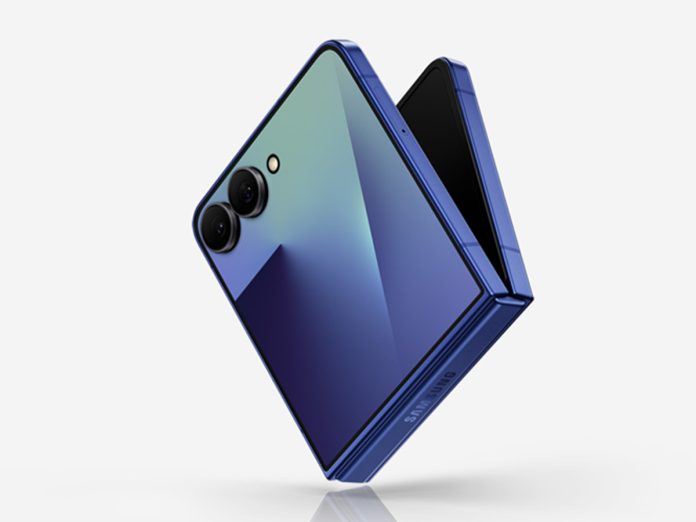
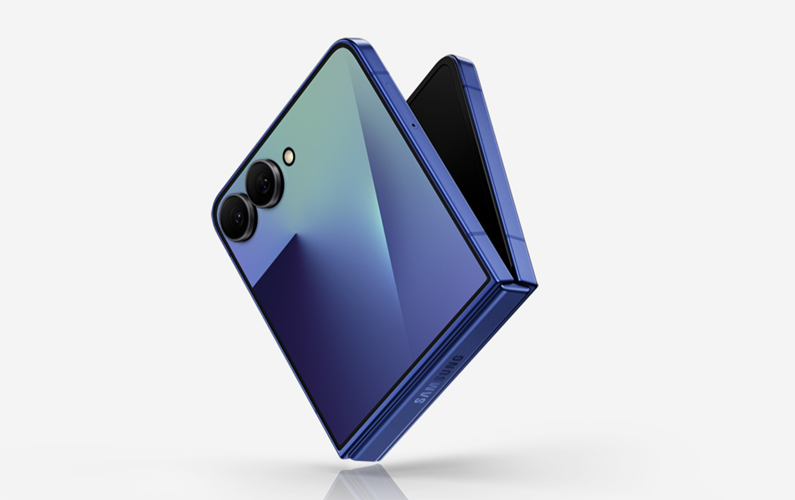
Samsung Galaxy Z Flip 7 in the picture. (Image credit - Samsung)
Samsung Galaxy Z Flip 7 in the picture. (Image credit – Samsung)

Samsung seems to have shifted its attention to its upcoming foldable lineup after unveiling the Galaxy S26 series. Upcoming Samsung foldables have already started appearing in leaks. And while the company has not officially confirmed anything yet, the next generation of foldables will most likely be the Samsung Galaxy Z Fold 8 and Samsung Galaxy Z Flip 8. One of the latest reports has now shared enough for tech enthusiasts to start speculating about the possible arrival of these models.

3C Listing Leak Hints at Samsung Foldables

A Samsung smartphone with the model number SM-F7760 has been spotted on China’s 3C certification platform. Although the listing does not explicitly mention the device name, the model number strongly hints that it could be the upcoming Galaxy Z Flip 8.

Leaked 3C Listing details. (Credit - 91Mobiles)
Leaked 3C Listing details. (Credit – 91Mobiles)

For reference, the Samsung Galaxy Z Flip 7 carried the model number SM-F766, suggesting a clear naming progression.

The 3C certification listing categorises the device as a “5G digital mobile telephone set” and suggests that it may support similar charging speeds as its predecessor. The listing includes the EP-TA800 charger model, which corresponds to Samsung’s 25W wall charger. Beyond this, the certification does not reveal additional hardware details.

Upcoming Samsung Foldable – Battery and Camera Details Surface Online

Separate reports indicate that the Galaxy Z Flip 8 could retain a similar battery setup as the Galaxy Z Flip 7.

According to Galaxy Club, the handset may include two battery units with model numbers EB-BF776 and EB-BF777. These are said to have rated capacities of 1,150mAh and 3,024mAh, respectively, bringing the total to 4,174mAh. This could likely be marketed as a 4,300mAh battery.

While this capacity was not particularly impressive on the previous model, it was still capable of delivering a full day of usage under moderate to heavy conditions, based on earlier observations.

However, with competing flip smartphones adopting higher-capacity silicon-carbon batteries, a larger battery upgrade could have made a stronger impact.

Reports also suggest that the camera hardware on the Galaxy Z Flip 8 might remain unchanged from its predecessor. The device is expected to feature a dual rear camera setup consisting of a 50-megapixel primary sensor and a 12-megapixel ultra-wide lens. On the front, it could include a 10-megapixel camera for selfies and video calls.

If these details hold true, the camera experience may be similar to what users saw on the Galaxy Z Flip 7. While the setup should be adequate for a foldable device, those expecting significant camera upgrades might find it underwhelming.

The upcoming Galaxy Z Flip 8 could be powered by either the Snapdragon 8 Elite Gen 5 for Galaxy chipset or Samsung’s own Exynos 2600 processor.

With certifications and leaks picking up pace, more details about Samsung’s next foldable lineup are likely to surface in the coming weeks.

FAQs

Q1. What certification has the Galaxy Z Flip 8 recently received?

Answer. A Samsung device with model number SM-F7760 was spotted on China’s 3C certification platform, strongly hinting at the upcoming Galaxy Z Flip 8.

Q2. What battery setup is expected on the Galaxy Z Flip 8?

Answer. Reports suggest a dual-cell battery (1,150mAh + 3,024mAh) totaling ~4,174mAh, likely marketed as a 4,300mAh capacity, similar to the Z Flip 7.

Q3. What camera hardware might the Galaxy Z Flip 8 feature?

Answer. The device is expected to retain a dual rear camera setup with a 50MP primary sensor, 12MP ultra-wide lens, and a 10MP front camera for selfies and video calls.

Also Read

https://www.mymobileindia.com/samsung-trolls-apple-iphone-17-launch-with-icant-campaign-targets-camera-specs-and-lack-of-foldables/

https://www.mymobileindia.com/samsung-president-spoke-on-apple-foldable-exynos-in-z-flip-7-and-multi-ai-strategy-ahead-of-galaxy-s26/

Xiaomi 17T, Xiaomi 17T Pro Leak Reveals Processor Battery, and Camera Details Ahead of Launch

0

Highlights

  • Xiaomi 17T may feature a 6.59-inch 1.5K display, MediaTek Dimensity 8500 chipset, and a massive 7,000mAh battery.
  • The 17T Pro is tipped to use the Dimensity 9500 and include a periscope telephoto lens for enhanced zoom.
  • Both models are expected to sport Leica-tuned triple rear cameras, with the Pro variant offering periscope zoom. A 32MP front camera is likely for selfies and video calls.
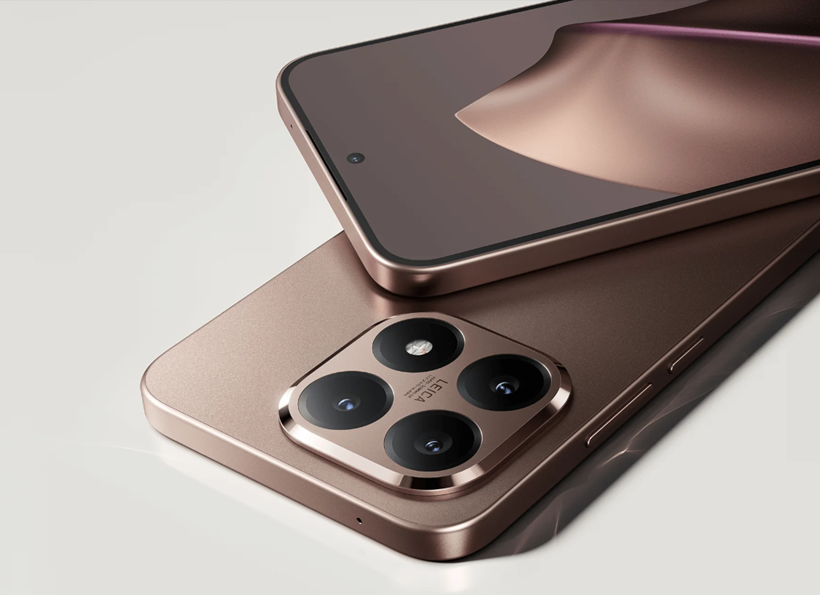
Xiaomi 15T in the picture. (Image credit - Xiaomi)
Xiaomi 15T in the picture. (Image credit – Xiaomi)

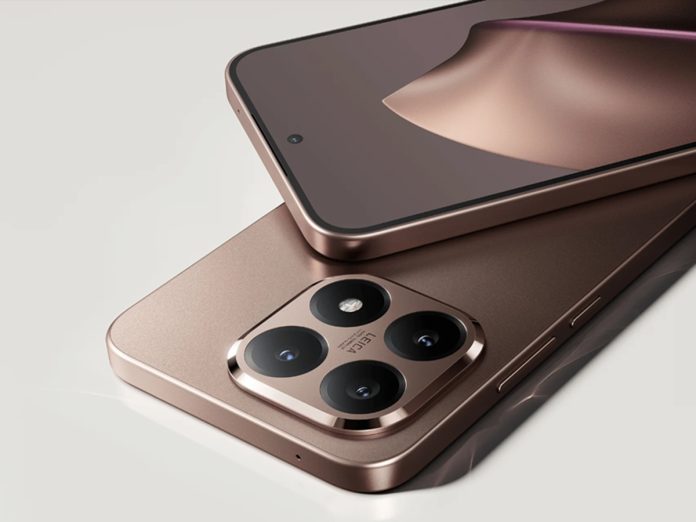
Xiaomi appears to be preparing for the launch of its next mid-range lineup, the Xiaomi 17T series. A fresh leak has revealed early details about two upcoming smartphones and early reports suggest the company is working on two new devices expected to debut in Q2 2026. Here are more details.

Xiaomi 17T, 17T Pro – Key Specifications (Leaked)

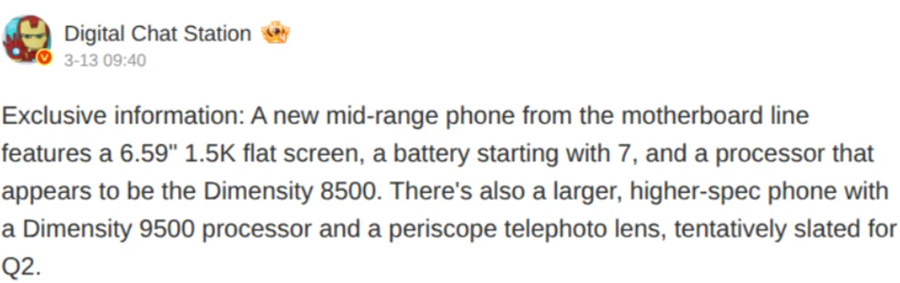
Tipster Digital Chat Station’s latest post. (Via Gizmochina)

According to tipster Digital Chat Station on Weibo, the standard Xiaomi 17T could feature a 6.59-inch flat display with a 1.5K resolution. The device is also tipped to pack a large battery of around 7,000mAh and may be powered by the MediaTek Dimensity 8500 processor.

On the other hand, the higher-end Xiaomi 17T Pro is expected to come equipped with the more powerful MediaTek Dimensity 9500 chipset. In terms of cameras, the Pro model may include a periscope telephoto lens, offering improved zoom capabilities.

Both smartphones are likely to run a newer version of Xiaomi’s HyperOS, although the exact version details have not yet been revealed.

While the leak does not explicitly confirm the names, both smartphones are widely believed to be part of the Xiaomi 17T series.

Xiaomi 17T, 17T Pro – Earlier Leaks

Earlier reports suggest that both the Xiaomi 17T and Xiaomi 17T Pro could feature Leica-tuned camera systems. The devices are expected to include a triple rear camera setup comprising a 50-megapixel primary sensor, a 12-megapixel secondary sensor, and a 50-megapixel telephoto lens.

However, the primary and telephoto sensors may differ between the two models. The Pro variant is also tipped to include a periscope telephoto camera, further enhancing its photography capabilities. For selfies and video calls, both phones could feature a 32-megapixel front-facing camera.

Expected Launch Timeline and Price in India

Reports indicate that the Xiaomi 17T could launch in India within the next two to three months. The smartphone is expected to be priced at around Rs. 55,000. This estimated pricing may include launch offers that Xiaomi typically provides during the initial sales period.

In any case, the upcoming Xiaomi 17T series appears to be a strong contender in the premium mid-range segment, thanks to its multiple upgrades in performance, battery capacity, and camera capabilities.

FAQs

Q1. What processors will power the Xiaomi 17T and 17T Pro?

Answer. The Xiaomi 17T is expected to use the MediaTek Dimensity 8500, while the 17T Pro may feature the more powerful Dimensity 9500 chipset.

Q2. What battery and display details are leaked for the Xiaomi 17T?

Answer. The Xiaomi 17T could come with a 6.59-inch flat 1.5K display and a large 7,000mAh battery, making it a strong mid-range option.

Q3. What camera setup is expected on the Xiaomi 17T series?

Answer. Both models may include Leica-tuned triple rear cameras (50MP primary, 12MP secondary, 50MP telephoto), with the Pro variant offering a periscope telephoto lens for enhanced zoom.

Also Read

https://www.mymobileindia.com/xiaomi-17-17-ultra-global-launch-set-for-february-28-xiaomi-17t-17t-pro-launch-timeline-also-leaked/

https://www.mymobileindia.com/xiaomi-17-and-xiaomi-17-ultra-india-launch-tipped-for-march-2026-xiaomi-17t-expected-in-april/

Xiaomi 17 and Xiaomi 17 Ultra Now Available in India – Price, Offers, and Key Details

0
Xiaomi 17&Xiaomi 17Ultra

Highlights

  • Xiaomi 17 Series smartphones are available via Amazon, Xiaomi India’s website, and retail stores.
  • Xiaomi 17 starts at ₹89,999 (12GB+256GB) and goes up to ₹99,999 (512GB), while Xiaomi 17 Ultra is priced at ₹1,39,999 (16GB+512GB).
  • 17 Ultra get a ₹10,000 instant discount with SBI cards/EMI, reducing the price to ₹1,29,999, plus no‑cost EMI options. 
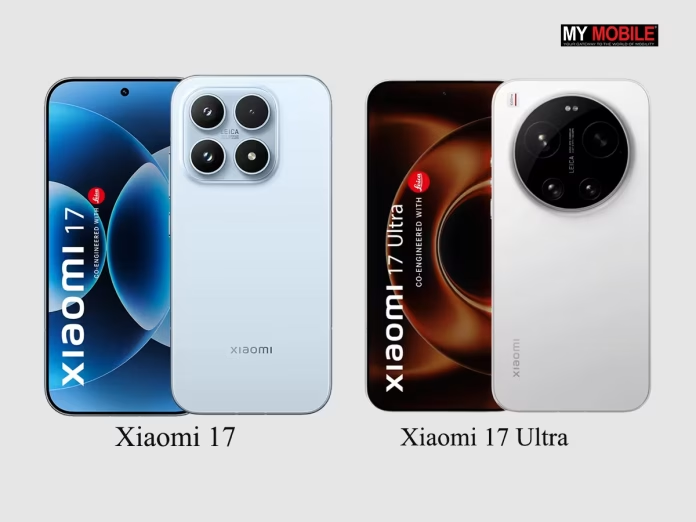
Xiaomi 17 and Xiaomi 17 Ultra are available for purchase in India. (Image credit - Xiaomi)
Xiaomi 17 and Xiaomi 17 Ultra are available for purchase in India. (Image credit – Xiaomi)

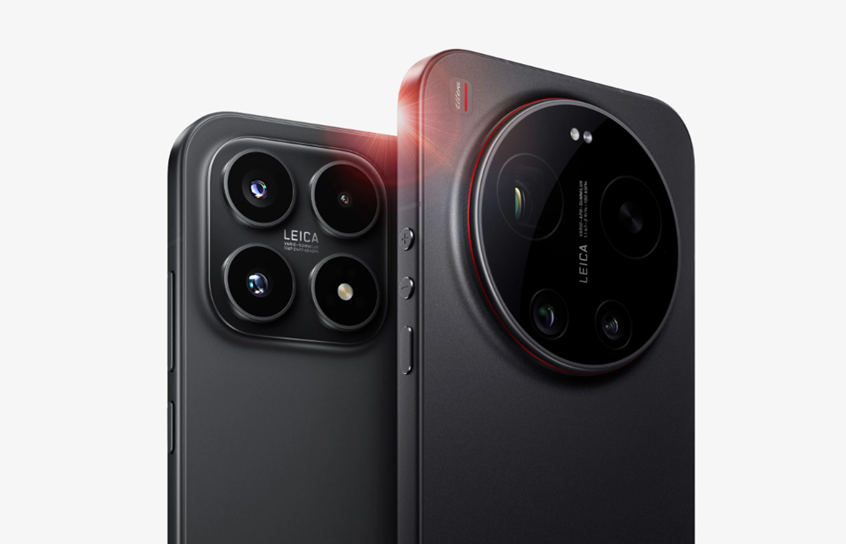
Xiaomi has officially started sales of its latest flagship smartphones, the Xiaomi 17 and Xiaomi 17 Ultra, in India. The Xiaomi 17 series was launched in the country on March 11 shortly after its global debut. The premium models are powered by Qualcomm’s flagship Snapdragon 8 Elite Gen 5 chipset and equipped with Leica-powered camera systems. Here are more details about their availability in the Indian market.

Xiaomi 17, Xiaomi 17 Ultra – Price and Availability in India

The Xiaomi 17 is priced starting at Rs. 89,999 for the 12GB RAM and 256GB storage variant, while the 512GB model is available at Rs. 99,999. The handset comes in three colour options including Black, Ice Blue, and Venture Green.

On the other hand, the Xiaomi 17 Ultra is priced at Rs. 1,39,999 and is offered in a single configuration with 16GB RAM and 512GB storage. Buyers can choose between Black and White colour variants.

Both smartphones are now available for purchase via Amazon, the official Xiaomi India website, and authorised Xiaomi retail stores across the country.

Launch Offers and Benefits

image

As part of the launch offers, customers purchasing the Xiaomi 17 Ultra can avail an instant discount of Rs. 10,000 using SBI Credit Cards and EMI transactions, bringing the effective price down to Rs. 1,29,999. Buyers can also opt for no-cost EMI options for up to nine months, starting at Rs. 14,444 per month.

For the Xiaomi 17, the company is offering a ‘Never Run Out’ deal. It allows customers to get the 512GB storage variant at the price of the 256GB model as a free upgrade.

In addition to these offers, the Xiaomi 17 series comes bundled with several partner benefits. Buyers get a complimentary four-month subscription to Spotify Premium, along with three months of YouTube Premium. The package also includes a three-month subscription to Google AI Pro and additional benefits for Reliance Jio users, valued at Rs. 31,500.

image

Notably, Xiaomi had also introduced an early bird offer during the pre-booking phase, where customers purchasing the Xiaomi 17 Ultra received the Xiaomi Professional Photography Kit Pro, worth Rs. 19,999, at no extra cost.

This limited-time offer was available between March 13 and March 17 in India.

For more details about the Xiaomi 17 and Xiaomi 17 Ultra smartphones, check out our detailed coverage of the launch.

FAQs

Q1. What are the prices of the Xiaomi 17 and Xiaomi 17 Ultra in India?

Answer. The Xiaomi 17 starts at ₹89,999 for the 12GB+256GB model and ₹99,999 for the 512GB variant. The Xiaomi 17 Ultra is priced at ₹1,39,999 for the 16GB+512GB configuration.

Q2. What launch offers are available for buyers of the Xiaomi 17 Series?

Answer. Xiaomi 17 Ultra buyers get a ₹10,000 instant discount with SBI Credit Cards/EMI, reducing the price to ₹1,29,999, plus no‑cost EMI options. Xiaomi 17 buyers can upgrade to the 512GB variant at the price of the 256GB model under the “Never Run Out” deal.

Q3. What additional benefits come with the Xiaomi 17 series?

Answer. Buyers receive complimentary subscriptions, Spotify Premium (4 months), YouTube Premium (3 months), Google AI Pro (3 months) and Jio benefits worth ₹31,500.

Also Read

https://www.mymobileindia.com/xiaomi-17-ultra-and-xiaomi-17-launched-in-india-with-leica-cameras-lofic-sensor-technology-and-flagship-hardware/

https://www.mymobileindia.com/xiaomi-pad-8-launched-in-india-with-snapdragon-8s-gen-4-144hz-display-and-9200mah-battery/
Samsung Galaxy S26 FE, Galaxy M47 5G and Galaxy F70 Pro 5G Spotted on GSMA Database

0

Highlights

  • Leaked GSMA listings confirm Samsung Galaxy S26 FE, Galaxy M47 5G, and Galaxy F70 Pro 5G.
  • S26 FE may debut with the next-gen Exynos 2600 chipset; the M47 5G is expected to feature a large battery and Super AMOLED display.
  • the F70 Pro 5G could bring upgraded cameras, faster charging, and dual-SIM support.
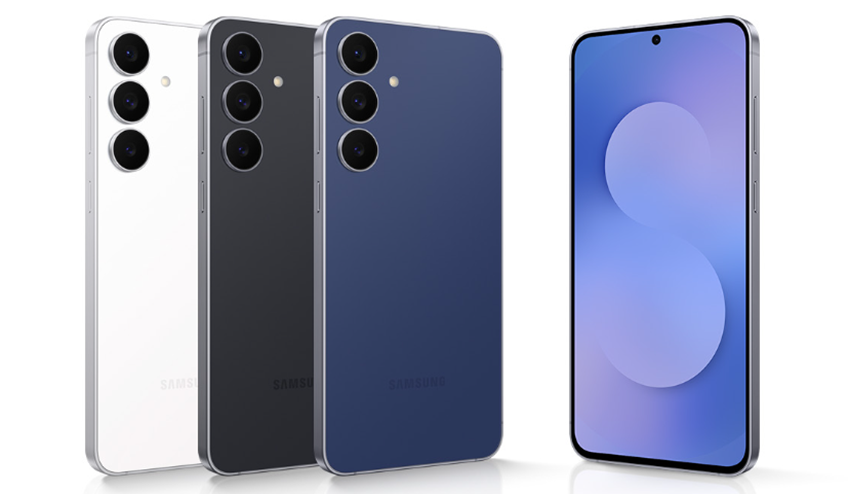
Samsung Galaxy S25 FE in the picture for reference. (Image credit - Samsung)
Samsung Galaxy S25 FE in the picture for reference. (Image credit – Samsung)

It appears Samsung is gearing up for its next lineup of mid-range and Fan Edition smartphones. Details of listings on the GSMA database have recently leaked online revealing three upcoming devices. So, brace yourself for the Samsung Galaxy S26 FE, Samsung Galaxy M47 5G and Samsung Galaxy F70 Pro 5G.

The company is yet to officially disclose specifications or even confirm the devices. However, these database entries offer an early glimpse into Samsung’s upcoming smartphone roadmap. The details were first shared by Smartprix in an exclusive report, suggesting that Samsung could be planning an interesting launch calendar in the coming days. Here are more details, anyhow.

Samsung Galaxy S26 FE

image

Leaked new GSMA listing with the model number SM-S741B/DS confirms the arrival of the Galaxy S26 FE. One of the biggest talking points around the device is expected to be its processor.

Industry leaks suggest that Samsung may equip the smartphone with the next-generation Exynos 2600 chipset. If this turns out to be accurate, the upgrade could significantly boost performance and position the S26 FE as a strong contender in the premium mid-range segment.

Samsung’s Fan Edition series has traditionally aimed to deliver flagship-like features at a more accessible price point. However, last year’s Samsung Galaxy S25 FE, which was powered by the Exynos 2400 chipset, was seen by many as a modest upgrade over its predecessor and failed to impress performance-focused users.

Samsung Galaxy M47 5G

image

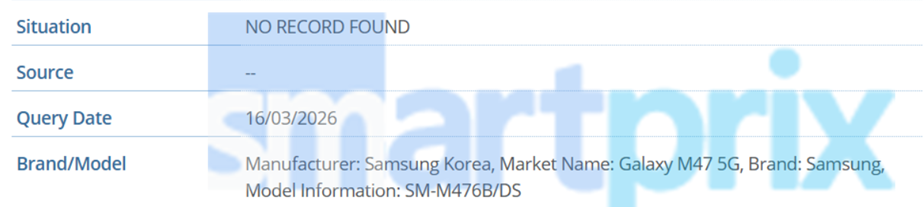
The leaked GSMA database also sheds light on the upcoming Galaxy M47 5G, listed under the model number SM-M476B/DS. This confirms the return of the M4x series, which has been largely inactive since the launch of the Samsung Galaxy M44 5G in late 2023.

The Galaxy M47 5G is expected to continue the trend of large battery capacities, competitive pricing and will likely feature a power-efficient 5G chipset. Reports further suggest this model could sport a large Super AMOLED display. It is aimed at budget-conscious buyers competing against feature-rich offerings from Chinese brands.

Samsung Galaxy F70 Pro 5G

image

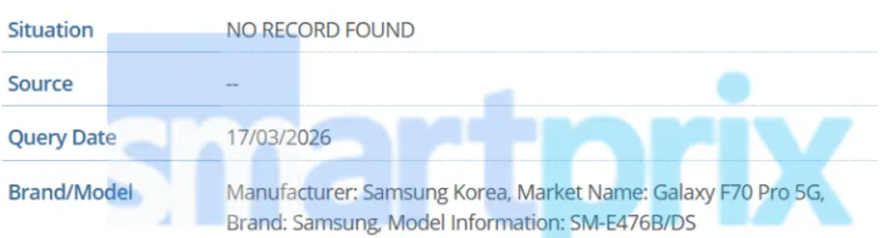
Rounding out the list is the Galaxy F70 Pro 5G, identified by the model number SM-E476B/DS. The “DS” suffix indicates dual-SIM support.

While specific hardware details are not yet available, the “Pro” branding typically signals an upgrade over standard F-series models. This could include better camera hardware, faster charging capabilities, and a more capable processor suited for multimedia use and gaming.

The appearance of these three devices suggests that Samsung is now focusing on the sub-flagship and mid-range segments. We can expect more details to surface as these smartphones move closer to launch.

FAQs

Q1. Which new Samsung smartphones were spotted on the GSMA database?

Answer. The listings revealed the Galaxy S26 FE, Galaxy M47 5G, and Galaxy F70 Pro 5G, giving an early glimpse into Samsung’s upcoming lineup.

Q2. What chipset is the Galaxy S26 FE expected to feature?

Answer. Industry leaks suggest it may debut with the next-generation Exynos 2600 chipset, potentially offering a major performance boost over the S25 FE.

Q3. What can we expect from the Galaxy M47 5G and F70 Pro 5G?

Answer. The M47 5G is likely to focus on large battery capacity, competitive pricing, and a Super AMOLED display, while the F70 Pro 5G could bring upgraded cameras, faster charging, and dual-SIM support.

Also Read

https://www.mymobileindia.com/samsung-galaxy-a37-and-galaxy-a57-price-revealed-via-leaked-thailand-promo-poster/

https://www.mymobileindia.com/samsung-galaxy-m17e-5g-launched-in-india-at-%e2%82%b912999-with-6000mah-battery-and-dimensity-6300/