The popular Chinese company – Redmi – is gearing up to launch its Redmi Note 11 Series on October 28 in China. The series will include Redmi Note 11, Redmi Note 11 Pro and Redmi Note 11 Pro Plus. Ahead of the launch, Xiaomi has also teased some of the features and specifications of Note 11 series while keeping other details under the wraps.
As per the leaked specifications, all three Redmi Note smartphones are said to come with a massive 5,000mAh batteries. The Redmi Note 11, Redmi Note 11 Pro, and Redmi Note 11 Pro+ has 120Hz displays and are also claimed to have MediaTek Dimensity range of SoCs with 5G connectivity. In addition to this, the specifications of these models may include up to 256GB of onboard storage.
The company has announced the launch of the Redmi Note 11 Series through Weibo. The event will be held on October 28 at 7 pm CST Asia (4:30 pm IST). Let’s take a look at the Redmi Note 11 Series specifications and price.
Redmi Note 11 specifications (expected)
The Redmi Note 11 is claimed to come with a 6.5-inch full-HD+ LCD along with a 120Hz refresh rate and a Corning Gorilla Glass Victus protection. The smartphone is also said to be powered by an octa-core MediaTek Dimensity 810 SoC, paired with up to 8GB of LPDDR4x RAM. In terms of cameras, it might come with a dual rear camera setup with a 50-megapixel Samsung JN1 primary sensor, a 2-megapixel depth sensor, and a 16-megapixel front camera. The Redmi Note 11 can be powered by a 5,000mAh battery with 33W fast charging support.
Redmi Note 11 Pro specifications (expected)
According to the leaked specifications, the Redmi Note 11 Pro will sport a 6.5 inch 120Hz Full-HD+ AMOLED display. It may feature an octa-core MediaTek Dimensity 920 SoC paired with up to 8GB of LPDDR4x RAM. Coming to the optics, the smartphone may come with a triple rear camera setup that may include a 108-megapixel Samsung HM2 primary sensor, an 8-megapixel Sony IMX355 ultra-wide shooter, a 2-megapixel depth sensor, and a 16-megapixel front camera. The smartphone is tipped to come with a 5,000mAh battery.
Also Read: Tiger Shroff to root for Indian gamers as World Esports Cup 2021 kicks off from November 25
Redmi Note 11 Pro Plus specifications (expected)
The top model of the Note 11 series – Redmi Note 11 Pro Plus – is said to sport a 6.67-inch 120Hz AMOLED display protected by Corning Gorilla Glass Victus. The smartphone can get MediaTek Dimensity 1200 processor coupled with 8GB LPDDR4x RAM and 256GB UFS 3.1 storage. In terms of optics, the Pro Plus variant would come with the same rear camera setup as the Pro variant. It may sport a 16-megapixel camera for selfies on the front. Further, it is tipped to get a 5,000mAh battery with a mighty 120W fast charging support.
Redmi Note 11, Redmi Note 11 Pro, Redmi Note 11 Pro Plus price (expected)
As per the rumors, the price of Redmi Note 11 will start at CNY 1,199 (approx. Rs 14,000) for the 4GB RAM + 128GB variant. The price of 6 GB RAM + 128 GB storage variant are said to be priced at CNY 1,399 (approx. Rs 16,400). There will be an 8 GB RAM + 128 GB storage variant, which will cost CNY 1,599 (approx. Rs 18,700). The phone would also come 8GB + 256GB model that are said to be priced at CNY 1,799 (approx. Rs 21,000).
In contrast, the 6 GB RAM + 128 GB storage variant of the Redmi Note 11 Pro may carry a starting price tag of CNY 1,599 (approx. Rs 18,700). It is also said to have an 8GB + 128GB option, which will cost CNY 1,799 (approx. Rs 21,000) and the top-of-the-line 8GB + 256GB variant at CNY 1,999 (approx. Rs 23,400).
The Redmi Note 11 Pro Plus will cost CNY 2,199 (approx. Rs 25,700) for the 8GB + 128GB variant. It is also said to have an 8GB + 256GB variant at CNY 2,499 (approx. Rs 29,200).
While the World Esports Cup 2021 (WEC ’21) is all set to showcase the best rivalries, star Bollywood actor Tiger Shroff will be cheering the Indian contingent as he announced his support for the Indian team and its gamers, competing for the title and the enormous prize pool of $100k. Apart from India, the tournament will witness participation of the best esports athletes from arch-rivals Pakistan and Nepal.
In a special video, the B-town action heartthrob came out in support of the Indian gamers and also welcomed the participants from Nepal and Pakistan as the South East Asia’s prestigious tri-nation esports tournament is scheduled to begin on November 25 with the top gamers competing in one of the most popular battle royal game, Free Fire. The Bollywood sensation will connect esports to the mainstream and WEC ’21 campaign #GameHaiToFameHai that encourages players to showcase their top game and get rewards as well as recognition in the industry.
“Esports has shown a great potential in India as well as globally. I’m really excited to cheer for the Indian gamers in this action-packed mega tournament and urge fans to join us, extending their support to the participants,” Tiger said.
This is not the first time Tiger has been involved with esports. The actor, who is known for his passion for sports and mixed martial arts and has a strong influence on the dynamic millennials and Gen-Z, was named as the brand ambassador for the 2021 Esports Premier League, which proved to a grand nationwide success.
Also Read: Oppo ColorOS 12 Review: Mature enough to take on the best
The event will be played over a period of three months, witnessing 33-plus days of live streaming on the official YouTube and Facebook channels of India Today and Aaj Tak along with their websites.
After the initial regional qualification rounds, top-4 squads from each country will fight it out in the Grand Finals of the WEC ’21.
World Esports Cup Director Vishwalok Nath said, “Tiger cheering the Indian contingent will go to make the competition extra special and more exciting to watch out for. And not to forget the famous rivalry that has been so far a blockbuster in cricket and will now be seen in esports too which will test the ultimate strategies, coordination and tactical skills.”
With Infinix smartphones as the title sponsor, registration for the inaugural edition of the WEC ’21 will begin on Saturday (October 23) and the athletes and esports enthusiasts from the three regions can register themselves until November 23.
Handset maker Oppo has been quite choosy with its operating system ever since the introduction of ColorOS 7 in 2019. Targeting a global audience, it introduced a modern user interface and streamlined its design. Later, with the roll out of ColorOS 11 in 2020, Oppo started maintaining naming parity with Android versions – integrating a host of Google features, including the dialer and Android messages, as default out of the box, and offering a sleek new UI with plenty of customisability as well as a host of extras, such as all the privacy features from Android 11 as standard.
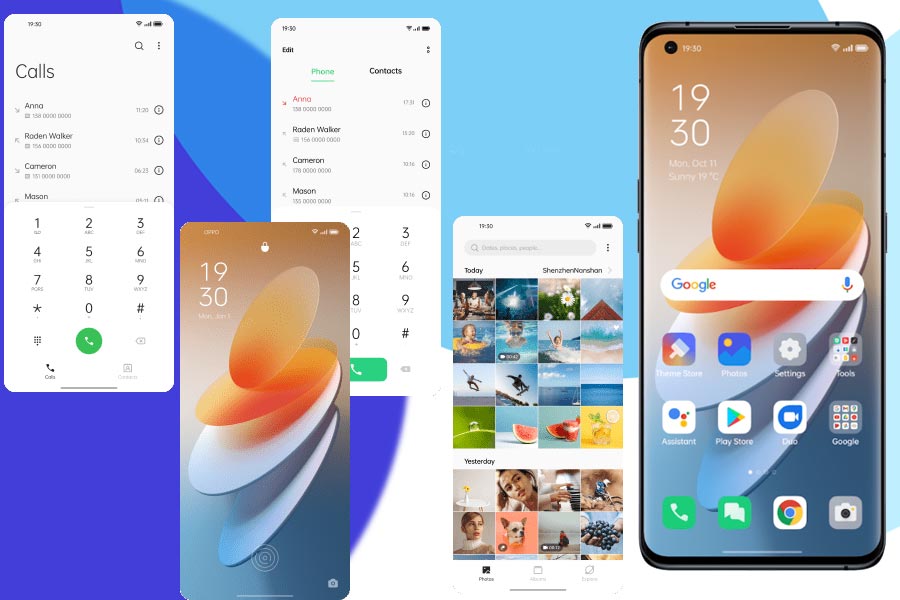
This year’s ColorOS build, which is unsurprisingly-dubbed ColorOS 12, further polishes Oppo’s software endeavours, bringing in an inclusive design, new customization options, exciting additions, all the latest privacy and security features from Android 12, and less bloatware out of the box. Without further ado, let’s get into the detail of ColorOS 12 and see how it performs.
Design and UI: Visually appealing
The first and foremost thing that you will notice about ColorOS 12 is its UI, which looks clean due to the increased spacing between elements. While a majority of the interface features a white layout (black if you switch to dark mode), there are bright colours throughout ColorOS to give it a good contrast. These changes will be instantly noticed in the Settings page. You’ll find less information density, larger text labels and the icons for each section housed in rounded bubbles with bright colours. These make the interface easier to read, decrease mess, and make it look more contemporary.
The similar thing can be said about the notification panel. Instead of using Google’s gigantic tiles, Oppo has gone on with the rounded icons with text labels beneath. The only alteration you’ll find is that the icons are larger, and the brightness slider is lumpy. The all-new ColorOS 12 is very inclusive in nature, as its user interface is available in 67 languages out of the box. These include over a dozen Indian languages. The handset maker has done a good job by localising fonts.
Customisation: An easy way to personalise your phone
ColorOS 12 stands out in terms of customisation, as the smartphone manufacturer has brought the ability to change the UI colours based on your phone’s background. However, it isn’t using Google’s Material You. Oppo says it didn’t have access to the feature in time for ColorOS 12, so it went ahead and made its own alternative. The feature is similar to how Material You’s colour extraction works in Android 12; every time you change your phone’s background, the colour picker will automatically select the dominant colour from the photo and use that system-wide.
There are a few new additions in always-on mode. You get four customizable modes that let you draw patterns or use a combination of text and custom images, and a new one for this year is Portrait silhouette. You can choose a selfie, and it will use machine learning to form a silhouette based on the outlines in the photo and set that as the background for the lock screen (and home screen as well). You’ll also find a battery-drain notification that shows up whenever ColorOS 12 detects high power draw, with the option to optimize battery use.
There are a few issues as well. The text labels for icons are set to Extra Large out of the box in the app drawer. So, they look nonsensically large and make the drawer look packed. To make the app drawer look normal, you’ll have to go into the Settings and adjust the size.
Features: Fun new additions
The all-new ColorOS 12 comes packed with a lot of features: some new and some upgraded with added functionalities. The Oppo’s 3-finger screenshot and translation, for instance, has now extended to the Smart Sidebar. Besides, there’s a new Background Stream option that pops up in the Smart Sidebar when you are watching any video on a streaming app such as Netflix, Amazon Prime, YouTube etc. This basically means that you can listen to the video in the background.
Although Floating Windows have been around for a while, in ColorOS 12 you can easily extend the size by merely dragging from the corner. And, you can drag and drop a photo from the Photos app into any compatible floating window. Android 12 features like the Conversation Widget and Quick Bubbles are also present. You’ll also get Accessibility Features that have been broken down into four easy-to-understand segments and the company has also included GIFs to make it easier to understand these features.
Among other features, there’s a new battery dashboard that gives you a better indicator of your phone’s power usage, new battery-saving modes, and a Phone Manager dashboard that makes it easier to manage storage, security settings, privacy options, and more. Last, but not the least, RAM expansion feature remains a part of the new ColorOS, with the feature allowing the user to increase the allocation by up to 7GB for increased performance.
System optimisation: Great for multi-tasking
In terms of system optimisation, the ColorOS 12 comes up with a new Quantum Animation Engine 3.0 that’s smoother than before, with dynamic scrolling actions and representational animations. While this is great for most tasks such as browsing the web and even multi-tasking, deeper inspection of the ColorOS 12 running device’s performance revealed the beta build of the software is probably not being able to fully harness the power of the powerful hardware at hand. There is less bloatware and these user experience changes make the all-new version of ColorOS feel more natural.
Conclusion: Quite mature
The new ColorOS software feels more refined and feature-rich than before, kudos to its design which is well-organised and cohesive. There is a host of useful additions and you’ll not feel like missing out on any of the features that Google rolled out in Android 12. In spite of being in the beta state, the operating system managed to deliver smooth and lag-free experience. ColorOS 12 feels quite mature, and with it, Oppo can deliver an UI, which is on par with best Android phones.
Koo’s user base has touched about 15 million mark. The homegrown microblogging platform saw a massive growth in its user base when Union ministers and various government departments in India endorsed the app – it is an Indian microblogging platform and an ambitious rival of Twitter. The popularity of the app has soared phenomenally with as many as 5 million users added in just the last quarter alone, said co-founder Aprameya Radhakrishna.
Redmi Note 11 launch on October 28
Xiaomi’s sub-brand Redmi announced it will launch the Note 11 series on October 28 in China at 19:00 local time (4:30 PM IST) and the event should be live-streamed on the company’s China website. The Redmi Note 11 lineup is expected to have three variants; the Redmi Note 11, Redmi Note 11 Pro, and Redmi Note 11 Pro+, which will offer high-end features compared to the other two variants. The specifications about the latest budget device have already leaked online.
Also Read: Noise Sense Bluetooth Neckband launched at Rs 1,099 with extended 25-hour playtime
Clubhouse to soon let users pin links to top of rooms
Clubhouse will soon let users to share outside links. In addition, it will allow users to monetize their work on the popular social networking app. The changes will arrive both on Android and iOS platforms on October 27. Paul Davison, Clubhouse CEO and Maya Watson, global head of marketing told The Verge that a new pinned links feature will be rolled out that will allow moderators to place outside links at the top of a room. These links would direct listeners to whatever moderators want, including a news article, or a podcast.
Rajinikanth to launch country’s first voice-based social media app dubbed Hoote
Rajinikanth is all set to launch a special social media app. The superstar will launch what is said to be the country’s “first voice-based social media platform”. The actor himself said that he will be launching the “first of its kind” app in his own voice. The app Rajinikanth is about to launch, is very much different, it is voice based. What is noteworthy is that Rajinikanth will launch the app that has been created by his daughter Soundarya Vishagan. He revealed that Soundarya, by “her independent efforts, has pioneered the making of a very useful app for people called Hoote.”
Lifestyle brand Noise has announced the launch of its latest neckband – Noise Sense. Originally priced at Rs 2,499, the neckband will initially be available at a discounted launch price of Rs 1,099. Customers can buy the latest audio device from Noise’s official website, or from Amazon.
Noise Sense is equipped with InstachargeTM technology, allowing users to charge 8 hours of battery within 8 minutes. The latest device comes with a total playtime of 25 hours, to give Noisemakers an uninterrupted and seamless audio experience at all hours during the day.
Designed to empower users with the ability to multitask, Noise Sense is the perfect match for those who prefer comfort, style, and crystal-clear audio quality all at once. It will be available in two classic colours – Black and Blue. The neckband is equipped with Bluetooth 5.0 pairing and will come with a Type C USB cable for easy connectivity and charging. The earbuds of Noise Sense are designed with a 10 mm size driver to provide a comfortable, no-fuss grip in the ear. The device will also come equipped with IPX5 water resistance to allow for greater product life and prevent water related damage. Adding on to the user’s seamless experience is Noise Sense’s powerful voice assistance control and call vibration alert through which you can never miss an important call once your earphones are connected.
Also Read: WareIQ introduces Shipment Tracking Platform for D2C customers
Gaurav Khatri, Co-founder, Noise, said, “We’re pleased to add another powerful and affordable Bluetooth neckband to our portfolio of audio products. Noise Sense is equipped with remarkable features, including an extended 25-hour battery life, seamless voice assistance and more to allow Noisemakers to enjoy a superior audio experience. Its sought-after features make it a steal deal for those looking for advanced audio quality and style in one go. The launch is a part of our efforts to listen to the needs of our customers and come up with products that matter.”
Year on year, advertisers work around different marketing strategies to benefit from the festive season. And this year is going to be no different. Over the last two years, the pandemic shook the world and rocked festive advertising to sleep. However, as the festive season nears, consumers begin to take refuge in shopping, and brands are more ready than ever to leverage the event. For any Indian shopper, the festive season is a much-awaited period. And since the pandemic has eased a bit, people are finding ways to indulge and celebrate. So, along with lucrative offers and attractive discounts, the festive season around the corner also has a few in-store opportunities for marketers.
From hand-held gadgets to home appliances and electronics, tech brands never cease to make the best of India’s festive season sales through effective marketing spending. Tech brands have always looked beyond a traditional media strategy, penetrating deeper through various marketing channels. From radio jingles to ads on video streaming platforms, tech brands leave no stone unturned to reach consumers. Tech giants are harnessing the power of the digital marketing mix to utilize the open internet to its fullest potential, allowing them to engage potential customers at every turn of their buying journey. In addition, the popularity of upper-funnel formats such as music streaming and OTT channels can offer a more personalized approach to spreading awareness about the festive season promotions.
“Tech giants are harnessing the power of the digital marketing mix to utilize the open internet to its fullest potential, allowing them to engage potential customers at every turn of their buying journey”
Why do tech players need to advertise aggressively?
It is almost after two years since the pandemic has alleviated and given people room for celebration. A majority of the population is looking forward to around-the-counter festive season sales and with more and more people intending to add some gadgets in their carts. There is no better opportunity than the festive season to establish brand loyalty, and since India has always witnessed a trend of brand switchers as most Indians do not hold any strong perception of the brands they purchase from. Moreover, the festive season is favourable for tech brands to set foot in the market as more and more customers are keen to learn and experiment with new brands.
Tech brands with rewarding offers engage both brand switchers and brand loyalists. Consumers today are well-informed and have a wide array of choices available at their disposal. The presence of a wide variety lures brand loyalists to different brands, and exciting deals during the festive season add a cherry on the top.
Electronic appliances, hand-held gadgets, and fashion have topped the list of categories consumers will spend in the festive season. We have seen how tech brands aggressively market themselves through exciting deals during Big Billion Days and Great Indian Festival.
The consumer demand during this period surges as many people intend to make small and big-ticket purchases. According to a survey, more than 50% of the people surveyed are comfortable shopping at both offline and online stores. This year, with more and more tech brands relying on diversified marketing and branding strategies, we will see three times more sales across electronics, smartphones, laptops, and home appliances during the festive season.
The author, Sahil Chopra, is Founder and CEO, iCubesWire.
Earphones are said to be a phone’s best companion, and like the latter, the hearbales too have undergone an immense change from a wired one to wireless and now the truly wireless, often referred to as TWS (true wireless stereo). Now with gaming becoming one of the most sought-after features in a smartphone, TWS earbuds too are catching up with the trend, in order to take your gaming experience to the next level.
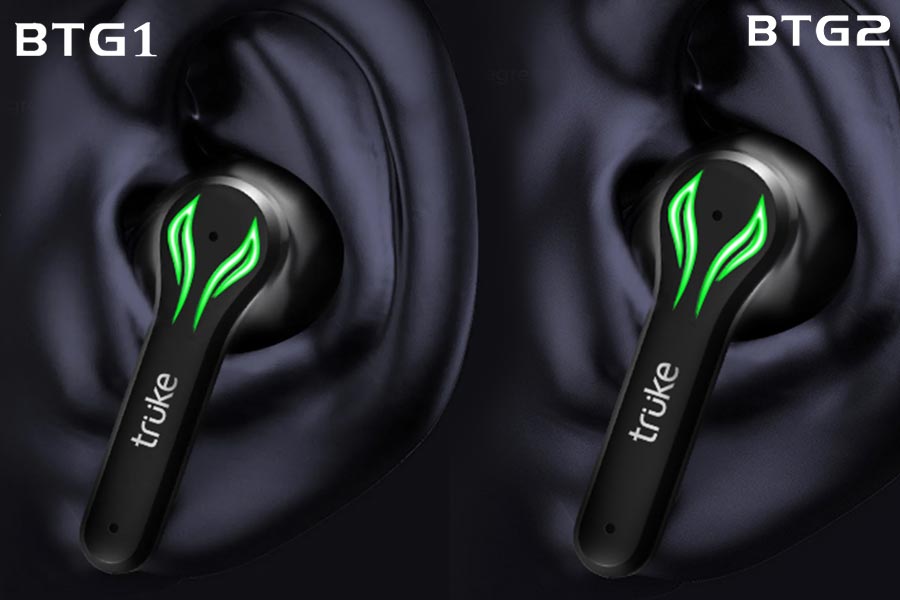
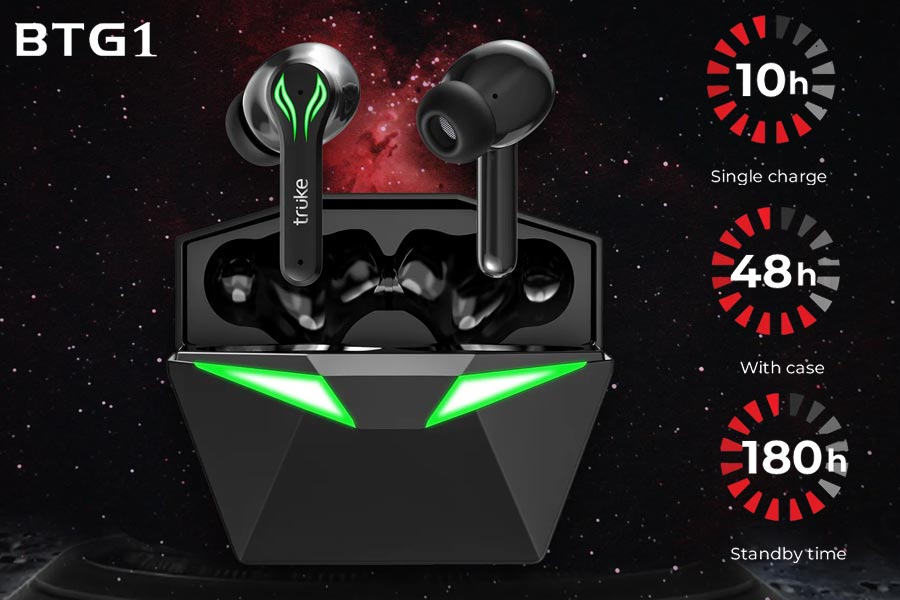
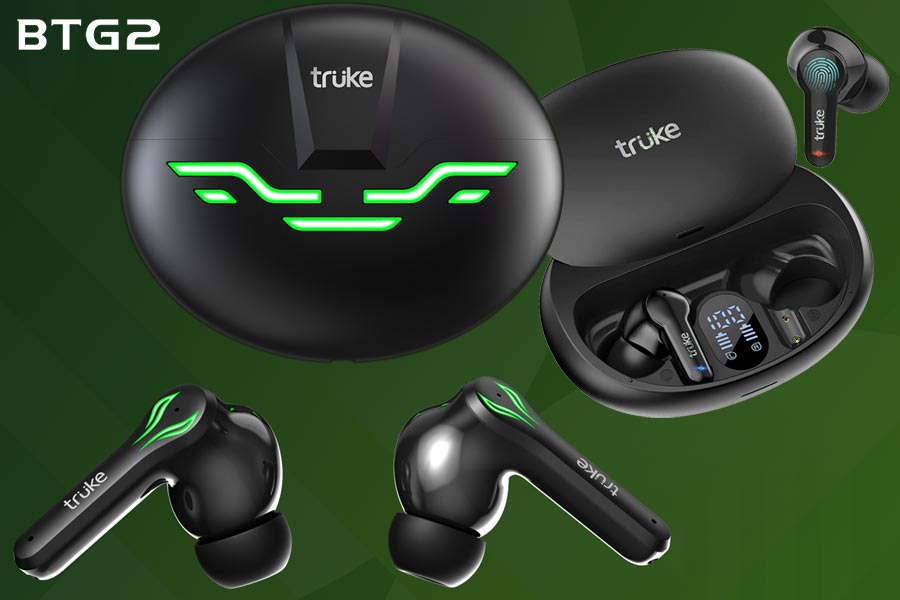
German audio brand Truke, which has been quite aggressive with its TWS portfolio for the last couple of quarters, recently launched two gaming-centric TWS earbuds – BTG 1 and BTG 2 – in India. Designed for the passionate gamers, both the BTG (Born To Game) series earphones offer jazzy design with neon lighting case and low latency at an affordable price of Rs 1,999. But are these promising features enough to satisfy your desire that you look for in TWS devices, especially the gaming ones. Let’s find out.
Design and Comfort
Both the BTG series TWS earbuds are fundamentally the same except the unique design of the charging case. The LED lighting stripes on the front of the case of these two is enough to suggest the gaming trait of BTG 1 and BTG 2.
Beginning with the BTG 1, the case has an aggressive styling that is to some extent hexagonal with sharp edges and has no curves. It has two triangular LED lights on the front that look like two eyes. While the BTG 2 offers only curves and no edges. It has an oval structure with white LEDs (that glows green similar to the former) on the front giving it a distinctive look.
In terms of build quality, both the earbuds and their cases are made of plastic which appears to be of average quality but it justifies their price. Appreciatively, the plastic build has a matte finish which helps in elevating the product feel when you hold it in your hands. Having a compact form factor, the cases are easy to carry around. There is a USB Type-C port for charging on the back of the TWS earbuds cases.
The lights on both the cases turn on when the buds inside are charging and blink when the case itself is charging. They turn off once the buds are charged, and continuously remain lit up when the charging of the case finishes.
Now, coming to the comfort, the buds, offering an identical design, fit nicely into the ear and feel very light. They do not cause any sort of irritation even while wearing them for long hours. The buds have touch controls and LED lights as well that light up green and white. Each of them has the Truke branding and two mics on each earbud.
Overall, the feather-light gaming buds are designed for providing all-day comfort while precisely angled at 45-degree to extend the best possible fit.
Functionalities
Both the Truke BTG 1 and BTG 2 support Bluetooth v5.1 and are compatible with smartphones, tablets and laptops/ PCs. They support SBC and AAC codecs and also 60ms low-latency mode. To enable it, you just need three taps on the right earbud. This dedicated gaming feature is a nice touch.
The touch controls on these TWS earbuds are quite smooth. One can single tap on either earbud to play/pause or answer calls, long press left earbud to go to the previous song, long press the right earbud to go to the next song, double tap the left earbud to launch the voice assistant, and a triple tap to toggle between gaming mode and music mode.
Also Read: Vivo X70 Pro Review: The camera king that’s worth recommending
Performance
Both the earbuds come packed with a 13mm Titanium driver with 32-ohm impedance and a 101dB signal-to-noise ratio. While the sound quality of both the devices was average, what you’ll like most about the audio is the heavy bass. However, in terms of gaming, they offer you an impressive listening experience.
Truke claims that it comes with best-in-class 60ms low latency and a dual-mode configuration that enables users to effortlessly switch between music mode and gaming mode. The music mode has a Hi-Fi audio quality feature and a cinematic sound experience. The TWS also comes with a dual-mic noise cancellation offering a clear voice communication with advanced DSP that reduces background noise. It was a pleasant experience overall.
Battery
Battery has always been a USP for Truke, and this time too, it is one of the strongest points of BTG 1 and BTG 2, both having a 300mAh cell integrated. It offers up to 10 hours of playtime on a single charge and a total of up to 48 hours of playtime with the case. They sport 180 hours standby time alongside 3-4 times charge from the case. The TWS devices also have overcharge protection and low power consumption with a durable Type-C charging port. The charging time of the case was about 80 – 90 minutes.
Conclusion
The Truke BTG 1 and the BTG 2 TWS earbuds are ergonomically designed, offering secure fit and all-day comfort, owing to feather-light buds. They have an outstanding battery life and offer optimum performance in both gaming and music modes, which is justifiable at the affordable price point. Unfortunately, there is no companion app with these earbuds, so there is no option of customizing the controls or the EQ.
WareIQ has launched a Shipment Tracking Platform for D2C brands. Adding value to the seamless network that WareIQ has created over time, this feature aims to assist clients in providing the best post-purchase experience to their customers. The branded tracking page feature will help brands create their own unique customized tracking links and convert them into a profitable marketing channel.
Introduction of Shipment Tracking Platform aims at creating cross-sell/up-sell opportunities, driving repeat, and educating customers. Sellers can also integrate the customized tracking links to their own websites and let customers track their orders from there. The process for creating customized links to the merchant’s website is effortless, requiring only a few clicks to complete. With their own unique branding on tracking pages, retailers can now re-engage their customer base while offering them real-time updates on their products. It can additionally aid them in converting consumers back to their site by adding links to their website on the tracking page.
Also Read: Ambrane announces ‘Dots Slay TWS’ with extended battery life for Rs 2,199
Harsh Vaidya, Founder and CEO of WareIQ said, “WareIQ has always focused on ensuring that brands can offer a better post-purchase experience to their customers and Shipment Tracking Platform is an important step in that direction. We observed customers clicking on tracking links 5 times on an average. We wanted to use this opportunity for brands to share a tracking page that reflects their brand identity, and provides an avenue to smartly engage on new products & offerings to drive loyalty, cross-sell and repeat. With our branded tracking pages, we have witnessed brands experiencing a ROI ranging between 10-20X.”
Mobile accessories brand Ambrane announced its most up to date TWS – Dots Slay. With iconic design, excellent battery life, water-resistance and voice commands, the Made in India TWS is here to make a difference. With the ongoing sale season, the product is already available on Amazon and Flipkart for a special discounted price Rs 799. Ambrane Dots Slay comes with 365 days warranty.
Crafted in a button-shaped design and wrapped in a stylish matte black finish, the Dots slay exudes a premium feel. Its ergonomic design ensures a secure fit, and its IPX 4 water resistance makes it the perfect gym partner for vigorous workouts. The Ambrane Dots Slay true wireless earphones come with a multi-functional button for effortless accessibility. With just a finger tap, the earphones can switch between music or calls seamlessly.
Dots Slay, featuring 8mm dynamic drivers, generates highly accurate sound with superior clarity and boosted bass, taking every musical experience up a notch. The TWS offers heavy bass, ensuring ear bouncing beats without sacrificing clarity and treble. The TWS is power-packed with a 600mAh battery providing hassle-free entertainment of up to 38 hours of playback time. The TWS can play non-stop 8 hours of music with just a single charge.
The TWS supports the latest Bluetooth V5.1 with a wireless range of 10m, enabling an instant and reliable wireless connection. It also packs the convenience of voice assistance (Siri and Google Assistant).
Also Read: Jabra launches Evolve2 75 headset to re-energise hybrid working
“We are proud to announce Ambrane Dots Slay, a complete Made in India TWS. Ambrane continues its Make-in-India legacy by manufacturing products in India,” says Ashok Rajpal – Managing Director, Ambrane India.
Ambrane recently announced its new brand identity and the onboarding of the famous Bollywood celebrity Disha Patani as its brand ambassador. The company has an aggressive roadmap for the Indian markets and aims to launch over ten new audio products in India for the festive season.
Cameras have become a key component in the phones so much so that it has given rise to a megapixel war amongst handset manufacturers to such an extent that the much-anticipated 108MP is reality now and 200MP camera on an upcoming Xiaomi smartphone is being eagerly awaited. The trend of offering megapixels as much as possible, has caught up in such a way that a phone with 16MP primary camera looks inferior and 48MP and above megapixel has become the new standard.
Who doesn’t want to look beautiful, especially in photos that remain with you for a very long time, sometimes forever? Perhaps, all! Everyone wants to give their best look to earn admiration from others. Similarly, no one wants to miss the moments of happiness or glory to be captured in a frame so that they could be preserved in an album or hanged in your drawing room or posted / shared on social media platforms. This possibly is the reason that cameras became a key component in the phones so much so that it gave rise to a megapixel war amongst handset manufacturers to such an extent that the much-anticipated 108MP is reality now and 200MP camera on a Xiaomi smartphone is being eagerly awaited.
The trend of offering megapixels as much as possible, has caught up in such a way that a phone with 16MP primary camera looks inferior and 48MP and above megapixel is the new standard, thanks to the evolution of AI and computational photography software that has enabled smartphone camera sensors to exceed the limitations of their physical size.
“Computational photography lives at the intersection of computer graphics, computer vision, and optical sensor design. It allows product engineers to break the limitations of smartphone camera hardware by maximizing the capabilities of device’s algorithms and computing power,” says Kaushal Prakash Sharma, Head, Camera R&D Division, Oppo India.
Findings say it all
According to Counterpoint’s Smartphone Camera Tracker, Q1 2021, the shipment share of 108MP jumped to over 3.4% in Q1 2021, primarily driven by the implementation of 0.8µm-pixel-based Samsung S5KHMX and S5KHM3 in the Xiaomi Mi 11 and Samsung Galaxy S21 Ultra. The more affordable 0.7µm-based S5KHM2 sensor will further push up the 108MP share with growing adoption by value-for-money models from Redmi, Honor and Realme.
The demand for 64MP continues to increase as it has become a sweet spot for the wholesale price band of $300-$499, finds the study. This resolution also expands its share in lower price segments like $200-$299 and even $100-$199, although the shift to 64MP from 48MP slows down due to the BoM cost increase, particularly in 5G smartphones.
Commenting on the shift towards higher megapixel counts, Alicia Gong, Research Analyst at Counterpoint, said, “With 5G capability spreading to lower price segments, the cost of a smartphone RF front-end subsystem alone has increased by 50% with additional frequency band support. The increase in bill of materials (BoM) cost, particularly for low-end to mid-end smartphones, had temporarily slowed down the resolution improvement in Q1 2021. However, the demand for high-resolution main cameras will continue to increase. The upward trend is expected to accelerate with the mass production of sub-7µm image sensors by the year end.”
The 50MP share temporarily declined primarily due to the decrease in Huawei’s premium smartphone shipments. However, we expect the share to return to growth from Q2 2021 as more Android brands start equipping their flagship models with big-pixel (1.2~1.4µm 50MP) and large-area image sensors, says Counterpoint.
With a good cost performance balance (0.7/0.8µm sensor alone costs $4-$5), 48MP is taking much of shipments across multiple price segments. Within the $100-$199 price band, the collective share of 48MP and 64MP reached 46% in Q1 2021. Both resolutions are becoming mainstream and will have a long-lasting impact on the rear camera design.
Interestingly, there is little room left for the 20MP-44MP zone and the proportion of 16MP also tends to decrease. The 13MP and 12MP still commanded the largest shipment share in Q1 2021 with 25.5% and 24.6% respectively. 12MP has a broad mix of offerings, and the 1.4~1.8µm 12MP-based rear primary cameras have been in great demand in mid-to-high smartphones (wholesale prices above $300). The proportion of the 8MP and below segment edged down to 6%, as demand for low-end smartphone (wholesale prices below $100) rear cameras continued migrating to 1.22/1.25µm 12MP or 1.12µm 13MP.
Front cameras too gaining ground
Like primary sensor or the rear-facing camera system, the resolution of the front-facing camera is also improving continuously to shoot super-clear selfie images. In Q1 2021, the collective share of 20MP and above resolutions was back above 20%, and the high demand will continue with widespread adoption across multiple price segments.
“Now, moving from the megapixel aspect, the future is a lot about video storytelling and with using computational photography techniques that magnifies the growth of smartphone photography and videography era, matching professional level quality”
– Kaushal Prakash Sharma, Head, Camera R&D Division, Oppo India
The trend is expected to accelerate on the back of advancing pixel technologies. In June 2021, Samsung released the world’s first sub-7µm (0.64µm) pixels-based 50MP image sensor, ISOCELL JN1, with a 1/2.76-inch optical format. The sensor can fit in small head cameras. “The new ISOCELL JN1 at 0.64?m will be able to equip tomorrow’s sleekest smartphones with ultra-high resolution mobile photographs,” says Duckhyun Chang, executive vice president of the sensor business at Samsung Electronics. “As we drive our commitment to innovation in pixel technologies, we will continue to bring a wide range of mobile image sensor offerings to the market,” adds Chang.
The share of 16MP came down to 12.9% in Q1 2021, as many low-end to mid-end 5G models adopted 13MP (1.0/1/12µm) or 8MP (1.12/1.22µm) to offset the cost increase. However, the demand for 16MP@1.0µm sensors is expected to revive, particularly within the $100-$299 price segment, as per the Counterpoint study.
In Q1 2021, the collective share of 10MP-13MP was almost flat at 24.4% compared to the previous quarter. It was backed by strong sales of the Apple iPhone 12 series, Xiaomi Redmi and Samsung Galaxy models across multiple price bands. As the volume of 12MP front cameras is heavily dependent on Apple’s performance, a V-shaped trajectory of share change is expected through 2021, with the forthcoming Apple launches likely to stick to the resolution.
The collective share of 8MP and below slightly increased to 42.4% in Q1 2021, up around 1 percentage point from Q4 2020. 8MP alone accounted for 23.7% of total volume and remained the most adopted resolution for front camera design in terms of smartphone shipments.
Moving forward, the share of 16MP and above resolution will further increase and the demand for low pixel sensors (?8MP) will gradually decrease, finds the study.
Disrupting the industry
So what is pushing the frontiers of megapixel innovations? The rising popularity of video content creation and consumption has led to an increased demand for professional-level video quality to shoot bright and clear videos. This trend is expected to grow even further and provides the smartphone industry with an opportunity to innovate in hardware and software. The lockdown has led more and more individuals to follow their passion, and even share their stories via social formats like Reels to stay motivated, positive and connected.
To elevate the customer experience, camera quality and capabilities are getting better day by day. “With the newly-launched Reno 6 series, Oppo has set a new benchmark for smartphone camera performance from photo to video, pertaining to the rising trends of video content being the new way of storytelling. Using computational photography techniques, the Reno 6 series breaks through the limitations of mobile phone hardware to achieve an unprecedented level of video enhancement. Now, moving from the megapixel aspect, the future is a lot about video storytelling and with using computational photography techniques that magnifies the growth of smartphone photography and videography era, matching professional level quality,” says Kaushal Prakash Sharma.
Arijeet Talapatra, CEO of Transsion India, says, “Tecno’s mantra has been to disrupt the smartphone industry by introducing premium features at disruptive price points in the segment which we operate in. The camera-centric Camon smartphones have consistently changed the game for smartphone photography by initiating an era of higher camera pixels, premium AI powered Ultra Night lenses and pop-up cameras. Today, the 48MP camera lens that has also become the new-normal for mid-budget smartphones, persists to enhance the smartphone photography and videography experience of the category consumers.”
“Today, the 48MP camera lens that has also become the new-normal for mid-budget smartphones, persists to enhance the smartphone photography and videography experience of the category consumers”
– Arijeet Talapatra, CEO, Transsion India
Innovations in full swing
Talking about the ongoing megapixel innovations that are catching everyone’s attention nowadays, Krishna SinhaChaudhury, Senior Manager – Research at techARC, says, “The camera remains the hero element in smartphones with several OEMs trying to take the lead in upping the camera sensor game. Chinese handset makers like Realme, Oppo, Huawei and South Korean behemoth Samsung were at the forefront of introducing quad-cam and penta-cam smartphones. However, a higher megapixel count doesn’t translate into impressive photography which Google’s Pixel lineup proves. Also, people are becoming aware of this fact now. Moreover, camera sensor size is more important than the megapixel count when it comes to improving imaging quality.”
“At Oppo, we believe that the next frontier of digital photography would be found in a concept called computational photography rather than battling over megapixels. Using portrait mode, taking photos in the dark, better exposed images in tricky lighting conditions, inserting augmented reality elements, combining multiple frames to improve depth etc. are some of the demandingly computational features built into modern smartphones. Computational photography helps in mastering every single shot and with continuous R&D, Oppo has been able to offer these capabilities in their smartphone cameras,” says Sharma.
Oppo claims to have worked diligently towards creating a portrait video database with over 10 million data points covering different people in different situations and training its recognition algorithm tens of thousands of times. “Such breakthroughs in computational photography have now been brought to life with the new Bokeh Flare Portrait Video feature on the latest Reno 6 Pro, making it the first smartphone series to achieve cinematic bokeh using computational photography techniques,” reveals the Camera R&D Division Head of Oppo India.
Continuing to serve the mid-segment consumers with flagship-like features, today the Camon 17 series also offers a powerful 64MP quad rear camera with a quad flashlight for maximum clarity and an Ultra Pro Video Camera for professional videography. The Camon 17 series smartphones also support various pro-grade videography and photography modes such as Movie Master, 4K 30 FPS Clear Recording, Portrait Night Scene Video and AI smart Selfies among many others.
“The camera remains the hero element in smartphones with several OEMs trying to take the lead in upping the camera sensor game. Chinese handset makers like Realme, Oppo, Huawei and South Korean behemoth Samsung were at the forefront of introducing quad-cam and penta-cam smartphones”
“In line with the brand’s philosophy of ‘Stop at Nothing’, Tecno will continue to deliver innovative products of sensory excellence for the Indian consumers, which has also helped the brand to consolidate its position among the top 5 handset players in the sub-10K segment in India. We will continue to uphold our commitment to create real value for our consumers and aim to consolidate our position above the 10K segment as well,” asserts Talapatra.
The game continues
Over the last few years, there has been an increased focus on visual storytelling through images and videos and hence, having a powerful camera has become a key purchase consideration pointer. With the increase in video consumption now, smartphones have been replacing professional cameras; consumers and new-age content creators are focusing on bringing that cinematic effect to their videos and photos through their smartphones. “This has been the driving force behind our recent advancements in smartphone video technology. To achieve this type of premium video quality, having an extremely powerful smartphone hardware, is not enough. But we also need to make use of some clever computational photography tricks,” says Sharma.
So what effect this megapixel war has on consumers? Krishna SinhaChaudhury says, “Smartphone OEMs will continue to innovate in the megapixel and sensor segment as innovation on other fronts has almost hit saturation. Currently, it is only Samsung that makes the whopping 108-megapixel camera sensor. The Realme 8 Pro is the cheapest phone that offers a 108-megapixel camera smartphone. More smartphone makers are expected to squeeze in the technology in affordable devices in the days to come.”