Counterpoint Research forecasts Apple will surpass Samsung in 2025, reclaiming the top smartphone brand spot with a 19.4% global market share.
Strong iPhone 17 sales in the US and China, favourable trade dynamics, a weaker US dollar, and a major upgrade cycle post-COVID are fueling double‑digit growth.
Apple is expected to sustain leadership through 2029.
(Photo by Medhat Dawoud on Unsplash)
Apple is on track to reclaim its long-lost title as the world’s largest smartphone manufacturer, according to new data from Counterpoint Research. The growth is driven by strong demand for its latest iPhone lineup and a global surge in device upgrades,
The iPhone 17 series, launched in September, has delivered impressive performance across Apple’s key markets including the US and China. Counterpoint notes that the new models have triggered double-digit year-on-year sales growth in both regions. Analysts attribute this momentum not only to the popularity of the devices but also to improved US-China trade dynamics and a weakening US dollar, which has made Apple products more attractive in emerging markets.
The research firm’s projections indicate that Apple will surpass Samsung Electronics Co. this year. iPhone shipments are forecast to grow by 10% in 2025, significantly outpacing Samsung’s expected growth rate of 4.6%.
With the global smartphone market projected to expand by 3.3% next year,Apple is expected to secure a 19.4% market share. This will mark its first return to the No. 1 position since 2011.
Highlighting the shift in consumer behaviour, Counterpoint analyst Yang Wang said, “Beyond the highly positive market reception for the iPhone 17 series, the key driver behind the upgraded shipment outlook lies in the replacement cycle reaching its inflection point. Consumers who purchased smartphones during the Covid-19 boom are now entering their upgrade phase. Furthermore, 358 million secondhand iPhones were sold between 2023 and Q2 2025. These users are also likely to upgrade to a new iPhone in the coming years.”
The momentum is expected to carry Apple well into the future. Counterpoint forecasts that the company will widen its lead with the anticipated 2026 launch of a foldable iPhone and a more affordable iPhone 17e. Apple is also reportedly preparing a major iPhone redesign for 2027, as previously revealed by Bloomberg.
Analysts predict Apple will maintain its position as the top smartphone vendor through 2029, thanks to these upcoming product cycles.
Meanwhile, Apple has recently confirmed that its sales are growing faster than earlier estimates. The Cupertino Giant is also projected to reach nearly $140 billion in revenue during the ongoing holiday quarter.
FAQs
Q1. When will Apple overtake Samsung as the world’s top smartphone brand?
Answer. According to Counterpoint Research, Apple is projected to surpass Samsung in 2025, reclaiming the No. 1 spot for the first time since 2011.
Q2. What factors are driving Apple’s growth in smartphone shipments?
Answer. Strong demand for the iPhone 17 series, favourable US‑China trade dynamics, a weaker US dollar, and a major upgrade cycle post-COVID are boosting Apple’s shipments.
Q3. How does Apple plan to maintain its lead in the coming years?
Answer. Analysts expect Apple to sustain leadership through 2029 with upcoming launches like a foldable iPhone in 2026, a budget‑friendly iPhone 17e, and a major redesign in 2027.
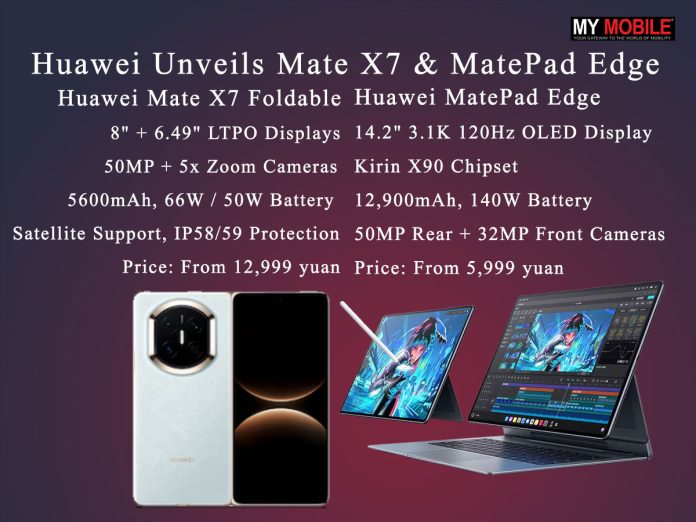
Huawei Mate X7 Foldable – 8-inch internal and 6.49-inch external LTPO displays, second-gen Red Maple Imaging System, 5600mAh battery and satellite communication support.
Mate X7 price starts at 12,999 yuan, available from December 5.
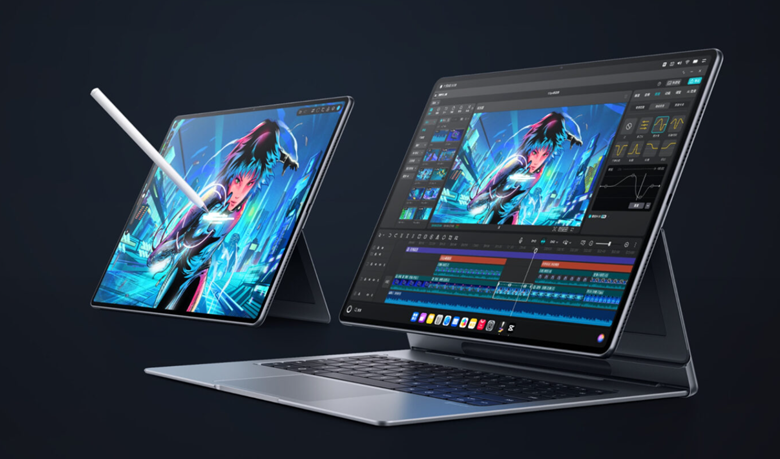
Huawei MatePad Edge Tablet comes in a 14.2-inch 3.1K OLED display, Kirin X90 chipset with 3.8× performance boost, HarmonyOS 5.1 dual-mode operation and 12,900mAh battery with 140W fast charging.
MatePad Edge Tablet pricing starts from 5,999 yuan to 12,999 yuan depending on configuration.
Huawei has expanded its flagship ecosystem in China with the official debut of the Huawei Mate X7 foldable smartphone and the Huawei MatePad Edge high-performance 2-in-1 tablet. The Mate X7 arrives as the successor to last year’s Mate X6, while the MatePad Edge targets productivity users and creators with a pro-grade HarmonyOS experience. Here’s everything you need to know about the newly launched devices.
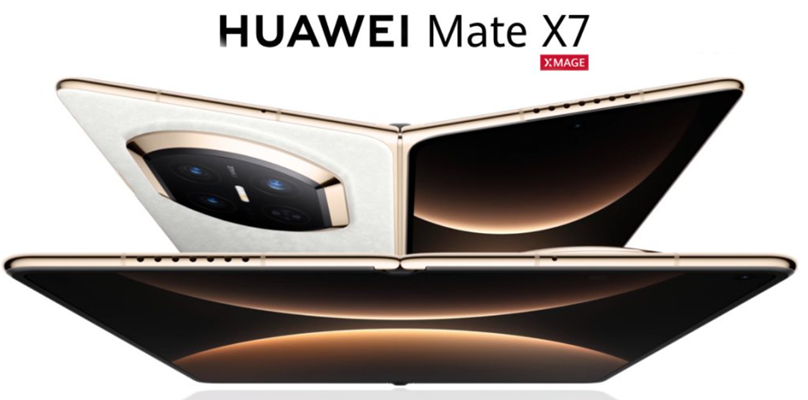
Huawei Mate X7 Foldable
Huawei Mate X7 Foldable. (Image credit – Huawei)
Huawei’s latest foldable features an 8-inch internal display (2500 nits) and a 6.49-inch outer panel (3000 nits), both offering a 1–120Hz LTPO refresh rate and 1440Hz high-frequency PWM dimming for smoother and more comfortable viewing.
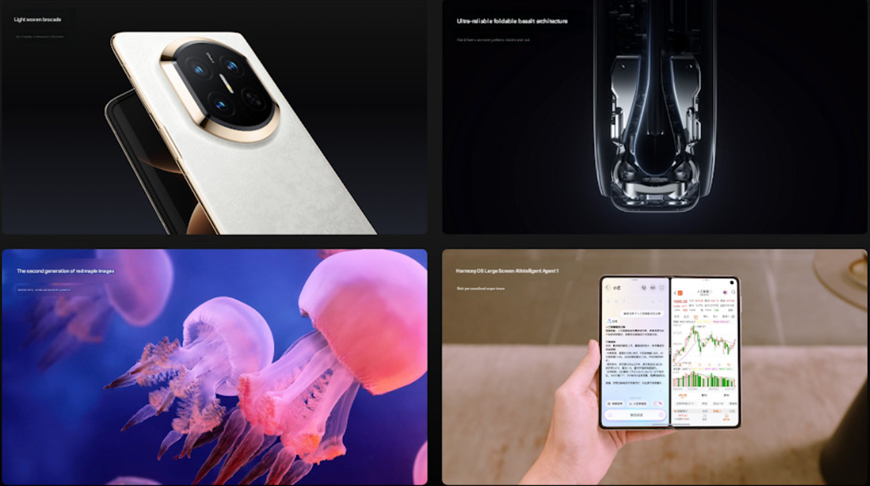
Huawei says this is the first smartphone to incorporate Yun Brocade craftsmanship, a recognised intangible cultural heritage. The device weighs 235g, measures 4.5mm when unfolded and 9.5mm when folded, while carrying IP58 and IP59 ratings for enhanced water and dust resistance.
The Mate X7 introduces Huawei’s second-generation Red Maple Imaging System, shrinking the camera module while promising flagship-grade performance on a foldable device. It includes:
50MP variable aperture main camera
5x optical telephoto periscope lens
40MP ultra-wide camera
Second-gen Red Maple primary-colour camera
The Collector’s Edition takes imaging even further, claiming its 1/1.28-inch primary sensor offers 100% more light intake than the Apple iPhone 17 Pro Max, while the F2.2 periscope module captures 127% more light. It also adds Tiantong satellite calling, while the standard model supports Beidou satellite messaging.
Powered by an upgraded internal architecture, Huawei says the Mate X7 delivers over 42% improved performance compared to its predecessor.
It packs a 5600mAh battery with 66W wired and 50W wireless fast charging. The foldable also supports emergency communication without network coverage and an outdoor exploration mode that offers up to 10 days of extreme standby life.
Huawei Mate X7 Foldable – Price and Availability
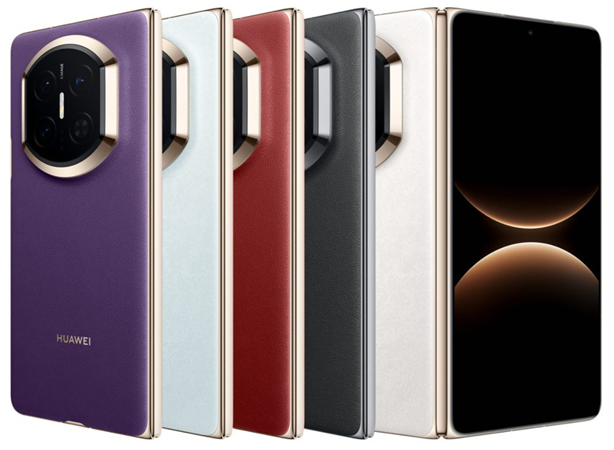
Huawei Mate X7 Foldable comes in five colour variants. (Image credit – Huawei)
The Mate X7 is already available for pre-orders and will go on sale in China from December 5. The new foldable comes in five finishes, which includes Obsidian Black, Cloud Brocade Blue, Cloud Brocade White, Cosmic Red and Phantom Purple.
Alongside the foldable, Huawei also introduced the Huawei MatePad Edge. It is a productivity-focused tablet with a 14.2-inch flexible OLED display. It offers a crisp 3.1K (3120 × 2080) resolution, a 120Hz refresh rate, HDR Vivid, 1000-nit peak brightness, and professional-grade ∆E < 1 color accuracy. It also comes in a Soft Light variant with anti-glare technology.
The tablet achieves a 94% screen-to-body ratio using 4.1mm bezels and an innovative packaging method that hides the 32MP front camera without requiring a notch.
Powered by the Kirin X90 / X90A chipset similar to Huawei’s desktop-class HarmonyOS PCs, the MatePad Edge offers a 3.8x performance boost over the MatePad Pro 13.2 (2023). It runs HarmonyOS 5.1 with dual-mode tablet/desktop operation, four-finger multitasking gestures and seamless window control and keyboard shortcuts.
The device houses a 12,900mAh battery, supports 140W Huawei SuperCharge and offers 40W reverse charging. Huawei has equipped it with a robust cooling system featuring –
Dual aluminium fans
VC heat dissipation
Micro-etched airflow channels
Nearly 4000 vent holes
The Liquid-Cooling Edition adds graphene sheets and a dual-core micro pump, supporting up to 28W thermal capacity.
The MatePad Edge includes a six-speaker stereo setup, near-ear spatial audio, and panoramic surround mode when paired with Huawei FreeClip earbuds.
Connectivity options –
Dual-band Wi-Fi (2.4GHz, 5GHz)
Bluetooth 5.2
USB-C 3.1 Gen 1 with DP1.2
OTG
NearLink support
In-display fingerprint sensor
Huawei MatePad Edge 2-in-1 OLED Tablet is powered by Kirin X90 / X90A chipset. (Image credit – Huawei)
Huawei MatePad Edge Pricing
The tablet is available in Deep Space Grey and Moonlight Silver colours with optional keyboards and M-Pencil Pro stylus support.
Q1. What foldable device and tablet did Huawei recently launch in China?
Answer. Huawei introduced the Mate X7 foldable smartphone and the MatePad Edge 2‑in‑1 OLED tablet, expanding its flagship ecosystem.
Q2. What are the key features of the Huawei Mate X7 Foldable?
Answer. It has an 8‑inch internal and 6.49‑inch external LTPO display, IP58/IP59 durability ratings, second‑gen Red Maple Imaging System, 5600mAh battery with 66W wired/50W wireless charging, and supports satellite communication.
Q3. What makes the Mate X7 Collector’s Edition special?
Answer. It offers a larger 1/1.28‑inch sensor with 100% more light intake than the iPhone 17 Pro Max, Tiantong satellite calling, up to 20GB RAM + 1TB storage, and premium Yun Brocade craftsmanship.
Q4. What are the highlights of the Huawei MatePad Edge tablet?
Answer. The MatePad Edge features a 14.2‑inch 3.1K OLED display, Kirin X90 chipset with 3.8× performance boost, HarmonyOS 5.1 dual‑mode operation, 12,900mAh battery with 140W fast charging, advanced cooling, and professional‑grade colour accuracy.
Q5. What is the pricing and availability of these devices?
Answer. Mate X7: Starts at 12,999 yuan (~USD 1,830), available from December 5. And MatePad Edge: Starts at 5,999 yuan (~USD 840) with configurations up to 12,999 yuan (~USD 1,820).
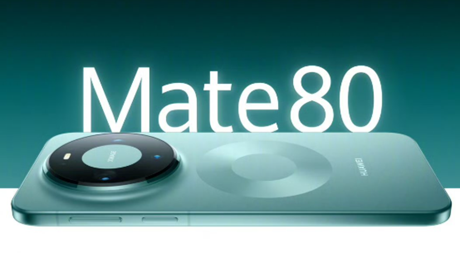
Huawei unveiled Mate 80, Mate 80 Pro, Mate 80 Pro Max, and Mate 80 RS Ultimate Design.
The Mate 80 runs on Kirin 9020, while the higher models use the new Kirin 9030/9030 Pro chipsets, delivering up to 42% performance gains over the Mate 70.
The Pro Max debuts the industry’s first dual‑layer OLED display (8000‑nit brightness) with enhanced durability via second‑gen Kunlun Glass.
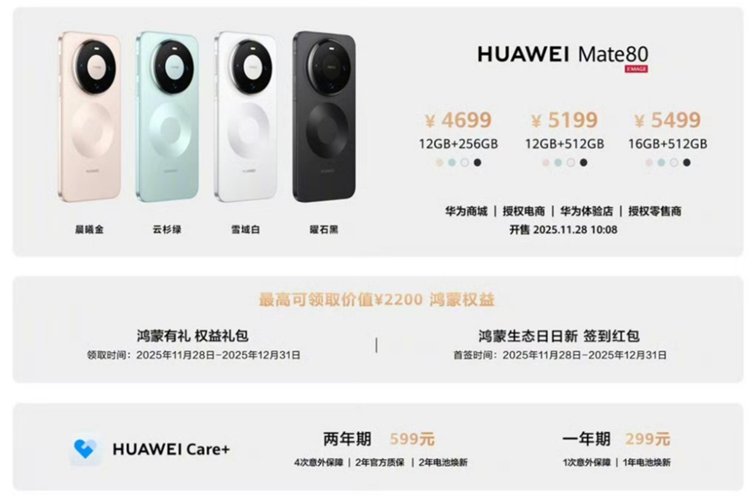
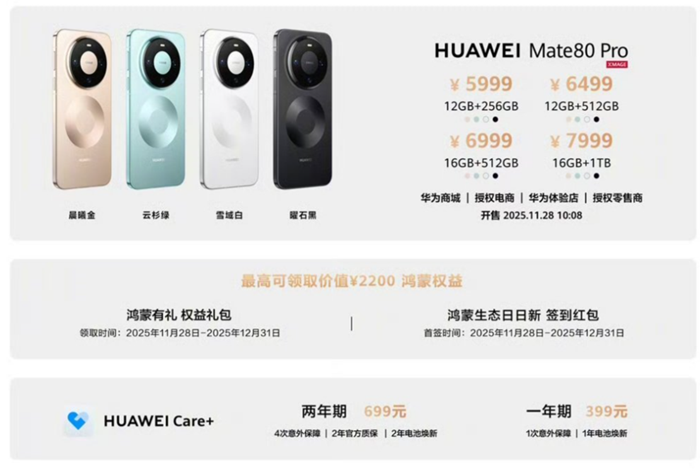
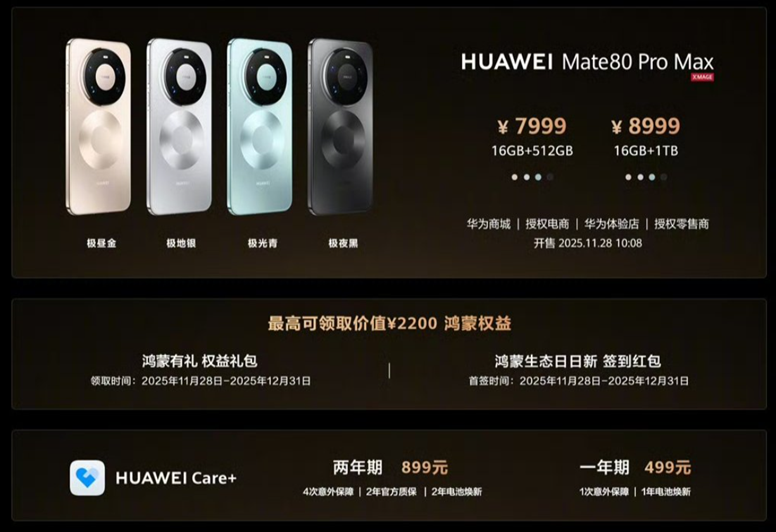
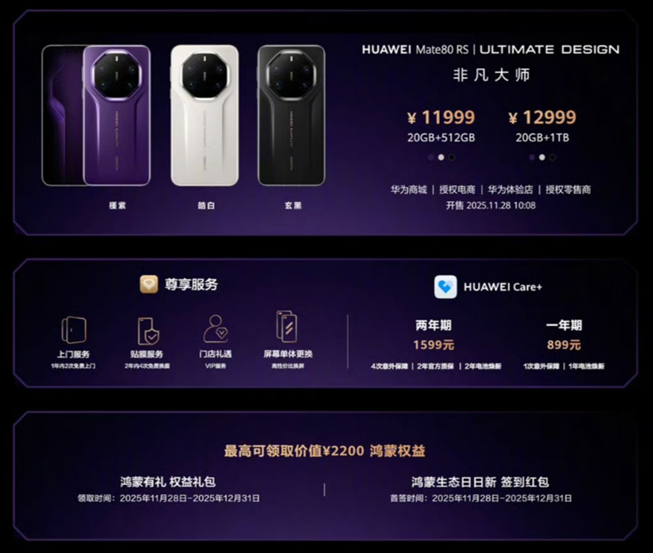
Prices start at 4,699 yuan (USD 661) for Mate 80 and go up to 12,999 yuan (~USD 1830) for the RS Ultimate Design, available from November 28.
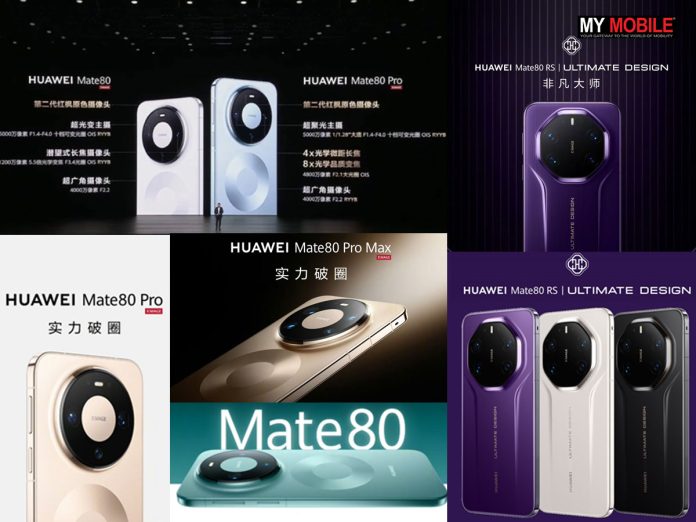
Huawei Mate 80, Mate 80 Pro, Mate 80 Pro Max and Mate 80 RS Ultimate Design Unveiled in China.
Huawei has officially introduced its new Huawei Mate 80 Series in China, launching four models. These include the Huawei Mate 80, Huawei Mate 80 Pro, Huawei Mate 80 Pro Max, and the premium Huawei Mate 80 RS Ultimate Design.
Leading the lineup is the Mate 80 Pro Max, which Huawei calls its most powerful and most durable Mate smartphone yet. Mate 80 Pro Max flaunts a full metal build, a dual-layer OLED screen, and advanced satellite capabilities. The standard Mate 80 runs on the Kirin 9020, while the Mate 80 Pro, Pro Max, and RS Ultimate Design upgrade to the new Kirin 9030 chipset. Here’s everything you should know about the newly launched Huawei smartphone series.
Huawei Mate 80 and Huawei Mate 80 Pro
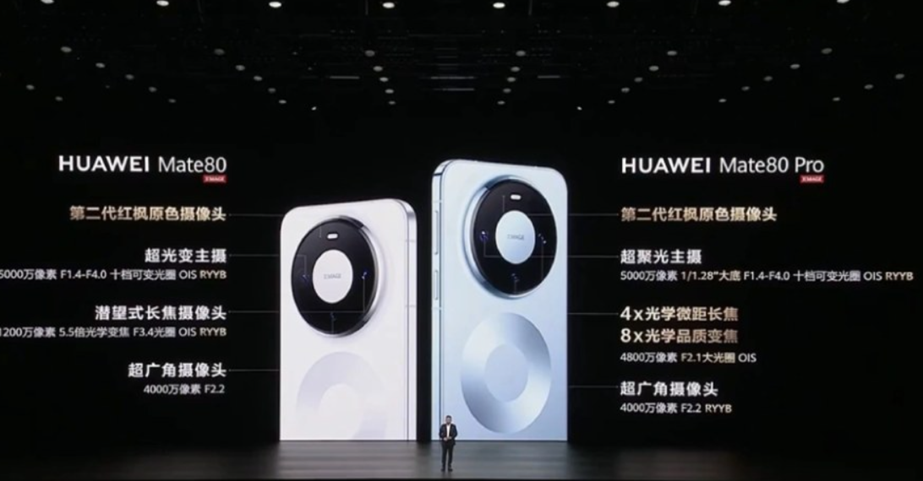
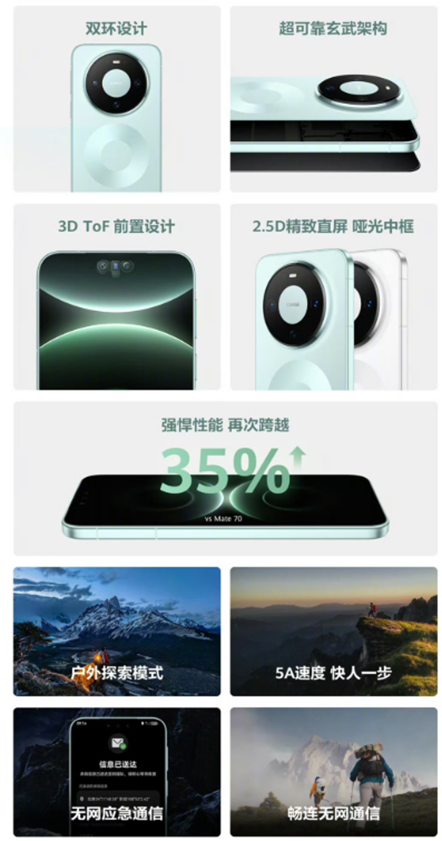
Caption – Huawei Mate 80 Pro (left) and Huawei Mate 80 (right). (Image credit – Huawei)
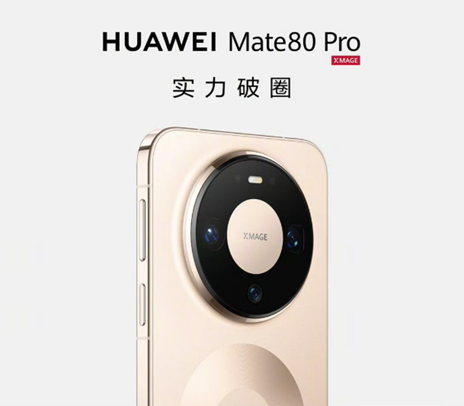
The Mate 80 and Mate 80 Pro feature a 6.75-inch OLED display with 2832×1280 resolution, 1–120Hz adaptive refresh rate, 1440Hz PWM dimming, and 300Hz touch sampling. Both models come equipped with second-generation Kunlun Glass and a side-mounted fingerprint scanner.
Huawei claims the Mate 80, despite using the older Kirin 9020, offers a 35% performance boost over the Mate 70. The Mate 80 Pro sees a similar 35% jump with the new Kirin 9030, while a higher-binned Kirin 9030 Pro variant, exclusive to the 16GB RAM model and promises a 42% improvement over last year’s flagship.
Both devices support Tiantong satellite calling, two-way Beidou messaging, and become the first phones capable of 700MHz emergency communication without network coverage. Huawei says they can maintain a link up to 13km away and transmit signals through three walls. Connectivity includes Bluetooth 6.0, Wi-Fi 7+, and seamless offline 2.4GHz communication.
Huawei is also launching a new pro-grade TILTA photography kit with a 3.3× teleconverter and modular quick-release accessories.
Both models come with a 5750mAh battery (rated 5620mAh). The Mate 80 supports 66W wired and 50W wireless charging, while the Pro steps up to 100W wired and 80W wireless. Reverse wireless charging is included, and the Mate 80 Pro adds an extreme low-power mode that can last up to 13 days.
The series ships with HarmonyOS 6, offering new visual effects, lighting dynamics, and smoother animations. Both phones feature an all-metal frame with a nylon back and a dual-ring camera design. They come in Obsidian Black, Snow White, Dawn Gold, and Spruce Green. The Mate 80 uses a frosted aluminium frame, while the Pro version opts for a glossy finish.
Each device is just 7.95mm thick and weighs around 217–219g with IP68/IP69 certification.
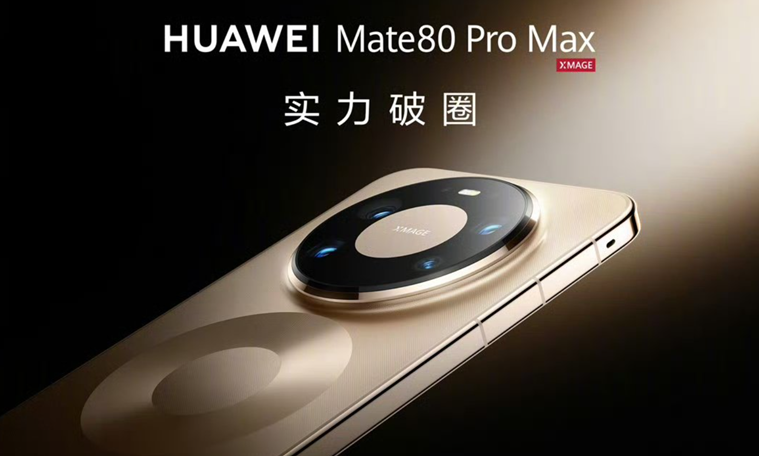
Huawei Mate 80 Pro Max
Huawei Mate 80 Pro Max. (Image credit – Huawei)
The Mate 80 Pro Max stands out with an all-metal build protected by Huawei’s second-generation Kunlun glass. Huawei claims this improves drop resistance by 20×, enhances bending resistance by 20%, and doubles scratch resistance compared to the previous generation. It also carries IP68 and IP69 ratings.
The phone debuts the industry’s first dual-layer OLED display, delivering 8000-nit peak brightness, improved efficiency, and enhanced contrast. It measures 6.9 inches with 120Hz refresh rate, 10-bit color, 1440Hz PWM dimming, and 300Hz touch sampling.
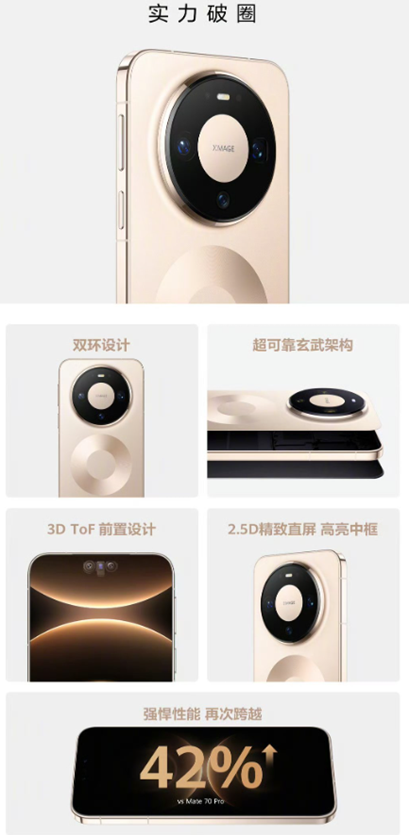
A full 3D ToF front setup assists biometrics, combining a depth-sensing sender, receiver, and standard front camera for what Huawei calls an AI posture-aware system. This enhances face recognition and motion tracking.
Powered by the Kirin 9030 Pro and Huawei’s Ark Graphics Engine, the Pro Max is said to be 45% smoother and load apps 34% faster than the Mate 70. It also supports 3DGS rendering acceleration and hardware-based ray tracing at 20 million rays per second.
Huawei Mate 80 Pro Max key features. (Image credit – Huawei)
Connectivity includes Wi-Fi 7+, Tiantong satellite calling, Beidou messaging, and emergency 700MHz communication. Huawei describes the system as “ground network + sky network + no network.”
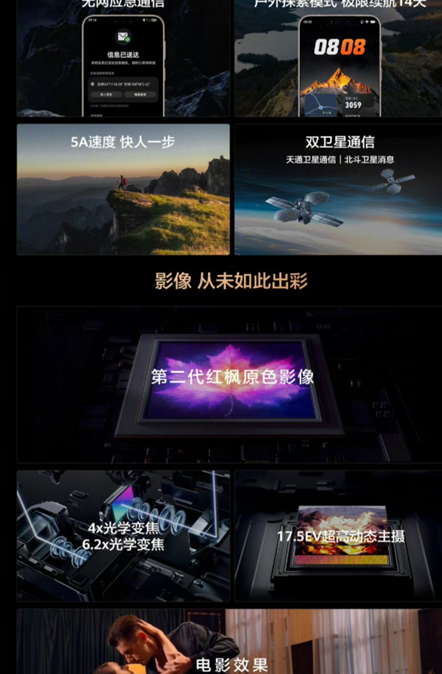
The Mate 80 Pro Max introduces the second-generation Maple Leaf Imaging System featuring a redesigned sensor with 2.45μm equivalent pixels and 96% higher light intake. Dynamic range is said to be 300% higher thanks to a dual-real-time fusion system with improved colour accuracy via an upgraded spectral array.
Camera specs include:
50MP main RYYB sensor (1/1.28”, f/1.4–f/4.0, 10-stop variable aperture)
40MP RYYB ultrawide
50MP macro telephoto (4× optical zoom)
50MP periscope telephoto (6.2× optical zoom, up to 12.4× “optical-quality” zoom)
The phone also supports a 3.3× teleconverter using the new accessory kit.
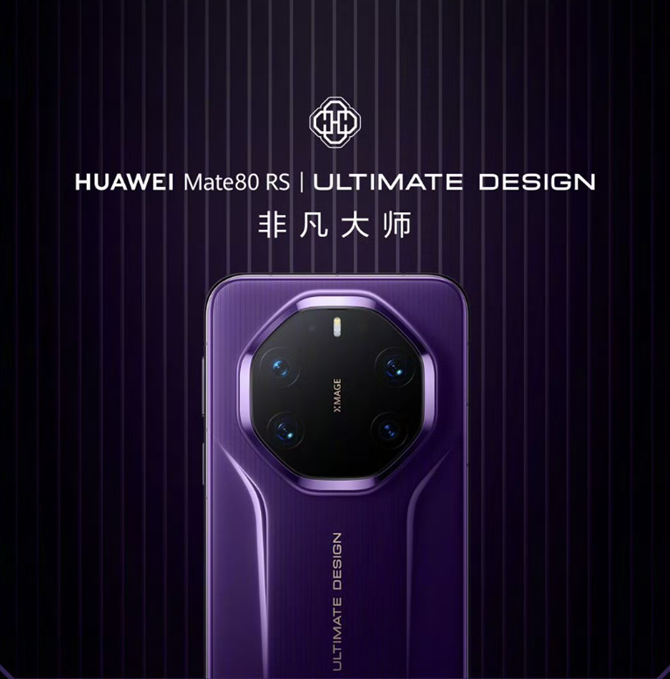
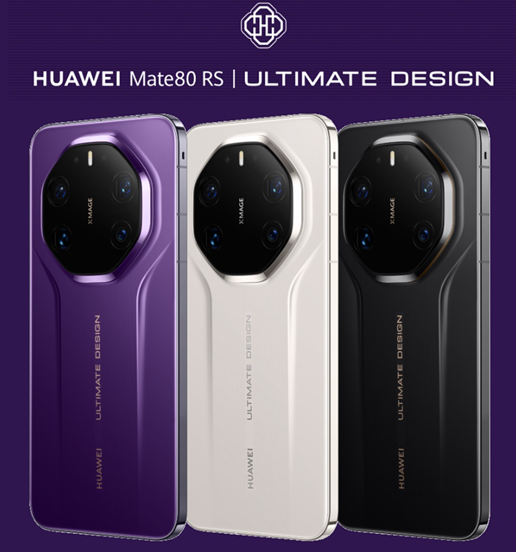
For users wanting something even more premium, Huawei introduced the Mate 80 RS Ultimate Design. Built on the Pro Max platform, it adds a luxurious aesthetic with a star-diamond pattern, titanium Xuanwu mid-frame, and dual Kunlun Glass.
This model offers up to 20GB RAM and 1TB storage and comes in Jin Purple, Xuan Black, and Hao White. It supports all satellite and outdoor features of the Pro Max while adding HarmonyOS 6 AI tools such as dynamic portrait generation, emotion-aware themes, and Xiaoyi smart assistant features.
It also includes a 6.9-inch dual-layer OLED screen (FHD+, 1–120Hz LTPO, BT.2020 color gamut) and a 6000mAh battery with 100W wired and 80W wireless charging.
All models will be available starting November 28 via Huawei Mall, authorised e-commerce platforms, and Huawei Experience Stores.
FAQs
Q1. What models are included in the Huawei Mate 80 Series?
Answer. The lineup consists of four smartphones, Huawei Mate 80, Mate 80 Pro, Mate 80 Pro Max, and the premium Mate 80 RS Ultimate Design.
Q2. Which chipset powers the new Mate 80 phones?
Answer. The standard Mate 80 uses the Kirin 9020. The Mate 80 Pro, Pro Max, and RS Ultimate Design feature the new Kirin 9030 chipset, with the Pro Max using the higher‑binned Kirin 9030 Pro for enhanced performance.
Q3. What are the standout features of the Mate 80 Pro Max?
Answer. It debuts the industry’s first dual‑layer OLED display with 8000‑nit peak brightness, an all‑metal build with second‑gen Kunlun Glass for 20× better drop resistance, and advanced satellite connectivity including Tiantong calling, Beidou messaging, and 700MHz emergency communication.
Q4. How do the cameras differ across the Mate 80 lineup?
Answer. The Mate 80 has 50MP main sensor with variable aperture, 12MP periscope telephoto, 40MP ultrawide, 13MP ultrawide selfie, and 3D ToF sensor. On the other hand, Mate 80 Pro features 50MP RYYB main, 48MP macro telephoto, 40MP ultrawide, plus a 9th‑gen ISP for faster image processing. As for the Mate 80 Pro Max, it offers advanced Maple Leaf Imaging System with 50MP main, 40MP ultrawide, 50MP macro telephoto, and 50MP periscope telephoto offering up to 12.4× optical‑quality zoom.
Q5. What is the pricing and availability of the Huawei Mate 80 Series?
Answer. Prices start at 4,699 yuan (USD 661) for the Mate 80 and go up to 12,999 yuan (USD 1830) for the Mate 80 RS Ultimate Design. All models will be available from November 28 via Huawei Mall, authorised e‑commerce platforms, and Huawei Experience Stores.
OpenAI has introduced a new feature within ChatGPT called Shopping Research. It is designed to simplify product discovery and comparison by conducting in-depth research on behalf of the user. Instead of manually browsing through multiple websites, users can now describe what they’re looking for and let ChatGPT build a detailed shopping guide tailored to their needs. Here’s all you need to know.
Announcing the new feature on X (formerly Twitter), OpenAI’s official account wrote, “Introducing shopping research, a new experience in ChatGPT that does the research to help you find the right products. It’s everything you like about deep research but with an interactive interface to help you make smarter purchasing decisions.”
Introducing shopping research, a new experience in ChatGPT that does the research to help you find the right products.
It’s everything you like about deep research but with an interactive interface to help you make smarter purchasing decisions. pic.twitter.com/jksGVpCXGm
According to OpenAI’s blog post, the feature “asks smart clarifying questions, researches deeply across the internet, reviews quality sources,” and even uses past conversations and saved memory to deliver a personalised recommendation guide. While ChatGPT could already answer basic shopping queries such as pricing or product features, Shopping Research digs deeper and helps users understand tradeoffs, constraints, and comparisons across different models or categories.
The company also revealed that the feature will be integrated into ChatGPT Pulse, currently available only to Pro subscribers. Pulse will proactively suggest personalised buying guides based on a user’s previous interactions.
Shopping Research is available to ChatGPT Free, Go, Plus, and Pro users on both mobile and web with OpenAI saying it is offering “nearly unlimited usage” for eligible users.
How to Use Shopping Research in ChatGPT?
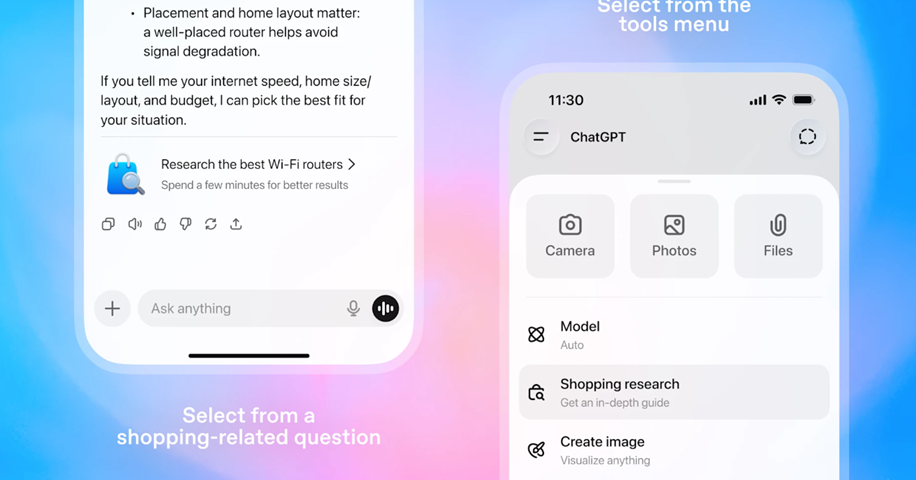
When users ask a shopping-related question, ChatGPT may automatically suggest switching to the Shopping Research mode. If it doesn’t, users can manually activate it by tapping the ‘+’ button below the text input field and selecting ‘Shopping research’ from the options.
Once activated, ChatGPT presents a visual interface where users can interact with product suggestions. They can mark items as “Not interested” or choose “More like this” to refine results. The feature works similarly to ChatGPT’s Deep Research mode, often taking a minute or more to generate a comprehensive buying guide.
With shopping research, ChatGPT learns what you like as you shop.
You can guide the results by marketing suggested items as “Not interested” or “More like this.”
For users who’ve enabled ChatGPT’s memory, the shopping guide becomes even more personalised, factoring in previous preferences and past conversations.
After completing the research, ChatGPT provides a detailed and personalised buying guide, highlighting top products, key differences and updated information from retailers. It also shows direct purchase links. OpenAI notes that it will soon enable direct purchases inside ChatGPT for users in regions where Instant Checkout is supported.
The company confirmed that the new Shopping Research feature is powered by GPT-5 mini, which has been “trained with reinforcement learning specifically for shopping tasks.” All results are organic and sourced from publicly available retail websites.
FAQs
Q1. What is ChatGPT’s Shopping Research feature?
Answer. Shopping Research is a new mode in ChatGPT that conducts in-depth product discovery and comparisons, creating personalised buying guides for users.
Q2. How does Shopping Research personalise recommendations?
Answer. It asks clarifying questions, researches across the web, reviews quality sources, and uses saved memory and past conversations to tailor product suggestions.
Q3. Who can access Shopping Research and how is it integrated?
Answer. The feature is available to Free, Go, Plus, and Pro users on mobile and web, with deeper integration into ChatGPT Pulse for Pro subscribers.
The DoT warns against IMEI tampering and reinforces the Telecommunications Act 2023 and Telecom Cyber Security Rules 2024, which ban altered identifiers.
Violations can lead to 3 years imprisonment or fines up to ₹50 lakh.
Citizens are urged to use the Sanchar Saathi portal/app or send KYM <IMEI> to 14422 to confirm device authenticity and ensure safe usage.
The Department of Telecommunications (DoT) has issued a fresh advisory warning citizens about the rising misuse of telecommunication identifiers including the IMEI numbers of mobile phones. Incidents involving tampered or unauthorised device identifiers have become a growing concern, prompting the government to tighten legal safeguards. Here’s all you need to know.
DoT Warns Against IMEI Tampering
The Government of India has reinforced regulations under the Telecommunications Act, 2023 to protect users and safeguard telecom infrastructure. The Telecommunications Act 2023 clearly prohibits tampering with unique device identifiers and the use of devices with altered IMEIs.
The DoT highlighted several critical rules under the Telecommunications Act, 2023
IMEI Tampering Is Illegal under Section 42(3)(c). It strictly bans tampering with telecommunication identifiers. Section 42(3)(e) prohibits obtaining SIM cards or identifiers through impersonation, cheating, or fraud.
Unauthorised Device Possession – Section 42(3)(f) states that possessing mobile phones, modems, modules, SIM boxes or any radio equipment with tampered or unauthorised identifiers is an offence.
Telecom Cyber Security Rules, 2024 – These rules prohibit altering IMEI numbers or manufacturing/possessing equipment capable of configuring or modifying IMEIs.
Violations may lead to up to three years of imprisonment, fines reaching Rs 50 lakh, or both. Moreover, these offences are cognisable and non-bailable as per Section 42(7). The same penalties apply to anyone assisting or encouraging such acts under Section 42(6).
KYM and Sanchar Saathi for IMEI Verification
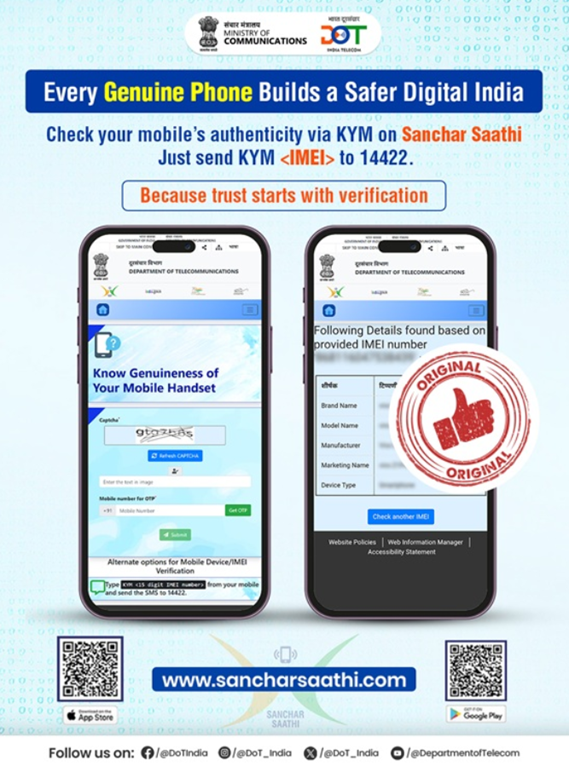
Caption – KYM on Sanchar Saathi. (Image credit – DoT)
To help citizens verify device authenticity, the DoT encouraged the use of the Sanchar Saathi portal or the Sanchar Saathi mobile app. It displays the device’s brand, model, and manufacturer details.
Additionally, users can verify their phone’s IMEI by sending KYM <IMEI> to 14422, a feature designed to confirm whether the device is genuine and safe to use.
Your Phone, Your Right to Safety!
Verify your phone’s authenticity in seconds with Sanchar Saathi’s KYM feature. Just send KYM <IMEI> to 14422 and ensure your device is genuine.
To protect themselves and ensure compliance, citizens have been urged not to:
Use devices with tampered or altered IMEI numbers.
Procure or operate modems, SIM boxes, or modules with configurable or unauthorised IMEIs.
Obtain SIM cards using fake IDs, fraud, or impersonation.
Use apps or websites that modify Calling Line Identity (CLI) or other telecom identifiers.
Share their SIM cards with others who may misuse them.
The advisory also reminded users that they remain legally accountable if SIM cards issued in their name are used for cyber fraud. Even handing a SIM to another person who misuses it can result in penalties for the original owner.
FAQs
Q1. Is tampering with a mobile phone’s IMEI number legal in India?
Answer. No. Under the Telecommunications Act, 2023, IMEI tampering is strictly prohibited and can lead to up to 3 years imprisonment, fines up to ₹50 lakh, or both.
Q2. How can citizens verify if their mobile device is genuine?
Answer. Users can check authenticity via the Sanchar Saathi portal/app, which shows brand and model details, or by sending KYM <IMEI> to 14422.
Q3. What precautions has DoT advised for mobile users?
Answer. Citizens should avoid using tampered devices, procuring SIMs with fake IDs, sharing SIM cards, or using apps/websites that alter telecom identifiers, as they remain legally accountable if misuse occurs.
TRAI urges citizens to report spam calls and SMS via the official DND App.
User complaints have led to the disconnection of over 21 lakh mobile numbers and nearly one lakh entities involved in spam and fraud.
TRAI advises downloading the DND app, reporting instead of blocking, avoiding sharing personal details, disconnecting suspicious calls, using the Chakshu feature, and contacting the cybercrime helpline (1930) for confirmed fraud.
Report Spam Calls and SMS via DND App. (Image credit – TRAI)
The Telecom Regulatory Authority of India (TRAI) has issued a new public advisory urging mobile users to report unsolicited commercial communications (UCC) through the official TRAI DND App. The regulator stressed that simply blocking numbers on personal devices is ineffective, as it does not stop offenders from targeting others. The UCC could include spam calls and text messages. Here’s more on this.
Why Collective Reporting Will Work?
TRAI highlighted the significant results achieved through user participation over the past year. Based on complaints submitted through its reporting system, the authority has disconnected and blacklisted more than 21 lakh mobile numbers and nearly one lakh entities involved in sending spam and fraudulent messages. According to TRAI, this large-scale action shows that user reports play a critical role in tackling telecom fraud and misuse.
#TRAI disconnected 21+ lakh fraudulent numbers & 1 lakh spam-sending entities in 1 year – thanks to citizen reporting.
Don’t just block spam. Download and report it on the TRAI DND App to stop scams at the source.#DigitalSafety#StopScamCallspic.twitter.com/JViXisKjWF
The authority explained that reporting spam via the DND app triggers an official process that allows TRAI and telecom operators to trace, verify, and permanently shut down the offending numbers. In contrast, blocking a contact on one’s device only prevents spam on that single phone, while the sender can continue targeting others.
The advisory called for vigilance, especially urging senior citizens, women and digitally inexperienced users to stay alert, spread awareness, and promptly report any suspicious communication they receive.
What Mobile Users Should Do?
How to Report Spam Calls and SMS via DND App? (Image credit – TRAI)
TRAI outlined clear recommendations for consumers to protect themselves and aid enforcement efforts:
Download the TRAI DND App – Only use the official app available on authorised app stores.
Report Instead of Only Blocking – Submit spam call or SMS reports through the app to help identify and disconnect fraudsters.
Do Not Share Personal Details – Avoid sharing banking or personal information in response to unsolicited communication.
Disconnect Suspicious Calls Immediately – Hang up if the call feels threatening or questionable.
Report Cyber Fraud – Contact the National Cybercrime Helpline at 1930 or visit the official cybercrime portal for confirmed fraud.
Use the Chakshu Feature – Report attempted telecom-related fraud using the “Chakshu” option on the Sanchar Saathi portal.
TRAI reiterated its commitment to building a safe and reliable telecom environment. The regulator emphasised that strict enforcement, enhanced monitoring technologies, and proactive user participation through the DND app are key to stopping spam at its origin.
FAQs
Q1. How can citizens report spam calls and SMS effectively?
Answer. TRAI urges users to report unsolicited commercial communications through the official TRAI DND App, instead of just blocking numbers.
Q2. What impact has user spam reporting had so far?
Answer. Over the past year, TRAI has disconnected more than 21 lakh mobile numbers and nearly one lakh entities involved in spam and fraud, thanks to collective reporting.
Q3. What precautions should mobile users take against spam and fraud?
Answer. TRAI advises users to avoid sharing personal details, disconnect suspicious calls immediately, use the Chakshu feature on the Sanchar Saathi portal, and report confirmed fraud to the National Cybercrime Helpline (1930).
Apple has cut dozens of sales roles across enterprise, education and government divisions.
Affected employees are given until January 20 to find new roles or accept severance.
Apple frames the move as streamlining operations, but reports suggest a shift toward third-party resellers.
(Photo by Denis Cherkashin on Unsplash)
Apple has reportedly eliminated dozens of roles across its sales division, affecting teams that handle enterprise, education, and government clients. The layoffs mark an unusual move for the company, surprising many employees who were informed as part of a broader restructuring of how Apple approaches institutional sales. According to reports, the shift may indicate that Apple is leaning more heavily on third-party resellers instead of handling large accounts directly.
Apple Layoffs
The company confirmed the restructuring to Bloomberg and revealed that it is implementing changes to “connect with even more customers.” The Cupertino Giant also noted that only “a small number of roles” were impacted. Employees whose positions were cut will have until January 20 to secure another job within Apple or accept a severance package.
The most significant impact reportedly landed on Apple’s government sales division, particularly the team working with the US Defense Department and Justice Department. This group had already been facing challenges due to a 43-day government shutdown and budget cuts from the Department of Government Efficiency.
Additional layoffs affected account managers responsible for large enterprise clients as well as staff at Apple’s briefing centres. These are the facilities where the company showcases its hardware and software solutions to institutional buyers. Some of the employees laid off had been with the company for two to three decades.
The timing was especially unexpected, coming as Apple heads into what is expected to be a record-breaking quarter with December revenue projections approaching $140 billion.
Apple has publicly framed the job cuts as an effort to streamline operations and remove overlapping roles. However, employees who spoke to Bloomberg believe the underlying reason is a strategic move toward relying more on third-party channel partners.
Apple Still Hiring
Despite the layoffs, Apple maintains that it continues to hire and has encouraged affected workers to apply for open positions within the sales organisation. The latest cuts follow earlier reductions of around 20 roles in Apple’s sales teams in Australia and New Zealand just weeks ago. The wider sales division reports directly to CEO Tim Cook under the leadership of Vice President Mike Fenger.
The rare job reductions come roughly a year after Apple cut hundreds of roles following the cancellation of its self-driving car initiative and the shutdown of its in-house display development projects.
FAQs
Q1. Which teams were most affected by Apple’s recent sales layoffs?
Answer. The biggest impact was on Apple’s government sales division, particularly those working with the US Defense and Justice Departments, along with enterprise account managers and briefing centre staff.
Q2. What options were given to employees whose roles were eliminated?
Answer. Affected employees have until January 20 to secure another role within Apple or accept a severance package.
Q3. Why did Apple restructure its sales division?
Answer. Apple described the move as streamlining operations to “connect with even more customers,” while reports suggest it is a strategic shift toward relying more on third-party resellers.
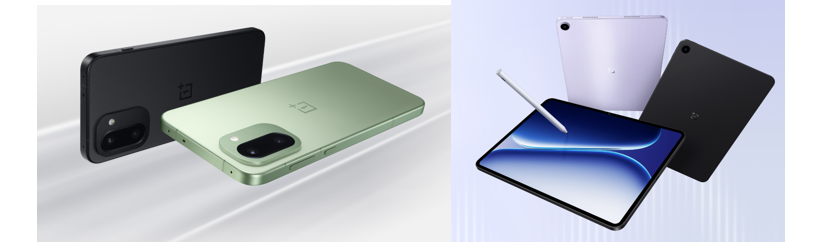
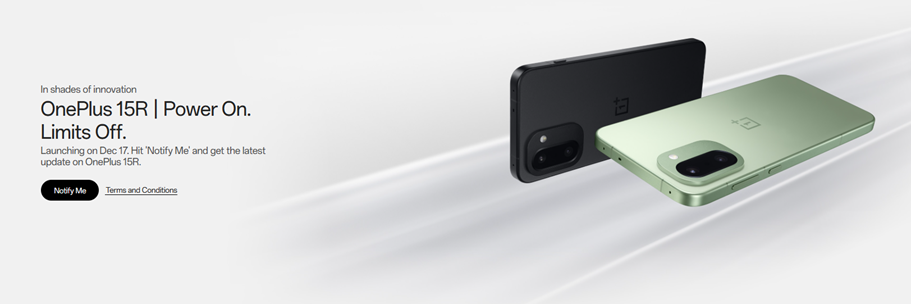
OnePlus confirmed the OnePlus 15R smartphone and OnePlus Pad Go 2 tablet will debut in India on December 17 via Amazon and OnePlus online store.
OnePlus 15R to feature the upcoming Snapdragon 8 Gen 5 chipset, dual rear camera (50MP + 8MP), flat-edge design and IP66/IP68/IP69/IP69K ratings.
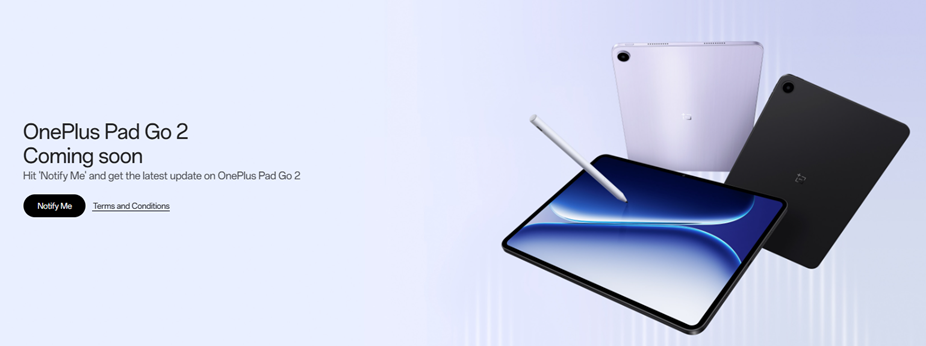
OnePlus Pad Go 2 to include a single rear camera, support for the Pad Go 2 Stylo and 5G connectivity.
OnePlus 15R and OnePlus Pad Go 2 India launch date confirmed. (Image credit – OnePlus)
OnePlus has officially announced that the OnePlus 15R and the OnePlus Pad Go 2 will debut in Indiaon December 17. The company confirmed the launch date for the 15R, while the Pad Go 2 is currently listed as “coming soon.” Meanwhile, several reports claimed that the upcoming budget tablet is expected to arrive alongside the upper mid-range smartphone. In any case, here’s what we know about both launches in India so far.
OnePlus 15R and OnePlus Pad Go 2 – India Launch Details
According to leaks, both upcoming devices will be available through Amazon and the OnePlus online store.
OnePlus has also revealed the colour variants for the two products. The OnePlus 15R will come in Charcoal Black and Minty Green, while the OnePlus Pad Go 2 will be offered in Shadow Black and Lavender Drift.
OnePlus 15R – Expected Specs
The OnePlus 15R is rumoured to be the global version of the soon-to-launch OnePlus Ace 6T in China. The biggest highlight of the 15R is its processor. OnePlus has confirmed that the smartphone will be powered by Qualcomm’s next-generation Snapdragon 8 Gen 5 chipset, which is set to be officially unveiled on November 26.
If the leaks hold true, the 15R could be among the earliest phones to feature Qualcomm’s new flagship SoC.
In terms of design, the phone features a flat-edge frame along with a rectangular camera island. OnePlus has confirmed a dual-camera setup on the back, and leaks suggest it will include a 50MP primary camera paired with an 8MP ultrawide lens. While a telephoto lens is missing, the device is expected to make up for it in other key areas.
Durability appears to be a major focus. The OnePlus 15R will reportedly support IP66, IP68, IP69, and IP69K ratings, positioning it as one of the toughest phones in its class. Early reports also claim storage options could go up to 1TB UFS 4.1 and RAM configurations may reach 16GB LPDDR5X.
Although the India-specific battery details remain unknown, the phone is expected to match the Ace 6T’s large battery and fast charging capabilities.
OnePlus Pad Go 2 – Expected Specs
Launching alongside the 15R is the OnePlus Pad Go 2, the successor to the entry-level OnePlus Pad Go. The company has confirmed that the tablet will include a single rear camera and support for the new OnePlus Pad Go 2 Stylo, aimed at students, creators and users who prefer handwriting-friendly accessories.
Unlike the original Pad Go, the Pad Go 2 will support 5G connectivity to offer more flexibility for productivity, streaming, and on-the-go entertainment.
More details about both devices are expected in the coming days as OnePlus gears up for the December 17 launch.
FAQs
Q1. When will the OnePlus 15R and OnePlus Pad Go 2 launch in India?
Answer. Both devices are confirmed to debut on December 17, 2025 in India, available via Amazon and the OnePlus online store.
Q2. What are the key highlights of the OnePlus 15R?
Answer. The OnePlus 15R will be powered by Qualcomm’s Snapdragon 8 Gen 5 chipset, feature a dual rear camera setup (50MP + 8MP ultrawide), and boast IP66/IP68/IP69/IP69K durability ratings.
Q3. What makes the OnePlus Pad Go 2 different from its predecessor?
Answer. The Pad Go 2 adds 5G connectivity, supports the new Pad Go 2 Stylo accessory, and is designed for students, creators, and users who prefer handwriting-friendly tools.
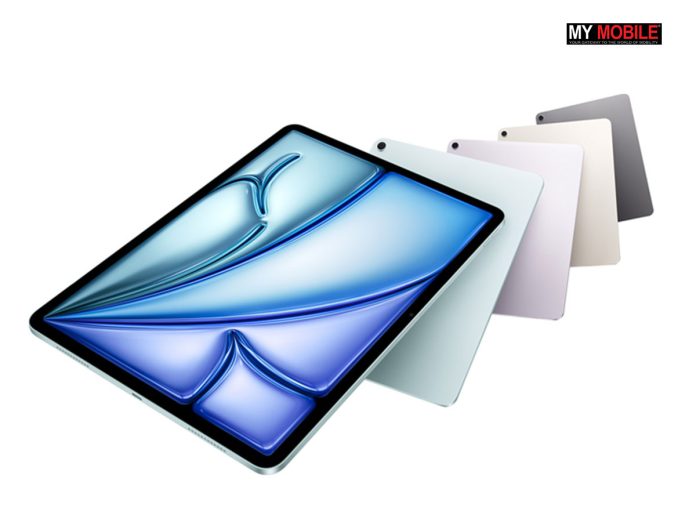
Italian retailer MediaWorld mistakenly sold the 13-inch iPad Air worth ₹79,990 for just ₹1,500 (€15) to loyalty program members due to a technical error.
The error went unnoticed for 11 days, during which many buyers had already received or collected their iPads.
MediaWorld asked customers to either pay the price difference or return the device for a refund plus a €20 voucher.
Caption – iPad Air. (Image credit – Apple)
A technical glitch can sometimes create bizarre situations for online customers and retailers. Recently, Italian electronics retailer MediaWorld landed in an unusual controversy, thanks to a major pricing glitch. Here’s the full story.
iPad Airs for €15 (around ₹1,500) Only?
A glitch at the retailer’s end allowed members of its loyalty program to purchase the 13-inch Apple iPad Air for just €15 (around ₹1,500). This becomes amusing when you realise that the device normally costs around ₹79,990.
What’s more amusing is how the retailer detected the error only 11 days later. As reported by Wired, by the time the retailer realised, most customers had already received their online orders or collected the tablets from physical stores.
MediaWorld later contacted all affected customers to fix the situation. The company asked customers to either return the iPad or pay the remaining amount to match its actual promotional price. However, the company is now facing challenges retrieving the devices due to the absence of clear terms addressing pricing mistakes in the original purchase agreements.
In emails sent to buyers, the retailer explained that the listed price had been “incorrect” and offered two choices. Customers can either keep the product by paying the price difference or return it in exchange for a full refund of €15, along with a €20 (approx. ₹2,050) voucher as compensation.
Caption – iPad Air. (Image credit – Apple)
What MediaWorld Said?
In a statement to Wired, a MediaWorld spokesperson described the situation as a “clearly identifiable technical error”caused by an unexpected glitch on its e-commerce platform. The incorrect price, they said, was clearly unrealistic and “economically unsustainable,” leaving the retailer no option but to take corrective action.
The spokesperson elaborated, “We confirm that, in a very short period of time, due to a clearly recognizable technical error caused by an extraordinary and unexpected glitch on our ecommerce platform, some products were mistakenly displayed at prices that, due to their clear and objective disconnect from the true market value and the correct promotional price, should never have been displayed. This was a manifest error, making it economically unsustainable and not representative of our commercial offering.”
They added that the retailer had to intervene based on legal principles meant to preserve contractual balance in case of such significant errors. MediaWorld emphasised that it tried to go beyond strict legal requirements by offering customer-friendly solutions.
The spokesperson further said, “By virtue of the provisions of the current regulations, we found it necessary to intervene, resorting to a legal principle aimed at preserving the contractual balance in the event of an error of this magnitude. Our approach was to prioritize the relationship with the customer and to offer solutions that went beyond the mere application of law. For this reason, we promptly contacted all affected buyers, proposing two alternatives.”
MediaWorld highlighted its intention to resolve the issue transparently and fairly. Customers can retain the device by paying the difference between the mistaken price and the correct promotional price. The retailer says it is also offering an additional discount on the revised amount. Otherwise, buyers can return the iPad free of charge, receive a full refund and get a MediaWorld shopping voucher for the inconvenience.
As the spokesperson stated, “We offer product retention: The customer has the option to keep the purchased item, paying the difference between the price paid and the correct promotional price. We have also offered a further discount on the amount to be paid. Or return the product: The customer can choose to return the item free of charge, receiving a full refund of the amount already paid. In this case too, we have offered a MediaWorld shopping voucher. We firmly believe that these proposals demonstrate our willingness to support customers and maintain transparency and fairness. We continue to work to improve our shopping experience and maximum protection for our consumers.”
FAQs
Q1. What caused the iPad Air to be sold for just ₹1,500?
Answer. A technical glitch on Italian retailer MediaWorld’s e-commerce platform mistakenly listed the 13-inch iPad Air at €15 (~₹1,500) instead of its actual price of around ₹79,990.
Q2. How did MediaWorld respond after discovering the error?
Answer. The retailer contacted affected customers 11 days later, asking them to either return the iPad or pay the price difference to match the correct promotional price.
Q3. What compensation did MediaWorld offer to customers who returned the product?
Answer. Buyers who chose to return the iPad received a full refund of €15 plus a €20 voucher (~₹2,050) as compensation for the inconvenience.
Honor introduced the Earbuds S and Watch X5 in China.
Earbuds S feature 49dB hybrid ANC, dual-mic AI noise reduction, 12.4mm drivers with spatial audio, up to 42.5 hours total playback, fast charging and IP54 resistance.
Watch X5 sports a 1.97-inch AMOLED display, lightweight aluminium build, 14-day battery life, 120 sports modes, GPS, AI fitness tools and health monitoring.
Caption – Honor Earbuds S and Honor Watch X5. (Image credit – Honor)
Honor has expanded its wearable portfolio in China with the launch of the Honor Earbuds S and the HONOR Watch X5. Both wearables were unveiled alongside the Honor 500 series during a recent event in China. The new products focus on improved noise isolation, extended battery life, and enhanced health and fitness tracking. Here’s all you need to know.
Honor Earbuds S – Key Specifications
The Honor Earbuds S are designed for strong noise isolation and everyday comfort. They feature hybrid active noise cancellation (ANC) of up to 49dB, although actual results may vary depending on ear tip seal, ear canal structure, and wearing position. The earbuds also include dual-mic AI noise reduction, helping filter ambient sound during calls for clearer voice quality.
Each earbud is equipped with a 12.4mm dynamic driver to deliver boosted bass while maintaining clarity across frequencies. The earbuds support spatial audio with dedicated presets for music, movies, and gaming. Honor has also integrated its custom bass algorithm to ensure deeper low frequencies without losing detail.
Battery life is another highlight. The Earbuds S offer up to 9.5 hours of playback per charge with ANC disabled. Combined with the charging case, total usage extends to 42.5 hours. A 10-minute fast charge provides up to three hours of listening. Each earbud weighs around 5.3 grams and features a curved ergonomic shell for prolonged comfort.
The earbuds also bring improved connectivity features. Opening the charging case enables instant pairing with Honor smartphones, and a pop-up window displays battery and connection status. Cloud-synced pairing information eliminates the need to re-pair when switching devices. Users can locate their earbuds using a ring alert via the Honor AI Space app. Touch controls support playback, calls, and ANC adjustments.
With an IP54 dust and splash resistance rating, the Earbuds S are suitable for workouts, rain, and outdoor use. They also support multi-device coordination within the Honor ecosystem.
Honor Earbuds S – Price and Availability
The Earbuds S come in blue, pink, and white colours. Priced at 299 yuan (approx. $42), sales begin November 27 at 10:00 AM in China.
Honor Watch X5 – Specifications
Caption – Honor Watch X5. (Image credit – Honor)
The Honor Watch X5 features a 1.97-inch AMOLED screen with an 82% screen-to-body ratio, 1.8mm bezels, 2.5D curved glass, and a 60Hz refresh rate. It supports Always-On Display and raise-to-wake functionality, along with a range of customisable watch faces.
The smartwatch is built using lightweight aluminium alloy, measuring 9.99mm at its thinnest point and weighing just 29g. It includes a multifunction side button that supports long press, short press, and crown rotation. The liquid silicone strap is soft and features a quick-release mechanism for hassle-free swapping.
Honor claims the Watch X5 delivers up to 14 days of battery life with standard usage.
For fitness, the Watch X5 supports 120 sports modes and carries 5ATM + IP68 water and dust resistance ratings. It comes with independent GPS, a barometer, and a compass, enabling accurate outdoor activity tracking and route recording.
The smartwatch also integrates several smart fitness tools such as an AI-powered fat reduction plan, customised weight management guidance, professional workout and stretching tutorials, real-time voice coaching, and post-workout recovery support.
Health tracking includes all-day physiological monitoring, sleep analysis, women’s health tracking, and a one-touch health check. Connectivity features include Bluetooth calling, NFC, simulated transit card support, remote camera shutter, Do Not Disturb mode, one-click SOS, Pomodoro timer, and access to mini entertainment apps.
Honor Watch X5 – Pricing and Availability
The Honor Watch X5 is priced at 449 yuan (approx. USD 63 / Rs. 5,630) and comes in Moonlight White and Phantom Black colours.
FAQs
Q1. What are the key features of the Honor Earbuds S?
Answer. The Earbuds S offer 49dB hybrid ANC, dual-mic AI noise reduction, 12.4mm dynamic drivers, spatial audio presets, and IP54 dust/splash resistance.
Q2. How long is the battery life of the Honor Earbuds S?
Answer. They provide up to 9.5 hours playback per charge (ANC off) and 42.5 hours total with the case. A 10-minute fast charge delivers 3 hours of listening.
Q3. What is the price and availability of the Honor Earbuds S?
Answer. Priced at 299 yuan ($42), available in blue, pink, and white, sales begin November 27 in China.
Q4. What are the standout specifications of the Honor Watch X5?
Answer. The Watch X5 features a 1.97-inch AMOLED display, lightweight aluminium build (29g), 120 sports modes, GPS, AI fitness tools, and 14-day battery life.
Q5. How much does the Honor Watch X5 cost and in which colors is it available?
Answer. The Watch X5 is priced at 449 yuan ($63 / ₹5,630) and comes in Moonlight White and Phantom Black.