iOS 26 Adaptive Power feature uses AI to extend battery life during demanding tasks by making subtle performance adjustments.
The feature is available only on newer iPhones that support Apple Intelligence including iPhone 15 Pro/Pro Max, iPhone 16 series and the iPhone 17 lineup.
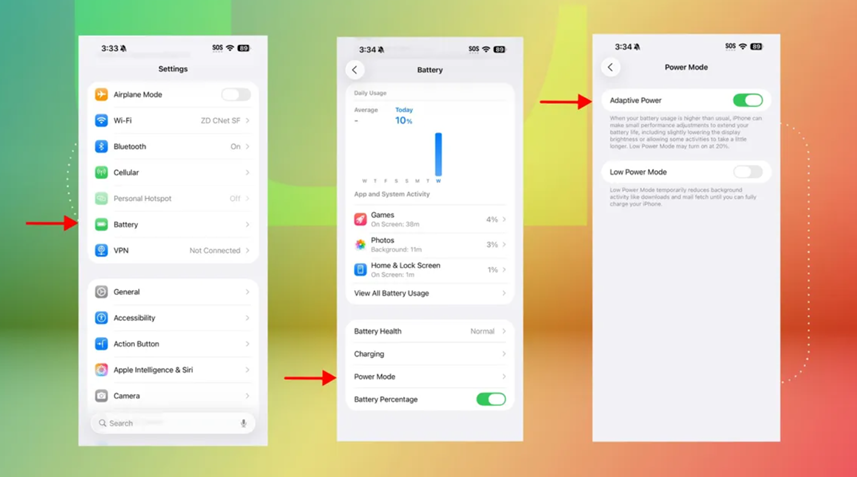
Adaptive Power isn’t enabled by default; users must go to Settings > Battery > Power Mode in iOS 26.
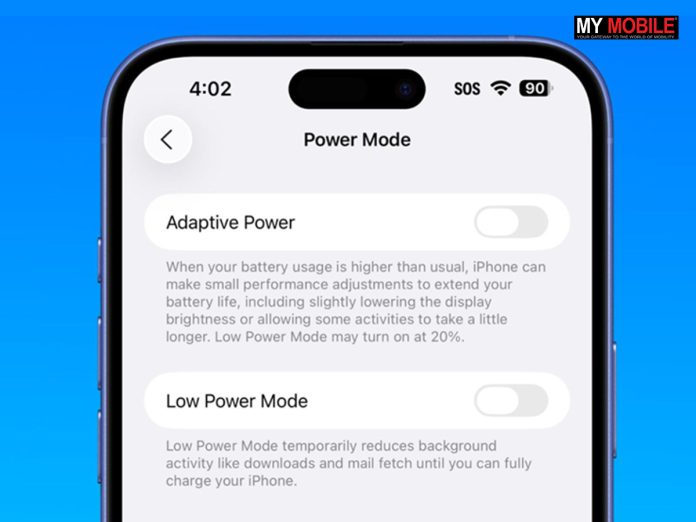
Adaptive Power feature. (Image credit – Macrumors)
The official rollout of iOS 26 is expected soon after the upcoming iPhone lineup is unveiled later this month. One of the key new additions in the iOS 26 update is a setting called Adaptive Power, designed to use AI to extend iPhone battery life during heavy usage. Here’s everything you need to know about the new feature.
iOS 26 – Adaptive Power
Current iPhone users can conserve battery by lowering screen brightness, disabling Always-On Display, or, in critical moments, enabling Low Power Mode to reduce background activity. However, Adaptive Power takes a smarter approach.
Instead of running constantly, it activates only during power-hungry tasks such as video recording, photo editing, or gaming.
When in use, Adaptive Power makes subtle performance adjustments to stretch battery life.
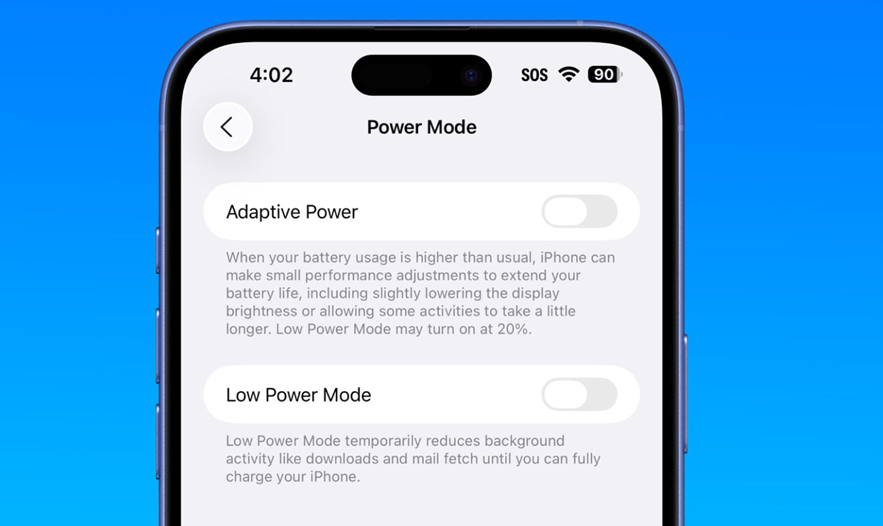
Apple describes the feature as follows, “When your battery usage is higher than usual, iPhone can make small performance adjustments to extend your battery life, including slightly lowering the display brightness or allowing some activities to take a little longer. Low Power Mode may turn on at 20%.”
iPhones That Support Adaptive Power
Apple hasn’t officially tied Adaptive Power to Apple Intelligence, but user reports suggest the feature only shows up on iPhones that support Apple Intelligence. Older models do not have the setting available.
This is why the Adaptive Power feature is only available on newer devices, list of which is as follows –
iPhone 15 Pro
iPhone 15 Pro Max
iPhone 16
iPhone 16 Plus
iPhone 16 Pro
iPhone 16 Pro Max
iPhone 16e
iPhone 17 lineup
How to Enable Adaptive Power in iOS 26?
Caption – Adaptive Power option to help extend battery life. (Screenshot by Patrick Holland/CNET)
Adaptive Power isn’t switched on by default. If you have a compatible iPhone, here’s how you can enable this feature –
Make sure your device is running the iOS 26 Developer or Public Beta.
Navigate to Settings > Battery > Power Mode.
Adaptive Power feature will appear on top of the Low Power Mode.
Turn it on to activate intelligent battery optimisation.
FAQs
Q1. What is Adaptive Power in iOS 26 and how does it work?
Answer. Adaptive Power is a feature in iOS 26 that uses AI to extend battery life by making subtle performance adjustments during power-intensive tasks like gaming, video recording, or photo editing.
Q2. Which iPhones support the Adaptive Power feature?
Answer. Adaptive Power is supported only on newer iPhones that include Apple Intelligence, such as the iPhone 15 Pro and Pro Max, the entire iPhone 16 series, and the iPhone 17 lineup.
Q3. How can I enable Adaptive Power on my iPhone?
Answer. To enable Adaptive Power, your iPhone must be running the iOS 26 Developer or Public Beta; then go to Settings > Battery > Power Mode and toggle on Adaptive Power, which appears above Low Power Mode.
New leaked images suggest the iPhone 17 Pro and Pro Max may retain physical SIM slots in some regions.
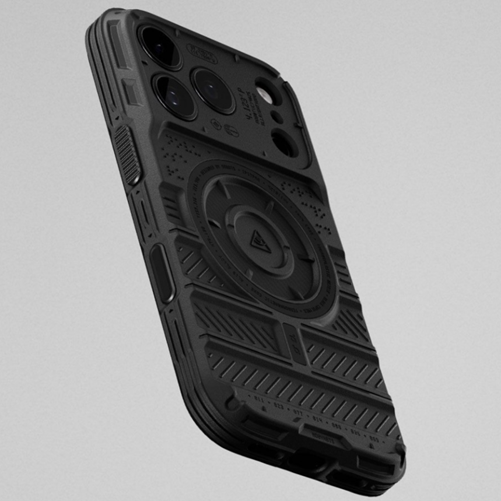
Case maker dbrand’s Tank case reveals a raised camera island and confirms the new layout, including the Camera Control button and repositioned antennas.
Apple is expected to unveil the iPhone 17, 17 Air, 17 Pro and 17 Pro Max on September 9, with dbrand’s case lineup launching alongside the devices.
Recent rumours suggested that Apple could eliminate the physical SIM card slot worldwide with the iPhone 17 Pro and Pro Max. However, a new leak now points in the opposite direction. Here’s an update on the latest leak.
iPhone 17 Pro Physical SIM Slot
Caption – Possible iPhone 17 Pro SIM card slot. (Image credit – @MajinBuOfficial on X)
Known for regularly sharing tech updates, tipster Majin Bu on X (formerly Twitter) has now shared images allegedly showing the iPhone 17 Pro’s SIM card slot. The images indicate that the Pro and Pro Max may still include a physical slot, at least in some regions.
That said, the authenticity of the images cannot be independently verified, so this leak should be taken with a pinch of salt.
Beyond this, the iPhone 17 Pro is also rumoured to start with 256GB of storage and feature repositioned antennas to deliver stronger and more reliable connectivity. The long-rumoured redesigned camera island has also been reinforced by fresh details from case maker dbrand.
iPhone 17 Pro Rear Camera Design Revealed by dbrand
While Apple has yet to confirm its expected September 9 launch event,case maker dbrand has revealed the design of the upcoming iPhone 17 Pro through images of its new Tank case.
Caption – Upcoming Tank case for the iPhone 17 Pro. (Image credit – dbrand)
The iPhone 17 Pro and 17 Pro Max are set to debut a new rear camera module design. Although leaked renders have shown it before, case makers usually receive precise dimensions in advance, making this reveal more reliable.
dbrand’s Tank case shows a raised top section around the cameras, confirming the redesigned island. The case also highlights the Camera Control button, Action button, Power button, and volume keys. While the case itself looks bulky and doesn’t showcase finer design details, it provides clear evidence of the updated layout.
The dbrand Tank case will launch in September for the entire iPhone 17 lineup.
Apple is expected to unveil the iPhone 17, iPhone 17 Air, iPhone 17 Pro, and iPhone 17 Pro Max at its September 9 event.
FAQs
Q1. Will the iPhone 17 Pro have a physical SIM card slot?
Answer. Yes, according to leaked images shared by tipster Majin Bu, the iPhone 17 Pro and Pro Max may still include a physical SIM slot in certain regions, contrary to earlier rumours of a global eSIM-only approach. However, the authenticity of these images hasn’t been independently verified.
Q2. What changes are expected in the iPhone 17 Pro’s camera design?
Answer. The iPhone 17 Pro is set to feature a redesigned rear camera module, confirmed by case maker dbrand’s Tank case. The case shows a raised top section around the cameras and includes layout details like the Camera Control button, Action button, and repositioned antennas for better connectivity.
Q3. When will Apple launch the iPhone 17 series?
Answer. Apple is expected to unveil the iPhone 17 lineup including the iPhone 17, 17 Air, 17 Pro, and 17 Pro Max at its launch event on September 9. Case accessories like dbrand’s Tank case will also debut around the same time.
We already know that Samsung is gearing up to change a lot with next year’s Galaxy S26 lineup. Instead of the usual “Plus” model, the company is reportedly bringing back a follow-up to the Galaxy S25 Edge. The standard model will be rebranded as the “Galaxy S26 Pro.” But now, we have more key details coming and giving us an idea of what the Galaxy S26 Pro could offer. Thanks to a fresh leak, it sounds familiar in more ways than one.
Galaxy S26 Pro – Battery and Display Details
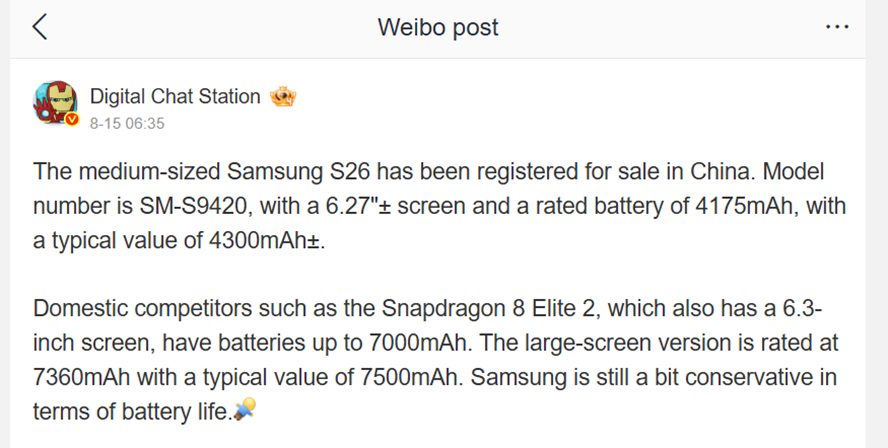
Caption – Digital Chat Station’s recent post on Weibo. (Translated via Google Translate)
According to the famous tipster named Digital Chat Station on Weibo, the Galaxy S26 Pro may feature a 6.27-inch display alongside a 4,300mAh battery. This is the second time the same battery size has been reported in recent weeks. For comparison, the Galaxy S25 came with a 6.2-inch screen and a 4,000mAh cell.
GalaxyClub previously reported that the Galaxy S26 Pro’s battery would likely be rated at 4,175mAh but marketed as 4,300mAh, marking a 300mAh increase over the Galaxy S25.
Exactly why Samsung is calling this new base model the “Pro” is still unclear. By size, it appears to be a direct successor to the Galaxy S25. Still, the naming could suggest a balance of features, a modest battery upgrade paired with the compact screen size typically seen in the entry-level flagship of the series.
Galaxy S26 Pro – Features (Rumoured)
Earlier reports indicate that the Galaxy S26 Pro, along with other models in the lineup, may include an extra NFC antenna at the top of the device. This would enhance mobile payments and file-sharing, bringing the experience closer to Apple’s iPhones, which are known for smooth AirDrop and tap-to-pay functionality.
On the camera front, the Galaxy S26 Pro is expected to retain a triple-lens setup similar to its predecessor, including a 50MP main sensor, a 12MP ultrawide lens, and a telephoto camera. It’s not yet clear if Samsung will improve the telephoto lens this time around.
Powering the device could be either the 2nm Exynos 2600 chip or the 3nm Snapdragon 8 Elite Gen 2 for Galaxy, depending on the region. Memory and storage options may include 12GB RAM with 256GB or 512GB storage.
There are also rumours that Samsung might add Qi2 wireless charging with built-in magnets to the Galaxy S26 series, making accessory compatibility simpler and bringing it closer in line with Apple’s MagSafe approach.
FAQs
Q1. What are the display size and battery capacity of the Galaxy S26 Pro?
Answer. The Galaxy S26 Pro is expected to feature a 6.27-inch display and a 4,300mAh battery, offering a modest upgrade over the Galaxy S25’s 6.2-inch screen and 4,000mAh battery.
Q2. What new features might the Galaxy S26 Pro include?
Answer. Rumoured features include an extra NFC antenna for enhanced mobile payments and file sharing, Qi2 wireless charging with built-in magnets for better accessory compatibility, and improved tap-to-pay functionality similar to Apple’s MagSafe.
Q3. What are the expected camera and performance specs of the Galaxy S26 Pro?
Answer. The device may retain a triple-lens camera setup with a 50MP main sensor, 12MP ultrawide lens, and a telephoto camera. It could be powered by either the 2nm Exynos 2600 or the 3nm Snapdragon 8 Elite Gen 2 chip, depending on the region, and offer 12GB RAM with 256GB or 512GB storage options.
The iPhone 17 Pro Max may feature a superior telephoto lens compared to the iPhone 17 Pro.
The Pro Max could be 5% thicker to house a larger 5,000mAh battery, while both models may switch to aluminium frames.
Both phones are expected to feature the A19 Pro chip, 12GB RAM, and 256GB base storage.
In India, the Pro may start at ₹1,45,000 and the Pro Max at ₹1,64,990, with colour options including White, Black, Dark Blue, Orange and Grey.
Caption – iPhone 17 Pro and iPhone 17 Pro Max previously leaked renders. (Image credit – 9to5Mac)
Apple is just weeks away from unveiling the iPhone 17 lineup. And a fresh leak from Weibo suggests the iPhone 17 Pro Max might come with a special camera advantage not shared by the iPhone 17 Pro. Here’s what we know so far..
iPhone 17 Pro Max May Get a Unique Telephoto Upgrade
Each year, Apple introduces subtle differences between its two Pro models. Sometimes the only difference is size, while in other years one model gains a standout feature.
According to the leak, the iPhone 17 Pro Max may get a superior telephoto lens compared to the smaller iPhone 17 Pro, though the reason wasn’t specified.
Caption – Weibo post with recent tip on iPhone 17 Pro Max camera upgrade. (Translated via Google Translate)
Both Pro models are expected to receive a telephoto camera upgrade to 48MP, up from the current 12MP lens, bringing all three rear cameras (wide, ultra-wide, and telephoto) to 48MP.
While Apple is unlikely to restrict this upgrade to just the Pro Max, the leak hints that Apple may introduce an additional telephoto enhancement exclusive to the larger model.
iPhone 17 Pro Max vs iPhone 17 Pro – What To Expect?
Design –
Both Pro models may switch from the titanium frames used in the iPhone 15 and iPhone 16 to aluminium. The rear design could also change with a rectangular camera island in the top-left corner housing three lenses, while the Apple logo may shift slightly from its current placement.
The iPhone 17 Pro Max is expected to be around 5% thicker than the iPhone 16 Pro Max to accommodate a bigger battery, which could also make it marginally heavier. In contrast, the iPhone 17 Pro is expected to keep similar dimensions to the iPhone 16 Pro.
Display
Both models are likely to retain ProMotion OLED displayswith 120Hz refresh rates. No major upgrades in brightness or resolution have been reported for either phone.
Battery and Performance
Battery life is where the Pro Max may outshine the Pro. Reports indicate the iPhone 17 Pro Max could come with a 5,000mAh battery, an upgrade from the 4,676mAh cell in the iPhone 16 Pro Max. The iPhone 17 Pro, however, is unlikely to get the same capacity bump, which could result in a noticeable difference in runtime.
Both devices are rumoured to feature Apple’s A19 Pro chipset, manufactured on TSMC’s advanced 3nm process. They may also be equipped with 12GB of RAM, the most ever on an iPhone alongside a base storage option of 256GB. The additional RAM should help with Apple Intelligence features, enabling quicker AI task processing.
Camera Setup
This year, Apple seems to be unifying the camera system across both Pro models, with each expected to feature three 48MP sensors for wide, ultra-wide, and periscope telephoto lenses. This setup would give both phones equal zoom and low-light performance. A front camera upgrade to 24MP is also expected, bringing sharper selfies and better video calls.
While in the past the Pro Max occasionally introduced new camera features ahead of the Pro, for 2025 no such clear advantage has been confirmed yet, aside from the rumoured telephoto improvement.
Pricing in India and Colours
Industry insiders suggest Apple could announce the iPhone 17 series on 9 September 2025, with pre-orders starting shortly after.
In India, the iPhone 17 Pro is expected to start at around Rs. 1,45,000, while the iPhone 17 Pro Max may be priced near Rs. 1,64,990. Both models may launch in White, Black, Dark Blue, Orange, and Grey colour options.
FAQS
Q1. What is the key camera difference between the iPhone 17 Pro and iPhone 17 Pro Max?
Answer. While both models are expected to feature upgraded 48MP sensors for wide, ultra-wide, and telephoto lenses, the iPhone 17 Pro Max may receive an exclusive telephoto enhancement, giving it a potential edge in zoom or low-light performance.
Q2. How does the battery capacity differ between the iPhone 17 Pro and Pro Max?
Answer. The iPhone 17 Pro Max is rumoured to include a 5,000mAh battery, up from the 4,676mAh in the previous model, whereas the iPhone 17 Pro is not expected to receive a similar capacity bump, resulting in longer runtime for the Pro Max.
Q3. What are the expected prices and colour options for the iPhone 17 Pro series in India?
Answer. The iPhone 17 Pro is expected to start at ₹1,45,000, while the iPhone 17 Pro Max may be priced around ₹1,64,990. Both models could be available in White, Black, Dark Blue, Orange and Grey colour variants.
Pixel 10 series includes four phones – Pixel 10, 10 Pro, 10 Pro XL and 10 Pro Fold.
Design remains similar to Pixel 9, with minor changes like extra camera lenses and repositioned antennae.
Pro models retain high-end sensors with new features like 100x zoom and telephoto macro, while the base Pixel 10 gets a downgraded main sensor but adds a 5x telephoto.
A new AI-powered “Camera Coach” and magnetic charging (Pixelsnap) debut this year.
Google’s upcoming Pixel series has been heavily leaked ahead of launch. Google’s major hardware showcase has shifted to August since last year and it seems to be working well. By moving ahead of Apple’s September event, Google gets a chance to attract potential switchers. With just days left until the official unveiling, last-minute leaks are piling up, here’s a full rundown of what to expect.
Pixel 10 Lineup
The Pixel 10 family for 2025 includes four smartphones, the base Pixel 10, Pixel 10 Pro, Pixel 10 Pro XL, and Pixel 10 Pro Fold. Joining them are the Pixel Watch 4 in 41mm and 45mm sizes and a new budget-friendly pair of earbuds, the Pixel Buds 2a.
Overall, the lineup feels fairly standard, building on the Pixel 9 series without major surprises.
Pixel 10 Series – Launch, Release Date and Availability
The Made by Google 2025 event is set for August 20. Pre-orders should go live immediately, with shipping for the Pixel 10, 10 Pro, and 10 Pro XL expected by August 28.
The Pixel 10 Pro Fold might launch later on October 9, following a staggered release pattern similar to last year. Buyers may need to wait longer for delivery if they pre-order the foldable model.
The Pixel 10 keynote event will include the following guests-
Late Night host Jimmy Fallon
NBA star Stephen Curry: Google likes the Warriors, while he was recently spotted wearing a Pixel Watch
Formula 1 driver Lando Norris: Google sponsors the McLaren F1 team with “Chrome wheels” and the Android logo on the vehicle.
Jonas Brothers
More celebrities are teased at the 1 p.m. ET keynote live from New York City (Brooklyn).
Pixel 10 Series – Design
Google is sticking with the Pixel 9’s design for a second year. The Pixel 10 looks almost identical, though minor adjustments have been made. The chassis dimensions are slightly different, which means Pixel 9 accessories won’t fit.
There’s also a new extra camera lens on the Pixel 10 and repositioned 5G antennae that could improve connectivity. In general, the design is unchanged but marginally thicker in most models.
Pixel 10 Series – Colour Options
The Pixel 10 will be available in vibrant shades – “Obsidian” (black), “Indigo” (blue), “Frost” (muted), and “Limoncello” (green).
The Pixel 10 Pro models come in “Obsidian”, “Porcelain” (white), “Jade” (soft green), and “Moonstone” (grey-blue) with glossy rails, while the base Pixel 10 sticks to matte edges.
For the Pixel 10 Pro Fold, Google is reportedly offering just two finishes this year: “Moonstone” and “Jade,” marking the first time the Fold skips black or white options.
Pixel 10 Series – Specifications
A leaked pre-release Pixel 10 Pro confirms a key update is UFS 4.0 storage. This means faster app launches, quicker file transfers, and improved on-device performance.
RAM and storage follow familiar lines, which is a 12GB RAM for the Pixel 10 and 16GB RAM for all Pro models. Storage starts at 128GB for the Pixel 10 and 256GB for the Pro, Pro XL, and Pro Fold.
Other refinements include faster PWM support, higher brightness (around 200 nits more), and slight battery upgrades. These will be –
Pixel 10 – 4,970mAh
Pixel 10 Pro – 4,870mAh
Pixel 10 Pro XL – 5,200mAh (largest yet for a Pixel)
Pixel 10 Pro Fold – 5,015mAh
Charging speeds remain unchanged.
Pixel 10 Series – Cameras
This year, Google is creating more separation between the base Pixel 10 and Pro models.
Pixel 10 is reportedly moving away from the 50MP primary sensor, instead using the Pixel 9a’s setup (48MP main, 12MP ultrawide) but adding a 10.8MP 5x telephoto.
Pixel 10 Pro / Pro XL will same as Pixel 9 Pro, which was a 50MP main, 48MP ultrawide, 48MP 5x telephoto, and a 42MP selfie shooter, with new features like 100x zoom and telephoto macro.
Pixel 10 Pro Fold will offer a 48MP main, 10.5MP ultrawide, 10.8MP 5x telephoto, plus dual 10MP selfie cameras inside and out.
A new “Camera Coach” feature is also tipped, offering in-app guidance on framing, lighting, and other adjustments, powered by AI.
Pixel 10 Series – Features
Google is finally adding magnetic charging support dubbed “Pixelsnap” to make the Pixel 10 the first flagship Android series with built-in magnets for Qi2 accessories like power banks and mounts.
In the US, the Pixel 10 lineup may drop physical SIM card slots entirely, requiring eSIMs. International models are still expected to support one physical SIM plus eSIM.
As for software, the Pixel 10 should ship with Android 16 pre-installed, unlike last year’s Pixel 9 launch that started with Android 14. On-device AI features (once rumoured as “Pixie” or “Pixel Sense”) haven’t leaked much recently, but multimodal AI support could debut with Android 16’s Material You Expressive updates.
Pixel 10 Series – Pricing
The base Pixel 10 is expected to keep the same price as last year. However, the Pro lineup could see a $100 increase, starting at $1,099, thanks to the upgraded 256GB base storage.
The Pixel 10 Pro Fold is likely to start at $1,799, going up to over $2,000 for the 1TB variant.
Google may also bundle perks like free Gemini Pro subscriptions during pre-orders, similar to last year.
FAQs
Q1. What devices are included in the Pixel 10 Series lineup for 2025?
Answer. The lineup includes four smartphones, Pixel 10, Pixel 10 Pro, Pixel 10 Pro XL, and Pixel 10 Pro Fold, alongside the Pixel Watch 4 (in 41mm and 45mm sizes) and Pixel Buds 2a.
Q2. What are the key camera differences between the Pixel 10 and Pixel 10 Pro models?
Answer. The Pixel 10 uses a 48MP main sensor, 12MP ultrawide, and adds a 10.8MP 5x telephoto lens. The Pro models retain the 50MP main sensor, 48MP ultrawide, 48MP 5x telephoto, and 42MP selfie camera, with new features like 100x zoom and telephoto macro.
Q3. What new features are introduced in the Pixel 10 Series?
Answer. Google adds magnetic charging support called “Pixelsnap” for Qi2 accessories and introduces a “Camera Coach” AI feature for in-app guidance. The series also ships with Android 16 and may drop physical SIM slots in the US.
Q4. When will the Pixel 10 Series launch and what are the expected prices?
Answer. The launch event is set for August 20, with shipping for most models by August 28. The Pixel 10 Pro starts at $1,099, and the Pixel 10 Pro Fold begins at $1,799, reaching over $2,000 for the 1TB variant.
Samsung Galaxy S25 FE leak shows the phone with a punch-hole display and triple rear cameras.
Renders show the phone in black, navy, ice blue and white colours.
The phone is expected to feature Exynos 2400, 8GB RAM, 256GB storage, 6.7″ FHD+ AMOLED 120Hz display, 50MP main, 12MP ultrawide, 8MP telephoto, 12MP front camera and a 4,900mAh battery with 45W wired + 15W wireless charging.
It was earlier reported that Samsung is gearing up to launch the Galaxy S25 FE next month. But while the Korean tech giant is yet to reveal any details, leaked images have already given us a clear idea of what to expect. But looks like it is time for clearer images.
Samsung Galaxy S25 FE Official Renders Leaked
A new report from Android Headlines has now shared the official renders of the Galaxy S25 FE. The leaked images show the phone from multiple angles in four colour options, which are black, navy, ice blue, and white.
These renders confirm earlier leaks suggesting the Galaxy S25 FE’s design will be similar to last year’s Galaxy S24 FE. The phone features a punch-hole display on the front and a vertically aligned triple-camera setup at the rear.
It has a metal frame with flat edges and the right-side frame houses the volume rocker and power button.
Samsung Galaxy S25 FE – What Else We Know?
According to rumours, the Galaxy S25 FE will be powered by the Exynos 2400 chipset, paired with 8GB of RAM and up to 256GB of storage. It is expected to feature a 6.7-inch Full HD+ AMOLED display with a 120Hz refresh rate, along with a 4,900mAh battery supporting 45W wired and 15W wireless charging.
The device will reportedly ship with Android 16-based One UI 8 and carry an IP68 water and dust resistance rating.
Camera hardware is said to include a 12MP front-facing shooter, while the rear triple setup will consist of a 50MP primary camera with OIS, a 12MP ultrawide lens and an 8MP telephoto lens offering 3x optical zoom and OIS.
FAQs
Q1. What colour options will the Samsung Galaxy S25 FE offer?
Answer. The Galaxy S25 FE will be available in four colours, which include black, navy, ice blue and white.
Q2. What are the expected specifications of the Galaxy S25 FE?
Answer. It is rumoured to feature the Exynos 2400 chipset, 8GB RAM, up to 256GB storage, a 6.7-inch FullHD+ AMOLED display with 120Hz refresh rate, and a 4,900mAh battery supporting 45W wired and 15W wireless charging.
Q3. What camera setup will the Galaxy S25 FE include?
Answer. The phone is expected to have a 12MP front camera and a triple rear setup: 50MP main with OIS, 12MP ultrawide, and 8MP telephoto lens with 3x optical zoom and OIS.
Vivo G3 5G has launched in China at ¥1,499 for 6GB+128GB and ¥1,999 for 8GB+256GB.
It is available in Diamond Black and looks similar to the previously launched Vivo Y50 5G.
The phone features a 6.74″ LCD with 90Hz refresh rate, powered by Dimensity 6300 chipset, paired with up to 8GB RAM, runs Android 15-based OriginOS 5 and has a 6,000mAh battery with 44W fast charging.
Vivo G3 5G debuts in the Chinese offline market. (Image credit – Vivo)
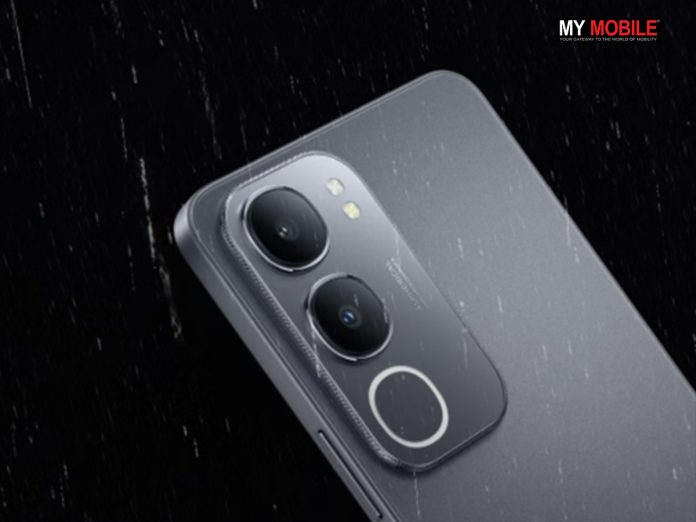
Vivo has launched the Vivo G3 5G in China recently. The new G-series smartphone features a large 6.74-inch display, a MediaTek Dimensity chipset and a high-capacity battery. Here’s a detailed look at its specifications, features and pricing.
Vivo G3 5G – Price and Availability
The newly launched Vivo G3 5G is mainly targeted at the offline market in China. It is available in Diamond Black colour and is priced at 1,499 yuan ($210) for the 6GB + 128GB variant and 1,999 yuan ($280) for the 8GB + 256GB model.
The phone shares the same design and specifications as the Vivo Y50 5G, which is also available in blue and white colour options.
Vivo G3 5G – Key Features
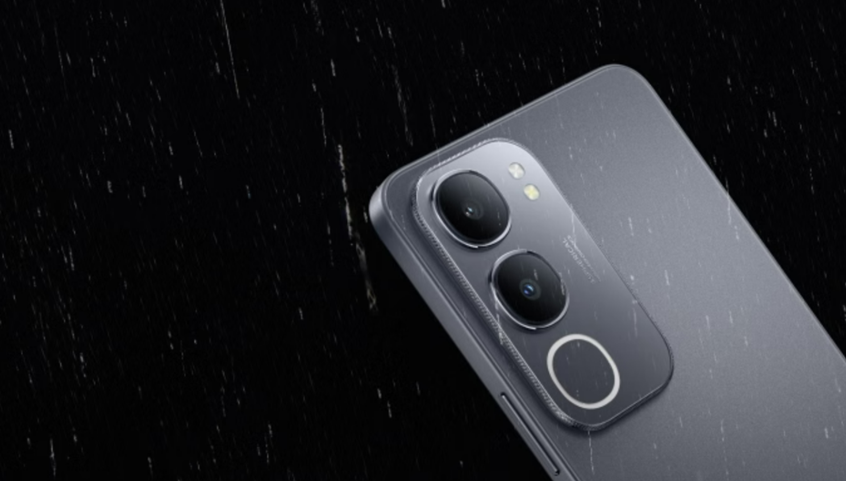
Vivo G3 5G comes in a single Diamond Black colour. (Image credit – Vivo)
The Vivo G3 5G comes with a 6.74-inch LCD display featuring a waterdrop notch, 1600 × 720 pixel resolution, 20:9 aspect ratio, 1500:1 contrast ratio, and a 90Hz refresh rate. On the back, it houses a 13MP main camera with autofocus, while the front gets a 5MP selfie camera.
Powering the device is the MediaTek Dimensity 6300 processor, paired with either 6GB or 8GB of LPDDR4X RAM. Storage options include 128GB or 256GB UFS 2.2, though the 6GB + 128GB variant uses eMMC 5.1 storage. The phone packs a large 6,000mAh single-cell battery with support for 44W fast charging.
Running OriginOS 5 based on Android 15, the Vivo G3 5G also includes a side-mounted fingerprint sensor, dual SIM support, 5G connectivity, Wi-Fi 5, Bluetooth 5.4, an IR blaster, USB-C port and a 3.5mm headphone jack.
The IP64-rated body of the phone measures 167.3 × 76.95 × 8.19mm and weighs 204g.
FAQs
Q1. What processor powers the Vivo G3 5G?
Answer. The Vivo G3 5G is powered by the MediaTek Dimensity 6300 processor.
Q2. What is the battery capacity and charging speed of the Vivo G3 5G?
Answer. The phone packs a large 6,000mAh single-cell battery with support for 44W fast charging.
Q3. What are the available variants and prices of the Vivo G3 5G?
Answer. It is priced at 1,499 yuan ($210) for the 6GB + 128GB variant and 1,999 yuan ($280) for the 8GB + 256GB model.
Q4. Which operating system does the Vivo G3 5G run on?
Answer. The Vivo G3 5G runs OriginOS 5 based on Android 15.
Google introduces Flight Deals, an AI tool within Google Flights that helps users find the best airfares using conversational prompts.
Users can describe their ideal trip and the tool suggests real-time deals from hundreds of airlines.
Flight Deals launches next week in India, the US, and Canada via Google Flights.
Caption – Google launches new AI tool called Flight Deals. (Image credit – Google)
Google has unveiled Flight Deals, a new AI-driven tool designed to help travellers quickly find the best flight fares. The AI tool has been integrated into Google Flights, Google’s flight search platform for users to compare prices and book tickets directly with airlines or through travel partners. Flight Deals is aimed at travellers prioritising savings.
“Flight Deals is designed for flexible travellers whose number one goal is saving money on their next trip,” Google said in a blog post.
Rather than manually experimenting with dates, destinations, and filters, users can simply describe their travel plans conversationally and Flight Deals will handle the rest.
Explaining this in the blog post, Google wrote, “Instead of playing with different dates, destinations and filters to uncover the best deals, you can just describe when, where and how you’d like to travel — as though you’re talking to a friend — and Flight Deals will take care of the rest.”
The feature is launching in beta and will be available next week in India, the United States, and Canada.
Users can access it by visiting Google Flights and selecting the menu in the top-left corner. Google clarified that the standard Google Flights interface will remain active alongside Flight Deals.
Additionally, the company is developing a filter to exclude economy-class tickets for trips within the US and Canada.
How Google’s Flight Deals Work?
Powered by Google’s advanced AI (the exact model was not disclosed), Flight Deals can interpret nuanced travel requests and match them with suitable destinations. This allows users to enter flexible prompts such as “week-long trip this winter to a city with great food, nonstop only” or “10-day ski trip to a world-class resort with fresh powder.”
Flight Deals then uses real-time Google Flights data to deliver “relevant, up-to-date options from hundreds of airlines and booking sites.”
According to Google, the tool highlights “the best bargains available that match your search, including destinations you may not have previously considered.”
FAQs
Q1. What is Google’s new Flight Deals tool?
Answer. Flight Deals is an AI-powered feature integrated into Google Flights that helps users find the best airfares by interpreting conversational travel requests. It’s designed for flexible travellers focused on saving money.
Q2. How do I use Flight Deals to search for flights?
Answer. Instead of manually adjusting dates and filters, users can describe their travel plans conversationally like “10-day ski trip to a world-class resort with fresh powder” and Flight Deals will suggest relevant, up-to-date options using real-time data from airlines and booking sites.
Q3. Where and when will Flight Deals be available?
Answer. Flight Deals is launching in beta next week in India, the United States, and Canada. Users can access it by visiting Google Flights and selecting the menu in the top-left corner. The standard Google Flights interface will still be available.
Huawei MatePad Air 2025 launched in standard and Soft Light editions.
The tablet features a 12″ LCD with 144Hz refresh rate, HDR Vivid, and nano-etched Soft Light tech that reduces screen flash points by 50% for better eye protection.
It includes a six-speaker system with Huawei Sound, Wi-Fi 7, NearLink, and Xiaoyi AI assistant for smart stylus commands, translation and note-taking.
Huawei’s latest tablet puts the spotlight on visual comfort. The company has officially introduced the Huawei MatePad Air 2025, featuring advanced eye protection technology that reportedly reduces screen flash points by 50%. Here’s everything we know about the new device.
Huawei MatePad Air 2025 – Price and Availability
The MatePad Air 2025 is available in two versions, the standard model and a Soft Light Edition.
The standard MatePad Air 2025 starts at 2,999 yuan for the 12GB RAM + 256GB storage model, with the 12GB + 512GB version priced at 3,399 yuan. The Soft Light Edition costs 3,299 yuan for the 12GB + 256GB variant and 3,699 yuan for the 12GB + 512GB configuration.
Huawei MatePad Air 2025 – Design and Colours
Design-wise, the MatePad Air 2025 draws inspiration from macaron tones with an iridescent pearlescentelectrophoresis finish for a smooth, starlit appearance. The tablet weighs 555g, measures 5.9mm thick, and features an all-metal unibody for a slim yet sturdy build.
It comes in four colour variants, which are Grass Green, Sakura Pink, Feather Sand White and Smoky Grey.
The Soft Light variant uses high-precision nano-etching technology to cut screen flash points by 50%, enhancing clarity. It also features a “Cloud Clear Soft Light” display, designed to diffuse reflections, minimise light glare, and improve the viewing experience.
Both variants are equipped with a 12-inch LCD panel offering a 2800 × 1840 resolution, a 144Hz refresh rate, HDR Vivid certification, and a P3 movie-grade color gamut. The 3:2 aspect ratio provides roughly 10% more horizontal space compared to standard formats, making it particularly useful for handling documents and spreadsheets.
Apps like Huawei Notes and Tianshenghuihua now work with Xiaoyi Intelligent Body, Huawei’s AI assistant, for features such as document summarisation, split-screen translation, and handwritten formula recognition.
The new M-Pencil Pro stylus includes a hidden Hongmeng Star Ring smart button for quick AI commands and voice-to-text input.
The MatePad Air 2025 also houses a six-speaker audio system with extra-large sound cavities, tuned using Huawei Sound technology. Connectivity options include Wi-Fi 7 and NearLink support.
FAQs
Q1. What are the key display features of the Huawei MatePad Air 2025?
Answer. The tablet sports a 12-inch LCD panel with a 2800 × 1840 resolution, 144Hz refresh rate, HDR Vivid certification, and a P3 movie-grade color gamut. The Soft Light Edition uses nano-etching to reduce screen flash points by 50%, enhancing eye comfort and clarity.
Q2. What are the available Huawei MatePad Air 2025 variants and their prices?
Answer. Huawei offers the MatePad Air 2025 in two versions: the Standard Edition and the Soft Light Edition. The Standard Edition is priced at ¥2,999 for the 12GB RAM + 256GB storage model and ¥3,399 for the 12GB + 512GB variant. The Soft Light Edition costs ¥3,299 for the 12GB + 256GB configuration and ¥3,699 for the 12GB + 512GB model.
Q3. What colours and design elements does the MatePad Air 2025 feature?
Answer. The tablet comes in four macaron-inspired colours: Grass Green, Sakura Pink, Feather Sand White, and Smoky Grey. It has a slim 5.9mm profile, weighs 555g, and features an iridescent pearlescent finish with an all-metal unibody.
Q4. What smart features and accessories are included with Huawei MatePad Air 2025?
Answer. The MatePad Air 2025 supports Huawei’s Xiaoyi AI assistant for document summarisation, split-screen translation, and handwritten formula recognition. It also includes the new M-Pencil Pro stylus with a hidden smart button for voice-to-text and quick AI commands.
Pixel 10 lineup gets larger batteries of up to 5,200mAh and improved repairability ratings.
All models are rated for 1,000 charge cycles and 270 drop tests.
Pixel 10 Pro Fold to be the first foldable with IP68 rating and UFS 4.0 storage.
Pixel 10 series launches August 20 while Pro Fold ships in October.
Caption – Previously leaked render of Pixel 10 Series.
Pixel 10 series is set to launch later this month and most of its details are already out in the open. Now, fresh regulatory leaks have confirmed battery capacities for the Pixel 10, Pixel 10 Pro, and Pixel 10 Pro XL, while also suggesting slight improvements in repairability. Here’s what we know.
Pixel 10 Series – Battery Upgrades and Repairability
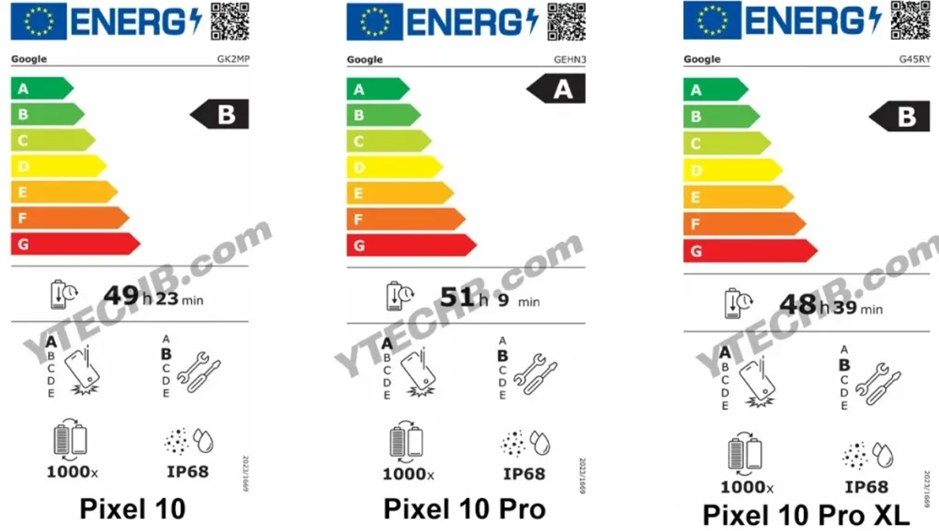
Newly spotted EU regulatory labels, reported by YTechB, have confirmed what previous leaks have already indicated. The entire Pixel 10 lineup would feature larger batteries. According to multiple reports, the core series upgrades are as follows –
Pixel 10 – 4,970 mAh (up from 4,700 mAh)
Pixel 10 Pro – 4,870 mAh (up from 4,700 mAh)
Pixel 10 Pro XL – 5,200 mAh (up from 5,060 mAh)
Caption – Leaked EU regulatory labels. (Image credit – YTechB)
According to EU regulatory labels, each device received a rating from “A” to “G” based on lifespan, durability, repairability and other factors.
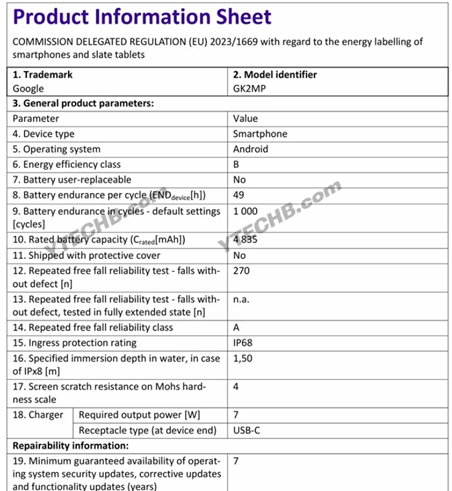
The base Pixel 10 now holds a “B” rating, down from last year’s “A”, despite similar specs. It has a rated battery capacity of 4,835 mAh, which aligns with the advertised 4,970 mAh, compared to the Pixel 9’s 4,558 mAh. Runtime improves slightly from 49:12 to 49:23.
Caption – Product Information Sheet of Pixel 10, Pixel 10 Pro, Pixel 10 Pro XL. (Image credit – YTechB)
The Pixel 10 Pro gets an “A” rating, with a rated capacity of 4,707 mAh, up from 4,558 mAh. Estimated runtime increases from 50:44 to 51:09. The Pixel 10 Pro XL scores a “B,” with its rated capacity rising from 4,942 mAh to 5,078 mAh, though its estimated runtime drops from 49:30 to 48:39.
All three models are designed to retain endurance for 1,000 charge cycles and have reportedly survived 270 drop tests without battery issues. The Pixel 10 Pro and Pro XL also see minor repairability upgrades, moving from a “C” to a “B” rating, though exact changes remain unknown.
Pixel 10 Pro Fold With IP68 Rating and UFS 4.0 Storage
Caption – Google Pixel 10 Pro Fold’s previously leaked image. (Image credit – OnLeaks/AndroidHeadlines)
Meanwhile, a detailed Pixel 10 Pro Fold specs leak reportedly sourced from “an official spec sheet” and shared by WinFuture, has surfaced online. It revealed two standout features. The foldable will be the first foldable to receive an IP68 dust/water resistance rating and the first Pixel in four generations to adopt UFS 4.0 storage.
The Pixel 10 Pro Fold retains much from last year’s Pixel 9 Pro Fold, including an 8-inch internal display,16GB RAM, a 48MP main camera with ultrawide and telephoto lenses, and two 10MP selfie shooters. Upgrades include a larger 6.4-inch outer display, Tensor G5 chip, a bigger 5,015 mAh battery, and Qi2 wireless charging at up to 15W (lower than the expected 25W from Qi 2.2).
The IP68 rating marks a major breakthrough for foldables, which have typically lacked full dust protection, Samsung’s Galaxy Z Fold 7, for example, only has an IP48 rating.
The switch to UFS 4.0 storage, available in 256GB, 512GB and 1TB options, is the first Pixel storage upgrade since 2021’s Pixel 6 series. While the performance gains may be modest, users can expect a faster and smoother experience, especially if the upgrade applies to the rest of the Pixel 10 lineup.
As previously reported, pricing is expected to remain unchanged. The Pixel 10 Pro Fold will launch on August 20, but shipping will reportedly begin in October.
Here’s the full specs –
Outer display – 6.4″ OLED Actua, 1080 × 2364 px, 408 ppi, 60-120 Hz, HDR up to 2000 nits, maximum brightness 3000 nits
Interior display – 8.0″ OLED Super Actua Flex, 2076 × 2152 px, 373 ppi, 1-120 Hz, HDR up to 1800 nits, maximum brightness 3000 nits
Processor – Google Tensor G5 + security chip Titan M2
In the box – Pixel 10 Pro Fold, USB-C to USB-C cable (1 m), SIM tool
FAQs
Q1. What battery upgrades are coming to the Pixel 10 series?
Answer. The Pixel 10 lineup features larger batteries –
Pixel 10: 4,970mAh (up from 4,700mAh)
Pixel 10 Pro: 4,870mAh (up from 4,700mAh)
Pixel 10 Pro XL: 5,200mAh (up from 5,060mAh)
All models are rated for 1,000 charge cycles and improved drop resistance.
Q2. What makes the Pixel 10 Pro Fold stand out from other foldables?
Answer. It’s the first foldable with an IP68 rating for dust and water resistance and the first Pixel to feature UFS 4.0 storage. It also includes a Tensor G5 chip, 16GB RAM, and Qi2 wireless charging.
Q3. When will the Pixel 10 series and Pixel 10 Pro Fold launch?
Answer. The Pixel 10 series will be officially unveiled on August 20. The Pixel 10 Pro Fold will begin shipping in October, with pricing expected to remain unchanged from previous models.