Home Blog Page 128

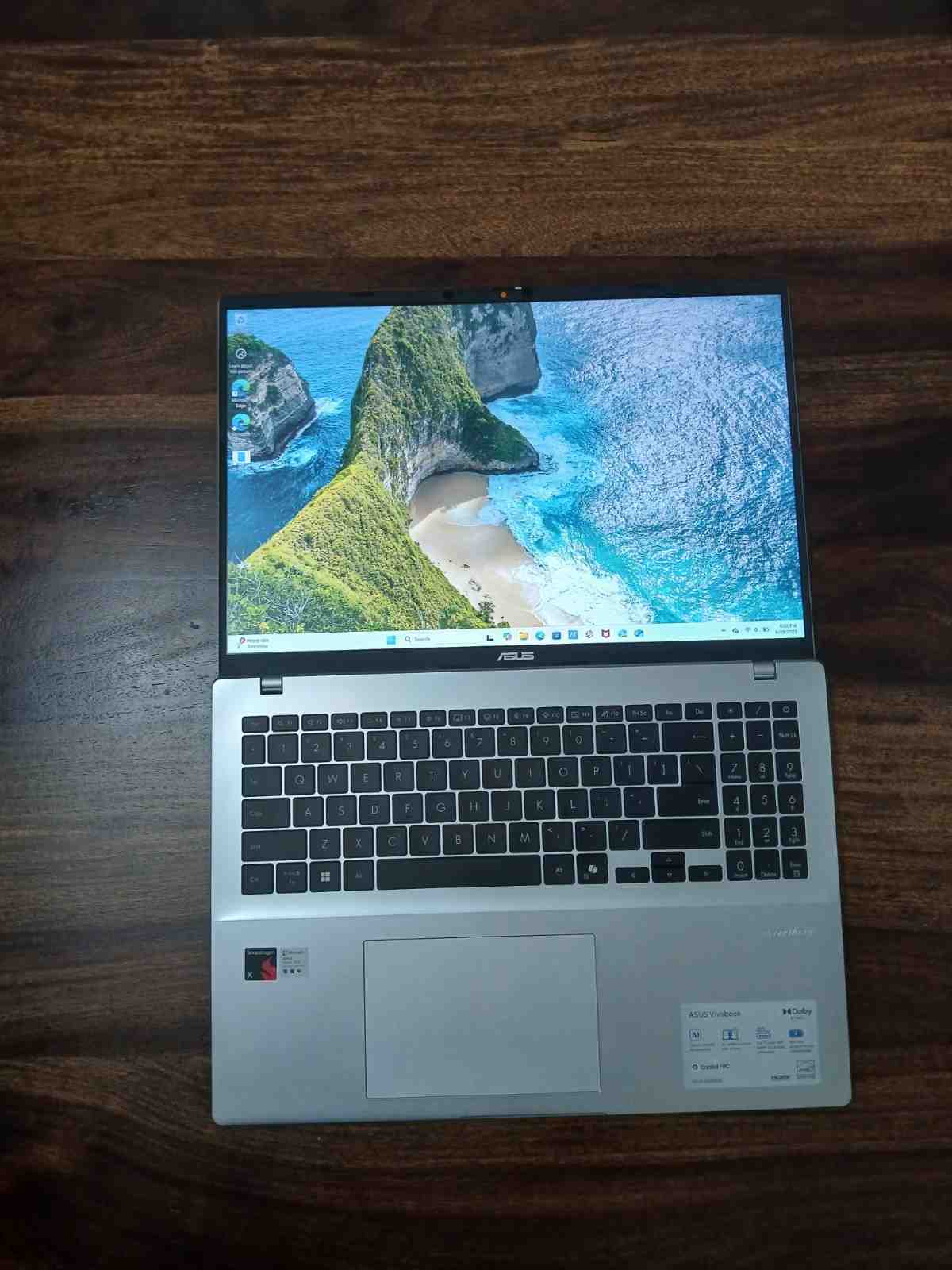
ASUS Vivobook 16 (X1607QA) Review – A Big-Screen AI-Powered Laptop With Snapdragon X Processor, Windows 11 24H2 and Up To 27hr Battery Life

0

Highlights

  • Asus Vivobook 16 X1607QA was launched in India earlier this year at the starting price of ₹59,990.
  • It is a Copilot+ PC that runs on the Snapdragon X processor and Windows 11 24H2 OS.

We recently got to use the Asus Vivobook 16 featuring the Snapdragon X Processor thoroughly, and here’s our hands-on review.

Key Features

Key Features
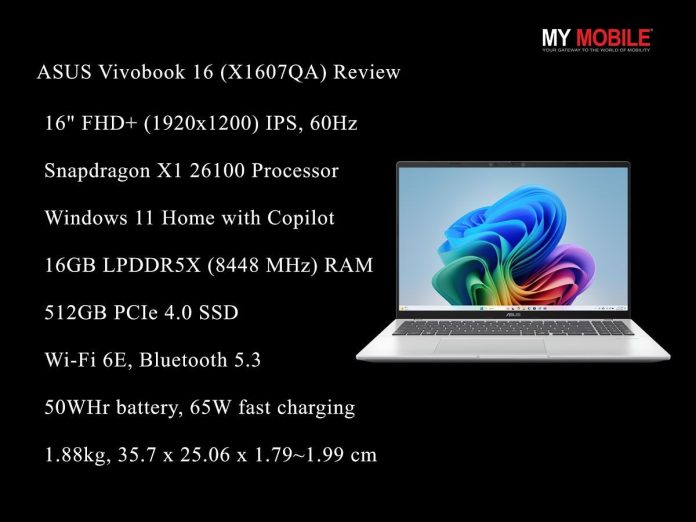
  • 16-inch FHD+ (1920×1200) IPS display with 60Hz refresh rate
  • Qualcomm Snapdragon® X X1 26 100 Processor
  • Windows 11 Home with Copilot support
  • 16 GB 8448 MHz LPDDR5X RAM
  • Up to 512 GB PCIe® 4.0 NVMe® M.2 SSD Storage
  • Wi-Fi 6E + Bluetooth® 5.3
  • 50 WHr with 65W fast-charging
  • Dimensions – 35.70 x 25.06 x 1.79 ~ 1.99 cm
  • Weight – Approx. 1.88 kg

Pros and Cons

Pros Cons
●      Simple and minimalist design

●      Long battery life

●      Big 16-inch display with versatile 180° hinge

●      Expansive and smart gesture touchpad

●      Good performance

●      Useful AI Tools

●      Affordable

●      Low display refresh rate

●      Low display brightness

●      Heavy


Design and Build

Design and Build

The ASUS Vivobook 16 (X1607QA) sticks to a minimalist approach when it comes to design. It’s not flashy or too premium. You get a clean, matte-finish exterior that doesn’t attract smudges or fingerprints, which seems to be perfect if you’re using it daily at home, work, or even during travel.

It is a 16-inch laptop, but quite manageable to carry around. At 1.88 kg, it is definitely a heavy machine.  It is also around 1.79 cm thick, so it’s not ultra-light and slim, but it’s definitely not bulky either. You can slide it into a backpack. There is a decent balance between screen size and portability.

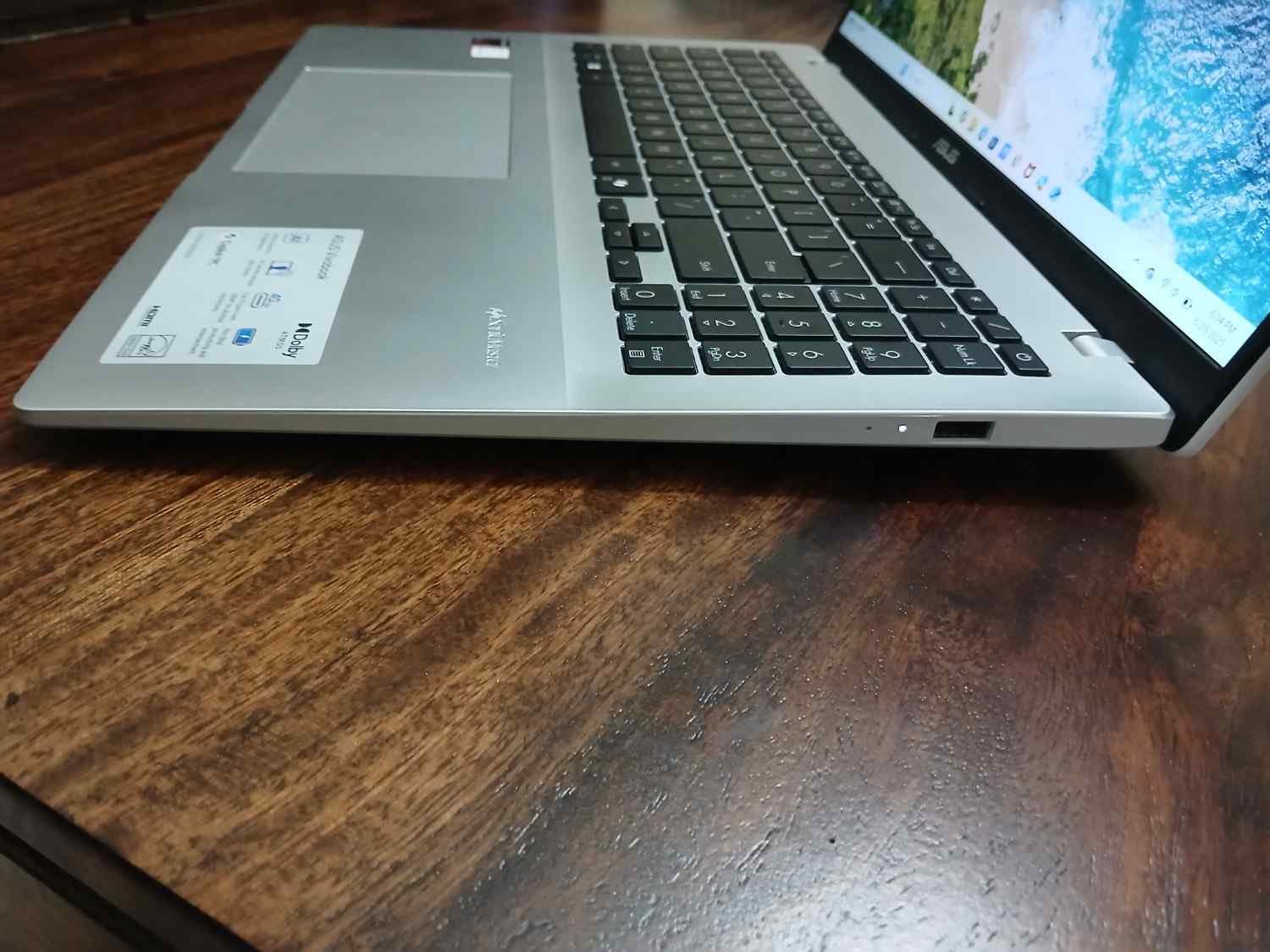
It has this 180° hinge, which lets you lay the screen flat or adjust it however you like. Asus has also given it a micro hinge cap and a unibody tapered design, which adds a bit of modern flair without going overboard.

It’s made of plastic but it feels solid in the hand. However, we did notice a bit of flex when pressing around the keyboard area. But in any case, it’s not the kind of laptop that feels fragile. It holds up well for regular use like typing, streaming or even light multitasking.

Moreover, it comes with a silver-ion antibacterial coating on the keyboard and touchpad.

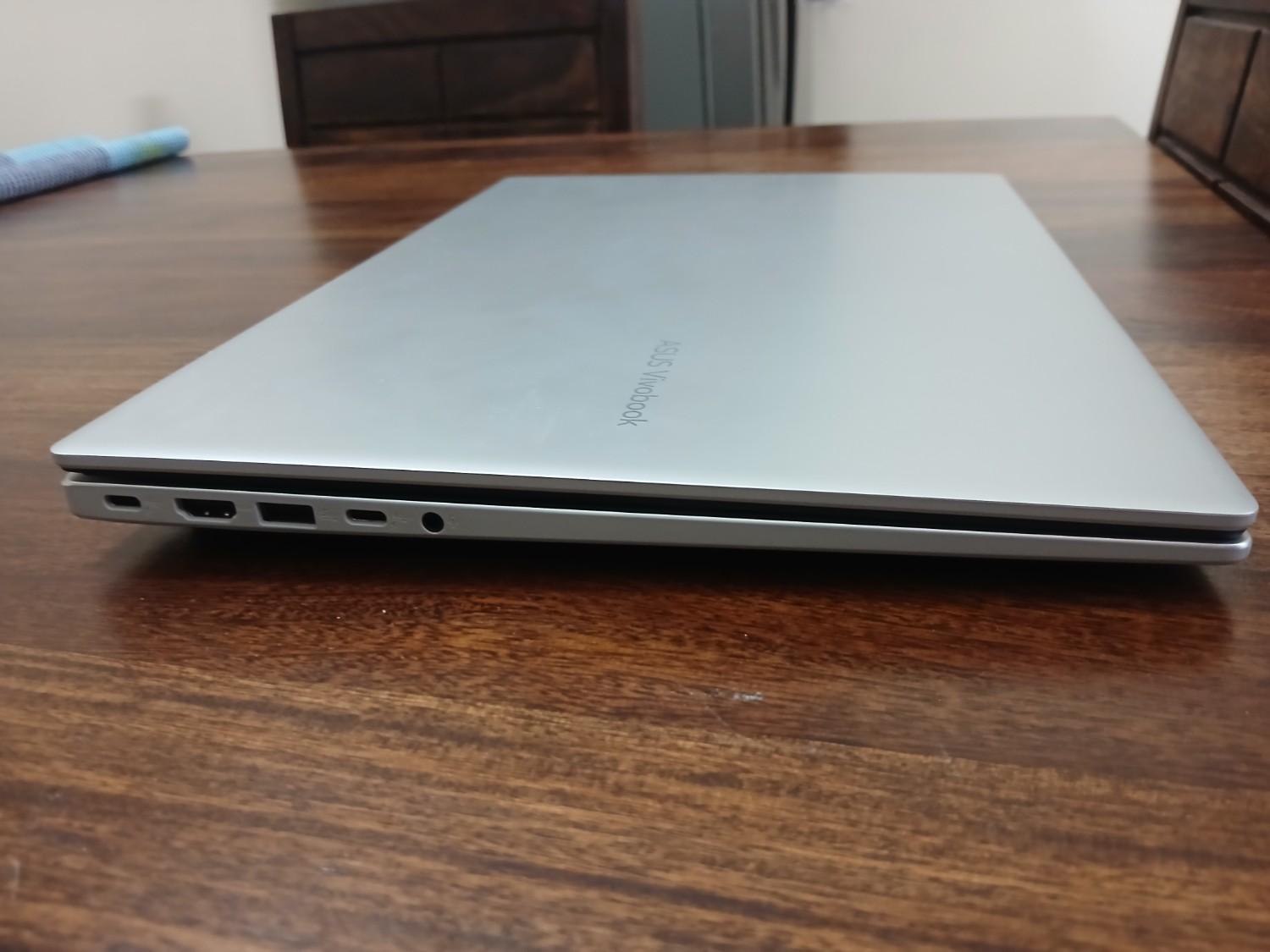
As for the I/O ports, it has quite a versatile setup. You get –

  • 2x USB 3.2 Gen 1 Type-A (data speed up to 5Gbps)
  • 2x USB 4.0 Gen 3 Type-C with support for display/power delivery (data speed up to 40Gbps)
  • 1x HDMI 2.1 TMDS
  • 1x 3.5mm Combo Audio Jack

Keyboard and Trackpad
Keyboard and Trackpad

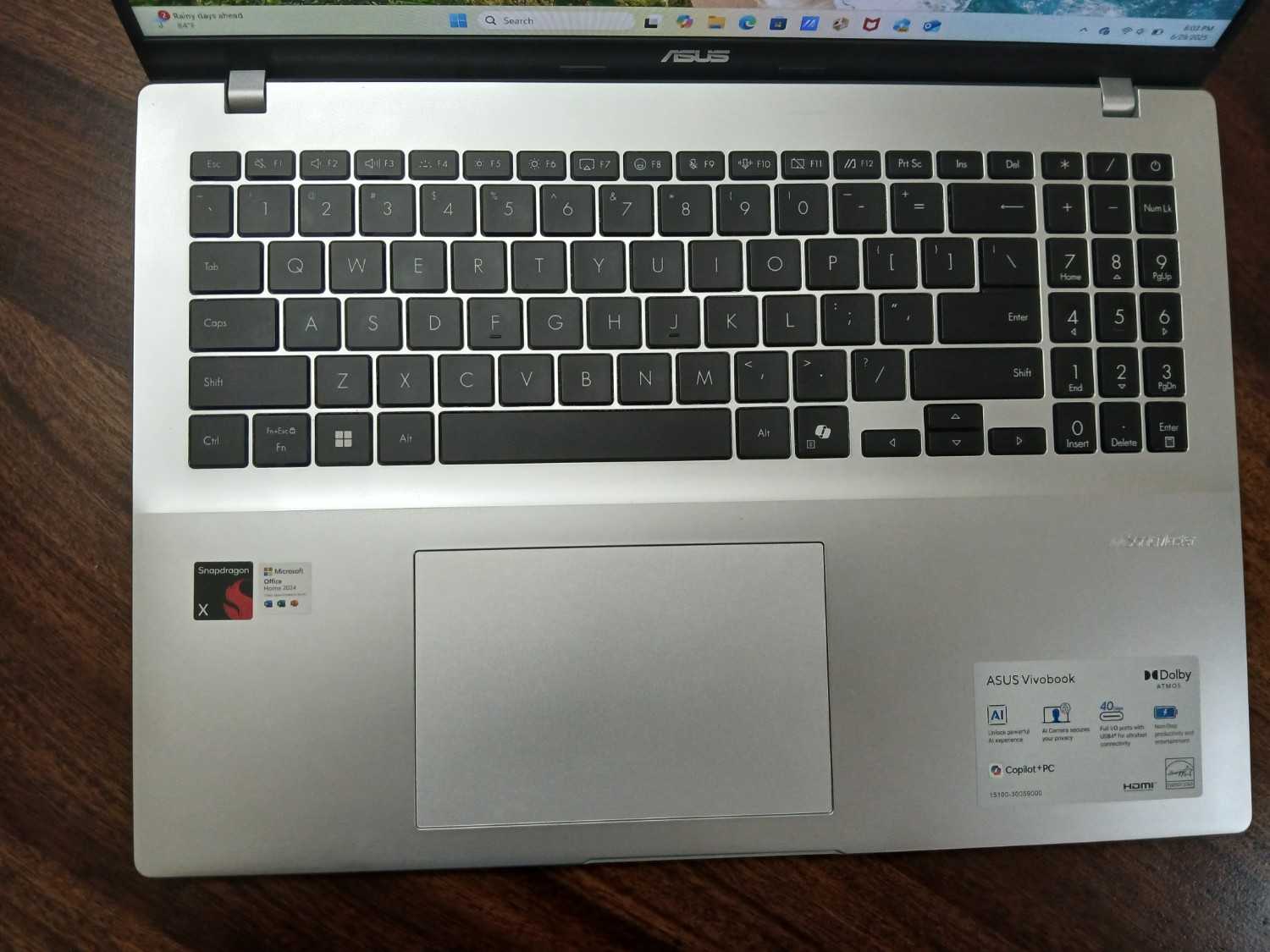
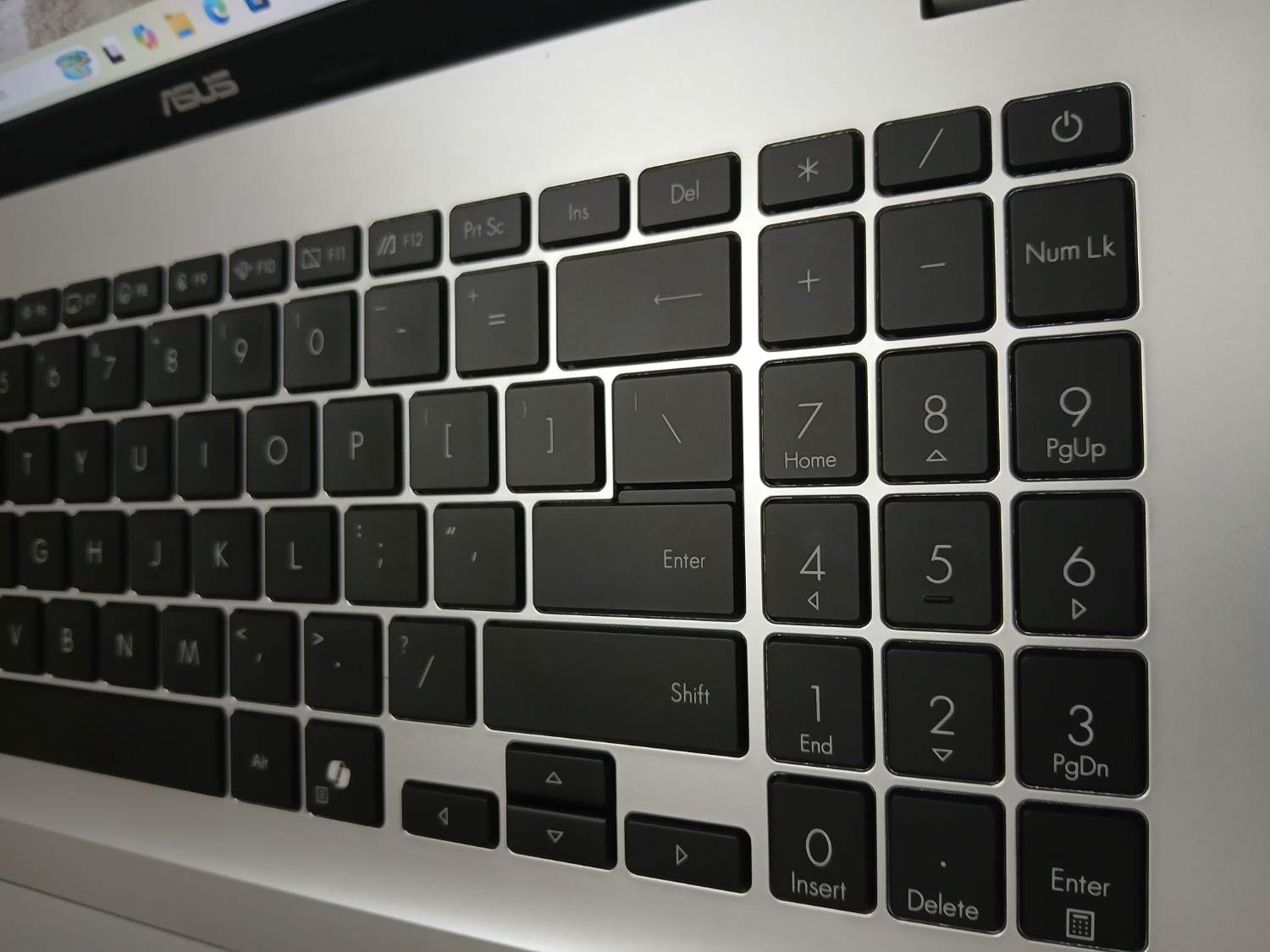
The Vivobook features an Asus ErgoSense keyboard, which is clearly designed with comfort in mind. The keys are well-spaced with a 19.05 mm pitch. As we tested typing and other everyday tasks on the laptop, we found there’s enough room between each key to avoid typos, even if you type fast.

The keys have a subtle 0.2 mm dish-shaped indentation. We felt this helps guide fingers to the right spot easily. Then, the 1.7 mm key travel gives each press a nice, satisfying feel. It feels more like a desktop keyboard than a laptop one. It’s quiet too, thanks to noise reduction technology. So, it won’t be annoying anyone during a long meeting or while typing late at night.

There’s also a dedicated Copilot key for quick access to AI features in Windows 11, which is a small but handy addition. And not to forget, the keyboard is backlit.

Vivobook 16 comes with a big, smooth and super responsive touchpad. At 127 x 78.47 mm, it gives you enough space for gestures and multi-finger swipes. Asus has packed in its Smart Gesture tech. This means basic actions like adjusting volume, brightness, or scrolling through videos feel intuitive and easy.

Display and Multimedia Experience
Display and Multimedia Experience

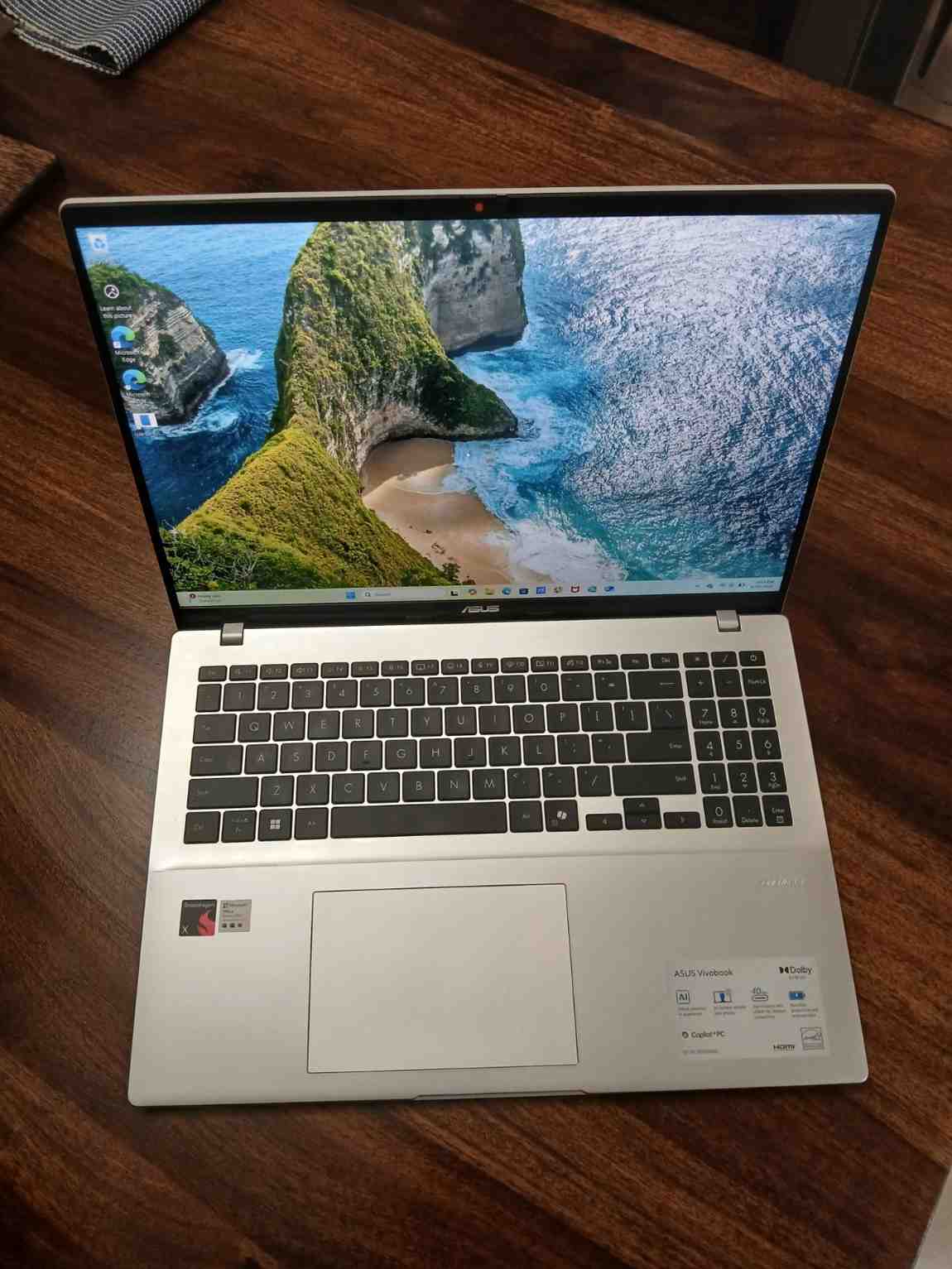
The ASUS Vivobook 16 (X1607QA) comes with a 16-inch FHD+ IPS display that runs at 1920×1200 resolution in a 16:10 aspect ratio. The big display space actually makes a difference while multitasking or working with multiple documents open.

The screen has a matte anti-glare coating. It’s definitely not a glossy, vibrant display like you’d see on some premium laptops, but we felt it holds up quite well for basic work, streaming, or everyday tasks.

However, this isn’t the kind of panel that’s going all out with colour or brightness. With a 60Hz refresh rate, 45% NTSC color coverage and 300 nits of brightness, it’s more functional than versatile.  As we extensively used the laptop, we found it to be fine for watching videos or getting through work indoors, but it struggles a bit in bright outdoor environments. Also, if you’re into colour-sensitive tasks like photo editing or graphic design, it might not be the ideal choice.

There’s also no touch or HDR support, which is expected at this price point.

We found the viewing angles to be quite good. Whether you’re looking from the sides or from above, the display doesn’t lose much in terms of clarity or contrast. The contrast itself is decent for an IPS panel. It might not be on OLED or VA level, but still perfectly usable.

Meanwhile, the Vivobook 16 stands out in audio quality. It has dual speakers with Dolby Atmos support and the sound is actually quite impressive. The audio clarity and spatial separation really add to the experience. There are customisable equaliser settings, so you can tweak the sound to your liking or use the built-in presets.

Performance
Performance

The ASUS Vivobook 16 (X1607QA) is powered by the Snapdragon® X Elite (X1 26100) processor. Built on a 4nm System-on-a-Chip architecture, this chip brings in 8 powerful Oryon™ CPU cores. It is a decent laptop for multitasking. Whether you’re juggling heavy spreadsheets, video calls or running multiple apps side by side, we found the laptop handling it all without any jitters.

It has a built-in Qualcomm Hexagon™ NPU, delivering up to 45 TOPS of AI computing performance. And with Windows 11 Copilot supported out of the box, it ties neatly into Microsoft’s growing ecosystem of AI tools.

Graphics are handled by the Qualcomm Adreno iGPU. Now, this isn’t meant for hardcore gaming but it still delivers crisp visuals and smooth graphics for everything from movies to light creative work. We found it more than enough for casual photo editing, streaming, and even some light 3D rendering.

Memory and storage are both solid here. You get 16GB of LPDDR5X RAM running at a blazing 8448 MHz, which keeps the system responsive even when multiple tabs and apps are open. And with a 512GB PCIe 4.0 NVMe SSD, boot times and app launches are quick.
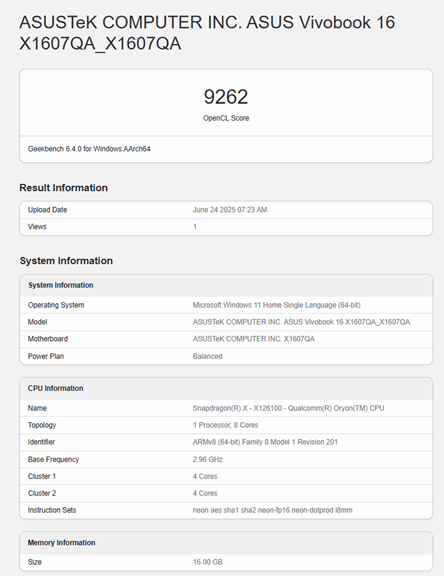
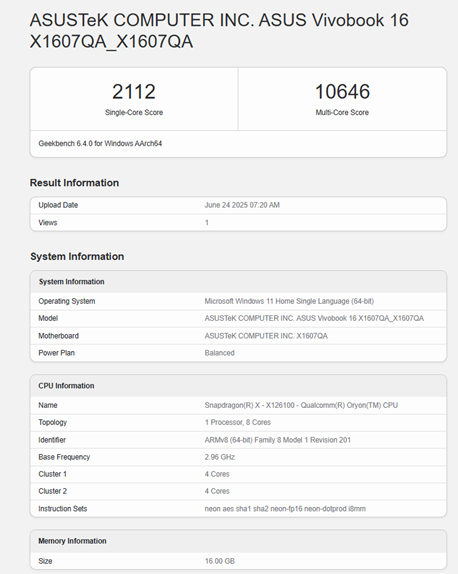
image image

Caption – Geekbench test results of ASUS Vivobook 16 (X1607QA).

There is also ScreenXpert 3.0 software, promising to help with multitasking. Tasks like switching between apps, organising your windows and controlling your mic or camera are just faster and easier now.

AI features of Windows 11 24H2 include Copilot in Windows, Live Captions, Recall, Cocreator, Generative Fill and Erase in Paint, Click to Do, Restyle Image, Image Creator, Super resolution in Photos, Windows Studio Effects V2 and Improved Windows Search.

There is also a bunch of exclusive Asus AI features, which include ASUS StoryCube, ASUS AiSense camera with adaptive dimming plus adaptive lock function and the ASUS AI Noise Cancellation to elevate conference calls.

All things considered, we found the performance on the Vivobook 16 is surprisingly strong for its category. It’s fast, smart and efficient.

Battery Life and Charging

Battery Life and Charging

The Vivobook 16 (X1607QA) packs a 50WHr battery. Asus claims it can go up to 27 hours on a single charge. This means with average browsing, typing, or watching content, it can easily last through the day during daily use. Now, it is obvious that real-world usage often varies.

In our experience, the battery definitely offers all-day battery backup with average use and you might not need to reach out for a wall socket. We used the laptop as our primary machine for almost a week and it was able to power an average work day easily on a single charge.

And when you do need to charge, it supports the 65W fast charging. It can charge the battery from 0 to 50% in just 30 minutes. We often topped it the laptop up during short breaks and it was good to go for hours again.

It comes with USB-C Easy Charge, which means you can charge the laptop using a wide range of chargers. It supports anything from 5V to 20V, and while you’ll get full-speed charging with a proper Power Delivery (PD) charger, it can still charge slowly even from a basic USB-A to USB-C cable.

Verdict – Should You Buy Asus Vivobook 16 (X1607QA)?
Verdict – Should You Buy Asus Vivobook 16 (X1607QA)?

It offers a clean, practical design, a comfortable typing experience, solid all-day battery life, and enough power for work, study, and light creative tasks. It features the Snapdragon X processor with impressive AI support. The display is basic but dependable, while the audio performance goes a step above what you’d expect from a laptop in this price range. It’s clearly designed for people who just want a laptop that’s functional, reliable, and ready for daily use.

So, if you’re looking for a big-screen laptop that balances everyday performance, comfort, and smart features without breaking the bank, the ASUS Vivobook 16 (X1607QA) is definitely worth considering.

Reasons To Buy
Reasons To Buy
  • Big screen laptop
  • Clean design with 180-degree hinge
  • Affordable price
  • Good for work, study and light creative work
  • Good battery life

Reasons Not to Buy

  • Low display refresh rate and brightness
  • Heavy
  • Not for gaming
Display 16-inch FHD+ (1920×1200) IPS, 60Hz refresh rate
Processor Qualcomm Snapdragon® X X1 26100
Operating System Windows 11 Home with Copilot support
RAM 16 GB LPDDR5X @ 8448 MHz
Storage Up to 512 GB PCIe® 4.0 NVMe® M.2 SSD
Connectivity Wi-Fi 6E + Bluetooth® 5.3
Battery 50 WHr with 65W fast-charging
Dimensions 35.70 x 25.06 x 1.79 ~ 1.99 cm
Weight Approx. 1.88 kg

FAQs

Q1. What processor powers the Asus Vivobook 16 (X1607QA)?

Answer. The laptop is powered by the Qualcomm Snapdragon® X1-26-100 processor, part of the Snapdragon X Elite platform, designed for efficient performance and long battery life.

Q2. What are the display specifications of the Vivobook 16 (X1607QA)?

Answer. It features a 16-inch FHD+ (1920×1200) IPS display with a 60Hz refresh rate and a 3:2 aspect ratio, ideal for productivity and multitasking.

Q3. How much memory and storage does the Asus Vivobook 16 offer?

Answer. The Vivobook 16 (X1607QA) comes with 16GB LPDDR5X RAM (8448 MHz) and supports up to 512GB PCIe 4.0 NVMe M.2 SSD storage, ensuring fast performance and ample space.

Q4. What is the battery life and charging capability of the Asus Vivobook 16?

Answer. It includes a 50WHr battery with 65W fast charging, and real-world usage reports suggest up to 20 hours of battery life, making it ideal for all-day use.

Q5. What connectivity and ports are available on the Vivobook 16 (X1607QA)?

Answer. The laptop offers Wi-Fi 6E, Bluetooth 5.3, 2x USB 3.2 Gen 1 Type-A, 2x USB 4.0 Gen 3 Type-C (with display and power delivery), HDMI 2.1, and a 3.5mm combo audio jack.

Also Read: Best HDR10 & HDR10+ smartphones 2024

Also Read: ASUS unveils Chromebook CX14 with Intel processor for students in India
Samsung Galaxy Buds Core Launched in India with ANC and 35-Hour Battery Life
0

Highlights

  • Samsung Galaxy Buds Core launch at ₹4,999 in India.
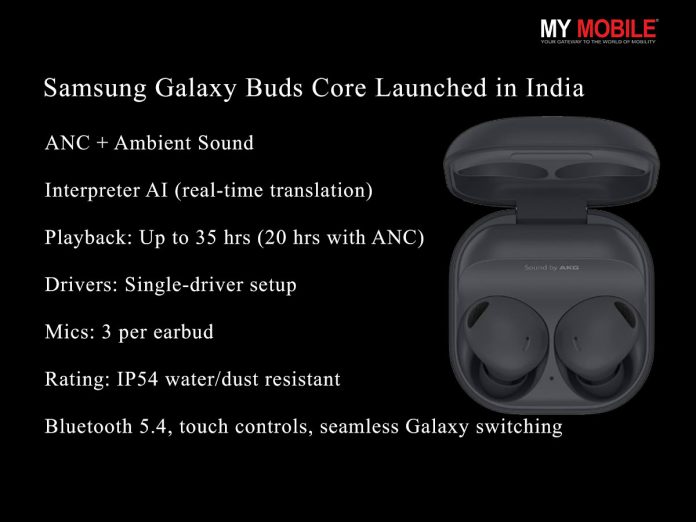
  • These buds offer Active Noise Cancellation, Ambient Sound mode and Interpreter AI for real-time voice translation.
  • Other features – up to 35 hours of playback (20 hours with ANC), with a single-driver setup, three mics per earbud, IP54 rating, touch controls, seamless switching across Galaxy devices and Bluetooth 5.4 support.

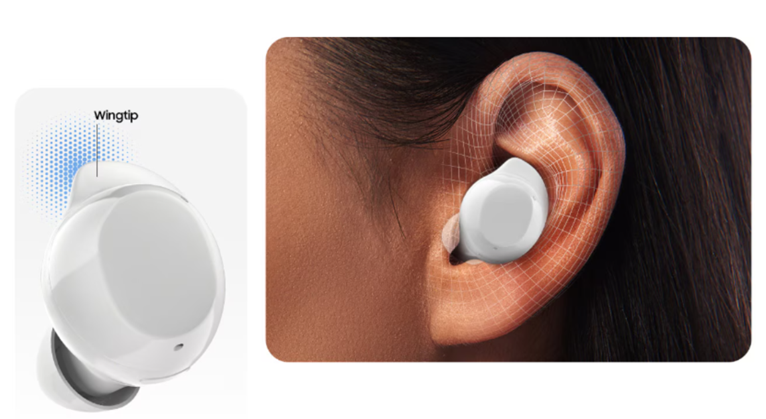
Samsung has launched its latest budget true wireless earbuds, the Samsung Galaxy Buds Core. Now available in India, these come after the Buds FE from 2023 and continue the wingtip design, offering a secure and comfortable fit. Samsung includes three sizes of ear tips and two sizes of wing tips to help users find the best fit. Here’s more about the product.

image

Caption – Samsung Galaxy Buds Core has been launched in India. (Image credit – Samsung)

Samsung Galaxy Buds Core – Price and Availability

The Galaxy Buds Core are priced at Rs. 4,999 and are available starting June 27 at 12 noon via Amazon.in, Samsung.com, and offline retail stores. You can get these buds in Black and White colours.
Launch Offers –

  • Flat Rs. 1,000 discount when buying alongside Galaxy A26, A36, or A56
  • Up to 12 months of no-cost EMI option available

Samsung Galaxy Buds Core – Key Features

image

Caption – A closer look at the Samsung Galaxy Buds Core’s wingtip design. (Image credit – Samsung)

The Galaxy Buds Core use a single-driver setup that delivers punchy bass and clear audio. Each earbud has three microphones to enhance call quality by focusing on your voice and cutting out background noise. They also include the Interpreter feature powered by Galaxy AI, which offers real-time voice call transcriptions, great for communication across languages.

Samsung has added Active Noise Cancellation (ANC) and Ambient Sound mode, letting you either block out the world or stay aware of your surroundings. The earbuds can automatically switch between Galaxy devices like phones, tablets, and laptops depending on what you’re using.

image

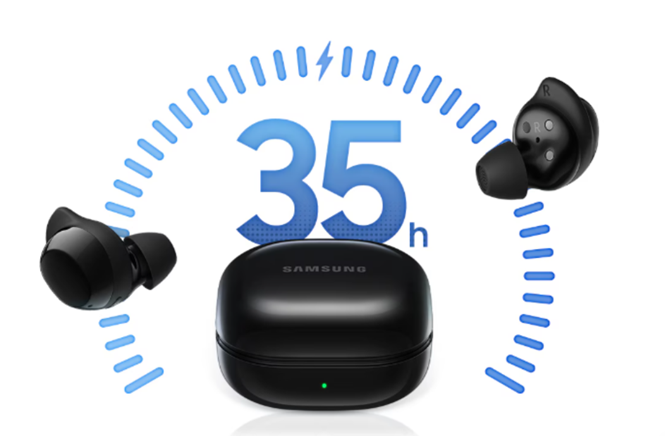
Caption – Samsung Galaxy Buds Core promises up to 35 hours of total playback. (Image credit – Samsung)

With the charging case, you get up to 35 hours of total playback (without ANC), or 20 hours with ANC turned on. The earbuds come with a 65mAh battery, while the case packs a 500mAh battery, and they charge via USB-C.

They also carry an IP54 rating for dust and splash resistance, which is an upgrade over the Buds FE’s IPX2 rating.

Specs at a Glance –

  • Bluetooth v5.4, supports AAC, SBC, and Samsung’s Scalable codec
  • Touch controls for play/pause and volume
  • Tap-to-connect and sync with the Galaxy ecosystem
  • Earbuds: 5.3g each; Case: 31.2g

FAQs

Q1. What are the key features of the Samsung Galaxy Buds Core?

Answer. The Galaxy Buds Core feature a single-driver setup for punchy bass and clear audio, three microphones per earbud for enhanced call quality, Active Noise Cancellation (ANC), Ambient Sound mode, and the Interpreter feature powered by Galaxy AI for real-time voice call transcriptions.

Q2. How long does the battery last on the Galaxy Buds Core?

Answer. With the charging case, the Galaxy Buds Core offer up to 35 hours of total playback without ANC, or 20 hours with ANC turned on. The earbuds have a 65mAh battery, and the case includes a 500mAh battery, charged via USB-C.

Q3. What is the price and availability of the Galaxy Buds Core in India?

Answer. The Galaxy Buds Core are priced at ₹4,999 and are available starting June 27 via Amazon.in, Samsung.com, and offline retail stores. They come in Black and White colour options.

Also Read: Samsung launches new Smart Monitors M9, M8, M7 with 4K gaming features and Smart OS

Also Read: Samsung Galaxy Jump 4 Business Edition debuts with Exynos 1380 and software support till 2031

Sony Unveils LYT‑828 50MP Smartphone Sensor with Game-Changing 100 dB HDR

0

Highlights

  • Sony’s LYT‑828 sensor launched with Hybrid Frame-HDR, combining single-frame and multi-frame HDR for a record 100 dB dynamic range and improved exposure accuracy via Loss-Less Exposure (LLE).
  • A new charge-to-voltage circuit reduces noise for sharper low-light shots, while HDR remains active in all modes.
  • Mass production begins late August 2025, with the sensor possibly debuting in the Vivo X300 Pro.

Sony has officially launched its latest mobile camera sensor, the LYT‑828. It is aimed straight at improving smartphone photography. This new 50-megapixel CMOS sensor is designed to deliver more realistic images with better performance in both bright and low-light conditions. Here’s more about the newly launched sensor.

image

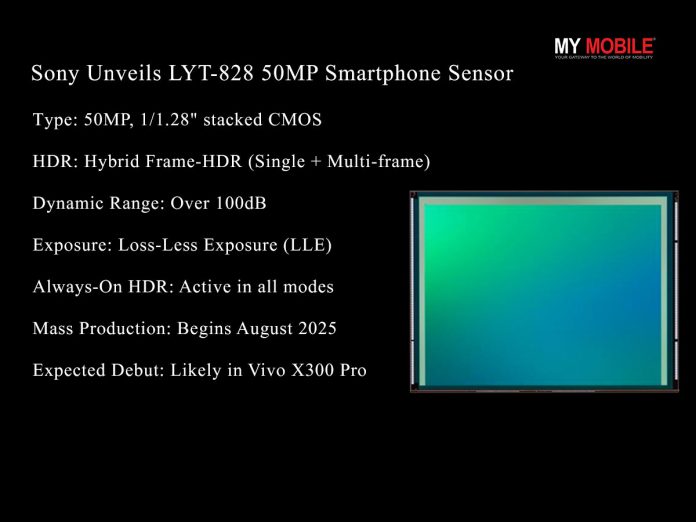
Caption – Sony LYT-828 camera sensor. (Image credit – Sony)

Sony LYT‑828 Special – Key Features

The LYT‑828 is a 1/1.28-inch stacked sensor, succeeding the popular LYT‑818. It’s made for use in both main and sub-camera setups on smartphones. But the big highlight here is Sony’s new Hybrid Frame-HDR (HF-HDR) technology.

This advanced HDR system blends two approaches, single-frame HDR using Dual Conversion Gain (DCG) and multi-frame HDR by combining short exposure frames with DCG data. Thanks to this combo, the LYT‑828 achieves an impressive dynamic range of over 100 dB, the highest ever in a Sony mobile sensor.

This means you’ll get better control over highlights and shadows in tricky lighting. Paired with Loss-Less Exposure (LLE), the sensor can manage exposure even more accurately while improving the signal-to-noise ratio (SNR) for cleaner shots.

Sony has also packed in a special circuit to convert charge to voltage more efficiently. This helps cut down random noise, making low-light photos sharper and more detailed with less grain. Moreover, the low-power logic circuitry ensures that HDR is active in every mode, whether you’re previewing your shot or recording a video.

So, what you see on screen is very close to the final result.

Launch Timeline

Sony says the LYT‑828 will go into mass production by late August 2025, and we can expect to see it in high-end smartphones launching later this year.

Since the Vivo X200 Pro was the first to use the LYT‑818, there’s a good chance that the upcoming X300 Pro could debut the new LYT‑828.

FAQs

Q1. What is the Sony LYT‑828 sensor and what makes it special?

Answer. The LYT‑828 is a 50MP 1/1.28-inch stacked CMOS sensor designed for smartphones. It introduces Hybrid Frame-HDR (HF-HDR) technology, combining single-frame HDR with Dual Conversion Gain and multi-frame HDR for a dynamic range over 100 dB, the highest ever in a Sony mobile sensor.

Q2. How does the LYT‑828 improve low-light photography?

Answer. It features Loss-Less Exposure (LLE) and a new charge-to-voltage conversion circuit that reduces random noise, resulting in sharper, cleaner low-light images with better signal-to-noise ratio.

Q3. When will the LYT‑828 be available in smartphones?

Answer. Sony plans to begin mass production in late August 2025, with the sensor expected to appear in high-end smartphones later this year, possibly debuting in the Vivo X300 Pro.

Also Read: Sony has stopped in-house manufacturing of Xperia phones – Report

Also Read: Sony WH-1000XM6 headphones launched with smart noise canceling and real-time audio upscaling

Nothing Phone (3) Design Leaks Again, 50MP Periscope Telephoto Lens Officially Confirmed With First Camera Samples

0

Highlights

  • Nothing Phone (3) new leaked renders show a bold design with a floating “Glyph Matrix” display, spread-out camera layout, and off-white/black colour options.
  • Nothing officially confirmed a 50MP periscope-style telephoto lens with early samples suggesting macro capabilities too.
  • The phone is all set to launch set for July 1.

Nothing Phone (3) launch is just around the corner and the last few weeks have been quite buzzy. Multiple leaks have tried to give us a first look at the upcoming Nothing flagship but without any certainty. In the meantime, the brand has been consistently sharing teasers about the phone, keeping fans on the edge. But out of everything, it seems we might finally have a good look at the real Nothing Phone (3) from a trusted source.

Nothing Phone (3) Design Leak

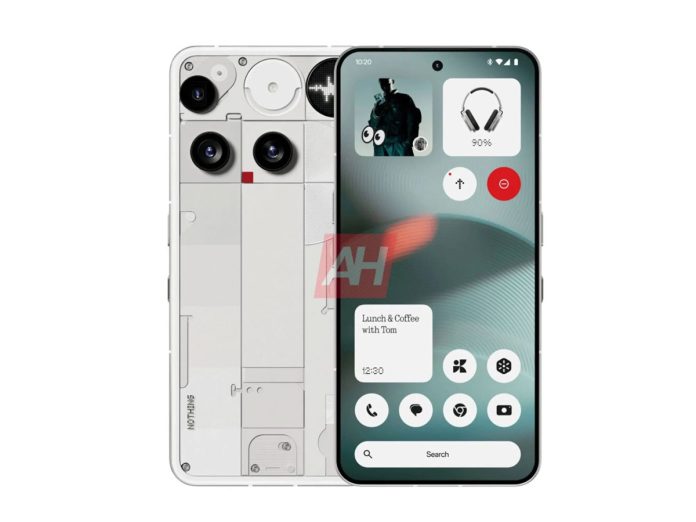
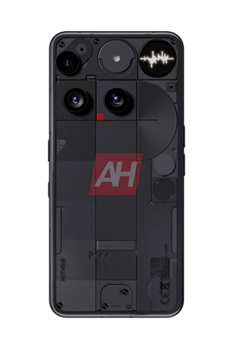
A new set of images shared by Android Headlines shows what’s likely the final design of the upcoming phone. The good thing is, it lines up perfectly with Nothing’s recent teasers.

image

Caption – Upcoming Nothing Phone (3) latest leaked render. (Image credit – Android Headlines)

Why do we think this leak is the real deal? For starters, it matches hints shared by Nothing including that teaser for a telephoto camera, the new “this button”, and even the placement of the model number.

There’s also a unique close-up shot labelled “tuned” in previous teasers, though that one might actually be from the Headphone (1).

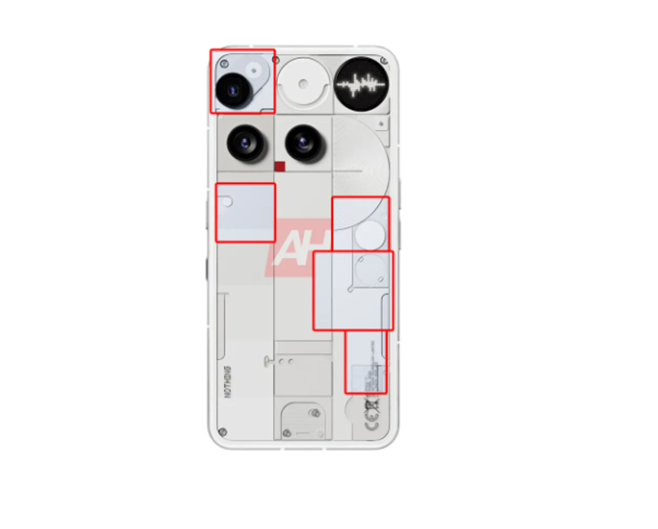
The leaked photos show a bold and original design, something that Nothing is known for. One big change is that the cameras aren’t grouped together in one corner like before, they seem more spread out.

Also, the new “Glyph Matrix” display appears in the upper corner and seems to float on its own.

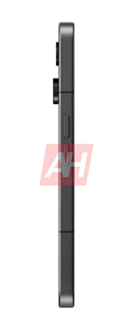
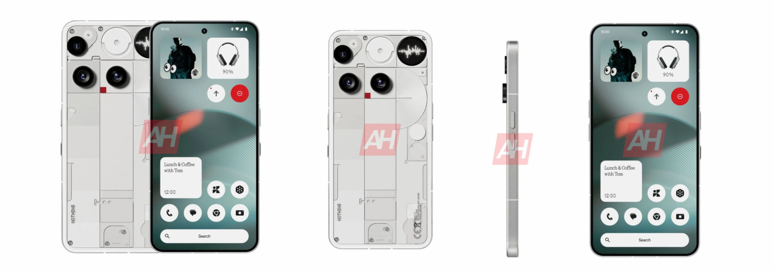
image image image image image image

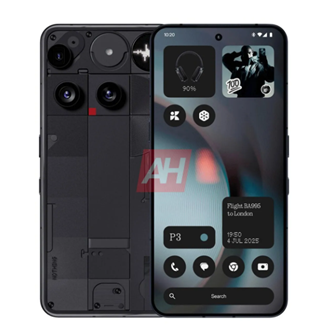
Caption – Upcoming Nothing Phone (3) latest leaked renders. (Image credit – Android Headlines)

You can spot the device in off-white and black in the leaker renders, and the side profile confirms the main cameras stick out quite a bit from the back. It’s certainly different from the more toned-down Phone (3a) Pro, which drew some mixed reactions. Let’s see how fans respond this time.

Nothing Phone (3) Gets a 50MP Periscope Telephoto Camera (Confirmed)

image

Caption – Nothing confirmed Phone (3) will have a 50 MP periscope lens. (Image credit – Nothing on X)

Meanwhile, in the build-up to its July 1 launch event, Nothing has officially confirmed that Phone (3) will include a 50MP periscope-style telephoto lens. This is something that was missing from the previous model. The company calls it a camera “built for creators” in the caption of the X (formerly Twitter)post, though they haven’t said what the zoom level is yet.

Nothing also shared some early camera samples, and while it’s hard to tell the exact zoom in these photos, it looks like the telephoto lens will double as a macro shooter just like on the Phone (3a).

image

Caption – Nothing Phone (3) camera sample officially released. (Image credit – Nothing on X)

Carl Pei even shared a sample shot himself, adding to the buzz. Pei didn’t mention any details of the phone and simply posted the camera samples, getting tons of responses.

image

Caption – Caption – More Nothing Phone (3) camera sample. (Image credit – Carl Pei on X)

With only a few days left until the reveal, we won’t have to wait long to see if this leak is the real deal.

FAQs

Q1. What design changes are expected in the Nothing Phone (3)?

Answer. The leaked renders show a bold and original design with spread-out cameras, a floating Glyph Matrix display, and colour options like off-white and black. The design aligns with Nothing’s recent teasers and appears more distinct than the Phone (3a) Pro.

Q2. What camera upgrade has Nothing confirmed for Phone (3)?

Answer. Nothing has officially confirmed that Phone (3) will feature a 50MP periscope-style telephoto lens, calling it a camera “built for creators.” Early samples suggest it may also support macro photography.

Q3. When is the Nothing Phone (3) expected to launch?

Answer. The official launch event for the Nothing Phone (3) is scheduled for July 1, with teasers and leaks building anticipation ahead of the reveal.

Also Read: Nothing Phone 3 teased with new Glyph Matrix lights; previously leaked design likely fake

Also Read: Nothing Phone 3 leaked image shows transparent design, no Glyph interface, and triple rear cameras

Xiaomi Pad 7S Pro Launches with 12.5-Inch Display, 120W Charging and XRing O1 Chip

0

Highlights

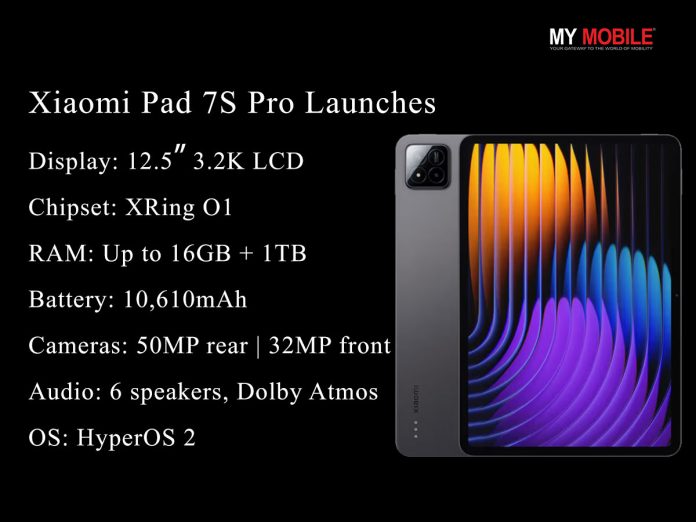
  • Xiaomi Pad 7S Pro launched in China at a starting price of ¥3,299 ($460).
  • It features a 12.5″ 3.2K LCD display with a 144Hz refresh rate, powered by Xiaomi’s XRing O1 chip, up to 16GB RAM and 1TB storage.
  • It further packs a 10,610mAh battery with 120W fast charging, six speakers with Dolby Atmos, 50MP + 32MP cameras and runs HyperOS 2.

image

Caption – Xiaomi Pad 7S Pro launched in China. (Image credit – Xiaomi)

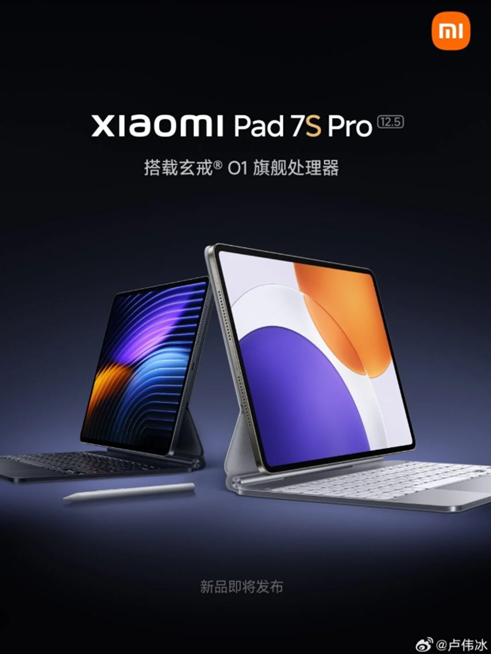
Xiaomi has launched another premium tablet to its growing lineup, the Xiaomi Pad 7S Pro. Available in China as of now, the tablet falls right between the Xiaomi Pad 7 Ultra and the regular Pad 7/Pad 7 Pro. It is also the third device powered by Xiaomi’s in-house XRing O1 chipset. Here’s all about the newly launched Xiaomi Pad.

Xiaomi Pad 7S Pro – Key Features

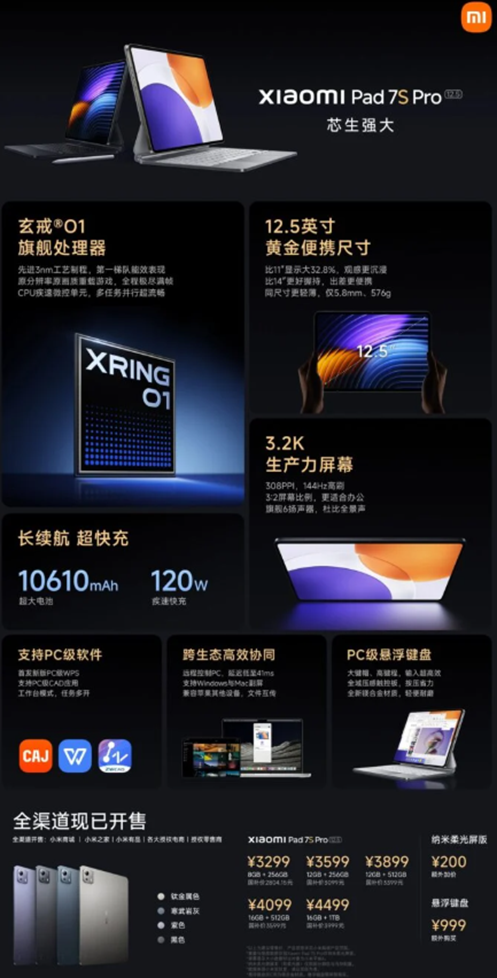
The Pad 7S Pro features a large 12.5-inch LCD display with a crisp 3.2K resolution (308 PPI) and a smooth 144Hz refresh rate. Its 3:2 aspect ratio is designed with productivity in mind, making it ideal for work and multitasking. Despite the big screen, the tablet is fairly slim at 5.8mm thick and weighs 576 grams.

image

Caption – Xiaomi Pad 7S Pro key features. (Image credit – Xiaomi)

Under the hood, you get up to 16GB of LPDDR5T RAM and 1TB of UFS 4.1 storage. It’s backed by a big 10,610mAh battery that supports blazing-fast 120W charging, so you won’t be stuck near a charger for long.

Xiaomi has packed in a six-speaker setup with Dolby Atmos, four microphones, a side-mounted fingerprint sensor, Wi-Fi 7, USB 3.2 Gen 1, and even an IR blaster. The tablet runs on HyperOS 2.

Camera-wise, you get a 50MP rear camera and a 32MP front-facing camera, making it a solid pick for video calls and quick captures.

It also supports features like Remote Control PC, file transfers with Windows and macOS, and PC-style apps like WPS Office, CAJ Viewer, and ZWCAD, making it a strong productivity tool.

Xiaomi Pad 7S Pro – Pricing and Availability

image

Xiaomi is offering two accessories to boost the experience –

  • A ¥999 (approx $138) magnetic floating keyboard with a full pressure-sensitive touchpad
  • A ¥200 (approx $28) stylus with 5ms latency

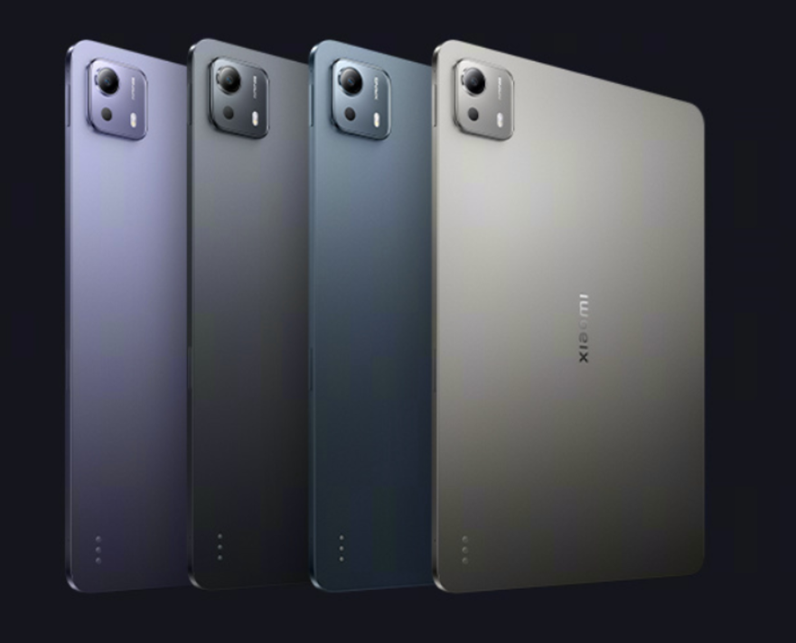
Caption – Xiaomi Pad 7S Pro colours. (Image credit – Xiaomi)

The Xiaomi Pad 7S Pro is available in Black, Titanium, Purple, and Cambrian Grey colours with the following variants –

  • 8GB + 256GB: ¥3,299 (approx $460)
  • 12GB + 256GB: ¥3,599 (approx $500)
  • 12GB + 512GB: ¥3,899 (approx $545)
  • 16GB + 512GB: ¥4,099 (approx $570)
  • 16GB + 1TB: ¥4,499 (approx $625)

It’s now on sale via all major Xiaomi sales channels in China.

FAQs

Q1. What are the key display and performance features of the Xiaomi Pad 7S Pro?

Answer. The tablet features a 12.5-inch LCD display with 3.2K resolution (308 PPI), 144Hz refresh rate, and a 3:2 aspect ratio. It’s powered by Xiaomi’s XRing O1 chip, with up to 16GB LPDDR5T RAM and 1TB UFS 4.1 storage.

Q2. How fast does the Xiaomi Pad 7S Pro charge and what’s its battery capacity?

Answer. It packs a 10,610mAh battery that supports 120W fast charging, allowing for minimal downtime between uses.

Q3. What are the camera and audio capabilities of the Pad 7S Pro?

Answer. The tablet includes a 50MP rear camera and a 32MP front camera, along with a six-speaker setup with Dolby Atmos and four microphones for immersive audio and clear communication.

Q4. What productivity and connectivity features does the Pad 7S Pro offer?

Answer. It supports Remote Control PC, file transfers with Windows and macOS, and PC-style apps like WPS Office and ZWCAD. It also includes Wi-Fi 7, USB 3.2 Gen 1, and runs on HyperOS 2.

Also Read: Xiaomi launches AI Glasses with camera and 8-hour battery, alongside OpenWear Stereo Pro earbuds
Also Read: Xiaomi unveils Watch S4 41mm and Smart Band 10 with stylish designs and smarter features

Xiaomi Launches AI Glasses with Camera and 8-Hour Battery, Alongside OpenWear Stereo Pro Earbuds

0

Highlights

  • Xiaomi AI Glasses feature – 12MP camera, voice-activated controls, electrochromic lenses, and AI-powered functions like translation and object recognition, with up to 7 hours of music playback.
  • OpenWear Stereo Pro Earbuds – open-back wireless earbuds offer a five-driver setup, AI transcription, and up to 45 hours of battery life with the case.
  • The AI Glasses price starts at ¥1,999 ($275), while the OpenWear Stereo Pro earbuds are priced at ¥999 ($140) in China.

Xiaomi has officially stepped into the AI eyewear game with the launch of its first smart glasses, called Xiaomi AI Glasses. Alongside, the brand has also unveiled a new pair of open-back wireless earphones, OpenWear Stereo Pro. Here’s all about both in detail.

Xiaomi AI Glasses

image

Caption – Xiaomi Launches AI Glasses. (Image credit – Xiaomi)

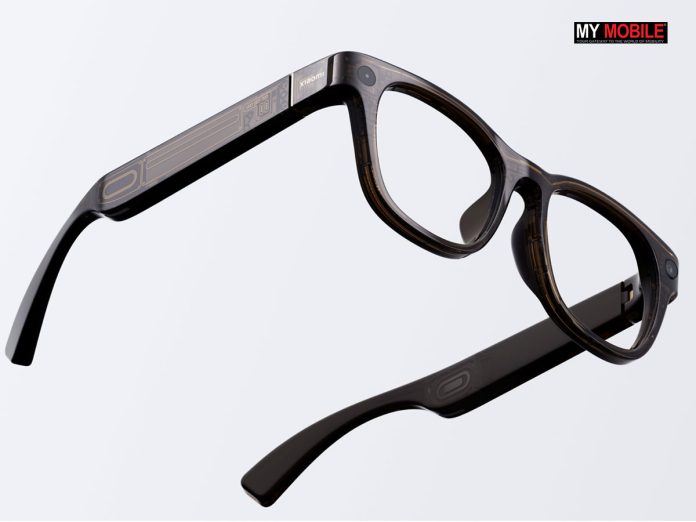
Xiaomi’s AI Glasses come equipped with a 12MP front-facing camera capable of recording 2K videos at 30fps. There’s also a five-microphone system onboard, ideal for voice commands, clear video calls, and crisp audio capture. The glasses support electronic image stabilisation, and you can activate the camera either by voice using the “Super Xiao Ai” assistant or a dedicated button on the frame.

There’s a blinking orange light to let others know when the camera is recording, something privacy-conscious users will appreciate. The glasses support livestreaming, video calling, and hands-free photography.

image image

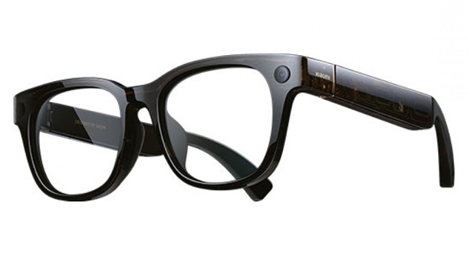
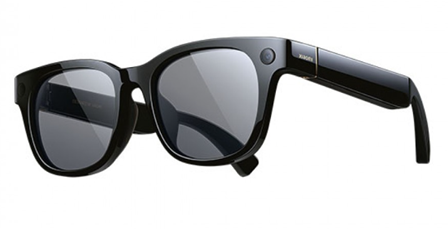
Caption – Xiaomi AI Glasses with prescription lenses (left) and electrochromic lenses (right). (Image credit – Xiaomi)

Design-wise, they look like regular glasses and come in three frame styles, including options with colored or electrochromic lenses. The latter can change tint with a two-finger swipe. You can also adjust the brightness across four levels.

image

Caption – Xiaomi AI Glasses. (Image credit – Xiaomi)

Xiaomi says the design is optimised for Asian face shapes, backed by data from over 70,000 face scans. Weighing just 40 grams, they use nylon frames and titanium alloy hinges for a lightweight yet sturdy build.

image

Caption – Xiaomi AI Glasses. (Image credit – Xiaomi)

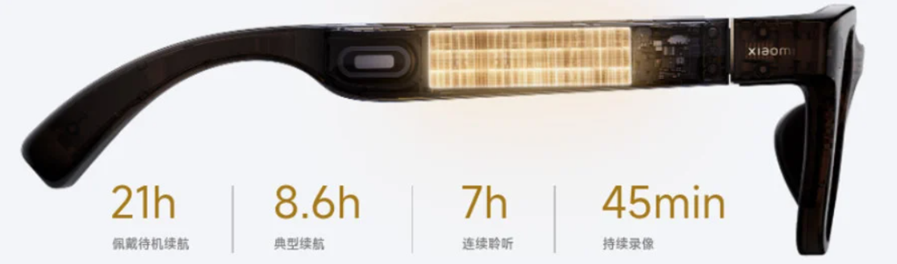
These smart glasses are part of Xiaomi’s larger ecosystem and can be used to control smart devices, scan QR codes, or even translate text and recognise objects in real time. Xiaomi claims you’ll get about 45 minutes of video recording or 7 hours of music playback on one charge. There’s a USB-C port for charging while using the glasses.

Xiaomi AI Glasses – Pricing and Availability

  • Base Model – ¥1,999 (approx $275)
  • Electrochromic Lens – ¥2,699 (approx $370)
  • Colour Electrochromic – ¥2,999 (approx $410)

The glasses are available online and through Xiaomi’s optical retail partners. Some features, like secure QR payments, will roll out via OTA update in late September.

Xiaomi OpenWear Stereo Pro

image

Caption – Xiaomi OpenWear Stereo Pro. (Image credit – Xiaomi)

Alongside the smart glasses, Xiaomi also launched its new OpenWear Stereo Pro earbuds, open-back wireless earphones designed for long listening sessions.

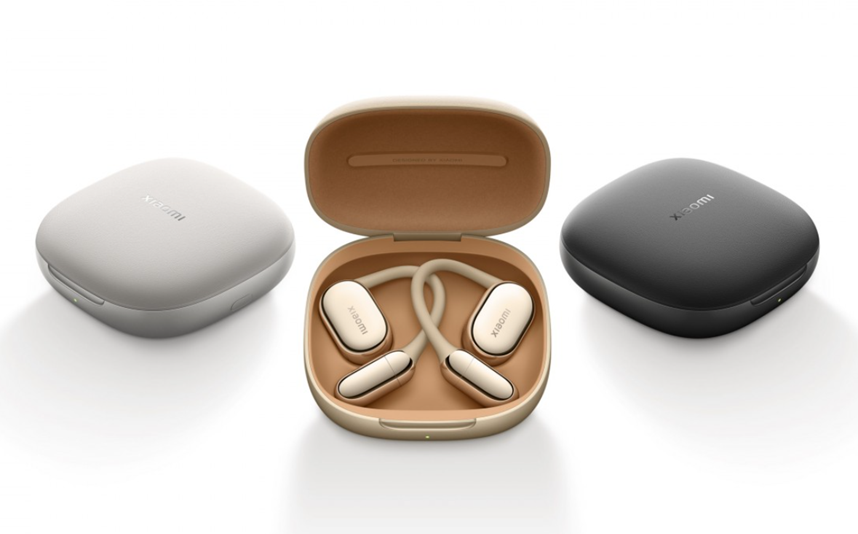
These earbuds use skin-friendly liquid silicone and feature a three-point support system with a titanium wire ear hook, making them comfortable for all-day use. They’re also IP54 rated for dust and water resistance.

The standout feature is the industry-first five-driver setup, including a large 18×13mm loudspeaker, tuned by the Harman Golden Ear team. You also get built-in audio recording, along with AI-based transcription and translation.

Battery life is solid, offering up to 8.5 hours on a single charge and up to 45 hours with the charging case.

Colour options include Gold, Black, and Silver colour with a price tag of CNY 999 (approx $140) in China.

FAQs

Q1. What are the key features of Xiaomi AI Glasses?

Answer. Xiaomi AI Glasses feature a 12MP front-facing camera capable of 2K video recording at 30fps, a five-microphone system, electronic image stabilisation, and support for livestreaming, video calling, and hands-free photography. They also offer AI-powered translation, object recognition, and smart device control.

Q2. What makes the Xiaomi OpenWear Stereo Pro earbuds unique?

Answer. These open-back wireless earbuds feature an industry-first five-driver setup, including an 18×13mm loudspeaker tuned by the Harman Golden Ear team. They support AI-based transcription and translation, offer up to 8.5 hours of playback (45 hours with the case), and are IP54 rated for dust and water resistance.

Q3. What are the prices of Xiaomi AI Glasses and OpenWear Stereo Pro?

Answer. Xiaomi AI Glasses: Start at ¥1,999 ($275) for the base model, with electrochromic lens options priced up to ¥2,999 ($410). OpenWear Stereo Pro earbuds: Priced at ¥999 ($140).

Also Read: Apple is developing smart glasses with a custom chip, could launch by 2027 – Report
Also Read: Apple’s smart glasses are on the way, but don’t expect them too soon – Gurman

Redmi K80 Ultra and Redmi K Pad Debut in China with Dimensity 9400+, Big Batteries and Premium Features

0

Highlights

  • Redmi K80 Ultra – 6.83″ 1.5K OLED display, Dimensity 9400+ chip, 7410mAh battery with 100W charging, and 50MP dual rear cameras, starting at ¥2,599 ($360).
  • Redmi K Pad – 8.8″ 165Hz LCD display, Dimensity 9400+, 7,500mAh battery with 67W charging, and Dolby Atmos quad speakers, starting at ¥2,799 ($390).
  • Both are currently available in China and a global launch is expected soon.

Xiaomi has launched two new devices under its Redmi brand in China, the Redmi K80 Ultra smartphone and the Redmi K Pad tablet, during its Smart Ecosystem event. Both the Redmi K80 Ultra and K Pad are currently available in China, with a global launch expected in the coming months. Here’s more about the new launches.

Redmi K80 Ultra

image

Caption – Redmi K80 Ultra has been officially launched in the Chinese market. (Image credit – Redmi)

The Redmi K80 Ultra comes with a 6.83-inch flat OLED display, offering a 1.5K resolution, 144Hz refresh rate, and an impressive peak brightness of 3200 nits. It also supports Dolby Vision, HDR10+, and features Xiaomi’s Shield Glass for protection, along with TÜV and S++ visual comfort certifications.

At its core is the MediaTek Dimensity 9400+ chipset, paired with the Immortalis-G925 GPU. With an AnTuTu score of over 3.24 million, it’s the highest-performing phone with this chip. Xiaomi has also included its new D2 AI Display Chip for features like frame interpolation and game upscaling.

To keep things cool, it uses a large 6500mm² IceLoop vapor chamber with a layered structure and Redmi’s 4th-gen Fury Engine for better performance management.

The phone runs on HyperOS 2 based on Android 15, featuring deep system optimisations and AI enhancements.

On the back, there’s a 50MP Light Hunter 800 main camera with OIS and an 8MP ultra-wide sensor. A 20MP front camera handles selfies and 1080p video at 60fps, while the rear can record up to 8K.

Battery life is impressive too, thanks to a 7410mAh high-density battery with 100W fast charging and Bypass Charging Plus, which helps reduce heat during extended use. Xiaomi claims up to 2.26 days of typical use.

Other highlights include dual stereo speakers, an upgraded haptic motor, Wi-Fi 7, Bluetooth 5.4, NFC, an IR blaster, IP68/IP69 rating, and a 3D ultrasonic fingerprint sensor.

image image

Caption – Redmi K80 Ultra colour variants. (Image credit – Redmi)

Available in Sandstone Grey, Moonstone White, Spruce Green, and Ice Peak Blue colours.

Redmi K80 Ultra – Pricing in China

  • 12GB + 256GB: 2,599 yuan (approx $360)
  • 16GB + 256GB: 2,799 yuan (approx $390)
  • 12GB + 512GB: 2,999 yuan (approx $420)
  • 16GB + 512GB: 3,299 yuan (approx $460)
  • 16GB + 1TB: 3,799 yuan (approx $530)

Redmi K Pad

image

Caption – Redmi K Pad is now available in China with the global release schedule for upcoming months. (Image credit – Redmi)

The Redmi K Pad features an 8.8-inch LCD display with a 3008×1880 resolution and 165Hz refresh rate. It also supports HDR10, Dolby Vision, and uses Real RGB pixel arrangement. The display is protected by Corning Gorilla Glass 5 and has TÜV certifications for eye comfort.

Powering the tablet is the Dimensity 9400+ SoC, paired with the Immortalis-G925 MC12 GPU. Its unique centre-placed SoC layout and 12,050mm² vapor chamber help maintain consistent thermal performance, even under pressure.

It runs on HyperOS 2 (Android 15), and supports Xiaomi’s connected ecosystem, PC-level apps, remote PC access, and cross-platform integration with Apple devices.

Camera setup includes a 13MP rear sensor with PDAF and an 8MP front camera, ideal for casual photos and video calls.

The 7,500mAh battery supports 67W fast charging and Bypass Charging Plus to reduce heat during gaming. Xiaomi says it retains 80% battery health after 1,800 cycles (TÜV certified).

You also get a quad-speaker system with Dolby Atmos, dual USB-C ports, Wi-Fi 7, X-axis haptic motors, and a metal unibody design for a premium finish.

Caption – Redmi K Pad is available in three colour variants. (Image credit – Redmi)

Available in Spruce Green, Smoky Purple, and Deep Black colours.

Redmi K Pad – Pricing in China

  • 8GB + 256GB: 2,799 yuan (approx $390)
  • 12GB + 256GB: 3,099 yuan (approx $430)
  • 12GB + 512GB: 3,399 yuan (approx $470)
  • 16GB + 512GB: 3,599 yuan (approx $495)
  • 16GB + 1TB: 4,199 yuan (approx $590)

FAQs

Q1. What are the key features of the Redmi K80 Ultra?

Answer. The Redmi K80 Ultra features a 6.83-inch 1.5K OLED display with 144Hz refresh rate, Dimensity 9400+ chipset, 50MP + 8MP rear cameras, and a 7410mAh battery with 100W fast charging. It also includes IP68/IP69 rating, Wi-Fi 7, and HyperOS 2 based on Android 15.

Q2. What makes the Redmi K Pad stand out among tablets?

Answer. The Redmi K Pad offers an 8.8-inch LCD display with 165Hz refresh rate, Dimensity 9400+ SoC, 7,500mAh battery with 67W fast charging, and quad speakers with Dolby Atmos. It supports PC-level apps, remote PC access, and cross-platform integration with Apple devices.

Q3. What are the pricing and storage options for both new Redmi devices launched in China?

Answer. Redmi K80 Ultra: Starts at ¥2,599 (~$360) for 12GB+256GB and goes up to ¥3,799 (~$530) for 16GB+1TB. Redmi K Pad: Starts at ¥2,799 (~$390) for 8GB+256GB and goes up to ¥4,199 (~$590) for 16GB+1TB.

Q4. What software and ecosystem features do Redmi K80 Ultra and K Pad support?

Answer. Both run HyperOS 2 (Android 15) and support Xiaomi’s connected ecosystem, including AI enhancements, Bypass Charging Plus, and advanced cooling systems for sustained performance.

Also Read:

Xiaomi Unveils Watch S4 41mm and Smart Band 10 with Stylish Designs and Smarter Features

0

Highlights

  • Xiaomi Watch S4 41mm features – 1.32″ AMOLED display, upgraded health tracking with a 4-LED + 4PD module, swim heart rate tracking and up to 8 days of battery life.
  • Xiaomi Smart Band 10 features – 1.72″ AMOLED screen, supports 150+ workout modes, AI-powered swim tracking and advanced health features like VO₂ max and sleep tracking.
  • Both devices offer stylish finishes, HyperOS 2 integration and smart controls for Xiaomi devices.
  • Available in China now and a global launch is expected soon.

Xiaomi has launched two new wearables in China, the Xiaomi Watch S4 41mm and the Smart Band 10. The Watch S4 41mm is a smaller version of the regular Xiaomi Watch S4, while the Smart Band 10 continues the popular fitness band series, previously known as the Mi Band. While both are China-only for now, a global launch is expected soon. Here’s all about both the new devices.

Xiaomi Watch S4 41mm

image

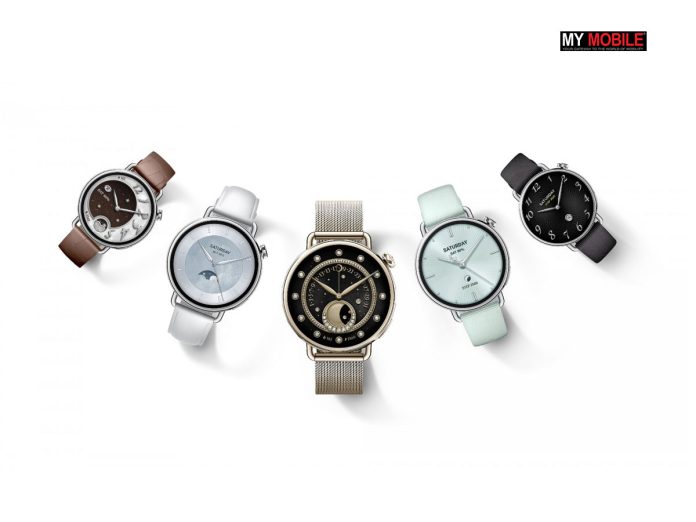
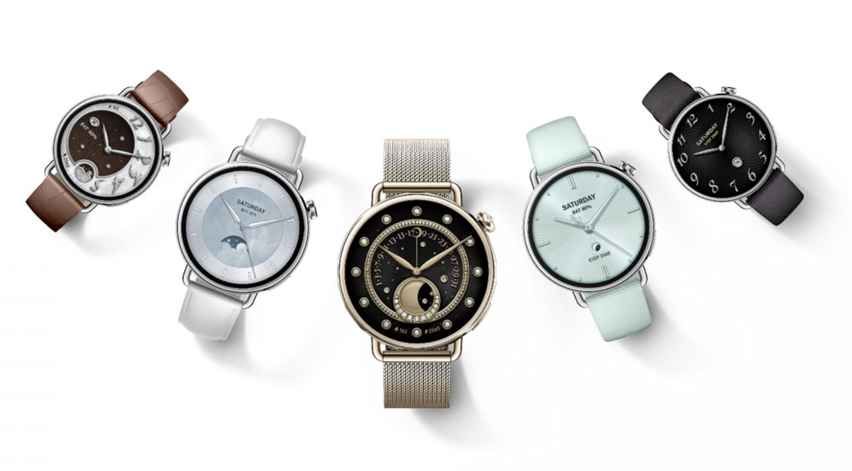
Caption – Xiaomi Watch S4 41mm. (Image credit – Xiaomi)

The new Watch S4 41mm features a 1.32-inch circular AMOLED display with a resolution of 466 × 466 pixels, 60Hz refresh rate, and a bright 2,200 nits peak brightness. It weighs just 32 grams and is water-resistant up to 5ATM.

Xiaomi has upgraded the health tracking module with a 4-LED + 4PD setup for more accurate readings. The watch is also powered by a modified version of Xiaomi’s Xring T1 chip, which is now 35% more power efficient than the standard Watch S4’s chip. It supports swim heart rate tracking and offers up to 8 days of battery life.

It supports the latest version of HyperOS 2 for the Watch series. Other features that come equipped in the watch are useful features such as blood oxygen measurements, sleep quality, mood and stress.

image

Caption – Xiaomi Watch S4 41mm key features. (Image credit – Xiaomi)

Similar the standard version Xiaomi Watch S4, this compact S4 41mm version also has a physical button and a crown. The crown comes in diamond-cut in its gold edition. Meanwhile, the silver and grey variants of the smartwatch support the S4’s new minimum size and weight is also an option.

The base version of the Watch S4 41mm with a TPU strap costs CNY 999 (around $140). You can also choose a leather strap for CNY 1,199 ($167) or a Milanese metal strap version for CNY 1,499 ($209).

Xiaomi Smart Band 10

image

Caption – Xiaomi Smart Band 10. (Image credit –  Xiaomi)

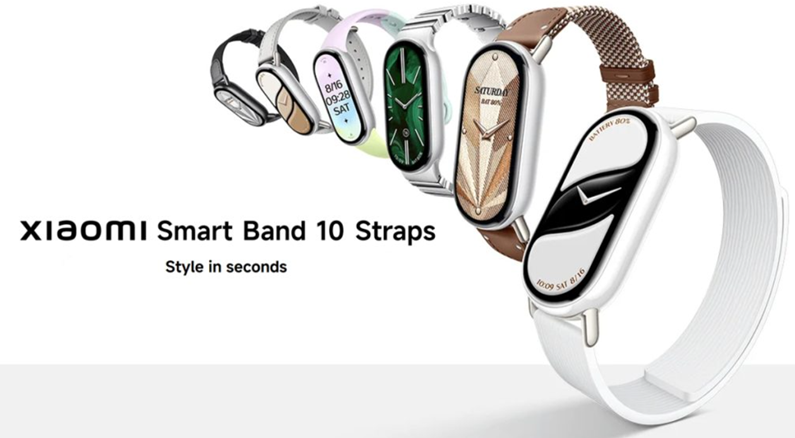
The Smart Band 10 sports a larger 1.72-inch AMOLED screen with slim 2.0mm bezels, 60Hz refresh rate, and 1500 nits of brightness. It’s 10.95mm thick and weighs just under 16 grams (strap not included).

It comes in multiple stylish finishes, which is metal in black, silver, rose gold and green, and ceramic in pearl white, purple and grey. Xiaomi also offers a variety of quick-release strap options, from silk-knit to pearl chains and leather with the default strap depending on the version.

Equipped with a 9-axis motion sensor and new fitness algorithms, the Smart Band 10 supports over 150 workout modes. It can track VO₂ max, running pace, recovery time, and includes 10 preset running programs. It’s also swim-friendly with 5ATM water resistance, underwater heart rate tracking, and AI-powered stroke detection with 96% accuracy.

image

Caption – Xiaomi Smart Band 10 key features. (Image credit –  Xiaomi)

Health features include continuous heart rate, blood oxygen, stress tracking, abnormal reading alerts, menstrual cycle prediction and in-depth sleep tracking. There’s also a 21-day sleep improvement plan developed with experts.

Powered by HyperOS 2, the Smart Band 10 seamlessly connects with Xiaomi phones, tablets, smart home devices, and even EVs. You get smart features like music and volume control, camera shutter, call notifications with quick replies, synced alerts, mini-games, and a new customisable vibration motor.

image

Caption – Xiaomi Smart Band 10. (Image credit –  Xiaomi)

The Smart Band 10 is priced as follows –

  • Metal variant – 269 yuan (approx $37 or ₹3,211)
  • NFC edition – 319 yuan (approx $44 or ₹3,805)
  • Ceramic model – 379 yuan (approx $52 or ₹4,525)

Both devices are on sale in China now. A global launch is expected but hasn’t been confirmed yet.

FAQs

Q1. What are the key features of the Xiaomi Watch S4 41mm?

Answer. The Watch S4 41mm features a 1.32-inch circular AMOLED display with 466 × 466 resolution, 60Hz refresh rate, and 2,200 nits peak brightness. It includes a 4-LED + 4PD health tracking module, supports swim heart rate tracking, and offers up to 8 days of battery life.

Q2. What makes the Xiaomi Smart Band 10 stand out?

Answer. It sports a 1.72-inch AMOLED screen with 1500 nits brightness, supports over 150 workout modes, and includes AI-powered swim tracking, VO₂ max, sleep tracking, and a 21-day sleep improvement plan.

Q3. How do these wearables integrate with Xiaomi’s ecosystem?

Answer. Powered by HyperOS 2, both devices offer smart controls for Xiaomi phones, tablets, smart home devices, and EVs, with features like music control, call notifications, and customisable vibration alerts.

Also Read: Xiaomi MIX Flip 2 details surface online ahead of June 26 launch

Also Read: Xiaomi’s big launch event set for June 26; expected to launch YU7 SUV, MIX Flip 2, K80 Ultra and more

Xiaomi Mix Flip 2 Debuts with Big 5165mAh Battery, Leica Cameras and Snapdragon 8 Elite SoC

0

Highlights

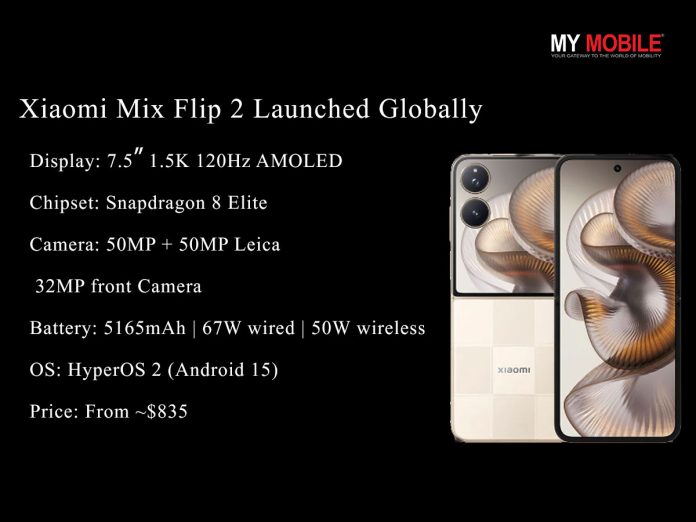
  • Xiaomi Mix Flip 2 launched featuring a 7.5″ 1.5K 120Hz AMOLED display, Snapdragon 8 Elite SoC, Dragon Bone hinge and HyperOS 2 based on Android 15.
  • It sports dual 50MP Leica cameras, 32MP selfie shooter, and a 5165mAh battery with 67W wired and 50W wireless charging.
  • The phone also offers deep Xiaomi ecosystem integration and outer display app support.
  • Price starts at ¥5999 (approx $835) in China and is available in three storage variants.

image

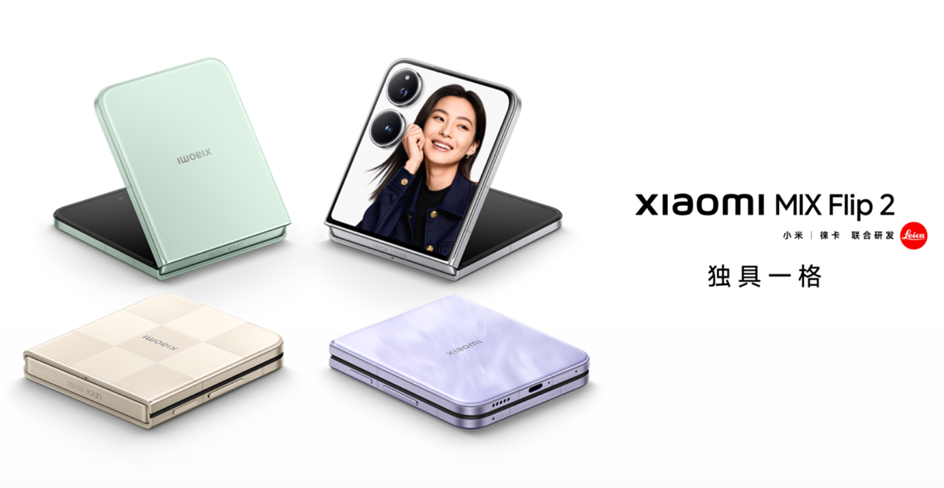
Caption – Xiaomi Mix Flip 2 officially launched in China. (Image credit – Xiaomi)

Xiaomi has officially launched its latest clamshell-style foldable smartphone, the Xiaomi Mix Flip 2. Touted as the most powerful and feature-packed flip phone the brand has made so far, it brings major improvements across the board in terms of display, performance, battery and design. It’s also the first flip phone to pack a battery larger than 5000mAh. Here’s everything you need to know about the new foldable.

Xiaomi Mix Flip 2 – Key Features

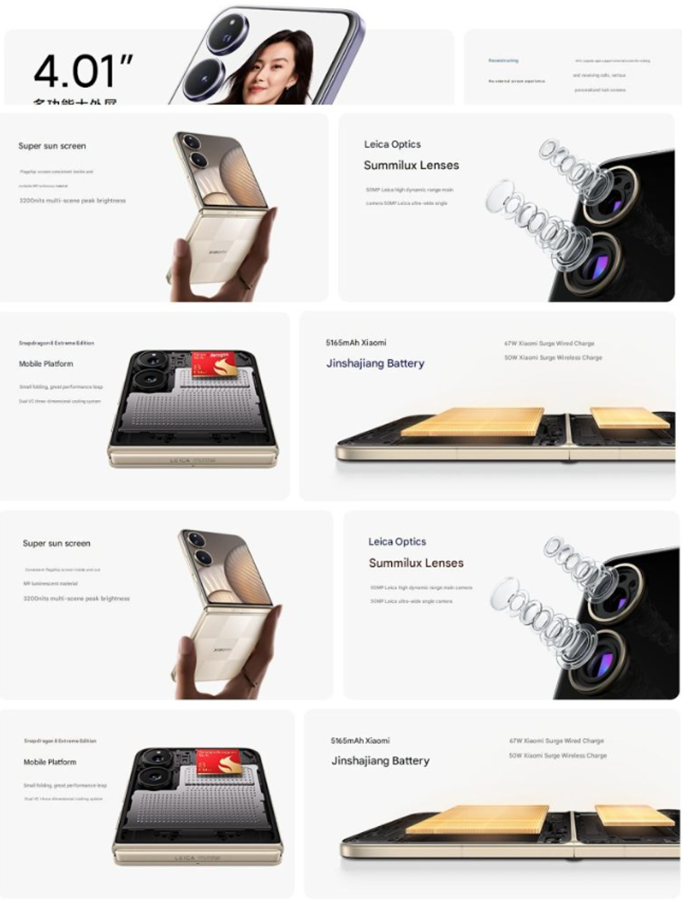
The Mix Flip 2 keeps the dual-display layout but boosts both screens. The 4.01-inch outer AMOLED panel now hits 3200 nits peak brightness and supports over 500 optimised apps, letting you reply to messages, check maps, make payments, or even stream videos without opening the phone.

image

Caption – Xiaomi Mix Flip 2 comes with a 4.01-inch outer AMOLED display. (Image credit – Xiaomi)

Inside, there’s a 1.5K resolution main display with a 120Hz refresh rate, 460PPI, and TÜV Rheinland eye-care certification, along with 2160Hz PWM dimming to reduce flicker.

Xiaomi has also introduced a new “Dragon Bone” hinge, made with a three-link and four-floating-plate design. It uses ultra-thin 50μm glass and maintains a crease depth under 50μm even after 200,000 folds, offering a flatter, more durable foldable experience.

Under the hood is the Snapdragon 8 Elite chipset, paired with a dual vapour chamber cooling system. It is a first for flip phones to keep things running cool even during intense use. The Mix Flip 2 runs HyperOS 2 based on Android 15.

It also comes with smart features like Xiao AI integration, app customisation for the outer display, and a fun animated pet lockscreen that can turn your own pet into a character.

image

Caption – Xiaomi Mix Flip 2 key features explained in a marketing posters. (Image credit – Xiaomi)

The Mix Flip 2 sports a dual 50MP Leica-tuned rear camera setup, featuring a Light Hunter 800 sensor with OIS, f/1.7 aperture, and 2x optical-quality zoom, along with a 115° ultra-wide lens. It supports 4K at 60fps, Dolby Vision, and macro shots as close as 10cm. Up front, there’s a 32MP selfie camera.

This is the first flip phone with a 5165mAh battery, built using Xiaomi’s new Jinshajiang cell with 10% silicon content and 843Wh/L energy density. Xiaomi claims it lasts 0.45 days longer than the iPhone 16 Pro in typical usage. It supports 67W wired and 50W wireless charging.

Xiaomi Mix Flip 2 – Smart Connectivity and Ecosystem Integration

The Mix Flip 2 connects deeply with Xiaomi’s ecosystem. You can perform the following tasks seamlessly –

  • Livestream directly to the Xiaomi YU7 car system
  • Control Xiaomi cars using the outer display
  • Share screens with Macs
  • Transfer files to iPhones via NFC
  • Back up iCloud photos to Xiaomi Cloud

Xiaomi Mix Flip 2 – Price and Variants

image

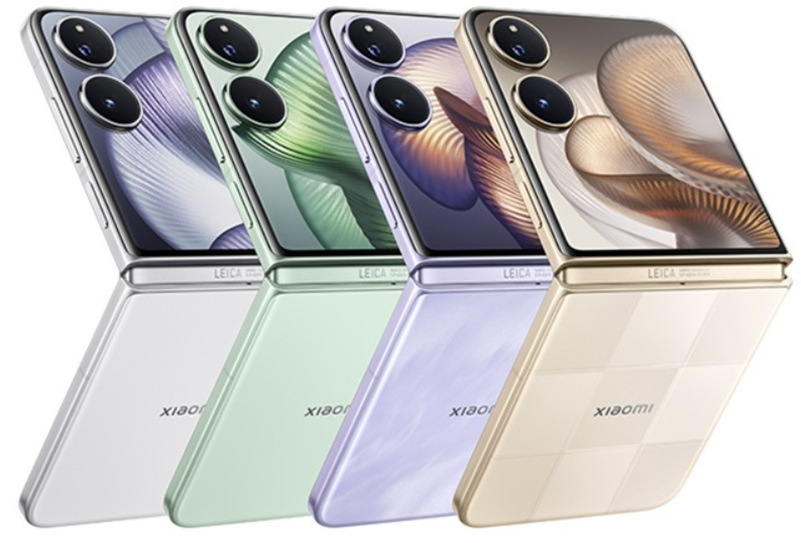
Caption – Xiaomi Mix Flip 2 colour variants. (Image credit – Xiaomi)

The Mix Flip 2 comes in Shell White, Nebula Purple, Plum Green, and Grid Gold colour options with three storage options. These are –

  • 12GB + 256GB – ¥5999 (approx $835)
  • 16GB + 512GB – ¥6499 (approx $905)
  • 16GB + 1TB – ¥7299 (approx $1,015)

It’s now available in China with global launch plans yet to be announced.

Xiaomi Mix Flip 2 Pocket Photo Kit

image

Caption – Xiaomi Mix Flip 2 buyers can also get Pocket Photo Kit, which is sold separately. (Image credit – Xiaomi)

Xiaomi also launched a compact Pocket Photo Kit for ¥699 (approx $95). It connects via USB-C and lets you instantly print photos using sublimation tech. Features include gesture and voice capture, built-in fill light, shutter button, film-style filters, and Leica watermarks.

Printed photos are laminated for durability and there’s even a dynamic photo printing feature that lets you replay the motion in a photo by scanning it.

FAQs

Q1. What are the key display and design features of the Xiaomi Mix Flip 2?

Answer. The Mix Flip 2 features a 4.01-inch outer AMOLED panel with 3200 nits peak brightness and a 1.5K inner display with 120Hz refresh rate, 2160Hz PWM dimming, and TÜV Rheinland eye-care certification. It uses a Dragon Bone hinge with ultra-thin 50μm glass, maintaining a crease depth under 50μm even after 200,000 folds.

Q2. What powers the Xiaomi Mix Flip 2 and what software does it run?

Answer. It is powered by the Snapdragon 8 Elite chipset with a dual vapour chamber cooling system and runs HyperOS 2 based on Android 15.

Q3. What camera setup does the Mix Flip 2 offer?

Answer. The phone includes dual 50MP Leica-tuned rear cameras, featuring a Light Hunter 800 sensor with OIS, f/1.7 aperture, 2x optical-quality zoom, and a 115° ultra-wide lens. It supports 4K at 60fps, Dolby Vision, and macro shots as close as 10cm, along with a 32MP front camera.

Q4. What are the battery and charging specs of the Mix Flip 2?

Answer. It houses a 5165mAh battery, the largest in any flip phone, built with Xiaomi’s Jinshajiang cell. It supports 67W wired and 50W wireless charging, and Xiaomi claims it lasts 0.45 days longer than the iPhone 16 Pro in typical use.

Also Read: Xiaomi MIX Flip 2 could feature the largest battery in a flip phone, launch expected in Q2 2025

Also Read: Xiaomi MIX Flip spotted with Snapdragon 8 Gen 2 chipset

Leak Reveals iPhone Fold Display, Camera and Design Details, Launch Expected In 2026

0

Highlights

  • iPhone Fold leak suggests it may feature a 7.58-inch inner display, dual 48MP rear cameras, a titanium body and a durable amorphous metallic glass hinge.
  • The design based on the iPhone Fold prototype shows a compact look similar to iPad mini when unfolded.
  • While it is still in the testing phase, the foldable iPhone is expected to launch in 2026.

While everyone’s looking forward to the iPhone 17 launch this September, that is not the only thing Apple is busy with. We have already reported that Apple’s 2026 lineup will include the much-anticipated iPhone Fold. Now, a fresh leak has just revealed some new details about the foldable iPhone’s display, cameras and build. So, here’s what we know.

iPhone Fold Latest Leak

image

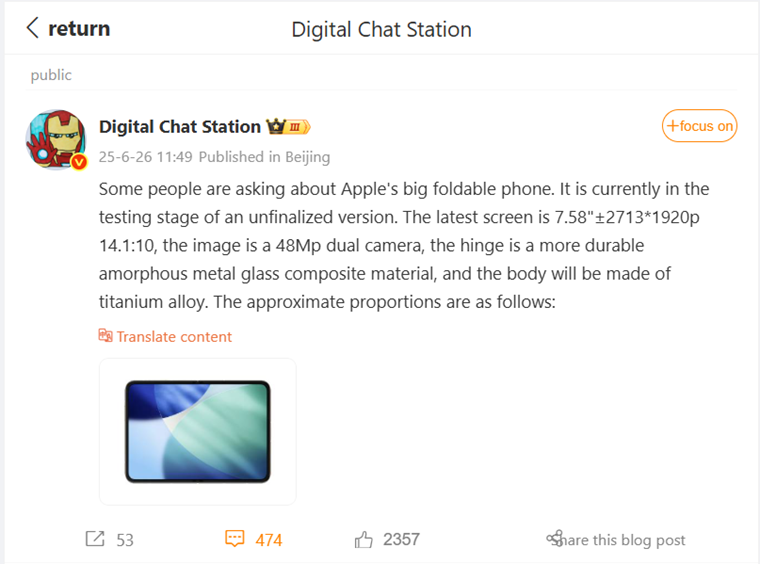
Caption – Popular tipster Digital Chat Station’s recent post on Weibo. (Translated via Google Translate)

Shared by Digital Chat Station on Weibo, the leak highlights key specs of the current iPhone Fold prototype. The leaker confirmed what analyst Ming-Chi Kuo recently said that Apple is still finalising the design and features, and the phone is still in the testing phase.

Still, here’s what the latest info reveals –

  • Display – A 58-inch inner screen when unfolded
  • Cameras – Dual 48MP rear cameras
  • Hinge – Made with a composite of durable, amorphous metallic glass
  • Body – Titanium for a premium and lightweight feel

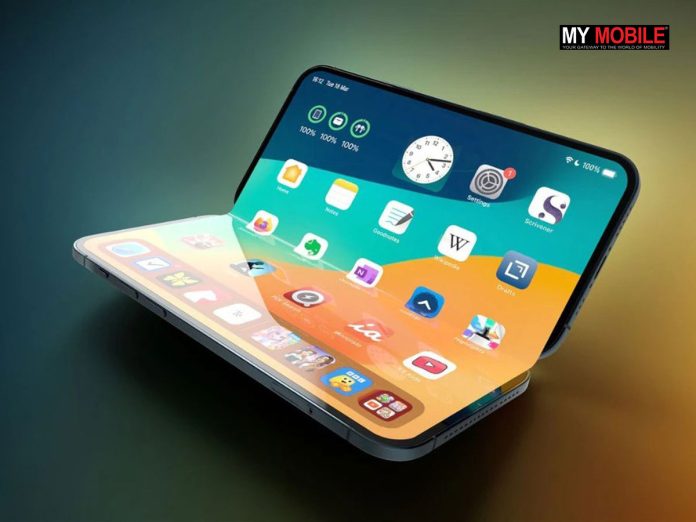
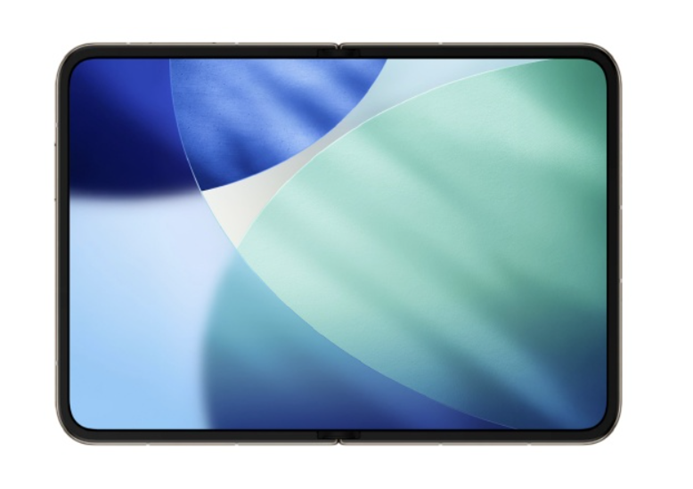
Interestingly, the 7.58-inch display is slightly smaller than the 7.8-inch size Kuo previously mentioned. Meanwhile, tipster Digital Chat Station also shared a new render that shows the iPhone Fold unfolded, and it looks a lot like a compact iPad mini.

image

Caption – A possible iPhone Fold render posted on Weibo. (Image credit – Digital Chat Station)

The dual 48MP cameras match Apple’s rumoured upgrade for this year’s iPhone 17 Pro, where all rear lenses are expected to move to 48MP. The foldable could follow suit with a wide and ultra-wide combo, though Apple might choose a telephoto lens instead, no final word yet.

With the prototype still being tested, these specs could change. However, the leaked details now at least give us the clearest picture of what Apple’s first foldable might offer next year.

FAQs

Q1. What are the key design and display features of the iPhone Fold prototype?

Answer. The prototype features a 7.58-inch inner display when unfolded, a titanium body for a lightweight premium feel, and a hinge made from amorphous metallic glass.

Q2. What camera setup is expected on the iPhone Fold?

Answer. It is rumoured to include dual 48MP rear cameras, possibly following the iPhone 17 Pro’s upgrade to 48MP sensors across all lenses, with a wide + ultra-wide or telephoto combo.

Q3. When is the iPhone Fold expected to launch and what’s its current status?

Answer. The iPhone Fold is still in the testing phase with Apple finalising its design and features. The launch is expected to take place in 2026.

Also Read: iPhone Fold may go for punch-hole and under-display cameras, replacing the notch

Also Read: Samsung-made displays for foldable iPhone could be more advanced than Galaxy Z Fold