
Highlights
- Instagram enforces PG-13 rules where all users under 18 are now defaulted to a 13+ content setting, which cannot be disabled without parental approval.
- Teens are blocked from viewing or interacting with mature content, risky accounts, and sensitive search terms.
- Parents gain new controls including “Limited Content” mode and post-flagging tools.
- Experts welcome the safety push but question Meta’s follow-through.
Instagram has announced a major update to its teen safety policies. According to the announcement, all Teen Accounts will now be guided by PG-13 standards by default, starting immediately. This means all users under the age of 18 will be automatically placed into a 13+ content setting, which they cannot disable without parental approval, the company confirmed.
Instagram Tightens Teen Safety Controls
Instagram first introduced Teen Accounts in 2024, designed to shield young users from harmful or inappropriate content. The platform described this latest update as its “most significant” yet, saying it “builds on the automatic protections already provided” to younger users.
In an official statement, Instagram said, “We know that all families are different, we’re also introducing a new, stricter setting for parents who prefer a more restrictive experience for their teen. We invited thousands of parents worldwide to share their feedback with us, helping us shape these changes and ensure our efforts align with their expectations. […….] We hope this update reassures parents that we’re working to show teens safe, age-appropriate content on Instagram by default, while also giving them more ways to shape their teen’s experience.”
What Are Instagram Teen Accounts?
Teen Accounts are specifically designed to protect minors by limiting their exposure to mature content.
These protections include hiding or not recommending sexually suggestive material, graphic or disturbing imagery, and adult-oriented content such as posts about tobacco or alcohol sales.
What the New PG-13 Rules Mean?
According to Meta, the update means teens will only see content that’s comparable to what would appear in a PG-13-rated movie.
The updated guidelines go further than before, introducing additional restrictions to hide or avoid recommending posts containing strong language, risky stunts, or content promoting harmful behaviours such as depictions of marijuana use or paraphernalia.
Teens will also no longer be able to follow accounts that frequently share age-inappropriate content, or whose usernames or bios suggest they are unsuitable for minors. If a teen already follows such accounts, they will lose the ability to view or interact with their posts, send them DMs, or see their comments on other users’ content.
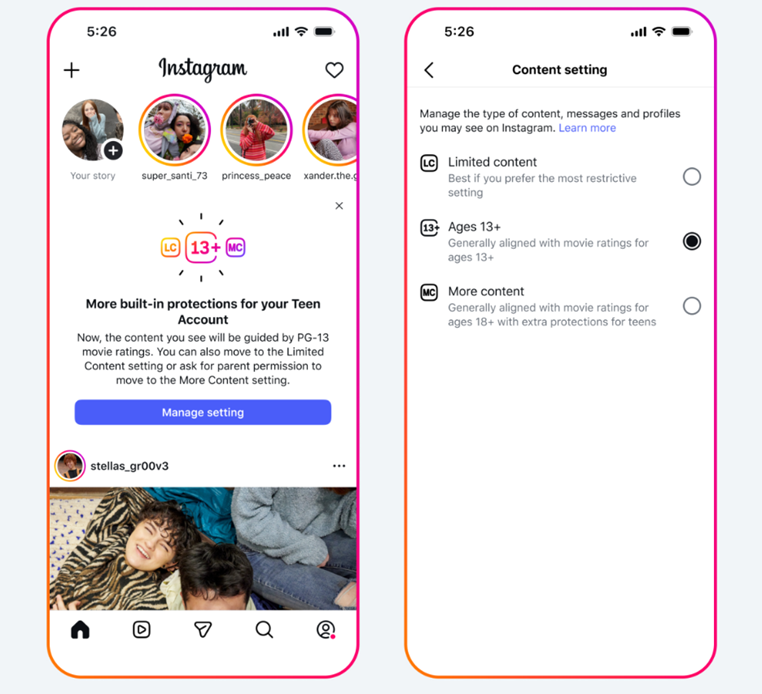
Caption – Content settings. (Image credit – Meta)
Instagram added, “We won’t recommend these accounts to teens, and we’ll make it harder for teens to find these accounts in Search. These protections work both ways: these accounts won’t be able to follow teens, send them DMs, or comment on their posts.”
Strengthened Search and Content Restrictions
Meta stated that Instagram already blocks searches for sensitive topics such as suicide, self-harm, and eating disorders. With this update, teens will also be restricted from seeing search results for additional mature terms like ‘alcohol’ or ‘gore’. The platform is also working to ensure that these terms remain blocked even when misspelt.
Teens will be prevented from viewing Reels, Feed posts, or Explore suggestions that violate the new content standards, even if the material is shared by someone they already follow. Furthermore, if a restricted link is sent through DMs, the recipient will not be able to open it.
Limited Content Mode and AI Updates
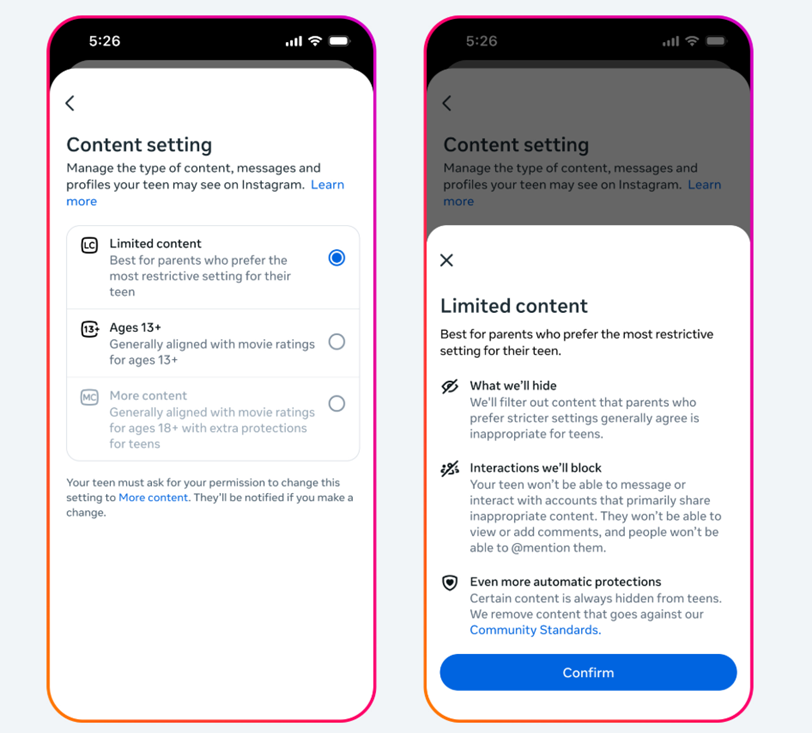
Caption – Limited Content Mode. (Image credit – Meta)
Meta is introducing a new, stricter mode called “Limited Content,” which filters out even more content from the Teen Account experience. This mode will also remove teens’ ability to see, post, or receive comments under any posts. Starting next year, it will further restrict the AI conversations teens can have on the platform.
This enhanced control option is designed to give parents more authority over what their teens see on Instagram. Meta also revealed it is testing a new tool that lets parents flag posts they believe should be hidden from teen users, providing a direct feedback channel to the company.
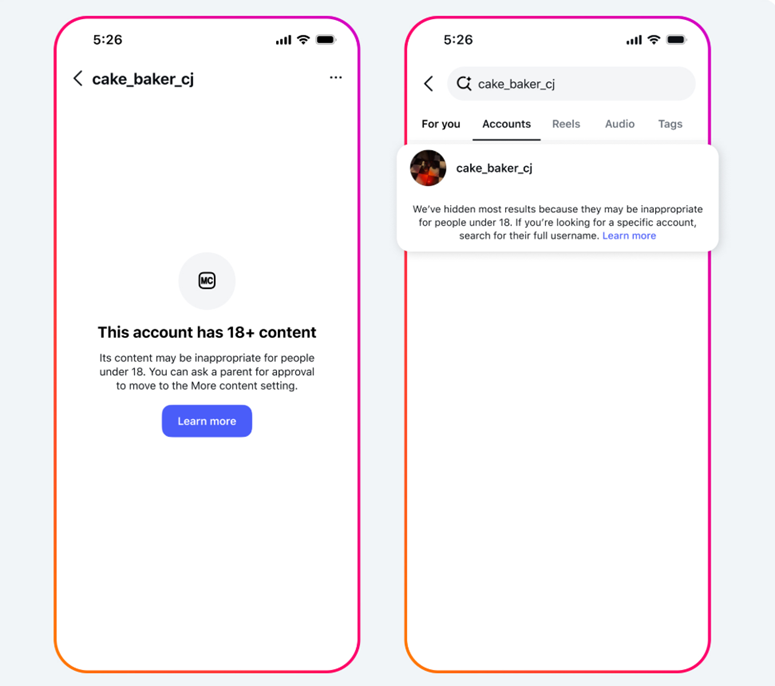
Caption – Content Restrictions. (Image credit – Meta)
Automatic Age Restrictions and Rollout Plan
The new PG-13 settings will be automatically applied to all teen accounts and cannot be removed without parental consent. However, Instagram emphasised that complete censorship is impossible, saying, “Just like you might see some suggestive content or hear some strong language in a PG-13 movie, teens may occasionally see something like that on Instagram. But we’re going to keep doing all we can to keep those instances as rare as possible.”
Meta added that it plans to roll out these changes gradually across Australia, Canada, the United Kingdom, and the United States by the end of 2025. Global rollout will follow along with additional protections for teens who claim to be adults and extended safety features on Facebook.
Mixed Reactions and Criticism
While some experts welcomed the update, others remain sceptical about Meta’s implementation.
Josh Golin, executive director of nonprofit Fairplay, told AP he is “very sceptical about how this will be implemented,” arguing that Meta’s move may be an attempt to delay the federal Kids Online Safety Act, which seeks greater accountability rather than “splashy press releases.”
Similarly, Ailen Arreaza, executive director of ParentsTogether, criticised Meta’s history of making promises without sufficient follow-through. “We have heard promises from Meta before, and each time we have watched millions be poured into PR campaigns, while the actual safety features fall short in testing and implementation. Our children have paid the price for that gap between promise and protection,” she told AP. She added that while the PG-13 approach is a “step in the right direction,” it must be backed by independent testing and real accountability.
Meta’s use of the “PG-13” label has also drawn criticism from the Motion Picture Association (MPA), which clarified that it was not consulted before the announcement. “We welcome efforts to protect kids from content that may not be appropriate for them, but assertions that Instagram’s new tool will be guided by PG-13 movie ratings or have any connection to the film industry’s rating system are inaccurate,” said Charles Rivkin, chairman and CEO of the MPA.
However, some experts view the move positively. Desmond Upton Patton, a University of Pennsylvania professor who studies social media, AI, and online behaviour, said the change provides “a timely opening for parents and caregivers to talk directly with teens about their digital lives.” He added, “I am especially glad to see changes around AI chatbots that make clear they are not human, they do not love you back, and should be engaged with that understanding. It is a meaningful step toward a more joyful social media experience for teens.”
FAQs
Q1. What does Instagram’s new PG-13 setting mean for teen users?
Answer. All users under 18 are now automatically placed into a PG-13 content setting, restricting exposure to mature themes like strong language, risky stunts, and adult-oriented posts. This setting cannot be disabled without parental approval.
Q2. What new Instagram parental controls are being introduced?
Answer. Instagram is launching a “Limited Content” mode that filters out even more content and limits interaction features like comments. Parents can also flag posts they believe should be hidden from their teen’s feed, giving them more direct influence over content moderation.
Q3. Will these new Instagram PG-13 changes apply globally?
Answer. Yes, but gradually. The PG-13 settings will roll out across Australia, Canada, the UK, and the US by the end of 2025, with a global rollout and extended protections including for teens who claim to be adults, planned afterwards.