


Highlights
- YouTube has launched an AI-powered likeness detection tool to help creators identify and manage videos that misuse their face or voice.
- Eligible creators must verify their identity with a government ID and video selfie to access a dashboard showing flagged deepfake content.
- Creators can request removal or archiving of deepfakes, and disable the tool anytime as YouTube stops scanning within 24 hours of deactivation.

YouTube has officially begun rolling out its AI-powered likeness detection tool to help creators protect themselves against deepfakes and synthetic impersonations. The tool is designed to identify videos where a creator’s face or voice is being used artificially, allowing them to take appropriate action.
To access the feature, eligible creators must complete an onboarding process. This includes submitting a government-issued ID and a video selfie for identity verification. Once verified, creators can view all AI-generated deepfake videos featuring their likeness through a dedicated dashboard.
YouTube’s Deepfake Protection Tool Explained
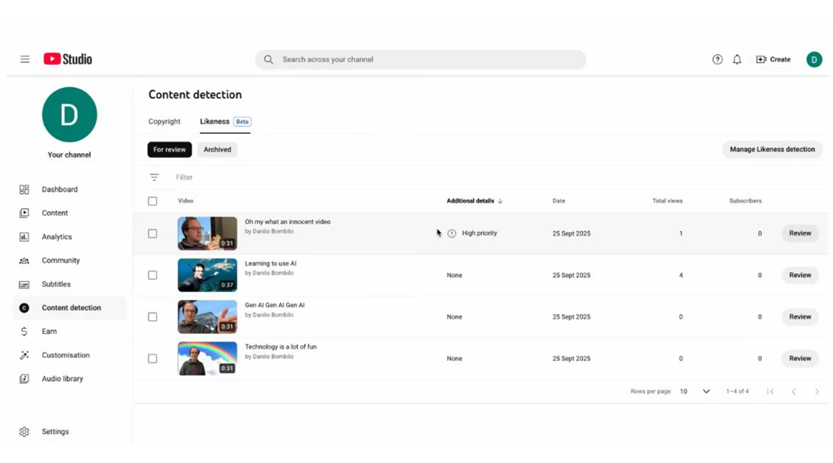
In a detailed announcement on its Creator Insider channel, YouTube explained how the likeness detection tool works. Initially, it will be available only to YouTube Partner Programme (YPP) members, with plans to expand access to more creators in the coming months.
The new feature will appear under the Content ID menu, where creators already track copyright claims. This integration allows them to monitor deepfake content in the same place they manage copyrighted videos.
To prevent misuse, YouTube has implemented a thorough verification process. Creators must –
- Consent to data processing
- Submit a government-approved ID card
- Upload a short video selfie for facial verification
All identity data will be securely stored on Google servers, and once verified, YouTube will begin showing creators’ videos suspected to be AI-generated using their likeness or voice. These flagged videos will be categorised by priority, helping creators focus on potentially harmful or misleading content first.
Early Testing and Current Limitations
YouTube acknowledged that since the feature is still in its early rollout phase, it may occasionally display a creator’s own videos alongside deepfakes. The platform first piloted the likeness detection tool in December 2024, and has been refining its accuracy and detection speed since then.
Creators using the tool will have the ability to request the removal of a deepfake or ask YouTube to archive it. After a report is submitted, the company will review the flagged content and take action in line with its policies on synthetic and manipulated media.
Privacy and User Control
YouTube emphasises that creators remain in full control of their data. Users can disable the likeness detection tool at any time through the dashboard’s manage tool option. Once turned off, YouTube will stop scanning for deepfakes using that creator’s likeness within 24 hours.
FAQs
Q1. What is YouTube’s AI likeness detection tool?
Answer. It’s a new feature that helps creators identify videos using their face or voice artificially, allowing them to manage deepfakes and synthetic impersonations.
Q2. Who can access YouTube likeness detection tool and how?
Answer. Initially available to YouTube Partner Programme members, creators must verify their identity with a government ID and video selfie to activate the tool.
Q3. Can creators control or disable YouTube’s AI likeness detection?
Answer. Yes, creators can turn off the likeness detection feature anytime via the dashboard. YouTube will stop scanning for deepfakes within 24 hours of deactivation.