Home Blog Page 1318

Traditional Games in Digital Avatar: Transport You Back in Time

0

It’s not long back when children would prefer going out and form groups to play games which were officially not recognized to any course curriculum, but were best recreational activities in the neighbourhood and could be played at any vacant place without much expense. Born in 80s/90s kids must be knowing these traditional sports which they would learn on their own. Although these ancient games are now mostly confined to rural areas, thanks to the digital revolution, coupled with the proliferation of smartphones, the traditional games are finding wider acceptance among current generation as well.

It’s kind of poonarjanm (rebirth) for the fading art of traditional games – albeit in digital attire! The gaming companies are now betting big on traditional games by focusing on bringing digital innovation to traditional Indian games to compete with the western world. The local gaming companies are, in fact, busy creating their own space within the gaming segment by virtue of their unique offerings.

What’s more, considering the masses and their inability to afford expensive console systems etc, the Android and iOS ecosystems provide a perfect low-cost alternative to expensive gaming systems. By introducing those games to the digital gaming world, Indian gaming companies are trying to connect the common man to the socio-cultural aspects of conventional games which are on the verge of extinction.

In fact, Prime Minister Narendra Modi has laid emphasis on the fast-growing digital gaming arena by saying that India should tap the huge potential in this area and lead the international digital gaming sector by developing games that are inspired by Indian culture and folk tales.

We have listed down some of the most popular traditional games which are taking the mobile gaming industry by storm in India, akin to popular traditional card games such as teen patti, poker and rummy which have already seen many versions on virtual platforms.

Pachisi

Pachisi is a cross and circle board game, which originated in 6th century ancient India. It is played on a symmetrical shaped board with coloured pieces and dice. It is also known as Ludo in the present day. The game rules demand for the dice to be rolled out for the pieces to move around the board. Each piece moves from a start point, has to complete a round around the board towards the end point. Opponent pieces race you in the round. Should the pieces overlap, players who are playing their turn can slash out the piece, sending it back to the starting point. The mobile version comes in handy with this game, should you cheat, no one needs to know. It’s available for free on both Apple App Store and Google Play Store.

Lagori/Satoliya/Pitthu

This is a game which is typically played outdoors and involves a ball and a set of flat stones/ pebbles placed on top of each other. It is played between two teams, strikers and seekers. A member from team seekers throws the ball at the pile of stones to knock it over. The seekers then try to restore the pile of stones while the team strikers throw the ball at them. If the ball touches any player of team seekers, they are ‘out’ and his team continues without him. A seeker can always safeguard himself by touching an opposite team member before the ball hits him. The game has three levels to conquer, in mobile version. The goal in each level is to target and bring down the array of stones, together with shooting all the opponents with a sling while they attempt to stack the stones. It’s available for free on both Apple App Store and Google Play Store.

Kancha

This game was once famous as a gully sport. Playing with Kancha (marbles) was the shizz among young boys in town and villages of India. The game has its own modus operandi: played using marbles. The rules were simple, a player is supposed to hit the selected target ‘kancha’ using their own marble ball. The winner takes all the kanchas. But thanks to the virtual version, you’ll never have to worry about losing your marbles again. It’s available for free on both Apple App Store and Google Play Store.

Carrom

Widely played among the masses post the World War I, the four-player game carrom or ‘Karrom’ is believed to be invented by the Indian Maharajas. That explains why we aim for the pink coin called ‘queen’, no? A typical ‘strike and pocket’ game designed with three key elements i.e., the board, the coins or coin men and the striker disk. The objective of the play is to use the striker disk to pocket the coins just at the flick of a finger. The first player or team (two players) to pocket all the coins with the queen coin wins. Interestingly, in the digital version, mastering this game is lot easier. This game also allows a multiplayer option on phone apps. It’s available for free on both Apple App Store and Google Play Store.

Aadu Puli Aattam

Aadu Puli Aattam or Lambs and Tigers, was designed to lesson kids on the power of unity and brainstorming. Traditionally, it is a brainy game that helps you develop strategy and concept of teamwork. A typical two player game played on a board with asymmetric pyramid grid (the grids are drawn in various patterns). It is played between two teams; one who controls moves of the aadus (lambs) and the other controls the Pulis’ (tigers) moves. The Pulis’ hunt the aadus and aadus block pulis’ movements as a defence. The virtual version of Aadu Puli Aattam is indeed a great work of artificial intelligence. It’s available for free on both Apple App Store and Google Play Store.

Gilli Danda

This was an all-time favourite of young boys in India. Gilli-Danda is played with a stick and oval-shaped chunk of wood. The game is a similar to cricket. It’s generally played by standing in a very small circle of a few people. The player at strike balances the gilli (wooden chunk) on a stone in an inclined manner. The striker is then supposed to hit the gilli using the danda (stick) to flip it in the air. While it is in the air the player strikes the gilli aiming to hit as far one can. To score in a game like this, similar to cricket runs, the player is required and touch a pre-decided point outside the small circle’s boundaries before the gilli is retrieved by an opponent. In the virtual version, clear each level to be the Super champion of Gilli Danda game. It’s available for free on both Apple App Store and Google Play Store.

Gaddira

Gaddira is purely a pass-time game which involves tyre rolling or hoop rolling with a stick. In ancient India kids ran along rolling tyres on the street. They would roll these unused, old thin tyres or hoops either with bare hands or using a stick. These kids invented a game out of it by performing tricks with the rolling tyre. This then became a regular affair and the game meant keeping the tyre or the hoop rolling upright for longer time. An increase in the appreciation for the touch screen feature is majorly because of such games. In the mobile version, you can play each level multiple times, each time trying different technique to achieve minimum time. It’s available for free Google Play.

Ultimate Battle: Virtual Paradise for the Gamers to Excel in Top Esports Titles

0

If we tell you that you can play all the esports games on a single platform, will you believe that? Well, you’ll have to because Ultimate Battle has all kinds of esports titles to play under one roof. Ultimate Battle is India’s first-ever one-stop online esports platform, where players connect, interact and compete with each other in their favourite esports games for entertainment and rewards. The goal of Ultimate Battle is to bring esports into the mainstream and engage millions of gamers and fans together.

Currently, the platform has garnered a player base of 3,00,000 which is growing daily. With over 39,000 monthly active users, gamers get an active community to interact with and compete against each other. The platform is now available on Google Play Store for Android users and till now has seen over 38,000 downloads already. The freshly-launched app of the platform will facilitate easier connectivity and accessibility for users and leverage the power of the mobile-first ecosystem of the country.

Here is a list of some of the popular game titles like Valorant, DOTA 2, Fortnite, Call of Duty: Mobile, Garena Free Fire, FIFA 20, Chess, etc. that the platform hosts. Besides Gameplay, Ultimate Battle enables gamers to network along with Gaming News and E-commerce portal to create a complete 360 experience.

Let’s take a look at the top five esports titles according to gamers’ engagement on the Ultimate Battle platform from January to April 2021:

Garena Free Fire

Garena Free Fire is currently the most played esports game on the platform. It’s an action-adventure battle royale game played in a third-person perspective. The game consists of up to 48 players falling from a parachute on an island in search of weapons and equipment to kill the other players. Players are free to choose their starting position, take weapons and supplies to extend their battle life.

Call of Duty: Mobile

Call of Duty: Mobile stands runner-up on this list. It is a free-to-play shooter video game. It has two modes primarily, Multiplayer and Battle Royale. The multiplayer mode is the basic first-person shooter, similar to the previous Call of Duty games on other platforms along with old maps. Battle royale mode features up to 100 players. A player can choose to play alone, on a two-man team, or in a four-man squad.

Chess

Interestingly Chess stands third on the list. It’s a strange fact in a good way that even after having the options of playing so many action-packed games with high-end graphics on the platform, our analytics tell a different story. Chess is a competitive board game played between two players. The game is played on a square board of eight rows and eight columns. Chess pieces are divided into white and black sets. Each set consists of 16 pieces: one king, one queen, two rooks, two bishops, two knights, and eight pawns. The objective of the game is to checkmate the opponent; this occurs when the opponent’s king is in check, and there is no legal way to remove it from the attack.

Counter-Strike: Global Offensive

Counter-Strike has been dominating the PC gaming scene for a decade. Growing from CS: Zero to the all-new CS: GO by Valve, this first-person shooter team strategy game has become one of the top esports title games in the world. Two teams (Terrorists and Counter-Terrorists), with 5-players on each side, face off against each other on a defined map to complete their objectives to win the round. CS: GO is one of the games with a well-structured professional scene with lots of esports teams competing every year for millions of dollars in prize money.

Valorant

Valorant is the all-new character-based FPS PC game. The new in-game dynamics and mechanics with high-tech guns and skill-weapons in Valorant have become hype among gamers. In this 5v5 team battle gameplay, each player controls a different in-game character. The characters are termed Agents which have their unique skills and weapons giving every player their special abilities. Valorant has also started marking its footprint in the esports industry with various leagues and events for professional players.

ToneTag takes quantum leap with new global patents in sound-based solutions

0

Sound-based proximity communication and payments service provider ToneTag has acquired global patents from Singapore and Malaysia, adding two more countries to its list of four- the US, Japan, India and South Africa. These patents majorly cover all kinds of audio and sound communications between the devices and are set to redefine proximity engagement for customers using sound waves, eliminating the need for cash and card transactions in the future.

Out of the eight patents, ToneTag has used four to its advantage and offers three desirable solutions against the same in the market. Starting with the handy services of P2P and P2M, which allows customers to send money to people nearby without asking for their phone numbers or UPI IDs. Next is SonicCast that enables audio and video advertisements to send integrated messages with customized promotions and CTAs. The company has also developed SoundZone, a technology that provides a personalised dining experience to consumers where they can pick, order, and pay from their phones. It also allows merchants to broadcast curated customized content to their consumers and get a detailed analysis of customer behaviour.

Kumar Abhishek, Founder and CEO, ToneTag, said, “The acquisition of eight global patents is yet another milestone we have managed to achieve. It will allow us to penetrate further into the payment ecosystem and create a world of contactless voice-based payments for our customers.”

Since its inception in 2013, ToneTag has been at the forefront of a revolution in the global digital payments space, harnessing the power of sound to offer a range of financial services to its customers as well as its associates. It has created an atmosphere that motivates its researchers to break the chains of traditional thinking and incorporate modern ways to transform the future of sound and audio-based technology. This has led the company to file 15 global patents (with more in its pipeline) and satisfy 152+ million customers with its useful products.

Backed by Amazon, 3one4 capital and MasterCard, homegrown ToneTag has achieved major success in offering ‘global’ solutions, with a presence across the Middle East, South-East Asia and some parts of Africa.

Tecno Spark 7 Pro now available for sale on Amazon

0

The recently-launched Tecno Spark 7 Pro smartphone is now available for sale on Amazon India. The smartphone comes in two variants – 4GB RAM + 64GB internal storage and 6GB RAM + 64 GB internal storage. Consumers can also avail an additional 10% off on SBI credit cards and credit card EMI transactions, which is a limited period offer.

In terms of specs, the Tecno Spark 7 Pro flaunts a 6.6-inch HD+ display with a teardrop style notch on the top. The display has a 90Hz refresh rate, which means scrolling, gaming, and other things will look smooth. The handset uses 3D aesthetics on the back. It is powered by MediaTek Helio G80 octa-core processor, paired with up to 6GB of RAM. As mentioned above, the phone comes with 64GB of storage onboard, which you can expand via a microSD card.

On the camera front, the smartphone features a 48MP main sensor, a 2MP depth sensor, and an AI camera, the resolution of which is not available. The company said that the main camera can shoot professional-grade videos at 2K QHD resolution. There is a bunch of camera filters and modes on the phone. For selfies, the smartphone houses an 8MP camera. Interestingly, you get dual flashes for the selfie camera. There is an eye-tracking feature, as well.

The handset houses a mammoth 5,000mAh battery, which the company claims can deliver a standby time of up to 34 days, 35 hours of calling time, 14 hours of web browsing, 7 days of music playback, 15 hours of game playing and 23 hours of video playback. It comes with facial recognition and a fingerprint sensor on the back for security purposes.

HaikuJam founders launch search engine for inspiration

0

Struggling at the brainstorm session to crack your next Cannes Lions-worthy creative campaign idea? Or perhaps languishing at home during lockdowns and hitting blocks over your freelance article? Inspo is here to make the onset of creative processes less intimidating, more effective and fun. The first-of-its-kind search engine for inspiration has been designed to enrich creative thinking for freelancers, brands and creative agencies. The AI-human hybrid tool can generate GPT-3 thought-starters in a jiffy and gather relevant inspiration from sources across the web on any topic, for content creation, campaigns, ads, moment marketing, brainstorms, pitching or any other creative project.

Conceived and conceptualised by Dhrupad Karwa and Andrew Leung – co-founders of the HaikuJam social writing mobile game that grew to over 1 million users from 144 countries who published 100 million lines of collaborative poetry – Inspo has been built with a singular objective, to inspire on tap. The existing creative ecosystem comprises tools majorly focusing around the latter stages of a creative process, i.e. execution, monitoring, distribution, monetisation and so on. However, there has been no significant platform so far to assist with ideation, brainstorming and gathering inspiration, which are crucial for any creative workstream. Creative thinkers have thus had to rely on Google which fundamentally was designed to ‘inform’ but not ‘inspire’. With the current solutions falling short, Inspo was born with the purpose of delivering inspiration at its core.

All it takes is a simple keyword search (e.g. coffee, motorcycle, fitness, etc.) or by clicking on an event or trend on Inspo’s Inspiration Calendar (e.g. World Environment Day, #LockdownRecipes, etc.). The tool generates relevant thought-starters (using GPT-3 combined with creative associations from HaikuJam) which can be further contextualised for a brand or topic by applying AI Lenses (e.g., coffee inspiration for Netflix). It also surfaces inspiration from cultural sources across the web, such as Goodreads, Twitter, Reddit, 9GAG, Creative Blogs, Unsplash, Metrolyrics and lots more.

Additionally, Inspo offers sentiment analysis and unearths non-intuitive associations from collaborative poems written by millennials on HaikuJAM. Users can save their favourite inspiration to “Inspiration Boards” and can even turn them into visual creatives, through Inspo’s integration with the graphic designing platform, Canva.

Inspo has been in private beta over the past year and has already helped inspire creative thinkers around the world, at organisations such as Dentsu, Royal Enfield, Jio, Tinder and Ogilvy as well as a few hundred individual freelancers.

Dhrupad Karwa said, “Inspiration is one of the most important yet misunderstood ingredients in the creative process. Though intangible in nature, its consequences could not be more real. In a world that demands around-the-clock creative thinking but has a limited supply of the inspiration required to fuel it, lacklustre work, burnout and creative blocks are inevitable. Inspo is here to ensure that the supply of actionable inspiration never runs out and our creative tanks are always full.”

Ameyo partners Truecaller to resell its verified brand identity solutions for enterprises

0

Omnichannel customer engagement platform Ameyo has collaborated with Truecaller to resell their recently-launched enterprise solutions for businesses. With its verified brand identity solutions, businesses will get a green Caller ID and green Verified Business badge. A verified business on Truecaller will also get a verified tick mark icon and lock their brand name and profile photo.

Ameyo’s digital sales solution includes outbound dialer software that helps businesses to automatically dial out a vast set of leads and saves significant time for agents. Depending on the business requirement, a company can select multiple dialer strategies like progressive dialer, preview, and predictive dialer to accelerate sales and improve outbound call center operations.

Several brands use Ameyo’s outbound dialer, e.g., BYJU’s use Ameyo’s outbound dialer to fix appointments for their sales team; DocsApp improved their connect rate to 75%, and Cars24 improved their lead to appointment rate from 11 to 23%.

Integrating Truecaller’s verified brand identity solutions with Ameyo’s outbound dialer will help improve outbound call connect rates as consumers know exactly which calls to trust while avoiding fraudulent and scam calls increased during the pandemic.

“Ameyo is the most secure cloud-based customer engagement platform from India and is PCI-DSS compliant with certified public cloud environments across India, APAC, Africa, and the Middle East. Our tie-up with Truecaller will help enterprises improve customer experience with the verified business badge. We are glad to be the first company to resell this premium enterprise offering,” said Sachin Bhatia, Co-founder and Global Sales and Marketing Head at Ameyo.

Over 20 top brands across verticals like Shiv Nadar University Chennai, Dr Batra’s, Vedantu, Lovely Professional University, and Furtados School of Music (FSM) have leveraged Truecaller’s verified brand identity solution through Ameyo to build trust with their customers and improve the efficiency of their outbound calls.

Truecaller has more than 270 million active users globally and will continue to allow users to view the number of spam markings on calls. The spam algorithms will continue to work like before, and users will be able to mark spam calls, even if they have a verified badge and Caller ID.

“Truecaller Enterprise has been set up with a strong intent of building solutions for businesses that will not just improve the efficiency of their communication but also provide significant value and safety to consumers as an anti-fraud measure. Our reseller partners will play a pivotal role in the continued success of Truecaller Enterprise. With Ameyo’s strong market presence and reach, they will play a vital role in growing our business together and deliver significant value for end customers in the enterprise ecosystem,” said Priyam Bose, Global Head, GTM at Truecaller Enterprise.

Ameyo offers the entire gamut of Communications as a Platform (CPaaS) offerings, including WhatsApp API, Google’s Business Messages, AI Voicebot, SMS and hosted IVR.

ARTPARK launches XraySetu platform to aid doctors for early-COVID interventions over WhatsApp

0

As COVID-19 continues to wreak havoc across the rural heartlands of India, it has become more critical to drive rapid testing, contact tracing, and create dedicated containment zones. However, the rural infrastructure is not as well developed as it is across cities. So, when the respective tests are taking more than a week across some cities, the plight of our rural geographies – home to about two-thirds of the Indian population – in the second wave is easily understood. The fact the RT-PCR tests also give a ‘false negative’ for some of the variants only adds to the situation.

ARTPARK (AI & Robotics Technology Park) has extended some relief on this front. ARTPARK is a one-of-its-kind innovation hub for AI and robotics in India that is created on the model of Stanford Research Institute, which played a pivotal role in creating Silicon Valley in the US. ARTPARK (seed funded for 230 cr by DST, Govt. of India and Govt. of Karnataka) in collaboration with HealthTech startup Niramai and the Indian Institute of Science (IISc), the innovation hub has launched XraySetu, an AI-driven solution for the early intervention of COVID-19 cases across India. The free-to-use platform extends an equitable AI technology to rural Indian doctors for doing a quick chest X-ray interpretation over WhatsApp chatbot.

To conduct the health check, any doctor simply needs to visit www.xraysetu.com and click on the ‘Try the Free XraySetu Beta’ button. The platform will then redirect the person to another page, wherein he or she can choose to engage with the WhatsApp-based chatbot via web or smartphone application. Then, they just need to click the picture of the patient’s X-ray and obtain the 2-page automated diagnostics with annotated images in a few seconds. While extending the probability of the COVID-19 contraction, the report also highlights a localized heatmap for a quick perusal of the doctor.

Umakant Soni, Founder and CEO, ARTPARK, said, “XraySetu paves the way for exponential technologies like AI to leapfrog and provide cutting-edge healthcare technology to rural India in an extremely cost-effective manner. Built with the collaboration of industry and academia, XraySetu can serve as a great template for bringing such technology-driven innovations to the heartlands of India. India is looking to invest more than Rs 64,000 crores to overhaul the Indian healthcare system as per the 2021 budget. Instead of building physical PHCs, we can enable cutting edge AI-driven systems powering mobile digital PHCs, which can make healthcare more accessible even across rural India. We can’t afford yet another pandemic to derail our lives.”

“NIRAMAI has partnered with ARTPARK and IISc to provide a rapid COVID screening method for rural doctors who have access to X-ray machines. XraySetu provides an automated interpretation of Chest X-rays to predict if a patient has any lung abnormality that indicates COVID-19 infection. This service is provided over a simple messaging platform like WhatsApp with an input of a simple photo of the X-Ray image,” said Dr Geetha Manjunath, Founder and CEO, Niramai.

“The biggest challenge that we faced at the start of the project a year ago was the lack of COVID positive X-ray images. To circumvent this problem, we developed a unique Transfer Learning framework that leverages easily available X-ray images of lungs, not necessarily COVID positive, to learn useful features which have high predictive power. We also saw that doctors tend to trust more if some sort of explanation is provided. To this end, we developed a confidence score which is guided by the areas of lungs that are infected. The system outputs a prediction, localizes the infected parts, and creates a report which gives a confidence score, all within a few minutes,” said Prof Chiranjib Bhattacharyya, IISc.

On top of COVID-19, the platform can also ably detect 14 additional lung-related ailments including tuberculosis and pneumonia alongside others. XraySetu can further be used for both analog as well as digital X-rays and work with low-resolution images sent via mobiles. XraySetu has successfully piloted more than 300 doctors in rural areas over the last 10 months.

India wearables market grew 170.3% YoY in 1Q21, shipped 11.4 mn units: IDC

0

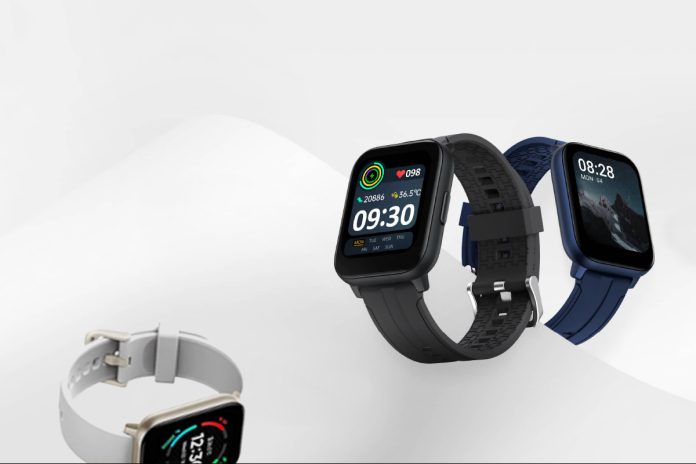
The India wearables market grew 170.3% year-over-year (YoY) in the first quarter (January-March) of this year, shipping 11.4 million units, according to a recent IDC report. The strong momentum in the watch and earwear categories led to the highest ever first-quarter shipments in India.

Watches grew 463.8% YoY in 1Q21 to become the fastest-growing category in wearables, replacing earwear which also maintains a triple-digit growth in 1Q21. The overall wristwear category, which includes wrist bands and watches, grew 74.8% YoY in this quarter, further establishing the importance of fitness and health tracking devices in the country.

However, shipments for overall wearables fell by 24.9% sequentially in 1Q21, owing primarily to a drop in earwear shipments. Following three-quarters of tremendous growth, the earwear category experienced a quarter-over-quarter (QoQ) decline of 28.6% in 1Q21. This decline can be primarily attributed to the leftover inventory with channel partners as it restricted the fresh buying in this quarter.

“The ongoing consumer enthusiasm for earwear devices demonstrates the category’s healthy appetite. Vendors are trying to capitalize on the ride with low and mid-priced devices. This is not only helping lower the category’s ASP but also adding improved features to acquire new users,” said Anisha Dumbre, Market Analyst, IDC India.

In terms of the offline expansion, Dumbre said, “The challenges faced by the offline channel due to pandemic had started to witness some normalcy, and vendors also explored the offline expansion as a crucial means to improve their businesses in both hearables and wristwear category. However, the onset of the second wave has again halted the retail sales as most of the key cities are going through lockdowns, further pushing the offline expansion of companies for the next two quarters.”

The wristbands category saw a decline of 22.4% YoY in 1Q21, finishing the quarter with 760 thousand-unit shipments. The category also witnessed a sequential decline of 13.9% as the users continue to migrate to watches. Xiaomi maintained its lead with a 37.3% category share in this quarter. OnePlus, the new entrant in this category, finished second, replacing Realme with a 25.2% share in 1Q21.

A total of 1.4 million watches were shipped in 1Q21, the second quarter in a row to record over a million shipments for watches. Noise continued to lead the category with a 26.7%share, followed by boAt with a 21.9% share in 1Q21. Being just two-quarters old, with aggressive shipments, boAT has emerged as a strong player in the watch category. With a surge of low-cost devices in the market, the ASP of the category fell to $88, down from $166 in 1Q21. Moreover, the ASP of the category also declined by 31.0% from the previous quarter. This trend highlights that vendors are aggressively looking to capitalize on this market by introducing more affordable devices.

The earwear category grew 209.3% YoY with 9.3 million shipments in the first quarter of the year. boAt, with its multiple devices in its portfolio, continued to lead the overall earwear category with a 29.3% share, followed by OnePlus accounting for a 15.1% share in this category.

The Truly Wireless Stereo (TWS) category grew 284.4% YoY with a 35.0% share in the overall earwear category. This is primarily due to market players focusing more on affordable devices, making TWS devices a popular choice for users. The ASP of the TWS devices further declined by 39.4% YoY in 1Q21. This category was also led by boAt with a 25.6% share and One Plus finished second with an 11.9% share in 1Q21, mainly supported by OnePlus Buds Z.

Talking about the growth of the Indian wearables market, Jaipal Singh, Associate Research Manager, Client Devices, IDC India, said, “From style to health monitoring, the wearables have now become one of the most sophisticated devices in recent times. The category is witnessing a constant shift in the competitive landscape with new players entering the segment.”

“The second wave of the pandemic has caused a sudden stir across vendors and channel partners, impacting the planned launches to postpone and delay in deliveries. However, over last year, the value of wearables has rapidly expanded, and hence, the demand for these devices is expected to continue strong in 2021,” added Singh.

‘TakeChargewithBI’ campaign to instil learning and hope to Covid-hit professionals

0

As our country battles the second wave of the pandemic caused by the deadly coronavirus, many professionals have lost their jobs and some roles have been died out, which has led to demotivated, depressed and helpless professionals. With the objective of instilling hope, updating professional skills, and learning new courses to transform their roles, edtech firm Board Infinity has launched a campaign #TakeChargewithBI, and associated with many business leaders across India to offer pro-bono career coaching sessions and career guidance to students and working professionals affected by the pandemic.

Board Infinity will offer 1:1 coaching session of one’s choice with an industry expert at a nominal fee of Rs 50, proceeds of which will be donated towards Covid Relief Fund.

The campaign #TakeChargewithBI aspires to instil hope in learners by communicating that while they might not be able to control everything around them during these uncertain times, the presence of a mentor can help them cope and make better career decisions. On Board Infinity platform, a learner or professional will be able to opt for any live 1:1 coaching session of their choice with an industry mentor.

Whether it’s career advice, mock interviews, resume review or upskilling/reskilling in data science, digital marketing, product management and more, one can connect with distinguished coaches on the platform.

Mentors such as Sandeep Kumar Paul, Data Science Vice President at Morgan Stanley, Anand Kulkarni, President at Yes Bank, Ruble Joseph, Vice President at eClerx Anurag Mukherjee, Data Science Consultant at EXL, Amar Sane, Senior VP at HDFC Life, Ashish Anand, Performance Marketing Director at Oyo, Nipun Batra, Management Consultant at Accenture, Honey Bohare, Senior Consultant at Deloitte, Sonal Sapale, Ex-Senior Consultant at KMPG are part of the platform.

One of the coaches, 40 under 40 Data Scientist and Vice President at eClerx, Ruble Joseph says, ” Now more than ever it’s time to support the learner community and provide them with the guidance and essential skills to beat the unemployment pandemic.”

Abhay Gupta, Co-founder & COO, Board Infinity, says, “These are highly unprecedented times, and we as an organization have to come forward in whatever capacity to help our country fight the pandemic and other insecurities that are plaguing us, one of them being job losses.”

For the period of the #TakeChargewithBI campaign, the online education platform has slashed the price of all their live 1:1 coaching sessions from Rs 1,000 to a nominal amount of Rs 50. While all the sessions are priced at just Rs 50, one can opt to generously contribute more if they liked the session. All the proceeds from this initiative will be donated to the Covid Relief Fund.

Nokia’s GPON solution to power AirFiber Networks’ fiber expansion in Bangalore, Tamil Nadu

0

Nokia today said that AirFiber Networks, an Internet Service Provider (ISP) in Bangalore and Tamil Nadu, will use its broadband solution to launch high speed data services and expand its network to better serve its subscribers.

Nokia’s Gigabit Passive Optical Networking (GPON) solution will enable AirFiber Networks to provide high-speed broadband services in Bangalore and underpenetrated areas of Tamil Nadu, aiming to reach over 100,000 subscribers in a year. The deployment will be completed over the next few months.

Once deployed, AirFiber Networks subscribers will be able to access network for remote working, and other services over broadband connection such as remote education and healthcare.

Nokia’s GPON solution includes both network and customer premise equipment. Nokia will also provide Network Management Services to ensure timely and efficient execution of the project. Nokia’s fiber access network will help Airfiber Networks establish a strong foundation to easily upgrade to next-generation PON technologies, which allow service providers to rapidly boost capacity and provide superior speeds.

Sasidev MG, Director, AirFiber Networks, said, “Robust and fast broadband has become our lifeline as learning and businesses have moved online. We are committed to providing resilient and world-class broadband services to our subscribers. Nokia is a global technology leader, and we are confident that its solution and expertise will help us address the growing and evolving needs of our subscribers.”

Vinish Bawa, Head of Emerging Business, Nokia India, said, “We are excited to work with AirFiber Networks in helping them set up a best-in-class fiber network to provide the latest and innovative services to their subscribers. Our industry-leading GPON solution will allow AirFiber Networks to launch new premium and innovative services and enhance its services’ overall quality, thereby helping them attract new subscribers.”