
Highlights
- OnePlus is pushing display refresh rates higher with the OnePlus 16 tipped to feature a 1.5K OLED panel at 185Hz up from 165Hz on the OnePlus 15.
- Future flagships may adopt 2K panels capable of supporting ultra-high refresh rates potentially reaching 240Hz.
- 240Hz displays could significantly enhance mobile gaming with smoother visuals, lower input lag and faster responsiveness.
OnePlus appears to be continuing its focus on high-refresh-rate displays. A new leak suggests the company may be exploring even more advanced screen technology for its future flagship smartphones. Here’s more on the latest rumours in regards to future OnePlus devices.
OnePlus Reportedly Focused on Even Higher Refresh Rates
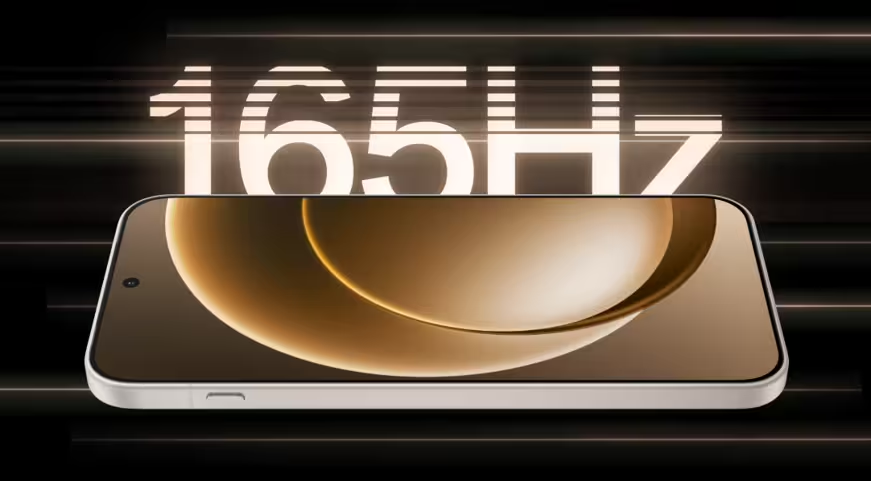
The OnePlus 15 launched with an OLED display with a 1.5K resolution and a 165Hz refresh rate. Recent reports have indicated that the upcoming OnePlus 16 later this year may raise the refresh rate further to 185Hz.
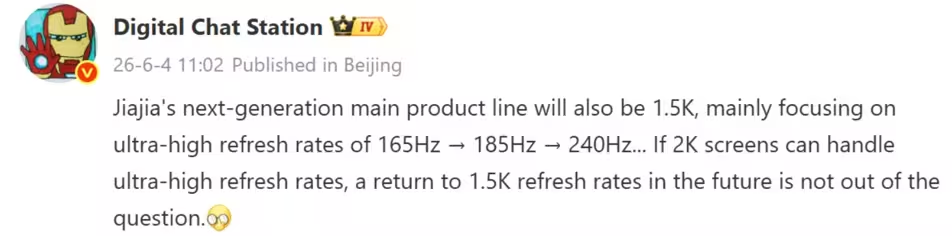
Now, fresh information from reliable tipster Digital Chat Station hints that OnePlus is already evaluating an even bigger leap for future generations.
According to the tipster’s latest post on Weibo, OnePlus is expected to continue using 1.5K resolution displays across its next-generation flagship lineup. The company is said to be prioritising ultra-high refresh rates with plans progressing from the current 165Hz implementation to 185Hz and potentially reaching 240Hz in future devices.
The leak further claims that OnePlus may reconsider adopting 2K displays in its flagship smartphones if panel manufacturers are able to deliver 2K screens capable of supporting extremely high refresh rates without significantly affecting power efficiency, overall performance, or display quality.
At present, most 2K OLED smartphone panels are limited to refresh rates of up to 144Hz. While the OnePlus 16 is rumoured to arrive with a combination of 1.5K resolution and a 185Hz refresh rate, it remains unclear whether the OnePlus 17, which could launch in 2027, will debut with a 2K display running at 185Hz or even 240Hz.
What 240Hz Smartphone Display Can Offer?
Although a 240Hz refresh rate sounds impressive from a technical perspective, its practical advantages may not be immediately noticeable for all users.
Everyday activities such as web browsing, social media scrolling, video streaming, and messaging are already smooth on current 120Hz displays making the jump to significantly higher refresh rates less apparent in regular usage.
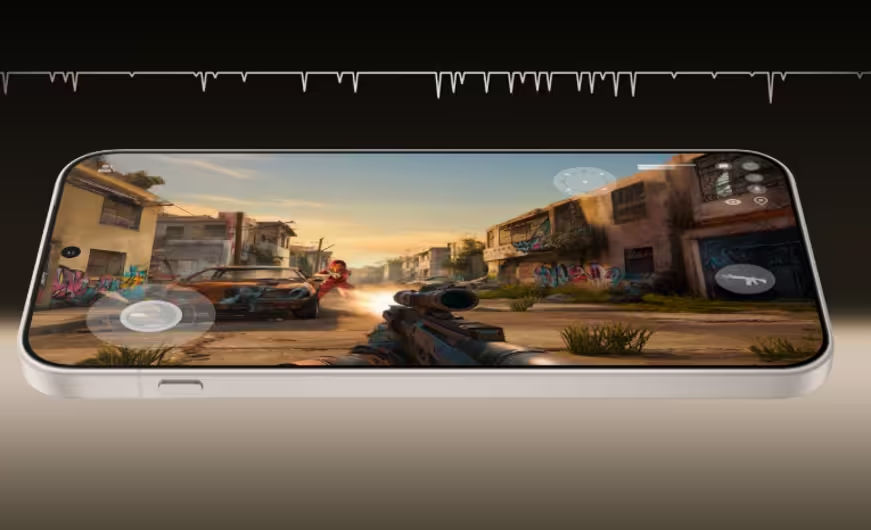
However, the benefits could become more meaningful for mobile gamers. Games that support higher frame rates may deliver smoother visual performance, lower perceived input lag and improved responsiveness. These advantages can be especially useful in competitive genres such as first-person shooters, racing games, and other fast-paced titles where reaction times are critical.
In any case, OnePlus is not expected to be the only brand pushing display technology forward. Flagship smartphones including the Redmi K100 Pro series and the iQOO 16 lineup are also rumoured to arrive later this year with refresh rates reaching up to 185Hz.
We will have to wait and see if OnePlus ultimately becomes the first brand to introduce a 2K 240Hz smartphone display.
FAQs
Q1. What refresh rate is rumoured for the upcoming OnePlus 16?
Answer. The OnePlus 16 is expected to feature a 1.5K OLED display with a 185Hz refresh rate, up from 165Hz on the OnePlus 15.
Q2. Could OnePlus introduce a 2K 240Hz display in future flagships?
Answer. Yes, leaks suggest OnePlus is evaluating 2K panels capable of supporting refresh rates up to 240Hz, if efficiency and performance can be maintained.
Q3. Who benefits most from ultra-high refresh rates like 240Hz?
Answer. Mobile gamers stand to gain the most, with smoother visuals, reduced input lag, and improved responsiveness in fast-paced competitive titles.