Home Blog Page 92

Motorola Could Launch Its First Notebook-Style Foldable in 2026, What We Know So Far

0

Highlights

  • A leak suggests Motorola will launch its first notebook‑style foldable, branded as Razr Fold, in 2026.
  • Promotional material hints at advanced displays, AI features, and a powerful camera system.
  • The device may be teased at Motorola’s January 7 Signature series event or previewed at CES 2026.
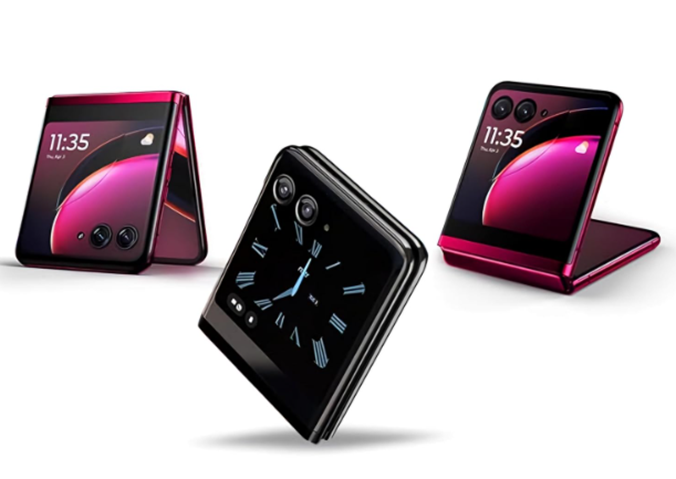
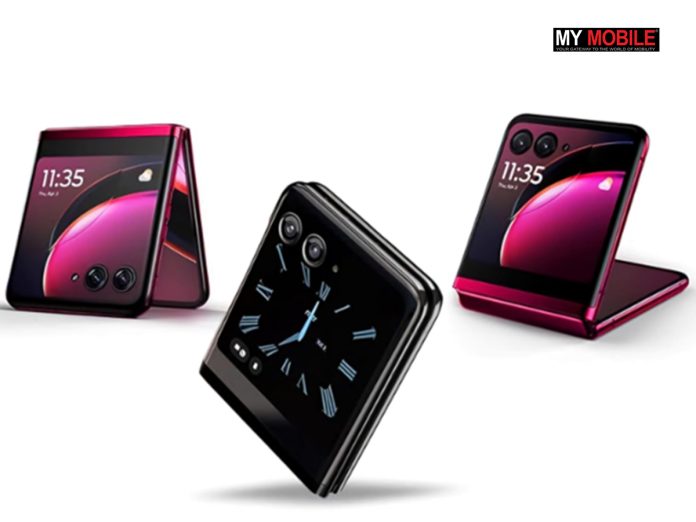
Motorola clamshell-style foldable smartphones. (Image credit - Motorola)
Motorola clamshell-style foldable smartphones. (Image credit – Motorola)

Motorola has so far focused on clamshell-style foldable smartphones, but that might change soon. A new leak suggests that 2026 could mark a major shift in its foldable strategy. If recent information is accurate, the company is preparing to take on Samsung in the notebook-style foldable category with its first such device.

Leak Reveals ‘Razr Fold’ Branding

Motorola Razr Fold leaked marketing material. (Credit - @evleaks on X)
Motorola Razr Fold leaked marketing material. (Credit – @evleaks on X)

Well-known tipster Evan Blass @evleaks shared an image on X (formerly Twitter) that appears to be promotional material for Motorola’s upcoming foldable. The teaser highlights three key points, starting with the name of the device, which is referred to as “the Razr Fold”.

The image also suggests that the smartphone will be launching later this year. According to the teaser, “razr fold will offer brilliant displays, intelligent AI, and an advanced, boundary-breaking camera system, setting a new standard for what’s possible in a foldable device.” Additionally, Motorola notes that more information will be revealed in the “coming months”.

Details about the Razr Fold remain limited for now. However, one thing is certain is when the device eventually launches, it will directly compete with the Samsung Galaxy Z Fold 7. Motorola entered the clamshell foldable market in 2019, just a year after Samsung, but this would be its first attempt at challenging the Korean tech giant in the book-style foldable segment.

Possible Tease Around January 7 Event and CES 2026

While there is no confirmed launch date yet, Motorola is scheduled to unveil its new Signature series on January 7. This event could also be used to hint at or outline the company’s plans for the upcoming foldable.

Motorola has been actively teasing its folding phone lineup in recent weeks. There is also a strong possibility that the brand could preview the notebook-style foldable at the Consumer Electronics Show (CES) in Las Vegas, where it is preparing for a “Smarter AI for all” event.

The same tipster has also recently shared details about the Motorola Signature, which is expected to be a rebranded version of the Motorola Edge 70 Ultra. While not directly linked to the foldable, the specifications give an idea of Motorola’s flagship ambitions.

Motorola Signature Expected Specifications

The Motorola Signature is tipped to feature a 6.8-inch AMOLED display with a resolution of 2780 x 1264 pixels and a 165Hz refresh rate. The display could support Dolby Vision and HDR10+ with peak brightness levels reaching up to 6,500 nits.

Under the hood, the device is expected to be powered by the Snapdragon 8 Gen 5 processor, paired with either 12GB or 16GB of LPDDR5x RAM and up to 1TB of UFS 4.1 storage. According to the leak, the phone may run an Android 16-based UI and could receive seven years of OS updates and security patches.

For cameras, the Motorola Signature is said to feature a triple 50-megapixel rear camera setup. This could include a Sony LYTIA 828 primary sensor with OIS, an ultra-wide lens offering a 122-degree field of view, and a Sony LYTIA 600 periscope telephoto camera with 3x optical zoom.

On the front, the smartphone may sport a 50-megapixel Sony LYTIA 500 camera for selfies and video calls.

FAQs

Q1. What new foldable device is Motorola rumoured to launch in 2026?

Answer. Motorola is expected to release its first notebook‑style foldable smartphone, branded as the Razr Fold, directly competing with Samsung’s Galaxy Z Fold 7.

Q2. When might Motorola reveal details about the Razr Fold?

Answer. While no official launch date is confirmed, Motorola could tease the device at its January 7 Signature series event or preview it during CES 2026 in Las Vegas.

Q3. What are the expected specifications of the Motorola Signature?

Answer. The Motorola Signature may feature a 6.8-inch AMOLED 165Hz display, Snapdragon 8 Gen 5 processor, up to 16GB RAM/1TB storage, triple 50MP rear cameras, and seven years of OS/security updates.


Also Read

https://www.mymobileindia.com/motorola-launches-edge-60-series-and-new-motorola-razr-60-ultra-foldables-globally-edge-60-pro-coming-to-india-soon/

https://www.mymobileindia.com/motorola-signature-leaked-image-reveals-first-look-and-stylus-india-launch-on-january-7/

Vivo X200T and Vivo X300 FE Receive BIS Certification in India, X200T Also Listed on Bluetooth SIG

0

Highlights

  • Vivo X200T and X300 FE received BIS certification in India on December 31, 2025
  • Vivo X200T is also listed on Bluetooth SIG, signalling imminent launches in Q1 2026.
  • X300 FE to feature Snapdragon 8 Gen 5, while Vivo X200T packs Dimensity 9400 Plus.

image

Vivo X300 in the picture for reference. (Image credit – Vivo)

Vivo appears to be gearing up for the launch of more smartphones in India. A recent report had already indicated that four upcoming Vivo phones spanning the V70, T, and Y series received Bureau of Indian Standards (BIS) approval in December 2025. Building on that, a fresh update confirms that two additional Vivo devices were certified by the BIS authority on December 31, 2025. Here’s more on that.

Vivo X300 FE and Vivo X200T Spotted on BIS

image

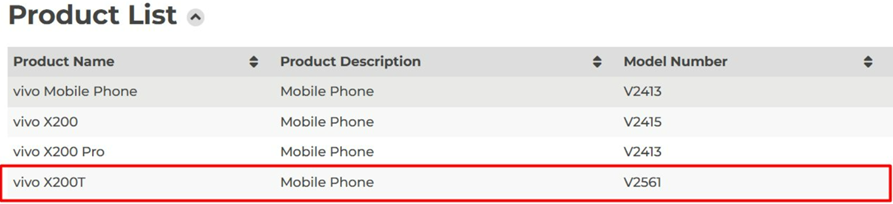
Vivo X300 FE and Vivo X200T BIS certified.

According to the listings, the newly approved smartphones carry model numbers V237 and V2561. These devices have also been spotted on the Bluetooth SIG certification database, where they are listed under the Vivo X300 FE and Vivo X200T names, respectively.

While the BIS certification does not disclose any hardware details, it strongly suggests that both phones are nearing their official debut, likely in the first quarter of this year.

Vivo X200T Appears on Bluetooth SIG Database

image

Vivo X200T Bluetooth SIG listing.

Further confirmation comes from the Bluetooth SIG database, where a Vivo smartphone with model number V2561 has been approved. This listing explicitly confirms that the device will be launched commercially as the Vivo X200T.

Vivo X300 FE Specifications (Rumoured)

image

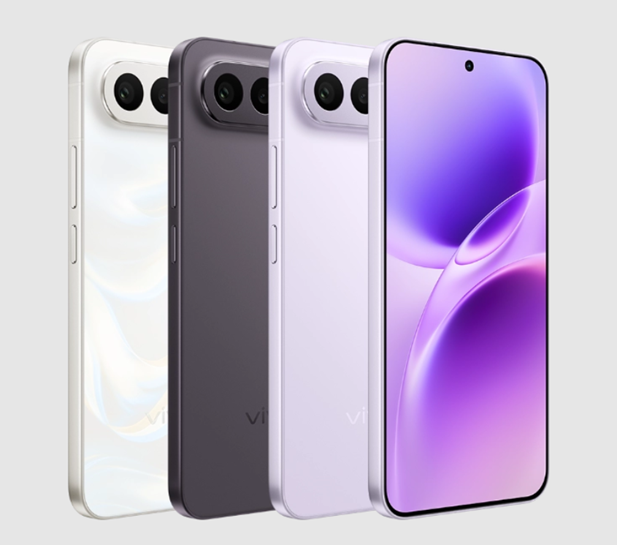
Vivo S50 Pro Mini is in the picture for reference. (Image credit – Vivo)

Based on current rumours, the Vivo X300 FE is expected to be a rebranded version of the Vivo S50 Pro Mini, which was launched in China in December 2025. The handset is said to feature a compact 6.31-inch OLED LTPO display with 1.5K resolution and a 120Hz refresh rate.

It is tipped to be powered by the Snapdragon 8 Gen 5 chipset and pack a 6,500mAh battery supporting 90W wired and 40W wireless charging.

For photography, the device is expected to offer a 50-megapixel front camera along with a triple rear camera setup consisting of a 50-megapixel primary sensor, an 8-megapixel ultra-wide lens, and a 50-megapixel 3x periscope telephoto camera.

Vivo X200T Specifications (Rumoured)

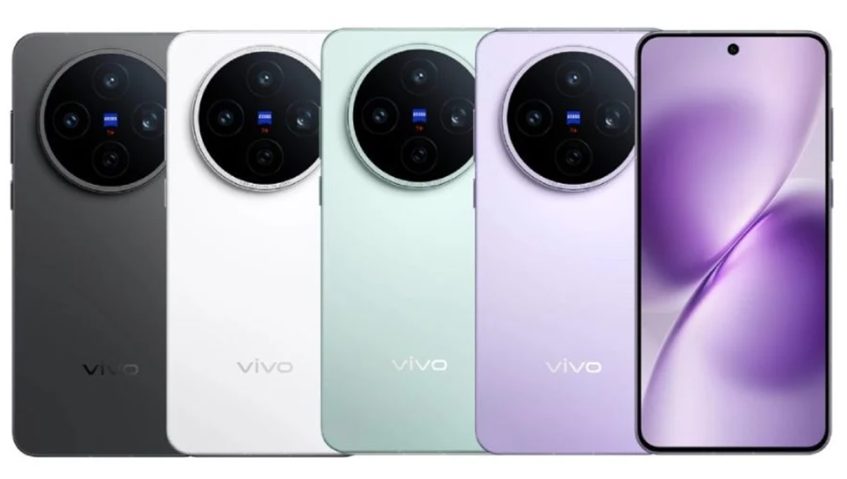
Vivo X200s is in the picture for reference. (Image credit - Vivo)
Vivo X200s is in the picture for reference. (Image credit – Vivo)

The Vivo X200T, on the other hand, is believed to be a rebranded variant of the Vivo X200s that was unveiled in China in April 2025. The X200s features a 6.31-inch OLED LTPO 1.5K 120Hz display and is powered by the Dimensity 9400 Plus processor.

It houses a 6,200mAh battery with support for 90W wired and 40W wireless charging.

On the camera front, the phone includes a 50-megapixel selfie shooter and a triple rear camera system comprising a 50-megapixel main camera, a 50-megapixel ultra-wide sensor, and a 50-megapixel 3x periscope telephoto lens.

Vivo X300 FE and Vivo X200T Price, Launch Timeline (Expected)

In terms of pricing and availability, the Vivo X300 FE is expected to be priced at around Rs 60,000 (about $666) in India. The Vivo X200T is rumoured to be an online-only offering and could launch with a price tag of approximately Rs 55,000 (about $610) by the end of this month.

As of now, Vivo has not officially revealed the launch timeline for the X300 FE.

However, given that the Vivo X200 FE was announced in July 2025, the company may stick to a roughly six-month release cycle, which could see the X300 FE arriving in late January or February.

FAQs

Q1. Which Vivo smartphones recently received BIS certification in India?

Answer. The Vivo X200T and Vivo X300 FE were certified by the Bureau of Indian Standards (BIS) on December 31, 2025. The X200T also appeared on the Bluetooth SIG database, confirming its commercial name.

Q2. What are the rumoured specifications of the Vivo X300 FE and X200T?

Answer. Vivo X300 FE to feature Snapdragon 8 Gen 5 chipset, 6.31-inch OLED LTPO 1.5K 120Hz display, 6,500mAh battery with 90W wired + 40W wireless charging, triple rear cameras (50MP main + 8MP ultra-wide + 50MP telephoto), and a 50MP selfie camera. On the other hand, Vivo X200T might come with Dimensity 9400 Plus processor, same display specs, 6,200mAh battery with identical charging support, and a similar triple rear + 50MP selfie camera setup.

Q3. What is the expected launch timeline and pricing for these devices in India?

Answer. The Vivo X200T is expected to launch by the end of January 2026 as an online-only model priced around ₹55,000

Also Read

https://www.mymobileindia.com/vivo-v70-v70-elite-x200t-and-x300-fe-india-launch-timeline-and-expected-prices-leak-ahead-of-2026-debut/

https://www.mymobileindia.com/vivo-x300-ultra-launch-timeline-leaks-expected-to-feature-massive-7000mah-battery/

MacBook Air Survives Artillery Shrapnel Impact, Continues Working

0

Highlights

  • A Ukrainian soldier shared that a 2020 MacBook Air with M1 chip survived a direct artillery shrapnel strike and still powered on.
  • The laptop’s aluminium chassis was pierced, the display partially damaged, yet the system remained operational despite severe exterior harm.
  • While Apple doesn’t market MacBooks as protective gear, this joins past survival stories like a MacBook Pro stopping a bullet in 2017.

image

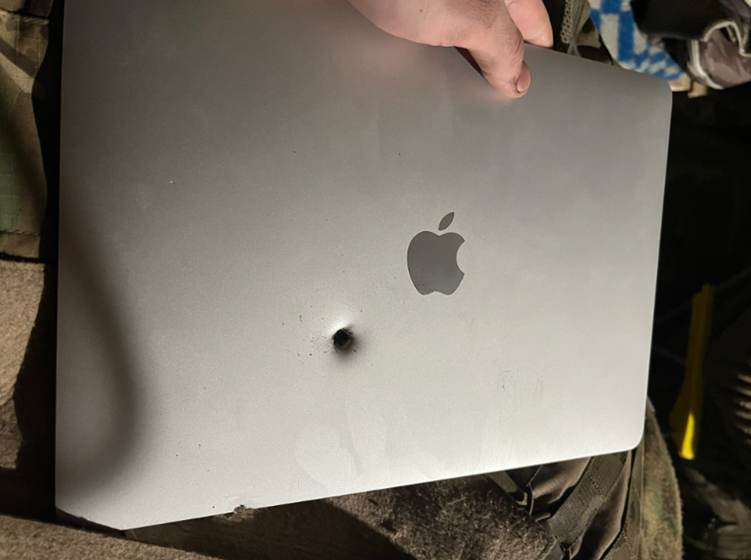
MacBook Air struck by artillery shrapnel. (Image credit – lanevychs on X)

We often hear tech brands making big claims about their lineup’s durability features. While reviewers are always there to share the reality of these claims, we rarely get to see how these claims hold on to a real-world scenario. The MacBook Air recently underwent a real-world durability test. Here’s the full story.

MacBook Air Survives Artillery Shrapnel

image

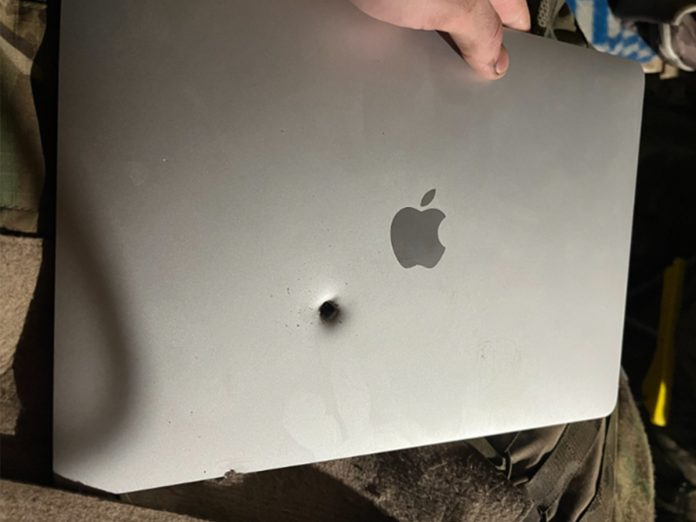
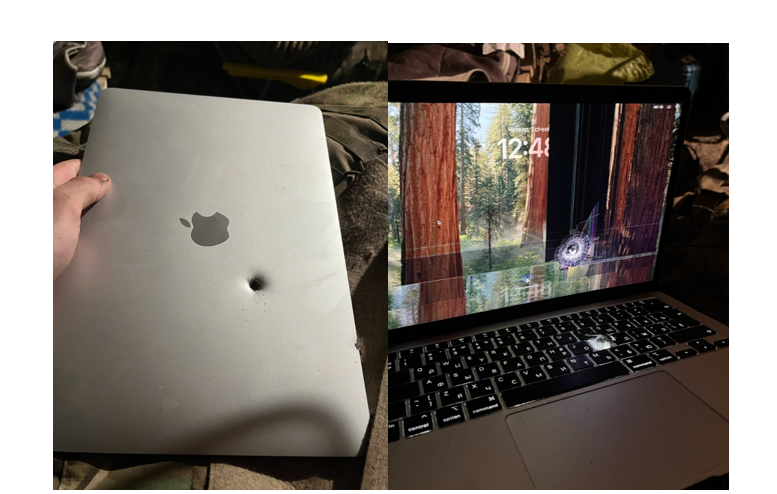
Damaged MacBook Air images. (Image credit – lanevychs on X)

A Ukrainian soldier has shared images showing an Apple MacBook Air that was struck by artillery shrapnel and reportedly continued to function afterwards.

The story was shared on X by Ukraine’s Azov brigade, using the handle @lanevychs. The user posted photos and a short video of a severely damaged 2020 MacBook Air powered by Apple’s M1 chip. In a light-hearted caption, the soldier joked about the laptop’s “ballistic protection level,” claiming the device was hit directly by a fragment from an artillery shell.

The shared images reveal a visible hole torn through the MacBook Air’s aluminium chassis, consistent with damage caused by a high-velocity fragment. While no details were provided about the exact conditions of the strike or where the laptop was located at the time, the nature of the damage suggests a direct impact rather than secondary debris.

Despite the severe exterior damage, the laptop was not rendered completely unusable. Photos and a follow-up video indicate that the MacBook Air still powers on with parts of the display remaining functional.

Although the screen shows clear damage around the impact area, the system appears to remain partially operational. The soldier later mentioned that repairing the device would likely cost almost as much as replacing it with a new one.

About MacBook Air

Apple’s MacBook Air features a unibody design made from recycled aluminium, prioritising lightweight construction and structural rigidity rather than physical protection. The company does not advertise its laptops as protective equipment and there is no suggestion that the MacBook Air is engineered to withstand extreme impacts such as shrapnel strikes.

This is not the first time a MacBook has been linked to an unusual survival story. In 2017, a MacBook Pro was reported to have stopped a bullet during the Fort Lauderdale airport shooting, an incident that also drew widespread attention online.

FAQs

Q1. What unusual incident involved the MacBook Air recently?

Answer. A Ukrainian soldier reported that his 2020 MacBook Air with M1 chip survived a direct artillery shrapnel strike and still powered on.

Q2. What kind of damage did the MacBook Air sustain?

Answer. The aluminium chassis was pierced, the display was partially damaged, but the laptop remained operational.

Q3. Does Apple design MacBooks to withstand such impacts?

Answer No, Apple’s MacBook Air prioritises lightweight construction and rigidity, not ballistic protection. It isn’t engineered to survive extreme impacts like shrapnel.

Also Read

https://www.mymobileindia.com/apple-updates-vintage-and-obsolete-products-list-adds-iphone-11-pro-apple-watch-series-5-and-intel-macbook-air/

https://www.mymobileindia.com/apple-to-go-with-oled-displays-for-macbook-air-ipad-air-and-ipad-mini-by-2026-2028-report/

Instagram Lets Users Add Music to Carousel Photo Posts – Step-by-Step Guide to the New Feature

0

Highlights

  • Instagram now lets users add background music to carousel photo posts, expanding beyond Reels and Stories.
  • Carousels look the same in feeds, but music plays only when opened or swiped, ensuring browsing remains uninterrupted.
  • Users can select multiple photos, tap “Add music” on the editing screen.

image

(Photo by Shutter Speed on Unsplash)

Instagram has rolled out a new feature aimed at users who prefer sharing photos instead of videos. With the latest update, the platform now allows users to add background music to carousel posts, adding an audio element to standard multi-photo uploads. Here’s what we know about the new feature.

Instagram Music-Enabled Photo Carousels

Previously, music on Instagram was largely limited to Reels and Stories. The new update enhances traditional photo posts, especially for users who like to tell visual stories through multiple images without converting them into videos. The feature is available to both personal accounts and creators.

Visually, carousel posts remain the same on profiles and in the feed. They continue to appear like regular photo uploads. The change becomes noticeable only when someone opens the post or starts swiping through the images.

Once the carousel is opened, the selected music track plays in the background. Importantly, the audio does not auto-play while users are scrolling through their feed, ensuring the browsing experience remains uninterrupted unless the post is actively viewed.

How to Create a Carousel Post with BG Music?

To get started, open the Instagram app and tap the “+” button at the bottom of the screen. Choose to create a regular post, not a Reel or Story. Next, select two or more photos from your gallery to create a carousel. After choosing the images, tap “Next” to proceed to the final editing screen.

On the final editing page, Instagram now shows an “Add music” option. Tapping it opens Instagram’s music library, where users can browse suggested tracks or search for a specific song.

Any tracks you’ve previously saved on Instagram will also be visible here. Once a song is selected, it is attached to the carousel and will play when viewers open or swipe through the images.

After adding music, you can finish the post as usual by writing a caption, tagging people, or adding a location. Tap “Share” to publish the carousel.

Once live, the post behaves like a standard photo carousel on your profile.

FAQs

Q1. What new feature has Instagram introduced for photo posts?

Answer. Instagram now allows users to add background music to carousel photo posts, enhancing multi-image uploads.

Q2. How does music playback work in carousel posts of Instagram?

Answer. Music plays only when someone opens or swipes through the carousel; it doesn’t auto-play in the feed.

Q3. How can users add music to a carousel post?

Answer. On the final editing screen, tap “Add music,” choose a track from Instagram’s library, then publish the post.

Also Read

https://www.mymobileindia.com/instagram-head-adam-mosseri-warns-ai-generated-content-could-flood-feeds-says-fingerprinting-real-media-may-be-the-answer/

https://www.mymobileindia.com/instagram-may-focus-on-long-form-video-and-premium-content-hints-adam-mosseri/

iQOO 15R Spotted on Bluetooth SIG Certification, Launch Could Be Around the Corner

0

Highlights

  • The iQOO 15R has appeared on the Bluetooth SIG database, signaling its launch is near.
  • It is expected to be a rebranded iQOO Z11 Turbo and may feature Snapdragon 8 Gen 5, a 6.59-inch display, and a 200MP primary camera.
  • It is further tipped to include a metal frame, glass back, IP68/IP69 water resistance and an ultrasonic fingerprint scanner.

image

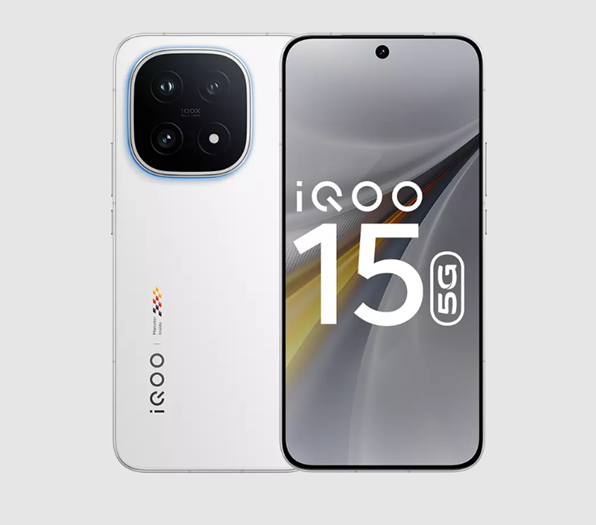
iQOO 15 in the picture for reference. (Image credit – iQOO)

The iQOO 15 may soon be joined by another smartphone in the lineup. A new iQOO device has surfaced on a certification platform, revealing the name iQOO 15R for the first time. The model is expected to be positioned below the flagship model and could arrive as a rebranded version of the upcoming iQOO Z11 Turbo. Here’s what we know so far.

iQOO 15R Appears on Bluetooth SIG Database

image

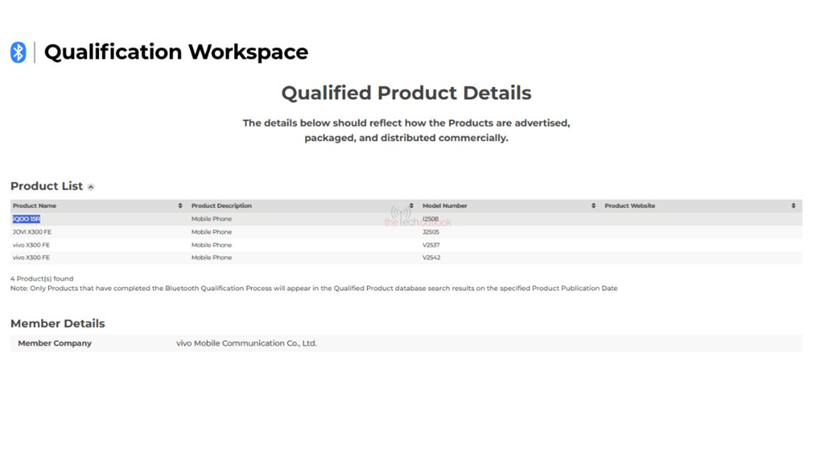
iQOO 15R Appears on Bluetooth SIG Database.

An unannounced iQOO smartphone carrying the model number I2508 has been listed on the Bluetooth SIG website. Such certifications typically indicate that a device is moving closer to an official launch. The listing confirms the moniker iQOO 15R, marking its first appearance in public records.

As is common with Bluetooth SIG filings, the listing does not disclose hardware specifications or design details. However, this is the first concrete reference to the iQOO 15R. Interestingly, the same model number had earlier appeared on the IMEI database, where it was associated with the name iQOO Neo 11 and was reportedly intended for both Indian and global markets.

The latest Bluetooth SIG entry now suggests that the device may instead launch under the iQOO 15R branding. According to a report by TechOutlook, the handset could be a rebranded version of the iQOO Z11 Turbo, which is expected to launch in China in the near future.

The report adds that the smartphone will be powered by Qualcomm’s Snapdragon 8 Gen 5 chipset. The same processor is said to be used in the OnePlus Ace 6T for China and the OnePlus 15R in global markets.

What Else Do We Know?

Further details indicate that the device is internally codenamed The Battle Spirit. It is expected to feature a 6.59-inch display and a 200-megapixel “ultra-clear” primary rear camera. The handset is also said to come with a metal frame, a glass back panel, and rounded edges.

In terms of durability and security, the upcoming iQOO phone is claimed to offer IP68 + IP69-rated dust and water resistance, along with an ultrasonic fingerprint scanner for biometric authentication. With multiple certifications now in place, the iQOO 15R’s official launch could be imminent.

FAQs

Q1. What is the iQOO 15R and where was it spotted?

Answer. The iQOO 15R is a new smartphone that appeared on the Bluetooth SIG certification database, confirming its name publicly for the first time.

Q2. What are the expected specifications of the iQOO 15R?

Answer. Reports suggest it may feature a Snapdragon 8 Gen 5 chipset, a 6.59-inch display, and a 200MP primary rear camera.

Q3. What design and durability features will the iQOO 15R offer?

Answer. The device is tipped to include a metal frame, glass back, rounded edges, IP68/IP69 dust and water resistance, and an ultrasonic fingerprint scanner.

Also Read

https://www.mymobileindia.com/iqoo-z11-turbo-design-and-key-specs-confirmed-snapdragon-8-gen-5-200mp-camera-7600mah-battery-tipped/

https://www.mymobileindia.com/iqoo-z11-turbo-teased-in-china-launch-likely-in-january-2026-snapdragon-8-gen-5-and-8000mah-battery-tipped/

Nothing and CMF Could Launch Multiple Pro Smartphones and New Accessories in Early 2026

0

Highlights

  • Nothing is reportedly preparing three new phones for Q1 2026 with two carrying the “Pro” branding under Nothing and CMF.
  • The devices may feature both Qualcomm Snapdragon and MediaTek Dimensity processors.
  • Nothing is also said to be developing fresh accessories compatible with both upcoming and existing Nothing/CMF products.

image

Nothing CMF Phone 1 in the picture for reference. (Image credit – Samsung)

Nothing appears to be gearing up for an eventful start to 2026 as a new leak suggests that several smartphones and accessories are currently in development. The upcoming lineup could include premium offerings alongside new products under the CMF brand. Here’s what we know so far.

Multiple Nothing and CMF Pro Phones Tipped for Q1 2026

The information comes from well-known tipster Yogesh Brar on X (formerly Twitter). According to the post, Nothing is reportedly working on three new smartphones across its Nothing and CMF lineups with a market launch expected in the first quarter of 2026. Notably, two of these devices are said to feature the “Pro” branding.

At this stage, it remains unclear whether the upcoming models include a CMF Phone Pro, a flagship Nothing Phone 3 Pro, or a new Nothing Phone 4a Pro variant. For context, the Nothing Phone (3a) series was introduced in March 2025, making the Phone (4a) and Phone (4a) Pro strong candidates among the rumoured devices.

The tipster also claims that the upcoming phones will use a mix of Qualcomm Snapdragon and MediaTek Dimensity chipsets. This suggests that Nothing may be planning a diverse portfolio, ranging from budget or mid-range smartphones to more premium and high-end models.

In addition to smartphones, the report mentions that Nothing is developing several new accessories. These could be designed specifically for the upcoming phones or made compatible with existing Nothing and CMF devices.

As with any leak, the details are not officially confirmed. For now, this information should be taken cautiously until Nothing shares more concrete announcements in the coming months.

FAQs

Q1. What smartphones are Nothing and CMF expected to launch in early 2026?

Answer. Reports suggest three new smartphones are in development, with two carrying the “Pro” branding.

Q2. Which processors will power the upcoming Nothing and CMF devices?

Answer. The new phones are tipped to use a mix of Qualcomm Snapdragon and MediaTek Dimensity chipsets.

Q3. Are Nothing and CMF accessories also part of the 2026 lineup?

Answer. Yes, Nothing is reportedly working on new accessories that may complement upcoming phones or support existing devices.

Also Read

https://www.mymobileindia.com/nothing-os-4-0-stable-update-begins-rolling-out-for-cmf-phone-1-cmf-phone-2-pro/

https://www.mymobileindia.com/nothing-phone-4a-and-phone-4a-pro-specs-and-pricing-leaked-new-headphone-a-also-on-its-way/

Apple Planning Affordable 12.9-Inch MacBook With iPhone Chip for Spring 2026 Launch

0

Highlights

  • Apple is reportedly developing a 12.9-inch MacBook, set for spring 2026, positioned below the MacBook Air lineup.
  • The device may use the A18 Pro processor from the iPhone 16 Pro, offering strong single-core performance and long battery life.
  • It is expected to be cheaper than the $799 MacBook Air.

image

We might get an affordable 12.9-inch MacBook with an iPhone chip. (Image credit – Apple)

Apple may be gearing up to introduce a more affordable MacBook option that focuses on portability while undercutting its current lineup on price, according to a new industry report.

Market research firm TrendForce claims that Apple is developing a compact MacBook featuring a 12.9-inch display with a launch timeline reportedly set for spring 2026. If the information is accurate, the new model would sit below the existing MacBook Air range and mark Apple’s return to smaller notebooks, years after discontinuing the 12-inch MacBook.

The rumoured screen size would be slightly smaller than the 13.6-inch MacBook Air. However, Apple could rely on slim bezels to keep the overall footprint close to that of a standard keyboard. This design approach would mirror the ultra-light 12-inch MacBook sold between 2015 and 2017, a device that was widely appreciated for its portability but often criticised for limited performance.

This time around, performance may not be a major drawback. TrendForce suggests that the upcoming MacBook could be powered by the Apple A18 Pro chip, the same processor used in the iPhone 16 Pro series. While it would not be part of Apple’s M-series lineup, early benchmark expectations point to a significant performance leap over the Intel processors used in the older 12-inch MacBook. Single-core performance is said to be several times higher, while multi-core results could come close to the original M1 in lighter workloads.

Thermal efficiency is also expected to be a key strength. The A18 Pro is designed to operate within the tight thermal limits of an iPhone without active cooling, which could allow the MacBook to deliver silent operation and strong battery life. As a result, the device would likely be aimed at everyday productivity and travel use rather than sustained heavy workloads.

Pricing details remain unknown. However, TrendForce indicates that Apple may position this model below the MacBook Air, which currently starts at around $799 in select markets. Using an iPhone-class chip could help Apple keep costs in check, particularly as memory prices continue to rise.

The reported launch window could also be strategic. Analysts expect laptop prices to increase sharply in 2026 due to DRAM shortages driven by growing demand from AI servers. A lower-cost MacBook could help Apple remain competitive as other PC manufacturers face supply constraints and higher component costs.

At this stage, Apple has not confirmed any such product. Still, if the report proves accurate, the company may be revisiting the compact MacBook concept with significantly fewer compromises.

FAQs

Q1. What is Apple reportedly planning to launch in 2026?

Answer. Apple is said to be developing a compact 12.9-inch MacBook aimed at affordability and portability, expected in spring 2026.

Q2. What chip will power this new MacBook?

Answer. The device may use the A18 Pro chip from the iPhone 16 Pro series, offering strong single-core performance and near-M1 multi-core results.

Q3. How will Apple position this MacBook in terms of pricing?

Answer. TrendForce suggests it will be priced below the MacBook Air (starting at ~$799), helping Apple stay competitive amid rising laptop costs in 2026.

Also Read

https://www.mymobileindia.com/apple-macbook-pro-redesign-tipped-for-2026-what-are-major-rumoured-upgrades/

https://www.mymobileindia.com/next-gen-apple-macbook-pro-with-oled-display-and-touch-support-expected-between-late-2026-and-early-2027/

Apple Vision Pro Struggles to Gain Traction as Sales, App Support and Marketing Slow Down, Says Report

0

Highlights

  • Apple shipped around 390,000 Vision Pro units in 2024, but shipments dropped to just 45,000 in Q4 2025.
  • Apple cut digital ad spend by over 95%, expanded availability slowly and faces limited VisionOS apps.
  • Global VR shipments fell 14% year-on-year with Meta’s cheaper Quest dominating almost 80% of sales.
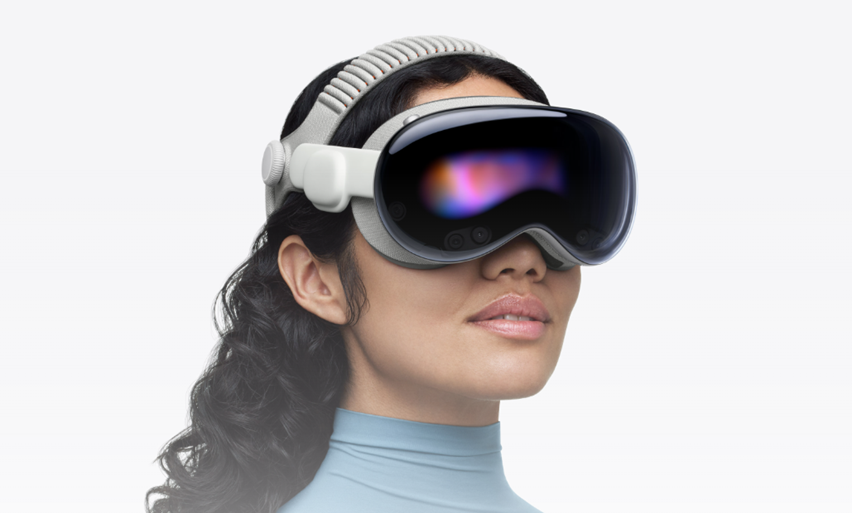
Apple Vision Pro. (Image credit - Apple)
Apple Vision Pro. (Image credit – Apple)

Apple’s Vision Pro mixed reality headset continues to face lacklustre demand as a new report indicates that consumer interest remains limited more than a year after its debut.

According to a report by the Financial Times, data from IDC suggests that Apple shipped around 390,000 Vision Pro units in 2024. However, shipments are said to have slowed sharply since then with IDC estimating that Apple would ship only about 45,000 units in the most recent quarter of 2025.

The report highlights how these numbers pale in comparison to Apple’s core products such as iPhones, iPads, and MacBooks, which sell in the millions every quarter. It also notes that Luxshare, the contract manufacturer responsible for assembling the Vision Pro, reportedly paused production of the headset at the beginning of 2025.

Marketing efforts for the Vision Pro also appear to have been significantly scaled back. Data from Sensor Tower indicates that Apple has reduced its digital advertising spend for the headset by more than 95% over the past year in key markets including the United States and the United Kingdom. The report further points out that Apple made little progress in expanding the Vision Pro’s international availability throughout 2025.

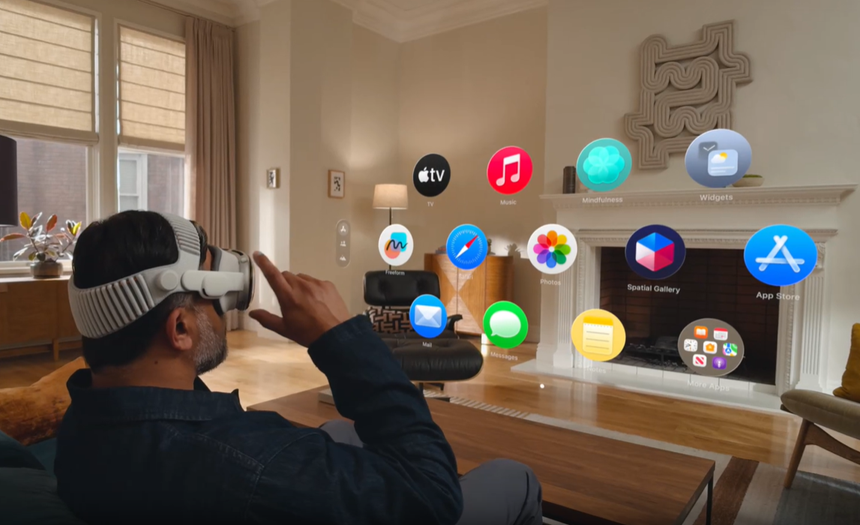
Apple Vision Pro. (Image credit - Apple)
Apple Vision Pro. (Image credit – Apple)

Analysts cited by the Financial Times point to several factors behind the headset’s limited success. Morgan Stanley analysts reportedly said that the cost, form factor and the lack of VisionOS native apps are the reasons why the Vision Pro never sold broadly.”

Since its launch in 2024, the device has also faced criticism for practical issues such as its weight, discomfort during prolonged use, and relatively short battery life.

Apple is also said to be grappling with a classic platform adoption problem. With a smaller user base, developers have less incentive to build apps, while the limited app ecosystem makes the device less appealing to potential buyers. Apple claims that around 3,000 apps are designed specifically for the Vision Pro, but this figure is far below the rapid expansion seen with the iPhone App Store following its launch in 2008.

Appfigures adds that many of these Vision Pro apps are likely niche or industry-focused rather than mainstream consumer offerings.

The difficulties faced by the Vision Pro mirror broader challenges in the virtual reality market as a whole. Counterpoint Research reports that global VR headset shipments fell 14% year on year.

Meta continues to dominate the segment, accounting for roughly 80% of global VR headset sales with its Quest lineup. While Meta’s headsets are far more affordable than the Vision Pro, they are also less advanced technologically. Even so, Meta has reportedly reduced its own VR hardware marketing spend, suggesting that consumer demand across the category remains subdued.

Taken together, the data suggest that Apple’s ambitious push into spatial computing has yet to resonate with a mass audience as high pricing, limited content, and a cooling VR market continue to weigh on the Vision Pro’s prospects.

FAQs

Q1. How many Apple Vision Pro units have been shipped so far?

Answer. IDC data shows Apple shipped about 390,000 units in 2024, but shipments dropped to only around 45,000 in Q4 2025.

Q2. Why is the Vision Pro struggling to gain traction?

Answer. Analysts cite high cost, bulky form factor, short battery life, and a lack of VisionOS native apps as key reasons.

Q3. How does the Vision Pro compare to competitors in the VR market?

Answer. Meta’s Quest headsets dominate with ~80% of global sales, offering cheaper but less advanced devices, while overall VR shipments fell 14% year-on-year.

Also Read

https://www.mymobileindia.com/new-apple-vision-pro-with-m5-chip-now-assembled-in-vietnam-as-apple-expands-supply-chain-beyond-china/

https://www.mymobileindia.com/gurman-apple-vision-pro-is-set-to-get-playstation-vr-controller-support-this-year/

OpenAI’s Upcoming AI Device Tipped to Be ‘Audio-Based’ as Company Revamps Voice Models

0

Highlights

  • OpenAI is reportedly working on a consumer device focused on voice interaction, expected in late 2026 or early 2027.
  • A new audio AI model debuting in early 2026 will feature natural speech, interruption handling and simultaneous conversation.
  • OpenAI is pursuing screenless, AI-native hardware like smart speakers or wearables, positioning itself in the voice assistant market.

image

(Photo by Andrew Neel on Unsplash)

OpenAI is reportedly doubling down on audio-focused artificial intelligence as it prepares for the launch of a new consumer device that prioritises voice interaction instead of traditional screens. The company is said to be reorganising internal teams and upgrading its voice technologies to support this next phase of its product strategy.

According to a recent report published by The Information, OpenAI has consolidated its engineering, product, and research teams over the past two months to accelerate progress in audio AI. The move is aimed at strengthening the company’s voice models, which are currently considered less advanced than its text-based systems that power ChatGPT.

People familiar with the matter told The Information that this renewed focus on audio is closely linked to OpenAI’s plans for a new consumer hardware product described as “largely audio-based.” The device is expected to arrive in roughly a year, potentially launching in late 2026 or early 2027.

It may also be part of a broader lineup that could include smart glasses or screenless smart speakers designed to act as AI companions rather than conventional gadgets.

A major step in this initiative is the planned debut of a new, more advanced audio model in early 2026, possibly by the end of the first quarter. The report claims this model will deliver more natural-sounding speech, improved handling of interruptions, and the ability to talk at the same time as the user.

These features are expected to go beyond current voice AI systems, which often struggle with overlapping speech and real-time conversational flow.

OpenAI’s hardware ambitions gained further traction following its acquisition of io Products in May 2025. The startup, founded by former Apple design chief Jony Ive, was reportedly bought for around $6.5 billion. Ive and his team are now playing a key role in shaping OpenAI’s design direction with a clear focus on reducing reliance on screens and addressing shortcomings seen in earlier consumer devices. Observers suggest that an audio-first product aligns with Ive’s vision of less addictive, more ambient computing experiences.

While concrete details about the device’s form factor remain scarce, earlier leaks have hinted at anything from a desk-based unit to wearable hardware. The emphasis on voice interaction echoes CEO Sam Altman’s criticism of “bolting AI onto existing” products. Instead, OpenAI appears to be pursuing AI-native designs built from the ground up.

As of now, OpenAI has not officially commented on these developments. If successful, this strategy could put OpenAI in direct competition with established voice assistant players such as Apple and Google.

FAQs

Q1. What kind of device is OpenAI planning to launch?

Answer. OpenAI is working on a new consumer hardware product described as “largely audio-based,” focusing on voice interaction instead of traditional screens.

Q2. When is the OpenAI device expected to arrive?

Answer. The audio-first device is tipped to launch in late 2026 or early 2027, following the debut of a new advanced audio model in early 2026.

Q3. Why did OpenAI acquire io Products, and how does it fit into this plan?

Answer. OpenAI bought io Products (founded by Jony Ive) for around $6.5 billion to shape its design direction, emphasising screenless, ambient computing experiences that align with Ive’s vision of less addictive, AI-native devices.

Also Read

https://www.mymobileindia.com/openai-introduces-chatgpt-adjustable-personality-controls-with-new-characteristics-feature/

https://www.mymobileindia.com/openai-introduces-chatgpt-adjustable-personality-controls-with-new-characteristics-feature/

DeepSeek Unveils mHC AI Architecture to Cut AI Training Costs and Improve Model Stability

0

Highlights

  • DeepSeek introduced Manifold-Constrained Hyper-Connections (mHC) to improve large language model training efficiency and reduce instability.
  • mHC restructures shortcut connections across neural layers, projecting them onto a manifold to keep signals stable and prevent failed training runs.
  • Trials on models up to 27B parameters showed improved stability and scalability.

image

DeepSeek Unveils mHC AI Architecture.

The Chinese artificial intelligence startup, DeepSeek, drew global attention in November 2024 with its R1 AI model. The same company has now introduced a new training architecture designed to make large language model (LLM) development more efficient and reliable.

In a newly published research paper, the company outlines an approach called Manifold-Constrained Hyper-Connections (mHC), which aims to reduce training instability, a common issue that can lead to wasted compute resources and stalled model development.

DeepSeek Introduces a New AI Training Approach

The research paper, published on arXiv and listed on Hugging Face, details how the mHC architecture modifies the way neural network layers communicate during training. According to DeepSeek’s researchers, the method restructures shortcut connections within models to better control how information flows across layers.

image

The research paper was published on arXiv and listed on Hugging Face.

Modern large-scale AI models often rely on shortcut pathways that allow data to bypass certain processing stages, helping maintain signal strength across deep networks. However, when these shortcuts are expanded without constraints, they can introduce instability, making large models harder to train end-to-end. DeepSeek’s mHC architecture addresses this by projecting these connections onto a mathematically defined structure known as a manifold, ensuring signals remain stable as they pass through the network.

In simpler terms, large AI models consist of billions of parameters, each influencing how the system responds to a prompt. This is why identical queries can produce slightly different answers across platforms such as ChatGPT, Gemini, or Claude. Training involves carefully adjusting all these parameters to achieve the desired behaviour.

Problems arise when signals within the network either become too strong or fade away too quickly. When this happens, training can fail midway, forcing developers to restart the process. Such interruptions waste time, money, and valuable computer power. The mHC design aims to prevent this by keeping shortcut connections predictable and mathematically well-behaved during training.

Tested Across Multiple Model Sizes

DeepSeek evaluated the new architecture across models of varying scales, including a 27-billion-parameter model trained on a dataset proportional to its size, along with smaller versions. These experiments were intended to understand how dataset size and compute requirements interact with the mHC design. The results showed that the architecture helps maintain stability and scalability even in large models without introducing significant overhead.

While mHC does not directly reduce the power consumption of GPUs or specialised AI accelerators, its key advantage lies in minimising failed training runs. By reducing the need to restart training, the approach can significantly lower the total compute and energy used over an entire training cycle.

Real-world Impact Still To Be Seen

At present, the mHC architecture has not been integrated into any commercial AI models, making it difficult to assess its performance under real-world conditions. However, on paper, it presents a compelling alternative to existing training techniques and could represent a more robust way to build large AI systems.

The broader impact of DeepSeek’s approach will become clearer once independent researchers adopt the architecture, publish comparative results, or subject the paper to peer review and further scrutiny.

FAQs

Q1. What is DeepSeek’s new mHC architecture designed to do?

Answer. The Manifold-Constrained Hyper-Connections (mHC) approach is designed to reduce training instability and make large language model development more efficient.

Q2. How does DeepSeek’s mHC improve AI training compared to traditional methods?

Answer. It restructures shortcut connections across neural layers by projecting them onto a manifold, keeping signals stable and preventing failed training runs.

Q3. Has DeepSeek’s mHC been used in commercial AI models yet?

Answer. No, mHC has only been tested in research settings so far; its real-world impact will be clearer once independent researchers adopt and review it.

Also Read

https://www.mymobileindia.com/deepseek-rolls-out-v3-1-terminus-update-with-enhanced-language-consistency-and-agent-upgrades/

https://www.mymobileindia.com/union-minister-vaishnaw-india-to-develop-affordable-ai-model-to-rival-chatgpt-deepseek/