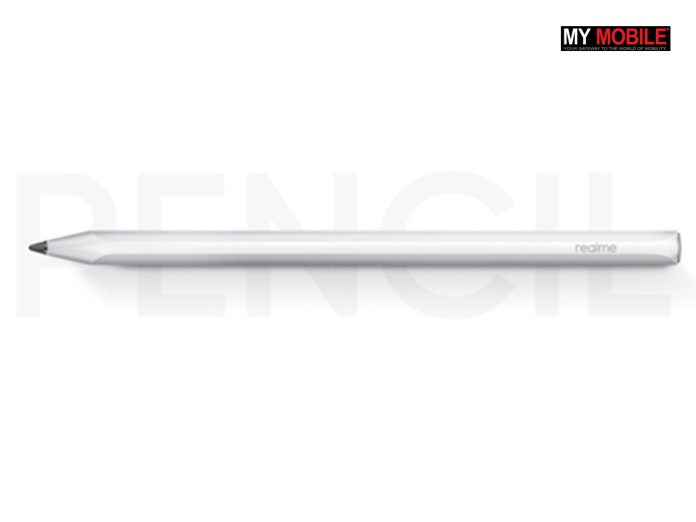
A new Realme Smart Pen with the model number RMP2506 has surfaced on the Element certification database, revealing its charging capabilities and hinting at its upcoming global availability. The certification has disclosed key details about this yet-to-be-announced accessory, further fueling speculation about its connection to the upcoming Realme Pad 3.
Realme Smart Pen (RMP2506) Listed on Element Certification
Caption – Realme Smart Pen (RMP2506) Listed on Element Certification. (Screenshot by TheTechOutlook)
According to the listing (via The Tech Outlook), the Realme Smart Pen has been certified under the certificate number GB-EMT 2631. It is officially listed with the name “Realme Smart Pen” and supports 2.5W charging (5 Vdc × 0.5 A = 2.5W). The certification also notes that the device’s operating ambient temperature will range between 0°C and 35°C.
Additionally, the appearance of EU and SA country codes in the certification database suggests that the smart pen will be released in European and Saudi Arabian markets.
Beyond these details, no further confirmed specifications have surfaced yet. However, its timing is notable, as Realme is reportedly working on its upcoming Realme Pad 3 tablet.
Could the Smart Pen Be Designed for the Realme Pad 3?
Recent leaks hint that the Realme Pad 3 may launch in India either in December 2025 or January 2026. It is revealed to have both Wi-Fi-only and 5G variants carrying similar model numbers, RMP2501 and RMP2502, respectively. The Wi-Fi model has already been spotted on the SGS certification site, while the 5G variant appeared on the Bluetooth SIG database.
The tablet is expected to arrive in 8GB/128GB and 8GB/256GB storage options and may be offered in Space Grey and Champagne Gold colours. While nothing is officially confirmed, the newly certified RMP2506 Smart Pen could very well be an accessory designed specifically for the upcoming Realme Pad 3.
More details are expected to appear in the coming weeks.
FAQs
Q1. What details were revealed about the Realme Smart Pen (RMP2506)?
Answer. The Element certification lists the Realme Smart Pen with 2.5W charging support (5 Vdc × 0.5 A) and an operating temperature range of 0°C to 35°C.
Q2. Where is the Realme Smart Pen expected to launch?
Answer. The certification includes EU and Saudi Arabia country codes, suggesting availability in European and Saudi Arabian markets.
Q3. How is the Realme Smart Pen connected to the upcoming Realme Pad 3?
Answer. Its timing aligns with leaks of the Realme Pad 3, expected in late 2025 or early 2026, hinting the pen may be designed as an accessory for the tablet.
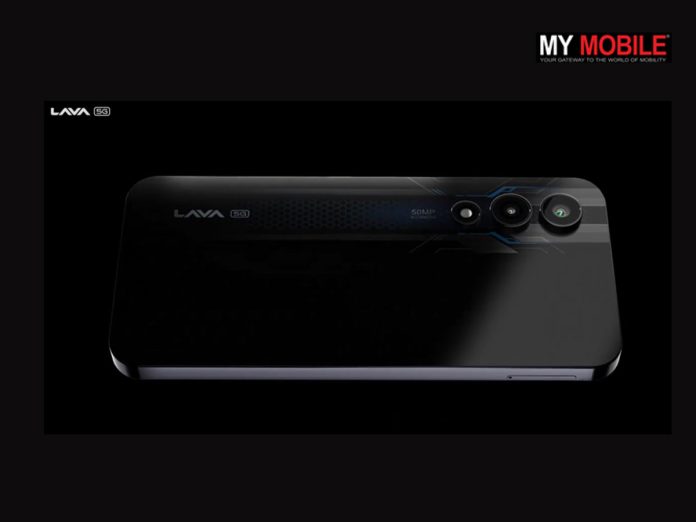
Lava Play Max teasers show a dual rear camera setup with a 50MP main sensor, flat plastic frames, and a glowing decorative pattern around the module.
Expected features include MediaTek Dimensity 7300 SoC, 6GB/8GB RAM, 6.72‑inch FHD+ 120Hz display, Android 15, UFS 3.1 storage, and vapour chamber cooling for gaming.
It is likely to debut in December in black and white variants, priced under ₹12,000.
Lava Play Max revealed in an official teaser. (Image credit – Lava)
Lava is getting ready to expand its Play series in India with the launch of the new Lava Play Max. The company has begun teasing the upcoming smartphone, offering the first look at its design, while leaks reveal price details and major specifications. Here’s what we know so far.
Multiple official teaser videos were shared by the official Lava account on X recently. The video shows a dual rear camera setup, vertically aligned with the primary shooter expected to be a 50-megapixel main sensor. The design also hints at a unique decorative pattern around the camera module. This pattern may illuminate or glow in the dark, adding a visual highlight to the smartphone’s rear panel.
The device is also expected to feature flat plastic frames. Since the teaser lacks visible antenna lines, the Play Max is likely to sport a plastic body instead of a metal one.
Caption – Lava Play Max leaked poster. (Image credit – @passionategeekz on X)
Meanwhile, tipster Paras Guglani @passionategeekz on X shared multiple posts revealing key updates on the upcoming phone. In one of the posts, Guglani claims that the Lava Play Max recently appeared on the BIS (Bureau of Indian Standards) website under the listing name Lava Storm Gamer.
The tipster also shared an official-looking promotional poster suggesting the phone will launch in black and white colour options.
Seperately, the tipster revealed that the Lava Play Max will feature the same MediaTek Dimensity 7300 SoC as the Ultra and may come in 6GB and 8GB RAM options. One notable upgrade could be a larger 6.72-inch full-HD+ display featuring a smooth 120Hz refresh rate. The upcoming smartphone is also expected to run on Android 15 out of the box and include UFS 3.1 storage, promising faster read and write speeds.
Caption – Lava Play Max revealed in an official teaser. (Image credit – Lava)
On the camera front, the device is likely to include a 50-megapixel AI-supported primary camera with EIS (Electronic Image Stabilisation) for improved steadiness. For better heat management during gaming or intensive tasks, the Lava Play Max may also be equipped with a vapour chamber cooling system.
Exclusive: Lava Play Max 5G Specs and design!!
– DM 7300
– 6.72″ FHD+ 120hz
– UFS 3.1
– 50MP AI Camera with EIS
– 8GB/6GB
– Android 15
– Vapour chamber
– Under 12K
– December launch #Lava#LavaPlayMaxpic.twitter.com/pM9uwZ71Kl
According to the tipster, the Lava Play Max is set to launch in India sometime in December with an expected price of under Rs. 12,000. This positions it lower than the previously launched Lava Play Ultra 5G, which debuted at Rs. 14,999 for the 6GB+128GB model and Rs. 16,499 for the 8GB+128GB variant.
FAQs
Q1. What are the key design highlights of the Lava Play Max?
Answer. The Lava Play Max features a dual rear camera setup with a 50MP main sensor, flat plastic frames, and a decorative glowing pattern around the camera module.
Q2. What specifications are expected for the Lava Play Max?
Answer. It is tipped to include a MediaTek Dimensity 7300 SoC, 6GB/8GB RAM options, a 6.72‑inch FHD+ 120Hz display, Android 15, UFS 3.1 storage, and vapour chamber cooling for gaming.
Q3. When will the Lava Play Max launch in India and at what price?
Answer. The smartphone is expected to launch in December in black and white variants, priced under ₹12,000, making it more affordable than the Lava Play Ultra 5G.
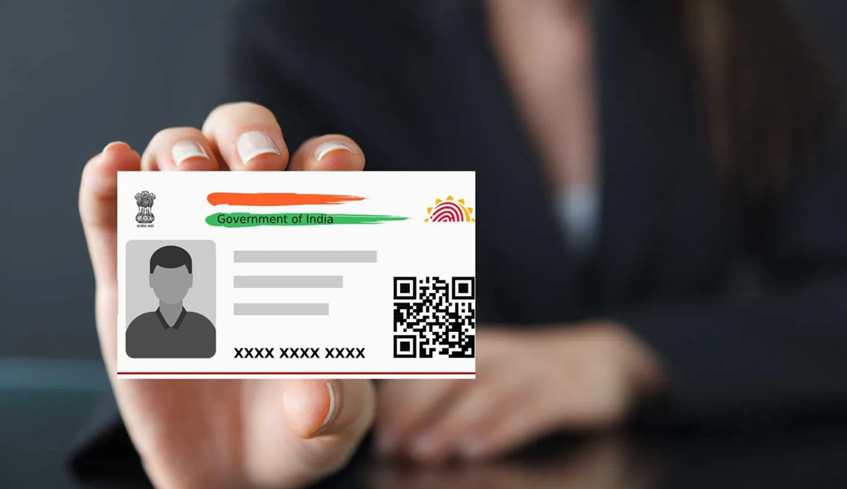
UIDAI will soon let Aadhaar cardholders change their registered mobile numbers directly via the Aadhaar app, eliminating the need to visit enrolment centres.
The process will use OTP verification and mandatory face authentication to ensure secure identity validation.
This update simplifies a previously time‑consuming offline process.
UIDAI is simplifying the mobile number update process. (Image credit – UIDAI)
The Unique Identification Authority of India (UIDAI) is preparing to introduce a much-requested feature for the revamped Aadhaar app that will allow users to update their mobile numbers directly from their smartphones. Here’s what we know about the new development so far.
Update Aadhaar From Home
UIDAI will soon allow Aadhaar cardholders to update their mobile number from home. (Image credit – UIDAI)
UIDAI confirmed the development through an announcement on X (formerly Twitter), stating that mobile number updates will soon be enabled through secure digital verification. The new system will rely on a mix of OTP-based verification and face authentication via the Aadhaar app to establish a user’s identity.
“Coming Soon! Update mobile number in Aadhaar from the comfort of your home through OTP & Face Authentication,” UIDAI posted on X .
Coming Soon! Update Mobile number in Aadhaar from the comfort of your home — through OTP & Face Authentication.
No more standing in the queue at the Aadhaar Centre.
This upcoming functionality will remove the need to visit an Aadhaar Seva Kendra, making the process far more convenient for millions of Aadhaar cardholders.
At present, individuals who want to change their mobile number linked to Aadhaar must visit an enrolment centre because of the sensitive verification involved. This offline process can be time-consuming and particularly challenging for senior citizens, people with disabilities, and residents living in rural or remote areas.
With this update, UIDAI aims to simplify the process by shifting verification entirely to the Aadhaar app, making a key identity update more accessible and user-friendly.
How the New Mobile Number Update Feature Will Work?
UIDAI explained that users will be authenticated through an OTP sent to their existing or new mobile number, followed by a mandatory face authentication step using the app’s built-in tools. This two-layer system is designed to maintain high security while streamlining the user experience.
Highlighting the convenience of the new process, UIDAI noted in its X post, “No more standing in the queue at the Aadhaar Centre.”
How to Download and Use the Aadhaar App?
To use this feature once it becomes available, users must first install the official Aadhaar app on their smartphones –
Visit the Google Play Store (Android) or Apple App Store (iOS), search for the official “Aadhaar” app, and install it.
Open the app, choose your preferred language and enter your 12-digit Aadhaar number.
Authenticate using the OTP sent to your Aadhaar-registered mobile number.
Perform the required face scan to verify your identity and prevent misuse.
Create a six-digit PIN to secure your profile.
Once launched, this feature is expected to offer a faster, safer, and more accessible way to update your Aadhaar-linked mobile number, right from home.
FAQs
Q1. What new feature is UIDAI introducing for Aadhaar users?
Answer. UIDAI will soon allow Aadhaar cardholders to update their registered mobile numbers directly from home using the Aadhaar app, removing the need to visit enrolment centres.
Q2. How will the mobile number update process work in the Aadhaar app?
Answer. The process will involve two steps: OTP verification on the mobile number and mandatory face authentication using the app’s built‑in tools to confirm identity.
Q3. Why is this update significant for Aadhaar users?
Answer. It simplifies a previously offline, time‑consuming process, making it more convenient for senior citizens, people with disabilities, and residents in rural or remote areas.
Q4. What do users need to do to access this Aadhaar update feature?
Answer. Users must install the official Aadhaar app from the Google Play Store or Apple App Store, authenticate with their Aadhaar number and OTP, complete a face scan, and set a secure PIN.
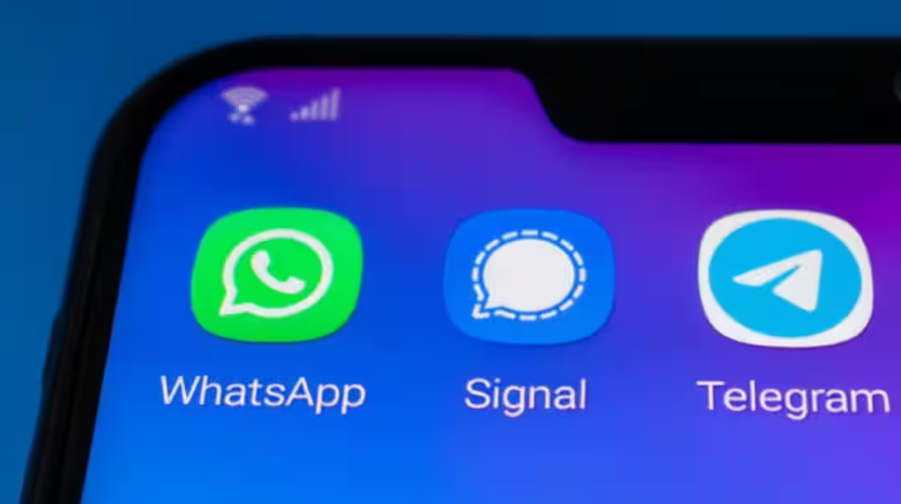
DoT now requires WhatsApp, Telegram, Signal, and similar apps to continuously verify the presence of the registered SIM card in the device.
Desktop and browser-based versions of apps must auto‑logout users every 6 hours, forcing frequent re‑authentication through QR scans or manual logins.
The aim is to curb cyber fraud and misuse of telecom identifiers.
Caption – New directive mandates SIM binding for messaging apps in India. (Image credit – Unknown)
The Government of India’s Department of Telecommunications (DoT) has rolled out a new mandate requiring popular messaging platforms such as WhatsApp, Signal, and Telegram to implement SIM binding protocols. The move aims to strengthen cybersecurity, curb cyber fraud and stop the misuse of telecom identifiers traced to foreign locations.
Under the new regulation, these platforms must continuously verify whether the active, registered SIM card remains present in the device where the app is being used. If the linked SIM card is not detected, the service will be required to stop functioning on that device.
Frequent Re-authentication Compulsory for Web Clients
The directive also brings a significant change for desktop and web-based messaging users.
“It has come to the notice of the Central Government that some of the app based communication services that are utilising mobile numbers for identification of their customers or for provisioning or delivery of services allow users to consume their services without availability of the underlying Subscriber Identity Module within the device in which the app based communication service is running, and this feature is posing a challenge,” the official notification states.
Caption – Web Users will have to log in at regular intervals. (Image credit – Unknown)
Because of this, web and browser-based platforms like WhatsApp Web will now need to log out users automatically at regular intervals, no later than every six hours. This means users will need to re-authenticate frequently, likely by scanning a QR code or performing a manual login to keep their session active.
Why the Government is Enforcing the New Rules?
According to the DoT, allowing users to access services without requiring the SIM card to be physically present in the device is a “challenge to telecom cyber security,” noting that the feature has been “misused from outside the country to commit cyber frauds.”
The department added that it has been in discussions with major service providers for months and emphasised the urgency of the issue. Apps failing to comply with the new rules will face action under the Telecommunications Act, 2023, along with other relevant laws.
What SIM Binding Means for Users?
Industry stakeholders have already expressed concerns about how these changes could affect user experience, especially for people who travel internationally.
A senior industry executive pointed out that the mandate could inconvenience users who switch to a foreign SIM while abroad. “So far, when you use a new SIM card abroad, you can continue using services like WhatsApp without any additional registration. Now with these directives, that would no longer be possible,” they said.
Another executive noted the potential disruption in workplaces due to the auto-logout requirement. “Many people use services like WhatsApp on their computers when they’re at work. Some also have to use them without their phones around in some instances. There will now be a lot of added friction in that use case,” they said.
Meanwhile, social media was quick to share reactions on the new directives and it mostly isn’t positive. One user wrote, “Sim binding is going to be catastrophic, not just for individuals like me who have long lost their original sims, but also for businesses who use messaging services across multiple devices esp laptops. Please, please don’t make this country a still shittier place to live.”
Sim binding is going to be catastrophic, not just for individuals like me who have long lost their original sims, but also for businesses who use messaging services across multiple devices esp laptops.
Please, please don’t make this country a still shittier place to live. https://t.co/dRuHr6ybrM
Explaining what kind of issues the new rules can create for active users, another user wrote, “I have solely relied on WhatsApp led calls/ msgs when I travel international with a 500rs local sim card. An international roaming in Vodafone is min 4500. Sim binding prevents me from using WhatsApp with jus data connection. Dear Govt fix the air quality first. Then focus on sims.”
I have solely relied on WhatsApp led calls/ msgs when I travel international with a 500rs local sim card. An international roaming in Vodafone is min 4500. Sim binding prevents me from using WhatsApp with jus data connection.Dear Govt fix the air quality first.Then focus on sims
There are also questions about how effective the mandate will be in preventing scams as many fraudsters reportedly rely on SIM cards acquired through forged or mule identities.
Despite these concerns, the telecom industry had previously expressed support for SIM binding. The Cellular Operators Association of India (COAI), representing all three private telecom operators, said earlier this year, “Presently, the binding process between a subscriber’s app-based communication services and their mobile SIM card occurs only once during the initial installation and verification phase, after which the application continues to function independently on the device even if the SIM card is later removed, replaced or deactivated.”
FAQs
Q1. What is SIM binding and why has the Government of India mandated it?
Answer. SIM binding requires messaging apps like WhatsApp, Telegram, and Signal to continuously verify that the registered SIM card is physically present in the device. The Department of Telecommunications (DoT) introduced this rule to strengthen cybersecurity, prevent cyber fraud, and stop misuse of telecom identifiers traced to foreign locations.
Q2. How will the new SIM binding rules in India affect web and desktop users of messaging apps?
Answer. Web and browser-based platforms such as WhatsApp Web must now auto‑logout users every six hours. This means users will need to re‑authenticate frequently, typically by scanning a QR code or logging in manually, to keep their session active.
Q3. What impact could SIM binding have on users, especially those travelling abroad or working on desktops?
Answer. The mandate may inconvenience international travellers who switch to foreign SIM cards, as they will no longer be able to use services seamlessly. It could also disrupt workplace usage since employees relying on web clients without their phones nearby will face frequent logouts and added friction.
Nubia RedMagic 11 Air secures MIIT approval and confirms 2G–5G support, eMBB tech, dual-SIM standby, and roaming.
It features boxy flat design, an under-display selfie camera, slim bezels, a mechanical-inspired rear with visible screws, triple-camera setup and dual-tone White/Dark Grey finish.
TENAA listing hints at a 7000mAh battery, Bluetooth + USB connectivity and gaming-focused elements.
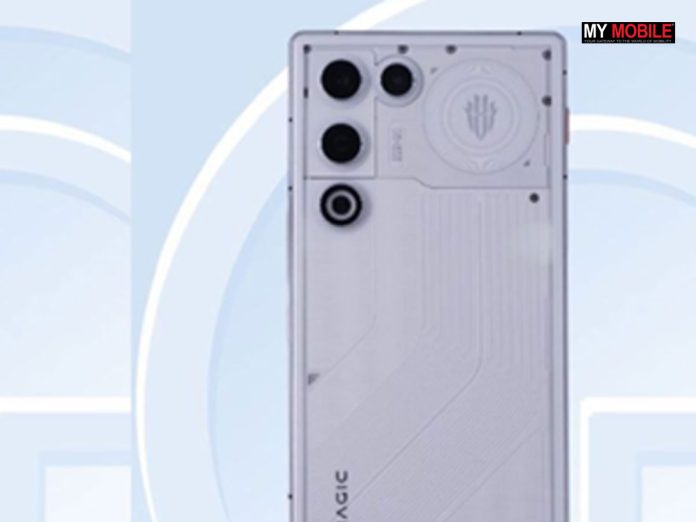
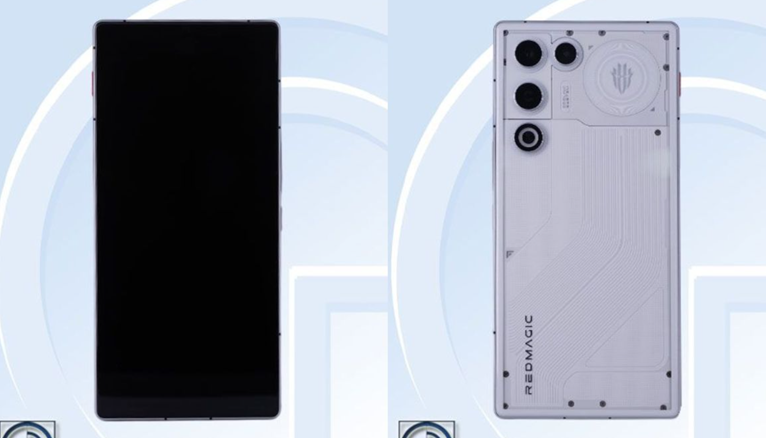
Caption – Nubia RedMagic 11 Air renders from Tenaa certification.
Nubia RedMagic 11 Air has now surfaced on the MIIT certification platform, just days after it appeared on the TENAA database. The latest listing not only confirms its network capabilities but also reveals detailed design renders of the upcoming gaming smartphone. Here’s what we know about the phone so far.
Nubia RedMagic 11 Air Listed on MIIT
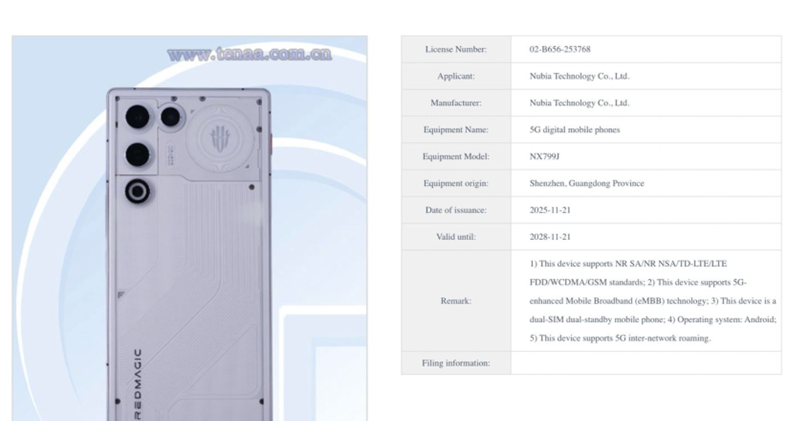
According to the MIIT certification, the device has been approved under license number “02-B656–253768” and is categorised as a “5G digital mobile phone.”
The listing confirms support for 2G, 3G, 4G, and 5G networks, along with 5G-enhanced mobile broadband (eMBB) technology, dual-SIM dual-standby, and 5G inter-network roaming. The certification remains valid until November 21, 2028.
It is identified as model number NX799J.
Caption – Nubia RedMagic 11 Air in Tenaa certification. (Screenshot by The Tech Outlook)
Nubia RedMagic 11 Air – Renders
Caption – Nubia RedMagic 11 Air renders. (Screenshot by The Tech Outlook)
The MIIT listing includes several design renders, offering the first clear look at the upcoming device. The RedMagic 11 Air appears to feature the following –
A boxy design with a flat display, flat rear panel, and flat side frames with slightly rounded corners
An under-display selfie camera, similar to the RedMagic 10 Air
Very slim display bezels
A rear panel with a mechanical-inspired design, visible screws, and a circular RedMagic logo module
A triple-camera setup in the top-left, each placed in an individual circular housing, accompanied by a ring LED flash
Vertical RedMagic branding on the lower-left section
The right side frame includes two shoulder triggers, an air vent, volume controls, and a power button, while a dedicated functional button is present on the left. The device follows a White x Dark Grey dual-tone colour scheme, reinforcing its gaming-centric identity.
Meanwhile, the previous TENAA listing had disclosed additional expected specifications including a 6780 mAh rated battery (around 7000 mAh typical) and Bluetooth + USB connectivity.
More details about the RedMagic 11 Air are likely to emerge soon.
FAQs
Q1. What certification has the Nubia RedMagic 11 Air recently received?
Answer. It has been listed on the MIIT certification platform under license number “02-B656–253768.”
Q2. What design features are revealed in the MIIT renders?
Answer. The phone shows a boxy flat design, under-display selfie camera, slim bezels, mechanical-inspired rear with screws, triple-camera setup, and dual-tone White/Dark Grey finish.
Q3. What battery details were disclosed in earlier TENAA listings?
Answer. The device is expected to include a 6780mAh rated battery (around 7000mAh typical) with Bluetooth and USB connectivity.
Realme Pad 3 is tipped to debut in India by late December 2025 or January 2026.
It is expected to arrive in two models (WiFi-only) with 8GB RAM + 128GB/256GB storage options, in Space Grey and Champagne Gold colours.
The 5G variant has appeared on Bluetooth SIG, while BIS certification is pending.
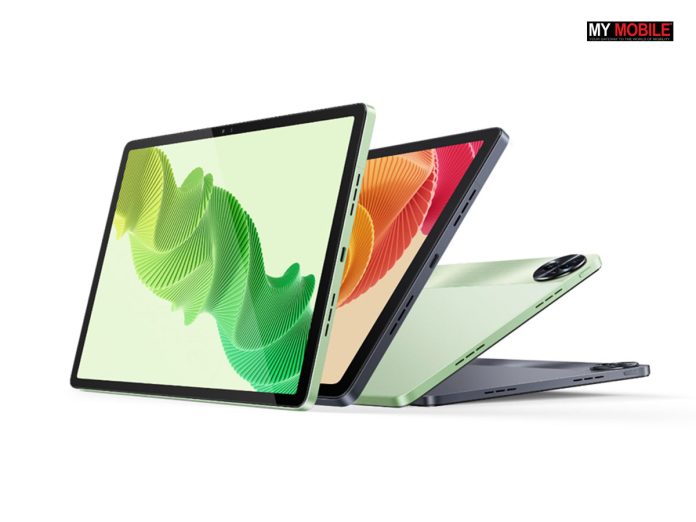
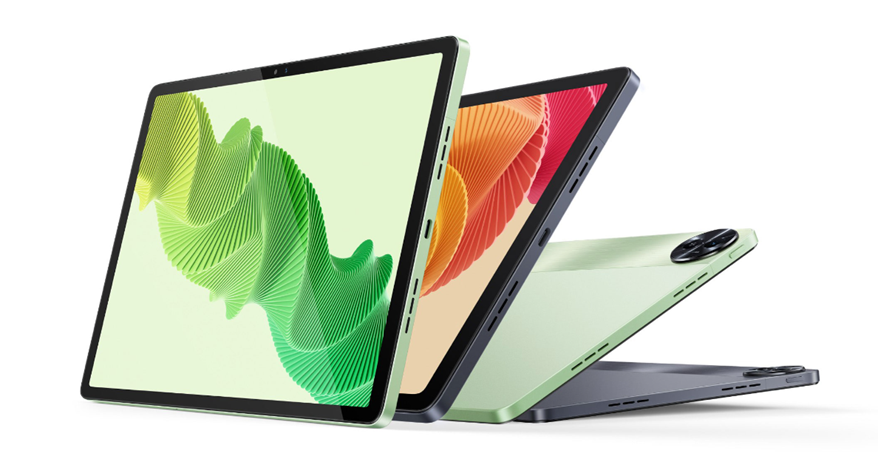
Caption – Realme Pad 2 in the picture for reference. (Image credit – Realme)
The Realme Pad 3 is reportedly gearing up for launch in India, marking the brand’s return to the tablet segment after two years. The last Realme pad we got to see was the Realme Pad 2 in 2023. The new information comes via tipster Abhishek Yadav @yabhishekhd on X (formerly Twitter), who has shared early details including model numbers, expected launch timeline and configuration options. Here’s what we know.
Realme Pad 3 – India Launch Timeline and Variants
According to Abhishek Yadav @yabhishekhd on X, Realme is likely to introduce the Realme Pad 3either by late December 2025 or in January 2026. He revealed that the model number RMP2501 belongs to the 5G-enabled variant, while RMP2502 refers to the WiFi-only version of the upcoming tablet.
Exclusive ✨
Realme Pad 2’s successor — the Realme Pad 3 — is finally launching in India after almost two and half years. The launch is expected either in December 2025 or January 2026, and it will come in both 5G and WiFi variants.
Both variants are said to launch in two colour choices, which include Space Grey and Champagne Gold. As per the leak, Realme will offer the device in 8GB RAM with 128GB storage and 8GB RAM with 256GB storage configurations.
Realme Pad 3 – Certification Details and Known Information
Tipster Yadav did not mention anything about the chipset or internal components. A check on the BIS certification website shows that neither of the two model numbers has appeared so far.
Caption – RMP2501 spotted on Bluetooth SIG. (Screenshot by The Tech Outlook)
However, the Realme Pad 3 5G variant (RMP2501) has reportedly been spotted on Bluetooth SIG, though the listing did not reveal any additional specifications.
More information about the Realme Pad 3 is expected to surface once the tablet appears on platforms like Geekbench. Certification usually confirms processing hardware and performance indicators.
With the launch timeframe approaching, more leaks and official teasers are likely in the coming weeks. Stay tuned for further updates.
FAQs
Q1. When is the Realme Pad 3 expected to launch in India?
Answer. It is tipped to debut by late December 2025 or January 2026.
Q2. What variants of the Realme Pad 3 are expected?
Answer. Two models, RMP2501 (5G-enabled) and RMP2502 (WiFi-only).
Q3. What configurations and colour options will the Realme Pad 3 offer?
Answer. It will come in 8GB RAM with 128GB or 256GB storage, available in Space Grey and Champagne Gold.
The Oppo Reno 15 Pro 5G has added another certification to its growing list as it appears on the GCF (Global Certification Forum) database. This latest listing once again highlights the device’s network capabilities, strengthening expectations ahead of its wider global rollout. Here’s what we know about the phone so far.
Oppo Reno 15 Pro 5G Gets GCF Approval
Caption – Oppo Reno 15 Pro 5G on the GCF database. (Screenshot by TheTechOutlook)
The Reno 15 Pro 5G, identified with model number CPH2813, has been certified under GCF reference number “13431”. As with earlier certifications, the listing reiterates that the smartphone will support 2G, 3G, 4G, and 5G networks, confirming broad connectivity coverage across regions.
Oppo Reno 15 Pro – Earlier Certifications and Revealed Specs
Before its GCF appearance, the Reno 15 Pro 5G had already passed through multiple certification authorities including NBTC, TUV, TDRA, BIS, eSIM compatibility, and NBD databases. These listings collectively disclosed several core specifications, which are as follows –
80W wired fast charging
Operating temperature range of 0°C to 35°C
eSIM support
12GB RAM + 256GB storage configuration
Additionally, these certifications have confirmed that the smartphone will launch in multiple global markets such as Thailand, Saudi Arabia, Europe, UAE, and India.
Global Lineup Expanding Soon
The Oppo Reno 15 Pro 5G was introduced in China alongside the standard Reno 15 5G, with key specifications already known from its domestic debut. Oppo is also preparing to launch the Reno 15c in China by December 2025.
For international regions, the company is reportedly working on the Oppo Reno 15F 5G and Oppo Reno 15 Pro Max 5G, expanding the Reno 15 series lineup for a broader global audience.
More information regarding global availability and pricing is expected to surface soon.
FAQs
Q1. What certification has the OPPO Reno 15 Pro 5G recently received?
Answer. It has been approved by the Global Certification Forum (GCF) under reference number 13431.
Q2. What key specifications have been confirmed through earlier certifications?
Answer. The phone supports 80W fast charging, eSIM, 12GB RAM + 256GB storage, and operates between 0°C–35°C.
Q3. In which markets will the OPPO Reno 15 Pro 5G launch globally?
Answer. It is expected to roll out in Thailand, Saudi Arabia, Europe, UAE, and India.
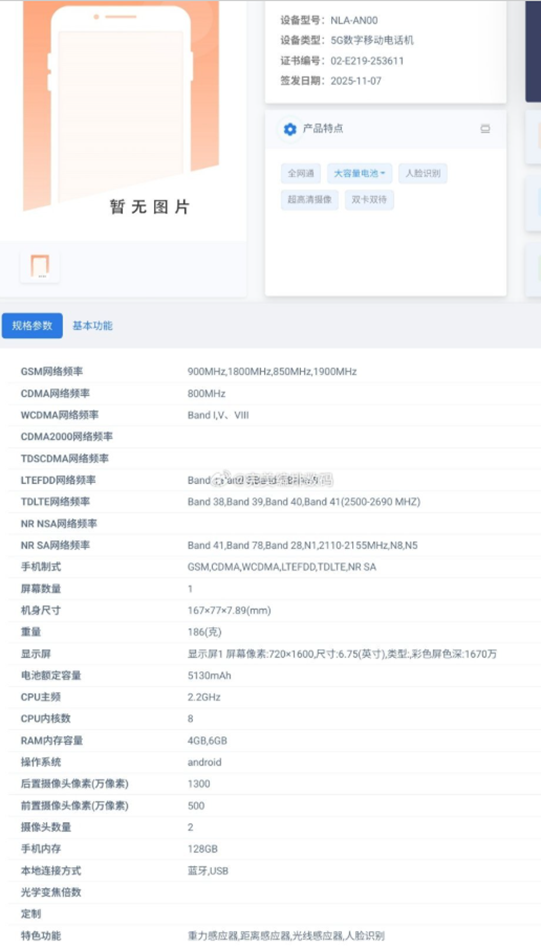
Honor Play 60A appears on Bluetooth SIG and TENAA with model NLA-AN00 featuring a slim 7.89mm design, 186g weight and full 5G support.
It will be powered by a 2.2GHz octa-core chipset, paired with 4GB/6GB RAM and 128GB storage.
Other confirmed features include a 6.75-inch HD+ LCD display, 13MP rear, 5MP front camera, a 5130mAh battery with 15W fast charging and up to 1TB expandable storage.
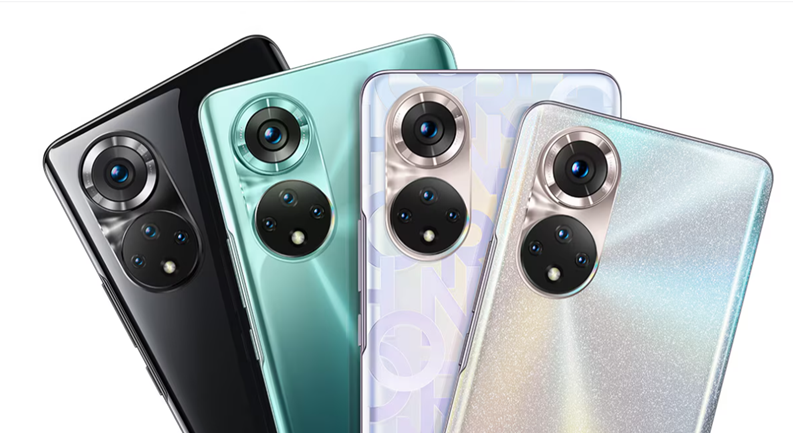
Caption – Different Honor Play model in the picture for reference. (Image credit – Honor)
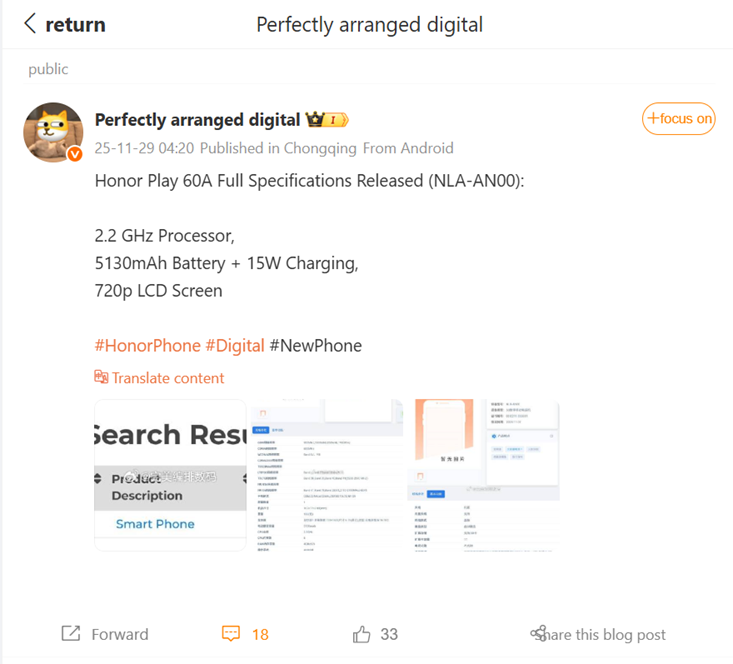
Honor’s upcoming budget 5G smartphone, the Honor Play 60A, has appeared on both the Bluetooth SIG and TENAA certification databases. Details of the certification were recently shared by a user on the Chinese social media site, Weibo. It reveals the full hardware specifications of the phone ahead of launch. Here’s all we know.
Honor Play 60A – Key Specifications (Revealed)
Caption – Honor Play 60A in a recent certification appearance. (Image credit – Honor)
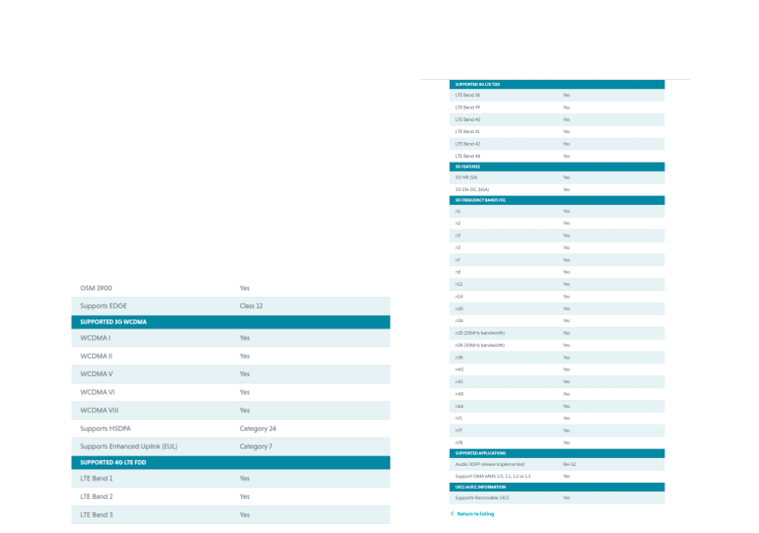
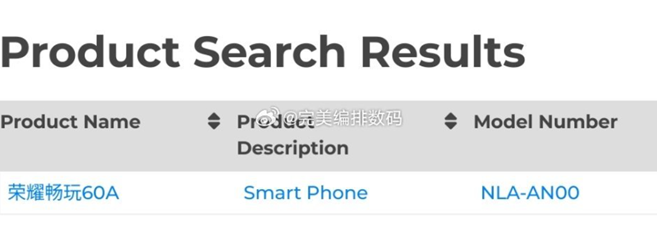
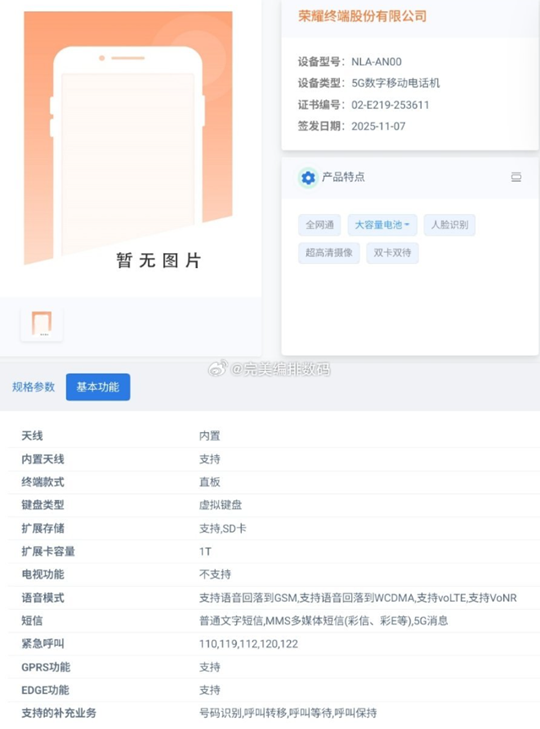
Posted by Weibo user named Perfectly Arranged Digital, the Bluetooth SIG listing identifies the device with model number NLA-AN00, confirming it as the Honor Play 60A. Its complete spec sheet is detailed through TENAA under certificate number “02-E219-253611”.
According to the listing, the Play 60A will be marketed as a “5G digital mobile phone” and will support 2G, 3G, 4G, and 5G networks. The handset measures 167 x 77 x 7.89 mm and weighs just 186 grams, making it relatively lightweight for its segment.
Caption – Weibo post revealing Honor Play 60A certification details. (Translated via Google Translate)
Powering the device is a 2.2GHz octa-core processor, paired with 4GB or 6GB RAM and 128GB internal storage. The smartphone features a 6.75-inch HD+ LCD display with a resolution of 720 × 1600 pixels and 16.7 million color support.
In the camera department, Honor equips the Play 60A with a 13MP primary rear camera and a 5MP front-facing shooter. The device also packs a 5130mAh rated battery to deliver strong endurance and it supports 15W wired fast charging.
Other confirmed features include Bluetooth and USB connectivity, gravity, proximity, and ambient light sensors, plus facial recognition support. Users will also have the option to expand storage up to 1TB via a microSD card.
At the moment, Honor has not disclosed additional information about the Play 60A or its launch timeline. More details are expected to surface soon as the smartphone progresses through certification stages
FAQs
Q1. What processor powers the Honor Play 60A?
Answer. It is equipped with a 2.2GHz octa-core chipset.
Q2. What are the display and battery specifications of the Honor Play 60A?
Answer. The phone features a 6.75-inch HD+ LCD display and packs a 5130mAh battery with 15W fast charging.
Q3. What camera setup does the Honor Play 60A offer?
Answer. It comes with a 13MP primary rear camera and a 5MP front-facing camera.
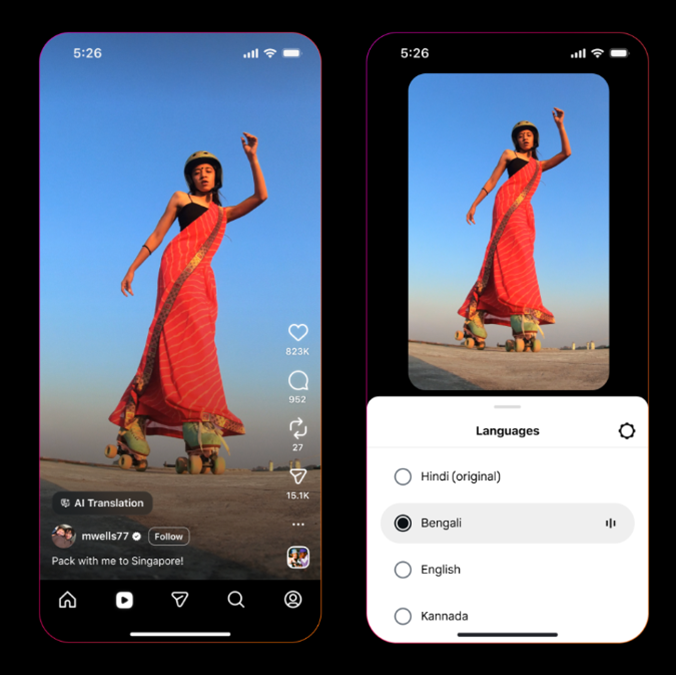
Instagram and Facebook will support reels translation in five new Indian languages – Bengali, Tamil, Telugu, Kannada, and Marathi.
Meta AI ensures translated reels retain the creator’s original voice tone and style with a lip-sync option that aligns mouth movements.
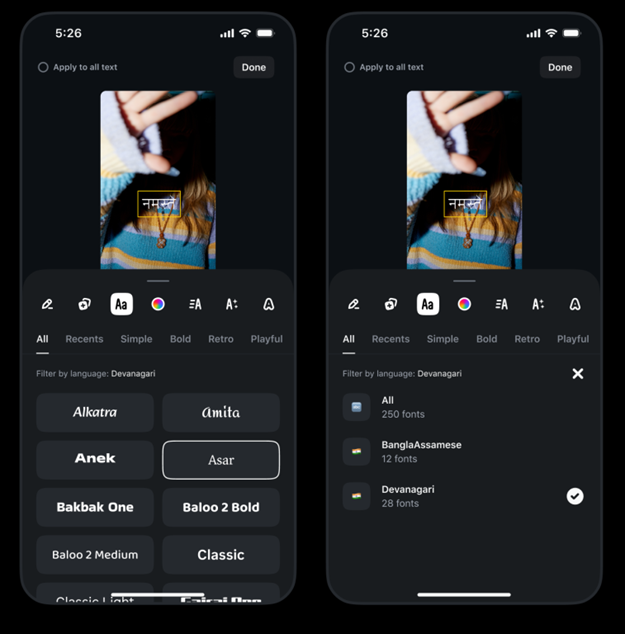
Creators can now stylise text and captions using Devanagari and Bengali-Assamese scripts (supporting Hindi, Marathi, Bengali, Assamese).
Caption – (Photo by Alexander Shatov on Unsplash)
Instagram has introduced two major updates aimed at helping creators reach audiences across India and beyond. Announced at the exclusive ‘House of Instagram’ event in Mumbai, these new features highlight India’s growing importance for Meta while giving creators more tools to expand their global presence. Here’s everything we know about the new features.
Meta AI Translations In Five New Indian Languages
Instagram and Facebook users will soon get access to Meta AI-powered translations in five additional Indian languages. The platform revealed that in the coming months users will be able to translate reels using Meta AI in Bengali, Tamil, Telugu, Kannada, and Marathi.
Caption – Meta AI translations adds new Indian language support. (Image credit – Meta)
This follows the earlier rollout in October, where creators gained the ability to dub and lip-sync reels to and from English, Hindi, Spanish, and Portuguese. With the expansion, Instagram aims to help users discover more entertaining content from across India and worldwide.
How the Feature Work?
Creators can rely on Meta AI to convert their reels so they both sound and appear fluent in widely spoken global and regional languages. The tool retains the creator’s original voice tone and style, ensuring the content continues to feel personal and authentic.
They can also turn on the lip-sync feature, which matches the translated audio to their mouth movements, making it look like they’re actually speaking the language.
More Indian Fonts on Edits
Caption – Instagram adds more Indian fonts on Edits. (Image credit – Meta)
Instagram is also rolling out new Indian fonts for Edits, allowing creators to stylise text and captions using Devanagari and Bengali-Assamese scripts. This update supports languages like Hindi, Marathi, Bengali, and Assamese and will be available on Android in the coming days.
How to use the new fonts
Inside the editing timeline, tap on “Text” in the bottom tools tray.
Then select the “Aa” icon to browse available fonts.
If your device is already set to Devanagari or Bengali-Assamese scripts, these fonts will appear by default in the tab. Otherwise, you can swipe down on the “all fonts” tab to filter fonts by language.
These additions build on a series of creator-focused features introduced over the past month. Instagram recently rolled out tools to restyle photos and videos in Stories, make detailed edits using Meta AI, bulk-edit captions, reverse videos, use AI lip sync to animate photos and access 400 more sound effects.
FAQs
Q1. Which new Indian languages will Instagram support for AI-powered translations?
Answer. Instagram and Facebook will add translations for Bengali, Tamil, Telugu, Kannada, and Marathi.
Q2. How does the AI translation and lip-sync feature work for reels?
Answer. Meta AI converts reels into different languages while keeping the creator’s original voice tone and style. The lip-sync option aligns mouth movements with the translated audio, making it look natural.
Q3. What new fonts are being introduced for creators in India?
Answer. Instagram is rolling out Devanagari and Bengali-Assamese script fonts, supporting languages like Hindi, Marathi, Bengali, and Assamese.
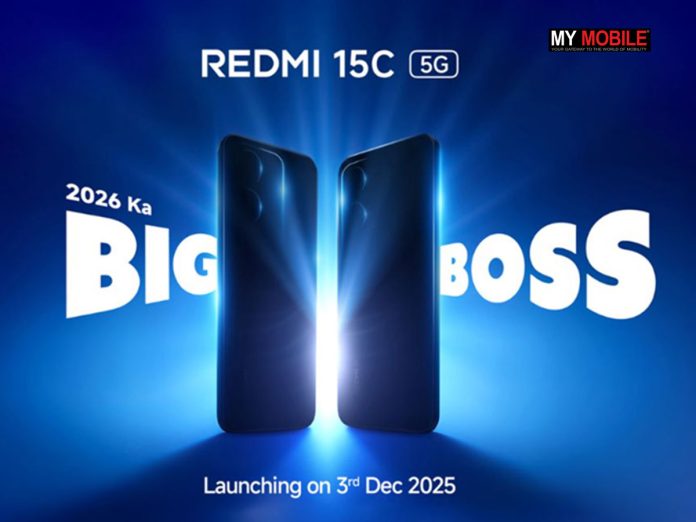
Redmi 15C 5G is set to debut in India on December 3, 2025, promoted as “2026 ka Big Boss” with a “Royale Design.”
Indian variants will come in Dusk Purple, Moonlight Blue (exclusive to India), and Midnight Black colours.
The phone is expected to feature MediaTek Dimensity 6300, 6.9-inch 120Hz display, 6000mAh battery, 50MP rear camera and be priced between ₹12,499 – ₹14,999.
Caption – Redmi 15C 5G landing pages are now live on Amazon India and the Redmi website. (Image credit – Redmi)
Xiaomi’s Redmi brand is gearing up to launch the Redmi 15C 5G in India as early as December 3rd, 2025. The company has already begun teasing key details through dedicated landing pages on its official website and Amazon India. Among the latest reveals are the smartphone’s design elements and colour choices tailored for Indian consumers. Here’s everything we know about the phone based on recent reveals.
Redmi 15C 5G – Design and Colours Teased for India
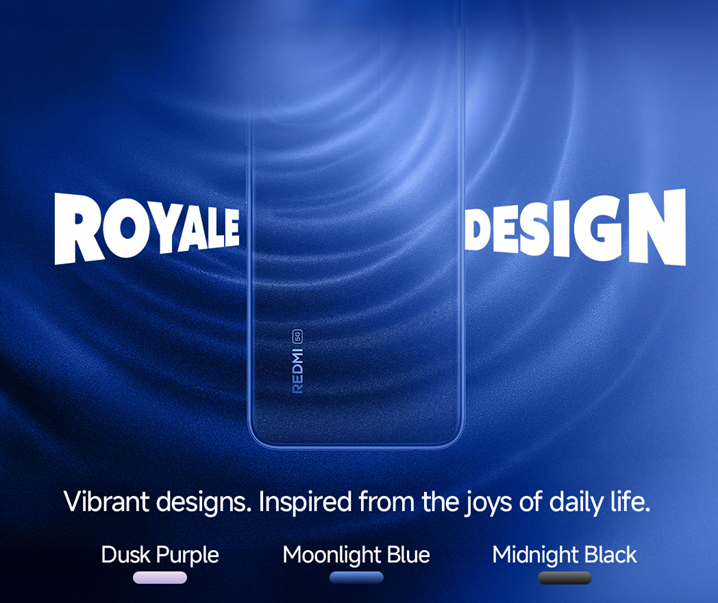
Promoted with the tagline “2026 ka Big Boss”, the Redmi 15C 5G will feature what the brand calls a “Royale Design.” Redmi has confirmed that the device will arrive in three colour options for India, which include Dusk Purple, Moonlight Blue, and Midnight Black.
Caption – Redmi 15C 5G official teaser disclosing the colour options. (Image credit – Redmi)
While Dusk Purple and Midnight Black are also available in the global 5G model, the Indian market replaces the global Mint Green variant with Moonlight Blue, which is seen on the global Redmi 15C 4G model.
A launch poster highlights the Moonlight Blue variant, showcasing a wave-like pattern on the back panel along with a square-shaped camera module.
Redmi has also announced that more teasers covering the phone’s large battery, expansive display, multitasking performance, and other features will be revealed over the next four days leading up to launch. Based on reports, the smartphone is expected to arrive in India in 4GB/128GB, 6GB/128GB, and 8GB/128GB storage configurations with expected pricing of Rs. 12,499, Rs. 13,999, and Rs. 14,999, respectively.
Redmi 15C 5G – Specifications
Dimensions: 173.2 x 81.1 x 8.2 mm
Weight: 211g
Network Support: 2G/3G/4G/5G
Wi-Fi: Wi-Fi 802.11 a/b/g/n/ac with dual-band support