Home Blog Page 62

Samsung Galaxy Buds 4, Galaxy Buds 4 Pro Dummy Units Leak Ahead of Galaxy Unpacked, Amazon Microsite Is Now Live

0

Highlights

  • Leaked dummy units show design changes Galaxy Buds 4 with an open‑fit style and silver stem, Buds 4 Pro with ear tips and oval case button.
  • Both models could arrive with multiple colour options including an exclusive Apricot shade for the Pro.
  • Samsung is expected to unveil the Galaxy Buds 4 and Buds 4 Pro alongside the Galaxy S26 series on February 25.
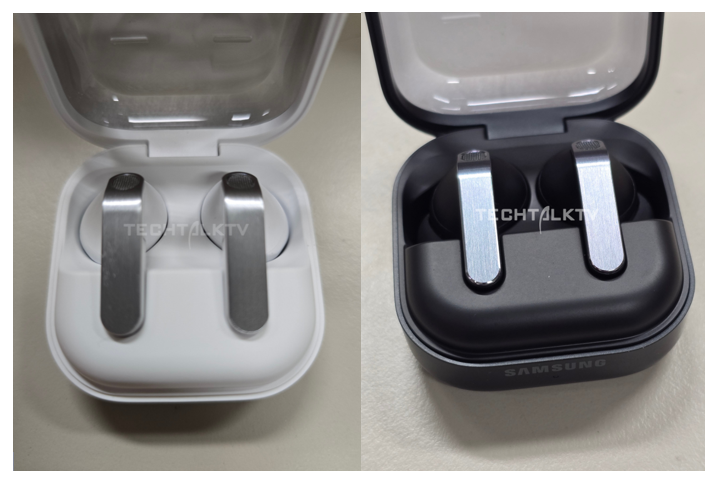
Leaked images of non-functional dummy units of the Galaxy Buds 4 and Galaxy Buds 4 Pro. (Image credit - @Mr_TechTalkTV on X)
Leaked images of non-functional dummy units of the Galaxy Buds 4 and Galaxy Buds 4 Pro. (Image credit – @Mr_TechTalkTV on X)

Samsung is gearing up to host its Galaxy Unpacked event on February 25. The Korean tech company is expected to introduce the Galaxy S26 series along with the rumoured Samsung Galaxy Buds 4 and Galaxy Buds 4 Pro. While Samsung has not officially confirmed the new true wireless stereo (TWS) earbuds, multiple leaks, retail listings and tipster claims suggest that their debut could take place at the upcoming event.

Samsung Galaxy Buds 4 Series – Leaked Images Reveal Design
Samsung's upcoming launch microsite on Amazon.
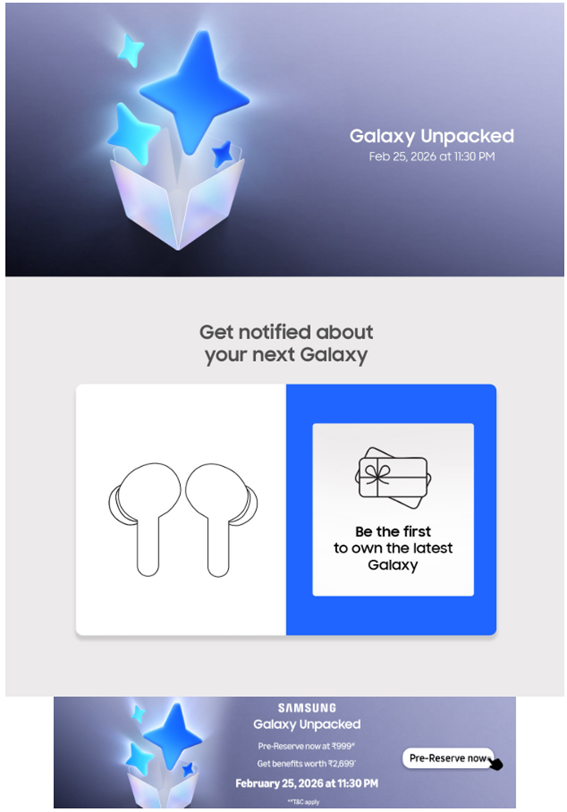
Samsung’s upcoming launch microsite on Amazon.

Ahead of the event, an Amazon India microsite now hints at an imminent launch of the Samsung Galaxy Buds 4 series. There are no details or product name, but the microsite graphic has enough for tech enthusiasts to pick clues.
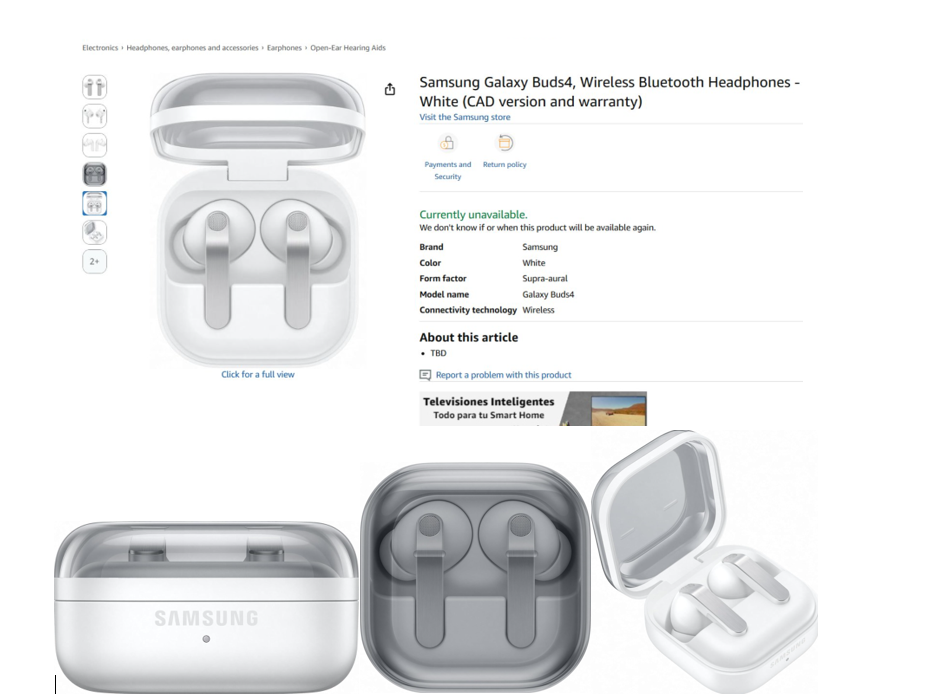
Samsung Galaxy Buds 4 listed on Amazon. (Screenshots by @passionategkeez on X)

Additionally, tech blogger Paras Guglani @passionategkeez on X spotted the Galaxy Buds 4 listed on an e-commerce platform before the official unveiling. In an X post, the tipster shared the screenshots of the listing as an exclusive update.

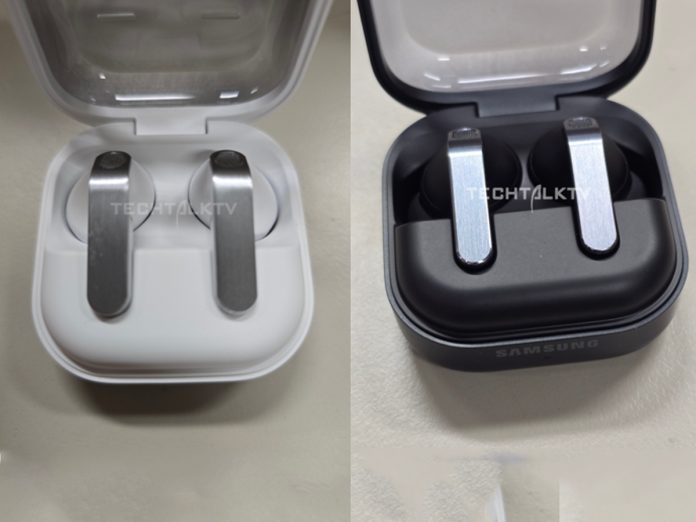
Separately, another tech-oriented account TechTalkTV @Mr_TechTalkTV shared images on X showing alleged “non-functional dummy units” of both the Samsung Galaxy Buds 4 and Galaxy Buds 4 Pro.
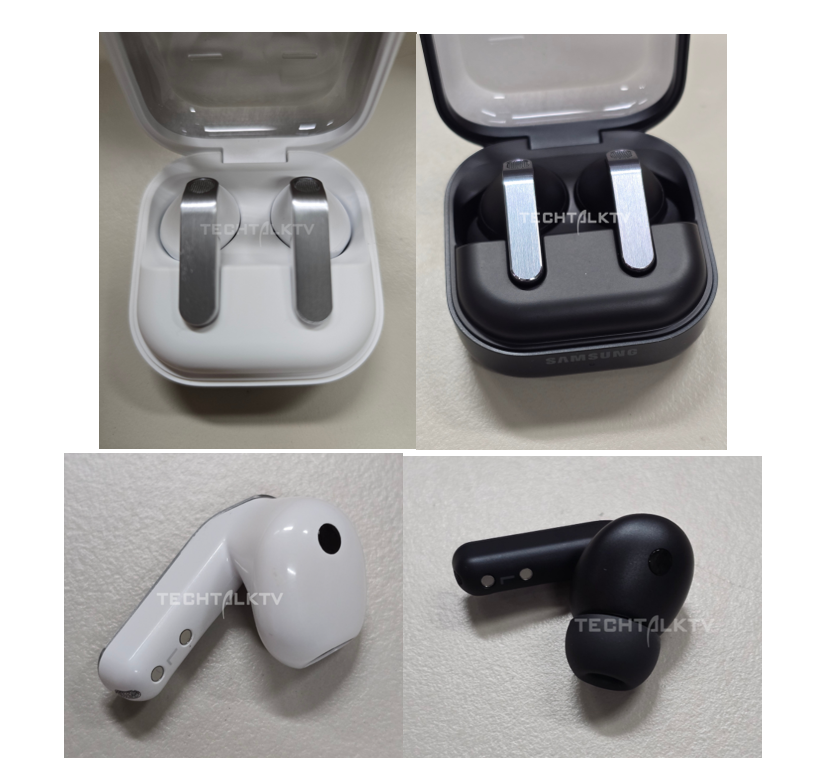
Leaked images of non-functional dummy units reveal first real-life look at the Galaxy Buds 4 and Galaxy Buds 4 Pro. (Image credit - @Mr_TechTalkTV on X)
Leaked images of non-functional dummy units reveal first real-life look at the Galaxy Buds 4 and Galaxy Buds 4 Pro. (Image credit – @Mr_TechTalkTV on X)

According to the tipster, such dummy units are typically sent to retail stores for display purposes and the images appear to confirm design changes as well as colour variants.

The leaked images from multiple sources indicate a refreshed look with a flatter stem compared to the previous Samsung Galaxy Buds 3 series. The standard Galaxy Buds 4 are shown in a white finish featuring a silver stem back and no ear tips, suggesting an open-fit design.

Meanwhile, the Galaxy Buds 4 Pro appear in a black colourway with a silver stem and retain ear tips in the leaked images. The earbuds are designed to lie flat inside the charging case rather than standing upright. Charging contact points are positioned on the stem and the case now features a more oval-shaped button at the bottom instead of the circular button used in the previous generation.

Samsung Galaxy Buds 4 Series – What Else We Know?

Earlier reports have indicated that both Galaxy Buds 4 series models will support active noise cancellation (ANC). The Galaxy Buds 4 Pro are expected to offer enhanced durability with an IP57 rating for water resistance, while the standard Galaxy Buds 4 may come with an IP55 rating.

In terms of battery performance, the Pro variant is tipped to deliver up to 26 hours of total battery life, compared to up to 24 hours on the regular model.

Both models are expected to be available in black and white colour options. Additionally, the Galaxy Buds 4 Pro may arrive in an Apricot shade, though this third colour variant is said to be exclusive to the Samsung Online Store.

As for pricing, the Samsung Galaxy Buds 4 are reportedly priced at EUR 179 (approximately Rs. 19,200), while the Galaxy Buds 4 Pro could cost EUR 249 (around Rs. 26,600).

FAQs

Q1. When are the Galaxy Buds 4 and Buds 4 Pro expected to launch?

Answer. They are tipped to debut at Samsung’s Galaxy Unpacked event on February 25, alongside the Galaxy S26 series.

Q2. What design changes have been revealed in the leaks?

Answer. Leaked dummy units show Buds 4 with an open‑fit design and silver stem, while Buds 4 Pro retain ear tips, feature a flatter stem, and a redesigned oval case button.

Q3. What are the expected features and pricing of the Galaxy Buds 4 series?

Answer. Both models are expected to support ANC, with Buds 4 offering up to 24 hours battery life and Buds 4 Pro up to 26 hours. Pricing is tipped at EUR 179 (~₹19,200) for Buds 4 and EUR 249 (~₹26,600) for Buds 4 Pro.
Also Read

https://www.mymobileindia.com/samsung-galaxy-buds-4-and-buds-4-pro-price-leaks-ahead-of-expected-february-launch/

https://www.mymobileindia.com/samsung-galaxy-buds-4-and-galaxy-buds-4-pro-leaked-renders-reveal-new-design-and-transparent-charging-case/

Realme P4 Lite 4G Debuts in India With 6,300mAh Battery and 13MP Camera, Starts at ₹7,999 (With Launch Offers)

0

Highlights

  • Realme P4 Lite 4G debuts in India starting at ₹9,999 (₹7,999 with launch offers) for the 4GB+64GB model.
  • The sale will begin on February 24 via Flipkart and Realme’s online store.
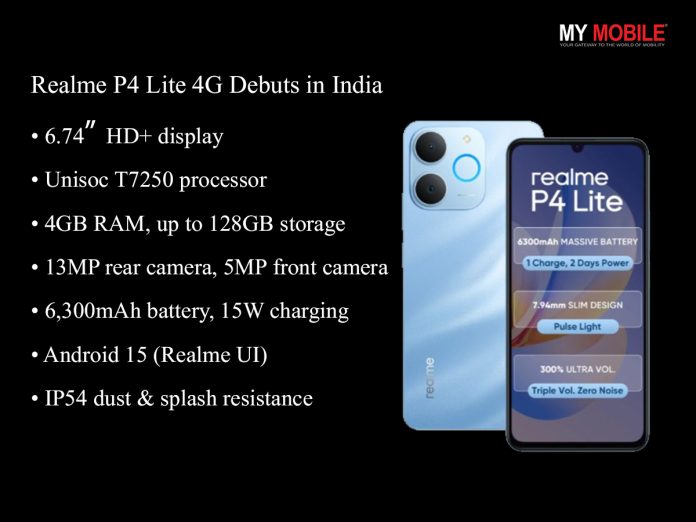
  • Key Features – 6.74‑inch HD+ 90Hz display, Unisoc T7250 chipset, 4GB RAM, up to 128GB storage, IP54 rating, 13MP rear camera, 5MP front camera and 6,300mAh battery supporting 15W charging.
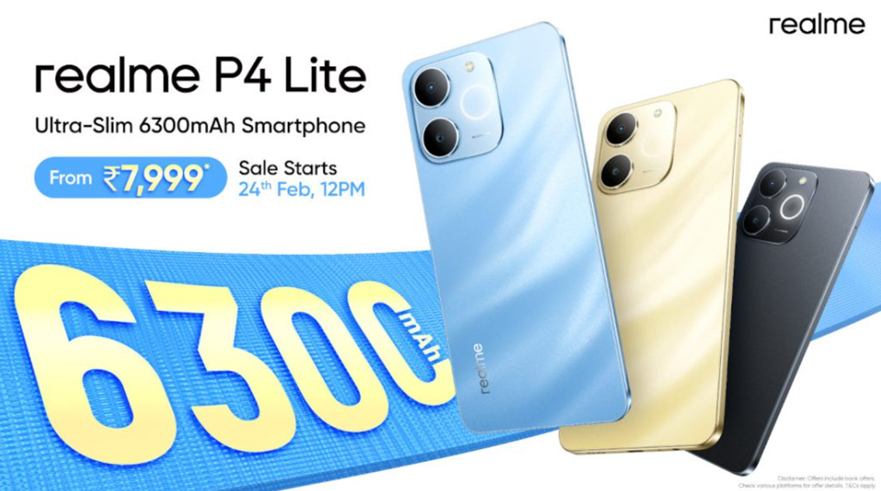
Realme P4 Lite 4G launched in India. (Image credit - Realme)
Realme P4 Lite 4G launched in India. (Image credit – Realme)

Realme has launched the Realme P4 Lite in India as the newest addition to its P4 series lineup. The smartphones will go on sale later this month, but interested buyers can pre-order the device through Flipkart.

Commenting on the launch, Francis Wong, CMO, Realme India, said, “With the realme P4 Lite 4G we are continuing the legacy of battery supremacy with a segment-leading 6300mAh battery in a remarkably slim design. We are proving that massive power and sleek portability can come together without any compromise. Backed by intelligent AI features that enhance calls, photography, and everyday search, the realme P4 Lite 4G is designed to deliver a smarter, smoother experience for young users who expect more from their smartphone, without compromise.”

Here’s everything you need to know about the newly launched smartphone.

Realme P4 Lite 4G – Price and Sale Details in India

The Realme P4 Lite price in India starts at ₹9,999 for the 4GB RAM + 64GB storage variant. The higher-end 4GB + 128GB model is priced at ₹11,999. Realme is offering customers either a ₹1,000 bank discount or a ₹1,000 coupon as part of the launch offers.

The smartphone will go on sale in India starting February 24 via Flipkart and the official Realme online store.

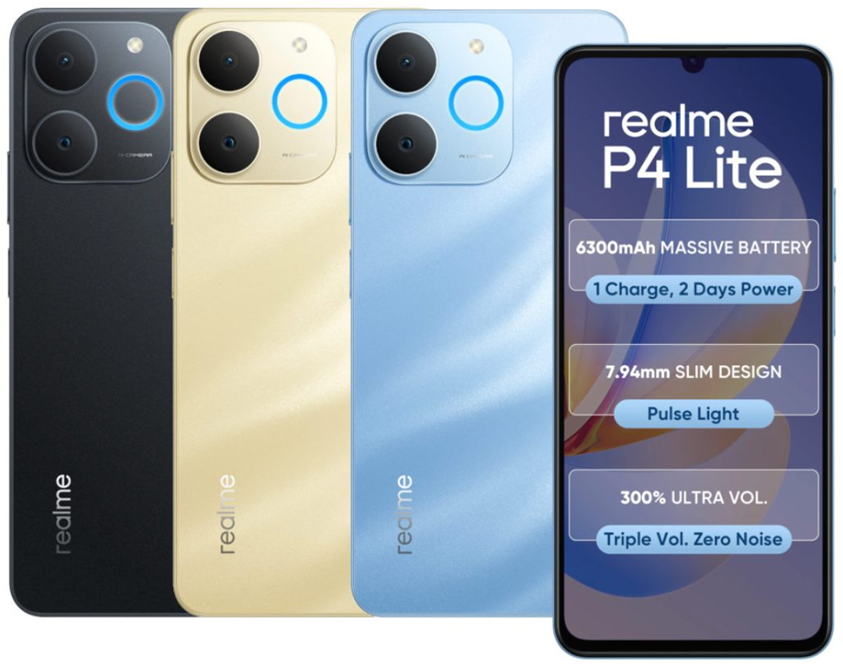
Realme P4 Lite 4G colours. (Image credit - Realme)
Realme P4 Lite 4G colours. (Image credit – Realme)

The model will be available in three colour options, which include Beach Gold, Obsidian Black, and Sea Blue.

Realme P4 Lite – Key Features

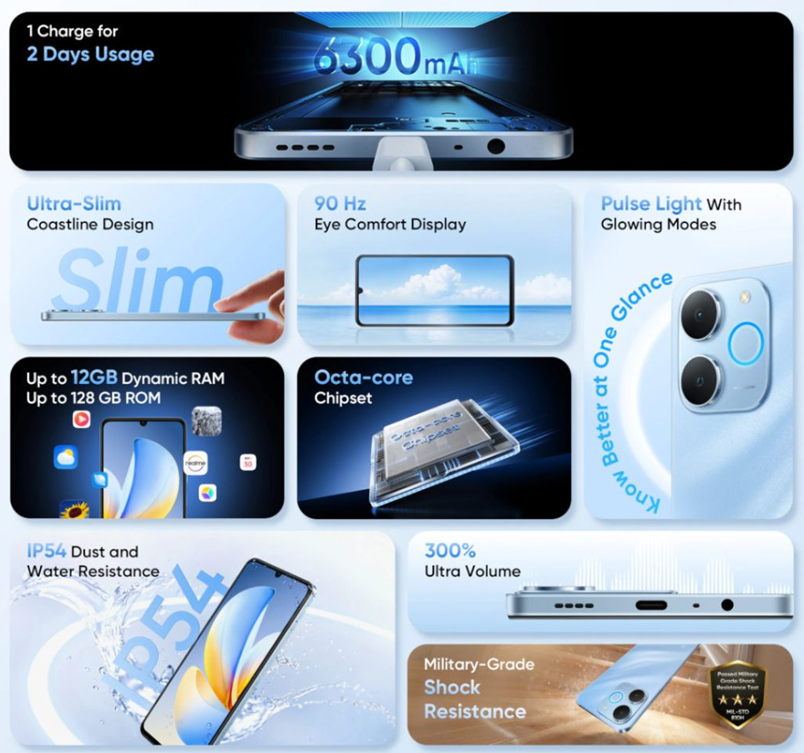
The Realme P4 Lite features a 6.74-inch HD+ display with a resolution of 720×1,600 pixels. The screen supports a refresh rate of up to 90Hz, a peak brightness of up to 563 nits, and a touch sampling rate of up to 180Hz. It is capable of displaying 16.7 million colours and covers 83.5 percent of the NTSC colour gamut.

image

Under the hood, the handset is powered by an octa-core Unisoc T7250 processor built on a 12nm process, offering a peak clock speed of 1.8GHz. The chipset is paired with a Mali G57 MP1 GPU for graphics performance and Android 15-based Realme UI.

The phone comes with 4GB of RAM and offers storage options of up to 128GB. Realme has also equipped the device with an IP54 rating, providing protection against dust and splashes.

For photography, the Realme P4 Lite houses a single 13-megapixel rear camera with an f/2.2 aperture, a 76.5-degree field of view, and a 27mm focal length. On the front, the smartphone sports a 5-megapixel camera for selfies and video calls. The company states that the handset supports video recording at up to 1080p at 30 frames per second.

The device is backed by a large 6,300mAh battery and supports 15W wired charging.

Connectivity options include 4G LTE, Bluetooth 5.2, Wi-Fi, BeiDou, GPS, GLONASS, and Galileo. Sensors onboard include a proximity sensor, ambient light sensor, gyroscope, accelerometer, and a side-mounted fingerprint scanner for security.

The smartphone measures 167.20×76.60×7.94mm and weighs approximately 201 grams.

FAQs

Q1. What is the price of the Realme P4 Lite in India?

Answer. The Realme P4 Lite starts at ₹9,999 for the 4GB+64GB model and ₹11,999 for the 4GB+128GB variant, with launch offers bringing the entry price down to ₹7,999.

Q2. When will the Realme P4 Lite go on sale?

Answer. The smartphone will be available starting February 24 via Flipkart and Realme’s official online store, with pre-orders already open.

Q3. What are the key specifications of the Realme P4 Lite?

Answer. It features a 6.74‑inch HD+ 90Hz display, Unisoc T7250 processor, 4GB RAM, up to 128GB storage, IP54 rating, Android 15‑based Realme UI, and a 6,300mAh battery with 15W charging.

Q4. What cameras does the Realme P4 Lite offer?

Answer. The device has a single 13MP rear camera with f/2.2 aperture and a 5MP front camera for selfies and video calls, supporting 1080p video recording at 30fps.

Q5. What colour options are available for the Realme P4 Lite?

Answer. The smartphone will be offered in three finishes, Beach Gold, Obsidian Black, and Sea Blue.

Also Read

https://www.mymobileindia.com/realme-15t-5g-leak-reveals-slim-design-dimensity-6400-max-chipset-ai-camera-features-and-pricing/

https://www.mymobileindia.com/realme-p4-and-p4-pro-5g-debuts-in-india-with-7000mah-battery-144hz-display-and-ai-features/

Samsung One UI 8.5 Beta Brings Smarter Bixby With Natural Voice Commands and Real-Time Web Search

0

Highlights

  • The fifth One UI 8.5 beta for Galaxy S25 introduces a redesigned Bixby with natural language understanding.
  • Bixby now integrates live web search, fetching up-to-date results directly within the assistant interface.
  • The beta is live in regions including Germany, India, Korea, Poland, the UK, and the US, bundled with the February 5, 2026 security patch.

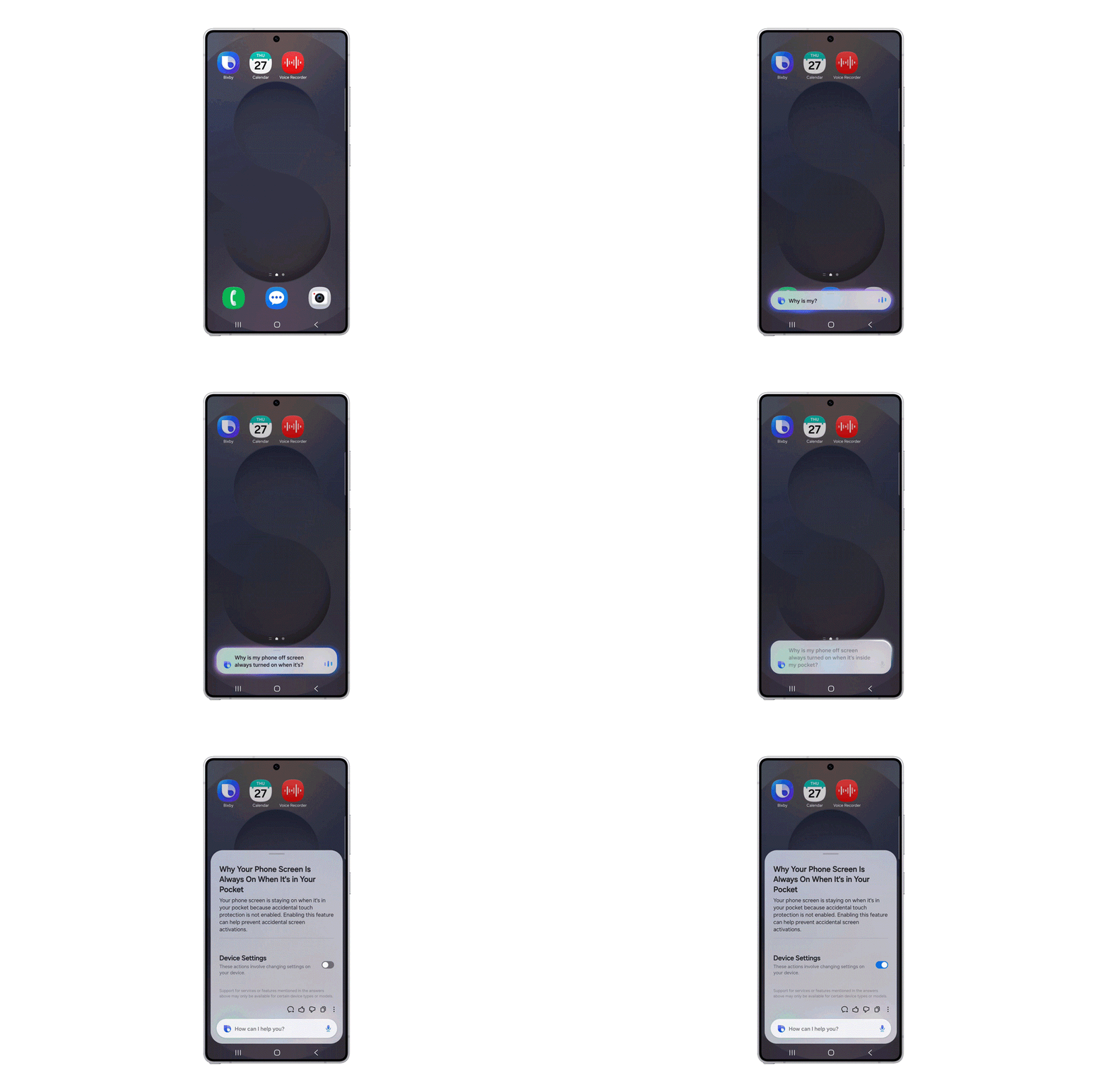
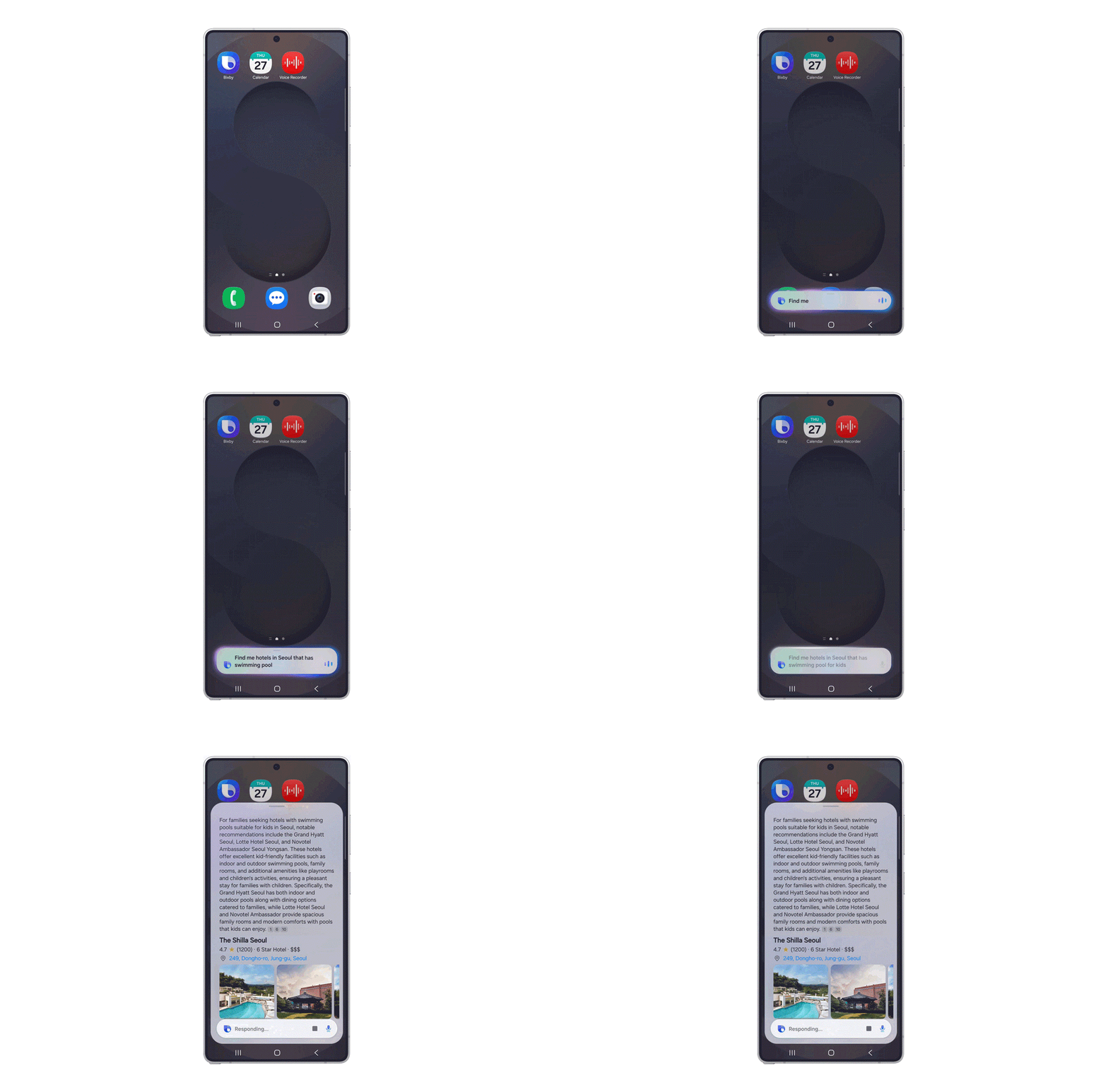
image

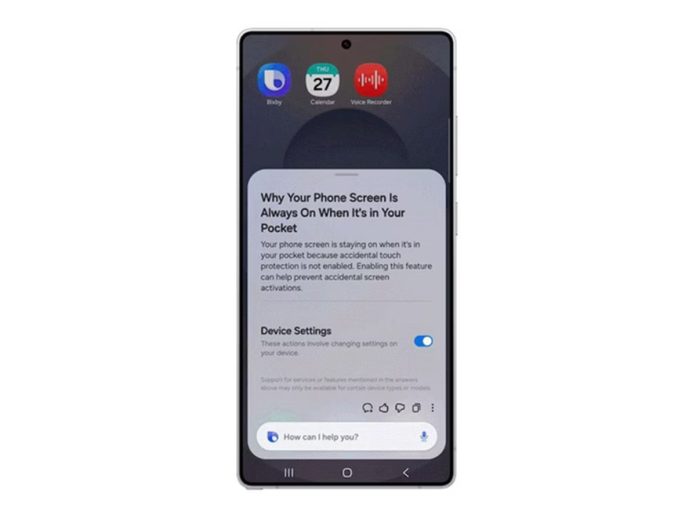
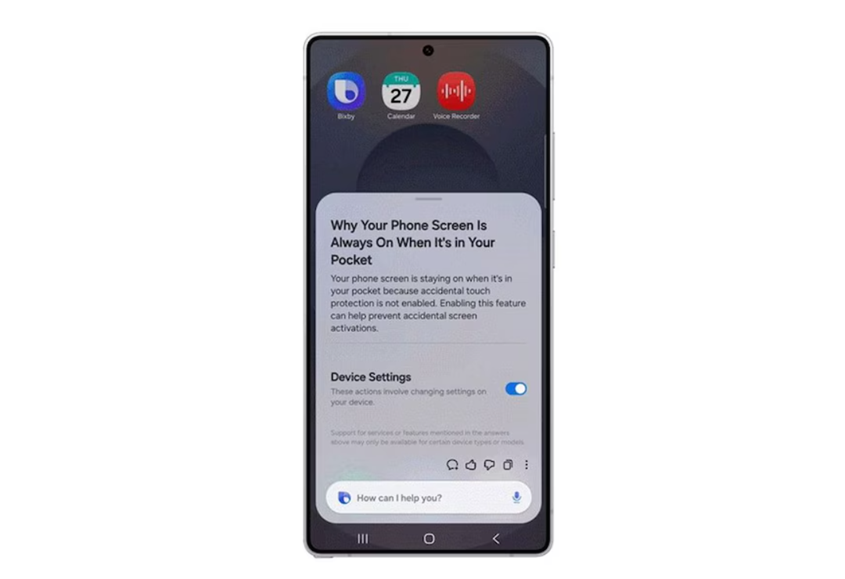
Samsung One UI 8.5 beta update introduces upgraded version of Bixby voice assistant. (Image credit – Samsung)

Samsung has rolled out the fifth One UI 8.5 beta update for the Galaxy S25 series across multiple markets. It introduces a significantly upgraded version of its Bixby voice assistant. The latest build enhances Bixby with more natural language understanding and real-time web access, allowing users to interact with their Galaxy devices more intuitively.

“Since we introduced our first AI phone in 2024, we’ve been committed to making them easier to use so more people can benefit from AI — that’s why we decided to integrate a device agent directly into the experience,” said Won-Joon Choi, Chief Operating Officer, Mobile eXperience (MX) Business at Samsung Electronics. “To support this, we redesigned Bixby to enable more natural interactions and intuitive device control, reducing friction in everyday tasks.”

The One UI 8.5 beta update arrives just days ahead of the anticipated stable release, which is expected to coincide with the launch of the Galaxy S26 lineup. Here are more details.

Upgraded Bixby Now Supports Natural Language Commands


Following the rollout of the fifth One UI 8.5 beta to eligible Samsung Galaxy S25 users worldwide, Samsung detailed the improvements made to Bixby in the latest update.

According to the company, the enhanced on-device assistant now understands more conversational and natural language inputs. Users no longer need to recall exact setting names or pre-defined commands to perform tasks. This change is designed to reduce the time spent navigating menus or searching for specific features.

Samsung shared an example that if a user says, “I don’t want the screen to time out while I’m still looking at it,” Bixby can interpret the request and automatically activate the “Keep Screen on While Viewing” setting. This will ne possible even if the user does not know the precise feature name.

Samsung also states that the assistant can recognise the device’s current configuration and recommend possible solutions. This capability is intended to help users complete tasks more efficiently, particularly when they are unfamiliar with certain settings or features.

Real-Time Web Search Integration

A major addition in the One UI 8.5 beta is real-time web search integration within Bixby. The assistant can now fetch live and up-to-date information directly from the internet and present it within its interface, eliminating the need for users to open a separate browser.


For instance, when a user makes a request such as “Find me hotels in Seoul with swimming pools for kids,” Bixby will generate relevant results directly inside the assistant interface.

Availability and Security Patch Details

The upgraded Bixby experience in One UI 8.5 is currently available in select regions including Germany, India, Korea, Poland, the UK, and the US. Samsung has confirmed that a broader rollout is planned in the coming months.

The fifth One UI 8.5 beta also includes the February 5, 2026 security patch. Meanwhile, the stable version of the software is expected to be released alongside the Galaxy S26 series at the upcoming Galaxy Unpacked event next week.

 FAQs

Q1. What’s new in Bixby with the One UI 8.5 beta?

Answer. Bixby now supports more natural, conversational voice commands, allowing users to control settings and features without needing exact command names.

Q2. How does real-time web search work in Bixby?

Answer. The assistant can fetch live information directly from the internet and display results within its interface, eliminating the need to open a separate browser.

Q3. Where is the One UI 8.5 beta currently available?

Answer. The update is live for Galaxy S25 users in Germany, India, Korea, Poland, the UK, and the US, with a broader rollout planned alongside the Galaxy S26 launch.

Also Read

https://www.mymobileindia.com/samsungs-one-ui-8-5-changelog-leaks-online-major-upgrades-coming-to-battery-dex-ai-accessibility-and-more/

https://www.mymobileindia.com/samsung-galaxy-s26-galaxy-s26-hardware-upgrades-and-samsung-galaxy-s26-series-one-ui-8-5-features-leaked/

Nothing Phone (4a) Series With Snapdragon Chipsets Confirmed, Expected Specs, Price and Features Tipped

0

Highlights

  • Nothing has officially confirmed Snapdragon chipsets for its upcoming Phone (4a) and Phone (4a) Pro.
  • The standard Phone (4a) may feature a 6.7‑inch AMOLED 120Hz display, 50MP OIS + ultra‑wide + 50MP telephoto rear cameras, 5,400mAh battery with 50W fast charging, and Android 16‑based Nothing OS 4.0.
  • The Phone (4a) is tipped to start at EUR 409 (abt ₹44,000), while the Pro variant may begin at EUR 499 (abt ₹54,000).

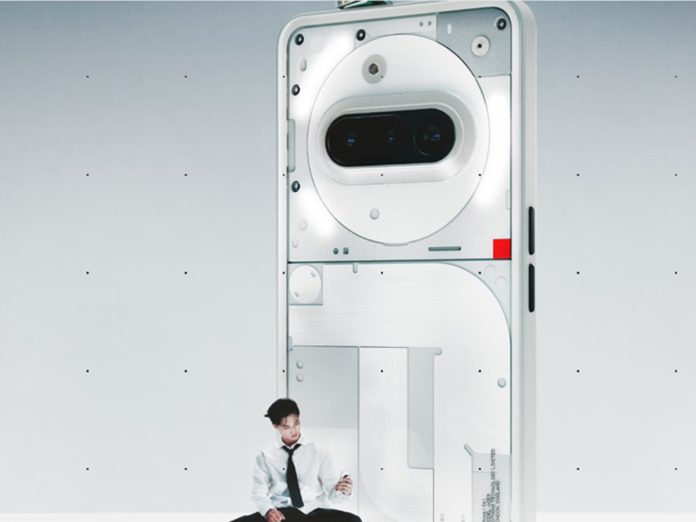
image

Nothing Phone (3a) in the picture. (Image credit – Nothing)

Nothing has officially confirmed that its upcoming Nothing Phone (4a) series will be powered by Snapdragon chipsets. The UK-based brand is set to host a launch event on March 5, which is interestingly just a day after Apple’s launch event.

The series is expected to include two models, Nothing Phone (4a) and Nothing Phone (4a) Pro. Now, the brand has begun revealing select details about the devices and we also have several leaks surfacing online with specifications and pricing details.

Nothing Phone (4a) Series to Feature Snapdragon SoC

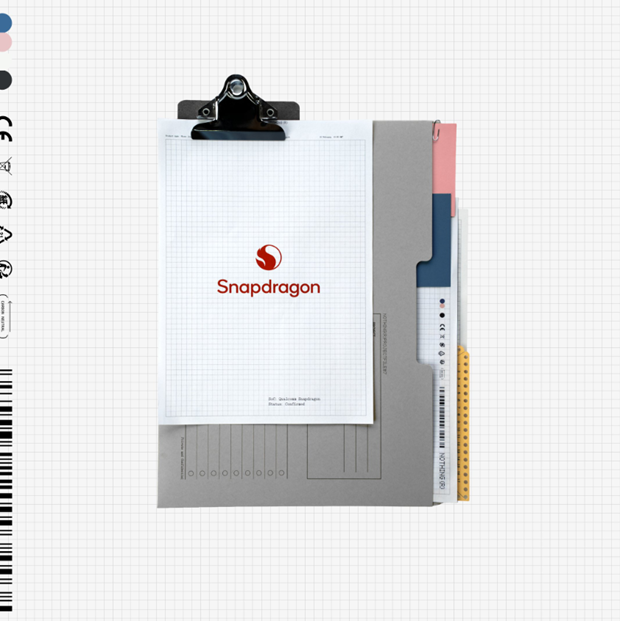
image

Snapdragon chipsets confirmed for Nothing Phone (4a). (Image credit – Nothing)

Nothing’s official account on X has confirmed that both models in the Nothing Phone (4a) series will come equipped with a Snapdragon chipset. Apart from that, the company has not disclosed the exact processor name yet.

This confirmation aligns with earlier reports suggesting that the devices could be powered by an octa-core Snapdragon 7s Gen 4 chipset, which is tipped to deliver a peak clock speed of up to 2.71GHz.

Nothing Phone (4a) – Key Features (Expected)

Meanwhile, a recent Android Headlines report has detailed other hardware specifications.

According to the report, the standard Nothing Phone (4a) may feature a 6.7-inch AMOLED display with a 120Hz refresh rate. The screen is said to offer a 1.5K resolution along with slim bezels.

The handset is expected to be available in two RAM and storage configurations, 8GB or 12GB of RAM paired with 128GB or 256GB of internal storage. It is likely to ship with Nothing OS 4.0 based on Android 16 out of the box.

For photography, the Nothing Phone 4a is tipped to sport a triple rear camera setup. This could include a 50-megapixel primary sensor with optical image stabilisation (OIS), an ultra-wide-angle lens, and a 50-megapixel telephoto camera offering 3.5x optical zoom. On the front, the device may house a 32-megapixel selfie camera.

The smartphone is also expected to pack a 5,400mAh battery with support for 50W wired fast charging. There is currently no mention of wireless charging support. Additionally, the phone is said to come with an IP65 rating for dust and splash resistance.

Nothing Phone 4a Pro – Price and Variants (Expected)

Reports suggest the Nothing Phone (4a) Pro is reportedly set to launch with a starting price of EUR 499 (approximately Rs. 54,000) for the 8GB RAM + 128GB storage variant.

The higher-end 12GB + 256GB model is tipped to cost EUR 569 (around Rs. 61,000). The Pro variant may be available in Black, Silver, and Pink colour options.

Meanwhile, the standard Nothing Phone (4a) is expected to debut at EUR 409 (roughly Rs. 44,000) for the 8GB RAM + 256GB storage configuration in markets such as France, Belgium, and Italy.

The 12GB + 256GB variant could be priced at EUR 449 (about Rs. 48,000). The device is anticipated to go on sale globally in Black, Blue, Pink, and White finishes.

FAQs

Q1. What has Nothing officially confirmed about the Phone (4a) lineup?

Answer. Nothing has confirmed that both the Phone (4a) and Phone (4a) Pro will be powered by Snapdragon chipsets, with the launch event scheduled for March 5, 2026.

Q2. What are the expected key specifications of the Nothing Phone (4a)?

Answer. Leaks suggest a 6.7‑inch AMOLED display with 120Hz refresh rate, triple rear cameras (50MP OIS + ultra‑wide + 50MP telephoto), 32MP selfie camera, 5,400mAh battery with 50W fast charging, IP65 rating, and Android 16‑based Nothing OS 4.0.

Q3. How much will the Nothing Phone (4a) and 4a Pro cost?

Answer. The standard Phone (4a) is expected to start at EUR 409 (about ₹44,000), while the Pro variant may begin at EUR 499 (about ₹54,000), with higher storage/RAM models priced up to EUR 569 (about ₹61,000).

Also Read

https://www.mymobileindia.com/nothing-phone-4a-and-phone-4a-pro-prices-specs-and-colours-leaked-ahead-of-launch/

https://www.mymobileindia.com/nothing-confirms-march-5-launch-event-phone-4a-phone-4a-pro-expected-to-debut/

WhatsApp Rolls Out Group Message History Feature, Allows Sharing Up to 100 Recent Messages With New Members

0

Highlights

  • WhatsApp is rolling out a feature that lets existing members share 25–100 recent messages with new participants.
  • Messages aren’t shared automatically and members must choose to forward them.
  • Shared history appears distinct with timestamps, sender names, and group-wide notifications for transparency.
(Photo by Christian Wiediger on Unsplash)

WhatsApp has started introducing a new feature called Group Message History, aimed at making it easier for users to join active group chats. The update enables existing group members to share a selection of recent messages with newly added participants. It will help new group members quickly understand ongoing conversations without scrolling through long chat threads or asking others for summaries. Here are more details.

Group Message History – Share 25 to 100 Recent Messages

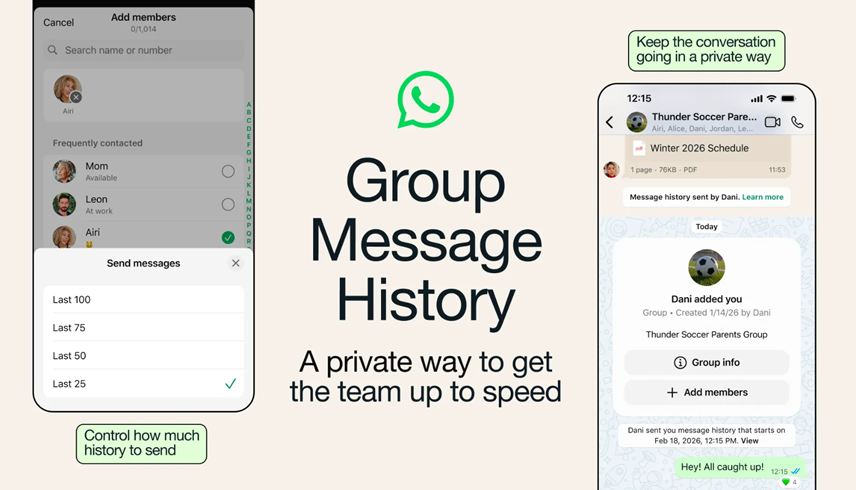
WhatsApp’s Group Message History feature has started rolling out gradually. (Image credit - WhatsApp)
WhatsApp’s Group Message History feature has started rolling out gradually. (Image credit – WhatsApp)

WhatsApp announced the new feature in a blog post titled “Introducing Group Message History: A more private way to catch up in group chats.

With the new Group Message History feature, WhatsApp allows group members to forward a portion of recent chat messages to someone who has just joined the group. When adding a new participant, users will now see an option to share between 25 and 100 recent messages from the conversation.

Sharing details of the feature, the blog post read, “When you add someone new to a group chat, you’ll see an option to send recent messages to them – from 25 up to 100 maximum. This keeps things simple, ensuring new members only need to read the most relevant, recent context, and the whole group can easily see the messages that have been shared.”

How Group Message History Feature work?

The chat history is not shared automatically.

A group member must manually choose to send the selected messages. Once forwarded, the shared history appears visually different from regular chat messages and clearly displays timestamps along with the names of the original senders.

To maintain transparency, WhatsApp notifies all group participants when previous messages are shared with a new member. This prevents silent backfilling of conversations and ensures everyone knows exactly what content has been forwarded.

Group administrators also have control over the feature. Admins can disable Group Message History entirely, a setting that may be particularly useful for private or sensitive groups where privacy is a priority over convenience.

Meta Push for Enhanced Group Features

The introduction of Group Message History aligns with Meta’s ongoing efforts to strengthen group functionality on WhatsApp. Just last month, the platform introduced three additional tools to improve group engagement with member tags, text stickers, and event reminders.

With the recent feature, WhatsApp is aiming to strike a balance between usability and privacy. The feature provides helpful context to new members without exposing the entire chat archive.

About rollout, WhatsApp blog post reads, We’ve started rolling out Group Message History gradually, and look forward to continuing to set the standard for private, group chat experiences on WhatsApp.”

FAQs

Q1. How does the Group Message History feature work?

Answer. When a new member joins a group, existing members can manually choose to forward 25–100 recent messages. These appear distinct with timestamps and sender names.

Q2. Is the group message chat history shared automatically with new members?

Answer. No, it is not automatic. A group member must manually select and forward the messages. WhatsApp also notifies all participants when history is shared.

Q3. Can WhatsApp group admins control the new Message history feature?

Answer. Yes, admins can disable Group Message History entirely, which is useful for private or sensitive groups where privacy is prioritised over convenience.

Also Read

https://www.mymobileindia.com/whatsapp-to-introduce-custom-app-icons-themes-and-accent-colours-for-upcoming-premium-subscription/

https://www.mymobileindia.com/whatsapp-web-to-finally-get-voice-and-video-calling-support/

Adobe Announces Free Access to Photoshop, Acrobat and Firefly for Indian Students at AI Impact Summit 2026

0

Highlights

  • Adobe will provide Photoshop, Acrobat, and Firefly at no cost to students in accredited higher education institutions across India.
  • The initiative includes structured curriculum training and integration with 15,000 schools and 500 colleges via Content Creator Labs.
  • Adobe has also partnered with NASSCOM FutureSkills Prime to deliver AI-focused learning programmes and certifications.
(Photo by Rubaitul Azad on Unsplash)

Adobe has unveiled a major initiative aimed at empowering students across India. The US-based technology giant announced that students enrolled in accredited higher education institutions nationwide will receive free access to several of its leading productivity and creativity applications including Adobe Photoshop, Adobe Acrobat, and Adobe Firefly.

The announcement was made during the the India AI Impact Summit 2026, currently being held at Bharat Mandapam. Adobe described the initiative as a “strategic investment” that is expected to “accelerate” AI-enabled creativity and productivity in the country.

Free Adobe Apps for Students Across India

Under the newly introduced plan, all students studying at accredited higher education institutions in India will be eligible for complimentary access to Photoshop, Acrobat, and Firefly.

At present, Adobe offers a student subscription package in India that includes Photoshop, Illustrator, Premiere, and Acrobat Pro. The new move significantly expands access without subscription costs.

Photoshop, Acrobat and Firefly AI Student Offering. (Image credit - Adobe)
Photoshop, Acrobat and Firefly AI Student Offering. (Image credit – Adobe)

In addition to providing free access to its AI-powered tools, Adobe stated that students will also receive structured curriculum support to help them learn how to effectively use these applications. The company highlighted that its “AI-first” offering with the dedicated curriculum will be extended at no cost to students across 15,000 schools and 500 colleges that will feature Content Creator Labs.

To recall, the Content Creator Labs initiative was announced by the Indian government as part of the Union Budget 2026. It has the goal of generating 20 lakh Animation, Visual Effects, Gaming and Comics (AVGC) jobs by 2030.

As of now, Adobe’s Creative Cloud Pro student subscription in India is priced at Rs. 400 for the first month and Rs. 2,714 per month thereafter.

Partnership With NASSCOM FutureSkills Prime

Alongside the free software access, Adobe also revealed a partnership with NASSCOM through its NASSCOM FutureSkills Prime platform. Through this collaboration, students will gain access to AI-focused learning programmes and certifications.

Adobe said this partnership builds on its global training and career pathway programme, the Adobe Digital Academy, further strengthening its commitment to skill development in the AI and creative technology domains.

FAQs

Q1. Who is eligible for Adobe’s free apps in India?

Answer. Students enrolled in accredited higher education institutions across India will receive complimentary access to Adobe Photoshop, Acrobat, and Firefly.

Q2. What additional support will students get besides free software?

Answer. Adobe will provide structured curriculum training and extend its “AI-first” offering to 15,000 schools and 500 colleges through Content Creator Labs, supporting India’s AVGC job creation goals.

Q3. How is Adobe partnering to enhance student skills?

Answer. Adobe has teamed up with NASSCOM FutureSkills Prime to deliver AI-focused learning programmes and certifications, building on its global Adobe Digital Academy initiative.

Also Read

https://www.mymobileindia.com/adobe-launches-free-premiere-app-for-iphone-with-ai-tools-and-4k-editing-support/

https://www.mymobileindia.com/adobe-updates-premiere-pro-with-remix-for-music-3x-faster-speech-to-text/

Meta Smartwatch With Meta AI and Advanced Health Tracking Tipped for 2026 Launch

0

Highlights

  • Meta is reportedly preparing to launch its debut smartwatch with advanced health tracking and Meta AI integration.
  • The smartwatch may debut alongside updated Ray‑Ban smart glasses.
  • Meta is reassessing its AR/MR plans, delaying its Phoenix mixed‑reality glasses to 2027.
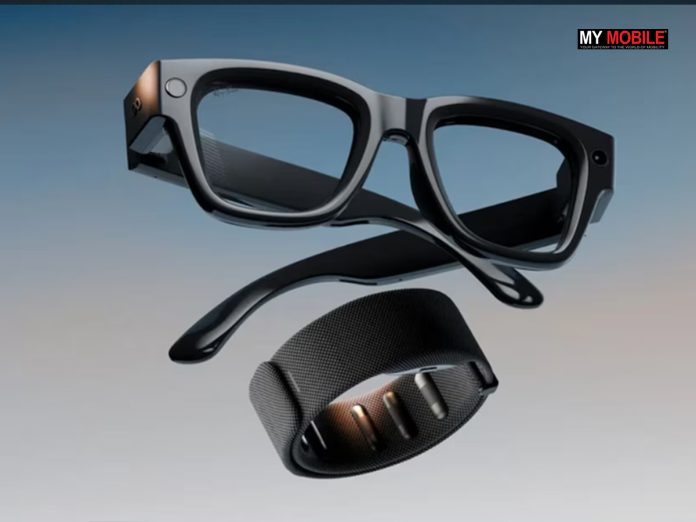
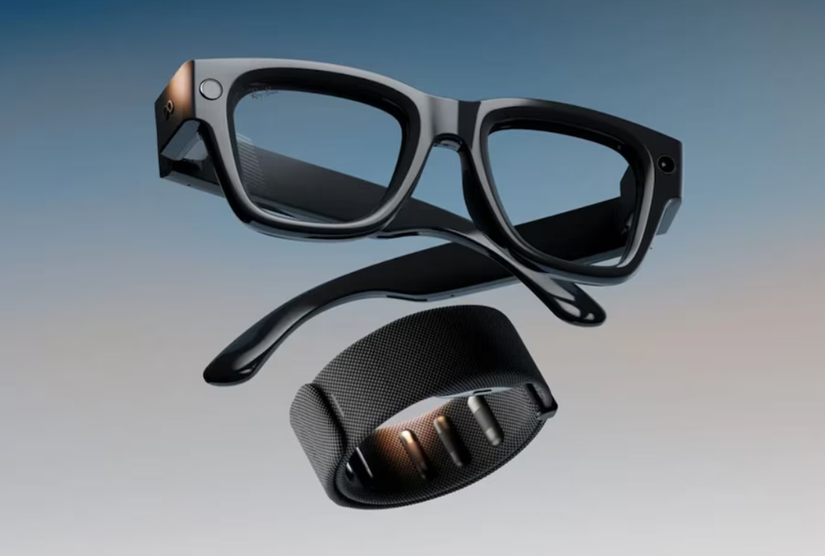
First Meta Smartwatch expected in 2026. (Image credit - Unknown)
First Meta Smartwatch expected in 2026. (Image credit – Unknown)

Meta is reportedly gearing up to enter the smartwatch segment with its first device, expected to debut in 2026. The device will reportedly focus heavily on health tracking features and integration with Meta AI. This would mark Meta’s official entry into the highly competitive smartwatch space. Here’s everything we know about the project so far.

Meta Smartwatch May Launch Alongside Updated Ray-Ban Smart Glasses

According to a report by The Information (via The Verge), Meta’s smartwatch project is internally codenamed “Malibu 2.” The device is expected to launch alongside an upgraded version of Meta’s Ray-Ban Display smart glasses.

The report suggests that the smartwatch could become a key component of Meta’s broader wearable ecosystem. Notably, it may replace the neural wristband currently used for gesture-based controls with the Ray-Ban Display smart glasses, streamlining how users interact with the devices.

The rumoured smartwatch is believed to be part of Meta’s larger hardware strategy, as artificial intelligence becomes increasingly central to fitness and lifestyle gadgets. With AI-powered features now a major selling point in modern wearables, Meta appears keen to position its smartwatch as a next-generation device in the evolving health-tech ecosystem.

This would not be Meta’s first attempt at launching a smartwatch. The company had previously been working on a wrist-worn device and some early prototypes reportedly featured multiple cameras.

However, Meta shelved the project in 2022 amid technical hurdles and wider cost-cutting measures within its Reality Labs division. So far, Meta has not officially confirmed the new smartwatch plans.

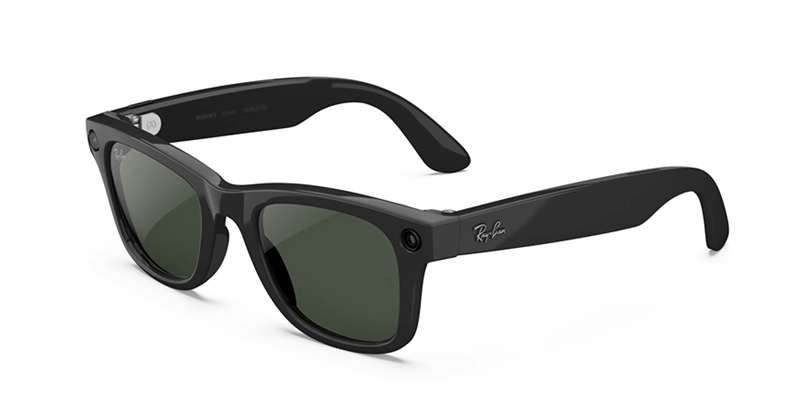
Meta RayBan Smart Glasses. (Image credit - Meta)
Meta RayBan Smart Glasses. (Image credit – Meta)

AR and Mixed-Reality Strategy Under Review

The report further indicates that Meta is reassessing its broader augmented reality (AR) and mixed reality (MR) roadmap. While multiple AR and MR products remain in development, a mixed-reality glasses project internally known as “Phoenix” has reportedly been delayed until 2027.

If the smartwatch arrives as expected, Meta will enter a crowded wearables market currently led by major players such as Apple, Samsung, Google, Garmin, and Fitbit. The launch would also underscore the broader industry shift toward AI-driven consumer electronics, particularly in the health and fitness segment.

Separately, Meta recently stated that strong demand combined with limited supply forced it to pause the global rollout of its Ray-Ban Display smart glasses. Industry estimates cited in the report claim that shipments of these glasses reached nearly six million units last year.

FAQs

Q1. When is Meta’s smartwatch expected to launch?

Answer. Meta’s first smartwatch, internally codenamed Malibu 2, is tipped for a 2026 debut, marking the company’s official entry into the wearable device market.

Q2. What features will the Meta smartwatch focus on?

Answer. The device is expected to emphasise advanced health tracking and deep integration with Meta AI, potentially replacing the neural wristband currently used for gesture controls with Ray‑Ban smart glasses.

Q3. How does the smartwatch fit into Meta’s broader hardware strategy?

Answer. It is part of Meta’s larger push into AI‑driven wearables and mixed‑reality devices. While the smartwatch may launch in 2026, Meta’s Phoenix mixed‑reality glasses have reportedly been delayed until 2027 to better space out hardware releases.

Also Read

https://www.mymobileindia.com/meta-working-on-name-tag-facial-recognition-feature-for-ray-ban-smart-glasses-report-says/

https://www.mymobileindia.com/meta-to-test-paid-subscriptions-across-instagram-facebook-and-whatsapp-with-exclusive-features/

OpenAI to Open Mumbai and Bengaluru Offices, Partner With Tata Group for AI Data Centre in India

0

Highlights

  • OpenAI will open offices in Mumbai and Bengaluru in 2026, expanding beyond New Delhi.
  • Partnering with the Tata Group, OpenAI will build AI‑ready data centres starting with 100MW capacity, scaling to 1GW.
  • OpenAI is expanding certification programs and partnering with institutions like IIM Ahmedabad, AIIMS and TCS to boost AI skills.
(Photo by Andrew Neel on Unsplash)

Artificial intelligence leader OpenAI has announced plans to expand its footprint in India by opening new offices in Mumbai and Bengaluru later this year. The move marks a significant step beyond its existing base in New Delhi, as the company aims to deepen its engagement with Indian users and enterprise partners.

The announcement was made during the AI Impact Summit 2026 in Delhi, where the ChatGPT-maker confirmed that the new offices are intended to “better serve users and partners in India.” The company currently operates from New Delhi and is now broadening its presence to two of India’s key technology hubs.

Sam Altman Highlights India’s AI Leadership

OpenAI CEO Sam Altman emphasised India’s growing role in artificial intelligence adoption and innovation.

“India is already leading the way in AI adoption, and with its homegrown tech talent, optimism about what AI can do for the country, and strong government support, it is well placed to help shape its future and how democratic AI is adopted at scale. Through OpenAI for India, we’re working together to build the infrastructure, skills, and local partnerships needed to build AI with India, for India, and in India.

The company revealed that India now accounts for more than 100 million weekly users of ChatGPT, underlining the country’s importance in OpenAI’s global strategy.

OpenAI and Tata Group to Build AI-Ready Data Centre

Tata Companies and OpenAI announced a landmark collaboration. (Image credit - @TCS on X)
Tata Companies and OpenAI announced a landmark collaboration. (Image credit – @TCS on X)

In a major infrastructure push, OpenAI has partnered with the Tata Group to establish AI-ready data centre capacity in India. Under the agreement, OpenAI will become the first customer of Tata Consultancy Services’ HyperVault data centre business.

The collaboration will begin with 100 megawatts of capacity with plans to scale up to 1 gigawatt over time. OpenAI said the infrastructure will allow its most advanced AI models to operate securely within India, enhancing data localisation and performance.

As part of the partnership, the Tata Group intends to roll out ChatGPT Enterprise across its workforce in the coming years, starting with TCS employees. TCS also plans to leverage OpenAI’s Codex tool to standardise AI-native software development across its teams.

OpenAI Certification and Education Partnerships in India

OpenAI also announced the expansion of its OpenAI Certification programmes in India. TCS will become the first organisation outside the United States to participate in these certifications, which are aimed at helping professionals develop practical AI skills.

In addition, the company unveiled education collaborations with leading Indian institutions including the Indian Institute of Management Ahmedabad, All India Institute of Medical Sciences, Manipal Academy of Higher Education, University of Petroleum and Energy Studies, and Pearl Academy.

Beyond academia, OpenAI has recently partnered with several prominent Indian companies including JioHotstar, Eternal, Pine Labs, Cars24, HCLTech, PhonePe, CRED, and MakeMyTrip.

 FAQS

Q1. Where is OpenAI opening new offices in India?

Answer. OpenAI will open offices in Mumbai and Bengaluru later this year, expanding beyond its current base in New Delhi.

Q2. What partnership has OpenAI announced with the Tata Group?

Answer. OpenAI will collaborate with Tata Group to build AI‑ready data centres, starting with 100MW capacity and scaling to 1GW, ensuring secure local operations.

Q3. How is OpenAI supporting AI education and skills in India?

Answer. OpenAI is expanding its Certification programmes with TCS as the first non‑US participant and partnering with institutions like IIM Ahmedabad, AIIMS, and Manipal Academy to boost AI skills.

Also Read –

https://www.mymobileindia.com/openai-starts-testing-ads-in-chatgpt-for-free-and-go-users-in-the-us/

https://www.mymobileindia.com/openais-first-hardware-device-could-be-called-dime-leak-points-to-ai-powered-earbuds/

PM Modi Unveils MANAV Vision for AI at India AI Impact Summit, Mukesh Ambani Pledges ₹10 Lakh Crore Jio Investment

0

Highlights

  • PM Modi’s MANAV Vision and Mukesh Ambani’s AI investment were announced at the India AI Impact Summit 2026.
  • PM Modi’s MANAV Vision is introduced as a framework for responsible AI, Moral systems, Accountable governance, National sovereignty, Accessibility, and Validity.
  • Reliance and Jio pledged ₹10 lakh crore over seven years in AI.
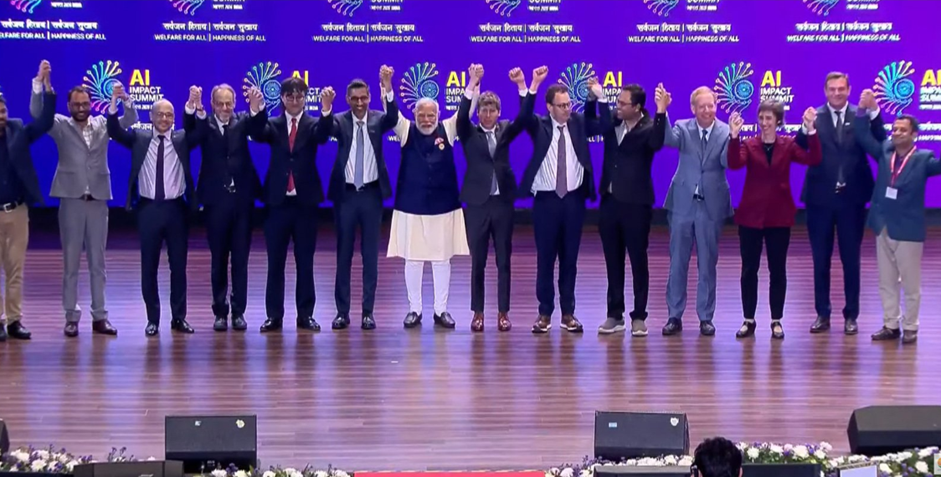
World leaders and tech titans join PM Modi at the India AI Impact Summit 2026 stage. (Image credit - ANI)
World leaders and tech titans join PM Modi at the India AI Impact Summit 2026 stage. (Image credit – ANI)

Day 4 of the India AI Impact Summit 2026 marked one of the most crucial moments of the six-day artificial intelligence festival underway in the national capital. The gathering at Bharat Mandapam saw global leaders, technology executives and policymakers outline their vision for the future of AI.

Prime Minister Narendra Modi addressed the opening ceremony of the summit on Thursday, 19 February. Alongside him, prominent voices from the tech and business world including Mukesh Ambani, Sam Altman, and Sundar Pichai delivered keynote sessions. French President Emmanuel Macron also addressed the Delhi AI Summit.

Touted as the first edition of its kind in the ‘Global South’, the summit aims to bring together heads of state, senior ministers, global technology leaders, researchers and startup founders to shape the AI agenda.

PM Modi Introduces M.A.N.A.V. Vision for AI

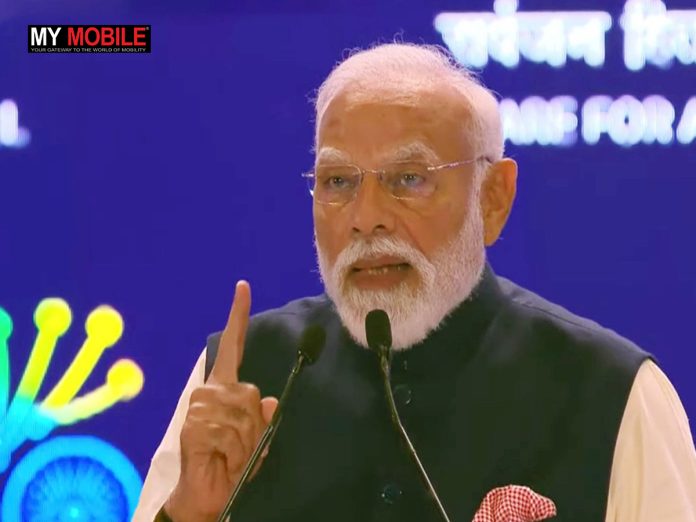
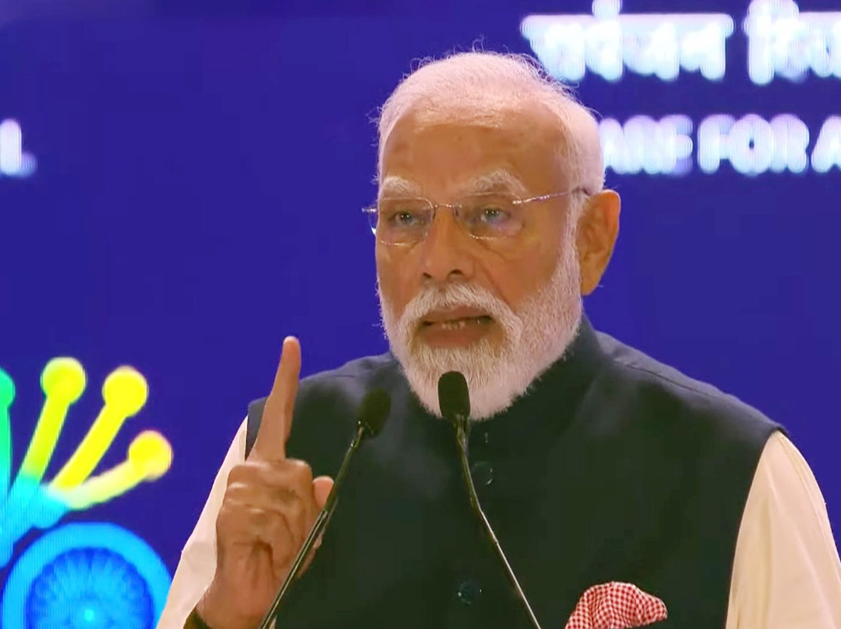
PM Modi addresses the India AI Impact Summit 2026. (Photo credit - ANI)
PM Modi addresses the India AI Impact Summit 2026. (Photo credit – ANI)

At the summit, PM Modi unveiled India’s M.A.N.A.V. Vision for AI, outlining a framework for responsible and inclusive artificial intelligence development.

He explained that M.A.N.A.V. stands for:

M – Moral and Ethical Systems: AI must be based on ethical guidelines.

A – Accountable Governance: Transparent rules and robust oversight.

N – National Sovereignty: Data belongs to its rightful owner.

A – Accessible and Inclusive: AI must not be a monopoly, but a multiplier.

V – Valid and Legitimate: AI must be lawful and verifiable.

The Prime Minister asserted that India’s M.A.N.A.V. Vision will serve as a vital link for humanity’s welfare in the AI-driven 21st century.

AI Should Be Beneficial for All, Says PM Modi

Addressing the gathering in New Delhi, PM Modi described artificial intelligence as a historic transformation comparable to the shift from wireless communication to real-time global connectivity.

He noted that AI represents a significant turning point in human history and emphasised that its impact is only just beginning. According to him, AI has the potential to elevate humanity to new heights.

“AI will be beneficial for all only when it is shared by all, when code is open for all,” he said.

The Prime Minister highlighted that AI is not just about making machines smarter but about amplifying human capabilities. “There is only one difference: this time, the speed is unprecedented, and the scale is also unexpected. Earlier, the impact of technology used to take decades to be visible. Today, the journey from machine learning to learning machines is faster, deeper and wider than ever,he added.

He stressed the need for a broad and forward-looking vision, stating that the global community must shoulder equal responsibility. “Along with the present generation, we also have to worry about what form of AI we will hand over to the coming generations,he said.

According to PM Modi, the key question is not what AI will achieve in the future, but how humans utilise AI in the present. He called for skilling, reskilling and lifelong learning to become a mass movement.

“The future of work will be inclusive, trusted, and human-centric. If we move forward together, artificial intelligence will elevate the potential of humanity,” he added.

Call to Democratise AI

The Prime Minister described AI as a transformative force that can become disruptive if directionless but a powerful solution when guided correctly.

“How to make AI from machine-centric to human-centric, how to make it sensitive and responsive, this is the basic objective of this Global AI Impact Summit. The theme of this summit clearly reflects the perspective from which India views AI. Welfare of all, the happiness of all. This is our benchmark,” PM Modi stated.

He emphasised that AI must be democratised and should not reduce individuals to mere data points or raw material. Instead, AI should serve as a tool for inclusion and empowerment, especially for countries in the Global South.

“We must give AI an open sky and also keep the command in our hands, like GPS. GPS shows us the way, but the final call on which direction we should go is ours. The direction in which we take AI today will determine our future,” he added.

PM Modi urged world leaders to commit to developing AI as a “global common good” and highlighted the urgent need for global standards.

Referring to challenges such as deepfakes and fabricated digital content, he proposed authenticity labels for online content to distinguish real material from AI-generated creations. “As AI creates more text, images, and video, the industry increasingly needs watermarking and clear-source standards. Therefore, it’s crucial that this trust is built into the technology from the start,” he stated.

He concluded by saying that the world is entering an era where “humans and intelligent systems co-create, co-work, and co-evolve”.

Mukesh Ambani Announces ₹10 Lakh Crore AI Investment

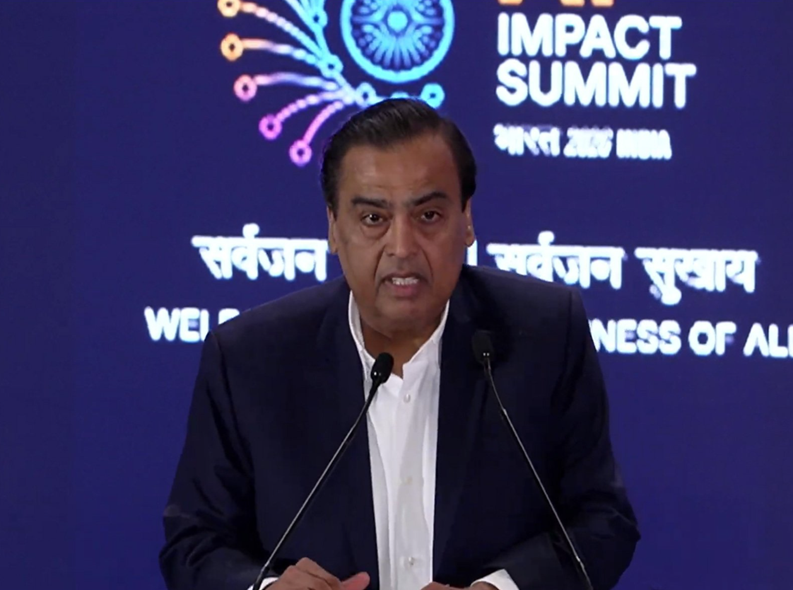
Mukesh Ambani addresses the India AI Impact Summit 2026. (Photo credit - ANI)
Mukesh Ambani addresses the India AI Impact Summit 2026. (Photo credit – ANI)

In a major announcement, Mukesh Ambani revealed that Reliance Industries and its telecom arm Jio will invest ₹10 trillion (₹10 lakh crore) in artificial intelligence over the next seven years.

“Jio, together with Reliance, will invest Rs 10 lakh crore over the next seven years starting this year. This is not a speculative investment. It is not about chasing valuations. This is patient, disciplined, nation-building capital designed to create durable economic value and strategic resilience for decades to come,” he said.  Ambani outlined a three-part strategy aimed at transitioning India from the internet era to what he termed the “intelligence era.”

All in all, the fourth day of the event underscored India’s ambition to play a central role in shaping an inclusive and responsible global AI ecosystem.

FAQs

Q1. What is PM Modi’s M.A.N.A.V. Vision for AI?

Answer. It is a framework for responsible AI development: Moral systems, Accountable governance, National sovereignty, Accessibility, and Validity.

Q2. What major AI investment did Mukesh Ambani announce at the India AI Impact Summit?

Answer. Reliance Industries and Jio will invest ₹10 lakh crore over seven years in artificial intelligence to democratise opportunity and drive innovation.

Q3. What global message did PM Modi emphasise about AI?

Answer. He urged leaders to treat AI as a global common good, stressing democratisation, inclusion, and safeguards like watermarking to combat deepfakes.

Also Read

https://www.mymobileindia.com/qualcomm-commits-150-million-ai-venture-fund-for-indian-startups-ceo-cristiano-amon-announces-at-india-ai-impact-summit/

https://www.mymobileindia.com/india-ai-impact-summit-day-2-schedule-speakers-and-key-sessions-day-2-focuses-on-real-world-ai-deployment-after-disruptions-on-opening-day/

Bill Gates Cancels Keynote at India AI Impact Summit 2026 Amid Epstein Files Controversy

0

Highlights

  • Bill Gates cancelled his keynote at the India AI Impact Summit 2026 after “careful consideration.”
  • Gates Foundation will instead be represented by Ankur Vora, President of Africa and India Offices.
  • The decision comes amid renewed scrutiny over Gates’s alleged links in the Epstein files, sparking online backlash despite his strong denials.
Bill Gates. (Photo credit - Unknown)
Bill Gates. (Photo credit – Unknown)

Tech billionaire Bill Gates will no longer deliver the keynote address at the India AI Impact Summit 2026. The decision was announced by the Bill & Melinda Gates Foundation just a day after his participation was officially confirmed.

Bill Gates Withdraws from India AI Summit 2026

The announcement stated that Gates would skip the event “after careful consideration.”

“After careful consideration, and to ensure the focus remains on the AI Summit‘s key priorities, Mr. Gates will not be delivering his keynote address. The Gates Foundation will be represented by Ankur Vora, President of Africa and India Offices, who will speak later today at the Summit. The Gates Foundation remains fully committed to our work in India to advance our shared health and development goals,” The Gates Foundation stated.

Gates was originally scheduled to speak at the summit held at Bharat Mandapam. However, in a statement released on Thursday, the foundation clarified the change in plans.

Interestingly, this reversal comes only a day after the foundation dismissed speculation surrounding his attendance, asserting that the Microsoft co-founder “will be delivering his keynote as scheduled.”

Decision Comes Amid Epstein Files Row

The development comes at a time when Gates is facing renewed scrutiny over alleged links referenced in documents connected to convicted sex offender Jeffrey Epstein, who died in prison in 2019. His name reportedly appears multiple times in documents related to Epstein, triggering online backlash and criticism.

Gates has strongly denied the allegations, previously describing the claims linked to the Epstein files as “absolutely absurd and completely false.”

Earlier this week, Gates received a formal welcome in Andhra Pradesh. The state government extended a red carpet reception at Gannavaram Airport, with Nara Lokesh and other cabinet members present.

Welcome to Amaravati, Mr Bill Gates. It was a pleasure to receive the Chair of the Gates Foundation at Gannavaram Airport today,” Lokesh said in a post on X.

Despite the official reception, Gates’s India visit also drew criticism on social media, where several users targeted him over the Epstein controversy. Some critics accused him of treating “India as a testing lab for his products and Indians like lab rats.”

Meanwhile, the India AI Impact Summit 2026 has entered its fourth day. Several prominent global leaders are scheduled to address the gathering. Among them are Narendra Modi, Emmanuel Macron, and Antonio Guterres. Later sessions will also feature addresses from leading figures in technology and business including Sam Altman and Mukesh Ambani.

FAQs

Q1. Why did Bill Gates cancel his keynote at the India AI Impact Summit 2026?

Answer. The Gates Foundation said Gates withdrew “after careful consideration” to keep the summit’s focus on AI priorities.

Q2. Who represented the Gates Foundation at the summit instead of Gates?

Answer. Ankur Vora, President of Africa and India Offices at the Gates Foundation, delivered the address in place of Gates.

Q3. What controversy surrounded Bill Gates?

Answer. His withdrawal coincided with renewed scrutiny over alleged links in the Epstein files, which Gates has strongly denied as “absolutely absurd and completely false.”

Also Read

https://www.mymobileindia.com/tesla-ceo-elon-musk-rings-alarm-bells-warns-short-position-will-bankrupt-even-bill-gates/

https://www.mymobileindia.com/ai-impact-summit-2026-know-all-about-the-registration-process-list-of-global-tech-leaders-attending-and-full-agenda/