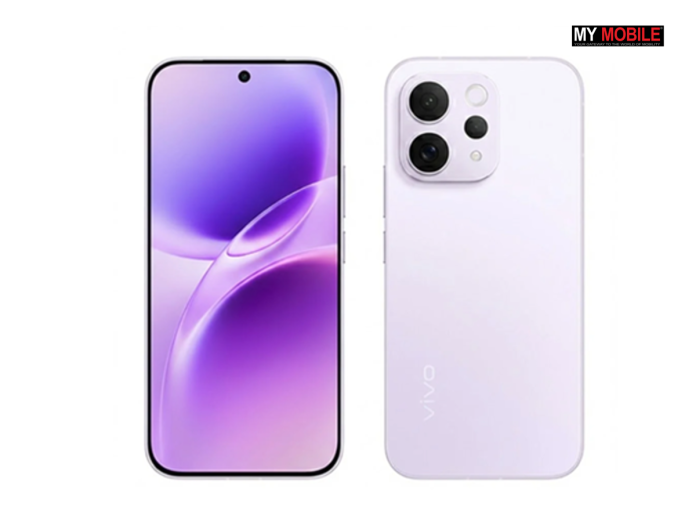
The upcoming Vivo S50 will feature a 6.59-inch 1.5K OLED display, Snapdragon 8s Gen 3, up to 16GB RAM, 512GB storage, a 6,500mAh battery with 90W fast charging and a 50MP triple rear + 50MP front camera setup.
Vivo V70 Series is expected in early 2026 featuring V70, V70 Lite, V70 Elite, and V70 FE, all supporting 5G.
No Pro/Pro+ or V70e models are planned and the standard V70 may be a rebranded S50 with similar specs.
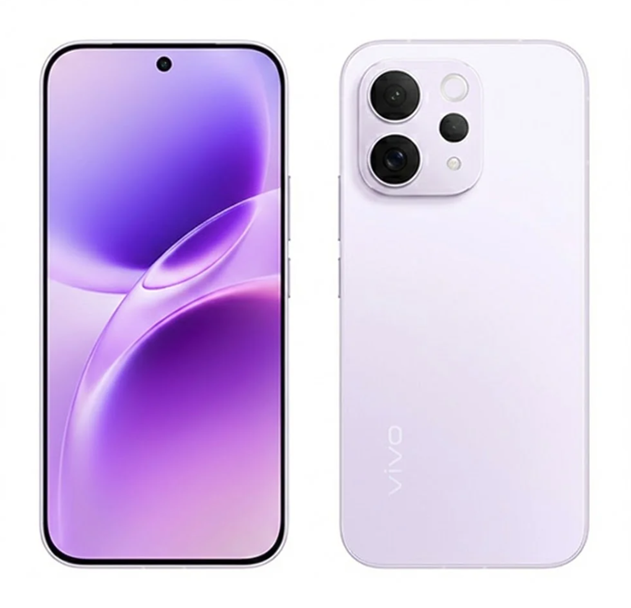
Vivo S50 render. (Image credit – Vivo)
Vivo is gearing up to unveil the Vivo S50 and Vivo S50 Pro Mini in China on December 15. While the company has already shared key details of the Pro Mini variant, the standard Vivo S50 has remained largely under wraps. But that changes now. A new listing on China Telecom has revealed the full specifications of the upcoming smartphone, just days before its official debut. Meanwhile, we also have a new update on the upcoming Vivo V70 Series. Here’s what we know.
Vivo S50 – Full Specifications (Revealed)
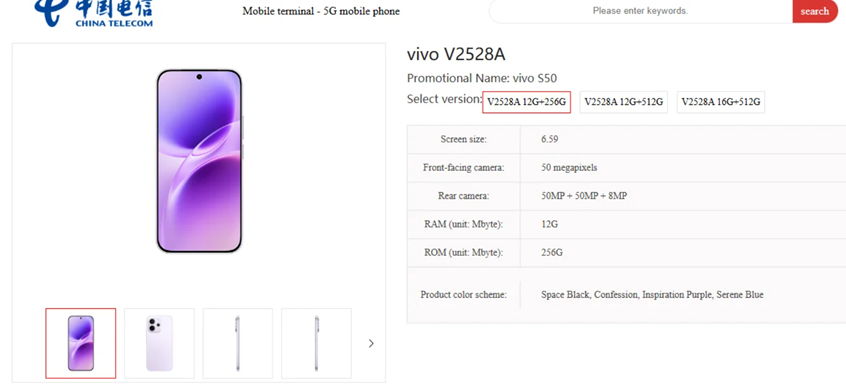
Vivo S50 China telecom listing page screenshot leaked. (Credit – Gizmochina)
According to the China Telecom database via Gizmochina, the Vivo S50 will feature a 6.59-inch OLED display offering a 1.5K resolution (2750 × 1260 pixels) along with a likely 120Hz refresh rate. The handset will also include an in-display fingerprint sensor.
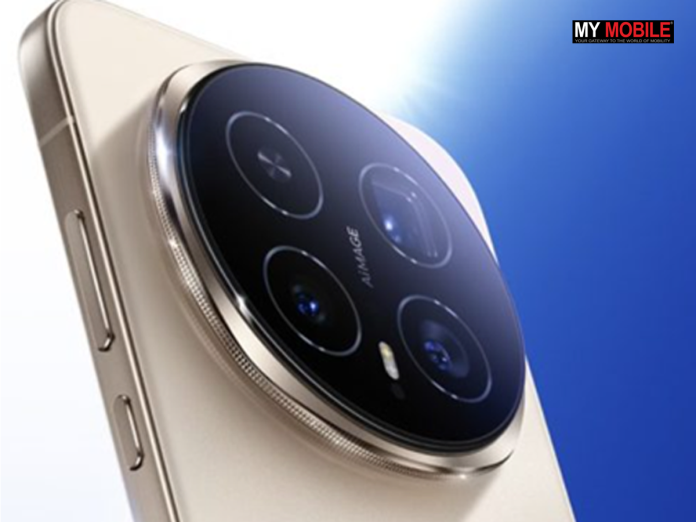
On the back, the device sports a triple-camera setup comprising a 50MP primary lens, an 8MP secondary camera and a 50MP periscope telephoto lens powered by the Sony IMX882 sensor. For selfies, the phone will come equipped with a 50MP front camera.
Powering the smartphone is the Snapdragon 8s Gen 3 chipset, paired with LPDDR5x RAM and UFS 4.1 storage. The listing confirms three variants – 12GB + 256GB, 12GB + 512GB, and 16GB + 512GB.
The Vivo S50 packs a 6,500mAh battery with 90W fast charging, as confirmed via its 3C certification. The smartphone is expected to run Android 16 with OriginOS 6 on top.
In terms of build quality, Vivo has revealed that the S50 features an aerospace-grade aluminium frame. It may also offer IP68/69 dust and water resistance and will be available in Space Black, Confession White, Inspirational Purple, and Serene Blue colour options.
Vivo V70 Series – No 4G Models, New V70 Elite and V70 FE Variants Incoming
Vivo is also preparing its V70 series, expected to launch in early 2026. Until now, only the V70 and V70 Lite were spotted on certification sites. However, a new leak adds two more models to the lineup, Vivo V70 Elite and Vivo V70 FE.
Tipster Paras Guglani @passionategeekz on X claims the 2026 series will not feature any Pro or Pro+ models, similar to the previous generation. Surprisingly, the lineup will also skip a V70e model, despite the V60 series offering multiple versions such as the V60 Lite 4G, V60 Lite 5G, and V60e.
2026 Linup for Vivo V70 Series!!
– Vivo V70 Lite 5G
– Vivo V70 5G
– Vivo V70 Elite 5G
– Vivo V70 FE 5G
There is no Pro or Pro plus for the global or Indian markets!
Standard Vivo V70 is scheduled for India!!
Lite and Elite is likely global and FE might enter India!!
Another major change is that every V70 model will support 5G connectivity, whereas Vivo previously released Lite variants with both 4G and 5G options depending on the market.
According to the leak –
Vivo V70 is likely to launch in India.
V70 Lite and V70 Elite may be released globally.
V70 FE might also arrive in India, though this remains uncertain.
Vivo V70 – What to Expect?
Details on the V70 lineup are still limited, but reports suggest that the standard Vivo V70 could be a rebranded Vivo S50. If true, it might share several specifications, including:
5K 120Hz display
50MP triple-camera setup with a 3x optical zoom telephoto lens
50MP front camera
6,500mAh battery
90W wired charging
IP69 rating
FAQs
Q1. What are the key specifications of the Vivo S50?
Answer. The Vivo S50 comes with a 6.59-inch OLED display, Snapdragon 8s Gen 3 chipset, paired with LPDDR5x RAM and UFS 4.1 storage options. The phone features a triple rear camera setup with a 50MP primary lens, an 8MP secondary lens, and a 50MP periscope telephoto lens, along with a 50MP front camera for selfies. It houses a 6,500mAh battery that supports 90W fast charging.
Q2. When will the Vivo S50 launch and what memory variants are expected?
Answer. The Vivo S50, along with the S50 Pro Mini, will launch in China on December 15, 2025. The device will be available in three storage variants: 12GB + 256GB, 12GB + 512GB, and 16GB + 512GB.
Q3. What do we know about the upcoming Vivo V70 series?
Answer. The Vivo V70 series is expected to launch in early 2026 and will include the Vivo V70, V70 Lite, V70 Elite, and V70 FE models. All of these smartphones will support 5G connectivity with no Pro, Pro+, or V70e versions planned.
Clair Obscur: Expedition 33 dominance with the debut RPG from Sandfall Interactive won 9 out of 10 nominations including Game of the Year, Best Game Direction and Best Narrative.
Arc Raiders took Best Multiplayer Game, Doom: The Dark Ages won Innovation in Accessibility, South of Midnight claimed Games for Impact, while Nintendo scored with Donkey Kong Bananza (Best Family Game) and Mario Kart World (Best Sports/Racing Game).
Hades II won Best Action Game, Hollow Knight: Silksong earned Best Action/Adventure, Fatal Fury: City of the Wolves took Best Fighting Game, Final Fantasy Tactics – The Ivalice Chronicles won Best Sim/Strategy and Grand Theft Auto VI was crowned Most Anticipated Game.
Caption – The Game Awards 2025 winners have been officially announced.
Clair Obscur: Expedition 33 delivered one of the most dominating performances in the history of The Game Awards. It secured nine victories out of its 10 nominations at the 2025 ceremony held recently. The debut title from French indie studio Sandfall Interactive not only claimed the prestigious Game of the Year award but also walked away with several top honors including Best Game Direction, Best Narrative, Best Art Direction, Best Score and Music, and Best Performance.
The turn-based RPG continued its winning streak across genre categories as well, grabbing Best RPG, Best Independent Game, and Best Debut Indie Game. Its only loss came in the Best Audio Design category, where EA’s Battlefield 6 took the win. The achievement marks a massive milestone for Clair Obscur: Expedition 33, which launched in April and quickly gained widespread acclaim from both critics and players.
Other notable winners of the evening included Arc Raiders, the PvPvE extraction shooter from Embark Studios, which earned the award for Best Multiplayer Game, surpassing contenders such as Battlefield 6, Elden Ring Nightreign, and Split Fiction.
Xbox secured two awards thanks to its first-party lineup. id Software’s Doom: The Dark Ages won Innovation in Accessibility, while Compulsion Games’ South of Midnight claimed the Games for Impact award.
Despite leading the nominations with 19 entries, Sony managed to secure only one win. HBO’s The Last of Us: Season 2 emerged as the winner of Best Adaptation. Nintendo, meanwhile, secured two victories with its Switch 2 exclusives, Donkey Kong Banaza winning Best Family Game and Mario Kart World taking home Best Sports/Racing Game.
Among the genre winners, Hades 2, also a Game of the Year nominee, was named Best Action Game. Hollow Knight: Silksong won Best Action/Adventure Game, Fatal Fury: City of the Wolves earned Best Fighting Game, and Final Fantasy Tactics – The Ivalice Chronicles won in the Best Sim/Strategy category. Grand Theft Auto 6 unsurprisingly claimed the Most Anticipated Game award.
Full Winners List – The Game Awards 2025
Here is the full list of winners at The Game Awards 2025:
Winner – Chovy – Jeong Ji-hoon (League of Legends)
brawk – Brock Somerhalder (Valorant)
f0rsakeN – Jason Susanto (Valorant)
Kakeru – Kakeru Watanabe (Street Fighter)
MenaRD – Saul Leonardo (Street Fighter)
Zyw0o – Mathieu Herbaut (Counter-Strike 2)
Best Esports Team
Winner – Team Vitality – Counter-Strike 2
G – League of Legends
NRG – Valorant
Team Falcons – DOTA 2
Team Liquid PH – Mobile Legends: Bang Bang
FAQs
Q1. Which game dominated The Game Awards 2025?
Answer. Clair Obscur: Expedition 33 won 9 out of 10 nominations, including Game of the Year, Best Game Direction, Best Narrative, Best Art Direction, Best Score & Music, Best Performance, Best RPG, Best Independent Game, and Best Debut Indie Game.
Q2. What was the only category Clair Obscur: Expedition 33 did not win?
Answer. It lost in Best Audio Design, which was won by Battlefield 6.
Q2. Which other notable titles won at the Game Awards 2025 ceremony?
Answer. Arc Raiders won Best Multiplayer Game, Doom: The Dark Ages took Innovation in Accessibility, South of Midnight claimed Games for Impact, Donkey Kong Bananza won Best Family Game, Mario Kart World secured Best Sports/Racing Game, and Grand Theft Auto VI was named Most Anticipated Game.
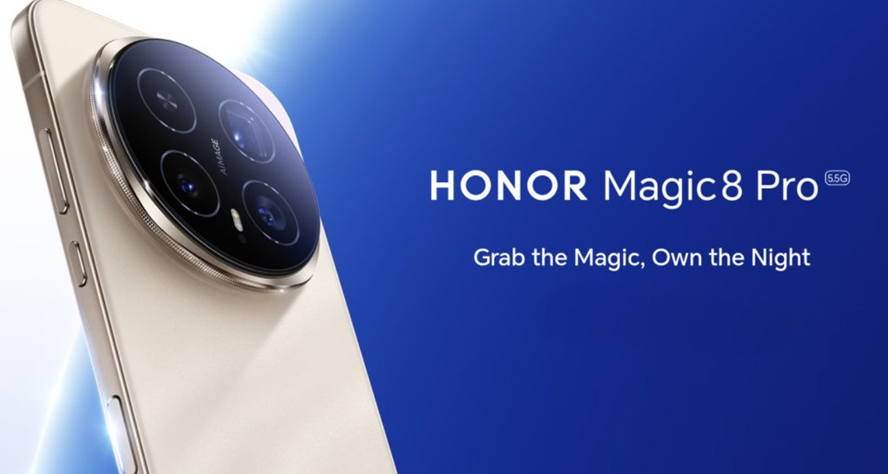
HONOR Magic 8 Pro debuts in the UAE with pre-orders from Dec 11, 2025.
The phone is available in Sunrise Gold, Sky Cyan, and Black, priced at AED 3,999 ($1,089) for 12GB+512GB and AED 4,699 ($1,279) for 16GB+1TB, bundled with Watch5 Ultra and Google AI Pro trial.
Key specs – a 6.71-inch quad-curved OLED, Snapdragon 8 Elite Gen 5, 7,100mAh battery with 100W wired/80W wireless charging, 200MP AI Ultra Night Telephoto lens plus 50MP wide, ultra-wide sensors, a 50MP front camera and IP68/IP69/IP69K durability.
HONOR Magic 8 Pro has been officially launched in the UAE. (Image credit – Honor)
HONOR has officially introduced the Honor Magic 8 Pro to the UAE market following its global reveal in October. The launch event in Dubai highlighted the smartphone’s AI-driven imaging system, robust battery setup, fast performance, and next-generation connectivity features, marking a major entry in the region’s premium smartphone segment. Here’s more about the newly launched device.
Honor Magic 9 Pro – Pricing and Availability
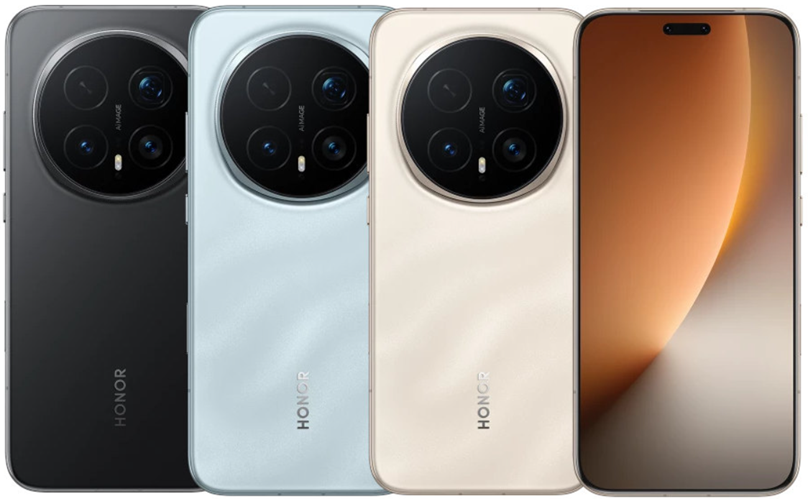
Pre-orders for the HONOR Magic 8 Pro begin on December 11, 2025, in the UAE. The smartphone will be available in Sunrise Gold, Sky Cyan, and Black colours.
HONOR Magic 8 Pro colour variants. (Image credit – Honor)
Customers who pre-order will receive a bundle valued at AED 2,299. It includes the HONOR Watch5 Ultra, HONOR VIP Care Plus with 12-month damage protection, and a three-month Google AI Pro trial.
The smartphone can be purchased through the HONOR Online Store and major retailers including Sharaf DG, EMax, Ecity, Jumbo, Virgin Megastore, Amazon, Carrefour, e&, Eros, Noon, and Lulu.
Honor Magic 8 Pro – Key Features
The Magic 8 Pro features a 6.71-inch quad-curved OLED display with a 1.5K resolution (1256 × 2808 pixels). It supports a 1–120Hz LTPO refresh rate, HDR10+, 1,800 nits global peak brightness, 6,000 nits HDR peak brightness, and 4,320Hz high-frequency PWM dimming.
HONOR has equipped the device with Rhino Glass protection.
HONOR Magic 8 Pro key features. (Image credit – Honor)
The Magic 8 Pro becomes the first device in the UAE to run on Qualcomm’s Snapdragon 8 Elite Gen 5 Mobile Platform. According to HONOR, the chipset offers enhanced processing efficiency and improved thermal performance over previous generations.
Powering the device is a 7,100mAh silicon-carbon battery, coupled with 100W wired SuperCharge and 80W wireless charging support. HONOR also confirmed that the Magic 8 Pro is the UAE’s first 5.5G-ready smartphone, backed by collaborations with operators including Etisalat by e. Connectivity options include Wi-Fi 7, Bluetooth 6.0, NFC, USB Type-C USB 3.2 GEN1, dual SIM, and extensive navigation support such as eidou, dual-band GPS, GLONASS, triple-band Galileo, dual-band QZSS, dual-band NavIC and A-GNSS.
The device also features AI-assisted tools such as an AI Button, AI Search, and AI Documents designed to streamline productivity tasks.
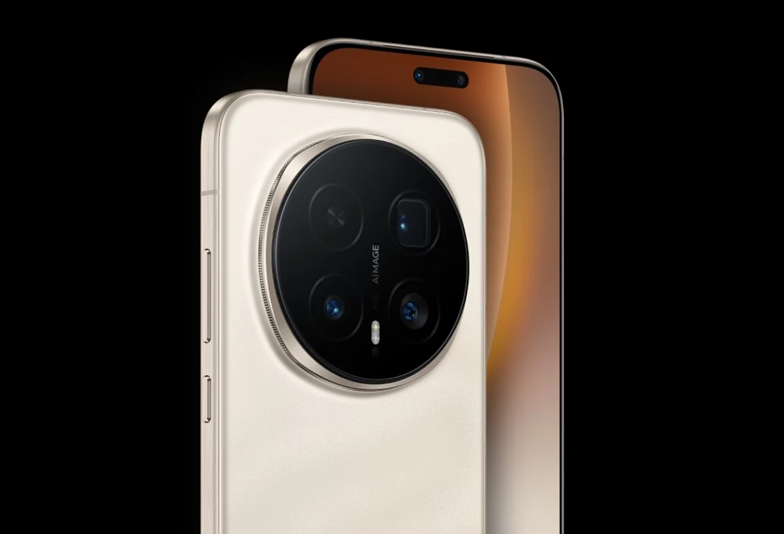
HONOR Magic 8 Pro camera module. (Image credit – Honor)
The Magic 8 Pro’s standout feature is its 200MP AI Ultra Night Telephoto camera engineered for superior long-range and low-light photography. The rear camera array consists of a 50MP wide sensor (f/1.6), a 50MP ultra-wide camera with a 122-degree field of view and 2.5cm macro support, and a 200MP telephoto lens featuring a 1/1.49-inch sensor, f/2.6 aperture, 3.7x optical zoom, 100x digital zoom, and OIS. The setup supports 4K 60fps video recording, paired with a single LED flash.
HONOR’s upgraded AI Ultra Night Portrait algorithms enhance exposure and color accuracy, while AI Magic Color and the new AI Editor offer improved on-device editing. During the launch event, photographer Riadh Maghni showcased the camera’s low-light capabilities. On the front, the phone sports a 50MP camera with an f/2.0 aperture, a 3D depth sensor and support for 4K 60fps video.
Additional hardware highlights include an ultrasonic fingerprint sensor, an infrared sensor, dual stereo speakers with DTS:X Ultra, and IP68/IP69/IP69K ratings for dust and water resistance. The phone measures 161.15 × 75 × 8.32mm and weighs 219g
FAQs
Q1. When will the HONOR Magic 8 Pro be available in the UAE?
Answer. Pre-orders begin on December 11, 2025, with availability through HONOR’s online store and major retailers.
Q2. What are the pricing options for the HONOR Magic 8 Pro?
Answer. The 12GB RAM + 512GB storage variant costs AED 3,999 ($1,089), while the 16GB RAM + 1TB storage model is priced at AED 4,699 ($1,279).
Q3. What is the standout feature of the HONOR Magic 8 Pro’s camera system?
Answer. It features a 200MP AI Ultra Night Telephoto lens with 3.7x optical zoom, 100x digital zoom, OIS, and advanced AI algorithms for superior low-light photography.
Q4. How powerful is the HONOR Magic 8 Pro’s battery and charging setup?
Answer. The device packs a 7,100mAh silicon-carbon battery with 100W wired SuperCharge and 80W wireless charging support.
Q5. What additional features enhance the HONOR Magic 8 Pro’s usability?
Answer. It includes Snapdragon 8 Elite Gen 5, 5.5G readiness, Wi-Fi 7, ultrasonic fingerprint sensor, IP68/IP69/IP69K durability, dual stereo speakers, and AI productivity tools like AI Search and AI Documents.
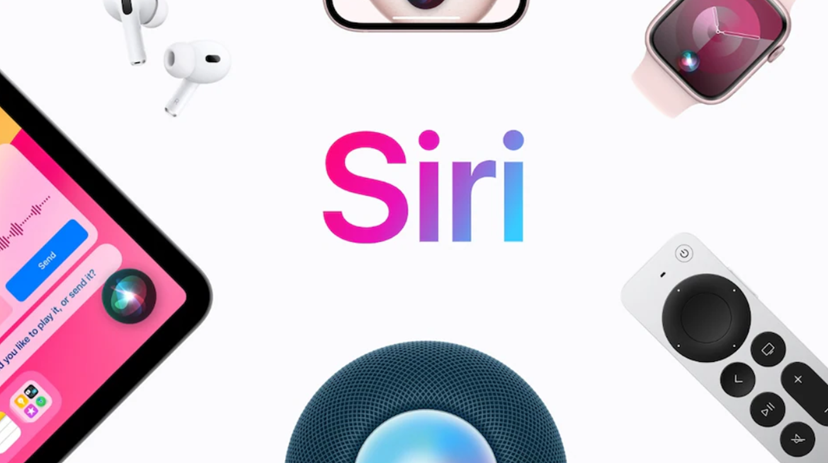
A leaked iOS 26 build suggests Apple’s AI-powered Siri could debut in Spring 2026, offering contextual responses, natural interactions, and AI-driven reminders.
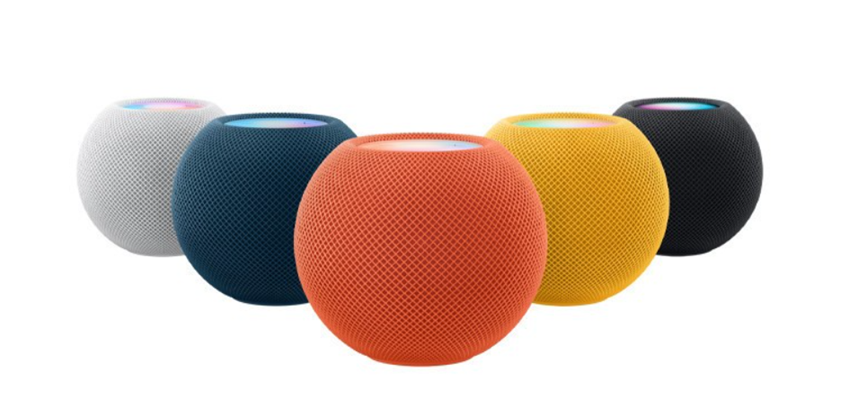
The upgraded Siri is expected to extend beyond iPhone, iPad, and MacBook, arriving on a new HomePod.
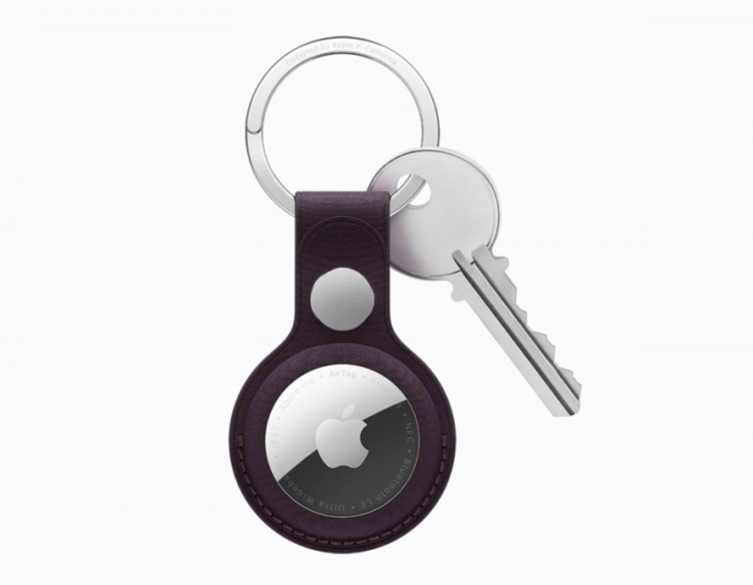
Apple is preparing a 2026 AirTag with streamlined pairing, enhanced Precision Finding, better battery reporting, improved Moving feature and superior tracking accuracy.
Caption – Code found in iOS 26 build leaks key updates. (Image credit – Apple)
Apple’s long-awaited upgrade to Siri appears closer to launch. While the company has not yet confirmed a rollout window, a newly leaked iOS 26 build reportedly reveals when the Apple Intelligence–powered Siri could finally debut. The timeline aligns with earlier reports hinting at a Spring 2026 release. We also have an update about a new Apple AirTag.
Revamped Siri Could Arrive With iOS 26.4
According to Macworld, internal code found in a leaked iOS 26 build indicates Apple may launch its new AI-enhanced Siri in Spring 2026. This matches previous predictions that the upgraded assistant would arrive between March and April next year.
The report suggests that Apple could introduce the new Siri with the iOS 26.4 update, which also appears set for a spring release. If accurate, compatible iPhones may begin receiving the update in March, April, or May 2026. However, as Apple has not officially confirmed any details, the timeline should be viewed cautiously.
The upgraded Siri is expected to offer contextual responses based on past conversations, deliver more natural interactions, and support AI-driven reminders, making the assistant significantly more intelligent and conversational.
New Siri Coming to HomePod as Well
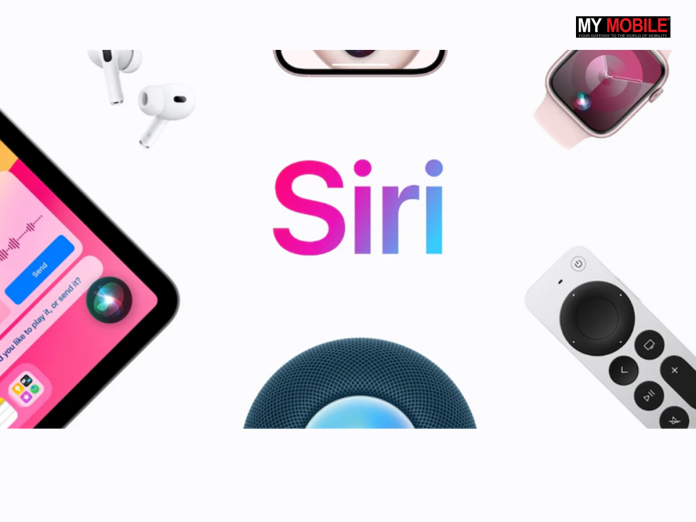
AI-powered Siri will be integrated into HomePod. (Image credit – Apple)
The report also states that the AI-powered Siri won’t be limited to iPhone, iPad, and MacBook. Apple reportedly plans to extend the upgraded assistant to its smart home ecosystem, starting with a new HomePod. The enhanced Siri will support “natural conversations” and more advanced contextual capabilities across devices.
This aligns with earlier reporting from Bloomberg’s Mark Gurman, who also predicted a March–April launch window and suggested that Apple may leverage an unspecified Gemini AI model to power natural language understanding and improved web search.
Next-Gen AirTag Planned for 2026
New Apple Airtags are also in development. (Image credit – Apple)
Alongside Siri, Apple is also preparing an upgraded Apple AirTag, which was initially expected to launch in 2025 but has now been delayed to the first half of 2026.
The new AirTag is expected to offer –
A streamlined pairing process
Enhanced Precision Finding
More detailed battery level reporting
New and Improved Moving feature for precise real-time location tracking
Better tracking accuracy in crowded environments
It remains unclear whether any of these features will roll out to the original AirTag through software updates. Some capabilities such as improved Precision Finding may require a newer UWB chip, making them exclusive to the next-generation device.
FAQs
Q1. When is Apple’s revamped Siri expected to launch?
Answer. A leaked iOS 26 build suggests the AI-powered Siri could debut with the iOS 26.4 update in Spring 2026, likely between March and May.
Q2. What improvements will the new Siri bring?
Answer. The upgraded Siri is expected to deliver contextual responses, more natural interactions, and AI-driven reminders, making it smarter and more conversational across devices.
Q3. What features are planned for the next-generation AirTag?
Answer. The 2026 AirTag may include streamlined pairing, enhanced Precision Finding, detailed battery reporting, an improved Moving feature, and better tracking in crowded environments.
WhatsApp introduces a voicemail-style feature letting users send instant voice or video notes when calls go unanswered.
Meta AI upgrades image generation with Flux and Midjourney models, plus a new AI-driven image animation feature.
Users gain interactive stickers, music lyrics, and question prompts in Status, while Channels now support real-time Q&A.
(Photo by Dima Solomin on Unsplash)
WhatsApp has unveiled a major set of new features just in time for the holiday season. The Meta-owned messaging platform is introducing tools that enhance communication, boost creativity through AI and improve overall usability across calls, chats and media sharing. The highlight of the update is a voicemail-style feature called Missed Call Messages, which replaces traditional voicemail with a more seamless experience.
Missed Call Messages
The new Missed Call Messages feature lets users instantly send a voice or video note when someone doesn’t pick up their call. Depending on the call type, the user can simply record a quick message and share it with a single tap. In WhatsApp’s words, “This new approach will make voicemails a thing of the past.”’
WhatsApp’s new features include new missed call messages.
Additionally, WhatsApp is rolling out voice chat reactions including a new ‘cheers!’ reaction, that users can send without interrupting the flow of conversation. Video calls are also getting smarter with WhatsApp now automatically prioritising the active speaker to improve clarity during group calls.
Upgraded Meta AI Image Creation and Animation
WhatsApp is also expanding its AI-powered creative tools. Meta AI now integrates enhanced image generation models from Flux and Midjourney, delivering what WhatsApp calls a “huge” improvement in quality. These upgrades are especially timely for crafting visually impressive holiday greetings.
One of the biggest additions is AI-driven image animation. Users can now turn any photo into a short video clip by providing prompts or messages, allowing for more expressive and personalised content.
On desktop, a revamped media tab improves sorting for documents, links and media across all chats. Link previews have also been refreshed for a cleaner look.
New Status Stickers and Enhanced Channel Interactions
WhatsApp is strengthening its Status and Channels features as well. Users can now add music lyrics, interactive stickers, and response-based questions to their Status updates, making them more dynamic and engaging.
In Channels, WhatsApp is introducing question prompts that enables admins to interact with followers more directly and receive real-time responses.
FAQs
Q1. What is the new Missed Call Messages feature on WhatsApp?
Answer. It lets users instantly send a voice or video note when someone doesn’t answer their call, replacing traditional voicemail.
Q2. How is WhatsApp using AI in this update?
Answer. WhatsApp now offers AI-powered image generation with improved models and introduces AI-driven image animation, turning photos into short video clips.
Q3. What new options are available for WhatsApp Status and Channels?
Answer. Users can add music lyrics, interactive stickers, and questions to Status, while Channels gain question prompts for real-time admin-follower interaction.
Leaks suggest Nothing Phone 4a with Snapdragon 7s-series and Nothing Phone 4a Pro with a stronger Snapdragon 7-series SoC.
Phone 4a may cost $475 (₹43,000), while Phone 4a Pro could be $540 (₹49,000), with colour options like black, blue, pink, and white.
A new over-ear Nothing Headphone a in development with a plastic-built rebrand of Headphone 1.
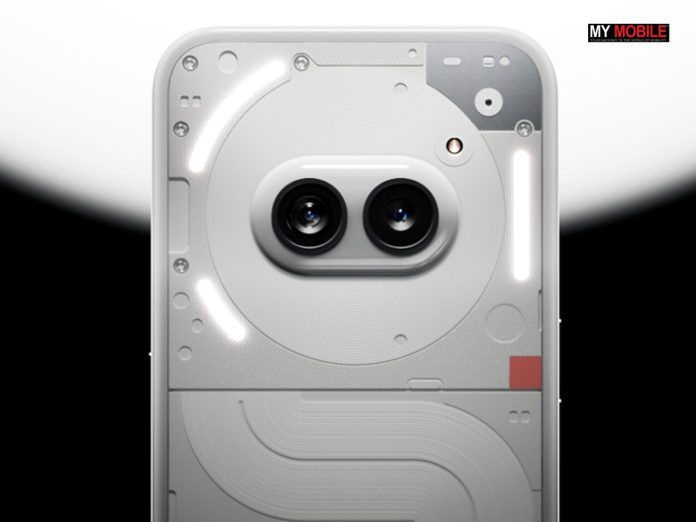
Caption – Nothing Phone 4a and Phone 4a Pro Specs and Pricing Leaked. (Image credit – Nothing)
Nothing has just launched the latest Nothing Phone 3a Community Edition in India and global markets. The brand now appears to be shifting attention to its next affordable lineup. A new leak suggests that the upcoming Nothing Phone 4a and Nothing Phone 4a Pro are currently in development. Both models are expected to feature Snapdragon 7-series chipsets and launch in multiple colour options. The leak also hints at a new pair of over-ear headphones called Nothing Headphone a. Here’s more on that.
Nothing Phone 4a and Phone 4a Pro – Specs and Pricing (Leaked)
Caption – Developer MlgmXyysd on Telegram.
According to developer MlgmXyysd on Telegram, two models are being prepared for the Nothing Phone 4a series. The standard Phone 4a is said to be powered by a Snapdragon 7s-series chipset, while the Phone 4a Pro may upgrade to a more powerful Snapdragon 7-series SoC. This would mark a shift in Nothing’s strategy, as the current Phone 3a and Phone 3a Pro both use the Snapdragon 7s Gen 3 processor.
The leak also claims that the Phone 4a Pro will include eSIM support, keeping it in line with its predecessor. Colour options for the lineup could include black, blue, pink, and white, though it remains unclear if both variants will launch in all four colours.
Both the Phone 4a and 4a Pro are tipped to come in a 12GB RAM + 256GB storage configuration. The standard Phone 4a may carry a price tag of $475 (roughly Rs. 43,000), while the Phone 4a Pro could be priced at $540 (roughly Rs. 49,000). For comparison, the Phone 3a and Phone 3a Pro currently retail in the US at $379 (roughly Rs. 34,300) and $459 (roughly Rs. 41,500), respectively.
Nothing Headphone a Also in the Works
The tipster adds that Nothing is also developing Nothing Headphone a, expected to be the company’s second over-ear headphone offering after the Nothing Headphone 1 launched in July. The Headphone a is rumoured to launch in Black, Pink, White, and Yellow colourways.
The new model may essentially be a rebranded version of the Headphone 1, this time featuring a plastic build.
FAQs
Q1. What processors will power the Nothing Phone 4a and 4a Pro?
Answer. The standard Phone 4a is tipped to use a Snapdragon 7s-series chipset, while the Phone 4a Pro may feature a more powerful Snapdragon 7-series SoC.
Q2. What are the expected prices of the Nothing Phone 4a models?
Answer. The Phone 4a may launch at $475 (₹43,000), while the Phone 4a Pro could be priced at $540 (₹49,000).
Q3. What is Nothing Headphone a?
Answer. Nothing Headphone a is a new over-ear headset in development, rumoured to be a plastic-built rebrand of Headphone 1, launching in Black, Pink, White, and Yellow colourways.
OpenAI unveiled GPT-5.2, calling it its most capable model yet.
GPT-5.2 improves productivity workflows, handling spreadsheets, presentations, production-ready code, image interpretation, tool use and complex multi-step tasks.
It is rolling out across Plus, Pro, Business and Enterprise plans.
Caption – (Photo by Jonathan Kemper on Unsplash)
OpenAI has officially introduced GPT-5.2, describing it as the most powerful model series yet for professional and enterprise-grade tasks on ChatGPT. The launch comes at a strategically important moment, following reports that the company accelerated the rollout in response to Google’s latest Gemini advancements. According to insiders, Google’s progress triggered an internal “code red,” prompting OpenAI to fast-track the release earlier than initially planned.
OpenAI ChatGPT 5.2
Caption – OpenAI ChatGPT 5.2.
Announcing the new model via an X post, the company wrote, “GPT-5.2 Instant, Thinking, and Pro are rolling out today, starting with Plus, Pro, Business, and Enterprise plans. Free and Go users will get access tomorrow. GPT-5.2 is also now in the API and Codex.”
GPT-5.2 marks a more capability-driven upgrade compared to GPT-5.1, which debuted in mid-November with an emphasis on more natural, human-like interaction. This time, OpenAI is doubling down on performance. The new model reportedly delivers significant gains in economic productivity workflows including creating complex spreadsheets, building presentations, writing production-ready code, interpreting images, using tools more effectively and managing long, multi-step tasks from beginning to end.
OpenAI says GPT-5.2 sets new industry benchmarks, particularly on evaluation tests such as GDPval, where the model is claimed to surpass human professionals across 44 occupations. The improvements stem from enhancements in general intelligence, long-context understanding, agent-like task execution and advanced vision capabilities.
With these upgrades, OpenAI asserts that GPT-5.2 can handle real-world workloads with greater accuracy and reliability than any previous ChatGPT model.
ChatGPT 5.2 Development
The rapid pace of development is striking. GPT-5 arrived on August 7, introducing a new routing system that dynamically shifted between sub-models for faster or deeper responses. That was followed in November by GPT-5.1, which brought a more thoughtful and intelligent behaviour profile.
Now, just weeks later, GPT-5.2 is rolling out. This highlights both the speed of innovation in the AI industry and OpenAI’s determination to maintain its competitive edge.
For users, GPT-5.2 is expected to feel more precise, more powerful and more stable, especially when dealing with long documents, complex reasoning tasks and high-pressure professional workflows. And with Google pushing aggressively with its Gemini lineup, this rapid-fire upgrade cycle is almost certainly just beginning.
FAQs
Q1. What is GPT‑5.2 and why did OpenAI release it now?
Answer. GPT‑5.2 is OpenAI’s most capable model series yet, designed for professional and enterprise tasks. Reports suggest its rollout was accelerated after Google’s Gemini progress triggered an internal “code red.”
Q2. What improvements does GPT‑5.2 bring compared to GPT‑5.1?
Answer. Unlike GPT‑5.1’s focus on natural interaction, GPT‑5.2 emphasises performance, handling complex spreadsheets, presentations, production‑ready code, image interpretation, tool use, and long multi‑step tasks with greater accuracy.
Q3. How is GPT‑5.2 being made available to users?
Answer. GPT‑5.2 Instant, Thinking, and Pro are rolling out to Plus, Pro, Business, and Enterprise plans first with Free and Go users gaining access the following day. It is also available via API and Codex.
Huawei Mate X7 Foldable goes global, priced at €2,099, featuring 8” inner LTPO OLED, 50MP variable-aperture main camera and 5,600mAh battery with 66W wired/50W wireless charging.
Huawei FreeClip 2 earbuds launched with AI-powered adaptive sound, 10.8mm drivers, triple-mic noise reduction, IP57 rating, 38-hour playback, retailing at €200/£180 from Jan 21.
Huawei Watch Ultimate Design Royal Gold (€3,300/£3,000) offers gold accents, 11-day battery, ECG tracking and HarmonyOS 5.1.
MatePad 11.5 S (€480/£350) brings 144Hz display, stylus support, quad speakers and 8,800mAh battery; available Jan 15.
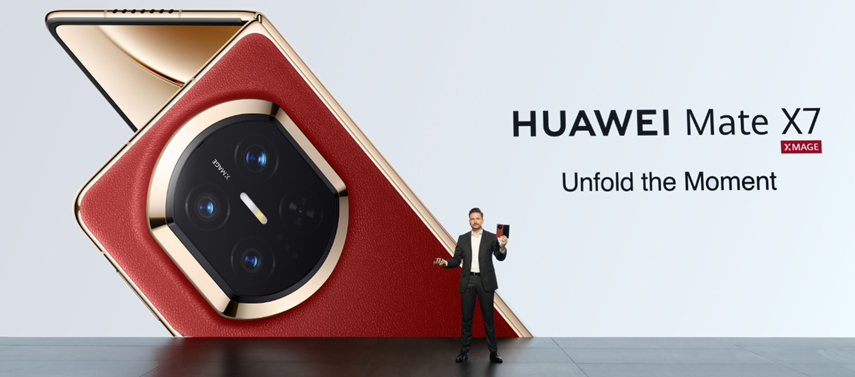
Huawei launches a new range of products in different categories at its recent “Unfold the Moment” launch event. (Image credit – Huawei)
Huawei has officially brought four of its latest flagship products to the global market at its recent “Unfold the Moment” launch event. The lineup includes the premium Huawei Mate X7 foldable smartphone, the new Huawei FreeClip 2 open-ear earbuds, the Huawei Watch Ultimate Design Royal Gold Edition, and the Huawei MatePad 11.5 S tablet. According to the company, the announcements highlight its commitment to user-focused innovation and design. Here’s everything you need to know about all the newly launched products.
Huawei Mate X7 Goes Global
Huawei Mate X7 Goes Global.
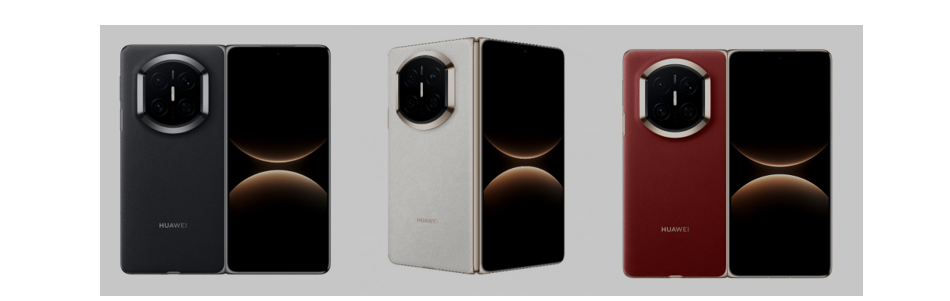
Just weeks after debuting in China, the Huawei Mate X7 is now launching internationally. The foldable draws inspiration from the “Time-Space Gate” concept and a 1,600-year-old light-woven brocade art form. It comes in White, Black, and Nebula Red, with a single 16GB RAM and 512GB storage configuration, priced at €2,099.
Huawei Mate X7 colours.
Huawei has slightly increased the size of both displays. The outer cover screen measures 6.49 inches with a 20.4:9 aspect ratio, while the inner foldable display expands to 8 inches with an 8:7.3 ratio. Both panels are LTPO OLEDs offering a 1–120Hz adaptive refresh rate and 1,440Hz PWM dimming. The cover screen is protected by Crystal Armour Kunlun glass, and the inner screen features a new three-layer composite build including a UTG layer for added strength.
Huawei Mate X7 displays.
Durability is a major focus, supported by Huawei’s Ultra-Reliable Foldable Architecture. This combines Crystal Armor Kunlun Glass, precision-engineered hinges, and a 3-layer ultra-tough structure.
The rear camera system includes a 50MP main sensor (RYYB) with a physical 10-stop variable aperture ranging from f/1.4 to f/4.0, along with OIS. The telephoto camera has been upgraded to a 50MP sensor with f/2.2 aperture and 3.5x optical zoom, while the ultrawide unit offers 40MP resolution. Two 8MP selfie cameras are present, one on the outer display and one on the inner panel.
Powering the device is a 5,600mAh Si-C battery with 66W wired and 50W wireless charging support.
Huawei FreeClip 2 – A Smarter Open-Ear Audio
Caption – Huawei FreeClip 2.
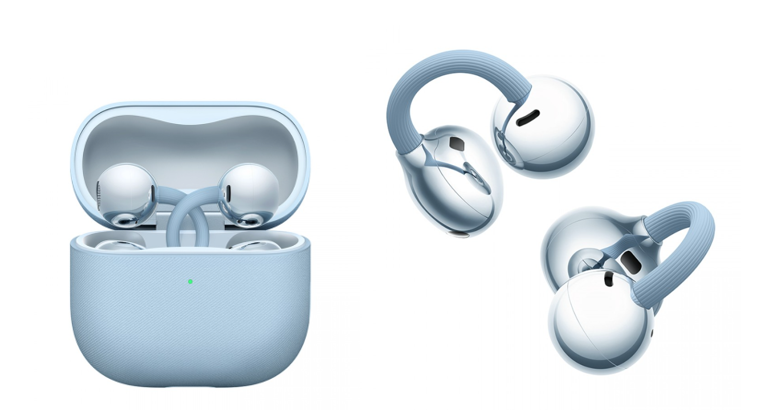
The FreeClip 2 open-ear earbuds, launched earlier in China, make their way to global markets as the successor to the 2023 FreeClip. They retain the signature C-shaped design that comfortably grips the ear.
Caption – Huawei FreeClip 2 features.
The new model features 10.8mm dual-diaphragm drivers, Huawei’s third-generation audio chip, and a dedicated NPU for enhanced AI processing. This allows adaptive sound adjustments and improved voice clarity. The earbuds also offer upgraded bass performance and triple-microphone call noise reduction.
FreeClip 2 comes with an IP57 rating and promises up to 38 hours of total playback with the charging case. The case supports USB-C wired charging and wireless charging. Available in Blue, White, and Black, the earbuds will retail for €200/£180 starting January 21.
Huawei Watch Ultimate Design Royal Gold Edition
Huawei Watch Ultimate Design Royal Gold Edition.
Huawei has refreshed its premium Watch Ultimate with a new Royal Gold Edition. The model stands out with a rare-earth purple ceramic bezel paired with 18-carat gold accents. It uses a zirconium-based liquid metal body and a purple-gold titanium alloy strap to complete its luxury finish.
Huawei Watch Ultimate Design Royal Gold Edition inside the box.
Other specifications include a 1.5-inch LTPO 2.0 AMOLED display, the Kirin W80 chipset, and an 867mAh battery rated for up to 11 days of usage. It maintains 150m (20 ATM) water resistance and supports sonar-based underwater communication. Health tracking is powered by the TruSense system and an X-Tap sensor offering 11 key health metrics including ECG.
Running HarmonyOS 5.1, the watch supports eSIM functionality, dual-band GPS, on-device calling, and music playback. It will be priced at €3,300/£3,000 and will go on sale starting January 15.
Huawei MatePad 11.5 S 2025 With High-Refresh Display and Stylus Support
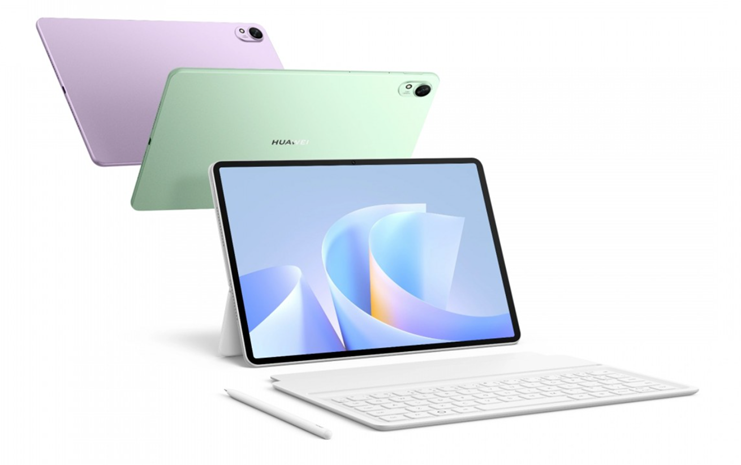
Huawei MatePad 11.5 S 2025.
Originally announced in China, the MatePad 11.5 S 2025 features an 11.5-inch IPS LCD with a 2,800 × 1,840 resolution and a 144Hz refresh rate. It supports stylus input via the M-Pencil Pro and includes quad speakers for an improved multimedia experience.
Huawei has not revealed the tablet’s chipset, but it will ship with 12GB RAM and either 256GB or 512GB storage. The device includes a 13MP rear camera and an 8MP front sensor. Its 8,800mAh battery supports 40W fast charging.
The MatePad 11.5 S will be available in Field Green, Feather Sand Purple, Frost Silver, and Deep Space Grey. Pricing is set at €480/£350, with availability beginning January 15.
FAQs
Q1. What is the Huawei Mate X7 and how much does it cost?
Answer. The Huawei Mate X7 is a premium foldable smartphone with an 8-inch inner LTPO OLED display, advanced durability features, and a triple rear camera system. It is priced at €2,099.
Q2. What are the key features of the Huawei FreeClip 2 earbuds?
Answer. The FreeClip 2 open-ear earbuds feature a C-shaped design, 10.8mm dual-diaphragm drivers, AI-powered adaptive sound, triple-mic noise reduction, IP57 rating, and up to 38 hours playback. They retail for €200/£180 starting January 21.
Q3. What makes the Huawei Watch Ultimate Design Royal Gold Edition unique?
Answer. This luxury smartwatch combines a rare-earth purple ceramic bezel with 18-carat gold accents, a zirconium-based liquid metal body, and a purple-gold titanium alloy strap. It offers ECG tracking, 11-day battery life, and is priced at €3,300/£3,000.
Q4. What are the specifications of the Huawei MatePad 11.5 S?
Answer. The MatePad 11.5 S features an 11.5-inch 144Hz IPS LCD, stylus support via M-Pencil Pro, quad speakers, 12GB RAM, up to 512GB storage, and an 8,800mAh battery with 40W fast charging. It costs €480/£350 and is available from January 15.
Q5. What is the theme of Huawei’s “Unfold the Moment” launch event?
Answer. The event highlighted Huawei’s commitment to user-focused innovation and design, introducing four flagship products globally: Mate X7, FreeClip 2, Watch Ultimate Royal Gold, and MatePad 11.5 S.
Apple will release the iPhone 17e as an affordable upgrade featuring the new A19 chip.
The iPhone 18 Pro and Pro Max are expected with larger batteries, the 2nm A20 Pro chip, under-display Face ID, a refined rear glass design, variable aperture cameras and Apple’s new C2 modem.
Apple’s first foldable will arrive in fall 2026 with a titanium frame, 7.6-inch inner display, 5.4-inch outer panel, the largest iPhone battery yet, dual cameras and Touch ID
Caption – Apple’s iPhone 17 Series launched in 2025. (Image credit – Apple)
Apple may have wrapped up its product launches for 2025, but 2026 is shaping up to be a packed year for the company. According to new reports, Apple is preparing to introduce four new iPhone models next year and one of them is expected to arrive much earlier than usual. Here’s what we know about Apple’s 2026 launch calendar so far.
iPhone 17e
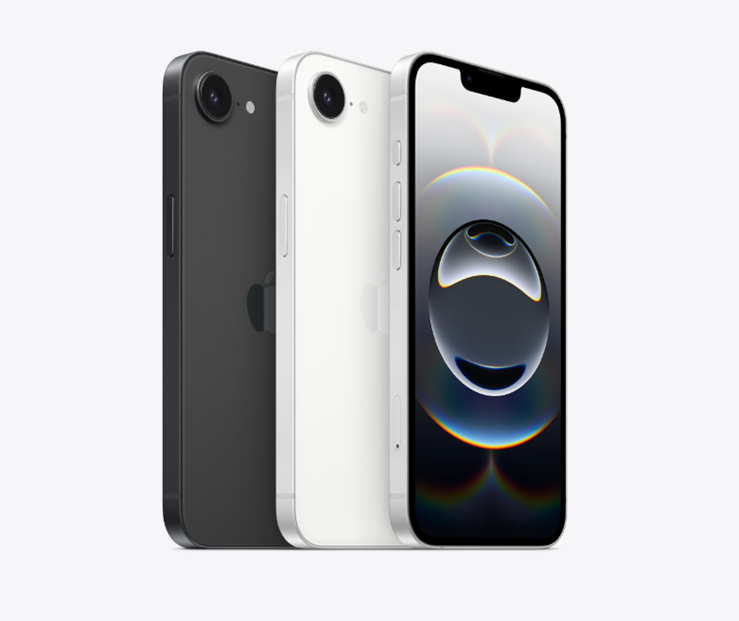
Caption – iPhone 16e in the picture for reference. (Image credit – Apple)
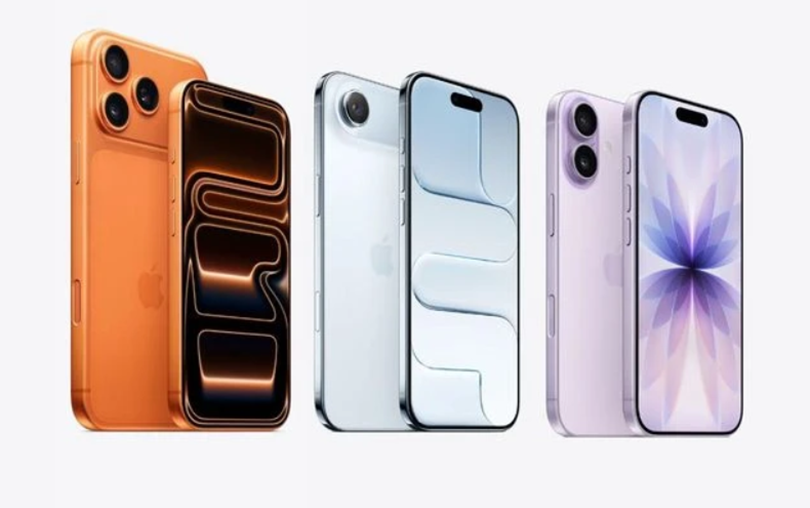
Apple’s first release of 2026 is likely to be the iPhone 17e, which will complete the iPhone 17 lineup. This upcoming model is the successor to the iPhone 16e and is tipped to bring multiple improvements. The phone could include the new A19 chip up from the A18, a switch to the Dynamic Island design, a Centre Stage-enabled front camera and slimmer bezels for a more refined look.
However, some limitations will remain. The iPhone 17e is still expected to feature a single rear camera, lack ProMotion and always-on display support, and omit the Camera Control button. Even so, with a rumoured starting price of $599, it could become an attractive option for buyers seeking an affordable upgrade.
iPhone 18 Pro and iPhone 18 Pro Max
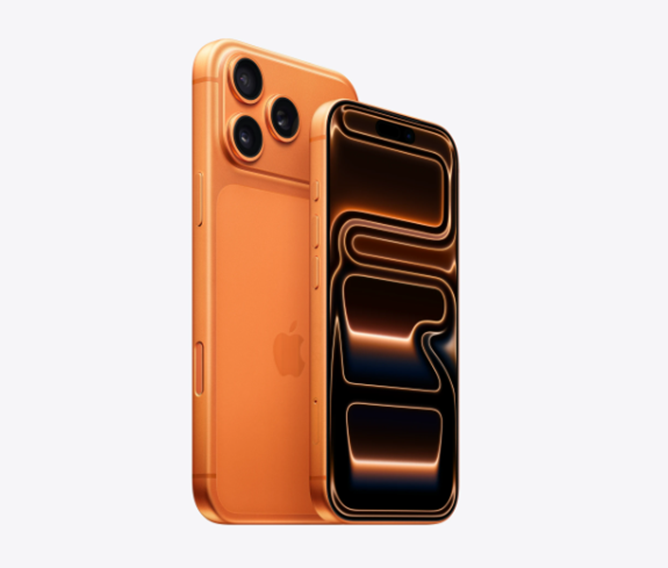
Caption – iPhone 17 Pro series in the picture for reference. (Image credit – Apple)
Apple’s major annual launch cycle will continue in the fall with the iPhone 18 Pro and iPhone 18 Pro Max. These flagship devices are rumoured to expand on the success of the iPhone 17 Pro lineup. Expected upgrades include larger batteries, the next-generation A20 Pro chip built on a 2nm process, a smaller Dynamic Island, possibly reduced to a simple hole-punch cutout and Face ID sensors concealed beneath the display.
Additional enhancements may include a more seamless rear glass design, a variable aperture camera system and Apple’s new C2 cellular modem. While the changes may not be radical, the refinements could help replicate the strong demand seen for this year’s Pro models.
No Standard iPhone 18?
Surprisingly, one model expected in Apple’s usual fall lineup may be missing. Multiple reports have claimed that the standard iPhone 18 reportedly won’t arrive in 2026. Instead, Apple is said to be shifting its release to early 2027.
If plans hold, the spring 2027 launch could include the base iPhone 18, the iPhone 18e, and possibly the next-generation iPhone Air 2.
iPhone Fold/ iPhone Ultra
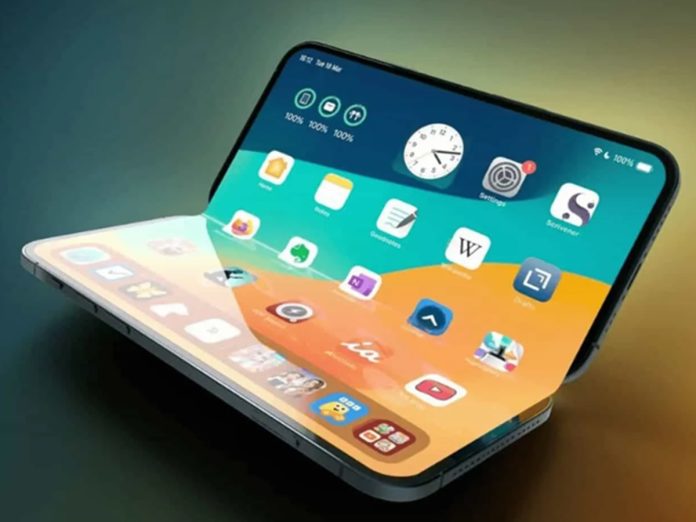
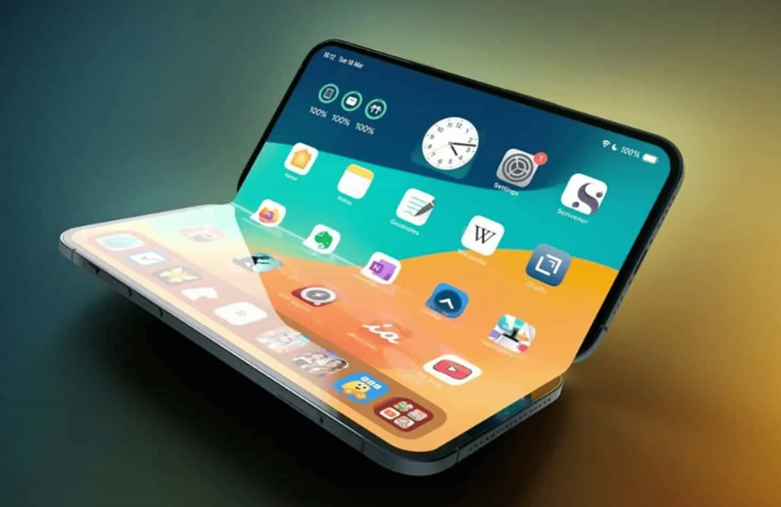
Caption – A concept image of a possible iPhone Fold design for reference. (Image credit – Unknown)
The most anticipated addition to Apple’s 2026 roadmap is undoubtedly its first foldable device, tentatively referred to as the iPhone Fold or iPhone Ultra. Expected to launch in fall 2026 with a premium price tag of $2,000 or more, the foldable iPhone is said to feature an ultra-slim titanium frame reminiscent of the iPhone Air.
The inner foldable display is rumoured to span around 7.6 inches, paired with an outer 5.4-inch panel. Apple is reportedly aiming for a nearly crease-free book-style folding mechanism. The device may also include the largest battery ever in an iPhone, though real-world battery life remains uncertain due to its unique form factor.
Powering the foldable will be the same A20 Pro chip found in the iPhone 18 Pro models. Camera hardware may include two rear sensors and two front-facing ones, one for each display. Interestingly, Apple may opt for Touch ID instead of Face ID due to space constraints and the dual-screen design.
2026 is shaping up to be one of Apple’s most important years in recent memory, not only for multiple significant launches but also because of Apple’s debut in the foldable segment.
FAQs
Q1. When will Apple launch its first iPhone of 2026?
Answer. Apple is expected to release the iPhone 17e early in 2026, ahead of its usual fall lineup.
Q2. What upgrades are coming to the iPhone 18 Pro models?
Answer. The iPhone 18 Pro and Pro Max, launching in fall 2026, may feature the A20 Pro chip (2nm process), larger batteries, under-display Face ID, a smaller Dynamic Island, variable aperture cameras, and Apple’s new C2 cellular modem.
Q3. Is Apple releasing a foldable iPhone in 2026?
Answer. Yes, Apple is expected to debut its first foldable device, the iPhone Fold/Ultra, in fall 2026. It may include a 7.6-inch inner display, a 5.4-inch outer panel, a titanium frame, the largest iPhone battery yet, and a premium price tag of $2,000 or more.
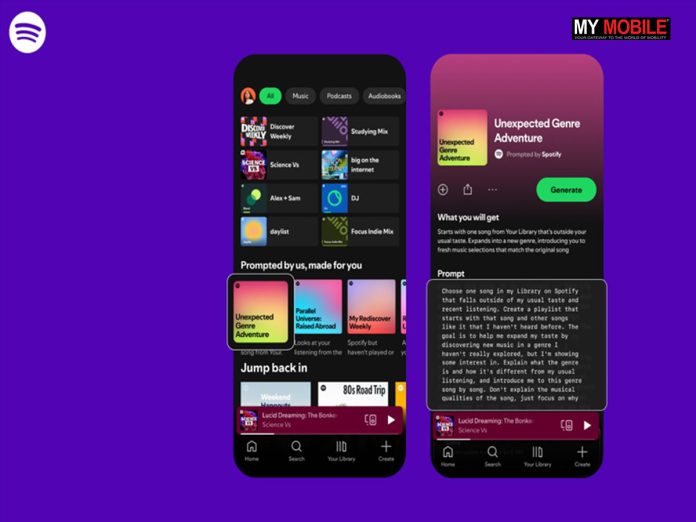
Spotify has announced a new feature called Prompted Playlist, designed to give listeners deeper control over how the platform’s recommendation algorithm works. The feature is currently rolling out in beta across select global markets. Announcing the new feature in a newsroom post, Spotify writes, “we’re entering a moment where you don’t just listen to Spotify, you control it. Imagine a Spotify that doesn’t just passively learn from you but literally listens to you. One you can steer and shape with your own words. For the first time, your ideas, your logic, and your creativity can actually power the Spotify algorithm, directing how it thinks, adapts, and responds to you.”
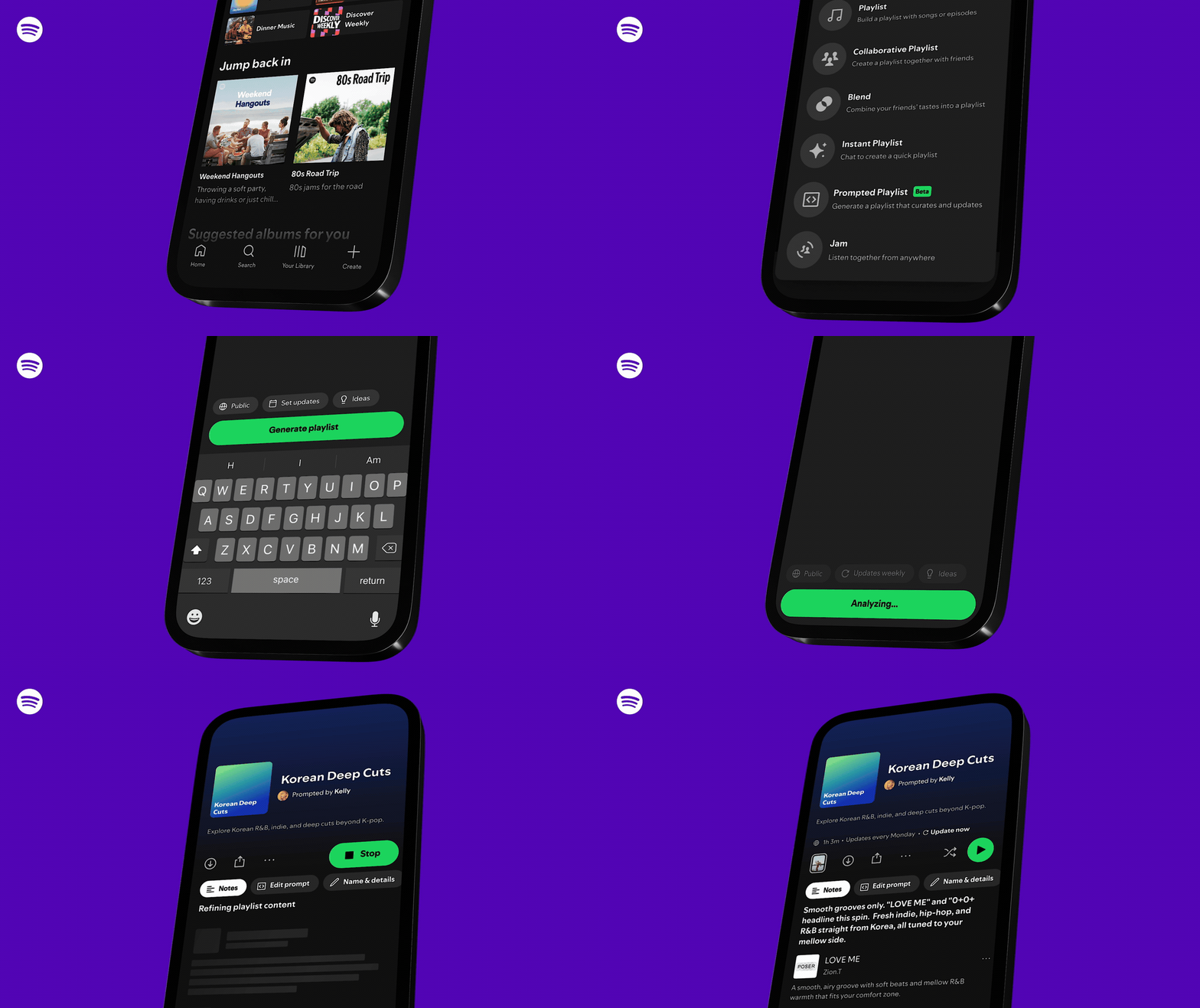
According to the company, users can describe what they want to hear and set specific rules for personalised playlists. Prompted Playlist pulls from a user’s entire Spotify listening history and allows them to refine results by editing the prompt or starting over with a new one.
How Spotify Prompted Playlist Work?
With the Prompted Playlist feature, listeners can simply describe the kind of music they’re in the mood for. And Spotify will generate a playlist that aligns with their taste by analysing their listening patterns and using artificial intelligence (AI).
For instance, a user could ask for “music from my top artists from the last five years,” and Spotify will automatically create a playlist, as revealed in the company’s newsroom post. Users can further narrow the results with prompts like “and feature deep cuts I haven’t heard yet” or “include music from this year’s biggest films and most-talked-about TV shows that match my taste.”
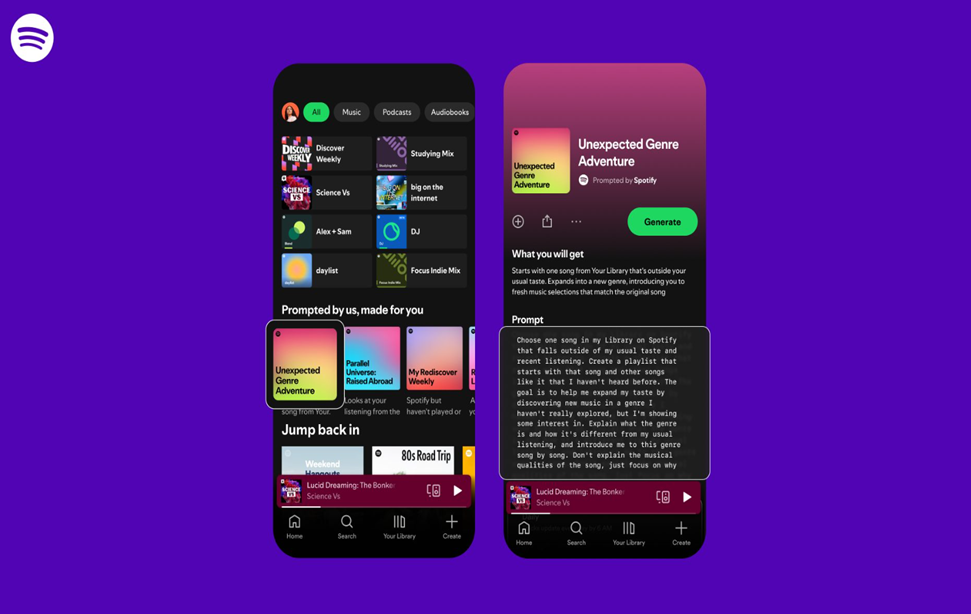
Spotify is also introducing preset prompts and English-language algorithms, which will appear as personalised playlist cards on the app’s Home screen.
Advanced Version of Spotify’s AI Playlist
Spotify says Prompted Playlist builds on the AI playlist feature introduced in 2024. As reported by TechCrunch, the major upgrade here is the ability to use longer, more detailed prompts, giving users greater influence over the playlist outcome. The feature also leverages broader world knowledge to further refine selections.
Prompted Playlist will refresh periodically based on updated listening trends and global context. Users also have the option to adjust how often it refreshes, choosing between daily or weekly updates for a continually fresh playlist.
Availability and Rollout
For every song added, Spotify will provide context and a description explaining why it was selected. The company says Prompted Playlist is currently in beta and available only in New Zealand, in English.
Spotify plans to refine the feature before expanding it to additional countries in the future.
FAQs
Q1. What is Spotify’s Prompted Playlist feature?
Answer. Prompted Playlist lets users create personalised playlists by describing what they want to hear, using AI and their listening history to generate results.
Q2. How can listeners refine their Spotify playlists with this feature?
Answer. Users can edit prompts, set rules, or start fresh. They can also use preset prompts and adjust refresh frequency (daily or weekly) for updated playlists.
Q3. Where is Prompted Playlist currently available?
Answer. The feature is in beta, available only in New Zealand in English, with plans for expansion to more countries later.