Tecno has upgraded its Universal Tone technology by increasing the skin tone database from 268 to 372 patches.
It also improved the Multi-Skin Tone Color Restoration Engine for more accurate colour reproduction.
Tecno developed a custom colour card for Saudi Arabia with 187 unique skin tone patches.
The upgraded Universal Tone will debut in the Tecno Camon 40 series at MWC 2025.
Tecno upgrades its Universal Tone technology. (Image credit – Tecno)
Tecnointroduced a camera technology called Universal Tone designed to improve skin tone accuracy back in 2023. The aim of the new tech was to ensure a more natural representation of all complexions in photos. The company since then has continued refining the tech and even launched a web tool to help users identify their true skin tones with a single click.
But it appears Tecno is in no mood to slow down and is taking things even further. The company has now announced an upgraded version of Universal Tone featuring a larger skin tone database and an improved Multi-Skin Tone Color Restoration Engine for even more precise colour reproduction.
Universal Tone Upgrade – What’s New?
The biggest upgrade is in the Multi-Skin Tone colour card, which now features 372 patches, up from 268 in the previous version. This means Universal Tone now has more skin tone data to work with ensuring that your photos look even more natural and lifelike.
Caption – The upgrade includes a custom colour card featuring 187 unique Saudi skin tone patches. (Image credit – Tecno)
While this update improves skin tone accuracy globally, Tecno has also developed a regional colour card specifically for Saudi Arabia.
Created in collaboration with the University of Leeds (UK) and Dar Al-Hekma University (Saudi Arabia) in late 2024, this custom colour card includes 187 unique Saudi skin tone patches, ensuring a better representation of the region’s diverse complexions.
The upgrade can upgrades boost skin tone accuracy by over 50%. (Image credit – Tecno)
Along with the expanded dataset, Tecno has enhanced its Multi-Skin Tone Color Restoration Engine with two key upgrades –
CCM Skin Tone Calibration Algorithm – Now trained on the updated dataset for even more accurate colour calibration.
Spectrum-Based Automatic White Balance (AWB) Algorithm – Helps correct colour shift issues in monochromatic photo settings, improving exposure and white balance when multiple skin tones appear in the same frame.
According to Tecno, these upgrades boost skin tone accuracy by over 50%, which makes Universal Tone its most advanced skin tone optimisation technology yet.
The new and improved Universal Tone will make its debut in the Tecno Camon 40 series, which is set to launch at MWC 2025.
FAQs
Q1. What is the Tecno’s Universal Tone technology?
Answer. Universal Tone is a camera technology designed to improve skin tone accuracy.
Q2. What are the key upgrades in the Multi-Skin Tone Color Restoration Engine?
Answer, The upgrades include the CCM Skin Tone Calibration Algorithm, now trained on the updated dataset for more accurate colour calibration and the Spectrum-Based Automatic White Balance (AWB) Algorithm, which helps correct colour shift issues and improve exposure and white balance.
Q3. Where will the upgraded Universal Tone technology debut?
Answer. The upgraded Universal Tone technology will debut in the Tecno Camon 40 series, which is set to launch at MWC 2025.
Q4. What improvements did Tecno introduce to the Univeral Tone tech?
Answer. The upgraded version features a larger skin tone database with 372 patches (up from 268), and an improved Multi-Skin Tone Color Restoration Engine for more precise colour reproduction.
Samsung unveiled the Galaxy S25 Edge earlier this year at the Galaxy Unpacked event. However, details about the phone have more or less remained limited. Now, new leaks revealed what materials the device could feature, making it stand out from the rest of the Galaxy S25 series. Here’s what we know so far.
Samsung Galaxy S25 Edge Could Have a Ceramic Back
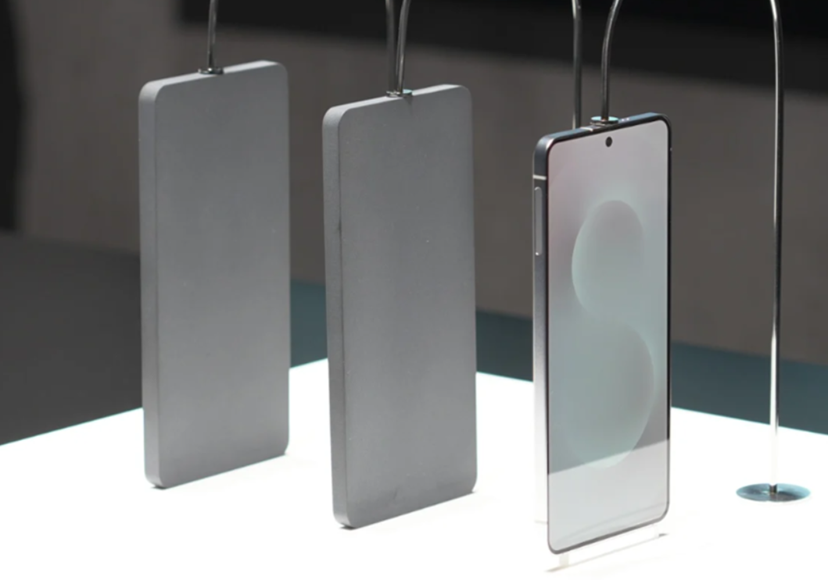
According to a recent Sammobile report, the upcoming Samsung Galaxy S25 Edgecould feature a ceramic back.
Ceramic is known for being highly scratch-resistant but it can also be more brittle than glass, meaning it may crack more easily if dropped on a hard surface. In contrast, the other models in the S25 series come with Gorilla Glass Victus 2, which has proven to survive drops from head height onto concrete.
Despite these concerns, the Galaxy S25 Edge is said to be much lighter than the Ultra model, reportedly weighing just 160 grams, according to Ice Universe. Samsung may have opted for ceramic to help reduce weight, as advanced ceramic materials can be lighter than glass while still offering durability.
Moreover, leaks suggest that the middle frame of the S25 Edge will be made of aluminium similar to the base and plus models in the series.
The Sammobile report further mentions, “We still don’t know whether the phone’s back is entirely ceramic or a version of glass with fused ceramic material. Regardless, it appears different from the other Galaxy S25 series phones, which use Gorilla Glass Victus 2 on the back. Samsung might have done this to reduce the phone’s weight.”
Samsung Galaxy S25 Edge – Expected Specs
Previous rumours have hinted that the S25 Edge is expected to run on the Snapdragon 8 Elite processor. While there is a 7-core version of the chip, leaks indicate that the S25 Edge will feature the 8-core version, the same one used in the other S25 models. The same has been confirmed by a recent Geekbench listing.
The phone is also rumoured to have a 3,900mAh battery, which is 100mAh smaller than the base model. This super-slim flagship is reportedly less than 6mm thick and is expected to launch in the second quarter of this year.
While there is no update on the exact launch date, we can expect more details should emerge soon.
FAQs
Q1. What is the back material of the Samsung Galaxy S25 Edge expected to be?
Answer. The Samsung Galaxy S25 Edge is expected to feature a ceramic back, which is highly scratch-resistant but can be more brittle than glass.
Q2. What is the expected weight and frame material of the Samsung Galaxy S25 Edge?
Answer. The device is said to weigh just 160 grams and will have an aluminium middle frame, making it lighter than the Ultra model.
Q3. What are the expected specifications of the Samsung Galaxy S25 Edge?
Answer. The Samsung Galaxy S25 Edge is rumoured to run on the Snapdragon 8 Elite processor, have a 3,900mAh battery, and be less than 6mm thick, with a launch expected in the second quarter of this year.
The Nothing Phone (3a) Pro was spotted in the Geekbench listing revealing key features.
The phone is confirmed to feature a Snapdragon 7s Gen 3 SoC, Adreno 810 GPU, 12GB of RAM and Android 15.
Expected features – 6.72-inch display with a 120Hz FHD+ AMOLED panel, a 50MP main camera with OIS, an 8MP ultra-wide-angle lens, a 50MP 3x periscope telephoto camera, a 50MP front camera and a 5000mAh battery with 50W fast charging.
Nothing has confirmed that the upcoming Phone (3a) series will feature a Snapdragon chip, and now a Geekbench listing has revealed more details. Confirming the earlier rumours, we can now confirm that the Snapdragon 7s Gen 3 will be powering the upcoming Nothing flagship device. Here’s a quick look at the recent reveal.
Nothing Phone (3a) Pro Spotted In Geekbench. (Image credit – FoneArena)
The listing shows the model number A059P, which matches the camera test video from the camera sample’s EXIF data. It confirms the Snapdragon 7s Gen 3 SoC, an Adreno 810 GPU, 12GB of RAM and Android 15.
Meanwhile, at the recent Nothing x Snapdragon community preview, participants could build a dream phone with 100 credits, revealing some possible specs for the Phone (3a) Pro. These included the following –
Snapdragon 7s Gen 3 SoC
3 Android OS updates & 4 years of security updates
120Hz FHD+ AMOLED screen with 2500 nits peak brightness
5000mAh battery with 50W fast charging
Nothing Phone (3a) – Previously Leaked Camera Details
Previous leaks suggest that the Nothing Phone (3a) Pro will feature a 6.72-inch display with a 120Hz FHD+ AMOLED panel and up to 2500 nits peak brightness.
In terms of cameras, Nothing has been confirmed that the phone will sport a 50MP main camera with OIS, an 8MP ultra-wide-angle lens and a 50MP 3x periscope telephoto camera that supports 6x lossless zoom and up to 60x ultra zoom.
The primary sensor is said to be a 1/1.95-inch Sony Lytia LYT-600 sensor. On the front, the device is expected to feature a 50MP selfie camera promising high-quality imaging for both photos and videos.
FAQs
Q1. What chipset does the Nothing Phone (3a) Pro use?
Answer. The Nothing Phone (3a) Pro is confirmed to feature the Snapdragon 7s Gen 3 SoC, as revealed in a Geekbench listing.
Q2. What are the key camera specs of the Nothing Phone (3a) Pro?
Answer. The Nothing Phone (3a) Pro will feature a 50MP main camera with OIS, an 8MP ultra-wide-angle lens, a 50MP 3x periscope telephoto camera with 6x lossless zoom and a 50MP front camera.
Q3. What are the expected features of the Nothing Phone (3a) Pro?
Answer. The Nothing Phone (3a) Pro is expected to have a 6.72-inch display with a 120Hz FHD+ AMOLED panel, a 5000mAh battery with 50W fast charging, 12GB of RAM and Android 15.
Apple may switch from titanium to aluminium for iPhone 17 Pro frames.
The shift to aluminium could be driven by environmental concerns and manufacturing difficulties with titanium.
Apple is reportedly testing an advanced version of wireless reverse charging for the iPhone 17 Pro.
iPhone 17 Pro leaked renders. (Image credit – FPT on YouTube)
It is not a surprise that we are already getting multiple reports on the iPhone 17 Series even when the launch is still months away. A new leak suggests that Apple’s iPhone 17 Pro models might not be as durable as the iPhone 16 Pro or even the Samsung Galaxy S25 Ultra. Here’s what the latest reports say.
iPhone 17 Pro To Use Aluminum Instead of Titanium?
According to reports, Apple may switch from titanium to aluminium for the iPhone 17, iPhone 17 Pro and iPhone 17 Pro Max frames. Apple supply chain analyst Jeff Pu revealed in an investor note obtained by MacRumors that the iPhone 17 Pro models will feature aluminium frames instead of the titanium used in recent Pro models.
One exception could be the rumoured iPhone 17 Air, which is expected to replace the Plus model and might still feature a titanium frame.
Aluminium is lighter but also less durable than titanium. When dropped on hard surfaces, aluminium tends to scuff more easily, while titanium is far more resistant to damage.
If Apple does switch to aluminium, the iPhone 17 Pro models would not only be less durable than their predecessors but also less durable than the Galaxy S25 Ultra and possibly other upcoming flagship phones.
Apple’s shift to aluminium could be driven by environmental concerns. Aluminum has a lower carbon footprint than titanium and Apple is working toward carbon neutrality by 2030. MacRumors speculates that Apple could market the iPhone 17 models as their first carbon-neutral iPhones.
Titanium is also harder to manufacture, which could be another reason for the switch. That said, this is still a rumour, so it’s best to take it with a grain of salt for now.
Wireless Reverse Charging Could Finally Arrive on the iPhone 17 Pro
Apple has been working on wireless reverse charging for years but the feature has never been fully activated on any iPhone. It remains a drawback for Apple since the feature has been quite common on Android smartphones.
According to 9to5Mac sources, Apple is developing an advanced version of reverse wireless charging, and a new leak suggests it’s currently being tested on iPhone 17 Pro prototypes.
Apple was reportedly aiming to introduce this feature as early as the iPhone 14, but it still hasn’t been activated in any model yet. Now, leaker Instant Digital claims Apple is actively testing it for the iPhone 17 Pro. The report says, “Apple has tested the 7.5W reverse charging function on the iPhone 17 Pro. I don’t know if it will be opened for use this time.”
What Is Wireless Reverse Charging?
Reverse wireless charging allows a phone’s wireless charging coil to work both ways. This means your iPhone could charge another device such as AirPods, Apple Watch or even another iPhone. Many Android brands including Samsung, Xiaomi, Google Pixel, OnePlus, Nothing and Sony already offer this feature on at least one of their models.
If the current rumours are true, this could be a highly anticipated addition for Apple users who have been waiting for reverse charging on iPhones for years.
FAQs
Q1. Why might the iPhone 17 Pro be less durable than the iPhone 16 Pro?
Answer. Reports suggest that Apple may switch from titanium to aluminium for the iPhone 17 Pro frames. Aluminium is lighter but less durable than titanium, making the iPhone 17 Pro potentially less resistant to damage.
Q2. Why Apple is switching to aluminium for the iPhone 17 Pro?
Answer. Apple’s shift to aluminium could be driven by environmental concerns as aluminium has a lower carbon footprint than titanium. Apple is working toward carbon neutrality by 2030.
Q3. What is wireless reverse charging being tested for the iPhone 17 Pro?
Answer. Wireless reverse charging allows a phone to charge other devices wirelessly. Apple is developing an advanced version of this feature and is currently testing it on iPhone 17 Pro prototypes.
Q4. Which models might still feature a titanium frame in the iPhone 17 lineup?
Answer. The rumoured iPhone 17 Air, expected to replace the Plus model, might still feature a titanium frame, even though the iPhone 17 Pro models may switch to aluminium.
Apple has discontinued the iPhone SE and iPhone 14 Plus after the launch of the iPhone 16e.
The company also removed the iPhone 14 from its website, though it will still be available through retail partners.
The iPhone 16e has been launched raising the entry price for a new iPhone to $599.
Apple has officially discontinued the iPhone 14 Plus. (Image credit – Apple)
Apple just launched its first new product of the year, the iPhone 16e. However, the company has also discontinued two iPhone models including the iPhone SE and iPhone 14 Plus alongside the new launch. Moreover, it was noticed that Apple also removed the iPhone 14 from its website. Here’s what we know so far.
iPhone 16e Replaces Three Existing Models
Many expected Apple to call its new budget-friendly iPhone the iPhone SE but instead, the company went with the iPhone 16e, as some rumours had suggested. With this launch, Apple has officially discontinued:
iPhone SE
iPhone 14 Plus
The iPhone 14 has also been removed from Apple’s website but Apple says it will still be available through retail partners.
This move significantly raises the entry price for a new iPhone. The iPhone 16e starts at $599, which is much higher than the $429 starting price of the iPhone SE.
While the 6.1-inch OLED display makes the iPhone 16e a solid replacement for the iPhone 14, fans of larger screens will now have to spend more on the iPhone 15 Plus or a higher-end model.
The iPhone 14 and iPhone 14 Plus debuted in September 2022 as part of Apple’s annual smartphone refresh, sitting just below the higher-end Pro models. When discontinued, the iPhone 14 was priced at $599, and the iPhone 14 Plus at $699, which were reduced from their initial launch prices of $799 and $899, respectively.
On the plus side, Apple’s lineup is now simpler and more streamlined. However, users looking for a budget-friendly iPhone or one with a Home button will now have to consider refurbished models instead.
FAQs
Q1. When were the iPhone 14 and iPhone 14 Plus introduced?
Answer. The iPhone 14 and iPhone 14 Plus were introduced in September 2022 as part of Apple’s annual smartphone refresh.
Q2. What were the prices of the iPhone 14 and iPhone 14 Plus at the time of their discontinuation?
Answer. At the time of their discontinuation, the iPhone 14 was priced at $599, while the iPhone 14 Plus was available for $699.
Q3. How the current prices of the iPhone 14 and 14 Plus compare to their original launch prices?
Answer. The discontinuation prices of the iPhone 14 and iPhone 14 Plus were $599 and $699, respectively, reduced from their original launch prices of $799 and $899.
Applehas officially introduced its first-ever in-house 5G modem C1 marking a big shift away from Qualcomm’s chips. After years of development, Apple is now using its own cellular modem in its latest entry-level iPhone, the iPhone 16e, which replaces the iPhone SE lineup.
Apple describes its new modem as “Expanding the benefits of Apple silicon, C1 is the first modem designed by Apple and the most power-efficient modem ever on an iPhone, delivering fast and reliable 5G cellular connectivity. Apple silicon including C1 the all-new internal design, and the advanced power management of iOS 18 all contribute to extraordinary battery life.”
The company credits Apple silicon, the C1 modem, a redesigned internal structure and iOS 18’s advanced power management for the iPhone 16e’s impressive battery life.
One big reason Apple is developing its own modems is licensing fees, but there’s also a focus on efficiency. As Apple puts it, C1 is the “most power-efficient modem ever on an iPhone”, which could lead to better battery life compared to previous models using Qualcomm chips
Apple’s biggest challenge will be delivering on its promise of “fast and reliable 5G connectivity.” In the past, iPhones used both Intel and Qualcomm modems, but customers preferred Qualcomm’s performance. This eventually led to Intel selling its modem business to Apple.
For now, Apple is only using C1 in the iPhone 16e, while the iPhone 16 and iPhone 16 Pro still rely on Qualcomm modems. This suggests Apple is testing C1’s real-world performance before expanding it to flagship models.
Will we see Apple’s own modem in next year’s iPhone 17 lineup? Or will the company take more time to refine it? Only time will tell.
One thing is certain, Apple has just taken control of yet another key part of the iPhone’s hardware, moving further away from reliance on external suppliers.
FAQs
Q1. What is Apple’s C1 modem and why is it significant?
Answer. The C1 modem is Apple’s first in-house 5G modem, marking a shift away from Qualcomm’s chips. It is described as the most power-efficient modem ever on an iPhone, delivering fast and reliable 5G cellular connectivity and contributing to improved battery life.
Q2. Why is Apple developing its own modems?
Answer. One big reason Apple is developing its own modems is to reduce licensing fees. Additionally, the C1 modem focuses on efficiency, being the most power-efficient modem ever on an iPhone, which could lead to better battery life compared to previous models using Qualcomm chips.
Q3. Which iPhone models currently use the C1 modem?
Answer. For now, Apple is only using the C1 modem in the iPhone 16e, while the iPhone 16 and iPhone 16 Pro still rely on Qualcomm modems.
The iPhone 16e comes with a 6.1-inch OLED display, Face ID, the A18 chip and a 48MP camera.
It also supports Apple Intelligence, making it the most affordable iPhone with these features.
Apple introduced their first wireless modem the C1 chip offering fast and reliable 5G connectivity and extraordinary battery life.
The iPhone 16e also includes USB-C and an Action Button.
Pre-orders begin on February 21 with delivery starting February 28.
The U.S. price is $599 for the 128GB variant, while in India it starts at Rs 59,900.
iPhone 16e officially launched. (Image credit – Apple)
Applehas officially launched what many expected to be called the iPhone SE 4. Instead, it’s named the iPhone 16e proving some of the initial reports right. This new model brings some major upgrades, which also explain the price bump. The small 4.7-inch LCD from the previous SE model is gone, replaced by a larger 6.1-inch OLED. The physical Touch ID button has also been ditched in favour of Face ID. It’s powered by the latest A18 chip and the camera has been bumped up to 48 megapixels. As expected, it’s the most affordable iPhone with Apple Intelligence support.
Meet iPhone 16e, the newest member of the iPhone 16 family! #AppleLaunch pic.twitter.com/q9BHWxdYtN
— Tim Cook (@tim_cook) February 19, 2025
“iPhone 16e packs in the features our users love about the iPhone 16 lineup, including breakthrough battery life, fast performance powered by the latest-generation A18 chip, an innovative 2-in-1 camera system, and Apple Intelligence,” said Kaiann Drance, Apple’s vice president of Worldwide iPhone Product Marketing. “We’re so excited for iPhone 16e to complete the lineup as a powerful, more affordable option to bring the iPhone experience to even more people.”
Here’s everything you need to know about the new affordable iPhone.
Apple Introduces iPhone 16e in A 13-minute video
Apple announced the iPhone 16e with a press release and later shared a detailed 13-minute video featuring CEO Tim Cook and VP of iPhone Marketing Kaiann Drance. The video follows Apple’s usual product launch style, similar to recent announcements for the M4 Macs and the iPad Pro.
Highlighting Apple’s first wireless modem the C1 chip in the video, Apple explains, “Expanding the benefits of Apple silicon, C1 is the first modem designed by Apple and the most power-efficient modem ever on an iPhone, delivering fast and reliable 5G cellular connectivity. Apple silicon — including C1 — the all-new internal design, and the advanced power management of iOS 18 all contribute to extraordinary battery life.”
Notably, the iPhone 16e is the first to use Apple’s C1 modem, its in-house cellular modem.
The iPhone 16e packs a 6.1-inch OLED display with a notch bringing Face ID support. Apple has also switched from the Lightning port to USB-C and the Action Button replaces the classic mute switch.
Under the hood, it’s powered by the A18 chip, making it 80% faster than the iPhone 11. It also features a 6-core CPU, a 4-core GPU and a 16-core Neural Engine. Apple claims the Neural Engine is optimised for large generative AI models, running machine learning tasks up to 6x faster than the iPhone 11’s A13 Bionic.
Is Apple Using Binned A18 Chip in iPhone 16e?
Trusted tech publishers 9to5Mac in one of their recent reports on iPhone 16e suggested that “Apple is using a binned chip in the less expensive model.” The report explains, “Before the iPhone 16e, there were already two different versions of the A18 chip. One of them, called A18 Pro, has a 6-core CPU and a 6-core GPU. As the name suggests, this chip is used in the iPhone 16 Pro models. For the non-Pro models, Apple uses the A18 chip which also has a 6-core CPU, but a 5-core GPU. Both have 8GB of RAM.”
“So what about the A18 chip inside the iPhone 16e? According to Apple, it has a 4-core GPU – two less than the A18 Pro and one less than the A18 in the iPhone 16 and 16 Plus. Potentially, the A18 chip in the iPhone 16e is a binned chip (just as the A18 chip in the iPhone 16 is probably a binned version of the A18 Pro),” the report further adds.
Will this impact iPhone 16e performance making it slower? Well, not according to experts. According to reports, the CPU is still the same as in the iPhone 16 series base variant. The only difference a binned chip makes is in the graphics processing. The GPU in the iPhone 16 Pro is almost 15% faster than the base A18 GPU. So, only those users can actually notice a difference who are indulging in playing 3D games or editing videos on their iPhones.
Since it supports Apple Intelligence, the iPhone 16e gets features like Genmoji, Writing Tools, AI-powered Clean Up in Photos and ChatGPT integration. The company mentions, “iPhone 16e is built for Apple Intelligence, unlocking exciting new capabilities that make iPhone even more helpful and powerful.”
Apple’s Visual Intelligence can be accessed via the Action Button or through a new toggle in the Control Center. “With a press, you can use visual intelligence, call your best friend, launch your favourite app, and more,” reads the description of the feature on Apple’s website.
ADD VIDEO –
Apple explains, “The Action button allows users to quickly access their favourite features. By default, it switches between Ring and Silent, or users can choose from a wide set of actions for even more convenience and versatility.”
Camera Upgrades
On the back, the iPhone 16e has a 48MP Fusion camera with a 2x Telephoto option. By default, it captures 24MP photos, but users can also shoot in full 48MP resolution. The 2x zoom retains high image quality without needing a second physical lens. Other features include HDR, Portrait Mode, and Night Mode.
The 12MP True Depth front camera supports autofocus for sharper selfies and video calls.
For video recording, the iPhone 16e shoots in 4K with Dolby Vision at up to 60fps. It also supports Spatial Audio and Audio Mix, allowing users to adjust sound levels.
Explaining the video feature, Apple says, “iPhone 16e takes stunning videos with the ability to record in 4K with Dolby Vision up to 60 fps, and users can stop and restart a recording for more flexibility when capturing the moment. iPhone 16e also records video in Spatial Audio for immersive listening with AirPods, Apple Vision Pro, or a surround sound system, and enables more ways to edit video sound with Audio Mix. Users can adjust their sound after capture to focus on the voice of the person on camera, make it sound like the video was recorded inside a professional studio, or position vocal tracks in the front and environmental noises in surround sound. With wind noise reduction, powerful ML algorithms automatically reduce unwanted noise for better audio quality.”
Battery and Connectivity
Apple claims the iPhone 16e has “the best battery life ever on a 6.1-inch iPhone”, lasting six hours longer than the iPhone 11 and 12 hours longer than any iPhone SE.
Caption – iPhone 16e comes with Visual Intelligence support through the Action button or the Control Center. (Image credit – Apple)
Other key features:
Up to 26 hours of video playback
Wireless charging support
Satellite connectivity: Emergency SOS, Messages via Satellite, and Find My support
Crash Detection support
iPhone 16e – No MagSafe Support
But it is not only upgrades, the iPhone 16e comes with its share of downgrades as well. One of the most prominent shortcomings of the newly launched affordable iPhone is that it doesn’t support Apple’s MagSafe technology.
The iPhone 16e’s no MagSafe support doesn’t sit well since Apple has now almost become synonymous with the feature. Introduced back in 2020 with the iPhone 12 series, the feature has been on every new iPhone model ever since.
However, it might not be a surprise for many since the previous 2022 model of iPhone SE also lacked MagSafe support to be fair.
iPhone 16e – Price and Availability
iPhone 16e colour options. (Image credit – Apple)
iPhone 16e will be available in two elegant black and whitematte finishes with colourful cases available to accessorise. The Silicone Cases will be available for INR 3900 in five colours including winter blue, fuchsia, lake green, black and white.
Pre-orders for the iPhone 16e start on February 21 with deliveries beginning February 28.
U.S. pricing starts at $599 for the 128GB variant.
Meanwhile, India pricing is as follows –
128GB: Rs 59,900
256GB: Rs 69,900
512GB: Rs 89,900
For comparison, the iPhone 16 (128GB) costs Rs 79,900, meaning there’s a Rs 20,000 difference between the base models of the iPhone 16 and iPhone 16e.
Apple Discontinues iPhone SE
With the launch of the iPhone 16e, Apple has discontinued the iPhone SE, which previously started at $429. The iPhone 14 and iPhone 14 Plus have also been removed from Apple’s website. While the iPhone 14 will still be available through retail partners, the iPhone 14 Plus has been discontinued entirely.
FAQs
Q1. What are the key upgrades in the iPhone 16e compared to the previous SE model?
Answer. The iPhone 16e features a larger 6.1-inch OLED display, Face ID instead of the Touch ID button, the latest A18 chip and a 48MP camera.
Q2. What is the C1 chip in the iPhone 16e?
Answer. The C1 chip is Apple’s first wireless modem, offering fast and reliable 5G cellular connectivity. It is the most power-efficient modem ever on an iPhone and contributes to extraordinary battery life.
Q3. When will the iPhone 16e be available for pre-order and delivery?
Answer. Pre-orders for the iPhone 16e start on February 21, with deliveries beginning on February 28.
Q4. How much does the iPhone 16e cost in the United States and India?
Answer. In the U.S., the iPhone 16e starts at $599 for the 128GB variant. In India, the pricing starts at Rs 59,900 for the 128GB variant.
Q5. Which iPhone models has Apple discontinued with the launch of the iPhone 16e?
Answer. Apple has discontinued the iPhone SE and the iPhone 14 Plus with the launch of the iPhone 16e. The iPhone 14 is still available through retail partners.
Samsung’s support pages for the Galaxy A26 have gone live in multiple global markets.
Expected features – a 6.64-inch or 6.7-inch FHD+ display with a 120Hz refresh rate, the Exynos 1280 or Exynos 2400e SoC, 4,565mAh battery (marketed as 5,000mAh) with 25W fast charging, up to 8GB RAM and 256GB storage.
It may be priced similar to the Galaxy A25 at around Rs 26,999.
Samsungis gearing up to launch the Galaxy A26 as its support pages have gone live in multiple global markets. Although there’s no official announcement yet, this latest development suggests the launch could happen very soon. The phone has been rumoured for a while and is expected to arrive in India as well. Here’s what we know so far.
Galaxy S26 – Support Pages Go Live
The Galaxy A26 support pages have appeared on Samsung’s official websites in the UK, Ireland and Latin America. While the device name isn’t mentioned, the model number SM-A26B/DS has previously been linked to the Galaxy A26 in certification listings.
The Galaxy A26 support pages on Samsung’s official websites in the UK. (Screenshot credit – MySmartPrice)The Galaxy A26 support pages on Samsung’s official websites in Ireland. (Screenshot credit – MySmartPrice)The Galaxy A26 support pages on Samsung’s official websites in Latin America. (Screenshot credit – MySmartPrice)
The support pages don’t reveal any specs but confirm that the phone will launch in these regions soon.
Rumours suggest that Samsung is also preparing to launch the Galaxy A36 and Galaxy A56 alongside the A26.
Samsung Galaxy A26 – Leaked Specifications
Design & Display
The Galaxy A26 is expected to have a redesigned camera module and a waterdrop notch on the front.
It will likely feature a polycarbonate body, similar to the Galaxy A25. The display is rumoured to be a 6.64-inch or 6.7-inch FHD+ panel with a 120Hz refresh rate, making it slightly bigger than the 6.5-inch Galaxy A25.
Performance & Software
The Galaxy A26 is tipped to be powered by the Exynos 1280 SoC, but some reports suggest it might come with the Exynos 2400e, the same chipset as the Galaxy S24 FE.
It is expected to run Android 15 with One UI 7 out of the box.
Battery & Charging
The phone is rumoured to have a 4,565mAh battery, which could be marketed as 5,000mAh. The FCC listing leak has confirmed that the device will have support for 25W fast charging, the same as the Galaxy A25.
Storage & Pricing
Expected to come with up to 8GB RAM and 256GB of internal storage. The price is likely to be similar to the Galaxy A25, which launched in India at Rs 26,999.
FAQs
Q1. Where have the Samsung Galaxy A26 support pages gone live?
Answer. The Galaxy A26 support pages have appeared on Samsung’s official websites in the UK, Ireland and Latin America.
Q2. What are the expected design and display features of the Galaxy A26?
Answer. The Galaxy A26 is expected to have a redesigned camera module, a waterdrop notch on the front, and a 6.64-inch or 6.7-inch FHD+ display with a 120Hz refresh rate.
Q3. What processor is the Galaxy A26 rumoured to have?
Answer. The Galaxy A26 is tipped to be powered by either the Exynos 1280 SoC or the Exynos 2400e.
Q4. What are the expected battery capacity and charging features of the Galaxy A26?
Answer. The phone is rumoured to have a 4,565mAh battery, marketed as 5,000mAh with support for 25W fast charging.
iOS 18.4 is expected to be released publicly in April 2025 while the beta version likely rolling out this week.
It will introduce AI-powered features and Siri enhancements.
New Features: Siri will get smarter with on-screen awareness, better app control, and improved context understanding; expanded language support, new emojis and news summaries will return.
EU users may set third-party navigation apps as default.
The Home app will support robot vacuum control via Siri commands.
Apple is gearing up to release iOS 18.4 update expected to bring new AI-powered features, Siri enhancements and more. While there’s no official release date yet, Apple is likely to roll out the iOS 18.4 beta this week with a public release expected in April.
Here’s everything we know about the update so far.
iOS 18.4 – Compatible Devices
The update will be available for all iPhones that support iOS 18 and later.
However, Apple Intelligence features will be limited to the iPhone 15 Pro series and the upcoming iPhone 16 lineup.
iOS 18.4 – What’s New?
Siri Gets Smarter
Reports suggest that Siri could get on-screen awareness, better app control and improved context understanding with iOS 18.4. However, some sources claim that these upgrades might be pushed to iOS 18.5 instead.
Expanded Language Support
During an earnings call, Apple CEO Tim Cook confirmed that Apple Intelligence features will expand to more languages including English (India & Singapore), Chinese, French, German, Italian, Japanese, Korean, Portuguese, Spanish and Vietnamese.
Some of these languages may roll out with iOS 18.4, while others will come later.
News Summaries Return
Apple is bringing back the news notification summaries feature after it was removed in iOS 18.3 due to accuracy issues.
New Emojis
According to MacRumors, iOS 18.4 will introduce new emojis including a face with bags under the eyes, fingerprints, leafless trees, root vegetables, a harp, a shovel and a splatter emoji.
More Changes in iOS 18.4
Default Navigation Apps for EU Users – Apple may allow EU users to set third-party apps as their default navigation app to comply with the Digital Markets Act.
Robot Vacuum Support in the Home App – Users will be able to control robot vacuums via the Home app and Siri commands.
FAQs
Q1. When is the iOS 18.4 update expected to be released?
Answer. The iOS 18.4 update is expected to be released publicly in April 2025 with the beta version likely rolling out this week.
Q2. What are the new features in the iOS 18.4 update?
Answer. The new features include smarter Siri with on-screen awareness and better app control, expanded language support, new emojis and the return of news summaries.
Q3. What additional changes are expected in iOS 18.4?
Answer. Additional changes include the ability for EU users to set third-party navigation apps as default and support for controlling robot vacuums via the Home app and Siri commands.
Apple is expected to launch the M4 MacBook Air by March 2025 with possible arrival as early as February.
It will likely feature the M4 chip and 16GB RAM as the new base variant.
Other M4 Devices – M4 Mac Studio and M4 Mac Pro, both expected to launch in summer 2025.
The M5 MacBook Pro by the end of 2025.
Upcoming Apple Products – a second-generation AirTag, next-gen iPad Air and 11-inch iPad, new HomePod mini, updated Apple TV 4K, smart home hub and a 27-inch Studio Display with mini-LED backlighting.
Caption – Apple’s M4 MacBook Air launching at the latest by March 2025. (Image credit – Apple)
Apple is gearing up to launch its M4 MacBook Air by March 2025 with a chance it could arrive as early as February. The time is revealed in the latest Bloomberg report and it reveals that the biggest upgrade is expected to be Apple’s M4 chip and 16GB RAM as the new base variant.
Reports also suggest that units are already being shipped from factories to Apple’s warehouses hinting at an imminent launch.
The M4 MacBook Air will likely follow a timeline similar to the M3 MacBook Air, which was launched in March 2024. However, before the new MacBook arrives, Apple’s first big launch of the year will be the iPhone SE 4, which is expected to be unveiled on February 19.
What Other Products Apple Working On?
While the M4 MacBook Air is on the way, it’s not the only M4-powered device in development. Apple is reportedly working on the following –
M4 Mac Studio & M4 Mac Pro – Expected to launch in summer 2025.
M5 Chip Debut – Apple could introduce the M5 chip between October and November with the M5 MacBook Pro likely to be the first device to feature it. However, the M5 iPad Pro is not expected until early 2026.
Other Apple Products Coming in 2025
Apart from Macs and iPhones, Apple is said to be planning several product refreshes in 2025, including:
A second-generation AirTag with a better Bluetooth range.
Next-gen iPad Air and an 11-inch iPad are expected in the first half of the year.
New HomePod mini and an updated Apple TV 4K, launch likely later in 2025.
A smart home hub, rumoured to feature the A18 SoC (from the iPhone 16), a 6-inch display, and a custom smart home interface.
A new 27-inch Studio Display with mini-LED backlighting, though it might not arrive until 2026.
One device that Apple fans might miss out on is an upgrade to the Pro Display XDR as there’s no word on a successor yet.
FAQs
Q1. When is the M4 MacBook Air expected to launch?
Answer. The M4 MacBook Air is expected to launch by March 2025, with a possibility of arriving as early as February.
Q2. What are the expected features of the M4 MacBook Air?
Answer. The M4 MacBook Air is expected to feature the M4 chip and 16GB RAM as the new base variant.
Q3. What other M4-powered devices is Apple working on?
Answer. Apple is reportedly working on the M4 Mac Studio and M4 Mac Pro, which are expected to launch in summer 2025.
Q4. What other products is Apple planning to launch in 2025?
Answer. Apple is planning to launch a second-generation AirTag, next-gen iPad Air, an 11-inch iPad, new HomePod mini, updated Apple TV 4K, smart home hub, and a 27-inch Studio Display with mini-LED backlighting in 2025.