As part of its growing bouquet of digital services, Airtel Payments Bank today launched DigiGold in partnership with SafeGold, the leading provider of digital gold.
With DigiGold, Airtel Payments Bank’s savings account customers can invest in 24K gold using the Airtel Thanks app. Customers can also gift DigiGold to their family and friends, who have a savings account with Airtel Payments Bank.
The gold purchased by customers is stored securely by SafeGold at no additional cost and can be sold through Airtel Thanks app at any time in a matter of few clicks. There is no minimum investment value requirement and customers can start with as low as one rupee.
Ganesh Ananthanarayanan, Chief Operating Officer, Airtel Payments Bank, said, “DigiGold is the latest addition to our neo-banking proposition of simple, secure, and value-driven products. Our customers can now invest in gold through a seamless digital journey on our app. We also plan to introduce Systematic Investment Plans to enable customers to invest regularly.”
Gaurav Mathur, MD, SafeGold, said, “Gold being a part of almost every Indian’s investment portfolio, it is imperative for the ecosystem to devise avenues that empower every citizen to buy and sell gold digitally. Gold has seen a resurgence over the past year as the savings instrument of choice, and we are proud to have partnered with Airtel Payments Bank to offer customers range of digital gold related products in the manner and value of their choice.”
SafeGold, the leading provider of digital gold, offers customers 24K gold ascribing to international quality standards. It combines the convenience and speed of the internet with the safety of a SEBI-registered Trustee, and more security than traditional gold purchases.
Airtel Payments Bank recently increased its savings deposit limit to Rs 2 lakhs in line with RBI guidelines. It now offers an increased interest rate of 6% on deposits between Rs 1- 2 lakhs.
Nokia has been ranked as the leader in optical networks in India by market share, according to Omdia, a global research firm. Nokia grew by more than 10% last year, acquiring over 25% market share to gain the top position in India’s optical networks market, said Omdia in a report. The company’s comprehensive and innovative product portfolio coupled with its strong presence in the country has enabled it to consistently increase its share in the optical networks.
Nokia has differentiated itself by offering cutting-edge optical networks products for all segments of the communications network. Its extensive range of products also includes unique solutions for Data Center Interconnect (DCI) and the enterprise market. Developed by Nokia Bell Labs, Nokia’s super coherent Digital Signal Processors (DSP) – Photonic Service Engine (PSE) – uses the pathbreaking modulation technique of Probabilistic Constellation Shaping (PCS) to advance the optical fiber transmission capacity to the Shannon Limit. This helps the service providers achieve better spectral efficiency while providing higher bandwidth and better reach. Service providers also benefit from lower power consumption, lower footprints, and lowest cost per bit transport.
Ian Redpath, Practice Leader, Transport Networks and Components at Omdia, said, “India’s dynamic optical networks market is on a growth path with an ever-increasing data consumption. Nokia’s Photonic Service Engine based products have changed the game by allowing the service providers to improve the capacity while managing costs. Nokia’s focus on product innovation, backward compatibility of its DSPs and solving customer’s challenges has helped the company achieve #1 position in optical networks in India in 2020, increasing its market share by over 10% year on year.”
Chandan Kumar, Head of Optics – India at Nokia, said, “We are delighted by Omdia’s report ranking Nokia as the leader in the optical networks market in India. It is a testimony to our commitment to introduce products that address the specific pain points of our customers. Our PSE based products allow service providers to continuously push the limits of their optical networks. Our optical products enabled with control plane functionality offers one of the fastest network traffic restoration through an alternate path, crucial for India due to a number of simultaneous fiber cuts every day.”
According to Omdia’s market share analysis report, India’s optical networks market is more than $415 million, spread across all layers of telecom networks, including backhaul, access, aggregation and National Long Distance. This is set to grow in the next few years because of continuous growth in mobile data consumption. Overall average data usage per month registered a CAGR of 76% from 2015-2020, touching 13.5GB in December 2020, according to Nokia’s MBiT Index 2021. The service providers are hard-pressed to cost-effectively enhance the capacity of the transmission network.
Driven by work-from-home and online learning in the wake of COVID-19-induced lockdowns, the traditional PC market (inclusive of desktops, notebooks and workstations) in India continued its growth streak with shipments growing 73.1% year-over-year (YoY) in the first quarter (January-March) this year, according to new data from the International Data Corporation.
A total of 3.1 million PCs were shipped, recording the highest ever first-quarter shipments to India, said IDC. Again, notebooks remained the driving category with more than three-fourths share of the PC category, registering a stellar 116.7% YoY growth in the first quarter of 2021, the report showed. Additionally, the desktop category remained steady and showed initial signs of recovery.
PCs were in high demand as enterprises, SMBs, and consumers continued their purchases. Supply has been inconsistent over the past few quarters, and demand continued to outstrip the supply allocation for the country. At the closing of the quarter, vendors were able to manage better allocations from their headquarters. Additionally, the lower than usual shipments in 1Q20 aided the annual growth as it looks more favorable due to the lower base.
“Many companies remained fully remote or had adopted a hybrid working model to manage the growing concerns of the pandemic within the country. As cases continued to rise, a few large enterprises procured PCs in bulk to manage their workforces, adopting these new working models for the long haul,” said Bharath Shenoy, Market Analyst, PC Devices, IDC India.
“The demand for virtual learning is still strong, alongside a stronger demand for affordable PCs. This is evident from the recovery of desktops in the consumer segment, which grew 49.5% YoY in 1Q21, despite the growing trend of notebooks replacing desktops,” he added.
Top 5 companies
HP Inc. returned to the top position, replacing Dell in the overall PC market as its shipments grew 102.1% YoY in 1Q21. The vendor also led both consumer and commercial segments with shares of 33.0% and 32.8%, respectively. Key customer wins and better supplies in this quarter helped HP to regain the leading position.
Dell Technologies moved to second position with a 21.8% share with 45.4% YoY growth in 1Q21. Dell also slipped to third position in the consumer segment as its shipments declined 49.5% from the previous quarter. However, it maintained its lead in the enterprise segment with a 40.9% share and secured the second position in the overall commercial segment.
Lenovo maintained the third position and recorded 73.4% YoY growth in 1Q21. Lenovo also witnessed supply challenges; however, it was able to get allocations on time that helped it to register impressive growth in the consumer and SMB segments.
Acer Group retained the fourth position with a 7.7% market share in 1Q21, which further dipped from 8.5% in 4Q20. Delayed supplies of commercial desktops increased its woes. While it led the category in 4Q20, it dropped to the third position in 1Q21.
Asus tied with Apple for the fifth position with a share of 5.4% in 1Q21. Its shipments saw an 83.9% YoY growth but declined 10.9% sequentially. Additionally, it slipped to the fifth position in the consumer segment.
Apple recorded its biggest quarter for PC shipments in India and tied for the fifth position with Asus. Its shipments grew 335.5% YoY and 45.3% from the previous quarter. It also replaced Asus for the fourth position in the consumer segment.
Jaipal Singh, Associate Research Manager, Client Devices, IDC India, said, “PC vendors are staring at uncertainty for the next few months, with new lockdowns impacting consumer sales, delaying government projects, and limiting supplies into the country. Additionally, the current COVID situation has also impacted the field teams. While most vendors’ immediate concern is re-joining with full strength, they will also use this time to plan their inventory for the coming quarters, as we will see a further surge in the PC demand when the situation improves in the coming months.”
Graphic India, a leading character entertainment creator for original superheroes and VerSe Innovation, the parent company of DailyHunt which runs the short video app Josh, have partnered together to launch short-form video “Audio Comics” including 18 Days: The Mahabharata, and Graphic’s female super-heroine series, Devi to Josh’s millions of Indian users. Graphic India’s Audio Comics have already broken an explosive 25 million views on the platform, it claimed
“DailyHunt’s incredible Josh platform has quickly become one of the most embraced short form digital video platforms for today’s youth market,” said, Sharad Devarajan, Co-founder, Graphic India.“We are thrilled to be working with them to pioneer a new comic book experience for millions of Indians across the country. With the support of Josh and other platforms in the country, Graphic India’s revolutionary ‘Audio Comics’ have now had over 150 million views across all platforms in India, sparking a new mobile comic book revolution. This is just the start of our new digital comics revolution for India and separately Graphic India will also be launching our new Toonsutra webtoons comic app platform later this summer,” he said.
Graphic India will also be expanding their Audio Comics offering on Josh to include new languages beyond English and Hindi and introducing new comics and storylines.
Last month, Graphic India also announced they will be launching a new mobile comic webtoon platform called, Toonsutra, which will feature hundreds of static vertical scrolling comics from around the world available for the first time in Indian regional languages.
Digital bookkeeping startup OkCredit has come up with a web-platform, Co-aid.in, to help people in distress discover verified leads for COVID-19 critical medicines and equipment.
The portal, a hyperlocal search tool, provides real-time information on the availability of medicines pan India besides the contact number of the store for making enquiries. With this, users can search for availability by either entering the location name or the pin-code on the portal.
The company is open-sourcing data of over 2 lakh pharmacy stores and businesses on its platform. These stores and businesses sell medical products and services such as Fabiflu tablets, oximeters, O2 beds, normal beds, steamers, antibiotics, zinc/vitamin, and oxygen used for treating COVID-19 patients. The data on oxygen and beds has been crowd sourced, whereas the data on medicines is from pharmacy stores on OkCredit’s platform.
Co-aid.in also allows pharmacy stores and businesses that are not on the OkCredit platform to register themselves on the website.
Within just 12 days of launching, the website claims to have seen queries from 342 towns and cities, within and outside India. Search queries have also come from New York, Singapore, Seattle and Los Angeles among a number of other international locations, said OKCredit in a statement. In India, the highest number of searches have come from Bengaluru, Delhi and Kolkata but smaller locations such as Panipat, Muzaffarpur and Ranchi have also used the tool to search for nearby pharmacy shops.
Harsh Pokharna, Co-founder and CEO, OkCredit, said, “People are overwrought with anxiety, fear and the unending feeling of helplessness amid rising COVID cases. This is a time for mutual collaboration and leveraging human connection to make the lives of Covid patients and their families a tad easier. At OkCredit, we are committed to leveraging our deeper and wider reach within the pharmacy stores and businesses to facilitate the availability of essential drugs and equipment used for treating COVID-19 patients.”
Besides the pharmacy search tool, OkCredit is also encouraging people to volunteer for COVID-19 SOS requests. Known as Co Aid Volunteer (seen at the top right on the Co-aid.in website), the platform lists out volunteering opportunities for people. These could be oxygen or bed requirements, medicine needs etc. One can search through COVID resources on various platforms to help out such people in need.
Additionally, OkCredit has tied up with Practo, an online doctor consultation app, to take care of their doctor consultations, COVID testing, priority support for ambulances, beds, medicines, mental wellness counselling, etc.
Portable digital product maker Portronics has launched a WiFi LED projector called ‘Beem 200 Plus’ in India. This WiFi LED projector comes with multiple connectivity options such as VGA port, USB port, HDMI and SD card slot. It also allows device mirroring from both Android and iOS devices directly to the projector.
The unpredictable lockdown has made people spend at home enabling them to binge-watch movies, shows, and series on various OTT platforms, more than ever. However, the feel of theatres is always a missing part. As lockdown has been imposed again due to the second wave of COVID-19, there comes a need for a projector to set up your own theatre at home.
The Portronics Beem 200 Plus is compatible with laptops, PCs, phones, tablets, Xbox, PS3/PS4 and USB Cables, and most importantly it has a Wi-Fi feature which provides a great wireless streaming.
The multimedia LED projector comes with a 30,000-hour bulb life for endless hours of playing. It promises a bright, vivid and HD video quality with 4W in-built speakers for fantastic sound and a theatre-like experience. Its extra-large display ensures a premium viewing experience.
The Beem 200 Plus projector is available for Rs 19,999 and currently at introductory discounted prices at leading online and offline stores. It is backed by a one-year warranty.
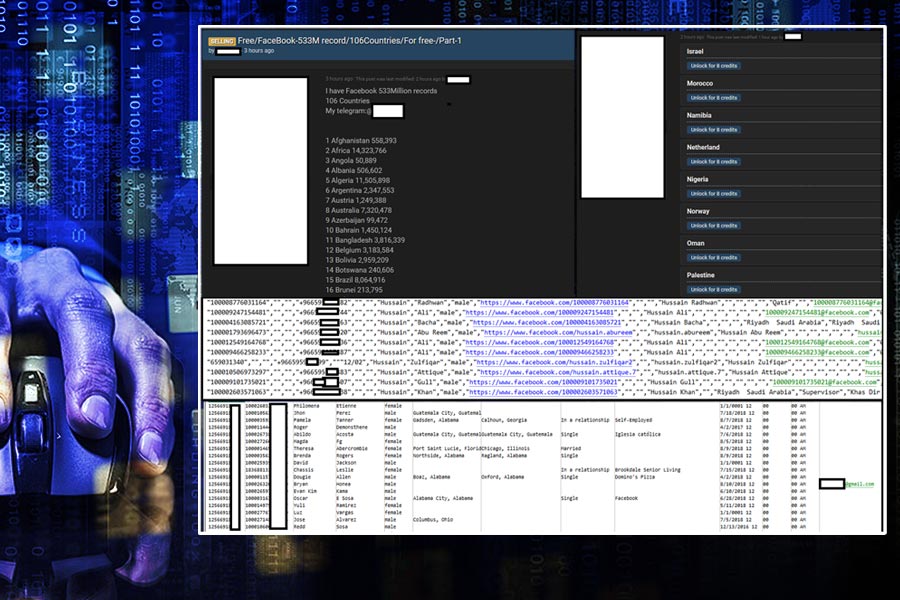
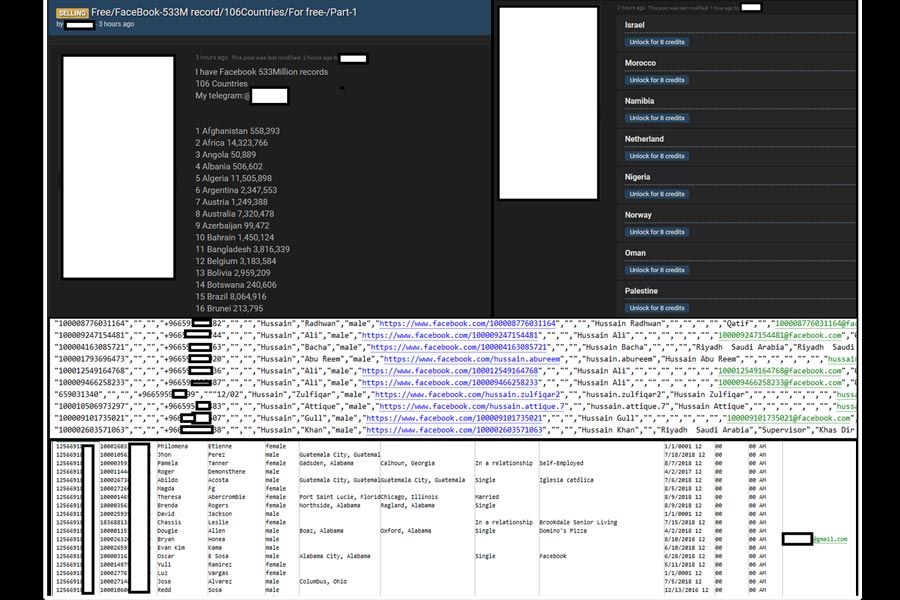
Facebook faces yet another controversy with the data breach of its 533 million users. The social media giant hit the headlines once again for the wrong reason after the data leak was reported by Alon Gal, CTO of cyber intelligence agency Hudson Rock in January 2021. Gal had highlighted that a Telegram bot was being used to sell the phone numbers for free. In the latest reports, a lot more useful info is available including email IDs, full names, locations, birthdates, etc. The breached accounts record for over 32 million accounts in the USA, 11 million in the UK, and 6 million in India.
The Social media giant, Facebook, has been in the news lately and facing scrutiny over how it handles the personal information of its users. Just when the company was clearing up its mess after a major security incident that exposed the account data of millions of users three years ago, reports emerged yet again of an alleged data breach, impacting half a billion Facebook users from 106 countries.
As we know it’s already been a bumpy ride for Facebook after the Cambridge Analytica scandal, the company was scrambling to regain its user’s trust and the news of yet another data breach has knocked down Facebook’s reputation one more time.
This time Facebook confronted a massive data breach of its 533 million users. The social media giant hit the headlines once again for the wrong reason after the data leak was reported by Alon Gal, CTO of cyber intelligence agency Hudson Rock in January 2021. Gal had highlighted that a Telegram bot was being used to sell the phone numbers for free. In the latest reports, a lot more useful info is available including email IDs, full names, locations, birthdates, etc.
The breached accounts record for over 32 million accounts in the USA, 11 million in the UK, and 6 million in India.
For the past two years, we have been hearing the apologies, explanations, and promises from the company, but it seems that Facebook is either too vulnerable or maybe too swamped to handle the privacy of its users worldwide.
The news of the most recent breach could not come at a worse time for Facebook. The company has already been buffeted over the 2018 Cambridge Analytica scandal. And this time the company has suffered a breach of private information from 533 million accounts, even the company’s founder and CEO Mark Zuckerberg’s private credentials are part of it.
While this figure is staggering, there’s more to the story than 533 million sets of data.
Before jumping to conclusions let us rewind and look at the past breaches or scandals of Facebook.
The Past Scandals!
There is a big list of data breaches of Facebook, and all of them highlight the need for stricter data protection laws and accountability from the company not just by paying huge settlements but also coming up with ways to keep its user’s private information private!
If we look back, in 2007 Facebook released a product called ‘Beacon’ which was designed to help advertisers understand their audiences. This move was to monetize users on the platform. Through Beacon, user activity on other websites was added automatically to Facebook user profiles. To demonstrate what it’s trying to do, Beacon showed the titles of videos users rented from Blockbuster Video on the Facebook News Feed. However, this was a clear violation of the Video Privacy Protection Act and led to a class-action lawsuit. As part of the settlement, the social media giant had to pay $9.5 million to a fund for privacy and security.
And this was just a start, in 2009, the social media platform publicly published information that was marked private on users’ profiles. An investigation was issued by the Federal Trade Commission which forced Facebook to apologize to its users. It was also asked to promise better personal data management and protection.
A massive data breach happened in 2013, in which almost 6 million user data was affected. That year the company found a bug that had been exposing the personal information of over 6 million users to unauthorized parties and viewers for about a year. Exposed personal data included email addresses and phone numbers of Facebook users. Anyone who knew even one piece of information could access the data. This technical glitch began in the year 2012. However, it didn’t come to notice until 2013. Before publicly announcing that Facebook’s data leaked, apparently, it fixed the bug and reported the breach to those affected and regulators.
Another massive data breach turned into a scandal in 2014, the Cambridge Analytica Scandal. The news about the data misuse was disclosed in 2018 by Christopher Wylie, a former Cambridge Analytica employee, but it actually took place in 2014.
This marked the beginning of Facebook data breaches and the problems it faces with handling personal data.
The Cambridge Analytica Scandal is one of the most talked-about Facebook data breaches. The scandal began in 2014 when Cambridge Analytica, a data-driven startup asked users to fill in reviews on the Turkopticon website (a third-party site for reviews for Amazon’s Mechanical Turk). It was followed by a task by Aleksandr Kogan that asked users to fill a survey in exchange for money. To fill in the survey, users were asked to download an application – thisisyourdigitallife – to their Facebook accounts.
The app then downloaded a huge amount of personal information, such as the user’s demographic data, likes, friend lists, and some private messages. The app broke the terms of service of Facebook’s but remained in place till December 2015 by which more than information of over 85 million had been harvested by Cambridge Analytica. The data was later used for marketing-related activities and fake news stories. This data also provided analytical assistance to the 2016 presidential campaigns of Ted Cruz and Donald Trump.
This incident entirely proved that the digital data of Facebook users are not at all in safe hands.
After this in 2018, the company uncovered a new bug in the social media platform that overrides the blocklist of users. In yet another privacy failure, the social media giant admitted that more than 800,000 users were affected by this bug on Facebook and Facebook Messenger.
In 2019, another news surfaced on the internet in which, Brian Krebs, a cybersecurity expert reported that the social media company has been storing passwords of millions of users in plaintext files. These files were accessible to over 2,000 employees of Facebook. The social media company didn’t say why or how it had been saving user passwords in such a manner. Later, it was discovered that the passwords of millions of Instagram users were also saved in the same manner. The total number of affected Instagram and Facebook users is estimated to be at least 600 million. The actual number might be much higher.
In July 2020, Zuckerberg-led company admitted to sharing user data with about 5000 third-party app developers, even after the expiry date of data access authorization. Facebook said that it had fixed the issue, however, a mistake allowed 5,000 developers access to receiving user data for longer than the expiry date.
What happened in 2021!
The company was yet again in news, in April 2021 it was reported that the personal data of more than 533 million users of Facebook had been posted on a website to be misused by hackers. This Facebook data breach was reported by Alon Gal – Chief Technology Officer of Hudson Rock.
The data breach had a lot of personal information of users exposed, including their full name, date of birth, gender, email address, phone number, Facebook IDs, Facebook bios, location, and job status. The Facebook data leak 2021 included records of 6 million users from India, 11 Facebook users from the UK and 32 million users from the US.
The company claimed that the hackers obtained user data through data scraping — a process used by people to import data from a website onto a local file that is saved on a computer. The social networking giant also stated in a blog post that the specific issue that allowed this scrape to happen no longer exists since 2019.
Really? Can you believe that?
Clearly, in the case of Facebook, criminals can mine Facebook’s systems for users’ personal information by using techniques that automate the process of harvesting data.
On this, Paranjoy Guha Thakurta, a senior journalist, and a writer said, “As the Cambridge Analytica Episode repeats, Facebook claims it is mindful of protecting the privacy of its users, but the reality is something else. Hackers have been able to infiltrate Facebook’s systems, mined personal data, and presumably sold the data for profit. Whatever, Mark Zuckerberg or others may say about how much Facebook respects and protects the privacy of its users, the reality seems quite different. And the most recent incident of the hack that has taken place revealed that Facebook has a long-long way to go before it is able to protect its systems from being misused and abused.”
Where is this data now and for what it can be used?
We all know the stolen information goes to just one place, the Dark Web. And this information picked or obtained from the Dark Web, can be used to send spam emails, make calls, mount phishing campaigns, and target advertising. It can be used to plot and execute various nefarious online fraud schemes. Hackers can impersonate users and transfer cash on their behalf, without their knowledge.
The database of private information is available on the dark web for anyone to sift through. As per reports from cyber intelligence firm, Hudson Rock, this data was now being sold to various groups on the cloud-based messaging app Telegram. Recently the data set seems to be popping up on various hacker forums all across the internet.
On this issue, Rakshit Tondon, a Cyber Security Expert has said, “Data breaches are becoming a serious concern today, because as we all understand that data is the new gold, data is the new oil, and I think in the last couple of months every second day we are hearing a data breach happening like recently in the news from Facebook, then LinkedIn. And we as consumers, are trusting these applications and giving all our information, but this really acts as a booster to cybercrimes when these data breaches take place.
Because I have seen a trend whenever these data breaches are taking place, the cybercriminals or hackers get a boost. Because they have hands-on personal information like user’s passwords, and surprisingly we have seen that these companies are not treating passwords as well-encrypted. I have seen places where passwords are stored in the databases as simple text, so that means there are compliance issues there.
Organizations like these must be very proactive about data security. In India, we are still waiting for the Data Protection Law, as we heard under the GDPR these companies are tremendously fined if something like this happens. But here in our country, we are still waiting for the Law to be implemented, and I think it will act as an immunity once it comes out. After this, the companies will become serious about data protection.
There is a lack of Cyber Hygiene, and I think it is high time that all companies look at cybersecurity pro-actively and this ongoing pandemic has at least taught us this much that rather than waiting for something to happen we must act pro-actively. Giving out your personal information is a threat.”
Nitin Agarwal, CTO, Locobuzz Solution, has also enlightened us on this issue, she said, “In recent history, we have seen some of the worst data breaches occur around the world, and unfortunately, this is going to continue happening. As companies adopt better ways of securing their servers and customer’s data, hackers are motivated to find more loopholes to gain access to these servers. Frequent security audits and a robust security policy are a need of the hour, but the companies must also look at what kind of security policies or framework the 3rd-party integrator follows. This is critical because the weakest link in the security is the entry door for hackers to get into your system.
Secondly, companies should rely less on people in terms of managing their security keys and other critical information. This is because people can be easily manipulated into giving the information to an unauthorised user. That said, even as a consumer of services we have a responsibility to protect our data. Security and privacy are a combined responsibility of both the consumer and the service provider. The more we take control of it, the better.”
How did Facebook react to this!
We all know the time when the Cambridge Analytica Scandal news broke in 2018, Mark Zuckerberg’s initial response was a long and deafening silence. After which he was summoned in from of a Congress Committee.
The founder and CEO of Facebook – the man with total control over the world’s largest communications platform, addressed the public, and said – “We have a responsibility to protect your data, and if we can’t then we don’t deserve to serve you.”
And yet we are here!
Since 2018 what has changed is how we saw those facts. It was as if we all had gone away with it but the fear of losing the private information haunts the users every time a new Facebook breach is in news.
Every time Facebook is in news because of a data breach its PR team is engaged with self-defeating arguments over whether what had occurred.
What’s Next?
Almost every company has suffered a big data breach at some point in time, but only Facebook has endured such an existential reckoning. That’s because what happened with Cambridge Analytica was not a matter of Facebook’s systems being infiltrated, but of Facebook’s systems working as designed: data was amassed, data was extracted, and data was exploited.
If you are looking for an answer on what you should do to safeguard your personal information, we have nothing for you. Maybe you should delete your Facebook account!
Or another way could be by deciding to not share any information that could harm you in the future. Don’t share anything on the platform that you do not want to end up being available publicly. Moreover, enable two-factor authentication for an added layer of security.
Domestic gadgets and smartphone accessories brand iGear has launched Superfan, an ultra-portable and USB-rechargeable desk and table fan, in India. The all-new device doubles up as an emergency power bank to top up your smartphone or tablet.
Neha Sharma, Co-Founder, iGear, said, “The iGear Superfan is a superb accessory that makes work and play very comfortable amidst this sweltering summer heat. It’s ultra-portable, foldable, has height adjustment and features four speeds, making it ideal to use in office spaces or at home, and even in outdoor camps. And what makes this fan even more interesting is its rechargeable feature that cuts the need for wires and also works as an emergency power bank. So, use it during a power cut, while working from your balcony, or carry it along on that unplanned summer camp and don’t let the summer heat bother you anymore.”
The iGear Superfan features an adjustable height (up to 39 inches) and an adjustable head angle (up to 180°). The folding design converts it into a tiny portable unit, making it ultra-portable (940g) to either tuck away safely, or carry it in your backpack. The base of the fan also helps as an ergonomic mobile stand for easy viewing during entertainment breaks or while video conferencing.
The front grille of the iGear Superfan is removable, making it easier for occasional cleaning and usual maintenance. The air flow can also be adjusted with up to four levels/speeds, based on your needs. The Superfan sports a built-in 5,000mAh rechargeable battery. The fan can be powered and recharged using any standard smartphone charger (microUSB) or a power bank.
The iGear Superfan comes in white colour for Rs 2,350, with a standard industry warranty of 1 year on their Official Website and Flipkart.
Wearable devices bring us closer to technology in a seamless manner and allow us more control over our lives. For instance, the virtue of such devices to monitor our health parameters enables us to identify any anomalies in heartbeat or blood pressure levels well in time, giving us the scope to take preventive measures and treatments accordingly. The same capability is applied to everything that wearable technology can get attached to, making wearable technology more desirable and acceptable.
Wearable technology in India
Wearable technology is classified into basic (run without apps) and smart (run with apps). India being a price sensitive market, the demand for basic wearable gadgets is higher than its counterpart. Therefore, fitness bands have conventionally had a stronghold in the market. Wearing technology on the wrist is well-embraced in India, and this trend has invited many tech-first and other companies to try their hands at innovation. That’s why we can see century old watch-making brands such as Titan and others also offering tech-infused wrist bands.
Today, the market offers a vast range of wearable technology, and the demand for smart wearables is improving in India. In addition to fitness bands and smartwatches, there are smart shoe sole, smart chest trap, smart glasses, smart ring and more. The ample scope of innovations within the sector will never let people’s excitement fade in wearable technology. But can Indian firms live up to the excitement and expectations of people here?
APAC leads wearable technology innovation
Holding onto the power of manufacturing and technology knowledge, APAC leads the production and distribution of wearable technology. As per Wearable Technology Market report, “Manufacturers in China and India offer wearable devices at a low price, making them affordable for customers.” Every day, more players are discovering something new to gain a competitive edge, intensifying the competition. Resultantly, lowering the price of the gadgets, even advanced gadgets, and making it more affordable for the larger sect. It is the right time for the Indian firms to level-up their game in wearable technology to grab the lead.
Impact of COVID-19 on wearables
A skewed slump in the production of wearables was witnessed due to the outbreak of COVID-19 pandemic, the impact of which could be seen in the increased prices and shortage of supply in the segment. However, the same situation has inspired some genius minds to add more innovation to the segment. It was recorded that some wearable gadgets could detect the onset of COVID-19 symptoms much before the traditional method. As a matter for fact, our smartwatch with SPO2 monitor helped many of our consumers keep a tab on their blood oxygen levels, which proved to be instrumental in the ongoing fight against the pandemic.
Therefore, wearable technology goes beyond offering a fancy tech gadget and enables common man to function effectively.
From the land of tigers to technology innovators
For India, wearable technology can do what Apple did for the US – position it as a world leader in innovative technology. The reason why most of us preferred imported gadgets over indigenous ones were quality, level of innovation and international popularity. Now with the strengthening of local manufacturers, improved R&D and brimming number of tech innovators in India, we are able to bridge the gaps and continue to do so. Our nation is already producing never-seen-before wearables that are potential blockbuster gadgets for the world.
The acceptance of made-in-India wearables among Indians for their durability, design, and reasonable pricing will strengthen homegrown companies’ position locally and give them the power to eye international success.
The author, Arnav Kishore, is Co-Founder, Fire-Boltt, a homegrown personal audio and wearable brand.
Popular Japanese laptop brand Vaio is coming up with its new updated series- SE14 and SX14 in India. The brand is all geared up to go live with Amazon.
The new Vaio SE14 starts at Rs 88,990. It comes up with intel 11th Gen processor. The brand-new model focuses on new SuperFin technology, new core and graphics and new platform integration. It offers additional advantages such as airflow enhancement and better power-saving features, and comes with TPM (Trusted Platform Module) 2.0, BIOS Security, Chassis Lock Slot, Multiple I/O ports and multi-screen output.
The minimalist design of the model with metal+plastic chassis and up to 12 hours battery life for outside work and conference optimization will help the new SE14 to become the most-desired debutant design in current times. The Vaio SE14 consists of features which make it more friendly and performance driven, it has technologically powerful and futuristic design, Intel Tiger Lake CPU with Iris Xe Integrated GPUs, Thunderbolt 4 with light gaming support, single/multiple conference mode and 1080P IR front web camera.
Staring with a price of Rs 1,72,990, the new Vaio SX14 is designed to meet today’s mobile computing needs. The Vaio SX14 is faster, lighter and its durable design makes mobility less cumbersome. The new model is helping customers to be more practical with their laptop choices. The newly-launched tech-beast caters to the learning needs and privacy concerns of the customers by offering fingerprint and face recognition with an instant login facility. Its exceptional security helps to prevent malicious intent and data theft.
The new Vaio SX14 laptop comes with some impeccable features which include a, Intel Core I7 processor, 14-inch screen and 4K Ultra HD display and crystal-clear sound with the Dolby Audio speakers. A USB Type-C TM port, 3 USB ports, an HDMI port, a VGA connector and a LAN connection makes it a user-friendly device that provides multiple connectivity options for users; it’s easy-to-collaborated and increased battery life helps customers to stay connected for hours. It reduces the high frequency of typing noise as it has a fine-tuned keycap tooling and also comes up with a storage capacity up to 1TB.
Alex Chung, CEO, Nexstgo, said, “Vaio in collaboration with Nexstgo intends to reach out to the people of India once again, and with this latest launch of Vaio SE14 and Vaio SX14. The new Vaio SX14 and Vaio SE14 are all about innovation, technological advancements and the product which offers the experience to customers. Providing them with highly-advanced, future-forward technology, we aim to deliver their tech-savvy dreams in a gadget, and these new models will help us do just that.”