Home Blog Page 1280

MediaTek brings in Dimensity 920, Dimensity 810 chips for 5G smartphones

0

Expanding its Dimensity 5G family, fabless semiconductor major MediaTek today announced the new Dimensity 920 and Dimensity 810 chipsets. This debut gives smartphone makers the ability to provide boosted performance, brilliant imaging and smarter displays to their customers.

Designed for powerful 5G smartphones, the Dimensity 920 balances performance, power and cost to provide an incredible mobile experience. Built using the 6nm high-performance manufacturing node, it supports intelligent displays and hardware-based 4K HDR video capture, while also offering a 9% boost in gaming performance compared to its predecessor, the Dimensity 900.

The Dimensity 810 is built using the 6nm high-performance manufacturing node. It provides Arm Cortex-A76 CPU speeds up to 2.4GHz, premium camera features including artistic AI-color in collaboration with Arcsoft, and advanced noise reduction techniques for superb low-light photography.

“With the expanded Dimensity chipset series, MediaTek is providing device makers and smartphone users with the latest innovations at more accessible price points for the mainstream market,” said Dr. JC Hsu, Corporate VP and GM of MediaTek’s Wireless Communications Business Unit. “Delivering a boost in performance, display intelligence and image brilliance, these new Dimensity chipsets will improve user experiences and deliver advanced 5G features and capabilities to 5G smartphones,” added Hsu.

The 5G smartphones powered by MediaTek Dimensity 920 and Dimensity 810 are expected to launch in the global market in Q3 2021.

Key features of Dimensity 920

MediaTek Smart Adaptive Displays: Adjusts the display refresh rate according to the game or UI action detected, raising it during periods of intense action to improve user experiences, and then lowering it to improve power efficiency.

4K Video Capture Hardware Engine: Integrates a flagship-class, HDR-native image signal processor (ISP) and incorporates a unique hardware-accelerated 4K HDR video recording engine supporting up to four concurrent cameras and up to 108MP sensors.

Boosted Performance: With the Arm Cortex-A78 processors in the octa-core CPU that can reach 2.5GHz clock speeds, along the latest LPDDR5 memory and UFS 3.1 storage, the Dimensity 920 maximizes performance.

Advanced Connectivity: Supports dual 5G SIM, dual VoNR, up to 2CC carrier aggregation, MediaTek 5G UltraSave power efficiency suite and 5G SA/NSA networking, 2×2 MIMO Wi-Fi 6 connectivity, Bluetooth 5.2 and multi-GNSS.

Smooth Gaming: Supports MediaTek HyperEngine 3.0 with 5G call and data concurrency, plus connection enhancements for high-speed rail and ‘Super Hotspot’ technology.

Key features of Dimensity 810

Faster Performance: Arm Cortex-A76 processors now support up to 2.4GHz in its octa-core CPU.

Faster Displays: Mainstream 5G smartphones can now benefit from 120Hz displays for an ultra-smooth user experience.

Incredible Cameras: Supports advanced noise reduction techniques (MFNR & MCTF) for excellent low-light capture, and supports up to 64MP cameras.

High-end AI-Camera Features: Enables stunning camera experiences like AI-Bokeh and artistic AI-Color in collaboration with Arcsoft.

Smooth Gaming: Supports MediaTek’s HyperEngine 2.0 gaming technologies with an intelligent resource management engine and advanced networking engine.

MediaTek’s Dimensity 5G series brings smartphones an unrivaled combination of connectivity, multimedia, AI and imaging innovations to global markets with the Dimensity 700, 800, 900, 1000, 1100 and 1200 families. With support for every cellular connectivity generation, the new Dimensity 5G chips deliver the latest connectivity features including 5G standalone (SA) and non-standalone (NSA) architectures, 5G two carrier aggregation (2CC) including mixed mode FDD+TDD, dynamic spectrum sharing (DSS) technology support, True Dual SIM 5G (5G SA + 5G SA) and Voice over New Radio (VoNR).

UNISOC passes TMMi Level 5 certification

0

UNISOC has recently officially obtained the Level 5 certification, the highest level of software Test Maturity Model Integration (TMMi) recognized by the international TMMi organization, becoming the first cell phone chip design company in the world to pass this certification.

UNISOC participated in 16 process areas (PA) items of TMMi Level 5 certification, all fully achieved. Receiving TMMi Level 5 certification marks that UNISOC has stepped up to a new level in testing risk assessment mechanism, testing process quantitative management, defect prevention mechanism, and other aspects. This further makes UNISOC’s testing capabilities match up to the international top level.

Since 2019, UNISOC has carried out a comprehensive management reform, established a scientific decision-making mechanism, introduced Integrated Product Development (IPD), Capability Maturity Model Integration (CMMI) and Test Maturity Model Integration (TMMi), and other advanced scientific management processes in the industry, as well as determined the capability baseline and quality benchmark of internal R&D, making the decision-making and evaluation of R&D more scientific and measurable.

Through two years of effective reform, UNISOC became the first cell phone chip design company in the world to win both TMMi Level 5 and CMMI Level 4 dual certification. TMMi Level 5 certification marks not only UNISOC’s another important breakthrough in R&D and quality process management but also a concrete step of the enterprise management system from “orderly” to “efficient”.

Don’t want to pay big bucks on a smartphone? Here are 5 best phones under 5k

0

These days, smartphones are a basic need for every one of us. You are disconnected from the world if you don’t own a mobile phone. People even pay a king’s ransom to get their hands on the most expensive phones to maintain a symbol of status. Still, there are a set of people who don’t want to spend too much money on the phone. And thankfully, owing a mobile phone doesn’t break the bank anymore. In order to cater to them, we are here with a list of 5 best android phones that one can buy under Rs 5,000. Let’s check it out.

Samsung Galaxy M01 Core


Galaxy M01 Core is one of the best budget phones from the house of Samsung. It comes with a 5.30-inch touchscreen display with a resolution of 720×1480 pixels. Powered by a 1.5GHz quad-core MediaTek MT6739 processor, the phone comes with 1GB of RAM and 16GB of internal storage. It has a decent camera setup and a respectable pixel density for the price. The Samsung Galaxy M01 Core is a great device for anyone moving from feature phone to a smartphone. You can avail the phone at Rs 4,999.

Lava Z1


Lava Z1 is one the best android phones under 5,000. The phone flaunts a 5.00-inch touchscreen display along with an 854×480 pixels resolution. Powered by a quad-core MediaTek Helio A20 processor, it comes with 2GB of RAM and 16GB of internal storage with an expandable storage option. As for the optics, it on the rear packs 5-megapixel camera and sports a 5-megapixel camera on the front for selfies. Fair to say, it is one of the easiest phones to recommend at this price point. The price of Lava Z1 has been set at Rs 5,199.

Gionee F8 Neo


Gionee F8 Neo offers a 5.45-inch touchscreen display with a resolution of 720×1440 pixels. Powered by an octa-core Unisoc SC9863 processor, the phone comes with 2GB of RAM and 32GB of inbuilt storage that can be expanded via microSD card. Coming to the optics, it packs 8-megapixel camera on the rear and sports a 5-megapixel camera on the front for selfies. The Gionee F8 Neo can be availed at Rs 5,499.

Reliance Jio Phone 5


Reliance Jio Phone 5 is yet to be launched. With this device, Jio is aiming to offer an entry-level smartphone at an affordable price range. It features a 5.0-inch IPS LCD display with a screen resolution of 720×1280 pixels. Powered by a Qualcomm Snapdragon 425 chipset, users will get an 8GB of inbuilt storage that can be expanded up to 256GB via micro SD card. On the camera front, it provides a single 8-megapixel primary camera and a 5-megapixel camera on the front. Reliance Jio Phone 5 is expected to be launched on August 22 at Rs 4,999.

Itel A47


Itel is a China-based company known for its budget-friendly smartphones. The device has a 5.50-inch touchscreen display with a resolution of 720×1440 pixels. Powered by a 1.4 MHz quad-core processor, Itel A47 comes with 2GB of RAM and 32GB of inbuilt storage that can be expanded via microSD card. Coming to the optics, it packs a 5-megapixel primary camera and a 5-megapixel camera on the rear. It sports a 5-megapixel camera on the front for selfies. The price of Itel A47 in India is Rs 5,499.

Tech NewsWrap: Nokia C20 Plus launched in India… and more

0

Nokia C20 Plus launched in India

After launching in China back in June, Nokia C20 Plus has launched in India with an exclusive partnership with Reliance Jio with several features. The smartphone comes in 2GB RAM and 32GB storage and will be available for Rs 8,999 as well as a 3/32GB variant which goes for Rs 9,999. It is available in the country in Blue and Grey colours through the Nokia India website. Alongside the Nokia C20 Plus, Nokia brand licensee HMD Global announced the India launch of the Nokia C01 Plus, Nokia C10, and the Nokia XR20.

Vivo Y53s launched in India

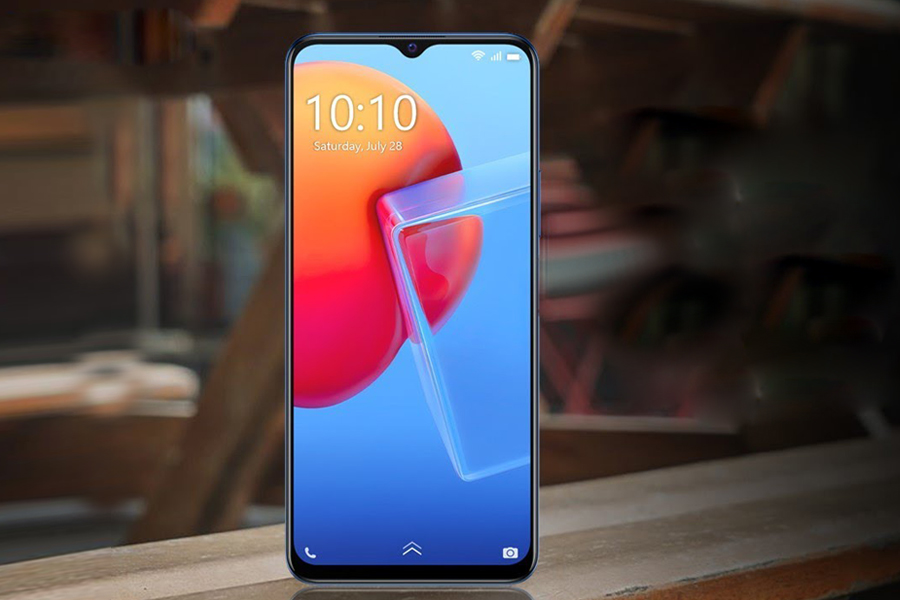
Vivo Y53s smartphone is launched in India as the company’s latest model in the Y-series. The latest model in the Y-series comes with triple rear cameras and a waterdrop-style display notch. Powered by MediaTek Helio G80 processor, the smartphone has 128GB of onboard storage, and 18W fast charging. The Vivo Y53s will come in two colors with a price tag of Rs 19,490. The new Vivo phone is likely to face tough competition from the likes of Samsung Galaxy M51 and Redmi Note 10 Pro Max.

Realme GT 5G Flipkart availability confirmed

The launch of Realme GT 5G in India is drawing near. Recently, the Realme CEO Madhav Sheth confirmed to announce the Realme GT and Realme GT Master Edition on August 18 in the country. The latest device has been listed on Flipkart, thereby confirming its online availability. The listing reads, “Flagship Killer 2021 Coming Soon” and shows a racing car, a speedometer, and the ‘GT’ moniker. The Flipkart doesn’t reveal anything else about the latest device yet.

Sony launched its three new X-series wireless speakers in India

Sony launched its three new X-series wireless speakers in India – SRS-XP700, SRS-XP500, and the SRS-XG500. All the three are portable party speakers and come with Sony’s own X-Balanced speaker units with Mega Bass and Live Sound mode. The Sony SRS-XP700 price in India has been set at Rs 26,990, SRS-XP500 priced at Rs 32,990 and SRS-XG500 cost Rs 32,990. All the three models will go on sale starting August 10.

Xiaomi gifts Mi 11 Ultras to India’s Olympic medalists

Xiaomi India’s Manu Kumar Jain has announced that the company is giving away Mi 11 Ultra and Mi 11X smartphones to the Indian athletes who won medals at the 2020 Tokyo Olympics. India won a total of 7 medals and the six individual sport winners will be gifted a Mi 11 Ultra each by Xiaomi India. Whereas, the entire Indian National Hockey team players will be rewarded with a Mi 11X each.

Best 5 Super AMOLED Display phones under 20k

0

Regardless of what category of users you belong to, the display of your phone will significantly impact your experience. After all, you consume everything through the display of your smartphone with the blessed Internet has to offer. Many times, the resolution of the display gets the most attention, but the type of display is equally important. Super AMOLED is one of the best and most popular screen technologies currently in use on smartphones. It is identified by deep blacks and high contrast ratios. If that kind of richness is what you value above anything else, here’s the list of 5 best super AMOLED smartphones that you can buy under Rs 20,000.

Redmi Note 10 Pro Max

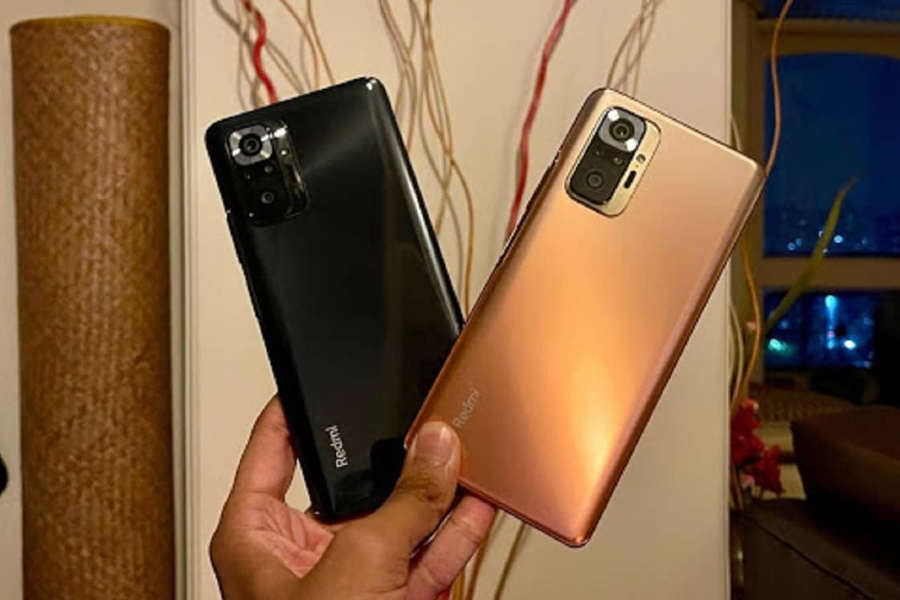
Redmi Note 10 Pro Max is one of the best Super AMOLED phones under Rs 20,000. It comes with 6.67-inch full-HD+ 120Hz HDR10 Super AMOLED display that gives you crisp and vibrant looking screen. The smartphone is powered by Qualcomm Snapdragon 732G SoC processor and has up to 8GB of RAM with 128GB of storage. You get a 5020mAh battery with 33W charging. Phone gives you 108 MP + 8 MP + 5 MP + 2 MP camera with 16 MP front camera for selfies. The Redmi Note 10 Pro Max comes in Dark Night, Glacial Blue and Vintage Bronze colours and can be availed at Rs 19,999.

Realme 8 Pro

Realme 8 Pro

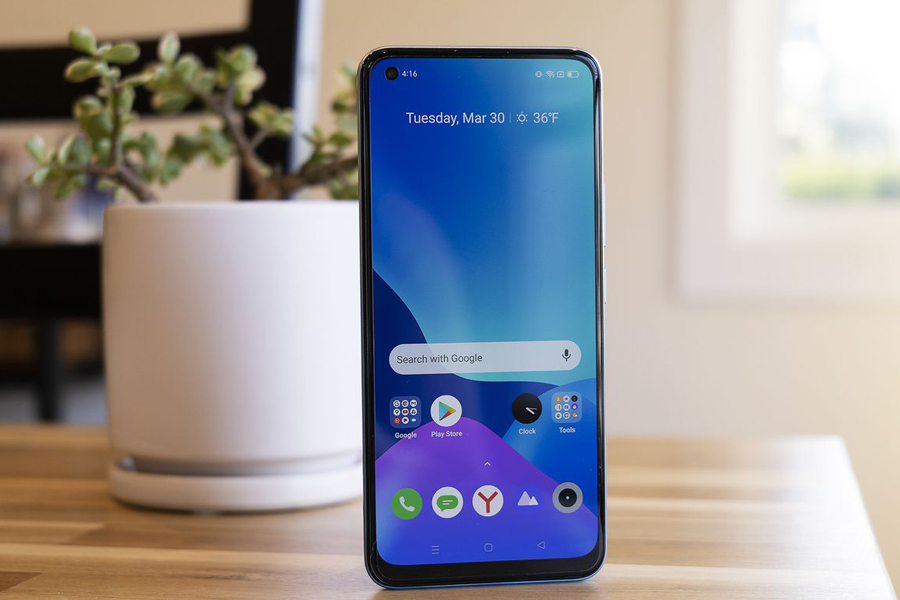
Realme 8 Pro sports a 6.4-inch AMOLED display and has full-HD+ resolution. The device is powered by the Qualcomm Snapdragon 720G processor and comes with 6GB or 8GB of RAM and 128GB of onboard storage. It has 4,500mAh battery capacity that is capable of fast charging at 50W. Coming to the optics, the phone has four rear cameras – 108 MP + 8 MP + 2 MP + 2 MP camera with 16 MP front camera for selfies. The Realme 8 Pro comes in Illuminating Yellow, Infinite Black and Infinite Blue colours and will cost you Rs 17,999.

Xiaomi Redmi Note 10

Xiaomi Redmi Note 10

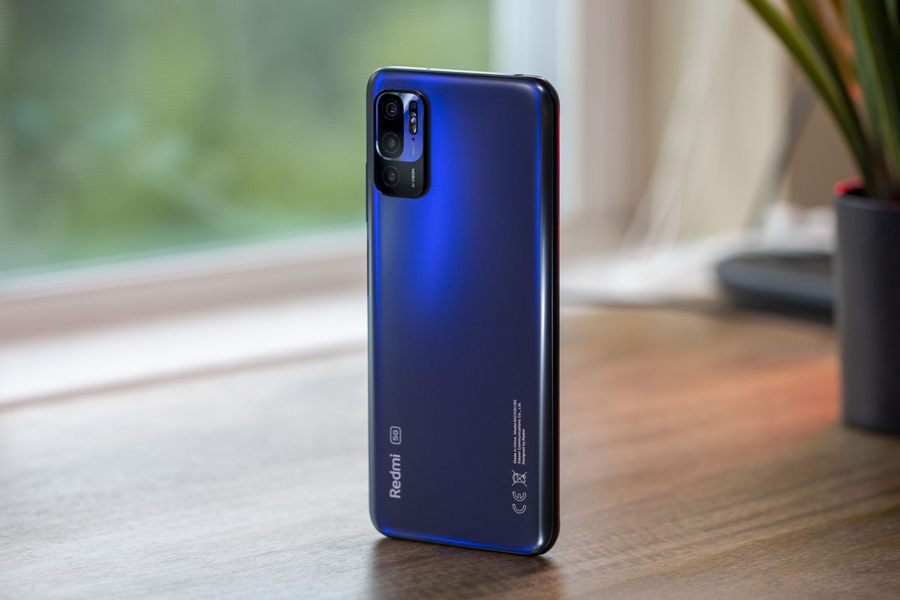
The 6.43-inch full-HD+ AMOLED screen is a major highlight of Xiaomi’s Redmi Note 10, producing crisp details and colours that pop. It is powered by a Qualcomm Snapdragon 678 SoC processor and has 4GB of RAM and 64GB of internal storage. The device has 5000mAh battery with a fast charging capacity. You get four rear cameras on the phone – 48 MP + 8 MP + 2 MP + 2 MP as well as a 13 MP front camera for selfies. The Xiaomi Redmi Note 10 comes in Aqua Green, Frost White and Shadow Black colours. You can buy the handset in Rs 13,499.

Samsung Galaxy M31s

Samsung Galaxy M31s

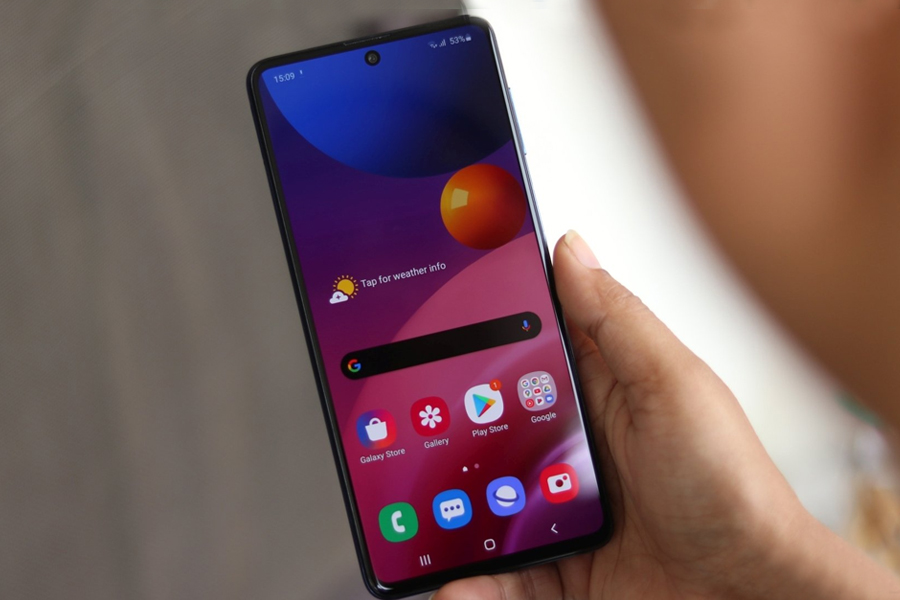
The Samsung Galaxy M31s has a 6.5-inch Infinity-O AMOLED display. It has Samsung’s Exynos 9611 processor and has up to 8 GB of RAM and up to 128 GB of internal storage. The device is powered by a 6000mAh battery that supports fast charging of 25W. Coming to the cameras, you get four rear cameras – 64 MP + 12 MP + 5 MP + 5 MP cameras. On the front, it has 32 MP camera for selfies. Samsung Galaxy M31s is available in Mirage Black and Mirage Blue colours and will cost you Rs 16,999.

Vivo Y51

Vivo Y51

The Vivo Y51 comes with a 6.58-inch super AMOLED touchscreen display. It uses an octa-core Qualcomm Snapdragon 665 processor and has 8GB of RAM with 128GB of inbuilt storage. The handset is powered by 5,000mAh battery capacity and provides fast charging. You get 48 MP + 8 MP + 2 MP camera set-up with a 16 MP selfie camera on the front. Vivo Y51 was launched in Titanium Sapphire and Crystal Symphony colours and you can buy it at Rs 17,990.

Locobuzz chooses Microsoft Azure for better performance and security

0

Digital customer experience management platform Locobuzz today announced their web service migration to Microsoft Azure. With this migration, Locobuzz aims to improve scalability, security and overall performance of their CX platform.

Locobuzz currently helps 125+ brands acutely measure and analyse brand insights, customer behaviour, competitor insights and performance analytics across all key digital channels. The migration to Microsoft Azure will help Locobuzz increase processing capacity by 50X of the current 100 million data points per day capacity. The elasticity of the servers ensures that businesses can scale up or down their processing needs without limits. In addition, it will enhance the security for the platform to work against potential threats or data leaks. Locobuzz users will leverage Intelligent firewalls and WAF protect data will help raise early alerts against suspicious activities and instant backup will ensure there is no loss of data under any circumstances.

Nitin Agarwal, CTO & Co-Founder, Locobuzz said, “The primary motivation for this migration is that it gives us the ability to scale up rapidly, reducing the procedural waiting period and making it very easy to adapt to new and changing business requirements. In terms of infrastructure compliance, Microsoft Azure is one of the best audited cloud service providers out there which gives Locobuzz an edge over its competitors. Microsoft Azure analyzes the infra from security hardening point of view and recommends possible fixes which helps in identifying and rectifying them before they can cause any issue. The overall experience will be of increased speed and efficiency. I think that at the scale we are growing, it is very necessary to ensure that our clients experience the vision we have for revolutionising digital customer experience management.”

Sangeeta Bavi, Director, Startup Ecosystem, Microsoft India, said, “Microsoft Azure will help Locobuzz deliver faster and secure solutions to their customers. The Locobuzz solutions provide a variety of performance insights and analytics for brands on digital platforms, and allow customers to take advantage of the flexibility and enterprise-grade reliability that Microsoft Azure provides.”

With this migration, the Locobuzz CX platform will enable businesses to have cloud resources adjusted to their consumption rate, space requirements for data volume and processing. This allows the platform to efficiently manage resources in terms of computing power and operational costs. Businesses will also be able to incorporate various business models aided by highly scalable Kubernetes clusters that make sure there is no single point of failure, hence helping businesses secure their data in the easiest and most efficient way possible.

BharatATM to add 2 million stores by 2022 to offer banking services to rural areas

0

BharatATM, a rural banking platform, has announced significant growth numbers. The FinTech startup has on boarded 4.5 lakh small merchants covering 14,645 pin codes with a GTV (Gross Transaction Value) of Rs 2,000 crore since its inception eight months ago. In the same period, it has served over 20 lakh retail customers with their banking needs.

BharatATM was launched in December 2020 by Mahagram, a leading fintech company in collaboration with actor Sonu Sood as its brand ambassador. The app offers comprehensive banking services including account opening, deposits, remittances and cash withdrawals to rural masses in tie up with local Kirana stores, thereby, eliminating the need to invest time and money traveling significant distances to the closest bank branch or ATM. The app allows its retail customer to open bank accounts at the neighborhood store by just producing their Aadhaar & PAN Card and authentication using E-KYC. Till date, Bharat ATM has helped more than 20 lakh customers to avail banking services at their doorstep or at the local Kirana store with a customer repeat rate of 30 per cent.

As a rural NEO Bank, ‘BharatATM’ offers a unique ‘Recurring Deposit Program’ with the highest return of 11 per cent per annum to housewives, senior citizens and even teenagers. Using private banks’ proprietary licenses, it already has a network of 3.5 lakh touchpoints across the country comprising 20,000 handheld terminals (wireless ATMs) for cards.

Additionally, the assisted banking app has also started its own ‘investment & lending’ offering for small shop keepers in rural India. It offers 10 per cent rate of return on savings and low interest loans against their savings, to run their day to day business efficiently.

Ram Shriram, Founder, Mahagram, said, “Witnessing the growth of Bharat ATM since its launch and the number of people who are currently availing our services, we are planning to add around 2 million retail stores on BharatATM Platform by the end of 2022.”

“Given the fast-growing FinTech industry, we are looking forward to raising USD 10 million in next quarter. BharatATM is also aiming to expand its business to new geographies and is focusing on scaling up its operations,” he said.

OPPO launches ‘ChargeUp’ Campaign; showcases its new Flash Charge Tech solutions

0

OPPO today announced the launch of its ‘ChargeUp’ campaign in India that showcases its latest achievements in next-gen VOOC Flash Charge technology. The innovative technology takes speed, safety, and intelligence to the next level.

As part of the campaign, the brand also announced a range of attractive deals and offers on its recently launched superphones – the Reno6 Pro 5G, Reno6 5G as well as its F19 Series – for both online and offline consumers in India.

Damyant Singh Khanoria, Chief Marketing Officer, OPPO India said, “OPPO is renowned as the global leader in Charging and Battery technologies. As of June 30, 2021, OPPO has already applied for over 3,000 patents related to fast charge technology and we continue to explore how we can bring meaningful innovations to our consumers. The ‘Charge Up’ campaign is an opportunity for our consumers to get their favourite OPPO Reno6 Pro 5G or F19 series smartphones.”

OPPO’s Next Generation VOOC Flash Charge technology takes speed, safety, and intelligence to the next level. It introduces a five-fold safety protection system, comprising a Fuse with lower impedance, Gallium Nitride (GaN) Switches, Internal series bi-cell design, Battery Safety Detection Chip and Composite Current Collector, to deliver greater charging speed without compromising on safety.

OPPO’s technology adjusts the charging current based on intelligent detection of different charging scenarios. This also helps reduce the occurrence of unusual battery ageing, allowing users to enjoy optimal battery life for a longer period.

Additionally, ahead of the Independence Day, OPPO is bringing a host of exciting deals and offers on its renowned series of smartphones as a part of its Charge Up Campaign.

Offers and deals on OPPO Reno6 Pro 5G and the F19 series

Offline Offers

Between August 8 and August 21, customers who buy the recently launched Reno6 Pro 5G will get cashback up to Rs 3,000 and those buying the F19 Pro+ will get Rs 2,000 cashback and up to Rs 1,500 cashback on the rest of the F19 series of smartphones. The offers are valid on all HDFC Bank, ICICI BANK, Kotak Bank, Standard Chartered, Federal Bank, BOB Cards, Yes Bank, RBL Bank debit and credit cards, apart from 11 per cent instant cashback on Paytm. Besides, there is no cost EMI available up to a period of 6 months. All existing OPPO users will get exchange bonus up to Rs 1,500 and there is an assured buyback guarantee of 80 per cent if you want to upgrade your old OPPO smartphone to the new Reno6 5G series and the F19 Series. In additional, existing OPPO users can avail Complete Damage Protection for 180 days. There is also a 50 per cent IoT bundling discount on OPPO 10000mAh 18W Fast Charging Power Bank, which will now be available at a discounted price of Rs 650.

Further, OPPO Premium Service benefits will be applicable for customers opting to purchase the OPPO Reno6 5G and Reno6 Pro 5G. It covers Bank EMI option at the time of Service; free pick-up & drop for repairs within warranty period; free Screen Guard & Back Cover, and 24*7 Hotline support.

Online Offers

Over the same period, there are bank offers of up to Rs 3,000 on Reno6 Pro 5G and up to Rs 2,000 on the OPPO F19 Series. Additionally, there are no cost EMI up to 9 months from HDFC bank. All existing OPPO users will get exchange bonus up to Rs 3,000 and there is an assured buyback guarantee of 80 per cent if you want to upgrade your old OPPO smartphone to the new Reno6 5G series and the F19 Series, via Cashify. Consumers can also upgrade to the new OPPO Reno6 Series by paying 70 per cent of the price through Flipkart Smart Upgrade. All existing OPPO users will get Complete Damage Protection for 180 days. There is also around 50 per cent IoT bundling discount on OPPO 10000mAh 18W Power Bank, which will now be available at a discounted price of Rs 699.

OPPO Premium Service benefits will be applicable to customers choosing to purchase the OPPO Reno6 5G and Reno6 Pro 5G.

Tech NewsWrap: Samsung Galaxy Z Fold 3, Z Flip 3 pre-booking start… and more

0

Samsung Galaxy Z Fold 3, Z Flip 3 pre-booking start in India

Good news for Samsung fans in India! The company will be hosting the Galaxy unpacked event on August 11. In the event, Samsung will launch the Galaxy Z Fold 3 and the Galaxy Z Flip 3 smartphone. Ahead of the launch, Samsung has announced that customers can now pre-reserve the upcoming Galaxy flagship smartphones by paying a token amount of Rs 2,000 on Samsung Shop App or Samsung India’s e-Store.

Motorola Edge 20 series to come in India soon

Lenovo-owned smartphone brand has announced the Edge 20 Series last week and now it seems the handset will soon debut in India. Motorola India, with the hashtag #FindYourEdge, has posted a bunch of teasers on their official social media handles, which hints at an imminent launch of the Edge 20 line-up in India. According to GSMArena report, the Edge 20 series consists of three smartphones – Edge 20, Edge 20 Lite and Edge 20 Pro. However, it is unclear if Motorola will bring all the three smartphones to India or skip any model.

Xiaomi beats Samsung to become no. 1 smartphone brand globally

Xiaomi has surpassed Samsung and Apple for the first time to become the number one smartphone brand in the world in the month of June, a Counterpoint Research report showed. The smartphone sales grew by massive 26 per cent in June, making it fastest growing brand for the month. Xiaomi was also the number two brand globally for Q2 2021 in terms of sales, and cumulatively, has sold close to 800 million smartphones since its inception in 2011, according to Counterpoint Research’s Monthly Market Pulse Service.

HP to launch Envy 14 Laptop in India soon

HP is gearing up to launch its new Envy 14 in India soon. Packed with top-notch specifications, host of features and more, it is set to join the previously unveiled HP Victus gaming laptop, Pavilion Aero series of laptops. According to a report, the HP Envy 14 laptop will have a thoroughly overhaul design language and will feature a laptop chassis that’s almost the same size as the previously launched HP laptops with 13-inch displays. The HP Envy 14 is expected to be priced around Rs 1,00,000 in India.

AirPods 3 are rumored to launch soon

Apple’s latest wireless earbuds – AirPods 3 are rumored to be launched alongside the new iPhone 13, new Macs with M1X or M2 and the Apple Watch Series 7 next month in September. As per the rumors, AirPods 3 will look a lot like the AirPods Pro but without the ear tips. Bloomberg says the wireless earbuds will feature a short stern. As for the price, Apple is expected to set them in the $150-$200 range.

“Indus App Bazaar encourages developers to build local solutions for their audience”

0

Homegrown app store Indus App Bazaar – which is designed to help users discover new and trending apps in the language of their choice, with more than 400,000 apps in English and 12 Indian languages – has finally come of age. Thanks to its strong focus on localisation, personalisation and ease of use, Indus App Bazaar has created its own space in India and gives confidence to people who are not well versed in English and don’t have an e-mail ID, a prerequisite for downloads from Google Play Store. To discuss more about this Enhanced App Store Ecosystem (EASE) for Android smartphones and its value proposition, Ramesh Kumar Raja talked to Rakesh Deshmukh, Co-Founder and CEO, Indus OS, the company behind the indigenous app store. Excerpts:

In a market dominated by Google Play Store and App Store, what makes Indus App Bazaar different?

Thirteen years ago, on 28th February 2008, Jay Freeman launched Cydia for iOS, the first modern mobile app store. Five months later, on 10th July, Apple ‘officially’ launched its App Store with 500-odd third-party apps. Three months down the line, Google launched Android Market aka Play Store aka Google Play on 22nd October. The Android Market started with apps, but evolved to include several other categories — games, books, movies & TV shows, Play Pass, and now featuring Teacher Approved apps for education — to become the all-encapsulating store that it now is. Across the world, barring China, Android Market metamorphosed into Google Play, a pre-installed app, becoming the default distribution mechanism for apps and content on the Android ecosystem, thereby hogging a significant chunk of users. However, an equitable access and fairness for app and content distribution can be seen in China, where app stores are a dime a dozen and are competing with each other, and Google Play is a minority player (see table below).

Antony Chang of AppInChina has predicted a sea change in the app distribution ecosystem in China in the near future. He recently said, “The most likely changes to keep an eye out for will be continued app store consolidation (Alibaba/Tencent acquiring independent stores), tightening app regulations (local government requiring more documentation) and Google’s re-entry into China (China-specific version of the Google Play Store in partnership with a local tech company).”

The key phrase here is ‘in partnership with local tech’.

While stringent regulations forced Google to take along local developers in China, we are yet to see Google take any step to make app store access to consumers more equitable. In a blog published on 28th September 2020, Sameer Samat, VP, Product Manager, Google, suggested that the following changes are inevitable:

  1. Choice of stores
  2. Clarity on billing policies
  3. Equal Treatment
  4. Communicating with customers
  5. Enabling innovation

Indus App Bazaar never mandated any billing for app developers, they have always been free to use an offering of their choice. We proactively reach out to developers to help them localise their offerings, provide them support with AWS credits, and with access to detailed analytics on their developer dashboard. At Indus OS, we call this Enhanced App Store Ecosystem (EASE) an initiative to encourage innovation at all levels. While Google clarified belatedly on the billing issue, the other promises remain unfulfilled. The ironic thing to note here is that Google, a primarily software player, feels that there is enough choice of stores for consumers between Google Play and/or OEM-led store (third party) stores. Clearly, the app and content distribution mechanism are more complex and evolved today.

Let’s assume a software player makes their offering available to consumers. Google hampers user-experience with constant pop-ups for the user.

How do you plan to challenge the dominance of Google Play Store and App Store, the two global giants, in India?

At the moment, we are focusing on the Android platform considering its history of openness and fairness in the mobile ecosystem. Android Open Source Project (AOSP) allowed the inception of Indus OS as a platform. Custom ROMs were a rage among Android developers until the introduction of Google Mobile Services (GMS). Since the launch of GMS, the world has changed from the idealistic one envisaged under the AOSP banner with further consolidation of Google’s dominance becoming evident through Play Services.

Our focus is not on challenging anyone, but creating an ecosystem where multiple players can serve the needs of end users in a more seamless and innovative manner for the benefit of all the stakeholders. We hope to be a part of a fair play environment where everyone has equal opportunities to innovate, serve users, and establish their presence without any hindrance.

“Our focus is not on challenging anyone, but creating an ecosystem where multiple players can serve the needs of end users in a more seamless and innovative manner for the benefit of all the stakeholders. We hope to be a part of a fair play environment where everyone has equal opportunities to innovate, serve users, and establish their presence without any hindrance”

From inception to execution, what was the process of setting up Indus App Bazaar?

Indus OS began as an operating system, but went modular later. One of our products is Indus App Bazaar, a store that allows users to download apps and content from the storefront. Once a user installs and opens Indus App Bazaar, he is welcomed with a Starter Kit comprising various apps from across categories like trends, finance, entertainment and social media. He can download any app he finds relevant immediately without the need for any email sign-in.

The user then selects his preferred language before he is redirected to the homepage, where he sees specially curated collections of apps, video feeds, banners etc. displayed in a user relevant manner. To explore more about an app and its features, the user can click on any of the app stories or video feeds, and also check the trending apps and other brand offerings.

Also, tab categories and app details pages help the user with the details of an app (including reviews and star ratings) and enable instant download. The ‘For You’ page lends a personalized touch with the platform creating an avatar of the user based on their previous search and downloads. Once the avatar is created, the user starts getting personalized app recommendations and suggestions as per their interest. Users will also get an innovative search bar to look for and discover apps with auto-suggestions making the experience.

We have also introduced features like app stories to allow users to visually understand the apps, their elements and how they can help them. For instance, when a user opens the app store and enters the homepage, s/he will find specially curated banners and app collections designed as per different themes, occasions and festivals.

Users can click on any heading or scroll through each collection to explore our offerings. If they find any app relevant, they have the option to download it directly. Similarly, the app store also has interactive video feeds or app stories to help users learn the USPs and features of an app, and get access to a brand’s new offers along with other trending apps.

There is also a ‘For You’ page, where the platform analyzes the user’s search and usage pattern to create a fun, personalized and exclusive avatar. For instance, if a user is searching and downloading OTT apps, the app store will classify him as an entertainment buff and provide a customized in-store experience in sync with the user’s preferences.

Which devices can it be used on?

Indus App Bazaar can work on all Android devices, but Google’s restrictive policy has stopped us from launching it publicly.

How many apps are available on Indus App Bazaar? Any plans to increase the number?

There are 4,00,000+ apps available on Indus App Bazaar as of now. We are in the process of identifying developer programs to foster a community geared for innovation. As and when we have any new information to share, we will let you and your readers know.

Is it tough to get popular apps on board a new platform like yours?

Like all businesses, we too face challenges, but they can be overcome if we can provide users with an innovative experience and add significant value for them. Moreover, a lot of these popular apps work with Indus App Bazaar because of the unique users we help them acquire.

Which geographies do you get the maximum traction in?

Indus App Bazaar has been particularly popular in Maharashtra and Uttar Pradesh, followed by Gujarat, West Bengal, Karnataka and a few other states. Speaking of cities, we saw the highest number of users coming from Bengaluru, Delhi-NCR, Hyderabad, Kolkata, Pune, Ahmedabad, Kanchipuram and Chennai.

Is Indus OS India-specific or do you have plans to go global?

We are a global company solving local problems. We will soon make an announcement on our plans to expand.

“Indus App Bazaar eliminates the need for an email address to download most-used apps, reducing the risk of privacy invasion through insecure source downloads. It creates a level-playing field for regional developers with its free-of-cost self-publishing portal. It provides AWS credit to first-time publishers to help them scale up while optimising costs”

How does Indus App Bazaar support developers?

Available in 12 Indian languages covering 95% of the regional languages spoken in India, Indus App Bazaar encourages developers to build local solutions for their audience. Itoffers free-of-cost language translation support to developers, enabling them to reach their target audience without any substantial investment. It eliminates the need for an email address to download most-used apps, reducing the risk of privacy invasion through insecure source downloads. It creates a level-playing field for regional developers with its free-of-cost self-publishing portal. It provides AWS credit to first-time publishers to help them scale up while optimising costs. It also provides them with in-depth data analysis and multiple avenues to monetise their product.With a strong community of regional developers, it provides more relevant and personalised content with an aim to elevate user experience.

How does Indus App Bazaar help?

It offers no-cost publishing for apps with deep user insights and also localisation assistance in 12+1 languages for apps. Indus App Bazaar has developer addressal with a team based in India and available for call. These are the primary benefits of Indus App Bazaar. But in addition to this, developers reach unique users outside of the Google Play ecosystem.

How does Indus App Bazaar assist users with more than 12 languages?

Indus App Bazaar helps users by giving them an experience that is tailored to their needs. Features like App Stories are our learning and innovation to make apps and content more accessible visually. Languages are an important aspect of how we connect with the world. The central tenet of what we are trying to do at Indus App Bazaar is to assist users into the digital economy. All our features – starter kit, app categories, suggestions, amongst others are geared towards user engagement.