Home Blog Page 1273

Fenda Audio launches PA300 100W Bluetooth party speaker ahead of festive season

0

With festive season in mind, Fenda Audio has come up with the new F&D PA300 100-watt Bluetooth wireless party speaker system in India. The new speaker boasts of a powerful performance, multiple inputs, Karaoke mode and a robust portable body. It’s for both indoor and outdoor use and features an in-built rechargeable battery.

The F&D PA300 sports a pair of large 7-inch woofers and a pair of 2-inch tweeters, driven by a powerful 100-watt amplifier. Adding to the glam are its multi-colour disco lights that flicker to the rhythm.

The internals are well-protected using a robust ADS plastic body. A metal grille up front protects the drivers from external accidental damage. And since the weight of the large speaker makes it inconvenient to port around, Fenda Audio has added a trolley system so that you can wheel it wherever you plan to take your party.

Adding to the weight is a fairly large 7,000mAh rechargeable Li-Ion battery that allows you to take your party outdoors, and last for a good 5 hours non-stop.

Sporting multiple inputs such as a USB, auxiliary, Optical, Bluetooth, Microphone, and Guitar, the speaker also features a built-in FM Radio for those who need to tune in to the local terrestrial radio stations for news and music. There’s Karaoke mode that supports both a wired and wireless microphone, so you can pass the mic around to your gang or friends without having to move the speaker from its place.

All the controls, from volume to track change and play/pause, are available on the top of the speaker, or you can also take control from afar using the fully functional IR remote control.

The F&D PA300 speaker is available at all leading retail stores and e-commerce platforms, with a festive season limited time price offer of Rs 15,999 and is backed with a 12-month warranty.

3 million WhatsApp accounts in India banned between June – July: Know why

0

Facebook-owned WhatsApp is a globally recognized instant messaging app with end-to-end encryption. And, yet more than 3 million accounts get banned in India alone every month. WhatsApp has now released its compliance report, where it has claimed to ban over 30 lakh accounts in India in the one-and-a-half months.

“In accordance with the IT Rules 2021, we’ve published our second monthly report for the 46-day period of – June 16 to July 31,” WhatsApp spokesperson said. The actual number of accounts that got suspended stands at 3027,000. The platform said it received 594 grievances during that time.

Why WhatsApp banned Indian accounts

WhatsApp has launched its second “User Safety Monthly Report” for the 46 days between June 16 – July 31 following the brand-new IT rules 2021. The instant messaging app claims to have banned these accounts in the interest of preventing online abuse and keeping the users safe. The banned accounts include accounts actioned through the company’s own prevention and detection methods, and via user reports or grievances received by it.

“Over the years, the platform has consistently invested in Artificial Intelligence and other state of the art technology, data scientists and experts, and in processes, in order to keep its users safe on the platform,” a WhatsApp spokesperson stated.

From June 16 to July 31, the instant messaging app received a total of 594 grievances from users relating to various issues such as ban appeal, account support, product support, and safety support. Out of which, 74 accounts had been ‘actioned’ throughout this time.

What are ‘Accounts Actioned’

WhatsApp defined that ‘Accounts Actioned’ means circumstances where the firm takes remedial motion based mostly on the report. Taking motions means either ban an account or a beforehand banned account being restored on account of the criticism. Also, studies could have been reviewed however not included as ‘Actioned’ for some causes, together with the person needing help to entry their account or to make use of some options person requested restoration of a banned account and the request is denied, or if the reported account doesn’t violate the legal guidelines of India or WhatsApp’s Terms of Service.

How WhatsApp identifies accounts that should be banned

Other than these accounts for which the company receives complaints of sending spam or abuse, the instant messaging app is determined by behavioural indicators to determine misuse of the platform. It says that it depends on accessible “unencrypted information” together with person studies, profile photographs, group photographs and descriptions in addition to superior AI instruments and assets to detect and stop abuse on its platform.

According to the new IT rules, social media platforms need to publish their compliance report where they need to define the numbers of complaints received and the action taken against them, every month.

Hughes, OneWeb collaborate for LEO satellite service in US and India

0

Hughes, an innovator in satellite and multi-transport technologies and networks, and OneWeb, the low Earth orbit satellite communications company, have signed a distribution agreement in the US focused on enterprise services. In India, the parties have entered into an MoU for a strategic agreement to distribute services to large enterprises, small and medium businesses, government, telcos and ISPs in the rural and remote parts of the country.

Services will be offered by Hughes Network Systems and Hughes Communications India, respectively. Hughes and OneWeb intend to work together to broaden distribution globally, with Hughes to offer OneWeb’s low-latency, high-speed connectivity for markets such as enterprise, government, commercial aviation and maritime, cellular backhaul, and community Wi-Fi hotspots, they said in a statement.

Pradman Kaul, President, Hughes, said, “The future of connectivity depends on a worldwide network of multiple transports, including terrestrial, geostationary and Low Earth Orbit satellite services. OneWeb’s system enhances the Hughes portfolio of networking capabilities, introducing a low-latency option with global reach that complements GEO satellite capacity density and capability to meet our customers’ needs. As a case in point, in India which has been starved of high-throughput satellite services, the OneWeb services will help us meet the tremendous backhaul and broadband demand.”

Neil Masterson, Chief Executive officer, OneWeb, said, “OneWeb is thrilled to be working with Hughes to offer our connectivity solution to small businesses, and government customers across the U.S and India. This agreement is another example of our commitment to deliver high-quality, continuous internet access to areas in need including in rural and remote areas of the U.S and India. Hughes is already an important investor and an invaluable technology partner, and I look forward to continuing to grow our relationship further.”

At a jointly hosted session at Satellite 2021 at National Harbor, Maryland, representatives of the companies signed the new agreements, addressed their ongoing partnership, and shared a demonstration of multi-orbit connectivity in action. The test, recorded on August 26, featured the successful real-time, seamless switching between the Hughes Jupiter 2 geostationary, high-throughput satellite (HTS) and OneWeb’s low latency, high speed LEO constellation.

The demonstration highlighted advantages of each type of connectivity as Hughes Active Technologies software instantaneously evaluated the type of traffic and transmitted it over the most efficient path: latency-sensitive activities (like fast-twitch video gaming and a video call) were transmitted via OneWeb; bandwidth-intensive activities like video streaming were transmitted via Jupiter HTS.

The agreement expands an established relationship between the two companies. Hughes, through its parent company EchoStar, is an investor in OneWeb. It is also an ecosystem partner to OneWeb, developing gateway electronics and the core module that will power every user terminal for the system. And Hughes is the prime contractor on an agreement with the US Air Force Research Lab to integrate and demonstrate managed LEO SATCOM using OneWeb capacity in the Arctic region.

OneWeb works with carefully selected distribution partners in each of its core markets, providing new business and expansion opportunities through the low latency, global, high throughput attributes of OneWeb’s network.

OneWeb is building its initial constellation of 648 LEO satellites. Services will begin this year to the Arctic region including Alaska, Canada, and the UK. By late 2022, OneWeb will be offering its high-speed, low latency connectivity services globally. Service testing on the satellites already in orbit is underway, using gateways that Hughes is building for the network. Results are positive, including seamless satellite and beam handovers, high speeds and low latency.

To help meet demand for broadband, Hughes is developing its next generation Jupiter 3 Ultra-High Density Satellite, expected to launch in the second half of 2022.

Experts call for democratization of research in Artificial intelligence

0

As India steps on the cusp of digital revolution, the country needs collaboration and integration of public and private sector supplemented by efforts of highly qualified academia to harness the immense potential and develop the Artificial Intelligence ecosystem. These views were expressed by an eminent panel of leaders from industry, government and academia at “The Rise of AI-Preneurs”, a webinar organized by TechArc, a leading technology analytics, research and consultancy firm in association with Compass IDC, the overseas development centre of Urban Compass Inc., a US-headquartered technology platform.

The panel called for democratization of research in AI and also discussed the power of huge data for developing ‘intelligence’ for organizations.  The panelists unanimously agreed that India has immense potential to leverage AI and each sector is a huge opportunity in itself as India leaps ahead with digital transformation in the coming decade.

Joseph Sirosh, Global CTO, Compass, said, “I have been working with AI for over 3 decades now and there has never been a time as exciting as now, both in theoretical and practical terms. We’ve come a long way from AI being purely dedicated to machine learning on structured numerical data and being significantly limited by data availability. Deep Learning and pre-trained systems like Transformer Networks have widened the application of AI to all types of unstructured data, including images, speech, videos, text and social network analysis, and natural language processing. AI has now invaded almost the entire digital realm accelerating automation across industries, creating meaningful user interactions, and leveraging valuable insights from transactions.”

Anna Roy, Sr Advisor, NITI Aayog, said, “Industry and academia need to collaborate with the government with a long-term vision with regards to developing a robust ecosystem that addresses both the needs of basic research and domain specific applied developments. Equally important is AI adoption where governments have a crucial role to play in developing policies which ease the adoption of AI.”

Dr Nikhil Agarwal, CEO – FIRST & C3i Hub, IIT Kanpur, said, “The good news about the Indian Startup industry is that it has now become the third-largest country for startups & the best part about it is that a variety of them are driven by AI. We need to create awareness amongst people that AI is not going to replace us. All that AI will do is make things easier for us.”

Prof. Mausam, Head of School of Artificial Intelligence (ScAI) IIT Delhi, said, “The Indian AI industry still needs to catch up fast with the other aspects such as readiness, deployment & the number of AI researchers. The amalgamation of the right set of people, strong computing infrastructure and the right data, together, can help build a strong AI. This will happen only through robust industry-academia collaboration.”

The event was moderated by Faisal Kawoosa, Founder and Chief Analyst, TechArc. “In AI, everyone is solving problems and they have to invent solutions. Therefore, everyone working in AI is an entrepreneur as they are all inventing and innovating on a daily basis,” said Faisal.

The key takeaways that emerged from the panel discussion were that the government has already outlined its priorities with respect to AI. Globally, companies and organisations are leveraging AI to unleash the power of huge data which resides with them and India has immense potential to leverage from AI as well.

How to recover deleted photos and videos from Google Photos?

0

Mobile phones provide its users the ability to conveniently record their lives and capture memorable moments. But, there are consequences for storing your memories on smartphones, and data loss is one of them. Photos or videos are unarguably one of the most precious things, and losing them is no less than a nightmare. Fortunately, Google Drive and Google Photos allow you to restore photos and even videos that you mistakenly deleted.

For backing up your photos and videos, Google Photos is one of the most preferred cloud storage options, especially for Google Pixel devices and other Android users. The platform lets you upload photos or videos for free and access them at any time on your device. Still, there are a lot of cases of photo deletions. In case you have accidentally deleted photos from your smartphone and wondering if there is a way to recover the deleted photos, here are a few simple tips that you should consider.

How to recover deleted photos from Google Photos

Step 1: Open the Google Photos app on your Android phone or tablet

Step 2: Tap ‘Library’ tab at the bottom, and go to the ‘Trash’ folder

Step 3: Find the photo or video you want to restore. Touch and hold the photo or video

Step 4: Press the ‘Restore’ option at the bottom

Step 5: To recover photos on your PC, go to photos.google.com

Step 6: Click the ‘Trash’ folder on the left side of the window

Step 7: Tap on the photos or videos you want to restore, and then click the Select option

Step 8: Click ‘Restore’ at the top right. That photo or video will be restored to your Google Photos account and added back into any albums it was in

If a user wants to restore deleted photos or videos, first they will have to check if the content is there in the ‘Trash’ folder on the app or not. If a deleted item is not in the folder, then it can’t be restored. Also, users won’t be able to recover a photo if they had moved it to Trash more than 60 days ago, or if they moved it to Trash and then emptied the folder.

“Flix aspires to be a mass-market brand with its value for money product line”

0

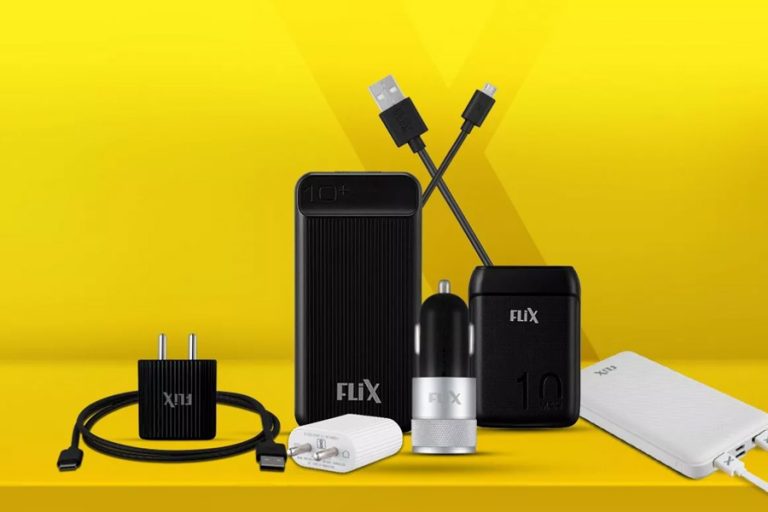
Popular landline phone maker Beetel made its foray into mobile accessories market with the launch of Flix brand last year. Since then it has diversified its product portfolio from earphones and Bluetooth speakers to mobile chargers, power banks and data cables, and to even smartwatches. And now, Flix wishes to make it big with its plan to achieve an audacious goal of 500 crores by value by the end of 2022. Puneet Gupta, Business Head, Flix, in a conversation with Ramesh Kumar Raja, speaks more about the brand and its strategy to be a prominent player in the ever-growing accessories segment, similar to what Beetel has achieved over the years. Excerpts:

Flix is a very new player in the smart accessories segment. How are you positioning it in India which already is a hyper-competitive market having innumerable brands at different price points?

Flix has been positioned as a value for money brand catering to the needs of the GenZ, alongside making modern technology accessible and affordable. Our products are high on technology and style in sync with the needs of today’s generation.

We concur with your statement that many tech brands are operating in India, be it the fly-by-night operators or the much-entrenched foreign players. Instead, we have seen a vacuum for an Indian brand in the smart accessories space, and with our experience and legacy, we can fill those gaps and fulfill the aspirations of the Indian millennials and GenZs. The biggest differentiator for us is our Made in India products with undisputed quality. We have a grip on the pulse of Indian consumers, deep trade knowledge, and technical know-how of the mobile accessories space that genuinely helps us stand apart from the market.

What role does Beetel play in giving impetus to Flix?

Beetel has a legacy of more than three decades and has strong brand equity amongst the customers. Beetel has been synonymous with its quality and durability and has been the leader in its category. With Flix coming from the same stable, we will continue to take forward the same value, quality, and trust to our consumers in the smart accessories space. This would be a big plus point for Flix to establish its standpoint in the industry.
Flix-accessories

You have a very limited number of products to offer. How has been the response so far and what’s your product-expansion plan to make Flix large?

Flix has very recently entered the Indian markets, and in this short period, we already have close to 45 SKUs, which is not limited. The response to the product range has been encouraging. It’s overwhelming to see the positive response we have got from the consumers and trade alike – it’s a testament to our commitment to product quality, durability and affordability. Our products have been readily accepted and appreciated, along with the packaging that stands out in this competitive market. By the end of 2021, we look forward to having over 200 SKUs across the verticals, however more focused on audio and power.

Which are the areas you are targeting and whom do you consider your potential buyers?

In a country like India where the demographics change every 100kms, a Swiss-knife approach is required and hence we will follow an omnichannel strategy. We expect 60% of our revenues to come from offline channels consisting of Modern Trade and General Trade, both and remaining from online platforms. We already have existing relationships with the duo of Amazon and Flipkart.

A product is as good as its distribution, and our target is to reach more than 10,000 retailers in the offline channel, which will help us expand. For most other brands, their revenue depends heavily on online sales (>65%), and general trade is the weak link in their business. We are going to follow a contrarian approach.

Flix is based on three tenets 1) technology to be accessible 2) interface to be interactive 3) design to be delightful. Our bouquet of products includes earphones, headphones, TWS (Truly Wireless Stereo), Bluetooth speakers, bar studio, power banks, chargers and cables. All our products are targeted at millennials and Gen Zs. We aspire to be a mass-market brand with our value for money product line.

“A product is as good as its distribution, and our target is to reach more than 10,000 retailers in the offline channel, which will help us expand. For most other brands, their revenue depends heavily on online sales (>65%), and general trade is the weak link in their business. We are going to follow a contrarian approach”

What is your approach to the “after sales service” which remains an issue for majority of electronics companies?

We are offering an industry-first 400 days warranty on our products and have a simple no-questions-asked over-the-counter (OTC) replacement system for Flix products, making sure that the consumers don’t face any challenges. For us, the customer is undoubtedly the king.

What are your outreach and investment plans for India? Any idea about the market share you are eyeing?

Our made-in-India lineup for 2021 includes power and audio category products. The required CAPEX plans are in place for the same and significant investments have been made already. We plan to achieve an audacious goal of 500 crores (by value) by the end of 2022.

Which platform you are going to exploit more- online or offline?

As said earlier, we expect most of our revenues to come from the offline channels consisting of Modern Trade and General Trade, i.e., about 60% and the remaining 40% from online platforms. We already have an excellent existing relationship with the duo of Amazon and Flipkart. We aim to reach more than 10,000 retailers in the offline channel, which will help us establish our pan India level footprint.

Since you are a Make in India brand, can you please tell us something about R&D and innovation at Flix?

As a brand, we aim to offer the best in technology at the most prudent prices. Understanding that, there is immense focus on R&D and innovation. We would keep on working on new products and the latest features. With the same thought in mind, we have already made a significant investment for boosting manufacturing and plan to drive the newest technologies in sync with the needs of GenZ.

There is a parallel grey market in India thriving on counterfeit accessories and devices. How do you deal with them and what is your advice to the people to do away with those fake products?

With the tough stance taken by the government and new BIS regulations from 1st April’21, these counterfeit operators will be out of the game. Only genuine players will operate. Although the network of these players is powerful, we advise end users to look at the warranty/guarantee along with the quality and durability of products and then take a final call.

Do you have any plan to venture into other markets besides India?

Not as of now. We are currently in-depth focusing on the Indian markets and looking forward to exploring the smart accessories space. We aspire to be a brand known for its technology and value for money product line. However, we would explore such opportunities at the right time.

Zhiyun launches Smooth-Q3, Weebill 2 gimbals in India

0

Zhiyun has launched two new gimbals in India – Smooth-Q3 and Weebill 2. Beginning with Smooth-Q3, it comes with industry-first features to light up your videos. The Gimbal is a compact, feature-rich three-axis gimbal that comes with a unique rotatable fill light, 17 smart templates, and boasts a simplified and detail-oriented design. The gimbal offers 4,300k warm-toned integrated fill light with three levels of brightness adjustment and touch button control for 180° front and rear lighting. With these unique features, the brand has addressed the long-standing challenge of low-light setups.

In addition to this, with the dedicated ZY Cami app, Smooth-Q3 users can now capture and create stories in more ways than ever, with new features including Smart templates and an advanced editor.

Additional new features include gesture control, Smart Follow 3.0 Object Tracking, an instant Dolly Zoom, and Magic Clone Panorama which is operated by a single press trigger button to mark the target and activate smart following.

The gimbal is a compact powerhouse, as it is easier to fold and lighter than its predecessor, Smooth-Q2 while boasting a higher maximum payload. It measures 45x154x180mm, while it weighs only 340g, and can handle a 280g smartphone payload.

Smooth-Q3 Supported with All Major Android & Apple Phones and will give better quality to all the content creators and others.

Price:

Smooth-Q3 – INR 9,000

Smooth-Q3 Combo – INR 10,500

On the other hand, Weebill 2 is the exciting reinvention of the iconic DSLR gimbal Weebill which enables, both, creativity and professionalism for the users in every still or video they capture.

The Weebill 2 is the first gimbal to flaunt a feature-rich 2.88-inch, full-color, flip-out HD touchscreen supporting full Camera controls. Users can also access intelligent features including one-touch Smart Follow and Timelapse and Gesture Control via the Weebill 2 touchscreen without having to use the ZY Play app.

Weebill 2 is designed for mainstream mirror less and DSLR camera and lens combinations, for example, Sony’s A7S3 24-70 F2.8, Lumix S5 + 24-105 F4, Canon R6+ 15-35 F2.8, Nikon 6II + 24-70 F4, Fujifilm X- H1+ 16- 55 F2.8.

Price:

Weebill 2 – INR 49,000

Weebill 2 Combo – INR 59,000

Weebill 2 Pro – INR 75,000

Availability

The product is available on all leading e-commerce websites like Amazon, Flipkart in India along with leading cameras and CE Stores. Every Zhiyun product comes with 1 Year Parts Replacement Warranty. Also, the brand is providing 30 minutes training session free of the cost for each product on every purchase.

Mayank Chachra, Representative, Zhiyun India said, “We have been getting a good response in the Indian market. So far we have clearly witnessed 60% month-on-month growth. We have 11 products available from the brand in the market, and by the end of the fiscal, we plan to take this number up to 15. We have always believed in offering convenience along with aesthetics to our users, and with the new launches we have reinstated just the same.”

The brand is determined to expand its offerings to Indian audiences and providing them with refined technology. Zhiyun recently launched Smooth XS, a smart stabiliser in India. The launch of Smooth-Q3 and Weebill 2 comes in less than a month of the last launch, highlight the brand’s enthusiastic approach in the market.

iFFALCON launches K72 Smart TV with video calling camera

0

Electronic brand iFFALCON has expanded its lineup of the K series. This includes the new video calling enabled 55-inch K72 which is priced at Rs 51,999. The TV features a magic camera that allows the users to take and make video calls through their TV via the Google Duo app. The electronics maker has revealed many details about the new model, but what would be exciting to see is the video call feature of the TV. The video call enabled TV would be priced at Rs 51,999 for the 55-inch model. The brand is known for making consumer electronic goods that are not only technologically advanced but are powerful performers too.

Mike Chen, General Manager, TCL & iFFALCON India, said, “We have been using the latest technology in our TVs and have been focusing on targeting the Indian consumers. The new iFFALCON K72 will revolutionize the TV viewing experience of the users by adding more comfort to their lifestyle. The K72 also sports a user-friendly smart interface that will offer cutting edge intelligent functions. He also claimed that the iFFALCON K72 would be the country’s first TV that will be powered by the latest Android version.” This flagship model from iFFALCON, with video call, enabled technology aims to provide more comfort and flexibility to the user. The user-friendly interface is an added advantage. The TV sports Dolby Vision, Dolby ATMOS, Android(R) 11, AIPQ Engine, HDMI ports, Dual-band WIFI, MEMC and many more advanced features offering the most immersive and enjoyable user experience. Adding the next level of sophistication, the smart TV is crafted with an ultra-slim bezel display offering a better screen to body ratio.

Delivering a classic cinematic experience at home the smart TV supports 4K visuals with numerous colours and ultra-high definition resolution. The TV is equipped to upscale and reproduce low-quality images to 4K visuals. The TV is also supported by the latest version of Android that is Android(R) 11. Enhancing the audio output, the UHD TV also brings an immersive and augmented audio experience with the box speakers combined with Dolby Audio.

This stunning UHD Smart TV supports various HDR formats including HDR 10 which brings the frame to frame optimisation of the content. With the help of improved colour saturation and extended colour gamut, the viewers can experience brilliant detailing of the colours along with enhanced brightness, sharpness and contrast. The Motion Estimation and Motion Compensation (MEMC) helps to get smoother visuals thereby allowing the gaming fans to enjoy lag-free and blur-free visuals during their gaming session. The television is also equipped to ensure faster web browsing and better performance. Supporting multiple OTT and gaming platforms the TV makes sure that the user doesn’t get bored easily.

The iFFALCON K72 features AIxIoT which enables the users to use their smart TV more conveniently. It offers the users the flexibility to control all their smart home appliances with the help of their TV without any hassle. The users also have the ease to control their TV through voice commands without using the remote.

Adobe appoints Prativa Mohapatra as India Vice President and Managing Director

0

Adobe announced the appointment of Prativa Mohapatra as Vice President and Managing Director for Adobe India. In this role, Prativa will lead Adobe’s India business across Adobe Experience Cloud, Adobe Creative Cloud and Adobe Document Cloud, reporting to Simon Tate, Adobe’s President for Asia Pacific (APAC).

Adobe’s strategy for unleashing creativity, accelerating document productivity, and powering digital businesses gives brands a competitive advantage, enabling them to engage customers across every digital touch point. With a track record built on innovation, category leadership, and rapidly expanding market opportunity, Adobe India is poised for continued growth.

Simon Tate, President, Adobe APAC said, “Digital has become mission critical for businesses and Adobe’s market-leading technologies are seeing strong momentum. Prativa’s passion for technology, and ability to build stellar teams, will take our India business to the next level of growth.”

“Adobe is uniquely positioned as an enabler for everyone — students, creative artists, small businesses, government agencies and the largest brands — to design and deliver exceptional digital experiences. I am thrilled to join the world class team at Adobe India and propel our business vision in the country,” said Prativa Mohapatra, Vice President & Managing Director, Adobe India.

Prativa’s career spans over 25 years in the technology industry. She joins Adobe from IBM, where she served as Vice President of Digital Sales for APAC. Prior to that, she led Sales for IBM India and South Asia where she was responsible for driving revenue for the company’s portfolio of solutions and services. Through her various strategic roles at IBM since joining the company in 2002, Prativa has a wide range of experience including leading business transformations, scaling teams to meet hyper growth and evangelising Artificial Intelligence technology with customers. She started her career at PwC India.

Prativa received a Bachelor of Technology in Computer Science and Engineering from Regional Engineering College (now NIT), Rourkela, India. She attended Xavier Institute of Management in Bhubaneswar, India for her Post Graduation in Management, where she specialized in Systems and Finance.

Prativa is passionate about building diverse teams and actively mentors women on their leadership journeys.

Facebook #MyStory campaign to encourage people to follow Covid-19 protocols

0

Social media major Facebook in partnership with Bill & Melinda Gates Foundation (BMGF), Population Foundation of India and Love Matters India, has launched #MyStory, a campaign that spotlights the importance of taking continued precautions to curb the spread of the Covid-19.

The campaign, conceptualized and created by Weber Shandwick India, includes 10 short films, each focusing on narrating personal and relatable stories about the impact of Covid-19 on our lives. The campaign furthermore asks users to share their stories from the pandemic to build a sense of community from shared experiences. The films were conceptualized as part of a behavioural change campaign with the insight that personal and relatable stories lead to “normalization” and, in turn, greater acceptance of Covid-appropriate behaviours and vaccination.

Manish Chopra, Director and Head of Partnerships, Facebook, said, “Ever since the start of the pandemic, we have been working closely with health experts and governments worldwide to direct users to authentic resources on health and encourage them to follow appropriate behaviours that can help curb the pandemic. Conceptualized in collaboration with other leading health organisations, this campaign builds on how content can be leveraged to communicate the need for following Covid-19 norms and encourages people to opt for vaccines. Each of these videos has an element of human truth, mirroring day-to-day instances in a relatable manner.”

“People have undergone different experiences in the past year-and-a-half, and every experience is a story in itself. The idea behind #MyStory is also to encourage these people to come forward and share their stories. At a larger level, through this campaign we want to ‘normalize’ Covid-19 safety protocols and the need to get vaccinated,” he added.

All the films in the campaign are 15-20 seconds long with impactful storytelling and a strong reveal at the end. For example, one of the videos showcases a friend who is keen to visit Goa over an upcoming long weekend but is taken to task by his friend who reminds him of the importance of observing safeguards against a possible third wave. In another video, released on Raksha Bandhan, a brother books a vaccination slot for his sister in order to showcase his love for his sister.

“What makes this campaign stand out is its powerful storytelling and that many of these stories feature or are focused on women, which is important since women are critical decision makers for health and wellbeing in their families. Covid-19 has disproportionately impacted women and girls in many different ways,” said Poonam Muttreja, Population Foundation of India.

The mobile-first approach of the campaign is also something that makes it easily consumable, especially for the youth. Vithika Yadav from Love Matters India said, “It is essential to get the youth involved in the conversation around Covid-appropriate behaviours – they are one of the groups most likely to be stepping out of the house. We need to acknowledge their concerns and frustrations, while simultaneously helping them understand the importance of protecting themselves. This campaign manages to do that effectively, and the format of the films makes them highly engaging for this age group.”