Home Blog Page 111

Vivo Y50 5G and Y50m 5G Launched in China with Dimensity 6300, 90Hz Display and 6000mAh Battery

0

Highlights

  • Vivo Y50 5G and Y50m 5G launched in China.
  • Key features include Dimensity 6300 chip, 6.74″ HD+ 90Hz display, and a huge 6000mAh battery with 44W fast charging.
  • The pricing starts at ¥1,199 ($165) for Y50 and ¥1,499 ($206) for Y50m.
  • The phones are available in Platinum White, Sky Blue and Diamond Black colours.

image
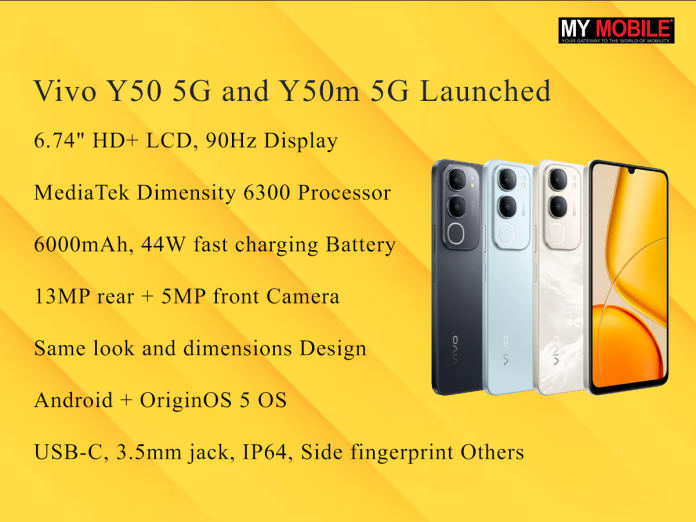
Vivo Y50 5G and Y50m 5G Launched in China. (Image credit – Vivo)

Vivo has officially launched two new budget-friendly 5G smartphones in China, the Vivo Y50 5G and Vivo Y50m 5G. Both devices come with nearly identical specifications including a 90Hz display, up to 12GB RAM and a massive 6000mAh battery. Here’s a detailed look at their features, specs and pricing.

Vivo Y50 5G and Y50m 5G – Key Features

The Vivo Y50 5G features a 6.74-inch LCD display with HD+ resolution (1600 x 720 pixels), a 90Hz refresh rate, and a 20:9 aspect ratio. It sports a waterdrop notch and a side-mounted fingerprint scanner for security. Both smartphones run Android with OriginOS 5 out of the box.

image
Vivo Y50 5G. (Image credit – Vivo)

Powering the Y50 series is the MediaTek Dimensity 6300 chipset. They are available with up to 12GB of LPDDR4X RAM and 256GB of internal storage. Most variants use UFS 2.2 storage, while the base 6GB + 128GB model of the Y50m comes with eMMC 5.1 storage.

A highlight of both phones is the 6000mAh battery, which supports 44W fast charging and reverse charging. This large battery is designed to offer extended usage without frequent charging breaks.

In terms of cameras, both phones are equipped with a 13MP single rear camera, while the front houses a 5MP selfie camera for video calls and selfies.

Connectivity features include dual-SIM 5G, Bluetooth 5.4, dual-band Wi-Fi, GPS, IR blaster, USB-C port, and a 3.5mm headphone jack. The devices also come with an IP64 rating for dust and water resistance. The phones measure 167.3 x 76.95 x 8.19mm and weigh 204 grams.

The Vivo Y50m 5G is essentially identical to the Y50 5G in design and hardware. The only difference lies in the RAM options, the Y50 starts from 4GB RAM, while the Y50m starts from 6GB RAM.

Vivo Y50 5G and Y50m 5G – Price and Availability in China

The Vivo Y50 5G is offered in four variants –

  • 4GB + 128GB – 1,199 Yuan ($165)
  • 6GB + 128GB – 1,499 Yuan ($206)
  • 8GB + 256GB – 1,999 Yuan ($275)
  • 12GB + 256GB – 2,299 Yuan ($316)

The Vivo Y50m 5G is available in three configurations:

  • 6GB + 128GB – 1,499 Yuan ($206)
  • 8GB + 256GB – 1,999 Yuan ($275)
  • 12GB + 256GB – 2,299 Yuan ($316)

Both smartphones are available in Platinum White, Sky Blue and Diamond Black colour options.

Specification Vivo Y50 5G Vivo Y50m 5G
Display 6.74″ HD+ LCD, 90Hz 6.74″ HD+ LCD, 90Hz
Processor MediaTek Dimensity 6300 MediaTek Dimensity 6300
Battery 6000 mAh, 44W fast charging 6000 mAh, 44W fast charging
Camera 13 MP rear + 5 MP front 13 MP rear + 5 MP front
RAM + Storage 4 GB+128 GB (base), up to 12 GB+256 GB 6 GB+128 GB (base), up to 12 GB+256 GB
OS Android + OriginOS 5 Android + OriginOS 5
Others IP64, USB‑C, 3.5 mm jack, side fingerprint, dual‑SIM, Bluetooth 5.4, IR blaster IP64, USB‑C, 3.5 mm jack, side fingerprint, dual‑SIM, Bluetooth 5.4, IR blaster

FAQS

Q1. What display and battery specs do the Vivo Y50 5G and Y50m 5G offer?

Answer. The Vivo Y50 5G features a 6.74-inch LCD display with HD+ resolution (1600 x 720 pixels), a 90Hz refresh rate. A highlight of both phones is the 6000mAh battery, which supports 44W fast charging and reverse charging.

Q2. Which processor powers the Vivo Y50 series smartphones?

Answer. Powering the Y50 series is the MediaTek Dimensity 6300 chipset.

Q3. What’s the difference between Vivo Y50 5G and Y50m 5G?

Answer. The only difference lies in the RAM options; the Y50 starts from 4GB RAM, while the Y50m starts from 6GB RAM.

Q4. What camera setup do both phones include?

Answer. Both phones are equipped with a 13MP single rear camera, while the front houses a 5MP selfie camera.

Q5. What are the pricing options for Vivo Y50 5G and Y50m 5G?

Answer. The Vivo Y50 5G starts at 1,199 Yuan ($165), while the Vivo Y50m 5G starts at 1,499 Yuan ($206). Both offer multiple configurations up to 12GB RAM and 256GB storage.

 Also Read:
🔹 Vivo X300 Pro leak reveals bold new camera setup with Sony’s 200MP periscope sensor
🔹 Vivo T4R 5G teased in India as the slimmest quad-curved display phone at 7.39mm
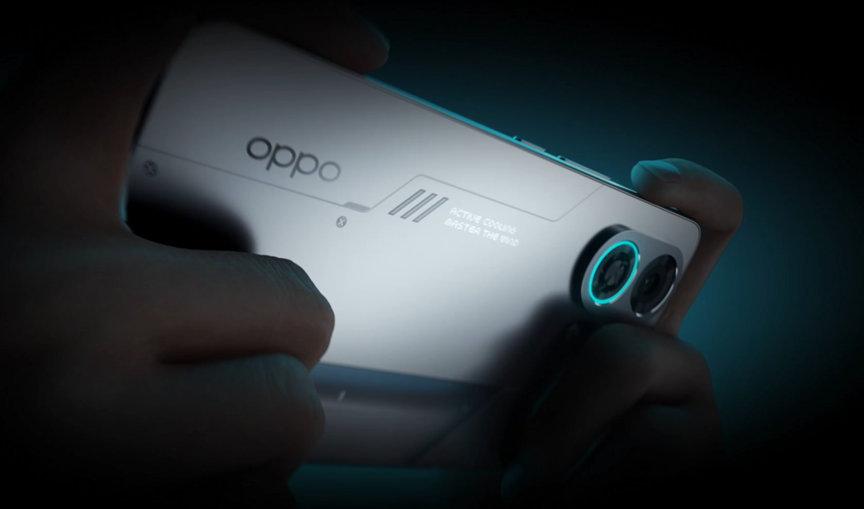
Oppo K13 Turbo and Turbo Pro Launched with Built-in Cooling Fan, RGB Lighting and High-End Specs

0

Highlights

  • Oppo K13 Turbo and Turbo Pro launched in China with sales scheduled to start from July 25.
  • The Turbo Pro uses Snapdragon 8s Gen 4 with UFS 4.0 and Wi-Fi 7, while the standard Turbo packs Dimensity 8450 with UFS 3.1 and Wi-Fi 6.
  • Both phones feature 6.8″ OLED displays, 18,000rpm fans, RGB or glow lighting, VC liquid cooling and 80W fast charging for the 7000mAh battery.

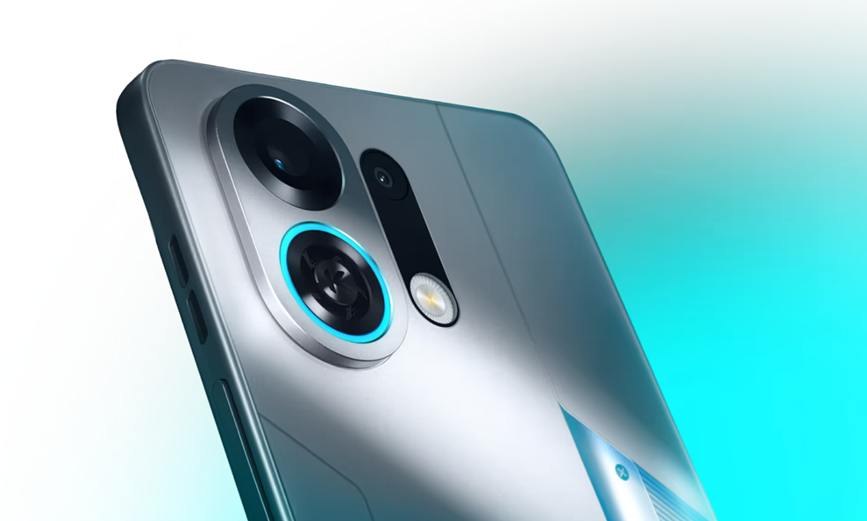
image

Caption – Oppo K13 Turbo series gaming phones launched in China. (Image credit – Oppo)

Oppo has officially launched its first Turbo-branded smartphones in China, the Oppo K13 Turbo and Oppo K13 Turbo Pro. These performance-centric phones bring powerful hardware, a built-in cooling fan, and vibrant RGB lighting, aiming at gamers and heavy users.

Here’s everything you need to know about their features, specifications and pricing.

Oppo K13 Turbo and Turbo Pro – Specifications and Features

While the Oppo K13 Turbo and K13 Turbo Pro look nearly identical and share many features, there are key differences under the hood.

image

Caption – Oppo K13 Turbo series included two almost identical models, K13 Turbo and K13 Turbo Pro. (Image credit – Oppo)

The Oppo K13 Turbo Pro is powered by the Snapdragon 8s Gen 4 processor, paired with UFS 4.0 storage and Wi-Fi 7 support for enhanced connectivity. It also includes optical image stabilisation (OIS) for the main camera, offering improved video and low-light photography. Additionally, it supports 4K time-lapse recording, which the standard Turbo model lacks. The Pro’s built-in cooling fan is paired with RGB lighting for added visual flair.

In comparison, the standard Oppo K13 Turbo uses the MediaTek Dimensity 8450 chipset with UFS 3.1 storage and Wi-Fi 6. It skips OIS and 4K time-lapse support. Instead of RGB lighting, its fan has a fluorescent ring-shaped illumination that glows in the dark.

image
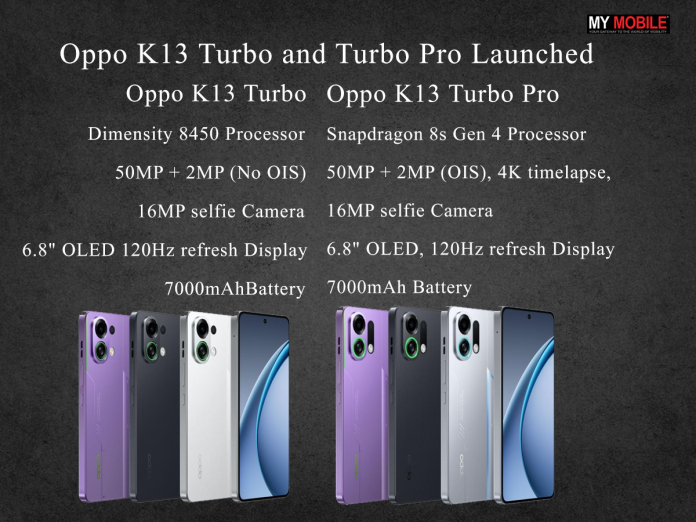
Oppo K13 Turbo and Turbo Pro key specs explained. (Image credit – Oppo)


Both phones feature a 6.8-inch LTPS OLED flat display with a 1.5K (2800 x 1280) resolution, 120Hz refresh rate, and 240Hz touch sampling rate, protected by Oppo Crystal Shield Glass. To handle heat during intense gaming or heavy usage, both models include a powerful cooling system featuring an 18,000rpm built-in fan, a 7,000mm² VC liquid cooling plate, and graphite gel cooling.

The camera hardware on both models is mostly the same with a 16MP Sony IMX480 selfie camera and a dual rear setup consisting of a 50MP OmniVision OV50D40 main sensor with OIS and a 2MP depth sensor.

Both phones pack a massive 7000mAh battery, which supports 80W fast charging. Oppo claims a full charge takes just 54 minutes, and the devices also support bypass charging for gaming. Other shared features include a plastic middle frame with glass back, IPX9, IPX8, and IPX6 water resistance, X-axis linear motor, dual stereo speakers, Bluetooth 5.4, NFC, IR blaster and ColorOS 15 based on Android 15.

Oppo K13 Turbo and Turbo Pro – Pricing and Availability

The Oppo K13 Turbo is available in Black, White and Purple, while the K13 Turbo Pro comes in Silver, Purple, and Black.

Pricing is as follows:

image
Oppo K13 Turbo colours. (Image credit – Oppo)

Oppo K13 Turbo –

  • 12GB + 256GB – 1799 yuan (USD 250 / Rs. 21,610 approx)
  • 16GB + 256GB – 1999 yuan (USD 278 / Rs. 24,020 approx)
  • 12GB + 512GB – 2299 yuan (USD 320 / Rs. 27,625 approx)
image
Oppo K13 Turbo Pro colours. (Image credit – Oppo)

Oppo K13 Turbo Pro –

  • 12GB + 256GB – 1999 yuan (USD 278 / Rs. 24,020 approx)
  • 16GB + 256GB – 2199 yuan (USD 309 / Rs. 26,420 approx)
  • 12GB + 512GB – 2399 yuan (USD 334 / Rs. 28,820 approx)
  • 16GB + 512GB – 2699 yuan (USD 376 / Rs. 32,425 approx)
image
Oppo K13 Turbo Pro series cooling kit. (Image credit – Oppo)

Oppo also introduced a new Super Cooling Kit, which combines a micro-pump circulation liquid-cooled magnetic case with a 27W TEC active cooling back clip. It’s priced at 349 yuan (USD 48 / Rs. 4,190 approx.), but buyers can get it for 299 yuan (USD 41 / Rs. 3,590 approx.) when purchased with the K13 Turbo phones.

The Oppo K13 Turbo series is now available for pre-order and will go on sale in China starting July 25th.

Specification Oppo K13 Turbo Oppo K13 Turbo Pro
Processor Dimensity 8450, UFS 3.1, Wi-Fi 6 Snapdragon 8s Gen 4, UFS 4.0, Wi-Fi 7
Camera 50MP + 2MP (No OIS), 16MP front 50MP + 2MP (OIS), 4K timelapse, 16MP front
Display 6.8″ OLED, 1.5K, 120Hz, 240Hz touch sampling 6.8″ OLED, 1.5K, 120Hz, 240Hz touch sampling
Battery 7000mAh, 80W fast charging 7000mAh, 80W fast charging
Cooling System 18,000rpm fan with glow ring 18,000rpm fan with RGB light & VC cooling
Other Features Bluetooth 5.4, NFC, IR blaster, ColorOS 15, IPX9/IPX8/IPX6 Bluetooth 5.4, NFC, IR blaster, ColorOS 15, IPX9/IPX8/IPX6

FAQs

Q1. What processors do the Oppo K13 Turbo and Turbo Pro use?

Answer. The Oppo K13 Turbo Pro is powered by the Snapdragon 8s Gen 4 processor. In comparison, the standard Oppo K13 Turbo uses the MediaTek Dimensity 8450 chipset.

Q2. What cooling features are included in both models?

Answer. Both models include a powerful cooling system featuring an 18,000rpm built-in fan, a 7,000mm² VC liquid cooling plate, and graphite gel cooling.

Q3. How do the two models differ in lighting features?

Answer. The Pro’s built-in cooling fan is paired with RGB lighting. its fan has a fluorescent ring-shaped illumination that glows in the dark.

Q4. What is the battery capacity and charging speed of the K13 Turbo series?

Answer. Both phones pack a massive 7000mAh battery, which supports 80W fast charging. Oppo claims a full charge takes just 54 minutes.

Q5. What is the pricing for the base model Oppo K13 Turbo?

Answer. 12GB + 256GB – 1799 yuan (USD 250 / Rs. 21,610 approx)

Also Read: Oppo K13 Turbo series launching July 21 with gaming features and RGB cooling fan

Also Read: Oppo K13 Turbo and Turbo Pro show off built-in cooling fan; OnePlus Ace 6 Ultra rumoured to steal the feature

Google Pixel 10 Pro Officially Teased in New Colour, More Pixel 10 Renders Leaks Online

0

Highlights

  • Google revealed a teaser featuring the Pixel 10 Pro’s camera bar and temperature sensor along with a new blue-grey Moonstone variant.
  • Leaks show Pixel 10 in Obsidian, Indigo, Frost and Limoncello colours with a redesigned visor to fit a new telephoto camera.
  • Pixel 10 may pack a 6.3″ OLED display, 3000 nits brightness, Tensor G5 chip, 4970mAh battery with fast charging and a triple-lens rear setup.

image

Caption – Google Pixel 10 Pro appears in official teaser. (Image credit – Google)

Google has officially teased the Pixel 10 Pro just days after announcing its launch event scheduled for August 20, 2025. Here’s more on it.

GoogXle Pixel 10 Pro – Official Teaser

A new teaser on the Google Store homepage features a 13-second animation where a “10” transforms into the Pixel 10 Pro’s signature camera bar. The phone shown in the video is clearly the Pro variant as indicated by the presence of a temperature sensor located below the flash. This teaser also gives a glimpse of what appears to be the Pixel 10 Pro’s new “Moonstone” colour variant.

image image

Caption – Shots from Google Pixel 10 Pro’s official teaser. (Image credit – Google)

It’s a subtle blue-grey hue, somewhat reminiscent of last year’s Hazel green but with a more vibrant finish. The device’s side rails are also visible, and they appear to have a polished look once again.

Alongside the teaser, the Google Pixel 10 landing page promotes an “Plus, Google Store subscribers who are signed up by 19 August, 12:30 PM IST, will get an exclusive offer to use with Pixel 10 series phones. The offer will be sent on the day that the phones are available for pre-order.”

However, there are restrictions such as

  • Use of promo code is limited to a discount on one eligible device.”
  • Promo code will only be redeemable between August 20 and September 4, 2025, and is limited to “a discount on one eligible device.”
  • “Must be redeemed on Google Store only. User must be signed-in to their Google Account and checkout with Google Pay profile, including a valid form of payment. Limit 1 per customer. The coupon code can only be used for purchase of the advertised specified Pixel 10 device and cannot be applied to any other devices, Google subscriptions, services nor Google Merchandise products.”

This teaser and exclusive offer are appearing across Google Store pages worldwide.

Pixel 10 Render Leak Reveals Bright New Colours and Familiar Design

In a separate leak, a new set of renders has surfaced offering a complete look at the Pixel 10.

image

Caption – Google Pixel 10 Official Renders Leak. (Image credit – Android Headlines)

The image was shared via AndroidHeadlines and it showcases Google’s upcoming flagship in four colour variants. These colours appear to be Obsidian, Indigo, Frost and Limoncello.

While Obsidian (black) was also available with the Pixel 9, the other three options are brand new. Indigo is a bold Royal Blue, Frost is a soft Sky Blue and Limoncello is a unique Green-Yellow tone.

Despite the fresh colour options, the overall design remains mostly unchanged. The most noticeable difference lies in the camera module. The Pixel 10’s visor now stretches longer to accommodate a new telephoto shooter, a feature that was previously reserved for Pro models.

Google Pixel 10 – Specs (Expected)

As for specifications, the base Pixel 10 is expected to sport a 6.3-inch OLED display with FHD+ resolution, 120Hz refresh rate, 3000 nits peak brightness and Gorilla Glass Victus 2 protection. Under the hood, the entire Pixel 10 series will be powered by Google’s new 3nm-based Tensor G5 chipset.

Battery life also gets an upgrade with a 4,970mAh unit that could support 29W wired fast charging and 15W Qi2 wireless charging.

On the back, the Pixel 10 may feature a 48MP main camera (1/2.0-inch sensor) borrowed from the Pixel 9a, a 13MP ultra-wide lens, and a 10.8MP telephoto sensor. While the inclusion of a telephoto lens is new for the base model, the other two sensors represent a notable downgrade from previous generations.

The Made by Google 2025 keynote will start at 10 a.m. on August 20 PT / 1 p.m. ET and will be livestreamed on YouTube. Google is expected to unveil the Pixel 10, Pixel 10 Pro, Pixel 10 Pro XL and Pixel 10 Pro Fold along with a lineup of accessories.

FAQs

Q1. What new colour has Google officially teased for the Pixel 10 Pro?

Answer. The phone shown in the video is clearly the Pro variant. This teaser also gives a glimpse of what appears to be the Pixel 10 Pro’s new “Moonstone” colour variant.

Q2. What are the colour options revealed for the Google Pixel 10?

Answer. The image showcases Google’s upcoming flagship in four colour variants. These colours appear to be Obsidian, Indigo, Frost and Limoncello.

Q3. What display and battery specs are expected for the Pixel 10?

Answer. Pixel 10 may pack a 6.3-inch OLED display with FHD+ resolution, 120Hz refresh rate, 3000 nits peak brightness and a 4,970mAh unit that could support 29W wired fast charging and 15W Qi2 wireless charging.

Related Links –
Also Read: Pixel 10 Pro memory variants may again start at 128GB; colour options revealed
Also Read: Pixel 10 Pro and Pro XL full specs leak ahead of launch – Here’s everything we know

Oppo K13 Turbo and K13 Turbo Pro Full Specs Leaked Ahead of Launch

0

Highlights

  • Oppo K13 Turbo and Turbo Pro leak reveals both phones will sport 6.8″ 1.5K OLED displays, 7,000mAh batteries with 80W fast charging and an active cooling fan.
  • K13 Turbo features a Dimensity 8450, while Turbo Pro packs a Snapdragon 8s Gen 4 with an AnTuTu score of 2.45 million and 53.5 FPS in testing.
  • The Turbo Pro’s Super Cooling Kit blends liquid and air cooling via magnetic attachment.

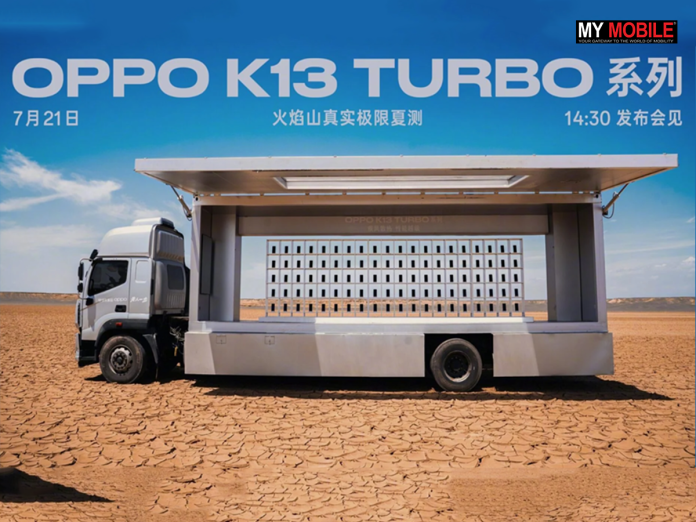
image

Caption – Oppo K13 Turbo and Turbo Pro China launch announced in an official marketing material. (Image credit – Oppo/Gizmochina)

Oppo is set to officially launch its gaming-centric Oppo K13 Turbo and Oppo K13 Turbo Pro smartphones in China on July 21. The main highlight of the phones will be the breakthrough in thermal management. While the company has already teased some key features, the complete specifications of both models have now surfaced on Weibo, thanks to popular Chinese tipsters. Here’s a detailed look at what to expect.

Oppo K13 Turbo and K13 Turbo Pro Specifications

As shared by popular tipsters accounts Digital Chat Station and Panda Is Very Bald, both the Oppo K13 Turbo and K13 Turbo Pro are expected to sport a 6.8-inch flat OLED LTPS display with 1.5K resolution, 144Hz refresh rate, and a short-focus in-screen fingerprint sensor.

image

Caption – DCS’s recent post. (Screenshot – Gizmochina)

On the camera front, both phones will offer a 16MP front camera and a 50MP + 2MP dual rear camera setup. Powering these devices is a massive 7,000mAh battery with support for 80W fast charging.

The standard K13 Turbo will feature the Dimensity 8450 chipset, while the K13 Turbo Pro will be powered by the Snapdragon 8s Gen 4. Both phones will also include built-in active cooling fans and RGB lighting, emphasising their gaming DNA.

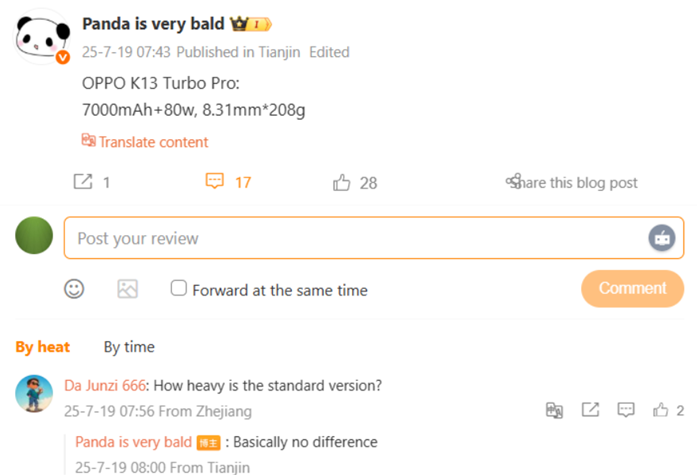
image

Caption – Panda is Very Bald’s recent post. (Screenshot – Gizmochina)

Build-wise, the devices are expected to sport a plastic middle frame and carry IP66/68/69 ratings for durability. The Pro variant reportedly measures 8.31mm in thickness and weighs 208 grams, with the non-Pro version said to have similar dimensions.

In terms of configurations, the K13 Turbo will be available in 12GB+256GB, 12GB+512GB, and 16GB+256GB options. The K13 Turbo Pro will come in all of those variants, along with a top-tier 16GB+512GB model. Colour options include black and purple for both models. The K13 Turbo will also come in white, while the Pro version will offer a silver variant.

Oppo K13 Turbo and K13 Turbo Pro – Official Teasers

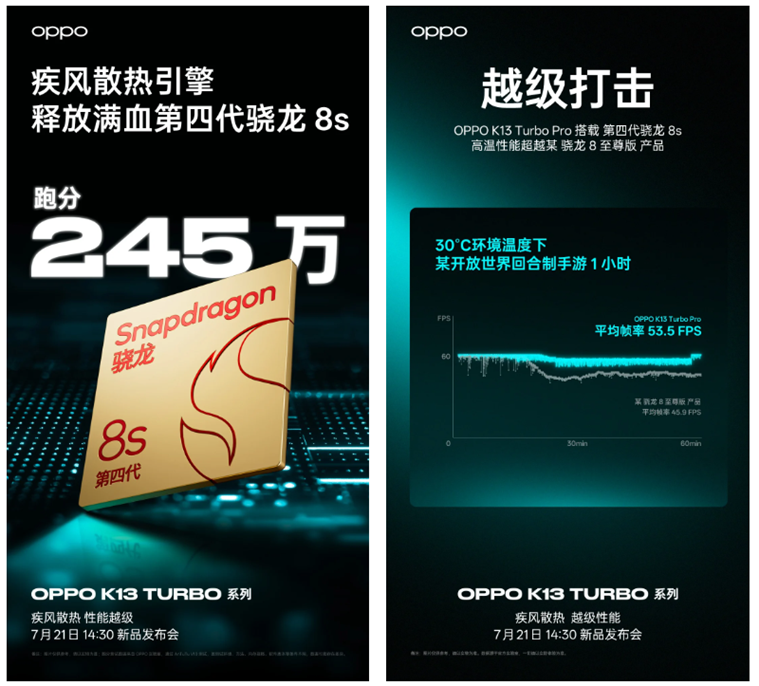
image
Oppo K13 Turbo Series’ official teasers revealing processors and gaming performance details. (Screenshot – Oppo/Gizmochina)

In multiple Weibo posts, Oppo has officially confirmed that the K13 Turbo Pro will be equipped with the Snapdragon 8s Gen 4 processor, boasting an AnTuTu score of 2.45 million.

In a one-hour open-world gaming test conducted at 30°C, the phone maintained a stable 53.5 FPS, outperforming even Snapdragon 8 Gen 3-powered phones.

image

Caption – Oppo K13 Turbo Series teasers on the cooling kit. (Screenshot – Oppo/Gizmochina)

One of the standout features is the Super Cooling Kit, which combines liquid and air cooling. It clips onto the back of the device using a magnetic connector, features RGB lighting and uses a visible flow channel for real-time cooling.

This innovative design directly reduces motherboard temperature and ensures consistent performance during long gaming sessions. Oppo has even stress-tested the phone at 58°C to demonstrate its heat resistance.

Oppo K13 Turbo Pro on Geekbench

image

Caption – Oppo K13 Turbo Pro on Geekbench. (Image credit – Gizmochina)

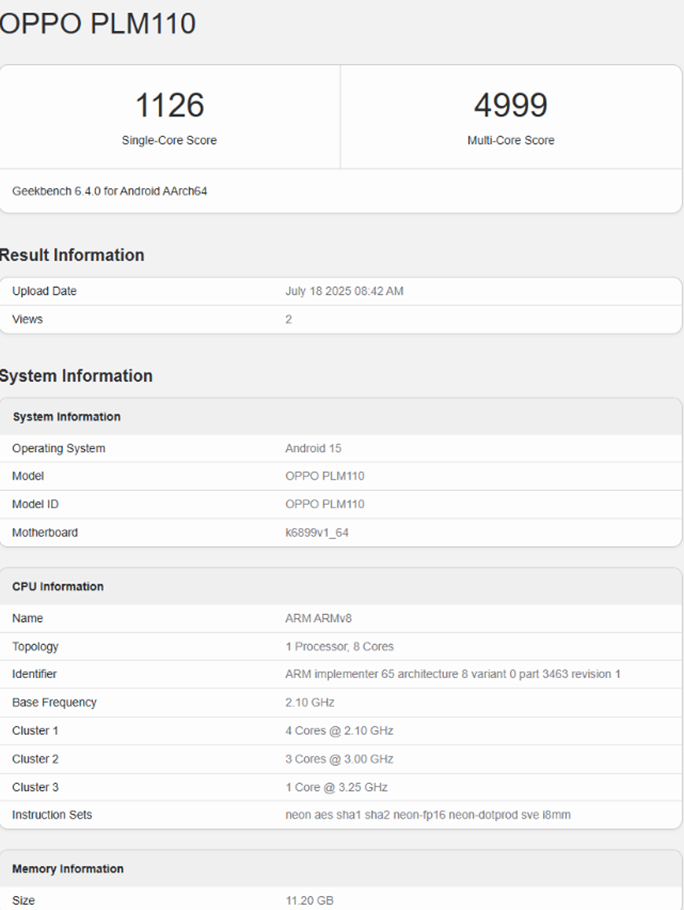
Benchmark scores have also surfaced ahead of launch. The Oppo K13 Turbo Pro with the Snapdragon 8s Gen 4 was previously spotted on Geekbench and now the standard K13 Turbo has appeared on the same platform.

According to the listing, the K13 Turbo runs on the 3.25GHz Dimensity 8450 chipset, includes 12GB RAM and is based on Android 15. It scored 1126 points in the single-core test and 4999 points in the multi-core benchmark.

There are speculations that the Oppo K13 Turbo Pro could launch globally in August or September, but it’s still unclear whether the K13 Turbo will also see an international release.

FAQs

Q1. What are the key display and camera specs of the Oppo K13 Turbo and Turbo Pro?

Answer. Both the Oppo K13 Turbo and K13 Turbo Pro are expected to sport a 6.8-inch flat OLED LTPS display with 1.5K resolution, 144Hz refresh rate, and a short-focus in-screen fingerprint sensor. On the camera front, both phones will offer a 16MP front camera and a 50MP + 2MP dual rear camera setup.

Q2. What processors power the Oppo K13 Turbo and Turbo Pro?

Answer. The standard K13 Turbo will feature the Dimensity 8450 chipset, while the K13 Turbo Pro will be powered by the Snapdragon 8s Gen 4. Oppo has confirmed that the K13 Turbo Pro will be equipped with the Snapdragon 8s Gen 4 processor, boasting an AnTuTu score of 2.45 million.

Q3. What is the Super Cooling Kit featured in the K13 Turbo Pro?

Answer. One of the standout features is the Super Cooling Kit, which combines liquid and air cooling. It clips onto the back of the device using a magnetic connector, features RGB lighting, and uses a visible flow channel for real-time cooling.

Also Read:
🔹 Oppo K13 Turbo and Turbo Pro to launch together; both come with built‑in cooling fans
🔹 Oppo K13 Turbo series launching July 21 with gaming features and RGB cooling fan

Samsung Galaxy Z Fold 7, Flip 7 and Flip 7 FE Receive 210,000 Pre-Orders in India, Demo Unit Reveals Hinge Concerns and Screen Repair Costs Raise Eyebrows

0

Highlights

  • Samsung’s new foldables received 210,000 pre-orders in 48 hours, rivalling Galaxy S25 figures.
  • Some Fold 7 demo units reportedly don’t open fully flat, prompting scrutiny despite Samsung’s warranty coverage and hinge specs.
  • Display replacements could cost up to $890 while Samsung Care+ offers same-day repairs with monthly/annual plans to offset potential expenses.

image

Caption – Samsung Galaxy Z Fold 7. (Image credit – Samsung)

Samsung’s latest foldable lineup of Galaxy Z Fold 7, Galaxy Z Flip 7 and the more affordable Galaxy Z Flip 7 FE has made a strong debut in India.

According to internal figures shared by the company, the trio received 210,000 pre-orders within just 48 hours, setting a new benchmark for Samsung’s foldables. This figure nearly matches the record held earlier this year by the Galaxy S25 series.

Galaxy Z Fold 7, Z Flip 7 and Flip 7 FE – Price, Availability & Colours

image

Caption – Samsung Galaxy Z Fold 7. (Image credit – Samsung)

Samsung attributes this massive demand to increasing interest among young Indian buyers for premium, feature-packed devices. The Galaxy Z Fold 7 is priced at Rs 1,74,999 and is available in Blue Shadow, Silver Shadow, and Jet Black, while the Galaxy Z Flip 7, which costs Rs 1,09,999, comes in Coral Red, Jet Black, and Blue Shadow.

image

Caption – Samsung Galaxy Z Flip 7. (Image credit – Samsung)

Both models also have an online-exclusive Mint colour on Samsung.com. Meanwhile, the Galaxy Z Flip 7 FE starts at Rs 89,999 and is available in Black and White.

Pre-bookings are now open across major online platforms and offline retail stores. Launch offers include an upgrade to the 512GB variant at the price of the 256GB model and up to 24 months of no-cost EMI on all three devices.

Hinge Issues Reported on Fold 7 Demo Units

Meanwhile, we are already getting some reports about a possible hinge issue on Fold 7.

image
Reports of hinge issues in Galaxy Z Fold 7 demo unit. (Image credit – Reddit)

While the Galaxy Z Fold 7 has grabbed attention for its ultra-slim 8.9mm folded profile and reduced crease visibility, early feedback from the U.S. raises a concern. Some users on Reddit have reported that demo units in stores are not opening completely flat with a few stuck at around 170 to 165 degrees.

Although demo units often suffer wear from frequent handling, the issue has raised eyebrows due to the early stage of the product’s retail life. Samsung states that the Flex Hinge is designed to open between 178.5 and 181.5 degrees, and any unit outside this range qualifies for warranty replacement—a point several Reddit users confirmed after contacting Samsung’s customer support.

Some speculate that the issue could stem from mishandled demo units or isolated quality control flaws, rather than a widespread design defect. The Fold 7 is powered by the Snapdragon 8 Elite chipset and a 4,400mAh battery and at this stage, only demo units have been publicly tested, so it’s too early to draw conclusions.

Screen Repair Costs Could Be a Dealbreaker

While Samsung’s foldables offer impressive innovation, repairing their displays comes at a steep price. As per a report from SamMobile citing a European parts supplier, replacing the Z Fold 7’s inner screen costs €761 (around $890), and the smaller cover screen costs €525 (about $611).

For the Galaxy Z Flip 7, the foldable panel is priced at €342 ($400), and the 4.1-inch FlexWindow cover display is €207 ($240). These prices exclude labour fees, meaning the final bill could be even higher if handled by third-party repair shops.

Samsung’s standard warranty does not cover accidental damage, making Samsung Care+ a practical consideration. The Care+ plan for the Z Fold 7 costs $13/month or $259 annually, while the Z Flip 7 plan is $10/month or $169 per year. Both plans offer unlimited same-day screen or back glass repairs with a $29 deductible per visit.

Samsung is also expected to offer a one-time discounted inner screen replacement on eligible purchases, similar to its Galaxy Z Assurance program introduced with the Fold6 and Flip6.

With screen repair prices reaching as high as $890, opting for Samsung Care+ may be the safest bet for anyone picking up these high-end foldables. Full plan details are available on Samsung’s official website.

FAQs

Q1. How well have Samsung’s new foldables performed in India?

Answer. According to internal figures shared by the company, the trio received 210,000 pre-orders within just 48 hours, setting a new benchmark for Samsung’s foldables.

Q2. Are there any issues reported with the Galaxy Z Fold 7 hinge?

Answer. Some users on Reddit have reported that demo units in stores are not opening completely flat, with a few stuck at around 170 to 165 degrees.

Q3. How much does it cost to repair the foldable screens on Samsung’s new devices?

Answer. Replacing the Z Fold 7’s inner screen costs €761 (around $890), and the smaller cover screen costs €525 (about $611). These prices exclude labour fees.

Also Read:
🔹 Samsung Galaxy S26 Ultra tipped to feature bigger 6.89‑inch display with slimmer bezels
🔹 Samsung’s first tri‑fold phone might be named Galaxy Z Trifold, trademark suggests

Google Pixel Watch 4 Pricing Leaked, No Price Hike Anticipated

0

Highlights

  • Pixel Watch 4 is tipped to launch on Aug 20 with pricing unchanged from Pixel Watch 3.
  • It will likely be priced at €399/€499 for 41mm and €449/€549 for 45mm variants.
  • Watch 4 retains Snapdragon W5 Gen 1 but adds a co-processor for AI tasks, boosts display to 3,000 nits and slightly larger battery capacities.

image

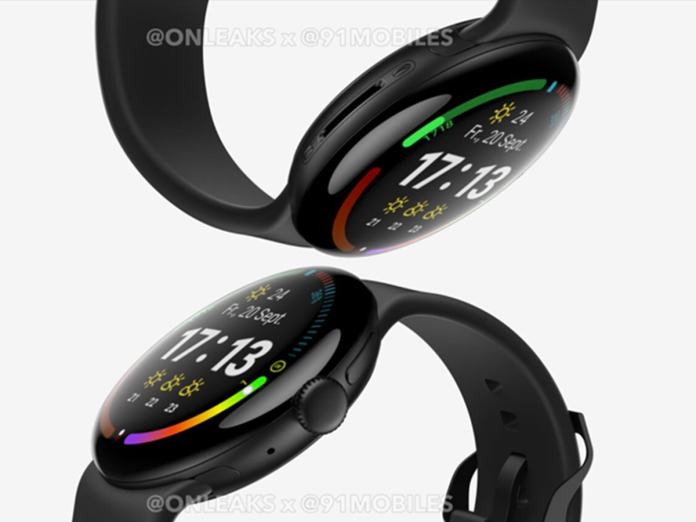
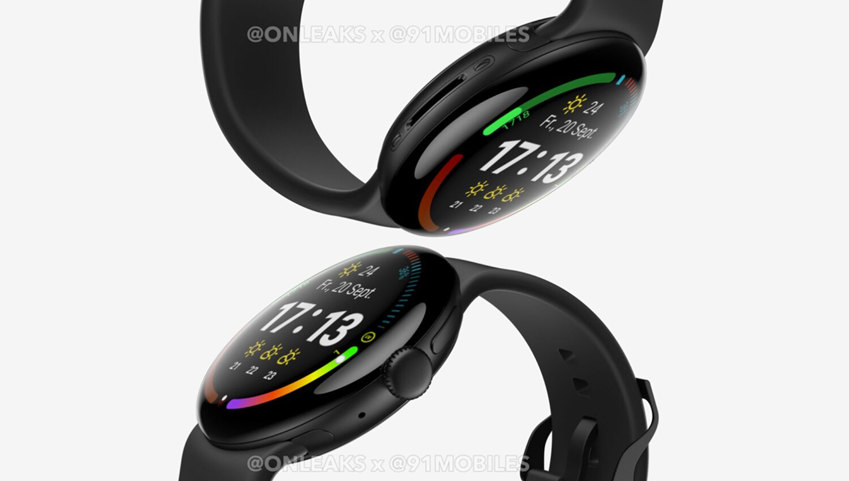
Caption – Previously leaked render of the upcoming Google Pixel Watch 4. (Image credit – OnLeaks/91Mobiles)

The Google Pixel Watch 4 is scheduled to launch on August 20, 2025 and new leaks suggest buyers may not need to worry about a price increase this year. With leaked pricing now available for both size variants and connectivity options, it looks like Google is planning to keep prices in line with the Pixel Watch 3. Here’s what we know so far.

Google Pixel Watch 4 – Pricing Leaked

The latest pricing leak comes from well-known tipster billbil-kun on X (formerly Twitter) via Dealabs’ latest report. The 41mm Pixel Watch 4 with Bluetooth and Wi-Fi is expected to start at €399, while the LTE version with eSIM support could be priced at €499.

For the larger 45mm model, pricing is said to be €449 for Wi-Fi and €549 for LTE, maintaining the usual €100 difference between Wi-Fi and LTE versions.

These leaked prices are nearly identical to the Pixel Watch 3’s launch pricing

  • $349 / €399 for the 41mm Wi-Fi model
  • $449 / €499 for the 41mm LTE model
  • $399 / €449 for the 45mm Wi-Fi model
  • $499 / €549 for the 45mm LTE model

Although official U.S. pricing has not yet been announced, the consistency in euro pricing suggests Google is unlikely to increase prices in key markets like the U.S. or the U.K.

Google Pixel Watch 4 – Expected Specs

In terms of hardware, the Pixel Watch 4 will continue using the Snapdragon W5 Gen 1 processor, but it introduces a new co-processor designed to handle AI features such as Gemini integration more efficiently. The display is reportedly upgraded to a 3,000-nit AMOLED LTPO panel, up from the 2,000 nits found in its predecessor.

Battery capacity also sees a slight bump –

  • 327mAh for the 41mm version
  • 459mAh for the 45mm version

According to Android Headlines, these changes could help the watch deliver up to two days of battery life on a single charge.

With pricing that mirrors last year’s model and a handful of key upgrades, the Pixel Watch 4 is shaping up to be a strong contender against competitors like the Samsung Galaxy Watch 8.

FAQs

Q1. What is the expected launch date and pricing for the Google Pixel Watch 4?

Answer. The Google Pixel Watch 4 is scheduled to launch on August 20, 2025, and new leaks suggest buyers may not need to worry about a price increase this year.

Q2. What are the differences in pricing between Pixel Watch 4 models?

Answer. The 41mm Pixel Watch 4 with Bluetooth and Wi-Fi is expected to start at €399, while the LTE version could be priced at €499. For the 45mm model, pricing is said to be €449 for Wi-Fi and €549 for LTE.

Q3. What are the key hardware upgrades in the Pixel Watch 4?

Answer. It introduces a new co-processor designed to handle AI features more efficiently, boosts display to a 3,000-nit AMOLED LTPO panel, and slightly increases battery capacity to 327mAh (41mm) and 459mAh (45mm).

Also Read:
🔹 Google Pixel Watch 4 leaked renders reveal new buttons and thicker design
🔹 Pixel Watch 3 and Pixel Buds Pro 2 introduced at Made by Google event 2024; here’s everything you need to know

WhatsApp Beta Brings AI-Powered ‘Quick Recap’ for Chats and Begins Testing Ads in Status & Channels

0

Highlights

  • WhatsApp is testing a “Quick Recap” feature to summarise messages from up to five chats simultaneously, enhancing productivity and overview clarity.
  • Ads are being tested in WhatsApp Status and Channel sections with “Sponsored” labels and options to block advertisers.
  • Ad targeting uses minimal data and excludes personal messages, while a new “Activity Report” offers ad controls, tracking and monthly exports.

image

Caption – WhatsApp new features revealed by trusted Beta sources. (Photo by Dima Solomin on Unsplash)

WhatsApp continues to roll out features that improve conversation flow and user experience, while also exploring new ways to generate revenue. According to recent reports, two major features are currently in development. These are a Quick Recap feature for chats and in-app advertisements in the Status and Channels sections. Here’s everything we know about both features as of now.

WhatsApp Working on a New “Quick Recap” Feature


Caption – WhatsApp is testing a new feature to let users generate a summary of specific conversations. (Image credit – WABetaInfo)

WhatsApp has previously launched the stable version of “Message Summaries”, a feature that summarises unread messages in a single chat. Now, the platform is working on a more powerful addition called “Quick Recap”, which can summarise messages from multiple chats at once.

As reported by WABetaInfo, Quick Recap will allow users to select up to five conversations from the Chats tab, then tap the three-dot menu in the top-right corner and select “Quick Recap.”

Like Message Summaries, this new feature relies on Meta’s Private Processing technology, which ensures that neither Meta nor WhatsApp or any third party can read the messages or their summaries.

Explaining Meta’s private processing, WABetaInfo report reads, “Private Processing ensures that the raw message content never leaves the secure enclave in a readable form, and it uses encryption and isolated computation to guarantee that neither WhatsApp nor Meta has access to either the original data or the generated recap. This extra step is crucial because it allows the app to provide sophisticated AI‑driven tools while preserving the confidentiality of private conversations and maintaining end‑to‑end encryption.”

Quick Recap will be optional and disabled by default. Moreover, it will not work with chats protected by “Advanced chat privacy.”

WABetaInfo spotted the feature in WhatsApp beta version 2.25.21.12 for Android, but it’s still under development and not available even if you’re using that version. It’s expected to roll out to beta users in future updates before a wider release.

WhatsApp Beta Also Testing Ads in Status and Channels

Caption – WhatsApp to introduce new ad formats in Status and Channels. (Image credit – WABetaInfo)

In a separate Android beta update version 2.25.21.11, WhatsApp has started testing in-app ads for the first time. As reported by WABetaInfo again, some beta users noticed a banner in the Updates tab introducing two new ad formats, Status Ads and Promoted Channels.

Here’s how the Ads will work –

Status Ads – These will appear among regular status updates from your contacts. They are short, vertical clips labelled “Sponsored” and behave like normal status posts. You can swipe past them quickly or block the advertiser to avoid seeing more ads from that brand.

Promoted Channels – Aimed at content creators, public figures, and brands, Promoted Channels will be displayed in the channel directory, making them easier for users to discover. These also include the “Sponsored” label to distinguish them from regular channels.

Privacy and User Control

WhatsApp emphasises that ads will not be shown in private spaces such as chats, group messages, calls, or communities, all of which remain end-to-end encrypted. Ads will appear only in the Updates tab, and no personal messages, calls, or shared status updates are used for ad targeting.

To help users manage their ad experience, WhatsApp is also introducing a new tool called the “Activity Report.” This feature allows users to see a list of ads viewed recently, block or unblock advertisers, download the report in a ZIP file and set the report to auto-generate monthly.

Ad targeting on WhatsApp will use minimal data, such as:

  • General location (city or country)
  • Language settings
  • Channels followed
  • User interaction with ads

The features are available only to a limited group of beta testers. WhatsApp plans to use feedback to refine the features before rolling them out more broadly.

FAQs

Q1. What is the new ‘Quick Recap’ feature on WhatsApp?

Answer. WhatsApp is testing a new feature to let users generate a summary of specific conversations. Quick Recap will allow users to select up to five conversations from the Chats tab, then tap the three-dot menu and select “Quick Recap.”

Q2. Where will WhatsApp start showing in-app ads and how will they appear?

Answer. Ads will appear among regular status updates and in the channel directory. Status Ads are vertical clips labelled “Sponsored,” while Promoted Channels help users discover public figures and brands more easily.

Q3. How does WhatsApp ensure privacy while displaying ads?

Answer. Ads will not be shown in private spaces such as chats, group messages, calls, or communities. Ad targeting will use minimal data like general location, language, followed channels, and user interaction with ads.

Also Read:
🔹 WhatsApp set to launch threaded replies for group chats soon
🔹 WhatsApp Business gets status ads, AI chat, and voice calling support

Lava Blaze Dragon Leaks Reveal Rainbow-Tinted Camera Module and Key Specs Ahead of July 25 Launch

0

Highlights

  • Lava Blaze Dragon leak revealed Snapdragon 4 Gen 2, UFS 3.1 storage and a 50MP rear camera.
  • Leaked live images reveal a unique rainbow-tinted camera module on the black variant, alongside a beige option and a waterdrop notch.
  • It retains the 3.5mm jack and adds a side-mounted fingerprint scanner, targeting budget-conscious buyers without compromising essentials.

image

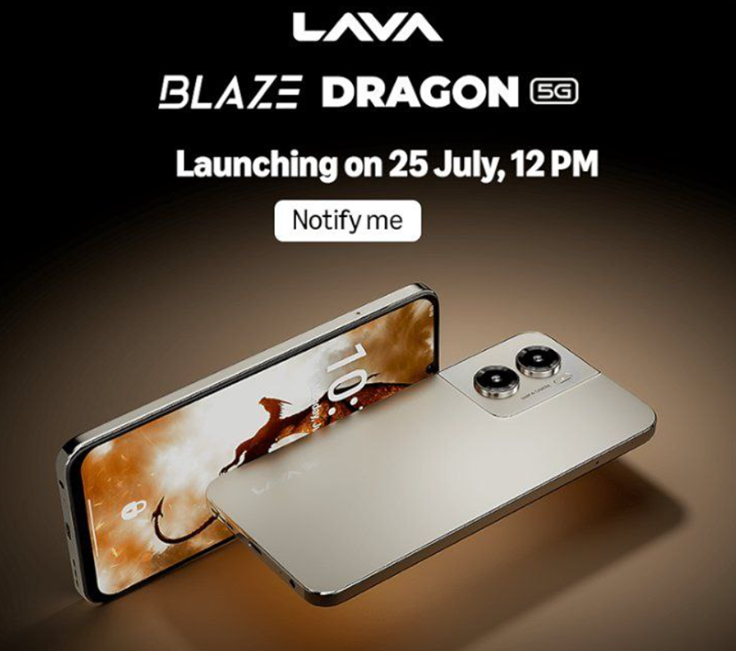
Captain – Lava Blaze Dragon launch confirmed in leaked marketing poster. (Image credit – @TechnicalShaan on X)

Indian smartphone brand Lava is all set to expand its budget-friendly Blaze lineup with two new devices, Lava Blaze AMOLED 2 and the uniquely named Lava Blaze Dragon. Both are launching on July 25, but we don’t have to wait till then to know more. While the Blaze AMOLED 2 will focus on delivering an AMOLED display experience, it’s the Blaze Dragon that’s grabbing attention thanks to a fresh wave of leaks on X (formerly Twitter).

Lava Blaze Dragon – Key Specifications and Live Images (Leaked)

image

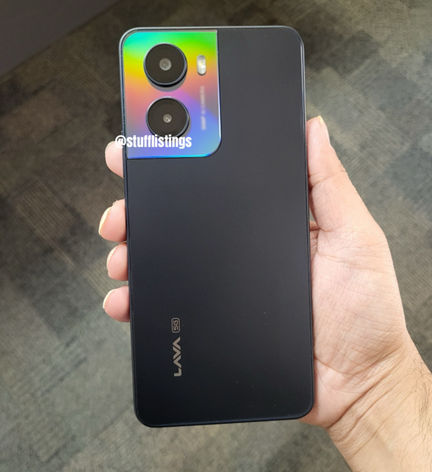
Caption – Lava Blaze Gragon leaked live images. (Image credit – @stufflistings on X)

According to a recent post by tipster Mukesh Sharma @stufflistings on X, the Lava Blaze Dragon will be powered by Qualcomm’s Snapdragon 4 Gen 2 chipset and feature UFS 3.1 storage, which is uncommon in this price range.

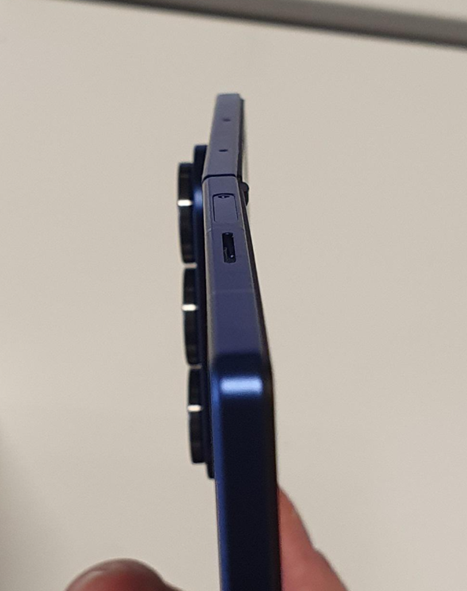
The official press render showcases the Blaze Dragon in a beige color, while tipster Mukul Sharma has also shared hands-on images of a sleek black variant. What stands out is the rainbow-like reflection on the camera module of the black version, adding a unique and eye-catching design element.

On the front, the device features a waterdrop-style notch, which is expected for a phone in this segment. Fortunately, it retains the 3.5mm headphone jack, a welcome feature that’s becoming increasingly rare. For security, it offers a side-mounted fingerprint scanner integrated into the power button.

image

Captain – Lava Blaze Dragon appears in leaked marketing posters. (Image credit – @TechnicalShaan on X)

In a separate reveal by another X user Santanu @TechnicalShaan, the device will sport a 50MP main rear camera, accompanied by a second sensor. While official details about the secondary lens are yet to surface, it’s likely to be either a 2MP depth or bokeh sensor, or possibly an ultrawide if Lava decides to surprise.

As for pricing, the Blaze Dragon is rumoured to be launched at under Rs 10,000 in India, making it an appealing option in the entry-level market. The Blaze AMOLED 2 is expected to target a slightly higher segment.

FAQs

Q1. What chipset powers the Lava Blaze Dragon and what makes it unique for its price range?

Answer. The Lava Blaze Dragon will be powered by Qualcomm’s Snapdragon 4 Gen 2 chipset and feature UFS 3.1 storage, which is uncommon in this price range.

Q2. What are the standout design and security features of the Lava Blaze Dragon?

Answer. What stands out is the rainbow-like reflection on the camera module of the black version, adding a unique and eye-catching design element. It offers a side-mounted fingerprint scanner integrated into the power button.

Q3. What is the expected price and camera setup of the Lava Blaze Dragon?

Answer. The Blaze Dragon is rumored to be launched at under Rs 10,000 in India. The device will sport a 50MP main rear camera, accompanied by a second sensor.

Also Read:
🔹 Lava Storm Play and Storm Lite launching soon in India with MediaTek Dimensity 7060 and 5G support
🔹 Lava Shark 5G launched at ₹7,999 with 90 Hz display and Android 15

Redmi Turbo 5/POCO X8 Pro Tipped to Feature Dimensity 8500 Ultra Chipset

0

Highlights

  • The upcoming Redmi Turbo 5, expected to launch globally as POCO X8 Pro, may feature MediaTek’s new Dimensity 8500 Ultra SoC.
  • Leaks suggest a 6.6″ display with 1.5K resolution, curved edges and a metal middle frame.
  • While Xiaomi may be shifting away from Qualcomm chips overall, the tipster suggests this change won’t apply to the Turbo 5/X8 Pro.
image
Redmi Turbo 4 for reference. (Image credit – Redmi)

Just days after an earlier leak revealed key specifications of the upcoming Redmi Turbo 5, a new report has surfaced that may confirm the chipset powering this mid-range smartphone. The same device is expected to launch globally under the POCO brand as the POCO X8 Pro. Here’s what we know so far.

Dimensity 8500 Ultra Could Power the Redmi Turbo 5/POCO X8 Pro

In a previous report, tipster Digital Chat Station claimed that the Redmi Turbo 5 would feature a 6.6-inch display with a 1.5K resolution, curved corners and a metal middle frame. Now, a fresh leak from tipster Yogesh Brar on X (formerly Twitter) suggests that the device may be powered by MediaTek’s new Dimensity 8500 Ultra SoC.

This speculation appears plausible, especially considering that the Redmi Turbo 4 and POCO X7 Pro were both equipped with the Dimensity 8400 Ultra chipset. Given that the Redmi Turbo 5 is widely expected to launch globally as the POCO X8 Pro, Brar’s leak could also be pointing to the processor that will drive the POCO X8 Pro.

In his post, Brar further mentions that the brand is planning “a big shift away from Qualcomm’s Snapdragon,” though he clarifies this change does not apply to the upcoming Redmi Turbo 5 or POCO X8 Pro.

What this broader shift away from Snapdragon entails remains unclear especially given Xiaomi’s long-standing partnership with Qualcomm for many of its smartphones. As of now, the report remains unconfirmed and it will be best to stay tuned for more official updates.

FAQs

Q1. What chipset is expected to power the Redmi Turbo 5 and POCO X8 Pro?

Answer. A fresh leak from tipster Yogesh Brar on X suggests that the device may be powered by MediaTek’s new Dimensity 8500 Ultra SoC.

Q2. What are the key design features of the Redmi Turbo 5?

Answer. Tipster Digital Chat Station claimed that the Redmi Turbo 5 would feature a 6.6-inch display with a 1.5K resolution, curved corners, and a metal middle frame.

Q3. Is Xiaomi moving away from Qualcomm’s Snapdragon processors?

Answer. Brar mentions that the brand is planning “a big shift away from Qualcomm’s Snapdragon,” though he clarifies this change does not apply to the upcoming Redmi Turbo 5 or POCO X8 Pro.

Also Read:
🔹 Redmi Turbo 5 Pro might pack an 8,000 mAh battery; tipster hints at what to expect from Poco F8
🔹 Redmi Turbo 4 Pro launches with first Snapdragon 8s Gen 4 chip, 1.5K 120 Hz OLED display and 7,550 mAh battery

Xiaomi Pad Mini Tipped for Global Launch as Rebranded Version Of Redmi K Pad

0

Highlights

  • Xiaomi is expected to globally release the recently launched Redmi K Pad as the Xiaomi Pad Mini, with high-end specs intact.
  • It features an 8.8″ 3K LCD, 165Hz refresh rate, MediaTek Dimensity 9400+, up to 16GB RAM, 1TB storage and 7,500mAh battery with 67W charging.
  • Listings on TDRA and IMDA suggest an official announcement is near, though exact release details remain unknown.
image
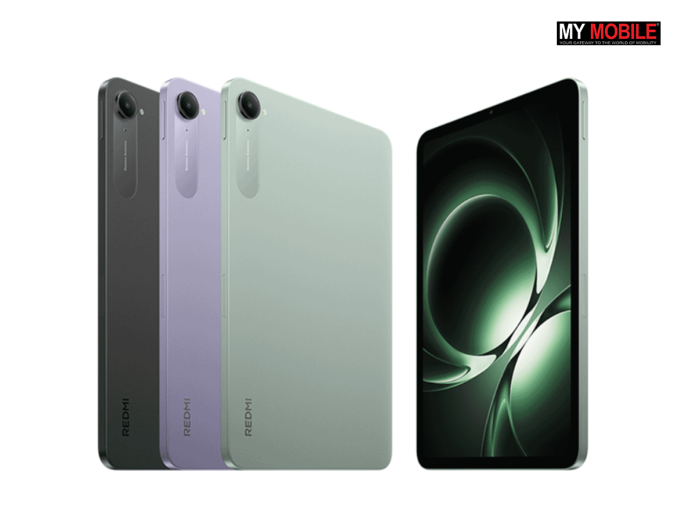
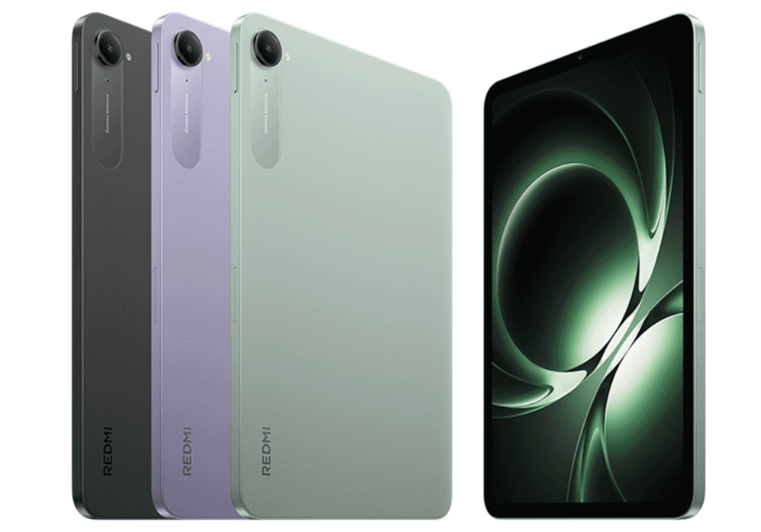
Recently launched Redmi K Pad is now expected to enter the international market as Xiaomi Pad Mini. (Image credit – Xiaomi)

Xiaomi could be preparing to launch a new compact high-end tablet in global markets. The device in question is the Redmi K Pad, which was recently introduced in China with flagship-level specifications. According to new leaks, this model may be rebranded and released internationally as the Xiaomi Pad Mini. Here’s everything we know so far.

Xiaomi Pad Mini Might Debut Globally

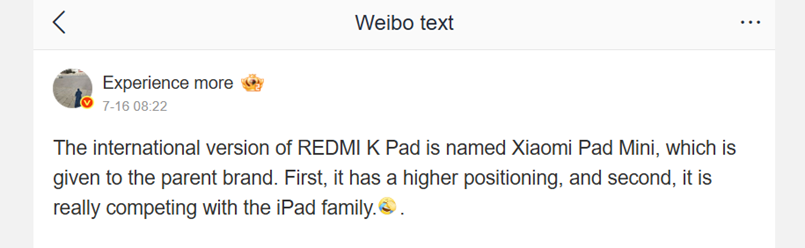
The latest leak comes from known tipster account Experience More on Weibo. The post says Xiaomi is reportedly planning to bring the Redmi K Pad to more regions outside China, but with a different name. The tablet may be introduced globally as the Xiaomi Pad Mini, positioning it as a direct competitor to devices like the iPad Mini.

Tipster Experience More’s latest post on Weibo. (Translated via Google Translate)

While there may be minor differences between the Chinese and global models, the core high-end specifications are expected to remain unchanged.

The leak, however, doesn’t include any detailed information about the features of the global variant or its expected release timeline. In any case, the Redmi K Pad was recently spotted on the TDRA and IMDA certification databases, which suggests that an official announcement might be close.

Xiaomi Pad Mini (or Redmi K Pad) – Key Specs

Given that the Xiaomi Pad Mini could essentially be a rebranded Redmi K Pad, we already have a good idea of its specifications. The Redmi K Pad features an 8.8-inch LCD display with a 3K resolution and a 165Hz refresh rate.

Powering the tablet is the MediaTek Dimensity 9400+ chipset, coupled with up to 16GB of LPDDR5X/T RAM and 1TB of UFS 4.0 storage.

The device is backed by a 7,500mAh battery that supports 67W wired fast charging. Camera-wise, it offers a 13MP rear shooter with an LED flash and an 8MP front-facing camera for selfies. Additional features include Dolby Atmos-enabled stereo speakers, dual USB-C ports and HyperOS 2 based on Android 15.

FAQs

Q1. What is the Xiaomi Pad Mini and how is it related to the Redmi K Pad?

Answer. Xiaomi is reportedly planning to bring the Redmi K Pad to more regions outside China, but with a different name. The tablet may be introduced globally as the Xiaomi Pad Mini.

Q2. What are the key specifications of the Xiaomi Pad Mini?

Answer. The Redmi K Pad features an 8.8-inch LCD display with a 3K resolution and a 165Hz refresh rate. Powering the tablet is the MediaTek Dimensity 9400+ chipset, coupled with up to 16GB of LPDDR5X/T RAM and 1TB of UFS 4.0 storage.

Q3. When will the Xiaomi Pad Mini launch globally?

Answer. The leak doesn’t include any detailed information about the features of the global variant or its expected release timeline. However, the Redmi K Pad was recently spotted on the TDRA and IMDA certification databases, which suggests that an official announcement might be close.

Also Read:
🔹 Redmi K80 Ultra and Redmi K Pad Design Unveiled, Key Specs Teased
🔹 Redmi Pad 2 Launches in India with 11″ 2.5K Display, 4G Support and Dolby Atmos, Price Starting at ₹13,999