


Highlights
- IDC forecasts a 30% YoY growth for foldable smartphones.
- The iPhone Fold is expected in late 2026 and is projected to capture 22% of unit share and 34% of market value in its first year with a premium price of around $2,400.
- Apple’s foldable will feature a crease-free 7.8-inch inner display, an under-display camera, and advanced hinge systems.
- Apple anticipates 8–10 million unit sales backed by Samsung Display panels and diversified suppliers.
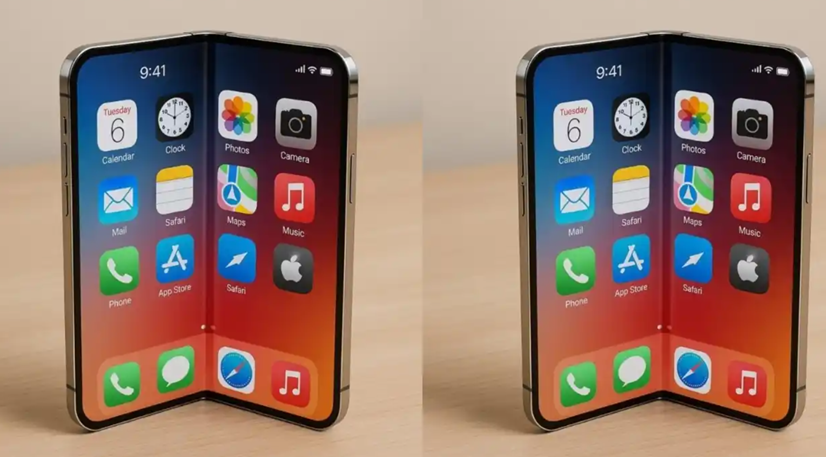
IDC’s latest report points to a breakthrough year ahead for foldable smartphones fueled by what it calls the “game-changer” arrival of the iPhone Fold in 2026. The market research firm expects foldable shipments to rise by an impressive 30% year-over-year, driven by new form factors and the long-awaited entry of Apple. Here’s more on this.
IDC on the 2026 Foldable Market
According to Nabila Popal, Senior Research Director at IDC’s Worldwide Quarterly Mobile Phone Tracker, “Next year will prove exciting for the foldable category with multiple launches pushing the market to 30% YoY growth from just 6% in the prior forecast.”
She adds, “Samsung will kick start 2026 with the Galaxy Z Trifold, introducing tri-fold innovation to mainstream global consumers, building off the momentum of the successful Galaxy Z Fold7 in 2025. Huawei’s foldables running on HarmonyOS Next will also see strong growth, with shipments expected to almost double in 2026.”
But the highlight of IDC’s forecast is Apple’s debut in the foldable space, which the firm calls the real disruptor. According to the report, “the real game-changer for the category comes at year-end when Apple enters the foldable space, projected to capture over 22% unit share and a staggering 34% of the foldables market value in its first year, thanks to an expected average price point of $2,400.”
Those numbers signal a bold outlook for Apple’s debut foldable. Despite foldable phones being around for roughly seven years, IDC’s projections highlight how much space Apple still has to redefine the segment or how niche the category remains until now.
First iPhone Fold – What We Know So Far?

Apple’s supply chain movements reflect a major shift. Recent reports suggest the company is gearing up for what could be its most ambitious launch since the original iPhone. The iPhone Fold appears to be well beyond prototype stages with multiple indicators pointing to rapid development progress.
One of the biggest breakthroughs reportedly achieved is the removal of the visible crease that has plagued every foldable display so far. The device is rumoured to feature a 7.8-inch inner screen with no crease and a 5.5-inch external display. The inner panel may also house an under-display camera, a technology that could eventually influence future iPad and MacBook designs.
Apple has also revised its sales expectations upward. Instead of 6–8 million units, the company now anticipates demand of 8–10 million units in the first year. This suggests growing confidence in both consumer interest and production readiness.
On the manufacturing front, this launch marks Apple’s most complex supply chain operation to date. Samsung Display is reportedly preparing 7–8 million foldable OLED panels for the iPhone Fold, requiring entirely new production lines and advanced quality checks. Apple is also stockpiling key components well before the anticipated 2026 release including titanium frames and sophisticated hinge systems capable of withstanding long-term folding durability.
Supplier diversification plays a major role in Apple’s strategy. Lens Technology from China is expected to take the lead on ultra-thin cover glass, while U.S.-based Amphenol has been shortlisted as the primary hinge supplier. This aligns with the company’s growing China+1 strategy while reducing reliance on a single vendor for critical parts.
Pricing expectations are equally premium. Analyst Ming-Chi Kuo projects the iPhone Fold to land between $2,000 and $2,500, while other reports narrow it closer to $2,400. The cost reflects the phone’s complex engineering including dual premium displays, titanium construction, crease-elimination technology, and advanced hinge materials.
With IDC forecasting steep growth and Apple preparing for a major entry into foldables, 2026 could become the defining year for the next generation of smartphone design.
FAQs
Q1. What growth does IDC predict for the foldable smartphone market in 2026?
Answer. IDC forecasts a 30% year-over-year growth in foldable smartphone shipments in 2026, up from just 6% in the prior forecast.
Q2. Why is the iPhone Fold considered a “game-changer”?
Answer. Apple’s debut foldable, the iPhone Fold, is projected to capture 22% of unit share and 34% of market value in its first year, thanks to its premium pricing around $2,400 and breakthrough design features like a crease-free 7.8-inch inner display and under-display camera.
Q3. What are Apple’s sales and supply chain expectations for the iPhone Fold?
Answer. Apple has raised its first-year sales forecast to 8–10 million units. The launch involves its most complex supply chain yet with Samsung Display preparing 7–8 million foldable OLED panels, titanium frames, advanced hinge systems, and diversified suppliers such as Lens Technology (cover glass) and Amphenol (hinges).
Also Read –
https://www.mymobileindia.com/apple-iphone-folds-hinge-may-be-cheaper-than-expected-says-kuo/