


Highlights
- The DoT warns against IMEI tampering and reinforces the Telecommunications Act 2023 and Telecom Cyber Security Rules 2024, which ban altered identifiers.
- Violations can lead to 3 years imprisonment or fines up to ₹50 lakh.
- Citizens are urged to use the Sanchar Saathi portal/app or send KYM <IMEI> to 14422 to confirm device authenticity and ensure safe usage.
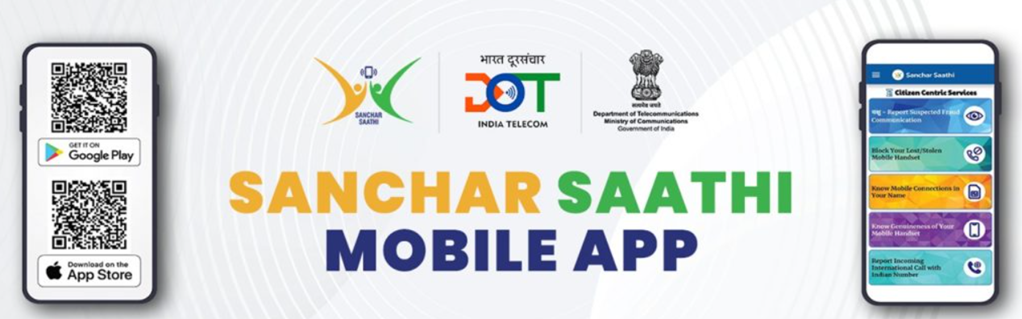
Caption – Verify IMEI on Sanchar Saathi app. (Image credit – DoT)
The Department of Telecommunications (DoT) has issued a fresh advisory warning citizens about the rising misuse of telecommunication identifiers including the IMEI numbers of mobile phones. Incidents involving tampered or unauthorised device identifiers have become a growing concern, prompting the government to tighten legal safeguards. Here’s all you need to know.
DoT Warns Against IMEI Tampering
The Government of India has reinforced regulations under the Telecommunications Act, 2023 to protect users and safeguard telecom infrastructure. The Telecommunications Act 2023 clearly prohibits tampering with unique device identifiers and the use of devices with altered IMEIs.
The DoT highlighted several critical rules under the Telecommunications Act, 2023
- IMEI Tampering Is Illegal under Section 42(3)(c). It strictly bans tampering with telecommunication identifiers. Section 42(3)(e) prohibits obtaining SIM cards or identifiers through impersonation, cheating, or fraud.
- Unauthorised Device Possession – Section 42(3)(f) states that possessing mobile phones, modems, modules, SIM boxes or any radio equipment with tampered or unauthorised identifiers is an offence.
- Telecom Cyber Security Rules, 2024 – These rules prohibit altering IMEI numbers or manufacturing/possessing equipment capable of configuring or modifying IMEIs.
Violations may lead to up to three years of imprisonment, fines reaching Rs 50 lakh, or both. Moreover, these offences are cognisable and non-bailable as per Section 42(7). The same penalties apply to anyone assisting or encouraging such acts under Section 42(6).
KYM and Sanchar Saathi for IMEI Verification
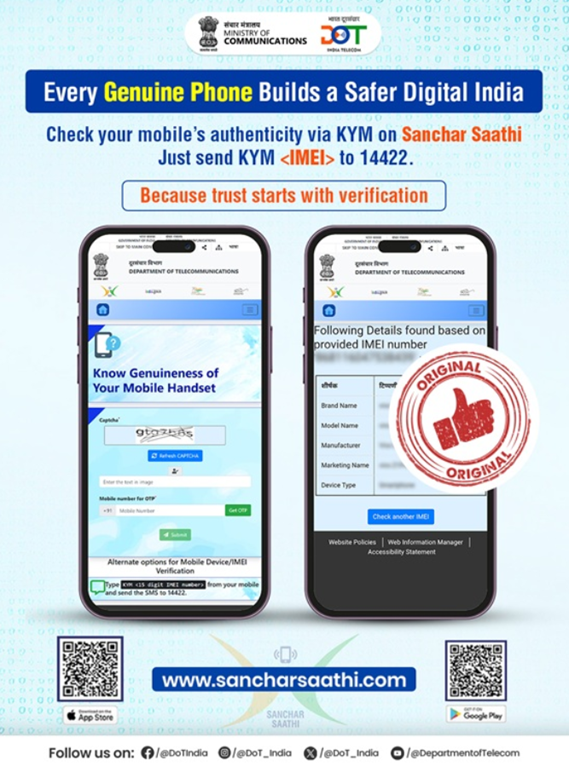
Caption – KYM on Sanchar Saathi. (Image credit – DoT)
To help citizens verify device authenticity, the DoT encouraged the use of the Sanchar Saathi portal or the Sanchar Saathi mobile app. It displays the device’s brand, model, and manufacturer details.
Additionally, users can verify their phone’s IMEI by sending KYM <IMEI> to 14422, a feature designed to confirm whether the device is genuine and safe to use.
Your Phone, Your Right to Safety!
Verify your phone’s authenticity in seconds with Sanchar Saathi’s KYM feature. Just send KYM <IMEI> to 14422 and ensure your device is genuine.
Because a secure phone means a safer digital life for every citizen.#SancharSaathi #IMEI #Telecom… pic.twitter.com/J5Sn4CUFie
— DoT India (@DoT_India) November 24, 2025
DoT Issues Citizen Guidelines
To protect themselves and ensure compliance, citizens have been urged not to:
- Use devices with tampered or altered IMEI numbers.
- Procure or operate modems, SIM boxes, or modules with configurable or unauthorised IMEIs.
- Obtain SIM cards using fake IDs, fraud, or impersonation.
- Use apps or websites that modify Calling Line Identity (CLI) or other telecom identifiers.
- Share their SIM cards with others who may misuse them.
The advisory also reminded users that they remain legally accountable if SIM cards issued in their name are used for cyber fraud. Even handing a SIM to another person who misuses it can result in penalties for the original owner.
FAQs
Q1. Is tampering with a mobile phone’s IMEI number legal in India?
Answer. No. Under the Telecommunications Act, 2023, IMEI tampering is strictly prohibited and can lead to up to 3 years imprisonment, fines up to ₹50 lakh, or both.
Q2. How can citizens verify if their mobile device is genuine?
Answer. Users can check authenticity via the Sanchar Saathi portal/app, which shows brand and model details, or by sending KYM <IMEI> to 14422.
Q3. What precautions has DoT advised for mobile users?
Answer. Citizens should avoid using tampered devices, procuring SIMs with fake IDs, sharing SIM cards, or using apps/websites that alter telecom identifiers, as they remain legally accountable if misuse occurs.