


Highlights
- WhatsApp introduces Strict Account Settings Mode that enforces the most restrictive privacy and security settings.
- The new setting is primarily aimed at journalists and public-facing individuals needing extreme protection.
- The platform also integrates the memory-safe Rust programming language into its infrastructure to strengthen defences.

WhatsApp has announced new security upgrades aimed at strengthening protection against spyware and advanced cyber threats. The latest changes include the introduction of a new ‘Strict Account Settings’ mode, along with backend improvements designed to secure user data better. Here’s more on both.
WhatsApp Rolls Out ‘Strict Account Settings’ Mode
As part of its updated security measures, WhatsApp is launching a lockdown-style ‘Strict Account Settings’ option. When enabled, this mode automatically applies the most restrictive privacy and security settings available on the platform.
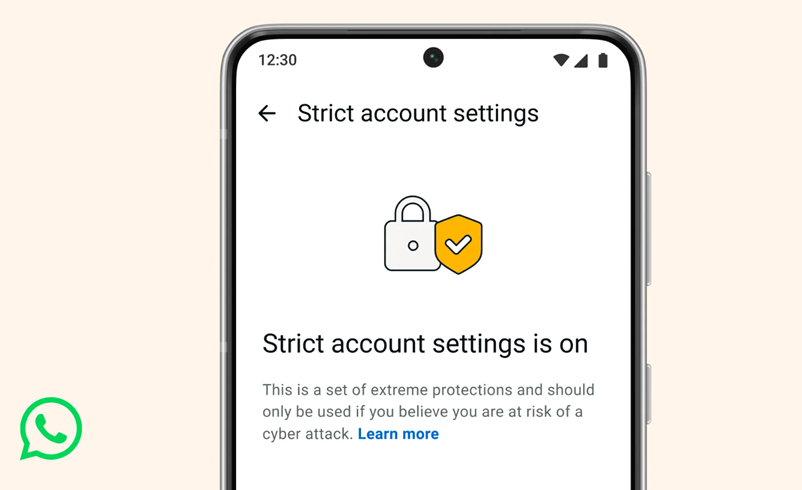
Activating the feature locks certain account controls and limits how WhatsApp functions in specific areas. For example, attachments and media from users who are not saved in your contacts will be blocked. The setting can be found under Settings ⇾ Privacy ⇾ Advanced, where users can enable it to achieve the highest possible level of security.
WhatsApp said the feature will be available to all users once the rollout is complete. However, it is primarily intended for people who may require extreme protection against rare and highly sophisticated cyber attacks, such as journalists and public-facing individuals.
Backend Security Strengthened With Rust Programming Language
Even for users who choose not to enable ‘Strict Account Settings,’ WhatsApp has introduced another important privacy improvement behind the scenes.

The company is rolling out the Rust programming language across parts of its infrastructure to help protect photos, videos, and messages from spyware-related threats. This change does not require any action from users and applies automatically across the platform.
Rust is a memory-safe programming language known for offering strong security benefits. By adopting Rust, WhatsApp’s security team has been able to build a secure, high-performance, cross-platform library that helps ensure media shared on the platform remains consistent and safe across devices. This move is part of WhatsApp’s broader defense-in-depth approach with both WhatsApp and Meta security teams exploring wider adoption of Rust where it can have a high impact.
The introduction of ‘Strict Account Settings’ alongside Rust-based backend improvements reflects WhatsApp’s ongoing efforts to safeguard user data against increasingly advanced spyware and cyber attacks.
FAQs
Q1. What is WhatsApp’s new ‘Strict Account Settings’ mode?
Answer. It’s a lockdown-style option that automatically applies the most restrictive privacy and security settings. For example, attachments and media from people not in your contacts will be blocked.
Q2. Who should use the ‘Strict Account Settings’ feature?
Answer. While available to all users, it is primarily intended for individuals at higher risk of sophisticated cyber attacks, such as journalists and public-facing figures.
Q3. How is WhatsApp improving backend security?
Answer. WhatsApp is adopting the Rust programming language across parts of its infrastructure. Rust’s memory-safe design helps protect photos, videos, and messages from spyware threats, ensuring stronger cross-platform security without requiring user action.