


Highlights
- Vivo X200 Ultra scored 167 overall on DXOMARK with 173 in photos and 156 in video.
- Its 35mm main lens delivers DSLR-like background blur and accurate skin tones, while the 200MP periscope lens offers sharp zoom up to 10x.
- The ultra-wide camera produces sharp, low-distortion images even in low light and all sensors perform well in darker conditions.
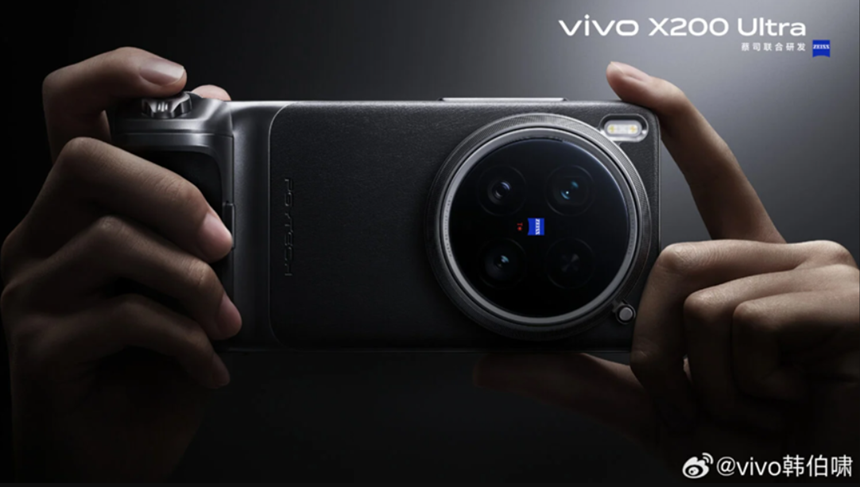
Caption – Vivo X200 Ultra. (Image credit – Vivo)
The Vivo X200 Ultra stands out as a compelling choice for anyone seeking a premium camera phone experience with minimal trade-offs. The phone has recently scored impressively well on a camera benchmark platform, reaffirming its worth as a camera phone. Here’s more on that.
Vivo X200 Ultra on DXOMARK Tests
Vivo X200 Ultra achieved an impressive score of 167 on the DXOMARK Camera benchmark, earning a photo score of 173 and a video score of 156. This places it second overall, just behind the OPPO Find X8 Ultra. Its strong performance in still photography is driven by a standout 35mm main lens, powerful zoom capabilities and a high-quality ultra-wide sensor.
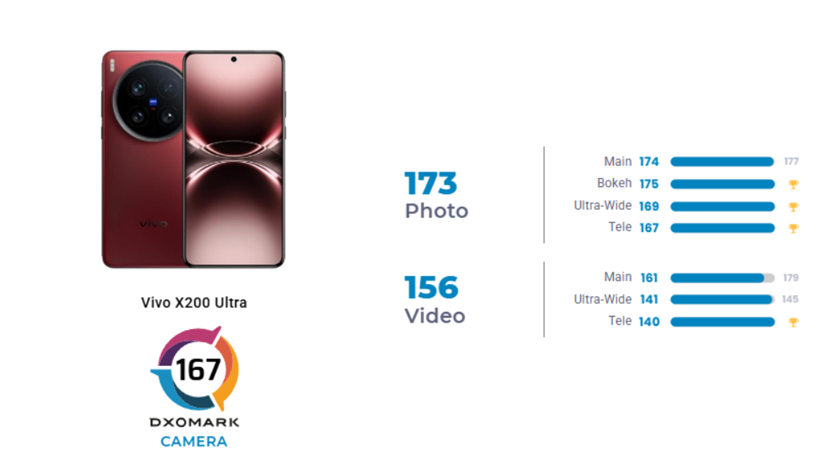
Caption – Vivo X200 Ultra DXOMARK Test results. (Image credit – DXOMARK)
The phone’s 35mm-equivalent main camera offers excellent subject-background separation, making it particularly effective for portrait photography. Facial details are rendered with natural contrast and accurate skin tones, while the background blur mimics the quality of DSLR images.
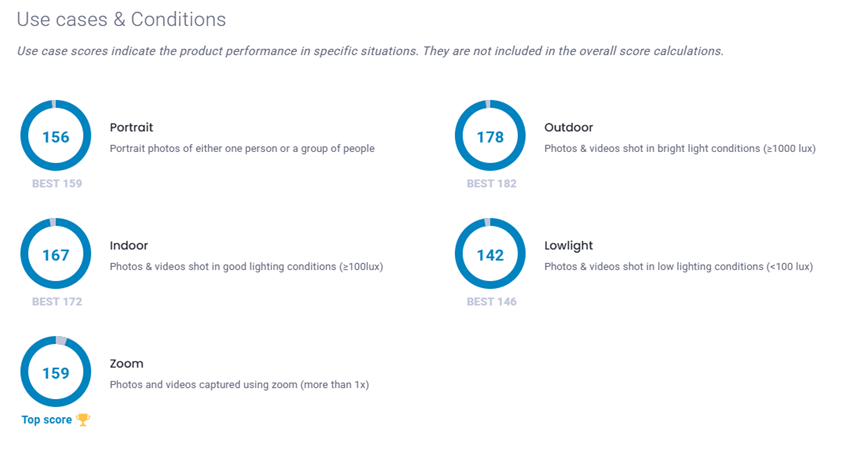
Caption – Vivo X200 Ultra use case scores on DXOMARK. (Image credit – DXOMARK)
Portrait mode is one of the Vivo X200 Ultra’s strongest aspects. It consistently delivers accurate subject segmentation, even around tricky areas like hair and maintains performance in low-light conditions. The background blur appears smooth and edge artefacts are minimal. However, the narrow depth of field may slightly affect focus in group portraits.
Zoom capabilities are another standout feature, led by the 200MP periscope telephoto lens. The camera captures sharp and detailed images up to 10x magnification in daylight. Even in moderate lighting, zoomed shots retain good clarity and contrast. While detail may soften slightly beyond 5x in low light, telephoto video still performs well with vivid colours and decent stabilisation, though noise becomes noticeable in darker environments.
The ultra-wide camera is among the best in its class, producing sharp, low-distortion images with excellent edge-to-edge detail. It remains reliable in low light, delivering balanced exposures and natural colours, although fine detail is a bit lower than the main sensor.
For video, the primary camera performs admirably, managing exposure and focus transitions effectively. It supports 4K video at 120fps with natural, vibrant colours in various lighting conditions.
Stabilisation works well in handheld shots, though slight motion may still occur when walking. Video from both the telephoto and ultra-wide lenses is also solid in bright environments, though dynamic range decreases under more challenging lighting.
Low-light performance is strong across the board. The main lens captures clear, detailed images with accurate colours. The ultra-wide and telephoto sensors perform reasonably well in darker scenes, though with more visible noise and softness.
FAQs
Q1. What DXOMARK score did the Vivo X200 Ultra achieve?
Answer. The Vivo X200 Ultra scored 167 overall on DXOMARK, with 173 in photo and 156 in video, placing it second behind the OPPO Find X8 Ultra.
Q2. What makes the Vivo X200 Ultra’s portrait mode stand out?
Answer. Its 35mm main lens offers excellent subject-background separation, natural skin tones, and DSLR-like blur, even in low light and around complex edges like hair.
Q3. How does the Vivo X200 Ultra perform in zoom and ultra-wide photography?
Answer. The 200MP periscope lens delivers sharp zoom up to 10x, while the ultra-wide camera offers low-distortion, edge-to-edge clarity, even in low-light conditions.
Related Links –