


Highlights
- Lenovo unveiled the Legion Pro Rollable Concept laptop with an expandable OLED display and AI-powered gaming features.
- Also showcases a SteamOS Legion Go handheld launching June 2026 at $1,199.
- AI ecosystems introduced Project Kubit Personal AI Hub for cross-device analytics, and lightweight Lenovo AI Glasses with live translation, intelligent recognition, and productivity prompts.
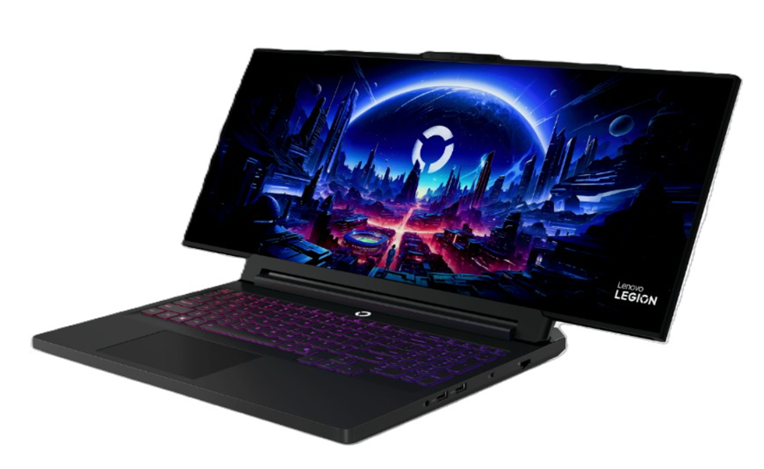
Lenovo unveiled a wide range of concept devices and future-facing technologies at the Consumer Electronics Show (CES) 2026, highlighting its vision for gaming, artificial intelligence, displays, and smart accessories. Among the key announcements were the Lenovo Legion Pro Rollable Concept, a SteamOS-powered Lenovo Legion Go (8.8”, 2), rollable ThinkPad concepts, AI wearables, and a personal AI hub designed for multi-device ecosystems.
Lenovo Legion Pro Rollable Concept and SteamOS Legion Go
At CES 2026, Lenovo introduced one of its most ambitious Legion gaming concepts to date, a high-end laptop with a rollable OLED display that can expand significantly when needed. Alongside this, the company announced a SteamOS variant of the Lenovo Legion Go (8.8”, 2), expanding its handheld gaming lineup beyond Windows.
Lenovo Legion Pro Rollable Concept
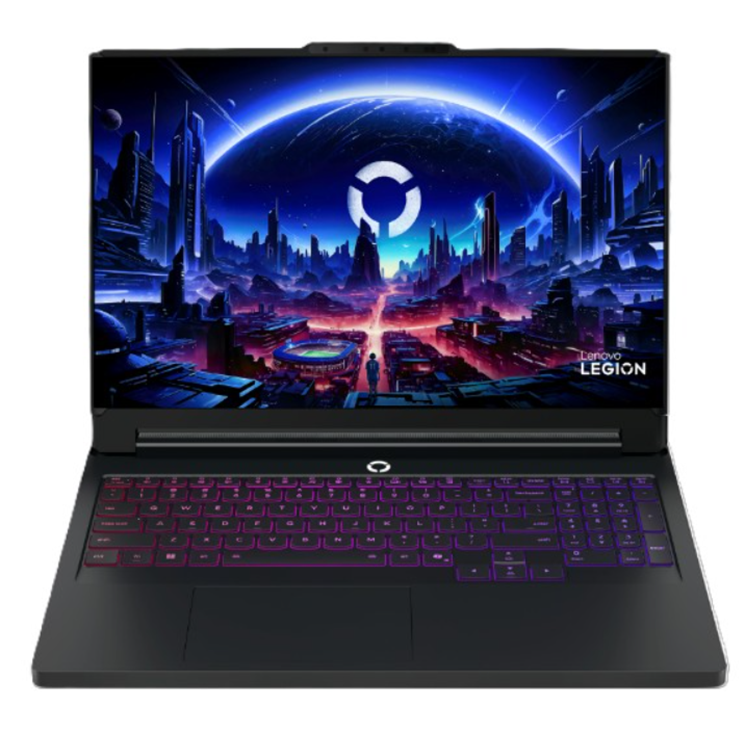
The Legion Pro Rollable Concept is a premium gaming laptop built around a 16-inch base form factor, with a screen that can expand horizontally to 21.5 inches and further to 24 inches. Lenovo says the concept is aimed at esports professionals and gamers who travel frequently but still require a large display for competitive play.
The device features a Lenovo PureSight OLED gaming display that unrolls from both sides using a dual-motor mechanism. According to Lenovo, the tension-based design enables smooth expansion and retraction with minimal vibration and noise.
Gamers can switch between three distinct usage modes like a 16-inch Focus Mode for reflex training and precision, a 21.5-inch Tactical Mode for improving peripheral awareness, and a 24-inch Arena Mode designed for competitive matches and team-based training.
Internally, the proof-of-concept is based on the Legion Pro 7i platform and is shown with top-tier Intel Core Ultra processors and an NVIDIA GeForce RTX 5090 Laptop GPU. It also integrates Lenovo AI Engine+, powered by the Lenovo LA Core (LA1 + LA3), which uses real-time scenario detection to boost frame rates and optimise system resources.
Additional AI-powered gaming features include AI Scene Detection, which identifies the type of game being played and highlights key areas on-screen, AI Game Assistance that offers real-time guidance during difficult gameplay moments, and Adaptive AI Lighting that changes ambient lighting based on in-game activity.
Lenovo Legion Go (8.8”, 2) with SteamOS
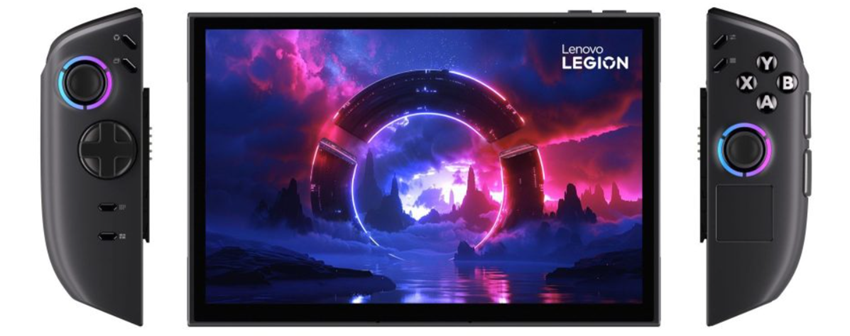
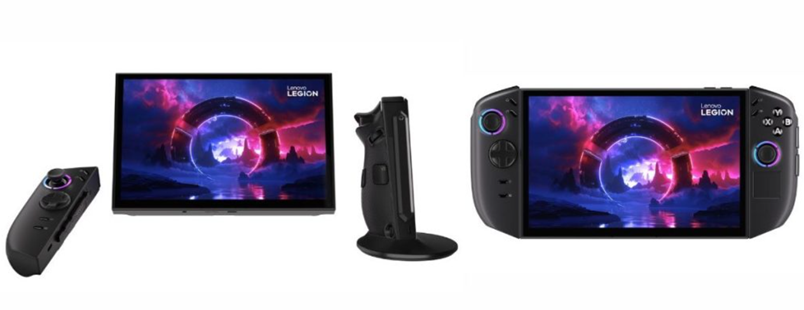
Lenovo also announced a SteamOS-powered version of the Lenovo Legion Go (8.8”, 2), which originally launched last year with Windows. The company says this is its most powerful Legion handheld to natively ship with SteamOS.
The handheld features an 8.8-inch WUXGA 16:10 OLED PureSight touchscreen with a 144Hz refresh rate, 500 nits brightness, and Variable Refresh Rate support. It is powered by up to an AMD Ryzen Z2 Extreme processor, paired with up to 32GB of 8000MHz RAM. Storage options go up to 2TB via PCIe Gen 4 with additional expansion through a microSD slot.
The upgraded 74Whr battery is said to offer over 50 percent higher capacity compared to the previous generation, enabling smoother gameplay across AAA, indie, and retro titles.
Pricing and Availability
The Lenovo Legion Go (8.8”, 2) powered by SteamOS is expected to start at $1,199 (approximately Rs. 1,08,115). Availability in the US is expected from June 2026.
Lenovo Personal AI Hub Concept
Lenovo also introduced Project Kubit, officially referred to as the Personal AI Hub Concept. This on-device personal edge cloud solution is designed to support AI-enabled applications across PCs, smartphones, wearables, and smart home products.
The system consists of two Lenovo ThinkStation PGX compact AI workstations powered by the Nvidia GB10 Grace Blackwall Superchip. It includes a touchscreen interface and supports voice-based interaction. Lenovo claims the hub aggregates data across platforms, giving users access to advanced analytics and AI-driven applications.
Lenovo AI Glasses Concept
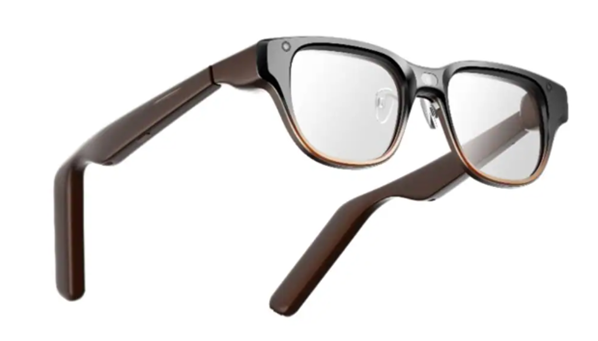
Another highlight from the event was the Lenovo AI Glasses Concept. These lightweight smart glasses feature built-in displays and on-device AI processing, allowing contextual information such as notifications, navigation, translations, and productivity prompts to appear directly in the user’s field of view.
Powered by the Lenovo Qira platform, the glasses leverage paired smartphones and PCs to deliver sub-millisecond live translation and intelligent image recognition. They also support the Catch Me Up feature, which summarises messages and calls to reduce notification overload.
The Lenovo AI Glasses Concept weighs 45g and is claimed to offer up to eight hours of battery life. Lenovo positions the device as an assistive accessory rather than a solution for immersive content consumption.
AI-powered Display Concepts
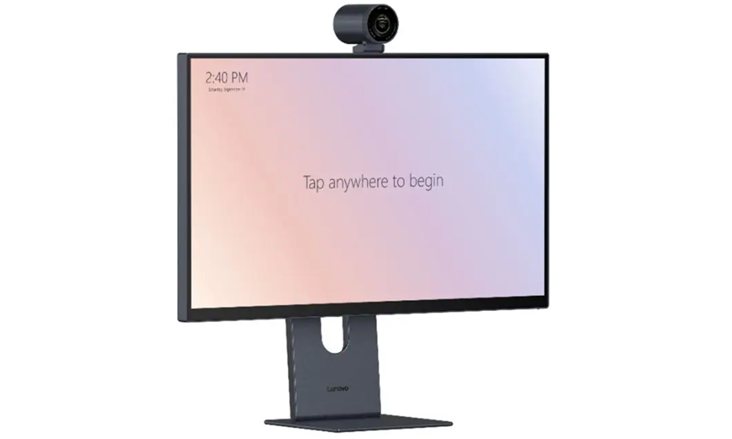
Lenovo showcased the Smart Sense Display Concept, featuring a 27-inch Ultra HD panel capable of wirelessly connecting to multiple personal devices such as smartphones, laptops, and tablets.
The display supports multi-screen collaboration, natural-language interaction via voice or touch, and flexible multitasking tools including drag-and-drop window management.
Smart accessory concepts
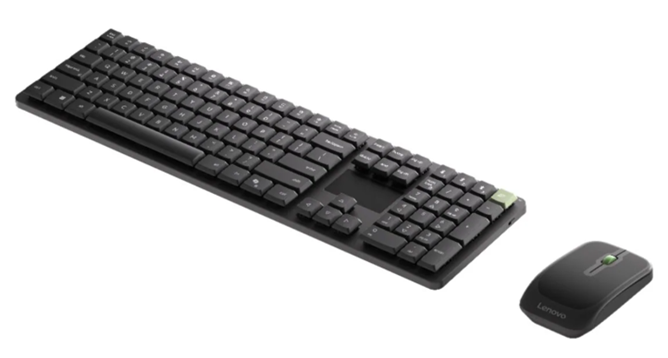
In addition to core devices, Lenovo also revealed several smart accessory concepts. These include the Adaptable Keyboard Concept, which offers adjustable keystroke depth and optical actuation, and the Lenovo Self-Charging Kit Concept. The latter includes a keyboard and mouse powered by light-harvesting technology that works in lighting conditions as low as 50 lux, with the mouse capable of charging even under indoor lighting.
Together, Lenovo’s CES 2026 announcements highlight the company’s focus on rollable displays, AI-driven ecosystems, and modular, power-efficient accessories designed for the next generation of computing.
FAQs
Q1. What is the Lenovo Legion Pro Rollable Concept?
Answer. It’s a premium gaming laptop with a rollable OLED display that expands from 16 inches to 24 inches, offering three usage modes (Focus, Tactical, Arena) for esports and competitive play.
Q2. What are the key features of the SteamOS Lenovo Legion Go (8.8”, 2)?
Answer. The handheld has an 8.8-inch OLED PureSight display with 144Hz refresh rate, powered by an AMD Ryzen Z2 Extreme processor, up to 32GB RAM, and a 74Whr battery offering smoother AAA gameplay.
Q3. How much will the SteamOS Lenovo Legion Go cost and when will it be available?
Answer. It is expected to start at $1,199 (~₹1,08,115), with US availability from June 2026.
Q4. What is Lenovo’s Personal AI Hub Concept (Project Kubit)?
Answer. Project Kubit is an on-device edge cloud solution that aggregates data across PCs, smartphones, wearables, and smart home devices, enabling AI-driven analytics and applications.
Q5. What are Lenovo AI Glasses and their capabilities?
Answer. The Lenovo AI Glasses Concept are lightweight smart glasses (45g) with built-in displays and AI processing, offering live translation, intelligent image recognition, contextual notifications, and up to 8 hours of battery life.