
Moto G77 Power debuts in India at ₹25,999 for a single 8GB RAM + 128GB storage variant.
The sales will start on July 13 via Flipkart and Motorola online store.
Key Specs – MediaTek Dimensity 6400, 6.72″ FHD+ 120Hz LCD, 7,000mAh battery, IP64 rating, Android 16 with Hello UI and 50MP Sony LYT-600 primary, 8MP ultra-wide.
Moto G77 Power has been officially unveiled in India. (Image credit – Moto)
Motorola has expanded its budget G-series smartphone lineup in India with the launch of the Moto G77 Power. The smartphone comes with a large 7,000mAh battery, a 50-megapixel Sony LYT-600 primary camera, and a 120Hz Full HD+ display. The handset will be available in a single RAM and storage configuration and will go on sale in India next week in three Pantone-inspired colour options. Here are more details.
Moto G77 Power – Price and Availability in India
The Moto G77 Power is priced at Rs. 25,999 in India for the lone 8GB RAM + 128GB storage variant.
Moto G77 Power colours. (Image credit – Moto)
As part of the launch offers, buyers can avail an instant discount of Rs. 2,000 when using Axis Bank or HDFC Bank credit cards. Alternatively, customers can choose an exchange bonus of up to Rs. 2,000.
The smartphone will go on sale starting July 13 via Flipkart and the Motorola India online store.
As for colours, it will be available in Pantone Fuchsia Red, Pantone Impenetrable, and Pantone Nautical Blue options.
Moto G77 Power – Key Features
The Moto G77 Power features a 6.72-inch Full HD+ LCD display with a resolution of 1,080 x 2,400 pixels. The panel supports a 120Hz refresh rate, 120Hz touch sampling rate, 391ppi pixel density, 90.97 percent screen-to-body ratio, a 20:9 aspect ratio, and up to 1,050 nits peak brightness. Motorola has also equipped the phone with an IP64 rating offering protection against dust and splashes.
Powering the handset is the 6nm MediaTek Dimensity 6400 octa-core processor, which offers a maximum clock speed of 2.5GHz. The chipset is paired with an ARM Mali-G57 MP2 GPU, 8GB LPDDR4x RAM, and 128GB UFS 2.2 storage. For security, the smartphone includes a side-mounted fingerprint scanner and face unlock support.
The smartphone runs Hello UI based on Android 16 out of the box. Motorola has promised one Android OS upgrade along with three years of security updates for the device.
Moto G77 Power key specs. (Image credit – Moto)
For photography, the Moto G77 Power packs a dual rear camera setup led by a 50-megapixel Sony LYT-600 primary sensor with an f/1.8 aperture. It is accompanied by an 8-megapixel ultra-wide camera with an f/2.2 aperture and a 120-degree field of view. The rear camera module also houses a 2-in-1 light sensor. On the front, the smartphone features a 32-megapixel selfie camera with an f/2.2 aperture for selfies and video calls. The device supports video recording at up to 2K resolution at 30fps.
One of the biggest highlights of the Moto G77 Power is its 7,000mAh battery, which Motorola claims can deliver up to 59 hours of battery life on a single charge. The handset supports 30W wired fast charging as well as 6W wired reverse charging.
Connectivity options include 5G, 4G LTE, dual-band Wi-Fi, Bluetooth 5.4, USB Type-C, GPS, GLONASS, Galileo, QZSS, and BeiDou. The phone is also equipped with an accelerometer, gyroscope, proximity sensor, ambient light sensor, and e-compass. It measures 166.23 x 76.50 x 8.89mm and weighs approximately 215g.
Vivo X500 Pro (or Pro Mini) tipped to debut with MediaTek Dimensity 9600 Pro (2nm), while the standard X500 may use Dimensity 9600 (3nm).
Leak suggests a 6,500–6,600mAh battery, with Vivo aiming to push capacity closer to 7,000mAh.
It is expected to feature a 64MP periscope telephoto (85mm), LOFIC primary sensor, 50MP ultra-wide, plus a 6.37″ OLED LTPO 1.5K display; launch set for September in China.
A fresh leak from well-known tipster Digital Chat Station (DCS) now sheds light on the expected specifications of the Vivo X500 Pro or possibly the Vivo X500 Pro Mini. Tipster reveals details about its battery, chipset and camera hardware. Here’s what we know so far.
Vivo X500 Pro (or Pro Mini) Specifications Leaked
According to the tipster on Weibo, Vivo is currently testing a compact flagship smartphone powered by MediaTek’s upcoming 2nm Dimensity chipset. Although the chipset’s official name has not been confirmed yet, it is expected to launch as the MediaTek Dimensity 9600 Pro. The processor is tipped to make its debut in either the Vivo X500 Pro or the Vivo X500 Pro Mini.
Digital Chat Station’s post on Weibo. (Screenshot by Gizmochina)
The leak also claims that the standard Dimensity 9600 will reportedly be built on a 3nm process and is expected to be an upgraded version of the Dimensity 9500. This chipset is likely to power the standard Vivo X500 model.
Battery capacity is expected to be one of the major upgrades on the Vivo X500 Pro. As per the latest leak, Vivo is currently testing a battery between 6,500mAh and 6,600mAh although the final capacity has not been locked in.
Digital Chat Station’s response to comments on Weibo. (Screenshot by Gizmochina)
The company is reportedly aiming to increase the battery size further and bring it closer to the 7,000mAh mark before the device enters mass production.
However, fitting such a large battery inside the compact flagship has reportedly been a challenge due to the amount of space occupied by the phone’s advanced camera hardware.
The tipster states that the Vivo X500 Pro is expected to feature a 64-megapixel periscope telephoto camera with an 85mm focal length, along with a large LOFIC primary camera sensor.
Earlier leaks had also suggested that the smartphone could include a 50-megapixel 1/1.28-inch main sensor and a 50-megapixel ultra-wide camera. If these details turn out to be accurate, the Vivo X500 Pro will not feature a 200-megapixel camera unlike the rumoured X500 Pro Max.
According to DCS, integrating these premium imaging components while simultaneously increasing battery capacity has resulted in significant internal space constraints for the device.\
Previous reports indicate that the Vivo X500 Pro may sport a 6.37-inch OLED LTPO display with a 1.5K resolution and a 144Hz refresh rate, although the high refresh rate has not been confirmed. The smartphone is also expected to run OriginOS 7 based on Android 17 out of the box.
Expected Launch Timeline
As for the launch timeline, the Vivo X500, Vivo X500 Pro, and Vivo X500 Pro Max are expected to be unveiled in China this September.
More details about the upcoming flagship lineup are likely to emerge in the weeks leading up to the official launch.
Samsung Galaxy Unpacked 2026 confirmed for July 22 in London, to be streamed live globally at 9 AM ET / 6:30 PM IST.
Expected Launches – Galaxy Z Fold 8, Fold 8 Ultra, Flip 8, and Galaxy Watch 9 series.
Pre-Reservations – Customers can pre-reserve devices with a refundable ₹999 VIP Pass via Samsung.com, Shop App, or Amazon, gaining vouchers and exclusive launch benefits.
The launch event will be streamed live at 9:00 AM ET (6:30 PM IST) through Samsung’s official website, Samsung Newsroom, and the company’s YouTube channel. Ahead of the event, Samsung has also started accepting pre-reservations for its upcoming Galaxy devices in select markets.
Samsung Teases AI-Focused Galaxy Experience
According to Samsung, the upcoming presentation will showcase the newest additions to the Galaxy ecosystem with a major emphasis on foldable smartphones and AI-powered features that aim to offer more personalised user experiences.
The official invitation carries the tagline “A New Shape Unfolds” hinting at the next evolution of Samsung’s foldable devices. Although the company has not revealed any hardware details, previous leaks have pointed towards improvements such as a wider foldable design and a display crease that is less noticeable than before.
Galaxy Z Fold 8, Flip 8 Launch Expected
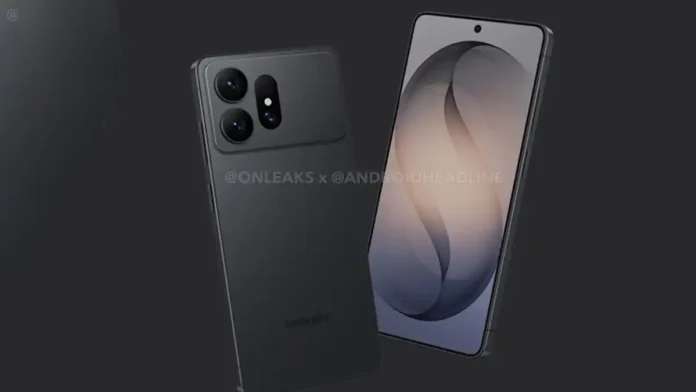
Samsung Galaxy Z Fold 8 leaked render.
As expected, Samsung has not disclosed product names or specifications before the launch. The invitation only confirms the date and venue while teasing“new form factors” and “more personal, adaptive experiences.”
Based on recent rumours, the Galaxy Z Fold 8 could feature a wider design with a 5.4-inch cover display and a 7.8-inch foldable inner screen. The Galaxy Z Fold 8 Ultra is expected to succeed last year’s premium foldable and may arrive with a new Snapdragon processor, a 200-megapixel primary camera, and a less visible display crease.
Meanwhile, the Galaxy Z Flip 8 is tipped to retain its familiar clamshell design while bringing hardware upgrades and refinements to the display.
Galaxy Watch 9 Series and AI Glasses Could Also Debut
Samsung is also expected to refresh its smartwatch portfolio with the Galaxy Watch 9 and Galaxy Watch Ultra 2. Leaks suggest both smartwatches could offer improved health monitoring features, minor design updates and software enhancements. Reports also indicate that Samsung may skip launching a new Galaxy Watch Classic this year.
Apart from smartphones and wearables, the event could also introduce Samsung’s long-rumoured AI smart glasses. Expected to launch as Galaxy Glasses, the wearable is said to focus on AI-powered assistance through Google Gemini using built-in cameras and voice interaction instead of offering a full augmented reality experience.
How to Pre-Reserve Samsung’s Upcoming Galaxy Devices?
Samsung has already opened pre-reservations for its upcoming Galaxy devices in select markets. Customers can reserve their device by paying a refundable Rs 999 between July 8 and July 22, 2026, or until official pre-booking begins, whichever comes first.
Those pre-reserving through Samsung.com or the Samsung Shop App need to visit the pre-reserve page, select the pre-reserve option, and add the “#Next Galaxy VIP Pass” to their cart. The Rs 999 payment can be made using prepaid payment methods such as credit card, debit card, UPI, wallet or net banking, while cash on delivery is not supported. After payment, Samsung sends a VIP Pass confirmation through email and SMS.Referral codes, welcome vouchers and loyalty points cannot be used to pay for the pre-reservation.
Customers can also pre-reserve through Amazon by purchasing an Amazon Pay gift card worth Rs 999 from Amazon’s Galaxy Unpacked microsite. The gift card is delivered to the registered email address within 24 hours, and users will need to return to Amazon once pre-orders go live to complete their purchase.
The pre-reservation offers an e-store voucher worth up to Rs 2,799, which can be redeemed while purchasing the new Galaxy device through Samsung’s website or Shop App. The Rs 999 paid during pre-reservation is adjusted against the final purchase price. Samsung notes that if the voucher value exceeds the price of an eligible add-on product, the remaining amount will not be refunded. If multiple eligible add-on products are purchased together, the voucher value is distributed proportionally across them.
Customers buying directly from Samsung may also receive additional benefits including exclusive launch colours available only on Samsung.com and the Shop App, Samsung Rewards points, enhanced trade-in value for eligible old devices, and Samsung Care+ protection plans.
To redeem the voucher, users need to sign in using the same email ID, phone number or account that was used during pre-reservation. If a customer decides not to purchase the device within the pre-booking period, the voucher is cancelled automatically and Samsung refunds the Rs 999 to the original payment method.
Samsung has also clarified that the pre-reservation benefit can be claimed only once per mobile number or email ID, preventing multiple reservations for additional savings.
Separately, the company is running a registration campaign where customers can enter for a chance to win Rs 50,000, along with daily vouchers worth Rs 5,000. This registration is separate from the paid pre-reservation process and can be completed independently.
A Samsung phone with model SM-M676K likely the Galaxy M67 5G has appeared on Geekbench.
The listing shows Exynos 2200, Android 16, 8GB RAM, Xclipse 920 GPU and benchmark scores of 1,435 (single-core) and 3,744 (multi-core).
The “K” suffix suggests a South Korean variant, while tipsters claim Indian and global versions are also in development.
Samsung may be working on another addition to its Galaxy M-series lineup. After recently launching the Galaxy M47 5G in India through Amazon India, an upcoming Samsung smartphone has now been spotted on the Geekbench benchmarking platform. The listing reveals several performance details and also hints at the region where the device could make its debut.
Possible Samsung Galaxy M67 5G Appears on Geekbench
A Samsung smartphone carrying the model number SM-M676K has been found in the Geekbench database. While the benchmark listing does not mention the official product name, Samsung’s model numbering pattern indicates that it could be the Galaxy M67 5G.
Possible Samsung Galaxy M67 5G on Geekbench.
The “K” at the end of the model number is believed to represent the South Korean version of the smartphone, suggesting that this particular variant is being tested for that market.
The Geekbench entry shows that the device is powered by a processor identified with the codename Exynos 2200 (S5E9925). The CPU configuration includes one prime core running at 2.8GHz, three performance cores clocked at 2.52GHz, and four efficiency cores operating at 1.82GHz. The benchmark also lists the Samsung Xclipse 920 GPU confirming that the handset is equipped with Samsung’s Exynos 2200 processor.
The listing further reveals that the phone was tested with Android 16 and 8GB RAM.
In the benchmark results, the alleged Galaxy M67 5G scored 1,435 points in the single-core test and 3,744 points in the multi-core test. As always, these scores are based on a prototype device and may differ from the performance of the final retail version.
India and Global Models Could Also Be in the Works
Although the Geekbench listing appears to be for the South Korean variant, tipster Abhishek Yadav claims that Samsung is also preparing Indian and global versions of the smartphone.
Samsung has not officially confirmed the device or shared any launch details yet.
However, since the handset has now appeared on a popular benchmarking platform, more certifications and official information are expected to surface in the near future.
Redmi Note 17 series will debut in China on July 14 with official images showcasing refreshed flat-edge design and Sky Blue colour.
Note 17 tipped with Snapdragon 6 Gen 5, 1.5K OLED, 9,000mAh battery, 50MP camera, while Note 17 Pro expected with Dimensity 7500, 10,000mAh battery, 200MP camera.
Series is expected to bring advanced waterproofing, stronger glass, and durability upgrades.
Redmi Note 17 Series China launch teaser. (Image credit – Redmi)
Redmi has officially announced that the Redmi Note 17 series will launch in China on July 14. Along with confirming the launch date, the company has shared the first official images of the upcoming smartphones. Several official teasers and recent industry leaks have also revealed key details about the design, hardware and features expected from the new lineup. Here’s more on what we know.
Redmi Note 17 Series Design Officially Revealed
Redmi has now showcased the first colour option called Sky Blue for the Redmi Note 17 Pro. Instead of a regular solid or gradient finish, the new colour features a design inspired by blue skies and white clouds.
First official renders of the upcoming Redmi Note 17 Pro. (Image credit – Redmi)
Official renders reveal a refreshed design featuring flat edges and a rectangular camera module placed in the top-left corner of the rear panel. Reports further suggest that the smartphone series will also be offered in a purple colour option inspired by a starry night sky.
According to Redmi, the Note 17 series follows the company’s philosophy of delivering better features while maintaining its strong value-for-money positioning in the mid-range segment despite increasing component costs. The brand also stated that several premium features such as advanced waterproofing and stronger protective glass will be brought back to the affordable smartphones segment with the Redmi Note 17 series.
Xiaomi Group President Lu Weibing also pointed out that rising memory prices have made it increasingly difficult to offer feature-packed smartphones at budget-friendly prices.
Redmi Note 17 Series – Expected Specifications
According to recent reports, Redmi may launch only the Redmi Note 17 and Redmi Note 17 Pro while skipping the Pro+ model that has been part of the lineup for the past several generations.
The standard Redmi Note 17 is tipped to feature a Snapdragon 6 Gen 5 processor, a 1.5K OLED display, a 9,000mAh battery, a 50-megapixel primary rear camera, stereo speakers, and improved dust and water resistance.
Redmi Note 17 on Geekbench.
Meanwhile, a new Xiaomi smartphone with the model number 2607DRA18C has appeared on Geekbench. The device is believed to be the Chinese version of the Redmi Note 17. The benchmark listing suggests it is powered by the Snapdragon 6s Gen 4 chipset paired with 12GB RAM and runs Android 16. It achieved 1,027 points in the single-core test and 3,002 points in the multi-core benchmark. For comparison, the Redmi Note 15 5G was powered by the Snapdragon 6 Gen 3 chipset.
The Redmi Note 17 Pro, on the other hand, is expected to arrive with the MediaTek Dimensity 7500 chipset and a larger 10,000mAh battery. It is also tipped to feature a 1.5K display, a 200-megapixel primary camera alongwith improved durability through enhanced drop resistance and advanced waterproofing.
Meanwhile, Redmi has announced that the Note series has surpassed 500 million global shipments over the past 12 years.
The upcoming Vivo S2 has received Bluetooth SIG certification, adding to BIS and NBD listings.
It is expected to include 8GB RAM + 256GB storage, AMOLED display, large battery, and a MediaTek or Qualcomm chipset.
Industry sources suggest a July India launch window.
We have previously reported on how Vivo appears to be gearing up to launch its next S-series smartphone after a long gap. The upcoming Vivo S2 has now been spotted on the Bluetooth SIG certification platform adding another certification to its growing list of regulatory appearances. Earlier, the smartphone was also seen on the NBD import and export database and India’s BIS certification website hinting that its official debut could be just around the corner. Here’s more on latest update.
Vivo S2 Receives Bluetooth SIG Certification
Vivo S2 on Bluetooth SIG Certification. (Screenshot by @ZionsAnvin on X)
According to the latest information shared by a tipster Anvin @ZionsAnvin on X, the Vivo S2 carrying the model number V2576 has received Bluetooth SIG certification.
The certification itself does not reveal any hardware specifications or features of the smartphone. It is part of the qualification programme defined by the Bluetooth Special Interest Group (SIG), under which all devices using Bluetooth technology must receive certification or qualification before launch.
While the listing doesn’t disclose any technical details, it further suggests that the smartphone is moving closer to its official announcement.
Apart from the Bluetooth certification, the Vivo S2 has also appeared on other certification platforms in recent weeks.
Its listing has revealed an 8GB RAM + 256GB storage variant indicating at least one memory configuration that could be offered at launch. Meanwhile, the smartphone was previously spotted on the BIS certification website with the same V2576 model number. Although the BIS listing did not reveal any specifications, it indicates that the India launch is nearing.
The same model number was also reportedly listed in the GSMA database earlier suggesting that Vivo has already started the required regulatory approval process for the upcoming smartphone.
According to earlier information shared by industry sources, the Vivo S2 could be priced between Rs 45,000 and Rs 50,000 in India. If this pricing turns out to be accurate, the smartphone would mark a significant jump from the original Vivo S1 and position itself in the sub-flagship segment just below Vivo’s V-series lineup.
Although no official specifications have been confirmed so far, the smartphone is expected to feature an AMOLED display, a large battery in line with current market trends, and a capable MediaTek or Qualcomm chipset.
Expected India Launch Timeline
Industry sources have previously claimed that Vivo is targeting a July launch window for the Vivo S2 in India. With multiple certifications now in place, the latest Bluetooth SIG listing further supports the possibility of an official announcement in the coming weeks.
However, Vivo has not officially confirmed the launch date yet.
With certifications continuing to surface, more details about the Vivo S2 are expected to emerge in the coming days.

Nothing launches Ear (3a) TWS earbuds with 45dB Adaptive ANC, 12mm drivers, LDAC Hi-Res Audio, Bluetooth 6.0 and new Audio Snapshot plus call recording features.
The earbuds are available via Nothing’s website in Black, Pink, White, and Yellow.
India launch details have not been announced yet.
Nothing has expanded its audio portfolio with the launch of the Nothing Ear (3a) true wireless stereo (TWS) earbuds. The latest earbuds bring several upgrades including 45dB Adaptive Active NoiseCancellation (ANC), a 12mm dynamic driver, Bluetooth 6.0, LDAC Hi-Res Audio support, and a new Audio Snapshot feature that allows users to capture short audio recordings. Here’s everything you need to know about the new Nothing earbuds.
Nothing Ear (3a) – Price and Availability
The Nothing Ear (3a) is priced at EUR 99 (approximately Rs. 10,800) in Europe,GBP 99 (approximately Rs. 12,600) in the UK, and $99 (approximately Rs. 9,400) in the US. In Japan, the earbuds are available for JPY 15,800 (approximately Rs. 9,300).
Nothing has not yet announced when the Ear (3a) will launch in India.
The earbuds are currently available for purchase through the Nothing website and come in Black, Pink, White and Yellow colour options.
Nothing Ear (3a) launched in four bright colours. (Image credit – Nothing)
Nothing Ear (3a) – Key Features
The Nothing Ear (3a) is equipped with 12mm dynamic drivers featuring 32-ohm impedance, a PMI and TPU diaphragm, and a 20Hz to 40,000Hz frequency response range. The earbuds support LDAC Hi-Res Wireless certification, Static Spatial Audio, Custom EQ, Advanced EQ, and EQ profile sharing through the Nothing X app.
For noise cancellation, the earbuds offer Adaptive ANC with noise reduction of up to 45dB across a 40Hz to 5,000Hz frequency range. Each earbud houses three microphones making a total of six microphones and supports Transparency Mode as well as environmental noise cancellation for clearer voice calls.
Each earbud packs a 55mAh battery, while the charging case houses a 500mAh battery. According to Nothing, the earbuds can deliver up to 10 hours of playback with ANC turned off using the AAC codec, while the charging case extends the total playback time to 42 hours. With ANC enabled, playback is rated at 6 hours on the earbuds and up to 25 hours with the charging case. When using the LDAC codec, the earbuds are claimed to provide up to 6 hours of playback with ANC turned off and 4.5 hours with ANC enabled.
Nothing Ear (3a). (Image credit – Nothing)
The charging case supports USB Type-C charging and takes approximately 70 minutes for a full charge. A quick five-minute charge provides up to one hour of playback with ANC disabled, while charging the earbuds and case together for 10 minutes delivers up to 10 hours of playback with ANC turned off.
The Nothing X companion app allows users to install firmware updates, locate misplaced earbuds using Find My Earbuds, share custom EQ profiles, and personalise touch controls. Playback, call management, track navigation, volume adjustment, and noise control can all be operated through configurable pinch gestures.
One of the standout additions is the new Audio Snapshot feature, which enables users to record short audio clips using gesture controls. The feature can also preserve the 30 seconds of audio recorded before the recording is triggered. These recordings can be viewed and shared directly through the Nothing X app. The earbuds also support call recording, while LED indicators on the charging case display the remaining battery level.
Connectivity is handled by Bluetooth 6.0 offering a wireless range of up to 15 metres. The earbuds support dual-device connectivity and are compatible with the SBC, AAC, and LDAC audio codecs. They work with devices running Android 8.0 or later and iOS 13 or later. Other features include Google Fast Pair, Microsoft Swift Pair, and a low-latency mode for gaming and video playback.
For durability, both the earbuds and the charging case are IP54-rated for dust and water resistance. Each earbud measures 31.2 × 21.7 × 24mm and weighs 4.53g, while the charging case measures 64.8 × 48.95 × 22.8mm and weighs 40.92g.
Redmi Turbo 6 Max is tipped to debut around January 2026 in China with global markets possibly getting it as Poco X9 Pro Max.
It is expected to feature a 7-inch 2K display, new Dimensity 9-series 3nm chipset and a massive 10,000mAh battery.
It is likely to include ultrasonic in-display fingerprint scanner, metal frame and IP68/IP69 durability.
Redmi is reportedly preparing to expand its smartphone lineup in China with the launch of the Redmi Turbo 6 series. A new leak suggests that the Redmi Turbo 6 lineup could arrive after that. The series is expected to include the Redmi Turbo 6 and Redmi Turbo 6 Max with fresh details now revealing the possible launch timeline and key specifications of the Max model.
Redmi Turbo 6 Max Launch Timeline Tipped
DCS’s post on Weibo. (Translate via Gizmochina)
According to reliable tipster Digital Chat Station, Redmi is currently planning to launch a new performance-focused smartphone around January. Although the tipster did not mention the device by name, the specifications shared strongly suggest that it could be the Redmi Turbo 6 Max.
The latest leak follows an earlier report from the same tipster in May, which revealed several hardware details of the upcoming smartphone.
Redmi Turbo 6 Max – Expected Specifications
As per the latest information, the Redmi Turbo 6 Max is expected to feature a 7-inch flat display with 2K resolution making it one of the largest displays in its category.
The smartphone is also tipped to be powered by a MediaTek Dimensity 9-series chipset. While the exact processor has not been revealed, the tipster had previously claimed that the device would use a 3nm chipset indicating flagship-grade performance.
One of the biggest highlights of the Redmi Turbo 6 Max could be its 10,000mAh-class battery, which would make it one of the largest battery-equipped performance smartphones in its segment.
In addition, the phone is expected to feature an ultrasonic in-display fingerprint scanner, a metal middle frame, and IP68/IP69-rated dust and water resistance for improved durability.
For global markets, reports suggest that the Redmi Turbo 6 Max could be introduced under a different name as the Poco X9 Pro Max although Xiaomi has not officially confirmed these plans.
For now, the company is expected to introduce the Redmi Note 17 series later this month followed by the Redmi K100 series in August.
More details about the smartphone are expected to emerge closer to its anticipated launch.
Galaxy A08 4G spotted on BIS and Wi-Fi Alliance certifications alongside Galaxy M08 and F08 variants.
Galaxy F70 Pro appears on Bluetooth SIG and tipped to feature Snapdragon 6 Gen 3, 6.7″ AMOLED 120Hz display, 6,000mAh battery and 50MP OIS camera.
Galaxy Tab S12+ listed on BIS and is expected to feature 12.4″ AMOLED 120Hz display, Dimensity 9500, 12GB RAM, 256GB storage, 10,500mAh battery and and Android 17 with 7‑year support.
Samsung Galaxy A07 4G in the picture for reference. (Image credit – Samsung)
Samsung appears to be gearing up for the launch of several new devices in India across different product categories. After recently introducing the Galaxy A27 and Galaxy M47, the company is now expected to bring the budget-focused Galaxy A08 4G, while the Galaxy F70 Pro and the premium Galaxy Tab S12+ have also surfaced on certification platforms hinting at their imminent arrival in the country. Here are more details.
Samsung Galaxy A08 4G, Galaxy M08 and Galaxy F08 spotted on BIS
Samsung Galaxy A08 BIS listing. (Screenshot by 91Mobiles)
The Samsung Galaxy A08 4G has been listed on the Bureau of Indian Standards (BIS) certification website suggesting that its India launch may not be far away. The listing was first spotted by 91mobiles. Alongside the Galaxy A08, the Galaxy M08 and Galaxy F08 have also appeared in the same database indicating that Samsung could introduce multiple variants of the device for different sales channels.
Last week, the Galaxy A08 was also spotted on the Wi-Fi Alliance certification platform with the model number SM-A085F/DS. The latest BIS listing includes the same model number along with SM-M085F/DS and SM-E085F/DS. Since the previous-generation Galaxy A07 4G carries the model number SM-A075F, the newly certified device is widely believed to be the upcoming Galaxy A08 4G.
Galaxy A07 4G.
The Galaxy A07 4G was launched in August 2025 at a starting price of Rs 8,999. It featured a 6.74-inch HD+ display with a 90Hz refresh rate, a MediaTek Helio G99 chipset, 50MP dual rear cameras, an 8MP front camera, a 5,000mAh battery with 25W fast charging, an IP54-rated dust and splash-resistant build, and a side-mounted fingerprint scanner.
Reports suggest the Galaxy A08 4G could offer a similar hardware package while bringing improved software support with six Android OS upgrades and six years of security updates
The Galaxy M08 (SM-M085F/DS) and Galaxy F08 (SM-E085F/DS) are also expected to share the same specifications as the Galaxy A08. Samsung is likely to position the Galaxy M08 for Amazon buyers, while the Galaxy F08 could be sold exclusively through Flipkart.
Samsung Galaxy F70 Pro Appears on Bluetooth SIG
Samsung Galaxy F70 Pro on Bluetooth SIG.
Samsung’s upcoming Galaxy F70 Pro has also been spotted on the Bluetooth SIG certification database further indicating that its official launch is getting closer.
According to a report by Sammy Guru, the smartphone carries the model number SM-E476B/DS. The DS suffix confirms dual-SIM support, while the 6B suffix is believed to indicate the global 5G version.
The report notes that the recently launched Galaxy M47 5G bears the model number SM-M476B, suggesting that both smartphones could share a similar hardware platform. Samsung has yet to officially reveal the handset’s specifications.
Based on the report, the Galaxy F70 Pro is expected to feature a 6.7-inch Super AMOLED display with a 120Hz refresh rate. It could be powered by the Qualcomm Snapdragon 6 Gen 3 chipset and backed by a 6,000mAh battery with 45W fast charging support.
For photography, the smartphone is tipped to offer a triple rear camera setup led by a 50MP primary sensor with Optical Image Stabilisation (OIS). Other expected features include NFC, an IP64 rating for dust and water resistance, LPDDR5X RAM, and UFS 3.1 storage.
The Galaxy F70 Pro is also expected to run One UI 8.5 based on Android 16 QPR2 out of the box. Samsung may provide six years of Android OS upgrades for the device. It is also tipped to arrive in new colour options and feature a leather-like rear panel similar to several recent Galaxy F-series smartphones.
The report further claims that Samsung could sell the Galaxy F70 Pro through its official online store and Flipkart in India. The smartphone is expected to launch within the next one or two months and may carry a price tag of around Rs 25,000 in line with its expected mid-range positioning.
Samsung Galaxy Tab S12+ on BIS Listing
Samsung Galaxy Tab S12+ BIS listing. (Screenshot by 91Mobiles)
Samsung’s next premium Android tablet also appears to be nearing its India debut. The Galaxy Tab S12+ has surfaced on the BIS certification website suggesting that the tablet could launch in the country soon.
The listing includes the model numbers SM-X840 and SM-X846B indicating that Samsung is preparing both Wi-Fi and 5G variants of the tablet for the Indian market. Although the certification does not reveal any hardware specifications, it typically signals that an official launch is approaching.
According to recent leaks, the Galaxy Tab S12+ is expected to feature a 12.4-inch AMOLED display with an adaptive refresh rate of up to 120Hz. The premium OLED panel is expected to continue Samsung’s focus on offering a high-quality viewing experience for entertainment, creative work, and productivity.
Samsung Galaxy Tab S11 in the picture for reference. (Image credit – Samsung)
The tablet is rumoured to be powered by MediaTek’s 3nm Dimensity 9500 chipset representing an upgrade over the Dimensity 9400+ used in the previous-generation Galaxy Tab S11 series. It is expected to be paired with 12GB of RAM and at least 256GB of internal storage positioning it as a flagship Android tablet capable of competing with Apple’s iPad Pro lineup.
Battery life is also expected to be one of its highlights with rumours pointing to either a 10,500mAh or 10,600mAh battery. For video calls and online meetings, Samsung is tipped to include a 12MP front-facing camera capable of 4K video recording.
On the software front, the Galaxy Tab S12 series is expected to debut with One UI 9.0 based on Android 17. If Samsung follows its current software support policy, the tablet could receive seven generations of Android OS upgrades taking it up to Android 24 along with seven years of security updates.
Nothing Phone (4b) debuts with Snapdragon 6 Gen 4, 6.77″ AMOLED display, updated Glyph interface, Android 16-based OS and long-term update support.
It also features dual rear cameras with 50MP + 8MP sensors, 16MP selfie shooter, 6,000mAh battery (India variant), 33W fast charging, IP64 rating, stereo speakers, and 5G connectivity.
The phone is offered in 8GB + 128GB and 8GB + 256GB variants with Obsidian Black, Arctic White and Sky Blue colours.
Nothing Phone (4b) has been launched officially. (Image credit – Nothing)
Nothing has finally launched the Nothing Phone (4b) in India today, expanding its smartphone portfolio with a new mid-range offering. The smartphone brings the brand’s signature Glyph interface along with a large AMOLED display, Qualcomm’s Snapdragon 6 Gen 4 processor, Android 16-based Nothing OS 4.1, and a bigger 6,000mAh battery for the Indian market. It also promises three years of Android OS updates and six years of security patches making it a long-term option for users looking for a feature-rich smartphone. Here are more details.
Nothing Phone (4b) – Price and Availability
Nothing has launched the Phone (4b) in India in two storage variants, which are 8GB + 128GB and 8GB + 256GB. The prices are as follows –
8GB + 128GB – Rs 29,999
8GB + 256GB – Rs 33,699
The smartphone is offered in three colour options named Obsidian Black, Arctic White and Sky Blue.
The Nothing Phone (4b) features a 6.77-inch rigid Samsung Super AMOLED display with a Full HD+ resolution of 2344 × 1080 pixels delivering a pixel density of 381 PPI. The panel supports a 120Hz adaptive refresh rate, a 240Hz touch sampling rate, and a 1000Hz instant touch sampling rate for improved responsiveness.
It also offers an 8-bit colour depth with support for 16.7 million colours, a 1,000,000:1 contrast ratio, 480Hz PWM dimming, 600 nits typical brightness, 1,200 nits outdoor brightness, and a peak brightness of up to 2,000 nits. Display protection is provided by AGC DT-Star 2 glass.
Nothing Phone (4b) updated Glyph bar. (Image credit – Nothing)
One of the key highlights is the updated Glyph Bar, which includes 45 mini-LEDs arranged across four individually addressable zones. It supports several smart functions, including a Recording Light, Glyph Timer, Essential Notifications, Live Updates, Volume Indicator, Glyph Torch, Glyph Progress, Flip to Glyph, Flip to Record, NFC Indicator, Bedtime Schedule, and Camera Countdown.
The phone also introduces 10 new ringtones and notification sounds designed to work with the Glyph interface.
Powering the smartphone is Qualcomm’s Snapdragon 6 Gen 4 chipset built on TSMC’s 4nm process. It features an octa-core Qualcomm Kryo CPU clocked at up to 2.3GHz, an Adreno 810 GPU, Qualcomm Hexagon NPU, Qualcomm AI Engine, and Qualcomm Spectra Image Signal Processor.
The device is paired with LPDDR4X RAM and UFS 2.2 storage and will be available in 8GB + 128GB and 8GB + 256GB configurations.
The Nothing Phone (4b) runs Nothing OS 4.1 based on Android 16. It is confirmed to receive three years of Android updates and six years of security patches. The Essential Voice feature supports multiple languages, including English, Hindi, German, Russian, Spanish, Polish, French, Italian, Japanese, Portuguese, Simplified Chinese, and Traditional Chinese.
For photography, the smartphone features a dual rear camera setup comprising a 50MP Samsung primary sensor with an f/1.8 aperture, a 1/2.76-inch sensor, 74.2-degree field of view, optical image stabilization (OIS), electronic image stabilisation (EIS), and autofocus. It is accompanied by an 8MP ultra-wide camera with an f/2.2 aperture, a 1/4-inch sensor, and a 119.5-degree field of view. On the front, the device houses a 16MP Samsung selfie camera with an f/2.4 aperture, a 1/3-inch sensor, and an 81.8-degree field of view.
The camera system supports 4K video recording at 30fps, 1080p recording at 30fps and 60fps, 1080p Ultra XDR recording at 30fps, 1080p slow-motion video at 120fps, Time Lapse recording in both 4K and 1080p resolutions, and Dual Video Capture. Camera features include TrueLens Engine 4, Ultra XDR, Image Super Resolution algorithm, AI Semantic Segmentation with 12 layers, Portrait Optimiser, and Night Mode.
The India variant packs a larger 6,000mAh battery, while global models come with a 5,200mAh unit. The phone supports 33W fast charging and 7.5W reverse wired charging. According to the company, it takes around 27 minutes to charge the battery to 50 percent and approximately 80 minutes for a full charge.
The smartphone carries an IP64 rating for dust and water resistance and has been tested to withstand submersion in up to 25cm of water for up to 20 minutes. Audio features include dual stereo speakers and two high-definition microphones.
For connectivity, the Nothing Phone (4b) supports Bluetooth 6.0, Wi-Fi 6, Gigabit LTE with 4×4 MIMO, Gigabit dual-mode 5G (NSA and SA) with 4×4 MIMO, GPS, GLONASS, BeiDou, Galileo, and QZSS navigation systems. It also supports NFC with Google Pay in select global markets, while the Japan variant includes Felica support.
Nothing Phone (4b). (Image credit – Nothing)
In terms of dimensions, the Nothing Phone (4b) measures 164.4 x 78.2 x 8.6mm and weighs 210 grams.
Nothing Phone (4b) – Reasons To Buy
Massive 6,000mAh battery with 33W fast charging and reverse wired charging
120Hz Samsung Super AMOLED display with up to 2,000 nits peak brightness
Unique Glyph Bar with 45 mini-LEDs and useful features like Live Updates, Glyph Timer, Essential Notifications, and Camera Countdown
Clean Nothing OS 4.1 based on Android 16 with 3 years of Android updates and 6 years of security patches
Supports 4K video recording, Ultra XDR, Night Mode, and AI-powered camera enhancements
Stereo speakers and dual HD microphones enhance the multimedia experience