

Highlights
- iPhone 18 Pro tipped to debut with Apple’s A20 Pro chip, the first iPhone processor built on TSMC’s advanced 2nm process.
- A20 Pro expected to adopt Wafer-Level Multi-Chip Module packaging, integrating SoC and DRAM at wafer level for improved thermal, signal integrity and faster data transfer.
- iPhone 18 Pro and Pro Max likely to be announced in early September 2026 alongside a foldable iPhone Ultra.
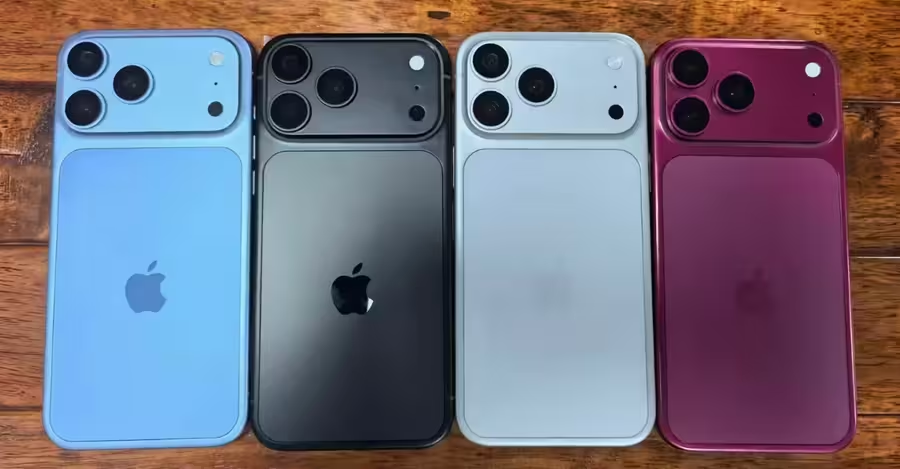
iPhone 18 Pro dummy unit images leaked previously.
Apple is expected to unveil the iPhone 18 Pro and iPhone 18 Pro Max in around two months. While the upcoming iPhones are likely to retain a design similar to the iPhone 17 Pro lineup, several hardware improvements are reportedly on the way. One of the biggest upgrades, however, could be the new A20 Pro chipset. According to recent reports, Apple’s next-generation processor may introduce two major changes that could improve both performance and power efficiency.
A20 Pro May Become Apple’s First 2nm iPhone Chip

Apple traditionally introduces a new chipset with every iPhone generation, but the A20 Pro chipset is expected to mark a major milestone. The chip is rumoured to be manufactured using TSMC’s advanced 2-nanometer process, making it the first iPhone processor to adopt the new fabrication technology.
Moving from the current 3nm process to 2nm is expected to allow Apple to pack more transistors into a chip of similar size. This could result in higher performance while also improving power efficiency.
The company is known for securing access to TSMC‘s latest fabrication technologies well in advance, helping it enhance the performance of products across its ecosystem including the iPhone, iPad, and Mac.
Although Apple has not revealed which areas the A20 Pro will prioritise, the shift to the 2nm process is expected to give the company greater flexibility to deliver meaningful performance gains.
New Wafer-Level Multi-Chip Module Packaging
In addition to the new manufacturing process, the A20 Pro is also rumoured to feature a packaging upgrade known as Wafer-Level Multi-Chip Module (WMCM).
As detailed by 9to5Mac, “For the first time, Apple is set to adopt Wafer-Level Multi-Chip Module (WMCM) packaging for its iPhone processors. WMCM allows different components, like the SoC and DRAM, to be integrated directly at the wafer level, before being diced into individual chips. It uses a technique that connects the dies without needing an interposer or substrate, which can bring both thermal and signal integrity benefits. In other words, Apple’s next-gen chip won’t just be smaller and more power-efficient thanks to N2. It’ll also be physically closer to its onboard memory, enabling better performance and potentially lower power consumption for tasks like AI processing and high-end gaming.”
By bringing the processor and memory closer together, the new packaging method is expected to improve data transfer speeds, thermal performance, and overall efficiency. It could also reduce power consumption during demanding workloads particularly AI-related tasks and graphically intensive gaming.
According to current rumours, Apple is expected to announce the iPhone 18 Pro, iPhone 18 Pro Max, and a foldable “iPhone Ultra” during the first half of September with commercial availability likely to begin later that month.
Meanwhile, the standard iPhone 18, a more affordable iPhone 18e, and the second-generation iPhone Air are reportedly expected to debut around March 2027.