


Highlights
- India’s Electronics Components Manufacturing Scheme (ECMS) received $13B in investment proposals.
- It records nearly double the government’s initial $6.7B estimate.
- The scheme offers up to 50% capex and 10% production-linked incentives over six years, targeting PCBs, battery cells, camera modules, and more.
- With over 60% MSME participation, ECMS aims to localise supply chains, boost employment, and build a $500B electronics ecosystem by FY31.
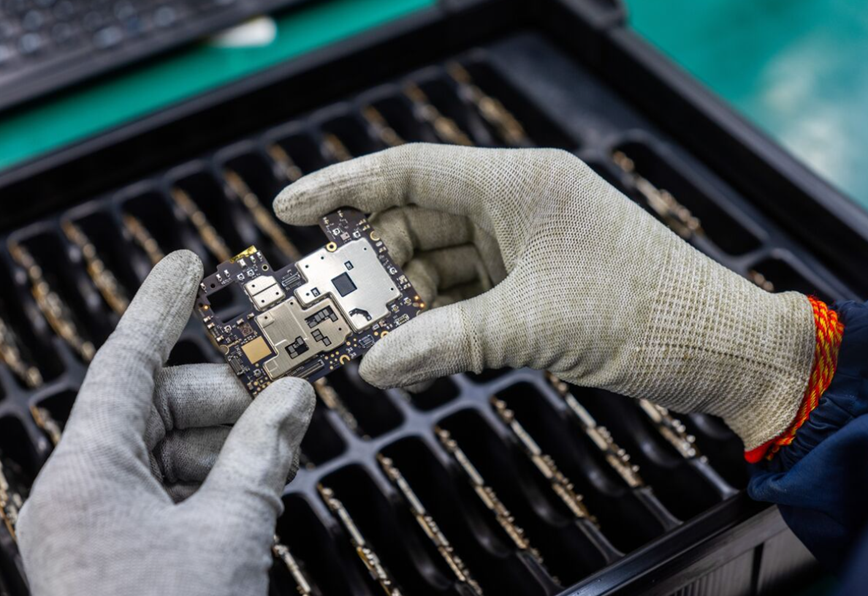
Caption – India’s Electronics Component Scheme attracts record $13 Billion Investment. (Image credit – Bloomberg)
India’s plan to build a robust domestic electronics component supply chain has received overwhelming interest with investment proposals nearly double the government’s expectations.
Union IT Minister Ashwini Vaishnaw revealed that the Electronics Components Manufacturing Scheme (ECMS) has attracted 249 applications, proposing investments worth $13 billion (₹1.15 trillion). This is almost twice the $6.7 billion (₹59,350 crore) the Ministry of Electronics and IT (MeitY) had initially projected.
Without naming the applicants as the proposals are still under review, Vaishnaw added, “Alongside investments, we have also received electronics production estimates of more than ₹10.34 trillion ($116 billion)—as against our target of ₹4.56 trillion ($51 billion). That is more than double of what we had targeted, and will help us achieve our target of a $500-billion domestic electronics ecosystem in India by FY31.”
He also highlighted that one company alone has proposed a ₹22,000 crore ($2.5 billion) project under the scheme.
Incentives to Boost Local Manufacturing
The ECMS, launched on 28 March 2024, provides incentives of up to 10% of production targets and 50% of capital expenditures over six years, with a one-year gestation period. The government has earmarked $2.7 billion (₹22,737 crore) for this program, which covers key areas like –
- Display and camera modules
- Printed circuit boards (PCBs)
- Lithium-based battery cells
- Mobile enclosures
- Specialised machinery for component manufacturing and assembly
The application window closed on 30 September with companies like Zetwerk and Optiemus Infracom already expressing interest.
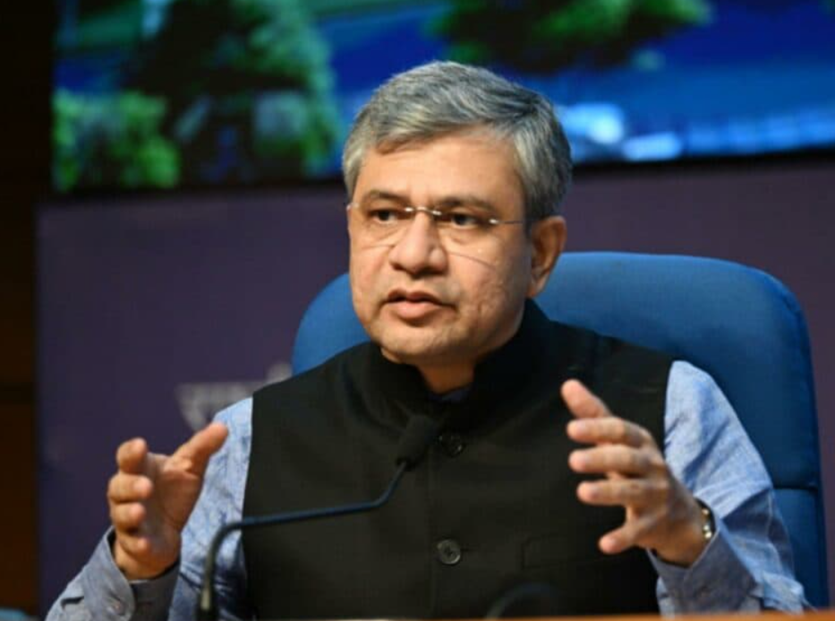
Caption – Union IT Minister Ashwini Vaishnaw. (File Photo, Credit – Unknown)
Speaking at a press briefing in New Delhi, Vaishnaw noted, “We’re not revealing the names of applicants right now, because all applicants are now currently undergoing evaluation by the specially appointed evaluation committee for ECMS. That said, we are fast-tracking the evaluation process, and special priority is being given to applications that are fully completed with all due information in place.”
Bigger Than Previous Incentive Schemes
The ECMS is nearly seven times larger than MeitY’s previous Scheme for Promotion of Manufacturing of Electronic Components and Semiconductors (SPECS), launched in April 2020.
SPECS offered $370 million (₹3,000 crore) in incentives and concluded on 31 March 2023 with 49 approved projects worth $1.6 billion. By contrast, ECMS promises a far greater scale and impact over its six-year span.
Industry Welcomes Push for Domestic Supply Chain
Industry experts believe this scheme will play a transformative role in making India a global electronics hub.
“The manufacturing of sub-assemblies and components will now be firmly established in India, substantially increasing domestic manufacturing and global competitiveness,” said Pankaj Mohindroo, Chairman of the India Cellular and Electronics Association (ICEA). He added that more than 60% of applicants are MSMEs, which will drive employment and skill development.
Mohindroo said, “This scheme is applicable for all verticals of electronics, thus building core competency and capacity. It is very encouraging to see over 60% participation by micro, small and medium enterprises, enabling large-scale employment growth as well.”
Meanwhile, a senior executive at a local contract manufacturer requested anonymity and called the surge in applications “a no-brainer.” The executive explained, “Localising specialised operations requires hefty investments, but the returns are equally, if not exponentially, higher. With the Centre offering incentives to ease the capital expenditure that’s required in such a field, there’s no doubt that application inflow is strong.”
Currently, India adds only about 15% value in electronics assembly, as most critical components are imported. ECMS aims to change that by localising supply chains and reducing reliance on imports amid ongoing geopolitical uncertainties.
Vaishnaw also announced complementary policies to support ECMS, including a $170 million (₹1,500 crore) scheme for recycling and extracting critical minerals within India, further strengthening the domestic electronics ecosystem.
FAQs
Q1. How much investment has ECMS attracted so far?
Answer. The scheme has received 249 applications proposing $13 billion (₹1.15 trillion) in investments, nearly double the government’s initial $6.7 billion estimate.
Q2. What incentives does ECMS offer to manufacturers?
Answer. ECMS provides up to 10% of production-linked incentives and 50% of capital expenditure support over six years, with a one-year gestation period.
Q3. What impact will ECMS have on India’s electronics sector?
Answer. It aims to localise supply chains, reduce import reliance, and build a $500 billion electronics ecosystem by FY31, with over 60% MSME participation driving jobs and skills.