


Highlights
- Huawei unveiled Mate 80, Mate 80 Pro, Mate 80 Pro Max, and Mate 80 RS Ultimate Design.
- The Mate 80 runs on Kirin 9020, while the higher models use the new Kirin 9030/9030 Pro chipsets, delivering up to 42% performance gains over the Mate 70.
- The Pro Max debuts the industry’s first dual‑layer OLED display (8000‑nit brightness) with enhanced durability via second‑gen Kunlun Glass.
- Prices start at 4,699 yuan (USD 661) for Mate 80 and go up to 12,999 yuan (~USD 1830) for the RS Ultimate Design, available from November 28.
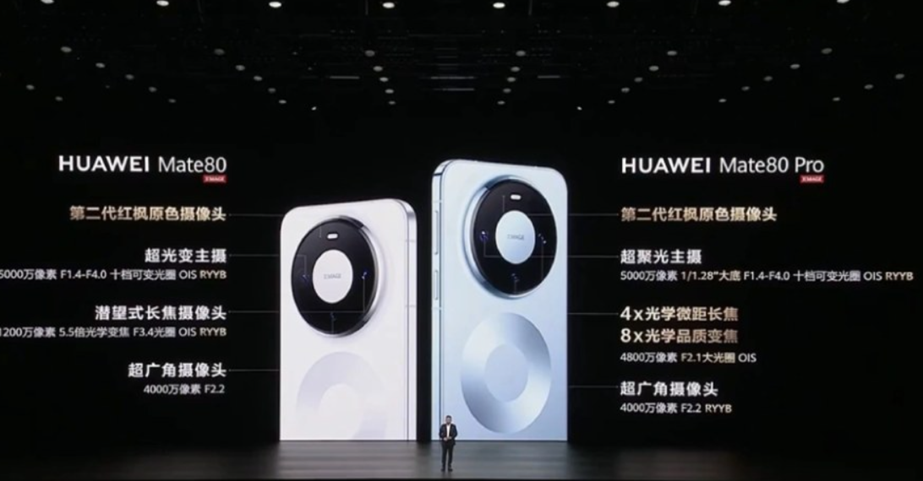
Huawei has officially introduced its new Huawei Mate 80 Series in China, launching four models. These include the Huawei Mate 80, Huawei Mate 80 Pro, Huawei Mate 80 Pro Max, and the premium Huawei Mate 80 RS Ultimate Design.
Leading the lineup is the Mate 80 Pro Max, which Huawei calls its most powerful and most durable Mate smartphone yet. Mate 80 Pro Max flaunts a full metal build, a dual-layer OLED screen, and advanced satellite capabilities. The standard Mate 80 runs on the Kirin 9020, while the Mate 80 Pro, Pro Max, and RS Ultimate Design upgrade to the new Kirin 9030 chipset. Here’s everything you should know about the newly launched Huawei smartphone series.
Huawei Mate 80 and Huawei Mate 80 Pro
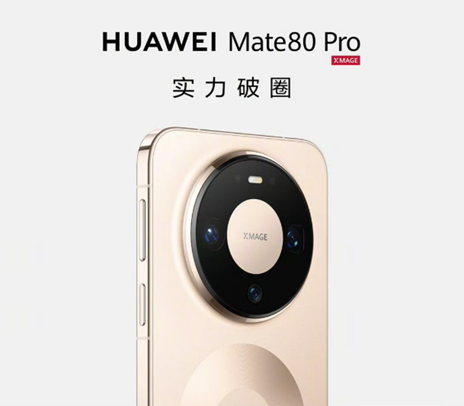
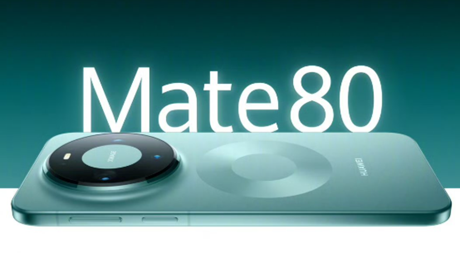
Caption – Huawei Mate 80 Pro (left) and Huawei Mate 80 (right). (Image credit – Huawei)
The Mate 80 and Mate 80 Pro feature a 6.75-inch OLED display with 2832×1280 resolution, 1–120Hz adaptive refresh rate, 1440Hz PWM dimming, and 300Hz touch sampling. Both models come equipped with second-generation Kunlun Glass and a side-mounted fingerprint scanner.
Huawei claims the Mate 80, despite using the older Kirin 9020, offers a 35% performance boost over the Mate 70. The Mate 80 Pro sees a similar 35% jump with the new Kirin 9030, while a higher-binned Kirin 9030 Pro variant, exclusive to the 16GB RAM model and promises a 42% improvement over last year’s flagship.
Both devices support Tiantong satellite calling, two-way Beidou messaging, and become the first phones capable of 700MHz emergency communication without network coverage. Huawei says they can maintain a link up to 13km away and transmit signals through three walls. Connectivity includes Bluetooth 6.0, Wi-Fi 7+, and seamless offline 2.4GHz communication.
The entire Mate 80 lineup uses Huawei’s second-generation “Maple Leaf” primary-colour imaging system.
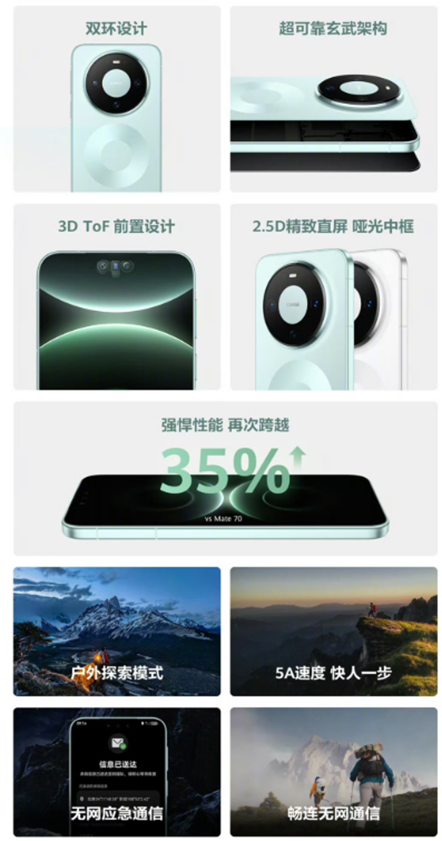
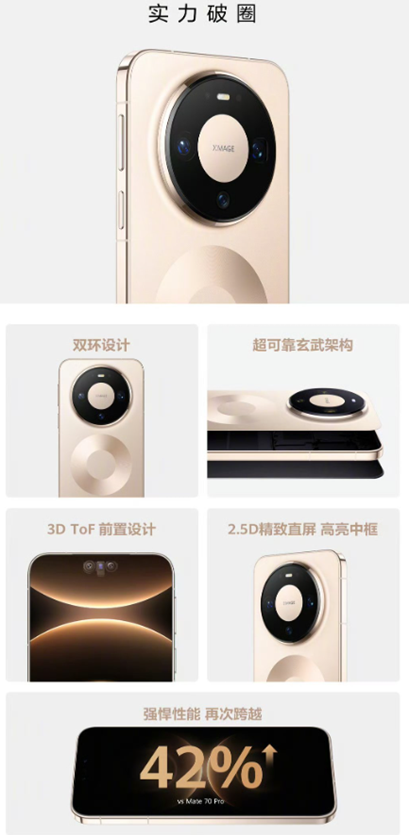
Caption – Huawei Mate 80 Pro (left) and Huawei Mate 80 (right) key features. (Image credit – Huawei)
Mate 80 camera setup:
- 50MP main sensor with 10-stop variable aperture (RYYB, OIS, f/1.4–f/4.0)
- 12MP periscope telephoto with 5.5× optical zoom (OIS)
- 40MP ultrawide lens
- 13MP ultrawide autofocus selfie camera
- 3D ToF depth sensor
Mate 80 Pro camera setup:
- 50MP RYYB main camera (OIS, 1/1.28”, f/1.4–f/4.0)
- 48MP macro telephoto (OIS, 4×/8×)
- 40MP ultrawide lens
- 9th-gen ISP offering 2× faster real-time image processing
Huawei is also launching a new pro-grade TILTA photography kit with a 3.3× teleconverter and modular quick-release accessories.
Both models come with a 5750mAh battery (rated 5620mAh). The Mate 80 supports 66W wired and 50W wireless charging, while the Pro steps up to 100W wired and 80W wireless. Reverse wireless charging is included, and the Mate 80 Pro adds an extreme low-power mode that can last up to 13 days.
The series ships with HarmonyOS 6, offering new visual effects, lighting dynamics, and smoother animations. Both phones feature an all-metal frame with a nylon back and a dual-ring camera design. They come in Obsidian Black, Snow White, Dawn Gold, and Spruce Green. The Mate 80 uses a frosted aluminium frame, while the Pro version opts for a glossy finish.
Each device is just 7.95mm thick and weighs around 217–219g with IP68/IP69 certification.
Huawei Mate 80 Pro Max
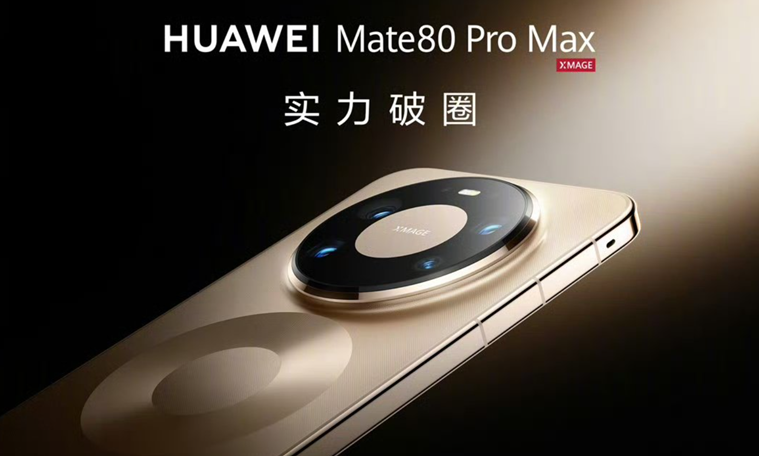
The Mate 80 Pro Max stands out with an all-metal build protected by Huawei’s second-generation Kunlun glass. Huawei claims this improves drop resistance by 20×, enhances bending resistance by 20%, and doubles scratch resistance compared to the previous generation. It also carries IP68 and IP69 ratings.
The phone debuts the industry’s first dual-layer OLED display, delivering 8000-nit peak brightness, improved efficiency, and enhanced contrast. It measures 6.9 inches with 120Hz refresh rate, 10-bit color, 1440Hz PWM dimming, and 300Hz touch sampling.
A full 3D ToF front setup assists biometrics, combining a depth-sensing sender, receiver, and standard front camera for what Huawei calls an AI posture-aware system. This enhances face recognition and motion tracking.
Powered by the Kirin 9030 Pro and Huawei’s Ark Graphics Engine, the Pro Max is said to be 45% smoother and load apps 34% faster than the Mate 70. It also supports 3DGS rendering acceleration and hardware-based ray tracing at 20 million rays per second.
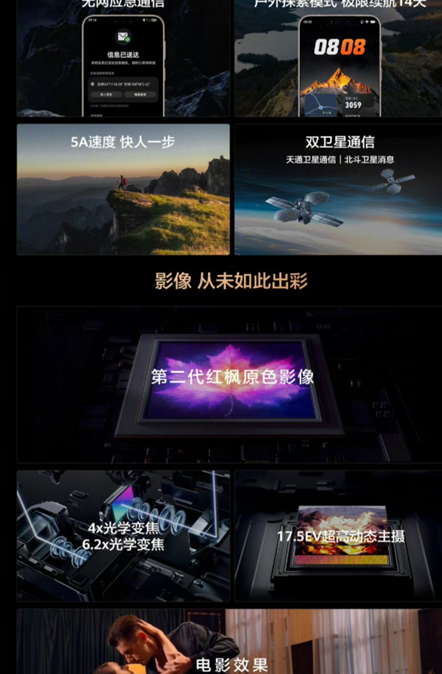
Connectivity includes Wi-Fi 7+, Tiantong satellite calling, Beidou messaging, and emergency 700MHz communication. Huawei describes the system as “ground network + sky network + no network.”
The Mate 80 Pro Max introduces the second-generation Maple Leaf Imaging System featuring a redesigned sensor with 2.45μm equivalent pixels and 96% higher light intake. Dynamic range is said to be 300% higher thanks to a dual-real-time fusion system with improved colour accuracy via an upgraded spectral array.
Camera specs include:
- 50MP main RYYB sensor (1/1.28”, f/1.4–f/4.0, 10-stop variable aperture)
- 40MP RYYB ultrawide
- 50MP macro telephoto (4× optical zoom)
- 50MP periscope telephoto (6.2× optical zoom, up to 12.4× “optical-quality” zoom)
The phone also supports a 3.3× teleconverter using the new accessory kit.
Huawei Mate 80 RS Ultimate Design
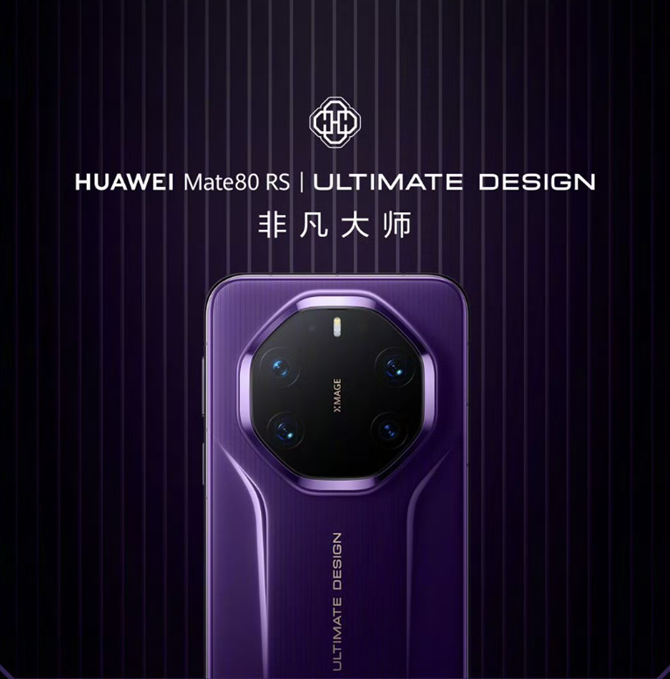
For users wanting something even more premium, Huawei introduced the Mate 80 RS Ultimate Design. Built on the Pro Max platform, it adds a luxurious aesthetic with a star-diamond pattern, titanium Xuanwu mid-frame, and dual Kunlun Glass.
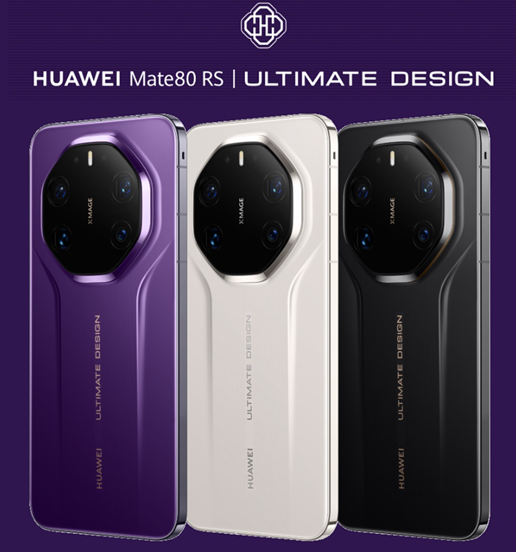
This model offers up to 20GB RAM and 1TB storage and comes in Jin Purple, Xuan Black, and Hao White. It supports all satellite and outdoor features of the Pro Max while adding HarmonyOS 6 AI tools such as dynamic portrait generation, emotion-aware themes, and Xiaoyi smart assistant features.
It also includes a 6.9-inch dual-layer OLED screen (FHD+, 1–120Hz LTPO, BT.2020 color gamut) and a 6000mAh battery with 100W wired and 80W wireless charging.
Huawei Mate 80 Series – Pricing and Availability
Huawei Mate 80
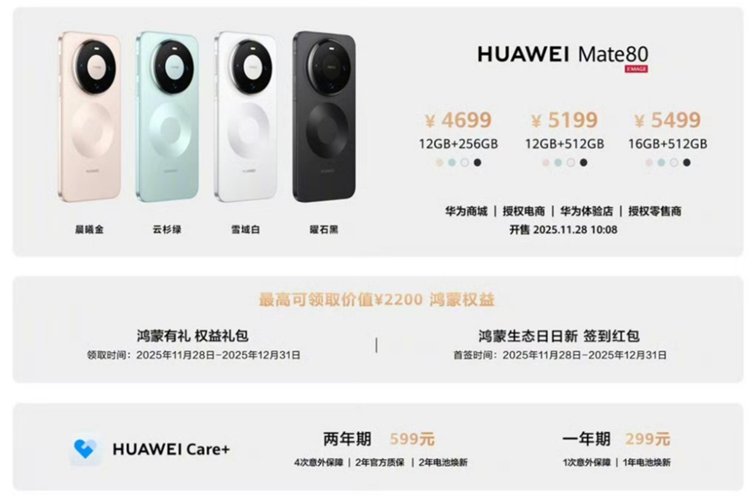
- 12GB + 256GB: 4,699 yuan (USD 661 / Rs. 59,025 approx.)
- 12GB + 512GB: 5,199 yuan (USD 731 / Rs. 65,306 approx.)
- 16GB + 512GB: 5,499 yuan (USD 774 / Rs. 69,074 approx.)
Huawei Mate 80 Pro
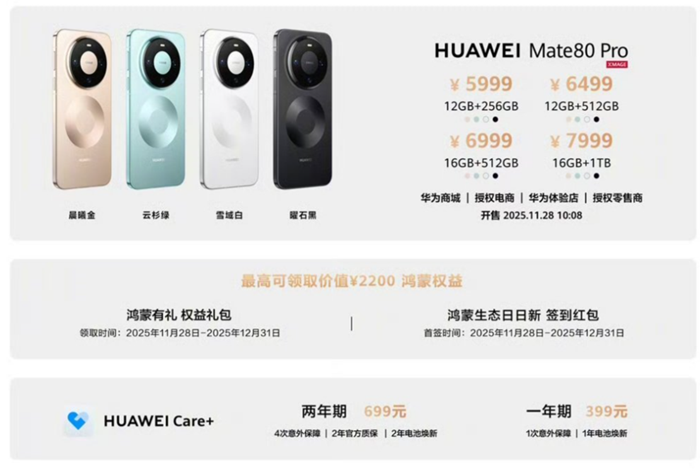
- 12GB + 256GB: 5,999 yuan (USD 844 / Rs. 75,355 approx.)
- 12GB + 512GB: 6,499 yuan (USD 914 / Rs. 81,635 approx.)
- 16GB + 512GB: 6,999 yuan (USD 985 / Rs. 87,916 approx.)
- 16GB + 1TB: 7,999 yuan (USD 1126 / Rs. 1,00,477 approx.)
Huawei Mate 80 Pro Max
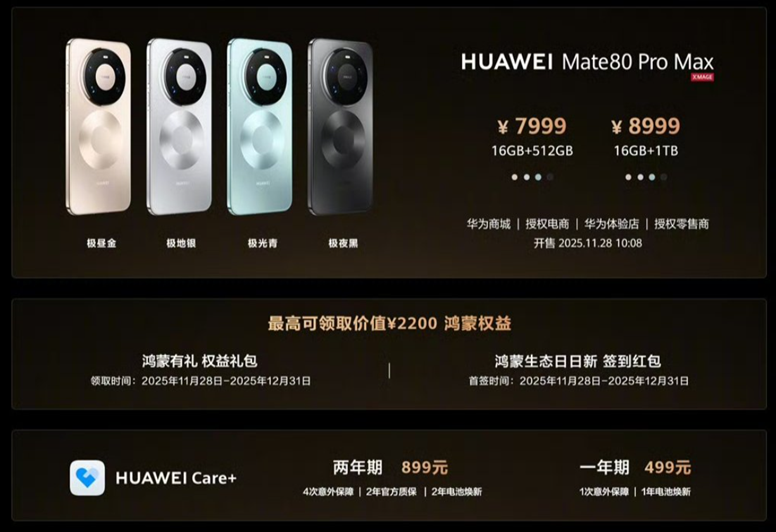
- 16GB + 512GB: 7,999 yuan (USD 1126 / Rs. 1,00,477 approx.)
- 16GB + 1TB: 8,999 yuan (USD 1266 / Rs. 1,13,039 approx.)
Huawei Mate 80 RS Ultimate Design
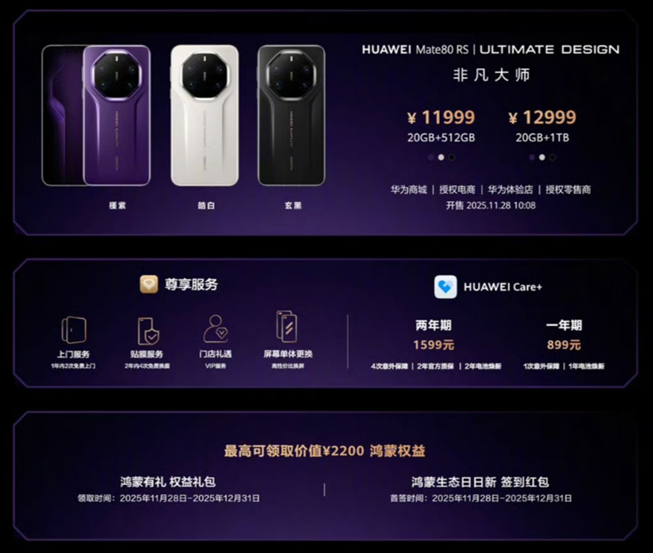
- 20GB + 512GB: 11,999 yuan (USD 1689 / Rs. 1,50,723 approx.)
- 20GB + 1TB: 12,999 yuan (USD 1830 / Rs. 1,63,284 approx.)
All models will be available starting November 28 via Huawei Mall, authorised e-commerce platforms, and Huawei Experience Stores.
FAQs
Q1. What models are included in the Huawei Mate 80 Series?
Answer. The lineup consists of four smartphones, Huawei Mate 80, Mate 80 Pro, Mate 80 Pro Max, and the premium Mate 80 RS Ultimate Design.
Q2. Which chipset powers the new Mate 80 phones?
Answer. The standard Mate 80 uses the Kirin 9020. The Mate 80 Pro, Pro Max, and RS Ultimate Design feature the new Kirin 9030 chipset, with the Pro Max using the higher‑binned Kirin 9030 Pro for enhanced performance.
Q3. What are the standout features of the Mate 80 Pro Max?
Answer. It debuts the industry’s first dual‑layer OLED display with 8000‑nit peak brightness, an all‑metal build with second‑gen Kunlun Glass for 20× better drop resistance, and advanced satellite connectivity including Tiantong calling, Beidou messaging, and 700MHz emergency communication.
Q4. How do the cameras differ across the Mate 80 lineup?
Answer. The Mate 80 has 50MP main sensor with variable aperture, 12MP periscope telephoto, 40MP ultrawide, 13MP ultrawide selfie, and 3D ToF sensor. On the other hand, Mate 80 Pro features 50MP RYYB main, 48MP macro telephoto, 40MP ultrawide, plus a 9th‑gen ISP for faster image processing. As for the Mate 80 Pro Max, it offers advanced Maple Leaf Imaging System with 50MP main, 40MP ultrawide, 50MP macro telephoto, and 50MP periscope telephoto offering up to 12.4× optical‑quality zoom.
Q5. What is the pricing and availability of the Huawei Mate 80 Series?
Answer. Prices start at 4,699 yuan (USD 661) for the Mate 80 and go up to 12,999 yuan (USD 1830) for the Mate 80 RS Ultimate Design. All models will be available from November 28 via Huawei Mall, authorised e‑commerce platforms, and Huawei Experience Stores.