


Highlights
- Global smartphone shipments are forecast to decline 2.1%, while average prices are expected to rise 6.9% year-on-year due to soaring component costs.
- Surging demand from AI data centers is driving a 40% increase in DRAM prices, pushing BoM costs up 20–30% for budget phones and 10–15% for mid-range/premium models.
- Apple’s shipments may fall 2.2%, though Apple and Samsung are better positioned than Chinese OEMs.
Smartphone consumers may need to brace for noticeably higher prices in 2026. The growing demand from AI data centres is triggering a global memory chip shortage and sharply increasing production costs. According to Counterpoint Research, these pressures are expected to slow market growth and make smartphones more expensive across segments.
The research firm forecasts that average smartphone prices will climb 6.9% year-on-year in 2026, nearly twice earlier estimates. At the same time, global smartphone shipments are projected to decline by 2.1% next year, a significant turnaround from the estimated 3.3% growth expected in 2025.
RAM Shortage Puts Pressure on Budget Smartphones
The core issue stems from soaring demand for DRAM chips, which are essential for both smartphones and AI data centres. As companies rapidly expand AI infrastructure, supply constraints have emerged, pushing memory prices up by an estimated 40% through mid-2026.
Manufacturing costs have already risen sharply in 2025. Counterpoint notes that smartphones priced under $200 have seen bill of materials (BoM) costs rise by 20% to 30%, while mid-range and premium devices are facing cost increases of 10% to 15%. An additional 8% to 15% cost hike is expected in the first half of 2026.
Counterpoint adds that smartphone production will become significantly more expensive in 2026 due to rising component prices, especially memory. “What we are seeing now is the low end of the market (below $200) being impacted most severely, with BoM (bill of materials) costs increasing by 20%-30% since the beginning of the year,” said Research Director MS Hwang. “The market’s mid- and high-end segments have seen 10%-15% price increases.”
“In the lower price bands, steep price increases on smartphones are not sustainable,” said Counterpoint Senior Analyst Yang Wang. “If cost pass-through isn’t possible, OEMs will start pruning parts of their portfolios that’s actually what we are starting to see with significantly reduced volumes of low-end SKUs.”
Apple and Samsung Better Placed Amid Cost Pressures
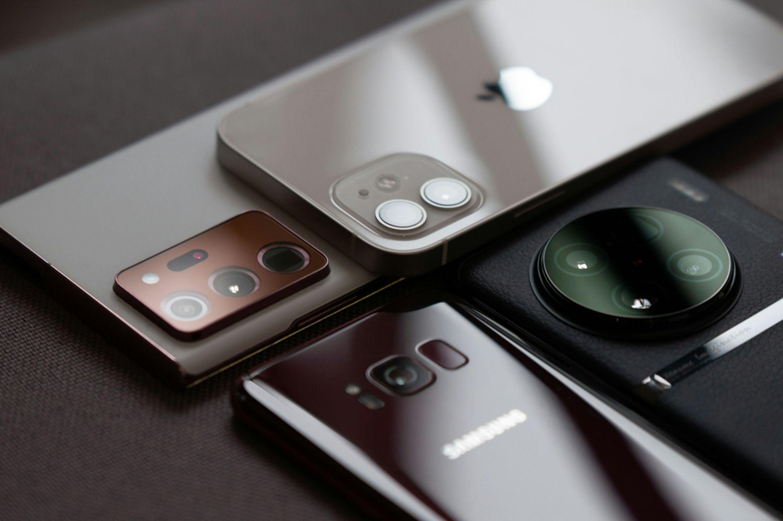
Caption – Apple and Samsung will reportedly be better positioned amidst the market decline compared to their Chinese counterparts. (Image credit – Samsung/Apple)
Counterpoint believes Apple and Samsung are relatively well-positioned to manage the upcoming challenges, with shipment declines estimated at around 2%. In contrast, Chinese smartphone brands such as Honor, Oppo, and Vivo are expected to face greater difficulties with Honor potentially seeing shipment drops of more than 3%.
Wang said, “Apple and Samsung are best positioned to weather the next few quarters. But it will be tough for others that don’t have as much wiggle room to manage market share versus profit margins. We will see this play out especially with the Chinese OEMs as the year progresses.”
To offset rising costs, several smartphone makers are reportedly cutting back on specifications including camera modules, display quality, and audio components, or reusing older hardware. Some brands are also shifting focus toward higher-priced “Pro” models to protect margins.
For consumers, this means smartphones launching in 2026 are likely to be more expensive with fewer substantial upgrades. It is particularly true for the budget and mid-range categories, where the impact of memory shortages is most severe.
iPhone Shipments Expected to Dip As Costs Rise
Counterpoint Research also predicts that iPhone shipments will decline next year, alongside a sharp increase in Apple’s manufacturing costs. Overall smartphone shipments are expected to fall in 2026, with Apple among the brands most affected.
“Global smartphone shipments are expected to decline 2.1% in 2026 as surging component costs are likely to impact demand, according to Counterpoint Research’s latest Global Smartphone Shipment Tracker and Forecast,” the report states.
The firm estimates Apple’s shipments could drop 2.2% year-on-year, a steeper decline than Samsung, Xiaomi, Vivo, or Oppo.
FAQs
Q1. Why are smartphone prices expected to rise in 2026?
Answer. A global RAM shortage driven by soaring demand from AI data centers is pushing memory prices up by about 40%, sharply increasing production costs.
Q2. How will the smartphone market be affected overall?
Answer. Counterpoint Research forecasts average smartphone prices will climb 6.9% year-on-year, while global shipments will decline 2.1% in 2026.
Q3. Which brands are most impacted by rising costs?
Answer. Apple’s shipments may drop 2.2%, steeper than Samsung or Chinese rivals. Apple and Samsung are better positioned to manage cost pressures, while brands like Honor, Oppo, and Vivo face greater challenges.