


Highlights
- Apple launches 2nd-gen AirTag with a new UWB chip, 50% longer Precision Finding range, louder speaker and improved Bluetooth tracking.
- Pricing unchanged at $29 for a single unit and $99 for a four-pack; buyers can distinguish models via etched text (ALL CAPS means new version).
- Precision Finding upgrade limited to iPhone 15 or later (excluding iPhone 16e) and now supported on Apple Watch Series 9/Ultra 2+ via watchOS 26.2.1 update.
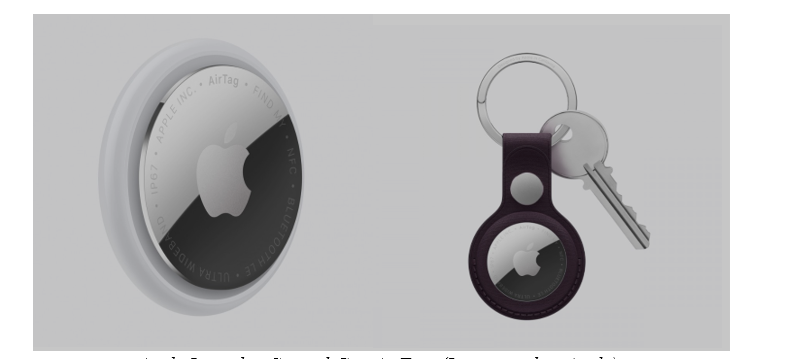
Apple has introduced its first new hardware product of 2026 with the launch of the second-generation AirTag. Nearly five years after the original model debuted, the new AirTag brings multiple upgrades while retaining the familiar circular design of its predecessor. Here’s everything you need to know about the new device.
Second-Generation Apple AirTag – What’s New?
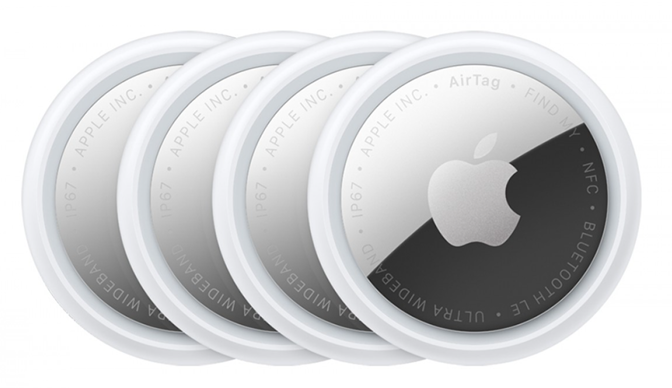
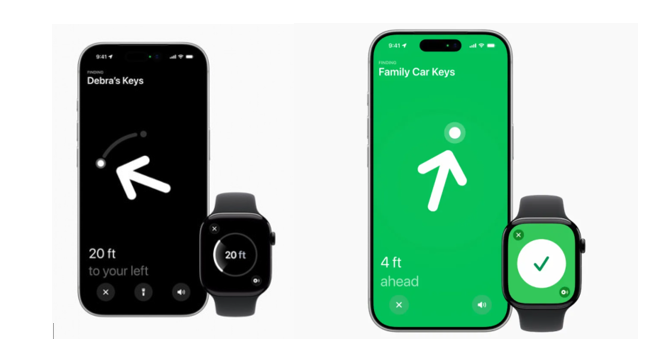
The new AirTag is powered by Apple’s second-generation Ultra Wideband (UWB) chip, the same one used in the iPhone 17 lineup, Apple Watch Ultra 3 and Apple Watch Series 11. This upgraded chip enables improved Precision Finding, allowing users to locate lost items from up to 50 percent farther away compared to the first-generation AirTag.
Apple has also equipped the AirTag (2nd Generation) with an upgraded Bluetooth chip, which increases the overall tracking range. Another notable change is the built-in speaker, which is now 50 percent louder, making it easier to find misplaced items nearby.
Battery life remains unchanged with the new AirTag still using a user-replaceable CR2032 coin cell battery.
Apple also touts privacy and security improvements with the new AirTag. It mentions, “Designed exclusively for tracking objects, and not people or pets, the new AirTag incorporates a suite of industry-first protections against unwanted tracking, including cross-platform alerts and unique Bluetooth identifiers that change frequently.”
Pricing and Availability
Apple has kept its pricing unchanged. The second-generation AirTag is priced at $29/€35/£29 for a single unit, while a four-pack costs $99/€119/£99.
The new AirTag is available to order starting today with free personalised engraving offered through the Apple Store.
How to Tell AirTag 2 Apart From the Original Model?
Despite the hardware upgrades, Apple has not made it obvious which AirTag generation you are buying based on the name alone. Apple refers to the product as “the new AirTag” or “AirTag (2nd Generation),” while retailers such as Amazon now label the older model as “Apple AirTag (1st Generation).”
The easiest way to identify the AirTag version is by checking the text etched on the back of the device, which is also visible on the front of the retail packaging.
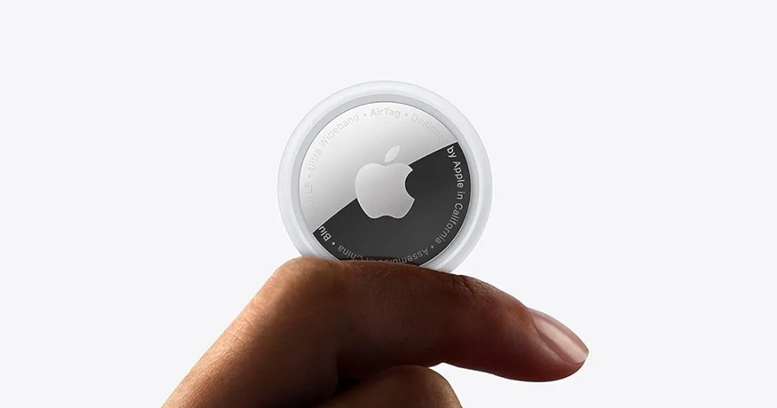
If it’s a first-generation AirTag, the back reads:
AirTag / Designed by Apple in California / Assembled in China / Bluetooth LE / Ultra Wideband
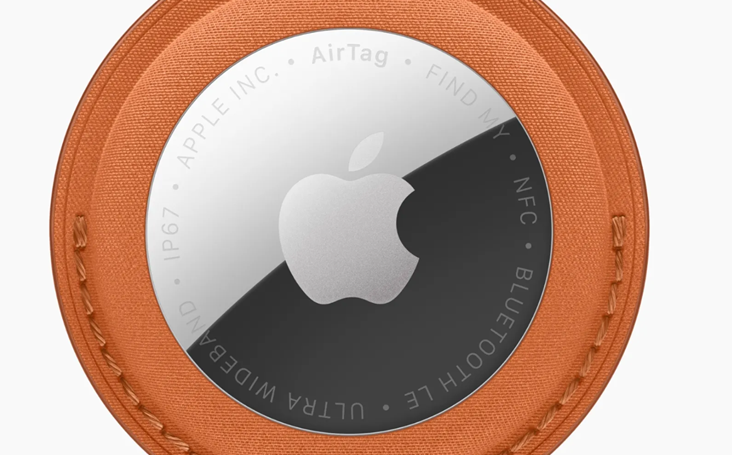
If it’s a second-generation AirTag, the back reads:
AirTag / FIND MY / NFC / BLUETOOTH LE / ULTRA WIDEBAND / IP67 / APPLE INC.
In short, if the text is in ALL CAPS, it’s the new model. If it isn’t, it’s the original AirTag.
Buyers looking for the latest version should check the etching carefully, while those opting for the older model should ensure they are paying less than the $29 price of the new AirTag.
Precision Finding Range Limited to Certain iPhones
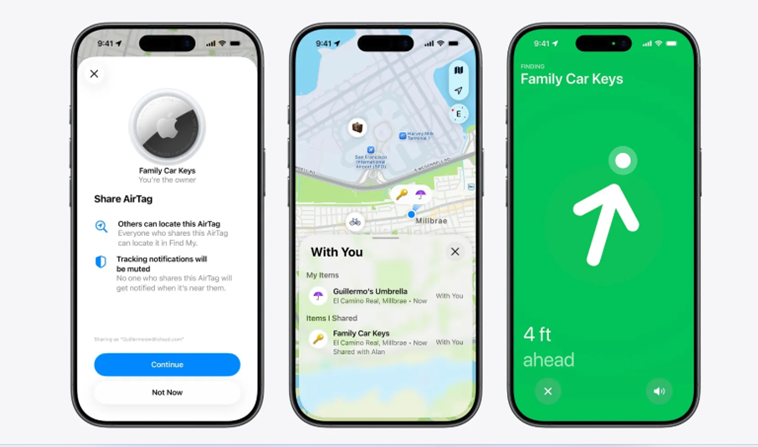
2nd-Gen AirTag’s Precision Finding range is limited to certain iPhones only. (Image credit – Apple)
One of the biggest upgrades of the new AirTag comes with an important limitation. While Precision Finding range is up to 50 percent better than before, this improvement only works when paired with specific iPhone models.
According to a footnote on Apple’s website, “Improved Precision Finding works with AirTag (2nd generation) paired with iPhone Air or iPhone 15 or later (excluding iPhone 16e)”.
Compatible iPhone models include –
- iPhone 17
- iPhone 17 Pro and Pro Max
- iPhone Air
- iPhone 16
- iPhone 16 Plus
- iPhone 16 Pro and Pro Max
- iPhone 15
- iPhone 15 Plus
- iPhone 15 Pro and Pro Max
This limitation is tied to changes Apple made to the Ultra Wideband chips starting with the iPhone 15 series. Users with older iPhones or the excluded iPhone 16e can still use Precision Finding with the new AirTag, but the range will be the same as the first-generation model.
Apple Releases watchOS 26.2.1
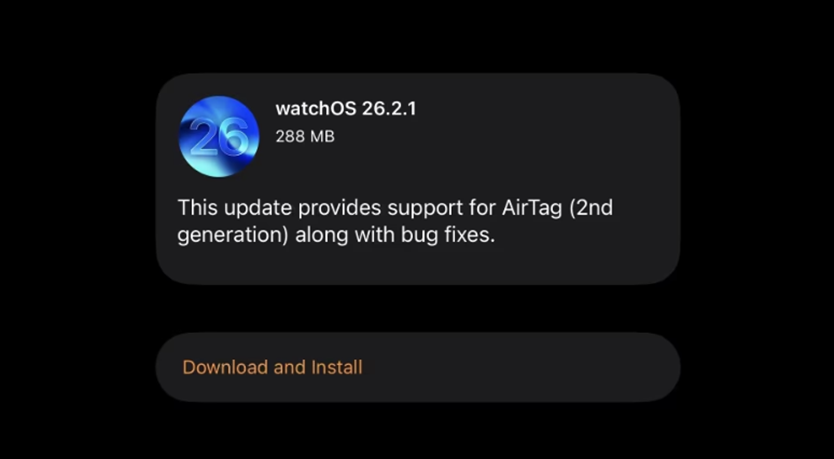
Apple Releases watchOS 26.2.1.
Alongside the new AirTag, Apple has rolled out watchOS 26.2.1, a minor update to watchOS 26, which was released last year. The update arrives around six weeks after watchOS 26.2.
watchOS 26.2.1 can be downloaded for free via the Apple Watch app on an iPhone running iOS 26.2.1 by navigating to General > Software Update, or directly through the Settings app on the watch. To install the update, the Apple Watch must have at least 50 percent battery and be connected to a charger.
Apple’s release notes mention that watchOS 26.2.1 includes unspecified bug fixes.
The update enables Precision Finding for the new AirTag 2 on Apple Watch Series 9 and later, as well as Apple Watch Ultra 2 and newer models. Until now, Precision Finding for AirTag was limited to the iPhone. It remains unclear whether this feature also works with the original AirTag or is exclusive to the second-generation model.
FAQs
Q1. What are the key upgrades in Apple’s second-generation AirTag?
Answer. The new AirTag features Apple’s latest UWB chip for 50% longer Precision Finding range, a louder speaker, and improved Bluetooth tracking.
Q2. How much does the new Apple AirTag cost?
Answer. Pricing remains unchanged: $29/€35/£29 for a single unit and $99/€119/£99 for a four-pack, with free engraving available.
Q3. How can buyers distinguish between Apple’s first and second-generation AirTag?
Answer. Check the etched text on the back: the 2nd-gen AirTag uses ALL CAPS text (e.g., “FIND MY / NFC / BLUETOOTH LE / ULTRA WIDEBAND / IP67”).
Q4. Which devices support the improved Precision Finding range of 2nd-gen Apple AirTag?
Answer. The upgrade works only with iPhone 15 or later (excluding iPhone 16e) and is also enabled on Apple Watch Series 9/Ultra 2+ via watchOS 26.2.1.